Sunday, October 05, 2025

Antarctic Sea Ice Emerges As Key Predictor Of Accelerated Ocean Warming
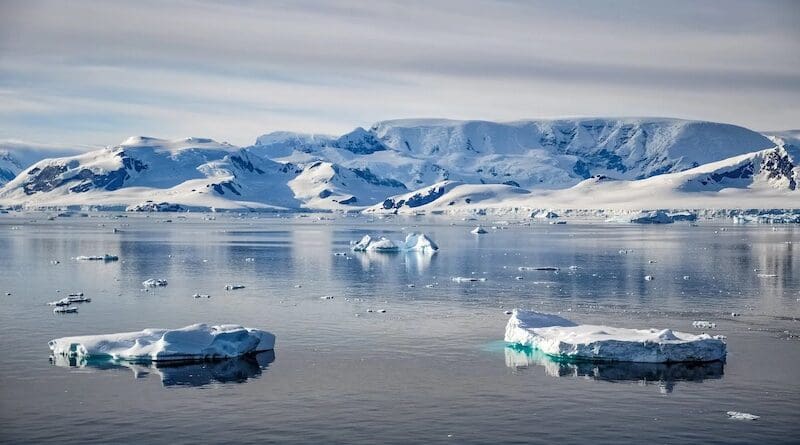
antarctica iceberg file arctric

By 

A groundbreaking study published today in the European Geosciences Union (EGU) journal Earth System Dynamics provides a critical and previously underestimated connection between Antarctic sea ice, cloud cover, and global warming. This research is important because it shows that a greater extent of Antarctic sea ice today, compared to climate model predictions, means we can expect more significant global warming in the coming decades.


The study, led by Linus Vogt from Sorbonne University, utilized an emergent constraint based on data from 28 Earth system models and satellite observations from 1980 to 2020. This constraint allowed the team to reduce uncertainty in climate projections and provide improved estimates of key climate variables. Their findings indicate that ocean heat uptake and the resulting thermal sea level rise by the year 2100 are projected to be 3–14% higher than the average from CMIP6, a leading collection of climate models. Furthermore, the projected cloud feedback is 19–31% stronger, which enhances climate sensitivity, and global surface warming is estimated to be 3–7% greater than previously thought.

The study found that the extent of Antarctic summer sea ice, which has been considered stable and only weakly connected to human-caused climate change, is a crucial indicator of the Southern Hemisphere’s climate. Models that start with a higher, more accurate representation of pre-industrial sea ice levels simulate colder surface waters, colder deep ocean temperatures, and thicker cloud cover in the mid-latitudes. These initial conditions then amplify warming responses under greenhouse gas forcing, meaning they lead to a more severe and accelerated warming effect than what was previously estimated. Essentially, the climate system’s starting point makes it more sensitive to the impact of greenhouse gases. 

“When we initially discovered this link between historical Antarctic sea ice and future global ocean heat uptake, we were surprised by the strength of the relationship. Antarctic sea ice covers less than 4% of the ocean’s surface, so how could it be so strongly associated with global ocean warming?” says Linus Vogt, who led the study at Sorbonne University in Paris, and is now based at New York University. “Only after a lot of analysis did we understand the full implications of the sea ice-ocean-atmosphere coupling which is responsible for these global changes.”

This relationship isn’t merely correlative: it is mechanistically explained through ocean-atmosphere feedback. Higher sea ice extent enhances cloud cover, which has a cooling effect overall by reducing incoming solar radiation. Greater sea ice loss in the coming decades is thus linked to larger reductions of clouds, stronger surface warming, and enhanced ocean heat uptake. As a result, the baseline state of sea ice and deep ocean temperatures in models effectively preconditions the magnitude of warming, cloud feedback, and heat uptake in the future. 

“While it has long been known that accurately representing clouds is crucial for climate projections, our study highlights that it is equally important to also accurately simulate the surface and deep ocean circulation and its interaction with sea ice” says Jens Terhaar, a senior scientist at the division of Climate and Environmental Physics at the University of Bern who initiated the study at the Woods Hole Oceanographic Institution in the USA.


Under future climate change scenarios, models with greater historical sea ice tend to lose more sea ice by 2100, contributing to stronger radiative feedback. This stronger feedback leads to a stronger atmospheric and oceanic warming, especially across the Southern Hemisphere.

Implications for policy and science

This study provides evidence that current models may be underestimating future warming and ocean heat storage. It shows that models tend to simulate a too warm Southern Ocean in the preindustrial state and therefore have too little warming potential. The findings also stress the importance of continued satellite monitoring and improved modelling of cloud processes and deep ocean hydrography, both of which significantly shape global climate projections.

The study warns that previous approaches, which relied on observed trends over limited timeframes, may have underestimated future warming due to their inability to capture systemic changes, or ‘regime shifts,’ that are now becoming more evident, such as the record-low Antarctic sea ice extent in 2023. Furthermore, these older constraint methods relied on trends over short historical windows (e.g. 1980–2015), which are sensitive to internal natural variability and may thus not be representative of future climate change. 

“Several high-profile studies have used temperature trends over recent decades in an attempt to constrain future warming” says Vogt. “However, we now found that this approach can give misleading results. Accounting for the sea ice-related mechanism we identified leads to increased estimates of future ocean and atmospheric warming. This likely stronger warming calls for urgent action to reduce greenhouse gas emissions in order to avoid the increased heat waves, floods and ecosystem impacts associated with ocean warming.”


India’s Durga Puja, Where Worship Meets Social Change

A Durga Puja pandal on the theme of riots, urges peace and harmonious community life. Photo Credit: UN News/Rohit Upadhyay


By 

By Anshu Sharma and Rohit Upadhyay


India’s eastern state of Bengal transformed this week into the world’s largest public art festival – an immersive blend of worship, artistic expression, and social messaging, thanks to an annual Hindu festival known as Durga Puja.

Inscribed by the UN cultural agency, UNESCO, in 2021 as an element of Intangible Cultural Heritage of Humanity, Durga Puja isn’t just a festival, it’s a city-wide act of reimagination, one that resonates with the Bengali diaspora and others around the world.

For a few autumn nights, the city of Kolkata (and other parts of West Bengal) became an open-air gallery where local communities build dazzling temporary temples or pandals, artisans from Kumartoli sculpt the goddess from river clay, drummers (dhaakis) roll thunder through the streets, and millions wander from one illuminated dreamscape to the next.

The festivities drew to a close on Thursday.

What looks like a spectacle is actually a community in motion: local clubs raising funds, families volunteering, craftspeople collaborating, and entire local economies springing to life around food, lights, music, and art.


Families map their “pandal-hopping” routes, musicians set the rhythm, food stalls weave the city together, and the city itself becomes a stage. All kinds of divisions – class, caste, ethnicity – in this city of teeming millions, melt away.

UNESCO recognition

UNESCO recognised the Durga Puja, named after the Hindu goddess Durga, in 2021 describing it as “the best instance of the public performance of religion and art, and a thriving ground for collaborative artists and designers.”

As Tim Curtis, UNESCO Representative in India, explained, “It embodies the Sarbojonin spirit – ‘for all people’ – that has defined community worship since 1926. From clay sculptors to drummers, designers to local organizers, the entire city contributes to one of the most vibrant cultural expressions in the world.”

This is heritage not locked away in monuments but alive in practice, passed hand-to-hand through craftsmanship, reimagined every year with new themes, and binding communities across class, faith, and language.

Durga Puja is also a creative economy powerhouse. A 2019 study estimated the festival’s industries generate $4.53 billion, 2.58 per cent of West Bengal’s GDP.

Art with a message

For Shombi Sharp, United Nations Resident Coordinator in India, this year marked his first visit to the century-old pandal now spotlighting sustainable agriculture, highlighting the broader importance of the Sustainable Development Goals.

He told UN News, “Normally you see Goddess Durga defeating evil – here the ‘evil’ is pesticides and unsustainable farming practices. Behind me stands a display with 280 rice varieties from eastern and northeastern India. That’s 12-13 million visitors being exposed to powerful messages about organic agriculture, biodiversity, and sustainability.”

Another headline-grabber is an AI-themed pandal that fuses devotion with digital imagination. Goddess Durga appears in her traditional form – ten arms and a lion – while the backdrop bursts with circuit-board patterns, glowing data streams, and neon light.

The point is clear: faith and technology can co-exist; even in a futuristic frame.

Visitor reactions mirror this blend of wonder and caution. One 30-year-old lab technician from Kolkata, Nupur Hajara said “the more positively people receive AI, the better. If they take it negatively, that won’t help – right?”

IT professional, Sumitam Shom explained: “Durga Puja is our biggest, most special festival – and now AI is part of the conversation. It can do a lot of good, but there are risks too, especially fraud. Deepfakes and viral images are real concerns. Without safeguards, someone could misuse photos and deceive people. So, it’s crucial that we use these technologies responsibly.”

Adding a different register of urgency, another pandal with the theme of “Shabdo” (“Sound”) draws attention for its poignant focus on the vanishing sounds of nature – chirping birds, rustling leaves, croaking frogs – captured through immersive, sensory design.

A meditation on nostalgia

It was a meditation on environmental loss and nostalgia, asking what it means for the sounds of nature within a city to grow quieter as habitats shrink.

Raja, a pandal visitor, put it simply: “You barely see birds anymore. My grandfather used to tell me how common they were; now they’re rare – partly, we believe, due to mobile network impacts. This pandal is our way to wake up the community, to learn how to bring the birds back and to start working on it together.”

Many other pandals also echo urgent social themes. One honours acid attack survivors, not only raising awareness but celebrating their dignity and contributions. Another highlights water conservation.

For young visitors too, the messages resonate. Tisa, an 18-year-old student at a pandal dedicated to water conservation, reflected that “groundwater is depleting day by day. This is the best way to spread awareness to the public.”

Making Puja accessible to all

Durga Puja is also taking a step toward inclusivity.

In June 2025, UNESCO and the UN in India, working with organizations of persons with disabilities, launched comprehensive accessibility guidelines for festival organisers.

The results are visible on the ground. Ramps and barrier-free layouts ease mobility, Braille signage and sign-language interpreters expand communication, and quiet seating areas provide allow people to rest.

As the UN’s Shombi Sharp recalled, “We heard from a father who, for the first time in 17 years, was able to bring his daughter, a wheelchair user, to celebrate Durga Puja. That was an incredibly emotional moment.”

China, Pakistan, And A Different Kind Of Partnership – OpEd

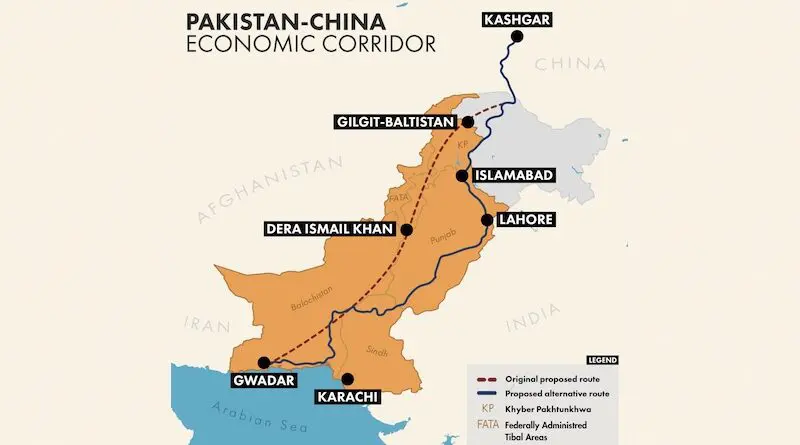
Approximate routes for the China Pakistan Economic Corridor (CPEC). This map is for illustrative purposes only. Credit: RFE/RL


By 

When CPEC first started making headlines, the story was all about big things: motorways cutting across mountains, power plants lighting up cities, ports promising to turn Pakistan into a trade hub. Those projects mattered, no doubt, but they often felt distant to ordinary people. You couldn’t always see how a new highway in Balochistan or another coal plant would change life for a farmer in Punjab or a student in Karachi.


That’s why these new agreements between Pakistan and China caught my attention. Agriculture, education, green growth, these aren’t flashy subjects that make for glossy brochures, but they’re exactly the areas that hit closest to home. The Pakistan-China Joint Chamber of Commerce and Industry is calling them transformative, and while that word gets overused, I think they might be onto something.

Start with farming. Pakistan still depends heavily on agriculture, yet much of our system runs on outdated canals and guesswork. Farmers waste water, yields stay low, and we end up importing food we should be able to grow ourselves. If Chinese expertise can modernize irrigation and bring in smart farming tech, the potential is huge. Imagine higher yields, better food security, and rural communities tapping into food processing or packaging industries. That could create jobs where they’re most needed.

The big question is who benefits. If new technologies only end up in the hands of wealthy landowners, then we’ve just widened the rural gap. For these changes to matter, small farmers need access—credit, training, cooperatives. Otherwise, it’s the same old story, just with fancier machinery.

Education feels even more urgent. We love to talk about Pakistan’s youth bulge as some kind of golden ticket, but the truth is more complicated. A young population without skills is not a strength; it’s a risk. Scholarships, joint degree programs, and vocational training could change that equation. The idea of expanding IT education and technical skills through Chinese partnerships is especially promising, because that’s where the global economy is headed.

What I’d like to see is a real focus on vocational training, not just a handful of scholarships for elite families. Coding bootcamps, manufacturing skills, agricultural training, things that touch the lives of thousands, not dozens. If our youth are equipped for modern industries, that’s when the so-called bulge becomes an asset.


Then there’s the green development agreement. Pakistan doesn’t treat climate change like the emergency it is, even though we’re among the countries most vulnerable to it. Floods, droughts, smog, we’re living through the consequences already. If China can help us adopt sustainable technologies, invest in green energy, or improve urban air quality, that’s not just a nice-to-have. It’s survival.

I don’t think anyone expects these agreements to fix Pakistan’s economy overnight. MoUs are easy to sign and often vanish into thin air once the news cycle moves on. Our history is full of ribbon-cuttings that never lived up to the promises. The PCJCCI says it’ll help push these through, and that’s reassuring, but the real work begins after the cameras go away.

Still, the symbolism matters. These MoUs mark a shift in how CPEC is being shaped. It’s no longer only about pouring concrete and building power lines. It’s about skills, livelihoods, and sustainability. For once, the average Pakistani can look at CPEC and think this might touch my life. Better crops, better job training, cleaner air. That’s the kind of development people notice.

There’s also something interesting about China’s strategy here. They’ve realized that hard infrastructure doesn’t automatically buy goodwill. People-to-people ties, education, and sustainable projects create softer, longer-lasting influence. That’s smart geopolitics, but it’s also good for us, if we know how to use it.

The real test is going to be implementation. Do farmers get access to smart irrigation? Do vocational centres really expand across the country? Does green development go beyond pilot projects and scale? If the answer is yes, then these agreements could genuinely reshape Pakistan’s development path. If not, they’ll just be another line in a long list of “transformative” deals that transformed very little.

I’d like to believe this marks a turning point. It feels different this time, less about grand symbols and more about practical change. Whether that optimism is justified, only time will tell. But at least, for once, the conversation around CPEC is shifting away from machinery and megawatts and closer to where it should have been all along: the people.

Dr. Hamza Khan

Dr. Hamza Khan has a Ph.D. in International Relations, and focuses on contemporary issues related to Europe and is based in London, UK.
Robert Reich: How The Shutdown Ends – OpEd


October 5, 2025 By Robert Reich


I don’t have a crystal ball, but I have a good idea how this shutdown ends. Trump and Republicans will cave (he won’t admit he’s caving, of course, but he will cave).

Here’s why: Air traffic controllers.


Like other federal workers, the controllers aren’t being paid now (they’ll get back-pay when the shutdown ends). But unlike most other federal workers, their workloads and stress loads have been soaring.

Recall the last big shutdown that started in late 2018 and went on for 35 days — a record. What ended it? Air traffic controllers.

In January 2019, several controllers at a facility near Washington, D.C., that handles air traffic for most of the region, called in sick.

As a result, flight delays along the East Coast began to stack up. The delays quickly cascaded to Atlanta and beyond.

The National Air Traffic Controllers Association issued a statement saying essentially, “We told you so.” “In the past few weeks, we have wared about what could happen as a result of the prolonged shutdown. Many controllers have reached th breakingoint of exhaustion, stress, and worry caused by this shutdown. Each hour that goes by that the shutdown continues makes the situation worse.”

House Speaker Nancy Pelosi tweeted: “The #TrumpShutdown has already pushed hundreds of thousands of Americans to the breaking point. Now it’s pushing our airspace to the breaking point too.”

Angry travelers began phoning their members of Congress. Private jets carrying CEOs and Wall Street mavens couldn’t take off or land. The CEOs and mavens also began phoning.

Hours later, Trump announced that the government would reopen and employees would be given back pay. Trump didn’t even get funding for his border wall — the issue that had sparked the shutdown.

This time it won’t take 35 days.

We’re approaching the busiest time of the year for air travel. Tens of millions of Americans expect to fly in the coming months.

Even before Wednesday’s shutdown, the nation’s approximately 14,000 air traffic controllers were under increasing stress — higher than in January 2019.

More crowded skies and worsening staffing shortages have forced many controllers to put in 60 hours a week on the job.

A hearing into the causes of the midair collision in Washington earlier this year that claimed 67 lives revealed a decline in aviation safety due to increasingly busy skies and overworked controllers.

On March 11, the National Transportation Safety Board released a preliminary report and urgent safety recommendations. The NTSB’s chair was angry that the Federal Aviation Administration had not acted on data showing the number of near-miss alerts over the last decade.

Oh, and the pay of air-traffic controllers has stagnated — when they were getting paid.

In the wake of the previous 35-day shutdown, the then-chair of the House Transportation Committee suggested a bill to allow the FAA to continue operating normally during a lapse in funding — which would continue the pay of air traffic controllers. Congress never enacted such legislation.

My prediction: This shutdown will end sooner than the last one. Air traffic controllers will ensure it does. Within the next few weeks, a few will call in sick. Then the flight delays will cascade.

At that point, pressure will suddenly mount on the White House and Republicans in Congress to end it.

Why on the White House and congressional Republicans and not on congressional Democrats? Because Republicans now control the government — the presidency, both chambers of Congress, and, effectively, the Supreme Court. They own it.

They and Trump will be blamed for the shutdown, and they’ll have to get the nation out of it — even at the cost of giving in to congressional Democrats.


This article was published at Robert Reich’s Substack


Robert B. Reich is Chancellor's Professor of Public Policy at the University of California at Berkeley and Senior Fellow at the Blum Center for Developing Economies, and writes at robertreich.substack.com. Reich served as Secretary of Labor in the Clinton administration, for which Time Magazine named him one of the ten most effective cabinet secretaries of the twentieth century. He has written fifteen books, including the best sellers "Aftershock", "The Work of Nations," and"Beyond Outrage," and, his most recent, "The Common Good," which is available in bookstores now. He is also a founding editor of the American Prospect magazine, chairman of Common Cause, a member of the American Academy of Arts and Sciences, and co-creator of the award-winning documentary, "Inequality For All." He's co-creator of the Netflix original documentary "Saving Capitalism," which is streaming now.

FIRST WOMAN PM

Why The World Is Watching Japan’s Historic Leadership Transition – OpEd

Japan's Sanae Takaichi. Photo Credit: Japan PM Office, Wikipedia Commons

By 

By Andrew Hammond


Japan’s Liberal Democratic Party leadership election has been extensively viewed, domestically. However, the wider world has also been watching the crucial contest closely too, not least G7 allies in the West given the importance of Tokyo to this club of industrialized nations.

The word historic is often overused, but this contest genuinely met that high benchmark. This is not least because the victor Sanae Takaichi, announced on Saturday, is now widely expected to become the nation’s first female prime minister.

As the LDP and coalition partner Komeito have recently lost their majority in both houses of parliament, which has increased the risk of political instability in Tokyo, new LDP leader Takaichi will need to win, with agreement from legislators of other parties, a vote to secure the premiership.

The stage would then be set for a potential snap general election. Or a potential new coalition, or a looser arrangement that would allow a minority government to secure the support of one or more other parties on confidence votes and the budget.

Important as this leadership transition is for Japan, the wider world is watching events closely in Tokyo too. This includes long-standing allies in the Americas and Europe who have an increasingly close relationship with the Asian economic giant.


Since the end of the Second World War, the transformation of Tokyo’s world role has stemmed, in part, from its phenomenal postwar business success, which led to growing calls for it to match its economic power with commitment to international relations too. Today, Japan remains one of the world’s three largest economies, and it will be critical to helping drive a new wave of global, sustainable growth in coming years.

Japan is also a key member not only of the G7, but also the US-led Quadrilateral Security Dialogue (Quad) with Australia and India too. While this forum began as a security-driven initiative, commerce and industry ministers now meet and the agenda includes health security, food security, clean energy, and quality infrastructure.

On the economic front, Tokyo and Washington agreed in July a tariff deal that sees a 15 percent levy on Japanese goods in exchange for a $550 billion package of US-bound investments and loans.

In Europe too, the longstanding partnership with Japan has assumed greater importance. The EU and Japan recently held their 30th annual summit in July, attended by European Commission President Ursula von der Leyen and outgoing Japanese Prime Minister Shigeru Ishiba.

At the big event, the two powers launched a new Competitiveness Alliance focused on trade, green and digital innovation, plus economic security. Priorities include strengthening supply chains for raw materials and batteries, regulatory cooperation, and joint industrial efforts in hydrogen, liquified natural gas, offshore wind, and semiconductors.

The new competitiveness initiative stems from the broader deepening of Japan-EU economic ties under the bilateral Economic Partnership Agreement, or EPA, plus other forums such as the EU-Japan Green Alliance, the Partnership on Sustainable Connectivity and Infrastructure, and the bilateral Digital Partnership. EU firms already export about 70 billion euros in goods and 28 billion euros in services to Japan annually, and bilateral trade has increased significantly since 2019.

As part of the new competitiveness alliance, Japan and Europe agreed to intensify their collaboration against “economic coercion” and “unfair trade practices.” Von der Leyen highlighted growing geoeconomic challenges and geopolitical tensions, from Ukraine to the Asia Pacific.

Europe and Japan have, potentially, significant shared weight together on this agenda with their collective economies accounting for about a fifth of global GDP and a market of about 600 million people.

Von der Leyen highlighted that the next steps on the EPA were discussed at the Sixth EU-Japan High Level Economic Dialogue last May. This forum pledged to deepen cooperation in areas such as trade, supply chain transparency, diversification, security; sustainability, trustworthiness, reliability and resilience, promotion and protection of critical and emerging technologies, industrial policy, plus investment promotion.

While no European countries are part of the Quad, many regional politicians increasingly see the relationship with Japan in a broader strategic context. This is a key change from when relationships in the past were centered around economics.

Ishiba’s predecessor, Fumio Kishida, was the first Japanese prime minister to attend a NATO leadership meeting. There is speculation too about Tokyo being invited into wider Western intelligence forums such as the “Five Eyes” alliance of the US, Canada, Australia, New Zealand, and the UK.

A good example of this deepening security relationship is the 2023 UK-Japan Reciprocal Access Agreement, which is the most significant defense agreement between the powers since 1902. The deal allows UK and Japanese armed forces to be deployed in one another’s countries. It builds from the post-Brexit UK-Japan trade deal, and the UK’s entry into the Comprehensive and Progressive Agreement for Trans-Pacific Partnership, or CPTPP, which accounts for well over 10 percent of global trade and has a combined population of about 500 million.

Tokyo and Brussels also announced that a new Defense Industry Dialogue will be launched in 2026. This will promote collaboration on advanced and dual-use technologies with broader cooperation spanning areas including cybersecurity, maritime, and space security.

These developments show the wisdom of Western decision-makers, back in the mid-1970s, when Japan was formally brought into the G7 club. A similar far-sighted, strategic approach is now needed around a half century later in the very different context of the mid-2020s.

One example is von der Leyen’s hopes of deeper EU trade cooperation with CPTPP. The Japanese government was one of the strongest supporters of UK accession to this economic club, and Tokyo is keen for closer EU engagement with the bloc.

Taken together, this is why Japan’s Western allies are closely watching the leadership transition in Tokyo. A new era of cooperation is hoped for, but the risk of further political instability is recognized.

  • Andrew Hammond is an associate at LSE IDEAS at the London School of Economics.


Arab News is Saudi Arabia's first English-language newspaper. It was founded in 1975 by Hisham and Mohammed Ali Hafiz. Today, it is one of 29 publications produced by Saudi Research & Publishing Company (SRPC), a subsidiary of Saudi Research & Marketing Group (SRMG).

Global reaction to Sanae Takaichi winning Japan leadership race

Reuters
Sat, October 4, 2025 

Sanae Takaichi, the newly elected leader of Japan's ruling Liberal Democratic Party (LDP), poses in the party leader's office after the LDP leadership election in Tokyo, Japan, October 4, 2025. Conservative Sanae Takaichi hailed a "new era" on October 4 after winning the leadership of Japan's ruling party, putting her on course to become the country's first woman prime minister. 
Yuichi Yamazaki/Pool via REUTERS

(Reuters) -Sanae Takaichi is likely to be Japan's first female prime minister after winning the race to lead the ruling Liberal Democratic Party on Saturday.

A former economic security internal affairs minister, a conservative nationalist with an expansionary agenda, is expected to replace Prime Minister Shigeru Ishiba since the LDP is the largest group in parliament.

Here are some reactions from around the world:

TAIWAN PRESIDENT LAI CHING-TE, PARTY STATEMENT

"Lai Ching-te extends his most sincere and warmest congratulations to the new (LDP) President Takaichi... Takaichi is a steadfast friend of Taiwan. (Taiwan's Democratic Progressive Party) and the LDP have long maintained friendly and deep-rooted relations. It is hoped that under the leadership of (LDP) President Takaichi, Taiwan and Japan can deepen their partnership in areas such as economic trade, security, and technological cooperation, further advancing Taiwan-Japan relations to a new stage."

CHINA'S MINISTRY OF FOREIGN AFFAIRS, SPOKESPERSON'S OFFICE, STATEMENT:

"We have noted the election result, which is Japan's internal affairs. We hope that Japan will adhere to the principles and consensus of the four China-Japan political documents, honour its political commitments on major issues such as history and Taiwan, pursue a positive and rational policy toward China and fully implement its position to comprehensively promote a strategic and mutually beneficial relationship."

U.S. AMBASSADOR TO JAPAN, GEORGE GLASS, ON X:

"My congratulations to @takaichi_sanae on becoming the 29th president of Japan’s Liberal Democratic Party and the party’s first female leader. I look forward to working with her to strengthen and grow the partnership on every front."

ISRAEL'S AMBASSADOR TO JAPAN, GILAD COHEN, ON X:

"Congratulations to Sanae Takaichi, newly elected President of the LDP and the party’s first female leader! I am confident that under your leadership, the ties between Israel and Japan will continue to grow stronger. Looking forward to fruitful and successful cooperation ahead."

(Compiled by Global News Desk)


Sanae Takaichi set to become Japan’s first female prime minister

Mari Yamaguchi, Associated Press
Sat, October 4, 2025 


Japan’s governing party has elected former economic security minister Sanae Takaichi as its new leader, making her likely to become the country’s first female prime minister.

In a country that ranks poorly internationally for gender equality, Ms Takaichi would make history as the first female leader of Japan’s long-governing conservative Liberal Democratic Party (LDP).

She is one of the most conservative members of the male-dominated party.


Sanae Takaichi speaks during the Liberal Democratic Party’s (LDP) leadership election in Tokyo, Japan (Kyodo News via AP)

Ms Takaichi beat agriculture Minister Shinjiro Koizumi, the son of popular former Prime Minister Junichiro Koizumi, in a run-off in an intraparty vote by the LDP on Saturday.

She replaces prime minister Shigeru Ishiba as the party hopes to regain public support and stay in power after major election losses.

She is likely to be Japan’s next prime minister because the party remains by far the largest in the lower house, which determines the national leader, and because opposition groups are highly splintered.

The LDP, whose consecutive losses in parliamentary elections in the past year have left it in the minority in both houses, wants to select a leader who can quickly address challenges in and outside Japan, while seeking co-operation from key opposition groups to implement its policies.

Five candidates — two currently serving and three former ministers — were vying for the LDP presidency.

Saturday’s vote only involved 295 LDP parliamentarians and about one million dues-paying members.


Shinjiro Koizumi speaks during the Liberal Democratic Party’s (LDP) leadership election in Tokyo, Japan (Kim Kyung-Hoon/Pool Photo via AP)

It only reflected 1% of the Japanese public.


What Japan’s First Female Prime Minister Means for the Country’s Gender Politics
Time

A parliamentary vote is expected in mid-October.

The LDP, which has been criticised by opposition leaders for creating a prolonged political vacuum, needs to hurry because the winner will soon face a diplomatic test: a possible summit with US President Donald Trump, who could demand that Japan increase its defence spending.

A meeting is reportedly being planned for late October when Mr Trump will travel to the Asia-Pacific Economic Cooperation summit in South Korea starting October 31.

The LDP also needs help from the opposition, which it has long neglected.

The party will likely look to expand its current coalition with the moderate centrist Komeito with at least one of the key opposition parties, which are more centrist.


Photos of candidates running for the ruling Liberal Democratic Party’s leadership are displayed at the party’s headquarters in Tokyo (AP photo)

All five candidates have called themselves “moderate conservatives” to show their willingness to work with the opposition.

They all campaigned for measures to combat rising prices and achieve larger salary increases, to strengthen defence and the economy, and for tougher measures on foreign workers.

They stayed away from divisive liberal social issues such as gender equality and sexual diversi


Experts say they avoided discussing their usual political views on historical issues, same-sex marriage and other contentious topics, including the party’s political funds scandal, which was the biggest reason for their election losses, and anti-corruption measures.