Thursday, October 09, 2025


BIMCO Calculates a Third of Ships Could Have to Pay Fees Under USTR Program
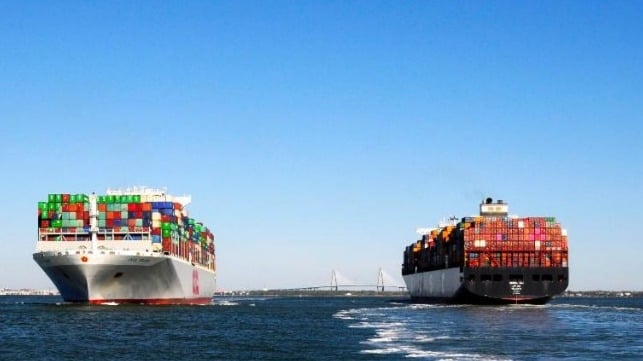
containerships passing
Bulkers and tankers, not containerships, are likely to have the greatest exposure according to BIMCO

Published Oct 8, 2025 6:03 PM by The Maritime Executive


The U.S. Trade Representative’s port fee program is due to go into effect in less than a week, and with no more guidance having been issued, speculation remains rampant on the full impact of the program. The industry trade group BIMCO issued its analysis, pointing to the greatest impact on bulkers and segments of the tanker market, which it expects will leave the U.S. trade, but overall, it expects that freight rates should not increase for U.S. importers and exporters at this juncture.

The fee program was designed to combat Chinese dominance of the maritime sector. After U.S. trade unions filed a complaint, the Biden administration initiated the investigation and found unfair business practices and Chinese government support for its shipbuilding industry and targeting the maritime sector. The plan put forth by the Trump administration imposes fees on Chinese-owned, operated, or built ships.

The fees are due to begin on October 14, with previous estimates having said it could result in more than $3.2 billion in new costs for the top 10 containership companies in 2026. Carriers have undertaken the redeployment of vessels and swapping of routes in an effort to reduce their exposure to the program. BIMCO concludes, however, that containerships will not be the hardest hit segment. 

“Bulk carriers are more exposed to the increasing costs, as 45 percent of the ships could be subject to the USTR fees. Because more ships are exempt, or because fewer ships are Chinese-owned or operated, only 30 percent of crude tanker and container ships, and 19 percent of product tankers, could be subject to the fees when arriving at a U.S. port,” says Niels Rasmussen, Chief Shipping Analyst for BIMCO.

BIMCO’s analysis of the program and deployments concludes that overall, a third of ships (35 percent) could be subject to the fees when calling at a U.S. port. BIMCO calculates that these ships provide nearly half (44 percent) of the combined capacity when including bulkers, crude and product tankers, and the container fleet.

The industry is still seeking clarification from the USTR on terms such as Chinese-owned and operated, but based on the current interpretation, BIMCO says 70 percent of the ships paying the fees will be Chinese-owned or operated. Only about a third (30 percent) will be Chinese-built ships. BIMCO notes that more than half of Chinese-built ships are exempt from the program due to size or U.S. ownership.

Other factors that could impact the final number of ships subject to the fees include efforts at refinancing or changing vessel ownership structures. One potentially significant category is the vessels in Chinese leasing programs run by banks and other institutions.

BIMCO believes the global impact on the bulker and tanker segments may be minimal despite 45 percent of bulkers and 19 percent of tankers likely falling into the definitions of the program. It points out that these vessels are a small part (9 to 19 percent) of global ship demand. Only 16 to 24 percent of U.S. imports and exports travel on vessels subject to the fees. Ships arriving in ballast for U.S. exports are also exempt.

“In the bulker and tanker sectors, we expect that most ships subject to USTR fees will leave U.S. trades as they cannot remain competitive. Freight rate increases will therefore likely be avoided in these sectors as well. Implementation confusion could, however, cause rate increases in the short-term,” says Rasmussen.

BIMCO writes that among the top 10 container carriers, less than 20 percent of the ships calling at the U.S. would be subject to the fees. Alphaliner previously reported that half of the fees would be incurred by Chinese carriers COSCO and its subsidiary OOCL (Orient Overseas Container Line). The carrier has previously admitted that it could incur large fees, but as said, it remains committed to its service.

Not addressed in the current outlook is the potential impact on the car and vehicle carrier segment. The USTR program imposes a fee of $14 per net ton on this segment for all foreign-owned vessels. This would be in addition to the tariffs the Trump administration has said it is imposing on foreign-built cars. 

Customs & Border Protection warned this week that determining which vessels are required to pay the fees is the responsibility of the operators. It further said that ships should pay the fees online in advance, or could face denials when arriving at U.S. ports.

The potential remains high for confusion and delays as the program starts on October 14. Shippers might be attempting at the same time to rush imports into the U.S. from China before the current November 10th deadline, when the Trump administration’s delay on tariffs for goods from China is due to expire. Retailers have forecast that the combination of these factors is likely to contribute to steady, monthly declines in container import volumes over the next few months into the United States.


Retailers Forecast Accelerating Declines for US Imports Due to Tariffs
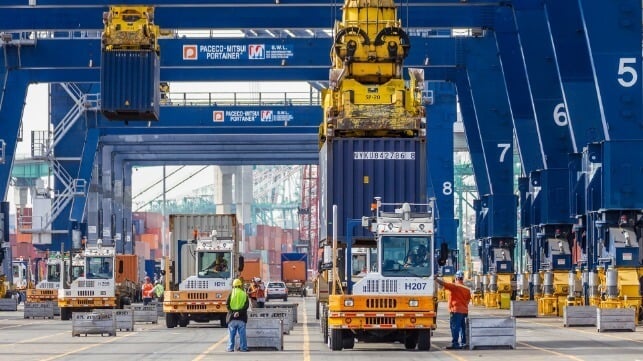
container loading
Container import volumes are expected to continue to decline on a monthly basis for at least the next five months (Port of Los Angeles file photo)

Published Oct 8, 2025 4:21 PM by The Maritime Executive


The National Retail Federation is predicting that U.S. imports will see accelerating year-over-year declines in volumes for the remainder of 2025 and into 2026. The trade group for the U.S. retail industry cites the continuing rise in tariffs as well as retailers' efforts to build inventory early due to the timing of the introduction of tariffs.

With most holiday merchandise already on hand and continued uncertainty over tariffs, the forecast from the retailers says that monthly import cargo volume at the nation’s major container ports is expected to fall below the two million TEU mark for the remainder of the year, and into 2026. The NRF forecasts a nearly three percent decline in TEU volume for the full year in 2025.

“This year’s peak season has come and gone, largely due to retailers front loading imports ahead of reciprocal tariffs taking effect,” said Jonathan Gold, the NRF Vice President for Supply Chain and Customs Policy.

The NRF’s monthly Global Port Tracker report, prepared by Hackett Associates, shows that import volumes peaked at 2.39 million TEU in July and have begun a steady monthly decline versus year-ago levels. August levels were basically flat with a year ago, but at 2.32 million TEU, were down nearly three percent from the previous month. 

Ports have not yet reported numbers for September, but Global Port Tracker projects the month at 2.12 million TEU, which would be a month-over-month decline of 8.6 percent and a 6.8 percent year-over-year decline.

The retail trade group points to the latest tariffs, 25 percent on upholstered furniture regardless of country, and the same rate on kitchen cabinets and bathroom vanities, which take effect next week and increase in January, as a further negative impact on imports. It also notes that the current deadline for an agreement with China is November 10, and unless extended, could see the introduction of more tariffs.

The NRF is projecting continuing monthly declines in import volumes, noting that the monthly TEU figure will be consistently below two million for the remainder of 2025 and at least the first two months of 2026. On a year-over-year basis, they forecast a decline of 12.3 percent in October, 19.2 percent in November, and 19.4 percent for December. At 1.72 million TEU, December is forecast to be the slowest month since 1.62 million TEU in March 2023.

While the falling monthly totals the NRF reports are related to tariffs, it notes the year-over-year percentage declines are both because of this year’s early peak season and because imports in late 2024 were elevated by concerns over port strikes. The first half of 2025 was up 3.7 percent, while the forecast projects an 8.7 percent decline for the second half of 2025.

The group believes the declines will carry forward into the start of 2026. January 2026 is forecast at 1.87 million TEU, down 16.1 percent year-over-year, and February 2026 is forecast at 1.77 million TEU, down 12.8 percent.

The NRF has not yet issued its forecast for holiday sales in 2025, but it has cautioned that the current government shutdown is another negative factor.  It cites the economic uncertainty caused by a government shutdown, which it said is both unnecessary and damaging, as further eroding consumer confidence ahead of the pivotal holiday retail season.


Rotterdam Containerships Brought to Halt by Lashers' Strike

container lashers
Container lashers started a 48-hour strike in the Port of Rotterdam (ITF photo)

Published Oct 8, 2025 12:55 PM by The Maritime Executive


The union representing the lashers working vessels at the container terminals in the Port of Rotterdam has called a strike in their ongoing struggle for wage increases in a new contract. The strike was expected to disrupt the arrival and departure of containerships through the remainder of the week and comes as the nearby port of Antwerp is also being disrupted by a work slowdown by the Belgian maritime pilots.

Maersk issued a customer advisory reporting that the strike is affecting all major terminals in Rotterdam, including APM, Hutchinson, ECT, and Rotterdam World Gateway. It said that while terminal infrastructure, including tugs and pilots, remains operational, vessel operations are currently being significantly impacted due to the suspension of services by these independent lashing companies.

The strike is officially against two companies, International Lashing Services and Matrans Marine Services, which are contracted by the terminals to perform lashing duties, including setting clamps, rods, or lashing straps. Without those services, containerships are unable to be loaded or unloaded, and depart the terminal. The union FNV also called on all its members not to take over the work normally performed by the lashing company employees.

At issue are their demands for a seven percent wage increase with automatic inflation protection. They report the lashing companies, however, have offered only four percent, with FNV calling the current rates paid “completely inadequate.” 

The union in September had also called on the terminal operators to be involved in the negotiations and to attend a round table meeting. FNV notes that the terminal operators outsource the heavy lifting to the lashing companies but set the per-container fee. The terminal operators have said it is a dispute between the union and its members and the lashing companies.

Around 700 workers were due to stop work at the end of the day shift on Wednesday, October 8, at 1500, and the union is saying they will not return to work until the Friday afternoon, October 10, shift. It has also called a general meeting at noon on October 12 to discuss the “state of affairs and note on the way forward.”

“Without lashers, the entire port would be at a standstill,” predicted FNV board member Niek Stam. The Port of Rotterdam is Europe’s busiest container port, handling approximately 14 million TEU annually. The port was especially busy this week after weekend storms delayed shipping in Northern Europe.

The action in Rotterdam also comes as the Belgian maritime pilots are continuing a job action begun on Sunday, October 5. They are staging a slowdown, which is delaying the movement of ships at Antwerp, as well as Zeebrugge and Ghent. As of Wednesday morning, the union reported that a total of 62 ships were waiting, including a total of 46 in the North Sea and 16 on dock in Antwerp. Port officials in Antwerp said 54 vessels were without a known schedule and that 34 vessels were experiencing delays.

Maersk advised customers that it had aligned contingency plans with our operational partners to mitigate disruptions. However, with two major Northern European ports interrupted, it is likely to quickly ripple into the schedules of vessels that were already experiencing port congestion delays.


15,000 women a year with breast cancer could benefit from whole genome sequencing, say researchers


University of Cambridge


Whole genome sequencing offered to breast cancer patients is likely to identify unique genetic features that could either guide immediate treatment or help match patients to clinical trials for over 15,000 women a year, say scientists at the University of Cambridge.

In 2022, 2.3 million women were diagnosed with breast cancer worldwide and there were 670,000 related deaths. Despite significant progress in recent years, it remains challenging to accurately identify the best treatments for individual patients and to predict cases with poorer prognosis.

Whole genome sequencing is a powerful technique that involves analysing the DNA of both the patient and their tumour to look for genetic changes, or mutations. This provides information on the underlying cause of the tumour and what is driving it. It can also provide valuable information to guide treatment, for example by identifying vulnerabilities in the tumour’s makeup or spotting signs that a patient might be resistant to a particular treatment.

Although the technology is rapidly becoming cheaper – Ultima Genomics has recently announced that it can sequence a human genome for US$100 – it is not widely used across the NHS. Offered through the NHS Genomic Medicine Service, it is currently available for a few adult cancers, rare cancers, paediatric cancers, and certain metastatic cancers.

Professor Serena Nik-Zainal from the Department of Genomic Medicine and Early Cancer Institute at the University of Cambridge said: “It is becoming increasingly possible to use whole genome sequencing to inform cancer management, but it’s arguably not being used to its full potential, and certainly not for some of the more common types of cancer.

“Part of the reason why is because we lack the clinical studies to support its use, but it’s also in part precisely because the information is so rich – in a sense, the information can be too overwhelming to make sense of.”

To help address these challenges, Professor Nik-Zainal and colleagues used data from almost 2,500 women from across England housed within the National Genomic Research Library – one of the world’s largest and most valuable data assets of its kind and run by Genomics England. The data from the 2,500 women came from their recruitment to the 100,000 Genomes Project and was linked to clinical and/or mortality records, tracking outcomes over five years. The researchers looked for genetic changes that cause or influence breast cancer, including problems in the way cells repair DNA.

The results of their study are published today in The Lancet Oncology.

The researchers found that 27% of breast cancer cases had genetic features that could help guide personalised treatment immediately, either with existing drugs or recruitment to prospective or current clinical trials. This equates to more than 15,000 women a year in the UK.

Among those features identified were: HRD (homology-directed repair deficiency), a DNA repair issue found in 12% of all breast cancers; unique mutations that could be targeted with specific drugs; signs of resistance to hormone therapy; and mutational patterns that suggest weaknesses in the cancer that treatments could exploit.

The team identified an additional 15% of cases that had features that could be useful for future research, such as problems with other DNA repair pathways. This would equate to more than 8,300 women a year.

The analysis also provided insights into prognosis. For example, in the most common subtype of breast cancer, known as ER+HER2- breast cancers, which account for approximately 70% of diagnoses, there were strong genetic indicators of how aggressive the cancer might be. For example, major structural DNA changes were linked to a much higher risk of death, as were APOBEC mutational signatures (a type of DNA damage pattern) and mutations in the cancer gene TP53. These genetic markers were more predictive than traditional measures like age of the patient, stage of their cancer, or tumour grade.

Using the results, the researchers created a framework to help doctors identify which patients need more aggressive treatment and which might safely have less treatment. It also suggested that around 7,500 women a year with low-grade tumours may benefit from more aggressive treatment.

Professor Nik-Zainal said: “The UK is a genuine world-leader in terms of its ability to do whole genome sequencing in the NHS through the Genomic Medicine Service. Now that we have population-level evidence of how impactful whole-genome sequencing could be, we have the potential to make a difference to thousands of patients’ lives every year, helping tailor their care more precisely, giving more treatment to those who need it and less to those who don’t.”

As well as being used to tailor treatments to individual patients, whole genome sequencing data could help transform how we recruit for and run clinical trials, speeding up the development of much needed new treatments.

Professor Nik-Zainal added: “At the moment, we test patients for just a small number of genetic mutations and may invite them to join a clinical trial if the patient has a mutation that matches the trial’s target. But if we have their entire genetic readout instead, we will no longer be restricted to single trials with a specific target. We could massively open up the potential for recruitment, to multiple clinical trials in parallel, making recruitment to clinical trials more efficient, ultimately getting the right therapies to the right patients much faster.”

Professor Nik-Zainal is an Honorary Fellow at Murray Edwards College, Cambridge, and an Honorary Consultant in Clinical Genetics at Cambridge University Hospitals NHS Foundation Trust (CUH).

The study was largely funded by the National Institute for Health and Care Research (NIHR), Breast Cancer Research Foundation, Gray Foundation and Cancer Research UK, with additional support from the NIHR Cambridge Biomedical Research Centre.

The University of Cambridge and Addenbrooke's Charitable Trust (ACT) are fundraising for a new hospital that will transform how we diagnose and treat cancer. Cambridge Cancer Research Hospital, set to be built on the Cambridge Biomedical Campus, will bring together clinical excellence from Addenbrooke’s Hospital and world-leading researchers at the University of Cambridge under one roof in a new NHS hospital. The new hospital will be home to the Precision Breast Cancer Institute, applying the latest genomic advances to tailor treatment for breast cancer patients, maximising treatment efficacy and minimising the risk of debilitating side effects.


U.S. Latinos hit new population and labor force records


1 in 5 Americans is Latino, according to Latino GDP Project researchers


University of California - Los Angeles


Key takeaways

  • The total U.S. Latino population in the United States is estimated to be over 68 million, with one out of every five people being Latino for the first time in history.

  • The researchers found that the nation’s Latino labor force grew 5.5% in 2024, to 35.1 million workers.

  • The labor force participation rate for Latinos also reached an all-time high of 69% last year.


For the first time in history, one out of every five people in the U.S. is Latino, according to a new data analysis by the Latino GDP Project from UCLA and Cal Lutheran. Using 2024 data from the U.S. Census Bureau, which was released in June, researchers discovered an increase of 2 million persons in this demographic compared to the updated 2023 population estimates. The total U.S. Latino population is estimated to be more than 68 million, they found.

“In 1988, lacking the sophisticated data we now have, we projected that Latinos might grow to 58.8 million by now,” said David Hayes-Bautista, distinguished professor of medicine at UCLA and coauthor of the report, “but obviously we were too conservative.”

The population growth is even more striking when analyzed alongside the U.S. Census Bureau’s recent American Community Survey, which showed the Latino labor force grew 5.5% last year, the single strongest growth recorded by the researchers, and 4.2 percentage points stronger than the non-Latino labor force. From 2010 to 2024, the Latino component of the U.S. labor force grew 7.2 times faster than the non-Latino labor force and now sits at 35.1 million workers.

“Time and time again, we find that hard work, self-sufficiency, optimism and perseverance are the characteristics that underly the strength and resilience of U.S. Latinos,” said Matthew Fienup, executive director of the Center for Economic Research & Forecasting at Cal Lutheran.

The Latino labor force participation rate also reached an all-time high of 69%. The Latino labor force participation premium — the difference between Latino and non-Latino participation rates — hit a record of 6.2 percentage points in 2024.

“More people working harder leads to greater Latino GDP growth,” Hayes-Bautista added. “These new data indicate that the U.S. Latino labor force is shattering records for economic vibrancy.”

These findings build upon April’s 2025 U.S. Latino GDP Report, which revealed that the U.S. Latino GDP hit $4.1 trillion, making it the world’s fifth-largest GDP, larger than the entire economy of India. The nation’s Latino GDP is also the single fastest-growing among major economies, growing faster than China’s GDP since 2019. 

The Latino GDP Project, a multi-disciplinary research initiative, provides in-depth and timely documentation of the economic powerhouse represented by U.S. Latinos. Eight consecutive annual reports demonstrate that the vitality of the overall U.S. economy is tied to the growth, labor and economic activity of U.S. Latinos. 

“By supporting this population, we believe these same characteristics will continue to drive growth in the overall U.S. economy for years to come,” Fineup said.

Additional findings:

  • The population growth of Latinos is currently 5.8 times faster than the non-Latino population. This means that the difference between Latino and non-Latino one-year growth rates, known as the Latino population growth premium, reached a high of 2.4 percentage points in 2024. 

  • Latino natural population change (the number of births minus deaths) remained positive throughout the pandemic, despite Latinos suffering higher COVID-19-related mortality. From 2020 through 2024, the cumulative Latino natural population increase was 3.2 million, compared to a decline of 1.3 million for non-Latinos. 

  • The Latino labor force grew 5.5 % from 2023 to 2024, an explosion from the 3.8% growth of 2023 which, at the time, was the strongest on record. 


Study highlights risks of Caesarean births to future pregnancies


University College London


Women who have Caesarean births at an advanced stage of labour are about eight times more likely to develop scars in the womb which are known to increase the likelihood of premature births in future pregnancies, UCL researchers have found.

The study, published in the American Journal of Obstetrics & Gynecology, looked at how the stage of labour when the operation is performed affects where the scar forms and how well it heals. More than 40 per cent of all births in high-income countries including England are now by Caesarean.

As labour progresses, the baby moves further down the woman’s womb towards the vagina. In preparation for giving birth, the woman’s cervix – the opening of the womb – opens or ‘dilates’ up to 10 centimetres.

In some cases, doctors may need to intervene and perform a Caesarean procedure for safety reasons. It is a major operation and leaves a scar in the womb.

An earlier study by the same team of UCL researchers found that when this internal scar was close to the cervix, the risk of the woman having a preterm birth (before 37 weeks) in future pregnancies was significantly increased.

In their new study, they wanted to better understand the factors that influence where in the womb these scars are located by scanning women after a Caesarean birth.

They found that women who had a Caesarean at an advanced stage of labour (when the cervix was almost fully (around 8cm) or completely open) were about eight times more likely to have scars that formed within or near the cervix.  In addition, a low position of the baby in the womb increased the chance of a low scar.

The researchers also found that scars lower down the womb healed less well than those higher up the womb.

They say their findings will help better plan follow-up care for women in future and ways for them to avoid preterm births with future pregnancies. The results should also allow doctors to explore ways to improve surgical techniques to reduce risks in the future, they add.

They are calling for more research into the impact of Caesarean scars on gynaecologic symptoms and future pregnancies and to help develop techniques to improve Caesarean-scar healing.

Lead author Dr Maria Ivan (UCL EGA Institute for Women’s Health) said: “We knew that having a Caesarean birth can damage the cervix. Our study is the first to look at where that damage in the womb is depending on how advanced the labour is when the operation takes place.

“Our findings have significant implications for women who have a Caesarean late in their labour and want to have more children.

“This is particularly relevant given the huge increase in the number of women who are having Caesarean births over the last decade.

“These fresh insights can help shape the future care for women having advanced labour Caesarean births, helping doctors better prepare women for giving birth and hopefully also leading to improved surgical techniques which reduce the risk of future complications that Caesarean delivery scars can cause.”

Ninety-three women who had a Caesarean delivery during active labour (defined as the cervix being at least four centimetres dilated) took part in the study.

The researchers examined them using transvaginal ultrasound between four and 12 months after birth to see if the Caesarean operation had left a scar and if so, where it was in the womb.

Almost all of the 93 women – 90 – were found to have a visible internal scar.

The researchers found that for each one-centimetre increase in cervical dilatation during labour, the scar was positioned 0.88mm lower down the womb and closer to the cervix.

Fifty-two of the women’s scars (57.8 per cent) were in the higher part of the womb, with the scars in the rest of the women located either close to the cervix (19 women or 21.1 per cent) or within it (also 19 women or 21.1per cent).

From this, the researchers worked out that having an advanced labour Caesarean birth was associated with an eightfold higher risk of the scar being located near or within the cervix compared to Caesarean births at an earlier stage of labour.

The researchers also looked at the impact the position of the scar had on how well it healed.

Indicators of impaired scar healing included the presence of a scar “niche” – a gap or defect in the wall of the womb at least two millimetres deep. These niches form a pouch where blood can accumulate and may be associated with infertility, irregular menstrual bleeding or complications in future pregnancies.

Based on these indicators, they found that scars which formed close to or within the cervix did not heal as well as scars higher up the womb, posing a greater risk of complications in future pregnancies.

Co-author Professor Anna David, EGA Institute for Women’s Health,
National Institute for Health Research University College London Hospitals Biomedical Research Centre and Deputy Director of charity Tommy’s National Centre for Preterm Birth Research, said: “Caesarean birth in advanced labour is known to be linked with preterm birth. Our findings highlight the importance of healing of the Caesarean scar in the womb and that the stage of labour and low position of the baby can impact how this happens.”

Dr Jyotsna Vohra, Director of Research, Programmes and Impact at Tommy’s, the pregnancy and baby charity, said: “Unplanned Caesarean births can be very stressful, especially when carried out in an emergency to make sure baby arrives safely. Women who have experienced this may already be feeling anxious going into their next pregnancy, and to be then told they’re at increased risk of giving birth early will only add to the anxiety.

“This new research paves the way for better prediction and prevention of preterm birth following a previous Caesarean birth. We’re working closely with healthcare professionals to make sure this research breakthrough translates to improvements in care for women and birthing people whose babies are most at risk of being born too soon.”

The number of women having Caesarean births has risen sharply in England in recent years to 42% (225,762, of which 99,783 were elective and 125,979 registered as emergency Caesareans) of all deliveries in 2023/24 compared with 26% (166,081 deliveries) in 2013/14. ¹

Ends