Thursday, October 16, 2025

CRIMINAL CAPITALI$M; PRICE FIXING

European Commission slaps three major fashion brands with €157 million fine
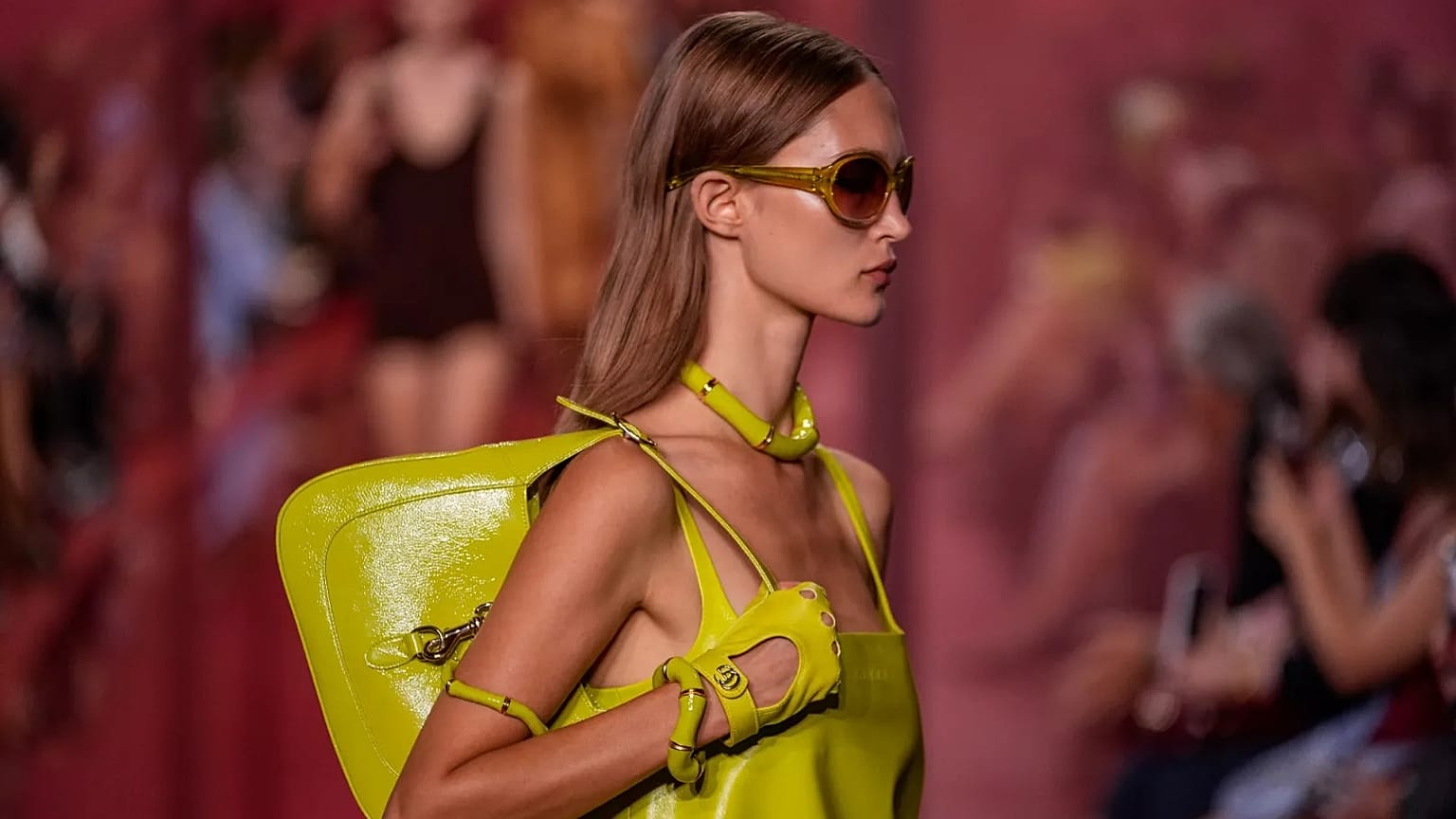
A model wears a creation as part of the Gucci Spring Summer 2025 collection, that was presented in Milan, Italy, Sept. 20, 2024.
Copyright AP Photo


By Peggy Corlin & Una Hajdari
Published on 

An investigation launched in 2023 revealed that Gucci, Chloé and Loewe imposed their own pricing policies on retailers, thereby increasing product prices and reducing consumer choice. Gucci was hit the hardest, with a fine of €119 million.

The European Commission on Tuesday fined Gucci, Chloé and Loewe €157 million for preventing their retailers from setting their own prices for products designed and sold by them, reducing competition and thus increasing tariffs and offering consumers less choice — actions in breach of EU antitrust laws.

“In Europe, all consumers, whatever they buy, and wherever they buy it, online or offline, deserve the benefits of genuine price competition,” European Commissioner for Competition Teresa Ribera said.

“This decision sends a strong signal to the fashion industry and beyond that we will not tolerate this kind of practices in Europe, and that fair competition and consumer protection apply to everyone, equally.”

What it means is that the brands have prevented retailers from undercutting the recommended price, running deeper discounts or timing their own sales. This limits the flexibility and price competitiveness between vendors, whether online or in physical stores, and the effective price floor stays high.

The Commission found all three brands ran schemes that stripped independent retailers of pricing freedom for almost their entire ranges — apparel, leather goods, footwear and accessories. Retailers were told not to deviate from “recommended” prices, cap discounts and stick to brand-dictated sales windows

In some cases, discounts were banned outright, while the brands monitored compliance and leaned on resellers who broke ranks.

Luxury and high-end brands place a lot of emphasis on the prestige element of their products, with Chloé boots or Loewe bags representing a status symbol for buyers. If the retailers drop the prices on their own, brands can argue that their image is being damaged.

Gucci hit the hardest

According to the EU antitrust watchdog, depriving retailers of their ability to set prices freely reduces competition between them, which violates the EU’s sacred principle of free and undistorted competition in the internal market, the objective being to give European consumers choice. It also increases prices.

The Commission’s investigation, which began in 2023 with inspections at companies' premises, also found that Gucci, Chloé and Loewe aimed to protect their own sales from competition by retailers themselves. Gucci alone even went as far as to forbid its retailers from selling a specific line of products online.

The Commission decided to crack down on the three fashion brands together, despite their independence, because the illegal practices occurred over roughly the same period — between 2015 and 2023 — and many of the retailers involved sold products from all three brands.

Gucci, Chloé and Loewe stopped their pricing policies towards their retailers when the Commission launched its investigation, it said.

Fines were calculated under the EU’s 2006 guidelines, factoring in gravity, duration, geographic scope and the value of sales concerned. All three companies received reductions for cooperating under the Commission’s antitrust procedures, with Loewe and Gucci receiving a 50% lower fine and Chloé getting their fine reduced by 15%.

In detail, Gucci was doled out the most significant fine of €119 million, followed by Chloe (€19 million) and Loewe (€18 million).

Crucially, the rulings also arm consumers and rivals — any person or company harmed can sue for damages in national courts, with the Commission’s final decision serving as binding proof that the behaviour occurred and was unlawful.

The EU’s Antitrust Damages Directive eases disclosure and quantification, smoothing the path to compensation.

So if you think you paid too much for your Loewe Puzzle Bag at a department store before 2023, consider filing a damages suit to get some of your money back.


European voters say no to tariffs


Uppsala University
Michal Grahh 

image: 

Michal Grahn, Assistant Professor at the Department of Government, Uppsala University

view more 

Credit: Mikael Wallerstedt


There is no popular support for imposing trade tariffs in Europe − not even in response to Trump’s trade policies. This is according to a new study based on responses from 5,500 people in Germany and the UK.

In two major opinion surveys in Germany and the UK, researchers investigated what people think about tariffs. Participants were asked to take a position on tariffs to protect their own country’s economy, support green investments and respond to Donald Trump’s new trade policies. The result was unequivocal: European voters reject tariffs no matter how they are justified.

“We were surprised at the consistency of the opposition. Even when tariffs were presented as a way of financing climate action, people preferred other economic solutions,” says Michal Grahn, a political scientist and first author of the study.

European voters prefer stability

The study, a collaboration between Uppsala University, the University of Reading and the University of Southampton, was conducted in conjunction with the introduction of the US tariffs in spring 2025, which targeted imports from both the EU and the UK. The researchers used conjoint experiments, where participants were asked to weigh different policy proposals against each other – just like in real elections.

In all, nearly 4,000 people took part in Germany and 1,500 in the UK. They were recruited via established online panels and the samples were representative of the population in each country. Participants were asked to choose between different economic policy packages setting tariffs against other options.

According to the study, trade tariffs are not an issue that scores political points. European voters prefer stability and cooperation to trade policy countermeasures. The researchers argue the results are important for European policy makers.

“Even at a time of global uncertainty, there is no widespread support for responding to US protectionism with tariffs of our own. There is an idea that tougher trade policies are popular, but our results show the opposite. European voters seem to favour caution over conflict,” Grahn concludes.


EU vows to protect Spain from Trump's tariff 'punishment' over NATO spending

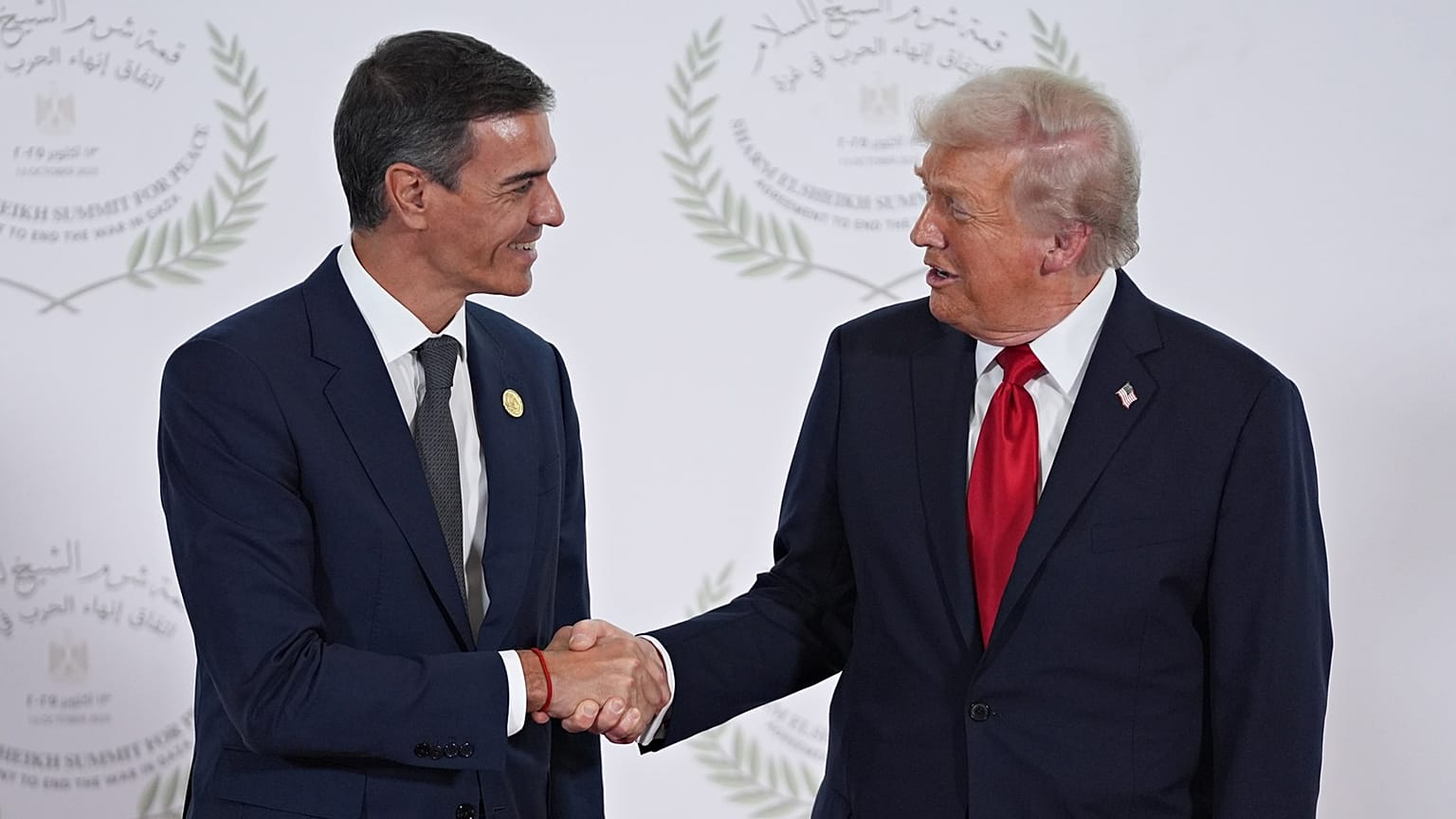
Pedro Sánchez and Donald Trump met in Egypt.
Copyright Evan Vucci/Copyright 2025 The AP. All rights reserved

By Jorge Liboreiro
Published on 

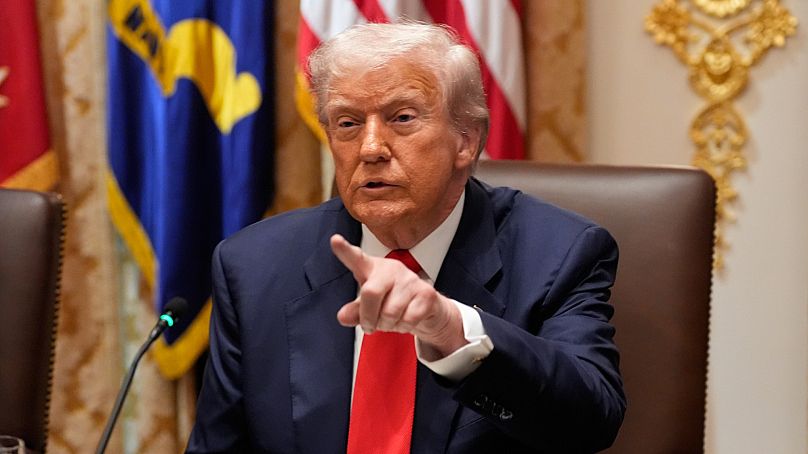
Donald Trump has threatened to unleash "trade punishment" on Spain in response to the country's refusal to meet NATO's 5% target.

Spain will be protected against any attempt by US President Donald Trump to impose punitive tariffs on the country in retaliation for its refusal to meet NATO's 5% target, the European Commission said on Wednesday, as the dispute over defence spending further interweaves with lingering trade tensions.

All EU countries, including Spain, are bound by a common commercial policy, which means their products face the same tariffs when they are sold abroad. Technically speaking, it would be possible for the US to single out Spanish-made goods at customs and place them under a duty higher than the 15% rate currently in place.

But for Brussels, which jealously guards its exclusive competence on trade, such discrimination would be anathema.

"We will respond appropriately, as we always do, to any measures taken against one or more of our member states," said Olof Gill, the Commission's spokesperson for trade.

Gill did not specify which action Brussels could undertake in response to the "hypothetical" scenario. Instead, he called for dialogue to resolve any disagreement.

"We now have an EU-US trade deal in place. This is a platform for addressing any further trade-related questions," he added.

The Commission's assurance came a day after Trump excoriated Spain's sluggish defence spending and raised the prospect of retribution through tariffs, an instrument that the Republican has deployed at large to advance his foreign policy goals.

"I think it's very disrespectful to NATO. In fact, I was thinking about giving them trade punishment through tariffs because of what they did. I may do that," Trump said, speaking to reporters in the White House.

"I think unbelievably disrespectful, Spain, the only one out of all the countries in NATO, the only (one) that said that is Spain. And I think they should be punished for that, yes."

US vs Spain

The friction between the US and Spain dates back to the NATO summit in June, when allies met in The Hague to agree on a new common commitment to devote 5% of their GDP to defence, a number that Trump himself had pitched.

The target was broken into two parts: 3.5% on core defence spending and 1.5% on related investments, like infrastructure, civil preparedness, innovation and industry.

In the lead-up to the gathering, Spanish Prime Minister Pedro Sánchez wrote a letter to NATO Secretary General Mark Rutte calling the 5% figure "unreasonable" and "counterproductive" and asking for a tailor-made exemption for his country.

Sánchez argued that Spain, which only recently reached the previous 2% goal, could only attain the 5% mark by making painful cuts to social spending, a step that his progressive coalition government was not willing to tolerate.

The language of the final NATO declaration was adjusted to allow greater flexibility in reaching the 5% target, effectively sparing Spain from the pledge.

\
Donald Trump has once again lashed out against Spain's defence spending. Copyright 2025 The Associated Press. All rights reserved

Since then, Trump has repeatedly bemoaned and denounced the Spanish exemption, suggesting, at one point, the nation be "thrown out"from the Atlantic alliance.

Trump met Sánchez on Monday at a peace summit in Egypt to celebrate the liberation of the Israeli hostages and the start of a ceasefire in Gaza. Both leaders shook hands and appeared to share a moment of complicity.

"Are you working here on GDP? Well, we'll get to that," Trump told Sánchez, who smiled back. "But you're doing a fantastic job."

Sánchez later told a Spanish radio that his exchange with Trump was "very cordial" and that he remained committed to both collective defence and the welfare state.

"Relations between the United States and Spain are very positive, very deep and very consolidated," the premier said.

'Very unhappy'

But upon his return to Washington, Trump's tone soured, saying he was "very unhappy" with Spain for "doing very well off our backs". The Republican linked Spain's refusal to hike defence spending to its geographic location in southern Europe.

"Spain gets protection, and they know, you know, look, they're sort of in the semi-middle of it, so they're going to get protected automatically. Even if you don't want to protect them, you are protecting them because of the way they're located," Trump said.

"I think what Spain did is a very bad thing for NATO. I think it's very unfair to NATO. It wouldn't matter if you said you're not going to protect them because they're pretty much protected, you know? What are you going to do? Go through the other countries, and let's go attack Spain, right? So I think what they did is not nice."

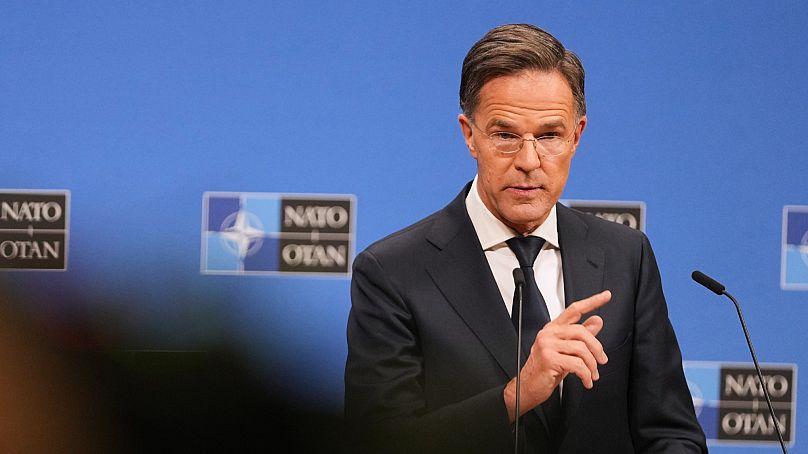
Asked about the comments, NATO Secretary General Mark Rutte said Trump's leadership had been "extremely important" to enshrine the 5% objective.

"In The Hague, we had unanimity," Rutte said on Wednesday. "Spain totally agreed to the capabilities targets. So I think that's important to note."

NATO Secretary General Mark Rutte weighed in on the comments. Copyright 2025 The Associated Press. All rights reserve

If Trump made good on his commercial threat, which is unclear at this stage, it would represent a frontal assault on the terms of the EU-US trade deal concluded in July

Under the agreement, the vast majority of EU-made goods bound for the US market are subject to an "all-inclusive" 15% tariff, triple the previous rate, while the vast majority of US-made goods bound for the EU market are completely exempt from duties.

A select group of products, such as aircraft, critical raw materials and semiconductor equipment, benefits from a "zero-for-zero" scheme. Brussels has so far failed to convince Washington to include wines and spirits, a strategic sector for Europeans.

Additionally, the bloc has committed to spending $750 billion on US energy, investing $600 billion in the American economy and buying $40 billion worth of US-made AI chips by the end of Trump's mandate. The US did not make any similar pledges.

A crucial text of the deal still needs the approval of the European Parliament, where opposition to its lopsided nature is entrenched across the political spectrum.

In the meantime, the Trump administration continues to complain about the bloc's digital and green regulations, which Brussels insists are off the table.


Feeling the strain: Italian pasta makers reach boiling point over Trump tariffs

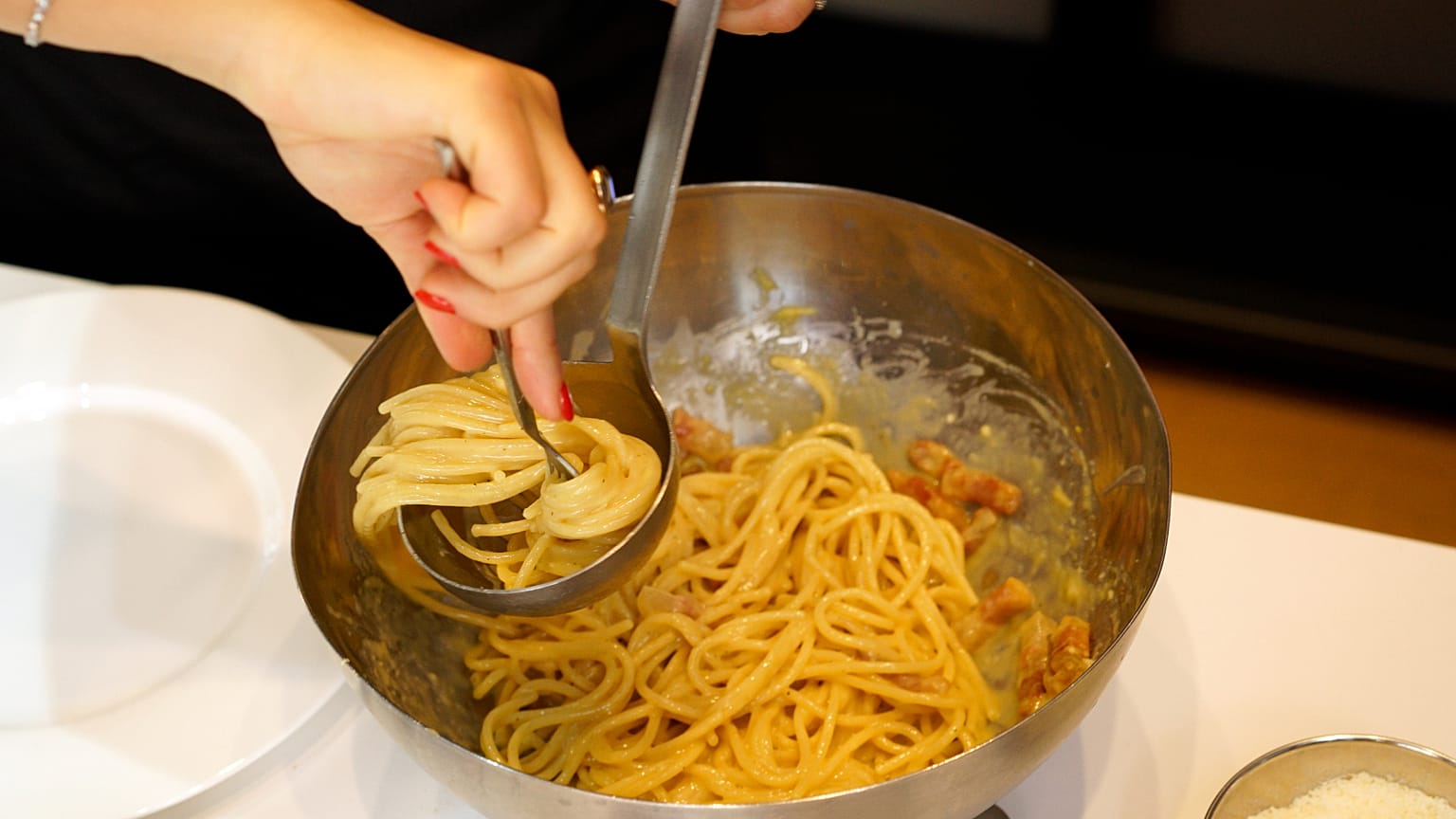
A woman spoons onto a plate some "spaghetti alla Carbonara" during a cooking competition on the eve of the Carbonara Day, in Rome, April 5, 2019.
Copyright AP Photo

By Peggy Corlin
Published on 


Faced with the threat of exorbitant US tariffs, Italian pasta producers are hoping for political support — and that they will not have to wait for a legal resolution to their case.

In the global trade storm unleashed since US President Donald Trump’s return to power, Italian pasta producers are feeling very much alone.

On 4 September, the US Department of Commerce announced preliminary tariffs of 91.74% on 13 pasta brands.

If upheld, the tariffs would take effect in January 2026, delivering a significant blow to Italy, which exported nearly €700 million worth of pasta to the United States in 2024.

“It’s unfair, it’s a protectionist action of the US against Italian pasta,” Margherita Mastromauro, president of Unione Italiana Food, the largest association of food producers in Italy, told Euronews.

After flying under the radar for a month, the case is now drawing increasing attention, driven by pressure from Italian industry players.

Nevertheless, in the US administration’s tariff battle, pasta stands out as a special case.

It originated in 1996, when US pasta producers accused Italian manufacturers of dumping — selling their products in the American market at prices lower than those in Italy.

Since then, Italian producers have been regularly subject to tariffs, but never of the magnitude now decided by the Trump administration.

Combined with the 15% duties that now apply to EU imports into the US, the total tariff burden would reach 106.74% if implemented. The pasta makers say this is brutal.

“We need help, because a large part of our companies are involved. With a duty so high, it means that all these companies will not export until the new review will be done," Mastromauro said.

The investigation covered the period from 1 July 2023 to 30 June 2024. Italian producers hope the 2025 year-end review will bring them some relief. But for now, the future remains uncertain.

Can the fight become political?

The companies have been scrambling to get these tariffs lifted since September.

Two of them, Garofalo and La Molisana, have taken legal action against the decision.

The Italian government and the European Commission have begun to get involved. However, room for manoeuvre remains limited in what is, according to the president of Unione Italiana Food, more a “legal” than a “political” matter.

Italian Agriculture Minister Francesco Lollobrigida denounced "a hyper-protectionist mechanism against our pasta producers".

And in Washington, Italian representatives are actively working to make their voices heard.

The Italian Foreign Ministry has said the duties were “disproportionate” and has joined the case before the US Department of Commerce as an “interested party” to weigh in favour of this key sector of Italy’s economy.

For its part, the Commission — which has seen trade disputes with the US pile up in recent months — is staying prepared. Dialogue is one path possible through the channels opened by the tariff agreement concluded in July between Brussels and Washington, which set US duties on EU imports at 15%.

Its implementation is being closely monitored on both sides of the Atlantic, amid persistent doubts over whether Trump will keep his word.

It is unclear whether Italian pasta will make its way onto the list of European demands, with the EU still negotiating to remove 50% US tariffs on EU steel and to secure exemptions from the blanket 15%.

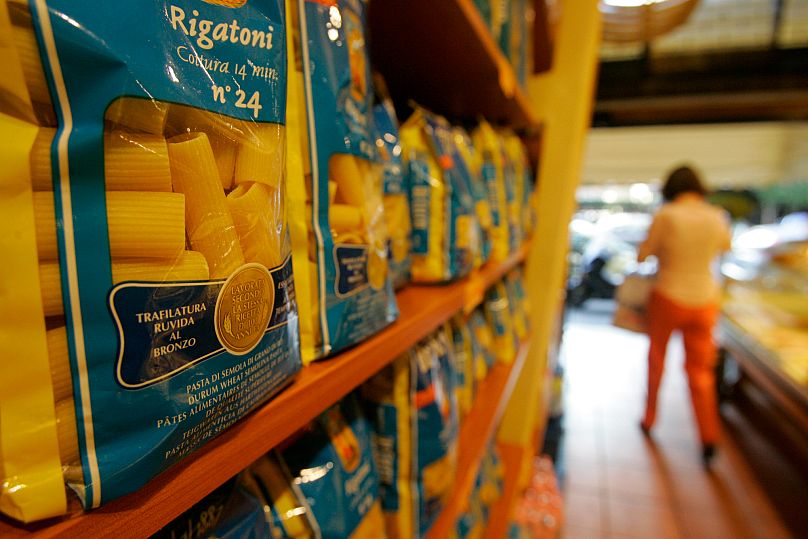
FILE: Pasta is seen on the shelves of a shop in downtown Milan, 12 September 2007 AP Photo

Asked by Euronews, an EU official conceded that, unlike the unilateral tariffs imposed on other EU products — which violate rules of the World Trade Organisation (WTO) which regulates international trade — the US anti-dumping action against pasta appears to be done in a traditional way, as a trade defence mechanism allowed by the WTO.

“We are closely monitoring the case, and if there 

are flaws in the investigation, we will question it and we will raise the issue with the WTO,” the official told Euronews.

If that were the case, it could lead to retaliatory measures from the EU.

The European Parliament is not standing idly by either, even though, when it comes to trade matters, it is the European Commission that holds the competence.

Socialist Italian MEP Brando Benifei, who leads the Parliamentary delegation for relations with the US, condemns the US action that he considers “clearly discriminatory”.

“This has to be solved and we urge the Commission to act through,” he told Euronews.

But why target Italy? The question arises, given that Italian Premier Giorgia Meloni is known for her good relations with Trump.

A European source told Euronews that this case could result from a dispute between the US Trade Representative and the US Department of Commerce, the two main arms of the American administration in trade policy.

Both have been juggling responsibilities since Trump’s return, and one may have tried to outdo the other by targeting the iconic Italian pasta.


‘Simply scandalous’: Report exposes how factory farming worsens world food waste

Factory farming could have major hidden links to global food waste
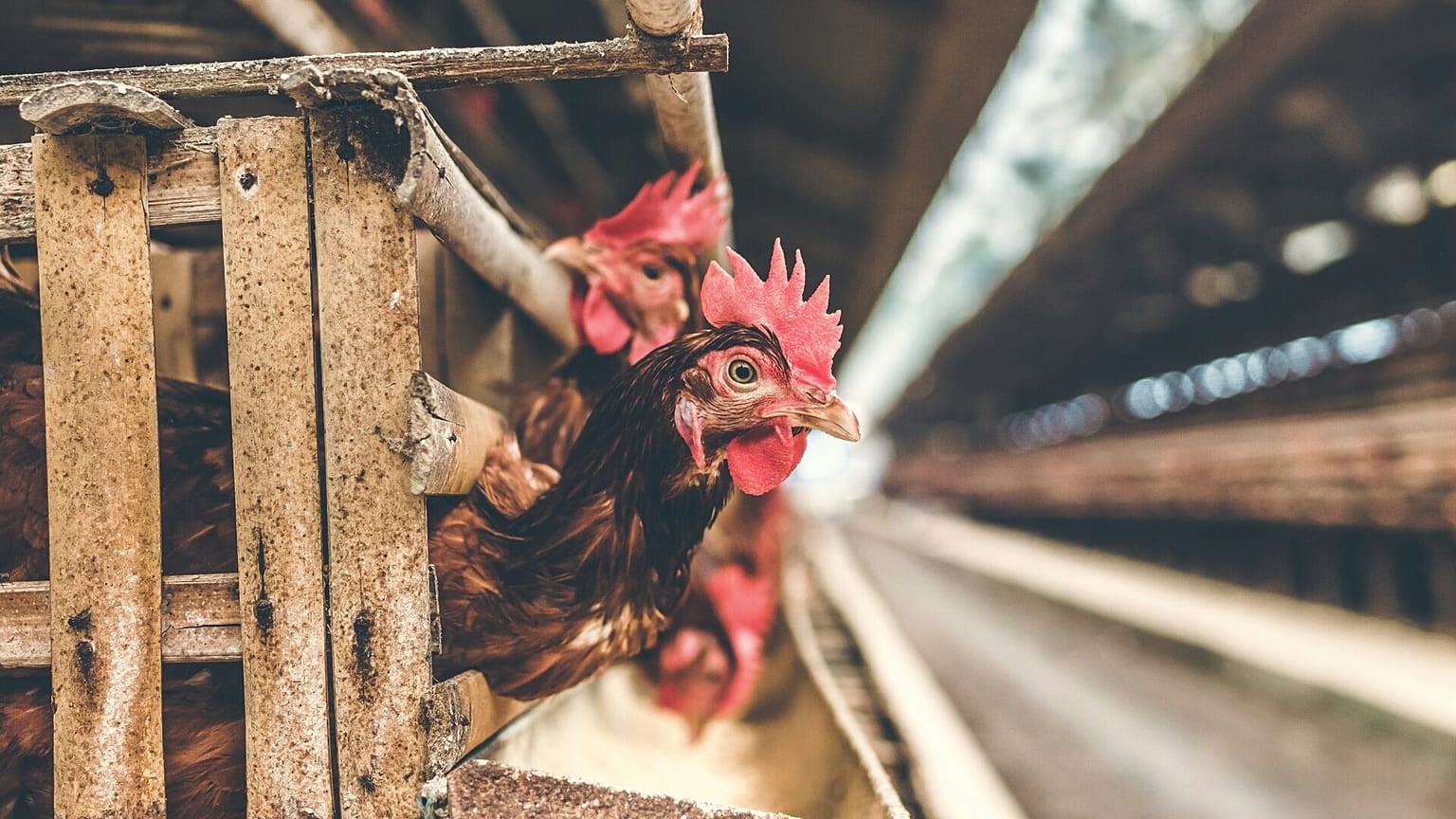
Copyright Artem Beliaikin/Unsplash

By Craig Saueurs
Published on 

Farmland the size of Mexico could be freed up if we stop feeding grain to factory-farmed animals, says NGO.

Two billion more people could be fed every year if the world stopped feeding grain to factory-farmed animals, according to a new report published today by Compassion in World Farming.

The world could also free up farmland nearly equal the size of Mexico if the practice were to end.

Released on World Food Day, the findings reveal the extent to which factory farming has affected food supplies, as well as the inefficiencies that worsen global food waste.

“It is simply scandalous that while hundreds of millions of people go hungry and we face a triple planetary crisis, we are allowing hundreds of millions of tonnes of food to be wasted every year by being fed to factory-farmed animals,” says Peter Stevenson, chief policy advisor at Compassion in World Farming, the animal welfare and environmental NGO that produced the report.

A problem with many causes


Food waste is a complex issue with many causes.

Globally, the WWF reports that 1.2 billion tonnes of food – over 15 per cent of all production – is lost before it even leaves the farm.

According to EU statistics, the bloc wastes nearly 60 million tonnes of food every year on its own, a loss of €132 billion in total value. About 9 per cent of that waste is from primary food production such as farming and 18 per cent from the processing and manufacturing sector. More than half is reported to come from households.

This new analysis offers a counter-narrative.

By the NGO’s calculations, 766 million tonnes of grain are wasted each year by being fed to factory-farmed animals, which it claims is more than households (631 million tonnes), food service (290 million tonnes) or retail (131 million tonnes).

The impact of the practice also affects land use while expanding the use of monocultures, chemical pesticides and fertilisers that have knock-on effects on soil quality, biodiversity loss, and water and air pollution.

If the EU were to stop using grain to feed factory-farmed animals, almost 15 million hectares of arable land could instead be devoted to growing food for people, the NGO claims. That amounts to a land mass about the size of Greece.

Almost 125 million tonnes of grain in the EU are wasted by being fed to animals, the NGO adds. That’s enough to feed an extra 247 million people per year.

In the US, the figures are starker. Around 160 million tonnes of grain are used as animal feed, an amount that could feed more than 280 million more people.

The problem is compounded by inefficiencies in production.

The report says we yield just 3 to 25 calories of meat for every 100 calories of human-grade grain we feed to factory-farmed animals.

By its estimate, the world will need to produce around double the amount of grain to feed them by 2040 if nothing changes.

What is being done to address food waste?

Earlier this year, the EU approved its first legally binding targets for member states to cut food waste. Lawmakers agreed on a 30 per cent cut for retailers, restaurants, caterers and households by 2030, and 10 per cent for food processors and manufacturers.

Those figures represent a fraction of the amount member states had previously pledged.

“The EU and its member states committed to the UN Sustainable Development Goals 10 years ago, including a 50 per cent reduction of food waste across the entire supply chain,” Theresa Mörsen, a policy officer at the NGO Zero Waste Europe, said in February.

Compassion in World Farming proposes regenerative farming as a solution, suggesting that animals be fed products humans cannot eat, including pasture, by-products and food scraps. Alongside the report, the NGO has released an interactive tool that reveals the amount of food wasted through factory farming in several countries.

The group is now asking supporters to sign an open letter to urge governments to adopt policies that prioritise food production for people rather than animal feed.

“Governments must stop propping up wasteful grain-based factory farming with public money through subsidies and adopt fair policies that prioritise food over feed,” Anderson declares.

The full report and interactive tool can be found here.