Saturday, October 18, 2025

 US sinks international plan to cut shipping emission's


An international vote to approve a global plan to cut maritime emissions was postponed for a year Friday, marking a win for the United States, which opposed the carbon-cutting scheme amid sharp divisions among member countries.


Issued on: 17/10/2025 -
By: FRANCE 24
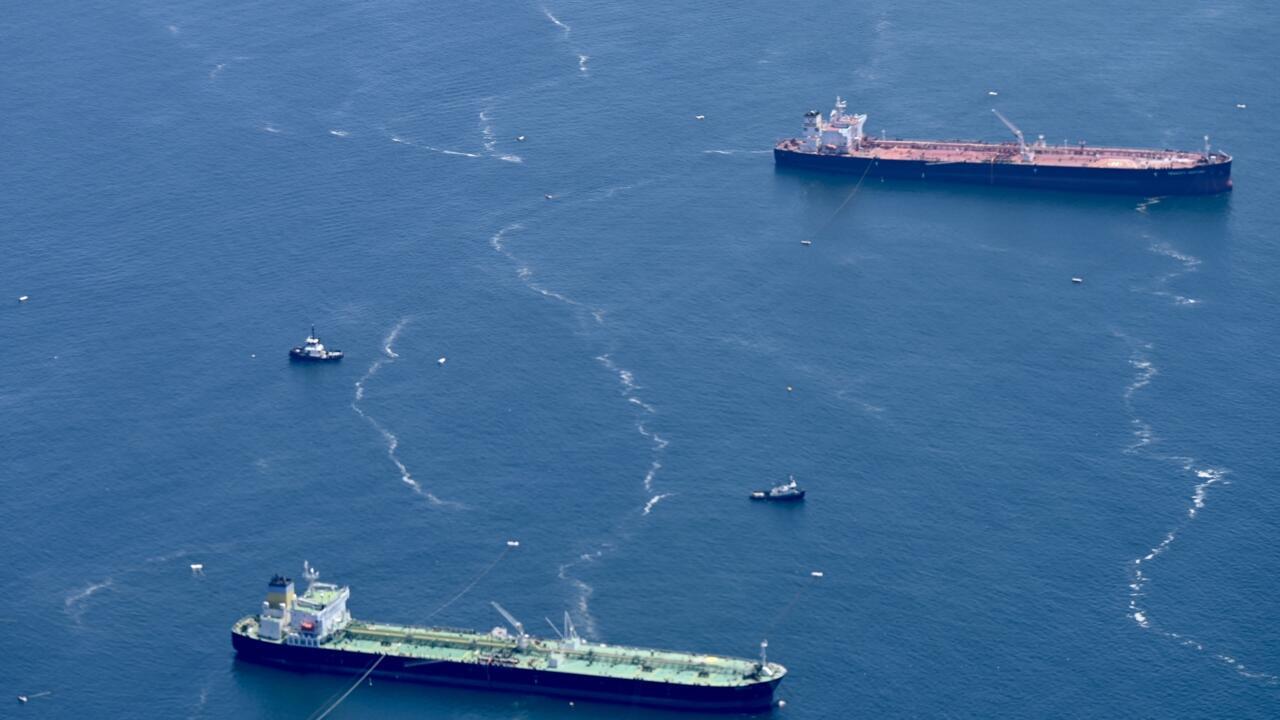
The London-based IMO, which is the shipping body of the United Nations, voted in April for a global pricing system to help curb maritime carbon emissions. © Daniel Slim, AFP

An international vote to formally approve cutting maritime emissions was delayed by a year Friday, in a victory for the United States which opposes the carbon-cutting plan.

The London-based International Maritime Organization (IMO), which is the shipping body of the United Nations, voted in April for a global pricing system to help curb greenhouse gases.

But a vote on whether to formally approve the deal was cancelled on Friday until next year after US President Donald Trump threatened sanctions against countries backing the plan.

Increased divisions, notably between oil producing nations and non-oil producers, emerged this week at meetings leading up to Friday's planned follow-up vote to approve the scheme.


Delegates instead voted on a hastily-arranged resolution to postpone proceedings, which passed by 57 votes to 49.

Trump on Thursday said the proposed global carbon tax on shipping was a "scam" after the United States withdrew from IMO negotiations in April.

A Russian delegate described proceedings as "chaos" as he addressed the plenary Friday after talks had lasted until the early hours.

Russia joined major oil producers Saudi Arabia and the United Arab Emirates in voting against the carbon-reduction measure in April, arguing it would harm the economy and food security.

IMO Secretary-General Arsenio Dominguez, representing 176 member states, pleaded Friday that he hoped there would be no repeat of how the week's discussions had gone.

"It doesn't help your organisation, it doesn't help yourself," he told delegates.

Trump 'outraged'

Since returning to power in January, Trump has reversed Washington's course on climate change and encouraged fossil fuel use by deregulation.

"I am outraged that the International Maritime Organization is voting in London this week to pass a global Carbon Tax," Trump wrote on his Truth Social platform Thursday.

"The United States will NOT stand for this Global Green New Scam Tax on Shipping," he added, urging countries to vote against it.

Washington threatened to impose sanctions, visa restrictions and port levies on those supporting the Net Zero Framework (NZF), the first global carbon-pricing system.

Liberia and Saudi Arabia called for Friday's vote to be postponed.

"We agree with the United States that it's important that these conversations are brought to light," a Saudi representative said.

Ahead of this week's London gathering, a majority 63 IMO members that in April voted for the plan had been expected to maintain their support and to be joined by others to formally approve the NZF.

Argentina, which in April abstained from the vote, now opposes the deal.

Leading up to Friday's decision – China, the European Union, Brazil, Britain and several other members of the IMO – reaffirmed their support.

The NZF requires ships to progressively reduce carbon emissions from 2028, or face financial penalties.

Shipping accounts for nearly three percent of global greenhouse gas emissions, according to the IMO, while the CO2 pricing plan should encourage the sector to use less polluting fuels.

The Philippines, which provides the most seafarers of any country, and Caribbean islands focused on the cruise industry, would be particularly impacted by visa restrictions and sanctions.

The plan would charge ships for emissions exceeding a certain threshold, with proceeds used to reward low-emission vessels and support countries vulnerable to climate change.

Pacific Island states, which abstained in the initial vote over concerns the proposal was not ambitious enough, had been expected to support it this time around.

If the global emissions pricing system was adopted, it would become difficult to evade, even for the United States.

IMO conventions allow signatories to inspect foreign ships during stopovers and even detain non-compliant vessels.

(FRANCE 24 with AFP)


Trump’s Policy Pivot Could Leave the Energy Transition Dead in the Water


  • Since President Trump took office, the U.S. has rolled back subsidies and support for renewables, leading to over $19 billion in canceled wind and solar projects.

  • Analysts at DNV say Trump’s policies will only delay, not derail, global decarbonization.

  • Despite global efforts, net-zero progress is stalling.
 BECAUSE OF TRUMP REVANCHIST SABOTAGE

Since President Trump took office, several associations set up to advance the agenda of net-zero in the financial world have dissolved, and wind and solar developers have pleaded for help to survive. Even carmakers have quietly revised their plans for an electric future—not only in the U.S.

This policy shift has led to massive project cancellations, with a staggering $22 billion worth of clean energy projects being nixed in the first half of 2025 alone, according to analysts.

Additionally, the Department of Energy (DOE) recently terminated $7.56 billion in financial awards for hundreds of clean energy projects, citing a lack of economic viability. Despite this dramatic reversal in federal support, many still believe Trump’s presidency cannot stop the shift to alternative energy sources and emission-cutting.

Subsidies Pulled From Renewable Projects 

Many have, in fact, been saying that whatever happens in the United States, the rest of the world would remain firmly on the path to decarbonisation because it is the only path that makes sense and ensures affordable and reliable energy, at some point in the distant future. For the time being, the alternative energy intended to replace hydrocarbons still requires significant support from governments in the form of subsidies and special legislation aimed at encouraging its growth.

Related: Saudi Aramco: Underinvestment Could Lead to Oil Supply Crunch

What Trump has done in the U.S. is remove a lot of that support, essentially leaving industries such as wind and solar power, and electric vehicles, to try and survive on their own, without the crutches of government help. It seems this is not the easiest thing. Indeed, since Trump took office, some $19 billion worth of wind and solar projects have been canceled, consultancy Atlas Public Policy reported in August.

The China Paradox and DNV's Optimism

Norwegian consultancy DNV, however, says that what the U.S. does with its energy policy would only have a marginal effect on the rest of the world in terms of transition progress. All that Trump’s second term in office would do is delay the emission decline that would have otherwise taken less, DNV said in a report this week. Meanwhile, China continues breaking records in wind and solar deployment, the consultancy went on to say, noting that it has this year accounted for 56% of new solar capacity additions and 60% of new wind capacity globally.

It may be interesting to note here that China’s emissions have been surging since the start of the new millennium, with the annual total of 2001 at 2.92 tons per capita, rising to 8.37 tons per capita by 2023. What’s more, China’s emissions continued rising strongly while it was deploying record amounts of wind and solar capacity and only stopped growing this year, at least according to Carbon Brief. The net-zero advocacy reported earlier this year that China’s emissions of carbon dioxide fell by 1.6% on the year over the first quarter of 2025 and by 1% over the 12 months to May 2025.

DNV sounded a note of confidence in its report, with the company’s group CEO saying that “The global energy transition is not stalling — it is evolving, with momentum shifting to regions that are doubling down on clean technologies. Security has become the dominant driver of energy policy, and as our forecast shows, this is in sum accelerating the shift to renewables.”

Global Targets Slip Off Course

The progress of the transition in one of the most pro-transition parts of the world—Europe—is stalling, despite the doubling down on net-zero targets and priorities. Some have blamed the effect of the U.S. tariffs, others point to supply chain problems, and many blame insufficient grid upgrade investments and red tape but the fact remains that the shift from oil and gas to wind and solar is slowing down—not only in Europe.

The International Renewable Energy Agency reported earlier this month that global net-zero progress has stalled. Global renewable capacity additions hit 582 GW in 2024, but the so-called UAE Consensus goal of 11.2 TW of renewable capacity by 2030 now implies that annual additions must reach 1.122 TW per year from 2025 onward, which would be a sustained growth rate of 16.6% annually. It would also be impossible to do, based on current wind and solar progress.

So, it seems that the United States’ pivot away from decarbonisation has had something of a ripple effect across the world. But more than that, it seems that those transition critics who called decarbonisation targets unrealistic were right.

By Irina Slav for Oilprice.com

US jury finds French bank BNP Paribas liable for damages for enabling Sudan atrocities

A New York jury on Friday found BNP Paribas liable for more than $20 million in damages to three Sudanese refugees, now US citizens, who argued that the French bank helped prop former strongman Omar al-Bashir's regime during its brutal campaigns, conducted by Sudanese soldiers and the Janjaweed militia, against unarmed civilians.


Issued on: 18/10/2025 
By:FRANCE 24

A New York jury on October 17, 2025 found BNP Paribas operations in Sudan helped to prop the Omar al-Bashir regime, making it liable for atrocities. © Jacques Brinon, AP
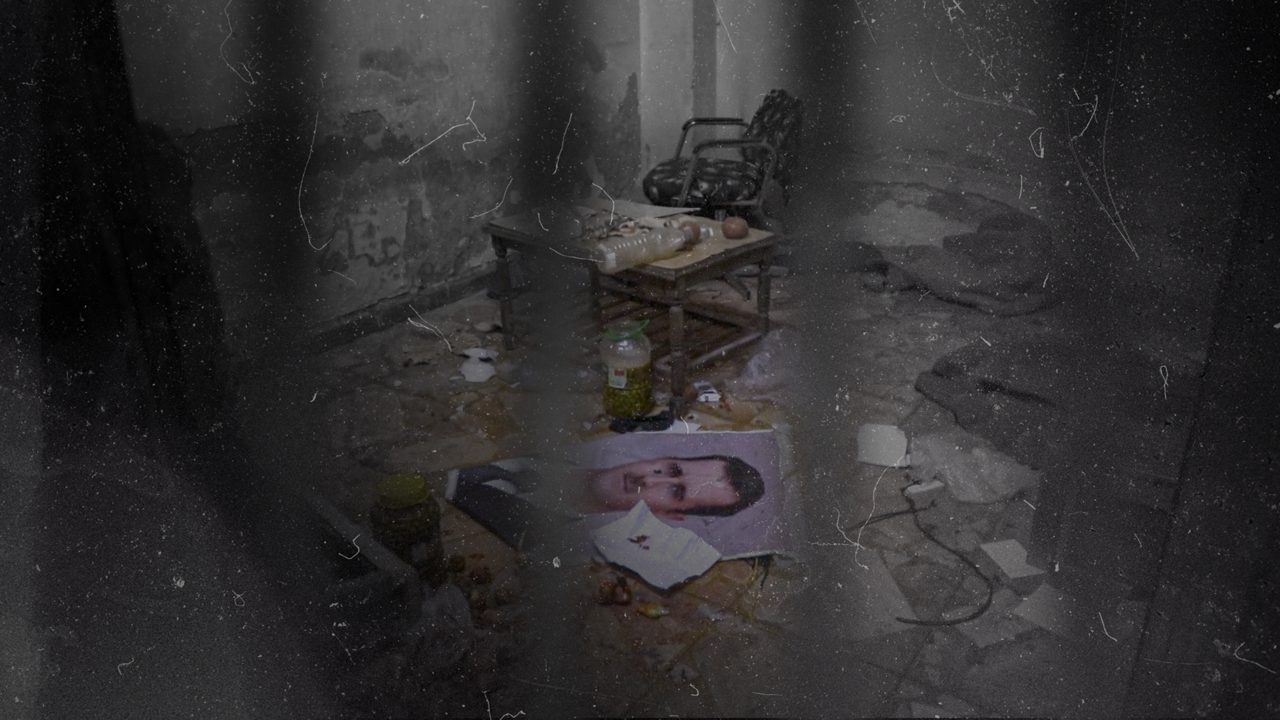

A New York jury on Friday found that French banking giant BNP Paribas's work in Sudan helped to prop up the regime of former ruler Omar al-Bashir, making it liable for atrocities that took place under the regime.

The eight-member jury sided with three plaintiffs originally from Sudan, awarding a total of $20.75 million in damages, after hearing testimony describing horrors committed by Sudanese soldiers and the Janjaweed militia.

The plaintiffs – two men and one woman, all now American citizens – told the federal court in Manhattan that they had been tortured, burned with cigarettes, slashed with a knife, and, in the case of the woman, sexually assaulted.

"I have no relatives left," Entesar Osman Kasher, 41, had testified.


A spokesperson for BNP Paribas said in a statement to AFP that the ruling "is clearly wrong and there are very strong grounds to appeal the verdict, which is based on a distortion of controlling Swiss law and ignores important evidence the bank was not permitted to introduce".

Plaintiffs' attorney Bobby DiCello called the verdict "a victory for justice and accountability".

"The jury recognized that financial institutions cannot turn a blind eye to the consequences of their actions," DiCello said. "Our clients lost everything to a campaign of destruction fueled by U.S. dollars, that BNP Paribas facilitated and that should have been stopped."

BNP Paribas "has supported the ethnic cleansing and ruined the lives of these three survivors," he said during closing remarks Thursday.

The French bank, which did business in Sudan from the late 1990s until 2009, provided letters of credit that allowed Sudan to honor import and export commitments.

The plaintiffs argued that these assurances enabled the regime to keep exporting cotton, oil and other commodities, enabling it to receive billions of dollars from buyers.

They alleged that these contracts helped finance violence perpetrated by Sudan against a part of its population.

But defense attorney Dani James argued "there's just no connection between the bank's conduct and what happened to these three plaintiffs".

Attorneys for BNP Paribas also said the French bank's operations in Sudan were legal in Europe and that global institutions such as the International Monetary Fund partnered with the Sudanese government during the period in question.

Moreover, defense attorneys said the bank had no knowledge of the human rights violations.

The plaintiffs would have "had their injuries without BNP Paribas", said attorney Barry Berke. "Sudan would and did commit human rights crimes without oil or BNP Paribas."

The war in Sudan claimed some 300,000 lives between 2002 and 2008 and displaced 2.5 million people, according to the United Nations.

Bashir, who led Sudan for three decades, was ousted and detained in April 2019 following months of protests in Sudan. He is wanted by the International Criminal Court on genocide charges.

(FRANCE 24 with AFP)
Rape: Assad's weapon of war during the Syrian revolution


Long read


From our special correspondent in Turkey and Syria – In 2011, when many Syrians rose up to contest Bashar al-Assad's unchallenged power, the regime arbitrarily arrested thousands of men, women, and children. In notorious detention centres, the regime used rape and sexual violence as weapons of war against Syrian women. 

Issued on: 18/10/2025 
FRANCE24
By:
Assiya HAMZA/
Dana ALBOZ


In 2011, when many Syrians rose up to contest Bashar al-Assad's unchallenged power, the regime arbitrarily arrested thousands of men, women, and children and used rape and sexual violence as weapons of war. © Studio graphique FMM

“The first rape was the worst. I remember every second of that first night. It lasted four hours."

Asma was arrested in 2016 for delivering aid to the besieged population of Eastern Ghouta, an opposition stronghold suburb of Damascus. She was detained for a year in Bashar al-Assad's prisons. And repeatedly raped.

Asma was raped 13 times over 18 days. First by one officer, then by soldiers. Her ordeal at times included sexual penetration with objects. The violations, brutal, dehumanising and merciless, were all conducted in Branch 235, better known as the Palestine Branch (Far Falastin in Arabic), a prison run by Assad’s dreaded Military Intelligence Directorate. “I counted them like the number of steps in the Palestine Branch. It's impossible to forget,” said the Syrian woman, who is now a refugee in Turkey.


In 2011, when many Syrians rose up to challenge Assad’s stranglehold on power, the “Butcher of Damascus” unleashed a fearsome crackdown. The regime arrested and arbitrarily imprisoned men, women, and children, regardless of age or religion. A mere suspicion or denunciation could lead to imprisonment in the country's prisons, the most feared of which were the security branches in the Damascus area. These detention centres were the scene of systematic torture and sexual violence.

Houda was “chosen” as soon as she arrived at the Palestine Branch. She was just 18 at the time. The teenage detainee was blindfolded and taken to a room. “I think there were three of them. One person would come in, another would leave. I could only hear their footsteps,” she said, recounting details of her four-month detention in 2015 in the Palestine Branch. “They said my body was ‘still clean’. I will never forget that word: clean,” she said with a shudder.

Her gang rape was brutal, and included anal and vaginal penetration. “I would have preferred to be tortured, beaten, hung on the wall. Anything but that. Torture is easier than rape."

Yasmine was a 22-year-old virgin when she was arrested in 2015. “The rapist's name was Nader. He wasn't an officer,” she explained. “I was so scared that my legs were shaking. I couldn't stop them.”

Nader was drunk and forced Yasmine to drink arak, a distilled alcohol popular in the Levant. Yasmine had never had alcohol before, but she had no choice. She was then raped. And then again and again during 25 days.

Her ordeal continued in another prison, Branch 215, nicknamed the “Branch of Death”, in the suburbs of the capital. The jailers sexually assaulted her in the archive room without blindfolding her. "They put my hands on the desk and a piece of sponge in my mouth. One soldier raped me and two others stood at the door to watch.”

Over the next three months, Yasmine was repeatedly raped. “I stopped counting. It was always in the same room,” she said. “I couldn't feel anything anymore. I didn't want to leave, I was praying for death. I wanted it to end.”

Read more Rape and torture in Assad's prisons: Syrian women break their silence

Women as weapons of war

During the 13-year uprising against Assad’s Baathist regime, Syrian women found themselves on the frontline of the war, against their will. “The Syrian regime used women as weapons, and to put pressure on society,” explained Hala Haza, co-founder of Women Survivors, an NGO also known as Najiyat in Arabic. “Women are often associated with honour. The regime took advantage of this to use them to break the revolution and Syrian society."

This method was particularly used to terrorise the populace when the regime's power was at its weakest on the ground. “The period between 2013 and the end of 2017 saw the highest incidence of sexual violence and torture in detention. There was a lot of fighting,” explained Dr. Mohammed Al Sharif, from the Syrian NGO, Lawyers and Doctors for Human Rights (LDHR).

Since 2012, the LDHR has documented more than 700 cases of sexual violence across Syria. Al Sharif, a physician trained in the Istanbul Protocol – an international set of guidelines for the medical documentation of torture, sexual violence and its effects – has worked on 107 cases involving men, women, and children. “All forms of sexual torture in detention were carefully chosen and used repeatedly,” explained the Syrian doctor based in Idlib, an anti-Assad opposition stronghold province. “The violence was repetitive and systematic. There were instructions that probably came from higher authorities.”

Each detention centre had its own practices. “In each branch, there was a repeated pattern of serious sexual violence, but it differed from one branch to another,” explained Al Sharif. In some prisons, women were often raped. In others, they were forced to undress or had their genitals electrocuted. When women were not raped, they were used to torture men. “During torture, the guards blindfolded the detainees, but during sexual violence, they were not blindfolded so that the prisoners could watch others being raped or sexually assaulted,” he noted. “They realised the impact these scenes would have on Syrian society.”

Asma, who spent a year in detention undergoing rape and harrowing torture, confessed that the experience of having to watch a rape or sexual violation of a fellow prisoner was particularly distressing. “I will never be able to forget the naked men being tortured or raped before my eyes. Watching others being raped was a way of torturing us. It was harder than my own rape,” she explained.

To maintain a climate of perpetual terror, female prisoners were constantly threatened with rape. This weapon was also used against their loved ones. “The consequences were horrific because it forced the female prisoners to admit to false accusations,” said Al Sharif.

Houda, for instance, said she was ready to sign a confession despite her innocence. "They said they would go after my mother or sister if I didn't talk. Among the accusations was sex jihad. I didn't even know what that was. But under torture, I said I had done everything,” she recounted.

“Jihad al-nikah,” literally “sex jihad” is a controversial concept, disputed among academics and experts. It refers to Muslim women who are sympathetic to a cause offering themselves to fighters in the name of holy war. It was an accusation widely used by the Assad regime to condemn Syrian women. “They accused women of engaging in jihad al-nikah even though some of them were virgins. Then they raped them. It was as if they wanted to prove it,” said Haza from Women Survivors (Najiyat). “It was a criminal and deceitful regime.”

The taboo of rape in Syria


In Syria, as is the case in many other countries where rape is a taboo topic, few victims dare to speak out even months after Assad’s ouster. His regime’s widespread use of rape in the detention system has done little to break the taboo. Rape is such a sensitive topic, linked to a woman’s honour, that speaking out and denouncing the regime's atrocities runs the risk of social ostracism. Sometimes even by one's own family.

“Today, I suffer from society's judgmental gaze. The rape itself was less difficult than [the comments] I heard [from people] outside [the prisons]. It’s especially painful when it comes from people who know you. People who are close to you,” lamented Yasmine. “Some people said I was crazy. People didn't understand any of it. They didn't know how to behave around me,” added Houda.

Victims of the former regime's atrocities are now victims of society – even if they were not raped. “Survivors of detention cannot resume their lives because of the stigma,” acknowledged Dr. Zina Hallak, who has documented 53 cases, including those of 30 women, for LDHR. This has led some men to divorce their wives because, in their view, some form of sexual violence must have taken place. Sometimes they don't divorce, but they no longer see them. Yet they did nothing wrong. They were simply detained arbitrarily."

Fears of rejection and despair have prompted many victims to go into hiding. Many avoid seeking treatment so they don't have to answer embarrassing questions from doctors. Victims often contemplate suicide, during or after detention. "I was just afraid of what my parents would think. I even thought about killing myself,” Yasmine confided.

It's a double punishment for these Syrian women, one that must be addressed, they insist. “Detention is not a shameful thing. Men and women have been raped,” said Asma. “You shouldn't feel humiliated. Rape was a form of torture." By breaking the code of silence, Yasmine hopes to spark a collective awakening. “People say to us, ‘So what if you're ex-prisoners? Men have been through a lot too.’ But it's different,” she insisted. “We died inside. We became pariahs. Society must understand that we did not choose to be raped."
War crimes and crimes against humanity

The fall of the Assad regime has sparked hopes that attitudes will change, and above all, that justice will be served. It’s likely to be a long process in which “all those who have suffered abuse or rape must be able to participate", said Haza.

However, according to Ali al-Zeer, a lawyer at the Damascus bar specialising in transitional justice, this is not easy to achieve. “There are women who do not file complaints because they do not want to bring shame on their families. The more we work to break social stigmas, the more we help women to seek justice,” he maintained. “We need to draft laws to condemn sexual violence and establish specific procedures for investigations and trials.”

But how can justice be done for the countless victims of the Assad clan when those primarily responsible for the repression are on the run? Since he fled Syria on December 8, 2024, the “Butcher of Damascus” has taken refuge in Russia. Several requests for extradition, notably from the new Syrian authorities, have gone unheeded. “If criminals are not prosecuted, it will send a negative message. It means that anyone can commit a crime and get away with it,” explained al-Zeer. “This risks encouraging repeat offences. It will also have a negative impact on victims if criminals are not held accountable. We risk seeing reprisals and acts of revenge.”

On March 13, 2025, Syria’s transitional president Ahmed al-Sharaa signed a constitutional declaration that “paves the way for the prosecution of criminals at the national or international level. Crimes, chemical bombings, violations against the Syrian people and torture are considered war crimes, crimes against humanity, or genocide,” explained al-Zeer. It is possible to prosecute without a statute of limitations.

In recent years, French, German, Swiss, Belgian, and Dutch courts have brought prosecutions for crimes against humanity or war crimes against senior officials of the former Syrian regime. Many of these have led to convictions. A referral to the International Criminal Court (ICC) however seems impossible. Syria never ratified the Rome Statute, the ICC’s founding text, and Russia withdrew from it in 2016. That leaves the possibility of the UN Security Council, which is the only body empowered to refer a case to the ICC in such circumstances. But Russia, as a permanent member, can block this with its veto.

While justice remains a distant prospect, women such as Asma, Huda, and Yasmine are trying to survive. Despite the pain, the physical and psychological scars, and the post-traumatic stress that punctuates their daily lives, they are trying to move forward. At their own pace – but with the psychological baggage of brutal rape endorsed by an ousted regime.

This article has been translated from the original in French.


"STARTLING . . . EYE-OPENING . . . Against Our Will is a history of rape in all its overt and subtle manifestations. It is a consciousness-raising session ...Read more
475 pages

The Century Of Knowledge: The Third World War Underway Is The USA-China K (Knowledge) War — And India’s Very Special K Factor – OpEd


Shifting Power From States To Information Companies


October 16, 2025 
By Prof. Umberto Sulpasso


The 21st century is witnessing a change in the concept of historical war in which military diplomacy may not have taken full cognizance, and of which economic diplomacy has not even begun to be perceived: the third world war is underway between the USA and China, and this is the War of Knowledge.


Accustomed for centuries to unchanged logical structures from Caesar to Napoleon, from Hitler to De Gaulle, Churchill, Eisenhower, from McNamara to Fidel Castro and Ho Chi Minh for whom wars consisted of men, bombs, courage and physical weapons, the present diplomats at the moment lose sight of the fact that there may be other wars made not by soldiers but by software developers, not by phyisical weapons but by intellectual weapons, not by blunt objects, but by acts of culture and intelligence. These are fundamental changes, as we will see, for developing the GDKP Market Model, with the effort to have it applied first by India


Traditional Economic Diplomacies: Russia, Iran, Cuba


Usually, when we talk about alternative diplomacies, we mean the economic ones implemented by the West, which are seen by traditional diplomacy as supplementary supports. Current examples: Russia, Iran, and Cuba.

Russia: Blocks on bank deposits and reserves especially in the SWIFT system. Restrictions on exports of technology and industrial goods. Bans on direct investment and loans to large companies. Freezing of assets of persons, entities and officials. Restrictions on the export of oil, gas and other energy resources.

Iran: Blockades on Iranian funds and bank reserves, especially those linked to the National Bank of Iran. Restrictions on international money transfers. Prohibitions on investment and trade in certain goods and services. And unfortunately the blocking of pharmaceutical products, sanctions that are completely unacceptable because it especially affects children who cannot be treated.

Cuba: An instrument of revenge, because the blockade on the export of its main goods, embargo policies and multilateral restrictions can only be revenge given that after the Bay of Pigs, military failure should be considered definitive.


Doomsday Clock: It Is Now 89 Seconds To Midnight

For the war of knowledge in progress, the term of reference of the new war diplomacy is the new vision of the wealth of nations, GDKP (Gross Domestic KNWLEDGE Product) which must replace the GDP, the obsolete Gross Domestic Product of the ancient society of the industrial revolution and was first adopted by India. (Praise to MoSPI Minister and Secretary India who first decided to make it happen) And here we await the work of Ms Manoranjana Gupta who has perfectly understood its importance for that phenomenal country that is India and is able to express the steps needed for full implementation.

Put the role of GDKP in the war of K as a basic refernce, it seems like an intellectual game of self-satisfaction of person who, having first invented the model that over the years have been promoted in India, try to self-affirm its importance. But this is not the case for the following reasons:

1. The very powerful super weapons – nuclear and biological – are in fact unusable. The world lives in a strange situation in which military superiority is turned against those who have it because in a nuclear war the USA and Russia would shave each other’s goals. Their function is no longer warlike but dissuasive.

2 Biological weapons can have a similar diffusive effect between rich and poor. And the rich, as we know, prefer wars to made by the poor.

3 Climate and environmental destruction will soon be irreversible, whatever the conservatives opinion of those who are very rich who risk living on a desertified planet to be richer may think. Intelligence is often seen as optional in those who govern.

4. But there is a phenomenon, even the most decisive for adpting as reference of K war the GDKP, is a phenomenon slowly taking hold: the real subjects of power are moving from states to information societies.

They are the ones who have transformed Knowledge into a commodity. They are the ones who control its production and circulation.

Allison Stanger: Shifting Power From States To Information Companies

A brilliant article by Allison Stanger, (How tech giants are recolonizing power, Bulletin of Atomic Scientists) intelligent in structure and enjoyble in writing, presents this phenomenon by making a very clear parallel with the “East India Company” which, having had the exclusive right to trade from Elizabeth I, progressively expanded the boundaries of its intervention to the definition and collection of taxes, made operational with an army of its own so violent and so despotic that in fact it transferred the imperial powers from the crown to society, making its CEO the real governor of India.
Financial software

And here it is worth quoting verbatim the clever article “A similar pattern can be seen today with national governments and Big Tech—only this time, centuries of drift have been compressed into months. (the italics are mine) Where the East India Company deployed trading posts and private armies, today’s technology firms and specifically AI development companies use data pipelines, data centers, and algorithmic systems. The medium has changed; the mechanics of private power assuming public functions remain the same.”

The Market GDKP Model Will Replace GDP At UN

But if this is the case, the new economic diplomacy needs a new reference of wealth, the GDKP with the clarification that it is not a question of obtaining data relating to knowledge from the GDP statistics, but of seeing the GDKP Market Model in its three operational diplomatic references that are summarized in the 3 M’s: Market, Mass, Mind.

M, Market: With the internet, knowledge has become a commodity. With Internet, the selective class barriers that had always managed the production and circulation of knowledge to small circumscribed entities have collapsed.

The first M is summarized by the author of the model in the slogan “Knowledge produced by all, sold to all, circulating amng all”. (600 Knowledge items are identified in his model, but depending on the country there could be 60 or 6000).

M, Mass: The second M concerns the population access to the Internet, and it is in direct relation to the integration of technological tools (digital economy) which has produced tools, more and more powerful, simpler to use and less and less expensive. And it is summarized in the multiplier of factor V speed of circulation of knowledge of the GDKP Market model.

M, and finally Mind: The third M, which is perhaps the most fascinating part of the model and which is too complex to synthesize in this article.


New Diplomacy Based On GDKP Tariff War: Part Of The East-West Confrontation


It is on the basis of GDKP model that US vs China diplomacy must readjust their diplomacy. Jeffrey Sachs, a lucid economist who has the great merit of wanting us to live in a more positive world as possible, clearly states that China is not aggressive, and wanting to invent China as an enemy is a very serious mistake. Jeffrey Sachs fully deserves the highest attention.

In previous articles I have tried to clarify that the economic disorder (or new economic order) wanted by Trump has many more positive aspects that will not immediately appear. His new order formally expresses itself in a war between tariffs, but this is a manifestation of a more important historical conflict that could be “East against West”, the real century confrontation.

There are two aspects that are worth mentioning in this USA vs China of knowledge war diplomacy

China currently has the largest availabilityof Scandium and Yttrium, Tantalum (for electronic components), Indium (in screen and solar panel technologies) and Cobalt (for batteries).

These materials are essential for: Smartphones and electronic devices, semiconductor chips, military and aerospace technology,navigation and satellite systems, renewable energy electric and hybrid vehicles, high-precision software and devices medical equipment. That is to say, for the whole new industry of knowledge as Knowedge is defined in GDKP Model.

In the GDKK Market model, they are key component basis for “commodity knowledge.”
East Vs West Different Campus Models For E-Phone Giants

But there is one aspect worth mentioning in this East-West comparison: the comparisons between the campuses of the two giants cell.phone.

Huawei’s new Chinese campus reproduces the architectural structures of 12 European cities, such as Bruges, Freiburg, Oxford, Bologna, Verona, Krumlov, Heidelberg, Grenada, the Windermere area, the Burgundy region, Luxembourg. In all, there are 108 buildings, on a 1:1 scale divided into 12 blocks that follow one another like stations on an imaginary railway, complete with an electric train inspired by the famous Swiss Bernina, and offer 25 thousand researchers pure references to the great European beauty, to bring it back to life without offending it with fake reproductions. They are reproduced 1:1. Even the area dedicated to Paris prefers the Cité internationale Universitarie as a starting point, sparing itself yet another Eiffel Tower.

The choice of favorite symbols is more than iconic and erudite, it is the city of Bologna, chosen as a representation of the Renaissance (which would actually be Florence), but also home to the most ancient university of western world, and like the very cultured Oxford.

The Apple campus in Copertino, on the other hand, is a wonderful futuristic circular structure equipped with highest technological innovations of the best level all in glass, and with an almost autonomous electric power supply with solar panels. This is the answer of the genious of Steve Jobs to those who are against energy renewable policy.

The East-West war of knowledge will also be seen in these architectonic manifestations
India’s Fabulous K Factor

1. The third world war is therefore underway, USA – China, and it is the war of knowledge

2. The pillar of reference of this war is the new vision of national wealth that from old obsole GDP (Industrial society) becomes GDKP (new knowledge-information society)

3. The GDKP model concerns the radical change of knowledge

4. This war requires the birth of a new diplomacy based on the new role of knowledge measured by the GDKP

5. In the opinion of the writer, India – which was the first country to decide to calculate the GDKP – by developing the implications of the GDKP Market can easily become the third planetary player of the K factor. That is because the knwledge structure of the country is simply fabulous. It would be a pity not to dig it properly.

This is the political and economic motivation that prompted the author of the GDKP Model to point for its first application to India, this fantastic country where, as I once said to a friend of mine, I personally have the impression that even stones think.


Prof. Umberto Sulpasso

Prof. Umberto Sulpasso has taught in many European and American universities. He is the author of the GDKP the Gross Domestic Knowledge Product, the first quantitative model in the world of Wealth of Nations in terms of knowledge produced, purchased and circulated. The Indian Government has officially appointed Prof. Sulpasso as Director of GDKP INDIA. Among his recent publications there is, " Know Global, The Most Important Globalization"; "Darwinomics, The Economics Of Human Race Survival"; "New Enlightenment In Economics In The 21st Century"; and "Knowledge the new measure of Wealth of Nations." Prof. Sulpasso has launched “Knowledge the infrastructural information which will create the New Silk Road with Africa and Asia countries” in a recent international conference.


Somalia’s Counter-IED Strategy Is ‘Whole-Of-Society’ Effort

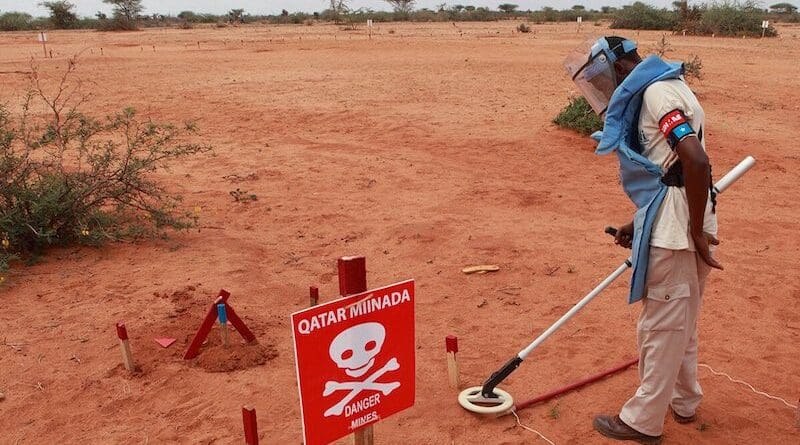
Somalia has unveiled a national strategy designed to counter improvised explosive devices, the deadliest weapon used by terror group al-Shabaab.


A Somali deminer trains to locate explosive ordnance and mines near the border with Ethiopia. The country has unveiled a national counter-improvised explosive device strategy. Photo Credit: UNMAS

October 16, 2025 

By Africa Defense Forum

The effort has been in the works since 2023 when experts conducted a baseline assessment of the country’s C-IED capabilities. The new strategy, announced at a September event in Mogadishu, provides a framework for adding more explosive ordnance disposal units to the Somali National Army (SNA) and improving interagency collaboration.

“This is a historic milestone for our country. Never before have we had a unified, nationally owned framework to address the IED threat,” said Awes Hagi Yusuf Ahmed, Somalia’s national security advisor. “This strategy represents a decisive shift from reactive measures to a proactive, intelligence-led approach anchored in national ownership.”

The strategy will help Somali officials quickly implement new laws and regulations, particularly those needed to control access to chemicals used in making bombs. It will establish a national electronic tracking system for precursor materials used in bombs.

It also calls for a national C-IED center and strategies to improve border security, disrupt terrorist financial networks and educate the public about the threat.

“This is not a military effort alone,” Somalia’s Defence Minister Ahmed Moallim Fiqi said. “It is a whole-of-government and whole-of-society mission to safeguard Somali lives and secure our future.”

Explosives continue to take a toll on Somali life. In 2024, more than 600 IED blasts killed or injured more than 1,400 people. In the past decade 61% of the victims were Somali civilians, according to the group Action on Armed Violence. Somalia was the fifth most affected country by IEDs globally in 2024.

Combating IEDs and other asymmetric weapons is complicated by the collaboration between al-Shabaab and Iran-backed Houthi rebels in Yemen. Authorities have warned that Houthis are planning to ship drones, explosive components and small arms to al-Shabaab. The terrorist group also acquires bomb-making materials from a variety of domestic sources, including ordnance captured on the battlefield and chemicals used in construction and farming.

“We are engaged in a bitter war with an enemy that relies on mines as a weapon of choice. These devices slow our advances, and overcoming them is critical to liberating more areas,” Omar Ali Abdi, Somalia’s state minister of the Ministry of Defence, said in May during a handover ceremony to accept protective gear and training kits for Soldiers.

The United Nations has led the way in helping Somalia improve its C-IED expertise. The U.N. Mine Action Service (UNMAS) has trained and equipped 61 SNA explosive ordnance disposal (EOD) teams and led train-the-trainer courses to ensure that the knowledge is spread throughout the military. UNMAS also trained 21 EOD teams in the Somali Police Force.

U.N. Special Representative for Somalia James Swan said the new national strategy is the product of “Somali leadership, developed with determination and foresight.”

“The challenge now lies in sustained implementation,” Swan said. “We are confident that with continued national resolve, and with coordinated and focused support from international partners, this strategy can strengthen Somalia’s capacity to mitigate the threat of IEDs, protect the Somali people, and reinforce peace and security. This is an important step.”


Africa Defense Forum

The Africa Defense Forum (ADF) magazine is a security affairs journal that focuses on all issues affecting peace, stability, and good governance in Africa. ADF is published by the U.S. Africa Command.
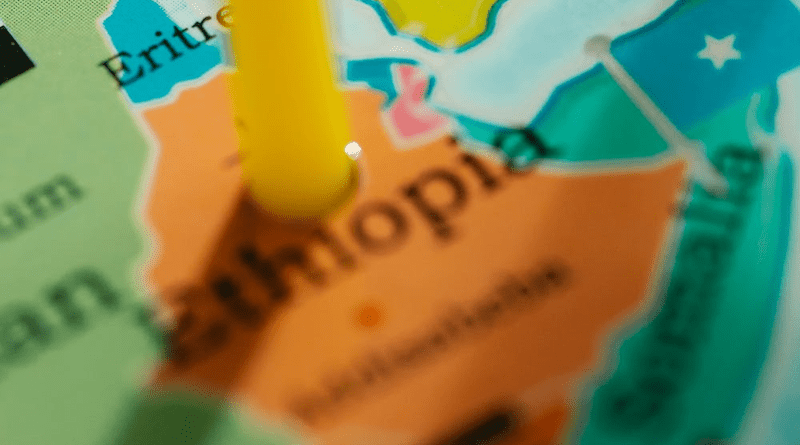
The Stillborn Strategy: Why Ethiopia’s Red Sea Ambitions Will Fail Again – OpEd

Ethiopia’s Red Sea strategy has once again returned to the forefront of its foreign policy discourse, with renewed emphasis on securing direct access to the sea, an ambition revived by the administration of Prime Minister Abiy Ahmed


October 16, 2025 

By Dr. Suleiman Walhad


With rhetoric framing sea access as “existential” and deeply tied to Ethiopia’s historical identity, the country is attempting to redefine its geopolitical posture through initiatives such as the controversial Memorandum of Understanding (MoU) with Somaliland. However, despite the fanfare, this so-called strategy is more likely to follow the path of its predecessors: failure. The reasons are multifaceted, ranging from geopolitical resistance, international legal constraints, internal instability, economic limitations, and the broader militarized context of the Red Sea. Collectively, these factors render the Red Sea strategy a stillborn vision, doomed to remain aspirational rather than actionable.

At the core of the issue is the sheer geopolitical resistance Ethiopia faces from its immediate neighbors and beyond. Somalia has rejected outright the deal Ethiopia signed with Somaliland, viewing it as a direct violation of its territorial integrity. The African Union, United Nations, and most international actors recognize Somaliland as part of Somalia, making Ethiopia’s agreement not only controversial but legally dubious. Ethiopia’s claim to coastal access through such arrangements is built on sand, lacking the legitimacy required for a durable strategy. Eritrea, another key neighbor with historical ties to Ethiopia’s former coastline, remains wary and deeply hostile to any indication that Addis Ababa may seek to revive old claims, especially over the port of Assab. Meanwhile, Djibouti, the current conduit for over 90% of Ethiopia’s maritime trade, has little incentive to support Ethiopia’s diversification plans. It stands to lose economically if Ethiopia reduces its reliance on the Djiboutian corridor and would likely resist in both subtle and overt ways.

This growing wall of regional opposition is only intensified by the stance of external actors. Egypt, long embroiled in disputes with Ethiopia over the Grand Ethiopian Renaissance Dam (GERD), sees Ethiopia’s expansion toward the Red Sea as a new front in an old rivalry. Cairo views any effort by Addis Ababa to gain strategic depth in the Red Sea as a potential threat to its own maritime and geopolitical interests. This could prompt Egypt to deepen its military and diplomatic cooperation with Eritrea and Somalia, both of whom are wary of Ethiopian assertiveness. Thus, Ethiopia is likely to find itself encircled diplomatically and politically if it continues along its current course.

Beyond geopolitics lies the unforgiving terrain of international law. As a landlocked country, Ethiopia has transit rights to ports under the United Nations Convention on the Law of the Sea (UNCLOS), but it does not have sovereign rights to own or control ports in the territories of other nations. The Somaliland deal, if pursued with the intention of establishing military bases or sovereign control, runs directly against these norms. Without widespread recognition of Somaliland’s independence, any such deal remains not just fragile, but possibly illegal in the eyes of international law. This creates legal ambiguity that undermines Ethiopia’s credibility and opens it up to international rebuke, isolation, or even sanctions. It is doubtful that even if Somaliland was recognized, it would allow other countries to be in control of any part of its maritime zones.

Compounding these external issues is Ethiopia’s own internal fragility. Far from being in a position to project power externally, the country is grappling with severe domestic instability. Ethnic-based conflicts continue to simmer or erupt across regions such as Tigray, Amhara, Oromia, the Somali State, and elsewhere. The Ethiopian government’s renewed focus and assertive rhetoric on sea access seem primarily aimed at deflecting public and international attention from its persistent and unresolved domestic challenges. The post-civil war political settlement remains tenuous at best, and Abiy’s government continues to face legitimacy challenges at home. Any grand external ambition that risks military confrontation or economic overreach could further destabilize the country from within. History has shown repeatedly that states facing internal division rarely succeed in aggressive foreign policies; the domestic center must hold for any peripheral expansion to be credible.


Then there is the simple matter of economics. Ethiopia lacks the maritime infrastructure to sustain a serious naval or port presence. Building a blue-water navy from scratch is a multi-billion-dollar endeavor, as is constructing deep-water ports, logistical corridors, and the military installations that would be required to defend them. At a time when the Ethiopian economy is grappling with high debt, inflation, and a weakening currency, such dreams are fiscally unsustainable. Announcements about naval academies or training initiatives may serve as political signals, but they remain aspirational given the country’s limited financial bandwidth.

Finally, Ethiopia must contend with the broader strategic reality of the Red Sea itself. The region is one of the most militarized maritime zones on the planet, hosting naval bases from the United States, China, France, Saudi Arabia, Türkiye, and the UAE, among others. Yemen’s instability, the Houthi threat to shipping lanes, and increasing great power rivalry make the Red Sea a treacherous arena for any new actor, let alone one with limited naval capabilities and few regional allies. Ethiopia’s attempt to assert itself in this highly sensitive and competitive space risks triggering escalations that it is ill-equipped to manage.

In sum, the re-emergence of Ethiopia’s Red Sea strategy reflects a nation about to lose the peoples it conquered over the past one hundred years and a few decades, and expressing its grievances over an access it never had, except for a brief period it wrongly overwhelmed its federation with Eritrea, which ended in 1993. However, a national ambition cannot override geopolitical reality. Ethiopia’s latest iteration of this strategy repeats the same mistakes: overestimating its leverage, underestimating regional and population resistance, and ignoring the complex web of international law and diplomacy. Until Ethiopia builds internal unity, economic resilience, and regional trust, the Red Sea will remain out of reach, not for lack of desire, but for lack of viable strategy. Once again, this is a vision likely to be stillborn.
FacebookTwitterEmailFlipboardMastodonLinkedInShare

Dr. Suleiman Walhad

Dr. Suleiman Walhad writes on the Horn of Africa economies and politics. He can be reached at suleimanwalhad@yahoo.com.
D.E.I.

A Woman’s Turn To Lead The UN – OpEd


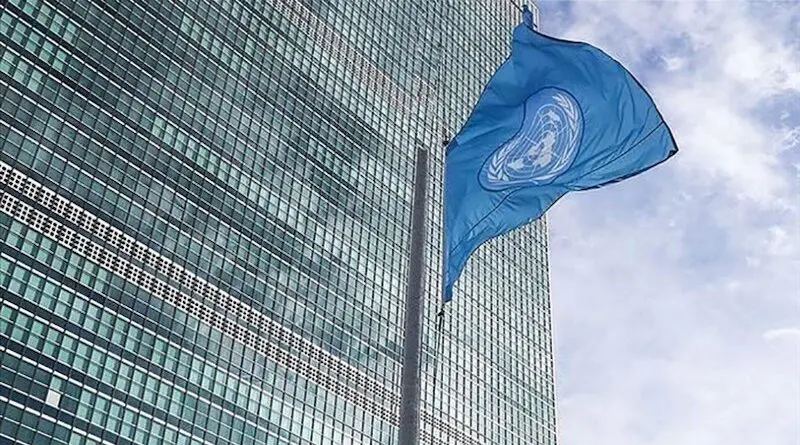
United Nations flag. Photo Credit: Tasnim News Agency

October 16, 2025 
By Simon Hutagalung

The United Nations exists at a vital point in its development. The organisation stands at a critical point because Secretary-General António Guterres will soon finish his term, while the organisation needs to resolve its built-in conflicts.

For nearly eight decades, the UN has championed gender equality as a fundamental tenet of human rights and development; nevertheless, its highest office has remained exclusively male. The gap between what the UN stands for and what it does creates a credibility crisis that worsens because of deteriorating global governance systems. The appointment of a female Secretary-General would represent progress because it would align the UN leadership structure with its declared values. The United Nations now has a critical chance to advance gender equality through selecting its first female Secretary-General who will break the tradition of male leadership and demonstrate its dedication to universal participation in global decision-making.

The Secretary-General position remains empty of female candidates because of established discriminatory practices. Since 1945, nine different men from different parts of the world have held this position, although numerous highly qualified women who have headed UN agencies and peacekeeping missions and national governments have been excluded from consideration. The pattern shows an existing global system problem because international system leadership positions emerge from political agreements instead of performance-based selection or representative participation. The United Nations faces an intense credibility crisis regarding gender equality because it demands member states to advance women’s empowerment in political and business sectors and civil society, yet the organisation does not apply this principle to its leadership positions. The institution loses its moral power because of this contradiction which weakens its ability to promote women’s rights in areas where these rights face opposition.

The issue is further complicated by the symbolic significance of the Secretary-General’s office. The chief administrative officer position receives this title, but it exercises significant power through soft power mechanisms. The Secretary-General leads international diplomacy through their leadership, which establishes global priorities and provides ethical direction during emergencies. The lack of female leaders in this position maintains the false impression that global governance operates mainly under male leadership, which supports patriarchal systems instead of transforming them. Research conducted in political science and organisational studies shows that leadership groups with diverse members achieve better conflict resolution and negotiation results and develop more innovative long-term policies. The international community faces a loss of complete leadership diversity because women continue to be barred from leading the UN.

Nonetheless, the pathway to appointing a female Secretary-General is fraught with challenges. The selection process operates with no transparency because the Security Council exercises control through its veto power, which belongs to its five permanent members. This framework enables geopolitical interests to overshadow considerations of gender equality and institutional reform. A female candidate who presents an alternative vision for the UN will face opposition because her approach challenges existing power structures. The selection process has operated through a regional rotation system since its beginning while following an informal policy to shift the position between various global areas. The principle of geographic diversity protects female candidates from marginalisation because it guarantees their region will have an opportunity to run for office. The integration of gender and geopolitical elements produces a major challenge.

The situation becomes more difficult because of cultural and political resistance. Member states that operate under patriarchal systems create challenges for the United Nations because some people doubt women’s ability to lead the organisation. The UN system encounters bureaucratic obstacles which prevent it from making necessary changes. The public would observe a female Secretary-General through a gendered lens because people would judge her leadership style based on preconceived notions about women. Organisations practice tokenism when they appoint women to leadership roles for equality purposes but fail to grant them the power to create meaningful organisational transformations. Such an outcome would not only fail to advance gender justice but could also engender cynicism regarding the UN’s commitment to its own ideals.


The selection of a female Secretary-General continues to be justified by both moral and operational considerations. The issue falls under the category of justice according to normative standards. The UN demonstrates no real backing for gender equality because it maintains male leaders in positions of power. Strategically, it pertains to effectiveness. Women leaders have proven themselves to be highly effective in peacebuilding and humanitarian response and international negotiation. The world has seen transformation through female leadership because of prominent figures including Gro Harlem Brundtland and Ellen Johnson Sirleaf and Michelle Bachelet. The careers of these women show that qualified female candidates do exist, yet political leaders fail to demonstrate the commitment needed to advance them.

The broader system of worldwide governance confirms this finding. The international system now experiences a legitimacy crisis because of increasing nationalistic movements and international power struggles, and decreasing confidence in global organisations. The United Nations receives criticism because of its slow pace of operation and its bureaucratic structure, which separates it from everyday people’s experiences. The appointment of a female Secretary-General would send a strong signal about UN reform, but it would not fix the existing structural issues right away. The message would connect with younger people because they view gender equality as an essential matter of justice and legitimacy.

The selection process for the following Secretary-General needs to be based on a transparent and inclusive system which selects a woman leader who demonstrates both qualifications and leadership abilities to implement reform and vision. Member states need to move beyond treating gender equality as a symbolic gesture because it serves as an essential strategic requirement. The selection process requires continuous monitoring from civil society groups and regional organisations, and the global media, to stop qualified female candidates from being removed through hidden political arrangements. The selection of a female Secretary-General would solve historical gender discrimination and bring back the United Nations’ ethical reputation, which needs urgent improvement. The United Nations stands at a critical point because it needs to demonstrate leadership through its own actions to preserve its position as the protector of human rights and equality. The time for a woman in this pivotal role is now, not in some distant future.

The opinions expressed in this article are the author’s own.


References
Heymann, J., Sprague, A., & Raub, A. (2025). National Action to Reduce Barriers to and Bias against Women’s Leadership: A Comparative Analysis of Laws and Policies in 193 Countries. Journal of Comparative Policy Analysis Research and Practice.

Herten-Crabb, A., MÅ©rage, A., Smith, J., & Wenham, C. (2025). An opportunity for gender transformation? UN Women’s policy response to COVID-19. Global Public Health.

UN Women. (2025). Gender equality in 2025: Gains, gaps, and the USD 342 trillion choice. UN Women.


Simon Hutagalung

Simon Hutagalung is a retired diplomat from the Indonesian Foreign Ministry and received his master's degree in political science and comparative politics from the City University of New York. The opinions expressed in his articles are his own.


European Socialists Expel Slovak PM’s Party

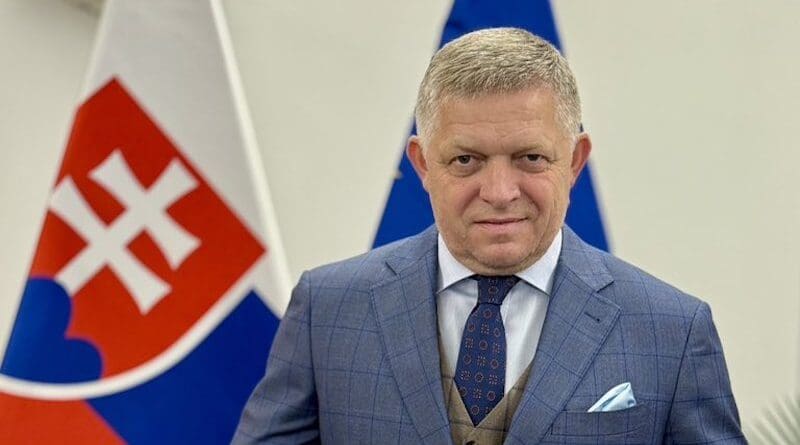
Slovak Prime Minister Robert Fico. Photo Credit: Robert Fico, X

By 

By Zuzana Gabrizova


(EurActiv) — Slovak Prime Minister Robert Fico said he was “proud” after his party was officially expelled from the Party of European Socialists on Thursday. The decision, adopted unanimously at the PES congress in Amsterdam, ends Smer’s 20-year affiliation with Europe’s centre-left political family.

The move, first reported by Euractiv,was met with applause at the old stock exchange in Amsterdam, where the PES held its annual – and crucial – congress. It marks the culmination of years of mounting tensions between Smer and PES, particularly over Fico’s growing alignment with nationalist and pro-Russian positions.

Smer had already been suspended in 2023 following Fico’s return to power.

In response, Fico accused PES of intolerance toward his government’s social conservatism. “If the reason for Smer’s termination is my participation in the celebrations of Victory over Fascism and the constitutional definition of a man and a woman, then I am proud of this expulsion,” he wrote on social media.

Juraj Gedra, head of the Government Office and one of Fico’s closest allies, also welcomed the decision on social media, where he wrote that his party was finally free. He called the end of PES membership “our victory and their shame”. 


While PES did not publish a formal list of reasons, Secretary General Giacomo Filibeck stated from the stage that Smer had repeatedly taken positions “deeply contradicting the values and principles on which our political family stands”.

Fico’s party is widely seen as having crossed red lines through its rhetoric on Ukraine, attacks on media freedom and attempts to weaken judicial independence.

Anticipating expulsion, Fico instructed Smer’s MEPs to seek a new political home in the European Parliament. “We have an offer from Patriots for Europe, which I prefer,” Smer MEP Monika Beňová already told the Slovak press.


Are China’s Spy Satellites A Lifeline For Russia’s Struggling Space Intelligence? – Analysis


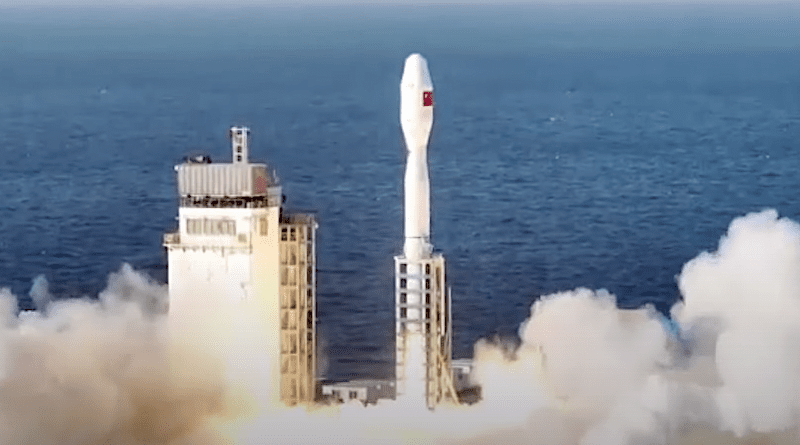
Launch of China's Smart Dragon-3 (Jielong-3) Yao-1 carrier rocket. Photo Credit: China News Service video screenshot

October 18, 2025 
By RFE RL
By Ray Furlong

Earlier this month, air defense units in the western Ukrainian city of Lviv were unusually busy during an overnight bombardment by Russian missiles and drones. Some 700 kilometers above them, Chinese spy satellites were silently passing by, according to Ukrainian intelligence.

The Kremlin has denied that China was providing it with battlefield information, saying it has its own satellites. But experts suggest that, in fact, Russia has a dire need for Chinese assistance.

“Russia’s infrastructure is pretty old and creaky,” said Clayton Swope, who spent 14 years in the CIA, mostly in its Directorate of Science and Technology.

“It really seems like a no-brainer that if China is willing to offer either something from a company or from its own government capabilities, Russia will take advantage of that,” Swope, now at the Washington-based Center for Strategic and International Studies (CSIS), told RFE/RL.

China’s Spy-Sat Capabilities


Given the classified nature of such information, it’s hard to say exactly how many spy satellites any nation has.

A report published by the US Defense Intelligence Agency in 2022, Challenges to Security in Space, estimated that China had 262 satellites for ISR (intelligence, surveillance, and reconnaissance) compared to Russia’s 32.

“Russia actually started buying commercial satellite imagery on the free commercial market from April 2022,” Juliana Suess, from the German Institute of International and Security Affairs (SWP), told RFE/RL.

“That sort of shows us that Russia realized that actually this is something that they would need. And it also shows that their own sovereign capabilities were simply not enough to plug that gap.”

There is also a quality gap, largely caused by Russia’s ageing satellite fleet. Some of it dates from Soviet times but there have also been more recent launches, including since the start of Russia’s full-scale invasion of Ukraine, over 2022-24.

But even the newest Russian satellites have been affected by wartime Western sanctions.

“This is definitely something they’ll be struggling with in terms of where they get their components from and Russian satellites have historically been made of Western components,” said Suess.

In August, the head of Russia’s largest spacecraft manufacturer opened a rare window on the problems facing the country’s space industry, saying “we need to stop lying to ourselves” about the condition it was in.

Igor Maltsev, head of Energia, spoke of chronic underfunding, “ineffective” processes, and lost motivation.

“We’ve definitely seen Russia build up their capabilities. But on the whole, we can still say that Russia doesn’t have particularly good Earth-observation capabilities, and this is also a broader problem that they’re having in terms of their space industry lagging behind massively,” said Suess.

The quality of the Chinese satellites, particularly in regard to synthetic aperture radar or SAR (which can see through clouds, for instance), is generally reckoned to be much higher than Russia’s — providing higher resolution imagery and building 3D images.

“In terms of the quantity, diversity, and quality of the data the Chinese can provide, there is no doubt it’ll be useful for Russian intelligence and military analysts,” Bleddyn Bowen, who has advised the Pentagon and UK Defense Ministry on space policy, told RFE/RL.

The key advantage, said Bowen, who is an associate professor in astro-politics at Durham University, was better battle damage assessment.

“It could be better tracking of Ukrainian military maneuvers…. If a hill has been evacuated and nobody’s there and a satellite can see that, then if you get notice of that an hour after this happened as opposed to after four hours that makes your forces much more responsive,” he said.

So far, this has been an area where Ukraine has enjoyed an advantage over Russia during the war, receiving satellite intelligence from the United States and also European allies. The importance of this data was underlined when Washington briefly stopped supplying it earlier this year.

The week-long move hindered Ukraine’s ability to carry out effective long-range drone strikes and left it blind over the movements of Russian strategic bomber aircraft and ballistic missile launches.

What Does China Want?

But it remains unclear how much data, if any, China is actually sending to Russia. Western officials have refrained from making specific public accusations on the issue.

“China is the decisive enabler of Russia’s war in Ukraine. China also provides nearly 80 percent of the dual-use items Russia needs to sustain the war,” an official at the State Department told RFE/RL.

“Continued cooperation between these two countries will only further contribute to global instability and make the United States and other countries less safe,” the official added.

In an interview with RFE/RL’s Current Time, the European Union’s commissioner for defense and space, Andrius Kubilius, was noncommittal.

“What is the Chinese position towards the whole war? We can guess, you know. It looks like that they are, you know, keen to keep this war going on as long as possible, learning also from that war, supporting, you know, Russian side,” he said.

Swope pointed out that little is known about the specific Yaogan satellites that reportedly spied on Ukraine. Three of them, he said, were SAR-equipped.

“I think the big question might be…are they just providing more strategic intelligence and even tactical intelligence about what’s happening on the battlefield? Or are these systems somehow tied in to, say, how you would steer a missile?” he said.

Equally, he said, the Chinese satellites could have been gathering information purely for study back in Beijing, “for their own assessment of how conflict is going to be fought in the future.”

Bowen agreed that China’s intentions were unclear.

“It remains to be seen how close, how tactical is that relationship between Russia and China on this,” he said. “Because they’re not natural allies, really. China does not want to tip its hand too much to the Russians.”

Another important issue is having sufficient capacity to receive and evaluate incoming information. This is where data-processing becomes decisive, and it is unclear what Russia’s capabilities are in this regard.

“This is something that Western militaries have to contend with as well,” said Suess.

“We talk about a sensor-rich battlefield now, but actually the bottleneck is the processing. This is where AI comes in. This is where the sort of algorithm comes in…filtering through the massive information that you get given,” she added.Ray Furlong is a Senior International Correspondent for RFE/RL. He has reported for RFE/RL from the Balkans, Kazakhstan, Georgia, and elsewhere since joining the company in 2014. He previously worked for 17 years for the BBC as a foreign correspondent in Prague and Berlin, and as a roving international reporter across Europe and the former Soviet Union.


RFE RL

RFE/RL journalists report the news in 21 countries where a free press is banned by the government or not fully established.