Saturday, October 18, 2025


Old-school material could power quantum computing, cut data center energy use


Penn State
Electro-optic response 

image: 

A strained form of barium titanate thin film on gadolinium scandate shows an electro-optic response 10 times stronger than today’s best materials at cryogenic temperatures.

view more 

Credit: Jennifer M. McCann/Penn State


UNIVERSITY PARK, Pa. — A new twist on a classic material could advance quantum computing and make modern data centers more energy efficient, according to a team led by researchers at Penn State.   

Barium titanate, first discovered in 1941, is known for its powerful electro-optic properties in bulk, or three-dimensional, crystals. Electro-optic materials like barium titanate act as bridges between electricity and light, converting signals carried by electrons into signals carried by photons, or particles of light.  

However, despite its promise, barium titanate never became the industry standard for electro-optic devices, such as modulators, switches and sensors. Instead,  lithium niobate — which is more stable and easier to fabricate, even if its properties don’t quite measure up with those of barium titanate — filled that role instead. But by reshaping barium titanate into ultrathin strained thin films, this could change, according to Venkat Gopalan, Penn State professor of materials science and engineering and co-author of the study published in Advanced Materials.   

“Barium titanate is known in the materials science community as a champion material for electro-optics, at least on paper,” Gopalan said. “It has one of the largest electro-optic property values known in its bulk, single crystal form at room temperature. But when it comes to commercialization, it never made the leap. What we have done is show that when you take this classic material and strain it in just the right way, it can do things no one thought possible.” 

Critically, Gopalan said, the newly formed material improves the conversion of signal-carrying electrons into signal-carrying photons by over ten times what has been shown at cryogenic temperatures. Cryogenic operation is necessary for quantum technologies based on superconducting circuit. However, the delivery of information between distant quantum computers requires the conversion of that information into light, where traditional fiber-optics at room temperature could be used to enable true quantum networks. Efficient electrical-to-optical transducers can also find use in data centers that support everything from artificial intelligence (AI) to online services. These facilities consume vast amounts of energy, much of it to stay cool, a problem that optical links can help mitigate These facilities consume vast amounts of energy, much of it to stay cool. Because photons are particles of light, they can carry information without generating the kind of heat that moving electrons through wires does, making them far more energy efficient. 

“Integrated photonic technologies as a whole are becoming increasingly attractive to companies that use large data centers to process and communicate large data volumes, especially with the accelerating adoption of AI tools,” said Aiden Ross, co-lead author of the study and graduate research assistant at Penn State. “The basic idea is that we could send information throughout these centers using photons rather than electrons, letting us send many streams of information in parallel, and do so without having to worry about our electronics heating up, the sheer infrastructure needed to keep such centers cool and so on.” 

The team manipulated barium titanate into films about 40 nanometers thick, thousands of times thinner than a human hair. By growing the film on another crystal, the researchers forced the atoms into new positions, creating what scientists call a metastable phase, which is a crystal structure that does not occur naturally in bulk form.  

“Metastable phases can have properties the stable version may not,” Gopalan said. “In this case, the stable phase of barium titanate loses much of its electro-optic performance at low temperatures, which is a big problem for quantum applications that require superconducting qubits. But the metastable phase we created not only avoided that drop, it also showed a response that was exceptional.”  

Albert Suceava, co-lead author of the study and doctoral candidate in materials science and engineering, compared the concept to a ball resting on a hill.   

“What we call a metastable phase refers to a crystal structure that is not the lowest energy arrangement of atoms that that material wants to take on,” Suceava said. “Everything in nature wants to exist in its lowest energy state. Think of a ball on a hill, it will naturally roll to the foot of the hill. But if you cradle the ball in your arms, you’ve given it a new place it can rest until someone comes along and gives you a push, knocking that ball out of your hands so it can roll down the hill. The metastable phase is like holding the ball, it only exists because we’ve done something to the material that makes it okay with taking on this new structure, at least until it’s disturbed.”  

Along with more energy efficient data centers, the findings could also address one of the biggest challenges in quantum computing: moving information between quantum computers. Right now, researchers use microwave signals that fade quickly, making it hard to send data over long distances.   

“Microwave signals work for qubits on a chip, but they are terrible for long-distance transmission,” Suceava said. “To go from individual quantum computers to quantum networks spread over multiple computers, information needs to be converted into a kind of light that we’re already very good at sending long distances, such as the infrared light used for fiber optic internet.”  

Sankalpa Hazra, co-lead author of the study and doctoral candidate in materials science and engineering, said the strained barium titanate thin films approach could apply to a wide range of materials.   

Next, the team is looking to expand their work beyond barium titanate.  

“Achieving this result with barium titanate was a case of taking a new material design approach to a very classic and well-studied material system,” Gopalan said. “Now that we understand this design strategy better, we have some less well-studied material systems that we want to apply this same approach to. We are very optimistic that some of these systems will exceed even the incredible performance that came out of barium titanate.” 

Along with Gopalan, Ross, Hazra and Suceava, other authors of the study include graduate students Ian Reed Philippi, graduate student in materials science and engineering; Brynn Brower, doctoral candidate in physics; Lei Ding, graduate student in materials science and engineering; Yingxin Zhu, graduate student in engineering science and mechanics; Zhiyu Zhang, graduate student in engineering science and mechanics; Himirkanti Sarkar, doctoral candidate in materials science and engineering; and Saugata Sarker, graduate research assistant in materials science and engineers, Yang Yang, assistant professor of engineering science and mechanics; Vladimir A. Stoica, research associate professor of materials science and engineering; and Long-Qing Chen, Donald W. Hamer Professor of Materials Science and Engineering, all from Penn State. Other co-authors include Dylan Sotir, Suchismita Sarker and Darrell G. Schlom, all from Cornell University.  

The U.S. National Science Foundation and the U.S. Department of Energy supported this research. 

Study finds humans outweigh climate in depleting Arizona's water supply


University of Arizona


A study led by University of Arizona researchers shows that decades of groundwater pumping by humans has depleted Tucson-area aquifers far more than natural climate variation. Published in the journal Water Resources Research, the study provides the first multi-millennial reconstruction for the region that places human impacts on groundwater into long-term context.

"This is the first time we've been able to get a record of the water table through time," said Jennifer McIntosh, senior author and the Thomas Meixner Endowed Chair of Hydrology and Atmospheric Sciences in the College of Science.

Since the climactic period known as the Last Glacial Maximum – about 20,000 years ago – precipitation has continuously recharged the aquifer under Tucson, the study concluded. During dry climate periods, less precipitation seeped back into the aquifer, and the water table dropped by as much as 105 feet (32 meters), compared with the levels in wetter periods. However, modern pumping from the mid-20th century to present day caused twice the drawdown of the water table compared with natural climate fluctuations.

"It really underscores the impact that humans can have on the environment in a short time," said first author and recent U of A doctoral graduate Chandler Noyes.

Prior to this study, information on recharge rates between the Last Glacial Maximum and the mid-Holocene – about 6,000 years ago – was limited, McIntosh said. The researchers filled knowledge gaps by analyzing the blend of water under the Tucson Basin, the desert valley surrounding the city. Fossil water – precipitation that entered an aquifer over 12,000 years ago – is naturally mixed with water that recharged the groundwater hundreds to thousands of years ago and some that dates to recent years.

In order to reconstruct the age and recharge history of water in the Tucson Basin, the research team identified chemical and isotopic markers that entered the water either through the atmosphere or via aquifer sediments. While these naturally occurring substances provide clues to a water sample's source and age, the water is from a mix of different times, and mathematical models are needed to untangle the overlapping markers.

The team used mathematical models integrating multiple markers to reconstruct groundwater ages, recharge rates and water table depths over thousands of years. Combining these markers also provided data to infer past climate conditions, including air temperatures and precipitation patterns.

"The water we drink carries this record of what happened with climate in the Tucson Basin," McIntosh said, adding that these new techniques for linking climate and hydrology could be applied to aquifers around the world.

Noyes said the study's results can help water resource managers anticipate how aquifers might react to future changes, whether natural or driven by humans.

"These methods provide more complete groundwater ages and an understanding of how groundwater levels respond to climate change," he said.

Tucson residents began pumping groundwater heavily around the 1940s to support irrigated farming and a rapidly growing population, according to a U of A report. For decades, signs of overdraft and well failures increased in an environment offering little restriction.

The 1980 Groundwater Management Act established formal controls and introduced sustainability measures. In 1992, the Central Arizona Project began delivering Colorado River water to Tucson.

"Today, about half of the water from our taps comes from local groundwater, and the other half from the Colorado River," McIntosh said.

Local conservation efforts, in combination with the statewide measures, have helped many of Tucson's wells partially rebound from heavy usage during the 20th century. However, McIntosh added, the study's results indicate that while the aquifer is somewhat renewable, recharge is slow and limited, and climate continues to play a key role in the region's long-term water availability.

"Even if we were to go back to the end of the last ice age, when it was much colder and wetter in the Tucson Basin, we could not recover the amount of groundwater that we've removed," McIntosh said. "Even a really wet climate wouldn't save us," indicating that no natural return to wetter conditions could restore the volume of water that has been lost to pumping.

One promising trend is the city of Tucson's recent adoption of the One Water 2100 plan, McIntosh said. Among other initiatives, the plan calls for continuing and expanding use of treated effluent, including releasing the recycled wastewater into the Santa Cruz River, where it seeps into the ground and helps recharge the aquifer.

"We can enhance recharge by adding more water," she said. "One way of doing that is releasing our treated effluent in those locations where we know there is modern recharge, providing the highest potential of that water making it to the water table."

This study was supported in part by research grants from the U.S. Geological Survey, the Natural Sciences and Engineering Research Council of Canada, the University of Arizona Graduate and Professional Student Council, and the Geological Society of America. Tucson Water provided logistical support and data sharing. McIntosh was supported by the Thomas Meixner Endowed Chair, Department of Hydrology and Atmospheric Sciences, University of Arizona, and CIFAR Earth4D Subsurface Science and Exploration Program.

Overheating bat boxes place bats in mortal danger during heatwaves


Bats will overheat and die in bat boxes during extreme heat waves


The Company of Biologists


Staying cool during heatwaves is challenging for small creatures, but the problem could be even more extreme for nocturnal creatures that are unable to move to cooler locations while slumbering. ‘Roosting bats may face lethally high body temperatures during extremely hot days’, says Ruvinda de Mel, from the University of New England, Australia. And bat boxes are often designed to retain heat to keep bats cozy, which could place the animals at even greater risk during heatwaves, depending on the box’s position in the sun. de Mel, Dylan Baloun and Zenon Czenze, also from the University of New England, wondered how much of a risk poorly positioned bat boxes pose to roosting big brown bats (Eptesicus fuscus) during a heatwave. The team publish their discovery in Journal of Experimental Biology that bat boxes situated in full sun on a hot day could warm to temperatures exceeding 50°C while the bats are asleep and unable to move, causing them to die from extreme dehydration.

To verify the risk to sleeping bats, de Mel and colleagues travelled to Lillooet, in the unceded territory of the St’át’imc Nation, Canada, in August 2023. There, the team gently collected 22 bats from the surrounding woods and forests and measured the amount of carbon dioxide exhaled by the animals – allowing them to calculate the animals’ metabolic rates – and the amount of water that the bats lost from their bodies by evaporation at temperatures ranging from 28 to 48°C, before returning the animals to their homes. Over the same month, the team recorded the temperatures in four man-made roosts: two in the roof of a building at the nearby Kwotlenemo Lake, Canada – one facing east reaching 38.5°C and the second facing west only reaching 32°C – and two bat boxes located in direct sunlight in Lillooet, both of which exceeded 40°C.

Back in Australia, the researchers used their measurements of the water losses experienced by the warm bats to calculate how much water bats inside the roosts would have lost on the hottest day in 2023. Fortunately, the temperatures that year didn’t pose a serious threat to the bats, which would have lost between 2.5% and 6.2% of their body mass in water in the Kwotlenemo Lake roosts and 10.8% to 15.3% of their body mass in the relatively exposed bat boxes in Lillooet. But how would bats have coped in the roosts during the extreme heat wave of June 2021?

This time the calculations were alarming. On the hottest day, the temperature in the east-facing Kwotlenemo Lake roost would have rocketed above 50°C for 6 h, peaking at 55.5°C. Potentially, the bats could have lost more than 50% of their body mass, which would have killed them, while the bats in the Lillooet bat boxes would have lost 25.5% and 36.7% of their body mass, which would also have been fatal.

‘Inappropriately placed artificial [bat] roosts could function as death-traps for bats due to overheating’, says de Mel, suggesting that conservationists provide bats with a choice of roosts in the same location: some constructed from insulating materials to maintain a stable temperature while others could cool and warm relatively quickly. He suggests also that some roosts could be located in full sun to warm quickly in early spring while others are placed in shade for protection during the summer. But the message is clear: think hard about where you locate your bat box, or it could become a bat sarcophagus during a heatwave.

****************

IF REPORTING THIS STORY, PLEASE MENTION JOURNAL OF EXPERIMENTAL BIOLOGY AS THE SOURCE AND, IF REPORTING ONLINE, PLEASE CARRY A LINK TO:

https://journals.biologists.com/jeb/article-lookup/doi/10.1242/jeb.251228

REFERENCE: de Mel, R. K., Baloun, D. E., Freeman, M. T., Probert, A. F., Cangemi, T. B., Watters, T. K., Lausen, C. L., Kearney, M. R., Brigham, R. M. and Czenze, Z. J. (2025). Using physiology to unravel the implications of heatwaves for big brown bats (Eptesicus fuscus). J. Exp. Biol. 228, jeb251228. doi:10.1242/jeb.251228

DOI: 10.1242/jeb.251228

This press release is distributed  to give advance access to authorised media who may wish to report on this story. Full attribution is required and if reporting online a link to https://journals.biologists.com/jeb is also required. The story posted here is COPYRIGHTED. Advance permission is required before any and every reproduction of each article in full from permissions@biologists.com.

THIS ARTICLE IS EMBARGOED UNTIL THURSDAY 16 OCTOBER  2025 17:00 HRS EDT (22:00 HRS  BST)

UK's Prince Andrew gives up royal title


Prince Andrew renounced his Duke of York title and other honours on Friday, citing his duty to family and country amid mounting scandal over his ties to convicted US sex offender Jeffrey Epstein. The announcement followed fresh allegations revealed this week in the posthumous memoir of Virginia Giuffre, the central figure in the Epstein scandal.


Issued on: 17/10/2025 
By: FRANCE 24
Video by: Nicholas RUSHWORTH


'I will ... no longer use my title,' Britain's Prince Andrew says after new allegations of sexual assault against him. © Daniel Leal, AFP
01:57


Prince Andrew of Britain on Friday renounced his title of Duke of York and other honours after being increasingly embroiled in scandals around his ties to US sex offender Jeffrey Epstein.

"I will ... no longer use my title or the honours which have been conferred upon me," Andrew, 65, said in a statement.

He said his decision came after discussions with his brother, King Charles III, and his own "immediate and wider family".

"I have decided, as I always have, to put my duty to my family and country first," he said.


He again denied all allegations, but said "we have concluded the continued accusations about me distract from the work of His Majesty and the Royal Family".

Andrew, who stepped back from public life in 2019, will remain a prince, as he is the second son of the late queen Elizabeth II.

But he will no longer hold the title of Duke of York that she had conferred on him.

His ex-wife Sarah Ferguson will also no longer use the title of Duchess of York, though his daughters Beatrice and Eugenie remain princesses.

Read more Virginia Giuffre, prominent Jeffrey Epstein sex abuse survivor, dies by suicide

The bombshell announcement came after new allegations emerged this week in the posthumous memoir of Virginia Giuffre, the woman at the centre of the Epstein scandal.

She wrote that Andrew had behaved as if having sex with her was his "birthright".

In "Nobody's Girl: A Memoir of Surviving Abuse and Fighting for Justice", Giuffre said she had sex with Andrew on three separate occasions including when she was under 18.

Giuffre rose to public prominence after alleging the disgraced US financier Epstein used her as a sex slave and that Andrew had assaulted her.

Andrew has repeatedly denied Giuffre's accusations and avoided trial by paying a multimillion-dollar settlement.

In extracts published by The Guardian this week, Giuffre describes meeting the prince in London in March 2001 when she was 17.

Andrew was allegedly challenged to guess her age, which he did correctly, adding by way of explanation: "My daughters are just a little younger than you."
'Entitled'

Giuffre and Andrew later went to the Tramp nightclub in London, where she said he was "sort of a bumbling dancer, and I remember he sweated profusely".

They later returned to the London house of Ghislaine Maxwell, Epstein's associate and former girlfriend, where they had sex, she alleged.

"He was friendly enough, but still entitled – as if he believed having sex with me was his birthright," Giuffre wrote.

Giuffre, a US and Australian citizen, took her own life at her farm in Western Australia on April 25.

Andrew's association with Epstein has left his reputation in tatters and made him a source of embarrassment to the king.

In a devastating 2019 television interview, Andrew – once feted as a handsome war hero who served as a helicopter pilot in the Falklands War – denied ever meeting Giuffre and defended his friendship with Epstein.

(FRANCE 24 with AFP)
How Madagascar's new leader Randrianirina rose from prison to presidency

Madagascar’s new head of state is a soldier, not a seasoned politician. Propelled into power by a military mutiny that joined forces with a youth-led protest movement, Colonel Michael Randrianirina is now custodian of a fragile peace in one of the world's poorest countries.


Issued on: 17/10/2025 - RFI

Colonel Michael Randrianirina was sworn in as the new leader of Madagascar less than a week after President Andry Rajoelina fled the country. © AFP - MAMYRAEL

"I am an officer, an implementer, and I was just part of the handover, that's all," Randrianirina told RFI last week. "The fact that I speak in public does not mean that I am the leader."

Since then, he has been sworn in as Madagascar's president and embraced his position at the head of a "national refoundation".

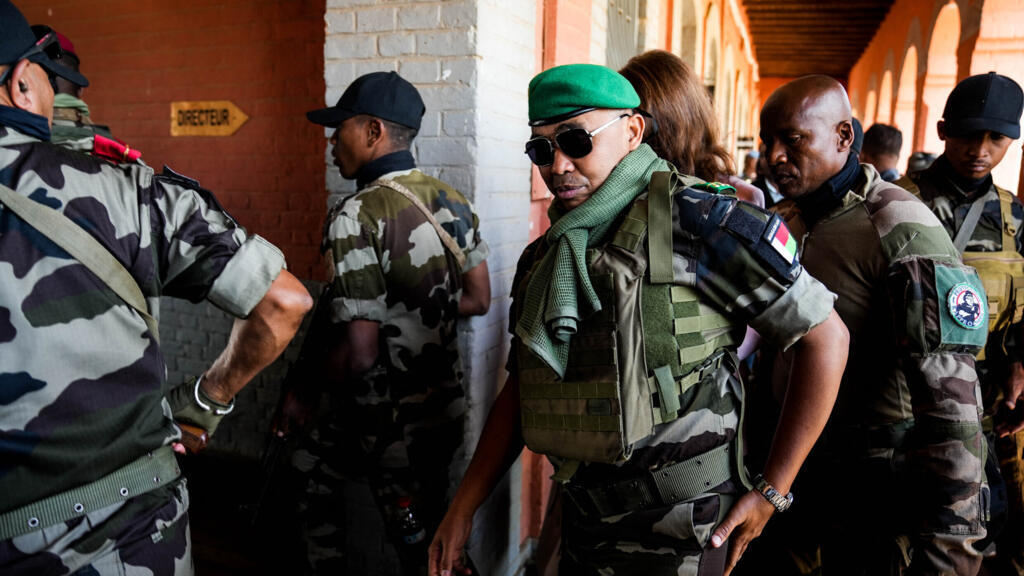
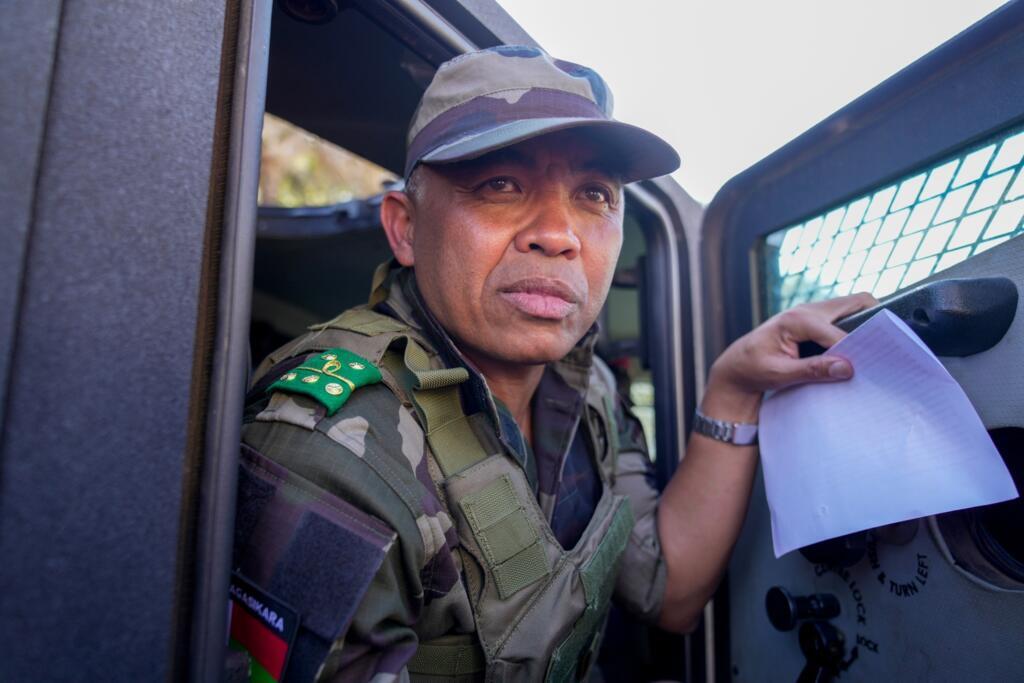
The chief of an elite military unit known as Capsat, Randrianirina helped clinch the downfall of his predecessor Andry Rajoelina when he ordered his men not to fire on young protesters frustrated with poverty, corruption and failing infrastructure.

Three days later, flanked by soldiers, he appeared in front of the former presidential palace to announce that the military was now in charge.

"I did not seize power," Randrianirina told RFI just before he took over. "I was given power. Power was transferred to me. That's different."

How Gen Z is taking the fight for their rights from TikTok to the streets
Imprisoned for instigation

Randrianirina, who is believed to be 51 years old, was born in the Androy region in the far south of Madagascar.

He trained at Antsirabe Military Academy and served as governor of Androy from 2016 to 2018. He then obtained a post as commander of an infantry battalion in the city of Toliara, some 1,000km from where he rules today in the capital.

Michael Randrianirina in Antananarivo, Madagascar, on 14 October 2025, the day he announced the military would take control. © AP - Brian Inganga

In 2022, he was promoted to the upper ranks of Capsat – often described as Madagascar's most powerful military unit because of its position between the armed forces and political elites. The unit was instrumental in Rajoelina's ascension in 2009, when months of protests brought down then president Marc Ravalomanana.

Criticism of Rajoelina, however, led to Randrianirina's arrest for mutiny on 27 November 2023. He was charged with instigating a military mutiny and attempting a coup d'etat.

A three-month stretch followed at Tsiafahy prison before his release in February 2024 after being given a suspended sentence.
From soldier to statesman

After a return to military fatigues at the head of Capsat, Randrianirina has now slipped into the dark suit and blue tie of the international statesman.

He said he would appoint a new prime minister who will be responsible for forming a transitional government. He promised elections would follow within two years.

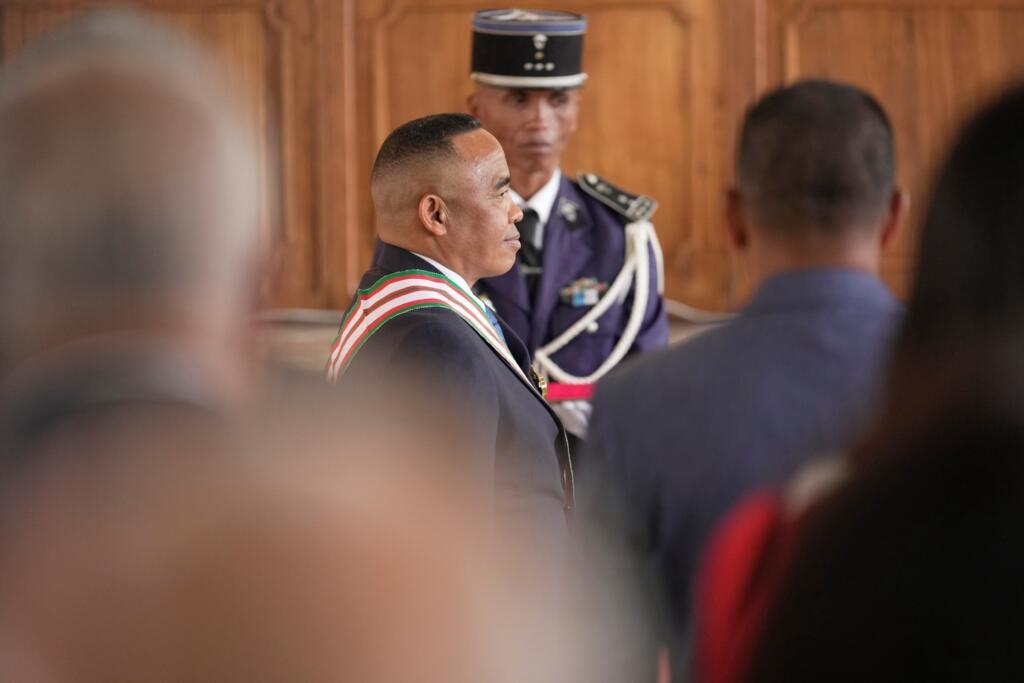
Michael Randrianirina is sworn in as president at the High Constitutional Court of Madagascar on 17 October, 2025. © AP - Brian Inganga

As for the young protesters who precipitated the upheaval, "I would like to see their representatives involved in the running of the country," Randrianirina told RFI. "I have listened to what they are saying."

He also insists he will respect the rule of law. After announcing the dissolution of several institutions, including the High Constitutional Court (HCC), he later rescinded the measures.

"To hold power, we must return to the law, respect the law and respect what the HCC decides," he told RFI.

The court, however, says that the election of a new president must be held within a maximum of 60 days – far shorter than the timeline Randrianirina has set himself.

"To organise an election, you need an electoral commission and an electoral roll that are accepted by all," he told RFI. "Do we have an electoral commission that is accepted by all? No. Do we have an electoral roll that is accepted by all? No. It takes time to set up."


Army colonel sworn in as Madagascar president, GenZ protesters 'vigilant'

Issued on: 18/10/2025 
FRANCE24

Army colonel Michael Randrianirina was sworn in as Madagascar's president Friday vowing sweeping reforms, just days after the military took power following weeks of anti-government protests that sent ex-president Andry Rajoelina fleeing. Story by Shirli Sitbon and Laurent Berstecher.

Video by: Shirli SITBON


UN accuses France of 'serious violations' of the rights of child migrants


France has committed "serious and systematic" violations of the rights of unaccompanied migrant children, the United Nations Committee on the Rights of the Child has found.

Issued on: 17/10/2025 - RFI

Unaccompanied minors occupy the Gaîté Lyrique cultural centre in Paris, 11 December, 2024. © AFP - Gregoire Campione

In a report released on Thursday, the Committee on the Rights of the Child (CRC), which ensures that countries comply with international treaties on the rights of minors, said that child migrants in France often find themselves deprived of basic care and living in "degrading" conditions, as a result of not being able to access the child protection system.

Migrants must prove that they are minors in order to access the appropriate care and protection.

Catherine Daoud, a lawyer specialising in children's rights, notes that these children often arrive after long, perilous journeys on foot or by boat. "They do not have passports, or very rarely have them when they arrive."

"These minors, who are living on the streets without access to healthcare or education, are too often left to fend for themselves because they are unable to prove that they are under the age of majority," the report found.


Lone migrant children face 'care gap' in France, with some left on streets
Bone tests and interviews

While it praised France for recognising unaccompanied minors as children in need of care and protection first and foremost, the report added that "a large number" of those who declare themselves to be children are treated as adults, following age assessment procedures that are considered "flawed".

Without identity papers, young people have only two other options for proving their age: a bone test, which has been criticised as unreliable, or an interview with the department responsible for child protection.

This assessment is considered difficult, said Daoud.

"If they have not been very clear about the timeline, the chronology, their family composition, their years of schooling, the dates of birth of their siblings... there are a number of elements like this that lead [authorities] to say: 'You have not provided proof that you are a minor'."

Child homelessness soars in France as aid groups denounce political inaction

Children whose age is disputed or whose appeals are under review are "forced to survive on the streets, in parks or in makeshift camps, without sufficient food or drinking water, and without healthcare or education," says the CRC.

"These children are at high risk of being exposed to trafficking, abuse, maltreatment and police violence," added the committee.

It found that "between 50 and 80 percent" of them are recognised as minors "after their age has been reassessed".

In its report, the CRC states that it has also documented other "serious situations" affecting unaccompanied migrant children who transit through France to reach the United Kingdom and "live in extremely precarious conditions, particularly in camps."

This article was adapted from the original version in French.