Friday, October 24, 2025

 Russian Drones Pound Ukraine as Trump Slaps Sanctions on Rosneft and Lukoil

  • Russian drone strikes hit Kyiv, Kharkiv, and Zaporizhzhya, injuring civilians and damaging homes and infrastructure.

  • The U.S. sanctioned Rosneft and Lukoil within hours of the attacks, aligning with new EU measures targeting Russia’s energy sector.

  • President Trump canceled a planned summit with Putin, signaling growing frustration and a tougher U.S. stance toward Moscow.

Russian drones attacked the Ukrainian capital for the second night in a row on October 22, injuring four people, officials said within hours of an announcement from Washington imposing sanctions on Russia’s two largest oil companies. Tymur Tkachenko, head of Kyiv's military administration, said drones had damaged several dwellings and other buildings.

Air assaults the night before struck throughout the country, killing at seven people and causing power outages. One of the attacks hit a kindergarten in Kharkiv and another hit an apartment building in Zaporizhzhya.

The Russian Defense Ministry said in a statement on Telegram that it struck Ukrainian energy infrastructure in response to Ukrainian attacks on Russian civilian targets.

The US Treasury Department announced the sanctions on Rosneft and Lukoil after the European Union unveiled a fresh wave of sanctions earlier on October 22. Both actions were aimed at pressuring Russia to end its full-scale invasion of its neighbor.

“Today is a very big day in terms of what we’re doing. These are tremendous sanctions. These are very big -- against their two big oil companies. And we hope they won’t be on for long. We hope that the war will be settled,” US President Donald Trump said.

The move marks another shift for Trump, who has resisted putting more pressure on Russia in hopes that Russian President Vladimir Putin would agree to end the fighting. But his patience appeared to have run out after plans for a summit with Putin in Budapest collapsed.

“I just felt it was time,” Trump told reporters at the White House after welcoming NATO Secretary-General Mark Rutte. "Every time I speak with Vladimir, I have good conversations, and then they don't go anywhere."

In another indication that Trump's patience is wearing thing, the president said he had canceled the Budapest meeting.

“It didn’t feel right to me. It didn’t feel like we were going to get to the place we have to get,” he said.

The US sanctions are designed to increase pressure on Russia's energy sector and "degrade" the Kremlin’s ability to raise revenue for its war machine, the Treasury Department said in a news release.

"Given President Putin’s refusal to end this senseless war, Treasury is sanctioning Russia’s two largest oil companies that fund the Kremlin’s war machine," Treasury Secretary Scott Bessent said in the news release.

Related: Oil Prices Surge as Trump Sanctions Russian Energy Giants

Bessent said earlier that Putin had not “come to the table in an honest and forthright manner, as we'd hoped."

The EU sanctions include the blacklisting of oil tankers used by Moscow, travel curbs on Russian diplomats, and a ban on importing liquefied natural gas from Russia by 2027.

The package is the 19th imposed by the EU since the Kremlin's full-scale invasion in 2022. The sanctions were presented last month by European Commission President Ursula von der Leyen, who said the purchase of fossil fuels from Russia is financing the Russian war.

The US sanctions follow a similar move by Britain last week, said Rachel Ziemba, an analyst at the Center for New American Security. They are the first notable sanction on Russia from the Trump administration and should have an impact beyond those imposed by Britain alone, she said.

“So it’s a big deal but not as big as it would have been a year ago,” she said in response to a question from RFE/RL, pointing out that subsidiaries operating energy projects are also sanctioned and that could make getting new parts for rebuilding more expensive.

Ziemba also said that the Russian oil companies currently do little business in dollars or in the US financial sector, and the “evasive infrastructure” they use could “blunt” the impact of the new sanctions.

During his visit with Trump, Rutte praised the US president’s efforts to bring the two sides together even after some observers criticized Trump’s outreach to Putin, saying it only allowed the Russian leader to buy time.

Consistent pressure on Russia and frank talks with Ukrainian President Volodymyr Zelenskyy are necessary to reach a cease-fire, Rutte said.

“Look at the Russian economy. There are long lines of cars into the gas stations,” Rutte told Fox News, adding that the Ukrainians have hit an estimated one-third of the Russian oil and gas infrastructure.

He also pointed to moves in Europe to do more to stop Russia’s use of a shadow fleet to move oil around the world.

“All of this will help change the calculus,” Rutte said. “Collectively, we will change Putin’s calculus and get him to the table and get the cease-fire going. I’m absolutely convinced. It may not be today or tomorrow, but we will get there.”

By RFE/RL

China’s state-owned oil giants halt Russian crude purchases in response to US sanctions

China’s state-owned oil giants halt Russian crude purchases in response to US sanctions
/ Giorgos Barazoglou - Unsplash
By bne IntelliNews October 23, 2025

China’s state-owned oil giants have paused their purchase of Russian crude oil in response to recent US sanctions targeting Moscow’s two largest oil firms, Rosneft and Lukoil, Reuters has reported. 

This suspension, expected to impact global oil markets, is part of a broader shift in international oil trade.

On October 22 2025, the United States imposed sanctions designed to increase economic pressure on Russia amid its ongoing conflict in Ukraine. These sanctions specifically target Rosneft and Lukoil, two of Russia's largest and most influential oil companies, both of which are responsible for a significant portion of the country’s oil exports. In response, Chinese state-owned companies such as PetroChina, Sinopec, CNOOC, and Zhenhua Oil have suspended seaborne oil purchases from Russia, at least in the short term. This move reflects growing concerns over the risks of dealing in Russian oil, which could expose firms to further sanctions or legal complications.

China is one of Russia’s largest oil customers, importing approximately 1.4mn barrels of Russian oil per day, with state-owned enterprises accounting for a significant portion of this volume. However, the suspension by China’s major oil players will not completely disrupt Russian exports. The majority of Russian oil destined for China is purchased by smaller, independent refiners, known as "teapots." These refiners, unlike their state-owned counterparts, are expected to continue assessing the risks but will likely resume imports once they fully evaluate the new sanctions.

China’s decision to halt Russian oil purchases follows similar moves in India, another major buyer of Russian crude. India’s largest refiner, Reliance Industries, has already indicated plans to drastically reduce Russian oil imports, and other major players such as Indian Oil Corporation, Bharat Petroleum, and Hindustan Petroleum are expected to follow suit. Together, China and India account for roughly 90% of Russia’s seaborne oil exports, meaning any reduction in their purchases could significantly impact global oil supply chains.

The decision by China and India to scale back their Russian oil imports will put additional pressure on Moscow’s oil revenue and could trigger further volatility in global oil prices. As these two countries turn to alternative sources of crude, such as the Middle East, Africa, and Latin America, global oil prices are expected to rise. In the meantime, Russian oil producers are seeking alternative markets, but the shift may not be enough to offset the loss of two of their largest buyers. This disruption could also lead to a greater reliance on the so-called "shadow fleet" of tankers designed to circumvent sanctions, although this approach presents its own risks and challenges.

GREENWASHING

Google Backs Carbon-Captured Gas to Power Its AI Future

Google has signed the first U.S. corporate power purchase agreement involving natural gas with carbon capture, marking a major shift in how Big Tech plans to fuel the data-hungry future of artificial intelligence.

The deal centers on the Broadwing Project, a 400-megawatt gas-fired power plant planned for Decatur, Illinois, developed by privately held Low Carbon Infrastructure. The plant will capture and store about 90% of its carbon dioxide emissions in underground wells 5,000 to 7,000 feet deep. Power will flow to Google’s expanding network of Midwestern data centers through the Midcontinent Independent System Operator (MISO), which covers 15 states.

The agreement builds on Google’s recent efforts to secure cleaner and more reliable electricity for its AI-driven data centers, including partnerships with advanced nuclear, geothermal, and hydropower projects. It is Google’s first foray into carbon capture—a technology praised by the IEA and IPCC as vital for decarbonizing heavy industry but criticized for its high cost and uncertain scalability.

“We’ve been really focused on advancing around-the-clock clean technologies, and this is an important piece of the puzzle,” said Michael Terrell, head of Advanced Energy at Google.

The Broadwing project will be built at an existing Archer Daniels Midland industrial site that already injects carbon dioxide underground from ethanol production. Construction is expected to last four years, employing about 650 union laborers and 100 management and support staff. Low Carbon Infrastructure CEO Jonathan Wiens said the project demonstrates that carbon capture can be commercially viable today.

The company expects to reach a final investment decision in the first half of 2026, with operations beginning in the early 2030s. ADM will also have the option to buy power from the plant. Google and Low Carbon Infrastructure plan additional carbon capture projects across the U.S. as Big Tech searches for dependable, politically acceptable energy sources to power the AI era.

By Julianne Geiger for Oilprice.com

ENERGY IS OUR RIGHT!

Spain’s Clean Energy Dilemma

  • Spain now generates over 40% of its electricity from renewables, but excessive capacity and weak storage have caused frequent negative energy prices.

  • Investor confidence is faltering as profitability plunges, and Spain’s 2024 blackout revealed severe grid vulnerabilities.

  • The country’s experience underscores Europe’s broader risk: renewable energy expansion without sufficient infrastructure or market reform can destabilize energy systems.
PEOPLE BEFORE PROFIT

Spain has rapidly transformed its energy industry to be a global leader in renewable deployment and to ease its reliance on foreign oil and gas imports. The sun-baked country now sources more than 40 percent of its electricity supply, with more to come. But while this transition has been a boon for the nation’s energy independence, climate goals, and cheap and abundant clean energy, the costs of clean energy production in Spain have become too cheap for their own good. Instead of serving as a green energy inspiration for the rest of the world, Spain’s energy transition has become a cautionary tale about expanding clean energy too much, too quickly. 

Wind and solar energy are variable, meaning that their production rates don’t respond to demand, but to independent factors like the weather and the time of day. As a result, production rates frequently outpace demand, and vice versa. At times when the grid is flooded with surplus electricity, energy prices can actually go negative – and they do, increasingly often. In the first nine months of 2025, Spain experienced more than 500 hours of negative energy prices, an almost two-fold increase from last year’s total. 

Renewables-driven energy costs 40 percent lower than they would be if the grid looked the same as it did in 2019, according to estimates from the Bank of Spain. While this is great news for paying customers, it’s terrible news for would-be investors, and therefore for the clean energy sector writ large. “An excess of installed capacity, weaker-than-expected power demand, and a gradual erosion of prices are bringing into question the profitability of numerous projects,” says global business consulting firm Alvarez & Marsal. As a result, investor interest is waning, and the nation’s energy security is increasingly volatile.

In April of last year, Spain experienced the worst blackout in European history when a voltage surge at a solar plant in Extremadura shut down the entire grid. The catastrophe highlighted that Spain’s renewable energy deployment has dangerously outpaced essential supportive infrastructure like battery storage, which can capture excess energy at peak production hours and feed it back into the grid when production wanes later in the day.

This is not a uniquely Spanish problem. Negative energy prices have been plaguing investment in renewables across Europe for some time now, as the continent has heavily invested in solar and wind as part of its strategy to wean itself off of Russian oil and gas imports while also propping up the European Union’s climate goals. All of Europe, not only Spain, will break its previous record for hours of negative energy prices in 2025. 

“The risk is that renewables become a victim of their own success,” Bloomberg reported back in February. “Subsidies that encouraged the uptake of wind and solar installations are now being phased out in many markets, and projects need to show they can thrive without government support. But negative prices cut the average wholesale price offered to generators, depressing the profits from green energy.” 

Spain may serve as the proverbial canary in the coal mine for other markets where renewables expansion has boomed without adequate infrastructural support and financial fallback mechanisms. So far, increasing price inversions and energy security fears have resulted in a conflicted market. “While the volume of clean energy mergers and acquisitions in Europe increased by almost a third in the 12 months through June, they dropped by 10% in Spain," states another Bloomberg report from this week. But at the same time, “aggregate value of transactions in the country soared 60% due to high-profile deals.”

This divergence highlights the complex path forward for renewable energy markets. Renewable energy investment is still necessary for energy security and climate goals, and will remain lucrative in the long term. But in the short term, some of that money would be better directed toward energy storage and sorely needed grid updates so that renewable energy installation doesn’t prove to be too much of a good thing.

By Haley Zaremba for Oilprice.com


LATAM BLOG: Will Argentines give austerity more time to work?

AUSTERITY IS TOXIC, FIGHT BACK!

LATAM BLOG: Will Argentines give austerity more time to work?
While Milei's core supporters remain loyal, he must also win over centre-right voters who backed rival parties in 2023 but have since grown disillusioned with austerity and stagnant wages. Pollsters say turnout among wavering supporters will be decisive.
By Marco Cacciati October 23, 2025

Argentines vote on October 26 in midterm legislative elections that will decide whether President Javier Milei can sustain his radical economic overhaul or face paralysis in Congress.

Nearly two years into office, the libertarian leader can point to commendable gains. Inflation has fallen from triple digits to 31.8% annually, while the economy has posted two consecutive quarters of growth for the first time since 2022.

But the adjustment has been brutal, particularly for low-income households, pensioners and welfare recipients. Industrial production contracted 4.4% year on year in August, and poverty rates have risen as subsidies were slashed and public sector hiring frozen. A series of graft allegations against his sister and confidante Karina and a crushing defeat in a Buenos Aires city election have further weakened Milei's position, triggering a sharp sell-off in local assets and pushing the peso to record lows.

The contest will reshape Congress, with 127 lower house seats and 24 Senate seats at stake. Milei's La Libertad Avanza (LLA) right-wing coalition currently holds just 40 deputies and six senators against the Peronist opposition's larger bloc. Victory in Buenos Aires province, a Peronist stronghold where the bulk of seats are concentrated, will prove critical.

Peronism, the leftist populist movement founded by Juan Domingo Perón in the mid-20th century and now led by former president Cristina Kirchner, has dominated Argentine politics for decades through state intervention, generous welfare and union power. That model has arguably undermined stability: large spending commitments, wage indexation and protectionist policies have fuelled chronic deficits and inflation. Institutional weakness has meant social promises lacked fiscal discipline, favouring short-term redistribution over competitiveness and trapping Argentina in cycles of boom, bust and currency crisis.

The Economist Intelligence Unit (EIU) forecasts four scenarios for the upcoming high-stakes election, each with starkly different implications for Argentina's fragile recovery.

The most likely outcome, with a 45% probability, sees LLA winning roughly one-third of the lower house. Political analysts view a third of the national vote as the minimum needed to preserve Milei's ability to block opposition attempts to override his vetoes – a power he has deployed repeatedly in recent months. The EIU expects modest improvement in market confidence, a stronger peso and reviving business investment through 2026-27.

A narrower Peronist victory, deemed 35% likely, would prove far more disruptive. The opposition could reclaim dominance in Buenos Aires province, erasing Milei's legislative leverage and creating gridlock. The EIU warns this could eliminate Argentina's nascent fiscal surplus and trigger contraction next year.

Two tail risks frame these central scenarios. An LLA landslide, just 10 % probable, could enable Milei to accelerate structural reforms including privatisations and much-needed labour market liberalisation. Conversely, an equally unlikely Peronist sweep could reverse fiscal discipline, restore subsidies and derail the IMF-backed programme, reigniting currency depreciation and inflation.

Milei must now square an awkward circle. While his core supporters remain loyal, he must also win over centre-right voters who backed rival parties in 2023 but have since grown disillusioned with austerity and stagnant wages. Pollsters cited by Reuters say turnout among wavering supporters will be decisive.

Meanwhile, financial markets are already pricing in volatility. The peso briefly rallied this week after reports that the US Treasury and Wall Street banks intervened to support the currency. People familiar with the matter told Bloomberg that JPMorgan and Citigroup bought pesos, while traders estimate Washington sold as much as $500mn.

The operation is part of a broader US rescue package. Treasury Secretary Scott Bessent has announced a $20bn swap line for dollar liquidity, plus plans for an equivalent facility to purchase sovereign debt. Bessent called it "a bridge to a better economic future", though analysts warn defending the exchange rate could rapidly drain reserves if pressure persists.

Argentina also enjoys the backing of the IMF, with a $44bn programme renegotiated last April which granted a further $20bn Extended Fund Facility (EFF). Bloomberg estimates Buenos Aires' current exposure to the fund to be around $55bn.

Washington's unprecedented intervention speaks to Milei's geopolitical value as the Trump administration seeks to fend off growing Chinese influence in Latin America. When announcing the $20bn swap line, Bessent hailed Argentina as a "systemic ally of the US". But economists caution that support hinges on policy continuity.

And President Donald Trump himself laid out blunt conditions for continued backing last week, rattling investors with the prospect of a Milei defeat. "We're not going to let somebody get into office and squander the taxpayer money from this country. I'm not going to let it happen," Trump said. "If [Milei] loses, we are not going to be generous with Argentina."

Economy minister Luis Caputo insists the managed-float currency regime agreed with the IMF will not change, reaffirming this week that "the peso bands will remain" despite investor concerns the currency is overvalued. Since April, authorities have allowed the peso to drift within pre-set trading limits: a system traders expect will be loosened regardless of the October 26 outcome. Currency strategists are pricing in a sharper adjustment once the political uncertainty clears.

Yet the peso's weakness may reflect political jitters more than economic fundamentals. Argentina's real effective exchange rate has gained 31% since April and now sits close to its long-term average – hardly the stuff of currency crisis. The country has run consistent trade surpluses under Milei, and its current account remains manageable. Many traders expect the peso to recover once electoral uncertainty lifts, particularly if the president can demonstrate he retains enough support to govern.

That will require moving swiftly. Sunday's result will reveal whether Milei has built the political coalition his reforms need to survive. For now, investors and voters alike are hedging their bets in the only currency they trust: the dollar. Even if that means continuing to stash greenbacks under the mattress.

Marco Cacciati is the regional editor for Latin America at bne Intellinews.


Malaysia–Vietnam offshore wind project to deliver 2,000 MW by 2034, strengthening regional green energy links

Malaysia–Vietnam offshore wind project to deliver 2,000 MW by 2034, strengthening regional green energy links
/ Jesse De Meulenaere - Unsplash
By bno - Surabaya Office October 23, 2025

Malaysia’s upcoming offshore wind project connecting Vietnam to Peninsular Malaysia is expected to generate up to 2,000 megawatts (MW) of clean energy by 2034, marking a major step in the nation’s renewable energy expansion, Deputy Prime Minister Datuk Seri Fadillah Yusof told Parliament on October 23, Bernama reports.

Of the total capacity, 700 MW will be allocated for domestic consumption, while the remaining 1,300 MW will be exported to Singapore via Malaysia’s national transmission grid, Fadillah said.

The first phase will focus on developing the 2,000 MW offshore wind farm and constructing an undersea power cable between Vietnam and Peninsular Malaysia. Completion is targeted for 2034. The second phase, to be considered after assessing demand and financial viability, will involve a broader regional connection through Cambodia, Laos and Thailand.

Fadillah added that transmission network upgrades are already underway in Peninsular Malaysia, starting from the cable landing point in Kelantan and extending through Terengganu, Pahang, Negeri Sembilan and Johor. “This project will not only enable electricity exports to Singapore but also benefit the participating states through enhanced energy reliability and investment opportunities,” he said.

The offshore wind project is part of Malaysia’s broader effort to integrate into the ASEAN Power Grid and expand its role in cross-border green energy trade. Singapore has set a target to import up to 4 GW of low-carbon electricity by 2035, and Malaysia’s project could become a key contributor.

In response to a supplementary question, Fadillah noted that ongoing green energy developments are primarily designed to serve domestic needs and are subject to factors such as commercial feasibility, technical suitability and grid readiness.

He clarified that the government has not designated fixed sites for renewable energy projects, as location choices depend on geography, land cost, grid connection distance and project viability. Collaboration between federal and state governments, he said, remains critical to ensuring smooth implementation and accelerating Malaysia’s renewable energy transition.


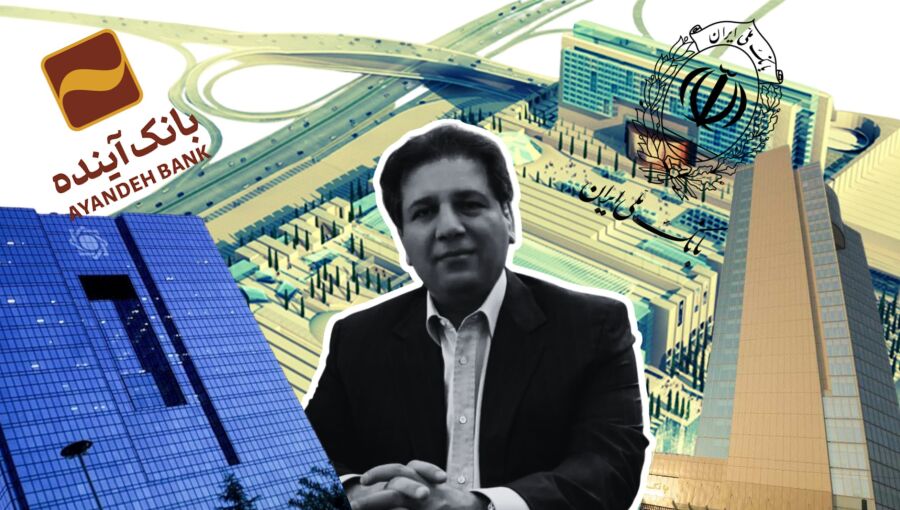
The man who sank Iran's Ayandeh Bank

The man who sank Iran's Ayandeh Bank
Management used the funds from Bank Ayandeh for world's biggest mall. / bne IntelliNews
By bnm Gulf bureau October 23, 2025

Following the collapse of Iran's troubled Ayandeh (Future) Bank and its absorption into Bank Melli Iran, attention has now turned to the bank's former management after years of difficulties.

Ali Ansari seemed to have the Midas touch. Born in Tehran in December 1962 to a construction family, he rejected the family business of residential building to strike out on his own. With his father's support, he obtained a licence from Zanjan's heavy industries department to manufacture pipes and profiles. In 1993 he opened a factory in Mahdash, Karaj — the foundation of his fortune.

Success bred ambition. Ansari entered the fruit and dried fruit trade, eventually exporting to the Caucasus and Azerbaijan. In 1994 he established Bazar Ahan Shadabad, a distribution centre for iron and steel in Tehran's Shadabad district that became one of Iran's largest metals trading hubs. The facility later changed its name to Behadaran Commercial Complex.

When mobile phones became widespread in Iran during the mid-2000s, thanks to credit lines from Irancell and Mobile Communications Company of Iran (MCI), Ansari spotted another opportunity. In 2006 he opened Iran Mobile Market. The public rushed to buy handsets, swelling his wealth to the point where he appeared on lists of Iran's richest individuals, Etemad newspaper reported about the banker on October 23.

He applied the same formula to furniture retail, opening Bazar Meubles. The venture transformed the area's economy, spawning hundreds of shops and independent businesses. Ansari became chairman of the furniture and decoration trade association. Yaft Abad market is now considered among Tehran's most luxurious shopping centres.

His involvement with popular Esteghlal Football Club's board during the 2000s, and his appointment as chairman of Iran's cycling federation in August 2009 with 39 votes, raised his public profile further. He owned Iran Mall, confirmed as the world's largest shopping centre, near Lake Chitgar, which houses car showrooms, cinemas, hotels, restaurants, waterfalls, ice rinks and tennis courts. He refused to sell units, only leasing them.

Yet Ansari's banking ventures would prove disastrous. In 2009 he co-founded Bank Tat with former managers from Kesharvazri Bank and Export Bank. Regulators accused the founders of failing to provide required capital, allegedly submitting just one-tenth of the legal minimum through property collateral rather than cash. Three years later Bank Tat declared bankruptcy.

The wreckage was hurriedly swept together. Bank Tat merged with Saleheen Credit Institution and Ati Credit Institution to form Ayandeh Bank in 2014, with Ansari as principal shareholder. But the new lender replicated its predecessor's failings. From establishment, Ayandeh Bank allocated over 90% of deposits to related parties and projects under the bank's own management, according to Hamidreza Ghani-Abadi, director-general of banking supervision at the Central Bank of Iran. Iran Mall, Mashhad Mall, Rotana Hotel and Farmaniyeh Mall were among the main projects Ayandeh Bank financed.

The funds never returned. To pay interest on existing deposits, Ayandeh Bank attracted fresh deposits by offering rates six to seven percentage points above the banking system average, what regulators described as a Ponzi scheme, criminal in other jurisdictions. When the network average stood at 18%, Ayandeh paid 26-27%. When competitors offered 23%, Ayandeh paid 31-32%. The strategy poisoned the entire banking sector, forcing rival lenders to breach central bank regulations to retain deposits.

The authorities removed management in late 2019 and launched a reform programme. Transparency efforts revealed the bank's true ownership structure, which had previously been concealed through proxies. But the damage was irreversible.

In 2022, the Iranian criminal court indicted dozens of individuals including senior bank executives including Ansari, government officials and businessmen on charges of disrupting the economic system through banking fraud and embezzlement, according to a court document leaked at the time. Accordingly it said, Branch 1059 of Tehran's Criminal Court issued the indictment against officials from the Ministry of Economic Affairs and Finance, Police Intelligence and Security, Bank Ayandeh (Future Bank), Bank Melli and various other entities.

The indictment accused the defendants of using their positions to obtain illegal loans through manipulation of the banking system, creating disruption in the banking sector, and interfering in the land registration system. The charges also included embezzlement through various fraudulent schemes and money laundering operations designed to disrupt the banking system.

By October 2025, Ayandeh Bank had accumulated IRR550 trillion ($503mn) in losses against registered capital of just IRR1.6 trillion. Overdrafts from the central bank reached IRR500 trillion. The capital adequacy ratio, legally required to reach 8%, had plunged into negative territory, according to local outlet Didban.

On October 23, regulators placed Ayandeh Bank into resolution. Bank Melli Iran, the state lender, will absorb IRR267 trillion in deposits and all employees. Unaffiliated shareholders can settle at the highest share price over the past year, or wait for asset liquidation. Ansari's projects, those monuments to ambition, will be liquidated to repay creditors, Tasnim previously reported.

To add insult to injury to the depositors of Ayandeh, Ansari was not sentenced despite the string of failures of the banking system, unlike counterpart billionaires like Babak Zanjani at one point facing the death penalty for his dealings in oil exports which earned him his fortune. Like his counterpart, his level of impunity has caused trouble for the government following successive administrations and local city municipality mayors backing his activities.

Unfortunately for the CBI, the Ansari scandal continues to raise questions over the entire banking system which has suffered from years of poor management and shocks from US and EU sanctions. The Iranian rial remains historically low against the dollar, while the entire economy remains on life support with interest rates stubbornly high making loans almost impossible to attain.

Serbian president accuses EU of backing “colour revolution” after European Parliament adopts harsh new resolution


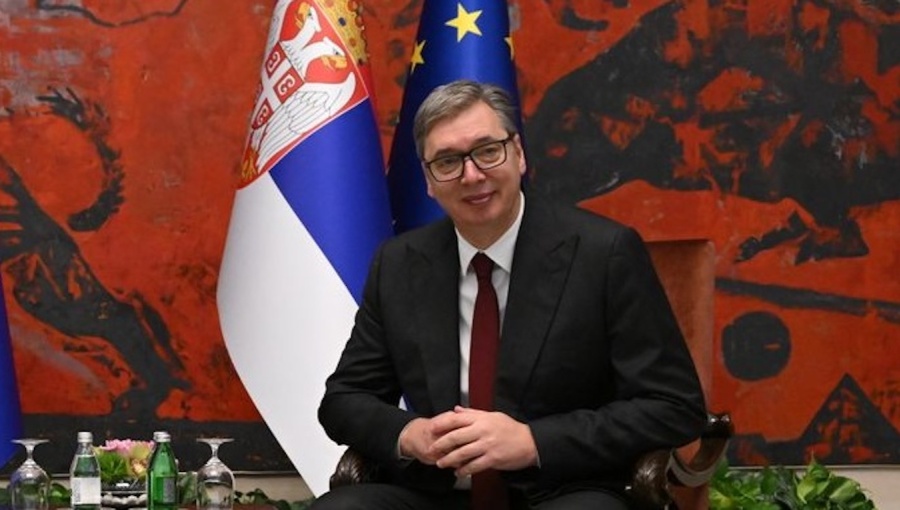
The European Parliament has adopted a sharply worded resolution criticising Serbia's government, prompting an angry response from Belgrade, where President Vucic accused the EU of supporting a “colour revolution”. / Presidency of Serbia/Dimitrije Goll


By Tatyana Kekic in Belgrade October 23, 2025


The European Parliament adopted a sharply worded resolution on October 22 criticising Serbian President Aleksandar Vucic’s government, prompting an angry response from Belgrade, where Vucic accused the EU of supporting a “colour revolution”.

The resolution passed with 457 votes in favour and 103 against, marking the strongest rebuke yet from Brussels towards Serbia in over a decade of EU candidacy. It comes nearly a year after the deadly collapse of a renovated train station canopy in Novi Sad that killed 16 people and ignited a nationwide protest movement.

Lawmakers in the European Parliament cited “deep concerns” over human rights violations, restrictions on press freedom and the alleged deployment of crowd-control weapons, including the reported use of a long-range acoustic device—commonly referred to as a “sound cannon”—against peaceful protesters on March 15.

“The Serbian leadership is politically responsible for the escalation of repression, the normalisation of violence and the weakening of democratic institutions,” the resolution claimed, calling for targeted EU sanctions and a potential suspension of Serbia’s trade privileges with the bloc.

It also urged a freeze on Serbia’s accession talks unless Belgrade aligns its foreign policy with EU positions, particularly regarding sanctions on Russia.

Protest movement turns violent

What began as a wave of peaceful student-led protests over the Novi Sad tragedy has, over nearly a year, evolved into a broader anti-government movement calling for accountability, early elections and an end to corruption.

Tensions escalated in August when clashes between protesters and police turned violent. Demonstrators across the country vandalised offices of the ruling Serbian Progressive Party (SNS), while the opposition condemned an excessive police response.

The resolution expressed alarm at these developments, accusing the government of using state-aligned media to smear dissenters, undermining judicial independence and enabling “pro-government disinformation campaigns.”

Particular concern was raised over claims that individuals with criminal records were mobilised by the SNS to confront protesters and suppress opposition gatherings.

Vucic dismisses EU resolution as “politically charged”

In Belgrade, President Vucic dismissed the resolution as “expected and logical” given what he described as an attempt to instigate a “colour revolution” — a term widely used by Russian officials to describe Western-backed uprisings.

“They condemned the use of a sound cannon that didn’t even exist,” Vucic said during a televised address. “They don’t mind 25,000 criminal gatherings or dozens of occupied faculties. They are bothered by one park [referring to a pro-government encampment in the capital’s Pioneerski park]. That tells you everything about the political nature of this resolution.”

Vucic accused the European Parliament of selectively ignoring disruptions caused by protesters, who have blocked streets, occupied university buildings and staged sit-ins in front of key government institutions.

The term “colour revolution” has gained traction among Vucic’s allies in recent months. Serbian officials have echoed narratives suggesting foreign orchestration of unrest, despite the grassroots nature of much of the mobilisation.

EU-Serbia relations at a crossroads

Serbia has held EU candidate status since 2012 but has made little progress in recent years amid concerns over democratic erosion and growing ties with Russia and China.

While the EU has traditionally viewed Vucic as a stabilising force in the Balkans, the tone in Brussels has hardened. The resolution calls for a genuine domestic dialogue on student demands, early elections and stricter oversight of security forces.

The document also raised flags over recent reports that government officials sought to influence independent media, including United Media — parent company of broadcaster N1. If confirmed, MEPs warned this would constitute a “serious attack” on already fragile media pluralism in Serbia.

Nonetheless, Vucic remains a key interlocutor for Western powers, particularly on issues like Kosovo, regional stability and strategic resources. Serbia holds one of Europe’s largest untapped lithium reserves, and Vucic’s government has chosen an Anglo-Australian company, Rio Tinto, to open the mine—an arrangement seen by critics as an attempt to curry favour with EU stakeholders despite domestic opposition.

As Serbia nears one year of unrest, the European Parliament’s resolution signals a shift in Brussels' approach, with growing willingness to tie political reform to concrete incentives or penalties.

Whether Vucic’s government engages with protest leaders or continues to dismiss external criticism as foreign interference may determine the trajectory of Serbia’s stalled EU path, or put the final nail in the coffin.