Saturday, October 25, 2025


Spotify users boycott streaming platform over ICE recruitment ads

Spotify users boycotting streaming platform over ICE ads about ‘dangerous illegals’
Copyright Spotify - Canva

By David Mouriquand
Published on 

Spotify has been running a series of recruitment ads for ICE and said that the ads referring to “dangerous illegals” do not violate their advertising policy. This has prompted more and more subscribers to (further) boycott the streaming giant.

Spotify users are faced with yet another reason to cancel their subscription to the increasingly controversial streaming giant.

From military contracts to “Spotify-verified” AI-generated bands, via price hikes and artists speaking out against the platform as “the worst thing that has happened to musicians”, it’s not as if users were at a loss for reasons to ditch the Swedish company.

Now, they’ve got a new one, as subscribers are boycotting the streamer for running a series of recruitment ads courtesy of ICE – the controversial US government agency responsible for carrying out Donald Trump’s policy for mass detention and deportation.

The promotional and fearmongering ads refer to “dangerous illegals” and encourage US residents to become ICE agents, with phrases like: “Fulfill your mission to protect America. Join at Join.Ice.Gov.”

A spokesperson for Spotify has said the ads are compliant with the streamer’s US advertising policy and stressed that they are “part of a broad campaign the US government is running across television, streaming and online channels”.

The extrajudicial, paramilitary and federal law enforcement agency is under the supervision of the US Department of Homeland Security and has prompted nationwide demonstrations this year.

ICE’s aggressive and intimidation tactics have been heavily criticised, and concerns have been raised over a lack of accountability and racial profiling.

Politico has described ICE as an “un-informed, masked domestic army”, while the Guardian refer to “Trump's personal rogue agency doing his bidding regardless of accepted norms and laws,” adding: “They have become a kind of domestic enforcer for MAGA's agenda, rounding up "illegals" and deporting what they say are criminals to El Salvador, to face justice in a place without trials.”

There have been multiple reports of abuse and mistreatment of detainees in ICE facilities, including of pregnant women and children. US Senator Jon Ossoff’s office has published data showing “at least 510 instances” of physical and sexual abuse.

Several artists have spoken out against ICE this year, including Bad Bunny, Green Day, Shakira and Olivia Rodrigo, while Rage Against The Machine’s Zack De La Rocha wrote: “Its agents weaponize what they consider to be the law and will only apply it to those that they target, while they illegally detain, harass, terrorize, and disappear the members of our communities with total impunity.”

He added: “They are attempting to blur the lines between what is protest and what is “terrorism,” between who is an innocent worker and who is a “violent criminal.” This could soon be the norm, whether you’re a citizen or not. To stand with us is to stand up for yourselves.”

Spotify previously hosted a brunch for Donald Trump’s inauguration this year and donated $150,000 (€130,000) to the official ceremony, according to Dagens Nyheter.

The streamer has also faced backlash in recent months from artists choosing to remove their music from Spotify due to its then-CEO Daniel Ek “investing millions in AI military drone technology”.

Spotify also recently came under fire after allowing an AI-generated band called Velvet Sundown, which has managed to rack up millions of streams, to appear on its platform with a “verified artist” badge. Euronews Culture described Spotify’s role in allowing the AI band on the platform as "a prime example of autocratic tech bros seeking to reduce human creation to algorithms designed to eradicate art."

This month, we reported that Daniel Ek was stepping down as Spotify CEO as of 1 January 2026. He claimed the move is to allow him to focus on other businesses. He will be replaced by Alex Norström and Gustav Söderström.

Spotify board director Woody Marshall claimed that the leadership changes had been in motion for years. Nevertheless, soon-to-be co-CEOs Söderström and Norström will have to work double shifts to claw back some goodwill, which seems to be in very short supply at the moment.


Ten years after Paris, the world is still failing to meet its own climate promises, warns report

The world is off track on all its climate targets, according to a landmark new report
Copyright Nicholas Doherty/Unsplash

By Craig Saueurs
Published on 

Despite record clean energy investment, coal, deforestation and fossil fuel finance are still rising, warns new report.

The world is failing to act fast enough to avoid the worst impacts of climate change, according to a major assessment published this week.

The State of Climate Action 2025 report, produced by Systems Change Lab, finds that none of the 45 key indicators for limiting global warming to 1.5°C, in line with 2015’s Paris Agreement, are on track for 2030. While most are moving in the right direction, progress remains far too slow and uneven to meet the targets set out in the Paris Agreement.

“All systems are flashing red,” says Clea Schumer, research associate at the World Resources Institute (WRI) and co-lead author of the report.

“A decade of delay has dangerously narrowed the path to 1.5°C. Steady progress isn’t enough anymore – every year we fail to speed up, the gap widens and the climb gets steeper. There’s simply no time left for hesitation or half measures.

Climate action ‘off track’ across all sectors


The report is a collaboration between the Bezos Earth Fund, Climate Analytics, ClimateWorks Foundation, the Climate High-Level Champions and WRI

It offers what its authors describe as “the most comprehensive roadmap yet” for closing the gap in climate action across the sectors responsible for most emissions. Those include energy, transport, industry, forestry and food systems.

Of the 45 indicators assessed, six are “off track,” 29 are “well off track,” five are heading in the wrong direction entirely and five could not be evaluated due to insufficient data.

Even areas previously considered success stories are suddenly losing momentum.

Electric vehicles made up a record 22 per cent of global car sales in 2024, up from 4.4 per cent in 2020. But as climate scepticism has emerged, EV growth has slowed in major markets such as Europe and the United States. The report now classifies EV adoption as “off track.”

The stalled progress comes at a time when transport is the only sector still producing more emissions than it did in 1990.

Finance is also lagging. While private climate funding reached about €1.2 trillion in 2023, up from about €750 billion in 2022, the amount is still far below what is needed.

Public finance for fossil fuels, on the other hand, continues to rise. It has averaged roughly €70 billion per year since 2014, and in 2023 it totalled more than €1.4 trillion.

“We’re not just falling behind – we’re effectively flunking the most critical subjects,” said Sophie Boehm, senior research associate at WRI and co-lead author.

“We have barely moved the needle on phasing out coal or halting deforestation, while public finance still props up fossil fuels. These actions aren’t optional; they’re the bare minimum needed to combat the climate crisis and protect humanity.

Less coal, more climate tech: These are the key areas for acceleration

The report sets out how quickly the world needs to change to stay within 1.5°C of warming.

Coal use must decline more than ten times faster than current rates, a figure the authors equate to retiring “nearly 360 coal-fired power plants” annually while halting all future projects.

With current losses comparable to 22 football pitches of forest disappearing every minute, and pledges falling short, deforestation must fall nine times faster.

Rapid transit infrastructure needs to expand fivefold, while regions such as North and South America, Australia and New Zealand – where beef and lamb consumption remains high – must make different food choices. The report says these regions need to cut back on beef and lamb intake about five times faster, down to no more than two servings per week.

That includes grass-fed beef, as recent studies have revealed it produces the same planet-warming carbon emissions as industrial beef.

Carbon removal technology must grow more than tenfold, too, while climate finance must rise by nearly €920 billion annually, or roughly two-thirds of current fossil fuel subsidies.

Pockets of progress offer hope

In the second quarter of this year, more than half of Europe’s net electricity came from solar power. Globally, renewable energy is beginning to mirror this growth.

The share of global electricity generated from solar and wind power has more than tripled since 2015, according to the report, while clean energy investment exceeded fossil fuel investment for the second consecutive year in 2024.

Emerging technologies such as green hydrogen – or hydrogen produced using renewable energy sources – and carbon dioxide removal are also expanding rapidly. In fact, green hydrogen production more than quadrupled in a single year.

“Clean energy investment is now outpacing fossil fuels and new technologies are taking off – proof that progress is possible when ambition and investment align,” says Kelly Levin, chief of science, data and systems change at the Bezos Earth Fund.

“The challenge is to scale these successes and reverse the setbacks.”

Meeting climate targets a matter of ‘speed’

Despite signs of momentum, the report’s overall message is a stark reminder that societies have a lot of work ahead to meet necessary climate goals.

“Keeping warming to 1.5°C now hinges on one thing: speed,” says Bill Hare, chief executive of Climate Analytics.

“The science is unequivocal: the world isn’t moving fast enough. Every year of delay makes the task harder, and only rapid, sustained cuts can keep 1.5°C within reach.”

Ani Dasgupta, president and chief executive of WRI, adds a note of caution.

“Ten years after the Paris Agreement, the world is at a critical crossroads. We can either lock in systems that are escalating climate catastrophes, or accelerate the transition toward a healthier, more sustainable future.”


How the Louvre jewel robbery gave a German ladder firm a golden lift

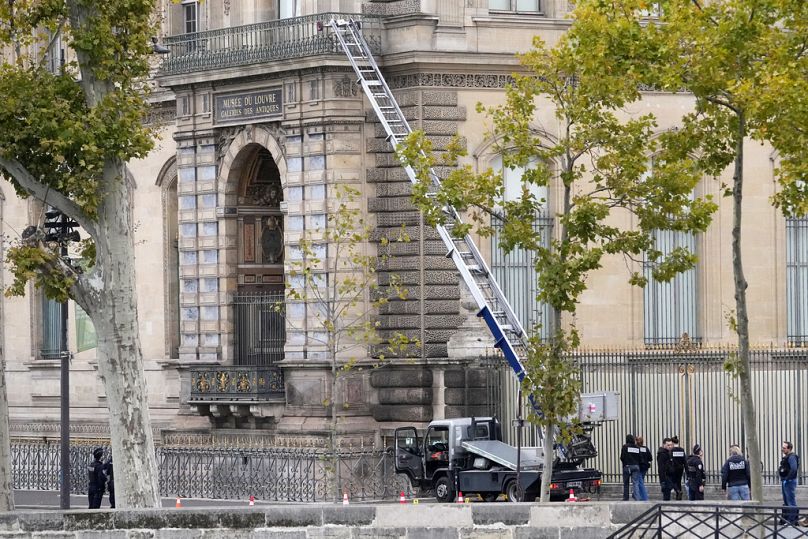
Police officers work by a basket lift used by thieves at the Louvre museum in Paris. 19 October 2025.
Copyright Thibault Camus/Copyright 2025 The AP. All rights reserved.

By Theo Farrant & Doloresz Katanich
Published on 

German lift manufacturer, Böcker, turned to social media when they spotted their ladder used in the Louvre theft. In a post, the firm said: "The Böcker Agilo transports your treasures weighing up to 400kg at 42m/min — quiet as a whisper."

German family-run business Böcker, based in North Rhine-Westphalia, became an accidental accomplice in the weekend's highest-profile Louvre Museum heist — after one of its mechanical lifts played a key role in the audacious heist.

On Sunday, perpetrators parked a truck with a lifting platform at the Louvre, used it to climb onto a terrace, and from there forced their way into the interior of the building and stole crown jewels worth €88 million in the space of seven minutes.

And just one day after the robbery, Böcker decided to react with a post loaded with sharp humour, turning the theft into marketing gold, after learning that nobody was hurt during the heist. The post features its now-infamous furniture ladder stretched up to a balcony outside the Apollo Gallery.

The company's management superimposed the slogan over a crime scene photo. “When you need to move fast,” the caption reads, "the Böcker Agilo transports your treasures weighing up to 400kg at 42m/min — quiet as a whisper."


Speaking to AFP, managing director Alexander Böcker said they decided to add “a touch of humour” to the situation. "The crime is, of course, absolutely reprehensible, that's completely clear to us," Mr Böcker said.

"It was... an opportunity for us to use the most famous and most visited museum in the world to get a little attention for our company."

Online reaction to the cheeky ad has been positive, with comments ranging from "This might be the best ad I've seen this year!" to "brilliant marketing move".

"Your messaging takes the crown," one user joked.

Böcker confirmed the lift was sold years ago to a French rental firm, from whom the thieves allegedly “borrowed” it after arranging a fake demonstration last week.

Caught on camera

Adding to the online buzz around the heist, fresh footage of the incident has surfaced on social media, showing the culprits’ unhurried escape.

The 36-second clip, filmed from a nearby window overlooking the Quai François Mitterrand, shows two men in black — one in a hi-vis vest, the other in a motorcycle helmet — descending on the Böcker ladder from the museum’s Apollo Gallery.

Police officers work by a basket lift used by thieves at the Louvre museum in Paris. 19 October 2025 Thibault Camus/Copyright 2025 The AP. All rights reserved.

The robbery, which took place at around 9:30 CEST on Sunday, lasted between six and seven minutes and involved four people who were unarmed, but threatened guards with angle grinders, according to Paris prosecutor Laura Beccuau

Officials said nine pieces were targeted, but eight were stolen, from the Napoleon and the Empress' jewellery collection in the Apollo Gallery, including a necklace, a brooch, a tiara and more.

One object was later found outside the museum, Dati said. French media identified it as the emerald-set imperial crown of Napoleon III’s wife, Empress Eugénie, containing more than 1,300 diamonds. It was reportedly recovered broken.

French President Emmanuel Macron reacted to the robbery on X. He wrote: "The theft committed at the Louvre is an attack on a heritage that we cherish because it is our History. We will recover the works, and the perpetrators will be brought to justice."


EU lawmakers plead UN body to go hard on wildlife trafficking by 2030

Werner Pillich
Copyright AP Photo

By Marta Pacheco
Published on 

More data, better traceability schemes and stepping up enforcement are some of the measures backed by lawmakers to tackle wildlife trafficking ahead of the UN convention in Uzbekistan.

European lawmakers will make the case for wildlife trafficking to be recognised as organised crime by 2030 at the upcoming United Nations gathering in Uzbekistan to discuss wildlife protection from over-exploitation due to international trade.

Elephants, rhinoceros, wild birds and amphibians are among the creatures mentioned in the mandate agreed by lawmakers on Wednesday, which included reservations regarding China’s lack of transparency regarding its pangolin stockpiles.

Lawmakers asked for increased protection for shark and ray species and proposed a legally binding instrument to stop ivory trafficking in the EU.

“We’ve seen an increased demand for protected banned species, especially through online trade. We’ve seen hidden hunting for these listed species. We need illegal trade to be sustainable,” lawmaker Esther Herranz-Garcia (Spain/EPP) said on Wednesday during the plenary debate in the European Parliament.

The goal is to ensure that the only trade in wild fauna and flora is legal and sustainable, lawmakers said, consistent with long-term species conservation and helping halt biodiversity loss

European lawmakers will call on all countries to step up their enforcement of the UN convention, noting current provisions to ban and restrict wildlife trafficking are “inadequate”.

“We need greater digitalisation and better traceability that ensures control of the trade of these species. Together with border control as well as coercive measures in case of illegal activity,” added Herranz-Garcia.

European Commissioner for Environment Jessika Roswall said the EU’s attendance at the UN meeting on the Convention on International Trade in Endangered Species of Wild Fauna and Flora will be an opportunity to “strengthen the fight against wildlife trafficking” and “reinforce multilateralism cooperation”.

“It will be a crucial moment for global efforts to ensure that some trade flows do not threaten the survival of endangered wild species,” said Roswall.

'Protecting species must come before profit'

Brussels has taken action to tackle wildlife trafficking since 1983, when it began regulating trade at EU level. But it was only in 2016 that the bloc adopted its first plan to combat illegal wildlife trade.

The 27-member bloc also supports online enforcement networks that enable information sharing among customs, police, and environmental authorities.

All member states are also encouraged to implement UN regulations to ensure that trade in endangered species is strictly controlled, despite lawmakers considering these efforts insufficient.

Customs officers display seized rhino horns during a press conference at the Suvarnabhumi airport, Bangkok, Thailand. / Sakchai Lalit
Customs officers display seized rhino horns during a press conference at the Suvarnabhumi airport, Bangkok, Thailand. / Sakchai Lalit AP Photo

The International Fund for Animal Welfare (IFAW) welcomed the Parliament's resolution and called on the European Commission and EU countries to heed the lawmakers' position in the EU’s common negotiating stance in Samarkand.

The EU remains a central hub and destination for wildlife that has been ‘stolen’ from the Americas, Africa, Eastern Europe, Asia and Oceania, IFAW's report reveals, suggesting the bloc's increased responsibility in curbing poaching.

“This resolution shows that the European Parliament wants the EU to take real responsibility for its role in the global wildlife trade,” said Ilaria Di Silvestre, director of policy and advocacy Europe at IFAW. “It’s a clear message that protecting species must come before profit.”

The UN Convention on International Trade in Endangered Species of Wild Fauna and Flora will take place in Uzbekistan's Samarkand from 24 November to 5 December.


Don't forget, the clocks go back tonight! Does it affect your health? Here’s what experts say

What the October time change does to sleep, mood and the body clock
Copyright Credit: Canva Images


By Theo Farrant
Updated 

The clock going back for winter is far less disruptive than the spring shift, which has been linked to spikes in heart attacks and traffic accidents.

Every year, as clocks go back in October, millions of people celebrate an “extra hour” of sleep.

But how much does this small shift really affect our bodies, our sleep and our mood?

According to experts, the autumn transition is much milder than the springtime change - but it’s not entirely harmless. The shift subtly disrupts our circadian rhythm, the internal 24-hour clock that regulates sleep, alertness, hormone production and mood

Understanding circadian rhythms

The effects of the clock change are rooted in our circadian rhythms - the body’s internal 24-hour clock that regulates sleep, alertness, hormone production, ad mood

"There’s a circadian clock in every cell of the body, but there’s also a principal clock: a group of neurons in the brain that automatically follows light, dawn, dusk, and darkness via signals from the eyes," Timo Partonen, associate professor of psychiatry at the University of Helsinki, told Euronews Health.

"How well this clock functions affects how well we sleep and how good or bad our mood is. That’s why it’s so important," he added.

What is Daylight Saving Time?

Daylight Saving Time (DST) is the practice of moving clocks forward by one hour in spring and back again in autumn to extend evening daylight. Most of Europe, North America, parts of Africa, and Asia follow this system.

This year, clocks will go back on Sunday, 26 October.

While many welcome the extra hour, the change still nudges our internal timing - and some people feel it more than others.

"Generally speaking, despite complaints about evenings getting darker, the autumn one is usually perceived as less painful," Professor Malcolm von Schantz, a chronobiologist at Northumbria University, told Euronews Health.

"Those who dislike the autumn change mainly complain that it’s suddenly dark when they leave work. But there are two points to that. First, it simply reflects where we live: at that time of year, there aren’t enough daylight hours to keep both mornings and evenings bright. That’s not a result of the clock change, just geography.

"Second, and less intuitively, is that biologically and physiologically, light in the morning is much more important for us," he said.

Partonen agreed, saying that "the autumn clock change is easier to adjust to because it gives us an extra hour to our day. It’s easier for the principal circadian clock to adapt to this new schedule".

However, he warned that initially, sleep may not feel as refreshing as during the summer months.

"There’s also the risk that people don’t use the extra hour for sleep - instead, they stay up later and continue to build sleep debt. The change could be an opportunity to catch up on rest, but most people don’t use it that way," he said.

How the time shift can affect our bodies

The springtime hour change - which steals an hour of sleep - has been linked to short-term spikes in traffic accidents, sleep loss, and heart attacks (one study cited by the American Heart Foundation found there was a 24 per cent increase in heart attacks on the day following the switch to daylight saving time).

But the October shift can still have subtler effects.

A 2025 study by Liverpool John Moores University and the University of Oxford found that women were more likely than men to report increased worry, confusion, and stress in the days after the clock change. Disruptions to children’s routines, such as later bedtimes and difficulty waking, also contributed to stress within households.

Broader health research suggests that frequent clock changes can carry more serious, long-term risks.

A recent analysis by Stanford Medicine scientists found that biannual clock shifts may lead to higher rates of stroke and obesity. The study compared three policies - permanent standard time, permanent daylight saving time, and the current biannual shifting - and concluded that seasonal time changes are the worst option.

By modelling light exposure, circadian alignment, and health outcomes across the United States, the researchers estimated that adopting permanent standard time could prevent around 300,000 strokes per year and reduce obesity in 2.6 million people. Permanent daylight saving time would achieve about two-thirds of that benefit, according to the research.

How to maintain a regular sleeping pattern

Maintaining a consistent sleep pattern is one of the most important - and often overlooked - aspects of our long-term health.

“We know it’s important, and we also know our bodies can cope with some irregularity. But from epidemiological data, we know that for long-term health it’s better to minimise fluctuations," explained Schantz.

He described the modern habit of catching up on sleep at weekends - known as “social jet lag” - as biologically disruptive.

“Many of us get up early during the week and then sleep in on weekends - essentially shifting our schedule as if travelling to another time zone on Friday and back on Monday. That pattern has the same long-term negative effects as frequent exposure to jet lag,” he said.

A study published in the Journal of Epidemiology & Community Health found that individuals with irregular sleep-wake cycles had a 26 per cent higher risk of experiencing major cardiovascular events, such as heart attacks and strokes, even if they obtained the recommended 7-9 hours of sleep per night.

Do we need to rethink Daylight Saving Time?

Many scientists and sleep organisations - including the British Sleep Society, which made an official statement on the matter last year - support ending the biannual clock changes in favour of permanent standard time.

The European Union proposed ending seasonal clock changes in 2018, and while the European Parliament supported it in principle, member states couldn’t agree on whether to adopt a permanent standard time or summer time.

For now, the clock continues to tick back and forth each year.

Experts agree that using the extra hour for genuine rest - rather than staying up later - can help smooth the transition.

“Go to sleep early enough,” advises Dr Partonen.

“If the clock change happens on the night between Saturday and Sunday, go to bed at your usual time - or slightly earlier - on Saturday. That way, you can use the extra hour for sleep and reduce any sleep deprivation”.


Precision timing for Britain's Big Ben as


clocks go back

London (AFP) – British clockmaker Ian Westworth is bracing for a wave of concern this weekend from Londoners convinced the country's most famous clock Big Ben has broken down.


Issued on: 24/10/2025 -  FRANCE24
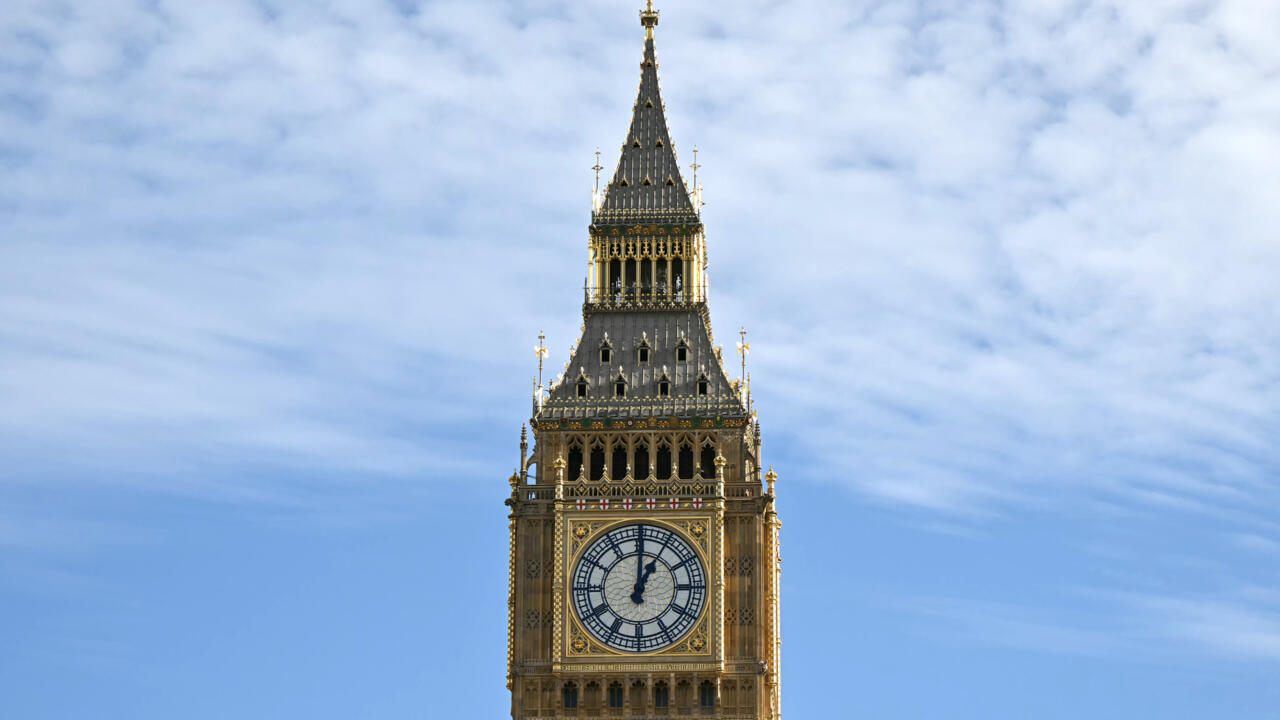


Popularly known as Big Ben, the clock towers of the British capital © JUSTIN TALLIS / AFP


Towering over the UK capital and its parliament, the clock will be stopped briefly to adjust for the switch to winter time -- one of only two occasions each year when it is allowed to pause.

The change takes place at 2:00 am (0100 GMT) on Sunday, when clocks across the UK are turned back one hour to 1:00 am, marking the end of British Summer Time and the return to Greenwich Mean Time (GMT).

'We come up here and stop the Great Clock -- we really stop it,' said Westworth © Justin TALLIS / AFP


Most European countries also revert to standard time ("winter time") Sunday, although there have been calls to scrap seasonal clock changes in recent years, most recently from Spain's leader Pedro Sanchez on Monday.

"We come up here and stop the Great Clock -- we really stop it," said Westworth, 63, who has worked in the Palace of Westminster's clock department for over 20 years.


Officially called The Great Clock of Westminster, it and the whole building are widely known as Big Ben -- the name of the largest of the four bells in the Elizabeth Tower.

The nickname is thought to derive from Benjamin Hall who oversaw the bell's installation.

The well-oiled process of turning the clock back begins around 6:00 pm Saturday, Westworth said.


The clock itself is checked and wound up three times a week 
© Justin TALLIS / AFP


It includes silencing the chimes and switching off the dial lights to avoid passers-by seeing the clock showing an incorrect time.

With the clock paused, the four-person team carries out a full maintenance check, which this year includes tracking down the source of an audible squeak that occurs around the quarter to the hour mark.

"We'll take it apart, service it, put it back together again," Westworth said.

Once that's done the clock is set to the "new midnight".
Life-changing lift

"We don't switch the lights on and we don't have the bells on, but we get the clock ticking and then we've got from 12 o'clock till 2:00 am to get the time right," Westworth said.

At 2:00 am the clock's lights and bells will be switched back on.

"The Monday morning after the time change, we get a lot of emails saying, you know, your clock doesn't work, you know, or I missed my train because of you," he added.

The clock itself is checked and wound up three times a week. The minute hands are made of copper sheet while the hour hands  are made of gun metal.


Westworth's team maintain 2,000 clocks on the parliamentary estate, including around 400 that need winding up every week © Justin TALLIS / AFP


Getting to the clock means wearing a noise-cancelling helmet and used to entail climbing 334 steps to the top of the clock-tower. It stands 316 feet (96 m) high.

But after major renovation work was completed at the end of 2022, a service elevator was added.

"It changed our life," said Westworth, whose team looks after 2,000 clocks on the parliamentary estate, including around 400 which require winding up once a week.

"Back then, if we happened to forget a tool, we had to go all the way down and back up again. It was tough."

Aside from the lift and new LED lighting to illuminate Big Ben, the clock which dates back to 1859 remains largely the same. Before the recent renovation, his team used mobile phones to check the accuracy of the time.

Despite the pace of 21st century technology, Westworth is confident Big Ben's future is secure.

"As long as there is a good team of people behind it, we can keep this clock going for another 160 years," he said.

© 2025 AFP

Cybernation And The Transformation Of The Nation-State: A Postmodern Inquiry – Essay


October 24, 2025
By Dr. Azly Rahman

Introduction: The Cybernating Nation in a Globalized World

In the contemporary landscape of globalization and post-industrialism, the concept of a “cybernating nation” emerges as a critical lens for understanding how developing societies integrate advanced information and communication technologies (ICTs), particularly the Internet and telematics, into their socio-political and economic fabrics. Cybernation refers not merely to technological adoption but to a profound cybernetic reconfiguration of societal structures, where feedback loops between human agency, institutional power, and digital networks redefine national trajectories.

This essay expands upon a series of interconnected theses to explore the multifaceted implications of cybernation. Drawing from center-periphery dynamics, complexity theory, structuralism, and resistance paradigms, it argues that cybernation accelerates both integration into global systems and internal contestations of power, ultimately eroding traditional notions of sovereignty while fostering new forms of enculturalized discourse. These transformations, best illuminated through postmodern lenses, reveal the tensions between hegemony and subaltern agency in an increasingly wired world.

“The Enduring Grip of Center-Periphery Dynamics in Cybernation”

At the heart of cybernation lies the persistent center-periphery pattern of development, a framework originating from dependency theory that posits global economic and cultural flows as radiating from core (developed) nations to peripheral (developing) ones. In a globalized post-industrialist world, the development of a cybernating nation will continue to follow, to a degree or another, this center-periphery pattern.

Peripheral nations, eager to harness ICTs for economic leapfrogging, often replicate the infrastructural and ideological blueprints of the center—adopting Western-modeled digital platforms, data protocols, and innovation hubs—while reaping asymmetric benefits. For instance, investments in fiber-optic networks or the 5G rollout in nations like India or Kenya mirror Silicon Valley’s ecosystems but serve primarily to funnel data and labor to global corporations, perpetuating unequal exchange.

This pattern extends to the macro-level contestations of power, where hegemony between cybernating and fully cybernated nations defines global hierarchies. Fully cybernated centers, such as the United States or China, exert a gravitational pull through proprietary algorithms and standards, compelling peripherals to align or risk obsolescence. At the micro-level, however, power fractures along domestic lines, with contending political parties or groups vying for control over cybernetic resources—be it spectrum allocation or digital surveillance tools. Thus, cybernation does not dismantle center-periphery asymmetries but amplifies them, channeling peripheral creativity toward emulative models of success.

Complementing this, globalization theory underscores how creative consciousness in cybernating nations becomes centralized in business and the arts, patterned after triumphant global corporations. Entrepreneurial ecosystems in peripheral hubs, from Bangalore’s tech parks to Nairobi’s Silicon Savannah, cultivate a cosmopolitan ethos that prizes innovation and branding, often at the expense of indigenous epistemologies. This centralization fosters a hybrid cultural economy where local artisans collaborate with multinational firms, yet the fruits of such creativity—intellectual property and market access—flow disproportionately outward, reinforcing peripheral dependence.

“Complexity, Nationalism, and the Semantic Reconfiguration of Cybernetics”

Traditional historical materialism, with its linear dialectics of class struggle and productive forces, falters in explicating cybernation’s nonlinear trajectories. A purely historical materialist conception of change cannot fully explain why nations cybernate; the more a nation gets “wired,” the more complex the interplay between nationalism and internationalism becomes. Cybernation introduces emergent properties—unpredictable feedback loops where digital connectivity amplifies both centrifugal (globalizing) and centripetal (nationalist) forces. In complex systems, small inputs, such as viral social media campaigns, can cascade into regime-shifting upheavals, as seen in the Arab Spring, where Twitter’s algorithms intertwined local grievances with transnational solidarity.

This complexity manifests semantically and structurally, where the enculturalization of “cybernetics” itself becomes a battleground. The more a nation transforms itself cybernetically, the more extensive the enculturalization and transformation of the term “cybernetics” will be. Borrowed from Norbert Wiener’s foundational work on control and communication, “cybernetics” evolves from a technical term into a culturally laden signifier—recast in peripheral contexts as “digital sovereignty” in Russia or “jugaad tech” in India, blending foreign precision with local improvisation.

Structuralist semiotics reveals how these shifts in signifiers alter signified realities, embedding cybernetic logic into everyday discourses of governance, education, and identity. The political economy of this linguistic transformation is pivotal: the extent of the enculturalization of the concept of “cybernetics” will determine the speed at which a nation will be fully integrated into the global production-house of the telematics industry. Nations that swiftly domesticate cybernetic jargon—through policy glossaries, educational curricula, or media narratives—accelerate value-chain insertion, attracting foreign direct investment in data centers and AI hubs. Conversely, linguistic resistance, such as vernacular tech lexicons in non-English-dominant peripherals, can delay integration, preserving pockets of autonomous innovation but risking isolation from global standards.

“Authoritarianism, Resistance, and the Erosion of State Power”

Cybernation intersects with authoritarianism in profound ways, where regime strength dictates the scope and velocity of digital transformation. The stronger the authority of the regime, the greater the control and magnitude of the cybernating process. In a cybernating nation, authority can reside in the political will of a single individual or in a strong political entity, consequently producing the author’s “regime of truth,” to borrow Foucault’s phrase. Charismatic leaders in nations like Turkey under Erdoğan or the Philippines under Duterte have weaponized cybernetic tools—state-controlled firewalls and algorithmic propaganda—to consolidate power, crafting digital panopticons that monitor and mold public consent. This “regime of truth” naturalizes cybernation as an extension of sovereign will, masking its extractive undercurrents.

Yet, this centralization begets resistance, particularly as the Internet undermines state monopolies on narrative production. The advent of the Internet in a developing nation signifies the genesis of the erosion of the power of government-controlled print media. Universal access to the Internet will determine the total erosion of government-produced print media.

Subaltern voices will replace Grand Narratives. In cybernating peripherals, where state broadcasters once disseminated monolithic ideologies, platforms like WhatsApp and Telegram democratize discourse, amplifying marginalized groups—from indigenous activists in Bolivia to urban youth in Nigeria. This withering of the nation-state’s communicative hegemony fosters polyphonic publics, where Grand Narratives of progress yield to fragmented, user-generated counter-stories.

Resistance centralizes critical consciousness in arenas of political mobilization and personal expression, modeled after successful Internet-based groups. Emulating tactics from global movements like #MeToo or Black Lives Matter, cybernating citizens repurpose social media for hashtag activism, doxxing corrupt officials, or coordinating flash protests. The more the government suppresses voices of political dissent, the more the Internet is used to affect political transformations. Suppression—via shutdowns or troll farms—paradoxically catalyzes circumvention, with VPNs and dark web forums becoming tools of subversion, turning digital repression into a feedback loop of escalating defiance.

“Imperialism, Deep-Structuring, and the Threat to Sovereignty”

Modern imperialism permeates cybernation, where external ideologies steer internal mutations. The fundamental character of a nation will be significantly altered with the institutionalization of the Internet as a tool of cybernating change. The source of change will, however, be ideologically governed by external influences, which will ultimately threaten the sovereignty of the nation-state. Platforms engineered in the Global North—Google, Meta, Tencent—impose neoliberal logics of surveillance capitalism, reshaping peripheral subjectivities from communal to consumerist. This neo-colonialism manifests in data sovereignty disputes, where peripheral governments enact laws like India’s Data Protection Bill, only to negotiate concessions with imperial tech giants.

At deeper levels, discourse embeds these shifts in language, eroding indigenous cores. The discourse of change, as evident in the phenomena of cybernation, is embedded in language. The more a foreign concept is introduced, adopted, assimilated, and enculturalized, the more the nation will lose its indigenous character built via schooling and other means of citizenship enculturalization processes. School curricula infused with STEM jargon supplant traditional cosmologies, while algorithmic biases in education apps perpetuate Anglocentric worldviews. This deep-structuring—akin to Gramscian hegemony—subtly supplants national mythologies with globalized cybernetic myths, hollowing out cultural sovereignty.

Conclusion: “Embracing Postmodern Paradigms for Cybernetic Inquiry”

Ultimately, comprehending cybernation demands paradigms attuned to flux and multiplicity. Postmodernist perspectives of social change—discourse theory, semiotics, and chaos/complexity theory—rather than those of structural-functionalists, Marxists, or neo-Marxists, can best explain the structure and consequences of cybernetic changes. Where structural-functionalism views society as equilibrated systems and Marxism as deterministic base-superstructure dialectics, postmodernism captures the rhizomatic, non-linear sprawl of cybernetic networks: discourses that fractalize power, signs that mutate meanings, and chaotic attractors that birth emergent resistances. In cybernating nations, these lenses reveal not inevitable decline but creative potentials—hybrids of center and periphery, authority and dissent—that could redefine global orders. As peripherals wire deeper into the digital mesh, the challenge lies in harnessing cybernation for endogenous futures, lest it consummate the very imperialisms it ostensibly disrupts.

Dr. Azly Rahman grew up in Johor Bahru, Malaysia and holds a Columbia University (New York City) doctorate in International Education Development and Masters degrees in six fields of study: Education, International Affairs, Peace Studies, Communication, Creative Non-Fiction, and Fiction Writing. He has written 10 books and more than 500 analyses/essays on Malaysia. His 35 years of teaching experience in Malaysia and the United States spans over a wide range of subjects, from elementary to graduate education. He is a frequent contributor to scholarly online forums in Malaysia, the USA, Greece, and Montenegro. He also writes in Across Genres: https://azlyrahman.substack.com/about