Saturday, October 25, 2025

US: 2nd Amendment Enabled Private Armies to Put Down Revolts

Thom Hartmann 


The founders’ true intent behind the right to bear arms wasn’t liberty—it was control, oppression, and the preservation of slavery.


One mass shooting after another, one accidental child death after another tears through this country on an almost daily basis. Once again, lawmakers hide behind “thoughts and prayers,” while clinging to an amendment that has been twisted beyond recognition. But to understand why the Second Amendment exists at all, we must strip away the myths and confront a brutal truth: it was not written to safeguard freedom, but to preserve slavery.

The militias it enshrined were never about defending homes from tyrants abroad but about keeping human beings in chains at home. Until America reckons with this history, we will remain shackled to its bloody legacy.

So, let’s clear a few things up.

The real reason the Second Amendment was ratified, and why it says “state” instead of “country” (the framers knew the difference—see the 10th Amendment), was to preserve the slave-patrol militias in the Southern states, an action necessary to get Virginia’s vote to ratify the Constitution.

It had nothing to do with making sure mass murderers could shoot up public venues and schools. Founders, including Patrick Henry, George Mason, and James Madison, were totally clear on that, and we all should be too.

In the beginning, there were the militias. In the South, they were called “slave patrols” and were regulated by the states.

In Georgia, for example, a generation before the American Revolution, laws were passed in 1755 and 1757 that required all plantation owners or their male white employees to be members of the Georgia Militia, and for those armed militia members to make monthly inspections of the quarters of all slaves in the state. The law defined which counties had which armed militias and required armed militia members to keep a keen eye out for slaves who may be planning uprisings.

As Carl T. Bogus wrote for the University of California Law Review in 1998, “The Georgia statutes required patrols, under the direction of commissioned militia officers, to examine every plantation each month and authorized them to search ‘all Negro Houses for offensive Weapons and Ammunition’ and to apprehend and give twenty lashes to any slave found outside plantation grounds.”

It’s the answer to the question raised by the character played by Leonardo DiCaprio in Django Unchained when he asks, “Why don’t they just rise up and kill the whites?” It was a largely rhetorical question because every Southerner of the era knew the answer: Well-regulated militias kept enslaved people in chains.

Sally E. Hadden, in her brilliant and essential book Slave Patrols: Law and Violence in Virginia and the Carolinas, notes that, “Although eligibility for the Militia seemed all-encompassing, not every middle-aged white male Virginian or Carolinian became a slave patroller.” There were exemptions so “men in critical professions,” like judges, legislators, and students, could stay at their work. Generally, though, she documents how most Southern men between ages 18 and 45—including physicians and ministers—had to serve on the slave patrol in the militia at one time or another in their lives.

And slave rebellions were keeping the slave patrols busy.

By the time the Constitution was ratified, hundreds of substantial slave uprisings had occurred across the South. Blacks outnumbered whites in large areas, and the state militias were used to both prevent and to put down uprisings by enslaved men and women. As I detail in my book The Hidden History of Guns and the Second Amendment, slavery can only exist in a police state, which the South had become by the early 1700s, and the enforcement of that police state was the explicit job of the militias.

Southerners worried that if the antislavery folks in the North could figure out a way to disband—or even move out of the state—those Southern militias, the police state of the South would collapse. And, similarly, if the North were to invite enslaved men into military service from the South, then they could be emancipated, which would collapse the institution of slavery, along with the Southern economic and social “ways of life.”

These two possibilities worried Southerners like slaveholder James Monroe, George Mason (who owned more than 300 enslaved humans), and the Southern Christian evangelical, Patrick Henry (Virginia’s largest slaveholder), who said, “Give me liberty or give me death.”

Their main concern was that Article 1, Section 8 of the newly proposed Constitution, which gave the federal government the power to raise and supervise an army, and could also allow that federal army to subsume their state militias and change them from slavery-enforcing institutions into something that could even, one day, free their enslaved men, women, and children.

This was not an imagined threat. Famously, 12 years earlier, during the lead-up to the Revolutionary War, Lord Dunsmore offered freedom to slaves who could escape and join his forces. “Liberty to Slaves” was stitched onto their jacket pocket flaps. During the war, British General Henry Clinton extended the practice in 1779. And numerous freed slaves served in General Washington’s army.

Thus, Southern legislators and plantation owners lived not just in fear of their own slaves rebelling, but also in fear that their slaves could be emancipated through the newly forming United States offering them military service.

At the ratifying convention in Virginia in 1788, Henry laid it out:

“Let me here call your attention to that part [Article 1, Section 8 of the proposed Constitution] which gives the Congress power to provide for organizing, arming, and disciplining the militia, and for governing such part of them as may be employed in the service of the United States. …”

“By this, sir, you see that their control over our last and best defence is unlimited. If they neglect or refuse to discipline or arm our militia, they will be useless: the states can do neither—this power being exclusively given to Congress. The power of appointing officers over men not disciplined or armed is ridiculous; so that this pretended little remains of power left to the states may, at the pleasure of Congress, be rendered nugatory.”

George Mason expressed a similar fear:

“The militia may be here destroyed by that method which has been practised in other parts of the world before; that is, by rendering them useless, by disarming them. Under various pretences, Congress may neglect to provide for arming and disciplining the militia; and the state governments cannot do it, for Congress has an exclusive right to arm them [under this proposed Constitution].”

Henry then bluntly laid it out:

“If the country be invaded, a state may go to war, but cannot suppress [slave] insurrections [under this new Constitution]. If there should happen an insurrection of slaves, the country cannot be said to be invaded. They cannot, therefore, suppress it without the interposition of Congress. … Congress, and Congress only [under this new Constitution], can call forth the militia.”

And why was that such a concern for Patrick Henry? “In this state,” he said, “there are 236,000 Blacks, and there are many in several other states. But there are few or none in the Northern States. … May Congress not say, that every Black man must fight? Did we not see a little of this last war? We were not so hard pushed as to make emancipation general; but acts of Assembly passed that every slave who would go to the army should be free.”

Patrick Henry was also convinced that the power over the various state militias given to the federal government in the new Constitution could be used to strip the slave states of their slave-patrol militias. He knew the majority attitude in the North opposed slavery, and he worried they’d use the new Constitution they were then debating to ratify to free the South’s slaves (a process then called “Manumission”).

The abolitionists would, he was certain, use that power (and, ironically, this is pretty much what Abraham Lincoln ended up doing):

“[T]hey will search that paper [the Constitution], and see if they have power of manumission,” said Henry. “And have they not, sir? Have they not power to provide for the general defence and welfare? May they not think that these call for the abolition of slavery? May they not pronounce all slaves free, and will they not be warranted by that power?”

“This is no ambiguous implication or logical deduction. The paper [the Constitution] speaks to the point: they have the power in clear, unequivocal terms, and will clearly and certainly exercise it.”

He added: “This is a local [Southern] matter, and I can see no propriety in subjecting it to Congress.”

James Madison, the “Father of the Constitution” and a slaveholder himself, called Patrick Henry paranoid. “I was struck with surprise,” Madison said, “when I heard him express himself alarmed with respect to the emancipation of slaves. … There is no power to warrant it, in that paper [the Constitution]. If there be, I know it not.”

But the Southern slave masters’ fears wouldn’t go away. Patrick Henry even argued that Southerners’ “property” (enslaved humans) would be lost under the new Constitution, and the resulting slave uprising would be less than peaceful or tranquil: “In this situation,” Henry said to Madison, “I see a great deal of the property of the people of Virginia in jeopardy, and their peace and tranquility gone.”

So Madison, who had (at Jefferson’s insistence) already begun to prepare proposed amendments to the Constitution, changed his first draft to one that addressed the militia issue to make sure it was unambiguous and the Southern states could maintain their slave-patrol militias.

His first draft for what became the Second Amendment had said: “The right of the people to keep and bear arms shall not be infringed; a well armed, and well regulated militia being the best security of a free country [emphasis mine]: but no person religiously scrupulous of bearing arms, shall be compelled to render military service in person.”

But Henry, Mason, and others wanted Southern states to preserve their slave-patrol militias independent of the federal government. So Madison changed the word “country” to the word “state,” and redrafted the Second Amendment into its present form:

“A well regulated Militia, being necessary to the security of a free State [emphasis mine], the right of the people to keep and bear Arms, shall not be infringed.”

Little did Madison realize that one day in the future, weapons manufacturing corporations would use his slave-patrol militia amendment to protect their “right” to manufacture and sell assault weapons used to murder people in schools, theaters, and stores, and use the profits to own their own political party.

In today’s America, you have the “right” to a gun, but no “right” to health care or education. In every other developed country in the world, the reality is the exact opposite.

Pointing out how ludicrous this has become, David Sirota (and colleagues) wrote in his Daily Poster newsletter (now called The Lever) on March 22, 2021: “Last week, the National Rifle Association publicly celebrated its success in striking down an assault weapons ban in Boulder, Colorado. Five days later, Boulder was the scene of a mass shooting, reportedly with the same kind of weapon that the city tried to ban.”

The Second Amendment was never meant to make it easier for mass shooters to get assault weapons, and America needs a rational gun policy to join the other civilized nations of this planet that aren’t the victims of daily mass killings.

It’s long past time to overturn District of Columbia v. Heller, which Ruth Bader Ginsburg repeatedly argued the court should do, and abolish today’s bizarre interpretation of the Second Amendment.

The Second Amendment was never meant to sanctify weapons of war in the hands of mass killers. It was crafted to protect the institution of slavery and the men who profited from it. Today, its distortion fuels daily carnage in schools, streets, and supermarkets. No other developed nation accepts this as “normal,” and neither should we. To honor the lives lost and to finally break free from a history steeped in violence and oppression, America must confront the real origins of its gun culture, overturn dangerous misinterpretations of the law, and choose life over death, freedom over fear, and truth over myth.

Thom Hartmann is America’s number one progressive talk-show host and the New York Times bestselling author of The Hidden History of American Healthcare and more than 30 other books in print. He is a writing fellow for the Economy for All project at the Independent Media Institute.

Courtesy: Independent Media Institute


ALBERTA


READY TO RESIST
Yesterday's 30,000-strong rally at the Alberta Legislature was a huge show of support for teachers. And it's just getting started. As the president of the Alberta Federation of Labour, Gil McGowan, said to the crowd, if Premier Smith's government uses the notwithstanding clause to order teachers back to work, "she will be initiating a war on worker bargaining power."

In response, over 13,000 of you have already used SMS to text RESIST to 55255. In doing so, you've indicated you want to be part of the resistance. You know the importance of public education, public health — all public services. You know the importance of those public sector workers who serve Albertans, day in, day out. The UCP government's anti-worker agenda must be resisted at all costs. This doesn't only affect teachers or other public sector workers. This is about all workers in the province. An attack on one is an attack on all.

As the AFL's Secretary Treasurer, Cori Longo, noted, "This isn't only about the government's anti-worker measures. We have an affordability crisis. Workers across the province are struggling to make ends meet."

RESIST - TOWN HALL
We're inviting you to an important event. Everyone who cares deeply about public services, affordability, and the future of workers' rights is invited to attend. Yes, it's at 5pm on a Saturday and in ordinary times you would probably have something more fun to do. But these are not ordinary times. Please, if you can free up just 90 minutes, we would love to have you there. It's happening via Facebook Live.  You will have a chance to ask questions about the UCP government's use of the notwithstanding clause, and anything else that's on your mind.

WHEN: 5:00 PM to 6:30 PM, Saturday October 25, 2025
WHERE: (Virtual) Facebook Live

Join our town hall to discuss how we can all fight back against bad bosses.

PLEASE FORWARD THIS MESSAGE TO PEOPLE WHO MAY HAVE NOT JOINED THE MOVEMENT YET. More information is available on our website.

Rescued baby gorilla to stay in Istanbul after DNA test

Istanbul (AFP) – A baby gorilla who was rescued from trafficking at Istanbul airport just before Christmas will remain in Turkey rather than be repatriated to Nigeria, Turkish officials said Friday.


Issued on: 24/10/2025 - FRANCE24

Zeytin, the baby gorilla rescued from trafficking at Istanbul airport when he was just five months old, will not be sent back to Nigeria but will stay in Turkey © Ozan KOSE / AFP/File

The young primate was five months old when he was discovered inside a wooden crate in the cargo section of a Turkish Airlines plane en route from Nigeria to Thailand, and taken in a zoo in the hills outside Istanbul to recover.

Named Zeytin -- Turkish for olive -- he was nursed back to health with the aim of sending him back to Nigeria, where he began his journey, in line with the regulations in the CITES treaty limiting the trade of protected animals.

Following a Nigerian request for his repatriation, Turkey's nature conservation and national parks directorate began the process but stopped it after a DNA test confirmed Zeytin belonged to a species that was not native to Nigeria.

"The DNA test... using whole genome sequencing, revealed Zeytin was a Western lowland gorilla. This scientific evidence showed that Nigeria was not Zeytin's country of origin (which) necessitated a re-evaluation of Zeytin's conservation status," it said.


The Western lowland gorilla is a critically endangered subspecies native to the rain forests of central Africa, whose numbers have plummeted in recent decades because of deforestation, hunting and disease.

"Since Nigeria is not the country of origin, it was decided... to place Zeytin in a zoo in Turkey," it said. Until now, he has been looked after at Polonezkoy Zoo near Istanbul.

Last month Fahrettin Ulu, regional director of Istanbul's Nature Conservation and National Parks directorate, told AFP it was the first time a gorilla had been seized at Istanbul airport.

When he first arrived, Zeytin weighed 9.4 kilograms (21 pounds) but by early September he weighed 16 kg and his height increased from 62.5 to 80 centimetres (2.1 to 2.6 feet), he told AFP.

Zeytin, "who was once a baby, has become a young gorilla", he added.

According to TRAFFIC, a trade in wild species monitoring group, buyers are increasingly looking for baby great apes as pets or for zoos, circuses, shows -- or for social media content, and were increasingly targeted for being "easy to transport".

TRAFFIC said the Nigerian authorities had been expecting Zeytin to return last month, and were to have sent him to an NGO called the Pandrillus Foundation.

There he would have been housed with another young gorilla of the same subspecies before eventually being sent to a habitat country country sanctuary in central Africa, the foundation's director told AFP.

© 2025 AFP

Families search Mexican forest for remains of over 100 missing

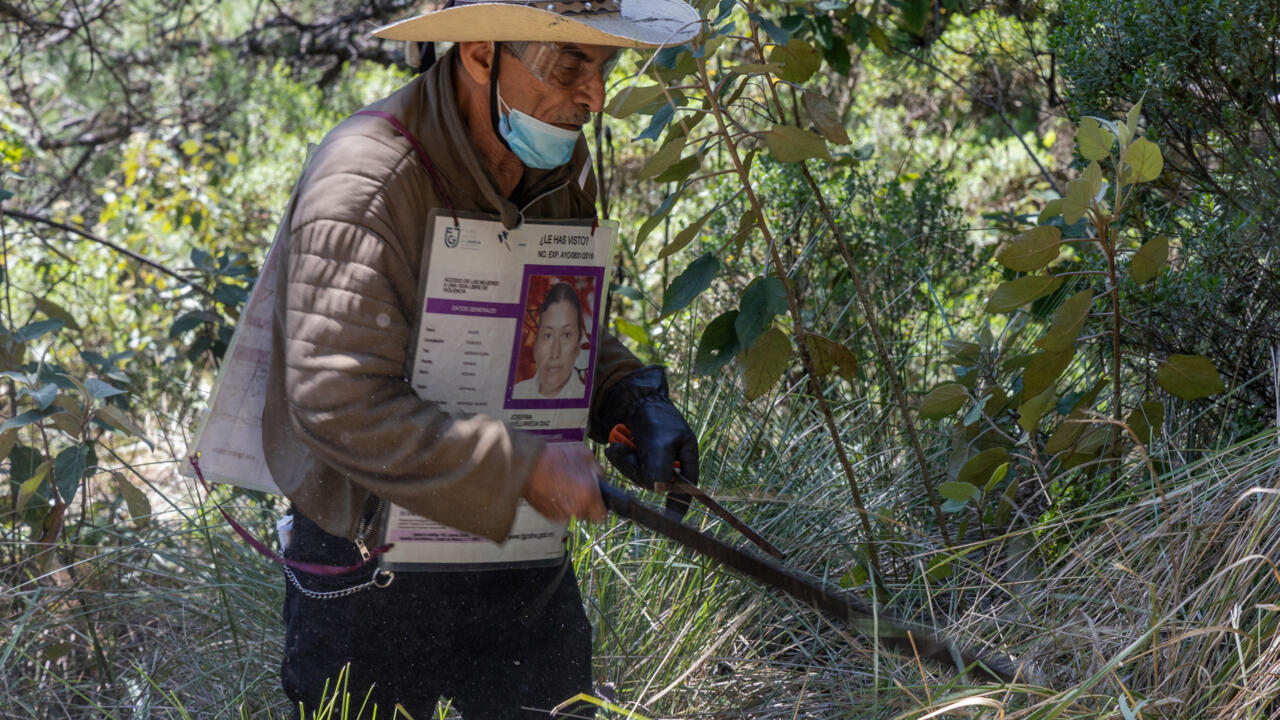
Mexico City (AFP) – Families of dozens of Mexicans feared killed and buried in the woods south of the capital on Thursday joined a colossal search operation for their loved ones alongside activists, authorities and forensic experts.


Issued on: 24/10/2025 - FRANCE24

Families of dozens of Mexicans feared killed and buried in the woods south of the capital on Thursday joined a colossal search operation © GERARDO MAGALLON / AFP

They began combing a large wooded area in Ajusco, a volcanic hill south of Mexico City, searching for human remains.

The groups involved in the operation estimate that there could be between 130 and 150 bodies buried or hidden in the area.

Mothers dug the ground with pitchforks and shovels, while others used machetes and heavy machinery to clear vegetation, AFP images showed.

Araceli Olmedo Cruz, 40, told AFP she was searching for her son Benjamin who went missing from a nearby neighborhood in April 2024.

"Since it's a secluded area, it makes it easier for people to come and dump the bodies," she said.

Mothers dug the ground with pitchforks and shovels, as they combed a large wooded area in Ajusco, a volcanic hill south of Mexico City © GERARDO MAGALLON / AFP


Nationwide, there are more than 127,000 missing persons, with an uptick in reported disappearances linked to a rise in drug-related violence since the government launched a major operation targeting crime groups in December 2006.

Bodies have been discovered across the country.

In Bartolina, in the northeastern state of Tamaulipas, authorities unearthed about 1,100 pounds (500 kgs) of human remains between 2017 and 2021.

Arnulfo Garcia is searching for his mother, Placida, who he hasn't heard from in a year but hopes is still alive.

"We had searched in urban areas of the city, put up posters," he said.

Garcia said he decided to join the Ajusco search in the hopes of connecting with authorities who may be able to locate his mother.

Local media said the search, involving some 430 people, will continue until October 31.

© 2025 AFP
Cyprus has "completely turned the page" on Russian money: Cypriot Deputy Europe Minister Raouna

Issued on: 24/10/2025 -FRANCE24

Play (12:29 min)
From the show


Reading time2 min

At a jam-packed EU summit in Brussels on 23 October, dominated by the thorny issue of using frozen Russian assets, we caught up with the Deputy Minister for European Affairs of Cyprus, Marilena Raouna. Although Belgium was at the centre of haggling over how to turn the Russian assets into a “reparation loan” to help Ukraine, it is not the only country concerned by the issue. Cyprus has frozen €1.2 billion in Russian assets. Raouna emphasises that Cyprus has “completely turned the page” on Russian money flowing through the country and that supporting Ukraine will be a “top priority” when Cyprus assumes the rotating EU presidency in January 2026.


Cyprus’s historically close links with Russia notwithstanding, Raouna pledges that the Cypriot EU presidency will “take an approach of unequivocal, steadfast support for Ukraine on all fronts – political, economic and humanitarian. This is about defending core European principles, including territorial integrity and sovereignty. Cyprus is a member state of the European Union that has part of its territory under occupation by Turkey. We know first-hand what it means to have territorial integrity violated. So this will be a top priority for the Cyprus presidency,” she asserts.

On the question of using frozen Russian assets to aid Ukraine – the issue that dominated the EU summit – Raouna says: “There is broad support for the need to continue supporting Ukraine financially and in its defence capabilities. One of the proposals being discussed in this context is the use of the frozen Russian assets. The point we are making is that we need to ensure these proposals are legally sound, and that they are financially and economically viable for all member states.” In the event, EU leaders did not achieve a breakthrough on the issue and will revisit it at the next summit.

Cyprus itself has frozen more than a billion euros in Russian assets. Raouna insists, however, that the island does not deserve the “Moscow on the Mediterranean” epithet that the media has sometimes used in reference to Russian money on the island.

“There is very clear evidence that Cyprus has completely turned the page in that regard,” she states. “There are independent reports that verify this. President Christodoulides took very concrete steps when he assumed office a little over two and a half years ago. He invited a law enforcement team from the FBI to join our own teams. We have been steadfast in our support of the 19 sanctions packages, and our economy has done away completely with any Russian capital. If anything, we now have a very strong presence of American companies in Cyprus.”

Being something of a bridge between Europe and the Middle East, Cyprus has been an active player in diplomacy on Gaza, and it intends to keep Gaza high on the agenda during its EU presidency.

“When the war in Gaza started, we put forward the Cyprus Maritime Corridor, a humanitarian corridor which was supported by the European Union and by the United Arab Emirates, together with our partners in the region and with Israel. And this corridor is still ongoing,” Raouna says. “We’ve also put forward a six-point plan, which corresponds to a number of points in President Trump’s 20-point plan. We want to facilitate and advance its implementation, and we are now in the crucial initial phase. This is about the EU increasing its footprint in the Eastern Mediterranean and the Middle East, because these regions are inextricably linked with the security of the European Union.”

Programme prepared by Luke Brown, Isabelle Romero, Perrine Desplats and Oihana Almandoz

Our guests Marilena Raouna
Deputy Minister for European Affairs of Cyprus
By:Armen GEORGIAN


Trump's trade 'blow-up' met with 'collective shrug' by Canadians: report

Ray Hartmann
October 24, 2025
RAW STORY


MEH

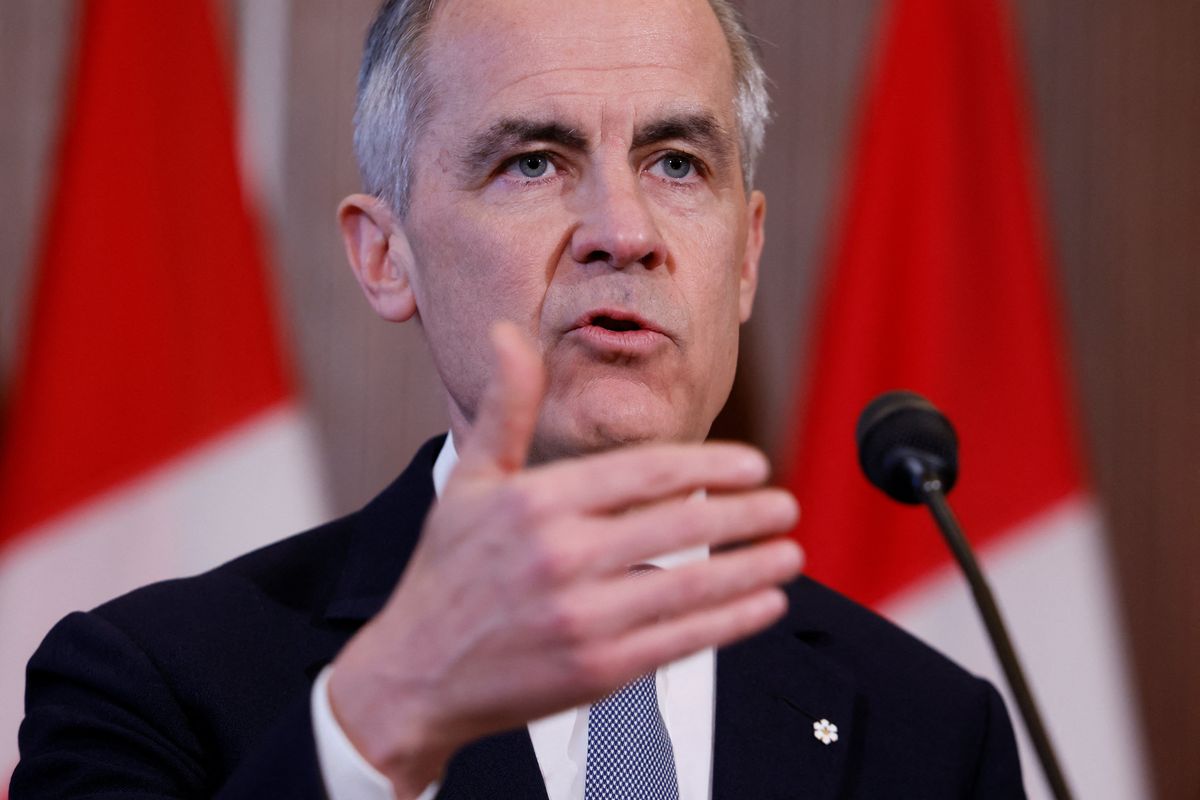
Canada's Prime Minister Mark Carney takes part in a press conference to discuss a response to U.S. President Donald Trump's new tariffs, in Ottawa, Ontario, Canada March 27, 2025. REUTERS/Blair Gable

Donald Trump took to Truth Social late Thursday to rant "ALL TRADE NEGOTIATIONS WITH CANADA ARE HEREBY TERMINATED” — an angry response to a Canadian ad showing President Ronald Reagan criticizing tariffs.

But if Trump intended to instill fear throughout Canada, his staff might want to keep the Toronto Star off his reading list. The Star reported Friday that the all-caps drew anything but a panicked response.

"The most surprising national reaction to U.S. President Donald Trump’s angry 'termination' of Canada-U.S. trade talks? A near collective shrug that rippled across the country following the initial shock at Trump’s late night social media post that torched Canada — specifically Ontario — for a provincial ad campaign against U.S. tariffs.

"The indifferent response made itself felt across markets, affected industries, the prime minister’s office and premiers. It was as if the crazy of Trump’s on-again off-again threats is baked into the nation’s consciousness."

And there was this: "Prime Minister Mark Carney reacted calmly to Trump’s late-night blow-up, saying it underlines how Canada must diversify its trading partners and be ready to restart negotiations 'when the Americans are ready.'"

Carney has departed on a nine-day trip to Malaysia, Singapore and Korea. And while he emphasized that Canada remains committed to trade negotiations with the U.S, he added: “What we can control absolutely is how we build here at home."

“We certainly can control new partnerships, particularly with Asian giants, and that is the purpose of this trip," he said.


Trump slams 'dirty' Canada despite withdrawal of Reagan ad

Washington (AFP) – US President Donald Trump slammed Canada for playing "dirty" Friday as a row over an advertisement featuring former leader Ronald Reagan that prompted Trump to scrap trade talks showed no sign of abating.

25/10/2025 - FRANCE24

 President Donald Trump departs for a trip to Asia © SAUL LOEB / AFP

The Canadian province of Ontario said it would pull the offending anti-tariff ad on Monday so that negotiations could restart, after Trump alleged that the ad misrepresented the views of fellow Republican Reagan.

But Trump showed no sign of backing down, saying Ontario should not have let it air during the first two games this weekend of baseball's World Series.

Adding extra spice to the row, the World Series features a Canadian team, the Toronto Blue Jays, facing a US team, the Los Angeles Dodgers. The Blue Jays thrashed the Dodgers 11-4 in the first game on Friday.

"Canada got caught cheating on a commercial, can you believe it?" Trump told reporters before heading on a trip to Asia.


"And I heard they were pulling the ad -- I didn't know they were putting it on a little bit more. They could have pulled it tonight," Trump added.

After a reporter said the ad would be pulled on Monday, Trump replied: "That's dirty play. But I can play dirtier than they can."

Trump announced on his Truth Social network on Thursday that he had "terminated" all negotiations with Canada over what he called the "fake" ad campaign.

Less than 24 hours later, Ontario premier Doug Ford said he was suspending the ads after talking to Canadian Prime Minister Mark Carney about the spiraling row with Washington.

"In speaking with Prime Minister Carney, Ontario will pause its US advertising campaign effective Monday so that trade talks can resume," Ford said in a post on X.

'Crooked ad'
A portrait of former US president Ronald Reagan hangs in the Oval Office of the White House © Brendan SMIALOWSKI / AFP/File

The Canadian ad used quotes from a radio address on trade that Reagan delivered in 1987, in which he warned against ramifications that he said high tariffs on foreign imports could have on the US economy.

It cited Reagan as saying that "high tariffs inevitably lead to retaliation by foreign countries and the triggering of fierce trade wars," a quote that matches a transcript of his speech on the Ronald Reagan Presidential Library's website.

The Ronald Reagan foundation wrote on X on Thursday that the Ontario government had used "selective audio and video" and that it was reviewing its legal options.

Trump said on Friday night that it was a "crooked ad", adding that "they know Ronald Reagan loved tariffs."

Trump and Carney are both set to be at a dinner on the sidelines of an Asia-Pacific Economic Cooperation (APEC) in South Korea on Wednesday.

But Trump said he had no plans to meet Carney.

The latest twist in relations between the United States and Canada came just over two weeks after Carney visited Trump at the White House to seek a relaxation of stiff US tariffs.

On Friday, Carney had sought to calm the situation, saying that his country was ready to resume "progress" on trade talks "when the Americans are ready."

Canada has "to focus on what we can control, and realize what we cannot control," he added as he headed to Asia.

Trump's global sectoral tariffs -- particularly on steel, aluminum, and autos -- have hit Canada hard, forcing job losses and squeezing businesses.

For now, the United States and Canada adhere to an existing North American trade deal called the USMCA, which ensures that roughly 85 percent of cross-border trade in both directions remains tariff-free.

But in a speech on Wednesday, Carney said that the United States has raised "its tariffs to levels last seen during the Great Depression."

"Our economic strategy needs to change dramatically," Carney added, saying the process "will take some sacrifices and some time."

burs-dk/fox

© 2025 AFP


Five things to know about Argentina's pivotal midterm election

Buenos Aires (Argentina) (AFP) – Two years after a stunning election victory, Argentina's libertarian president, Javier Milei, faces a tough legislative election on Sunday.


Issued on: 24/10/2025 - FRANCE24

Argentina's President Javier Milei shouts during the closing campaign rally of Libertad Avanza party ahead of the upcoming legislative elections in Rosario, Santa Fe province, Argentina on October 23, 2025. © Luis ROBAYO / AF


The results will determine whether Milei's budget-slashing cuts and attempts to deregulate the economy will survive. Jittery financial markets are watching very closely.

Here are five things to know about the October 26 ballot, which will choose half of the country's 257 deputies and a third of its 72 senators.
Who loses, wins?

In 2023, Milei upended Argentina's political landscape, winning a landslide 56 percent of the presidential vote.

However, his young party, Liberty Advances (La Libertad Avanza), did not fare as well, securing only 37 deputies and six senators.

That has allowed a hostile Congress to repeatedly block his reforms, notably the privatisation of Aerolineas Argentinas, state-run energy firm YPF, nuclear power plants, and public media.

Polls suggest Milei's party will almost certainly boost its current seat numbers, but an outright majority still seems out of reach.

Securing a third of seats (up from 15 percent today) would allow him to veto hostile legislation. "That would be a good number," he says.
Hope is gone

Milei can tout some successes going into Sunday's vote.

Inflation is down from 200 percent to 31 percent -- although it is likely to rise again, if the peso is allowed to devalue as markets expect.

The budget is balanced for the first time in 14 years.

But the reforms have come at a high price for many Argentines.

Over 200,000 jobs have been lost, and the economy was in recession for much of 2024.

"We're the same as two years ago, but worse," grumbles Hector Sanchez, a 62-year-old waiter. "The hope that was there is gone".

Once a Milei voter, he is now undecided. "I'd like him to succeed, but I doubt he will."

But he sees a lack of options: "The other side has nothing. And I don’t want to go back to before."

The president's lustre has also been tarnished by corruption allegations that hit his inner circle.

An economist close to Milei recently dropped out of the election over past ties to an alleged drug trafficker.
Powerful friends

With Milei under mounting pressure, ideological ally Donald Trump rushed to his rescue with a $40 billion financial and political bailout.

Economists warn the largesse might be a "financial Vietnam" for the United States, requiring Washington to pump in good money after bad to prop up Milei and the peso.

Argentines fear a peso devaluation or depreciation after the vote despite US intervention. And the opposition has made hay from Milei's ties with mistrusted gringos.

"Orders now come from Washington... Trump is Milei's campaign manager," said Axel Kicillof, the governor of Buenos Aires province.
A 'Lion' tamed?

Ahead of the vote, Milei has looked to soften his image as a norm-smashing political warrior.

Since a September regional election loss, there have been fewer insults toward opponents or journalists, more outreach to provincial governors, and a hint of empathy with references to "vulnerable" Argentines.

The man who likes to call himself "the Lion" still wants to be edgy. He recently donned his rocker leather jacket for a surreal rally-concert aimed at pleasing his hardcore base.

Will his newfound pragmatism continue after the vote?

"Milei might strike temporary deals, push a less radical reform than he wanted, just to show he delivered," predicts Gabriel Vommaro, political scientist at Conicet.

"But a full 'normalization' of Milei, or a broader coalition? I'm not sure he can, or even wants to," said Vommaro.
Centrist challenge?

Milei's party will run solo in some districts, and in others is allied with pro-business Republican Proposal -- not a governing partner but often a source of votes.

Facing this "pro-Milei" bloc is the Peronist opposition, in power for 17 of the past 23 years.

It is still regrouping from the shock of 2023. Former president Cristina Kirchner's star has faded -- she was convicted of corruption and ineligible to run again.

Kicillof, the 54-year-old governor of Buenos Aires province, is gaining stature ahead of the 2027 presidential race.

But both the Peronists and Milei face a new challenge in the form of a centrist federalist and province-based force that could have a solid showing.

© 2025 AFP
Nexperia, the new crisis looming for Europe's carmakers

Paris (AFP) – European automakers already buffeted by US tariffs and a rocky shift toward electric vehicles now face a new threat: a shortage of key semiconductors supplied by Chinese-owned Nexperia.


Issued on: 24/10/2025 - FRANCE24

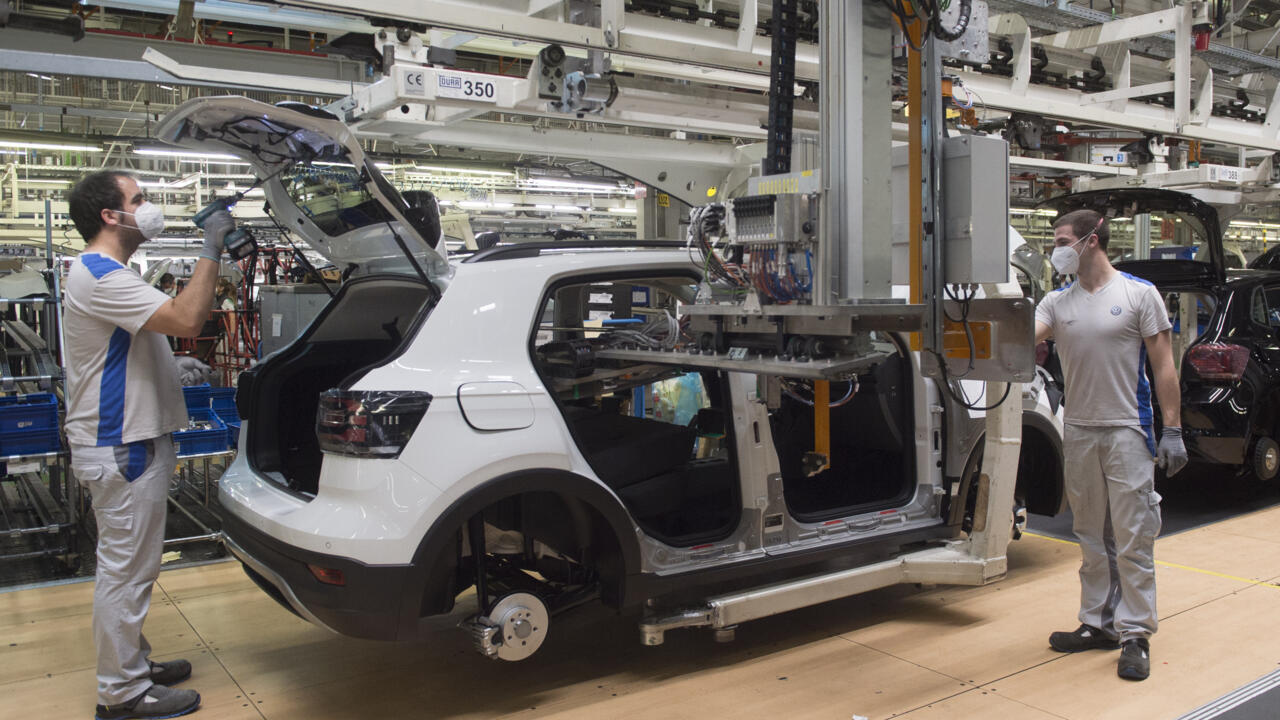
Semiconductors are essential elements of modern cars as well as the machines used to make them © ANDER GILLENEA / AFP
Beijing is locked in a standoff with Dutch officials who invoked a Cold War-era law in September to effectively take over the company, whose factories are in Europe.

Carmakers as well as parts suppliers have already warned of shortages that would force stoppages at production lines across the Continent.

Who is Nexperia?

The company produces relatively simple technologies such as diodes, voltage regulators and transistors that are nonetheless crucial, as vehicles increasingly rely on electronics.

The chips are mainly found in cars but also in a wide range of industrial components as well as consumer and mobile electronics like refrigerators.

It makes them in Europe before sending them to China for finishing, and are then re-exported back to European clients.

Based in the Netherlands and once part of electronics giant Philips, it was bought by Wingtech Technology of China in 2018.

But in September, the Dutch government took the unusual step of taking over the company, citing its "Goods Availability Law" of 1952 to ensure essential items.

In response, China banned any re-exports of Nexperia chips to Europe, igniting fresh geopolitical tensions.

Why is the automotive sector vulnerable?

Nexperia supplies 49 percent of the electronic components used in the European automotive industry, according to German financial daily Handelsblatt.

The European auto lobby ACEA warned this month that production would be seriously hit.

"Without these chips, European automotive suppliers cannot build the parts and components needed to supply vehicle manufacturers and this therefore threatens production stoppages," the group said.

For Germany alone, analysts at Deutsche Bank forecast a production drop of 10 percent while warning of a 30-percent cut in a "worst-case scenario".

How are automakers responding?

German auto giant Volkswagen has warned that it cannot not rule out "short term" production stoppages, while emphasising that it is searching for alternative suppliers.

Nexperia does not supply it directly but some of its parts suppliers use its chips.

Bosch, for example, says it has not yet reduced employee shifts at its German sites "but we are preparing to do so at our Salzgitter site", a spokesman told AFP.

But French parts maker Valeo said it had "visibility for the coming weeks" with regards to "all its components".

It said it had found alternatives for "95 percent of the volumes" bought each year from Nexperia, but "they haven't yet been approved by our clients".

Other suppliers?

According to OPmobility, another French parts maker, Nexperia's chips, while widely used, are not "unique" in terms of technology and therefore "easily substitutable".

But suppliers have to get the new products approved by automakers, which cannot be done quickly.

"They're looking frantically for other suppliers but these firms cannot build production capacity overnight," said Ferdinand Dudenhoeffer, director of Germany's Center Automotive Research institute.

"In the worst case this situation could go on for 12 to 18 months," he told AFP.

He added however since the disruptions cause by global lockdowns during the Covid-19 pandemic, "we've learned to pay more attention, both among general management and purchasing teams".

In any case, Dudenhoeffer said, "100 percent protection against supply disruptions is impossible -- or in any case prohibitively expensive".

© 2025 AFP

Gen Z want less sex in movies and TV shows according to new study


By David Mouriquand
Published on 

According to a new study, raunchy teen comedies and sexually edgy dramas are losing favour among Gen Z viewers.

No sex please, we’re Gen Z.

According to new data from UCLA’s Center for Scholars & Storytellers, Gen Z viewers are tired of on-screen sexual content.

Released this week, the American university's annual Teens & Screens report, titled “Get Real: Relatability on Demand”, surveyed 1,500 young adults and teens aged between 10 and 24 in the US during August.

It reveals how Gen Z are craving relatability and authentic representation in media, with 59.7% saying they “want to see more content where the central relationships are friendships”; 54.1% stating that they want to see “portrayals of characters who aren’t interested in romantic relationships at that point in time”; and 48.4 per cent of teen viewers saying there is “too much sex and sexual content” in modern movies and TV shows.

Indeed, romance ranked third-to-last on a list of topics youths wanted to see explored on screen. Toxic relationships and love triangles also ranked among the most tiresome tropes for young viewers.

Instead, Gen Z has a preference for animation compared to live action – rising from 42 per cent in 2024 to 48.5 per cent this year.

These results shouldn’t come as a surprise, as UCLA’s 2023 study already showed a heightened inclination from Gen Z towards narratives centred around platonic relationships rather than explicit sexual encounters. Researchers coined this evolving trend as "nomance" - which lines up with studies showing a decline in sexual activity amongst Gen Z

For instance, a 2021 study by the Centres for Disease Control and Prevention (CDC) reported that only 30 per cent of teenagers had engaged in sexual activity, a significant decrease from 38 per cent in 2019 and over 50 per cent in preceding decades.

The CDC’s Kathleen Ethier said at the time that the decline could be a good thing if it reflects more young people making healthy decisions to delay sex and reduce their number of partners. She did, however, add: “What concerns me is this is potentially a reflection of social isolation.”

Last year, UCLA's 'Teens and Screens' report - titled “Reality Bites! More Fantasy, More Friendship” - also showed that younger audiences wanted more films focused on platonic relationships, with over 62 per cent of those aged 10-25 years old agreeing that sexual content is not necessary to advance plots in movies or TV shows.

Also last year, the Economist found there to be 40 per cent less sexual content in Hollywood films compared to the start of 2000, with approximately half of all movies showing no sexual content at all.

More surprisingly and contrary to stereotypes, this year’s UCLA study also suggests that young people still want to go to the movies, they are still watching films and TV shows, and they are eager to discuss the things they watch with their friends.


Forgotten Picasso portrait of Dora Maar sells for $37 mn

Paris (AFP) – A previously unknown portrait by Pablo Picasso of French artist Dora Maar -- the painter's best-known muse -- sold for 32 million euros ($37 million) in Paris on Friday, auction house Drouot told AFP.
Issued on: 24/10/2025 - FRANCE24
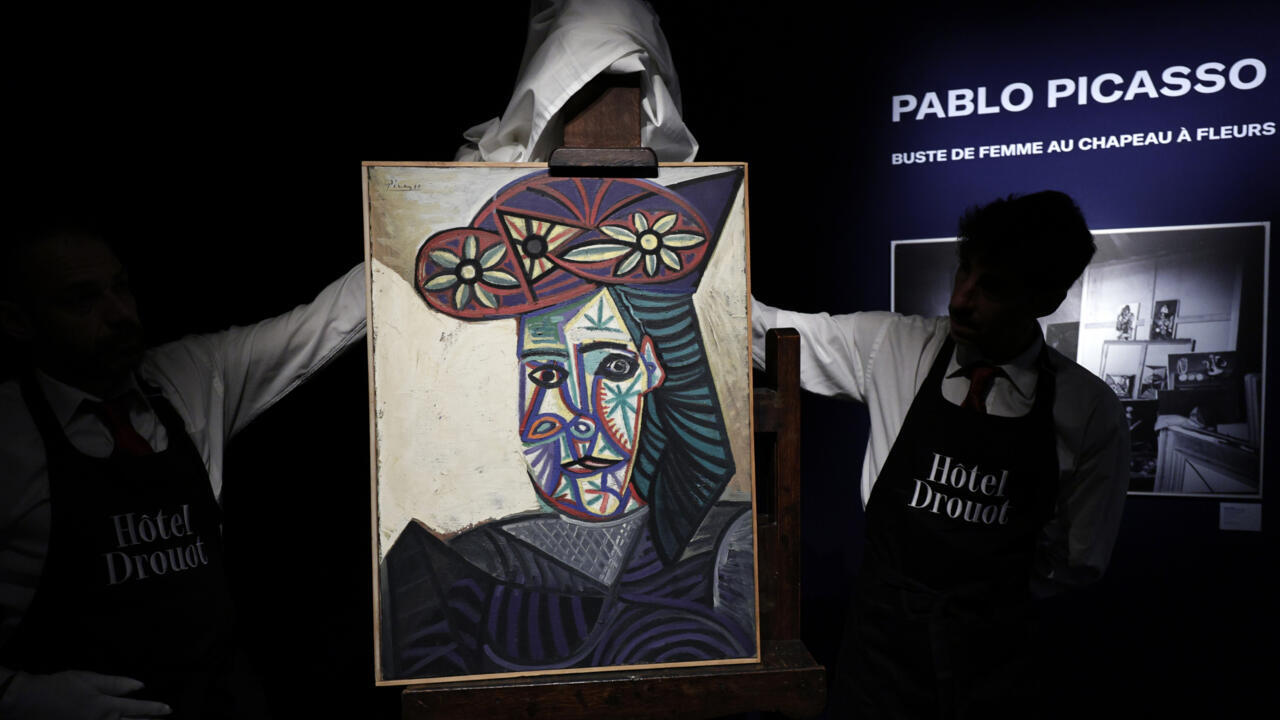
Employees unveil a painting by French artist Pablo Picasso titled 'Bust of a Woman With a Flowery Hat' ahead of an auction in Paris © STEPHANE DE SAKUTIN / AFP
Entitled "Bust of a Woman With a Flowery Hat", the oil portrait of photographer, painter and poet Maar is a riot of colours and thick, black lines.
It was "sold to a foreign buyer present in the room", the auction house said.
The Spanish master painted it on July 11, 1943 and it was acquired in August 1944 by a private French collector, grandfather of the former anonymous owners.
The sale far outstripped the reserve price of eight million euros ($9.5 million).
Picasso sales are used as a leading indicator for the art market as a whole, which has slumped in recent years.

© 2025 AFP

Rediscovered Picasso portrait presented in Paris ahead of auction

Issued on: 24/10/2025 - 

A brightly colored 1943 Picasso portrait of his muse and partner Dora Maar, titled Bust of a Woman with a Flowered Hat (Dora Maar), is set to be auctioned in Paris on Friday after more than 80 years out of public view. Painted as their seven-year relationship was nearing its end, the work captures Maar in a vivid floral hat. It was bought in 1944 and has remained in the same family collection ever since. Siobhan Silke reports.

Lost and found: Picasso painting discovered in Madrid after exhibition transfer confusion

The painting was in Madrid, 24/10/2025
Copyright Policía Nacional

By Jesús Maturana & Tokunbo Salako
Published on 

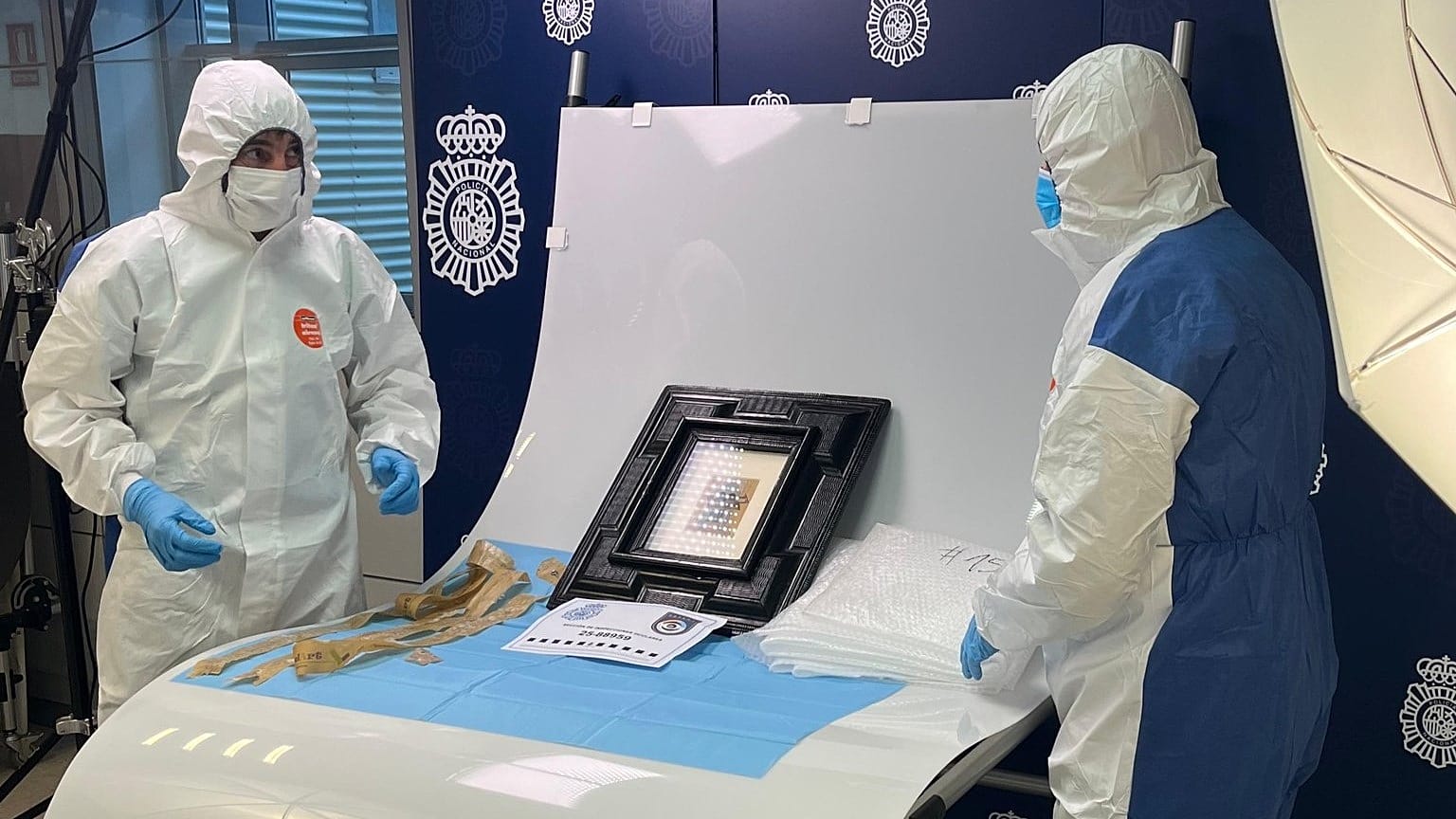
Heard the one about the Picasso painting meant to be moved from Madrid but didn't make it to the removal lorry? Well, Spanish police have now found 'Still Life with Guitar' which was reported to have disappeared earlier this month ahead of its display at a Granada exhibition.

Art market thefts are talk of the town these days following the notorious heist of the Louvre museum but Spanish police appear to have solved a case that left detectives scratching their heads for weeks.

Earlier this month, a Picasso painting was reported missing from a Madrid storeroom, from where it was meant to be taken to Granada for an exhibition at the Centro Cultural CajaGranada.

'Still Life with a Guitar', a small framed gouache from 1919 was part of 56 other works destined for display after leaving its depot in the capital on 25 September. The transport operation was captured by video surveillance.

The entire consignment was delivered just over a week later, however detectives now say as the packaging was not properly numbered, it was impossible to carry out an exhaustive check without unpacking them.

CajaGranada Fundación explained that specific checks were carried out and the consignment notes were signed, with the complete unpacking pending until 6 October, the date scheduled for the inauguration. It was precisely on that day that the absence of the Picasso work was detected. A complaint was subsequently lodged with the National Police on 10 October.

Packaging problems

The National Police launched an extensive search and issued a missing alert for the painting on Interpol's international database of stolen or missing art objects, which contains descriptions and images of more than 57,000 items.

When that hunt failed to turn up any significant clues, investigators tasked with examining the delivery load found discrepancies with the packaging numbers which led them back to Madrid and the missing work.

Forensic police officers inspected the depot and finally confirmed that it was 'Still Life with Guitar'. The main police hypothesis, for now, is that the painting, valued at €600,000 may not have made it onto the transport lorry at source.


The Scharf Collection opens for its first large-scale exhibit in Berlin

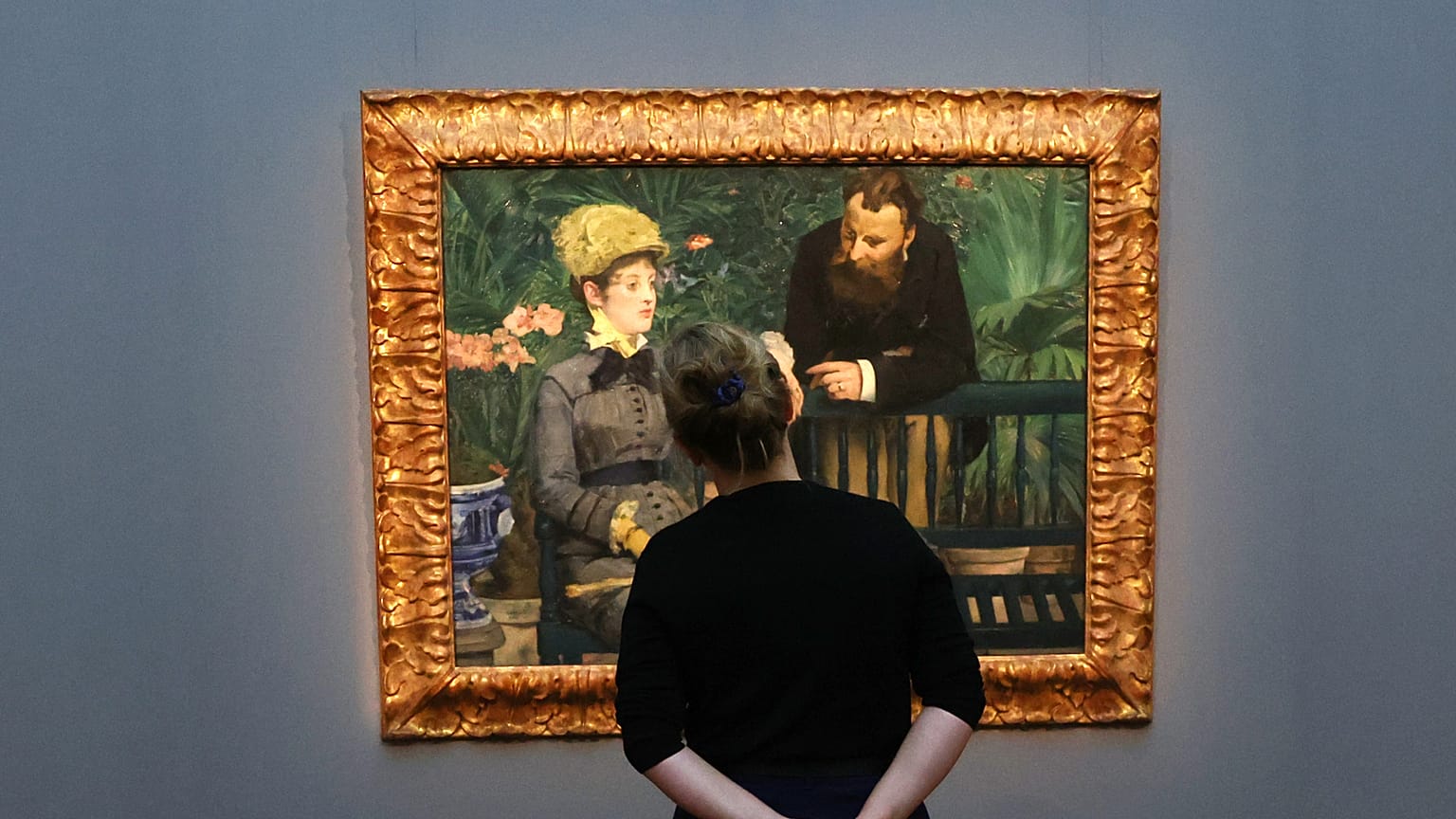
A woman views the painting "In the Conservatory" by Edouard Manet
Copyright AP Photo


By Leticia Batista Cabanas
Published on 

The iconic collection will feature more than 150 artworks by major artists like Manet, Degas and Picasso.

The Scharf Collection, one of Germany’s most important private art holdings, is opening its doors for its first major public exhibition in Berlin.

The collection, which was built over four generations, will feature 150 works from Goya to Grosse spanning 200 years of European and contemporary art.

Shown for the first time at Berlin’s Alte Nationalgalerie from October 2025 to February 2026, the exhibit will showcase the evolution of European art from the early 19th century to today.

Visitors will see prints by Francisco de Goya, Romantic and Realist paintings by Delacroix and Courbet, and Impressionist masterpieces by Monet, Renoir, Cézanne, and Degas.

The show will also include Post-Impressionists like Bonnard and Matisse, then move into Cubism with Picasso and Léger, and end with bold modern and contemporary works by artists such as Sam Francis, Jasper Johns, and Katharina Grosse.

This exhibition is important because it marks the first time the public can view such a large part of this historically rich and visually diverse private collection.

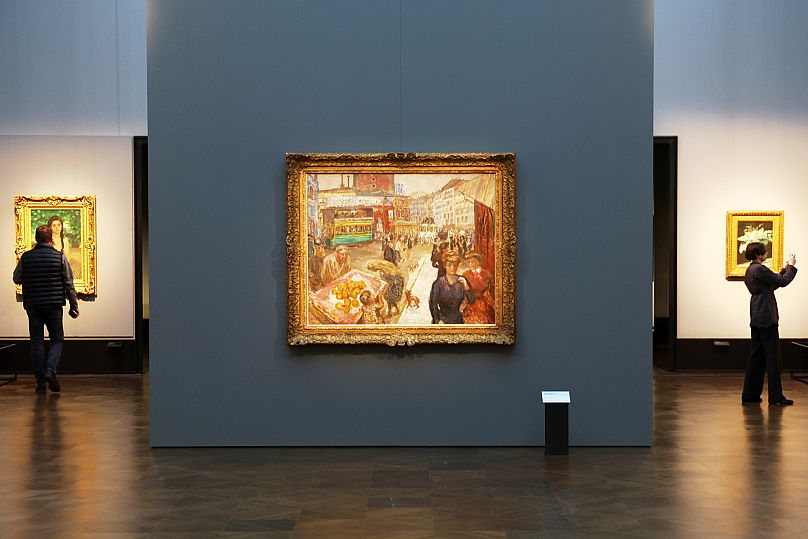
Journalists walks next to the painting "Place Clichy" from 1867-1947 by Pierre Bonnard
Journalists walks next to the painting "Place Clichy" from 1867-1947 by Pierre Bonnard AP Photo

Until now, only a few visitors per year had access to individual works in private settings, and many pieces have never been displayed together. So the show not only honours the family’s legacy, which began with Otto Gerstenberg over a century ago, but also connects past and present through a thoughtful timeline of influential artworks.

So what can visitors expect from such an iconic show?

The exhibition takes them on a journey through 200 years of art, beginning with early 19th-century etchings by Spain’s Francisco de Goya, with his dramatic series The Disasters of War and La Tauromaq

From there, the show moves into the heart of French Romanticism and Realism, featuring works by Eugène Delacroix and portrayals of everyday life by Gustave Courbet. There are also works from Honoré Daumier, expressive caricatures and sculpted busts of lawmakers, from 19th century France.

The exhibition also has a very exciting Impressionist section, with key works by Claude Monet, including early realist scenes like Farmyard in Chailly and later Impressionist landscapes like Steep Cliffs near Dieppe and a moody Waterloo Bridge.

There are also beautiful works by Pierre-Auguste Renoir and Paul Cézanne, showing the changing light, colour, and movement that defined the period. And Edgar Degas is well represented with his classic studies of dancers and bathers, while the colourful, warm paintings of Pierre Bonnard offer scenes of Paris and private domestic life, including Place Clichy and The Large Bathtub.

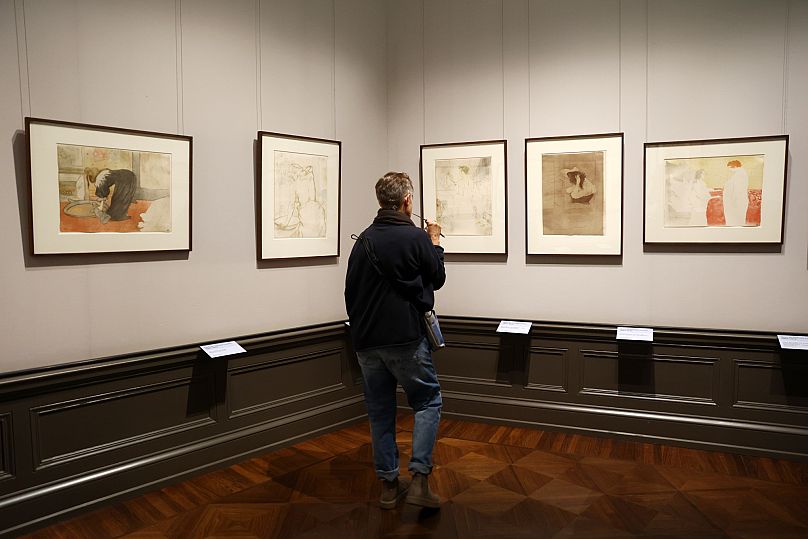
A visitor looks on the painting titled "Woman with Hand Mirror, plate 6 " from 1864-1901 by Henri de Toulouse-Lautrec
A visitor looks on the painting titled "Woman with Hand Mirror, plate 6 " from 1864-1901 by Henri de Toulouse-Lautrec AP Photo

Henri Matisse and Pablo Picasso, who helped reshape art through Cubism, will be included in the Post-Impressionist and Modernist sections, as well as Fernand Léger, whose paintings combined Cubist structure with vibrant colours and machine-like forms.

Toulouse-Lautrec is another standout, with a rich selection of his posters and lithographs showing the performers and nightlife of 1890s Paris. His Elles series, showing quiet moments in the lives of sex workers, will offer a look behind the scenes of the Belle Époque.

The exhibition finishes with some abstract and contemporary art, with paintings by American artists like Sam Francis and Jasper Johns bring strong colour and texture, while German artist Katharina Grosse’s massive, sprayed-on canvas fills the space with pinks and blues. Her work forms a visual echo of Monet’s, tying the past to the present.