Monday, October 27, 2025


EU rare earth supply dominated by China and Russia - Eurostat

EU rare earth supply dominated by China and Russia - Eurostat
The EU depends on China and Russia for three quarters of its rare earth imports, according to Eurostat. / bne IntelliNews
By bne IntelliNews October 27, 2025

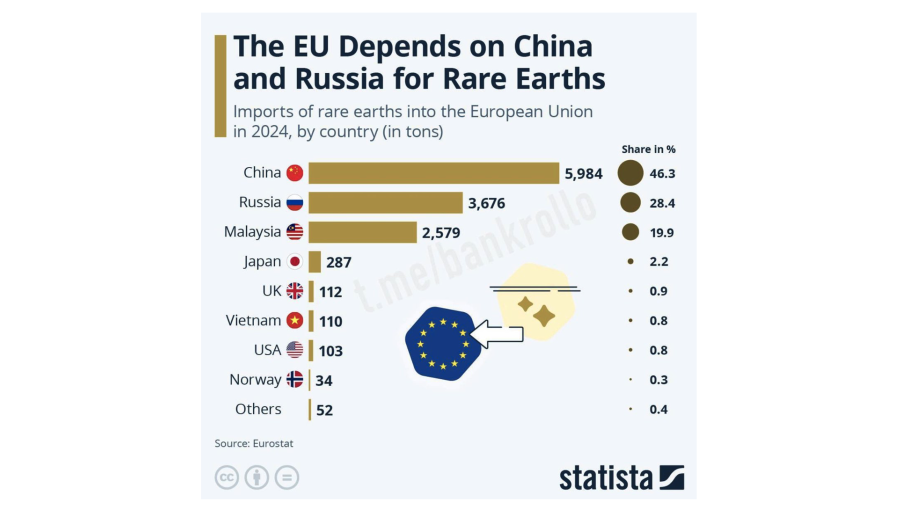
The European Union remains heavily dependent on China and Russia for rare earth imports, with nearly three-quarters of its supply sourced from the two countries in 2024, according to data published by Eurostat and reported by Statista.

China accounted for 46% of the EU’s rare earth imports last year, while Russia supplied a further 28%, leaving the bloc significantly exposed to supply chain disruptions from geopolitical rivals.

“The EU is totally dependent on two countries it regards as adversaries for rare earths,” Eurostat noted.

Rare earth elements are critical to the production of a wide range of high-tech goods, including electric vehicles, wind turbines, semiconductors and military systems. As the EU pushes ahead with its green and digital transitions, the reliance on external—and politically antagonistic—suppliers has raised strategic concerns in Brussels.

The European Commission has repeatedly identified the diversification of critical raw material supply chains as a policy priority. Under the Critical Raw Materials Act, adopted in 2024, the EU aims to ensure that no more than 65% of any key raw material comes from a single non-EU country by 2030.

However, the latest data suggests that in the case of rare earths, the bloc remains far from that goal. Despite efforts to strengthen partnerships with alternative producers in Canada, Australia and Africa, and to develop domestic refining capacity, progress has been limited.

Both China and Russia have previously used access to critical materials as a tool of political leverage. Analysts warn that any disruption—whether through export restrictions, conflict or sanctions—could severely impact EU manufacturing and clean energy sectors.


Why is China restricting rare earth exports and how will the EU respond?
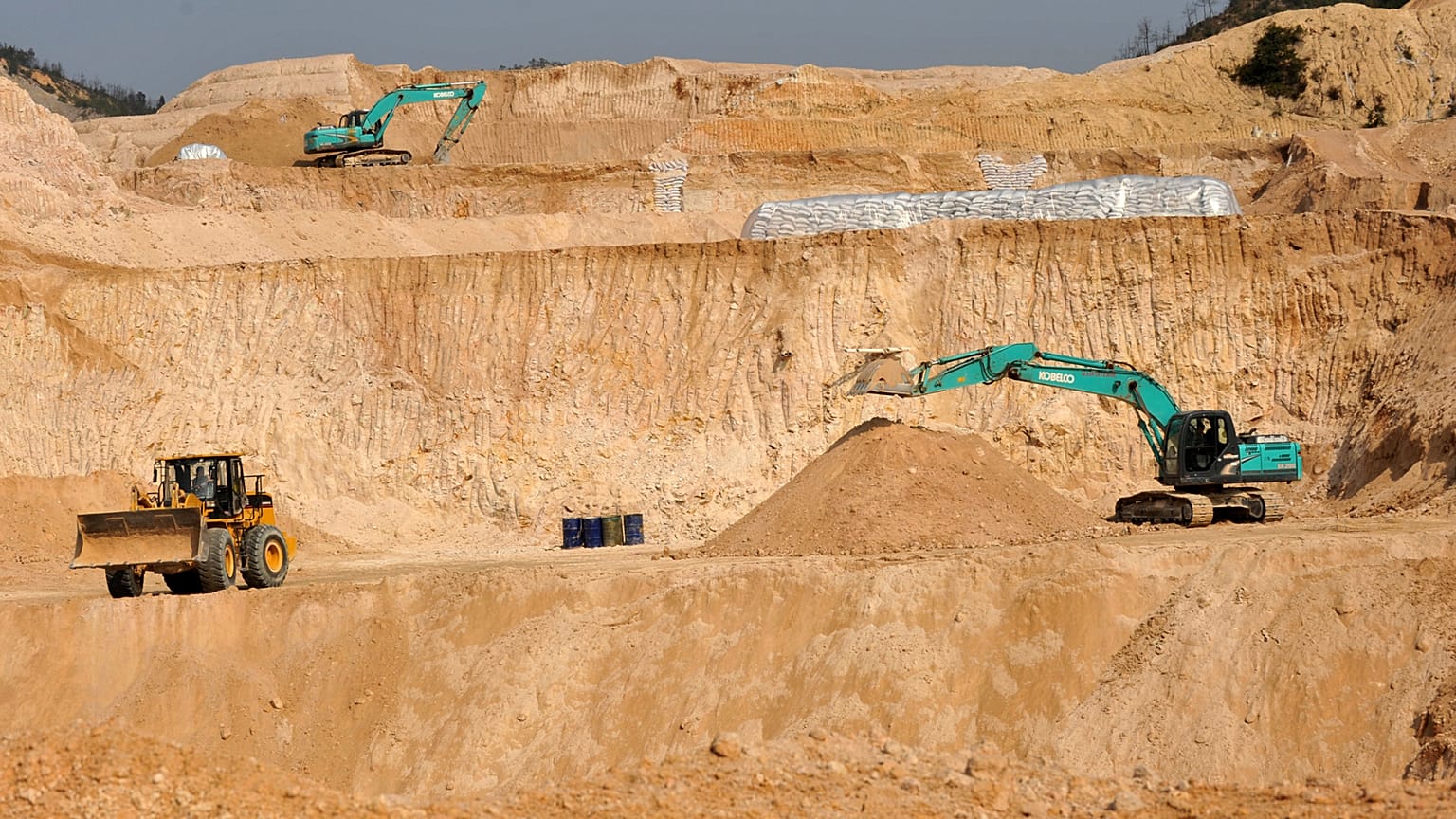
China announced on 9 October restrictions to export of rare earth elements.
Copyright AP Photo

By Peggy Corlin
Published on 

European Commission President Ursula von der Leyen says the EU is ready to use "all tools" in response to Chinese export controls of rare earths as industry suffers.

Global tensions are escalating over rare earth minerals after China applied severe export controls on critical minerals required to manufacture almost everything - from cars to weapons. The move has also sparked concerns about the global supply chain.

Strategic meetings will be held between European Union officials and Chinese representatives, starting with a videoconference Monday, to be followed by a meeting in Brussels the following day.

Meanwhile, US President Donald Trump will meet his Chinese counterpart Xi Jinping on Thursday in South Korea, with financial markets attentive to whether the world’s two largest economic powers can bury the hatchet in their trade war.

At the heart of the dispute is China’s 9 October decision to restrict exports of rare earth elements. While these controls were initially a response to US tariffs, the EU has become collateral damage in the dispute and is considering ways to respond.

Why is China restricting rare earth exports?


Tensions first emerged between the US and China after Donald Trump returned to the White House and carried through an aggressive tariff policy - which the administration argues is needed to narrow a growing trade deficit - on allies and rivals alike.

On 2 April 2025 — coinciding with what Trump defined as US' "Liberation Day” — Washington announced a 34% tariff on Chinese goods imported into the country, which, added to the existing 20%, brought total duties to 54%.

The trade war escalated after China responded with counter-tariffs, which surpassed the 100% threshold, making trade between the two practically impossible. Beyond the tariffs, to hit back, China looked to weaponise its monopoly over rare earth elements, imposing additional export restrictions on 4 April that have since remained in place.

Rare earths are a group of 17 elements used across the defence, electric vehicle, energy and electronics industries.

The world, including the EU, is heavily dependent on China, as the country controls 60% of global production and 90% of their refining, according to the International Energy Agency (IEA).

After a short truce, the dispute flared up again in September, and on 9 October 2025, China decided to extend its control over rare earth elements from seven to 12. The announcement was seen as China building leverage over the United States. The meeting between the two sides this week is crucial in dictating the path forward.

Meanwhile, the EU is caught between the two. While these restrictions aimed mostly at the US, it has also impacted the European industry. The controls take the form of licenses that are difficult to obtain, with European companies bearing the brunt, as European Commisisioner for Trade Maroš Šefčovič has repeatedly pointed out.

How is the EU responding?

In a speech over the weekend, European Commission President Ursula von der Leyen, said the Union is prepared to use all the tools at its disposal to combat what some European leaders, including French President Emmanuel Macron, have described as economic coercion from China.

The remarks from the Commission president alluded to what is known as the anti-coercion instrument - designed with China in mind but never used.

The ACI, adopted in 2023, would allow the EU hit back at a third country by imposing tariffs or even restricting access to public procurement, licenses, or intellectual property rights.

“In the short term, we are focusing on finding solutions with our Chinese counterparts,” Commission president Ursula von der Leyen said on Saturday, warning, however, “But we are ready to use all of the instruments in our toolbox to respond if needed.”

European Council President António Costa met on Monday with Chinese Premier Li Qiang on the sidelines of the ASEAN Summit in Kuala Lumpur.

“I shared my strong concern about China’s expanding export controls on critical raw materials and related goods and technologies,” Costa said after the meeting, adding: “I urged him to restore as soon as possible fluid, reliable and predictable supply chains.”

Yet, tensions persist.

A planned meeting between Šefčovič and his Chinese counterpart Wang Wentao was cancelled and replaced by high-level talks between Chinese and European experts, a Commission spokesperson has confirmed. A video conference took place on Monday, and Chinese officials are set to arrive in Brussels for a meeting on Thursday.

While Brussels insists it wants to achieve a constructive solution without escalating, the Commission is pursuing a "de-risking" strategy to reduce its dependence on Chinese minerals. In addition, Germany and France have also suggested they would support stronger trade measures if a comprehensive solution cannot be found.

On Saturday, Von der Leyen announced a new plan - RESourceEU - exploring joint purchasing and stockpiling of rare earths, as well as “strategic” projects for the production and processing of critical raw materials here in Europe.

The EU also hopes to diversify its suppliers worldwide.

“We will speed up work on critical raw materials partnerships with countries like Ukraine and Australia, Canada, Kazakhstan, Uzbekistan, Chile or Greenland,” von der Leyen said.

Bulgaria tightens control over Lukoil sale after fresh US sanctions on Russia

Bulgaria tightens control over Lukoil sale after fresh US sanctions on Russia
By Tatyana Kekic in Belgrade October 26, 2025

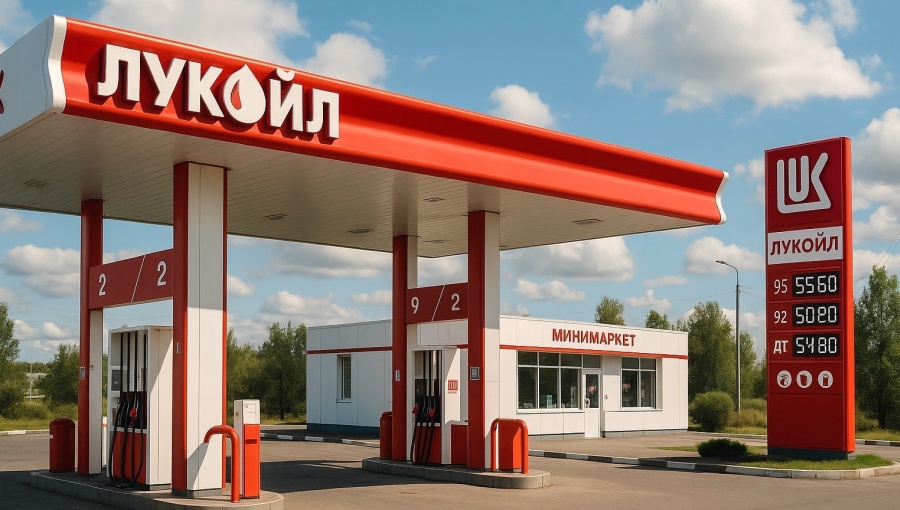
Bulgaria’s parliament on October 24 passed new legislation tightening state control over the sale of Russian oil major Lukoil’s assets in the country, a day after Washington imposed fresh sanctions on Russia’s top energy firms over the war in Ukraine.

The move follows new US sanctions announced by President Donald Trump on October 22 targeting Lukoil and Rosneft — Moscow’s two largest oil exporters — for continuing to finance Russia’s military campaign.

Under amendments to Bulgaria’s Investment Promotion Act, any transaction involving Lukoil’s Bulgarian subsidiaries — including the country’s biggest oil refinery in Burgas — will now require prior approval from the State Agency for National Security (SANS) and the Council of Ministers.

Prime Minister Rosen Zhelyazkov said on October 23 that the government must decide within a month how to proceed with the Burgas refinery, which supplies much of Bulgaria’s fuel and is considered vital for national security.

After an emergency cabinet meeting on October 24, Energy Minister Zhecho Stankov said Sofia had a “clear action plan” to ensure stable fuel supplies and that domestic consumption was “fully secured through the end of the year,” BTA reported.

“The key message today is that Bulgarian citizens should remain calm,” Stankov told reporters at a news briefing. “Fuel for domestic consumption is guaranteed, and the state will act in coordination with our European partners.”

He said the government would monitor fuel reserves, work with industry representatives to prevent shortages or price spikes and coordinate with the European Commission on contingency planning.

Political row over new law          

The legislation sparked a heated debate in parliament, with opposition lawmakers accusing the ruling GERB coalition and its ally, Delyan Peevski’s Movement for Rights and Freedoms – New Beginning, of using the sanctions crisis to expand political control over key energy assets.

Radoslav Ribarski of Change Continues – Democratic Bulgaria said the law grants excessive powers to SANS, BTA reported. Ivaylo Mirchev of Yes, Bulgaria argued that existing mechanisms for screening foreign investments already allow state oversight of major transactions.

Supporters countered that the new framework is necessary to protect national security and ensure compliance with Western sanctions.

Lukoil’s uncertain future

Bulgaria has been trying to sell its Lukoil subsidiaries since late 2023 amid growing sanctions pressure. Its assets include over 200 petrol stations, a transport and storage network and aviation fuel subsidiaries.

Talks have involved a consortium between Azerbaijan’s state-owned energy company SOCAR and Turkey’s Cengiz Holding, though diplomatic tensions between Moscow and Baku have slowed progress. Other potential bidders included Kazakhstan’s KazMunayGas, backed by trader Vitol, and Hungary’s MOL.

Some market analysts say a sale remains unlikely, as Lukoil’s operations in Bulgaria are strategic to its regional business. Some expect Bulgaria to follow Serbia’s example, where a Russian oil firm under US sanctions continues to operate.

Justice Minister Georgi Georgiev said security services have increased monitoring at the Burgas refinery, calling it “a strategic site for national security,” BTA reported. He urged calm, adding that Sofia is coordinating closely with the European Union.

“Bulgaria is not alone,” Georgiev said. “We are working with our European partners to navigate this new reality.”

Kia inaugurates $310mn "highly automated" automotive plant in Kazakhstan

Kia inaugurates $310mn
Kazakhstan's President Tokayev hailed the plant as a "new growth point for the Kazakh automotive industry”. / Kia news release
By bne IntelliNews October 24, 2025

Kia Corporation and its Kazakh partners have officially opened the Kia Qazaqstan plant in Kostanay in northern Kazakhstan, Kia said in a statement.

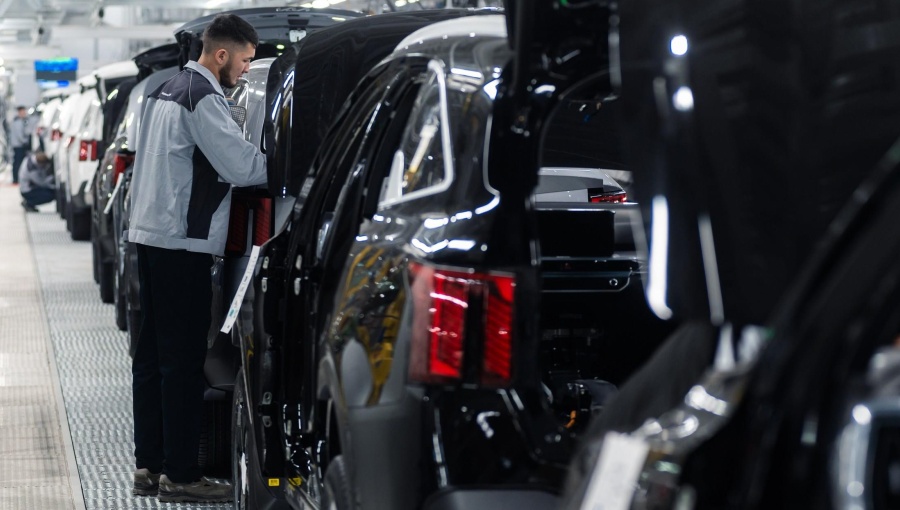
The $310mn facility, located on a 630,000 square-metre site, is one of the most advanced and automated automotive plants in Central Asia, featuring 68 industrial robots and full-cycle production capabilities — from body welding and painting to final assembly and testing. The plant is designed to produce up to 70,000 vehicles annually, beginning with the Kia Sorento this month, followed by the Sportage from January.

In a video address during the inauguration ceremony, President Kassym-Jomart Tokayev hailed the project as “a bright example of the strategic partnership and successful relations between Kazakhstan and the Republic of Korea,” describing Korea as “a reliable partner for Kazakhstan in Asia.” He added that the facility would “become a new growth point for the Kazakh automotive industry” and contribute to “the dynamic renewal of the domestic vehicle fleet.”

The opening ceremony was attended by First Deputy Prime Minister Roman Sklyar, Kia president and CEO Ho Sung Song, and Andrey Lavrentyev, chairman of Allur Group, Kia’s local partner, alongside national and regional officials.

Ho Sung Song said the plant would serve as a foundation for long-term cooperation and technological exchange between the two countries.
“Kia Qazaqstan will play a vital role in laying a strong foundation for the development of the automotive industry in Kazakhstan. We aspire to establish Kia as a trusted national brand built on lasting partnerships with the people and institutions of Kazakhstan,” he said.

The Kostanay facility is to adhere to Kia’s global standards for quality, sustainability and safety, with the company noting that it represents not only a new manufacturing base but also a platform for future localisation, the development of supplier clusters and the growth of regional exports.

Kazakh officials said the plant will deepen industrial ties between Kazakhstan and South Korea, positioning Kazakhstan as an emerging automotive hub for Central Asia by leveraging its strategic location, local engineering expertise and expanding logistics infrastructure.

 The United States Prepares for War on Venezuela


Monday 27 October 2025, by Dan La Botz


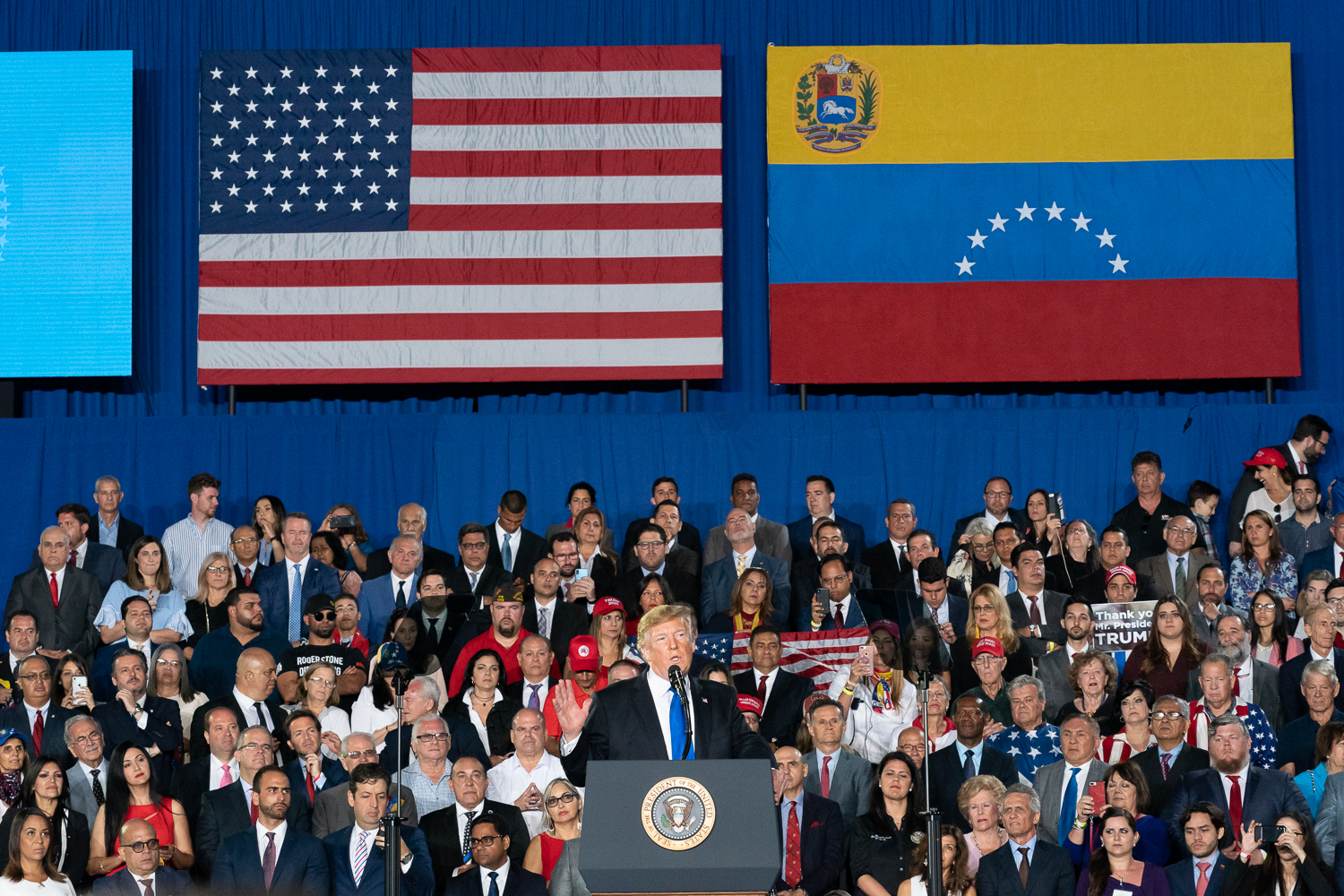
The United States is preparing for war against Venezuela. While President Donald Trump has asserted that the country’s goal is to stop shipments of Venezuelan drugs to the United States, in private conversations U.S. officials have made it clear that Secretary of State Marco Rubio plans to remove Venezuelan President Nicolás Maduro. This forms part of Trump’s goal of reasserting U.S. domination in Latin America such as it exercised in the nineteenth century by gunboats and in the twentieth century by installing friendly governments.


The preparations for the war have involved attacks on small boats that began in early September. Trump claims the boats were carrying drugs, though no proof has been provided. Altogether as of this time (Oct. 26), the United States forces have destroyed ten boats and killed 43 people in international waters in the Caribbean and the Pacific Ocean. The Trump administration claims that the United States is engaged in national self-defense because drugs like fentanyl kill tens of thousands of Americans, though Venezuela is not a significant producer or trafficker of fentanyl nor is it a major source of cocaine. Many legal experts have stated that these extra-judicial killings are simply murder on the high seas,

On October 2, 2025, the Trump administration designated several Latin American cartels as “foreign terrorist organizations” and “unlawful combatants,” and said that the cartel actions constitute an "armed attack against the United States.” The U.S. government claims that Maduro controls el Cartel de los Soles, the criminal organization responsible for drug trafficking. “Just as al-Qaida waged war on our homeland, these cartels are waging war on our border and our people,” said Secretary of Defense Pete Hegseth. Democrats and some Republicans have criticized the operation. Senator Jack Reed of Rhode Island has argued that the military is not “empowered to hunt down suspected criminals and kill them without trial.” Others have suggested that if he is serious, Trump should ask for a declaration of war, but he says he will not do so.
The Real Goal: A Coup against Maduro

The real goal of the United States is the removal of Maduro. The drive to eliminate the Maduro government comes from Marco Rubio, a Cuban-American Miami and former Florida Senator. On August 7, the U.S. offered a bounty of $50 million for information leading to the arrest and/or conviction of Venezuelan President Nicolás Maduro, a measure clearly intended to foment a coup. In mid-October Trump authorized the CIA to conduct covert actions in Venezuela while about the same time, turning up the pressure, B-52 bombers began to fly along the Venezuelan coast.

The United States has about 10,000 troops and many military aircraft in the Caribbean. And for years it has also had several warships in the region, including destroyers with guided middles. Now Trump is sending the Gerald Ford aircraft carrier, the world’s largest warship, to Venezuela, accompanied by five destroyers, a cruiser, and a submarine. The Ford carries about 75 fighter jets and a crew of 4,500. Clearly such enormous military power is not about drug interdiction but is rather preparation for an attack on Venezuela.

It is unlikely that U.S. troops will fight on the ground; rather Trump will take a page from Russian dictator Vladimir Putin’s playbook and use artillery and bombs to destroy military bases and to terrorize and demoralize the population. All of this to bring about a coup.

Trump ran for president as an opponent of foreign wars and regime change, but now the “peace president,” as he calls himself, will wage war. It looks like American imperialism in Latin America is back-with a vengeance.

26 October 2025


Attached documentsthe-united-states-prepares-for-war-on-venezuela_a9236.pdf (PDF - 905.1 KiB)
Extraction PDF [->article9236]


Dan La Botz was a founding member of Teamsters for a Democratic Union (TDU). He is the author of Rank-and-File Rebellion: Teamsters for a Democratic Union (1991). He is also a co-editor of New Politics and editor of Mexican Labor News and Analysis.


International Viewpoint is published under the responsibility of the Bureau of the Fourth International. Signed articles do not necessarily reflect editorial policy. Articles can be reprinted with acknowledgement, and a live link if possible.


No to a US war on Venezuela!


For the past few weeks the Trump administration has intensified its long-standing aggression against Venezuela by deploying warships (including a nuclear submarine) in the Caribbean Sea in a purported anti-narcotics operation. US forces have carried out at least five incidents of strikes on boats in Venezuelan waters to date, killing 37 people. Trump’s latest move has been to authorise the CIA to conduct covert operations inside Venezuela.

President Nicolas Maduro, as Venezuela’s current leader, has been a focus of this ‘war on drugs’ narrative, justifying the US’s illegal actions by demonising him as a ‘narco-terrorist’ engaged in drug trafficking, despite UN evidence to the contrary. The US also portrays him as being an illegitimate leader, offering a bounty of $50 million for his capture.

But overthrowing the Bolivarian Revolution has been a project of US imperialism ever since Huge Chávez became President in 1999 and set about transforming the country through a series of far-reaching measures including healthcare, education, land redistribution and anti-poverty programmes.

Key to these revolutionary changes was, and still is, the massive wealth in oil reserves that Venezuela has – the largest in the world – and the revenues generated from them. Chávez’s massive programme of wealth redistribution redirected these oil revenues to collective social purposes rather than funding the opulent lifestyle of Venezuela’s elites.

Additionally, to help realise his vision that “another world is possible”, not just for Venezuela, Chávez also envisaged (and ultimately helped create) key regional organisations to unite Latin American voices and provide progressive economic alternatives to neo-liberalism.

Aghast at what this represented, both politically and economically, the US has ever since then, in concert with the extreme right-wing elites in Venezuela, sought to destabilise the country and effect ‘regime change’.

In 2002, a US-backed military coup temporarily ousted Chávez before a spontaneous popular uprising restored him to the presidency. Other US tactics to destabilise the country have included massive funding of opposition groups to try –unsuccessfully – to win elections, coupled with disinformation campaigns to isolate the country, campaigns of violence on the streets, further coup attempts and domestic sabotage.

But the most powerful US weapon against Venezuela has been an increasingly severe set of economic sanctions, illegal under international law, designed to destroy the economy and bring the country to its knees.

The US sanctions, first introduced by Obama in 2015 and ramped up by Trump in his first presidency into a crippling economic, trade and financial blockade, led to a 99% fall in oil revenues and well over a hundred thousand unnecessary deaths.

Complementing this, Trump has at various times threatened military action against Venezuela. He also backed minor politician Juan Guaidό’s attempt to bring about ‘regime change’ by declaring himself ’interim president’ in 2019. But despite lavish bankrolling of his activities, including insurrectionary adventures, with confiscated Venezuelan assets, this attempt at ‘regime change’ fizzled out when the right-wing Venezuelan opposition ditched Guaidó in December 2022.

Throughout and to this day, the British government has supported the US’s policy, even levying its own sanctions and withholding 31 tons of Venezuelan gold worth roughly $2 billion lodged in the Bank of England’s vaults.

Despite all this, the Venezuelan economy has survived – even growing by between 5 to 6% in 2024 – though at the cost of great hardship for millions of ordinary Venezuelans.

But the political and economic dynamics motivating this drive by US imperialism to secure ‘regime change’ have not lessened.

Politically, Venezuela’s commitment to Latin American independence and resistance to neo-liberalism are anathema to the US’s historic and continuing commitment to the Monroe Doctrine. Recent progressive left electoral successes in Mexico, Colombia, Honduras, Brazil and Uruguay, for example, are seen by the US government as a challenge to its dominance.

Economically, Venezuela is a rich country with vast mineral reserves, but the prize is its oil. In 2023 Trump himself publicly admitted that he wanted to overthrow Maduro to secure control over Venezuela’s oil, mirroring the way he boasted in 2020 that he was militarily occupying Syria’s crude oil-rich regions in order to “take the oil”.

The overthrow of the Bolivarian Revolution would enable the US to control Venezuela’s oil and help sustain the US’s faltering economy, as well as shore up the rhetoric of Trump’s ‘America First’ agenda.

But Trump is being challenged domestically, in the media and Congress. Although Congressional Democrats have long supported sanctions against Venezuela, their Senate resolution requiring Trump to seek Congressional authorisation before any further military strikes purportedly aimed at drug cartels was defeated 48-51 (with two Republicans in favour and one Democrat against).

Opposition in Latin America and the Caribbean is much more forthright. The region is clear about the enormous implications if the US were to be successful in securing ‘regime change’, especially for the future of blockaded Cuba, which has been in US Secretary of State Marco Rubio’s sights for longer than Venezuela, and for heavily-sanctioned Nicaragua. Trump has also been making very similar threats against President Petro’s government in Colombia, calling openly for ‘regime change’.

Encapsulating these concerns, the ALBA bloc of countries issued a statement strongly condemning the US’s actions: “These manoeuvres not only constitute a direct attack on the independence of Venezuela, but also a threat to the stability and self-determination of all the peoples of Latin America and the Caribbean (…) We categorically reject the orders from the United States government to deploy military forces under false pretexts, with the clear intention of imposing illegal, interventionist policies that are contrary to the constitutional order of the States of Latin America and the Caribbean.

The Venezuela Solidarity Campaign (VSC) has launched a petition urging governments and political actors internationally to join in opposing military intervention and all threats to peace in the region.

The British government has disgracefully failed to join the criticism being voiced in Latin America and the US of Trump’s illegal actions, committing only to “fighting the scourge of drugs…accordance with the fundamental principles of the UN Charter”.

A linked letter to Keir Starmer and Yvette Cooper is therefore urging them to join the international effort against military intervention and in support of peace.

VSC will be joining with forces across the British labour, peace and solidarity movements to express maximum opposition to US military aggression in the weeks and months ahead.

Tim Young, an activist committed to solidarity with Latin American progressive movements; member of the Venezuela Solidarity Campaign Executive Committee. Read other articles by Tim.


Is your ultra-HD TV worth it? Scientists measure the resolution limit of the human eye


University of Cambridge


Is your ultra-high-definition television really worth it? Do you need a 4K or an 8K screen to get the best viewing experience at home?

According to researchers at the University of Cambridge and Meta Reality Labs, the human eye has a resolution limit: in other words, there are only so many pixels the eye can see. Above this limit, a screen is giving our eyes more information than they can detect.

To calculate the resolution limit, the researchers conducted a study that measured participants’ ability to detect specific features in colour and greyscale images on a screen, whether looking at the images straight on or through their peripheral vision, and when the screen was close to them or further away.

The precise resolution limit depends on a number of variables, including the size of the screen, the darkness of the room, and the distance between the viewer and the screen. However, for an average-size UK living room, with 2.5 metres between the TV and the sofa, a 44-inch 4K or 8K TV would not provide any additional benefit over a lower resolution Quad HD (QHD) TV of the same size.

The researchers have also developed a free online calculator where users can enter the size of their room and the dimensions and resolution of their TV to determine the most suitable screen for their home. Their results are reported in the journal Nature Communications.

Any consumer buying a new TV is bombarded with technical information from manufacturers, all trying to persuade them that the display resolution of their screens - whether Full HD, 4K or 8K - offers them the best viewing experience.

And display resolution is considered equally important for the many other screens we use, on our phones or computers, whether we’re using them to take pictures, watch films or play video games, including games in virtual or augmented reality. Even car manufacturers are offering higher and higher resolutions for in-car information displays and satnav screens.

“As large engineering efforts go towards improving the resolution of mobile, AR and VR displays, it’s important to know the maximum resolution at which further improvements bring no noticeable benefit,” said first author Dr Maliha Ashraf from Cambridge’s Department of Computer Science and Technology. “But there have been no studies that actually measure what it is that the human eye can see, and what the limitations of its perception are.”

“If you have more pixels in your display, it's less efficient, it costs more and it requires more processing power to drive it,” said co-author Professor Rafał Mantiuk, also from Cambridge’s Department of Computer Science and Technology. “So we wanted to know the point at which it makes no sense to further improve the resolution of the display.”

The researchers created an experimental set-up with a sliding display that allowed them to measure exactly what the human eye can see when looking at patterns on a screen. Instead of measuring the specifications of a particular screen, they measured pixels per degree (PPD): a measurement of how many individual pixels can fit into a one-degree slice of your field of vision. Measuring PPD helps answer a more useful question than ‘how high is the resolution of this screen?’ Instead, it answers the question ‘how does this screen look from where I’m sitting?’

The widely accepted 20/20 vision standard, based on the Snellen chart that will be familiar to anyone who has ever had their vision checked, suggests that the human eye can resolve detail at 60 pixels per degree.

“This measurement has been widely accepted, but no one had actually sat down and measured it for modern displays, rather than a wall chart of letters that was first developed in the 19th century,” said Ashraf.

Participants in the study looked at patterns with very fine gradations, in shades of grey and in colour, and were asked whether they were able to see the lines in the image. The screen was moved towards and away from the viewer to measure PPD at different distances. PPD was also measured for central and peripheral vision.  

The researchers discovered that the eye’s resolution limit is higher than previously believed, but that there are important differences in resolution limits between colour and black-and-white. For greyscale images viewed straight on, the average was 94 PPD. For red and green patterns, the number was 89 PPD, and for yellow and violet, it was 53 PPD.

“Our brain doesn’t actually have the capacity to sense details in colour very well, which is why we saw a big drop-off for colour images, especially when viewed in peripheral vision,” said Mantiuk. “Our eyes are essentially sensors that aren’t all that great, but our brain processes that data into what it thinks we should be seeing.”

The researchers modelled their results to calculate how the resolution limit varies across the population, which will help manufacturers make decisions that are relevant for the majority of the population: for example, designing a display which has retinal resolution for 95% of people rather than an average observer.

Based on this modelling, the researchers developed their online calculator, which enables people to test their own screens or help inform future buying decisions.

“Our results set the north star for display development, with implications for future imaging, rendering and video coding technologies,” said co-author Dr Alex Chapiro from Meta Reality Labs.