Monday, October 27, 2025


Teaching on economic crises builds immunity to populism, report

FILE - Thousands of unemployed people gather outside City Hall in Cleveland during the Great Depression.
Copyright AP Archive

By Una Hajdari
Published on 

By learning how societies navigated past downturns, students build empathy, critical thinking and resistance to simplistic blame games that fuel the far right and populism — according to a Council of Europe body.

In an era of growing polarisation, rising inequality, and resurgent populism, a new report argues that teaching economic crises in history classrooms is more than a lesson about recessions — it is a lesson in democracy.

According to The Observatory on History Teaching in Europe (OHTE), a platform of the Council of Europe, learning about past economic shocks helps students resist scapegoating narratives and build democratic resilience.

"Crises in public finances and national currencies, as well as rising inflation, have caused continuous or recurring economic instability in numerous European countries, which has been closely linked to rising social inequalities, xenophobia, and the questioning of democratic values," the report stated.

"Teaching about economic crises can offer students the knowledge and skills to resist one-sided and simplistic attributions of blame for economic crises to minorities and stigmatised groups through scapegoating," the OHTE continued.

The report is based on analysis of 17 European countries.

Perceptions of unfair distribution fuel radicalism

The Council of Europe's OHTE was created in 2020 to tackle issues related to history teaching on the continent, as there was previously no centralised body to analyse what was taught in one country versus the other.

This leads to situations where strong populist movements can build up in certain countries such as Hungary.

Teaching about economic inequality, the authors of the report argue, is a crucial aspect of understanding the historical grievances of a country and its effects on politics today.

People who think their society is very unequal are more likely to back populist parties, according to recent analysis published in the European Journal of Political Research.

Voters who perceive strong inequalities in society are about 2.7% more likely to support populist parties, compared to respondents who perceive society as more equal, said the survey.

It added that effects are particularly strong for prominent and large right-wing populist parties such as the Progress Party in Norway, the Danish People’s Party and the Freedom Party of Austria.

People who report financial difficulties are also significantly more likely to support populist parties than those who are financially comfortable, according to findings from a European Social Survey published in 2023.

The ESS identifies this pattern across several countries and survey years, highlighting that felt economic strain — rather than income alone — helps explain openness to populist appeals.
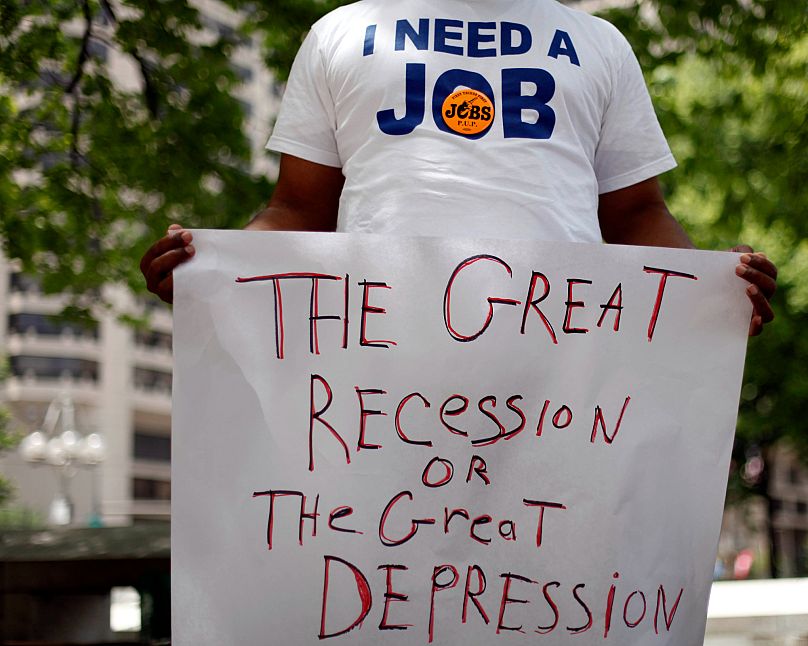
In this file photograph taken June 23, 2010, Frank Wallace who has been unemployed since May of 2009, displays his frustration during a rally in Philadelphia. AP ARCHIVE

Economic crises teach empathy

The new OHTE report recommends that teachers of economic history should seek to link past events to concrete skills. In other words, don't just "tell the students what the Great Depression was", but rather use the lessons to develop "empathy, openness, cooperation [and] tolerance of ambiguity".

Teachers interviewed for the study reported that when students engage with economic crises historically, they are better prepared to ask “why did this happen?”, “who suffered?”, “who benefitted?” and “is there a scapegoat rampaging behind me?”.

"Exploring such questions can help learners understand that an economic crisis is much more than an isolated economic phenomenon and instead often affects all aspects of societal life," the OHTE report stated.

Economic teaching also allows students to realise that the consequences of crises are heavily dependent on the prevailing political system and the historical period, added the authors.

Classes on economic crises are included in national curricula in all 17 countries studied, and are compulsory in 16 apart from Spain, where including lessons on economic crises is at teachers' discretion.

That alone shows broad recognition of the topic — but reveals little about how the topic is used and framed, and whether there is a general consensus across Europe on how it is taught.

"Economic crises are explicitly linked to the struggle for or against democracy in the curricula of all member states except Georgia and Spain... the French Revolution and the crisis of the socialist economies in the 1980s are the most frequently cited examples, where economic hardship is cited as a driver for mobilising forces to successfully demand democracy," the report explained.

Alternatively, "economic crises leading to the destruction of democracy in various European countries" are usually taught with regard to the rise of fascism and Nazism as a direct result of the Great Depression.

Challenging simplistic narratives

In its recommendations, the report also suggests that economic crises could be taught from the perspective of minority or vulnerable groups. This can be used as a means to subvert extremism-friendly narratives such as “some group did it”, “they always exploit us”, or “the system is rigged by X”, said the author

For example, the report criticises the fact that lessons on economic crises rarely focus on specific challenges faced by groups such as the LGBTQ+, Roma, and Jewish communities.

The perspective of women in economic crises is included in six of the 17 countries analysed, but "references to LGBTI history are absent from both curricula and textbooks in all countries". Only 3.4% of respondents to the teachers’ questionnaire indicated that they incorporate LGBTQ+ perspectives into their lessons.

"Economic crises have historically increased the likelihood of stigmatisation and persecution, particularly of minorities (for example, the pogroms against Jews). Roma history is mentioned only in the French curriculum and only 10.3% of teachers reported including this perspective in their teaching," said the report.

Beyond economics — the interdisciplinary gap

There is a key missing piece when it comes to teaching on economic crises in Europe, concluded the OHTE.

While the topic features heavily in curricula, the way it is taught often remains narrow, focusing on macroeconomic data and timelines, rather than exploring the human and social impacts.

Teachers across multiple countries report that crises make a “natural bridge between economics, politics and society,” but lament the lack of structured cross-subject resources available to them to teach the subject in that way.

Comparing today’s cost-of-living squeeze, energy volatility, and uneven recovery to earlier episodes — such as the euro area crisis — helps students draw lessons from history.

Between sluggish growth and tariff shocks, further complicated by an ageing population, Europe is facing a difficult economic road ahead. In such a environment, past crises can provide a framework to make sense of the present ones.


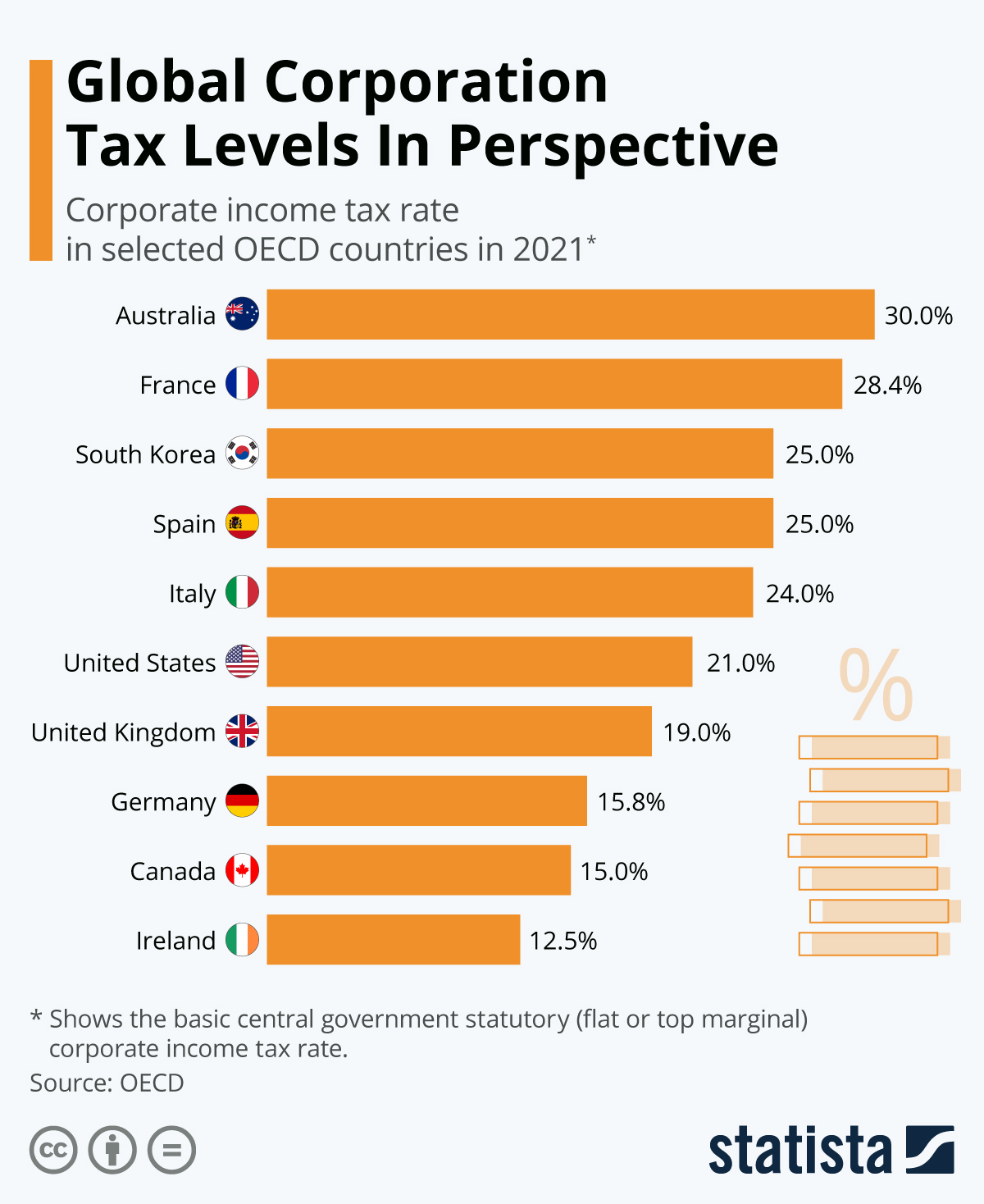
Estonia has the world’s most competitive tax systems for the 11th year in a row – STATISTA

NOT THE USA

 You will find more infographics at Statista


By Katharina Buchholz for Statista October 27, 2025

The Tax Foundation has released its International Tax Competitiveness Index which highlights the most competitive tax rates in different countries around the world. For the 11th consecutive year, Estonia had the highest score in the index. This was mainly due to its 20 percent tax on corporate profit only applied to distributed profits, a 20 percent tax on individual income not applying to personal dividend income, a property tax only applying to the value of land and finally an exemption on 100 percent of foreign profits earned by domestic corporations.

By comparison, France, Italy and Colombia were the least competitive countries in the index that takes into account the 38 OECD countries. While France and Colombia score low on their corporate income tax rates (meaning they collect a lot of them), Italy received bad marks for its consumption and property taxes. All three countries also levy wealth taxes.

Even though the United States improved its score this year, it was still only in the ranking's midfield, coming in 15th position with a score of 72.5 out of 100, up from rank 16 last year. Better expensing for corporate investments in industrial plants and machinery was lauded, while the country scored relatively poorly on property taxes and cross-border taxes. The later received the worst grades as the United States is one of the few countries which continued to tax the global income of companies to a high degree. However, as corporate minimum tax rules are implemented globally, this playing field is leveling.

For countries all over the world, a well-structured corporate tax rate is important in promoting economic development, boosting revenue and ultimately determining overall economic performance. Businesses tend to invest in countries where they can expect the highest rate of return and the most successful nations in the index were the ones with the lowest corporate tax rates as well as with the easiest processes for companies to comply with local tax laws. The research measured two core aspects of tax policy, competitiveness and neutrality, across corporate, individual, consumption, property and cross-border taxes.

Since the turn of this century, OECD countries have experienced a marked trend of declining corporate tax rates. The average corporate income tax rate applied by OECD members fell from about 33% in 2000 to between 24 and 25% in recent years (24.2 in 2025). As the organization's data shows, France maintains the highest combined corporate tax rate in the OECD, at 36.1% in 2025, followed by Colombia (35%), while the lowest marginal corporate tax rate is found in Hungary, at 9%, followed by Ireland (12.5%).

In 2021, a major international agreement was reached under the guidance of the OECD to establish a minimum corporate tax rate of 15% on the profits of multinational companies, aimed at reducing tax inequalities and preventing profit shifting to low-tax territories. Since then, many jurisdictions have taken steps towards the implementation of these rules into their domestic law, with the global minimum tax starting to apply from the beginning of 2024, although two countries (Hungary and Ireland) are yet to meet this requirement.

The challenge for OECD countries remains to strike a balance between economic attractiveness and tax fairness, while minimizing competitive distortions. Advocates of low tax rates argue that they attract foreign investment and boost competitiveness, whereas critics point out that such rates can reduce useful public revenue (public services, social policies funding) and exacerbate inequality, particularly when large corporations benefit from preferential regime and aggressive tax optimization.

 You will find more infographics at Statista


US borrowing expected to rival Europe’s most indebted states, says IMF

FILE. The logo of the International Monetary Fund is visible on its building in Washington. 5 April 2025.
Copyright AP Photo/Andrew Harnik, File

By Una Hajdari
Published on 

The United States is on track to record the steepest debt increase among major economies, according to the IMF — surpassing levels in Italy and Greece for the first time this century.

Global public debt is rising faster than at any point in modern history, and this time, it is not just the historically large spenders driving it.

The International Monetary Fund’s latest Fiscal Monitor warns that the public finances of major powers, led by the United States, have become a systemic global risk.

"Although the number of countries with debt above 100% will be steadily declining in the next five years, their share in world GDP is projected to rise," the report stated.

This means that the collective or “global public debt is projected to rise above 100% of world GDP by 2029," it said. In such a scenario, public debt would be at its highest level since 1948.

According to IMF calculations, this trajectory “reflects a higher and steeper path than projected before the pandemic”, signalling that governments have failed to stabilise their debt despite the recovery of global growth.

The US marks the steepest rise

The United States will see the steepest increase among major advanced economies when it comes to debt-to-GDP ratio, according to the IMF.

From 2023 to 2030, general government gross debt will climb from 119.8% of GDP in 2023 to 143.4% in 2030.

The institution noted that the United States will, for the first time this century, surpass Italy and Greece on this front — long viewed as the developed world’s most indebted states.

Italy’s debt still ranks among the world’s highest at around 137% of GDP, but the IMF expects the total to remain at 137% in 2030.

Greece, currently recording a debt of 146.7%, is expected to reach 130.2%.

For comparison, France is currently at 116.5%, Spain has a total of 100.4%, while Germany is at 64.4%.

The Netherlands, Sweden, and Denmark maintain ratios below 60%. The result is a continent perpetually divided between northern fiscal discipline and southern fatigue.

For the United States, however, the trend is unambiguously upwards, which the IMF attributed to persistently large deficits and rising interest costs.

Washington’s debt profile, it warned, is now comparable to that of highly indebted European economies — stressing the need for fiscal reform.

Other top tier global economies are facing the threat of a debt-to-GDP ratio above 100%. These include Canada, China, France, Italy, Japan, and the United Kingdom.

In other words, the crisis of debt sustainability has migrated from largely being a trademark of the developing world to the G20 itself, with the countries that underpin the international financial system being the ones stretching it to its limits.

No more 'cheap', minimal-consequence borrowing

After years of near-zero interest rates, governments became accustomed to borrowing cheaply, but the IMF warned that era has ended.

The world has entered an expensive-debt phase, it cautioned, as higher interest rates make public debt more costly to service and constrain spending on essential priorities.

In several advanced economies, debt-service costs  the total amount of money a borrower must pay to cover its debt obligations — already exceed defence budgets.

Every percentage point rise in average funding costs translates into tens of billions of euros diverted from social programmes to interest payments.

Even Germany, long considered the paragon of fiscal prudence, is changing course. Berlin has modified its constitutionally enshrined “debt brake” to permit greater borrowing for infrastructure and defence.

Ageing populations strain public budgets

Behind these figures lies a demographic squeeze that the IMF described as the next structural challenge for public finances.

Ageing populations across advanced economies are driving pension and healthcare costs sharply higher, mounting pressure on public finances.

In the United States, the old-age dependency ratio is projected to rise to around 40% by 2050. In the European Union it will exceed 55%. With fewer workers supporting more retirees, debt ratios risk spiralling further as governments borrow to maintain social stability.

This accumulation of debt, ageing and higher borrowing costs is no longer a local concern. It is, as the IMF stated, a global systemic risk that could amplify vulnerabilities across financial markets.

A loss of investor confidence in one major economy could reverberate through bond markets, currencies, and banks worldwide.

The IMF has therefore urged governments to adopt credible medium-term fiscal frameworks to stabilise debt and rebuild buffers. But such discipline is increasingly politically toxic, as populists across Europe and North America on both left and right promise lower taxes, higher pensions, and more spending.

In short, the IMF report stressed that the era of limitless borrowing is over, and that economies cannot continue to draw on the public purse strings as before.

Current complacency surrounding debt could make it much harder for governments to weather future economic shocks and crises.


What to know about the 'Frankenstein' variant of COVID-19

Archive photo. A COVID-19 rapid test for home use, on 3 February 2022 in Seattle, USA.
Copyright AP Photo/Ted S. Warren

By Euronews
Published on 


The currently dominant COVID-19 variant in Germany has been referred to as the 'Frankenstein' variant. Here's why.

As is the case every year, new variants of the virus that causes COVID-19 are circulating in Europe.

In Germany, the variant XFG is now dominant. It is often referred to in the media as the "Frankenstein variant" and is reported to cause a so-called "razor blade throat" as well as typical COVID-19 symptoms.

This variant bears the scientific name XFG, and is also called the "Stratus" variant. In Germany and other European countries, XFG has been increasingly dominant since mid-2025.

The World Health Organization (WHO) and the European Centre for Disease Prevention and Control (ECDC) consider XFG a "variant under monitoring" (VUM), meaning health officials are watching it closely but do not yet consider it a cause for concern.

Notably, COVID-19 infections have been at elevated levels across Europe, though cases are now falling in most countries, according to the latest ECDC data.

So what are the special features of the "Frankenstein" variant?

XFG is a recombination – a mixture of the two earlier virus sub-lines LF.7 and LP.8.1.2. Similar to Frankenstein's monster, which was assembled from different body parts, XFG combines parts of different virus lines.

It is normal for viruses to mutate and change over time.

The term "Frankenstein" was first used to describe coronavirus subvariants after the Omicron variant took off in late 2021 in South Africa.

The WHO and the Robert Koch Institute (RKI) currently classify the risk from XFG as low.

Incidentally, there is no clear evidence as to whether the "razor blade sensation" in the throat actually occurs more frequently with XFG.

Symptoms such as severe sore throat and hoarseness are not specific to COVID-19 variants. They can also occur with other respiratory infections.

It is almost impossible to reliably distinguish between COVID-19 and, for example, the flu based on symptoms alone.


New 2025 data shows COVID-19 vaccines provide effective, durable protection


Updated COVID-19 vaccines are still providing effective protection against infection, emergency department visits, hospitalization and death, according to new research led by Dr. Danyu Lin.


UNC Gillings School of Global Public Health


October 27, 2025

Updated COVID-19 vaccines are still providing effective protection against infection, emergency department visits, hospitalization and death, according to new research published today in JAMA Internal Medicine.

Data in this new study shows that the 2024-2025 COVID-19 vaccines provide similar protection to the previous formulation. They were found to be most protective four weeks after vaccination, providing 44.7% effectiveness against infection, 45.1% effectiveness against emergency department visits, and 57.5% effectiveness against hospitalization or death.

Protection against each outcome waned over time, declining at 10 weeks after vaccination to 35.5% effectiveness against infection, 42.9% effectiveness against emergency department visits, and 49.7% effectiveness against hospitalization or death. At 20 weeks, protection dropped to 16.7% effectiveness against infection, 39.1% effectiveness against emergency department visits, and 34.0% effectiveness against hospitalization or death.

Comparisons between different Omicron subvariants showed similar effectiveness.

Danyu Lin, PhD, Dennis Gillings Distinguished Professor in the Department of Biostatistics at the Gillings School, is lead author on the study. Additional co-authors include Yi Du, PhD, and Sai Paritala, PharmD, from the Nebraska Department of Health and Human Services; Yangjianchen Xu from the University of Waterloo; and Patrick Maloney, PhD, from the University of Nebraska Medical Center.

”COVID-19 is still causing a lot of serious illness”, said Lin. “Our study showed that the 2024-2025 COVID-19 vaccines were effective, especially against severe outcomes, although their effectiveness waned over time. Thus, it is beneficial to have an annual COVID-19 vaccination, particularly for individuals at high risk of severe outcomes. Our study also showed that vaccine effectiveness was similar against different Omicron subvariants. Thus, the 2025-2026 vaccines, which target similar omicron subvariants as the 2024-2025 vaccines did, will likely have similar effectiveness.”

COVID-19 vaccines are available to most Americans 65 years and older, as well as those between ages 18-64 with health conditions that put them at higher risk of severe illness from COVID-19. Some of these conditions include asthma, diabetes, obesity, pregnancy, heart conditions, cancer and smoking (current or former). For the full list, please visit the Centers for Disease Control and Prevention’s website.

In North Carolina, vaccines are available without a prescription for those who qualify at pharmacies across the state, according to the N.C. Department of Health and Human Services.

Read the full research and commentary by former FDA Commissioner Robert Califf in JAMA.


Contact the UNC Gillings School of Global Public Health communications team at sphcomm@unc.edu.


SNAFU

US Navy loses two aircraft from USS Nimitz carrier within 30 minutes in South China Sea

The US Navy's aircraft carrier USS Nimitz, centre, in international waters off South Korea, 4 April, 2023
Copyright AP Photo

By Gavin Blackburn
Published on 

US President Donald Trump, speaking to reporters aboard Air Force One en route to Tokyo on Monday, said the incidents could have been caused by "bad fuel".

A fighter jet and a helicopter based on the aircraft carrier USS Nimitz both crashed into the South China Sea within 30 minutes of each other, the Navy's Pacific Fleet said.

The three crew members of the MH-60R Sea Hawk helicopter were rescued on Sunday afternoon, and the two aviators in the F/A-18F Super Hornet fighter jet ejected and were recovered safely. All five are safe and in stable condition, the fleet said in a statement.

The causes of the two crashes were under investigation, the statement said.

US President Donald Trump, speaking to reporters aboard Air Force One en route to Tokyo on Monday, said the incidents could have been caused by "bad fuel."

An E/A-18G Growler aircraft launches from the flight deck of the aircraft carrier USS Nimitz in the South China Sea, 12 February, 2023
An E/A-18G Growler aircraft launches from the flight deck of the aircraft carrier USS Nimitz in the South China Sea, 12 February, 2023 AP Photo

He ruled out foul play and said there was "nothing to hide".

The USS Nimitz is returning to its home port in Naval Base Kitsap in Washington state after having been deployed to the Middle East for most of the summer as part of the US response to attacks by Yemen's Houthi rebels on commercial shipping.

The carrier is on its final deployment before decommissioning.

Another aircraft carrier, the USS Harry S Truman, suffered a series of mishaps in recent months while deployed to the Middle East.

In December, the guided-missile cruiser USS Gettysburg mistakenly shot down an F/A-18 jet from the Truman.

Then, in April, another F/A-18 fighter jet slipped off the Truman's hangar deck and fell into the Red Sea.

And in May, an F/A fighter jet landing on the carrier in the Red Sea went overboard after apparently missing the steel cables used to stop landing planes and forcing its two pilots to eject.

No sailors were killed in any of those incidents. The results of investigations into those accidents have yet to be released.

Additional sources