Monday, October 27, 2025


Exploring a mechanism of psychedelics


Researchers identified a pathway in the male rat brain that psychedelics target. This pathway may explain how these drugs strengthen memories and alleviate psychiatric disease symptoms


Society for Neuroscience


Using psychedelics to treat psychiatric diseases has become less controversial as scientists continue to reveal their underlying mechanisms. In a new eNeuro paper, researchers led by Pavel Ortinski, from the University of Kentucky, used male rats to assess how psychedelic drugs target the claustrum, a brain region with many receptors that psychedelics interact with. 

The researchers found that activating claustrum neurons targeting a cognitive area implicated in psychiatric diseases (the anterior cingulate cortex) under psychedelic drug exposure strengthened projections onto these claustrum neurons. This did not occur when activating the neurons in normal conditions. 

Says Ortinski, “One idea is that the intensely memorable experience common during psychedelic ‘trips’ is critical for success in psychiatric treatment. Neurons are thought to encode memories by strengthening their connections with other neurons, so this pathway may be the mechanism through which psychedelics intensify memories.” Ortinski hopes to continue exploring whether this mechanism contributes to the success of psychedelics in alleviating psychiatric disease symptoms. 

### 

Please contact media@sfn.org for the full-text PDF. 

About eNeuro 

eNeuro is an online, open-access journal published by the Society for Neuroscience. Established in 2014, eNeuro publishes a wide variety of content, including research articles, short reports, reviews, commentaries and opinions. 

About The Society for Neuroscience 

The Society for Neuroscience is the world's largest organization of scientists and physicians devoted to understanding the brain and nervous system. The nonprofit organization, founded in 1969, now has nearly 35,000 members in more than 95 countries. 

India-Canada Reboot Their Bilateral Relationship – Analysis

October 27, 2025 

By Institute of South Asian Studies


Canadian Foreign Minister Anita Anand’s visit to India in October 2025 is part of a continuing push to revitalise the bilateral relationship, shaken to the core during 2023-24 by the allegations of Indian involvement in the murder of a Canadian citizen, Hardeep Singh Nijjar. Mark Carney’s pragmatic leadership since taking charge as Canada’s prime minister in the summer and New Delhi’s eagerness to rebuild the valuable partnership with Ottawa have facilitated a productive effort to quietly resolve the Nijjar issue and shift the focus to mutually beneficial cooperation.


By C Raja Mohan

The visit of Canadian Foreign Minister Anita Anand to India in October 2025 highlighted the strong commitment in Ottawa and New Delhi to reset the relationship after the turbulence that rocked it during 2023-24. The reset began when Canadian Prime Minister Mark Carney invited Prime Minister Narendra Modi to attend the G-7 summit that he was hosting at Kananaskis in June 2025. The two leaders agreed on calibrated steps toward normalisation. This was followed by the resumption of dialogue at the bureaucratic and political levels and an agreement to handle the sensitive questions in a quiet dialogue between the security establishments and the development of an actionable agenda of cooperation.

During her visit, Anand met Modi and held substantive talks with her counterpart Subrahmanyam Jaishankar. Speaking to a Canadian TV channel at the end of her visit, Anand said, “We are in a moment where economic diplomacy, pragmatism, is of crucial importance”. She added that “Now we’re moving forward from September-October 2023”, referring to the time when the diplomatic ties between the two countries were derailed. Then, Canada, at the highest political level, publicly accused the Indian government of involvement in the assassination of Hardeep Singh Nijjar, a Sikh separatist based in Canada.

This allegation, denied vehemently by India, strained ties severely, leading to a protracted period of diplomatic chill, the mutual expulsion of diplomatic personnel and the suspension of normal channels of communication. The political transition from Justin Trudeau to Carney in March 2025 and the latter’s successful election campaign to retain his premiership provided a valuable political opportunity in Ottawa to take a fresh look at bilateral ties. On its part, New Delhi seized the opportunity to push for a normalisation of the relationship. Anand’s trip to India in October 2025 was the first ministerial visit from the Canadian side in over two years and culminated in a joint statement reaffirming a commitment to rebuilding bilateral ties across multiple sectors. Both sides agreed on a roadmap that fosters cooperation in economic ties, security collaboration, climate change, energy security, technological innovations and people-to-people contacts.

In a remarkable feature, bilateral trade continued to flourish even amid the diplomatic chill. The bilateral commerce in goods and services crossed CAD$30 billion (S$27.7 billion) in 2024. The two sides are now ready to resume the negotiations on a Comprehensive Economic Partnership Agreement that were suspended during the diplomatic freeze. Anand and Jaishankar agreed on “commencing, at an early date, ministerial-level discussions on bilateral trade and investment informed by today’s economic realities and each country’s strategic priorities”. The reference here is to the new tensions in the global trading order triggered by United States (US) President Donald Trump and the testy relations that Ottawa and New Delhi have with his administration. Diversification of trade relations away from excessive dependence on the US market is now a high political priority for both nations.


The renewed momentum in the bilateral relationship, the joint statement issued after Anand’s visit affirmed, is based on “mutual respect for shared democratic values, the rule of law, and a commitment to upholding the principles of sovereignty and territorial integrity”. This is a reference to the accusations of both sides during the diplomatic crisis that the other has violated its sovereignty. India accused Canada of encouraging anti-India militants, and Ottawa accused New Delhi of transnational repression.

The legal proceedings against four Indian nationals accused of Nijjar’s murder are ongoing, with trials unlikely to commence before late 2026. In the context of a diplomatic reboot, a significant feature has been the establishment of a constructive and institutionalised security dialogue between New Delhi and Ottawa. Both sides have agreed to enhance cooperation in law enforcement, intelligence sharing and counter-terrorism efforts. The collaboration between Indian agencies such as the National Investigation Agency and Canadian bodies like the Royal Canadian Mounted Police represents an important development aimed at jointly addressing security threats linked to diaspora extremism.

This dialogue acknowledges that preventing incidents like Nijjar’s murder requires more than accusation and recrimination; it necessitates transparent communication, mutual trust and institutional mechanisms for addressing security concerns. The presence of a significant Indian-origin Canadians (estimated at two million in a population of about 39 million in 2025) has long necessitated that.

By focusing on coordinated actions and respecting each other’s sovereignty, India and Canada seek to reduce the risk of extrajudicial operations and foster a secure environment for their citizens and expatriates. This security cooperation is a critical building block for restoring confidence in the broader bilateral relationship.

The unfolding momentum in India-Canada relations is a testament to the possibilities of patient diplomacy overcoming deep-rooted mistrust and geopolitical sensitivities. This reboot is still evolving, requiring consistent political commitment and steady advances in various domains of the bilateral ties. However, it does demonstrate how democracies with substantial global stakes can restore ruptured ties through measured diplomacy, shared values, and a commitment to partnership in a complex world.


About the author: Professor C Raja Mohan is a Visiting Research Professor at the Institute of South Asian Studies (ISAS), an autonomous research institute at the National University of Singapore (NUS). He can be contacted at crmohan@nus.edu.sg. The author bears full responsibility for the facts cited and opinions expressed in this paper.

Source: This article was published by Institute of South Asian Studies (ISAS)


Institute of South Asian Studies

The Institute of South Asian Studies (ISAS) was established in July 2004 as an autonomous research institute at the National University of Singapore (NUS). ISAS is dedicated to research on contemporary South Asia. The Institute seeks to promote understanding of this vital region of the world, and to communicate knowledge and insights about it to policy makers, the business community, academia and civil society, in Singapore and beyond.
Trump says he won't meet with Canada 'for a while' following anti-tariff ad campaign


US President Donald Trump said on Monday that he would not meet with Canada "for a while", after announcing a 10 percent hike in tariffs on the country's goods. The additional hike was triggered by an anti-tariff ad campaign that featured a quote by the late ex-president Ronald Reagan.


Issued on: 27/10/2025 -
By: FRANCE 24


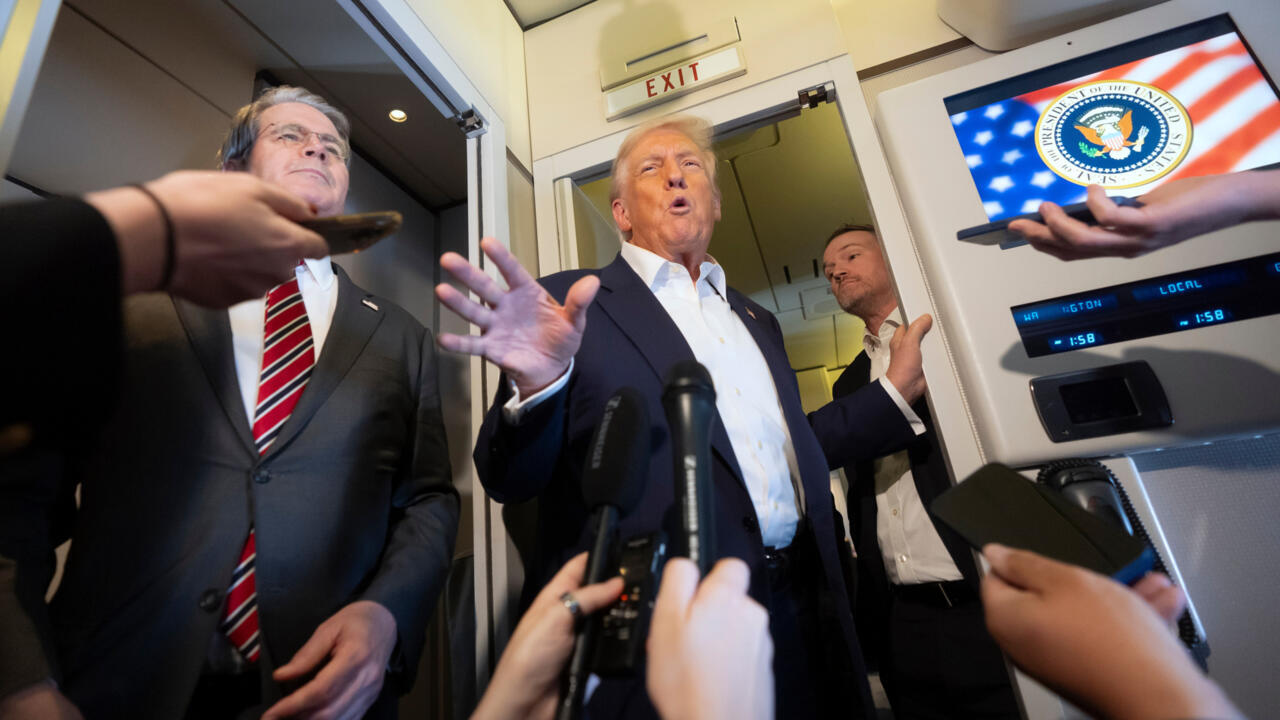
US President Donald Trump speaks to reporters aboard Air Force One while traveling from Kuala Lumpur, Malaysia, to Tokyo, Japan, Monday, Oct. 27, 2025. © Mark Schiefelbein, AP

US President Donald Trump said on Monday that he would not meet with Canada "for a while", despite Prime Minister Mark Carney's offer of an olive branch to resume trade talks.

Trump announced he would be hiking tariffs on Canadian goods by an additional 10 percent and terminated all trade talks following what he called a "fake" anti-tariff ad campaign that featured the late ex-president Ronald Reagan.

When asked whether he would meet with Carney at the Asia-Pacific Economic Cooperation (APEC) summit, he told reporters on Air Force One: "I don't want to meet with him, no."

"I'm not going to be meeting with him for a while ... One of the most difficult countries to deal with has been Canada, as much as I love Canada itself and the people of Canada," Trump added.

Trump did not confirm when the tariff hike is set to begin.

Speaking on the sidelines of a regional summit in Malaysia on Monday, Carney said he was ready to resume talks with Trump following the row.

"We stand ready to sit down with the United States, myself with the president, my colleagues with their colleagues, when the US is ready to sit down," Carney told reporters.

Carney said he had not had any contact with the US president in Kuala Lumpur.

But added that he had agreed to meet Chinese President Xi Jinping, with both men due at an APEC summit in South Korea on Wednesday.

Carney said talks with Xi would include their "commercial relationship, as well as the evolution of the global system".

Trump's global sectoral tariffs – particularly on steel, aluminium, and automobiles – have hit Canada hard, forcing job losses and squeezing businesses.

© France 24
01:35


"We had made considerable progress on a supplement to the trading relationship that we had," Carney added, referring to US trade talks, including "considerable progress in the areas of steel, aluminium, and energy-associated areas as well".

The ad from the Canadian province of Ontario used quotes from a radio address on trade that Reagan delivered in 1987, in which he warned against the ramifications that he said high tariffs on imports could have on the US economy.

It cited the Republican icon as saying "high tariffs inevitably lead to retaliation by foreign countries and the triggering of fierce trade wars." The quote matches a transcript of his speech on the Ronald Reagan Presidential Library's website.

The Ronald Reagan Foundation wrote on X on Thursday that the Ontario government had used "selective audio and video" and that it was reviewing its legal options.

Ontario said it would pull the offending anti-tariff ad on Monday so that negotiations could resume.

(FRANCE 24 with AFP)
'It's striking': Wall Street Journal editors jab Trump's latest 'tantrum' against Canada

Robert Davis
October 26, 2025 
RAW STORY


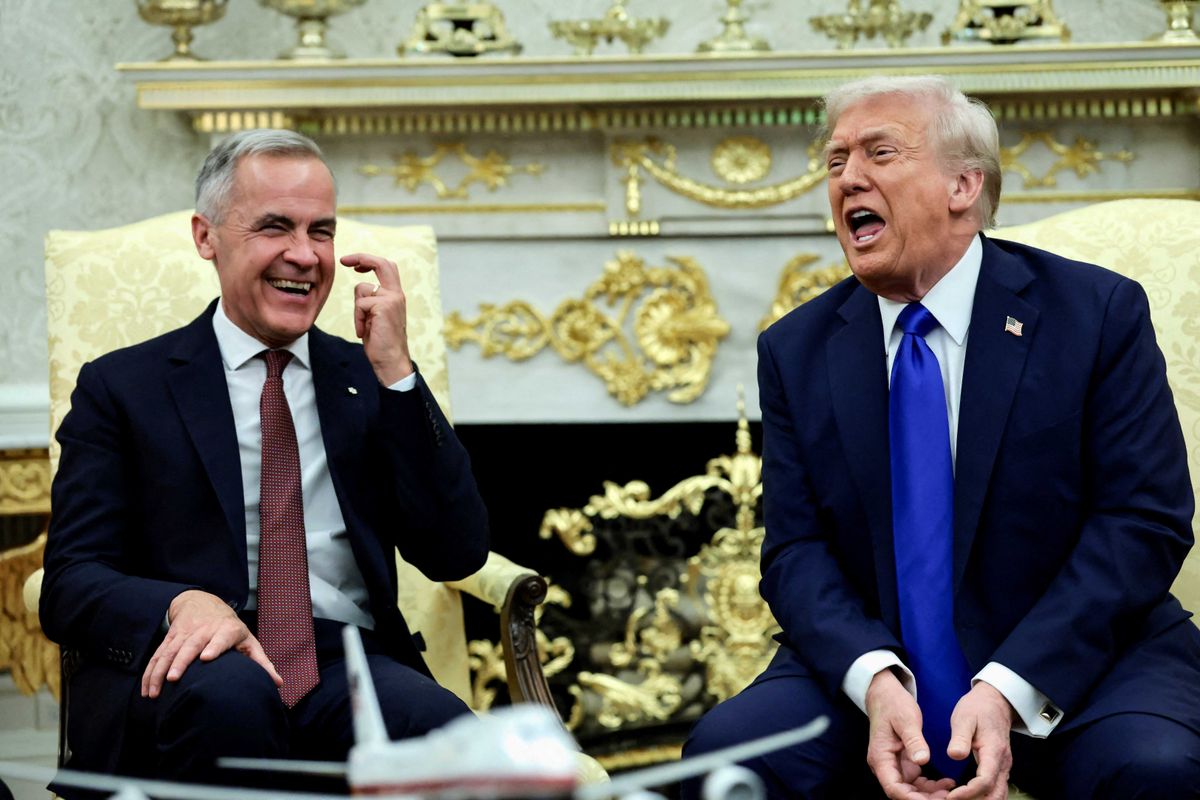
U.S. President Donald Trump and Canada's Prime Minister Mark Carney react as they meet in the Oval Office at the White House in Washington, D.C., U.S., October 7, 2025. REUTERS/Evelyn Hockstein TPX IMAGES OF THE DAY

The Wall Street Journal's conservative editorial board bashed President Donald Trump's latest "tantrum" against Canada in a new editorial published on Sunday.

Trump raged at the Canadian government on Truth Social on Saturday over a commercial featuring former President Ronald Reagan arguing against the use of tariffs as an economic policy. Trump has sought to make tariffs the centerpiece of his economic agenda, not an exception, the editorial notes.

Trump accused the Canadian government of trying to influence a case before the Supreme Court regarding the legality of his tariffs. He also ended trade talks with Canada because of the ad.

"The sole purpose of this FRAUD was Canada’s hope that the United States Supreme Court will come to their 'rescue' on Tariffs that they have used for years to hurt the United States," Trump wrote on Truth Social. "Now the United States is able to defend itself against high and overbearing Canadian Tariffs (and those from the rest of the World as well!)"

The Wall Street Journal's editorial board responded on Sunday.

"The MAGA crowd likes to dismiss Ronald Reagan as irrelevant today, but apparently he still matters to President Trump," the editorial reads in part. "How else to explain Mr. Trump’s tantrum against Canada after the province of Ontario invoked the Gipper on trade in a television ad?"

"Mr. Trump has been fortunate that his tariffs haven’t triggered much retaliation, which has spared us from a global trade war," it adds. "But the tariffs are doing economic damage by raising costs for consumers and businesses and by dampening animal spirits that should be soaring with his tax bill and deregulation. He can boast about tariffs all he wants, but he shouldn’t get away with taking Reagan’s trade beliefs in vain."


'Unreal': Analysts stunned by Trump's 'most childish' response to Canadian tariffs ad


Robert Davis
October 26, 2025 
RAW STORY


US President Donald Trump's 25 percent tariffs on cars and light trucks will be in addition to tariffs already in effect. (AFP)

A pair of political analysts were stunned on Sunday after they saw President Donald Trump's response to an advertisement created by the Canadian government about his signature tariff policies.

The Canadian government's ad features video of former President Ronald Reagan arguing against tariffs in a speech, saying "American jobs and growth are at stake. In response, Trump issued a threatening statement increasing tariffs on Canadian goods and cut off trade negotiations with the country, according to reports. The Canadian government has since agreed to pull the ad.

"Because of their serious misrepresentation of the facts, and hostile act, I am increasing the Tariff on Canada by 10% over and above what they are paying now," Trump wrote on Truth Social.

Sam Stein, managing editor of The Bulwark, and Will Saletan, a writer at the outlet, discussed Trump's response in a new episode of "Bulwark Takes" on Sunday.

"When I saw that Trump had done it, I did a double-take," Stein said. "You are literally going to raise tariffs on an entire country because you saw an ad and you didn't like it. This is just the most childish crap. I cannot believe it happened. And yet, I can believe it."

Treasury Secretary Scott Bessent defended Trump's response during an interview on Meet the Press, calling the Canadian ad "propaganda." Trump had also accused the Canadian government of trying to influence a case before the Supreme Court about his legal authority to impose tariffs.

Saletan seemed taken aback by Bessent's argument.

"It's not propaganda," Saletan said. "It's the truth, and they're simply telling Americans, 'Your own conservative president said this.'"


Trump to Hike US Prices Because ‘Canada Hurt His Feelings’ With Reagan Tariffs Ad

“He’s increasing taxes on Americans by executive fiat because he didn’t like an advertisement that quoted Reagan’s (accurate) views on tariffs,” said one US journalist. “You (and I) are paying these taxes—not Canada.”


Jessica Corbett
Oct 26, 2025
COMMON DREAMS

Critics across North America are blasting President Donald Trump’s additional 10% import tax on Canadian goods over Ontario’s television advertisement featuring former President Ronald Reagan’s condemnation of tariffs—an announcement that came Saturday, in the lead-up to the US Supreme Court hearing arguments on his trade war.

“The president announces an arbitrary price hike on Americans because his feelings are hurt by an ad accurately quoting Ronald Reagan’s criticism of tariffs,” US journalist Aaron Rupar wrote on X in response to Trump’s Saturday afternoon Truth Social post.

Billy Binion, a reporter for the American libertarian magazine Reason, similarly said: “I don’t get how anyone can support the president having power over tariffs after watching this exchange. He is unilaterally raising taxes on Americans—not because of a ~negotiating~ tactic or to create jobs, but because… Canada hurt his feelings. Congress needs to do its job.”

Throughout Trump’s trade war, experts have emphasized that Americans ultimately pay more because of his tariffs, despite the president’s claims to the contrary. Research published earlier his month by the investment bank Goldman Sachs shows that US consumers are shouldering up to 55% of the costs stemming from his taxes on imports.

“Let’s be clear about what this is. Canada isn’t paying a goddamned thing,” Independent White House correspondent Andrew Feinberg stressed Saturday. “He’s increasing taxes on Americans by executive fiat because he didn’t like an advertisement that quoted Reagan’s (accurate) views on tariffs. You (and I) are paying these taxes—not Canada.”

Melanie D’Arrigo, executive director of the Campaign for New York Health, said on X: “1. Reagan’s speech is real. 2. It’s public domain. 3. Americans pay the cost of the added 10% tariffs, not Canadians. 4. Trump keeps lying because he thinks you’re all too stupid to fact-check. 5. The average family will pay an extra $4,900 this year because [of] his tariffs.”


The tariff announcement came after Trump suspended trade talks with Canada on Thursday night over the one-minute ad, even though the Canadian federal government did not pay for it. Ontario’s provincial government was behind the ad, which uses audio from Reagan’s April 25, 1987 radio address on free and fair trade.

Trump on Saturday quoted from the Ronald Reagan Presidential Foundation & Institute’s Thursday statement, which said that the ad “misrepresents” the address, the Ontario government “did not seek nor receive permission to use and edit the remarks,” and the organization “is reviewing its legal options in this matter.”

Several journalists and other observers have concluded that “the ad faithfully reproduced Mr. Reagan’s words, just in a different order,” as the New York Times‘ Matina Stevis-Gridneff put it.

“When someone says, ’Let’s impose tariffs on foreign imports,‘ it looks like they’re doing the patriotic thing by protecting American products and jobs. And sometimes for a short while it works—but only for a short time,” the ad begins. “Over the long run such trade barriers hurt every American worker and consumer.”

“High tariffs inevitably lead to retaliation by foreign countries and the triggering of fierce trade wars,” the clip of Reagan’s voice continues. “Then the worst happens: Markets shrink and collapse; businesses and industries shut down; and millions of people lose their jobs.”


Ontario’s premier, Doug Ford, said Friday that “our intention was always to initiate a conversation about the kind of economy that Americans want to build and the impact of tariffs on workers and businesses. We’ve achieved our goal, having reached US audiences at the highest levels. I’ve directed my team to keep putting our message in front of Americans over the weekend so that we can air our commercial during the first two World Series games.”

After speaking with Canadian Prime Minister Mark Carney, Ford said, “Ontario will pause its US advertising campaign effective Monday so that trade talks can resume. The people elected our government to protect Ontario—our workers, businesses, families, and communities. That’s exactly what I’m doing. Like I said earlier today: Canada and the US are neighbors, friends, and allies. We’re so much stronger when we work together. Let’s work together to build Fortress Am-Can and make our two countries stronger, more prosperous, and more secure.”

Ford’s pledge to pull the ad next week clearly did not appease the US president. Hours after Trump announced the new tariffs on Saturday, Dominic Leblanc, the Canadian minister of US-Canada trade, urged engagement at the federal level.

“As the prime minister said yesterday, we stand ready to build on the progress made in constructive discussions with American counterparts over the course of recent weeks,” Leblanc wrote on social media. “We will remain focused on achieving results that benefit workers and families in both the United States and Canada, and that progress is best achieved through direct engagement with the US administration—which is the responsibility of the federal government.”

Meanwhile, Carney seemed to take swipes at Trump at the Association of Southeast Asian Nations (ASEAN) summit in Malaysia on Sunday. As CBC reported, he said that “we have all been reminded of the importance of reliable partners—who honor their commitments, who are there in tough times, and who engage collaboratively to fix something that isn’t working.”

“Canada is such a partner, a dependable partner, and I have come to Kuala Lumpur to say clearly that we want to play a bigger role in this region,” Carney continued, as Trump also headed to Malaysia. “Like ASEAN, Canada values the rules-based system. We respect trade agreements and the rule of law. We believe in the value of the free exchange of goods, capital, and ideas.”

The escalation between the US and its second-largest trading partner comes as the Supreme Court prepares to hear arguments over the president’s authority to impose sweeping tariffs under the International Emergency Economic Powers Act. Trump’s Saturday remarks were widely regarded as highly relevant to the case.


“Trump is raising US tariffs on Canada by 10% because he’s unhappy that Ontario ran an ad quoting Ronald Reagan on why tariffs are bad. This is, of course, insane, and Trump has no legal authority to raise tariffs for that reason,” said American finance journalist James Surowiecki. “If the Supreme Court can see this and still accept Trump’s national security/national emergency argument for why he should be able to impose whatever tariffs he wants on whomever he wants, they are not serious people.”

“We’re living in a country where the president just randomly raises taxes on a whim because he’s in a snit—and no one stops him, even though the Constitution gives him zero power over tariffs,” he added. “This is not a constitutional republic at the moment.”

Trump to increase tariffs on Canada by an additional 10 percent over anti-tariff ad


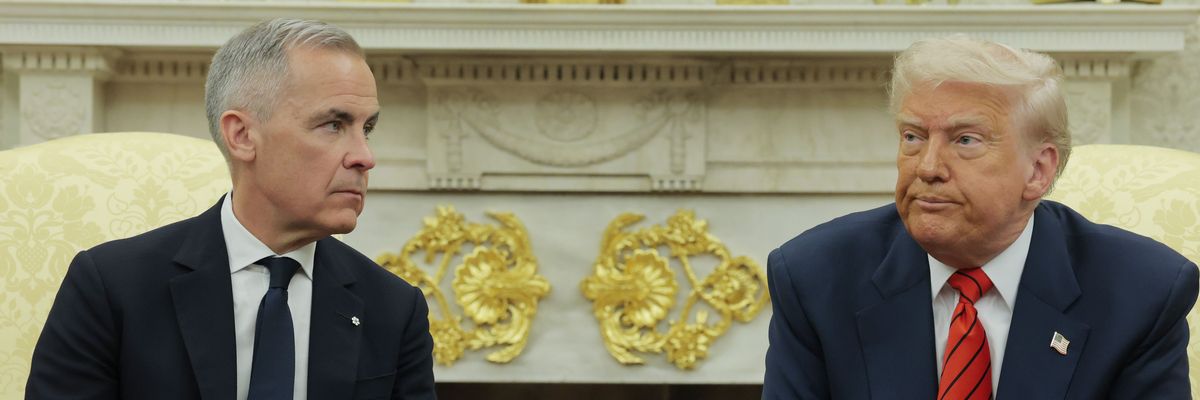
Canadian Prime Minister Mark Carney listens as US President Donald Trump speaks to reporters in the Oval Office at the White House in Washington, DC on May 6, 2025.
(Photo by Anna Moneymaker/Getty Images)

US President Donald Trump said Saturday he would increase tariffs on Canadian goods by an additional 10 percent because of what he called a “fake” ad campaign paid for by the Canadian province of Ontario that featured late US president Ronald Reagan criticising the imposition of high tariffs.

Issued on: 26/10/2025 
By: FRANCE 24

US President Donald Trump said Saturday he was hiking tariffs on Canadian goods by an additional 10 percent, in the latest fallout over a Canadian anti-tariff ad that featured late US leader Ronald Reagan.

The announcement came two days after Trump said he had terminated all trade talks with Canada over what he called the “fake” ad campaign.

“Their Advertisement was to be taken down, IMMEDIATELY, but they let it run last night during the World Series, knowing that it was a FRAUD,” Trump said on his Truth Social platform, posting the message as he flew to Asia for meetings with key regional leaders.

“Because of their serious misrepresentation of the facts, and hostile act, I am increasing the Tariff on Canada by 10% over and above what they are paying now,” he said.

The ad from the Canadian province of Ontario used quotes from a radio address on trade that Reagan delivered in 1987, in which he warned against ramifications that he said high tariffs on foreign imports could have on the US economy.

It cited the Republican as saying that “high tariffs inevitably lead to retaliation by foreign countries and the triggering of fierce trade wars”, a quote that matches a transcript of his speech on the Ronald Reagan Presidential Library’s website.

The Ronald Reagan foundation wrote on X on Thursday that the Ontario government had used “selective audio and video” and that it was reviewing its legal options.

Adding extra spice to the cross-border row, baseball’s World Series features a Canadian team, the Toronto Blue Jays, facing a US team, the Los Angeles Dodgers. The Blue Jays thrashed the Dodgers 11-4 in the first game on Friday.

Ontario said it would pull the offending anti-tariff ad on Monday so that negotiations could restart, but not before it aired again on Saturday night during the second game of the baseball showdown.

Trump’s global sectoral tariffs – particularly on steel, aluminum, and autos – have hit Canada hard, forcing job losses and squeezing businesses.

For now, the United States and Canada adhere to an existing North American trade deal called the USMCA, which ensures that roughly 85 percent of cross-border trade in both directions remains tariff-free.

But in a speech on Wednesday, Canadian Prime Minister Mark Carney said the United States has raised “its tariffs to levels last seen during the Great Depression”.

“Our economic strategy needs to change dramatically,” Carney added, saying the process “will take some sacrifices and some time”.

Trump and Carney are both set to be at a dinner on the sidelines of an Asia-Pacific Economic Cooperation (APEC) in South Korea on Wednesday. But Trump has said he had no plans to meet Carney.

(FRANCE 24 with AFP)

'Massive break with conservative icon': Trump's latest 'snit' said to have backfired

REAGAN QUOTE WAS FROM THE FIRST US CANADA FTA

Alexander Willis
October 26, 2025 
ALTERNET 


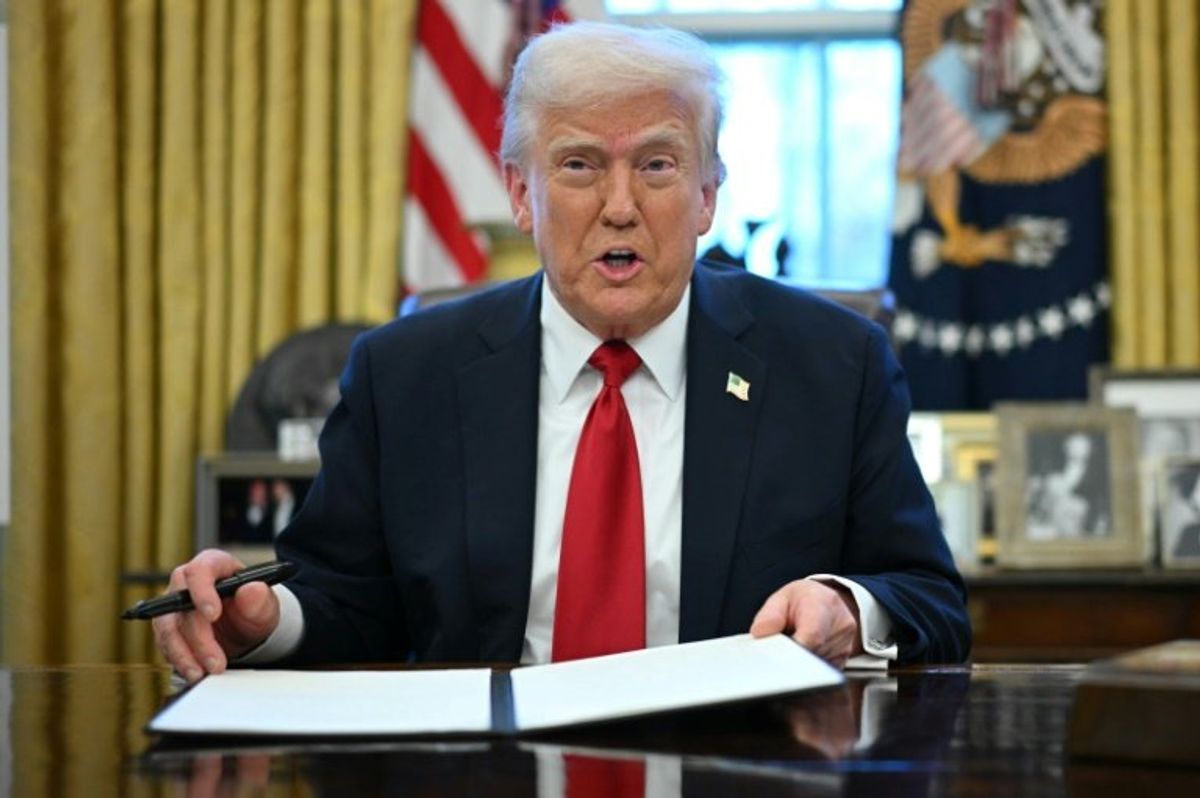
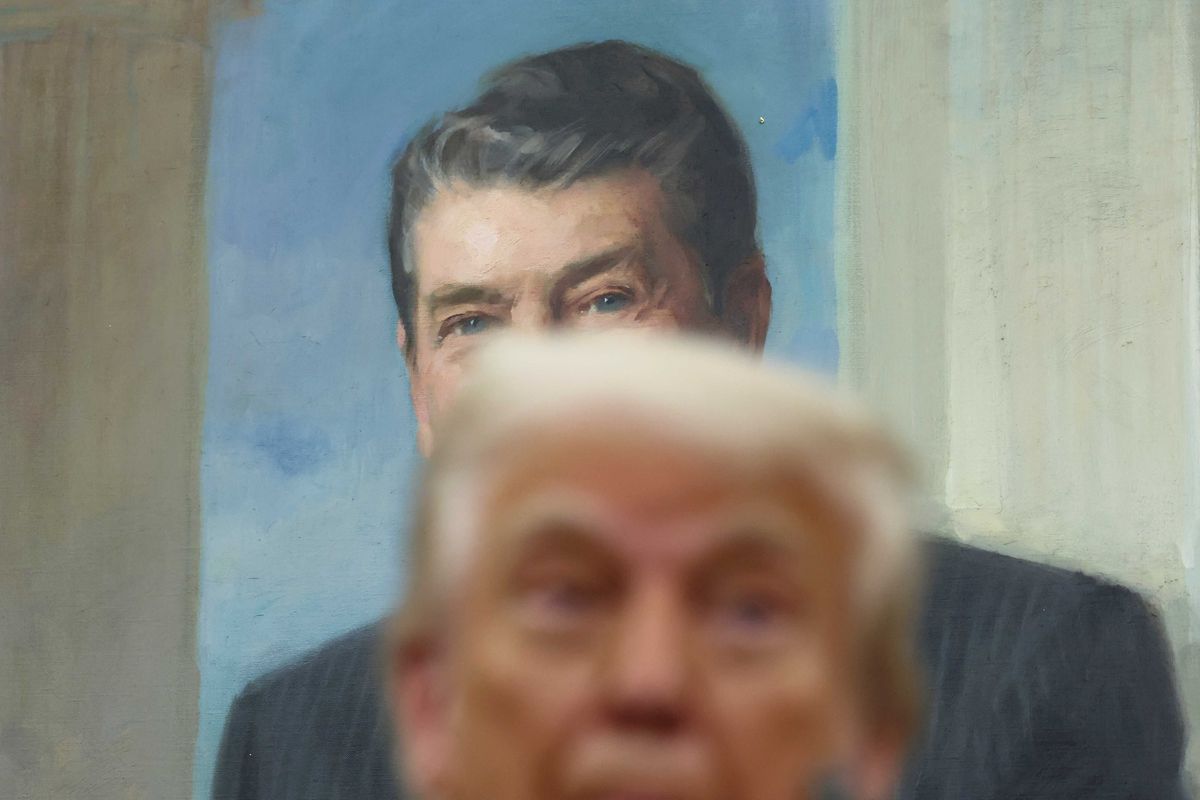
A portrait of former U.S. President Ronald Reagan is seen in the background as U.S. President Donald Trump holds a law enforcement event in the Oval Office of the White House in Washington, D.C., May 19, 2025. REUTERS/Kevin Lamarque

President Donald Trump’s new trade war with Canada over an advertisement paid for by Ontario featuring former President Ronald Reagan has backfired in what conservative commentator Charlie Sykes called “a brilliant example of the Streisand effect,” drawing millions to watch the ad featuring Reagan condemning tariffs and protectionist trade policies.

“How thin-skinned is the uber-touchy Donald Trump? As you may have heard: A single Canadian ad triggered an extraordinary presidential snit and new trade war,” Sykes wrote on his Substack Sunday.

“Trump was so upset that he cancelled trade talks with Canada and then slapped an additional 10 percent tariff on American consumers of Canadian products. And in a brilliant example of the Streisand Effect, he managed to call international attention to the words of Ronald Reagan, highlighting his massive break with the conservative icon.”

After viewing the ad, Trump immediately announced he was cutting off all trade talks with Canada. He later accused the country of “trying to illegally” influence an impending case before the Supreme Court on the legality of Trump’s tariffs, and on Saturday, slapped the country with higher tariff rates in retaliation.

Trump has gone on to claim the ad misrepresented Reagan’s words, and that the former president was, in fact, a strong supporter of tariffs. However, Trump’s assertions are contradicted by Reagan’s well-documented abandonment of the United States’ protectionist trade policies, including the use of tariffs.

Reagan’s dedication to free trade, as it's referred to, drew a “striking” and “dramatic” contrast with Trump’s own policies, something Sykes argued would now be exposed to countless more Americans, and directly because of the president’s outbursts.

“Of course, Trump could have ignored the whole thing; or shrugged off an ad by a provincial Canadian government. Instead, our petulant president exploded,” Sykes wrote.

“...The intriguing question here is: Why did Reagan’s words rattle Trump so much? He hardly needs to fear any return to conservative principle by the GOP, which has abandoned all pretense of free market economics. But Reagan remains among the most revered dead-gods of conservativism, and so somewhere in Trump’s tangled synapses he recognized a threat.”


Hours after Trump said he'd slap more tariffs on Canada, Ontario's Reagan ad airs again during the World Series


Katherine Li,Sarah Gray
Sun, October 26, 2025 


Television viewers of the World Series again saw Ontario's ad featuring President Ronald Reagan.

Premier Doug Ford said on Friday that it would stop playing in the US on Monday, October 27.

On Saturday, hours before the ad played, President Donald Trump said he'd slap more tariffs on Canada.

President Donald Trump said he'd lob more tariffs on Canada, on Saturday. Hours later, Ontario's ad featuring former President Ronald Reagan criticizing tariffs aired during game two of the World Series.

The ad was expected. The campaign was released by Ontario's Premier, Doug Ford, and it has been the latest flash point in trade tensions between the US and its neighbor to the north.

The advertisement initially drew Trump's ire on Thursday night, and he posted to Truth Social to say that he was terminating all trade negotiations with Canada. Ontario subsequently announced on Friday that the ad would be pulled by Monday, but only after it had been aired during Friday and Saturday's World Series games.


Trump said on Truth Social on Saturday that he was adding an additional 10% tariff on Canadian goods.

Games one and two of the World Series, between the Toronto Blue Jays and the Los Angeles Dodgers, were played in Canada. The Blue Jays took game one on Friday, dominating with an 11-4 victory, while the Dodgers won 5-1 in game two.

Srividya Jandhyala, an associate professor at the ESSEC Business School, told Business Insider that the Canadian government has set a goal of doubling non-US exports over the next decade and is beginning to re-engage with India and China.

"There is growing emphasis on diversifying markets and trading relationships, which would buffer against risk," said Jandhyala. "For an individual exporter, the challenge is to find new customers in markets where they have previously not had partnerships, customers, or relationships."

The US-Canada relationship has seen a rocky year. A Canadian boycott against US goods began after Trump slapped a 25% tariff on nearly all imports, from lumber to auto parts, from the longtime ally early in the year. Canada retaliated with equal reciprocal tariffs.


After a few pauses and starts, Trump increased the tariff on Canada to 35% in August for all goods not covered by the USMCA trade agreement, such as agricultural and wood products, and to 50% on steel and aluminum imports from Canada as of June. In September, Canada lifted its retaliatory tariffs, except for those on steel, aluminum, and auto imports.

The White House did not immediately respond to a request for comment from Business Insider.

Business Insider


Trump adds tariff after Canada runs Reagan ad during the World Series

Mike Heuer
Sat, October 25, 2025 
UPI

Oct. 25 (UPI) -- President Donald Trump on Saturday said he will add a 10% tariff to Canadian goods after the airing of a controversial ad featuring former President Ronald Reagan during the World Series.

As the Toronto Blue Jays were on their way to winning the opening game by an 11-4 score over the Los Angeles Dodgers, an anti-tariffs ad featuring edited comments made by Reagan regarding his tariffs on Japanese goods.

The ad spurred Trump to follow through on an earlier threat to increase the tariff on Canadian goods exported to the United States.

"Canada was caught red-handed, putting up a fraudulent advertisement on Ronald Reagan's speech on tariffs," Trump said Saturday in a Truth Social post.


"The sole purpose of this fraud was Canada's hope that the United States Supreme Court will come to their 'rescue' on tariffs that they have used for years to hurt the United States," the president said.

"Ronald Reagan loved tariffs for the purpose of national security and the economy, but Canada said he didn't," Trump added.

The president said Canada was supposed to immediately cease airing the ad and remove it, but "they let it run last night during the World Series, knowing that it was a fraud."

"Because of their serious misrepresentation of the facts and hostile act, I am increasing the tariff on Canada by 10% over and above what they are paying now," Trump added.

Reagan made the comments during an April 25, 1987, radio address to defend his tariff policy, but the Ontario government used and edited them without permission from the Ronald Reagan Presidential Foundation and Institute.

The Ontario ad runs for a minute and edits the former president's comments, which Trump and others have called "misleading."

Ontario Premier Doug Ford said the ad's intent is to "initiate a conversation" with U.S. officials and to reach "U.S. audiences at the highest levels," CBS News reported.

The U.S. imposes a 10% tariff on Canadian energy, energy resources and potash and 35% for all other products that are not exempted by the United States-Mexico-Canada trade agreement, according to the ReedSmith
Up next


Amsterdam turns 750 with cake and festivities


HOME TO THE FIRST BOURSE (STOCK EXCHANGE)IN EUROPE


DW with dpa
27/10/2025 

The Dutch capital is culminating celebrations for its 750th year of official existence. Events are taking place throughout the city, with the royal family also participating.


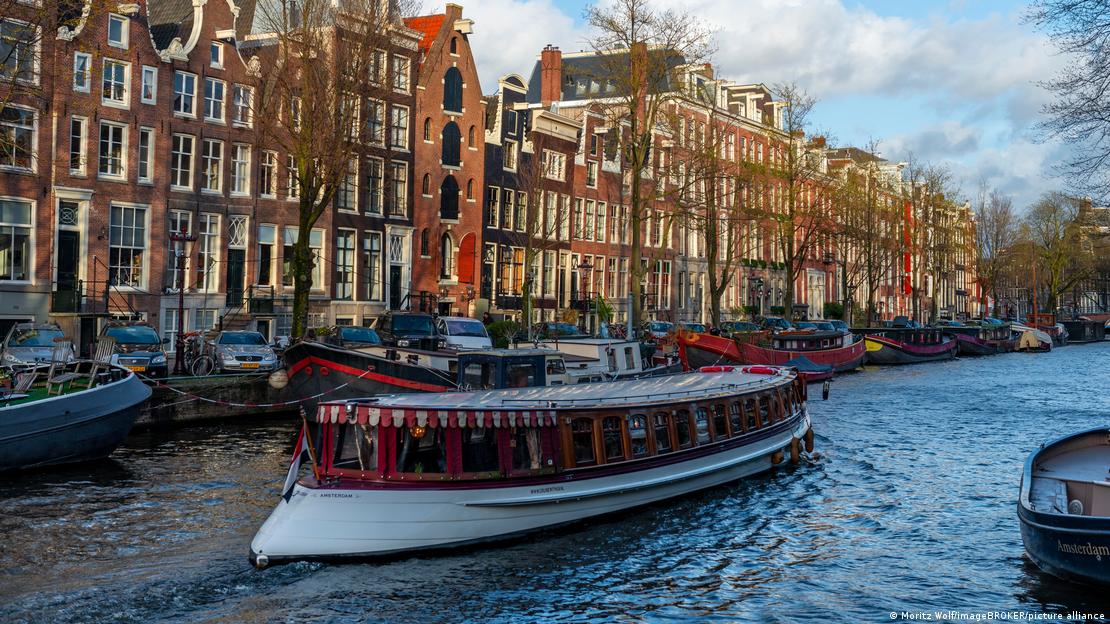
Boat on a canal, with typical Dutch warehouse in the background
Amsterdam is famous for its canals, earning it the sobriquet of 'Venice of the North'

Amsterdam is celebrating its 750th birthday on Monday with festive events throughout the city, including an evening concert at the famous Rijksmuseum to be attended by members of its royal family.

Although the city is much older as a settlement, dating back to as early as 1170, the official date of founding is October 27, 1275, which is when Count Floris V, the then ruler of Holland and Zeeland, granted residents the right to transport goods through Dutch waters toll-free.

What celebrations are happening in Amsterdam?

The day's festivities, which come at the end of months of events marking the city's 750th anniversary, kicked off at 7:50 a.m. with the cutting of a 75-meter-long (82-yard-long) cream cake by Mayor Femke Halsema on Dam Square, Amsterdam's central plaza.

Slices of the cake, which was decorated in Amsterdam's colors of red and white and bore the city's coat of arms, were then delivered to all city districts so that residents could partake of it.

Art exhibitions and musical events are also taking place across the city to mark the day.

The celebrations will culminate in a large concert outside the Netherlands' national museum, the Rijksmuseum.

King Willem-Alexander, Queen Maxima and Crown Princess Amalia will be among the guests at the concert, which will feature leading Dutch artists performing under a spacious tent on the museum squareImage: Moritz Wolf/imageBROKER/picture alliance

Year of festivities

The events on Monday top off what has been a series of happenings throughout the year to celebrate the 750th anniversary.

One highlight was a festival held on Amsterdam's ring road in the summer.

The highway was closed for 24 hours so that residents were able to stroll, eat, drink and dance there.

The festival even saw the marriages of 75 couples, while a temporary forest of 750 trees was planted.

Amsterdam, famous among other things for its canals, or grachten, and the monumental buildings lining them, has a population of around 900,000 in the city proper.

The city, situated at the mouth of the Amstel River, became a major world port during the so-called Dutch Golden Age in the 17th century, and was also home to famous artists such as Rembrandt and Van Gogh.

Its prosperity did, however, bear the stain of its involvement in the Atlantic slave trade. It was a major port of destination for Dutch slave ships from the 17th century on until the Netherlands ended its participation in the trade in 1814 at the British government's request.

Edited by: Louis Oelofse

Fears for civilians trapped in Sudan's El-Fasher intensifies as fighting flares


The governor of Sudan’s Darfur region on Monday called for the urgent protection of civilians in El-Fasher as the UN human rights chief warned of the risk of ethnically-motivated "atrocities". The paramilitary Rapid Support Forces claimed to have seized the last army stronghold in Darfur following an 18-month siege that left the city devastated and on the brink of famine.


Issued on: 27/10/2025 
By: FRANCE 24


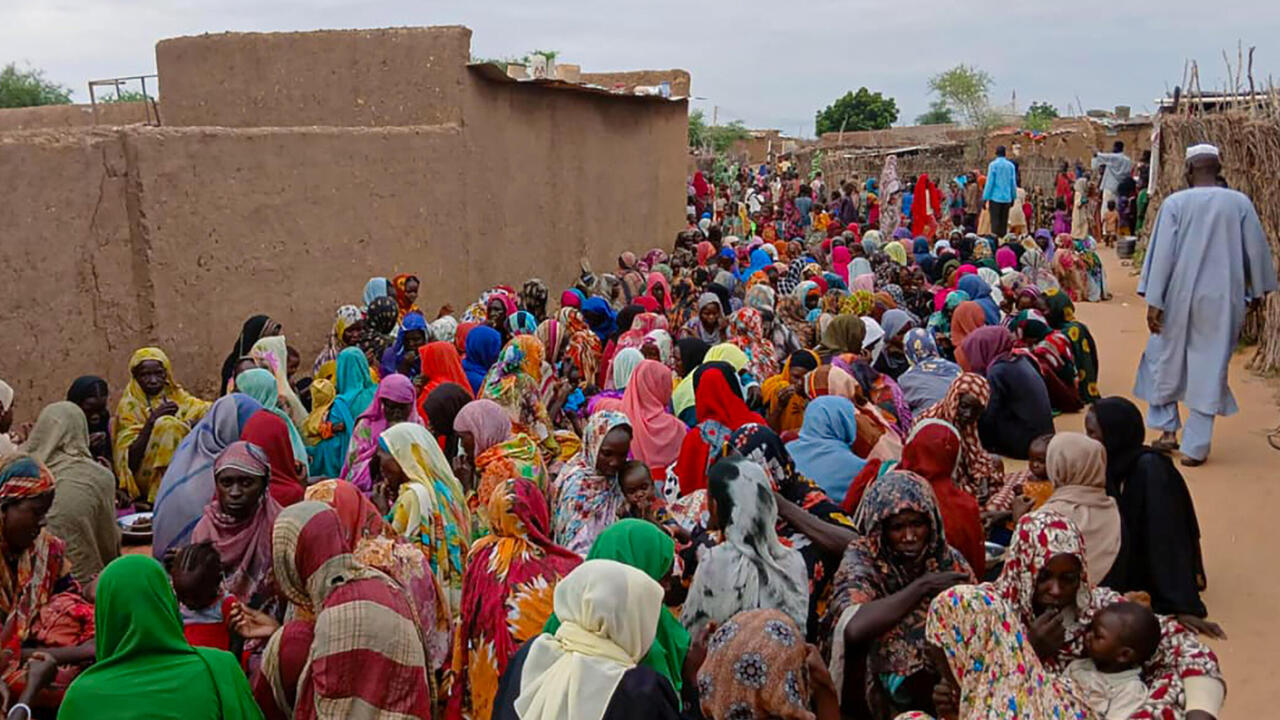
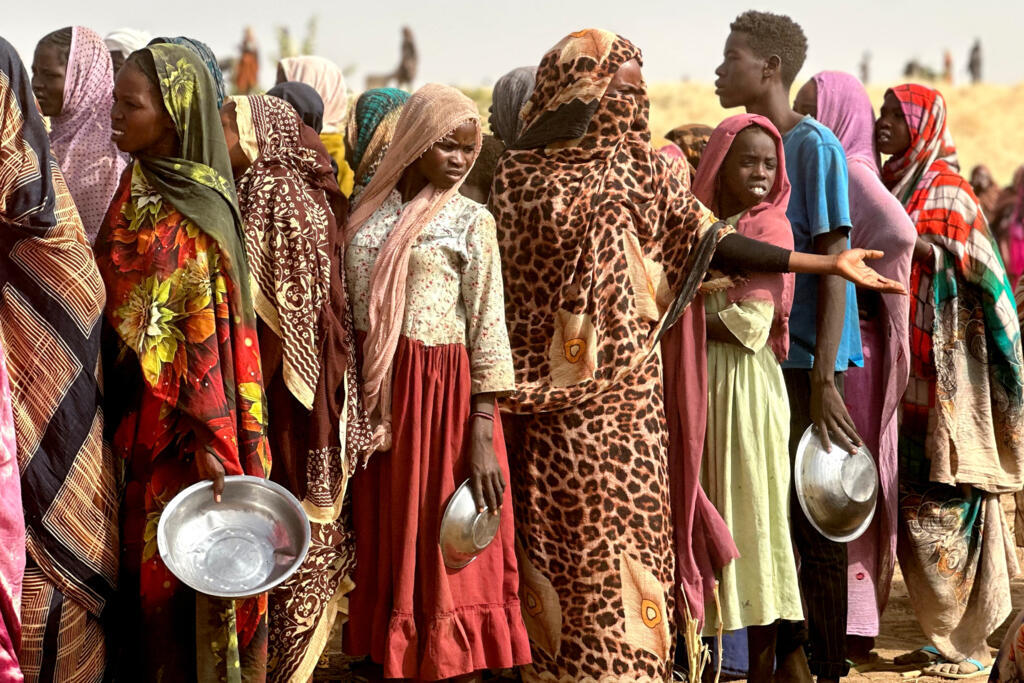
File photo of Sudanese civilians gathered to receive aid in El Fasher in Sudan's Darfur region taken August 11, 2025. © AFP (STR)

The army-aligned governor of Sudan's Darfur region called for the protection of civilians in the stricken city of El-Fasher on Monday, after paramilitaries claimed to have seized it following a brutal 18-month siege.

Pro-democracy activists reported fighting "in the vicinity of El-Fasher airport and several areas west of the city".

The group, known as a local resistance committee, said in a statement there was a "complete absence of air support" to protect residents.

The Rapid Support Forces said on Sunday they had captured the city, the last state capital in the vast Darfur region yet to fall to the paramilitaries.

Sudan's paramilitary Rapid Support Forces claim capture of key Darfur city

Communications remain cut across the city, including satellite networks, leaving El-Fasher in a "media blackout", according to the Sudanese Journalists' Syndicate.

The United Nations' migration agency said 2,500 to 3,000 people fled El-Fasher on Sunday, seeking safety within the city or westward to Tawila and Mellit towns.

United Nations High Commissioner for Human Rights Volker Turk also warned on Monday that El-Fasher was in an "extremely precarious situation", with the likelihood of "ethnically-motivated violations and atrocities" rising after paramilitary forces claimed control.

"The risk of further large-scale, ethnically-motivated violations and atrocities in El-Fasher is mounting by the day," Turk said in a statement, calling for "urgent and concrete action ... to ensure the protection of civilians in El-Fasher and safe passage for those trying to reach relative safety".

RSF paramilitary drone strike kills at least 75 people in war-torn Sudan

Darfur governor Minni Minnawi, who is allied with the Sudanese army, on Monday called for the "protection of civilians" and "an independent investigation into the violations and massacres carried out by the militia away from public view", referring to the RSF.

Sudan's de facto leader, Abdel Fattah al-Burhan, appeared publicly on Sunday night but only for a meeting with the Turkish ambassador in Port Sudan.

The army-led Transitional Sovereignty Council said they discussed the "siege imposed by the terrorist Rapid Support militia on El-Fasher".

Tom Fletcher, head of the UN Office for the Coordination of Humanitarian Affairs (OCHA), called for safe passage for civilians trapped in the fighting.

Access to the city remains severely restricted due to ongoing combat.
Surviving on animal feed': Escaping residents describe siege of Sudan's al-Fashir

© France 24
01:45


Atrocities

Despite RSF assurances of civilian protection, the local resistance committee accused the group of committing atrocities, saying that since Sunday, innocent civilians had suffered "the worst forms of violence and ethnic cleansing".

The journalists' syndicate expressed "deep concern for the safety of journalists" in El-Fasher, saying that independent reporter Muammar Ibrahim has been held by RSF forces since Sunday.

A video circulated by the RSF appeared to show fighters detaining dozens of men in civilian clothing, accusing them of supporting the army and the Joint Forces.

The Joint Forces is an alliance of armed groups which has fought alongside the military since late 2023, when RSF fighters massacred between 10,000 and 15,000 members of the non-Arab Masalit community in the capital of West Darfur, El-Geneina.

Since August, the RSF has intensified artillery and drone attacks on El-Fasher, gradually eroding the army's last defensive positions.

If confirmed, the city's capture would mark a significant turning point in Sudan's two-year war, which has killed tens of thousands and displaced nearly 12 million people.

It would give the RSF control over all five state capitals in Darfur, consolidating its parallel administration in Nyala, and potentially partitioning Sudan, with the army holding the north, east and centre, and the RSF dominating Darfur and parts of the south.

Around 260,000 civilians, half of them children, remain in El-Fasher without aid.

Sudan war's devastating impact on women and girls

Four UN agencies said that thousands of malnourished children are at "imminent risk of death" amid the collapse of health services, while killings, sexual violence and forced recruitment continue.

Famine was declared earlier this year in several displacement camps around the city, with the UN warning it could spread to El-Fasher where residents have resorted to eating animal fodder.

The UN has also warned of potential massacres targeting non-Arab communities, echoing atrocities after the RSF captured Zamzam camp in April.

Elsewhere, fighting also intensified in North Kordofan's Bara city, in central Sudan, which the RSF regained from the army on Saturday.

The Emergency Lawyers, a war-monitoring group, accused the RSF of a "horrific massacre" following the army's withdrawal, reporting mass executions that killed hundreds, primarily young residents, alongside arrests, looting and destruction of property amid a total communications blackout.

Now well into its third year, the war has spiralled into what the United Nations describes as the world's largest displacement and hunger crisis. Despite international calls for a ceasefire, both sides remain unwilling to negotiate.

(FRANCE 24 with AFP)

Sudanese paramilitaries claim to have taken control of Darfur's El-Fasher


Sudan's paramilitary Rapid Support Forces (RSF) says it's taken full control of El-Fasher – the Sudanese army's last stronghold in the Darfur region in the west of the country.


Issued on: 26/10/2025 -  RFI

A makeshift bunker dug by civilians in El-Fasher as a hideout from clashes between the RSF and the Sudanese army and allied militias. © Muammar Ibrahim / AFP

In a statement issued Sunday, the RSF claimed it had "extended control over the city of El-Fasher from the grip of mercenaries and militias," referring to the Sudanese army, which it has been fighting since April 2023.

Earlier, the group said it had captured the army's headquarters in the city, which it has held under seige for the last 10 months.

"After fierce fighting," the RSF has "liberated the Sixth Division, breaking the army's power", said the statement, describing the advance as a "victory".

RSF videos on Sunday appeared to show army vehicles retreating from its headquarters and fighters celebrating at the Sixth Infantry Division base.

Footage from Nyala, the South Darfur state capital, showed crowds celebrating alongside RSF fighters.

The Sudanese army has yet to comment, but a spokesperson for the Popular Resistance Committee – a movement supporting the army led by General Abdel Fattah al-Burhan – rejected RSF’s version of events.

“Controlling the army’s headquarters does not mean controlling El-Fasher,” the spokesperson said.

The Popular Resistance accuses the RSF of running a "media disinformation campaign" to weaken morale, insisting residents were still "resisting in the face of terrorist militias".

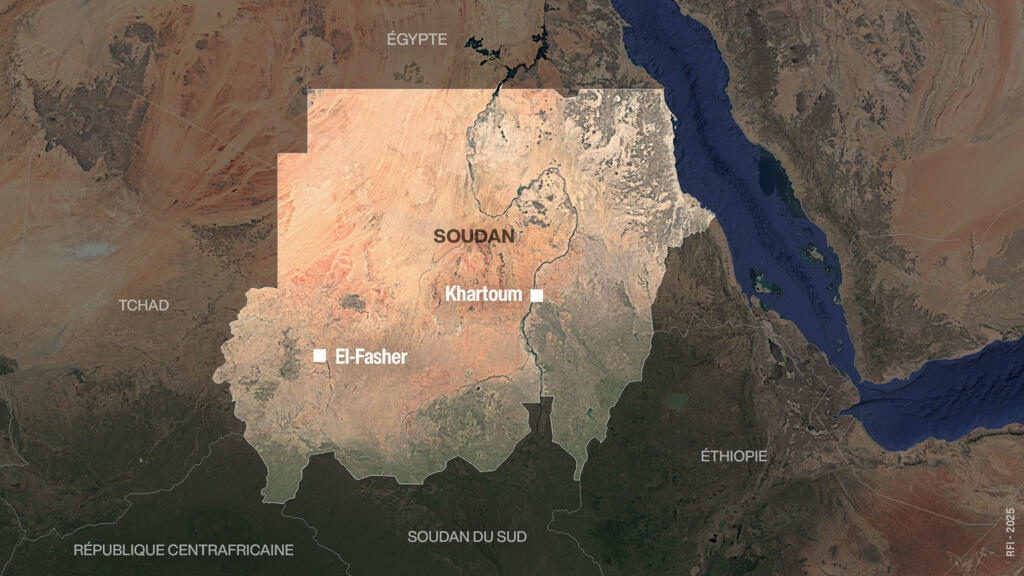
El-Fasher in southwestern Sudan. © Studio FMM


Turning point

War broke out in Sudan in 2023, when the Sudanese army and the RSF, once allies, turned against each other.

It has killed tens of thousands and displaced nearly 12 million people.

Since August, the RSF has intensified artillery and drone attacks on El-Fasher, eroding the army's last defensive lines after more than 18 months of siege.

According to activists, 60 people were killed in a drone and artillery attack at a displacement camp earlier this month.

Capture of the city, if confirmed, would be a significant political victory for the RSF.

The paramilitary group has described it as a "turning point" in the war.

It would bring all five Darfur state capitals under RSF control, consolidating its recently established parallel administration in Nyala.

Analysts have warned this could hasten a physical split of the country, with the army holding the north, east and centre, and the RSF dominating the vast Darfur region and parts of the south.

RSF's announcement comes just two days after the United States, Egypt, Saudi Arabia and the United Arab Emirates (the Quad) agreed to form a Joint Operational Committee to coordinate efforts towards peace and stability in Sudan.

Sudan specialist Roland Marchal told RFI the capture of El-Fasher, if confirmed, could provide RSF with political leverage in future Quad talks.

People who fled the Zamzam camp for the internally displaced after it fell under RSF control, queue for food rations near the town of Tawila in war-torn Sudan's western Darfur region, 13 April, 2025. © AFP


Humanitarian disaster

Around 260,000 civilians, half of them children, remain trapped in El-Fasher without aid or food.

Four UN agencies warned on Thursday that thousands of malnourished children are at "imminent risk of death" amid the collapse of health services.

Reports of killings, sexual violence and forced recruitment were mounting daily, they added.

The UN had earlier voiced alarm over potential massacres targeting non-Arab communities in El-Fasher, similar to those reported after the RSF captured the nearby Zamzam camp in April.

Despite repeated international appeals, the two sides, who have both been accused of committing atrocities, have ignored calls for a ceasefire.

(with newswires)

RSF claims El-Fasher takeover as Sudan conflict worsens

Issued on: 27/10/2025 - FRAHCE24

The Rapid Support Forces (RSF) have released videos claiming their takeover of the Sudanese army headquarters in El-Fasher, the last army stronghold in Darfur. While RSF soldiers celebrate, local army-allied fighters say fighting continues. If the city falls, all five Darfur state capitals would be under RSF control, amid an 18-month siege that has caused severe starvation and displaced millions in Sudan’s two-year war.

France confronts deep divides 20 years after teen deaths set off Paris riots

Twenty years on, the deaths of French teenagers Zyed Benna, 17, and Bouna Traoré, 15, still weigh heavily in Clichy-sous-Bois, the Paris suburb where they were electrocuted while fleeing a police identity check. That tragedy spurred 21 nights of unrest across France.

Issued on: 27/10/2025 - RFI


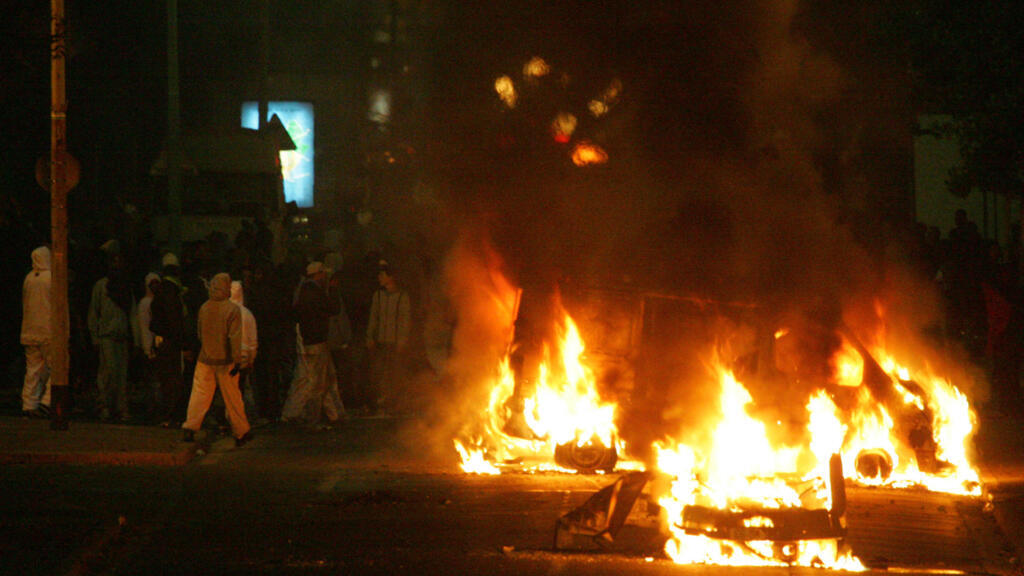
For 21 days, unrest took place in working-class neighbourhoods in France after the deaths of Zyed Benna and Bouna Traoré on 27 October 2025. © Joël Saget / AFP

It was 5.30pm and night was falling as a group of 10 boys headed home after a day at the football pitch. A resident saw them near a building site and called police, wrongly fearing a break-in.

Fourteen officers arrived and began chasing them. On one side was a simple suspicion of an offence. On the other was a deep fear of identity checks.

Three boys climbed the fence of an EDF electrical substation as they ran. Two officers nearby saw them. One said over his radio: “If they go onto the site, I wouldn’t give much for their chances.”

Thirty minutes later, 20,000 volts surged through Zyed and Bouna, killing them instantly and causing a brief power cut in the town.

A third boy, Muhittin, was badly burned but managed to escape, call for help and say what had happened. Anger spread fast.


Spreading unrest

The next day, the world discovered Clichy-sous-Bois through images of burning cars. The unrest spread from working-class neighbourhoods around Paris to the outskirts of cities across the country.

On 7 November, after several nights of violence, then prime minister Dominique de Villepin announced a state of emergency. It was the first since the Algerian War. Prefects were allowed to impose curfews.

Nicolas Sarkozy, interior minister at the time, had for months been making tough remarks about young people in the suburbs. Two days before the deaths, he said: “Have you had enough of all this scum? Well, we’re going to get rid of them for you.”

Inside the government, Azouz Begag, the minister for equal opportunities, opposed this approach. “The only order that needs to be restored is the order of equal opportunities,” he said.


'Stuck in denial'

In a statement issued for the 20th anniversary, de Villepin said he had spent two decades trying to understand the fractures that led to the tragedy.

“We are still stuck in denial and neglect,” he said, adding the boys were “children of France” who were “victims of segregation and of the republic turning its back”.

The balance of the nation, de Villepin said, must be built on truth because "only truth guarantees justice”.

Rebuilding trust in public leadership, he said, was “essential”, adding: “Truth is not a political risk. It is the basis of democratic life.”

He added that restoring public trust in political leaders was vital and that speaking the truth should be seen as a normal part of democracy, not a risk.

The government in 2005, De Villepin said, had weakened trust by too quickly repeating incorrect information from the Interior Ministry.

He also criticised public remarks that “hurt people and fuelled resentment, as if the republic reduces some of its children to a problem that must be solved”.


Persistent divides

De Villepin said the 2005 unrest showed what he called a “two-speed France”, with communities where the French state still felt present and others where it had become distant or seen as a constraint.

He pointed to later protests such as the Yellow Vests in 2018 and unrest after the killing of Nahel Merzouk, a 17-year-old shot by police during a traffic stop in June 2023, as signs that many people still felt abandoned.

He said the tragedy in Clichy-sous-Bois revealed a French youth that wanted only to be recognised and respected.

For people in working class neighbourhoods, the unrest underscored a need to be heard and a strong feeling of injustice after a police intervention that left two teenagers dead.

Ten years later, two police officers were put on trial for failing to help the boys but the court found they lacked clear knowledge of a serious imminent danger and acquitted them.