Wednesday, October 29, 2025


Trump Signs Flurry Of  Rare Earths Deals In Asia

Trump has launched the United States’ most aggressive rare-earth and critical-minerals expansion in more than a decade, signing over $10 billion in supply-chain deals across Australia, Japan, Malaysia, and Thailand in less than a week. The flurry of agreements aims to cut China’s 90 percent grip on global refining capacity and establish a network of Indo-Pacific partners for mining, processing, and stockpiling key materials vital to defense and clean-tech industries.

On Tuesday, the United States and Japan signed an agreement to secure the supply and processing of rare earths in a bid to counter China’s dominance of the global sector. The two trade partners agreed to employ various means to accomplish this goal, including policy tools, trade measures, financial support mechanisms, and critical minerals stockpiling systems, as well as “jointly identify projects of interest to address gaps in supply chains for critical minerals and rare earths, including derivative products such as permanent magnets, batteries, catalysts, and optical materials.” Japan is the United States’ 5th largest trading partner, with the Asian economic giant supplying vehicles, transportation components, industrial equipment, and consumer electronics.

But the Japan rare earths deal is just one of a handful that U.S. President Donald Trump has lately inked in his Asia diplomacy tour. Trump also signed two separate deals with Malaysia and Thailand, looking to further diversify the country’s critical minerals supply chains. Kuala Lumpur was Trump’s first stop in his five-day tour, expected to culminate on Thursday in a meeting with China’s President Xi Jinping in South Korea. Malaysia agreed to refrain from imposing quotas or banning exports of critical minerals to the U.S. Malaysia and also committed to working with American firms to expedite the development of the country’s critical minerals and rare earths sectors, including “granting extended operating licences to create certainty for businesses to increase production capacity.”

Related: Trump Signs Flurry Of  Rare Earths Deals In Asia

Malaysia is home to ~16.1 million metric tons of rare earth deposits, but currently lacks the technology to mine and process these resources. Last year, Malaysia banned the export of raw, unprocessed rare earth elements in a bid to encourage domestic processing and value-added activities as it looks to develop its downstream sector. Currently, Australia’s Lynas Rare Earths (OTCPK:LYSCF) is the largest REE company operating in Malaysia. Lynas operates a major processing facility in Kuantan that separates rare earth elements for global markets. The company sources rare earth feedstock from its mine in Australia, but also has agreements to explore potential local ionic clay deposits in Malaysia.

Trump’s next stop was Thailand, where he signed a comprehensive deal for “critical mineral resource exploration, extraction, processing and refining, and recycling and recovery.” A memorandum of understanding shared by the White House includes commitments for investment into Thailand to support the country’s processing industries, “rather than solely exporting raw materials.” However, the deal has been met with considerable pushback by Thailand's opposition party, with leaders warning that granting the U.S. exclusive rights to the country's critical minerals is likely to draw the ire of Beijing, something that could prove costly. 

Thailand's economy is heavily dependent on China, with bilateral trade between the two countries reaching $126.3 billion in 2023. Over 40% of Thailand's agricultural exports, such as fruits and rubber, go to China, leaving Thailand vulnerable to fluctuations in China's demand and trade policies. Meanwhile, nearly 80% of China's exports to Thailand are intermediate goods, such as machinery, electrical equipment, and automotive parts, which are essential for Thailand's manufacturing sector. The influx of cheap Chinese goods, including electric vehicles, has heavily impacted local businesses and led to factory closures in industries like automotive, textiles, and electronics.

That said, Trump’s most concrete critical minerals deal so far was with Australia. Last week, the U.S. and Australia signed an $8.5 billion deal to secure the supply of critical minerals, particularly rare earths, needed for technology and defense industries, largely aimed at reducing dependence on Chinese supply chains. The deal includes significant investments and regulatory streamlining, with several projects and companies already identified to receive funding. 

The U.S. and Australia will each provide at least $1 billion in financing over six months for projects in their respective countries in a collective effort to accelerate the development of critical mineral projects.The framework prioritizes specific Australian projects to bolster the supply chain.

  • Arafura Rare Earths' (OTCPK:ARAFF) Nolans Project: The U.S. Export-Import Bank (EXIM) issued a letter of interest for up to $300 million to support this mine-to-oxide facility in the Northern Territory. The project is expected to supply about 5% of the world's rare earths.
  • Alcoa–Sojitz Gallium Recovery Project: Located in Western Australia, this joint venture aims to produce up to 10% of the global gallium supply, which is critical for semiconductors.

Further, the Trump administration has recently taken significant stakes in several Canadian critical minerals companies, including Trilogy Metals (NYSE:TMQ), MP Materials (NYSE:MP) and Lithium Americas (NYSE:LAC).

By Alex Kimani for Oilprice.com


Canada to work with G7 partners to secure critical mineral supply deals, minister says
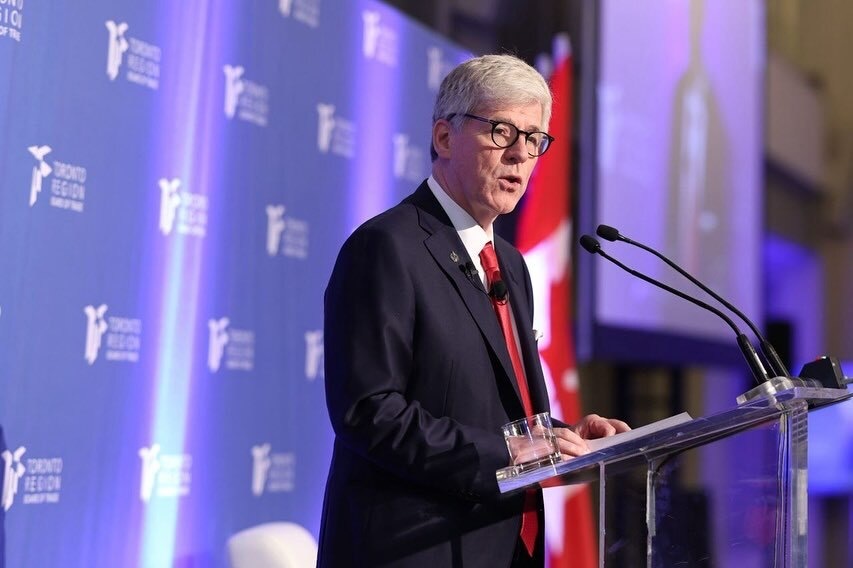
Canada’s Energy and Natural Resources Minister Tim Hodgson. Credit: NRCan

Canada will focus on securing supplies of critical minerals when it hosts its Group of Seven partners this week at a meeting of energy and environment ministers in Toronto, Natural Resources Minister Tim Hodgson said in an interview on Tuesday.

G7 countries, except Japan, are heavily or exclusively reliant on China for a range of materials from rare earth magnets to battery metals.

“We will see this week many examples of us moving beyond talks to firm commitments to fund several types of tools (to secure critical minerals),” Hodgson said. The G7 meeting will be held from October 30 to October 31.

Earlier this year G7 officials met in Chicago and discussed price floors backed by government subsidies, which the US recently introduced to encourage domestic production of critical minerals.

Canada will also aim to cement offtake agreements, or financing deals where a buyer agrees to purchase a producer’s output in the future for a predetermined price.

“What you will see on Friday is a number of concrete announcements demonstrating that a multilateral approach to securing supply chains and energy supplies works,” Hodgson sai

He said Canada intended to be a leader in securing supply chains for all of its key allies, to reduce reliance on China. Canada produces several critical metals such as nickel, copper and cobalt.

Some of the announcements expected this week from the G7 meeting will be on stockpiling of critical minerals and investments in new mining and processing operations, Hodgson said.

US President Donald Trump called off trade talks with Canada this week that had been focusing on US tariffs on Canadian steel, aluminum and autos. Hodgson reiterated that Canada and the US had also been in talks over the revival of the Keystone XL oil pipeline as part of an eventual deal, but said it was unclear when both countries would re-engage on the issue.

“When the Americans are ready to talk, we are ready to talk,” he said.

(By Divya Rajagopal; Editing by Caroline Stauffer and Mark Potter)

US official meets mining executives in Brazil to discuss rare earths
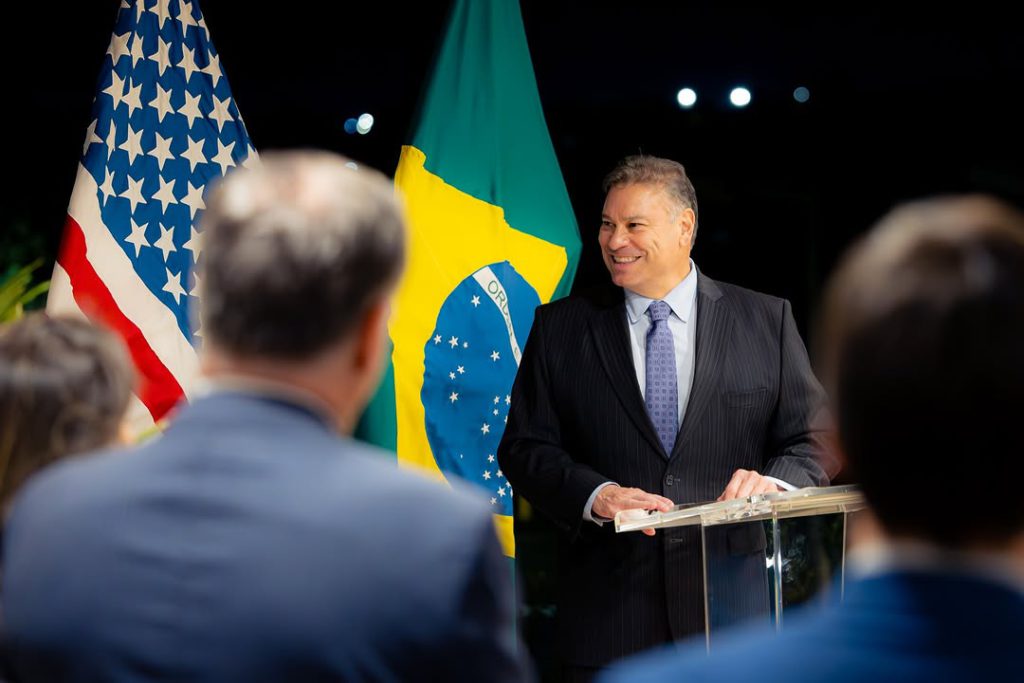
US Charge D’Affaires in Brazil, Gabriel Escobar. Credit: embaixadaeua | Instagram

The US Charge d’Affaires in Brazil, Gabriel Escobar, held meetings with mining executives during an industry event on Tuesday to discuss rare earths, three sources familiar with the matter said.

The meetings were held on the sidelines of an event in Salvador, in the northeastern state of Bahia, according to the sources, who spoke on condition of anonymity.

The topic of rare earths is expected to be raised in negotiations between the US and Brazil aimed at removing tariffs imposed by President Donald Trump on Brazilian goods.

The discussions also indicate how the US is working to find alternative suppliers amid trade disputes with China, which dominates the rare earths market, one of the sources said.

According to this source, who attended the meeting, Escobar discussed partnerships that could be formed between US companies and miners already operating in Brazil to explore rare earths.

Despite little production, Brazil has vast reserves of these minerals, which are essential for high-tech equipment manufacturing.

Another source said Australia’s St George Mining, which has a rare earths project in Minas Gerais state, was at the meeting with the US official.

Julio Nery, director of mining lobby group Ibram, confirmed that Escobar met with representatives from the sector, but did not provide details about the discussions.

“He already met with Ibram three or four times and requested a meeting with Raul Jungmann,” Nery added, referring to Ibram’s president.

(By Lisandra Paraguassu, Marta Nogueira and Fernando Cardoso; Editing by Natalia Siniawski and Jamie Freed)

Malaysia’s ban on raw rare earths exports remains despite US deal
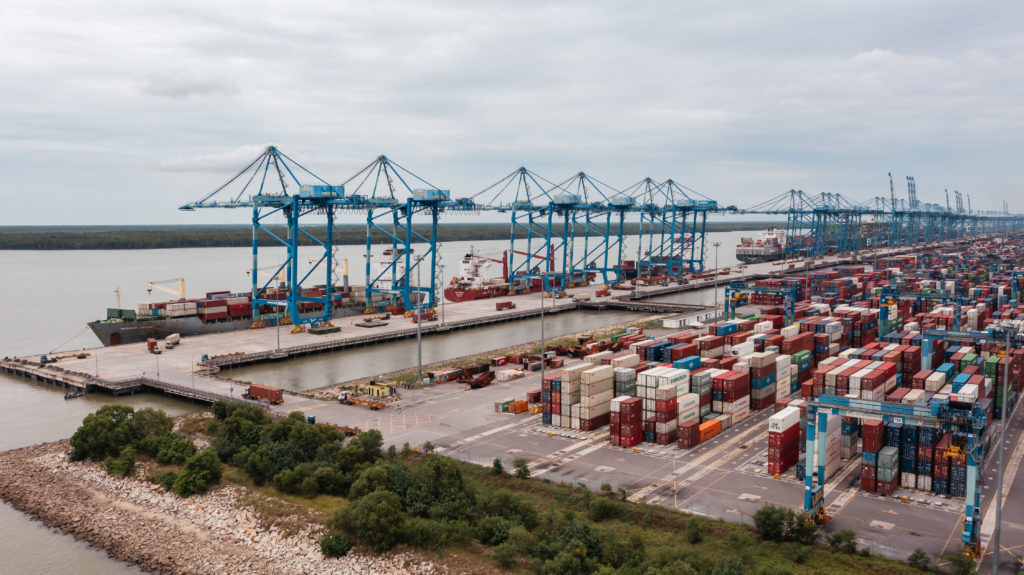

Klang, Malaysia. Stock image.

Malaysia will maintain a ban on the export of raw rare earths to protect its domestic resources, despite signing a critical minerals deal with the United States this week, the trade minister said on Wednesday.

Speaking in parliament, Minister Tengku Zafrul Aziz dismissed allegations that Malaysia will allow the export of critical minerals and rare earths to the United States in pursuit of immediate profits or strategic goals.

“We no longer want to be a country that only digs and ships out cheap raw materials like in the past,” Tengku Zafrul said, reiterating that Malaysia will instead encourage foreign investment and technology sharing for the mining and processing of raw rare earths.

“Our policy is not to prevent trade forever,” he said. “Our policy is to prevent the export of cheap unprocessed raw materials so that value is added to Malaysia.”

Malaysia has some 16.1 million metric tons of rare earth deposits, according to government estimates, but lacks the technology to mine and process them. Rare earth materials are essential for high-tech manufacturing, including electric vehicles, semiconductors and missiles.

Reuters reported earlier this month that Malaysia was in talks with China on rare earths processing, saying Malaysian sovereign wealth fund Khazanah Nasional would partner with a Chinese firm to build a refinery in Malaysia.

The United States signed separate deals with Malaysia and Thailand during US President Donald Trump’s visit to Kuala Lumpur on Sunday, seeking cooperation to diversify critical minerals supply chains amid competing efforts from China.

According to a joint statement by the United States and Malaysia, the Southeast Asian country agreed to refrain from banning or imposing quotas on exports of critical minerals or rare earth elements to the United States.

(By Danial Azhar; Editing by David Stanway)

EU urged to boost critical minerals push amid China curbs
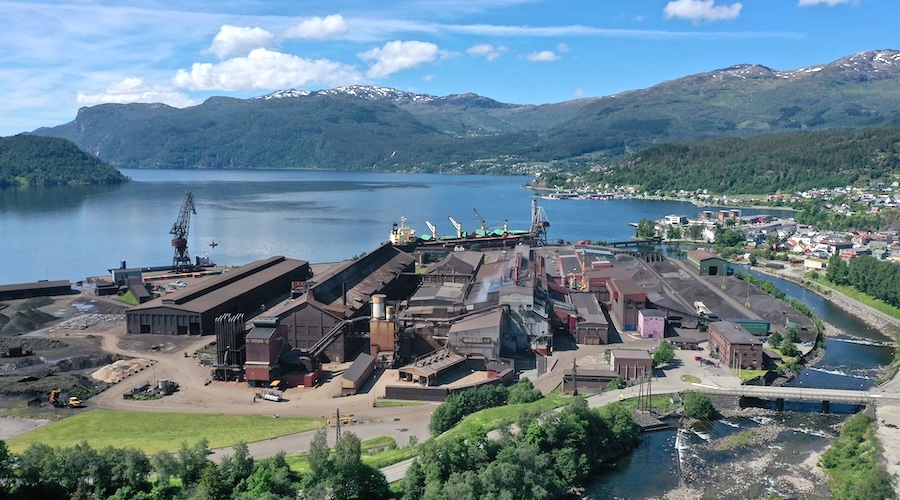

Eramet manganese alloys smelter in Sauda, Norway. (Image courtesy of Eramet.)

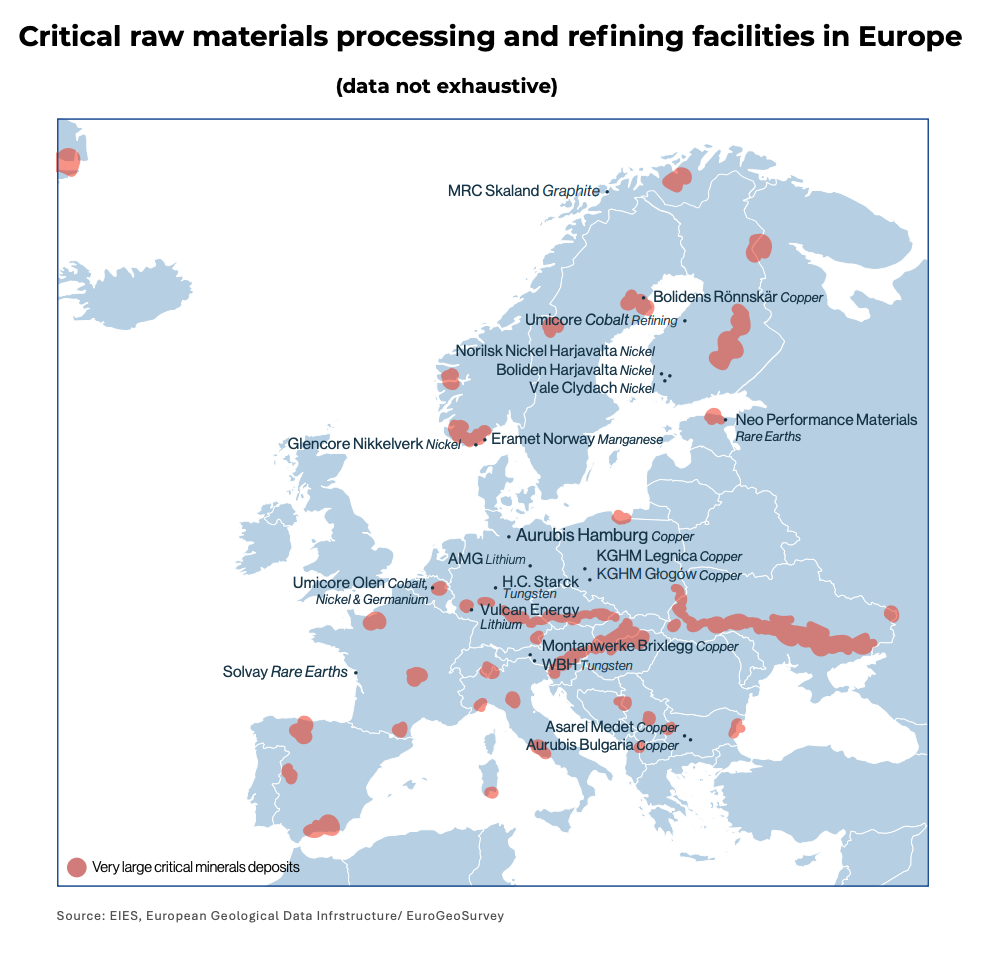
The European Union must ramp up support for its critical minerals sector and allow greater state intervention to counter China’s rare earth export curbs, the European Initiative for Energy Security (EIES) said Wednesday.

In a new report, the EIES urged the EU to earmark “substantial, dedicated” funding for critical minerals in its next budget, drawing from existing energy and decarbonization lines. The group warned that Europe risks falling behind China and the United States, both of which are advancing state-backed mineral strategies.

“As China and the US pursue capital-backed political critical minerals agendas, the absence of a comprehensive European financial architecture exposes the continent’s limitations in catalyzing necessary investment in critical mineral value chains,” the report says.

Europe’s limited mining and refining capacity leaves it vulnerable as Beijing tightens exports of materials vital for both defence and clean technology, from magnets and batteries to wind turbines. China’s restrictions come as the EU steps up rearmament in response to Russia’s war in Ukraine.

To close the investment gap, the EIES proposed creating a European Minerals Investment Network (E-MIN) — a permanent platform connecting investors, industrial buyers, and project developers across Europe and allied nations. The network would coordinate financing and risk-sharing, bridging the divide between policy goals and private-sector appetite for risk.
EU urged to boost critical minerals push amid China curbs
Taken from: Resources for Europe: Financing critical mineral supply chains.

“We can no longer afford a piecemeal approach,” executive director Albéric Mongrenier said in a statement. “E-MIN would turn policy ambitions into impactful projects and secure Europe’s strategic autonomy.”

EIES Head of Research and Policy Petya Barzilska added that even sound projects struggle to close due to financial, political, and regulatory barriers. Greater transparency and coordination, she said, would help build trust and unlock capital for these critical supply chains.

Need to match rivals

The group called on European institutions such as the European Bank for Reconstruction and Development and the European Investment Bank to take larger equity stakes in mining projects, following the US government’s recent investment in rare earths producer MP Materials (NYSE: MP).

China tightened its grip on rare earth exports in April, adding seven elements and related products to its control list. Exporters must now secure government licences regardless of the buyer’s nationality, leading to customs delays and growing concern among EU manufacturers.

In response, Brussels has identified 13 strategic projects to source critical minerals from outside the bloc and plans to build a strategic reserve modelled on its oil and gas stockpiles. Yet implementation has lagged, prompting EIES’s call for immediate, coordinated financial action.

 

Mali revokes over 90 mining exploration permits

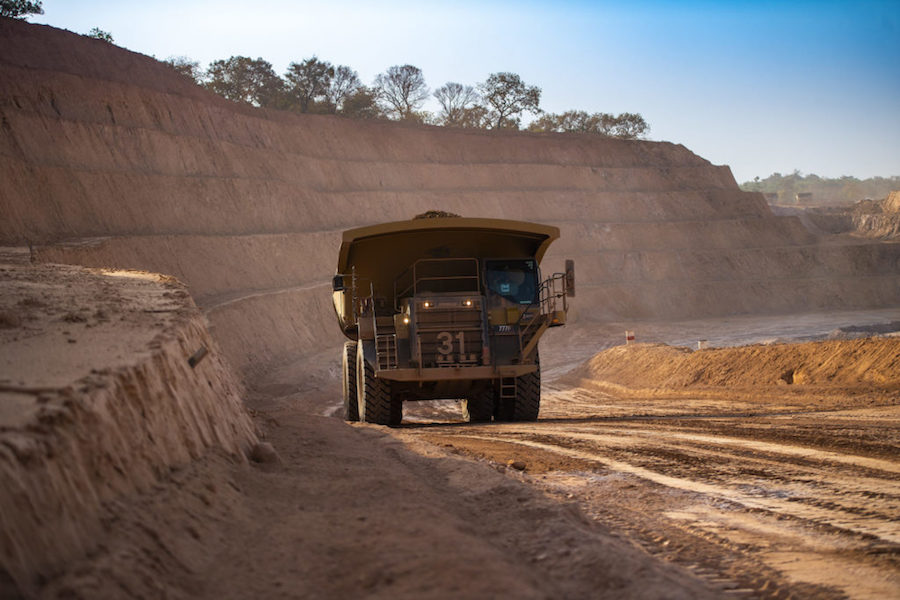
Resolute’s Syama gold mine in Mali. Credit: Resolute Mining

Mali has revoked more than 90 mining exploration permits, including those held by subsidiaries of international mining companies, according to an official decree seen by Reuters.

Companies affected include local subsidiaries of Harmony Gold, IAMGOLD, Cora Gold, Birimian Gold and Resolute Mining.

The decree does not give reasons for the revocations but states that all rights conferred by the permits are “released”, and the areas covered by them are now open for reallocation.

The Ministry of Mines did not immediately respond to a request for comment.

Permit purges, tougher rules

Guinea and several other African countries have recently reformed their mining sectors, cancelling dormant or non-compliant permits. Some have also introduced tougher regulations to boost earnings from natural resources, part of a broader push to tighten oversight and reclaim control over strategic assets.

Mali’s decree, signed by Mines Minister Amadou Keita on October 13 and reviewed by Reuters on October 29, cancels permits issued between 2015 and 2022 for the exploration of gold, iron ore, bauxite, uranium, rare earths and other minerals.

The decree lists the affected permits by number and location but does not specify the total area covered or the estimated value of the exploration activities.

It also does not clarify whether affected companies will be allowed to reapply or appeal.

Cora Gold told Reuters that it relinquished the affected permits over two years ago and had not received formal notice. It added that the delayed cancellation had no impact on its operations and did not warrant a response.

Harmony Gold, IAMGOLD, Birimian Gold and Resolute did not immediately respond to requests for comment.

Mali is one of Africa’s top gold producers, with mining a major source of revenue and exports, though recent regulatory crackdowns and insecurity have disrupted foreign investment.

Industrial gold output is projected to fall short of its 2025 target due to disruptions at Barrick’s Loulo-Gounkoto mine, the country’s largest gold asset.

The military-led government has recently moved to deepen ties with Russia through energy and mining agreements, including a deal to supply 160,000 to 200,000 metric tons of petroleum and agricultural products amid an Islamist militants-imposed fuel blockade that has crippled transport and forced nationwide school closures.

The agreement follows earlier Russian-backed initiatives in Mali’s mining sector, such as joint ventures in gold, uranium and lithium, and the construction of a state-controlled gold refinery in Bamako.

(Reporting by Mali newsroom; Writing by Maxwell Akalaare Adombila; Editing by Mark Potter)


Interferry Welcomes New Board Directors, New President and New Chairman

Interferry

Published Oct 28, 2025 7:18 AM by The Maritime Executive

[By: Interferry]

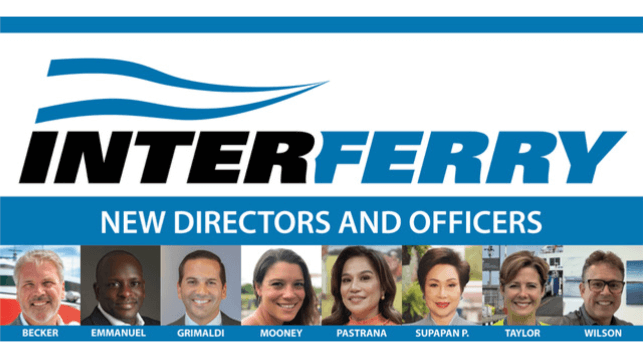
Interferry Strengthens Global Representation with Six New Board Directors, new President, and Welcomes New Chairman - Götz Becker of FRS.

Interferry, the global association representing the ferry industry, announces the appointment of six new members to its Board of Directors. Now more than ever, these new director appointments, approved at the Annual General Meeting (AGM) in Sorrento on 6 October, reflect the diversity and global reach of the ferry industry. Furthermore, Götz Becker of FRS was appointed Chairman of the Board.

The newly appointed directors, each approved for a four-year term, bring diverse operational, geographical and professional experience to the Board:

  • Oluwadamilola Emmanuel, General Manager, Lagos State Waterways Authority, and Interferry’s first African Director, is an experienced leader passionate about leveraging innovative solutions to connect communities and ensure environmental sustainability.
  • Guido Grimaldi, Corporate Commercial Director Short Sea Shipping, Grimaldi Group and currently also serving as President of the Association for Sustainable Intermodal Logistics (ALIS).
  • Morgan Mooney, CEO, San Juan Clipper/CNI Newco + Fire Island Marine Services, joins Interferry as third-generation maritime professional and active member of the American Passenger Vessel Association.
  • Mary Ann Pastrana, Executive VP, Archipelago Philippine Ferries Corporation and as such committed to transforming inter-island travel in the Philippines.
  • Katy Taylor, CEO, Wightlink, UK, is a seasoned executive with extensive experience in international passenger transport and customer strategy.
  • Mark Wilson, CEO, Bay Ferries Limited/Northumberland Bay Ferries Limited, a naval veteran with over 30 years of experience in the marine and maritime profession.

In addition to the new directors, Götz Becker of FRS was appointed new Chairman of the Board. Furthermore, the Board welcomed Mrs. Supapan Pichaironarongsongkram of Chao Phraya Express Boat Co., Ltd., as the new President of Interferry for the next year, taking over from Guido Grimaldi.

Interferry extends its sincere thanks and appreciation to the outgoing directors whose terms concluded at the AGM: Christopher “Chet” Pastrana and Emanuele Grimaldi, as well as outgoing Chair Tim Mooney. All have been highly valued members of the Board, providing outstanding dedication and commitment to the association and the industry.

Interferry CEO Mike Corrigan expressed enthusiasm for the Board's new composition: “I am proud to say that these new directors enhance the Board’s representation of the global ferry industry, as Interferry continues to expand its world-wide presence,” said Mike Corrigan. “The depth of experience, and breadth of geographical and diverse representation is a tremendous asset.”

Corrigan continued: “On behalf of the entire Interferry organization, I would like to congratulate and welcome Götz Becker as our new Chair. We look forward to working with Götz as we continue delivering on our current strategic plan and plan for an even more vibrate future, as we approach the 50th jubilee year of Interferry in 2026.” 

Following a record-breaking annual Interferry Conference in Sorrento in October 2025, Interferry now prepares for its 50th Anniversary Conference to be held in Bangkok in 2026.

The products and services herein described in this press release are not endorsed by The Maritime Executive.


Samsung Heavy Celebrates Maiden Voyage of Designed-in-Korea LNG Tank

SHI
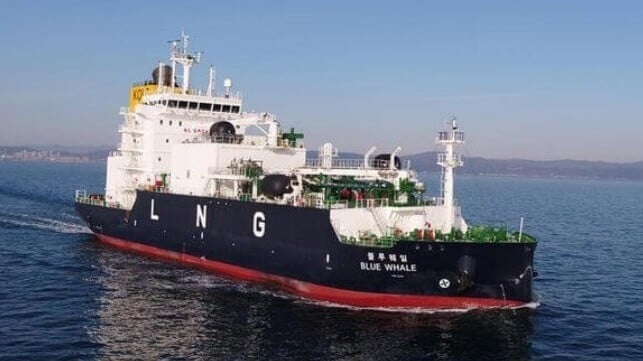
SHI's Blue Whale, a different but similarly-sized LNG vessel with the KC-2C membrane system (Ministry of Trade, Industry and Energy file image)

Published Oct 27, 2025 10:06 PM by The Maritime Executive


South Korea's shipbuilding industry is taking another swing at a domestically-designed LNG containment tank system, hoping to circumvent the steep licensing fees charged by French engineering firm GTT. The first LNG carrier to sail with the newly redesigned Korean tank system has completed its maiden voyage, and shipyard Samsung Heavy Industries hailed it as a major milestone towards commercialization. 

LNG containment tanks are hard to design and execute properly, and Korean yards have made a specialty out of their ability to build them. But the shipyards do not own the intellectual property behind the most accepted and efficient membrane tank technology, GTT's stainless steel liner and insulation layer system. There are few alternatives: older Moss-type spherical tanks are less space-efficient and are not used in modern construction, and homegrown alternative designs are tough to master. The tanks have to withstand cryogenic temperatures of -260 degrees Fahrenheit, and they cannot leak. 

National LNG shipbuilding programs have a mixed history. An early push in the United States resulted in the delivery of 16 new hulls in the late 1970s, but three - Methane Delta, Epsilon and Zeta, built at Avondale - ended up sidelined because of tank problems. One was scrapped, and the other two were converted into bulkers. 

South Korea's first attempt at a membrane tank system, the KC-1, also ended poorly. In 2018, Samsung Heavy constructed two full-size LNG carriers with a new tank designed by Korea Gas, and delivered them to shipowner SK Shipping. The vessels quickly developed "cold spots" - insulation flaws - that could not be resolved despite repeated attempts at repair. The two ships had to be removed from service, and SK Shipping eventually won hundreds of millions of dollars in arbitration claims against Samsung and Korea Gas. 

Undeterred, Samsung Heavy Industries forged ahead with a new design, the KC-2C. It has a strong incentive for perseverance: for each LNG carrier built in Korea, GTT charges about five percent of the ship's price, adding up to billions of dollars in royalty payments that would otherwise stay in the shipyard's coffers. Samsung has developed a technological edge in the race: it is reportedly using high-spec welding robots to assemble the interior tank membrane panels, removing the variable of human skill level. 

This time, SHI started small with a trial-scale tank on an LNG bunkering barge, the Green Nuri. It then built and delivered the Blue Whale, a small LNG bunkering ship with a tank volume of 7,500 cubic meters - about four percent of the size of a standard seagoing LNG carrier. This week, Samsung Heavy announced that shipowner Korea Line has completed the maiden voyage of another 7,500 cubic meter vessel, transporting a cargo from Tongyeong to Jeju, a short coastwise transit of about 120 nautical miles. The long-term objective is to scale the technology up to construct a full-size 174,000 cubic meter vessel and compete head-to-head with GTT-equipped hulls on the global market. 


Panama Canal Begins Process to Select Operator for New Terminals

Panama Canal presentation
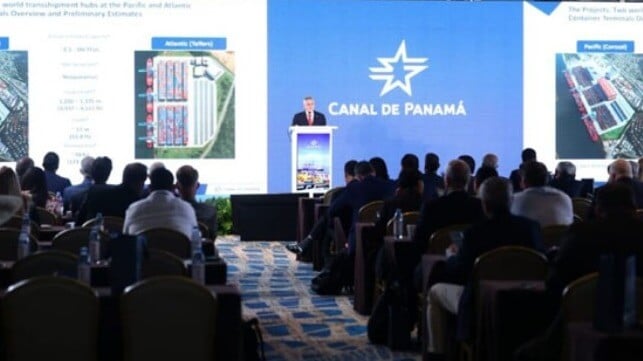
Panama Canal presenting its plan for the new container terminals (ACP)

Published Oct 28, 2025 6:09 PM by The Maritime Executive


The Panama Canal has launched what is expected to be a year-long process to select the operators for new terminals to be built at each end of the canal. At the same time, the authorities are considering the alternative for the existing terminals, which are operated by Hong Kong’s CK Hutchison and which became embroiled in the geopolitical disputes between China and the United States.

Plans were announced for the potential development of a terminal at each end of the Panama Canal, which the officials said would increase container transshipment capacity by 5 million TEU annually. They position the project as designed to enhance the competitiveness of Panama as an intermodal hub and to increase port capacity, while it also responds to the pressures from the United States. Donald Trump has repeatedly asserted that China controls the Panama Canal.

The Panama Canal Company reports that 22 of the leading companies in terminal operations and major container carriers attended a recent presentation on the plans for the new terminals. Participating were the major terminal operators, including APM Terminals, Cosco Shipping Ports, CMA Terminals, DP World, Hanseatic Global Terminal (HAPAG), MOL, PSA International, SSA Marine-Grupo Carrix, and Terminal Investment Limited (MSC).

Major carriers also attended the presentation. Panama reports that CMA CGM, ONE, Evergreen, Hapag-Lloyd, HMM, Maersk, MSC, OOCL, COSCO, Yang Ming, and Zim were represented. Also present was the Port of Houston.

Panama envisions completing the selection process in the fourth quarter of 2026. It will include a prequalification of the bidders and dialogues with the companies.

They will also be conducting a market and feasibility study for each of the terminals, which would be located in Balboa and Cristobal. The studies will inform the general project plan and ultimately the selection of the concessionaire. They estimate the cost of the two terminals will be $2.6 million.

Panama currently has five terminals, which combined handle more than 9 million TEU annually. However, the focus has been on the two operated by CK Hutchison, which received a 25-year extension of its concession in 2021.

In addition to the political focus on the Chinese-operated terminals, there is a legal challenge pending in Panama’s Supreme Court filed by the country’s attorney general. They assert the concession is illegal because of the no-bid process by which it was awarded. Hutchison has defended its concession, reporting that it is meeting all the obligations and investing in the operations.

Officials of the Panama Canal Company report they are planning for the potential that the concession is voided, in which case they would step in as the interim operator to maintain the supply chain. In this case, they expect a new bidding process would take 12 to 18 months to award a new contract. They, however, hold out the possibility that a deal can still be reached with CK Hutchison, which earlier this year proposed to sell the concession to a partnership led by U.S.-based BlackRock with investment from MSC’s Terminal Investment Limited. Negotiations were underway to save the deal by having COSCO take a position in a new partnership for the terminal portfolio.


With Dredging Complete, Port of Mobile Gets Container Terminal Expansion

APMT Mobile
Courtesy Alabama Port Authority

Published Oct 28, 2025 5:42 PM by The Maritime Executive


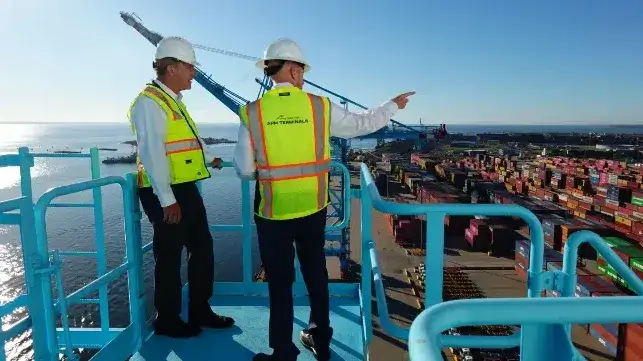
Hot on the heels of the completion of Port of Mobile's channel dredging project, Maersk-owned APM Terminals has agreed to build a new 1,300-foot container berth at its facility at the seaport, adding enough room to handle another ULCV alongside. The additional space will leverage the new channel to handle the largest boxships that call in the United States, enhancing Mobile's competitiveness. 

The dredging project formally wrapped up last month, thanks to $366 million in funding from the federal government (secured by former Sen. Richard Shelby) and from the State of Alabama's new gasoline tax fund. The project took the channel to a control depth of 50 feet, making it the deepest on the U.S. Gulf coast, and added a passing lane. The objective was to make Mobile directly competitive with West and East Coast ports that can handle fully-laden post-Panamax boxships on their "first call," when they are drawing up to 50 feet of water. 

APMT's terminal project (and a long list of additional improvements) will enable those port calls at scale. The $131 million project is co-funded by federal dollars, and will allow a total of three large boxships at the terminal at a time. Construction should begin next year and be completed in 2028. Together with other ongoing improvements, the berth will bring AMPT Mobile's nameplate capacity to about 1.4 million TEU per year. 

The firm is also building out a 33-acre container yard expansion, a rail capacity upgrade, and construction of a rail bridge that will set the terminal up for on-dock rail access. All of the work is underpinned by a 20-year lease extension that takes APM's tenure at Mobile out to 2058. 

“This expansion is about more than infrastructure - it’s about cementing Mobile’s position as the Gulf’s premier container gateway,” said Doug Otto, Interim CEO and Director of the Alabama Port Authority. “With the channel deepening complete, a new berth underway, the Phase IV expansion in progress, and APM Terminals’ continued partnership, we’re connecting businesses across Alabama — and across the nation — to global markets faster and more efficiently than ever before.”
 

Hanwha Teams Up With American Swarming-Boat AI Startup Havoc

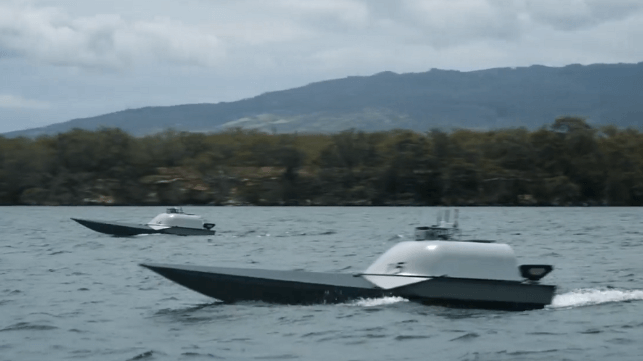
Swarming boats
Courtesy Havoc AI

Published Oct 28, 2025 11:17 PM by The Maritime Executive


Korean shipbuilding conglomerate Hanwha Ocean is actively working to expand its presence in the American defense market, starting with the acquisition of Philly Shipyard last year and continuing with its plans to acquire a strategic stake in Austal, the owner of defense shipbuilder Austal USA. It has now announced a partnership with drone boat hardware and software startup Havoc AI, the maker of a collaborative autonomy stack that is designed to run on any vessel platform. 

Havoc's software can control multiple vessels at once for collaborative combat and logistics missions, like convoy operations for ship-to-shore resupply missions in contested environments (autonomous sustainment). It has tested out its systems in the Pacific in trials for the U.S. Navy, with positive results. The idea is to obtain "task force"-like behavior from a group of unmanned surface vessels while keeping them under the command of a single individual. In addition to its software systems, Havoc has three physical vessel designs - two small craft and one larger 100-foot contender for the MUSV unmanned-vessel program (since renamed MASC). 

On Tuesday, Havoc AI's CEO visited Hanwha's yard in Geoje and demonstrated a long-distance, remotely-controlled trial of its vessel technology from the site in Korea. The partnership offers something for both sides: Havoc gains access to a deep reservoir of manufacturing expertise, as well as Hanwha's naval Combat Management System (CMS) and system integration experience; while Hanwha gets exposure to cutting-edge naval autonomy tech. 

“We will leverage Hanwha Systems’ CMS and naval platform integration strengths, along with intra-group synergies, to work with Havoc AI and make tangible inroads into the global maritime unmanned systems market spanning Korea and the United States,” said Ryu Moon-Ghee, head of the Naval Business Division at Hanwha Systems.

Havoc AI's swarming technology sets it apart in an increasingly crowded field of unmanned maritime systems. The most successful operator of drone boat technology, Ukraine's HUR intelligence service, has leveraged multi-boat attacks to great success; AI swarm control would make that approach easier. In Hanwha, Havoc has found the only Korean partner company with a shipyard and workforce on U.S. soil. The combination may place them well for competitions to provide the next generation of autonomous craft for the U.S. Navy, one of the service's top acquisition priorities.