Wednesday, October 29, 2025


Japan Tells Trump Tokyo Will Struggle to Ban Russian LNG Imports

Japan’s newly elected Prime Minister, Sanae Takaichi, told U.S. President Donald Trump at their meeting in Tokyo earlier this week that Japan would find it difficult to ban LNG imports from Russia, Japanese government officials told Reuters on Wednesday. 

President Trump visited Japan earlier this week and held bilateral talks with Takaichi and other top Japanese officials. The two leaders praised a new “golden age of the ever-growing U.S.-Japan Alliance” and signed a framework agreement to support the mining and processing of critical minerals and rare earths, as they seek to counter the dominance of China in the sector. 

However, before the summit, the U.S. began to request Japan to reduce and eventually cut off imports of Russian energy. 

The issue with Japan’s LNG imports from Russia came up during this week’s meeting between President Trump and Takaichi, with Japan’s PM seeking understanding from the U.S. Administration about the Japanese energy security, according to Reuters’ sources. 

Japan imports Russian LNG from the Sakhalin-2 project, in which Japanese firms Mitsui and Mitsubishi hold minority stakes, which they kept even after the Russian invasion of Ukraine, due to the importance of LNG supply for Japan. 

Russian LNG accounts for about 9% of Japan’s total liquefied natural gas imports. 

On the eve of President Trump’s visit to Japan, the U.S. reiterated calls on its allies, including Japan, to stop importing energy products from Russia. 

Japan responded that it would base any decisions about energy imports on its national interests, following the suggestions from the Trump Administration that Japan suspend all purchases of Russian oil and gas. 

The Trump administration has embarked on a pressure campaign against all large importers of Russian hydrocarbons on the grounds that depriving Russia of energy export revenues would deprive it of the financial means to continue fighting the Ukrainian forces.  

By Charles Kennedy for Oilprice.com 


HPCL-Mittal Energy Becomes First Indian Refiner to Halt Russian Oil Imports

Refiner HPCL-Mittal Energy Ltd (HMEL) has become the first Indian oil company to suspend Russian crude purchases following new U.S., U.K., and E.U. sanctions targeting Moscow’s oil majors Rosneft and Lukoil. The move marks a major shift in India’s Russian oil trade, which has surged since 2022.

HMEL, a joint venture between Hindustan Petroleum Corporation Ltd (HPCL) and Mittal Energy, said it receives Russian crude on a delivered-at-port basis—meaning the supplier arranges shipping and logistics, insulating the buyer from potential sanctions breaches. “The company is not aware if any cargoes previously passed through sanctioned vessels,” HMEL said, adding that all deliveries undergo strict due diligence, including vessel history checks and sanctions screening.

The clarification followed a Financial Times report alleging that four recent HMEL shipments involved vessels previously sanctioned by the U.S. Treasury’s Office of Foreign Assets Control (OFAC). HMEL confirmed that the vessel Samadha, which discharged Russian oil at Mundra Port for its Bathinda refinery, was not under sanctions at the time of delivery.

HMEL emphasized that its operations serve India’s domestic energy needs, with no exports to the U.S., U.K., or E.U. It said it had “suspended further Russian crude purchases pending completion of outstanding orders,” and would continue to align with government policy and international compliance frameworks.

The suspension follows Washington’s latest sanctions on Rosneft and Lukoil, which together account for over half of Russia’s oil output and more than two-thirds of Indian Russian oil imports. Industry officials say the curbs could sharply reduce India’s intake of Russian barrels, which supplied over 35% of India’s crude imports in 2025.

 India’s largest refiners, Indian Oil Corporation (IOC) and Reliance Industries (RIL), have also signaled full compliance with international sanctions. While New Delhi continues to oppose unilateral sanctions in principle, refiners and banks are expected to act with caution to avoid exposure to secondary U.S. sanctions, which can restrict access to dollar transactions and global financial systems.


India's Biggest Refiner Partners with World's Top Crude Trader

India’s biggest refiner, state-held Indian Oil Corporation Ltd, is preparing to launch in early 2026 a trading joint venture with the world’s biggest independent oil trader, Vitol, to trade crude and fuels, a source familiar with the plans told Reuters on Wednesday. 

Indian Oil, which together with its unit Chennai Petroleum holds about 31% of all of India’s refining capacity, had discussed a venture with supermajors BP and TotalEnergies and commodity trading giant Trafigura, before picking Vitol for the new trading JV, according to the Reuters source. 

The Indian Oil-Vitol joint venture will be based in Singapore and will operate for a 5 to 7 year period initially. Each of the two joint venture partners will have an exit clause in the agreement, the source told Reuters. 

The rationale behind the JV deal is that Indian Oil looks to reduce costs for procuring crude on the spot market and boost margins by accessing new buyers, the source added. 

Indian Oil expects to need larger crude volumes via established trading channels as the refiner and other state-controlled refiners in India plan to boost their crude processing capacity over the next decade to meet rising fuel demand in the world’s third-largest crude oil importer. 

The Vitol partnership could also become vital for Indian Oil in the near term as the U.S. sanctions on Russia’s top oil companies have stalled crude buying from Russia at Indian refiners, who are halting new orders for Russian crude while awaiting clarity from the government about navigating the new U.S. sanction context. 
Earlier this week, Indian Oil said it will fully comply with international sanctions related to crude oil imports from Russia. 

“We will abide by all sanctions imposed by the international community,” IOC Chairman Arvinder Singh Sahney said on Monday, without commenting directly on the company’s ongoing purchases of Russian crude.  

By Tsvetana Paraskova for Oilprice.com

 ALBERTA GOVT  BACK TO WORK LEGISLATION ENDS TEACHERS STRIKE 

A Dark Day for Democracy


Dear friends,
 
I write to you this morning tired and with a heavy heart. 
 
I was in the legislature until the early hours of this morning as the UCP rammed through Bill 2, the Back to School Act. 
 
Bill 2 forces teachers back into underfunded and overcrowded classrooms and violates their right to collective bargaining.

Bill 2 also includes, for the first time in Alberta’s history, preemptive use of the notwithstanding clause to bypass charter-protected rights of Albertans. 
 
Not only did the UCP invoke the notwithstanding clause, they repeatedly used closure motions to end debate on the legislation, to ensure it passed in one evening. The use of these undemocratic legislative tools marks an absolutely shameful first for our province.   
 
And so, we woke up today to a new reality in Alberta. We are living under a government that has openly defied charter rights and abused their legislative power. We are living under a government that has overtly valued power over human rights, prioritized control over dialogue, and has demonstrated once again, that they just don’t care about public education. 

Speaking up against Bill 2, the Back to School Act, in the chamber late last night.

You can watch some of my remarks by clicking here.


And while the legislation was shocking and unprecedented, I am so sad to think about the students and teachers who are returning to classes on Wednesday to the same broken system.

Very little has changed. Alberta is still the lowest funded education system in the country. There are no class size caps and not enough space. There is virtually no support for students with special needs, and teachers continue to shoulder the burden of this chronically underfunded system. None of this is ok.  
 
And so yes, I’m tired today. Teachers, students, and parents are tired. Albertans are tired. 
 
But do not mistake our collective fatigue for weakness. We may be tired, but we’re not dejected. We’re angry, but not ambivalent. We are outraged, but not unresolved. 
 
I feel unequivocally committed to this fight, and I know you are too.

Throughout the teachers’ strike, I have seen Albertans rising up like never before. Students are organizing, Albertans are attending enormous rallies at the legislature, my inbox is flooded with hundreds of emails everyday advocating for education, and so many Albertans who’ve never been involved in politics before are reaching out for the first time
 
And so my friends, while yesterday was a dark day; we persist. And we resist. Now is the time to get involved and get loud. Write to the Premier and Education Minister, talk to your friends and family, donate, find a way to volunteer
 
Because kids deserve better, our teachers deserve better, Albertans deserve better. And better is possible.
 
As always, my door (and inbox) are always open.
 
Take care of yourselves and each other,
 
Janis


Chinese firms drive aluminum expansion in Indonesia, raise surplus fears

A major expansion of aluminum production in Indonesia driven by Chinese companies is expected to push the global market into a surplus next year, which will lower prices of the metal widely used in the transport industry.

Three new Chinese-backed smelters are nearing completion there, including Xinfa–Tsingshan’s Juwan in Weda Bay and Taijing in the Indonesia Morowali Industrial Park, and the Adaro–Lygend Kaltara project in North Kalimantan.

Indonesia exported 325,293 metric tons of aluminum between January and August this year, up 67% from the year-ago period, compared with 10,713 tons in the first eight months of 2023, according to Trade Data Monitor.

“The pace of Indonesian supply growth is going to play a key role in shaping aluminum market balances and prices,” said Ross Strachan, analyst at consultancy CRU.

Primary production of aluminum, also used in construction and packaging, is estimated to exceed 72 million tons this year.

Goldman Sachs projects a global aluminum market surplus of 1.5 million tons in 2026 and 2 million tons in 2027, with Indonesia’s primary production rising from 815,000 tons in 2025 to 1.6 million tons in 2026 and 2.5 million tons in 2027.

“The new supply coming from Indonesia effectively resolves the global supply gap that we previously saw forming as China reaches its smelting capacity cap, at least for this decade,” the bank said in a note earlier this month.

Goldman forecasts aluminum prices falling to $2,350 per metric ton in the fourth quarter of 2026, above the 90th percentile of estimated smelter costs. This means that 90% of aluminum smelters are expected to produce at a cost below that level, so if prices stay above it, most smelters remain profitable.

Three-month aluminum on the London Metal Exchange was trading around $2,873 a metric ton on Monday.

Macquarie expects Indonesia’s primary aluminum production to push the market into a 390,000-ton surplus next year.

However, Macquarie sees a return to deficits longer term as China hits its capacity cap and demand rises.

China’s aluminum output is nearing its mandated cap of 45 million tons, placing a limit on future growth.

(By Ashitha Shivaprasad; Editing by Pratima Desai and Richard Chang)

Kumba hauls more iron ore to port as rail performance improves

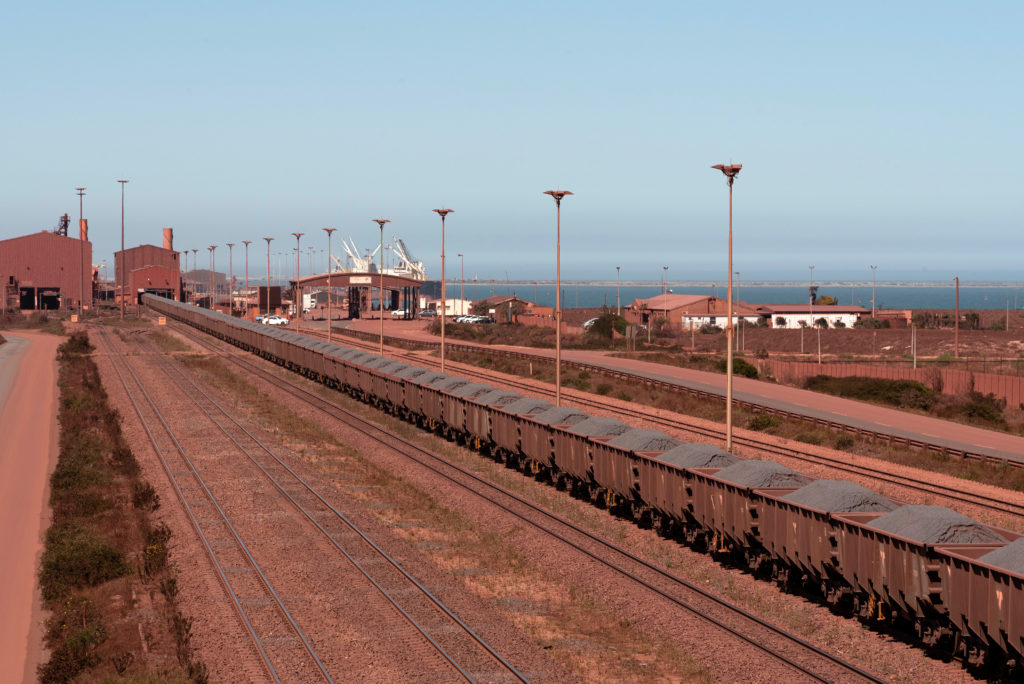
Saldanha Bay, West Coast, South Africa. Stock image.

South Africa’s Kumba Iron Ore on Tuesday reported a 12% increase in mineral railed to port in the September quarter on the back of improvements in freight rail performance, boosting quarterly sales volumes by 7%.

The Anglo American unit delivered 10.2 million metric tons to Saldanha port in the quarter, compared to 9.1 million metric tons during the same period last year.

As a result, Kumba’s total sales increased to 9.6 million metric tons in the quarter, from 9 million metric tons previously.

Kumba, Africa’s biggest iron ore miner, said in a production update that the improvements on the freight rail network were mainly due to the ongoing collaboration between bulk mineral producers and state-owned logistics firm Transnet to restore the ore export corridor.

The improved rail performance resulted in Kumba’s on-mine iron ore stockpiles reducing to 5.5 million metric tons, from 6.4 million metric tons in June. The stockpile at the port increased to 1.8 million metric tons at the end of September, from 1 million metric tons in June.

Transnet’s struggles, blamed on under-investment as well as cable theft and vandalism of its infrastructure, have forced miners such as Kumba to curb their production to match the logistics firm’s diminished capacity.

Transnet reported a 5% increase in its freight volumes after moving 160 million metric tons in the year ended March 2025. It targets hauling 180 million metric tons in the current financial year.

Kumba expects its annual sales to be closer to the upper end of its unchanged sales and production forecast between 35 million and 37 million metric tons.

(By Nelson Banya; Editing by Conor Humphries)


Colombia to buy gold from small miners to curb illegal trade

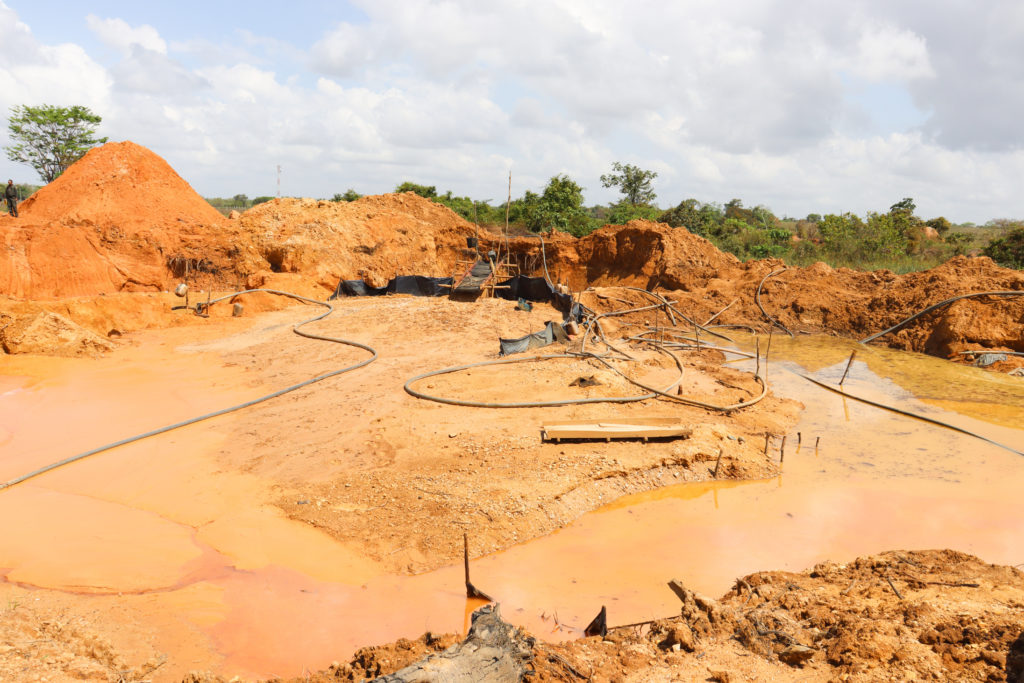
Small-scale in Colombia. Stock image.

Colombia’s government plans to start purchasing gold directly from small-scale producers in a bid to curb illegal activity and formalize an unregulated mining boom fueled by surging prices.

Government agencies including the tax and mining authorities will coordinate the effort starting in November, following an order from President Gustavo Petro, Mines and Energy Minister Edwin Palma wrote in an X post.

Illegal gold mining and trafficking in South America is surging along with bullion prices, which are up about 50% this year largely due to central bank purchases. In Colombia and Peru — top growers of the plants used to make cocaine — illegal gold is estimated to generate more money for organized crime than the drug trade itself. About 80% of all gold sold in Colombia comes from informal or illegal operations, Palma wrote. The impact on forests, rivers and local communities can be devastating.

Colombia’s central bank already buys physical gold, but its strict requirements exclude most informal miners. The new plan would allow other state entities to make purchases, potentially cutting small producers out of criminal supply chains.

Gold acquired under the program will be held by the SAE, which oversees property confiscated from illicit activities. It remains unclear what the SAE will do with the newly acquired gold.

Ecuador and Bolivia’s central banks already buy gold from local miners. In Peru, lawmakers have proposed similar legislation to empower either the central bank or the state-owned Banco de la Nación to make such purchases. Central bank chief Julio Velarde has opposed the idea, warning it could enable money laundering through illegal gold.

(By Andrea Jaramillo and Oscar Medina)


Stake in 186-kg gold cube may be sold in Austrian insolvency

Close-up of the golden cube created by Niclas Castello in Zürich. Credit: Adobe Stock

A stake in a 186-kilogram (410 pound) gold cube is being prepared to be sold by the administrators of insolvent Austrian investor Klemens Hallmann.

The businessman owns a 32% stake in the Castello Cube, created by German artist Niclas Castello, according to Creditreform, a creditors’ protection association. Hallmann’s share of the hollowed out, 24-carat conceptual artwork will be transferred to the restructuring administrator to sell to maximize compensation for his creditors, they said.

Using the current market price of $4,010 an ounce, the value of the gold in the entire cube would be around $23 million. Creditor associations didn’t specify how a sales process would work, or how the stake sale would be impacted by its ownership structure.

The Castello Cube stirred public attention in 2022 when it was placed mysteriously in New York’s Central Park for a day. The artwork, which was not intended to be sold according to its website, has been used to garner attention for an accompanying crypto token launched by Castello.

Hallmann, whose insolvency proceedings as an entrepreneur opened in August, has invested in sectors such as film and real estate. He has also seen the collapse of his real estate developer SÜBA AG into insolvency earlier this year. The company is now in liquidation after it failed to make a payment as part of its restructuring plan.

Creditors of Hallmann could receive an additional payment as part of a “super-quota” dependent on the sales process for his stake in the artwork, according to creditor association KSV1870. The restructuring plan approved by investors as part of the self-administration process otherwise envisages a payment of 35% of their original claim.

A spokesperson for Castello didn’t respond to a request for comment. Hallmann said in a statement that he will “continue to work with full transparency, reliability and consistency on implementing the approved restructuring plan” and his representative declined further comment on the potential sale.

(By Libby Cherry and Mark Burton)


Gold industry sees price rising to near $5,000/oz over 12 months

Stock image.

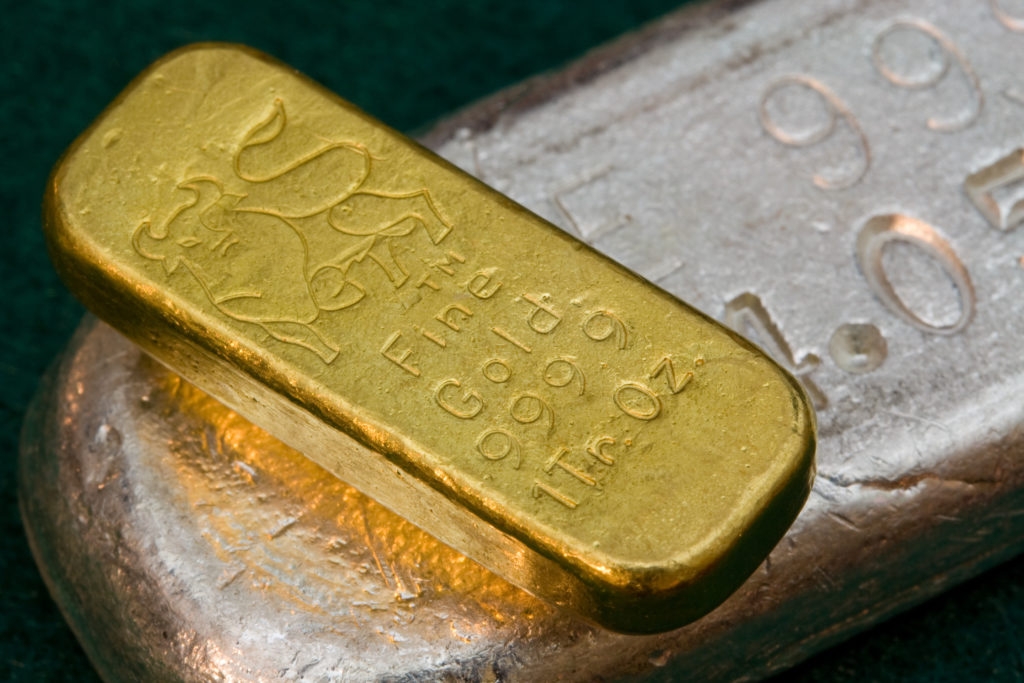
The price of gold is expected to hit $4,980 an ounce over the next 12 months, up some 27% from current levels, delegates to the London Bullion Market Association’s (LBMA) annual gathering in Kyoto predicted on Tuesday.

On track for its biggest yearly rise since 1979, gold’s 52% growth so far this year has seen it break through $3,000 per ounce in March and then $4,000 in October – both seen as psychological resistance levels by market players.

Results of the LBMA poll were gathered in the organization’s annual poll and shown to delegates at the conference.

Fear of missing out

Political tensions, US tariff uncertainty and, more recently, a wave of fear of missing out on the advance saw gold rallying to a record of $4,381 an ounce on October 20.

The LBMA prediction compares with Reuters‘ latest poll of expectations, which delivered a 2026 average gold price forecast of $4,275 on Monday as economic and geopolitical turmoil keep the metal’s safe-haven allure intact.

A poll of delegates from around the world at the LBMA conference also predicted that silver prices would jump to $59 per ounce in a year’s time from around $46 on Tuesday.

Silver rise is most since 2010

Silver prices are up 62% so far this year, the most since 2010, after hitting a record high of $54.5 on October 17 due to strong investment demand, tight supply in the London spot market and elevated purchases in India.

They also forecast that platinum prices would climb to $1,816 an ounce from the current $1,544 and palladium would gain to $1,709 from around $1,364.

Platinum and palladium are up 76% and 54%, respectively, so far this year amid tight mine supply and concerns about the US tariffs, prompting outflows to US stocks.

(By Polina Devitt; Editing by David Holmes)


Seabridge recovers $3.2M after winning BC tax dispute

The KSM gold-copper project, 70 km north of Stewart, B.C. Credit: Seabridge Gold

Seabridge Gold (TSX: SEA) (NYSE: SA) says it has recovered C$4.4 million ($3.2 million) from a British Columbia Supreme Court ruling that reversed a previous decision by the Canada Revenue Agency (CRA) to deny the company’s tax credits for 2010 and 2011.

Toronto-based Seabridge had received a refund for the C$15.8 million ($11.4 million) in exploration expenditures incurred in the two years, which it claimed as qualifying expenses under the BC Income Tax Act that are eligible for tax credits under the BC Mineral Exploration Tax Credits (BC METC) program. However, the CRA later denied the claims, arguing that the expenditures did not meet the program criteria.

The miner subsequently challenged the CRA’s decision, and its appeal was heard before the BC Supreme Court in late 2024. In March 2025, a judge ruled largely in favor of Seabridge, having determined that 92% of the claimed expenses qualified for BC METC credits, and ordered the CRA to return the funds to the company, plus interest.

In a press release Wednesday, Seabridge confirmed it has now fully recovered the funds, which the CRA held during the appeal process and accrued interest, and received reimbursement of trial costs. It added that the March ruling should trigger a further recovery of C$9.4 million ($6.8 million) from the CRA for rejecting for the same reasons its flow-through exploration expenditures incurred in 2014-2016.

“We are pleased to have had our interpretation of the Income Tax Act confirmed and to have the BC METC challenge behind us,” Rudi Fronk, chairman and CEO of Seabridge Gold, stated.

“We now look forward to resolving CRA’s larger denial of flow-through mining expenditures that we renounced to investors. We believe the CRA should take more supportive positions regarding our industry going forward,” he added.

Seabridge’s principal asset, the KSM (Kerr–Sulphurets–Mitchell) project, is situated in BC’s Golden Triangle region. It hosts one of the world’s largest undeveloped gold deposits and also holds significant silver, copper and molybdenum resources.

Shares of Seabridge Gold advanced 3.5% on news of the fund recovery. By midday, it traded at C$33.20 apiece with a market capitalization of C$3.3 billion ($2.4 billion).


First Quantum Minerals copper output up 15% on Kansanshi expansion


The Cobre Panama mine is located in Colon province, 120 km west of Panama City. Credit: First Quantum Minerals Ltd.

Overview

  • First Quantum reports Q3 adjusted EPS miss, with a net loss of $48 million.
  • Company’s Kansanshi S3 Expansion boosts copper production by 15% from Q2 2025.
  • First Quantum secures $1 billion gold stream deal with Royal Gold to enhance liquidity.

Outlook

  • First Quantum narrows 2025 copper production guidance to 390,000 – 410,000 tonnes.
  • Company reduces 2025 capital expenditure guidance to $1.15 – $1.25 billion.
  • First Quantum lowers 2025 nickel C1 cash cost guidance to $4.75 – $5.50 per lb.

Result drivers

  • Kansanshi S3 expansion – Contributed to a 15% increase in copper production from Q2 2025 due to increased mill throughput and circuit stabilization.
  • Gold stream deal – Secured $1 billion gold stream arrangement with Royal Gold to enhance liquidity.

Key details

MetricBeat/MissActualConsensus Estimate
Q3 Adjusted EPSMiss-$0.02$0.07 (13 Analysts)
Q3 EPS-$0.06

Analyst coverage

  • The current average analyst rating on the shares is “buy” and the breakdown of recommendations is 14 “strong buy” or “buy”, 9 “hold” and no “sell” or “strong sell”.
  • The average consensus recommendation for the specialty mining & metals peer group is “buy”.
  • Wall Street’s median 12-month price target for First Quantum Minerals is C$34.50, about 11.7% above its October 27 closing price of C$30.48.
  • The stock recently traded at 33 times the next 12-month earnings vs. a P/E of 59 three months ago.

Link to press release

(This story was created using Reuters automation and AI based on LSEG and company data. It was checked and edited by a Reuters journalist prior to publication.)


Chile’s ENAMI wins environmental permit for new $1.7B copper smelter


Stock image.

Chile’s state-run mining company ENAMI said on Wednesday it received an environmental permit for a new $1.7 billion copper smelter, as part of the modernization of its Hernan Videla Lira smelting facility in the northern Atacama region.

The new facility will process up to 850,000 metric tons of copper concentrate per year and its electrolytic refinery will produce up to 240,000 tons of copper cathodes – used in electronics, construction and renewable vehicles.

ENAMI said in a statement that the modernized facility in Paipote would “ensure profitable and sustainable operations, and practically triple the capacity of the old smelter.”

The company’s vice president Ivan Mlynarz told Reuters earlier this month that copper consumers’ interest in expanding their supply chain could help them secure funding for the project.

(By Fabian Cambero, Brendan O’Boyle and Sarah Morland; Editing by Natalia Siniawski)


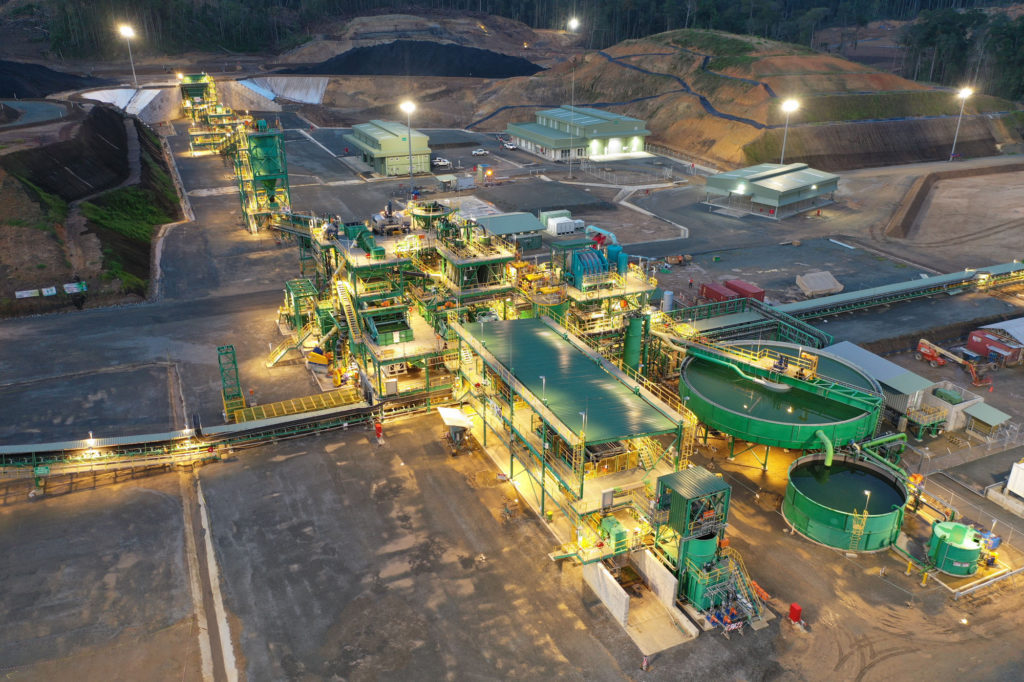
Southern Copper says Tia Maria project in Peru is 23% complete


Tía María’s construction plan had been halted and readjusted twice, in 2011 and 2015, due to fierce opposition by locals. (Image: Southern Copper.)

Southern Copper, one of Peru’s largest copper producers, said on Tuesday that its $1.8 billion Tia Maria mine project is 23% complete, and maintained its 2027 target start date for production.

The project is expected to produce 120,000 metric tonnes of copper cathodes per year, the company said in its third-quarter results report.

Southern Copper is also working on other mainly copper projects in Peru at exploration or basic engineering stages, with planned investments exceeding $10.3 billion over the next decade, including the Los Chancas and Michiquillay copper projects.

“With the support and assistance of the Peruvian authorities, the company is moving forward to secure the required administrative permits and licenses prior to investment,” Southern Copper said.

Southern Copper, which is controlled by Grupo Mexico, operates the Toquepala and Cuajone copper mines and the Ilo refinery in southern Peru. In Mexico, it operates the Caridad and Buenaventura mines and is developing the El Arco and Pilar copper projects.

(By Marco Aquino; Editing by Brendan O’Boyle and Edmund Klamann)