It’s possible that I shall make an ass of myself. But in that case one can always get out of it with a little dialectic. I have, of course, so worded my proposition as to be right either way (K.Marx, Letter to F.Engels on the Indian Mutiny)
Saturday, November 01, 2025
Orban Seeks U.S. Exemption for Hungary on Russian Oil Sanctions
Hungary’s Prime Minister Viktor Orban will seek to persuade U.S. President Donald Trump to carve out an exemption for Hungary in the U.S. sanctions against Russia’s top oil firms.
“We have to make the Americans understand this strange situation if we want exceptions to the American sanctions that are hitting Russia,” Orban, a Trump ally and admirer, told Hungarian state radio on Friday, ahead of a visit to Washington D.C. next week for a bilateral meeting with President Trump.
Hungary, whose top officials have remained in contact with Russia’s leadership including Vladimir Putin, has continuously clashed with its fellow EU member states over plans to ditch Russian gas by 2027 and cut off oil supply from Moscow as soon as possible.
However, Orban suffered diplomatic setbacks last week after the U.S. called off a Trump-Putin meeting in Hungary’s capital city Budapest and sanctioned the two biggest Russian oil firms, Rosneft and Lukoil.
Following the U.S. sanctions, the U.S. has increased pressure on Hungary to cut off its reliance on Russian oil imports and vowed to work with Hungarian authorities and neighboring countries to help Budapest wean off Russian supply.
Matthew Whitaker, the U.S. Ambassador to NATO, rejected in a Fox News interview suggestions from Hungarian politicians that the U.S. is giving Hungary a pass to continue importing Russian oil.
“Hungary, unlike many of their neighbors, has not made any plans or made any active steps,” Whitaker told Fox News in an interview.
“So we’re going to continue to work with them and we’re going to work with their neighbors like Croatia, and other countries that can help them wean themselves off,” the Ambassador added.
Orban suggested earlier this week that “The battle is not over yet” over Hungary’s choice of oil supply.
So far, the U.S. appears unfazed by the Hungarian pledges to find a way to work around the American sanctions and Whitaker told Fox News in no unclear terms that the United States expects Hungary to prepare a plan to wean itself off of Russia’s energy supply.
ExxonMobil has sued California to stop the enforcement of two new climate-reporting laws, claiming they force the company to publicly endorse climate change opinions it disputes.
The company argues that these laws violate the First Amendment by compelling corporate speech and conflict with existing federal securities regulations on environmental and financial risk disclosure.
The lawsuit seeks to have both California laws declared unconstitutional and preempted by federal authority, setting up a significant legal challenge over state power in climate regulation.
ExxonMobil Corp. has filed a lawsuit aimed at stopping California from enforcing two new climate-reporting laws, according to Yahoo/Bloomberg.
The company argues the state isn’t just demanding data — it’s trying to conscript corporations into a particular climate narrative. According to the complaint, the laws force the company to “publicly endorse opinions about climate change that it does not agree with,” which ExxonMobil says crosses a clear First Amendment line.
Yahoo/Bloomberg writes that the first law requires companies with more than $1 billion in annual revenue to calculate and disclose their greenhouse-gas emissions every year. The second targets firms with over $500 million in revenue, requiring a report every two years describing how climate change could affect financial performance and what the company is doing to address those risks.
ExxonMobil says California’s approach singles out large corporations because the state believes they are “most responsible” for climate change — a premise the company rejects. The suit claims the real strategy is to “embarrass” companies into changing operations and to regulate corporate behavior and speech far beyond California’s borders.
The filing insists the company isn’t denying reality, stating: “ExxonMobil understands the very real risks associated with climate change and supports continued efforts to address those risks.” However, it continues: “California may believe that companies that meet the statutes’ revenue thresholds are uniquely responsible for climate change; but the First Amendment categorically bars it from forcing ExxonMobil to speak in service of that misguided viewpoint.”
On top of the free-speech argument, ExxonMobil says at least one of the new rules, SB 261, conflicts with federal securities regulations that already dictate what publicly traded companies must disclose about environmental and financial risk. Because those issues fall under the jurisdiction of federal law, the company contends California can’t pile on additional — or inconsistent — mandates.
The lawsuit asks a judge to declare both laws unconstitutional and preempted by federal authority, setting up a clash over how far states can go in forcing companies to talk about climate change.
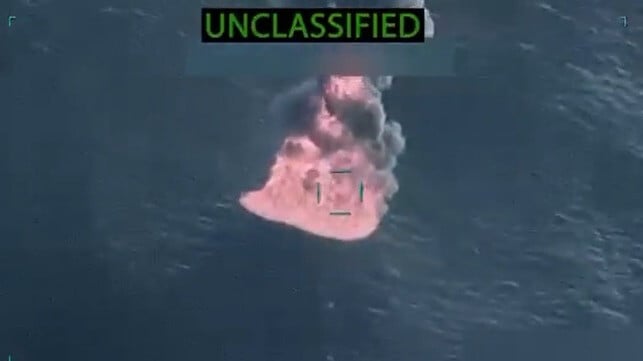
Mexico's president has spoken out against the new American policy of destroying suspected drug boats with airstrikes, calling for more cooperation between the two nations on addressing the perennial problem of narco-trafficking.
"We do not agree with these interventions and we have a model, a protocol that has yielded many results," Sheinbaum said Wednesday.
She told Telemundo that she instructed Foreign Minister Juan Ramón de la Fuente to summon the U.S. ambassador to Mexico, Ronald Johnson, and try to improve the coordination protocol for drug interdictions. Her proposal was to run joint Mexican-American naval missions to conduct intercepts at sea, resulting in arrests rather than fatalities. The objective, she said, was to ensure against any harm to Mexican nationals or breaches of Mexico's own sovereignty.
"We never want any violation of our sovereignty, nor do we want these types of operations in the economic zone, precisely because action is being taken," Sheinbaum said. "And secondly, because there could be a Mexican, whether a criminal or not, a suspected criminal, on one of these vessels."
Mexico has a longstanding relationship with the U.S. Coast Guard-led Joint Interagency Task Force - South (JIATFS), which handled interdictions in U.S. Southern Command for decades - but these responsibilities are now handled by II Marine Expeditionary Force out of Camp LeJeune, using lethal methods. The program has killed 61 people to date, including Colombian, Trinidadian and Venezuelan nationals; three people have been rescued alive.
The initiative has drawn strong objections from Venezuela and Colombia. Questions about its constitutionality have been raised by legal scholars, the Trump administration's political opponents, and elements of the Pentagon's own legal corps, centering around whether the president can use lethal force against unidentified suspects in international waters (without prior Congressional authorization).
The Trump administration has provided targeting information to the U.S. Senate for oversight purposes, selecting a limited group of Republican senators to receive briefing materials, according to ABC.
U.S.-Venezuela Tensions Intensify Regional Energy Risks
Tensions between the U.S. and Venezuela are escalating, leading to increased energy and security risks in the Caribbean, with President Trump ruling out immediate military strikes but maintaining a naval presence.
Venezuela's oil exports have reached their highest levels since early 2020, becoming crucial for Chinese and Indian refiners amidst sanctions on Russia and tight heavy-crude supplies, making any disruption from U.S. actions a potential squeeze on global markets.
The crisis is intertwined with Guyana's growing oil production and ongoing maritime boundary disputes with Venezuela, further complicated by Venezuela's demand for clarification on a new gas exploration agreement between ExxonMobil and Trinidad and Tobago.
U.S.-Venezuela tensions are again rippling through energy and security markets, prompting President Donald Trump to rule out immediate military strikes while maintaining a buildup of American naval assets in the Caribbean.
His comments followed reports of U.S. patrols and maritime interdictions targeting narcotics routes linked to Caracas, a campaign that has drawn condemnation from Venezuelan President Nicolás Maduro and prompted renewed appeals to the U.N. Security Council.
Newsweek reported that Washington’s military posture remains unchanged despite the president’s denial of active strike plans.
The escalation comes as Venezuela’s oil industry shows signs of revival. The country’s crude exports topped 1.09 million barrels per day in September, the highest level since early 2020, according to Reuters. Those shipments have become increasingly important for Chinese and Indian refiners amid sanctions on Russia and tight heavy-crude supply elsewhere. Any disruption caused by new U.S. enforcement actions could once again squeeze global heavy-sour markets.
Gulf Coast refiners that previously depended on Venezuelan barrels have already turned to heavier grades from the Middle East and from Latin America, including ramping purchases from Guyana’s offshore Stabroek field, as detailed by Reuters. That shift has intertwined the Venezuelan crisis with Guyana’s emergence as one of the Western Hemisphere’s fastest-growing oil producers.
At the same time, Caracas continues to dispute maritime boundaries with Georgetown in waters adjacent to Exxon Mobil’s Stabroek block offshore Guyana. This flashpoint could take on greater significance if military pressure from Washington intensifies.
Analysts warn that any deterioration in Venezuelan stability or maritime security could slow regional project timelines and raise insurance costs across northern South America, undermining one of the few non-OPEC growth corridors now underpinning future global supply.
Venezuela has also demanded clarification from ExxonMobil and Trinidad and Tobago over a new gas-exploration agreement signed this week, arguing that parts of the area under review overlap with maritime zones claimed by Caracas. Venezuela’s foreign ministry formally requested documentation from Port of Spain outlining the project boundaries and legal framework.
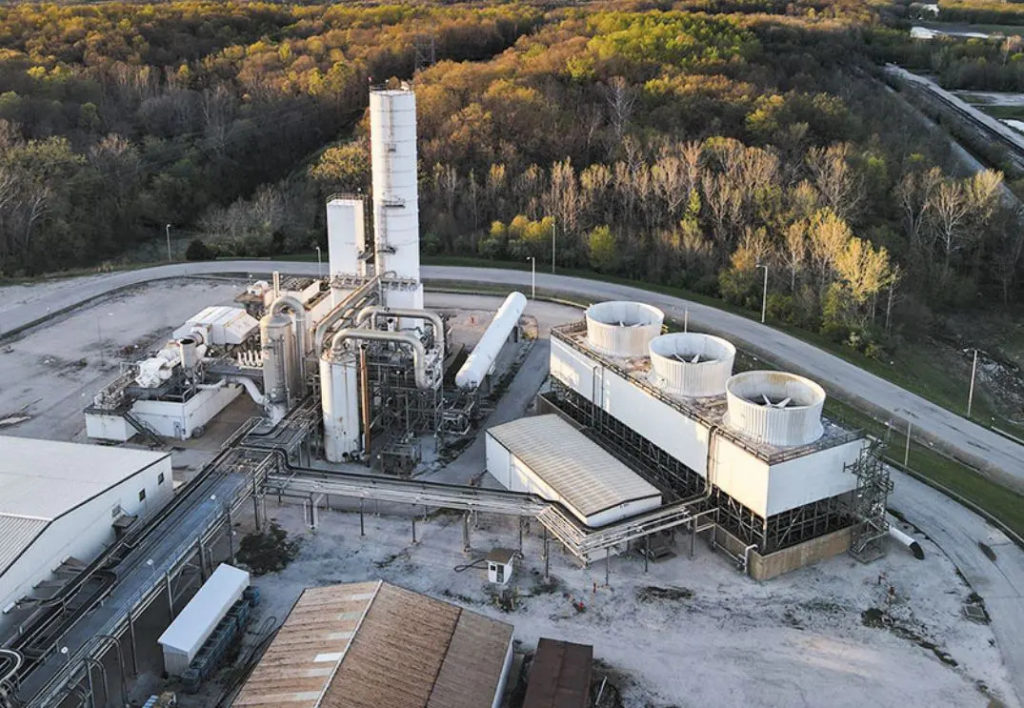
The Trump administration has finalized a $1.5 billion loan guarantee for an an Indiana-based company to produce ammonia fertilizer.
The financing for Wabash Valley Resources LLC will be used to restart and repurpose a coal gasification plant idled since 2016. It intends to produce 500,000 metric tons of anhydrous ammonia per year using as feedstock coal from a Southern Indiana mine and petcoke, the Energy Department said in a statement Wednesday.
The loan was initiated by the Biden administration, which awarded the project a conditional commitment in September 2024, and said the project would provide a source of low-carbon fertilizer using carbon capture and sequestration.
(By Ari Natter)
FE
Column: China’s ravenous appetite for iron ore remains as steel output slips
China’s imports of iron ore are on track for another robust month in October, following on from September’s record arrivals, with the strength standing in stark contrast to weak steel output.
October imports are forecast to reach 113.06 million metric tons by commodity analysts Kpler, a figure that if matched by official data would be second only to the all-time high of 116.33 million in September.
China imports about 75% of global seaborne iron ore and uses the raw material to produce around half of the world’s steel.
Iron ore imports have picked up pace in recent months after a weak start to the year, with the last four months all seeing official arrivals exceeding 100 million tons.
This has taken the year-to-date figure to almost the same as last year, with imports for the first nine months coming in at 917.69 million tons, down 0.1% from the same period in 2024.
A strong October will push the year-to-date figure into positive territory, even though steel production is struggling.
China’s steel output slipped to a 21-month low in September, with official data showing production of 73.49 million tons, down 4.6% from the same month in 2024 and also a drop of 5% from August’s 77.37 million.
For the first nine months of the year China produced 746.25 million tons, down 2.9% from the same period in 2024.
That pace puts China on track for total steel output of close to 1 billion tons in 2025, consistent with the production levels of the past five years and meeting an unofficial government target that output should not exceed that of the previous year.
Sentiment boost?
The question for the market is why has China picked up the pace of iron ore imports in recent months even as steel output softens?
Price moves offer a partial explanation, with benchmark Singapore Exchange contracts dropping to an eight-month low of $93.35 a ton on July 1.
The lower price would have encouraged steel mills and traders to increase imports, but this momentum may be fading given the price has trended higher in recent weeks, ending at $105.66 a ton on Monday, not far off the eight-month high of $107.30 reached on October 13.
There is also some evidence of rising stockpiles, with port inventories monitored by consultants SteelHome reaching 133.6 million tons in the week to October 24, having risen since the 18-month low of 130.1 million in the seven days to August 8.
Domestic iron ore production has also been modestly lower, dropping 3.8% to 761.43 million tons in the first nine months of the year.
However, the modest gain in inventories and the small drop in domestic output aren’t enough to justify the recent strength in imports.
It’s likely that sentiment is playing a bigger role with optimism growing that China’s economy is weathering the trade storms unleashed by US President Donald Trump.
The prospects of some form of truce between Washington and Beijing on the trade front are likely to boost support for iron ore and steel bulls.
Officials from the world’s two largest economies are reported to have worked out a framework deal for Trump and his Chinese counterpart Xi Jinping to consider later this week, with the two leaders due to meet on Thursday on the sidelines of the Asia-Pacific Economic Cooperation summit in Gyeongju, South Korea.
While there are concerns that any deal may be short on substance and long on rhetoric, any sign that both sides are pulling back from hardline positions would be seen as a positive boost to sentiment.
(The views expressed here are those of the author, Clyde Russell, a columnist for Reuters.)
(Editing by Stephen Coates)
Liberia replaces mines minister amid talks on US investments
Liberia has replaced its mining minister and top mining regulator, the office of President Joseph Boakai announced, as the West African nation and iron ore producer pursues talks with Washington on investments in its critical minerals sector.
The new minister, R. Matenokay Tingban, served as deputy mining minister under former President Ellen Johnson Sirleaf.
The decision to appoint him in place of the previous minister, Wilmot J.M. Paye, is part of moves to improve governance and efficiency, Boakai’s office said in a statement on Monday, without elaborating.
A second statement on Tuesday named a new head for the state mining regulator.
The changes come as Liberia seeks to attract foreign investment into its mining industry, which recently identified deposits of lithium, cobalt, manganese and rare earths, minerals vital for electric vehicles and renewable energy technologies.
US Secretary of State Marco Rubio met Liberian Foreign Minister Sara Beysolow Nyanti in Washington on October 17 to discuss expanding US participation in mining, the State Department said.
Tingban will oversee a ministry central to Liberia’s plans to boost investor confidence under Boakai’s “ARREST Agenda”, a five-year national development strategy.
Boakai also appointed new deputies at the mines and education ministries. Some of the appointments require Senate confirmation.
Iron ore remains Liberia’s top mineral export, with ArcelorMittal operating its largest mine and rail network, though gold has recently become a critical foreign exchange earner.
Other players in the minerals sector include Ivanhoe, Bea Mountain (Avesoro), MNG Gold and Hummingbird Resources.
(By Alphonso Toweh and Maxwell Akalaare Adombila; Editing by Robbie Corey-Boulet and Toby Chopra)
Outokumpu invests $45 million in US chromium pilot plant
Outokumpu, the largest producer of stainless steel in Europe, announced it is investing approximately $45 million in a new pilot plant in the state of New Hampshire, planned to be operational in the first half of 2027.
The pilot project will be used to demonstrate the scalability and industrial feasibility of the process by scaling up from 1 kg to 1 ton of daily production. The two materials that will be produced in the plant are enriched ferrochrome, containing 65% chrome and chromium metal, with more than 90% chrome content.
Following the successful completion of the pilot phase, Outokumpu plans to construct the first industrial-scale plant, with an anticipated annual production capacity of approximately 10,000 tons.
The target timeline for the industrial plant to be operational is 2029–2030, and Outokumpu said it expects to unlock the full commercial potential of the proprietary technology from 2030 onwards.
With this technology, enriched ferrochrome is produced with a lower carbon footprint and can be utilized in melt shops and sold externally at higher prices compared to the current offering. The process also enables new production pathways for high-purity metals, such as chromium metal, which is applicable for high-value markets, such as aerospace, defense and energy sectors.
Over the past four years, Outokumpu has been developing and testing its technology. The company said it has already successfully scaled production of key materials, such as enriched ferrochrome and chromium metal, from lab-scale (1 g) to pre-pilot-scale (1 kg).
In 2024, the Finnish group established a laboratory near Boston, Massachusetts.
“Backed by years of research, we are leveraging proprietary technology targeting premium-priced, high-purity metals essential for demanding sectors,” Outokumpu chief technology officer Stefan Erdmann said in a news release.
“With limited Western supply and growing demand, we see a significant market opportunity for sustainable, high-performance materials.”
Swedish mining town pays price for Europe’s raw material need
Tanja Mattila and her husband had just splashed out about $300,000 on a new home on the outskirts of Kiruna in Northern Sweden when a letter arrived from the state-owned mining firm LKAB.
The wood-clad house is in an area that’s likely to become unsafe because of movement underground, and they’ll have to move. The couple had just relocated from a flat that’s also due to be destroyed within a few years.
“It was a shock. We planned to stay here at least until we retire,” said 54-year-old Mattila, who teaches Finnish and Meankieli, a minority language. “A lot of people are unsure about their future.”
Europe has long been dependent on other parts of the world for raw materials, but increased geopolitical tensions and trade disputes mean old supply chains and relationships have frayed, creating a push to develop more supplies at home. The town of Kiruna, sitting on iron ore and, crucially, rare earth minerals, is feeling the brunt of that shift.
The question is how far are governments willing to go to access commodities and what price will local communities pay?
Iron, for example, is key for strategically important steel, used not only in cars and construction but in the military equipment Europe is racing to produce. LKAB plans to boost volumes by up to 50% in the next decade. That’s also in the company’s interest; Iron ore costs just over $100 a ton, so huge amounts are needed to turn a profit.
But the jewel in the crown at Kiruna is Per Geijer, just north of the town. It’s one of Europe’s biggest deposits of rare earths, vital for products like electric cars and smartphones. The European Union, in its push for critical raw materials, has designated the find a strategic project. The deposit is still being investigated and it may take another decade to start mining.
Right now, China dominates the rare earths market, and it’s using that as leverage against the US, with implications for European industry. On Thursday, China paused plans for a dramatic expansion of its rare earths export controls.
“If you want self-reliance, you need to mine,” said EU Industry Commissioner Stephane Sejourne, who visited the town last month. “Kiruna sits at the heart of Europe’s strategy for economic sovereignty and competitiveness.”
Moving church
Modern Kiruna, far above the Arctic Circle, was founded around the turn of the last century, but there have been Sami and Finnish-speaking settlements in the area for far longer.
In August, the town was in the spotlight when its delicate wooden church was slowly moved 5 kilometers (3 miles) to a new home, away from the seismic rumblings of the world’s biggest underground iron ore mine.
The move — a massive feat of engineering — was streamed on the internet, clips viewed millions of times. On the route, locals cheered and Eurovision winner Carola sang from a nearby stage.
Just over a week later, the feel-good vibe was cut short when the letters started arriving. At a town gathering, LKAB said 6,000 more residents would have to move. The company is paying for the relocation and says it’s working to ensure a strong community.
LKAB is small in global terms, but it accounts for almost 80% of Europe’s iron ore production. Its ore is shipped as pellets and is considered among the highest quality. According to CRU Group in London, demand may increase in the coming years as steel makers try to reduce emissions by using pellets instead of dirtier products.
The Kiruna mine is vast, with the main level almost 1.4 kilometers underground. At the start of the exploration tunnel to Per Geijer, a sign in Swedish reads the “The mine of the future.”
A lot of the traditional dirty and heavy work has been automated. In one room, operators control machinery with joysticks and Xbox controllers. But there’s still a need for old-fashioned blasting, and every night, vast amounts of rock are obliterated.
That’s having a profound effect above ground.
In 2004, LKAB announced a multi-decade project to demolish part of the town and move businesses and an initial 6,000 residents into new buildings.
For Fredrik Spett, who owns a local grocery store, the worries really began one morning when his front door was sticking on floor tiles that had risen because of mine work.
On a recent weekday, he pointed out where a brick door frame had cracked. Having watched the wrecking ball come for many of his customers’ homes, the grocer has to accept that his beloved shop is next.
“If you live in Kiruna, you know what living over a mine means,” Spett said. “Still, I never thought the impact would be this much.”
Across the road, in the Arctic Eden Hotel, owner Jan Gronberg has also struggled to keep his spirits up.
“When this happened, it was just like everything went pitch black,” he said. “It’s hard to find the motivation.”
Gronberg, like others, has moved before, when the demolition crews came for his previous business closer to the mine. The hotelier is trying to find out from LKAB what they can offer him now.
“No one is going to be left on their own,” Ebba Busch, minister of energy and enterprise, said after a recent visit. “It is a matter of survival for Kiruna, but also a matter of sovereignty as a country and as a union as well.”
The face of the town’s official response to the Aug. 28 announcement is Mats Taaveniku, a former management consultant turned Social Democrat.
In the town hall — the first major building in the new town center in 2018 — Taaveniku points to a red ribbon running across a scale model. It shows the previous limit for demolition.
He hasn’t threaded the new line yet, but suggests it should be “black… for mourning.”
Taaveniku said he got barely a heads up from LKAB, and that it was a shock for everyone coming so soon after the church move.
LKAB knew about the new impact line for some time, but says communication could only happen after it had assessed issues like costs.
Across a roundabout from the Arctic Eden, the destruction of Kiruna’s old center creeps forward. On a recent morning, a digger scraped at the concrete shell of the Ferrum hotel, sending dust and a metallic whine into the air.
Opposite, some graffiti read: “Is this what happens to a town no one cares about?”