Saturday, November 01, 2025


AI Energy Crunch: Hyperscalers Turn to Small Nuclear Reactors

  • Small modular reactors (SMRs) are experiencing a significant comeback, driven by their scalability, siting flexibility, and ability to provide carbon-free baseload power, crucial for rising AI energy demands and industrial decarbonization.

  • Key industry players such as NuScale, Amazon, and Terrestrial Energy are moving SMRs from conceptual designs to billion-dollar commercial projects, with notable advancements in deployment programs, industrial heat applications, and corporate energy strategies.

  • Despite global momentum and policy support, the SMR revolution faces substantial execution risks, including cost control, supply chain maturity, regulatory bottlenecks, and the need for robust financing structures to ensure timely and on-budget delivery.

After decades of stagnation, nuclear energy is staging a comeback — and it’s no longer the gigawatt-scale reactors of the past leading the charge. Small modular reactors, once dismissed as niche or speculative, have moved to the center of a global energy and geopolitical pivot. Their appeal lies in scalability, siting flexibility, and the promise of dedicated, carbon-free baseload power—a vital ingredient in an era defined by the AI energy demand surge and industrial decarbonization.

The shift from ambitious blueprints to billion-dollar commercial projects is officially underway, driven by key industry announcements throughout 2025. Some of the leading stakeholders include NuScale, Amazon, and Terrestrial Energy.

NuScale Power: From De-Risking To Gigawatt-Scale Deployment

NuScale Power has cemented its role as the bellwether of the SMR movement, but its commercial success will depend on disciplined financing. In early September 2025, the company announced a landmark collaboration with the Tennessee Valley Authority and ENTRA1 Energy to deploy up to 6 gigawatts of its SMR technology within the TVA service region — the largest SMR commitment in U.S. history.

The structure of this deal is as important as its scale. Rather than placing the full “first-of-a-kind” financial and regulatory burden on TVA, ENTRA1 will reportedly finance, own, and operate the facilities, selling power back to TVA through a long-term Power Purchase Agreement. This off-balance-sheet approach could prove pivotal, unlocking institutional investment and moving SMRs from demonstration projects into a bankable, utility-scale asset class.

Terrestrial Energy: Molten Salt Power For The Industrial Heat Market

The SMR race isn’t just about generating electricity—it’s also about providing industrial heat, a sector that accounts for about 20% of global energy demand, according to the Clean Energy Forum, yet remains heavily dependent on fossil fuels. Terrestrial Energy is pursuing that opportunity with its Integral Molten Salt Reactor, a Generation IV design that uses molten salt as both coolant and fuel. Its high operating temperatures make it well-suited for producing clean hydrogen, synthetic fuels, and other industrial feedstocks.

In October 2025, Terrestrial Energy completed its SPAC merger with HCM II Acquisition Corp., raising approximately $293 million in total proceeds. The company will trade publicly under the ticker IMSR.

Unlike most advanced reactor developers pursuing international strategies, Terrestrial Energy is focusing exclusively on the U.S. market, beginning with its first commercial project planned for the Texas A&M RELLIS Campus. The capital raised through the transaction will fund the company’s U.S. licensing and construction efforts, advancing its goal of bringing industrial-scale, high-temperature nuclear heat to market by the early 2030s.

If successful, Terrestrial’s molten-salt design could complement light-water SMRs by addressing hard-to-electrify sectors—providing the kind of round-the-clock, zero-carbon thermal energy that factories, refineries, and chemical plants require.

Amazon’s Nuclear Bet: The Hyperscaler Strategy

The AI-driven power crunch has turned some of the world’s largest corporations into energy developers. In October, Amazon unveiled plans for the Cascade Advanced Energy Facility near Richland, Washington, in partnership with Energy Northwest. The site will deploy X-energy’s Xe-100 SMRs—high-temperature, gas-cooled reactors — beginning with 320 MW and scaling to as much as 960 MW.

By effectively building its own baseload generation, Amazon is signaling a new model for corporate energy resilience. SMRs’ modular design allows them to be sited close to data centers and scaled in 80 MW increments, aligning perfectly with the high-density, high-uptime demands of hyperscale computing. Tech giants are no longer waiting for grid upgrades—they’re building the grid themselves.

Global Nuclear Energy Policy And The Strategic Fuel Cycle

Momentum is building worldwide as governments recognize SMRs as tools of energy security and industrial competitiveness.

  • Canada’s uranium advantage: Saskatchewan’s new provincial strategy leverages its vast uranium reserves to anchor SMR deployment, backing GE Hitachi’s BWRX-300 and exploring larger designs.
  • European expansion: The Netherlands confirmed plans to extend the life of its Borssele reactor beyond 2033 and to build two new large-scale reactors. To do so, it created NEO NL, a state-owned nuclear operator and financing vehicle, while earmarking €20 million for domestic SMR research and development.
  • Closing the fuel loop: In October 2025, France’s newcleo and U.S.-based Oklo announced a $2 billion joint venture to develop advanced fuel fabrication capacity in the U.S., with Sweden’s Blykalla exploring co-investment. The partnership aims to produce the metallic and mixed-oxide fuels required for Generation IV reactors, reducing dependence on Russian enrichment and creating the foundation for a closed, Western-controlled nuclear fuel cycle.

Execution Risk and the Road Ahead

If the 2010s were about promising nuclear innovation, the 2020s are about delivering it. Yet this is where the SMR revolution faces its greatest challenge.

Even with multiple designs now licensed, the jump from prototype to production carries enormous execution risk. The most immediate concern is cost control. The lessons from Georgia’s Vogtle expansion — the first new U.S. nuclear plant in decades — are still fresh: small deviations in design or supply chain logistics can cause multi-year delays and multibillion-dollar overruns. SMRs promise to avoid this through standardization and factory manufacturing, but that proof point remains ahead.

Supply chain maturity is another limiting factor. The precision components, pressure vessels, and advanced fuels needed for nuclear construction can’t be produced overnight. After decades of industry contraction, much of the qualified manufacturing base will need to be rebuilt. U.S. developers are already competing for limited capacity in critical materials and fabrication.

The regulatory environment also presents a bottleneck. The U.S. Nuclear Regulatory Commission has modernized some processes, but site licensing and environmental reviews can still drag on for years. Globally, the lack of harmonized licensing standards remains a barrier to scaling SMR exports across markets.

Finally, financing structure may determine who succeeds. The emergence of “nuclear-as-a-service” models—like ENTRA1’s—is a promising shift, transferring early-stage risk away from utilities. But investor confidence depends on steady policy support and demonstrated project execution.

The Bottom Line For Nuclear Energy Stakeholders

The nuclear industry operates under intense scrutiny. If early SMR projects stumble, momentum could fade quickly. But if they deliver on time and on budget, the world could finally see nuclear power reborn as a scalable, clean, and commercially competitive energy source.

The SMR sector has crossed a critical threshold. The question is shifting from whether small modular reactors will play a role in the global energy mix to how quickly they can be built, and who will lead.

The coming decade will determine whether SMRs fulfill their promise as a flexible, financeable bridge between clean energy ambition and industrial reality.

By Robert Rapier


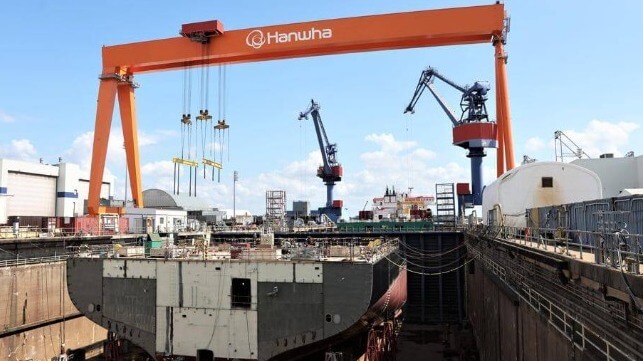
Hanwha Philly to Build Nuclear-Powered Submarine for South Korea

Hanwha Philly
Courtesy Hanwha Philly

Published Oct 29, 2025 9:48 PM by The Maritime Executive


The Trump administration has reached an unexpected agreement with the government of South Korea on sharing one of America's most closely-held capabilities - nuclear-powered submarine technology. During a visit to Gyeongju, President Donald Trump approved South Korea's request to begin making naval reactor fuel, useful for nuclear propulsion and nuclear weapons. In addition, Hanwha will build one or more nuclear submarines at Hanwha Philly Shipyard for delivery to the ROK Navy. 

The existing U.S.-South Korean mutual defense pact places limits on Seoul's ability to use nuclear technology for defense applications, and the treaty would have to be amended to allow uranium enrichment above 20 percent U-235. American naval reactors run on uranium enriched to about 94 percent U-235 (weapons-grade), far above the treaty's limit. "If fuel supply is permitted, we can build several submarines equipped with conventional weapons using our own technology to defend the waters around the Korean Peninsula, ultimately reducing the burden on U.S. forces," said South Korean President Lee Jae Myung in remarks Wednesday. 

Trump said later in the day that he had approved Lee's request to revise the accord. “Our Military Alliance is stronger than ever before and, based on that, I have given [South Korea] approval to build a Nuclear Powered Submarine, rather than the old fashioned, and far less nimble, diesel powered Submarines that they have now,” President Trump said in a statement on his social media platform. Transfers of U.S. Navy submarine technology to South Korea will also be involved. 

The plan has parallels with the AUKUS arrangement with Australia and the UK, and has potential advantages for all parties. South Korea would get access to high-endurance, stealthy, nuclear-powered subs at a sensitive time in the East Asian security environment. Since the fuel agreement would produce high-enriched uranium, it could also be a stepping-stone towards a sovereign nuclear weapons program for South Korea, which is exposed to a growing nuclear threat from Pyongyang. For the U.S., the deal would mean another ally equipped with advanced submarine capabilities - a potential asset in the event of a conflict - and the development of a third nuclear-capable private shipyard on American soil.  

"Through Hanwha Philly Shipyard and other investments and partnerships, a revived American shipbuilding sector will benefit U.S. workers, foster prosperity for both the United States and Korea, and enhance our nations’ shared security," said a Hanwha official in a statement to NBC.

In addition to the submarine agreement, Trump received confirmation of South Korea's plans to invest a total of $150 billion in U.S. shipbuilding over time. The official announcement included smaller initial commitments from all of South Korea's "Big Three" shipbuilders: HD Hyundai and Cerberus Capital Management will partner on a $5 billion investment program for modernizing American shipyards; Samsung Heavy Industries and Vigor Marine Group will work together on naval drydockings (MRO) and shipyard automation; and Hanwha Ocean will invest $5 billion in infrastructure and workforce development at Hanwha Philly.


Royal Navy Tests Out Quantum Timing Aboard Unmanned Sub

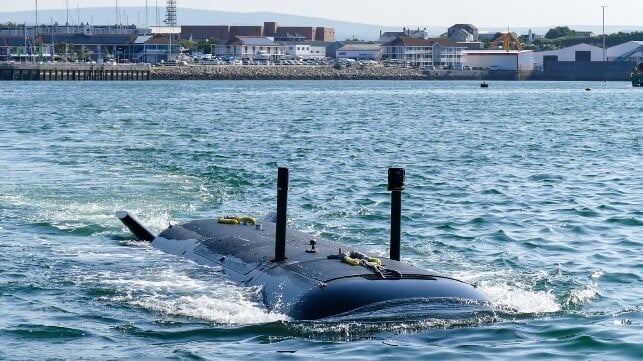
XV Excalibur (Royal Navy)

Published Oct 29, 2025 2:50 PM by The Maritime Executive


The Royal Navy has tested out a quantum atomic clock aboard an uncrewed submarine, marking the first time such technology has operated underwater at sea and potentially reshaping how submarines navigate in the depths.

The trial placed Infleqtion's Tiqker quantum optical atomic clock aboard the XV Excalibur, an extra-large autonomous underwater vessel that serves as a testing platform for emerging technologies. The experiment, conducted in partnership with the Submarine Delivery Agency's Autonomy Unit, could address one of submarines' most persistent challenges: maintaining precise navigation while remaining hidden beneath the waves.

Submarines face a fundamental problem that surface vessels do not. Cut off from GPS signals underwater, they have long relied on microwave-based clocks that gradually lose accuracy over extended missions. That drift can compromise inertial navigation, which requires precision timing. 

The quantum clock offers a potential solution. By providing what engineers call a "time heartbeat" with laboratory-grade precision, the device can help submarines compensate for the navigational drift that accumulates during long underwater operations, allowing them to remain submerged for longer periods.

"This trial is a significant milestone in the development of extra large uncrewed underwater vehicle capabilities in the Royal Navy," said Commodore Marcus Rose, deputy director of underwater battlespace capability.  

The implications extend beyond navigation. Precision timing affects other submarine systems too, including sonar, weapons targeting and secure communications.

According to the Royal Navy, the device proved reliable through multiple dive cycles in a replication of real-world sub operations. "We are laying the foundation for fleets to navigate, coordinate and operate with precision in any environment," said Ryan Hanley, Infleqtion's general manager for the United Kingdom. The service plans additional quantum timing trials aboard the Excalibur.

The test reflects the Royal Navy's broader push to accelerate the adoption of emerging technologies, including autonomous systems and artificial intelligence. Constrained by budget and recruitment limits, it seeks to cut costs, reduce manpower requirements, and enhance fleet capabilities through technological solutions - all more rapidly than traditional procurement allows.


Philippines Holds Containership with Radioactive Cargo Offshore

radiation testing of container
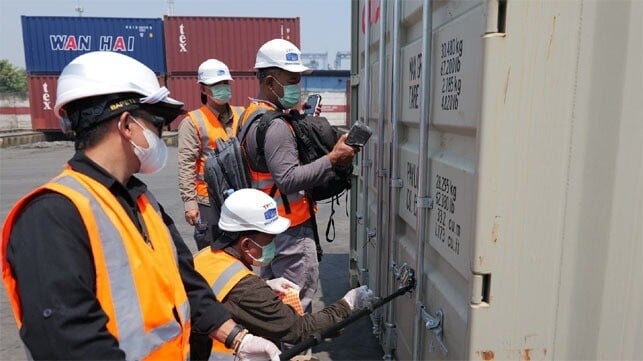
Indonesian teams tested the boxes and found Cesium-137 levels much higher than background (BAPETEN)

Published Oct 30, 2025 7:23 PM by The Maritime Executive


Officials in the Philippines are trying to understand how containers with radioactive dust were exported and now what to do with them since they have been sent back to the country. The Philippines is demanding that one of the country’s steel producers take responsibility for the cargo, while the company denies involvement and says only the government has the ability to handle the contaminated cargo.

The case has intensified, according to a report from Bloomberg, after the containership reached the outskirts of Manila last weekend. The unnamed vessel has been refused permission to offload the cargo until plans for its disposal are resolved.

The situation began in mid-September when a shipment of containers holding a cargo of zinc dust triggered alarms at Indonesia’s Tanjung Priok Port in Jakarta. The Nuclear Energy Supervisory Agency (BAPETEN) was notified, and it sent a secondary team that confirmed the high readings in nine out of 14 containers that had been received on September 10 from the Philippines. They performed a swab test on the exterior of the containers and said the radiation was limited to the interior of the boxes.

Days later, a second shipment of nine containers also showed high levels of radiation. Testing confirmed Cesium-137 levels significantly higher than acceptable background radiation doses. It was said to be up to 210 times above the background dose level. Testing showed it was present in five of the containers, and again, the exterior swabs were negative.

Indonesia refused entry for the containers and ordered the carrier to return them to the shipper in the Philippines.

The Philippine Nuclear Research Institute said it has researched the situation and said the boxes were exported to Indonesia by a company called Zannwann International Trading Corp., a Chinese company with operations in the Philippines. Zannwann, they asserted, had purchased the zinc dust from SteelAsia, a manufacturer in the Philippines. Zinc dust is used in industrial and chemical applications because it resists corrosion.

SteelAsia came out strongly denying any association with the contaminated materials. It contends Zannwann brought the product from multiple manufacturers, and the other company is the source of the contamination. SteelAsia says it only manufactures and exports reinforced steel bars, although reports contend the dust is a byproduct of manufacturing. The Philippine authorities are saying the other company’s facility is clean, and the contamination must have come from SteelAsia.

Media reports in Manila said SteelAsia agreed to voluntarily suspend production for testing in its facility. Both its warehouse and Zannwann’s are also to undergo testing, as well as approximately 100 workers at the two companies.

The Philippine Nuclear Research Institute is demanding that SteelAsia take custody of the contaminated containers and arrange for proper disposal by burying the material. For now, the unnamed ship is held in limbo waiting for the situation to be resolved so it can unload the containers.

Philippines Conducts Rare Interdiction Targeting Chinese Fishermen

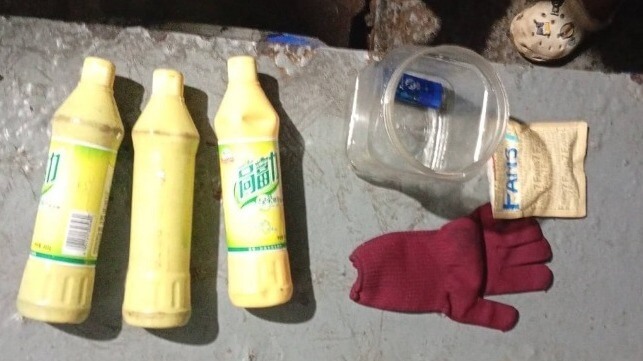
Items seized from the Chinese fishing boat included dish-soap bottles allegedly filled with cyanide, widely used for illegal reef fishing (AFP)
Items seized from the Chinese fishing boat included dish-soap bottles allegedly filled with cyanide, which is widely used for illegal reef fishing (AFP)

Published Oct 29, 2025 9:06 PM by The Maritime Executive


In a rare intercept and boarding operation, Philippine personnel seized alleged illegal fishing equipment from a Chinese boat near the BRP Sierra Madre, the decaying WWII landing ship that serves as a makeshift outpost at Second Thomas Shoal. 

The Sierra Madre is a longtime flashpoint between Chinese and Philippine forces: China claims Second Thomas Shoal as its own, and has demanded that Manila withdraw and remove the wrecked landing craft from the reef. Chinese forces have repeatedly attempted to blockade the outpost, and in years past, water-cannoning and close-quarters maneuvers were tactics of choice for the China Coast Guard when encountering a Philippine supply convoy near the Sierra Madre. In June 2024, the site saw the most violent confrontation between China and the Philippines yet: during a supply drop, China Coast Guard personnel attacked a group of Philippine Marines in small craft alongside the base, costing one Filipino soldier his thumb and injuring others. 

Last week's interaction was initiated not by China but by Philippine forces, a rare occurrence in a conflict marked generally by restraint from Manila's side. On October 24, Chinese fishing boats were operating "unauthorized" near Second Thomas Shoal, as is common in an area patrolled heavily by China's "maritime militia" state-sponsored fishing enterprises. This time, AFP forces intercepted the boat and confiscated illegal fishing gear - an unusually assertive response. 

Among other items recovered from the Chinese boats, AFP forces claim to have seized bottles of cyanide, used to stun reef fish for live capture for the aquarium trade. This is an efficient method to extract economic value from pristine reef habitats, and is commonly practiced throughout Southeast Asia - notably in the fishing communities of the western Philippines. It has the unwanted side effect of killing coral, undermining the fishery's future productivity.  

The boarding was certain to draw a forceful response from Beijing. In a pointed essay circulated by the People's Liberation Army, Chinese national interest scholar Ding Duo accused the Philippines of "banditry," "provocation, deliberate evidence fabrication, and a cynical propaganda campaign." He asserted that the Philippine troops damaged the boat's engine and dragged the vessel off, causing property damage and physical harm to the Chinese fishermen. He further suggested that the alleged cyanide bottles were nothing more than containers of a common brand of Chinese dish soap. 

"The Philippines has perfected what can only be described as 'victimhood diplomacy' - orchestrating confrontations, selectively leaking images, and presenting carefully crafted narratives to dominate media cycles and solicit international sympathy," asserted Ding. 

Second Thomas Shoal is within the Philippines' 200-nautical-mile EEZ boundary and 700 nautical miles away from mainland China; it submerges at high tide and does not constitute land for the purposes of UNCLOS claims. Despite the distance from its shores and its lack of jurisdiction under international law, China claims the reef - and the vast majority of the rest of the South China Sea - as its own. The Permanent Court of Arbitration in the Hague rejected these sweeping claims in 2016, finding them inconsistent with UNCLOS, but China refused to participate in the proceeding or to acknowledge the ruling. 

First decontaminated steel from Chernobyl released for reuse


Ukraine’s nuclear regulator has approved the release of the first 20 tonnes of carbon steel from the Chernobyl nuclear power plant for reuse elsewhere in the country.
 
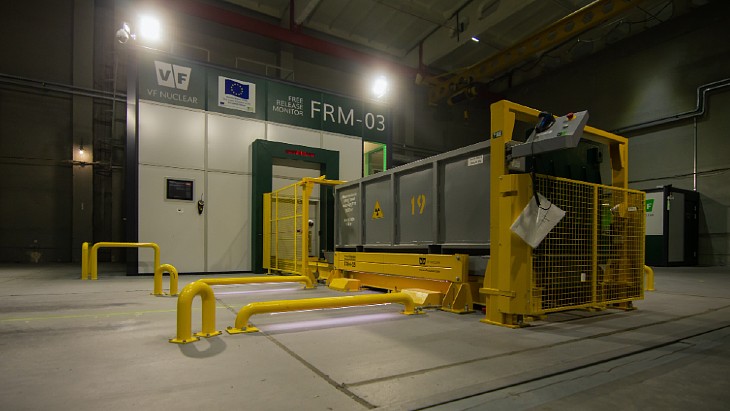
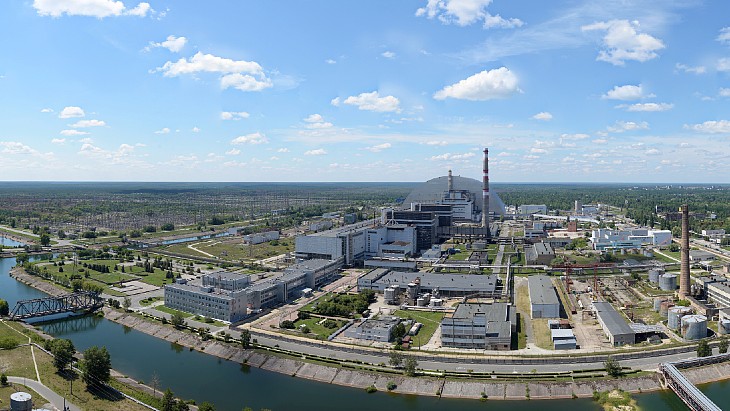
The commercial operation of the Free Release Facility was approved in August (Image: CHNPP)

Before being cleared for release the materials "were fragmented, decontaminated, and then thoroughly checked at the Free Release Facility FRM-03 using gamma-spectrometric monitoring", Chernobyl Nuclear Power Plant (ChNPP) said.

The power plant operators said: "Launching this process is an important step not only for the Chernobyl NPP but for Ukraine as a whole. Environmentally, it helps reduce the amount of radioactive waste. Economically, it allows additional funds to be directed to decommissioning activities and helps ease the burden on the State Budget of Ukraine. Most importantly, it demonstrates the reliability and effectiveness of Ukraine's radiation monitoring system."

This first batch was generated during dismantling of plant equipment, with the next step being to "expand this process to include materials from the three power units that are currently being decommissioned".

The free release facility entered into industrial operation in September to support the plant's decommissioning. It was established with European Union funding and can process up to 10 tonnes of material a day.

The State Nuclear Regulatory Inspectorate of Ukraine explained that during dismantling "of equipment, systems and components as part of the Chernobyl NPP decommissioning programme, significant amounts of radioactive materials are generated, some of which, after appropriate treatment (sorting, fragmentation, decontamination) and subsequent radiation survey, are subject to release from regulatory control. This approach is in line with best international practice and makes it possible to minimise the amount of radioactive waste requiring further treatment and disposal, while at the same time returning a significant amount of valuable materials to the national economy for further use for the public good, with the unconditional protection of the population and the environment".

Background


(Image: ChNPP)

The Chernobyl nuclear power plant lies about 130 kilometres north of Kiev and about 20 kilometres south of the border with Belarus. Following the Chernobyl accident in April 1986 (you can read more about it in the World Nuclear Association's Chernobyl Accident information paper) a 4200-square kilometre Chernobyl Exclusion Zone was established, which has been largely uninhabited since.

A containment shelter was built at speed over the ruins of unit 4 after the accident and there has since been a giant new shelter - the New Safe Confinement - built over it. The three other units at the site continued to operate after 1986 - the last operating unit at Chernobyl, unit 3, operated until 2000.

Decommissioning of the site is taking place and, in addition to the reuse/recycling initiatives, there are also plans to gradually reduce the size of the exclusion zone around the plant, with some consideration of the suitability of the site for hosting small modular reactors.


X-energy sister company contracted for in-space nuclear technology


The US Air Force Research Laboratory’s Space Vehicles Directorate has given space technology and infrastructure services company Intuitive Machines a USD8.2 million contract extension to develop next-generation nuclear power systems for spacecraft and lunar infrastructure.
 
Intuitive Machines' IM-2 mission in orbit around the Moon - the lander touched down near the lunar south pole on 6 March but its mission was cut short because it landed on its side, preventing it from fully operating various instruments before its batteries were depleted. Further IM lunar missions are slated for 2026 and 2027. (Image: Intuitive Machines)

Intuitive Machines said it is using the funding - which builds on USD9.5 million awarded under a previous Air Force Research Laboratory (AFRL) programme - to accelerate readiness of compact nuclear power conversion technology that overcomes solar power limitations and enables lengthier missions on the Moon and in deep space.

The previous effort included the design of a Stirling-based power conversion system, which transforms heat from a radioisotope source into electricity, culminating in a successful preliminary design review. "With this new funding, the Company will begin preparing the system for flight, marking a critical step toward demonstrating space-based nuclear power in orbit," it said.

Solar is the most widely used energy source for today's space missions, but harsh environments such as the two-week-long lunar night, where temperatures fall below minus 129 degrees Celsius (-200 degrees Fahrenheit) mean supplemental power systems like radioisotope thermoelectric generators or battery banks are needed - and these add bulk, weight and complexity to the mission. Systems like Stirling engines can offer continuous power and heat in a much smaller package to support spacecraft and planetary surface missions. Intuitive Machines - which has already developed and landed two solar-powered landers on the lunar service - says it is meeting that demand by building reliable, scalable energy systems that may power spacecraft and planetary surface missions beyond solar powered limitations.

"This award moves us from design to flight hardware, which is a critical step toward proving that compact nuclear power systems can survive and perform in space," Tim Crain, co-founder and chief growth officer for Intuitive Machines, said.

The Stirling Technology Space Research Experiment flight experiment is designed to demonstrate Stirling power conversion technology in space in the International Space Station National Laboratory, where it will be exposed to the conditions that cause conventional power systems to degrade more quickly, limiting their operational lifespan and cutting missions short. By flying the technology on the ISS, Intuitive Machines said it intends to raise the nuclear power technology system’s readiness level from prototype to space-flown, which is a critical step toward commercial, civil, and national security space flight-ready acceptance.

Intuitive Machines is a sister company to advanced small modular nuclear reactors and fuel technology developer X-energy, which is also developing nuclear thermal propulsion technologies and nuclear solutions for lunar surface power.

The Space Vehicles Directorate is the US Air Force's centre of excellence for space research, developing and transitioning technologies that provide space-based capabilities to the nation.

 World Nuclear News


Official request made to extend Spain's Almaraz nuclear units


The board of Spain's Centrales Nucleares Almaraz-Trillo has officially requested a three-year extension to the operating licence for Almaraz Nuclear Power Plant's units I and II.
 
(Image: CSN)

The decision, taken at an extraordinary meeting on Thursday of the board of directors and the general assembly of shareholders, seeks to extend the life of the two units to 2030.

They are currently scheduled to be shut down in 2027 as part of Spain’s 2019 nuclear phase-out policy.

The company said it had agreed to "officially request the Ministry for Ecological Transition and the Demographic Challenge to modify the operating licence for the two units of the Almaraz Nuclear Power Plant, extending their operation until June 2030.

"Centrales Nucleares Almaraz-Trillo (CNAT) wishes to reiterate its commitment to continue operating the Almaraz Nuclear Power Plant safely, reliably, and efficiently, maintaining the high standards that place it among the best nuclear power plants in the world".

Growing calls for phase-out rethink

Spain's seven operating nuclear power reactors - Almaraz I and II, Ascó I and II, Cofrentes, Trillo and Vandellós II - generate about 20% of its electricity. Under the country's nuclear phase-out plans, agreed in 2019, four reactors are scheduled to close by the end of 2030 - including the two Almaraz ones - while the remaining three reactors will shut by 2035.

In February the Spanish nuclear industry called for a rethink of the plans with a manifesto - signed by 32 companies, including Empresarios Agrupados-GHESA (EAG), Framatome, GDES, GE Vernova, IDOM and Westinghouse - saying: "We urge the initiation of a dialogue and renegotiation of the 2019 agreement on the phased shutdown of nuclear power plants. This agreement was made under an industrial, geopolitical, social and economic context that is vastly different from today's reality.

"Our industrial network must not see its competitiveness reduced due to the decision to shut down nuclear power plants starting in 2027, beginning with the Almaraz nuclear power plant, without first securing a viable alternative involving all CO2-free energy sources."

The companies said that extending the operation of Spain's nuclear power plants "would ensure the sustainability of our increasingly demanding energy system without jeopardising security of supply or the expansion of renewable infrastructures. Additionally, it would reinforce geostrategic independence from other nations".

However, the manifesto notes that to achieve this "it is crucial to ensure the economic viability of nuclear power plants, with a special emphasis on the excessive tax burden imposed on the sector".

Spanish nuclear power plants, it says, have been modernised and are capable of operating for many more years, "up to 60 or even 80, in line with global trends".

In the same month, the Plenary Session of the Spanish Congress approved a proposal calling for the government to implement a series of measures that would reverse the country's decision to phase out nuclear power. The proposal, presented by the right-wing People's Party, was passed on 12 February, with 171 votes in favour, 164 against and 14 abstentions.

Almaraz Nuclear Power Plant currently supplies more than 7% of the electricity consumed in Spain, equivalent to 4 million homes, and employs about 4,000 people. Almaraz units I and II are pressurised water reactors with a net capacity of 1011 MWe and 1006 MWe respectively. Unit I entered commercial operation in 1983 with unit II following the next year. The plant is owned by Iberdrola (53%), Endesa (36%), and Naturgy (11%).

CNAT said Almaraz meets all the requirements of the Periodic Safety Review approved by the Spanish Nuclear Safety Council (CSN) in 2020 and valid until 2030. It added that with "an annual investment of EUR50 million (USD58 million) for the improvement, upgrading, and modernisation of its equipment, the Almaraz Nuclear Power Plant is in optimal technical condition to continue operating" and cites the example of its "sister plant, North Anna Nuclear Power Plant" in the USA which has been given permission to operate for up to 80 years.

Sellafield awards multi-year 'high hazard risk reduction' contracts


Amentum, AtkinsRéalis, Westinghouse Environmental Services UK, Altrad, Cavendish Nuclear and Shepley Engineers will all be involved in the GBP4.6 billion (USD6 billion) framework agreement to deliver decommissioning solutions for some of the oldest facilities at the UK's Sellafield site.
 
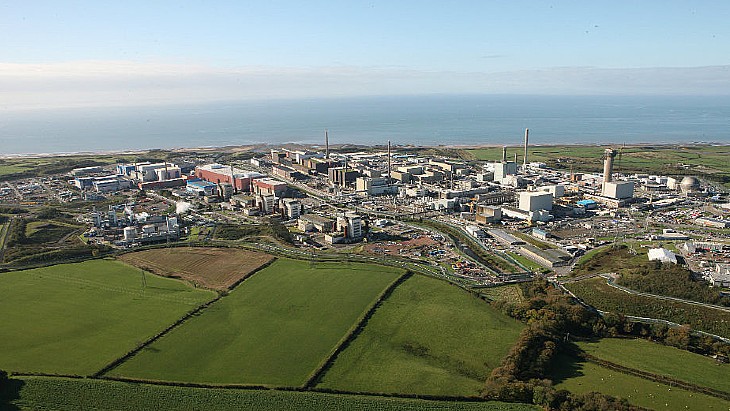
(Image: Sellafield Ltd/Gov.uk)

Four separate lots went to competitive tenders and form part of the Decommissioning and Nuclear Waste Partnership which lasts for an initial nine years with an option to extend for a further six years.

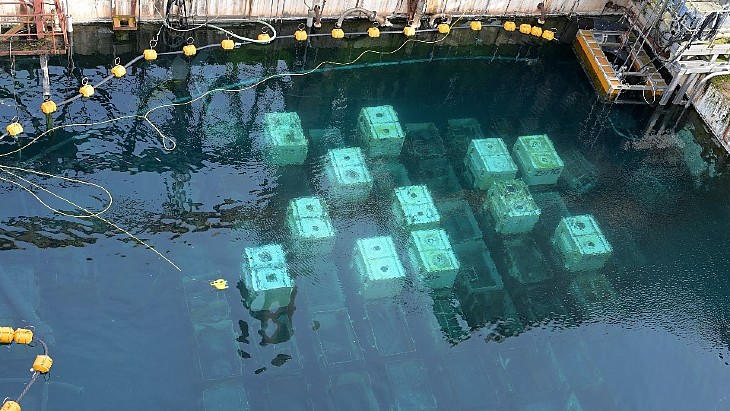
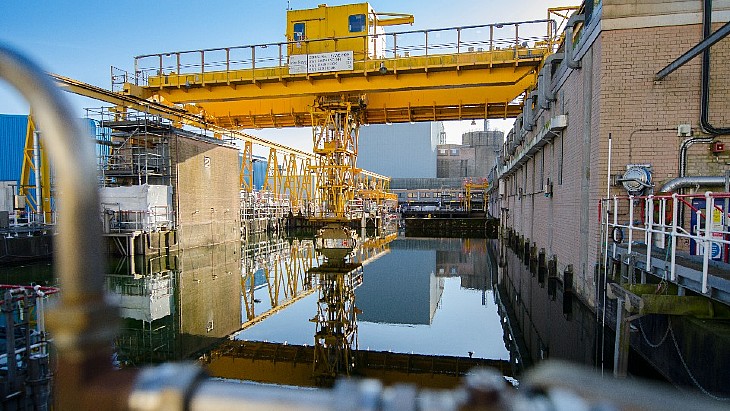
The Decommissioning Alliance, a joint venture of Amentum, AtkinsRéalis and Westinghouse, has been selected for the retrieval of hazardous waste from legacy ponds at the site. These include the First Generation Magnox Storage Pond - which operated for more than 30 years from the late 1950s - and the Pile Fuel Storage Pond, which was built in the 1940s.


The First Generation Magnox Storage Pond (Image: Sellafield Ltd/Gov.uk)

Retrievals from the Pile Fuel Storage Pond began in the 1990s, 20 years after it entered care and maintenance. Sellafield says that 76% of the radioactivity has been removed and it is now entering its final phase of retrievals: "Our priority today is to continue to retrieve the remaining inventory of waste in the pond - solid ILW, sludge, sludge debris and fuel materials - so it can be treated appropriately and placed into safe, modern storage."


The Pile Fuel Storage Pond (Image: Sellafield Ltd/Gov.uk)

Amentum said it plans to "deploy pioneering, robot-operated technology such as the Bulk Sludge Retrieval Tool, a vacuum suction system for safely removing radioactive sludge from nuclear fuel ponds and pumping it away for processing and packaging. Remotely operated vehicles will be used for inspection, sampling, retrieval, cutting and handling of waste in high-radiation zones, enabling safer and more efficient high-hazard reduction, while innovative methods for transferring radioactive waste from storage skips into shielded containers will improve efficiency by reducing overall volumes".

A2R, a joint venture of Altrad and AtkinsRéalis, and Amentum have been selected to carry out remediation work. Amentum said their work includes clearance of redundant buildings to make land available for re-ruse and also preparatory decommissioning work on the old nuclear reactor complexes and fuel facilities.

Nuclear Decommissioning Solutions combines Altrad, Cavendish Nuclear and Shepley Engineers, with its framework director Mike Lacey saying of its retrievals lot: "We will work together with our Sellafield Silos Partner to support this nationally important programme of retrieval operations. By working collaboratively, in all aspects of our joint undertaking, we will create a lasting legacy and safe environment for future generations. In committing to the proposed long-term sustainability plan with our partners, which will be at the heart of everything we do, we will continue to deliver real social impact and value to the local communities."

Chris Conboy, managing director - Nuclear EMEA, AtkinsRéalis, on behalf of A2R, said: "Altrad and AtkinsRéalis have supported Sellafield Ltd for over three decades. Through the DNWP Framework, we will continue to deploy our knowledge, commitment and shared expertise to deliver complex remediation and waste treatment services safely, sustainably, and efficiently, helping Sellafield to deliver on its mission and in the lasting impact it has on the local community."

Loren Jones, senior vice president, Amentum, said: "We will bring world-class, multidisciplinary, end-to-end engineering and project management capabilities to the UK's most significant nuclear legacy challenges while also delivering outstanding performance on safety, collaboration, social impact and key supply chain management."

John Murphy, operations director, Westinghouse Environmental Services UK and The Decommissioning Alliance Chair, said the alliance was "a world-class blend of engineering, project management and nuclear innovation capabilities. We are delighted that we will be able to bring these to bear in support of Sellafield Ltd's vital mission whilst also delivering significant benefits to the local economy through job creation, training and small and medium-enterprise partnerships”.

James Riddick, Sellafield Ltd chief supply chain officer, said: "Cleaning up the legacy of historic operations on our site is at the heart of our mission. It is important that we achieve this safely, efficiently, and sustainably … we're pleased to welcome our new partners. Their specialist capabilities and teams, working alongside our skilled Sellafield workforce, will help us deliver our mission and drive progress both on site and across our wider community."

Fresh efforts made to facilitate repair of Zaporizhzhia backup power line


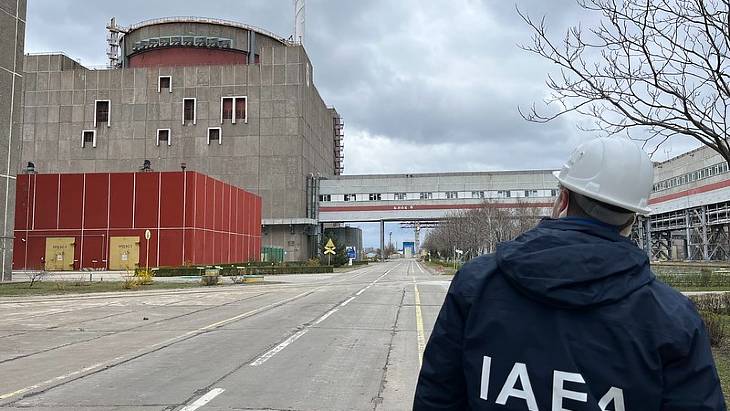
The International Atomic Energy Agency says that negotiations are on-going to allow work to take place to restore a backup external power supply to the Zaporizhzhia Nuclear Power Plant.
 
The IAEA has had experts at the plant since September 2022 (Image: IAEA)

The six-unit plant has been under Russian military control since March 2022. It had 10 external power lines before the war began, but there is currently one line working, and it recently spent a month without external power when that line was lost.

That main external 750 kV power line was fixed last week following an International Atomic Energy Agency (IAEA)-mediated local ceasefire to allow repair works to take place. The backup 330 kV power line was also due to be repaired at the same time, but additional damage was discovered about 1.8 kilometres from the Zaporizhzhia Thermal Power Plant’s switchyard, the IAEA says.

IAEA Director General Rafael Mariano Grossi said: "We continue to work intensively to support the conditions needed for this additional repair work to begin. Restoring this power line is essential to improving the fragile nuclear safety and security situation at the site."

The plant's reactors have been shut down since 2022 but power is still required for safety systems including cooling pumps, the IAEA said. During the loss of external power emergency diesel generators supplied the power but they are not intended to be a long-term solution.

In his latest update on the situation, Grossi also said that there had been the loss of one power line each at South Ukraine Nuclear Power Plant and Khmelnitsky Nuclear Power Plant following military action this week.

Grossi said: "The dangers to nuclear safety continue to be very real and ever-present. I once again call for maximum military restraint in the vicinity of nuclear facilities and full respect of the seven indispensable pillars for nuclear safety and security."

Constellation, Xpansiv team up to launch emission-free energy certificate trading

US utility Constellation and infrastructure provider Xpansiv have announced plans to launch clean energy-based annual emission-free energy certificates on an online trading platform.

The utility - which lays claim to being the USA's largest producer of emissions-free energy, with the nation's largest nuclear fleet - will offer emission-free energy certificates from its clean energy centres in the PJM region on Xpansiv’s CBL spot exchange beginning on 2 December. Constellation and Xpansiv also plan to offer hourly EFECs on the platform in the future, the company said.

Xpansiv will further support the emission-free energy market through its North American Renewables Registry (NAR) which will issue nuclear-energy-based zero-emission certificates (ZECs) providing full-lifecycle traceability from issuance to retirement. The North American Renewables Registry is a leading renewable energy certificate registry with more than 89 GW of renewable energy capacity across the USA, Mexico and Canada.

Renewable energy certificates and emission-free energy certificates both offer ways for organisations to reduce their carbon footprint. The latter represent one megawatt-hour of electricity generated from an emission-free source, typically nuclear energy. According to information from Constellation - which has previously offered emission-free energy certificates to customers bilaterally - they allow businesses to quickly begin their process towards achieving and claiming lower emissions: purchasing emission-free energy certificates matching all or a portion of their electricity usage can be particularly attractive for organisations that are not well-positioned to source their power from onsite renewable sources.

Renewable energy certificates represent the environmental benefits of one megawatt-hour of electricity generated by a renewable power plant.

Constellation Chief Commercial Officer Jim McHugh said the company was focused on providing a "comprehensive suite of commercial products that help customers meet their environmental goals" as demand continues to grow. "We believe the most important energy commodity is a reliable and clean megawatt, and our clean energy resources offer more clean, emissions-free energy than any other energy provider in the US," he said.

"Additional carbon-free power sources are in critical need, and clean energy centres will play a key role in meeting the growing demand for years to come," Xpansiv CEO John Melby said. "Our pioneering launch of clean energy certificate solutions across our registry and exchange demonstrates the power of our comprehensive environmental commodity market infrastructure."

European Investment Bank finance for Olkiluoto upgrades


The European Investment Bank has agreed a EUR90 million (USD104 million) loan for updating automation and control systems and steam separators for Finland’s Olkiluoto units I and II.
 
Olkiluoto units 1 and 2 (Image: TVO)

The upgrades are part of Teollisuuden Voima Oyj’s (TVO) long-term investment programme and are needed under Finnish and European Union legislation. The financing follows a EUR75 million loan agreement in April with the Nordic Investment Bank towards the upgrade programme.

European Investment Bank Vice-President Karl Nehammer said: "By supporting safety upgrades at Olkiluoto, we are helping Finland strengthen its energy mix with reliable, low-carbon power. This investment supports Finland's energy independence and contributes to the EU's goals of ensuring secure and clean electricity for homes and businesses."

TVO Senior Vice-President, Treasury Lauri Piekkari, said: "Long-term financing from the EIB is an excellent complement to our capital market-based debt funding."

The upgrades are described as a key part of maintaining high safety standards and reliability at the plant, and follow other European Investment Bank (EIB)-backed enhancements in 2016.

Olkiluoto units I and II - which were first connected to the grid in September 1978 and February 1980, respectively - currently meet 15% of Finland's electricity TVO is considering extending the operating licences by a further 10-20 years and increasing the power output of each reactor from 890 MW to approximately 970 MWe.

TVO submitted the Environmental Impact Assessment (EIA) report for the project to extend the operation of and uprate Olkiluoto I and II to Finland's Ministry of Economic Affairs and Employment in December 2024 and the EIA reporting stage was completed earlier this month with the ministry issuing its Reasoned Conclusion. According to the Conclusion, the EIA Report meets the requirements laid down in EIA legislation.

The EIB is the long-term lending institution of the European Union, owned by its Member States. The upgrade programme fits with the EU’s "strategic objective of having competitive, emissions-free and secure energy" and the EU’s Energy Roadmap 2050, "which foresees nuclear energy continuing to play a role in the energy mix of Member States that choose to use it".