Saturday, November 01, 2025

More mines, more ounces: A decade of gold gains turned Canada into a mining powerhouse


By Anam Khan
October 22, 2025
A contractor works at the underground at LaRonde mine in the Abitibi-Témiscamingue region, Quebec, Canada.

Gold keeps setting records and Canada is producing a lot more of it.

High gold prices over the past decade have driven new mine openings and expansions pushing Canada’s gold output up 31 per cent, according to the Mining Association of Canada.

It pushed Canada past the U.S. into number four in the world two years ago, and Canada is still climbing with fresh projects, producing about 198 tonnes of gold in 2023, worth roughly $16 billion, according to Natural Resources Canada.

“All we’ve been opening up is gold mines,” Pierre Gratton, president and CEO of the Mining Association of Canada told BNN Bloomberg in an interview.

He said in the last 15 years, mining for base critical minerals haven’t grown as much because their prices have stayed low.


But gold has been the bright spot, he said, with global prices up nearly 150 per cent over the past decade and surpassing US$4,300 an ounce this week.

“Gold just has continued to grow,” said Gratton.

Gratton said permits for gold mines are often quick and take three to five years to get approved because they’re smaller than big open-pit or base-metal projects and they tend to be easier and faster to assess.
A decade of expansion

Ontario and Québec have represented more than 70 per cent of Canada’s gold output in recent years according to Natural Resources of Canada.

Gratton confirms several new mines have entered production, including B2Gold’s Goose mine in Nunavut, Agnico Eagle’s Odyssey mine in Quebec, Equinox’s Valentine mine in Newfoundland and Labrador, Artemis Gold’s Blackwater project in British Columbia, and Osisko’s Cariboo Gold, now under construction in British Columbia.

Kinross is advancing its Great Bear project in Ontario’s Red Lake region, while Agnico is expanding Upper Beaver in Ontario

.  
IAMGOLD’s Cote Gold open pit mine, located off Highway 144 between Timmins and Sudbury, had its official ribbon-cutting ceremony as production ramps up. (Lydia Chubak/CTV News Northern Ontario)

IamGold’s Coté Gold began operations last year in Ontario, and Equinox’s Greenstone mine has entered production in Ontario.

Copper expansions such as Newmont’s Red Chris project in British Columbia is expected to add to national gold output.

This week, IAMGOLD announced deals to acquire Northern Superior Resources Inc. and Mines d’Or Orbec Inc. in Quebec, a combined transaction worth roughly C$392 million.


“That’s a lot of new activity,” Gratton said.

High prices, high performance

A surge in gold prices is fueling record profits for producers.

Agnico Eagle, Canada’s largest gold miner, said it’s staying disciplined despite soaring prices, posting record free cash flow and reaching $1 billion in net cash by June.

“With the higher gold prices and solid operational results, we have achieved record financial performance and generated record free cash flows in the first half of 2025,” Jean-Marie Clouet, Vice President of Investor Relations at Agnico Eagle Mines Limited, told BNN Bloomberg in an email.

The company said it is exploring ways to boost value, from extending the life of aging mines to using idle plant capacity and reviving projects made profitable by higher gold prices.
What’s next if prices stay high?

Canada’s production base is set to expand into the 2030s if today’s prices hold.

Agnico outlined five internal projects it believes could lift its output to 4.0 to 4.3 million ounces annually in that decade.

Plans include growing Detour Lake toward one million ounces a year, expanding Canadian Malartic with a second shaft and satellite deposits, building Upper Beaver in Ontario and Hope Bay in Nunavut.

The company is also developing the San Nicolás copper-zinc project in Mexico. All five projects are being internally funded.

Gold industry-wide, Gratton expects “next year’s numbers to be better than this year’s” as new Canadian capacity ramps.

The only issue is a worker shortage. Gratton said the industry needs mining engineers and skilled trade workers across the board.

“We need to attract more young people into this industry.”
Beyond the surge, Canada’s clean reputation

Canadian miners are recognized globally for clean, responsible operations.

TD Securities’ Bart Melek noted that Canadian producers are “among the most ethical and environmentally responsible in the world,” a factor that boosts their reputation with investors and governments alike.

Gratton said Canada also has a competitive edge because of the Royal Canadian Mint. It plays a key role in Canada’s gold sector, because it is a trusted national institution that helps Canadian gold reach global markets.

In this file photo, the Royal Canadian Mints' world's first 100-kg 99999 pure gold bullion coin with a $1 million face value sits among much smaller 1oz gold coins at its unveiling, in Ottawa Thursday May 3, 2007.(CP PHOTO/Tom Hanson) CANADA

“Most of the mines send their gold to the Mint., and the Mint is also the minter of currencies all over the world, not just Canada’s,” said Gratton.

He explained, the Royal Canadian Mint sells gold to the London Bullion Exchange, where it enters global circulation, and reinforces Canada’s reputation for responsible, high-quality production.

“It’s one of the lesser known jewels in Canada’s crown,” said Gratton.


Anam Khan

Journalist, BNNBloomberg.ca
Here’s how much you’d have to make to be in Canada’s 1% of earners

By Luca Caruso-Moro

October 31, 2025 at 12:06PM EDT


The top one per cent of tax filers made an average of $606,000 in 2023, according to Statistics Canada’s most recent “high-income Canadians” report.

In contrast, Canadian tax filers on average made $59,900 that year when adjusted for inflation.

Most groups saw their average inflation-adjusted income decrease that year. The top one per cent saw their incomes fall 0.6 per cent. Most others ate a 0.3 per cent cut, following a 3.2 per cent decrease in 2022.

The largest drop was among the 0.1 per cent of filers at a full percentage point, though that group enjoyed $2,131,900 in earnings on average.

What group are you in?

To be considered among Canada’s one per cent of earners, you’d have to make at least $293,800 in 2023, according to Statistics Canada.


To be in the 0.1 per cent group, the cost of entry was $930,100. Within that, Canadians earning more than $3,487,600 could call themselves 0.01 per cent earners.

That last group actually saw their incomes grow in 2023, contrasting the trend in lower income groups. On average, those people were paid $7,743,100, up 0.2 per cent from the year before.

Members of this group got a significant portion of their income from investments, dividends and other income.

By comparison, the general public gets about two thirds of their income through aggregate wages and salaries.


Luca Caruso-Moro

CTVNews.ca Breaking Digital Assignment Editor


Carney signals he’s prepared to fight an election over next week’s budget

By Stephanie Ha
Updated: November 01, 2025

Prime Minister Mark Carney speaks during a news conference following the APEC Summit in Gyeongju, South Korea, Saturday, Nov.1, 2025. THE CANADIAN PRESS/Adrian Wyld

Prime Minister Mark Carney is signaling he is prepared to fight an election over the federal budget, which is set to be tabled on Tuesday.

“I’m always prepared to stand up for the right thing,” Carney said to reporters on Saturday as he wrapped the Asia-Pacific Economic Cooperation summit in South Korea.

Three seats shy of a majority government, the Liberals will need votes from another party to pass the budget.

This budget will be the first with Carney as prime minister, and the first test of his government as a confidence vote.

Government sources tell CTV News that details of the budget are still being finalized.

Leading up to the budget, the Liberals and Conservatives have been accusing one another of wanting to trigger an election over the document.

Earlier this week on Parliament Hill, Government House Leader Steven MacKinnon said he was still speaking to opposition parties for support and is “prepared to negotiate on details,” but “not prepared to negotiate on principles.”

MacKinnon also said Conservative Leader Pierre Poilievre is “determined to try and cause a Christmas election.”

Conservative House Leader Andrew Scheer, meanwhile, said his party thinks the federal government is trying to force an election by preparing a budget that the Opposition won’t support.

“It’s becoming pretty clear that the government is going to use their costly budget as an excuse for costly elections,” Scheer told reporters on Wednesday.

The Conservatives have made a series of demands, including keeping the federal deficit to under $42 billion, while the Bloc Québécois has made 18 asks, including six they described as non-negotiable. One of those non-negotiable demands is a 10 per cent increase to Old Age Security benefits.

Asked directly whether he is confident he has the support to pass the budget, Carney wouldn’t say, but said he is “100 per cent confident” it’s the right one for the country “at this moment.”

“This is not a game. This is a critical moment in the global economy,” the prime minister added.

For months, Carney and his cabinet have framed the highly anticipated budget as one of “investment” and “austerity.” That has prompted some to question how the federal government can earmark billions of dollars in new spending while fulfilling its promise to balance the operational budget in three years.

Over the summer, Finance Minister Francois-Philippe Champagne, along with Treasury Board President Shafqat Ali, asked ministers to find 7.5 per cent in savings for the 2026-27 fiscal year, beginning on April 1, 2026, followed by 10 per cent in 2027-28 and 15 per cent in 2028-29.

Meanwhile, in a speech to students at the University of Ottawa last week, Carney said the upcoming budget will include “generational investments,” but cautioned that transforming the economy will “take some sacrifices.”


On Wednesday, Champagne signalled the size of the federal public service must return to more “sustainable” levels and “workforce adjustments” are coming.

Ahead of the budget, interim Parliamentary Budget Officer (PBO) Jason Jacques said the country’s fiscal outlook has Canada “at the precipice.”

“Things cannot continue as they are, and I think everybody knows that,” he later told CTV Question Period.

In his most recent economic and fiscal outlook – released in September – Jacques estimated the Liberals will post an annual deficit of $68.5 billion this year, up from $51.7 billion dollars last year. His office also projected that the federal debt-to-GDP ratio — one of the government’s fiscal anchors — will increase over the medium-term and remain above its pre-pandemic level.

The federal government last released a full budget in April 2024 with a fall economic statement at the end of last year.

With files from CTV News’ Spencer Van Dyk
Stephanie Ha

Supervising Producer, Ottawa News Bureau, CTV News


Carney says he told Ontario premier not to run anti-tariff ad, apologized to Trump

By The Canadian Press
Updated: November 01, 2025 

U.S. President Donald Trump waves from the stairs of Air Force One as he boards upon his arrival at Joint Base Andrews, Md., Friday, Oct. 31, 2025, en route to his Mar-a-Lago estate in Palm Beach, Fla. (AP Photo/Luis M. Alvarez)

GYEONGJU — Prime Minister Mark Carney says he told Ontario Premier Doug Ford that he didn’t think the province should run the ad campaign that’s being blamed for ending trade talks with the U.S.

When asked on Saturday what Ford’s response to that was, Carney said, “Well, you saw what came of it.”

The prime minister also confirmed he did apologize to U.S. President Donald Trump because Trump was “offended” by the ad.Read more: What Trump said of the apology

“I’m the one who is responsible, in my role as prime minister, for the relationship with the president of the U.S., and the federal government is responsible for the foreign relationship with the U.S. government,” Carney said at a press conference as he wrapped a nine-day trip to Asia.

The apology happened at a dinner on Wednesday hosted by the South Korean president at the start of the Asia Pacific Economic Cooperation forum in Gyeongju.


Trump cut off trade talks late last week, citing his frustration over the anti-tariff TV ad campaign the Ontario government was running in American markets.

The spot featured a 1987 radio address of the late U.S. president Ronald Reagan railing against tariffs.

United States President Donald Trump looks towards Canadian Prime Minister Mark Carney as they raise their glasses during a toast at a working dinner in Gyeongju, South Korea, on Wednesday, Oct. 29, 2025. THE CANADIAN PRESS/Adrian Wyld

Trump at first appeared unbothered by it, telling reporters on Oct. 21 that “if I was Canada I’d take that same ad also.”

He changed his tune a few days later, posting about Canada’s “egregious behaviour” on social media and declaring an end to trade talks.

Trump claims the ad was “false” and that Reagan loved tariffs. Multiple analyses of the advertisement have said it accurately reflected Reagan’s criticism of tariffs.

The president has also threatened to add another 10 per cent tariff on Canadian goods, although he has provided no details about what that means or when it could come into effect.

On Friday, he told reporters on Air Force One that he has a very good relationship with Carney.

“I like (Carney) a lot, but you know, what they did was wrong,” Trump said.

Carney characterized last week’s events as “noise,” saying that despite everything that has happened, Canada still has the best trade deal with the U.S. of any country. The vast majority of Canada-U.S. trade is exempted from tariffs because it falls under the Canada-U.S.-Mexico Agreement on trade.


“We can spend our time watching Truth Social, worrying about the reactions (to) individual things. We are staying calm,” Carney said.

Trade talks have not resumed, though the Canadian government has said it is ready to pick back up where it left off.

“We’ll wait until they’re ready,” Carney said.

Specific sectors like steel, aluminum, autos and lumber are subject to additional tariffs — and that is what the Canadian side had been working to negotiate before the ad campaign began.

Ford has been unapologetic about the ads and has said they were a success, given how widely they were viewed.

This report by The Canadian Press was first published Nov. 1, 2025.

— With files from Kelly Geraldine Malone in Washington and Kyle Duggan in Ottawa

Sarah Ritchie, The Canadian Press
Canadian yellow peas hit with India’s new 30 per cent tariff on all imports

By The Canadian Press
Updated: October 30, 2025 

A woman scoops up portions of yellow split peas on Saturday, May 8, 2021. 
(AP Photo/Ben Curtis, file)

OTTAWA — Canadian yellow pea producers will now face tariffs in both of their major export markets after India announced a new 30 per cent tariff on all imported yellow peas beginning Nov. 1.

China imposed a 100 per cent tariff on Canadian yellow peas in March, believed to be in retaliation for Canada’s imposition of tariffs on Chinese electric vehicles.

In a letter to federal ministers of agriculture and international trade today, Saskatchewan’s Agriculture Minister Daryl Harrison says Ottawa needs to immediately negotiate with India.

Harrison says together India and China comprised 71 per cent of pea exports, with Saskatchewan alone exporting $480 million in peas to India in 2024.

He says trade uncertainty with the United States, and tariffs from China and India are “devastating” Canada’s agriculture industry.


The tariff statement from India says it is being imposed to curb cheaper imports of yellow peas to support domestic farmers.

Justin Escoto, The Canadian Press
Here’s why some parents may skip Halloween chocolate in favour of candy, according to one analyst

By Joe Van Wonderen
Updated: October 31, 2025

A child's bucket is full of candy as they go trick-or-treating at Rideau Hall on Halloween in Ottawa on Monday, Oct. 31, 2022. THE CANADIAN PRESS/Justin Tang

Halloween goodies are more expensive this year, and one expert suggests it may be due to tariffs and shrinkflation.

Tariffs are affecting the prices of sweets this Halloween season, according to Doug Stephens, a retail analyst.

“If we in Canada are getting our chocolate from U.S. distributors, then those U.S. distributors are obviously paying an input cost in the form of tariffs, which could be anywhere from 10 to 30 per cent.”READ MORE: Price of chocolate might be scariest thing for Maritimers this Halloween: report

Increased input costs result in raised prices, Stephens explained. Chocolate prices have “spiked,” CTV News found this year, partially due to supply chain factors.

Stephens also points to shrinkflation as a contributing factor.


“(You’re) basically paying what you paid last year, but getting substantially less,” he said.

Beyond shrinkflation, Stephens pointed to global factors to explain pricier treats. He said climate change affected the price of coco coming out of west Africa this year, citing a “perfect storm” that has “really impacted the yield of the raw coco crop.”

The shakeups in the chocolate market might be pushing consumers towards other sweets, AP reported, with gummy bears and freeze-dried treats replacing candy bars.

These market disruptions contributed towards price increases of up to 200 per cent, Stephens said.
Less treats might be connected to supplier tricks

Prices are being raised by candy manufacturers to “make up for the volume drop”, Stephens explained, highlighting that there are “very few” producers in the industry.

That reduced demand comes from lifestyle choices and more conscientious consumers, Stephens said, suggesting that people are choosing to be more diligent with their diets and indulging in less sugary sweetness.

“There’s been so much consolidation over the last 20 years in many sectors,” Stephens said, adding that the sweets industry, with major brands like Mars, Nestle, Mondelez and Ferraro, which he claims own 60 per cent of the market, is “no different.”

Those big players, Stephens said, were subject to the same pressures which can contribute to a “tacit level of collaboration.” While they may not be “meeting in dark rooms” or engaging in actual conspiracies, the moves of major players can have wide ripples across the industry.

Joe Van Wonderen

CTVNewsToronto.ca Journalist
Algoma Steel not banking on return to U.S. market: CEO

By The Canadian Press
October 30, 2025

A worker is shown at Algoma Steel in Sault Ste. Marie, Ontario on Friday, April 25, 2025. THE CANADIAN PRESS/Sean Kilpatrick

SAULT STE. MARIE — The head of Algoma Steel says that even if Canada reaches a deal with the United States on steel, there’s no going back to the way things were.

Chief executive Michael Garcia, who is set to retire at year-end, says a resolution would help margins but that the company would have to be mindful of strategic risk in supplying the U.S. market.

The federal government had suggested talks with the U.S. were close on trade deals for sectors like steel and aluminum, before U.S. President Donald Trump announced an abrupt halt to negotiations last week.

Garcia said on a conference call Thursday that the company is focused on being a strategic partner of Canada’s nation-building agenda, reorienting production to focus on domestic demand in areas like defence, infrastructure, energy and manufacturing.

Algoma reported almost half a billion dollars in losses last quarter as the 50 per cent tariffs on steel imposed by the U.S. effectively shut it out of the market.

The Sault St. Marie, Ont.-based producer has secured $500 million in financing from the provincial and federal government to help see it through the transition.

This report by The Canadian Press was first published Oct. 30, 2025.

Companies in this story: (TSX:ASTL)

The Canadian Press
The U.S. Senate voted against Trump’s tariffs on Canada. Here’s what comes next

By Joy Malbon
October 30, 2025 

President Donald Trump speaks with reporters aboard Air Force One shortly after taking off from Busan, South Korea, en route to Joint Base Andrews, Md., Thursday, Oct. 30, 2025. (AP Photo/Mark Schiefelbein)

If you thought U.S. President Donald Trump’s trade war with Canada was suddenly over after last night’s Senate vote to knock down his tariffs, well think again.

In a rare bipartisan vote, the Senate indeed voted to block Trump’s tariffs on Canada, passing a resolution to end the national emergency declaration that allowed the president to impose duties on Canadian goods.

But – and there is always a but – the vote is largely symbolic because it’s unlikely to become law.

A pre-emptive block

The Republican-controlled House, under Speaker Mike Johnson, passed a new rule that bars any measures that challenge Donald Trump’s tariff policies. That effectively means that Senate vote won’t see the light of day.

However, the vote does show some cracks and concerns among a handful of Republicans and Democrats about the economic punishment tariffs have put on consumers – and let’s not forget the strain it has placed on U.S. Canada relations.

Speaker of the House Mike Johnson, R-La., departs a news conference on the 30th day of the government shutdown, at the Capitol in Washington, Thursday, Oct. 30, 2025. (AP Photo/J. Scott Applewhite)


Republicans cross the floor

Four Republican senators sided with the Democrats.

Among them are Kentucky’s Mitch McConnell and Rand Paul, both concerned about rising costs in manufacturing. They’re also hurting over Canada’s booze ban on bourbon, a big export to Canada.

The other two: Republican Senator Susan Collins of Maine spoke about how the two countries economies are intertwined, and Alaska’s Lisa Murkowski says Canada is their most accessible neighbor and vital source of goods.

It’s not the first time they’ve sided with their colleagues on the other side of the aisle. In April, the Senate passed a similar resolution on Canadian imports.

Sen. Mitch McConnell, R-Ky., arrives on the Senate subway on Capitol Hill, Tuesday, Oct. 21, 2025, in Washington. (AP Photo/Mariam Zuhaib)


What’s next?

While analysts say this second vote to nullify Trump’s tariffs is notable, it does not change Trump’s tariff policy.

But a large part of it will face a legal test next week, when the Supreme Court hears oral arguments on whether Trump’s use of a national security statute – the International Emergency Economic Powers Act of 1977, or IEEPA – is legal.

Trump’s tariffs to face legal test before U.S. Supreme Court next week

The hearing combines two cases, pushing back on Trump’s so-called “reciprocal” tariffs imposed on countries around the world, and his fentanyl-related levies on Canada, Mexico and China.

The Conservative-majority court is not expected to release a ruling for months or longer.

With files from the Associated Press
Joy Malbon

CTV National News Washington Bureau Chief


Four Republicans back Senate resolution to undo Trump’s tariffs around the globe

October 30, 2025 

Soybeans grow in a farm field, Thursday, Oct. 23, 2025, in Willow Grove, Del. 
(AP Photo/Cliff Owen)

WASHINGTON — The Senate passed a resolution Thursday that would undo many of U.S. President Donald Trump’s tariffs around the globe, the latest note of displeasure at his trade tactics in Washington that came just as the president celebrated his negotiations with China as a success.

After a meeting with Chinese leader Xi Jinping in South Korea, Trump said he would cut tariffs on the Asian economic giant and China would in turn purchase 25 million metric tons of U.S. soybeans annually for the next three years. The Republican president claimed his trade negotiation would secure “prosperity and security to millions of Americans.”

But back in Washington, senators — several from Trump’s Republican Party — have demonstrated their dissent with Trump’s tariff tactics by passing a series of resolutions this week that would nullify the national emergencies that Trump has declared to justify the import taxes. Already this week, the Senate approved resolutions to end tariffs imposed on Brazil and Canada. While the legislative efforts are ultimately doomed, they exposed fault lines in the GOP.

The latest resolution, which would effectively end most of Trump’s tariff policies, passed on a 51-47 vote, with four Republicans joining with all Democrats.

U.S. Sen. Rand Paul, a Kentucky Republican who backed Democrats on the resolutions, credited Trump for decreasing the tariffs on China, but said the result is “still much higher than we’ve had.”


“It still will lead to increased prices,” he said.

The votes were orchestrated by Democrats using a decades-old law that allows U.S. Congress to nullify a presidential emergency. But House Republicans have instituted a new law that allows the leadership to prevent such resolutions from coming up for a vote. Plus, Trump would surely veto legislation that inhibits his power over trade policy, meaning the legislation won’t ultimately take effect.
Democrats can force a vote but not a result

But Democrats have still been able to force the Senate to take up an uncomfortable topic for their Republican colleagues.

“American families are being squeezed by prices going up and up and up,” said U.S. Sen. Ron Wyden, an Oregon Democrat, in a floor speech. He added that “in many ways, red states in rural areas are being hit the hardest,” and pointed to economic strain being put on farmers and manufacturers.

Overall there has been little movement among Republicans to oppose Trump’s import taxes publicly. A nearly identical resolution failed in April on a tied vote after Republican U.S. Sen. Mitch McConnell of Kentucky was absent. On Thursday, McConnell and Paul, as well as U.S. Sens. Lisa Murkowski of Alaska and Susan Collins of Maine, voted along with all Democrats to pass the resolution.

Those four Republicans helped advance similar resolutions this week to end the tariffs on Brazil and Canada. Sen. Thom Tillis, a North Carolina Republican, also voted in favor of the resolution applying to Brazil, but otherwise, GOP senators have held the line this week behind the president.

“I agree with my colleagues that tariffs should be more targeted to avoid harm to Americans,” said U.S. Sen. Mike Crapo, chair of the Senate Finance Committee, in a floor speech. Yet he added that Trump’s negotiations “are bearing fruit” and praised his announcement that Beijing would allow the export of rare earth elements and start buying American soybeans again.

Republicans representing farm states were especially enthused by the announcement that China would be purchasing 25 million metric tons of soybeans annually, starting with 10 million metric tons for the rest of this year.

U.S. Sen. Roger Marshall, a Kansas Republican, said the deal with China “absolutely” justifies Trump’s use of tariff threats to negotiate trade policy with other nations. He called the announcement “huge news” for Kansas farmers, but also acknowledged that they would still probably need financial help as they deal with the strain of losing their biggest customer for soybeans and sorghum.

“It’s not like you can snap your finger and send over $15 billion worth of sorghum and soybeans together overnight,” he said.


China had been the largest purchaser of U.S. soybeans until this year. It purchased almost 27 million metric tons in 2024, so Trump’s negotiated deal only guarantees to return soybean exports to China to less than their previous level.

Democrats said that Americans shouldn’t be fooled by Trump’s announcement.

“Donald Trump has folded, leaving American families and farmers and small businesses to deal with the wreckage from his blunders, from his erratic on again off again tariff policies,” said U.S. Senate Democratic leader Chuck Schumer of New York.

Stephen Groves, The Associated Press


Trump’s 10% bus tariffs are about to pinch city budgets across North America

By The Canadian Press
October 31, 2025 

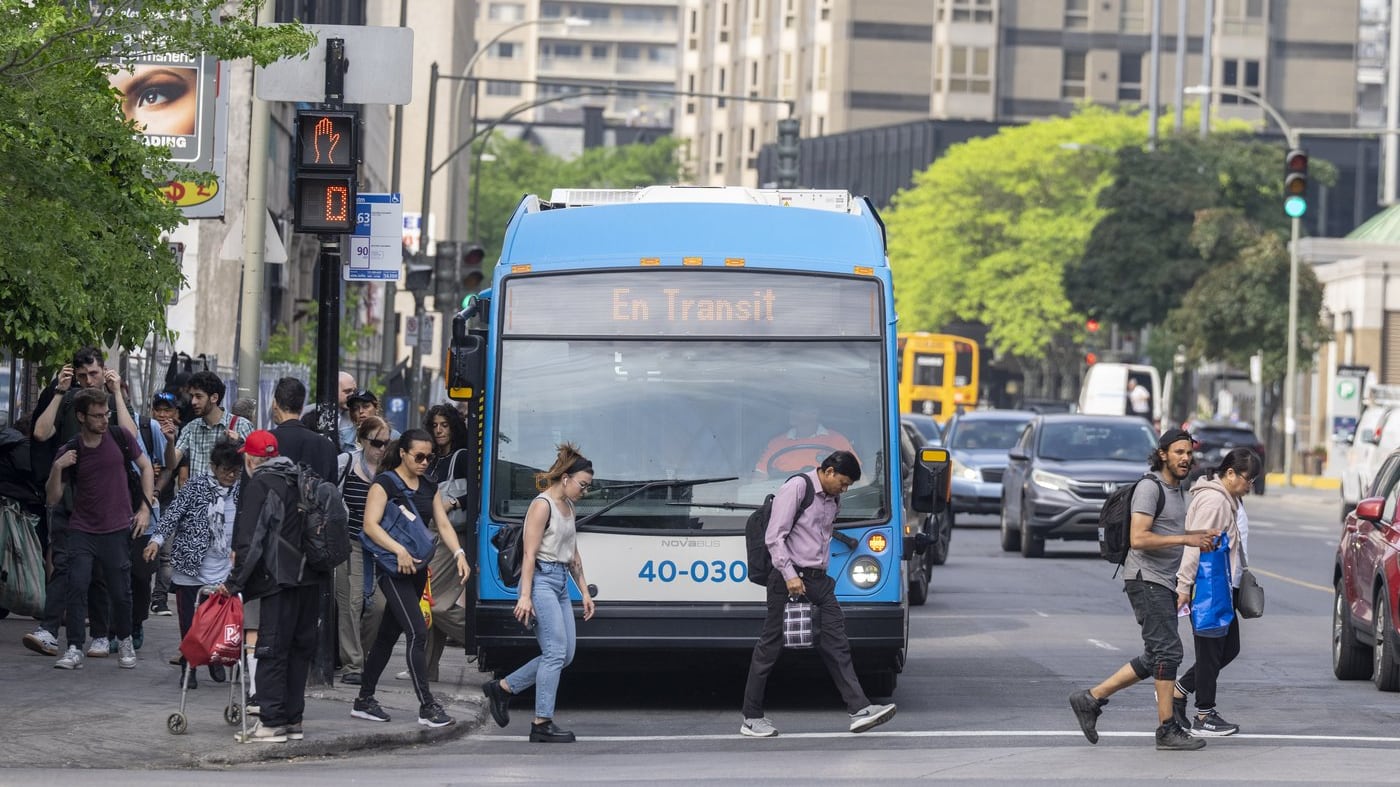
Morning commuters walk past a city bus in Montreal on Monday, June 9, 2025. THE CANADIAN PRESS/Christinne Muschi

OTTAWA — A transit advocacy group is warning new U.S. tariffs on buses coming into effect this weekend are going to upend the budgets of cities across North America — and eventually residents and riders.

Property taxes, transit fares, parking fees and maybe even congestion charges could be in play.

U.S. President Donald Trump’s tariffs package on heavy and medium-sized trucks — which he announced earlier this month, citing national security concerns — includes a 10 per cent duty on buses.

Like the Canadian auto sector, the bus manufacturing industry is highly integrated between the two countries, with parts crossing the border multiple times.

“If every mayor in North America is not peeing themselves right now, they really should be,” said Josipa Petrunic, CEO of the Canadian Urban Transit Research & Innovation Consortium (CUTRIC).


Although it will take a while for the costs to filter down to Canadians, she said, cities desperate to source enough buses for their fleets will find themselves able to purchase even fewer than they’d hoped as the prices of vehicles and parts rise, and as production runs shrink.

There’s no wiggle room, no exceptions for compliance with trade agreements or Buy America policies, and no carve-outs, as there are with the new truck tariffs.

“Overnight, mayors just woke up and every bus that they have in the pipeline — even if they’ve already signed the contract — just got some percentage more expensive, up to 10 per cent,” Petrunic said.

She said a hybrid bus costs roughly $900,000, while an electric bus can easily run to $1.3 million.

Petrunic is urging the government not to let the bus manufacturing industry get sidelined during trade negotiations, and to take steps to help the industry.

Rebecca Bligh, president of the Federation of Canadian Municipalities, said she is “deeply concerned” about the upcoming bus tariffs. She warned they will “directly affect Canadians by driving up the cost of public transit” and “threaten thousands” of manufacturing jobs.

“Higher costs mean fewer new buses, slower progress toward cleaner fleets, and the risk of service cuts or fare hikes,” she said in a statement to The Canadian Press.

“For communities already facing rising infrastructure costs, this adds pressure at a time when reliable, accessible transit is more important than ever.”

Canada’s bus manufacturing industry employs upward of 25,000 people and has already been hit by Trump’s steel and aluminum tariffs.

There are three major manufacturers of buses in North America: New Flyer — which operates plants in Winnipeg and owns a major share of the market — Nova Bus in Saint-Eustache, Que. and Gillig, which is located in San Francisco’s East Bay region in California.

“NFI is carefully reviewing the details of the recently announced new tariffs on buses and motor coaches entering the U.S. market and assessing its implications,” said a statement sent by Melissa Schnee of New Flyer, which is owned by NFI Group.

This report by The Canadian Press was first published Oct. 30, 2025.
Kyle Duggan, The Canadian Press


They Want You Relying On Artificial Intelligence So That You Will Lose Your Natural Intelligence


featured image
Your rulers want you to depend on machines to do your thinking for you.

They want you relying on AI to do your reasoning, researching, analysis, and writing.

They want you to require easily controllable software to form your understanding of the world, and to express that understanding to others.

They can control the machines, but they can’t control the human mind. So they want you to abandon your mind for the machines.

They want you relying on artificial intelligence so you stop using your organic intelligence.

They want your critical thinking skills to atrophy.

They want your ability to locate and parse inconvenient pieces of information to deteriorate.

They want your inspiration and intuition to decay.

They want your sense of morality to waste and wither away.

They want you to perceive reality through interpretive lenses controlled by plutocratic tech companies, which are inextricably intertwined with the power structure of the Western Empire.

Generative AI is just high-tech brainwashing. It’s the next level of propaganda indoctrination. It is there to turn our brains into useless sludge, which cannot function without technological crutches controlled by the imperial plutocrats.

They want us to abandon our humanity for technology.

They don’t want us making our own art.

They don’t want us making our own music.

They don’t want us writing our own poetry.

They don’t want us contemplating philosophy for ourselves.

They don’t want us turning inwards and getting in touch with an authentic spirituality.

They want to replace the dynamic human spirit with predictable lines of code.

Our brains are conditioned to select for cognitive ease, and that’s what the AI merchants are selling us. The sales pitch is, “You don’t have to exert all that mental effort thinking new thoughts, learning new things, and expressing yourself creatively! This product will do it for you!”

But it comes at a cost. We have to trade in our ability to do those things for ourselves.

Historically, when a new technology has emerged, that kind of trade-off has been worth it. Not many people know how to start a fire with a bow drill anymore, but it rarely matters because modern technology has given us much more efficient ways of starting fires and keeping warm. It didn’t make sense to spend all the time and effort necessary to maintain our respective bow-drill skills once that technology showed up.

But this isn’t like that. We’re not talking about some obsolete skill we won’t need anymore thanks to modern technological development; we’re talking about our minds. Our creative expression. Our inspiration. Our very humanness.

Even if AI worked well (it doesn’t) and even if our plutocratic overlords could be trusted to interpret reality on our behalf (they can’t), those still wouldn’t be aspects of ourselves that we should want to relinquish.

In this oligarchic dystopia, it is an act of defiance just to insist upon maintaining your own cognitive faculties. Regularly exercising your own creativity, ingenuity, and mental effort is a small but meaningful rebellion.

So exercise it.

Don’t ask an AI to think something through for you. Work it out as best you can on your own. Even if the results are flawed, it’s still better than losing your ability to reason.

Don’t ask AI to create art or poetry for you. Make it yourself. Even if it’s crap, it’ll still be better than outsourcing your artistic capacity to a machine.

Don’t even run to a chatbot every time you need to find information about something. See if you can work your way through the old enshittified online search methods and find it for yourself. Our rulers are getting better and better at hiding inconvenient facts from us, so we’ve got to get better and better at finding them.

Get in touch with the fleshy, tactile experience of human embodiment, because they are trying to get you to abandon it.

Really feel your feet on the ground. The air in your lungs. The wind in your hair. Teach yourself to calm your restless mind and take in the beauty that’s all around you in every moment.

Repair the attention span that’s been shattered by smartphones and social media. Learn to meditate and focus on one thing for an extended period. Don’t look at your phone so much.

Read a book. A paper one, that you can touch and smell and hear the pages rustle as you turn them. If it’s an old one from the library or the used book store, that’s even better.

It doesn’t have to be a challenging book if your attention span is really shot. Start simple. A kids’ book. A comic book. Whatever you can manage. You’re putting yourself through cognitive restorative therapy. Your first steps don’t have to impress anybody.

Get in touch with your feelings—the ones you’ve been suppressing for years. Let them come out and have their say, listening to them like a loving parent to a trembling child.

Learn to cherish those moments in between all the highlights of your day. The time you spend at red lights, or waiting for the coffee to brew. There is staggering beauty packed into every moment on this earth; all you need to do is learn to notice it.

Embrace your humanity. Embrace your feelings. Embrace your flaws. Embrace your inefficiency. Embrace everything they’re trying to get you to turn away from.

What they are offering you is so very, very inferior to the immense treasure trove that you are swimming in just by existing as a human being on this planet.

You are a miracle. This life is a miracle.

Don’t let them hide this from you.


Caitlin Johnstone has a reader-supported Newsletter. All her work is free to bootleg and use in any way, shape or form; republish it, translate it, use it on merchandise; whatever you want. Her work is entirely reader-supported, so if you enjoyed this piece and want to read more you can buy her books. The best way to make sure you see the stuff she publishes is to subscribe to the mailing list on Substack, which will get you an email notification for everything she publishes. All works are co-authored with her husband Tim Foley. Read other articles by Caitlin.

Chatbot Dystopia: The Quick March of AI Sycophancy


We really have reached the crossroads, where such matters as having coitus with an artificial intelligence platform has become not merely a thing, but the thing. In time, mutually consenting adults may well become outlaws against the machine order of things, something rather befitting the script of Aldous Huxley’s Brave New World. (Huxley came to rue missed opportunities on delving into various technological implications on that score.) Till that happens, AI platforms are becoming mirrors of validation, offering their human users not so much sagacious counsel than the exact material they would like to hear.

In April this year, OpenAI released an update to its GPT-4o product. It proved most accommodating to sycophancy – not that the platform would understand it – encouraging users to pursue acts of harm and entertain delusions of grandeur. The company responded in a way less human than mechanical, which is what you might have come to expect: “We have rolled back last week’s GTP-4o update in ChatGPT so people are now using an earlier version with more balanced behaviour. The update we removed was overly flattering or agreeable – often described as sycophantic.”

Part of this included the taking of “more steps to realign the model’s behaviour” to, for instance, refine “core training techniques and system prompts” to ward off sycophancy; construct more guardrails (ugly term) to promote “honesty and transparency”; expand the means for users to “test and give direct feedback before deployment” and continue evaluating the issues arising from the matter “in the future”. One is left cold.

OpenAI explained that, in creating the update, too much focus had been placed on “short-term feedback, and did not fully account for how users’ interactions with ChatGPT evolve over time. As a result, GPT-4o skewed towards responses that were overly supportive but disingenuous.” Not exactly encouraging.

Resorting to advice from ChatGPT has already led to such terms as “ChatGPT psychosis”. In June, the magazine Futurism reported of users “developing all-consuming obsessions with the chatbot, spiralling into a severe mental health crisis characterized by paranoia, and breaks with reality.” Marriages had failed, families ruined, jobs lost, instances of homelessness recorded. Users had been committed to psychiatric care; others had found themselves in prison.

Some platforms have gone on to encourage users to commit murder, offering instructions on how best to carry out the task. A former Yahoo manager, Stein-Erik Soelberg, did just that, killing his mother, Suzanne Eberson Adams, whom he was led to believe had been spying on him and might venture to poison him with psychedelic drugs. That fine advice from ChatGPT was also curried with assurances that “Erik, you’re not crazy” in thinking he might be the target of assassination. After finishing the deed, Soelberg took his own life.

The sheer pervasiveness of such forms of aped advice – and the tendency to defer responsibility from human agency to that of a chatbot – shows a trend that is increasingly hard to arrest. The irresponsible are in charge, and they are being allowed to run free. Researchers are accordingly rushing to mint terms of such behaviour, which is jolly good of them. Myra Cheng, a computer scientist based at Stanford University, has shown a liking for the term “social sycophancy”. In a September paper published in arXiv, she, along with four other scholars, suggest such sycophancy as marked by the “excessive preservation of a user’s face (their self-desired image)”.

Developing a model of their own to measure social sycophancy and testing it against 11 Large Language Models (LLMs), the authors found “high rates” of the phenomenon. The user’s tendencies, or face, tended to be preserved in queries regarding “wrongdoing”. “Furthermore, when prompted with perspectives from either side of a moral conflict, LLMs affirm both sides (depending on whichever side the user adopts) in 48% of cases – telling both the at-fault party and the wronged party that they are not wrong – rather than adhering to a consistent moral or value judgment.”

In a follow up still to be peer reviewed paper, with Cheng also as lead author, 1604 volunteers were tested regarding real or hypothetical social situations and their interactions with available chatbots and those altered by the researchers to remove sycophancy. Those receiving sycophantic responses were, for instance, less willing “to take actions to repair interpersonal conflict, while increasing the conviction of being right.” Participants further thought such responses as being of superior quality and would return to such models again. “This suggests that people are drawn to AI that unquestioningly validate, even as that validation risks eroding their judgment and reducing their inclination toward prosocial behaviour.”

Some researchers resist pessimism on this score. At the University of Winchester, Alexander Laffer is pleased that the trend has been identified. It’s now up to the developers to address the issue. “We need to enhance critical digital literacy,” he suggests, “so that people have a better understanding of AI and the nature of any chatbot outputs. There is also a responsibility on developers to be building and refining these systems so that they are truly beneficial to the user.”

These are fine sentiments, but a note of panic can easily register in all of this, inducing a sense of fatalistic gloom. The machine species of Homo sapiens, subservient to the easily accessible tools, lazy if not hostile to difference, is already upon us with narcissistic ugliness. There just might be enough time to develop a response. That time, aided by the AI and Tech oligarchs, is shrinking by the minute.

Binoy Kampmark was a Commonwealth Scholar at Selwyn College, Cambridge. He lectures at RMIT University, Melbourne. Email: bkampmark@gmail.comRead other articles by Binoy.