Sunday, November 02, 2025


Global study reveals how bacteria shape the health of lakes and reservoirs


Biochar Editorial Office, Shenyang Agricultural University

Exploring bacteria communities in lakes and reservoirs: a global perspective 

image: 

Exploring bacteria communities in lakes and reservoirs: a global perspective

view more 

Credit: Haihan Zhang, Yayun Huang, Xiang Liu, Ben Ma & Siying An


A sweeping new study has uncovered global patterns in how bacteria thrive and interact within lakes and reservoirs, offering new insights into the invisible forces that sustain freshwater ecosystems. The research, led by scientists from Xi’an University of Architecture and Technology, analyzed hundreds of samples from around the world to understand how geography, temperature, and nutrients shape bacterial communities in water and sediments.

Freshwater ecosystems are vital sources of drinking water, biodiversity, and economic activity, yet they are increasingly threatened by pollution, eutrophication, and climate change. Microorganisms, though microscopic, play a central role in keeping these systems healthy. They recycle nutrients, break down organic matter, and help maintain water quality. Despite their importance, few studies have compared bacterial communities across different continents and habitats on a global scale.

In this new work, the researchers synthesized bacterial community data from 247 water and 131 sediment samples collected across six continents. By combining datasets from 80 studies, they created the most comprehensive global database to date on bacteria living in freshwater lakes and reservoirs. The analysis revealed that sediments host richer and more diverse bacterial populations than surface waters, mainly because sediments offer more stable and nutrient-rich microhabitats.

The team also found that temperature, nutrient levels, and geographic location strongly influence the diversity and structure of bacterial communities. In water samples, total phosphate was linked to lower bacterial diversity, while in sediments, nitrogen had a stronger effect. Structural equation models showed that both latitude and nutrient concentrations jointly drive global variations in bacterial diversity. Lakes closer to the equator, where temperatures and nutrient inputs are higher, tend to support more diverse bacterial ecosystems.

Proteobacteria emerged as the most dominant bacterial group worldwide, found in both nutrient-poor and nutrient-rich environments. Cyanobacteria and Actinobacteria were more common in eutrophic, or nutrient-enriched, waters, which aligns with their known ability to thrive under high nutrient conditions. Using random forest analysis, the study also identified temperature as the most important environmental factor shaping bacterial communities in water, while nitrate nitrogen was most influential in sediments.

Network analysis revealed that bacterial communities in water form more complex and interconnected relationships than those in sediments. The dynamic nature of aquatic environments, where oxygen, light, and nutrient levels change rapidly, appears to foster stronger ecological interactions among bacterial species. In contrast, the more stable conditions of sediments lead to simpler but specialized microbial networks.

These findings provide a global picture of how bacterial life forms the foundation of freshwater ecosystem health. By linking microbial patterns to environmental conditions, the study offers valuable tools for predicting changes in water quality and ecosystem stability under global warming and human pressures.

“Our work highlights the importance of bacteria as sensitive indicators of environmental change,” said corresponding author Professor Haihan Zhang. “Understanding these microbial patterns at a global scale will help improve water quality monitoring and guide sustainable management of freshwater resources.”

The study, titled “Exploring bacteria communities in lakes and reservoirs: a global perspective,” was published in Biocontaminant on October 31, 2025.


=== 

Journal reference: Zhang H, Huang Y, Liu X, Ma B, An S. 2025. Exploring bacteria communities in lakes and reservoirs: a global perspective. Biocontaminant 1: e003   https://www.maxapress.com/article/doi/10.48130/biocontam-0025-0003   


=== 

About Biocontaminant:
Biocontaminant is a multidisciplinary platform dedicated to advancing fundamental and applied research on biological contaminants across diverse environments and systems. The journal serves as an innovative, efficient, and professional forum for global researchers to disseminate findings in this rapidly evolving field.

Follow us on FacebookX, and Bluesky


Biochar reimagined: Scientists unlock record-breaking strength in wood-derived carbon


Biochar Editorial Office, Shenyang Agricultural University
Unlocking extreme anisotropy in monolithic biochar hardness 

image: 

Unlocking extreme anisotropy in monolithic biochar hardness

view more 

Credit: Qinyi Wang, Yating Ji, Mohana M. Sridharan, Lizhong Lang, Yu Zou, Donald W. Kirk & Charles Q. Jia


Researchers from the University of Toronto have uncovered how the hidden architecture of wood can give rise to biochar materials as strong as mild steel. Their new study reveals that the direction in which biochar is measured can make its hardness vary by more than twenty-eight times, opening the door to a new generation of sustainable carbon materials for use in energy devices, filters, and structural applications.

Biochar, a carbon-rich material produced by heating biomass in the absence of oxygen, has long been valued for its environmental uses such as soil improvement and pollution cleanup. Yet its mechanical properties have been largely overlooked, limiting its potential in engineering and energy technologies. The new research, published in Biochar X, explores how monolithic biochar, solid blocks of carbonized wood that preserve the natural structure of the original material, can achieve exceptional strength and durability.

The team, led by Professor Charles Jia and his colleagues at the Green Technology Laboratory, analyzed biochar made from seven wood species including maple, pine, bamboo, and African ironwood. By heating the samples between 600 and 1,000 degrees Celsius, they found that temperature and wood type both had major effects on hardness. African ironwood biochar reached an axial hardness of 2.25 gigapascals, comparable to mild steel, while hemlock showed extreme directional differences, with its axial hardness exceeding transverse hardness by 28.5 times.

Using advanced micro- and nano-indentation techniques, the researchers were able to measure hardness at both structural and microscopic scales. They discovered that the striking anisotropy, the difference between axial and transverse hardness, originates from the wood’s hierarchical pore network rather than the carbon itself. At the nanoscale, the hardness of all samples was remarkably uniform, suggesting that intrinsic cell-wall properties remain consistent regardless of species or direction.

The study also revealed strong correlations between hardness, bulk density, and carbon content. Denser biochar with higher carbon fractions resisted deformation more effectively. This relationship provides a quantitative foundation for tailoring biochar’s performance by adjusting the choice of feedstock and pyrolysis conditions.

“These findings show that biochar is not just an environmental material, it is a structural one,” said Professor Jia. “By preserving the natural architecture of wood, we can design sustainable carbon materials with targeted mechanical properties suitable for specific industrial applications.”

Potential uses include high-strength electrodes for energy storage, lightweight carbon composites, and flow-directional filters for environmental systems. The ability to fine-tune mechanical anisotropy could allow engineers to match material design to real-world performance needs, such as strength along one axis or flexibility in another.

The research provides the first quantitative framework for designing monolithic biochar with predictable mechanical behavior, bridging the gap between materials science and carbon sustainability. It also highlights how traditional natural structures, like the grain of wood, can guide innovation in next-generation carbon technologies.

The study, titled “Unlocking extreme anisotropy in monolithic biochar hardness,” was published in Biochar X on October 21, 2025.


=== 

Journal reference: Wang Q, Ji Y, Sridharan MM, Lang L, Zou Y, et al. 2025. Unlocking extreme anisotropy in monolithic biochar hardness. Biochar X 1: e007  https://www.maxapress.com/article/doi/10.48130/bchax-0025-0007   


=== 

About the Journal: 

Biochar X is an open access, online-only journal aims to transcend traditional disciplinary boundaries by providing a multidisciplinary platform for the exchange of cutting-edge research in both fundamental and applied aspects of biochar. The journal is dedicated to supporting the global biochar research community by offering an innovative, efficient, and professional outlet for sharing new findings and perspectives. Its core focus lies in the discovery of novel insights and the development of emerging applications in the rapidly growing field of biochar science. 

Follow us on FacebookX, and Bluesky.  

100 US local leaders will attend COP30 in ‘show of force’


By AFP
October 30, 2025


Gina McCarthy previously served as a climate advisor to former president Joe Biden, and as ex-president Barack Obama's environment chief - Copyright AFP Khaled DESOUKI

More than a hundred American state and local leaders will attend next month’s COP30 climate talks in Brazil, including governors, state officials and mayors, even as the Trump administration is expected to stay away.

“We are showing up in force,” Gina McCarthy, co-chair of the “America Is All In” coalition told reporters on a call Thursday.

The group represents around “two-thirds of the US population and three quarters of the US GDP, and more than 50 percent of US emissions,” said McCarthy, who served as a climate advisor to former president Joe Biden, and as ex-president Barack Obama’s environment chief.

President Donald Trump announced he was withdrawing the United States from the Paris climate accord for a second time on his return to office in January.

But McCarthy said that would not halt American participation in global climate efforts.

“We’ll deliver on the promises we made to the American people and our international colleagues,” she said. “Local leaders here have authority to act on their own behalf, to take climate action at home and abroad.”

She pointed to the work of the 24-state “US Climate Alliance” that have slashed emissions by a quarter relative to 2005 while growing their economies.

Because the Paris accord requires a one-year notice period for withdrawal, the United States remains a party for a few more months.

But Democratic Senator Sheldon Whitehouse, who was also on the call, said it appeared unlikely the administration would send an official delegation to COP, given it had not put in embassy support for the Americans attending.

“But who knows?” added Whitehouse. “This is a very mercurial administration. They can decide at the last minute to send a plane to Belem, full of climate deniers and fossil fuel operatives.”

While Trump also exited the Paris deal in his first term, his administration has gone further this time, exerting its clout to boost fossil fuels globally.

This includes, for example, threatening countries with retaliatory measures if they agreed to a carbon pricing system by the UN’s International Maritime Organization, effectively curtailing its implementation.

Climate advocates fear the administration could seek to withdraw from the UN Framework Convention on Climate Change — the treaty that underpins the Paris Agreement.

Doing so could prevent future administrations from re-entering the deal, but it is not clear if the executive branch has the legal authority to undo a Senate-ratified treaty.

UN climate fund posts record year as chief defends loans


By AFP
October 30, 2025


Mafalda Duarte, head of the UN's Green Climate Fund defended the use of loans -- a touchy topic given concerns about increasing lower income nations' debt - Copyright AFP Jung Yeon-je


Issam AHMED

The head of the UN’s flagship climate fund has announced a record-breaking year for approving projects in vulnerable countries, crediting red-tape-cutting reforms for the achievement that includes a major desalination project in Jordan.

In an interview ahead of the COP30 talks in Brazil next month, Mafalda Duarte, executive director of the Green Climate Fund, also defended the use of loans — a touchy topic given concerns about raising lower income nations’ debt.

Headquartered in Songdo, South Korea and operational since 2015, the GCF is the world’s largest multilateral climate fund and has now committed $19.3 billion — with a goal of reaching $50 billion by 2030.

It announced a record $3.26 billion in greenlighted projects this year, significantly more than the $2.9 billion from its second-best year in 2021.

“In this current geopolitical environment, of course, you know having such a significant, record commitment from the largest multilateral Climate Fund is a positive signal among many less positive signals,” Duarte told AFP.

The GCF was created to channel funds from the world’s rich countries, historically most responsible for climate change, to developing nations, helping them adapt to a warming world and transition to low emissions economies.

But US disengagement from the Paris climate process and infighting in Europe, where some countries have slashed foreign aid, have cast a pall over global funding efforts.

Even so, said Duarte, “with relatively small amounts of money, we can actually accomplish a lot in terms of private sector capital mobilization.”

The new projects include $295 million for the Jordan Aqaba-Amman Water Desalination and Conveyance Project, described as “life or death” by the country, which is grappling with water scarcity.

It is the GCF’s largest single financing package to date and aims to catalyze a project valued at roughly $6 billion by offsetting risk for larger lenders.


– Accountability, not announcements –


Duarte, a Portuguese national who worked in international development but shifted to climate after witnessing its impacts in Africa, credited the stronger financing pace to bureaucratic reforms she has pursued since stepping in to lead the GCF in 2023.

“I came with a reform agenda to try to place GCF as a benchmark, an example of what it could look like: an institution that is efficient, agile and much more aligned with the speed and scale of investments that are needed,” she said.

Her goals include cutting project review times from two years to nine months, and reducing the time to accredit partner institutions, like national agencies and banks, from three years to nine months.

The Jordan funding, like much of the work of the GCF, combines loans and grants.

Countries in the Global South and international nonprofits have long criticized loans, saying they deepen debt burdens and leave low-income countries repaying more than they receive.

But Duarte said that while grants were appropriate for the most vulnerable nations, they couldn’t always be justified, for example when assisting private sector partners to turn a profit.

In Jordan’s case, the project is expected to be eventually profitable, while the grant funding is for the initial stages so that households can access water affordably once the system is operational.

When it does give loans, the GCF prides itself on “concessionality,” meaning very low interest rates — far better deals than middle income countries with poor investment ratings could hope to get on the commercial market.

It argues that grants, which account for around 45 percent of its outlay, cannot achieve the scale of financing required to deliver the Paris accord goal of limiting warming to 1.5C.

Duarte, who stopped eating meat to help align her personal life with her climate work, said that for her a successful COP would be one that centered on “accountability” — not flashy new pledges, but delivering on existing promises.

Otherwise, she warned, future generations would look back unkindly.

“They will look at us and really think, how could you guys be so slow to get it?”


How the arts and science can jointly protect nature


University of California - Merced
Types of interactions between the arts and conservation 

image: 

Different types of interactions between the arts and conservation

view more 

Credit: Jagoba Malunbres-Olarte


A new study by a large international team of conservation scientists and artists explores how growing synergies between conservation and the arts can unveil many mutual benefits and fresh approaches to intractable conservation problems. “These collaborations can generate new knowledge, attract funding, boost visibility, and even catalyze behavioural change”, says Ivan Jarić, researcher from the University of Paris-Saclay in France and the Czech Academy of Sciences, and lead author of the study. “By working together, artists and conservationists can co-create ideas, uncover new perspectives on conservation challenges, and develop more innovative, effective solutions.”

The arts can bring powerful contributions to conservation — provide inspiration, stimulate innovation, enhance well-being, and provide new ways to understand and analyze complex issues. Artists can further strengthen scientific communication, education, publishing, marketing, and fundraising efforts, while also shaping public attitudes and social norms. In return, conservation can support the arts with expert knowledge, scientific data, natural materials, funding, and guidance on sustainable art practices.

While collaborations between the arts and conservation are growing, they still face major challenges. These include limited funding, institutional resistance, and narrow views of career opportunities in both fields. Artistic methods are sometimes viewed as lacking scientific rigour, making some conservationists hesitant to engage. Additionally, the rise of generative AI introduces new complexities and risks that require open dialogue, transparency, and shared ethical standards among collaborators. Art has the power to shape public perceptions of nature—but can also unintentionally misrepresent biodiversity through stylized, simplified, or sensationalized framing, reinforce stereotypes, or marginalize local and Indigenous perspectives.

To avoid these pitfalls, we stress the need for respectful, reciprocal partnerships that recognize artists as equal contributors—not just as tools for outreach or fundraising”, explains Christina Lux from the University of California, Merced, another author of the study. “We argue that embracing creative approaches requires conservationists to advocate for collaboration on artists’ terms, valuing the depth and diversity of knowledge that art can bring to conservation.”

Strengthening collaborations between the arts and conservation will require increased funding, institutional support, and recognition of the unique value that artists can bring to interdisciplinary teams. Developing clear, shared language and tools to assess the effectiveness of such partnerships is also key.

Conservationists are well-positioned to work alongside artists, particularly through shared commitments to public engagement and social action. “We call on academic and conservation institutions to create space for this work, including artist-in-residence programs and integrated interdisciplinary initiatives”, suggests Stephanie Januchowski-Hartley from Florida International University, another author of the study. “Ultimately, deeper synergies between artists and conservationists can lead to broader public support—benefiting not just conservation and the arts, but the health of the planet as a whole.

Egypt opens grand museum in lavish, pharaonic ceremony


By AFP
November 1, 2025


The Grand Egyptian Museum, decades in the making, is part of plans to draw more tourists to Egypt - Copyright AFP Khaled DESOUKI


Lobna MONIEB

Egypt at last opened the $1 billion Grand Egyptian Museum on Saturday as performers dressed in white tunics embroidered with designs inspired by ancient frescoes, greeted guests.

“Today, as we celebrate together the opening of the Grand Egyptian Museum, we are writing a new chapter in the history of the present and the future,” Egyptian President Abdel Fattah al-Sisi told a gathering of dignitaries, sitting in the museum’s square.

Cairo has pinned great hopes on the long-delayed museum, which is a key plank of plans to revive the tourism industry so vital to its troubled economy.

It will be home to tens of thousands of objects dating back more than six millennia.

The audience a the opening watched a spectacular display of light and music, with the pyramids towering in front of them.

On giant screens above, scenes from celebrations in Tokyo and Rio de Janeiro played out against the backdrop of Egypt’s ancient monuments.

Dozens of performers dressed in elaborate Pharaonic costumes, their foreheads crowned with golden wreaths and sceptres in hand, played traditional tunes as a laser show depicting pharaohs and fireworks lit up the night sky above the museum.

“It is a living testimony to the genius of the Egyptian human, who built the pyramids and inscribed on the walls the story of immortality,” Sisi said, referring to the new institution.

– A dream coming true –

On Saturday morning, roads around the museum were cordoned off and security tightened ahead of the opening, with giant banners draped from buildings and strung across streets — advertising the launch.

“This is the dream that all of us imagined. We all dreamed that this project would be realised,” Egyptian Prime Minister Mostafa Madbouly told a press conference in Cairo on Saturday.

Set on a gentle slope overlooking the Giza Plateau, just beyond the shadow of the pyramids, the museum was built with major financial and technical support from Japan, and spreads across nearly half a million square metres.

Madbouly said that the “largest part of construction, finishing and bringing this global landmark to its current form occurred during the past seven to eight years”.

More than two decades in the making, the GEM faced multiple delays due to setbacks related to political unrest, regional conflicts and the Covid-19 pandemic.

The museum houses more than 100,000 artefacts, half of which will be on display, making it the world’s largest collection devoted to a single civilisation, according to Egyptian officials.

Inside, visitors will enter vast, light-filled halls with soaring ceilings and sand-coloured stone walls that echo the surrounding desert.

At the centre of the main atrium stands an 83-tonne statue of Ramses II, the pharaoh who ruled Egypt for 66 years and presided over its golden age.

Unlike the cramped, century-old Egyptian Museum in central Cairo, the GEM features immersive galleries, precision lighting, virtual-reality exhibits and even a children’s museum.

One highlight is a live conservation lab, visible through floor-to-ceiling glass, where visitors can watch restorers assembling a 4,500-year-old solar boat buried near Khufu’s pyramid, built to carry his soul across the sky with the sun god Ra.

The undisputed star of the show, however, is King Tutankhamun’s collection of more than 5,000 objects, many displayed together for the first time.

– Tourism hopes –

The museum opens to the public on Tuesday, showcasing thousands of funerary artefacts previously scattered across Egypt.

Egypt’s tourism sector, a vital source of foreign currency and jobs, has been repeatedly shaken over the past decade and a half, from the 2011 uprising to waves of unrest and sporadic terrorist attacks in the aftermath.

In recent years, tourism has shown signs of recovery, with 15 million visitors travelling to Egypt in the first nine months of 2025 and generating $12.5 billion, up 21 percent from a year earlier.

Egyptian tourism minister Sherif Fathy expected on Saturday total tourist arrivals to stand at 18 million by the end of this year.

He told reporters the government expects the museum to draw five million visitors annually, adding that it currently welcomes 5,000 to 6,000 visitors each day.

“We hope to increase that to 15,000 daily,” said Fathy
Two Louvre heist suspects a couple with children: prosecutor


By AFP
November 2, 2025


Thieves wielding power tools raided the Louvre, in broad daylight, taking just seven minutes to steal jewellery worth an estimated $102 million - Copyright AFP R. Satish BABU

Small-time criminals are believed to be behind the spectacular jewel heist at the Louvre, the top Paris prosecutor said Sunday, adding that two of the suspects are a couple with children.


Last month, a four-man gang raided the Louvre, the world’s most-visited art museum, in broad daylight, taking just seven minutes to steal jewellery worth an estimated $102 million before fleeing on high-powered scooters.

The men parked a truck with an extendable ladder below the museum’s Apollo Gallery which housed the French crown jewels, clambered up, broke a window and used angle grinders to cut into glass display booths containing the treasures.

Two men suspected of being the pari who broke into the gallery while their two accomplices waited outside have been detained, charged and remanded in custody.

Prosecutors said on Saturday that two more suspects — a man and a woman — were also charged and remanded in custody. At least one other perpetrator remains at large, French officials say.

The stolen jewels have not been recovered.

On Sunday, Paris prosecutor Laure Beccuau said that the suspects, who lived in the French capital’s bleak northern suburbs, were believed to be small-time criminals and not members of organised crime groups.

Their profiles do not correspond to those “generally associated with the upper echelons of organised crime,” Beccuau told France Info.

Beccuau said that the the 37-year-old man and 38-year-old woman charged on Saturday were a couple and had children together.

They have “denied any involvement”, Beccuau said.

The man “refused to make any statement”, the prosecutor added.

The man has been charged with organised theft and criminal conspiracy, while his partner has been charged with complicity in organised theft and criminal conspiracy.

The woman was in tears as she appeared at a Paris court on Saturday, saying she feared for her children and for herself.

The couple were arrested after their DNA was found in the basket lift used during the robbery.

“Significant” DNA evidence linking the man to the crime was found in the basket lift, the prosecutor said. Traces of his partner’s DNA were also found but they might have been transferred there through contact with a person or object, she added.

“All this will need to be investigated,” Beccuau said.

The man’s criminal record contained 11 previous convictions, most of them for theft, she said.

The first two men arrested earlier were also known to the police for having committed thefts.
Nobel economist lays out '3 types of lasting damage' from Trump's economic 'rampage'


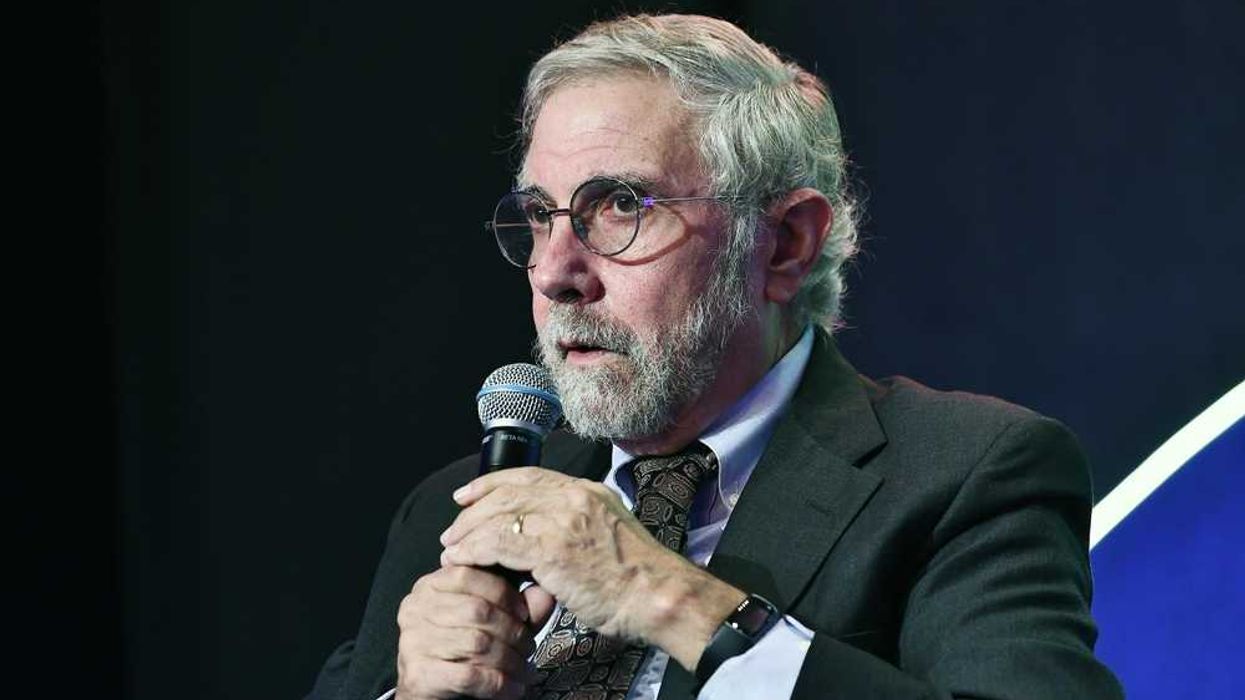
Economist Paul Krugman during FIDES 2023, held at the Windsor Hotel
 in Rio de Janeiro, Brazil on September 25, 2023 (A.PAES/Shutterstock.com)
October 30, 2025
ALTERNET

When Commerce Secretary Howard Lutnick and Treasury Secretary Scott Bessent are interviewed by friendly media outlets, they typically argue that President Donald Trump's steep new tariffs will create enormous prosperity in the United States.

But liberal economist Paul Krugman has a very different view.

In a Substack column posted on October 30, Krugman warns that even if Trump abandoned his protectionist trade policy, the U.S. economy would suffer long-lasting damage.

"A little over six months ago," Krugman explains, "Donald Trump shocked the world by announcing a huge jump in tariffs to levels not seen since the 1930s. Most of these tariffs were clearly illegal and have been so ruled by lower courts — but it's anyone's guess how an extremely submissive Supreme Court will rule. Since then, he has backed off some tariffs but imposed others, some on bizarre grounds — a Canadian province ran an ad he didn't like! — creating constant uncertainty."

Krugman goes on to identify "three types of economic damage" that "Trump's chaotic tariff policies" have inflicted: (1) "higher prices for American producers and consumers," (2) "economic uncertainty," and (3) "the global loss of American credibility."

"Even if the worst in terms of prices and uncertainty is over," Krugman argues, "it's clear that Trump's tariffs have inflicted lasting damage on the U.S. economy as well as the global economic order."

During the United States' 2024 presidential race, Trump attacked then-President Joe Biden and then-Vice President Kamala Harris relentlessly on inflation — which he promised to lower "on Day 1" if he returned to the White House.

But Krugman laments that prices are going up, not down, during Trump's second presidency.

"Inflation has accelerated since Donald Trump went on his tariff rampage," the liberal economist warns. "Late last year, before Liberation Day and all that, professional forecasters expected 'core' consumer prices — which exclude volatile food and energy prices — to rise 2.4 percent over the course of 2025. The latest official reading, and the last we may get for a while, put core inflation at 3 percent. More direct evidence comes from the Pricing Lab, which relies on retail prices posted online — something we need to do while the shutdown lasts, and maybe afterwards if Trump corrupts the official statistics."

Krugman continues, "I've used their data before. They show a significant bump in the prices of imported goods, especially compared with their declining trend BT (before Trump). In a new paper, the Pricing Lab analyzes its data and estimates that the Trump tariffs have raised overall consumer prices by 0.7 percent."


Economist Paul Krugman: MAGA is showing its 'cruel intentions ahead of schedule'


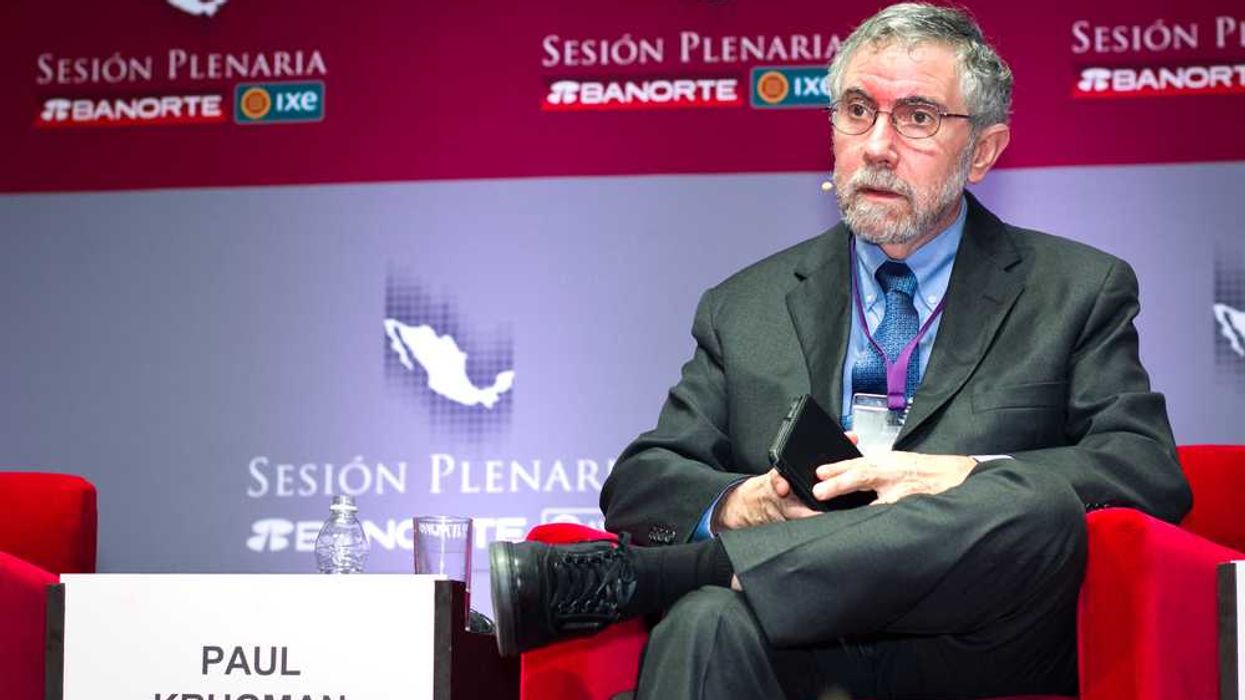
Economist Paul Krugman at the Banorte Ixe Plenary Session 2013 
on November 6, 2023 (Tanya Lara/Shutterstock.com)

October 31, 2025
ALTERNET

When Donald Trump was running against Democrats in the United States' 2024 presidential race — first presumptive nominee Joe Biden, then the actual nominee Kamala Harris — he focused on the economy relentlessly, especially inflation, and promised to lower prices "on Day 1." And that messaging did a lot to help Trump get past the finish line, although not by a lot: Trump won the popular vote by roughly 1.5 percent.

Liberal economist Paul Krugman, during the race, repeatedly warned that Trump was not sincere about helping the working class. And in a Halloween 2025 column published on his Substack page, Krugman argues that the partial shutdown of the United States' federal government is inspiring Republicans to show their "cruel intensions" much sooner than planned.

"Federal funding for SNAP, the nutritional aid program still often referred to as food stamps, ends tonight," Krugman explains. "This will have catastrophic impacts on 42 million Americans, the great majority of them children, elderly or disabled. Millions more Americans are about to discover that health insurance has become vastly more expensive, in many cases unaffordable. Why are these terrible things happening? At a basic level, they're happening because Republicans want them to happen."

The former New York Times columnist continues, "Drastic cuts in food stamps and health care programs were central planks in Project 2025, which is indeed the Trump Administration’s policy platform, and were written into legislation in the One Big Beautiful Bill Act that passed last summer. But the consequences of these cruel intentions weren't supposed to be this obvious this early."

Harris and other Democrats were vehement critics of the Heritage Foundation's far-right Project 2025 proposals, and Krugman believes that Trump was being totally disingenuous when he claimed to know nothing about Project 2025.

However, the GOP, according to Krugman, didn't want its attacks on safety-net programs to become obvious before the 2026 midterms.

"Why the backloading?" Krugman argues. "Presumably, Republicans believed that by the time Americans woke up to what was happening, the GOP would have effectively consolidated one-party rule, making future elections irrelevant. Instead, however, the mask is being ripped off right now, well ahead of schedule."

Paul Krugman's full Substack column is available at this link.