Sunday, November 02, 2025

Deceiving the Irish


OCTOBER 30, 2025

Geoffrey Bell reviews The Root of All Evil: The Irish Boundary Commission, by Cormac Moore, published by Irish Academic Press.

This is a narrative of why Ireland remains an issue.

The Irish Boundary Commission was part of the 1921 Anglo-Irish Treaty that concluded the War of Irish Independence fought between the British state and the Irish Volunteers from 1919 to 1921. The Treaty was negotiated by Sinn Féin, who had won over 70 per cent of the Irish vote in the British general election of 1918, and the Tory-dominated coalition led by the Liberal Lloyd George.

The Treaty gave the 26 counties in the south and west of Ireland a semi-independence from Britain. It allowed the six northeastern counties the right to opt out of a united state but also promised a 32-county Council of Ireland and, crucially for the Sinn Féin leadership, the Boundary Commission. This would review the boundaries of the north/south division laid down in the 1920 Government of Ireland Act that had partitioned Ireland and established in the six northeastern counties a devolved parliament and government, subservient to those in the UK.

There is a general consensus among historians that British negotiators told their Irish nationalist counterparts that once the Commission reported the northern semi-state would be untenable, and reunification would follow. “For four years,” Lord Longford (Thomas Pakenham) wrote in his classic Peace By Ordeal, “they were misled.” ‘They’ were the Sinn Féin negotiators and the first government of what became the Irish Free State. Those misleading were Lloyd George who led the UK government in the Treaty negotiations, his post-Treaty government, then Britain’s first Labour administration, led by Ramsay MacDonald, and then Baldwin’s Conservative government.

Moore begins by citing Article 12 of the Treaty, saying the Commission would “determine in accordance with the wishes of the inhabitants, so far as may be compatible with economic and geographic conditions, the boundaries between Northern Ireland and the rest of Ireland.” With hindsight, the Sinn Féin negotiators needed to pursue what weight was to be given to the inhabitants’ wishes as opposed to the economic and geographic conditions. But such concerns were not prominent in the Treaty negotiations, nor in its immediate aftermath. This was partly because the Irish nationalists were assured by Lloyd George and his colleagues that the Commission would find in their favour: that the six counties would become four, losing Fermanagh and Tyrone and the cities of Derry and Newry; all areas with nationalist majorities. The northern state would consequently be too small to have a long-term viability. Accordingly, while Irish unity would be delayed it was the most likely prospect once the Commission had done its work.

This assumption was not just logical, it was what Lloyd George promised in private to Michael Collins, the most perceptive of the Sinn Féin negotiators. Yet, the day after he gave these assurances, Lloyd George told his Cabinet that all the six counties would stay British. The mixed messaging was, says Moore, an example of the Lloyd George’s “notorious duplicity.”

Similar contradictions came a few days later when he told the House of Commons that Fermanagh and Tyrone would indeed ‘prefer’ to join the south, but that ‘Ulster’ would end up with increased territory due to the economic and geographical criteria. Sinn Féin did not appear to be listening. They split and fought a southern civil war over the Treaty, but partition was not a central issue because most Irish nationalists remained confident that the Commission would prioritise the wishes of the inhabitants in the disputed counties and cities. There was an exception to this optimism. “England has robbed you of your territory,” claimed Belfast’s Volunteer leader Sean MacEntee in the Irish Dáil (parliament). Replying, Collins maintained that the northeast would rejoin the rest of Ireland “very rapidly”. 

Moore’s judgment is that the Sinn Féin plenipotentiaries who signed the Treaty did so “partly due to Lloyd George’s deceitfulness, but mostly due to their own foolishness.” They were foolish – although some might say naive is more appropriate – in not exploring the wording of the brief for the Commission. They were certainly foolish when they agreed that its membership would be one nominee from the southern Irish government, one from the northern unionists and a UK-appointed chairman, an arrangement always likely to give unionism a two-thirds majority.

While criticism of Collins and even more so of Arthur Griffith, the leading Sinn Féin negotiator, is understandable, in their defence it is highly relevant that their assumptions were shared by the northern Irish unionists. That the Border Commission was “the root of all evil” was a warning not from the nationalist side, but from James Craig, the first prime minister of the devolved northern administration. The northern unionists were not signatories to the Treaty, but they went along with most of it. However, they refused to officially cooperate with the Commission, citing the probable loss of Fermanagh and Tyrone. Their press denounced the “Judas-like treachery” of the British for allowing this prospect.

This collective opposition helped to delay the establishment of the Commission, as did the Irish civil war and the determination of successive British governments, Tory and Labour, to kick this can down the road. Again, Moore uses the word “duplicitous” to describe the behaviour of the Tories and then Labour’s MacDonald and the ultra-unionist J.H. Thomas to both delay the Commission’s formation and influence its outcome.

It did not meet until nearly three years after the Treaty was signed. By then much had changed. Collins had been assassinated by opponents of the Treaty in August 1922. Arthur Griffith, the Sinn Fein leader, died earlier in the same month. The Irish Free State administration that followed,  was led by W.T. Cosgrave who was both a poor negotiator and, contends Moore, someone whose “real concern” was not a united Ireland, but “the territory under his control, the [26-county] Irish Free State.”

The northern unionists took the Commission seriously, despite their leaders’ official boycott. Individuals, local councils, churches, business organisations and others submitted evidence. The local unionist newspapers editorialised. This turned out to be one of the most successful propaganda campaigns in the unionists’ history. It was when slogans were coined that have been echoed ever since. “Not an Inch” was one, referring to their determination to give up nothing to the Free State, whatever the Commission said. “What We Have We Hold” and “This We Will Maintain” were others.

The unionists repeated the threats and denigration of their Irish enemies that had been common in the late nineteenth and earlier twentieth centuries. This time one northern unionist said that to transfer territory to the south would hand it to “a lower civilisation.” Another referred to the Irish language as “a barbarous guttered language… something between cough and spitting.”

Many unionists argued that because Protestants owned more land, factories or paid more rates, their wishes carried more weight than the Catholic poor. There were threats of armed resistance. Moore quotes the Reverend S. T. Nesbitt of Ballyclare, County Antrim saying in April 1924 that “tens of thousands of Ulstermen would rise in their might,” if Tyrone, Fermanagh and other areas were lost.

The composition of the Commission ensured that this was never likely. Eventually, in May 1924, the MacDonald government appointed Richard Feetham as its chairman. He was born in Wales but had spent his career in South Africa and its judicial system. He was very much an empire loyalist, exemplified by his membership of the Round Table movement that promoted closer union between Britain and its dominions. Joining Feetham was Joseph Fisher, who represented the northern unionists. They had refused to nominate anyone, as part of their boycott, so Fisher was appointed by MacDonald, but, it seems, with the approval of James Craig. Fisher was a pillar of the northern unionist establishment and a former editor of the Belfast morning unionist newspaper the Northern Whig.

The nominee of the Free State government was Eoin MacNeill, a supporter of the Treaty, the Minister of Education, and most famously the man who, when a leader of the Irish Volunteers, had ordered them not to participate in the mobilisation of what became the 1916 Rising. Thus, the Commission was composed of two determined unionists and one non-militant Irish nationalist. Not only was this an uneven contest, but by then the British had moved the goalposts, with both MacDonald and Thomas indicating that the promises of Lloyd George to Irish nationalists no longer applied and that the Commission’s role was confined to minor adjustments of the border that had been operating since the 1920 Government of Ireland Act. In other words, the economic and geographical conditions were the priority over the wishes of inhabitants, a contention that echoed the northern unionists.

The first meeting of the Commission was on 6th November 1924. It took its time. In September 1925 Feetham submitted a memorandum to his fellow commissioners. This said  “the wishes of the inhabitants” were “the primary but not the paramount consideration”, adding that even if the inhabitants wanted to change their territorial jurisdiction this had to be by a “substantial” majority and even then the Commission could override these wishes for “economic or geographic” considerations. These guidelines meant little would change.

They were leaked to the Morning Post in early November. It was only when northern nationalists protested that, as Moore comments “it dawned on the Free State government that it was facing a political crisis of magnitude.” MacNeill resigned as a commissioner, although he had largely gone along with his fellow commissioners’ thinking, and the Free State government even abandoned the Council of Ireland promised by the Treaty. The now Tory UK government gave the Irish a sweetener by waiving another article of the Treaty that had required the Free State to make a continuing financial contribution to the UK for war pensions and elements of historic public debt. Thus, says Moore, Cosgrave “abandoned Northern nationalists over money.”

The real winners were James Craig and the northern unionists, who in the final discussions rejected both criticisms of the alleged anti-Catholic sectarianism of his administration and suggestions to change policies associated with this. Well, to be fair, Craig did promise to recruit more Catholics to the RUC, but to be fairer still, this turned out to be another unfulfilled promise.

In the final page of his book, Moore suggests a contemporary relevance when he compares the Treaty’s Article 12 to Schedule 1 (2) of the 1998 Good Friday/Belfast Agreement. This says that the British Northern Ireland Secretary of State has the sole authority to call a border poll on reunification. As such, notes Moore, this “leaves the power in the hands of the British government, with some fearing that this could prevent a border poll.”

This may indeed be a fear, but with Irish nationalism more experienced, its northern part more militant and unionism weaker and divided, it is a fear that can be overcome. Nevertheless, it is important to understand that things can go wrong. This book helps with such an understanding. It is also a significant addition to the historiography of the British Labour Party’s colonial record in Ireland.

Geoffrey Bell’s latest book is The Twilight of Unionism (Verso).


UK

Delays and special treatment protected the state as well as Soldier F


NOVEMBER 2, 2025

Nadine Finch explores the background to the recent acquittal of a soldier involved in Northern Ireland’s Bloody Sunday.

The acquittal of Soldier F at Belfast Crown Court on 23rd October 2025 cannot be reduced to decision of one judge in relation to one individual. What was also on trial was the manner in which the British Army and establishment waged war on Republican dissent in Northern Ireland from 1966 to 1995 – and how they continue to obscure the policies they deployed, and continue to deploy today, in relation to the so-called Troubles. In a complex judgment, Patrick Lynch KC acquitted Soldier F but did not do the same for the British Army.

The actions of Soldier F, a member of the 1st Battalion of the Parachute Regiment, were the result of both the canteen culture of that particular time and regiment and the policies they were expected to implement. These policies had been developed in relation to conflicts resulting from Britain’s history of colonisation and, often, settler colonialism of the type practised in Northern Ireland.

 In his 1971 book Low Intensity Operations: Subversion, Insurgency and Peacekeeping, Frank Kitson used an analogy, borrowed from Mao, to describe the extent to which entire populations needed to be targeted in colonial conflicts. He noted that “in attempting to counter subversion it is necessary to take account of three separate elements. The first two constitute… the Party or Front… and the armed groups who are supporting them… They may be said to constitute the head and body of the fish. The third element is the population and this represents the water in which the fish swim.”

Kitson had assisted the colonial police against the Mau Mau Uprising in Kenya and helped put down insurgencies in what were then Malaya and Oman. He arrived in Northern Ireland in 1970 and took command of the 39th Infantry Brigade of the British Army in Belfast. But his reach was much broader, as his ideas were widely used in training officers and troops. His central theme was that civil disturbances would lead to armed insurrection and that, therefore, counter-insurgency measures were necessary from the point at which there were marches and protests in support of civil and economic rights.

The use of these measures in Northern Ireland led to the very armed conflict they were said to prevent. They also led to deaths, collusion and human rights abuses that the Government is still trying to conceal.  

It was while Kitson was a leading army strategist in Northern Ireland that ten civilians were shot and killed by members of the 1st Battalion of the Parachute Regiment on the Ballymurphy Estate in August 1971. The soldiers were supposed to be arresting those suspected of belonging to the IRA in the past, but they acted on poor intelligence and arrested Catholics on the basis of their religion and the neighbourhoods where they lived, often at random. In Ballymurphy, they also shot civilians, including a priest and a mother of eight, for merely being in the vicinity of the operational base taken over by the battalion. Some were left to die.

No action was taken against these soldiers and this same battalion were then responsible for Bloody Sunday in Derry on 30th January 1972. On that day,13 people were killed and 14 wounded. They had been taking part in a peaceful civil rights protest organised by the Northern Ireland Civil Rights Association. For decades the authorities refused to admit any wrongdoing, even though some protesters had been shot in the back and photos and television footage showed that they were unarmed. The actions by the British Army breached their own Yellow Card instructions and common law protections.  

It was not until 2010, at the conclusion of the Saville Inquiry, that it was found that none of the protestors posed any threat to the soldiers of the 1st Battalion and that the civilians were shot without provocation. Saville found that these soldiers were responsible for the deaths and injuries and had lied to the Inquiry in an attempt to conceal their actions.

Soldier F was charged in April 2019 with the murder of James Wray (22) and William McKinney (24) and the attempted murder of five other civilians. At that time, the Director of Public Prosecutions in Northern Ireland found that there was sufficient available evidence to bring the case to court. Part of this evidence were statements made by Soldier G and Soldier H to the initial investigation in 1972, which asserted that Soldier F had shot relevant protestors.  Committal proceedings were delayed by Covid 19 and, when they started again, the Public Prosecution Service reviewed its previous decision and discontinued the proceedings. But in March 2022 the High Court quashed this decision and preparations for a criminal trial started again.

Soldier F’s trial took place at Belfast Crown Court over a five-week period leading up to 23rd October 2025. The judge was not assisted by a jury in his fact-finding duties, as the Director of Public Prosecutions had used their powers under the Justice and Security (Northern Ireland) Act 2007 to order that the trial proceeded without a jury. This power extended Diplock-style criminal proceedings on the basis that juries in Northern Ireland are still not trusted to be impartial. Soldier F was granted anonymity and sat behind a curtain, practices that are not uncommon in Northern Ireland.

The judge acknowledged that the 53 years that had passed hampered the capacity of the defence to test the veracity and accuracy of the evidence. But the prosecution also faced serious evidentiary obstacles.  There were two written statements from witnesses, Soldier G and Soldier H, made in 1972, indicating that Soldier F had fired at the protestors. But Lord Saville had previously found that the evidence given by soldiers at his Inquiry had been concocted and untruthful and designed to hide their own culpability.

There were also additional problems about the admissibility and reliability of initial statements made to the Royal Military Police. In this process, they would not have been cautioned about the effect of their testimony.  In addition, by the time of the recent trial, Soldier G had died and Soldier H had refused to give further evidence on the basis that he might incriminate himself.      

 Soldier F himself did not give evidence and his defence team did not present any evidence. The defence are not obliged to put their case and it has been a common tactic in Troubles-related cases to merely wait and see whether the prosecution can prove its case. For example, three police officers from the Surrey Police Force were charged with offences connected to the forced confessions made by the Guildford Four. There was significant documentary evidence that the so-called confessions had been amended and re-amended to fit available evidence. The three officers simply said that they had no knowledge of this and they would not engage with the evidence. They were acquitted.

His Honour Judge Patrick Lynch K.C, had to consider whether on the evidence before him, the Public Prosecution Service had shown that Soldier F had knowingly and intentionally assisted in the shooting with intent to kill or was shooting himself with that intention.  This had to be proved beyond a reasonable doubt. This was a very high threshold in a case about an incident that took place more than 50 years ago and when key witnesses are unreliable and uncooperative.

It was not open to the judge to make a finding of collective guilt, which would have rendered Soldier F criminally liable. But the judge did make very clear findings that by no means exonerated Soldier F and the other soldiers in the same location on Bloody Sunday.     

He found that members of the Parachute Regiment had entered Glenfada Park in Derry and started firing at unarmed civilians at a distance of fifty meters or less. He was in no doubt that the soldiers, who opened fire, did so with the intention to kill and did not act in lawful self-defence. In addition, he noted that the unarmed civilians had been shot in the back while fleeing from the soldiers and that this amounted to murder and unlawful wounding. He concluded that the soldiers had totally lost all sense of military discipline and that those responsible should hang their heads in shame.

Evidence was not led about the wider circumstances of the murders and attempted murders. But the findings also implicitly censure more senior members of the British Army and the establishment. Soldiers of the 1st Parachute Regiment were not disciplined for blatant breaches of the Yellow Card after either Ballymurphy or Bloody Sunday. Action was not taken when soldiers lied to the Saville Inquiry. No enquiry was established into underlying policies relating to the taking of statements by the miliary police or shoot to kill practices. The Government has continued its Neither Confirm Nor Deny policy whenever its actions are questioned.  

It has also not explained why the Ministry of Defence spent £4.3 million on Soldier F’s legal fees when it is not offering families adequate legal aid funding in the proposed Legacy Commission.

The community dissatisfaction is also unlikely to increase confidence in the Legacy Commission being proposed in the current Northern Ireland Legacy Bill. Furthermore, only judges selected by the Home Secretary will sit in the Legacy Commission. It is doubtful that they will be able to make the robust criticisms made by His Honour Judge Patrick Lynch on 23rd October 2025.

Nadine Finch is an Honorary Senior Policy Fellow at the University of Bristol.

Image: Mural in Derry commemorating Bloody Sunday. https://ndla.no/en/r/english-2/prime-minister-david-camerons-apology-for-bloody-sunday/abbea4b66d. Licence: Attribution-ShareAlike 4.0 International CC BY-SA 4.0 Deed

UK

Anti-migrant policies could spell the end of the NHS


Opinion
31 October, 2025 
Left Foot Forward

Migrants aren't responsible for the problems in the NHS.


‘Out of control’ migration is often blamed for many social ills, especially ‘over-stretched, overwhelmed’ public services. Many myths abound such as queue-jumping asylum seekers making it impossible to see a GP or receive emergency care. However, the NHS is the perfect example of why migrants are essential to enriching our society. The truth is we must defend and celebrate all migrants including those working in our NHS, because without them it could fail completely.

The kind of language that was once confined to the dog-whistle politics of the Tory backbenches – blaming migrants for everything – has now gone totally mainstream. Despite his subsequent ‘regret’ about his choice of words, Starmer’s echoing of Enoch Powell’s Rivers of Blood speech, stating we risk becoming an ‘island of strangers’, speaks to a very deliberate change in tone adopted by the Labour Party. Right wing populism is now a defining feature of Starmer’s leadership style. Starmer proudly boasts, ‘“I am the leader of the Labour Party who put the Union Jack on our Labour Party membership cards. I always sit in front of the Union Jack.” But if all this bluster is an attempt to win popularity with the electorate, it’s categorically not working. Instead, Reform UK, is outstripping both Labour and the Conservatives in the polls.

Nonetheless, Starmer’s Labour Party is proposing drastic new measures to double down on the hostile-environment and impose harsh new limits on migrants both coming into and for those already living in, the UK.

The White Paper, Restoring Control over the Immigration System (May 2025), proposes visa caps with the aim of reducing migration, raising qualification thresholds for skilled workers, ending or restricting overseas recruitment for some care roles, and increasing the qualifying period for Indefinite Leave to Remain (IRL). In addition, the Border Security, Asylum and Immigration Bill aims to strengthen border controls, granting enhanced detention and removal powers. Meanwhile, the Conservative Party has proposed that all foreign nationals in the UK who receive a criminal conviction should be deported, and Reform UK’s Nigel Farage is proposing scrapping ILR altogether. Applicants for residency would face higher salary thresholds, advanced English-language requirements, and no access to benefits or social housing. Farage claims that around 800,000 migrants will soon qualify for ILR and says, many of these “don’t work, have never worked, and will never work”. He also claims that this policy could save £230 billion. While these figures are unsupported and dubious in the extreme, the implication is of course, that less immigration means less pressure on infrastructure including the NHS.

However, we can and must make the case that the opposite is true.

It is not true that immigrants are the root cause of the NHS’s problems. Evidence shows that NHS pressures stem from years of constrained government funding and rising demand from an aging population, leaving the service short of staff, capacity, and investment.

By contrast, the NHS depends on migrant staff to function, with around one in five NHS workers being non-UK nationals, including a third of doctors and a quarter of nurses. Without them, staff shortages — already more than 110,000 posts — would be far worse. Migrants are not an optional add-on — they are essential. Without them, hospitals would face immediate service cuts.

Neither can the NHS replace migrant workers with UK-trained staff in the short or medium term. Removing them would immediately worsen care. Domestic training takes years (10–15 years for a consultant doctor, 3+ years for nurses). Even with expanded training places (which the Government is refusing to fund properly), the pipeline cannot deliver staff quickly enough.

Evidence also shows undocumented migrants use fewer services than average, avoiding care due to fear of costs and deportation. The Home Office estimated “health tourism” at just 0.3% of the NHS budget — negligible compared with the total spend.

The impact of migrant scapegoating has been dire. Racist abuse and attacks against NHS workers are on the rise and the Royal College of Nursing (RCN) reported a sharp increase in calls to its racial-abuse advice line between 2022 and 2025.

The RCN has also argued that the NHS could cease to exist under the new visa rules. This is the kind of push back we need to see, but it is beholden to all of us to turn the tide on the current mainstream narrative about migrants. That’s why Keep Our NHS Public (KONP), an organisation which has fought tirelessly for our NHS for the last 20 years, is speaking out too.

KONP has called an important public rally, NHS IN CRISIS: Migrants Not To Blame, from 6:30pm, Thursday 20th November at St Anne’s Church in Soho, 55 Dean Street, London, W1D 6AF.

Our line-up includes: Zarah Sultana – Your Party MP, Zack Polanski – Green Party leader, Dr Andrew Meyerson – NHS A&E Doctor, Obi Amadi – Unite the Union health sector equalities lead, Adekunle Akinola – UNISON mental health nurse and Overseas Nurses Network, Margaret Mash – care worker, Pan African Workers Association, Ed Harlow – NEU Vice President, Dr Tony O’Sullivan – KONP co-chair, and a striking worker from United Voices of the World.

This must be the beginning of a wider campaign to celebrate the contribution migrants make to the UK and end the racist misinformation and lies pushed by Farage and the current Labour leadership.

More information and registration details can be found here.

Tom Griffiths is head of campaigns at Keep Our NHS Public
Calls grow for basic income scheme for artists in England and Wales after Ireland’s success

1 November, 2025
Left Foot Forward


"The positive economic impact this report has revealed is a very encouraging outcome for the sector and the general public."


Campaigners are calling for a basic income scheme for artists to be introduced in England and Wales, following the success and upcoming permanency of the initiative in Ireland.

Ireland’s Basic Income for the Arts (BIA) pilot, which provides creatives with a weekly stipend of around €325 (£283), is set to become a permanent fixture. Launched in 2022, the scheme was designed to tackle the growing financial instability faced by many working in the creative industries.

The pilot supported 2,000 artists and creative workers, with an independent study showing positive impacts on participants’ wellbeing and financial security. Recipients pay tax on both the stipend and any additional earnings, contributing to the wider economy.

For every €1 of public funding invested, the scheme delivered €1.39 in return. The net cost of the BIA fell from €105 million to under €72 million, thanks to increased tax revenues and savings in social welfare payments.

“The positive economic impact this report has revealed is a very encouraging outcome for the sector and the general public,” said Patrick O’Donovan, minister for culture, communications and sport.

“The economic return on this investment in Ireland’s artists and creative arts workers is immediately having a positive impact for the sector and the economy overall.”

On October 7, O’Donovan confirmed that the Irish government intends to establish a permanent Basic Income for the Arts scheme once the current pilot concludes in February 2026. The announcement came as part of Budget 2026, which allocated €1.51 billion to the Department, a 9.5 percent increase on the previous year.

Jonny Douglas, co-founder of UBI Lab Network which campaigns fo a universal basic income (UBI), welcomed the news. “Now, more than ever, we need to be demonstrating and understanding how basic income can help people,” he said.

“UBI Lab Arts is exploring a basic income pilot for musicians in the UK, and national creative trade unions already support UBI. The results from the Irish Artists Basic Income pilot, once again, highlight the need to do more of this in the UK.”

Douglas suggested that universal basic income could become “our generation’s NHS,” urging politicians in England and Wales to explore similar schemes.

Earlier this year, Greater Manchester Mayor Andy Burnham faced calls to back a proposal to pay up to 200 participants £1,600 a month with no conditions attached. The pilot, proposed by UBI Lab Network, would initially focus on supporting homeless people. Burnham had previously committed to exploring a basic income pilot in his election manifesto last year.

In light of Ireland’s success, Douglas added: “We hope this inspires Andy Burnham to take the next step and bring forward a basic income pilot in Manchester, and that other leaders follow suit too.”


Another global company to quit Britain for Europe because of Brexit

1 November, 2025 
Left Foot Forward


The WTTC joins a growing list of businesses that have shifted operations from the UK to the EU since the 2016 referendum.


The World Travel and Tourism Council (WTTC) has announced plans to close its London headquarters and relocate to mainland Europe. It is the latest major organisation to cite Brexit as a factor in abandoning Britain.

The WTTC is made up of members from the global business community and works with governments to raise awareness about the travel and tourism industry. It has been located in the British capital since it was founded in 1990.

The Council is reportedly consulting London-based staff over potential redundancies and is considering a move to Madrid or another city in Spain, Switzerland, or Italy. The relocation, it says, would offer “lower operational costs and EU single market access.”

WTTC chairman Manfredi Lefebvre said Brexit was “one of the main factors” behind the decision: “The benefits of a European head office include lower operational costs, EU single market access and recruitment flexibility of a multilingual talent pool,” he said.

“The high standard of research services our members, governments and the stakeholders around the world receive will continue to be at the forefront of our work and we are confident we will attract high-quality talent in the wider European market, for all of our services to members globally.”

The WTTC joins a growing list of businesses that have shifted operations from the UK to the EU since the 2016 referendum. In 2022, consultancy Ernst & Young (EY) reported that 44 percent of the UK’s largest financial services companies, 97 out of 222, had announced plans to move some operations or staff to the EU, nearly double the figure from 2017.

Earlier research found that by 2019, one in three British firms were exploring overseas moves due to Brexit-related challenges.

“The UK’s hard-won reputation as a stable, predictable environment for enterprise is being chipped away,” said IoD interim boss Edwin Morgan.

Dr Mike Galsworthy, chair of European Movement UK, said: ‘If they do undertake this move, then they can be added to a depressing list of HQs that have departed the UK for Europe over Brexit.

“Such as the European Medicines Agency, which was based in London with its over £300m taxable annual revenue, or the European Banking Authority, or the European headquarters of Sony and Panasonic, or the moves of Lloyds and Barclays over Brexit’s loss of “passporting rights.”
In fighting woke, the right became woke, but a truly ugly version


1 November, 2025 
Right-Wing Watch
Left Foot Forward


When Piers Morgan insists that ‘woke is dead,’ he proves only that he’s part of a new kind of woke, one that preaches freedom while policing it and transforming freedom into coercion.


This week, Piers Morgan launched his new book, ‘Woke Is Dead: How Common Sense Prevailed.’ True to form, he takes aim at familiar targets – the gender divide, the perceived erosion of free speech, and, naturally, anyone who prefers not to eat meat. The veteran broadcaster even claims he can pinpoint the exact day ‘woke died,’ during last year’s US presidential election, when one Trump campaign ad, in his view, outshone all others.

“‘Kamala is for they/them. President Trump is for you’ was the single most powerful and effective advert in modern American political history,” he argues.

It’s quite a turnaround. Back in 2020, Morgan published ‘Wake Up,’ warning the ‘liberal war on free speech’ was even more dangerous than Covid-19. Its blurb thundered: “If, like me, you’re sick and tired of being told how to think, speak, eat and behave, then this book is for you.”

So, what’s changed in five years? Something has, but not what Morgan thinks. ‘Woke’ hasn’t died, it’s migrated. It’s the right now telling us how to think, speak, and behave but inevitably as is always the way with the right, in a thoroughly repressive form.

Piers Morgan hasn’t killed woke. He’s joined it.

Many of us have long known the right never truly believed in ‘free speech.’ Now we have proof, and plenty of it – on both sides of the Atlantic.

The woke right in the US

The clearest example came after the killing of Charlie Kirk, when Trump and the MAGA movement embraced the very ‘cancel culture’ and suppression of speech they once claimed to oppose.

Jimmy Kimmel, one of America’s leading late-night hosts, was pulled off the air ‘indefinitely,’ after suggesting conservatives were exploiting Kirk’s death for political gain. The right’s outrage over his remarks sparked a counter-backlash, as hundreds of celebrities, including Robert De Niro and Meryl Streep, rallied to defend “our constitutionally protected rights.”

The push to punish those who’ve criticised Kirk, even when they cite his own slurs against Black, gay, and Muslim people, is, for some observers, a textbook case of the ‘woke right’ at work.

Jonathan Rauch of the Brookings Institution argues that these crackdowns reflect a growing effort by conservatives to control public discourse. “What they’ve learned from the left,” he says, “is that if you can control what people say, if you can make them afraid of being cancelled, you can make the minority view look like the majority view.” I’m not sure that I would accept Rauch’s view that the left’s sensitivity to the social nature of words was ever about ‘control’, but the point about minority views presenting themselves as that of the majority, is well made.

Conservatives deny culture cancelling, of course. Texas Republican Dan Crenshaw insists, “I don’t think cancel culture applies here.” Defending the right’s support for Kirk, he insisted, “That’s a little bit different than ‘cancelling’ someone for glorifying the assassination of a family man.”

The instinct to silence dissent didn’t stop with the Kirk affair. It took an even more repressive form, in the battle over the American flag itself.

Flag flying

In August, Trump signed an executive order directing prosecutors to pursue charges against anyone who burns the US flag during protests. It effectively sought to bypass the Supreme Court’s 1989 Texas v. Johnson ruling, which affirmed flag burning as protected political expression under the First Amendment.

“They [the court] called it freedom of speech,” Trump complained as he signed the order. “You burn a flag, you get one year in jail.”

The order contained no such penalty, but the message was unmistakable, the self-proclaimed defenders of free expression were now enforcing the exact opposite.

Flag flying in Britain

Since the summer, Union Jacks and St. George’s flags have been everywhere, draped from lampposts, hung from windows, fluttering over pubs and village greens.


What seems forgotten is that ‘Operation Raise the Colours’ began in the suburbs of Birmingham, after a handful of flags were removed by the city council during the installation of new LED streetlights. But for hard-right online provocateurs, it was enough to ignite a culture war. Within hours, social media was ablaze with claims that ‘woke local bureaucrats’ were erasing national pride and denying people their British identity.

That narrative quickly snowballed. Reform’s Lee Anderson declared that any elected official who supports removing a flag “should be removed from office for betraying the very country they serve.”

Pure woke right, it could be argued, is a movement that wraps itself in patriotism while policing who is insufficiently patriotic.

While supporters insist the campaign is about pride, not prejudice, its Facebook page tells a different story, littered with posts glorifying Donald Trump’s crusade against ‘illegal immigrants,’ protests outside asylum hotels, and endorsements of Tommy Robinson’s ‘free speech’ rally.

In my own village in the High Peak, Derbyshire, a cultural battleground is raging. A small bakery flies the Union Jack flag to celebrate British heritage.’ Many locals cheer the café on, buoyed, no doubt, by sympathetic coverage from the local press. “Derbyshire café defiantly declares ‘the flag will be staying’ as it refuses to take down Union Jack,” ran a headline in the Manchester Evening News this week.


Yet few seem willing to see how this flag-flying frenzy, like much of the woke right itself, has become less about love of country, and more about deciding who belongs in it.

From flags to governance

This mindset now stretches beyond village greens and Facebook groups, reaching deep into public institutions.
In Derbyshire, where the county council is run by Reform, the party’s ideology is being tested in governance. In September, council leader Alan Graves claimed the authority “20% overstaffed,” promising to make it “lean and mean” by axing around 2,000 jobs.

The unions were unimpressed. Dave Ratchford of Unison dismissed the claims as “flat Earth theory” without evidence.

Typical Reform, austerity disguised as efficiency, and public-sector resentment repackaged as common sense.

This week, Reform MP Danny Kruger unveiled plans to slash the civil service and close government offices if the party wins the next election. He vowed to treat the “whole DEI (diversity, equity and inclusion) woke agenda that has infected so much of Whitehall” as a breach of the civil service code, banning ‘socially controversial, political positions.’ In other words, the woke right now condemns ‘ideological conformity’ by enforcing its own.

The irony of the ‘woke right’

The irony is astounding. As Reform poses as a party of moral integrity, five councillors from its ‘flagship’ Kent council were expelled for ‘dishonest and deceptive behaviour’ after a leaked, expletive-laden video meeting. Proof, perhaps, that while moral panic is easy to preach, consistently ethical behaviour in public office can be challenging.

That same irony runs through the broader woke right, a movement that claims to defend freedom while quietly dismantling it.

Take, for instance, the slow but deliberate erosion of the right to protest, a cornerstone of any democratic society.

Under successive Tory governments, protest has been steadily criminalised. First came the Police, Crime, Courts and Sentencing Act 2022, followed by the Public Order Act 2023. These laws were introduced in direct response to the civil disobedience of Extinction Rebellion and Black Lives Matter.

The punishment for participating in such protests has also intensified, making peaceful civil disobedience an increasingly risky act.

What makes this all the more disquieting is Labour’s complicity. The anti-protest legislation that the party once opposed, with David Lammy as shadow justice secretary, condemning it as an attack on “the fundamental freedoms of protest that the British public hold dear,” has not been rolled back. Instead, with Labour in government, those restrictions have been further tightened.

The recent proscription of Palestine Action as a terrorist organisation, which has led to hundreds of arrests of peaceful demonstrators, has been condemned by civil liberties groups and the UN High Commissioner for Human Rights, who called it “at odds with the UK’s obligations under international human rights law.”

And the tightening continues. Just last month, the government announced plans to grant police new powers to curb ‘repeat protests,’ including the authority to ban them outright. Home secretary Shabana Mahmood argued that officers should be able to consider the ‘cumulative impact’ of protest activity when restricting when and where demonstrations can occur.

Critics argue that such restrictions mark a dangerous turn away from democratic accountability. Dr David J. Bailey, associate professor of politics at the University of Birmingham, warned that the government’s position on repeat protests poses a grave threat to democratic rights. “Sustained campaigns are widely considered necessary for democracies to function. Successful attempts by the public to influence politicians are often the direct result of repeated actions seeking to hold the powerful to account through protest,” he wrote in the Conversation.

Once again, the woke right’s obsession with moral order and national unity exposes its true purpose: not to protect freedom, but to police it. Behind the guise of patriotism and public safety lies hostility to dissent, or at least the wrong kind of dissent, and a willingness to sacrifice the very liberties they claim to defend.

But the crucial difference between the woke right and the woke left is that the right isn’t truly woke at all. The term woke originated in African American communities, first emerging in 1938, when blues musician Lead Belly used the phrase ‘stay woke’ as a warning to stay alert to racial injustice. In its true sense, being woke means caring about the wellbeing and dignity of all people, regardless of race, religion, sexuality, or background. The so-called woke right, however, wants the censorship without the compassion, the control without the conscience.

So, when Piers Morgan insists that ‘woke is dead,’ he proves only that he’s part of a new kind of woke, one that preaches freedom while policing it and transforming freedom into coercion.


Gabrielle Pickard-Whitehead is author of Right-Wing Watch

Want Right-Wing Watch in a different format? Subscribe on Substack.


Right-Wing Media Watch: The privately schooled voices shaping public opinion

INBRED ENGLISH UPPER  CLASS BAD TEETH BIG EARS

Left Foot Forward

Half of Britain’s commentariat attended private school

.

Ever wondered why so many newspaper columnists sound like they’ve never stepped inside an Aldi, been camping, or taken a bus? The answer’s simple – most of them probably haven’t. Half of Britain’s commentariat attended private school. And, as Right-Wing Media Watch readers know all too well – it shows.

New research by the Sutton Trust confirms 50 percent of columnists were privately educated, a six-point increase since 2019. To put that in perspective, just 6 percent of UK children attend private schools. Yet those who shape public opinion through newspaper columns and broadcast commentary overwhelmingly come from this small, privileged slice of society.

The ‘Elitist Britain 2025’ report looks at the educational backgrounds of Britain’s leading figures. Columnists, opinion writers, and pundits, it found, are far more likely to have attended private school than news reporters. In other words, the people telling us what the news means tend to come from a very narrow social background.

The Sutton Trust attributes this imbalance to the growing precarity of journalism. Long-term, well-paid media roles are increasingly difficult to secure, and those without family wealth or a financial safety net may simply be unable to pursue them. As a result, the pipeline to opinion-shaping positions remains tilted toward the privileged.

Right-Wing Media Watch readers will be unsurprised by the findings. After all, many of Britain’s best-known right-wing commentators embody the very elitism they claim to criticise.

Take Douglas Murray, associate editor of the Spectator and a leading neoconservative voice. He positions himself as a straight-talking man of the people, yet his education tells another story. Murray attended local state schools before his parents withdrew him, citing a “declining ethos,” and secured scholarships to St Benedict’s School and the world-famous Eton College. From there, it was on to Magdalen College, Oxford, a classic establishment trajectory.

Then there’s Isabel Oakeshott, prominent right-wing pundit and partner of Reform UK’s Richard Tice. In September, Oakeshott made headlines for falsely claiming that Heathrow Airport was sponsoring Reform’s party conference. Oakeshott, too, enjoyed a privileged education, attending St George’s School, Edinburgh, and Gordonstoun School in Moray, both private institutions.

Or consider Katie Hopkins, the ‘professional’ online provocateur, who was fired from LBC after calling for a “final solution” in the wake of the Manchester Arena bombing. Hopkins was educated at a private convent school.


Likewise, Jacob Rees-Mogg, GB News presenter and self-styled defender of traditional values, is an Eton alumnus and former cabinet minister who inherited considerable wealth and status.

The list could go on and on.

Given this dominance of privilege, it’s little surprise that younger audiences are turning away from traditional media. For Gen Z, platforms like TikTok, YouTube, and Instagram feel far more authentic and representative of real life than the comment pages of the Telegraph or Spectator.

Why would they trust columnists who grew up in boarding houses and dining halls to speak for their lived experiences?


Right-wing press gloats over ‘Your Party chaos’, forgetting Reform UK’s endless fiascos


Gabrielle Pickard-Whitehead 
Yesterday
Left Foot Forward


So much for Reform’s promise of “common-sense politics.”


Editors across the right-wing press must be rubbing their hands with glee. Another chance to sink their claws into Jeremy Corbyn, this time not over alleged anti-Semitism, but over his new project, Your Party.

‘Your Party hit by fresh chaos after losing access to member data,’ the Telegraph splashed this week, adding the ‘hard-left bloc founded by Jeremy Corbyn and Zarah Sultana hamstrung by rift that overshadowed launch.’

It follows the ruckus around the party’s summer launch. “Two left feet,” jeered the Sun, declaring, ‘Jeremy Corbyn’s planned hard-left party of two in chaos as he refuses to confirm who’ll lead it.”

Admittedly, it wasn’t the smoothest of starts for the fledgling left-wing venture. The early and very public falling-out left supporters frustrated, many of whom see Your Party as the best chance to prise Britain from the grip of the right.

But, while the anti-Corbyn press crows loudly, it’s worth recalling the shambolic beginnings, and continuing chaos, of Reform UK. Because if Your Party is a ‘mess,’ then Reform is a full-blown mutiny.

Reform’s murky foundations

Reform UK was founded not as a political party in the traditional sense, but as a private limited company in 2018, with Nigel Farage himself holding the majority of shares.

Imagine the outcry if a left-wing leader had done the same. Yet the same media outlets that howl about Corbyn’s ‘factionalism’ barely blinked at a party literally owned by one man.

Now, according to Companies House filings, Reform has been replaced by a newly registered business called Reform 2025 Ltd. And its two directors are Nigel Farage and Zia Yusuf. The company declares “no persons with significant control,” though the pair remain firmly at the helm. Yusuf called the move “an important step in professionalising the party.” Professional? That’s dubious, but democratic? Definitely not, a world apart from Your Party.

Reform’s origins as a private limited company were soon followed by a series of scandals. Ben Habib resigned as deputy leader in November 2024, citing ‘fundamental differences’ with Farage over Brexit and immigration, ironically, because Habib wanted more extreme policies, including ‘mass deportations.’

Then came the scandal involving MP Rupert Lowe, suspended in March after allegations of workplace bullying and ‘derogatory and discriminatory remarks.’ Reform’s own statement claimed Lowe had “on at least two occasions made threats of physical violence against our party chairman.”

And let’s not forget the debacle in Kent, the county where, when Reform swept to power at the local elections, Nigel Farage arrived by helicopter for a victory party with champagne and fireworks.

Now, the sparks are flying for very different reasons. A leaked recording from a fractious council meeting captured Reform’s combative leader, ex-Tory journalist Linden Kemkaran, telling dissenting colleagues they had to “fucking suck it up” if they didn’t like her decisions.

The leak triggered a wave of retaliations, four councillors were suspended and the party issued “oaths of loyalty” to its councillors in an attempt to flush out those who the deputy leader, Richard Tice, accused of “treachery”.

So much for Reform’s promise of “common-sense politics.”

Yet the right-wing press has been curiously silent. No front-page exposés about “Kent chaos.”

Instead, the focus returns, again, to Corbyn. While Reform stumbles from one crisis to another, the press prefers to mock Your Party’s teething troubles.

Now, Reform has even recruited ex-Tory MP Danny Kruger to draft its policy platform for the next election.

As the Guardian’s John Crace observed: “A man with no experience of government is to prepare the party… to govern. What could possibly go wrong?”

But never mind that. The papers have a new chew toy: Jeremy Corbyn, Zarah Sultana, and the ‘chaos’ of Your Party.

If only the same energy were spent scrutinising the right’s own dysfunction.

Want Right-Wing Watch in a different format? Subscribe on Substack.


Catherine Connolly’s Win in Ireland Proves Good Things Can Still Happen

In a world of strongmen, a voice for peace and a beacon of hope shines through.


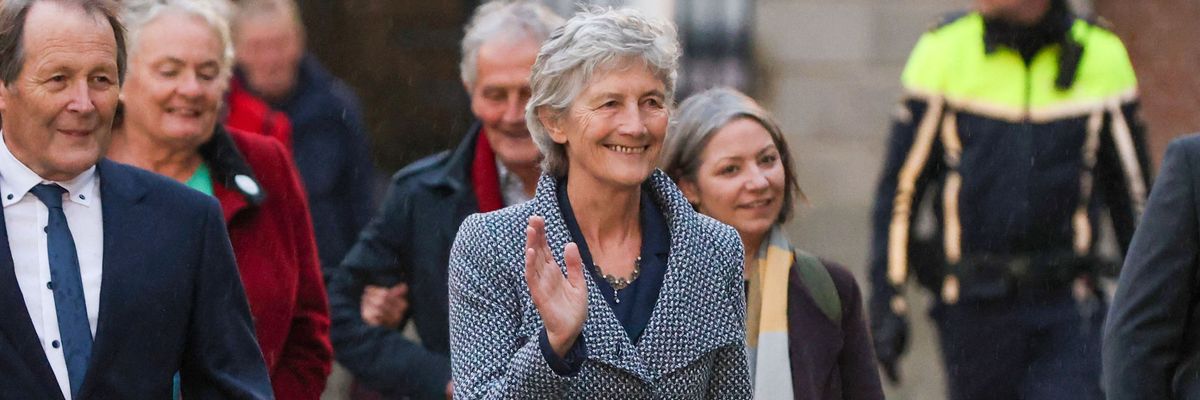
Catherine Connolly (C) smiles as she arrives at Dublin Castle, after being declared the winner in the presidential election to become the next president of Ireland in Dublin on October 25, 2025.
(Photo by Paul Faith /AFP via Getty Images)


Rachael Mellor
Nov 01, 2025
Common Dreams


On November 11 2025, independent Member of Parliament Catherine Connolly will become the new president of Ireland after winning an overwhelming victory over the fiercely unpopular Heather Humphreys.


In her acceptance speech, President Connolly vowed to remain rooted in service, stay humble, and actively practice neutrality. She is anti-war, anti-imperialist, pro-reunification, an advocate for disability rights, and fluent in Irish. She has also been openly critical of the European Union’s inaction on Gaza, and is distrustful of France and the United Kingdom due to their massive armament programs.

In her words, Connolly strives to be “a moral compass in a world increasingly driven by profit and spectacle. A voice for those too often silenced.”

Who is Connolly?—The Politician Not Afraid to Stand Against the Consensus

As a former barrister, from a humble background, Connolly has spent her years volunteering with the elderly and taking night classes to train in law. She formally entered politics in 1999 with the mission of tackling Ireland’s dire housing shortage crisis.

After serving 17 years as a councillor in Galway for the Labour Party, she left, citing a lack of support, and began her journey as an independent. In 2020, she became the first woman elected to chair debates as deputy speaker in the Dáil Éireann.

Rather than pandering to corporate interests, the wealthy elite, or a personal ego trip bent on abusing power (naming no names), Connolly offers a hopeful vision for a more compassionate and responsible approach to politics.

Connolly’s victory marked an important moment for independent candidates around the world. As the world slides to the right, her humble message of peace, inclusivity, and democracy is a powerful reminder that there is light. We must continue to draw attention to and support those who stand up against the establishment.

Connolly has shown that it is possible for well-deserving underdogs such as Zohran Mamdani, Jeremy Corbyn, Zack Polanski, and Bernie Sanders to bring common-good policies into the mainstream.
2025 Irish Presidential Election—Game-Changing for this Divided Nation

In a demonstration of her ability to unify opposing voices, Connolly’s landslide win came after she secured the support of opposition parties Sinn Féin, the Social Democrats, People Before Profit, and even her former party, Labour.

As an independent, Connolly pledged, in her opening speech, to be a ‘“president for all.” Her victory was secured after gaining the largest number of first-preference votes ever—the equivalent of 63%.

When we look at the bigger picture, however, it tells the story of a divided, disillusioned, and apathetic Ireland tired of the two-party system. Voter turnout was just 45.8%, and a huge 213,738 votes were either invalid or spoiled. This accounted for almost 13% of the overall vote, notably, more than 10 times the number in the last presidential election.

In the run-up to the election, violent riots broke out in the capital for two consecutive days. They took place in front of a hotel housing asylum seekers in an anti-immigration sentiment being witnessed across large parts of Europe. This is just one example of the ongoing immigration tensions in Ireland.

Irish citizens are frustrated with the government after years of austerity measures, the ongoing housing crisis, poor public services such as healthcare, and the fact that key candidates, such as Maria Steen, were not on the ballot.
Connolly’s Policies—A Progressive Ireland Led by a Moral Compass

With Connolly’s left-wing, progressive, and anti-war stance at the reins, the world eagerly awaits to see if Ireland can be the guiding light that so many nations need right now. In the face of fascist, authoritarian leaders such as Donald Trump, Viktor Orbán, Xi Jinping, Vladimir Putin, Benjamin Netanyahu, and Nicolás Maduro, we desperately need a new playbook.

Some of Connolly’s stances include:Strong advocacy for Irish reunification through a peaceful and democratic process;
The legalization of same-sex marriage. She stands for equality for all individuals, regardless of their sexual orientation;
Providing access to safe and legal abortion services. She advocates for reproductive rights and a woman’s right to choose;
A compassionate and humane approach to immigration;
A universal healthcare system that is accessible to everyone;
Addressing the housing issue and getting people experiencing homelessness off the streets;
The promotion and preservation of the Irish language by encouraging its integration into education and public life;
Comprehensive and urgent climate action to reduce carbon emissions, promote renewable alternatives, and support conservation efforts;
Implementing a wealth tax to address economic inequalities and fund public services;
Enhancing democratic processes to ensure transparency, accountability, and increased public participation;
Promoting peace through diplomatic means and maintaining neutrality. She is critical of NATO and other military alliances; and
Vocal advocacy for peace in Gaza, ending the blockade, and promoting humanitarian efforts to end the suffering of the Palestinian people. She supports a more ethical approach to international arms sales and highlights the complicity of those weapons which are used to commit war crimes, genocide, and create long-lasting human suffering.

With her pledge to be accountable to the citizens of Ireland, her policies are people-and-planet focused. Her commitment to justice, equality, and transparency is a refreshing change from the status quo. Rather than pandering to corporate interests, the wealthy elite, or a personal ego trip bent on abusing power (naming no names), Connolly offers a hopeful vision for a more compassionate and responsible approach to politics.

Let’s hope that her recent win bolsters the campaigns of other progressive candidates and serves as a reminder that positive change is possible. This is a huge win for the left; let’s keep the momentum going.

In the words of Catherine Connolly: “Use your voice in every way you can, because a republic and a democracy need constructive questioning, and together we can shape a new republic that values everybody.”


Rachael Mellor
Rachael is a key writer for the nonprofit platform Better World Info, which focuses on global issues such as peace, human rights, environment, and social justice. Her articles are also published in The Transnational and Peace News. Follow her work at www.betterworld.info and @BetterWorldInfo.
Full Bio >


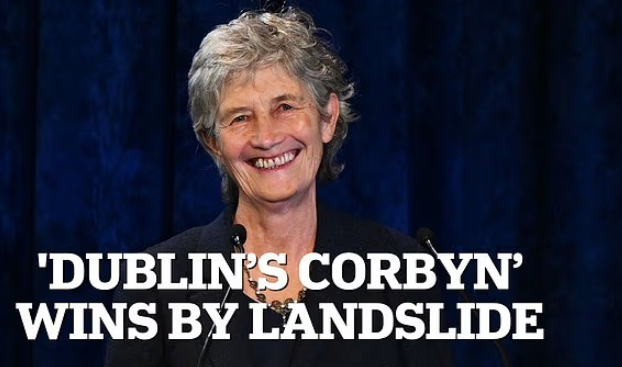
Smear of the week – UK Right-wing media takes aim at Catherine Connolly – ‘Dublin’s Corbyn’

Yesterday
Left Foot Forward

While the right may intend it as a slur, many would see the label ‘Dublin’s Corbyn’ as praise, a recognition of Catherine Connolly’s courage, compassion, and conviction.


Ireland has chosen a new president.

Catherine Connolly, the independent, pro-labour, pro-environment, pro-Palestine, pro-choice, pro-LGBT, left-wing politician from Galway, has been elected President of Ireland in a historic landslide.

A former barrister and lifelong campaigner for peace and social justice, Connolly won 63 percent of first preferences, trouncing former cabinet minister Heather Humphreys in the race to succeed Michael Higgins as head of state.

A self-described socialist and pacifist, Connolly has long championed equality, environmental justice, and national reunification. In her acceptance speech, delivered, fittingly, in Irish rather than English, she declared:

“I will be a voice for peace, a voice that builds on our policy of neutrality, a voice that articulates the existential threat posed by climate change, and a voice that recognises the tremendous work being done the length and breadth of the country.”

Connolly is an independent member of the Dail who managed to unite the majority of left-wing parties, including Sinn Fein, the Social Democrats and Labour, behind her candidacy.

Politicians from across the left hailed her victory as a watershed moment. Coventry South MP Zarah Sultana called it “a historic landslide for peace, justice, equality and socialism,” while Jeremy Corbyn congratulated Ireland’s “new President” whose victory, he wrote, was “a triumph for humanity and hope.”

Naturally, it didn’t take long for the vultures of the right-wing press to circle. Within hours, British tabloids were splashing headlines dripping with scorn and suspicion.

‘Dublin’s Corbyn’ Catherine Connolly pledges to unite Ireland: Far-left radical who called Hamas ‘part of the fabric of the Palestinian people’ claims landslide win in presidential elections,’ splashed the Daily Mail.

The paper’s coverage framed Connolly’s democratic victory as a geopolitical threat, claiming it would “send a shiver through Western foreign ministries – in particular those of Washington and Britain – after a series of hard-Left and pro-unification remarks.”

As is almost customary, the Mail couldn’t resist a derogatory reference to asylum seekers and “migrant hotels,” claiming Connolly’s election adds to the “turbulent politics of the Irish Republic,” … “sparked by the alleged sexual assault of a ten-year-old girl outside a migrant hotel.”

GB News followed suit, stating: “‘Ugly undercurrent!’ Unionists lash out at Irish Presidential election after hard-left independent seals victory.”

The Telegraph, meanwhile, described the election as “mired in controversy,” in that Fianna Fáil candidate Jim Gavin had withdrawn late in the race over an unresolved €3,300 rent dispute, leaving his name on the ballot, implying somewhat that Connolly’s victory was somehow less legitimate because the centre-right vote was split.

While the right may intend it as a slur, many would see the label ‘Dublin’s Corbyn’ as praise, a recognition of Catherine Connolly’s courage, compassion, and conviction.

Want Right-Wing Watch in a different format? Subscribe on Substack.

Triumph for united left in Irish presidential election

By Carol Coulter

 October 27, 2025

The election of Catherine Connolly as the tenth president of Ireland with two-thirds of the valid votes cast has delivered a body-blow to the government and the two parties which make it up. It has provided a shot in the arm for the left, giving rise to hope of ongoing cooperation across a fractured left and the possibility of a left government after the next election, due in four years’ time.

None of this is a foregone conclusion. Presidential elections in Ireland rarely predict the outcome of general elections, as the president has no executive powers and largely plays a ceremonial role. Connolly’s victory is due not only to an exceptionally well-organised and well-received campaign, but to a disastrous series of mistakes by the governing parties. Her 63.5 per cent of the vote was a resounding endorsement, though based on a turnout of just 46 per cent. A worrying 13 per cent of voters spoiled their votes, indicating disillusionment on the part of a significant proportion of the electorate with the political system and the choice available in this election.

The role of the president is quite limited under the Constitution, involving formal appointment of the government and judiciary, signing legislation and representing the state abroad, but it has been stretched by successive presidents in recent decades. Mary Robinson visited Belfast and met Gerry Adams in 1993, a visit credited with giving an impetus to the peace process. Her successor, Mary McAleese, a Catholic from Northern Ireland, hosted the first ever visit to the Republic by a British monarch, Queen Elizabeth.

Michael D Higgins adroitly steered a “decade of commemorations” from 2013 to 2022 with a series of events marking the Dublin Lockout of 1913, the 1916 Rising, the subsequent War of Independence and then civil war, as well as the First World War in which tens of thousands of Irishmen died. He has also expressed trenchant views on Palestine, on the EU, on the negative impact of economic liberalism and on domestic issues like the housing crisis, which have not always coincided with those of the government and have raised questions as to whether he remained within the confines of the Constitution. Nonetheless, Higgins has been immensely popular, especially among young people, and his views undoubtedly chime with many of theirs.

The presidency, therefore, has come to be an important symbol of identity, expressing the values Irish people seek to show to the world. What presidential candidates are expected to offer is a vision as to how that identity is expressed.

Catherine Connolly is a former member of the Labour Party, serving in the Dail since 2011 as a left independent. There she has been an outspoken critic of the government on housing, domestic violence and poverty as well as being one of the first to denounce the genocide in Gaza and its enablers in the US, the UK and the EU. She is a fluent Irish speaker at a time when the Irish language has become popular among young people (she was endorsed by the Belfast Irish-language rap group Kneecap) and links Irish sympathy for the plight of Palestinians to our experience of colonialism.

She announced her candidacy for the presidency in July, and obtained the support of a small left-wing party, People before Profit, the Social Democrats (a split from the Labour Party) and a handful of left independents, meeting the constitutional requirement that a candidate be nominated by at least 20 members of the Dail or Senate (an alternative route to candidacy is nomination by four county councils). The Labour Party soon joined them and sought to rally wider left support for her candidacy. The Green Party followed suit. Following several weeks of internal discussion, Sinn Fein finally said in September that it would not field a candidate, but would support Connolly.

Of interest is the fact that this meant that a female candidate, Connolly, had the support of three female party leaders, Sinn Fein’s Mary Lou McDonald, Holly Cairns of the Social Democrats and Ivana Bacik of the Labour Party and their appearance together on platforms conveyed its own message.

One of the governing parties, Fine Gael, nominated its MEP and EU commissioner, Mairead McGuinness. However, weeks later she announced she was withdrawing for health reasons, and was replaced by a former minister, Heather Humphreys. The other governing party, Fianna Fail, did not nominate one of its own politicians but a former prominent football manager, Jim Gavin, seeking to broaden the appeal of a party that has been in decline since the financial crash.

This strategy, already internally divisive, spectacularly imploded when he was found to have deprived a tenant of a rent refund due to him almost 17 years earlier, and Gavin announced his withdrawal from the race. However, it came too late to remove his name from the ballot paper, where it remained. The Fianna Fail leadership then urged its supporters to vote for Humphreys, essentially the government candidate.

Meanwhile, a raft of prospective candidates sought nominations from politicians and county councils. A representative of a right-wing Catholic think-tank, Maria Steen, came closest, with 18 members of the Dail and Senate nominating her, but fell short of the necessary 20. Her supporters called for a spoiled vote, saying their constituency (a third of the electorate opposed recent changes to the Constitution on gay marriage and abortion) had no-one to vote for.

This left Connolly facing Humphries. It quickly emerged that this was an unequal contest. Humphreys, a Presbyterian from a border county, relied on this as evidence of her ability to connect with Northern Protestants in the context of a future united Ireland, but otherwise had nothing to say about her vision for the presidency. Connolly spoke of her support for the marginalised, her opposition to the genocide in Gaza and its enablers and her defence of Irish neutrality, which she saw as being undermined by growing militarisation in Europe. Her fluency in Irish also proved an asset to a generation confident in their Irish identity.

The Connolly campaign ran an extensive and effective campaign on social media, where she engaged with multiple podcasters and posted videos demonstrating a spontaneity and authenticity patently lacking in her opponent. In the set-piece media debates she was articulate and fluent while Humphreys often hesitated or uttered banalities like, “I am a mother and a grandmother”.

The Fine Gael campaign resorted to a number of increasingly desperate attacks on Connolly, seeking to portray her as an extreme left-wing candidate who would damage our international alliances. None of this stemmed her inexorable rise in the opinion polls, where at the outset of the campaign, when Gavin was still a candidate, all three were roughly level, to the final poll, when she led Humphreys by 18 per cent. Among 18-35-year-olds her support was 82 per cent. This gap was dwarfed by the eventual result, when her share of the valid poll was 35 percentage points ahead of that of Humphreys, the highest first preference vote of a presidential candidate ever.

But where the difference was most striking was in the ground campaign. 15,000 volunteers signed up to work for Connolly. Given that the population of Ireland is about five million, this would equate to over 200,000 in the UK. They ranged in age from students to veterans of left-wing campaigns of the late 1960s and 1970s. Some were members of the parties supporting her, many were not. As they canvassed houses throughout the country, the support for Connolly was palpable.

The question is what does the left do now. One of the things the campaign has done is formulate what the left in Ireland actually consists of. Sinn Fein, while it has long embraced generally social-democratic policies, has been unable to implement them while sharing power with the DUP in Northern Ireland, due to this and Westminster’s budgetary stranglehold. In elections in the south it never ruled out the prospect of a coalition with Fianna Fail. The Labour Party has a long history of successive coalitions with Fine Gael, for which it always paid dearly in subsequent elections. The Social Democrats were also equivocal in the wake of the last election.

The stance adopted by these parties in this campaign should rule such prospects out in the future. Meanwhile, People Before Profit, an assortment of former Trotskyists, has tended to treat the other left parties with contempt for even contemplating government, but this stance may be tempered by the experience of what unity can achieve.

There are four years to the next general election, unless this highly unpopular government falls. Proportional representation, where second and third preferences can play a crucial role in electing deputies to the Dail, allows the parties of the left to agree to transfer to each other, thus maximising the impact of a left vote. A pact to do this is likely.

But, if the momentum is to be maintained, more will have to be done. Already there is discussion around mounting joint campaigns on issues like housing, where a crisis in affordable housing has driven tens of thousands of young people abroad, leaving jobs unfilled in education and the health service, and some smaller towns emptied out of a generation.

And what do the spoiled votes signify? First, it is clear this was not a unified protest vote. Some voters scrawled the name of Maria Steen or another failed candidate on the ballot paper, others just crossed out the whole paper. A substantial number referenced immigration, including an alleged sexual assault on a young girl by a failed asylum seeker in the days before the election. This sparked three days of rioting outside a centre for refugees and asylum-seekers, mobilising 2,000 people at its height.

There is clearly a section of the population alienated from the political system for a variety of reasons. A housing crisis has been the major issue for over a decade, and successive governments, dominated by the same parties, have signally failed to do anything about it. An influx of refugees and asylum-seekers (Ireland took in over 100,000 Ukrainians) has exacerbated the problem, as well as creating pressure on schools and health services. A cost-of-living crisis, propelled by food price increases, has left many struggling. While up to now no right-wing party has gained a foothold in the Dail, unless these problems are solved it will only be a matter of time. A united left alternative could not be more urgent.

Carol Coulter is former Legal Affairs Editor of the Irish Times and currently runs the Child Law Project. She canvassed for Catherine Connolly.

Image: Catherine Connolly. Source: This image has been extracted from another file
Therese Beirne and Catherine Connolly, March 2024.jpg. Author: Houses of the Oireachtas, licensed under the Creative Commons Attribution 2.0 Generic license.


Indigenous Australians celebrate historic state treaty


By AFP
October 30, 2025


A young girl holds up an Australian Aboriginal flag during a 2022 demonstration in support of Indigenous rights. - Copyright AFP Steven Saphore

Australia’s state of Victoria has passed the country’s first treaty with Indigenous peoples, a landmark act of recognition long denied to the country’s first inhabitants.

Cheers and applause rang through Victoria’s parliament as lawmakers passed the bill late on Thursday night, a deeply symbolic moment that caused many onlookers to burst into tears.

The treaty will establish an elected assembly of Indigenous representatives, support a truth-telling process to address past grievances and form an advisory body focused on erasing health inequalities.

Making up less than four percent of the current population, Indigenous peoples still have lives about eight years shorter than other Australians and are far more likely to be imprisoned or die in police custody.

Indigenous leader Jill Gallagher, who spent years working towards the treaty, said “history was made”.

Generations of Indigenous Australians have tried, and failed, to strike similar treaties with Australia’s federal government.

It is seen as a crucial act of recognition that Aboriginal Australians held sovereignty over the continent long before the arrival of the colonial fleet in 1788.

Australians in 2023 overwhelmingly voted “no” in a national referendum that sought to better recognise Indigenous peoples in the country’s constitution.

Victoria Premier Jacinta Allan said the landmark treaty would re-define the relationship between Indigenous Australians and the state government.

“Treaty gives Aboriginal communities the power to shape the policies and services that affect their lives.”

A government inquiry in Victoria found earlier this year that colonial settlers committed genocide against Indigenous people.

Mass killings, disease, sexual violence, child removal, and assimilation had led to the “near-complete destruction” of Indigenous people in the state, it said.

The arrival of 11 British ships to set up a penal colony in Sydney Cove in 1788 heralded the long oppression of Indigenous peoples, whose ancestors have lived on the continent for more than 60,000 years.