Wednesday, November 05, 2025


CMA CGM Highlights French Ties with New Class of Ultra-Large Boxships

containership launch
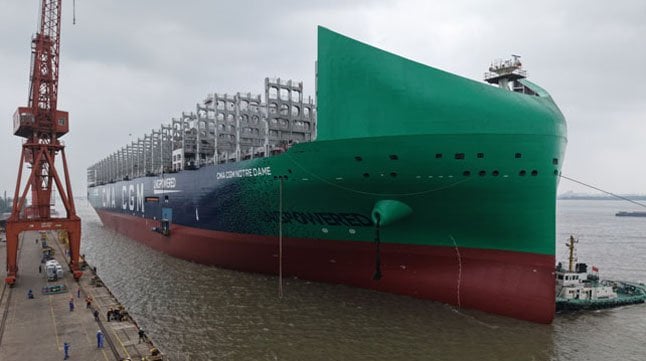
CMA CGM Notre Dame was floated in October as the first ship of the new class (CMA CGM)

Published Nov 4, 2025 3:56 PM by The Maritime Executive


Chairman and Chief Executive Officer of CMA CGM Group Rodolphe Saadé used a prestigious forum in France today to highlight the company’s next class of ultra-large containerships and its ties to France. Speaking before French President Emmanuel Macron, Saadé said it was a step to emphasize the company’s long-term commitments to France and deflect from some of the criticisms of the company.

Speaking at the Assises de l’Économie de la Mer event, CMA CGM highlighted its investment, reportedly valued at $2 billion for a new class of 24,000 TEU ultra-large containerships. The first of the ships was recently floated out at China’s Yangzijiang Shipbuilding, with the company saying it will take delivery of 10 ships of the class starting in 2026. While they have similar dimensions to the company’s current large vessels (399 meters / 1,309 feet in length), capacity increased to 24,212 TEU with 2,200 reefer slots. The ships are dual-fuel LNG and will be compatible with biomethane and e-methane.

CMA CGM said it will register the new class in France, after having earlier this year registered its new large vessel in Singapore and recently highlighted plans for investments in the U.S. and reflagging vessels to India. 

“By choosing France, CMA CGM is making a powerful statement in favor of French maritime and logistics sovereignty on the global stage,” CMA CGM asserted. It said the move is part of the group’s “determination to strengthen France’s maritime competitiveness.” It noted that France is the world’s second-largest maritime domain.

To further emphasize the connection to France, the company said the class will bear the names of iconic French monuments and landmarks. This includes: Notre Dame, Panthéon, Orsay, Luxembourg, Pont Neuf, Versailles, Austerlitz, Nation, Cluny, and Longchamp. Further, the ships will call regularly at Le Havre and Dunkirk as part of their route between Northern Europe and Asia.

The decision to flag the ships in France means that the company will also be recruiting 135 additional French seafarers to operate the ships. The company said that it will mean an additional cost of between approximately $17.5 million and nearly $20 million per year versus operating with a foreign flag registration.

CMA CGM has been criticized in France for its lavish profits and low tax rate despite the country’s economic challenges. In addition, the company has lobbied to maintain tax breaks, including a tonnage tax, versus the calls to require the company to pay the higher corporate tax rate.

The group is in the midst of an expansion effort that calls for an additional 129 vessels with a total capacity of more than 1.7 million TEU, according to Alphaliner. The company highlights that it currently has a fleet of over 650 ships (total capacity of just over 4 million TEU) and that in 2024 it carried over 23 million TEU. The larger group has also expanded its logistics operations, launched air cargo including acquiring Air Belgium, started car carrier operations, purchased a ferry operator, and launched a media division that is the third largest in France.


The Hong Kong Convention Is Here, But Compliance Alone Will Not Save It

Stephen Grist
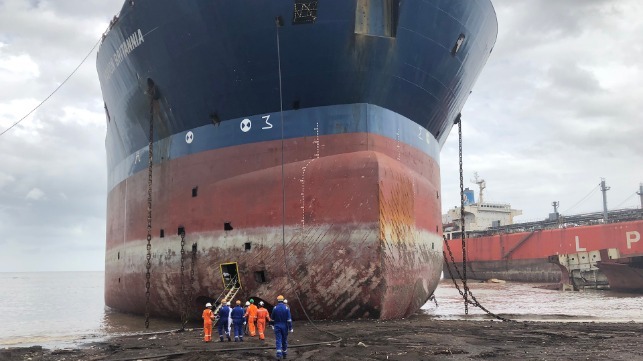
File image courtesy Teekay

Published Nov 4, 2025 1:33 PM by Stephen Grist


Three months after the Hong Kong Convention (HKC) came into force, the ship recycling industry looks much the same. The yards remain busy, the paperwork continues to grow, and the sweeping reform promised by the Convention has yet to take shape.

This slow start is no surprise. The industry had more than a decade to prepare. Many shipowners, some had already aligned with the European Union Ship Recycling Regulation (EU SRR), which set stricter standards and effectively pushed global compliance years in advance.

Since 2020, most trading vessels have carried an approved and regularly updated Inventory of Hazardous Materials (IHM). The discipline of maintaining one is now routine, so the HKC’s arrival has been more of a formalization than a transformation.

The real driver of progress has not been regulation but finance. Banks and investors, through Environmental, Social, and Governance (ESG) conditions, began requiring HKC-level standards as a prerequisite for lending. The industry did not wait for the IMO. The finance sector enforced compliance long before the Convention did.

That top-down pressure has raised awareness but not necessarily changed behavior. Compliance has become the expected minimum, not a marker of excellence.

The HKC does, however, change the landscape for shipowners. While it provides a long-awaited global framework for safe and sustainable recycling, ambiguity remains, particularly where end-of-life vessels are still treated as hazardous waste under the Basel Convention. In such cases, owners must meet both HKC and Basel obligations, creating overlapping legal and logistical challenges.

Relying on intermediaries is no longer enough. Shipowners must now take ownership of compliance, ensuring IHMs and recycling plans are accurate, auditable, and aligned with both frameworks. Outsourcing risk will no longer cut it. Compliance now demands active engagement, transparency, and informed decisions from the first voyage to the final one.

Across the vessel inspections Idwal has conducted since enforcement began, the change is subtle but clear. Owners are asking tougher questions, seeking verification that paperwork reflects reality. It is a small but positive sign that the Convention is beginning to influence conduct, not just administration.

Yet a new bottleneck is forming. Only a limited number of yards hold HKC certification, and many are already at capacity. Achieving and maintaining certification requires heavy investment and time, creating a two-tier market between compliant and non-compliant facilities. Owners with aging fleets should plan early as those who don’t may find compliant slots gone when they need them most.

The success of the HKC will depend less on its text and more on how it is enforced. Under the EU SRR, port state control made the difference. European authorities detained ships for IHM deficiencies, and similar action should now follow as HKC enforcement matures. Without random checks, firm penalties, and transparency, the Convention risks becoming a paper exercise. The industry does not need more certification. It needs accountability.

Passing an audit is not proof of compliance. True conformity requires independent verification, randomized inspections, and evidence that documentation matches the vessel’s physical state. From Idwal’s global inspection data, discrepancies between declared and observed hazardous materials remain common. That gap between paper and practice can only be closed by impartial, third-party inspection. Without it, the HKC’s promise of safe and sustainable recycling will remain unfulfilled.

Technology can help. Data-driven vessel inspection tools and shared verification frameworks bring transparency at scale and give owners the insight they need to demonstrate compliance with confidence. These tools should no longer be optional, they should define the standard.

The Hong Kong Convention has taken more than a decade to reach this point. Its credibility will depend on whether the industry treats compliance as a living standard rather than a filing exercise. Independent verification and transparent oversight are the only paths to meaningful progress.

Ensuring that HKC compliance is meaningful, and not just a matter of paperwork, requires independent verification, rigorous inspections, and ongoing oversight. Conducting inspections at multiple stages of a vessel’s lifecycle is essential to maintaining consistent compliance. Randomized inspections are particularly effective in ensuring that standards are upheld continuously, not just for scheduled audits, a challenge familiar across many areas of maritime regulation.

Tracking and analyzing deficiencies across fleets also provides valuable insight into recurring compliance issues, enabling shipowners and managers to take proactive corrective action. Integrating independent inspection and audit throughout the vessel’s operational life, not just at the end, ensures that documentation aligns with physical evidence, including IHMs, hazardous material plans, and supporting records.

Digital, data-driven reporting enhances this process by allowing for transparent tracking of findings, trend analysis, and risk-based decision-making. Alongside these technical measures, owners and managers must establish robust compliance management systems and provide ongoing training to crews and shore-based teams to sustain regulatory awareness.

By combining independent verification, data-led oversight, and strong management practices, shipowners and managers can ensure that HKC compliance is credible, auditable, and effective.

Three months in, the world has enough declarations. What it needs now is verification.

And what about the effect market conditions will have on physical recycling? Well, if recycling market rates remain low, the trend of shipowners selling or life extending older vessels rather than recycling them is likely to continue. Instead of heading straight for dismantling, some older ships may find renewed trade in domestic or regional trades, giving owners a chance to extend operational life and generate additional income before final disposal or generate a sale income above recycling rates.

Strategically, this environment underscores the need for fleet-level oversight, proactive condition monitoring, and data-driven decision-making.

Stephen Grist is Technical Manager at Idwal.

The opinions expressed herein are the author's and not necessarily those of The Maritime Executive.
 

Philippine Ferry Hits Vessel in Docking Accident

ferry allision Philippines
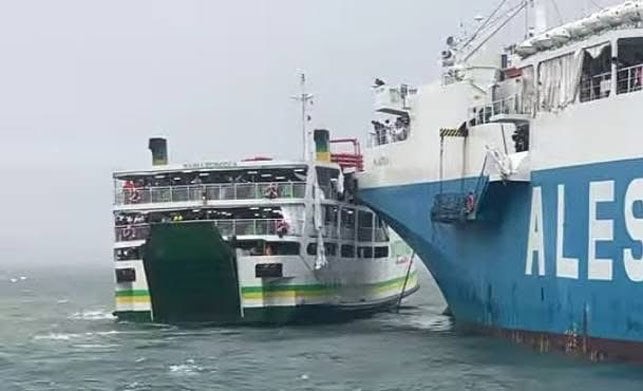
Ferry attempting to dock in rough seas hit another ferry in the Philippines (PCG photos)

Published Nov 4, 2025 2:07 PM by The Maritime Executive


Philippine officials are reporting that there were no injuries as two ferries made contact early on Tuesday, November 4, in an apparent docking accident. The Coast Guard believes it was due to the rough weather, as one of the strongest typhoons of the season was passing through the central Philippines.

The passenger car RoRo ferry Maria Rebecca was arriving at Jolo, an island in the southern Philippines, on Tuesday morning. Built in 1972, the 748 gross ton ferry is 50 meters (164 feet) in length.

The Coast Guard confirms there were rough seas in the area, which it attributes to Typhoon Kalmaegi (being called Tino in the Philippines). The strong storm hit land early on Tuesday with sustained winds of 80 mph and gusts as high as 110 mph. There are reports of widespread damage in the central Philippines, with at least 40 people already reported killed. The storm is continuing to move to the west.


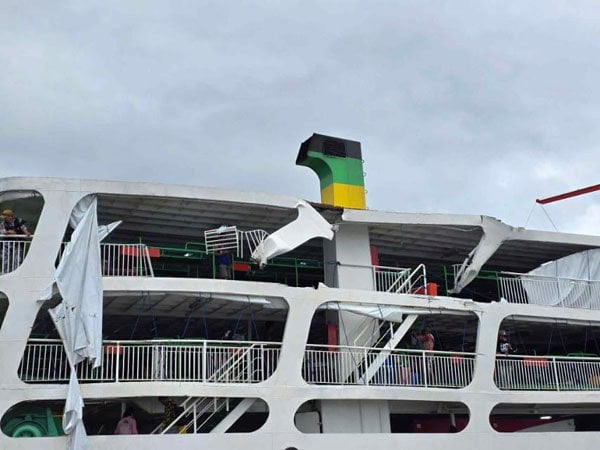
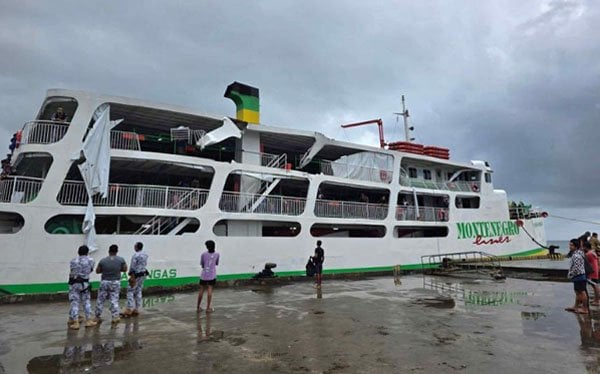
(PCG photos)


In Jolo to the south, the ferry Maria Rebecca lost control while attempting to dock. Its starboard side struck the front of the larger RoRo passenger car ferry Antonia 1, which was docked with an anchor deployed. The larger ferry is 3,400 GT and 103 meters (338 feet) in length. The prow of the ferry ripped into the smaller ferry, causing structural damage to the upper works. The larger ferry reportedly also sustained damage.

There were no oil leaks or casualties, and the Maria Rebecca was able to later proceed to a dock for an inspection. The Philippine Coast Guard was on hand for surveys and has advised both captains to file documentation for the investigation.


Carrier USS Ford Crosses Atlantic as US Forces Gather Near Venezuela

Ford
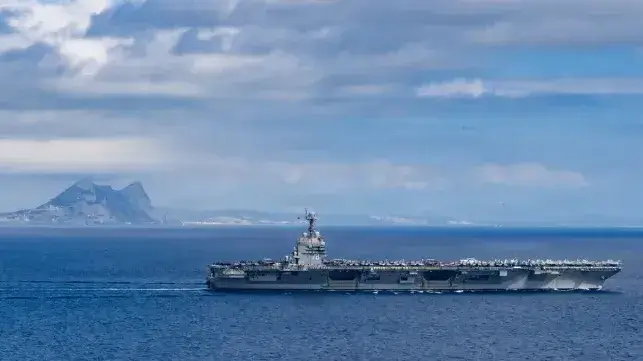
File image: USS Ford in the Strait of Gibraltar, heading eastbound, early October (USN file image)

Published Nov 4, 2025 5:55 PM by The Maritime Executive


The supercarrier USS Gerald R. Ford has exited the Strait of Gibraltar and is under way for the Carribean, less than two weeks after the Trump administration announced the order to redeploy. 

Ship-spotters sighted USS Ford passing westbound through the strait on Monday morning, making 15 knots and accompanied by destroyer USS Bainbridge (DDG-96). Air traffic tracking shows that Ford also had long-range surveillance provided by a P-8A Poseidon aircraft patrol. Naval auxiliary USNS Supply has been spotted nearby, and destroyer USS Mahan may well be in the vicinity, having passed westbound through the Strait of Gibraltar on October 31. 

Ford's speed puts her on track to reach U.S. Southern Command on or about November 10, joining a growing military presence near Venezuela amidst mounting reports of planned strikes on the regime of dictator Nicolas Maduro. 

The rest of Ford's carrier strike group appears to be staying behind in Europe. It is relatively rare for the $13 billion carrier to conduct an ocean crossing with only one or two identified escorts in tow, but Ford will benefit from additional defensive support on her arrival in the Caribbean, where an abundance of firepower has already accumulated. In addition to a growing task force of four surface combatants and two amphibs, the buildup includes USAF F-35 fighters, airlift assets and at least one aerial tanker at Naval Air Station Roosevelt Roads in Puerto Rico (per OSINT specialist MT Anderson.)

According to Pentagon spokesman Sean Parnell, Ford and other high-end warfighting assets are going to augment the U.S. military's counternarcotics campaign, which has so far destroyed 16 small craft and killed an estimated 66 suspects in international waters. "These forces will enhance and augment existing capabilities to disrupt narcotics trafficking and degrade and dismantle TCOs," Parnell said. 

U.S. officials told the New York Times this week that President Trump is weighing a range of options to intervene on the ground in Venezuela, ranging from seizing oil fields to attacking Maduro's personal elite guard units to forcibly ousting the dictator from power. The administration has not requested a declaration of war on Venezuela from Congress, and is said to be discussing alternative legal theories that could support regime change-level operations without legislative approval, all related to alleged drug smuggling activity.  


Nord Stream Sabotage Suspect Goes on Hunger Strike in Italy

iStock
iStock

Published Nov 4, 2025 6:33 PM by The Maritime Executive


A Ukrainian national who has been detained in Italy in connection with the Nord Stream pipeline attack has gone on hunger strike, according to his attorney. 

In August, Italian police detained Ukrainian military veteran Serhii Kuznietsov in Rimini, a resort destination on the Adriatic coast. German authorities had issued an EU warrant for his arrest on charges of contributing to the complex attack on Nord Stream 1 and Nord Stream 2 in 2022. The subsea sabotage operation ruptured three out of four lines of the Nord Stream network, creating an impediment to any effort to restart the Russian-controlled pipeline system. For Ukraine, this outcome was advantageous, inflicting material damage on Russia's future prospects for rebooting EU gas sales. 

A local court and an appeals court have approved Kuznietsov's extradition, and he has appealed to Italy's supreme court. If transferred to German custody, he faces charges of anti-constitutional sabotage, destroying infrastructure and causing an explosion.

According to his attorney, Kuznietsov believes that his accommodations are below standard, and he began a hunger strike on October 31 to protest "dignified detention conditions." Among other demands, he has requested better food; equal rights for family visits; and "conditions consistent with constitutional and international standards."

Kuznietsov is one of two Nord Stream suspects who have been arrested on Germany's request. The other, identified in police documents as Volodymyr Z., was detained in Poland but has since been released. A district court in Warsaw determined that Germany had provided insufficient evidence to justify his arrest and rejected the extradition request. The judge also concluded that Germany had no jurisdiction over an incident in international waters, and that in any event, the attack was a military operation rather than a criminal endeavor - putting any involved personnel outside the reach of the law. "Only the Ukrainian state can bear responsibility for this act," judge Dariusz Lubowski ruled in October.

Polish Prime Minister Donald Tusk had previously stated that his government did not support the German extradition request, emphasizing that it was a matter for the courts. 

"It is certainly not in Poland's interest to charge or hand over this citizen to another state," Tusk told Polsat News in the weeks before the ruling. "The problem of Europe, Ukraine, Lithuania, and Poland is not that Nord Stream 2 was blown up, but that it was built."


Suez Canal Invites Shipping Companies Back After Best Month in Two Years

containership with warship escort
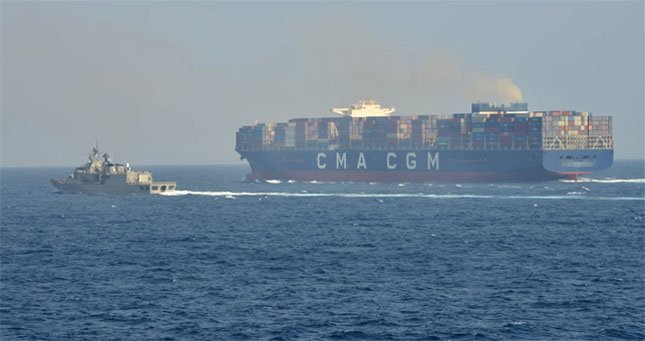
CMA CGM containership in the Red Sea escorted by the Greek warship HS Spetsai (Aspides)

Published Nov 4, 2025 6:54 PM by The Maritime Executive


The Suez Canal Authority is continuing its outreach to the shipping industry as it reported its first significant increases in transit volume since the start of the regional crisis in late 2023. They reported the highest monthly rate of returning vessels in October since the beginning of the war in the Middle East.

News of the improvement was shared as the Chairman of the Suez Canal Authority, Admiral Ossama Rabiee, hosted a meeting of the representatives from 20 major shipping companies and agencies to discuss the developments in the Red Sea and Bab el-Mandeb region. The authority is hosting periodic meetings, which it says are to “consult on sailing plans and schedules for the coming period.” Admiral Rabiee is also “inviting” shipping lines to at least conduct trial voyages.

Between July and October, the authority reports tonnage passing through the Suez Canal was up 10 percent over last year. The number of ships, however, lagged with just a two percent improvement, but also illustrates that larger ships are making the transit versus last year. Over 4,400 vessels made the transit in the four months, with 229 ships returning to the canal in October.

The Suez Canal Authority, however, wants to get the major shipping lines back into the canal. It highlighted that CMA CGM, which has been sending smaller vessels through the Red Sea with escorts from EUNAVFOR Aspides, recently sent two of its larger vessels through the Suez Canal. CMA CGM sent its 17,000 TEU plus vessels through in the latest trial, but it has yet to send the 23,000 TEU flagships of the fleet back to the Suez Canal.

In a summary of the meeting, the authority reports that CMA CGM announced that it plans to increase the group’s voyages through the Suez Canal. Similarly, other carriers, including Hapag-Lloyd, said they were monitoring developments. MSC Mediterranean Shipping Company said it anticipates a “swift return of southbound vessels in the coming period.” Evergreen said it is ready to resume as soon as the situation stabilizes completely and permanently, and COSCO also expects many shipping lines, with the return of stability, will route ships through the canal.

The representative of the Inchcape Shipping Agency, however, pointed out that one of the key hurdles remains insurance. Abdel Aziz Nabil told the meeting that the high cost of marine insurance for transiting the region remains a significant obstacle, and he believes it is the main reason for the delay in many shipping lines resuming their Suez Canal operations.


Report: Russian Warship on Fire at Sevastopol Dock

Russian corvette
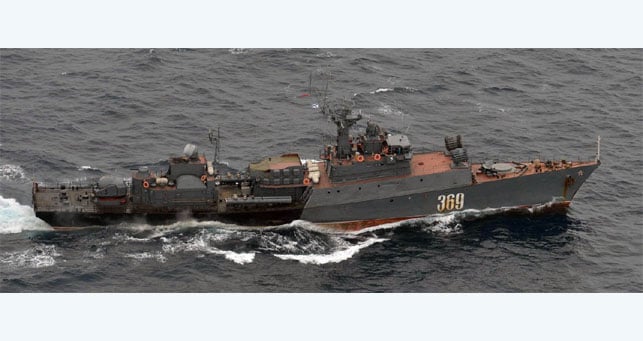
One of the vessels of the class spotted in 2014 off Japan (Japan MOD)

Published Nov 4, 2025 1:16 PM by The Maritime Executive


Reports are appearing on the Internet along with photos and videos stating that one of Russia’s warships used to patrol the area around Sevastopol and Crimea appears to be on fire at its dock. There has been no confirmation or claims of responsibility, but it marks a series of incidents impacting the Russian fleet in the Black Sea region.

The site Crimea Wind first posted the reports and images of smoke coming from the dock at the naval station near Sevastopol. At first, they could only speculate which vessel might be involved due to the camouflage netting covering the superstructure of the vessel. 

Later information revealed the identity of the vessel as one of Russia’s Project 1124-M vessels, a small corvette. The class was mostly built from the mid-1960s to the 1980s and used as patrol boats and for anti-submarine warfare. The ships are approximately 72 meters (235 feet) and 1,000 tons displacement.

The smoke was first spotted on November 3, and the fire may still be burning. The Russian Navy has not commented.


The reports said Russia had four of the vessels based in Sevastopol, but in 2024 repositioned two of the ships to the naval base at Novorossiysk.

There have been a series of unexplained events for the Russian fleet, including last week, a floating crane capsized, killing two workers in the shipyard and injuring 20 or more. Officials said a criminal investigation had been started without providing further details. 

The Kyiv Post also highlights that the reconnaissance ship Ivan Khurs and the amphibious assault ship Caesar Kunikov were attacked by Ukrainian forces. However, the newspaper quotes Ukrainian officials saying it is harder to attack the Russian fleet because the ships are remaining in port or have been transferred to ports such as Novorossiysk. They note that fewer of the ships are sailing in the open waters, exposing them to attack.


UN Report Details Houthis' Attack Capabilities

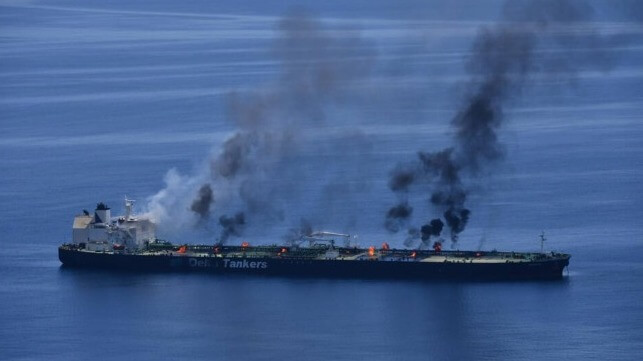
Sounion on fire
Courtesy EUNAVFOR

Published Nov 4, 2025 7:34 PM by The Maritime Executive


The annual report of the Panel of Experts on Yemen has an established reputation for producing carefully researched and well-substantiated information, and this latest report identifies that sanctions imposed on the Houthis have been relatively ineffective in constraining their ability to purchase equipment needed to mount their attacks on shipping.

The report identifies an increase in arms shipment seizures, which it attributes mostly to the closure of port facilities in Houthi controlled areas following US and Israeli attacks. Consignments have been diverted from Hodeidah to Aden instead, and material seized which the Houthis had been attempting to smuggle through border controls with false customs declarations hidden in nondescript containers. Although still dazed after the 12-Day War, Iran still seems to be supporting the Houthis.

The experts assess that Israeli, UK and US strikes over the summer have depleted stocks of missiles and drones, and killed a number of technical experts, but that sufficient capability and expertise remains for the Houthis to continue their campaign - though the attrition was no doubt a factor in the Houthis agreeing to pause their attacks following Omani mediation. A tangible consequence of the air strikes had been the erosion of trust between Houthi leaders, who fear strikes had been aided by some amongst their number, suspicions which have led to increased surveillance and arrests.

In terms of Houthi attacks, the UN experts counted 101 ballistic missiles fired at Israel, of which 57 were intercepted, 38 failed and four impacted in Israel. Most were launched from Sa‘dah and Amran Governorates. IRGC Quds Force Brigadier Abdulreza Shalai has now apparently left, but other IRGC and Hezbollah members remain in Yemen to assist the Houthis with these missile and drone operations.

At sea, 25 vessels were attacked, nine of which were merchant vessels. MV Eternity C (IMO 9588249), MV Magic Seas (IMO 9736169) and MV Sounion (IMO 9312145) were sunk and suffered casualties, the crew of MV Galaxy Leader (IMO 9237307) taken hostage were released, and MV Cordelia Moon (IMO 9297888, now MV Walrus) was damaged by a planted explosive device. 

These attacks have generally followed the same pattern; the target is surrounded by armed groups in small boats and attacked with drones, bringing it to a halt. It is then attacked with ballistic missiles whose targeting mechanisms are insufficiently sophisticated to be able to hit moving targets. The attack on the MV Minervagracht (IMO 9571521) in the Gulf of Aden on September 29, post the cut-off period for the UN report, suggests that this particular technical limitation may have been overcome, and that the Houthis are now able to engage fast-moving targets.

The report details extensive links between the Houthis and Al Shabaab terrorists in Somalia.  The Houthis provide arms and training, Al Shabaab facilitate use of Somali ports for shipments of arms to the Houthis. Al Shabaab militants are trained by the Houthis in Yemen. This cooperation exists notwithstanding that the two groups are at opposite ends of the Shi'a-Sunni extremist divide.

The report also details how the "Houthis have a child recruitment strategy which combines ideological indoctrination, militarized education and selective access to aid," and how this is "reshaping Yemeni society to produce a generation of loyal, uneducated fighters."

In summary, the capability of the Houthis to mount attacks on maritime targets associated with Israel in particular and the West generally has been reduced but not destroyed, which has prompted the Houthis to pause to restock. The ideological determination to carry on the war remains undiminished, and has perhaps been enhanced by identifying external enemies that can act as a focus for patriotic ardor; in this context, the Houthis talk of an entirely fictitious "17 nation anti-Houthi coalition." 

There is some disunity in Houthi ranks, and the internal security crackdown can be expected to diminish operational efficiency - frightening some into withdrawal and disabling some competent leaders falsely accused. The Houthi capability and intent remains therefore more or less intact; what is more uncertain is if the Houthis can maintain the unity of their coalition, and whether those they wish to target will allow them to spread their influence and continue to threaten innocent passage.


Pentagon Limits Comms With Congress About AUKUS, Drug Boat Strikes

Drug boat strike
The 16th and latest strike on a suspected drug boat, November 4 (Pentagon)

Published Nov 4, 2025 10:45 PM by The Maritime Executive


The Pentagon's leadership has ordered all personnel to get prior approval before talking with members of Congress about some of the department's most serious business, including the AUKUS submarine deal and the airstrikes on drug smuggling boats in the Caribbean, according to CNN and ABC. The order has direct bearing on U.S. Navy personnel's ability to interact with Congress on acquisitions and ongoing operations. 

The Pentagon's chief Pentagon spokesperson, Sean Parnell, confirmed the order's authenticity and told CNN that it was intended "to improve accuracy and responsiveness in communicating with the Congress to facilitate increased transparency."

The list of prohibited subjects reportedly includes the next edition of the National Defense Strategy (NDS), which will give top-line instructions to govern the U.S. Navy's posture in the Indo-Pacific. This is an area of specific concern to the Senate: Planning for the NDS was announced in May, and Republican members of the Senate Armed Services Committee expressed frustration on Tuesday about a months-long lack of communication from the Pentagon appointees who are writing the document. 

Other key topics on the Pentagon's prohibition list include the ongoing campaign of airstrikes on suspected drug smuggling boats in U.S. Southern Command, an activity which has attracted questions over legality and has prompted several high-level departures. The latest strike occurred Tuesday and killed two suspects, according to the Pentagon.

Per the order, military servicemembers and officials are also prohibited from spontaneous conversations with members of Congress about acquisition reform or critical munitions.

The order was the backdrop to a contentious meeting of the Senate Armed Services Committee on Tuesday. The event was billed as a routine confirmation hearing but quickly refocused on a lack of Pentagon communications with Congress - in particular, whether changes to policy and strategy matters like AUKUS or the NDS would be briefed to the Senate.

“You know who the hardest guy to get a hold of in the Trump administration is? The undersecretary of defense for policy. I hope he’s watching," said Sen. Dan Sullivan (R-AK), chastising the Pentagon's policy office for failing to get the committee's input on Pacific and Arctic strategy. "Where do you think the requirement for the [National Defense Strategy] comes from? Yeah, it comes from us. Don’t you think it would be smart to maybe preview it?"


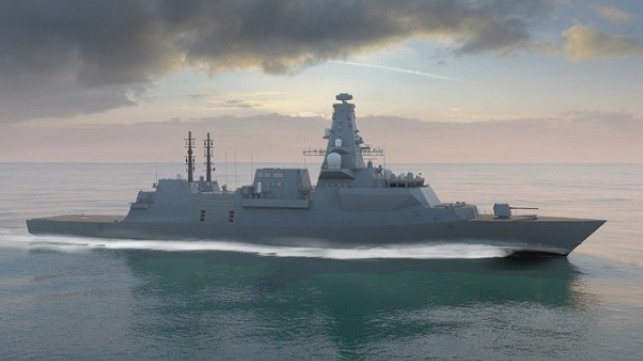
Report: UK's Frigate Deal With Norway Could Be Turned Into Cost Savings

BAE
File image courtesy BAE Systems

Published Nov 4, 2025 11:31 PM by The Maritime Executive


The UK government recently celebrated the signing of a historic deal to sell five new Type 26 frigates to the Norwegian Navy, bringing in a combined $13 billion in order volume for the British defense industry. This expands the orderbook for the Type 26, enlarging the fleet of NATO-member ASW frigates available to patrol the North Atlantic for Russian Subs. But according to British defense publication Navy Lookout, it is possible that some of the Royal Navy's Type 26 hulls could be sold to Norway in mid-production, reducing near-term costs for Britain - and potentially cutting the size of the Royal Navy's order.

The Type 26 is a purpose-built anti-submarine warfare frigate, designed from the keel up for hunting subs. It has comparatively limited air defense radar and antiaircraft missile capabilities, but it has an advanced ability to detect subsurface threats, thanks to a quiet-running diesel-electric propulsion system and a Thales towed-array sonar. The current eight-hull Type 26 order is a downsized version of the original plan, which called for eight hulls for ASW and five fitted out for general purposes; the general purpose variants were later canceled and replaced with a different, lower-cost design, the Type 31 frigate. 

But shipyards on the Clyde received a boost in August when the UK Ministry of Defense announced that Norway would also be buying the Type 26. At $13 billion, the order amounted the UK's biggest warship export deal by value ever made, as well as Norway's biggest ever defense procurement order. As an addition to the Royal Navy's eight-hull Type 26 order, the Norwegian hulls would support four thousand jobs in Britain into the 2030s. For both nations, the deal creates a joint ASW capability that is more interoperable and maintainable, with shared equipment, training procedures and supply chains, noted RUSI fellows Cmdr. Edward Black and Dr. Sidharth Kaushal at the time. 

But the UK Ministry of Defense is under heavy pressure to find cost reductions, thanks to a combination of inflation, higher servicemember pay and low growth in topline appropriations. One conceptual method of finding savings in the medium term might be to allow Norway to take some of the Royal Navy-earmarked hulls from the Type 26 program, according to independent outlet Navy Lookout. 

"The deal to sell Type 26 frigates to Norway could turn from a huge industrial and strategic success into something of a trap for the RN. There are suggestions that more ships from the middle of the production run could be sold to the Norwegians to defer capital costs. Worse still, they might not be replaced by new orders, lowering the number of RN T26s below the eight promised," the independent outlet warned, adding that the same cost-saving concept might be applicable to the Type 31 as well. 

It is already understood that at least one under-construction hull will be transferred for delivery to Norway in 2030 as part of the agreement; the question is whether there will be more. The shipbuilder says that it is treating the 13-ship series as one continuous program, and "exact sequencing with the Norwegian ships will be agreed between the two governments as part of contract negotiations to ensure the program meets the operational requirements of both navies," prime contractor BAE told Naval News earlier this year. 

With the Royal Navy's existing Type 23 frigates showing signs of age, the prospect of reallocating more Type 26s could worsen an already-expected "frigate gap" for the service, Navy Lookout warns. "The leaders of the past who allowed the RN’s frigate force to get into this state have a lot to answer for, but it’s imperative that the politicians of today do not allow the position to worsen further," cautioned the outlet.