Wednesday, November 05, 2025


MMG hit by EU probe of $500 million Anglo deal

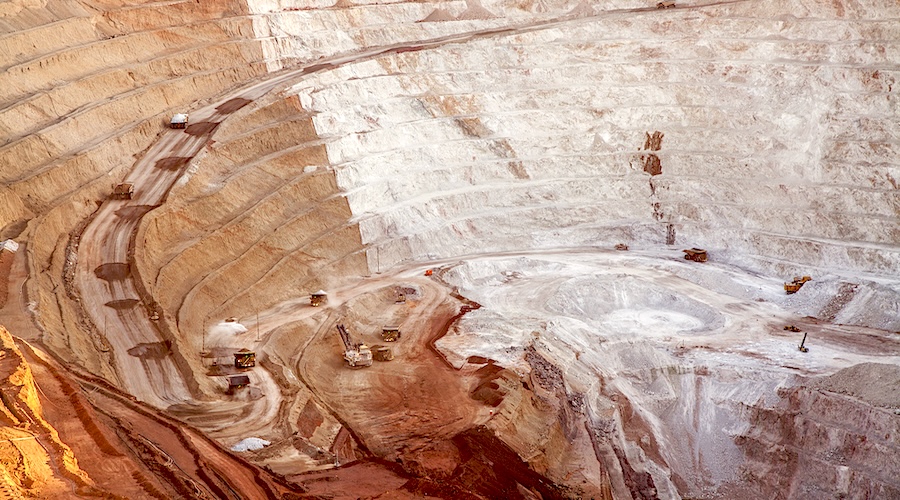
Barro Alto is a nickel-producing mine and processing plant. (Image courtesy of Anglo American.)

Chinese-owned mining firm MMG Ltd.’s $500 million purchase of Anglo American Plc’s Brazilian nickel business has been hit by an in-depth European Union probe after regulators warned that the deal threatens the bloc’s stainless-steel industry.

EU competition chief Teresa Ribera said watchdogs will probe whether the deal “could jeopardize continued and reliable access in Europe” to the supply of ferro-nickel, a key alloying material in stainless steel production.

The firms will now be pressed to come up with solutions that appease regulators’ fears or run the risk of seeing the deal blocked. Officials have until March 20 to come to a final decision.

A joint statement from MMG and Anglo American said that while the firms don’t believe the deal presents competition issues, they’ll work with EU watchdogs to comprehensively address any outstanding questions.

The acquisition of the Anglo business reinforces the strong grip of Chinese companies over global nickel supply. MMG is Hong Kong-listed but its controlling shareholder is state-owned mining-to-trading giant China Minmetals Corp. As well as in the EU, the deal has attracted criticism across the Atlantic, with the American Iron and Steel Institute pressing the White House to intervene over claims it could give China greater control over global nickel reserves.

The firms made an earlier effort to dodge a full-scale EU probe with a commitment for Anglo to purchase from MMG supplies of ferro-nickel from Codemin and Barro Alto mines in Brazil, but regulators deemed the remedy as insufficient. Bloomberg earlier reported the plan to open a deeper investigation.

So-called Phase 2 EU probes typically add about 90 working days to deal reviews — but can drag on, for example if regulators stop the clock to demand further data. The EU’s antitrust arm usually demands robust remedies to solve competition concerns but sometimes also decide to give their unconditional approval if initial concerns are shown to be unfounded.

(By Samuel Stolton)


China aims to revive steelmaking without ordering cuts to supply

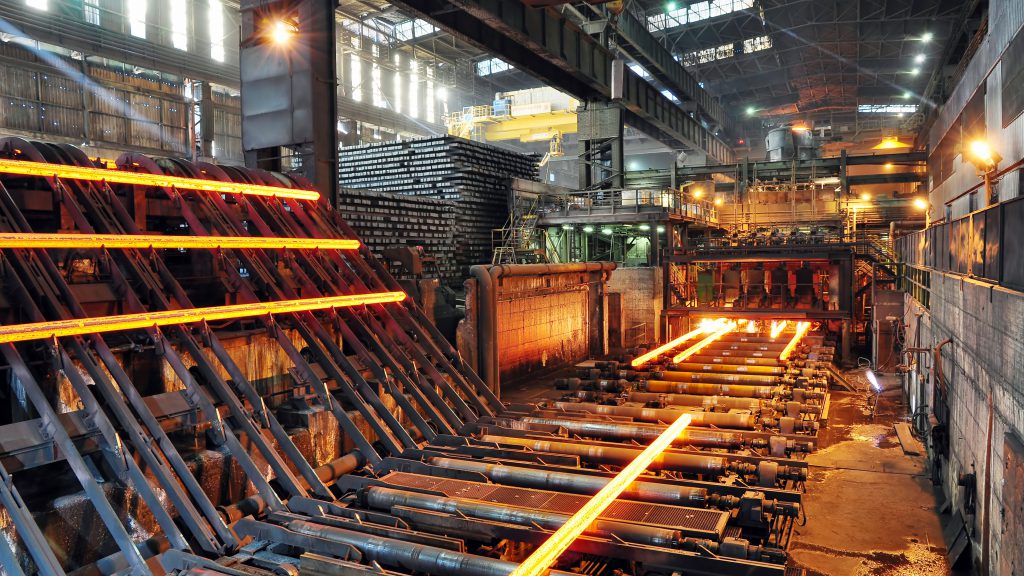
Stock Image.

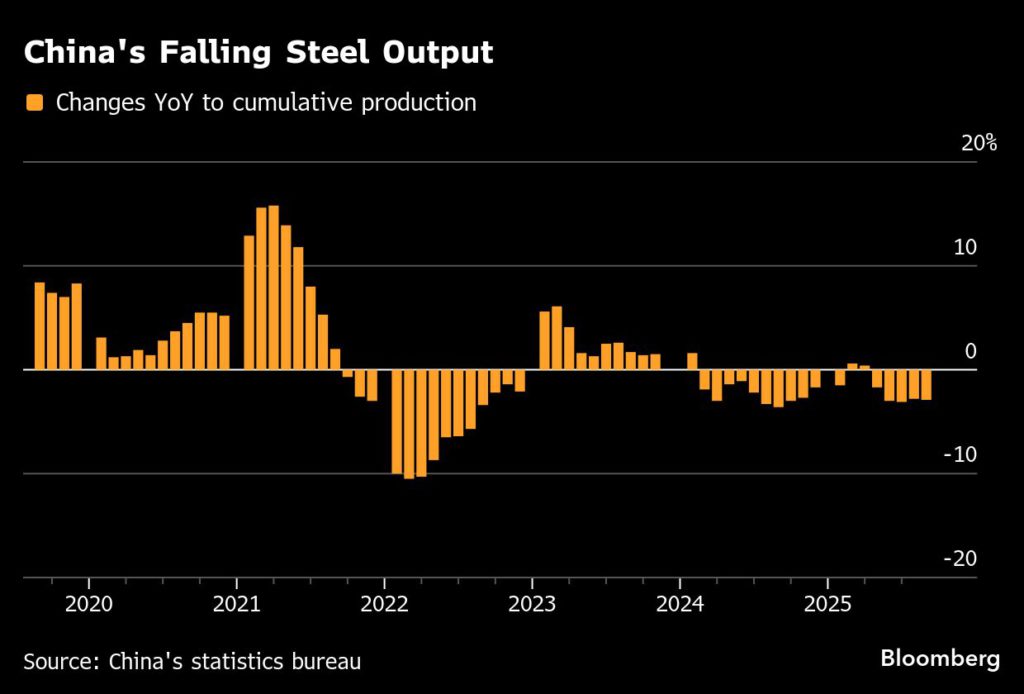
China is taking a measured approach to fixing its steel industry, improving the outlook for high-end companies but steering clear of ordering the cuts needed to decisively shrink supply.

The readout of China’s upcoming five-year plan was heavy on pledges to boost consumption and innovation in the economy. The government’s anti-involution campaign — targeting the overcapacity and ruinous competition that’s been a feature of the steel sector among others — drew perhaps less emphasis than expected.

Instead, Beijing seems to have committed to a more gradual tightening of the screws on steelmakers that would play out over years rather than months. The industry ministry in October proposed tougher capacity rules, so that eliminating existing operations would have to more than offset plans to add new facilities, at a ratio of 1.5 to 1. Swaps that involve upgrades to plants would get better terms. Some key hubs wouldn’t be allowed to add any capacity at all.

Putting limits on expansion, rather than forcing underperforming operations to shutter, won’t help most of the mills struggling with China’s prolonged property crash. But promoting value-added steel over commoditized items like construction rebar suggests firms that are able to specialize will benefit.

“The future of the industry is looking brighter for the top echelon of producers,” said Tomas Gutierrez, an analyst at Kallanish Commodities Ltd. “They could be supported in boosting quality and innovation, in line with China’s broader trend to support the upscaling of productive capacity in the wider economy.”

China could still announce numerical targets on output or capacity when policymakers gather at the annual National People’s Congress in March. Indeed, the punchy rhetoric at the last meeting sparked speculation that Beijing would demand outright cuts to address the overproduction crippling the industry.

That didn’t happen, leaving mills to adjust output based on demand — not great, at least domestically — and margins — surprisingly good due to lower raw material costs. The upshot of the tussle is that annual production has a pretty good chance of sinking below 1 billion tons for the first time in six years.

Whatever the intentions for supply, it’s demand that’s likely to be more influential in shaping the industry’s fortunes. The government’s five-year plan does mention a batch of major construction projects that could help.

Otherwise, steel exports have been a notable bright spot for Chinese mills, but it’s not clear whether that can last as the world tilts increasingly toward protectionism. Goldman Sachs Group Inc. forecasts an 8% decline next year, albeit to the second-highest net volume on record, according to a recent note from the bank.

Moreover, a rising proportion of the steel sold overseas doesn’t qualify as the high-end, finished product favored by the government, suggesting room for improvement when it comes to upgrading the industry.

“If you look at what China’s been exporting this year, the growth has come from semi-finished steel like billets,” said Macquarie Group Ltd. analyst Florence Sun.

AU

China’s ICBC to open vault boosting Hong Kong’s gold ambitions

Stock image.

China’s largest state-owned bank plans to open a precious metals depository at Hong Kong International Airport, offering a boost to both the lender’s trading operations and the city’s ambitions to become a global gold hub.

The local unit of Industrial and Commercial Bank of China Ltd. has leased space at the airport’s vault, according to people familiar with the deal. The bank aims to get the depository ready in the next few months, they said, declining to be named discussing a private matter.

The move dovetails with the Hong Kong government’s intention to develop the city’s clout in the gold market. Chief executive John Lee has pledged to increase capacity for holding bullion to more than 2,000 tons over the next three years and establish a central clearing system for the precious metal.

The Shanghai Gold Exchange has been in the forefront of that effort, having set up its first offshore vault in the city and launched two contracts for international investors.

ICBC is a clearing member at the exchange, the mainland’s main venue for trading bullion. The Hong Kong government has invited the SGE to participate in the clearing system it’s setting up, and ICBC’s unit in Hong Kong wants to be a member of that as well, the people said.

The bank already runs a vault linked to the SGE in neighboring Shenzhen, and has taken steps to expand its Hong Kong team that deals in bullion to help lift trading activity in the city, the people said.

The bank’s leasing deal comes amid the airport’s own growth plans. The Airport Authority Hong Kong released a blueprint last year that called for capacity at its vault to rise to an initial 200 tons from 150 tons, before a phased expansion that would take the space to 1,000 tons.

The airport authority declined to comment. ICBC didn’t respond to a request for comment.

Hong Kong’s status as a financial center, and its proximity to China’s massive gold market, make it an obvious choice for development as an international hub. Its liberal trade policy also positions the city as a natural bridge to the mainland, where import and export controls are tighter.

Gold prices have been on a tear this year, in large part due to its function as a safe haven in times of economic or geopolitical stress. The Chinese government, which is chafing at the dollar’s dominant role in the global financial system, has built up reserves of the metal as a counterweight to the US currency.

(By Yihui Xie and Heng Xie)


Column: China eyes capacity caps for copper, lead and zinc smelters

Stock Image.

Could Beijing’s solution to overcapacity in China’s aluminum sector be a template for other metals?

Yes, according to China’s state-backed non-ferrous metals industry association (CNMIA), which is recommending aluminum-style capacity caps for the country’s copper, lead and zinc smelters.

Chinese processing capacity in all three metals has grown far faster than mine capacity, creating a raw materials crunch that is biting into smelter margins.

Multiple Western smelters have reduced operating rates or fully curtailed plants and it’s clear that Chinese operators are now also feeling the pain caused by their collective investment exuberance.

“Involution” in action

“Intense ‘involution-style’ competition has undercut companies’ negotiation power in raw materials procurement, squeezing profits and threatening a sustainable industry development,” according to Duan Shaofu, a CNMIA official quoted in state media.

In Beijing “involution” translates as excessive, self-destructive competition in sectors where too much capacity is chasing too little feed.

Which is as accurate a description of the copper raw materials sector as you’ll find.

China’s massive expansion in smelter capacity has lifted the country’s refined output by 12% year-on-year in the first nine months of 2025, according to local data provider Shanghai Metal Market (SMM).

But the flip side has been ferocious competition for feedstock.

Spot treatment and refining charges, which would normally represent a core revenue stream for smelters, have been negative for many months.

Benchmark terms, covering larger volumes over longer periods, have collapsed to zero. Chinese smelters agreed with Chilean miner Antofagasta to process its concentrates for free in mid-year negotiations.

Zinc treatment charges turned negative at the end of 2024 but have since recovered to around $87 per metric ton, still low by historical standards.

Lead treatment charges are totally bombed out at a record low of minus $115 per ton for imported raw material, according to SMM.

The common theme is one of Chinese smelters chasing the market ever lower as they battle for survival in an ever more challenging raw materials squeeze.

Low utilization

Capacity utilization in China’s primary aluminum smelting sector is currently over 96%, according to SMM, as production runs just below the mandated 45 million ton annual cap.

Despite much industry skepticism, the cap appears to be a hard one, give or take some collective amperage flex.

The Shanghai aluminum price has risen by 8% since the start of the year, while the alumina price has slumped by 48%. In times gone by the wide price margin between output and core input would have seen Chinese smelters aggressively lift production.

This year, though, annualized production has edged up by only a marginal 370,000 tons with national output growth slowing from 4.2% last year to 2.2% in the first nine months of this year, according to the International Aluminium Institute.

Capacity utilization in China’s copper smelter sector, by contrast, was 84% in September, according to SMM.

Moreover, that headline figure masks a very divergent performance within the sector. SMM estimates that large copper smelters operated at 88% of capacity, medium-sized smelters at 79% and smaller operators at just 60%.

Operating rates at China’s secondary lead smelters, a big part of the battery metal’s supply dynamic, fell as low as 22.3% in September, according to SMM.

Future marker

CNMIA’s public call for capacity caps is an official acknowledgement of the problems created by China’s excessive build-out of new smelter capacity.

It also places sectors such as copper, zinc and lead in the crosshairs of Beijing’s broader “anti-involution” campaign.

But the key question is how long it will take to translate into official policy and where any caps will be set.

In the case of aluminum, the cap was announced in 2017 and is only now starting to act as a tangible brake on the sector’s previously fast growth rate.

Beijing probably doesn’t have that much time to play with when it comes to sectors such as copper, where smelters are facing potentially negative terms in next year’s benchmark deals, when they tend to lock in most of their raw material volumes.

That said, any cap is likely to be set in a way that discourages further investment in new capacity rather than forces the closure of existing capacity.

That offers little immediate relief to smelters outside of China which are feeling the full impact of the country’s smelting “involution”.

(The opinions expressed here are those of the author, Andy Home, a columnist for Reuters.)

(Editing by Kirsten Donovan)

Kore Potash weighs sale or fresh funding to advance Congo mine

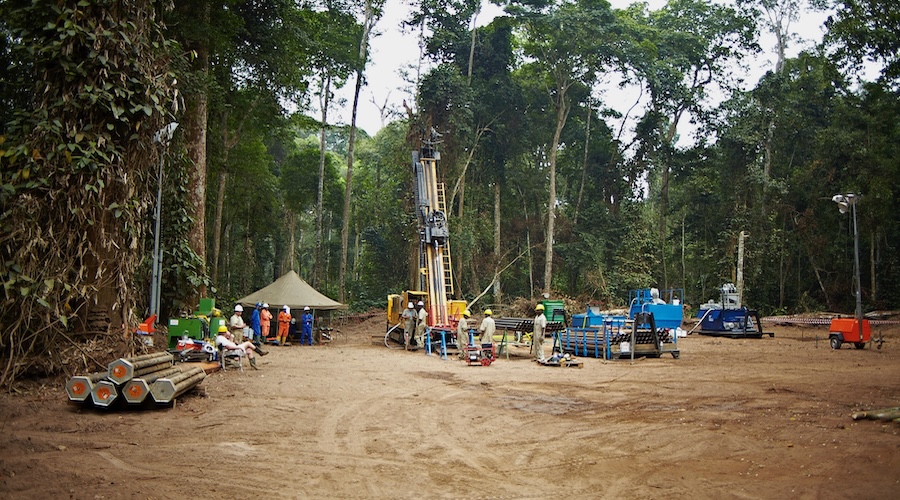
Kola is Kore’s flagship project and set to be among the world’s lowest-cost potash producers. (Image courtesy of Kore Potash.)

Kore Potash (LON: KP2), the company developing the $2 billion Kola potash project in the Republic of Congo, said Tuesday it had received non-binding offers from two potential buyers.

The London-listed miner launched a formal sale process after informing shareholders in June that it was seeking a contract operator and strategic partner with experience in potash mining and processing. Kore said it is reviewing all options, including a full sale of the company or alternative funding through equity and debt.

“It remains possible that, following the formal sale process, the board may conclude that Kore and its stakeholders would be best served by alternative strategic options available to the company, including by Kore continuing to trade on the Aim, the ASX and JSE as an independent entity,” the company said.

Kore’s shares rose as much as 8.5% in London after the announcement, but closed less than 1% higher at 3.13p each, leaving the company with a market capitalization of £152 million ($198 million). Kore also holds a secondary listing in Johannesburg.

Initial discussions with potential partners for the Kola project, designed to produce 2.2 million tonnes of muriate of potash annually, led to interest in equity participation. That interest prompted the formal review and sale process now underway.

De-risked

Kola has been significantly de-risked over the past year. In June, Kore announced a $2.2 billion funding package from OWI-RAMS, including $1.53 billion in debt and a $655 million royalty component giving the lender rights to purchase potash from the project. In November 2024, the company finalized a $1.93-billion engineering, procurement and construction contract with PowerChina International Group, parent of SEPCO.

Kore has worked on the Kola project since 2010 and received its mining licence from the Congolese government in 2013. Construction is slated to begin in 2026, with first production expected about three and a half years later.


Putin orders road map for Russian rare earths extraction

Konstantin Strukov with President Vladimir Putin. Credit: Wikidata, under Creative Commons licence CC0 1.0 Universal.

Russian President Vladimir Putin on Tuesday ordered the Russian cabinet to draw up by December 1 a road map for the extraction of rare earth minerals.

In a list of tasks for ministers published on the Kremlin website, Putin also ordered the cabinet to take measures to develop transport links at Russia’s borders with China and North Korea.

Rare earths – used in smartphones, electric vehicles and weapons systems – have taken on vital strategic importance in international trade.

In April, US President Donald Trump signed a deal with Ukraine that will give the US preferential access to new Ukrainian minerals deals and fund investment in the country’s reconstruction.

Russia says it is also interested in partnering with the US on rare earth projects, but prospects have been held up by a lack of progress towards ending the war in Ukraine.

China, the dominant producer of rare earths, has hit back at US tariffs this year by placing restrictions on their export.

Putin’s order – a summary of action points from a Far Eastern Economic Forum he attended in Vladivostok in September – did not go into detail about Russia’s rare earths plan.

Among other points, he also instructed the government to develop “multimodal transport and logistics centres” on the Chinese and North Korean borders.

Putin said the locations should include two existing railway bridges linking Russia and China and a planned new bridge to North Korea which he said must be commissioned in 2026.

Both of Russia’s far eastern neighbours have deepened economic ties with Moscow since Western countries imposed sanctions on it over its war in Ukraine.

(By Mark Trevelyan and Felix Light; Editing by Andrew Osborn)

Can Africa ride critical minerals wave to economic boom?

Stock image.

As global powers scramble for critical minerals, African countries are pushing for new investment to process more of their own raw materials and meet their people’s demands for economic growth and jobs, analysts say.

To capitalize on the burgeoning demand, the continent must address power shortages, skills gaps, trade barriers and limited industrial capacity.

“This is an unprecedented opportunity for Africa to get on the value-chain bandwagon,” said Hany Besada, senior fellow at the Firoz Lalji Institute for Africa at the London School of Economics and associate professor at the Wits School of Governance.

Africa has around 30% of the world’s mineral reserves, including cobalt, lithium and nickel.

The International Energy Agency expects lithium demand to grow fivefold by 2040, graphite and nickel demand to double and demand for cobalt and rare earth elements to increase by 50% to 60% by 2040.

Africa needs to “build local value chains that integrate mining with refining and manufacturing and innovation, and this goes hand-in-hand with the green transformation of the continent’s economies,” Besada said.

For example, Zimbabwe, Africa’s top lithium producer, has been nudging mining companies to process the minerals in the country to help lift its economy.

“We are creating new jobs, not only in the mining sector, but in the value addition of our minerals,” Evelyn Ndlovu, minister of environment, climate and wildlife, told the Thomson Reuters Foundation. “We have got a lot of people coming in to invest in Zimbabwe.”

China’s Zhejiang Huayou Cobalt said in October it would start producing lithium sulphate during the first quarter of 2026 from its new $400 million plant in Zimbabwe.

At the United Nations’ COP30 climate talks in Brazil in November, African countries hope to win support, especially from the Global South, to ensure demand for the minerals fuelling the digital economy and clean energy transition translates into growth, jobs and development.

Africa “wants to be a meaningful participant and beneficiary of the green economy,” said Ibrahima Aidara, deputy Africa director at the National Resource Governance Institute.

“That means an industrial policy that creates jobs, protects rights and enables countries to climb the value chain and not be trapped at the bottom.”

What stands in the way

Aidara pointed to the Democratic Republic of Congo, which supplies 70% of the world’s cobalt, as an example of a country where mineral wealth has led to child labour, displacement and armed conflict.

Across Africa, barriers to mineral processing – called beneficiation – include a lack of electricity, high tariffs between African countries, infrastructure gaps and cumbersome customs procedures.

“Addressing barriers to trade is critical … If you don’t do that, efforts towards (mineral) beneficiation and industrialization remain aspirational,” Besada said.

Regional cooperation is also key, including initiatives like the African Continental Free Trade Area (AfCFTA), designed to unify all 1.4 billion people in more than 50 nations into a single market.

US President Donald Trump’s imposition of tariffs could give momentum to the AfCFTA, which was officially launched in 2021 but has less than half of member states actively trading under the framework.

The African Union’s Green Minerals Strategy, launched this year, and the Lobito Corridor railway, which connects Zambia’s copper belt to Angola’s Atlantic coast, are examples of cooperation that can help make Africa more than a mere supplier.

In West Africa, the minerals boom has sparked a resurgence of resource nationalism, with countries, particularly military regimes like the one in bauxite-rich Guinea, imposing conditions on foreign mining companies to force value addition.

But Aidara said this approach might not ensure lasting benefits to local communities.

“This problem … is bigger than individual countries. We believe at (the) national level we need … well-defined and evidence-based strategies to leverage minerals and create more economic and industrialization opportunities.”

Listening to Gen Z

The demand for better use of resources is also coming from Africa’s streets.

Over the past year, so-called Gen Z protests from Kenya to Madagascar have seen young Africans express their frustration over everything from corruption to power cuts. Demonstrations in Madagascar led to the fall of the president in October.

“Civil society groups and large populations, including the young, hunger for change. With digital proliferation, they see how things have changed in neighbouring countries,” Besada said.

Governments, even dictatorial ones, are mindful that this engaged population may no longer accept that only rich elites, whether they are foreign or local, benefit from national resources.

Growing African middle classes also play a role.

“They pay taxes, they have more of an interest in how economies are shaped and run. They have more to lose if things go badly, and governments understand this,” Besada said.

At COP30, the drive to ensure the energy transition benefits local populations will be on the agenda.

More than 100 civil society groups, including Amnesty International and rights organizations from Brazil to Indonesia, want governments to put transition minerals, and communities affected by mining, at the centre of climate action.

They urged the United Nations and governments to work with Indigenous peoples and civil society, among others, to strengthen governance of the sector.

“Without a drastic shift, the transition will exacerbate and entrench unjust practices and repeat the exploitative patterns of the past,” the groups said in an open letter.

(By Clar Ni Chonghaile and Kim Harrisberg; Editing by Jack Graham and Ayla Jean Yackley)
EU, China created special channel to ensure rare earth supplies, commissioner says

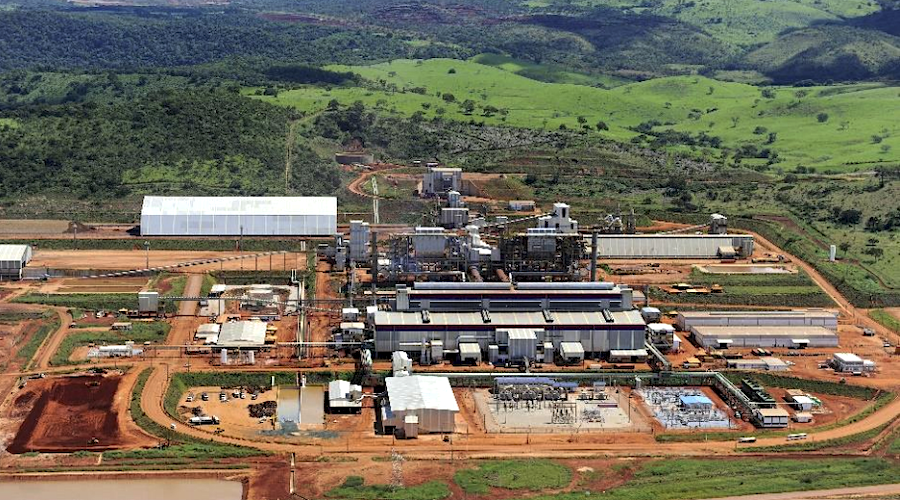
The Baiyun Ebo mine in China’s Inner Mongolia region is the site of almost half the world’s rare earth production. (Image courtesy of NASA.)

The European Union has established a “special channel” of communication with Chinese authorities to secure the flow of rare earth materials vital for EU industries, EU Trade Commissioner Maros Sefcovic said on Wednesday.

The move follows China’s export controls on rare earths, which raised concerns in Europe after their introduction earlier this year about potential disruptions to the production of electric vehicles, wind turbines and other technologies that depend on permanent magnets.

A series of deals with Europe and the US later eased the supply crunch, while the European Union, the US and others are also racing to build alternatives to the Chinese rare earth supply chain.

Sefcovic said he had discussed the issue directly with Chinese Commerce Minister Wang Wentao several times, stressing that poorly managed export procedures could have a “very negative impact on production and manufacturing in the EU”.

Sefcovic was speaking in Kuwait, where he was attending the 2025 GCC-EU Business Forum, and made the remarks in response to a Reuters question.

Brussels and Beijing agreed to prioritize applications from European companies, and through the new channel, officials on both sides are working together to review and fast-track export permits for rare earth materials, he said.

According to Sefcovic, European firms have submitted around 2,000 applications to Chinese authorities since the controls came into force, with just over half already approved.

He said Brussels was continuing to press Beijing for faster processing of the remaining cases, while simultaneously working to diversify supply by developing new sources in Europe, including from rare earth and magnet production in Estonia.

On Tuesday, the EU Commission said EU and Chinese officials had discussed general licenses to ease the export of rare earths, to match the kind of licenses the United States says it secured from China.

(By Ahmed Hagagy; Editing by Aidan Lewis)

FE

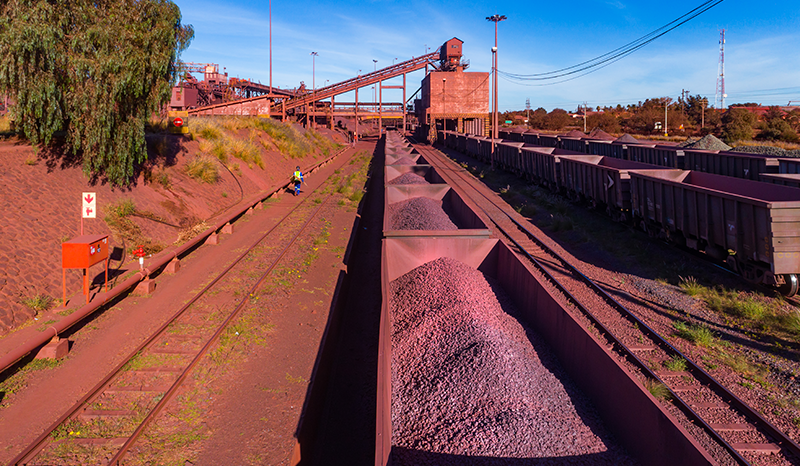
South African iron ore mine to close after ArcelorMittal halts purchases

Beeshoek iron ore mine. Credit: Assmang

South Africa’s African Rainbow Minerals said on Wednesday that its jointly owned Beeshoek iron ore mine will be placed on “care and maintenance” after its sole customer, the ailing steel producer ArcelorMittal South Africa, ceased purchases.

Care and maintenance means that the Beeshoek mine is being temporarily shut down as the owners evaluate further options to resume operations if market conditions change.

Mining operations at the mine ceased at the end of October, and about 622 permanent workers will be let go effective November 30, the South African miner said in a statement.

Beeshoek, operated by Assmang – a joint venture between ARM and international miner Assore – stopped deliveries to ArcelorMittal in late July following the expiry of a long-term contract in June, ending a decades-long supply relationship.

ArcelorMittal South Africa had continued buying iron ore on a month-to-month basis but halted purchases altogether on July 27.

ARM said an extensive review of operational, commercial and financial alternatives failed to identify a viable path forward for the ageing mine, which has legacy infrastructure and a cost base heavily reliant on ArcelorMittal’s offtake.

“In the absence of a sustainable offtake arrangement, Beeshoek mine is no longer economically feasible to operate,” the group said in a statement.

It added that consultations with unions under South Africa’s Labour Relations Act have been completed and the Department of Mineral and Petroleum Resources has been notified of the shutdown.

The decision confirms a warning issued in August, when Assmang told unions it was considering closure after ArcelorMittal unexpectedly declined to sign a new three-year supply contract.

ArcelorMittal South Africa is grappling with weak domestic demand, high electricity costs, poor freight logistics and competition from Chinese imports and mini-mills.

It has also deferred the closure of its long steel plants in Newcastle and Vereeniging as it continues talks with the South African government and labour representatives.

($1 = 17.3125 rand)

(By Sfundo Parakozov and Nelson Banya; Editing by Emelia Sithole-Matarise)

LI

Once a lithium darling, Sigma’s woes mount with 29% stock rout

Credit: Sigma Lithium

Sigma Lithium Corp. is plunging amid growing doubts about near-term production and potential delays to a key expansion project.

In a sharp reversal for a stock once seen as an industry darling, Sigma has lost almost one-third of its market value this week for the worst two-day slump in 21 months. On Tuesday, the stock was down more than 7%, making it one of the worst performers in an index of lithium producers.

Late Monday, BMO Capital Markets joined a growing chorus of analysts tempering outlooks after Sigma abruptly changed mining contractors last month as part of measures the company said were aimed at improving efficiency at its flagship Brazilian mine.

Plans to begin using larger trucks and modernize some gear may inflate capital-spending requirements and slow an expansion project, analysts said.

“We’re not sure of the exact reason for recent volatility in the stock but know there are many questions around the change in mining contractor, the balance sheet, etc., causing SGML to underperform this lithium rally,” BMO analyst Joel Jackson wrote in a note to clients.

Bank of America has been ringing alarm bells as far back as August, highlighting the potential implications of increasing delays in payments to vendors. Late last month, the bank downgraded Sigma shares from buy to neutral.

Sigma is grappling with weaker prices for the battery metal and heightened investor scrutiny. The company didn’t immediately respond to a request for comments.

Sigma shares are down more than 50% this year after losing 64% of their value in 2024.

The global lithium market has been in turmoil amid slower-than-expected growth in electric-vehicle demand that’s been compounded by US President Donald Trump’s revamp of clean-energy policies in the world’s largest economy.

Sigma is scheduled to release third-quarter results on Nov. 14.

(By Mariana Durao, Vinícius Andrade and Annie Lee)

California lithium company eyes 2026 IPO to attract US government investment

A California lithium company plans to launch an initial public offering next year as part of a bid to become an attractive investment target for the US federal government.

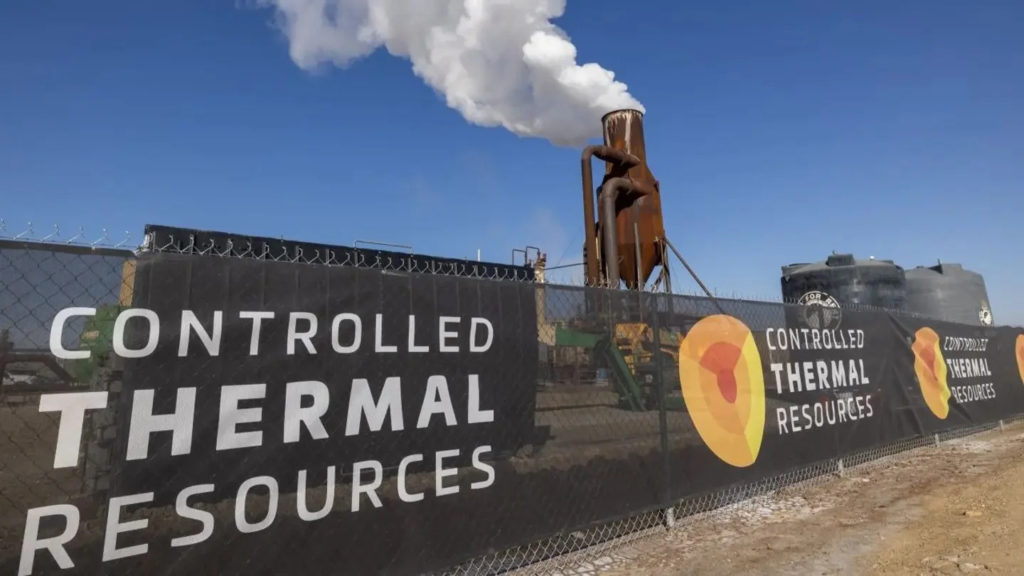
Controlled Thermal Resources (CTR), which has been privately held for more than a decade, aims by next July to spin off its minerals assets and part of its geothermal power generation business into a publicly traded firm to be called American Critical Resources.

The company, which must first commercialize so-far unproven direct lithium extraction technology (DLE) to produce the electric vehicle battery metal for Stellantis and General Motors, is deciding between Intercontinental Exchange’s NYSE or Nasdaq for the listing, said CEO Rod Colwell.

US government investments

The IPO plans come amidst Washington’s growing wave of investments into publicly traded minerals projects, including rare earths producer MP Materials and Lithium Americas, part of President Donald Trump’s goal off lessening the country’s reliance on market leader China.

“Would the federal government do what they’ve done with MP Materials if it was private?” said Colwell. “There seems to be a pattern that’s been formed in Washington for a desire to work with public companies versus private companies and have a path to liquidity.”

When asked if the IPO was aimed at trying to secure US government funds, Colwell said: “Absolutely.”

Colwell, who will become the CEO of American Critical Resources, controls the majority of CTR’s private shares along with family members. He declined to provide a valuation estimate for the new company, adding that conversations are in early stages.

Struggles to commercialize DLE

The company – like its peers – has struggled for years to commercialize direct lithium extraction technology (DLE), a process backers say is more sustainable than open-pit mines and evaporation ponds, the two most common methods to produce lithium.

It missed a self-imposed deadline to supply GM by 2024.

The project, based at the Salton Sea, roughly 160 miles (258 km) southeast of Los Angeles, which is slated to produce lithium starting in 2028, was added to a fast-track permitting list by the Trump administration.

In addition to lithium, the new company aims by 2029 to produce zinc, manganese and potash from brine extracted from deep reservoirs, which teems with myriad critical minerals.

Australian advisory firm Hall Chadwick and investment bank Cohen & Co are advising on the IPO process.

The Salton Sea project faced a lawsuit from environmental group Earthworks due to concerns about water use. A state court ruled earlier this year against the environmental group, which is appealing.

This latest California lithium push comes amid increasing competition to be the first in the US to deploy DLE. Arkansas, for example, is vying to beat California to that mark.

(By Ernest Scheyder; Editing by Conor Humphries)


CU

Codelco sees slight output gain despite mine accident

Codelco credited the production boost to higher output at its Ministro Hales mine. (Image courtesy of Codelco.)

Chile’s state-owned copper giant Codelco, the world’s largest producer of the metal, expects 2025 and 2026 production to slightly surpass last year’s output, signalling resilience in the face of a deadly collapse at its El Teniente mine.

The company’s outlook offers a modest boost to an increasingly tight global copper market.

“We’ll slightly exceed 2024 copper production,” chairman Máximo Pacheco told Bloomberg on Monday ahead of Codelco’s third quarter results. The executive added that this year’s output is also expected to edge higher. The miner produced 1.4 million tonnes of copper in 2024.

In early October, Codelco estimated that the July 31 accident at El Teniente would cut 2024 output by 48,000 tonnes, up from a previous forecast of 33,000 tonnes. The mine produced 356,000 tonnes last year and remains Codelco’s most profitable operation.

Withstands shock

For the first nine months of 2025, Codelco reported on Tuesday a pre-tax profit of $606.9 million, slightly below the $612.2 million recorded a year earlier. Copper output rose 2.1% year over year to 937,000 tonnes, despite the temporary shutdown caused by the deadly collapse.

Adding the contribution of El Abra (49%), Anglo American Sur (20%) and Quebrada Blanca (10%), total production reached 1.016 million tonnes, 1.4% more than in the third quarter last year. 

Codelco attributed the production growth largely to improved output at its Ministro Hales mine, which has focused on enabling extraction on more than one level, and the contributions of the Rajo Inca structural project in Salvador, which has been in the ramp-up phase since December 2024 and has contributed 21,200 tonnes this year. 

Conversely, the accident on July 31 resulted in a production decrease of 22,100 tonnes for the quarter.

“This increase is especially significant because we managed to maintain the growth trend in production, despite the complex scenario we faced following the accident at El Teniente,” CEO Rubén Alvarado said, adding that a fuller report on the incident is expected by year-end.

Impacts linger

Consultancy Plusmining noted that while Codelco’s production from January to August was up 4% year over year, the accident’s effects will likely persist. “The issue is that the affected area contains replacement resources, and it seems the full impact won’t be felt until later,” said founder Juan Carlos Guajardo. “The real question remains for the years ahead.”

The collapse marked another setback in Codelco’s multi-billion-dollar push to revive aging mines and restore pre-pandemic production levels of 1.7 million tonnes, once enough to secure its title as the world’s top copper supplier. Some executives, however, are calling for a stronger focus on profitability as company debt reached $24 billion.

“Codelco is already among the world’s most indebted major mining companies with debt of about six times earnings before interest, taxes, depreciation, and amortization,” BMO said.

BMO Capital Markets analysts said the incident adds downside risk to their copper supply forecasts, which assumed Codelco output growth of 4% in 2025 and 3% in 2026. Their base case projects global copper deficits of about 200,000 tonnes next year and 300,000 tonnes in 2026, supporting an estimated price of $10,500 per tonne.


Stena Acquires Northernmost Shipping Company, Finland to Sweden Wasaline

hybrid ferry Aurora Bothina
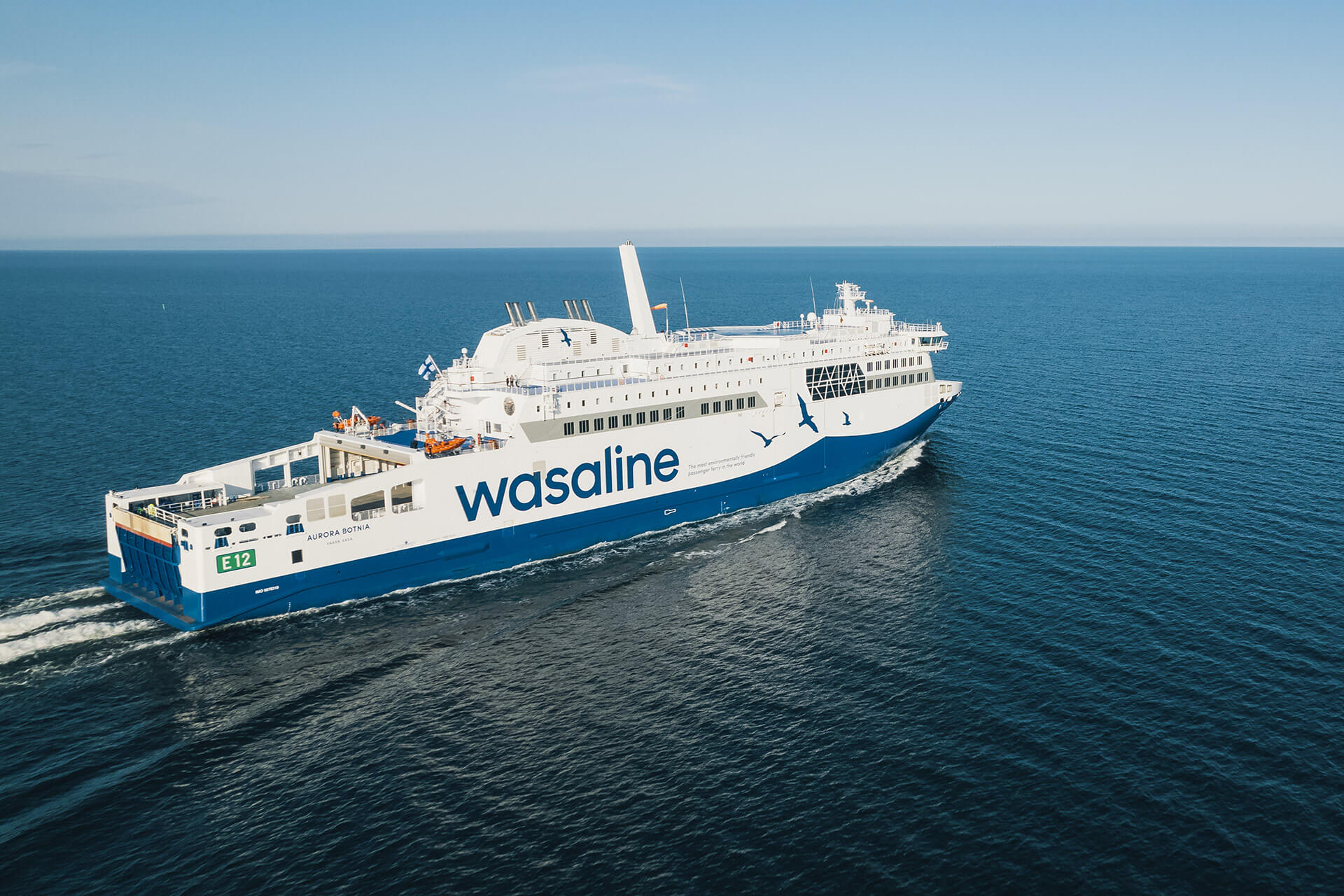
Aurora Bothina running on biogas and batteries launched the first international green shipping corridor in 2025 (Wasaline)

Published Nov 4, 2025 5:03 PM by The Maritime Executive


Stena Line, which is one of Europe’s largest ferry lines, has agreed to acquire the operations of Wasaline as part of a plan to enhance operations on what is billed as the northernmost shipping company in the world. While there had been service for more than 50 years on the route, the cities in Sweden and Finland had maintained the service for the past 12 years as a means of continuing trade operations.

Faced with the prospects of the service coming to an end, the City of Vaasa, Sweden, and UmeÃ¥, Finland, acquired rights to the route in 2012 and set up a company, Kvarken Link, to maintain the service. Kvarken established NLC Ferry, which operates under the trade name of Wasaline, operating ferry service between the two cities. 

“We are very proud of how brave we were, in both the City of Vaasa and UmeÃ¥ Municipality, when we decided that the ferry connection across the Kvarken was essential,” Frans Villanen, Chair of the City Council of Vaasa. “The growing number of passengers and freight volumes each year shows that it was the right decision. Now, it is time to bring in a larger operator with the knowledge, expertise, and resources that the cities themselves do not possess. We are very pleased to have found a shared vision with Stena Line.”

Since launching the service in 2013, the city-owned company has also successfully launched a revolutionary hybrid ferry, Aurora Botnia (24,300 gross tons). Introduced in 2021, the ferry can handle up to 935 passengers and has two cargo decks with a total of 1,500 lane meters for cars and trucks. The ferry has been adapted and now is operating on biogas and batteries, making the route the first international green shipping corridor.

“Together with the City of Vaasa, we have strengthened the connections across the Kvarken and proven that the service is profitable,” said Hans Lindberg, Chair of the Municipal Executive Board, UmeÃ¥ Municipality. “This has happened during a turbulent time when infrastructure, civil defense, and preparedness have become more relevant than ever.”

Under the terms of the agreement, Stena Line will acquire NLC Ferry. It will maintain the operation of Wasaline, although Kvarken Line, the company jointly owned by the two cities, will continue to own the vessel.

Stena says it recognizes the economic importance of the ferry operation and is committed to continuing to grow the operation.

“With Wasaline, we not only gain a vessel equipped with the latest environmental technology and capable of sailing CO?-neutral on a regular basis, we also enhance our access to alternative fuels. In addition, we gain a strong intermodal transport link toward Gothenburg and Trelleborg, and onwards to the European continent,” said Niclas MÃ¥rtensson, CEO of Stena Line.

The two municipal councils must approve the deal, which is expected to take place in November. The closing is expected to take place at the beginning of 2026.