Friday, November 07, 2025

Prairie Lithium begins construction on North America’s largest DLE facility
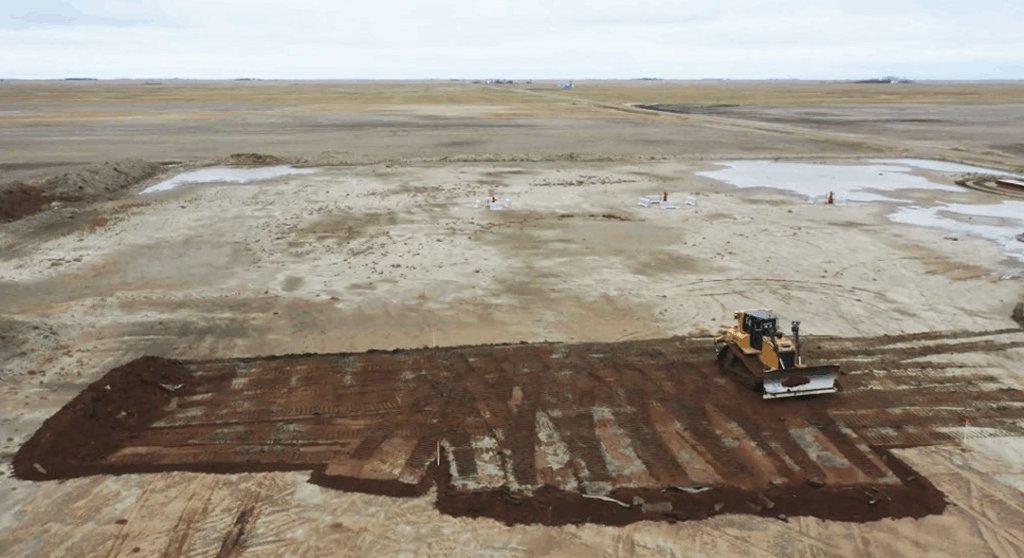
Foundation works on Pad #1. Credit: Prairie Lithium

Australia’s Prairie Lithium (ASX: PL9) has kicked off construction on what it says would be the largest direct lithium extraction (DLE) facility in North America in the Canadian province of Saskatchewan.

Currently, the largest DLE facility is believed to be deployed by Standard Lithium (TSXV: SLI) in Arkansas. In March of 2024, the Canadian company successfully installed and commissioned the Li-Pro lithium selective sorption (LSS) commercial-scale unit supplied by Koch Technology Solutions (now Aquatech).

In comparison, Prairie’s facility would have a total of four commercial-scale DLE columns, with an anticipated arrival date of April 2026. The successful de-risking of one commercial-scale column in Arkansas over the past 18 months, combined with the high-quality brine from its lithium project, supports confidence in the technology’s performance and scalability, the company stated.

Construction on the lithium extraction facility at Pad #1 has now begun, with completion of the foundation expected in the first quarter of 2026 and building construction to follow. The application to connect the wells and facility at Pad #1 to grid power has also been submitted to SaskPower.

“The construction on our lithium extraction facility at Pad #1 is a strong step forward on our critical path to production. The groundwork we are laying now will host what we believe will be the largest known direct lithium extraction facility in North America,” Prairie Lithium managing director Paul Lloyd stated in a press release.

The scale of its facility, Lloyd added, underscores the maturity of the Prairie lithium project, where the company plans to use conventional oil and gas drilling and completion methods to access lithium-rich brine from aquifers about 2.3 km underground, and then separate the lithium from the brine using DLE technology.

The property, comprising over 345,000 acres of subsurface permits in the Duperow Formation, contains an estimated 4.6 million tonnes of lithium carbonate equivalent in measured and indicated resources.


Once a lithium darling, Sigma’s woes mount with 29% stock rout
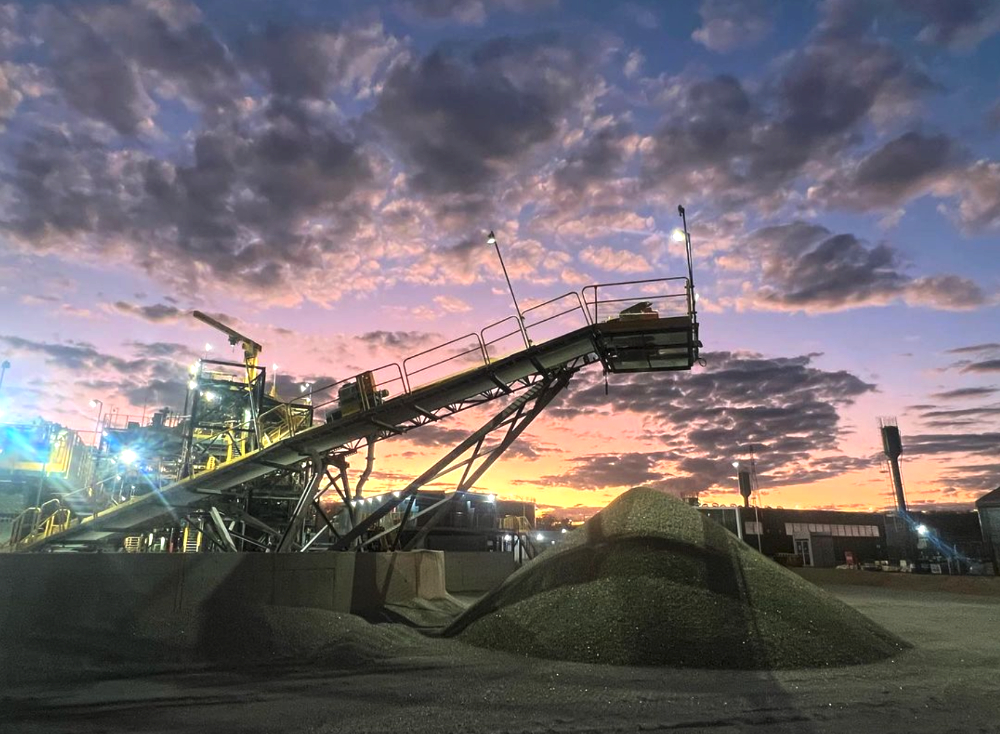
Credit: Sigma Lithium

Sigma Lithium Corp. is plunging amid growing doubts about near-term production and potential delays to a key expansion project.

In a sharp reversal for a stock once seen as an industry darling, Sigma has lost almost one-third of its market value this week for the worst two-day slump in 21 months. On Tuesday, the stock was down more than 7%, making it one of the worst performers in an index of lithium producers.

Late Monday, BMO Capital Markets joined a growing chorus of analysts tempering outlooks after Sigma abruptly changed mining contractors last month as part of measures the company said were aimed at improving efficiency at its flagship Brazilian mine.

Plans to begin using larger trucks and modernize some gear may inflate capital-spending requirements and slow an expansion project, analysts said.

“We’re not sure of the exact reason for recent volatility in the stock but know there are many questions around the change in mining contractor, the balance sheet, etc., causing SGML to underperform this lithium rally,” BMO analyst Joel Jackson wrote in a note to clients.

Bank of America has been ringing alarm bells as far back as August, highlighting the potential implications of increasing delays in payments to vendors. Late last month, the bank downgraded Sigma shares from buy to neutral.

Sigma is grappling with weaker prices for the battery metal and heightened investor scrutiny. The company didn’t immediately respond to a request for comments.

Sigma shares are down more than 50% this year after losing 64% of their value in 2024.

The global lithium market has been in turmoil amid slower-than-expected growth in electric-vehicle demand that’s been compounded by US President Donald Trump’s revamp of clean-energy policies in the world’s largest economy.

Sigma is scheduled to release third-quarter results on Nov. 14.

(By Mariana Durao, Vinícius Andrade and Annie Lee)


California lithium company eyes 2026 IPO to attract US government investment
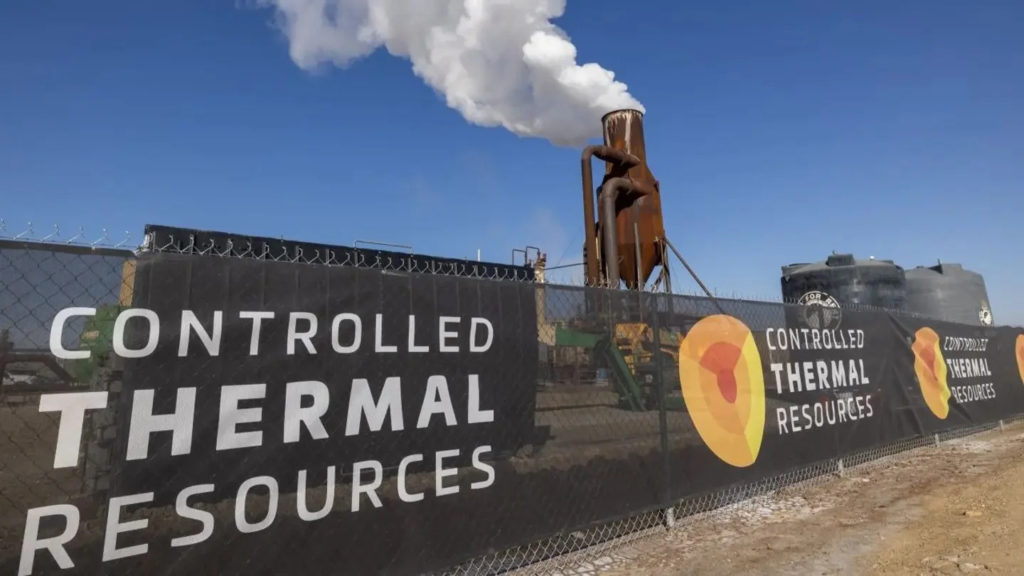
A California lithium company plans to launch an initial public offering next year as part of a bid to become an attractive investment target for the US federal government.

Controlled Thermal Resources (CTR), which has been privately held for more than a decade, aims by next July to spin off its minerals assets and part of its geothermal power generation business into a publicly traded firm to be called American Critical Resources.

The company, which must first commercialize so-far unproven direct lithium extraction technology (DLE) to produce the electric vehicle battery metal for Stellantis and General Motors, is deciding between Intercontinental Exchange’s NYSE or Nasdaq for the listing, said CEO Rod Colwell.

US government investments

The IPO plans come amidst Washington’s growing wave of investments into publicly traded minerals projects, including rare earths producer MP Materials and Lithium Americas, part of President Donald Trump’s goal off lessening the country’s reliance on market leader China.

“Would the federal government do what they’ve done with MP Materials if it was private?” said Colwell. “There seems to be a pattern that’s been formed in Washington for a desire to work with public companies versus private companies and have a path to liquidity.”

When asked if the IPO was aimed at trying to secure US government funds, Colwell said: “Absolutely.”

Colwell, who will become the CEO of American Critical Resources, controls the majority of CTR’s private shares along with family members. He declined to provide a valuation estimate for the new company, adding that conversations are in early stages.

Struggles to commercialize DLE

The company – like its peers – has struggled for years to commercialize direct lithium extraction technology (DLE), a process backers say is more sustainable than open-pit mines and evaporation ponds, the two most common methods to produce lithium.

It missed a self-imposed deadline to supply GM by 2024.

The project, based at the Salton Sea, roughly 160 miles (258 km) southeast of Los Angeles, which is slated to produce lithium starting in 2028, was added to a fast-track permitting list by the Trump administration.

In addition to lithium, the new company aims by 2029 to produce zinc, manganese and potash from brine extracted from deep reservoirs, which teems with myriad critical minerals.

Australian advisory firm Hall Chadwick and investment bank Cohen & Co are advising on the IPO process.

The Salton Sea project faced a lawsuit from environmental group Earthworks due to concerns about water use. A state court ruled earlier this year against the environmental group, which is appealing.

This latest California lithium push comes amid increasing competition to be the first in the US to deploy DLE. Arkansas, for example, is vying to beat California to that mark.

(By Ernest Scheyder; Editing by Conor Humphries)


AU

Freegold drills strong wide intercepts in Alaska 

Freegold drills at its Golden Summit project in central Alaska. Credit: Freegold Ventures

Freegold Ventures (TSX: FVL) has reported further drilling success from its Golden Summit project in Alaska where it’s defining a starter pit in the lead up to a prefeasibility study.

Drill hole GS2523 cut 277.1 metres grading 1.24 grams from 349.6 metres downhole including 45.4 metres at 3.63 grams gold per tonne from 581.3 metres deep, the company said on Wednesday.

“One of the southernmost holes drilled in the Dolphin zone demonstrates the continuity and robust nature of the system, clearly indicating the potential to expand further and increase the overall grade at Golden Summit, and it remains open to the south and southwest,” the company said in a release. “Furthermore, it is one of the broadest gold mineralized intervals within the intrusive seen to date.”

Freegold reported four assays in the latest batch of 49 in this year’s nearly 32,000-metre infill and expansion program to upgrade and expand existing resources within the Dolphin-Cleary zone. The Golden Summit project has become one of North America’s largest undeveloped gold resources with 432 million indicated tonnes grading 1.24 grams for 17.2 million oz. gold and 358 million inferred tonnes at 1.04 grams for 11.9 million contained oz. as of July.

Freegold shares rose 4.6% to C$1.14 in Toronto Wednesday morning, valuing the company at C$578 million ($410 million).

Starter pit

Golden Summit is about 30 km northeast of Fairbanks and 6 km north of Kinross Gold’s (TSX: K; NYSE: KGC) Fort Knox mine. Freegold plans is to drill into mid-December then resume in February for an updated resource ahead of a prefeasibility study. Crews are also working to outline a starter pit and conduct cultural resource assessments, paleontology, groundwater analysis and studies on mammals and habitats, the company said.

Other drill holes reported Wednesday include GS2509, which cut 44.7 metres grading 1.16 grams from 242.3 metres deep; GS2511, which returned 18.3 metres at 3.3 grams from 346.7 metes downhole; and GS2514, which cut 33.6 metres at 1.44 grams from 202.4 metres underground.

“Ongoing drilling has continued to delineate zones of higher-grade mineralization and to convert previously considered waste areas into potentially economically viable mineralized zones,” said the company, led by President and CEO Kristina Walcott. “Continued westward expansion has resulted in the discovery of new higher-grade zones, increasing both indicated gold resources and grades.”

The 2025 drill campaign follows last year’s 25,000-metre program that fed into the expanded resource estimate. A 2016 preliminary economic assessment outlined a 24-year mine life producing 2.36 million ounces at average annual output of 96,000 oz., with initial capital costs estimated at C$88 million and a post-tax net present value at a 5% discount rate of C$188 million.


Iamgold hits record gold output, powers up Canadian growth

The Côté Gold mine in Northern Ontario. (Image courtesy of Iamgold.)

Canadian miner Iamgold (TSX: IMG)(NYSE: IAG) has reported strong third-quarter results, driven by record production at its flagship Côté gold mine in Ontario and continued debt reduction efforts.

The company’s three operations — Côté, Westwood and Essakane — produced 190,000 attributable ounces of gold during the quarter, bringing year-to-date output to 524,000 ounces. Iamgold said it remains on track to meet its full-year guidance of 735,000 to 820,000 ounces.

Côté delivered a record 106,000 ounces, while Westwood in Quebec added 23,000 ounces. The Essakane mine in Burkina Faso contributed 92,000 ounces. Quarterly revenue reached $706.7 million from sales of 203,000 ounces at an average realized gold price of $3,492 per ounce. Year-to-date revenue totalled $1.76 billion. All-in sustaining costs averaged $1,956 per ounce, placing the company at the upper end of its cost guidance.

Chief executive Renaud Adamssaid the third quarter marked “a pivotal moment” for the company, citing operational discipline and financial strength.

“Our trailing 12-month earnings before interest, tax, depreciation now exceeds $1-billion, and we have repaid about $270-million of our second lien notes, further strengthening our balance sheet and financial flexibility,” Adams said.


Net earnings for the quarter were $139.4 million, or $0.24 per share, while adjusted net earnings reached $170.9 million, or $0.30 per share. Free cash flow hit a record $292.3 million, including $135.6 million from Côté alone. Iamgold ended the quarter with $707 million in liquidity and net debt of $813 million, down $202 million from the previous quarter.

With its balance sheet strengthening, the board approved a share buyback program for up to 10% of outstanding shares, funded from operating cash flow after debt repayments.

BMO analyst Matthew Murphy noted that while Iamgold IMG beat on production, it missed on cash costs. “Earnings before interest, taxes, depreciation and amortization were in-line while free cash flow was a slight miss,” he wrote.

“Unit costs were high at both Côté and Westwood and full year unit costs are headed to the top end of guidance,” he wrote. Murphy noted that Côté costs are expected to fall into 2026, but that execution “remains key”.

Canadian growth

During the quarter, Iamgold also advanced plans to grow its Canadian footprint through the proposed acquisitions of Northern Superior Resources and Mines d’Or Orbec, valued at a combined $280 million in cash and shares.

The deals would consolidate the Chibougamau region in Quebec into the Nelligan Mining Complex — a 134,000-hectare land package holding 3.75 million ounces of measured and indicated resources and 8.65 million ounces inferred.

Adams said Iamgold would continue to focus on cost control and disciplined capital deployment while advancing expansion plans at Côté. “We are (…) positioning Iamgold as a modern, Canada-focused gold producer with a robust growth pipeline,” he said.

The company’s next phase will hinge on ramping up Côté, integrating new Quebec assets, and reducing debt. The strategy is expected to build long-term shareholder value.


Nippon Steel excludes US Steel from profit guidance on ‘significant’ market challenges

The U.S. Steel pig iron caster at the Gary Works, Ind. The Nippon deal faces scrutiny. Credit: U.S. Steel

Nippon Steel, Japan’s biggest steelmaker, said it expects to report a 14% fall in annual profit before one-offs for the current fiscal year, but that excluded its outlook for US Steel, due to significant challenges in the US market.

The Japanese steelmaker expects an underlying business profit, or profit adjusted for one-offs, of 680 billion yen ($4.51 billion) for the year ending in March, down from 793.7 billion yen last year.

Nippon Steel, which acquired US Steel in June in a $15 billion deal, said it excluded the business from its forecast for this fiscal year because “the current US steel market conditions are significantly below the levels initially anticipated” in addition to cost rises due to equipment-related issues and “heightened uncertainty in the US market.”

Before the deal, US Steel’s steelmaking capacity was around 40% of Nippon Steel’s 66 million tonnes a year available globally. Nippon Steel views US Steel as a key part of its long-term strategy for reaching an annual steelmaking capacity of 100 million tonnes.

“US Steel’s current earnings structure is very fragile, but executing investments will be an extremely effective measure to improve profitability,” Nippon Steel vice chairman Takahiro Mori told a press conference, reaffirming its plan to steadily push ahead with investments.

On Tuesday, US Steel announced spending of $14 billion on a multi-year growth plan with Nippon Steel, with $11 billion to be invested by the end of 2028.

Nippon Steel, which steered the US Steel deal through political and union opposition, expects potential synergies of $0.5 billion annually by 2030, it said.

“On top of decarbonization requirements, the pledged capital expenditure in the US would make it challenging for the company to keep dividends high,” Jefferies said in a note. “Thus, we think that there is risk of a capital raise.”

Nippon Steel posted a loss of 113.4 billion yen for the six months to the end of September, versus a profit of 243.4 billion yen in the same period a year earlier.

The steelmaker also said it expects to report a fiscal full year loss of 60 billion yen, 50% more than its previous forecast as it would book a 21 billion yen loss on the exit from the Usiminas steel manufacturing company in Brazil.

Nippon Steel’s minority stake in Usiminas will be transferred to another shareholder, Ternium, as the Japanese company plans to focus on its key regions: the US, India and Thailand instead, it said in its results presentation.

“The sale of Usiminas shares is intended to mitigate further impairment risks, as no significant recovery is expected in Brazil soon,” Mori said.

($1 = 150.7800 yen)

(By Katya Golubkova; Editing by Sonali Paul and Kate Mayberry)

United States Steel Corp said on Tuesday it is launching a multi-year growth plan with Nippon Steel that targets approximately $14 billion of US growth capital, with $11 billion to be invested by the end of 2028.

(By Aatreyee Dasgupta)


China’s trade truce and five-year plan help coal price recover

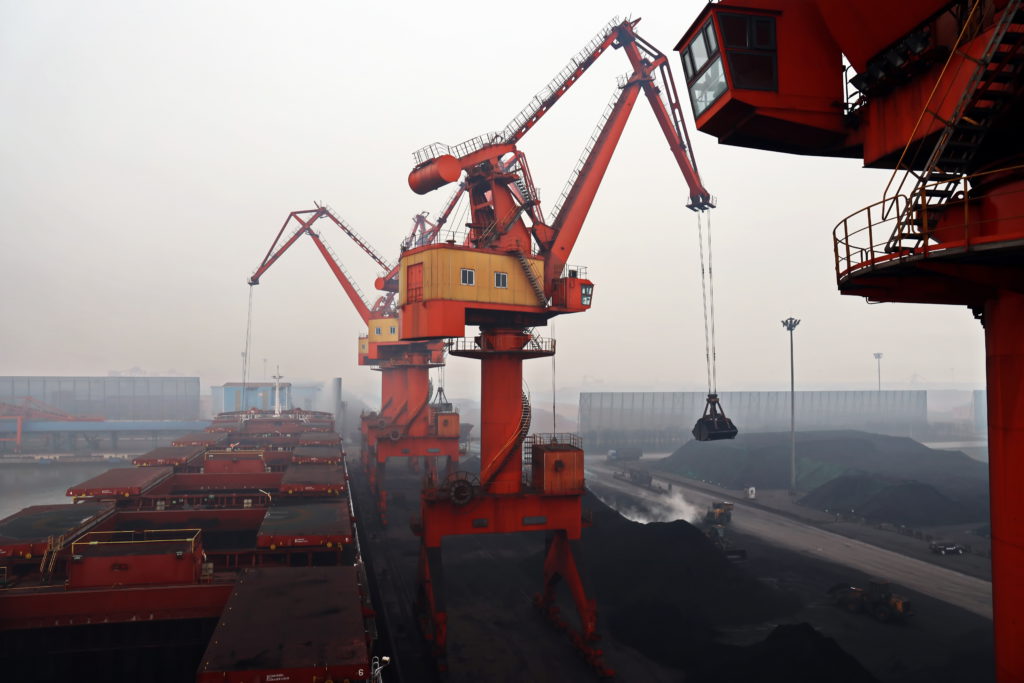
Cargo terminal for discharging coal cargos by shore cranes during foggy weather. Port Bayuquan, China. Stock image.

China’s thermal coal price has climbed to its highest level this year, as a combination of short and long-term factors lift confidence in the outlook for demand.

The usual impact of utilities restocking for winter has been amplified by protracted mine inspections to ensure safety and check excessive output. Buyers are also taking heart from the trade truce agreed with the US and its positive bearing on the economy, as well as Beijing’s softer stance on capping consumption of the dirtiest fossil fuel.

The benchmark price at Qinhuangdou has risen to 788 yuan ($111) a ton, according to the China Coal Transportation and Distribution Association, an increase of more than 10% over the last month or so. Similar dynamics are affecting steelmaking coal, with futures in Dalian close to their highs for the year.

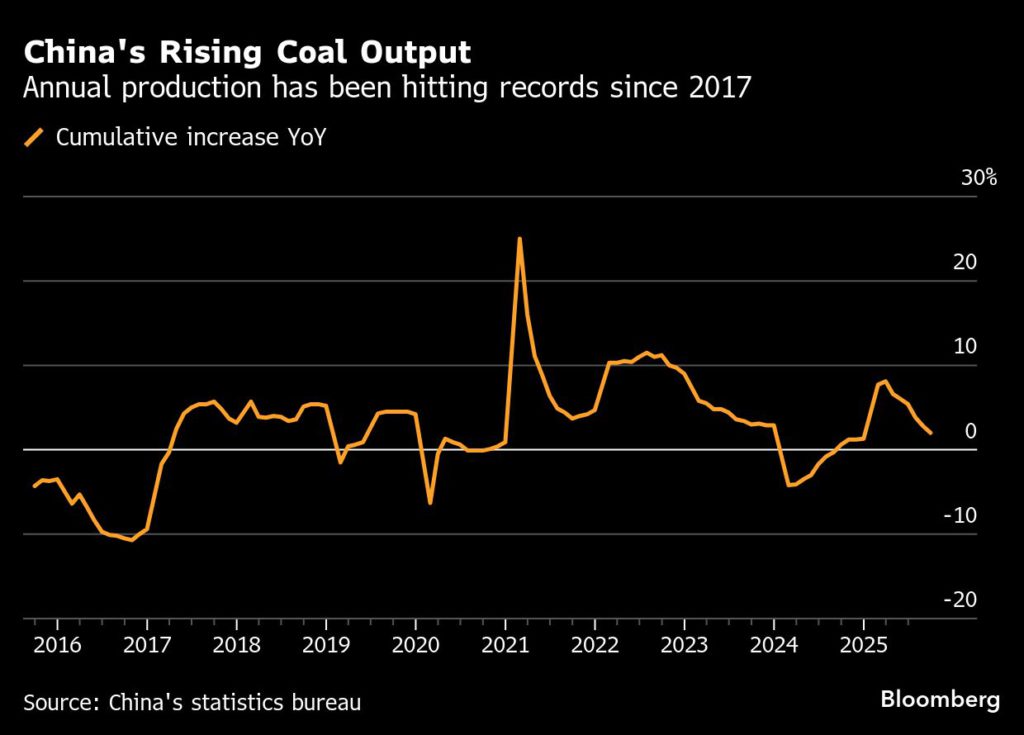
The government’s plan for the upcoming five years has blurred the language setting out when coal use needs to decline, suggesting the peak will be more drawn out than previously thought. The China National Coal Association said last week it expects demand to grow steadily next year before plateauing by 2030.

Still, thermal prices are about 7% below where they were last year, testament to the massive pressure caused by accelerated output growth after the shortages of earlier this decade. Renewables, meanwhile, are carving out an ever-larger share of power generation. That means a surplus of coal is likely to persist next year.

Bloomberg Intelligence thinks the benchmark could sink to an average of 660 yuan a ton in 2026, with upside capped at 850 yuan, according to a note this week.

In the meantime, the weather, as ever, remains a wild card, although the latest official forecast could take some of the sting out of winter heating demand. The National Climate Center expects temperatures in most regions close to or above normal over December to February. Less rain than usual is expected, though, which could diminish competition for coal from hydropower.

Asia’s coal mavericks chase riches while giant miners scale back

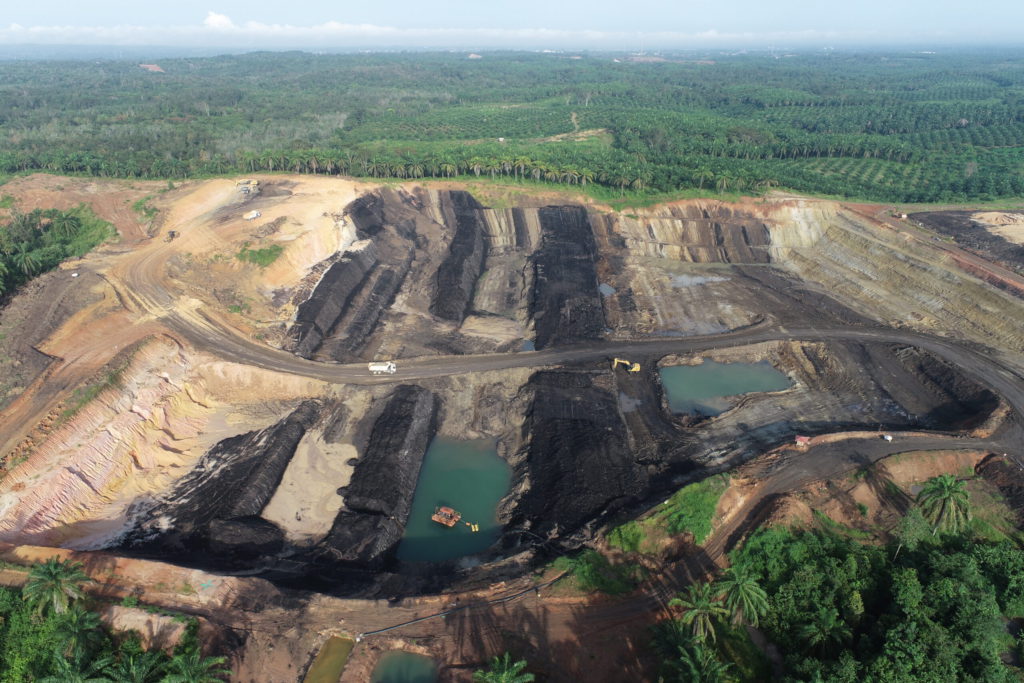
Coal mine in Indonesia. Credit: Sinar Baru Group

Deep in the rainforests of Indonesia, a group of miners is betting there’s still billions to be made from the world’s dirtiest fossil fuel.

Global mining giants have largely retreated from coal under pressure from Western investors and governments, but consumption is climbing to new highs. Roza Permana Putra, who oversees the PT Triaryani mine in remote South Sumatra, is among those hoping to capitalize on this gap between green promises and real-world progress.

“Coal is a black sheep,” said Putra, the mine’s local director, taking a drag of his cigarette while motioning towards excavators lifting smoldering piles of coal onto trucks. “This is my baby.”

The 59-year-old first arrived a decade ago when the site was pristine jungle. Since then, rows of trees have been felled and the earth split open for excavation. Singapore-listed Geo Energy Resources Ltd., which bought the mine in 2023, is cranking up coal production. Including its initial purchase and ongoing infrastructure investments, the company is spending a total of around $500 million on Triaryani. The wager is simple: that demand will linger far longer than experts predict.

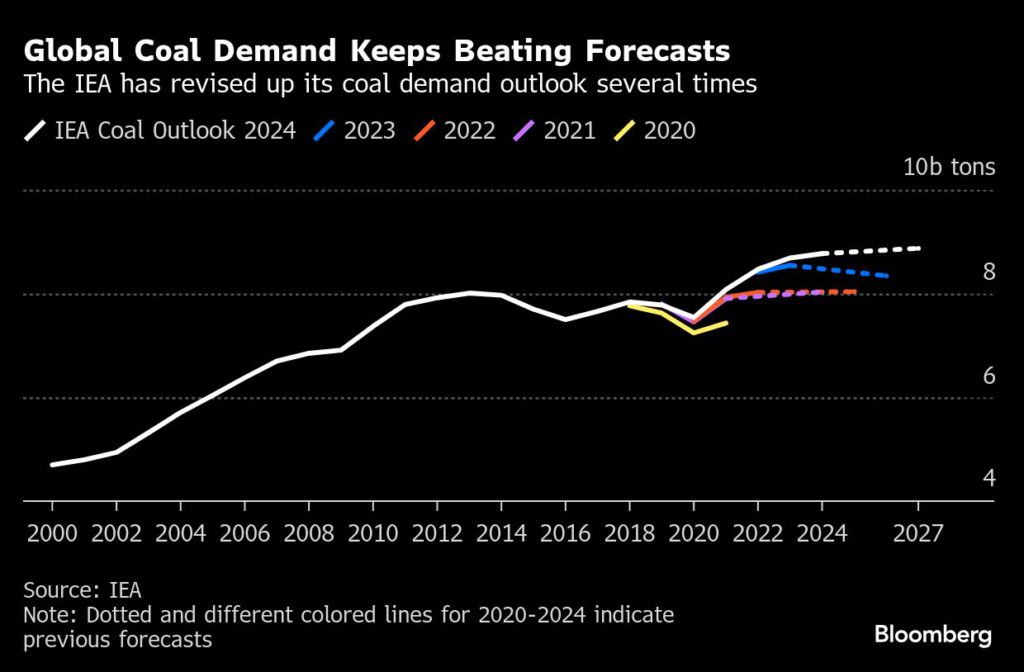
So far, the bet looks solid. Although much of the developed world is reducing coal mining and shifting to renewables, global demand hasn’t yet peaked as expected by researchers including the International Energy Agency — a reality reflected in the shifting rhetoric of political leaders.

In the US, once a global climate leader, President Donald Trump has axed clean energy incentives and extolled the virtues of “beautiful, clean coal.” In Indonesia, recent governments have tacitly allowed industries to burn more coal to power a growing population. Nations aren’t on track to cut emissions as pledged under the Paris Agreement — an inconvenient truth that negotiators will confront at the upcoming COP30 climate summit in Brazil.

Geo Energy isn’t a wildcatter in the traditional sense, since it’s developing sites already proven to have coal deposits. However, it’s one of dozens of opportunistic players in Asia acquiring underdeveloped or mothballed mines from retreating majors. They are the new face of the coal industry — nimble and less constrained by ESG pressures. Many of these mavericks are looking to mimic the success of PT Bayan Resources’ founder, Low Tuck Kwong, who became one of Indonesia’s richest men by investing in coal mining in the 1990s.

Charles Antonny Melati, Putra’s boss and Geo Energy’s co-founder and chief executive officer, said his company was perfectly positioned to take advantage of the untapped deposits left to niche players speculating on coal’s long goodbye.

“Big players want to exit. But small ones cannot enter, because the mines involved are very big and capital intensive,” said Melati, who co-founded Geo Energy in 2008. “For us in the middle, it’s an opportunity.”

Originally a mining service supplying trucks and heavy equipment, Geo Energy acquired an East Kalimantan coal mine in 2011. That and several more deals transformed the company into a mine owner and operator. Triaryani, though, is by far its biggest venture yet.

Workers are building new infrastructure aimed at boosting annual production from about 3 million tons today to 25 million over the next few years. The expansion project is expected to turn it into a top Indonesian coal miner, well placed to reap a windfall if demand holds up as global supply starts to shrink.

Or it could bankrupt them.

The mine’s fate is critically tied to China. Indonesia’s coal production hit an all-time high last year but output is poised to fall in 2025, due in part to weaker demand from its top customer. A mild winter, high domestic production, brimming stockpiles and large gains in wind and solar mean the country doesn’t need to import as much this year.

So far, most expect the decline to be limited. China still relies on coal for more than half its power needs and continues to install new coal plants. The real threat, however, is if it continues to expand its own output, reducing its requirement for overseas supplies.

“Our base case is that China is in structural decline,” said Anthony Knutson, the global head of thermal coal markets research at energy consultancy Wood Mackenzie. “As they close that market, does that squeeze out Indonesian imports?”

Back at the Triaryani mine, Putra pointed to a man in the back of a truck, pulling a tarp across a pile of coal to keep it from spilling during the long trip to a barge — and eventually, the open sea. The shipment, he explained, was most likely bound for China, which takes the lion’s share of its exports. But the company is trying to diversify, he said. “We try to open other options.”

Yet even with strong demand from other countries like India, the global market has been volatile. Coal miners enjoyed their most profitable years ever following Russia’s invasion of Ukraine, but an ensuing slowdown prompted prices to plunge over 70% from their peak. The slump caught out some miners in Australia, where several mothballed mines were restarted only to be shut down this year.

Adding to such risks is the higher cost of extracting coal. Indonesia’s most accessible coal reserves have long been exhausted, leaving remote, costlier deposits buried in the mountainous jungle regions of Kalimantan and South Sumatra. Triaryani is about three hours away by car from the nearest major town, Lubuklinggau. Tapping the deposits requires huge investments in infrastructure like roads and jetties, as well as the local know-how of veterans like Putra.

Putra has been working with local communities and contractors to clear forests and thousands of tons of dirt to level the ground — work that’s vital to connect the mine to an export market.

“The coal business is a logistics business. Without efficient roads, you’re just burning money,” said Putra.

Geo Energy declined to give a profit outlook on the mine, but the greater scale could help lift the mine’s annual net profit to well over $200 million from the roughly $25 million expected this year, according to Bloomberg calculations based on recent sales data. This could deliver enormous paydays to its executives and shareholders. If demand falters, though, the company could be left with stranded assets.

Other miners see the tightening regulations and investor demands as too risky to ignore. Once-major players in the industry like Anglo American Plc and Rio Tinto Group have been phasing out thermal coal-related projects and selling assets. Glencore Plc, whose thermal coal business has made it an outlier in recent years, has also said it will not invest in new mines, though that’s in part because limiting global supply will help profitability.

Even in the US, where Trump champions coal, the sector is losing ground to cheap gas and fast-growing renewables. The amount of production capacity added worldwide last year dropped to the lowest level in a decade.

“We appear to be witnessing the final wave of global coal investment,” said Tonmit Talukdar, an analyst at Rystad Energy. “While many countries are scaling back coal production, Indonesia is projected to maintain steady output growth. The window for export-led coal expansion is narrowing.”

Researchers at the IEA and global consultancies have all been raising their forecasts for coal demand. McKinsey & Company, in a report published last month, forecast demand to rise 1% through the coming decade, a reversal from a scenario last year that saw a 40% decline over the same period. Wood Mackenzie predicts coal demand to peak in 2026, but also sees it increasingly likely that consumption will continue to rise through 2030.

Herein lies the industry’s dilemma: Investing millions of dollars into an energy source that governments around the world are actively trying to quit is a tough proposition. But as few players invest in production, a future supply shortage could trigger a significant price surge.

Indonesian miners aren’t the only ones in Asia betting on the chances of an energy crunch creating a windfall. Even in Pakistan and the Philippines, small companies are buying coal mines.

“The ageing of existing thermal coal assets combined with underinvestment in new projects suggests a potential supply shortfall and attractive pricing outlook for the industry,” said Rob Bishop, CEO of Australia’s New Hope Corp., which is expanding thermal coal production.

Indonesia’s pragmatic “have coal, will use it” approach, combined with the energy needs of the domestic market, has made the country a particularly appealing place to keep mining. Back in 2022, the government signed a landmark climate finance deal that promised to accelerate the phase-out of coal and the building of clean power. But that plan — the Just Energy Transition Partnership, later deployed in other middle-income nations — has since made little progress. Officials raised their target for mining output this year, despite production massively overshooting the target in 2024.

“If I’m a coal entrepreneur, Indonesia’s really the place I can go to invest,” said Carlos Fernández Alvarez, coal analyst at the International Energy Agency. “Even if exports fall, domestic demand gives producers another outlet.”

The industry remains crucial to Indonesia’s $1.4 trillion economy, Southeast Asia’s largest. Coal mining alone accounted for about 2.4% of GDP in 2021, according to the IEA.

Some see this dependence as a weakness. “A large part of the economy is tied to a few firms in an increasingly volatile coal sector,” said Hazel Ilango, coal transition lead at the Energy Shift Institute. “This creates a systemic risk that cannot be ignored.”

It could certainly challenge Jakarta’s green-supply-chain ambitions. Electricity generation has ballooned 60% in the last decade, partly due to the huge fleet of captive power plants built to power its nickel smelting industry.

Putra says the project is a way for ordinary Indonesians to keep the lights on without breaking the bank.

“Let’s not sacrifice the lowest cost energy just to chase a dream,” he said, leading the way through the canteen. He then sat down with his subordinates to discuss site progress, their plates filled with deep-fried fish and spicy sambal. “Our people need to live first.”

(By Eddie Spence and Stephen Stapczynski)


MP Materials quarterly loss widens after halting sales to Chinese customers

MP Materials’ Mountain Pass rare earths mine in southern California is the only rare earths producer in the United States. Credit: MP Materials.

US rare earths company MP Materials said on Thursday its third-quarter loss widened as it stopped sales to Chinese customers as part of an agreement with the US government, although the results surpassed Wall Street expectations.

Shares fell 7.4% to $48.40 in after-hours trading.

The results reflect the company’s transition from dependence on foreign sales to a focus on being a major US miner and processor of rare earths and manufacturer of the magnets made from them that are used widely across the automotive, electronics and defense industries. MP owns the only US rare earths mine and is developing a magnet facility in Texas.

Las Vegas-based MP posted a quarterly loss of $41.8 million, or 24 cents per share, compared to a loss of $11.2 million, or 16 cents per share, in the year-ago quarter. Excluding one-time items, MP lost 10 cents per share. By that measure, analysts expected a loss of 18 cents per share, according to LSEG data.

The company reported no revenue from sales of rare earths concentrate during the quarter. Those sales had formed the majority of its revenue for years, but a July investment agreement with the Pentagon precludes any future shipments.

As part of that agreement, the Pentagon on October 1 began guaranteeing a floor price of $110 per kilogram for the two most-popular rare earths, neodymium and praseodymium, MP executives said on a conference call with investors.

‘New Cold War’

Jim Litinsky, the miner’s CEO, described what he sees as a “new Cold War” between Washington and Beijing requiring government investment in critical industries.

“In the last Cold War, America prevailed through military strength, empowered by economic might,” Litinsky said on the investor call.

“In Cold War 2.0 the equation has reversed,” he said. “Economic might itself, expressed through control of critical materials, advanced technologies and the supply chains that sustain them, has become the decisive measure of national power.”

Litinsky, also one of MP’s largest shareholders, added he did not believe many of the company’s peers could be competitive. “The vast majority of projects being promoted today simply will not work at virtually any price,” Litinsky said.

New facility

MP did record $21.9 million in sales during the quarter of magnetic precursor products, which are essentially the building blocks for magnets. MP said it expects commercial magnet production from its Texas site to begin by the end of the year.

To make magnets, MP has had to build a facility to process so-called heavy rare earths. The company said it plans to commission that facility in mid-2026 using ore extracted from its California mine and purchased from third parties.

The company aims to produce 200 metric tons per year of dysprosium and terbium – two key heavy rare earths used to make magnets – at that facility.

(By Ernest Scheyder; Editing by Bill Berkrot and Jamie Freed)

BAN DEEP SEA MINING

Study warns deep-sea mining waste threatens marine food chain

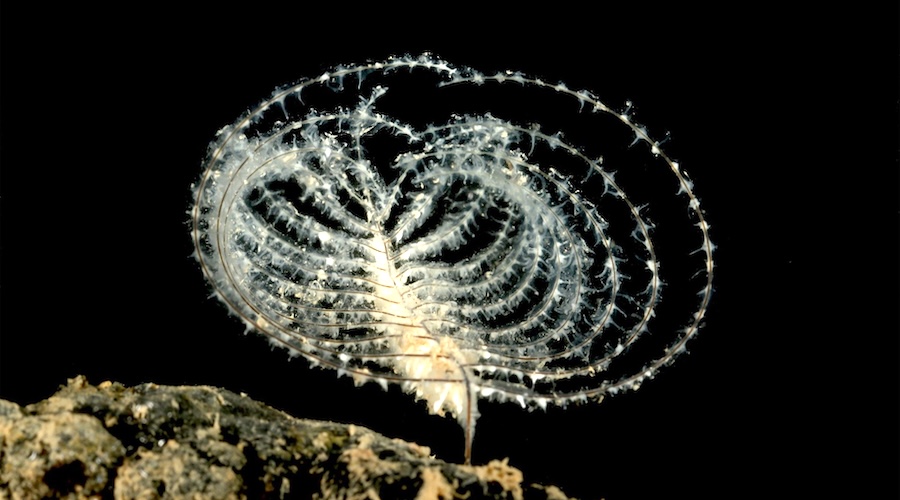
Once thought lifeless, the deep sea is now revealing surprising signs of life. (Image © National Oceanography Centre and The Trustees of the Natural History Museum.)

A new peer-reviewed study published in Nature Communications on Thursday warns that waste from deep-sea mining could disrupt life in the ocean’s “twilight zone”, a key midwater layer supporting much of the marine food web.

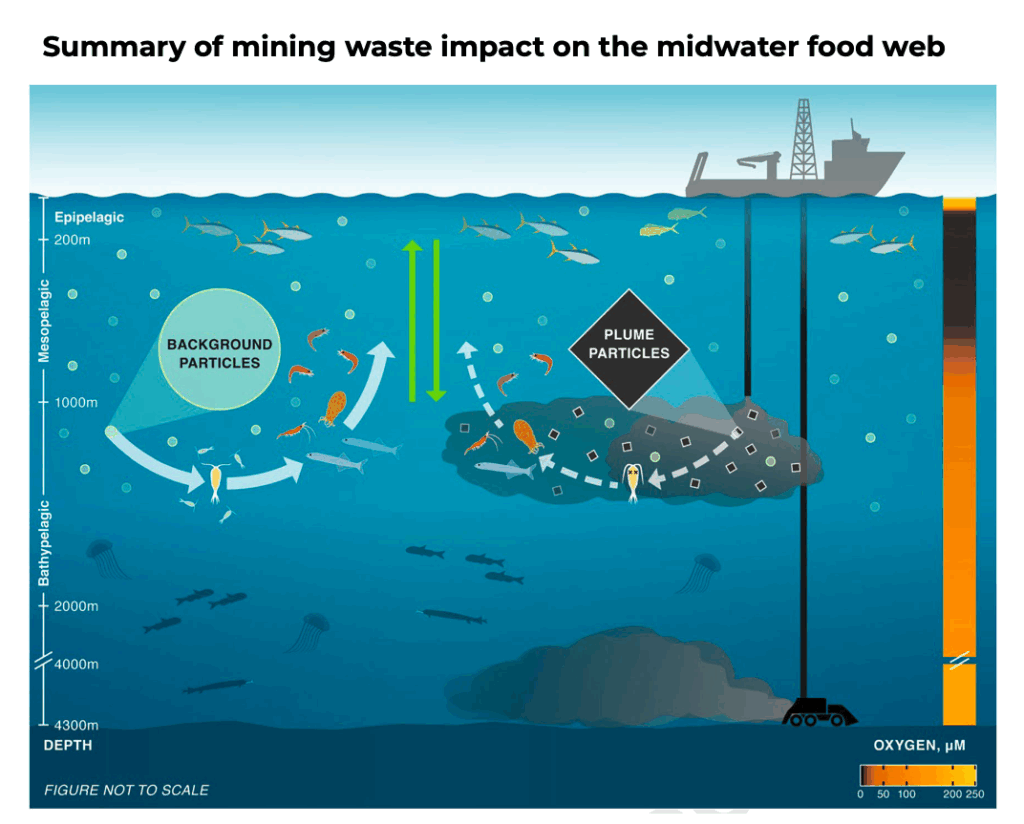
Researchers from the University of Hawaii‘s School of Ocean and Earth Science and Technology (SOEST) found that over half of zooplankton and 60% of micronekton could be affected by sediment plumes from mining trials in the Clarion-Clipperton Zone (CCZ). These particles, far less nutritious than natural food sources, risk triggering a “junk food” effect up the food chain.

“When the waste released by mining activity enters the ocean, it creates water as murky as the mud-filled Mississippi River,” lead author Michael Dowd says. “It dilutes the nutritious natural food particles usually consumed by tiny, drifting zooplankton”.

Spanning 200 to 1,500 metres below the surface, the twilight zone hosts fish, squid and jellyfish critical to ocean health and carbon cycling. The system is highly sensitive to changes, the authors of the study say.

“Our research suggests that mining plumes don’t just create cloudy water — they change the quality of what’s available to eat, especially for animals that can’t easily swim away,” SOEST deep-sea ecologist Jeffrey Drazen said. “It’s like dumping empty calories into a system that’s been running on a finely tuned diet for hundreds of years.”

Study warns deep-sea mining waste threatens ocean life
Figure from: Deep-sea mining discharge can disrupt midwater food webs.

Despite this, around 1.5 million square kilometres of the CCZ, which is a vast area between Hawaii and Mexico, are already licensed for exploration. Waste disposal methods remain largely unregulated, even as demand for critical minerals climbs. The International Energy Agency projects demand for copper and rare earths will rise by 40%, and for nickel, cobalt, and lithium by 60%, 70%, and 90%, respectively.

“Deep-sea mining has not yet begun at a commercial scale,” co-author and SOEST professor of earth sciences Brian Popp says. “This is our chance to make informed decisions”

Not final

Other studies seem to differ. A separate UK-led research published earlier this year suggests recovery may be possible. The National Oceanography Centre found signs of ecological rebound decades after early mining tests.

The Metals Company (NASDAQ: TMC), a pioneer in deep-sea mining, says that study supports its own findings. “It proves [that] … recovery is not only possible but likely within decades,” CEO Gerard Barron told MINING.COM at the time.

He also pointed to a possible mitigation strategy, “leaving some nodules intact to support recolonization.” TMC, which cooperated in the study published today and shared data with the researchers,  has already pledged to leave 30% of its contract areas untouched to aid recovery.

Supporters argue deep-sea mining is essential to meeting clean energy goals, while critics urge caution until long-term impacts are better understood.

“Before commercial mining begins, we must carefully evaluate where waste is released,” Drazen warned. “If we get it wrong, we could harm ocean communities from the surface to the seafloor.”


Top candidate in Peru vows to revoke key mining industry rights

Rafael López Aliaga (middle) is former mayor of Lima. Credit: Ministerio de Defensa del Perú | Flickr, under licence CC BY 2.0

A conservative presidential hopeful in Peru is vowing a major change in policy representing the key mining industry’s biggest fear: to revoke key exploration permits for idle projects and redistribute them.

The proposal is the bane of global mining corporations that operate in Peru since they increasingly battle for control of mineral-rich territory with informal actors. Companies condemn them as illegal miners, while small-scale diggers accuse them of hoarding land for decades without exploiting it.

“Idle areas will revert to the state if they are not used by the formal mining industry,” said Rafael Lopez Aliaga, a former mayor of Lima known as “Porky.” The fact that Lopez Aliaga made those remarks at the annual CADE business forum, the country’s most exclusive gathering for local executives, will be a hard pill to swallow for the mining industry and suggests other candidates may follow suit.

Peru is the world’s No. 3 copper producer and a key producer of gold, silver and zinc.

In a post on X following his address, Lopez Aliaga doubled down on the proposal, calling the current state of affairs unfair.

“They don’t work, or allow work to happen,” he wrote. “This only happens in Peru.”

The worry that mineral rights could be revoked has been the industry’s biggest concern in private conversations, but seldom discussed publicly. If put in place, it could have a huge impact on Peru’s biggest industry and for major companies including Southern Copper Corp, MMG Ltd and First Quantum Minerals. Companies say some of their mineral concessions have been taken by illegal miners.

Lopez Aliaga is currently the front-runner in a splintered field of over 30 candidates, polling at around 10% support according to Ipsos. Peru will hold general elections in April, at a time when a historic surge in gold and copper prices has pushed hundreds of thousands of Peruvians to embrace informal small-scale mining, threatening the established industry.

The small-scale mining industry has in recent years become a political force of its own, pushing ministers out of their jobs and securing extensions in Congress for a controversial permit for informal diggers.

“There is an issue that particularly worries me,” said Carlos Galvez, a former president of Peru’s SNMPE mining chamber who was questioning Lopez Aliaga at the CADE stage. “And that is the great proximity of many illegal miners to your party.”

Lopez Aliaga, who heads the Popular Renovation party, slammed the comment as an “absolute lie” and “extremely serious slander.”

Other proposals by Lopez Aliaga include filing a $3 billion arbitration against Brookfield Asset Management, his longtime foe when he was mayor, over the operation of a toll road in Lima. He also proposed that ailing state-owned oil company Petroleos del Peru SA be put through a bankruptcy restructuring process.

(By Marcelo Rochabrun)

Sudan: A War Europe Cannot Stop, But Cannot Ignore – Analysis

November 8, 2025 
ECFR
By Cinzia Bianco and Will Brown

A city and its people have held out for 18 months against an invading army. They have fought bravely against the odds, despite being almost starved into submission. Now, the defences have finally fallen, and all hell is being unleashed on the survivors.

El-Fasher—a city in Darfur in western Sudan, where hundreds of thousands fled after the war broke out in April 2023—is now the site of the greatest humanitarian crisis on Earth. According to reports, patients in hospital are being shot in their beds while medical staff are held for ransom. Former MPs are being executed, people beheaded, and the injured tortured and taunted.

The culprits are the Rapid Support Forces (RSF), a paramilitary group of tens of thousands that evolved from the murderous Janjaweed militias that terrorised Darfur in the 1990s and early 2000s. Now, the RSF is one of the key sides in Sudan’s grim war, which has torn the once-hopeful country asunder.

For a few short years, Sudan seemed one of the Arab Spring’s rare success stories. In 2018, huge protests led to the overthrow of the Islamist dictator Omar al-Bashir. The RSF and the Sudanese Armed Forces (SAF), the state’s official military, took control in a hybrid civilian-military government. This fragile arrangement disintegrated in April 2023, when open conflict erupted between the two.

While the RSF initially appeared to be in the ascendant, the war has since swung back in the SAF’s favour, with government forces retaking the capital Khartoum earlier this year. Still, neither side seems capable of fully defeating the other. The conflict has warped into a dizzying patchwork of militia movements and their foreign backers—including Egypt, Iran, Russia, the United Arab Emirates, and a host of regional governments such as Chad’s.


Unable and unwilling

It is an open secret in the halls of power that there is almost nothing Europe or the US can or will do to stop or punish those responsible for the slaughter in Sudan. They do not have enough influence—as Peter Pham, the special envoy for the Sahel during the first Trump administration, said last week at the FT Africa Summit in London. It is states geographically closer to Sudan—which back different sides in the war—that hold the most sway, especially the Gulf. Europe in particular lacks the capability to project hard power, which would be necessary to pressure the actors responsible for the violence to cease.

While America has some influence in the Gulf, it also lacks political will. Despite its significant military power, it is unlikely that the Trump administration would prioritise confronting the parties involved. Thus, while there are many motivated, able, and knowledgeable officials and experts on both sides of the Atlantic who care deeply about Sudan, higher-level policymakers simply have other priorities.
The UAE’s role

The most influential external actor in Sudan is the UAE, which backs the RSF. Although Abu Dhabi still denies it, this has been proven beyond all reasonable doubt. According to a recent story by the Wall Street Journal, which cited US intelligence reports, the UAE has shipped weaponry—including Chinese-made drones—to RSF forces, which now have been twice accused of genocide in Darfur. The WSJ cites flight-tracking data showing dozens of Emirati cargo flights into eastern Chad, while UN experts have repeatedly requested, but not received, cargo manifests and end-user certificates. In April 2025, investigators tracedBulgarian-made mortar rounds—legally exported to the UAE—to RSF units in Darfur, showing how European-origin arms can be diverted through Emirati networks.

The UAE’s backing of the RSF is not ideological but calculated. The RSF controls much of Sudan’s informal gold trade, as well as inland routes toward the Red Sea, where Emirati firms such as DP World and AD Ports seek logistics and port concessions. The UAE views Sudan’s armyas linked to Islamist networks it considers rivals.
The bare minimum

There are a few minimal steps Europe can take to hold the perpetrators of violence in Sudan accountable. Its efforts to bring Sudan’s fractured civil society groups together are certainly laudable. However, a more consequential action would involve enforcing transparency.

London, Paris, Berlin and Rome should join the US in calling at the UN for the UAE to release flight records, cargo manifests, and end-user certificates related to shipments to Chad and Sudan. Europe should also require mandatory disclosure for UAE-linked exports or re-exports involving European-made defence components, closing the loopholes exposed by the Bulgarian case.

European governments rhetorically support the UN’s Fact-Finding Mission and the Panel of Experts on Sudan under UN Security Council Resolution 1591 (2023), but have not pressed Abu Dhabi to cooperate with these UN investigations, exposing a gap between stated commitments and action.

Confronting the UAE and the RSF does not mean Europe should give a free pass to other regional powers fuelling the crisis. This includes Egypt, which is supporting the SAF and is a key destination for much of Sudan’s gold.

If Europe wants credibility when invoking international law in Ukraine, Gaza or elsewhere, it cannot ignore the atrocities happening in Sudan.

The European Council on Foreign Relations does not take collective positions. ECFR publications only represent the views of their individual authors

About the authors:
Cinzia Bianco is a visiting fellow at the European Council on Foreign Relations, where she is working on political, security and economic developments in the Arabian Peninsula and Gulf region and relations with Europe. Additionally, she is a senior analyst at Gulf State Analytics.

Will Brown is a senior policy fellow with the Africa programme at the European Council on Foreign Relations. His main research interests are African geopolitics, the ongoing conflict in the Sahel region, and international competition in the Horn.


Source: This article was published by ECFR

The European Council on Foreign Relations (ECFR) is an award-winning international think-tank that aims to conduct cutting-edge independent research on European foreign and security policy and to provide a safe meeting space for decision-makers, activists and influencers to share ideas. We build coalitions for change at the European level and promote informed debate about Europe’s role in the world.

Spanish minister admits suffering caused by conquistadors in Mexico

ABOUT TIME!

31.10.2025, DPA


Photo: Gustavo Valiente/EUROPA PRESS/dpa


Spanish Foreign Minister José Manuel Albares officially acknowledged for the first time on Friday the "suffering and injustice" that Spain's conquistadors meted out to Mexico's indigenous people some five centuries ago.

"There was injustice, and it is merely right and fair to acknowledge and deplore this. It is part of our joint history. We can neither deny it nor forget it," Albares said on opening an exhibition on indigenous Mexican women in Madrid.

Mexican President Claudia Sheinbaum described Albares' statement as "the first step" in the right direction.

"This is the first time that a member of the Spanish government has given expression to regret over the injustices committed. That's important," she said during her daily press conference. Apologizing was not humiliation, but rather conferred true greatness on governments and nations, she said.

Albares' admission is not quite the apology that then-president Andrés Manuel López Obrador demanded in a 2019 letter to the Spanish king and the pope in relation to the conquest and subjugation of indigenous peoples in the 16th century.

At the time, Spain reacted with outrage. There was no official response, and certainly not an apology.

Spain conquistadors acted with extreme cruelty during their conquest and colonization of what is today Mexico shortly after the arrival of Christopher Columbus.

Their weapons made them virtually invincible in battles with the Aztecs, and the diseases they brought with them caused the deaths of hundreds of thousands of inhabitants.

The main aim of the Spanish colonizers was to secure gold and other resources, along with power in the New World. The pre-Colombian culture was repressed, with temples giving way to churches.