It’s possible that I shall make an ass of myself. But in that case one can always get out of it with a little dialectic. I have, of course, so worded my proposition as to be right either way (K.Marx, Letter to F.Engels on the Indian Mutiny)
Wednesday, December 24, 2025
Study uncovers disrupted brain balance in alcohol dependence
Experiments show how dependence on alcohol rewires the brain's "go" and "stop drinking" signaling systems, with implications for preventing relapse.
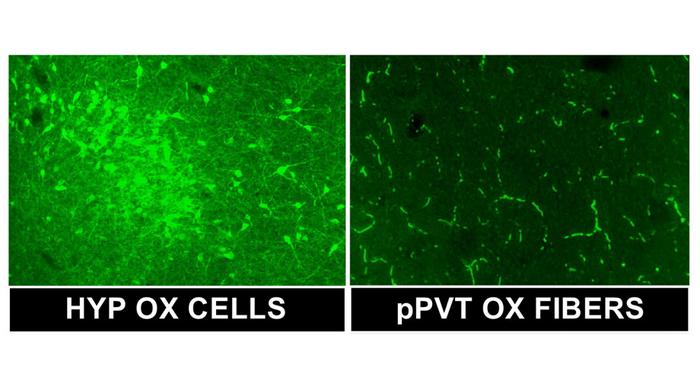
Orexin, one of the two signals the researchers studied, originates in neurons (green) in the brain’s hypothalamus (left) that connect with a part of the thalamus called the pPVT (right).
LA JOLLA, CA—A new study by Scripps Research reveals that alcohol dependence disrupts two signaling pathways in a stress-related part of the brain—and offers insights on developing drugs to treat this condition.
The research, conducted in animal models and published in Frontiers in Pharmacology on November 26, 2025, helps explain why people with alcohol use disorder (AUD) struggle to stay sober, especially under stress.
"We think that alcohol dependence changes these systems, and that's why individuals are prone to seek out alcohol even if they've gone without it for some time,” says senior author Rémi Martin-Fardon, an associate professor in the Department of Translational Medicine.
AUD, a condition in which someone cannot control their drinking despite the harm it causes, affects nearly 28 million Americans. FDA-approved medications like naltrexone, which reduces cravings, exist but have significant drawbacks, including nausea, and they do not work for everyone.
This recent study points to potential new treatments by uncovering molecular changes in two signaling systems—orexin and dynorphin—and the unexpected effects of blocking them. Inhibiting either signal individually reduced relapse-like behavior but, interestingly, blocking both cancelled this protective effect.
Once someone loses control of their drinking, regaining it can be a lifelong struggle. Research has demonstrated that stress increases the likelihood someone will become dependent on alcohol and will relapse after they try to stop. But the relationship goes two ways, because drinking itself activates the body’s stress response systems.
Among the systems affected is orexin-dynorphin signaling. These two neuropeptides are released by the same neurons, which originate in the brain’s hypothalamus, the region that coordinates the release of chemical signals. In normal brains, they have opposing effects: Orexin, discovered by scientists at Scripps Research and another team in 1998, acts as a "go" signal and promotes drug-seeking behavior. Meanwhile, dynorphin serves as the "stop" signal. In AUD, excessive drinking appears to alter dynorphin signaling so it produces the many diverse and unpleasant feelings that accompany withdrawal and motivate continued drinking.
Martin-Fardon's group has previously studied this relationship in cocaine addiction. This time, in experiments led by postdoctoral researcher Francisco Flores-Ramirez with research assistant Glenn Pascasio, they turned to alcohol.
The team zeroed in on a small region within the brain’s thalamus called the posterior paraventricular nucleus of the thalamus, or pPVT, a stress-processing hub that receives orexin and dynorphin signals. Martin-Fardon’s earlier work indicated that the pPVT is key to stress-triggered relapse-like behavior.
In this study, they found telling changes in gene expression. In alcohol-dependent rats, the hypothalamus appeared to be ramping up production of both the orexin "go" and dynorphin "stop" signals. But the pPVT's ability to receive them was skewed. Its neurons expressed fewer receptors for orexin, but more for dynorphin.
"What that tells us is that just being dependent on alcohol changes the orexin and dynorphin system, and that these changes persist well into abstinence," Flores-Ramirez says.
To reach these conclusions, the team simulated AUD in male rats, which pressed a lever to receive alcohol. After cutting off the alcohol supply, the researchers examined gene expression in both the pPVT and hypothalamus. Some animals had received inhibitors to block orexin or dynorphin signaling in their pPVTs, producing complex and somewhat counterintuitive results. As expected, shutting down the orexin "go" signal reduced stressed rats' attempts to drink alcohol. But blocking dynorphin's "stop" signal also appeared to significantly decrease the relapse-like behavior. When they inhibited both signals together, however, the rats pressed the lever as if they had not received any inhibitor at all.
Because the study focused on a single brain region and relied solely on male animals, the researchers say it's difficult to explain these effects or tie them directly to the changes in gene expression. Still, they sound a note of caution for drug development.
"If you want to combine treatments, you have to be very careful," Martin-Fardon says, though he notes that this strategy may be effective with different inhibitors—perhaps taking advantage of existing drugs or compounds with similar chemistry.
His team is now collaborating with Scripps Research colleagues Edward Roberts and Hugh Rosen, who are developing selective, shorter-acting dynorphin signaling inhibitors intended to provide quick relief. Martin-Fardon is also interested in combining one of these compounds with suvorexant, an insomnia drug that blocks orexin signaling, or a similar drug.
This study was supported by funding from the National Institute on Alcohol Abuse and Alcoholism (grant no. AA028549 and AA006420 to RM-F).
Journal
Frontiers in Pharmacology
Article Title
Functional interaction between orexin/dynorphin transmission in the posterior paraventricular nucleus of the thalamus following alcohol dependence: mediation of alcohol-seeking behavior
Brain injuries linked with potential risk of suicide, new study finds
The first of its kind study analysed data from over 1.8 million
Adults who experience a head injury face a substantially higher risk of attempting suicide compared to those without such injuries, according to the findings from a new UK-based study.
Published in Neurology®, the medical journal of the American Academy of Neurology, the study was led by University of Birmingham researchers. The paper is the first of its kind to examine suicide risk across all types of head injuries in a general population, moving beyond the traditional focus on traumatic brain injuries (TBIs) in military, athletic or hospital settings.
The population-based matched cohort study used nationally represented electronic primary healthcare records from more than 1.8 million adults, linked with Hospital Episode Statistics and Office for National Statistics data.
Researchers found that people with head injuries were 21% more likely to attempt suicide than those without, after analysing data across a 20-year period.
Key Findings:
Researchers found that people with head injuries were 21% more likely to attempt suicide than those without, even after adjusting for age, sex, deprivation, and mental health history.
The incidence rate was 2.4 per 1,000 person-years in individuals with head injuries, compared to 1.6 per 1,000 person-years in the control group. This translates to an absolute increase in risk of 0.7% (1.3% vs 0.6%), yet the adjusted hazard ratio reported was 21%, and
Elevated risk was observed across all subgroups, including individuals with no prior mental health conditions, highlighting that head injuries alone are linked to increased psychological vulnerability.
Professor Nicola Adderley, Professor of Epidemiology and Real-World Evidence at the University of Birmingham and a lead author of the study, said: “Our findings show that the impact of head injuries are not limited to just physical symptoms or repercussions. They can have profound psychological consequences. Suicide risk assessments should be considered for anyone with a recent head injury, regardless of their mental health history, to improve and safeguard patient outcomes.”
In the UK alone, nearly 6,000 deaths each year are attributed to suicide whilst the number of attempts is significantly higher. The study’s findings showed that the risk of suicide attempt was highest in the first 12 months following a head injury, suggesting a critical window for intervention.
While the risk declined over time, it remained elevated compared to those without head injuries. Researchers also found that social deprivation and a history of mental health conditions further amplified the risk.
While suicide attempts were more common among those with head injuries, the study did not find a significant increase in deaths by suicide after accounting for competing risks such as other causes of death; suggesting that head injuries may lead to more frequent non-fatal attempts.
Researchers are calling for the following changes in healthcare settings:
Routine suicide risk screening in primary and secondary care settings for patients with head injuries.
Enhanced mental health support, particularly during the first 12 months post-injury; with public awareness campaigns to help families and caregivers recognise warning signs.
The development and testing of suicide risk assessment and prevention strategies for people with head injuries should be investigated, especially within the first 12 months post-head injury and irrespective of mental health history.
Professor G. Neil Thomas, Professor of Epidemiology and Research Methods and a lead author of the study, said: “These findings have implications for both clinical practice and health policy; highlighting the urgent need for targeted mental health and wellbeing support.
“The development and testing of robust suicide risk assessment and prevention strategies for people with head injuries should be further investigated; especially within the first 12 months post-head injury and irrespective of mental health history.”
The research utilised data from the Clinical Practice Research Datalink (CPRD), linked with hospital and mortality records, covering a 20-year period (2000–2020). Ethical approval was granted by the Health Research Authority and CPRD Independent Scientific Advisory Committee.
Journal
Neurology
Article Title
The risk of suicide attempts after head injury: a matched UK population-based cohort study
Article Publication Date
22-Dec-2025
Exploring why some people may tend to persistently make bad choices
Some people rely on surrounding images and sounds to make decisions more than others. These individuals have a harder time updating their beliefs about these cues when they change to signal risky outcomes, which may lead to poor decision making over time.
When people learn that surrounding visuals and sounds may signify specific choice outcomes, these cues can become guides for decision making. For people with compulsive disorders, addictions, or anxiety, the associations between cues and choice outcomes can eventually promote poor decisions as they come to favor or avoid cues in a more biased manner. Giuseppe di Pellegrino, from the University of Bologna, led a study to explore associative learning and maladaptive decision making in people.
As reported in their JNeurosci paper, the researchers discovered that some people rely on surrounding cues to make decisions more than others. Furthermore, these individuals may have a harder time updating their beliefs and unlearning these associations when the cues change to signify riskier outcomes. This leads to more disadvantageous decision making that persists over time.
According to the researchers, this work suggests that some people have stronger cue sensitivity and less of an ability to update their beliefs about cues than others. The researchers aim to continue exploring associative learning in patient populations and probing whether harmful decision patterns—which characterize addictions, compulsive disorders, and anxiety—are more likely in those with heightened sensitivity to visuals and sounds that guide their choices.
JNeurosci was launched in 1981 as a means to communicate the findings of the highest quality neuroscience research to the growing field. Today, the journal remains committed to publishing cutting-edge neuroscience that will have an immediate and lasting scientific impact, while responding to authors' changing publishing needs, representing breadth of the field and diversity in authorship.
About The Society for Neuroscience
The Society for Neuroscience is the world's largest organization of scientists and physicians devoted to understanding the brain and nervous system. The nonprofit organization, founded in 1969, now has nearly 35,000 members in more than 95 countries.
Credit: Tianbao Ren, Huilin Feng, Wan Adibah Wan Mahari, Fei Yun, Maosen Li, Nyuk Ling Ma, Xianjie Cai, Guoshun Liu, Rock Keey Liew & Su Shiung Lam
Soil contamination by cadmium is a growing global challenge that threatens food safety, agricultural productivity, and environmental health. Cadmium is a highly toxic heavy metal that accumulates easily in soils and crops, entering the food chain and posing long term risks to humans and ecosystems. A new study shows that a simple combination of biochar and beneficial microorganisms can significantly reduce cadmium stress in crops while restoring soil health.
Researchers from Henan Agricultural University and international partners report that adding biochar together with the beneficial fungus Trichoderma to contaminated soils improved plant growth, reduced cadmium uptake, and enhanced soil microbial diversity. Their findings were published in the journal Biochar.
The research focused on tobacco, a crop known to readily accumulate cadmium and often grown in contaminated regions. Using controlled pot experiments, the team compared plants grown in clean soil, cadmium contaminated soil, and contaminated soil amended with biochar alone or biochar combined with Trichoderma. Biochar is a carbon rich material produced by heating agricultural waste under low oxygen conditions and is increasingly recognized for its soil improvement potential.
Cadmium stress sharply reduced photosynthesis, biomass production, and soil enzyme activity. However, when biochar was added, plants recovered much of their photosynthetic capacity. The greatest improvements occurred when biochar was combined with Trichoderma, a fungus widely used in agriculture for promoting plant growth and resilience.
“Cadmium severely suppresses plant physiological processes, especially photosynthesis,” said corresponding author Tianbao Ren. “We found that biochar can partially reverse these effects, but when biochar and beneficial microbes work together, the benefits are much stronger and more consistent.”
Plants grown with both biochar and microbes showed higher photosynthetic efficiency, greater dry matter accumulation, and improved resistance to cadmium toxicity. Importantly, the treatment also limited the movement of cadmium from roots to leaves, which is critical for reducing contamination in harvested plant tissues.
The soil itself also benefited from the combined amendment. Cadmium contamination reduced soil enzyme activities and microbial biomass, indicators of poor soil health. Biochar restored these functions, while the addition of Trichoderma further increased microbial diversity and promoted beneficial microbial groups associated with nutrient cycling and soil stability.
“Soil is a living system, not just a physical medium,” said co corresponding author Su Shiung Lam. “Our results show that rebuilding the soil microbial community is key to long term remediation. Biochar provides a habitat, and microorganisms bring the biological functions needed for recovery.”
The study highlights a synergistic mechanism. Biochar adsorbs cadmium and reduces its bioavailability, while its porous structure creates favorable conditions for microbial colonization. Trichoderma further enhances nutrient availability, enzyme activity, and plant stress tolerance, leading to a healthier soil plant system overall.
Although the experiments were conducted with tobacco, the researchers say the findings have broad implications for sustainable agriculture and soil remediation worldwide. The approach uses low cost materials, agricultural residues, and naturally occurring microorganisms, making it suitable for large scale application.
“This strategy offers a practical and environmentally friendly solution for managing cadmium contaminated soils,” Ren said. “By combining physical immobilization with biological restoration, we can protect crops, improve soil health, and reduce environmental risks at the same time.”
As cadmium pollution continues to threaten farmland globally, integrated solutions like biochar microbe systems may play a critical role in ensuring safe food production and long term soil sustainability.
===
Journal Reference: Ren, T., Feng, H., Wan Mahari, W.A. et al. Biochar and microbial synergy: enhancing tobacco plant resistance and soil remediation under cadmium stress. Biochar7, 119 (2025).
Biochar is the first journal dedicated exclusively to biochar research, spanning agronomy, environmental science, and materials science. It publishes original studies on biochar production, processing, and applications—such as bioenergy, environmental remediation, soil enhancement, climate mitigation, water treatment, and sustainability analysis. The journal serves as an innovative and professional platform for global researchers to share advances in this rapidly expanding field.
This microplastic-derived dissolved organic matter (MPs-DOM) differs fundamentally from natural organic matter in water and may alter microbial activity, pollutant behavior, and carbon cycling across aquatic ecosystems.
Microplastics are now ubiquitous in surface waters worldwide, often reaching concentrations of thousands of particles per liter. Over time, prolonged contact with water and exposure to sunlight causes plastics to leach dissolved organic compounds, collectively known as MPs-DOM. In heavily polluted surface waters, this material can contribute up to 10% of dissolved organic carbon (DOC) in the surface microlayer. Unlike natural organic matter (NOM), which originates from plants and soils, MPs-DOM is anthropogenic and enriched in low-molecular-weight, highly reactive compounds. Despite its growing presence, most studies have focused only on the initial or final states of MPs-DOM, leaving the dynamic processes governing its formation and transformation largely unexplored.
A study (DOI:10.48130/newcontam-0025-0016) published in New Contaminants on 05 December 2025 by Jiunian Guan’s team, Northeast Normal University, implies that microplastics influence ecosystems not only as particles, but also as dissolved chemical agents.
Using controlled leaching experiments, the study systematically compared dissolved organic matter released from four representative microplastics—polyethylene (PE), polyethylene terephthalate (PET), polylactic acid (PLA), and polybutylene adipate-co-terephthalate (PBAT)—with that derived from NOM under dark and UV-irradiated conditions. DOC release was quantified over time and interpreted using zero-order and pseudo-second-order kinetic models, together with intraparticle diffusion and Boyt analyses to identify rate-limiting steps. Chemical evolution during derivation was further characterized by FT-IR spectroscopy for functional groups, excitation–emission matrix fluorescence combined with PARAFAC for component dynamics and indices (FI, BIX, HIX), and ultrahigh-resolution FT-ICR-MS for molecular formulas, elemental classes, and van Krevelen-type compositional shifts. Under dark conditions, DOC increased steadily for both sources, but N-DOM released significantly more DOC than MPs-DOM, while biodegradable plastics released more DOC than conventional plastics. Kinetic and diffusion analyses indicated faster DOC derivation for N-DOM, with intraparticle diffusion limiting MPs-DOM release and film diffusion controlling N-DOM. Under UV irradiation, DOC derivation accelerated markedly, especially for biodegradable MPs, and zero-order kinetics remained valid, indicating a constant release rate governed by polymer properties and irradiation rather than concentration. Diffusion control shifted to film diffusion for both MPs-DOM and N-DOM, and DOCUV/DOCdark increased over time, with UV sensitivity ranked PBAT > PLA > PET > PE ≫ NOM, confirming UV light as the dominant driver of MPs-DOM formation. Spectroscopic analyses revealed that UV exposure promoted the release of polymer monomers, oligomers, and additives such as phthalates, alongside the formation of oxygen-containing functional groups via hydrolysis and photochemical reactions. Fluorescence analyses showed that MPs-DOM evolved from additive-dominated signatures toward more protein-like and low-molecular-weight humic-like components, whereas N-DOM remained terrestrially humic and comparatively stable. FT-ICR-MS further demonstrated polymer-specific molecular trajectories: PET-derived DOM became increasingly oxidized and aromatic, PLA-derived DOM shifted toward carbohydrate- and tannin-like compounds, and overall MPs-DOM followed distinct UV-driven pathways largely absent in natural DOM, highlighting its unique and dynamic role in sunlit aquatic carbon cycling.
The findings suggest that MPs-DOM is not merely an additional carbon source, but a chemically active agent capable of reshaping aquatic biogeochemistry. Its low molecular weight and oxidized nature make it highly bioavailable, potentially stimulating or inhibiting microbial growth and altering food-web dynamics. MPs-DOM can bind metals, influence mineral transformations, interfere with pollutant adsorption, and act as a precursor for disinfection byproducts in water treatment. Under sunlight, it can also generate reactive oxygen species, affecting contaminant degradation and nanoparticle formation.
This work was financially supported by the National Natural Science Foundation of China (42471089, 4231101419), the Research Foundation of the Science and Technology Agency (20250102178JC), and the Education Department of Jilin Province (JJKH20250337KJ).
New Contaminants is a multidisciplinary platform for communicating advances in fundamental and applied research on emerging contaminants. It is dedicated to serving as an innovative, efficient and professional platform for researchers in the field of new contaminants research around the world to deliver findings from this rapidly expanding field of science.
RIVERSIDE, Calif. -- A study led by biomedical scientists at the University of California, Riverside, has shown for the first time that a father’s exposure to microplastics (MPs) can trigger metabolic dysfunctions in his offspring. The research, conducted using mouse models, highlights a previously unknown pathway through which environmental pollutants impact the health of future generations.
While MPs have already been detected in human reproductive systems, the study, published in the Journal of the Endocrine Society, is the first to bridge the gap between paternal exposure to MPs and the long-term health of the next generation (the “F1 offspring”).
MPs are tiny plastic particles (less than 5 millimeters) resulting from the breakdown of consumer products and industrial waste. Metabolic disorders refer to a cluster of conditions — including increased blood pressure, high blood sugar, and excess body fat — that increase the risk of heart disease and diabetes.
To induce metabolic disorders in F1 offspring, the researchers fed them a high-fat diet. This approach helps reveal the effects of paternal exposure that might otherwise remain mild or hidden under normal diet conditions. The high-fat diet mimics common unhealthy eating patterns, such as the Western diet, and amplifies metabolic risks. Because the fathers themselves were fed a regular diet, the obesity seen in F1 offspring is diet-induced.
The research team found that female offspring of male mice exposed to MPs were significantly more susceptible to metabolic disorders than offspring of unexposed fathers, despite all offspring being fed the same high-fat diet.
“The exact reasons for this sex-specific effect are still unclear,” said Changcheng Zhou, a professor of biomedical sciences in the UCR School of Medicine and the lead author of the study. “In our study, female offspring developed diabetic phenotypes. We observed upregulation of pro-inflammatory and pro-diabetic genes in their livers — genes previously linked to diabetes. These changes were not seen in male offspring.”
The research team found that while male offspring did not develop diabetes, they showed a slight yet significant decrease in fat mass. Female offspring showed decreased muscle mass alongside increased diabetes.
To understand how the trait was passed down, the researchers used a specialized sequencing technology called PANDORA-seq, developed at UCR. They found that MP exposure alters the “cargo” of the sperm, affecting small molecules that regulate how genes are turned on and off.
Specifically, the MP exposure significantly altered the sperm’s small RNA profile, including tRNA-derived small RNAs (tsRNAs) and rRNA-derived small RNAs (rsRNAs) — types of small non-coding RNAs. Unlike DNA, which provides the “blueprint” for life, these RNA molecules may act like “dimmer switches” for genes, controlling how much or how little a gene is expressed during development.
“To our knowledge, ours is the first study to show that paternal exposure to microplastics can affect sperm small non-coding RNA profiles and induce metabolic disorders in offspring,” Zhou said.
Zhou emphasized that the study suggests the impact of plastic pollution is not limited to the individual exposed; it may leave a biological imprint that predisposes children to chronic diseases.
“Our discovery opens a new frontier in environmental health, shifting the focus toward how both parents’ environments contribute to the health of their children,” he said. “These findings from a mouse study likely have implications for humans. Men planning to have children should consider reducing their exposure to harmful substances like microplastics to protect both their health and that of their future children.”
The research team hopes the findings will guide future investigation into how MPs and even smaller nanoplastics affect human development.
“Our future studies will likely look at whether maternal exposure produces similar risks and how these metabolic changes might be mitigated,” Zhou said.
Zhou was joined in the study by Seung Hyun Park, Jianfei Pan, Ting-An Lin, Sijie Tang, and Sihem Cheloufi at UCR; Xudong Zhang and Qi Chen at the University of Utah School of Medicine; and Tong Zhou at the University of Nevada, Reno School of Medicine.
The study was partially supported by grants from the National Institutes of Health.
The title of the paper is “Paternal microplastic exposure alters sperm small non-coding RNAs and affects offspring metabolic health in mice.”
The University of California, Riverside is a doctoral research university, a living laboratory for groundbreaking exploration of issues critical to Inland Southern California, the state and communities around the world. Reflecting California's diverse culture, UCR's enrollment is more than 26,000 students. The campus opened a medical school in 2013 and has reached the heart of the Coachella Valley by way of the UCR Palm Desert Center. The campus has an annual impact of more than $2.7 billion on the U.S. economy. To learn more, visit www.ucr.edu.