Sunday, December 28, 2025

Trump says he’s protecting Nigerian Christians. His admin is blocking them from coming to the US

Trump administration has overhauled nation’s refugee admissions system and severely restricted legal pathways for African immigrants


Alex Woodward in New York
Sunday 28 December 2025
THE INDEPENDENT


The United States launched more than a dozen Tomahawk cruise missiles on Nigeria on Christmas Day after President Donald Trump accused the West African country’s government of failing to protect persecuted Christians.

U.S. military officials said the attack, which they said was coordinated with Nigerian authorities, targeted ISIS-linked groups that Trump has accused of “targeting and viciously killing, primarily, innocent Christians at levels not seen for many years, and even Centuries.”


But the strikes follow the Trump administration’s drastic reduction of the number of refugees admitted into the United States each year, while adding Nigeria to a growing list of countries where travel and immigration into the country has been severely restricted.

Over the last decade, Nigerians received an average of 128,000 immigrant and nonimmigrant visas on an annual basis, nearly all of which will now face severe restrictions, blocking most legal pathways into the country, according to an analysis from the American Immigration Council.

Nigeria, the most populous country in Africa, has long been plagued by violence, and analysts and local officials have argued that Nigerians of many faiths — including Christians and Muslims — have suffered under the web of armed groups in conflicts that the Trump administration has now waded into.


open image in galleryThe US military launched Christmas Day airstrikes in Nigeria after the Trump administration accused the government of failing to stop ISIS-linked groups from targeting Christians (AP)

The Trump administration’s operation appears to follow a months-long narrative from Republican officials and Trump-aligned Christian evangelical groups that Christians are the targets. Last month, the president suggested the United States could enter the country “guns-a-blazing,” and he has since promised more attacks if the “slaughter of Christians continues.”


The Christmas strikes hit Sokoto State, a majority-Muslim area where recent violence is linked to a group called Lakurawa, according to the Armed Conflict Location and Event Data Project. Some analysts have linked the group to the Islamic state while others have argued a connection to a rival al-Qaeda outfit Jama’at Nusrat al-Islam wal-Muslimin.

Trump’s targeting of the area, coupled with the American narrative, is “politically convenient,” according to Mustapha Alhassan, a security analyst in Nigeria who spoke to The Washington Post.


“Nigerians would welcome the help if it was hitting precise targets,” he said. “But that doesn’t seem to be what is happening. All of this is to what end?”

In October, Trump designated Nigeria a “country of particular concern” under the U.S. International Religious Freedom Act.


The largely symbolic label is given to countries that have “engaged in severe violations of religious freedom” and instructs nations to “take targeted responses to violations of religious freedom.”

Nigerian President Bola Ahmed Tinubu has said that the “characterization of Nigeria as religiously intolerant does not reflect our national reality, nor does it take into consideration the consistent and sincere efforts of the government to safeguard freedom of religion and beliefs for all Nigerians.”


open image in galleryThe Trump administration has meanwhile severely restricted Nigerians from traveling into the US and cut off legal immigration pathways as it overhauls the nation’s refugee system (REUTERS)

At the same time, the Trump administration is limiting the number of refugees admitted into the United States each year — and handing most of those limited slots to white South Africans.

Refugee admissions will now explicitly prioritize Afrikaners for resettlement, and the ceiling for admissions has been radically reduced from 125,000 people to only 7,500 for the next year.

The move represents a stark break from a refugee policy informed by humanitarian needs, not ideology or identity, according to refugee resettlement groups.

The administration’s latest expansion of the travel ban bars people from an additional seven countries from entering the United States on immigrant and non-immigrant visas, while Nigeria has been added to a list of countries banned from all immigrant visas and all tourist, student, and exchange visitor visas.


U.S. officials are “using the language of security to justify blanket exclusions that punish entire populations, rather than utilizing individualized, evidence-based screening,” Global Refuge president Krish O’Mara Vignarajah said earlier this month in response to the expanded travel ban.

“Security is essential, but it demands precision,” Vignarajah added. “Blanket bans only serve to weaken our system by replacing careful vetting with collective punishment.”
He billed himself as President Maga. But he loves to be a global tough guy

Despite his America First agenda, Trump is no stranger to foreign entanglements – as shown in Syria, and Somalia, and Yemen, and Venezuela…


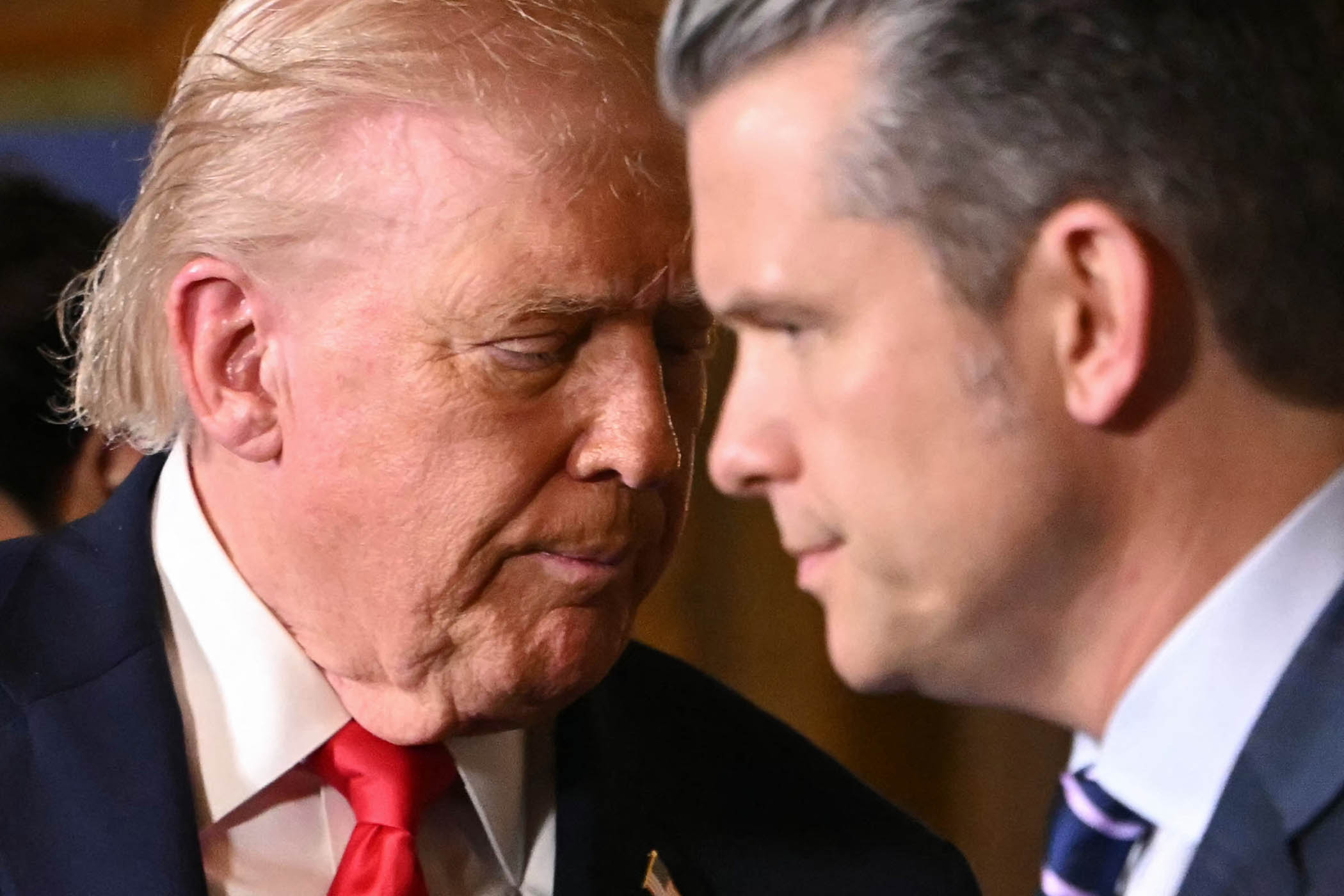
Donald Trump with defence secretary Pete Hegseth

Fred Harter
Reporter
THE OBSERVER
Sunday, 28 December 2025


Donald Trump celebrated Christmas Day by launching Tomahawk cruise missiles against Islamic State jihadists in a remote corner of Nigeria, who were, he said, “viciously killing” Christians.

“I have previously warned these Terrorists that if they did not stop the slaughtering of Christians, there would be hell to pay, and tonight, there was,” Trump said, before wishing the “dead Terrorists” a “MERRY CHRISTMAS”.

The strikes were part of a broader pattern. Despite Trump’s promises to put America first and halt “endless wars”, during his second term he has enthusiastically projected American military strength into far-flung places.

Earlier this month, Trump authorised a “massive strike” against Syria, in retaliation for a jihadist attack against American forces in the country. He has also targeted Iran’s nuclear facilities, launched a bombing campaign against Houthi rebels in Yemen, and ramped up airstrikes in Somalia.

Then there is Venezuela, where Trump is threatening regime change. His administration alleges president Nicolás Maduro belongs to a terrorist group and it has assembled a vast armada in the Caribbean that includes the world’s largest aircraft carrier. US forces have seized two oil tankers and sunk at least 29 alleged drug boats off Venezuela, killing over 100 people.

Analysts are struggling to discern a strategic thread running through these actions. After all, Trump originally won the Republican nomination in 2015 by campaigning against America’s involvement in Iraq and Afghanistan.

“He starts out as this quasi-isolationist. Now he turns out to spend more time on foreign policy than domestic policy,” said Michael O’Hanlon, director of foreign policy research at the Brookings Institution in Washington DC. “Why is this purported Maga Republican interested in every corner of the globe?” One answer is that few American presidents can resist the urge to police the world and deploy military firepower at their disposal, said O’Hanlon. Another is that these moves are aimed at a domestic audience at a time when the president’s approval rating is flagging, rather than effecting change overseas. Targeting Venezuela’s regime plays well with Latin American voters in Florida, while killing Nigerian terrorists in the name of protecting Christians on Christmas Day pleases evangelicals.

In both countries, Trump’s approach has been impulsive. His administration has not clearly outlined what would come after Maduro in Venezuela, and a few cruise missiles will not address the causes of decades of insecurity in Nigeria.

“Force is being used in almost a performative way,” said Leslie Vinjamuri, president of the Chicago Council on Global Affairs. “Trump likes ... being seen as a strong man, and he’s using force to show America is tough, resilient. But there doesn’t seem to be any grand strategy to all this. He doesn’t seem to care about delivering objectives on the ground.”

In this sense, Trump’s use of military might resembles his peacemaking. The US president claims to have solved eight wars. One of these, between Cambodia and Thailand, broke out again a few months after a US-brokered peace deal was signed. Fighting also continues in the eastern Congo, despite an accord agreed in Washington between the Congolese and Rwandan presidents. Another conflict didn’t actually exist: Trump claims to have brought peace between Egypt and Ethiopia, two countries that were not at war.

Despite his America First agenda, Trump is no stranger to foreign entanglements. During his first term he escalated US strikes in Somalia to unprecedented levels, authorised the assassination of Iranian general Qasem Soleimani and backed Kurdish groups against the Islamic State in Syria.

“We’ve forgotten that wherever Trump inherited ongoing wars, he intensified the air campaign,” said Michael Hanna, of the International Crisis Group. “What makes the second term different is that the personnel in place are in no way a check on Trump’s impulses. In fact, they seem to magnify and amplify. There’s a heavy emphasis executing [his] wishes.” Striking targets from the air or sea without putting boots on the ground represents a low-risk, high-reward approach, even if parts of Trump’s Maga base are unsettled at the prospect of US-enforced regime change in Venezuela, and brokering peace deals burnishes the president’s self-image as a deal maker. “I’ve never seen Trump as an isolationist,” said Vinjamuri. “He’s certainly unilateral, and he’s transactional. But he’s always had a very big international agenda, despite the inconsistency of his approach.”


Photograph by Andrew Caballero-Reynolds/AFP via Getty Images
Asylum not found: Why Russians are being deported from the United States

Pyotr Voronov
28 December 2025
THE INSIDER

In early December, the Trump administration sent a fourth planeload of deportees back to Moscow. Russians currently in the United States are increasingly encountering refusals of their requests for political asylum, and the White House has announced that the government is suspending decisions on such applications. These steps are part of a broader trend toward tightening the asylum system, driven by a shortage of immigration judges and strict government quotas on the detention of undocumented migrants.

LONG READ


Content

Special flights to Moscow


From the border to detention


In search of asylum


A quota-driven system


One for all and all for the same thing


Доступно на русском языке


Special flights to Moscow

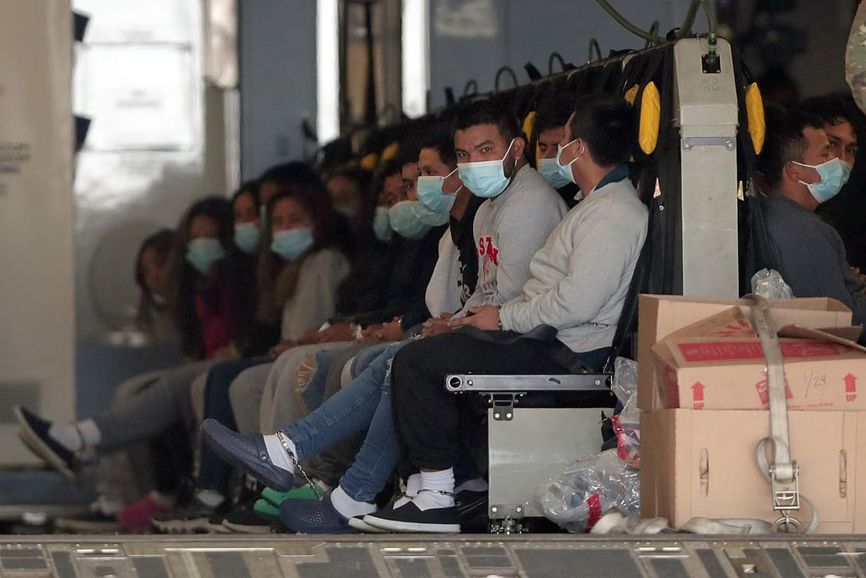
On Dec. 7, a special deportation flight carrying citizens of Iran, Russia, and several Arab countries took off from the United States. At a stopover in Cairo, most of the passengers were transferred to a plane bound for Kuwait, while 60 Russians were escorted to a special flight to Moscow. It arrived in the Russian capital early on the morning of Dec. 9.

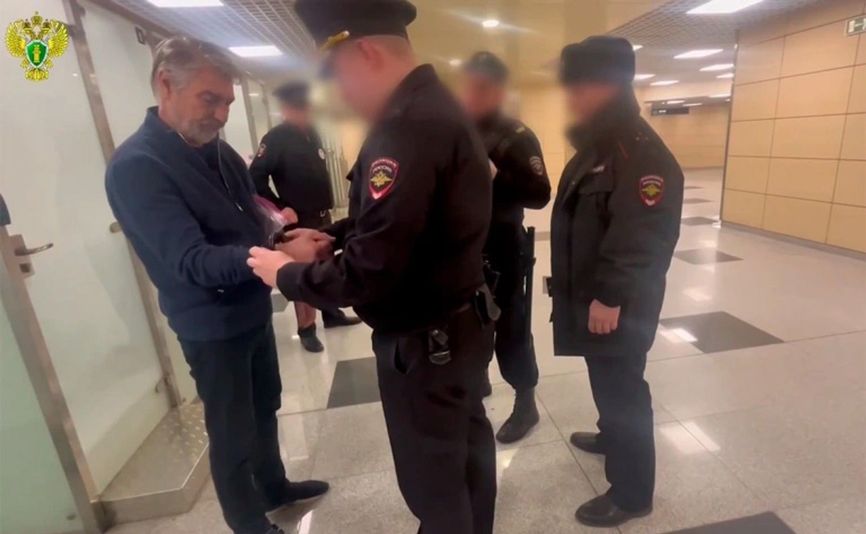
According to Dmitry Valuev, the head of the NGO Russian America for Democracy in Russia, upon arrival in Moscow the deportees were questioned by officers of the FSB, and one of them, Zair Syamiullin, was detained on charges of fraud. Russian men were also handed draft notices requiring them to register with military enlistment offices.


Zair Syamiullin
Russia’s Prosecutor General’s Office


The deportation flight was the fourth since the start of 2025, with earlier iterations occurring in June, August, and September. This is an innovation of the Trump administration, Valuev explains: under Biden and previous presidents, no such deportations of Russians were conducted.

Immigration attorney Lia Djamilova notes that the special flights mark a move towards a new form of equality in America’s approach towards potential newcomers — albeit an undesirable one: “[The United States] has always taken a harsh approach to migrants, but previously you had to be Latin American or African for that to apply. Now they have also stopped handling Russian-speaking and post-Soviet people with care.”

The Trump administration is using special deportation flights to expel migrants from other countries as well. Since the beginning of the year, such flights have sent more than 18,000 people to Venezuela. Immigration lawyer Marina Sokolovskaya believes this practice will only expand: the Department of Homeland Security has already purchased its own Boeing aircraft, and in 2026 the process will likely accelerate “because there will no longer be a need to deal with charter flights.”

Previously, U.S. authorities deported Russian citizens on regular commercial flights or offered them the option of leaving the country on their own, which sometimes made it possible to avoid being sent to Russia.

Previously, U.S. authorities deported Russians on regular flights or offered them the option of leaving the country on their own, which sometimes made it possible to avoid being sent to Russia

“Most Russians are deported in small groups of two or three on regular civilian commercial flights. In the U.S. they are escorted to the plane and sent to a third country. After that, it’s a matter of luck. Some people managed to get away during these transfers,” says attorney Yulia Nikolaeva.

From the border to detention


There are still no exact figures on how many Russians have been deported from the U.S. in 2025. The website of Immigration and Customs Enforcement (ICE) states that since the beginning of the year 127 Russian citizens have been expelled. Immigration lawyers note, however, that these data may be incomplete, and that a fuller picture will only emerge after the annual report is published in early 2026. For comparison: 58 Russians were deported from the U.S. in 2022, 222 in 2023, and 455 in 2024.

The sharp increase in deportations was linked to a decision by the Biden administration to place Russians and citizens of a number of former Soviet states detained at the U.S.–Mexico border into temporary migrant detention centers, unlike migrants from other countries.

“Citizens of other countries continued to be allowed across the border under the CBP One program, while citizens of Russia and five other former Soviet countries were simply kept under arrest without any grounds. When Trump came in, he announced that he was closing the border and the CBP One program, and that everyone who crossed the border would be detained. So Trump’s policy essentially equalized everyone: the new administration treats all immigrants harshly, without a discriminatory focus specifically on Russian citizens,” attorney Nikolaeva told The Insider.

Since 2019, Russians have increasingly used the southern border to enter the U.S. According to Marina Sokolovskaya, whereas five years ago Russian speakers at the U.S.-Mexico border were a rarity, officers with knowledge of Russian, Kyrgyz, and other languages from the former Soviet space are now in high demand.

Officers who speak Russian, Kyrgyz, and other languages of post-Soviet countries are now working at the U.S.-Mexico border

The practice of detentions continued under the Trump administration as well. According to immigration lawyers, once people are placed under arrest, their chances of being released and of having their asylum applications approved drop dramatically. This is due both to the way immigration judges view those detained at the border and to the difficulty of obtaining legal assistance, especially if migrants have no relatives or acquaintances at liberty who could help find an attorney.

As Nikolaeva notes, people in migrant detention centers often waive their right to appeal because it is “inevitably associated with several more months, or even years, of waiting for results. People who are free do not face this problem — they can continue living and working while the appeal is under review.”

Under Trump, the option to apply for asylum directly at the border was also eliminated, and the CBP One app that refugees previously used to schedule an appointment at a border crossing in order to request asylum is now used only to arrange migrants’ self-deportation.

In addition, to reduce the number of potential asylum seekers, an expedited deportation procedure was introduced. If immigration officers determine during the interview that a migrant has failed to demonstrate a risk of potential persecution in their home country, the person is immediately deported — without access to an immigration court.

As a result, the number of people attempting to cross the U.S.-Mexico border in an open manner has fallen sharply. “Compared with several thousand refugees a day under Biden, the number of people seeking asylum has now dropped by several times, to the hundreds per day. Russians make up an extremely small share of them,” Dmitry Valuev explains.

However, some immigration lawyers believe that the authorities may be deliberately understating the statistics on crossings. “The figures are, of course, significantly lower than they were before. But people are still continuing to cross the border,” says Nikolaeva.

In search of asylum

There is also no information on what share of deported Russians were asylum seekers. It is known that since the beginning of 2022, Russian citizens have filed more than 15,000 such applications, of which around 72% were approved in the period up to mid-2024 — one of the highest rates among all nationalities. However, starting in the final months of Biden’s tenure, the share of approved applications began falling towards its current level of 46%, while the share of denials rose to 32%.

According to Valuev’s observations, immigration courts have increasingly been issuing decisions on asylum seekers from Russia that “completely ignored the existing threats these people face in their home country — such as criminal cases, inclusion on Rosfinmonitoring’s list of extremists and terrorists, and placement of these people in wanted databases.”

Attorney Lia Djamilova has also observed a rise in such cases: “Right now I see many Russians who clearly qualify for asylum — it was created for people like them. But they are still denied. I have a feeling that you could be Navalny in an immigration prison in America, and you would still be denied.”

Such denials sometimes force migrants to take extreme measures. Yulia Nikolaeva cites the case of a husband and wife who were held in different detention centers. Both lost their cases, after which the husband wanted to waive his appeal in order to be deported to Russia more quickly and arrested there — his hope was that the American court would then understand the danger his wife faced and approve her appeal to remain in the U.S.

Again, rather than representing a campaign targeting Russians, the current developments appear to be part of a larger trend under Trump 2.0. Approval rates for asylum applications in general fell to 14% in 2025. Over the previous three years, it had averaged 28%.

The White House has already dismissed dozens of immigration judges whom the authorities believe granted asylum too liberally (even as migration agencies are actively advertising on social media for new hires). “Naturally, those who approved asylum applications more often than others are being fired. Right now, you can count on one hand the judges with a high approval rate,” Lia Djamilova says.

The White House has dismissed dozens of immigration judges whom the authorities believe granted asylum to migrants too liberally

To make up for the resulting shortage of judges — who were already struggling to cope with a backlog of hundreds of thousands of applications — the Trump administration decided to bring in military lawyers from the Pentagon. Collectively, they have issued deportation rulings in 78% of cases.

A quota-driven system

Previously, temporary detention centers mostly held asylum seekers and other migrants taken into custody at the U.S.-Mexico border. Now, however, they are now increasingly holding people who have already applied for asylum and were awaiting a decision while living and working in the U.S. In the past, arrests of migrants inside the country were generally linked to cases involving violent crimes. Now only 7% of those detained had previously been convicted of such offenses.

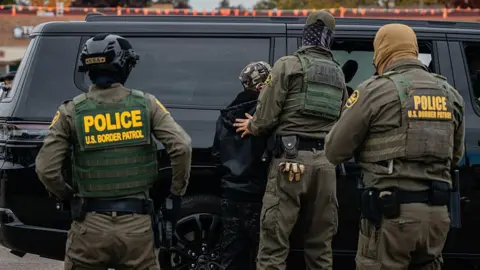
Under Trump, the justifications for detaining asylum applicants include traffic checks, especially of long-haul truck drivers (among whom there are many migrants, including Russians and others from former Soviet countries). In many large cities, migration authorities carry out mass raids directly on the streets, with agents in masks and plain clothes officers taking people away in unmarked vehicles. Because law enforcement officers often focus only on race, they sometimes detain U.S. citizens as well — since the beginning of 2025, at least 170 such incidents have been recorded.

Human rights advocates are also raising the alarm over the growing practice of arrests inside courthouse buildings, where migrants come for scheduled hearings regarding their asylum cases. However, such detentions have gradually ceased due to public outcry.

“Civil society worked well here. People mobilized, large group chats were formed, and they didn’t allow people to be arrested quietly,” Lia Jamilova says. “They explained migrants’ rights, recommended attorneys, and urged them not to sign papers with ICE, because those arrests were illegal. After that, ICE stopped arrests in courts. They realized it was too public and too awkward.”

According to Jamilova , in conversations with her and other immigration lawyers, ICE officers sometimes admit that the reason for detaining their clients is the need to meet performance targets imposed from above:

“They have quotas, but no one to arrest. These officers are climbing the walls, crying crocodile tears in private conversations about being forced to do this. They arrest parents at daycare centers, they arrest people when they come to check in. Because there’s nowhere to find ‘bad’ migrants, they take anyone.”

As early as February, White House deputy chief of staff Stephen Miller was demanding that at least 1,000 migrants be detained every day, and in May the quota was raised to 3,000 people. As a result, people who were previously left alone are increasingly being picked up. Yulia Sokolovskaya gives one such example: “We had a client detained whose husband is currently serving in the U.S. Army and is being sent to combat zones. We managed to get her released, although the chances were 0.5%. ICE officers now have no taboos at all — even military service is no longer an argument, although it had always been considered sacred. As they told us, ‘nothing personal, guys — just numbers.’”

Although ICE has so far failed to meet the target (an average of about 800 people are detained daily), the overall number of arrests has already sharply increased. In an effort to boost staffing levels, the agency’s leadership has lowered recruitment standards and shortened training periods for new agents. To assist with arrests, personnel from the Department of Homeland Security, the Border Patrol, the Drug Enforcement Administration, and even agents from the FBI, the Secret Service, and the Internal Revenue Service are also being deployed.

Against the backdrop of mass arrests of migrants, conditions in temporary detention centers have deteriorated sharply. Since the beginning of the year, the number of detainees has increased by 70%, now totaling more than 66,000 people. Human rights advocates note that migrants are often held in cramped and unsanitary conditions, with many forced to sleep on the floor and deprived of access to doctors and lawyers. Some detainees are placed in solitary confinement for several days or even weeks, in violation of ICE’s own rules.

For example, at the recently opened Fort Bliss center in Texas, 45 migrants were able, through an attorney, to submit a complaint alleging beatings and intimidation by staff. Guards reportedly choked and beat detainees, squeezed their genitals, and threatened them with deportation to Africa or imprisonment in El Salvador.


Human rights organizations have filed a complaint alleging that immigrants at Fort Bliss, Texas are subjected to brutal beatings by guards
AP

Migrants were intimidated with handcuffs, bags placed over their heads, and threats to abandon them in the desert. Several were beaten so severely that they required hospitalization — and after treatment, they were sent to solitary confinement. In total, since the beginning of the year, 30 migrants have already died in such centers, the highest figure recorded over the past twenty years.


One for all and all for the same thing

In late November, Afghan national, Ramanullah Lakanwal opened fire on National Guard service members in Washington, killing one and seriously wounding another. Because the shooter was granted political asylum in 2025, the White House also ordered a pause in decisions on almost all refugee applications processed through USCIS, even for those who entered the US legally — the only allowable exception was for white citizens of South Africa.

Yulia Sokolovskaya notes that the consequences of the attack on the National Guard are already being felt: “This killing completely tied our hands. We had just started to notice that in a number of states the asylum review process had sped up and was finally running smoothly. Now you come to an interview with a client, and they are once again sent back to waiting. It’s unclear how long this may last.”

Although Lakanwal was in the U.S. entirely legally — thanks to his cooperation with the CIA during Operation Enduring Freedom — Donald Trump announced a suspension of the review of all immigration applications filed by Afghan citizens. They were soon joined by citizens of another 38 countries, who were similarly barred from entering the U.S. The suspension led to the cancellation of naturalization ceremonies and interviews for green card applicants, and also stripped citizens of those countries of the ability to extend their work and student visas.

Residents of these countries who already hold permanent resident status in the U.S. are set to undergo repeat screening by immigration authorities, with the possibility that their green cards could be revoked. USCIS also plans to strip several hundred people of U.S. citizenship if it was obtained fraudulently or in violation of existing rules.

On Dec. 13, a mass shooting occurred at Brown University, leaving 11 students dead, and two days later, a professor at the Massachusetts Institute of Technology was killed. The suspect turned out to be Portuguese citizen Claudio Neves Valente. In 2017, he obtained permanent resident status in the U.S. through the green card lottery. Shortly afterward, the Trump administration announced an indefinite suspension of that program.

Immigration lawyers warn that in the race to meet targets handed down from the White House, immigration authorities often detain migrants indiscriminately, significantly increasing the risk of deportation for Russians living in the US.

According to sources speaking with The Insider, the highest risk of deportation now applies to Russians who lack any legal status other than a pending asylum application — especially if they are already in detention. “As a diaspora in the U.S., we need to prepare for tougher restrictive measures and for building a strategy to protect the most vulnerable people,” Dmitry Valuev says.
Fearing deportation, Hondurans in the US send more cash home than ever before

Will Grant
BBC
Mexico, Central America and Cuba correspondent in Honduras
BBC
Elías Padilla stopped his plans to move to the US because he fears detention and deportation

For over a year, Elías Padilla had been saving up to make the journey from Honduras to the United States as an undocumented immigrant.

As an Uber driver in the snarled streets of the capital, Tegucigalpa, it hasn't been easy for him to put money aside. On bad days he makes as little as $12 (£9) in 12 hours.

Now, though, his plans are on hold.

The images of undocumented immigrants in major US cities being dragged away by Immigration and Customs Enforcement (ICE) agents, their wrists in zip-ties, have deterred at least one would-be immigrant in Central America from travelling north.

"I want to improve my life conditions because we earn very little here," Elías explains as we drive around the city. "Take this line of work, for example: an Uber driver in the US makes in an hour what I'd make in a day."

Like most Honduran immigrants, Elías says the main aim of reaching the US would be to send remittances home.

"But I see what Trump is doing, and it's made me think twice," he admits.

"I'm going to wait to see what the change in government here brings," he says, referring to the recent presidential election. "Hopefully things will improve."


US President Donald Trump has ordered a massive crackdown on illegal immigration


Elías's change of heart will doubtless be welcome news to the architects of US President Donald Trump's immigration policies including border czar Tom Homan and homeland security adviser Stephen Miller.

As well as removing undocumented immigrants from US soil, the controversial ICE operations in Los Angeles, Chicago, Charlotte and Minneapolis were always intended also to dissuade people like Elías from even attempting to leave Honduras.

However, the policies have brought an unexpected windfall to the Honduran economy: the thousands of Hondurans who live undocumented and under the radar in those cities are sending home more remittances than ever.

With many undocumented Hondurans sharing the sense of a looming threat or deadline over their futures, many are trying to send every spare dollar back to their families before it is too late.

Between January and October this year, there was a 26% rise in remittances to Honduras compared with the same period the previous year.

In fact, even though their numbers are dwindling in the US, Hondurans increased the amount they sent home from $9.7bn (£7.2bn) in all of 2024 to more than $10.1bn (£7.5bn) in just the first nine months of this year.

The BBC spoke to one, Marcos (not his real name), on the phone from a major US city where he has lived for five years, working in construction.

"Most of the money I send home is for the family to cover their basics like food. But also, so they can put something to one side to buy a little land on which we can eventually build a house, maybe buy a car," he says.

Since Trump took office, Marcos says he only keeps the very minimum he needs for rent and food in the US. Everything else goes to Honduras.
Denmark's postal service company to end letter-carrying service after 400 years due to digitization

Physical letters have declined dramatically in volume over the last twenty five years, the company said, from almost 1.5 billion in the year 2000 to only 110 million in 2024, over a 90% decrease.

AN UNDATED era street collection mail box from Denmark is seen in a display at the US National Postal Museum  in Washington, DC.
(photo credit: PAUL J. RICHARDS/AFP via Getty Images)ByTZVI JASPERDECEMBER 28, 2025 05:33

Denmark's primary postal service company, PostNord, will cease carrying letters on December 30, after 400 years of operation, citing the country's increased steps towards digitization.

"Although this is a difficult decision, it is an important step towards a strong PostNord for the future," the company announced on its website.

Physical letters have declined dramatically in volume over the last twenty five years, the company said, from almost 1.5 billion in the year 2000 to only 110 million in 2024, over a 90% decrease.

The decline was caused in part by the ubiquity of digital means of receiving information from the government. Since 2014, all public sector communiques, including those from banks, insurance companies, and pension companies, must by law be sent digitally.

Leading up to the company's final letter, PostNord donated 1,200 of its iconic red mailboxes to be sold by Danmarks Indsamling, a charity organization.

DELIVERY CARS of Danish postal service PostNord at the company's distribution center in Broendby, Denmark, December 14, 2020. (credit: MADS CLAUS RASMUSSEN/Ritzau Scanpix/AFP via Getty Images)

One thousand of the mailboxes were made available on December 15, and, according to The Copenhagen Post, sold out almost immediately.

Another 200 will be made available in January 2026, coming from selected locations in Denmark or decorated by Danish artists.
PostNord's final letter to the publicAs a symbolic final letter, PostNord prepared a video in which a letter from them to the Danish public was read out by Danish actress and narrator Ellen Hillingsø.

The letter will be put on display at ENIGMA, the Museum of Communication in Copenhagen.

PostNord has been run jointly by the Danish and Swedish governments since a merger took place in 2009, combining the separate Swedish and Danish postal service providers.

The company plans to continue providing parcel delivery service, as well as maintaining its letter delivery service in Sweden.
16-hour wait for bed in emergency: Why Canada's healthcare system is in ICU

An Indian-origin father of three young kids died at an Edmonton hospital despite crying for a bed for eight hours. Canada-based Indians say it could take up to 16 hours to get medical treatment in emergency rooms and months for doctor appointments. What is ailing the healthcare system of Canada, considered a developed country?


An image of Toronto's Humber River Hospital during the Omicron wave in 2022. The share of older Canadians with an attached family physician fell from 87% in 2019 to 79% after the Covid. (Reuters image for representation.)


India Today World Desk
New Delhi
Dec 28, 2025 
Written By: Shounak Sanyal


On December 22, Prashant Sreekumar, a 44-year-old man of Indian origin, reported to the emergency room(ER) of the Grey Nuns Hospital in Edmonton, complaining of severe chest pain. Despite repeated pleas from Prashant and his family members, he was reportedly made to wait for nearly eight hours. During this period, he remained in intense pain as his blood pressure continued to shoot up, reaching levels as high as 210. The only medical assistance provided to him during this entire time was doses of Tylenol to manage the pain.

After eight hours, when Prashant was finally taken in for emergency treatment, he collapsed and died within seconds. Standing beside Prashant's body, his wife was seen in a video saying that "the hospital killed him". "Basically, the hospital administration and the employees of Grey Nuns Community Hospital have killed my husband, by not providing him with timely medical help," she is heard saying in a video that has gone viral.

Prashant's death points to a broader crisis affecting Canada’s healthcare system. For years, Canadian patients and media reports have raised concerns about steadily increasing wait times in hospital emergency rooms across the country. Similar experiences have been shared by Indian students in Canada, some of whom have reported waiting as long as 16 hours for medical attention.

Emergency medicine operates on the principle of the Golden Hour, which holds that patients facing severe illness or traumatic injury have the highest chance of survival if they receive medical care within the first hour. Measured against this standard, Prashant’s eight-hour wait indicates a serious failure in emergency care delivery and points to deeper systemic shortcomings within Canada’s healthcare system.


HOW DOES CANADA'S HEALTHCARE SYSTEM OPERATE?

Healthcare in Canada is guided by the principles of the Canada Health Act of 1984, which established a system known as Medicare.

Medicare is a publicly funded government-run organisation which provides all citizens and permanent citizens of the country with universal healthcare free of charge. Medicare provides 70% of all healthcare needs for Canadians, with the remaining 30% provided by private operators and includes procedures not covered by Medicare, including dentistry, eye care, psychotherapy, gender therapy etc. Private medical care is usually paid through public insurance, with a report by The Washington Post saying that at least 70% of Canadians have either public or private health insurance.

Delivery of healthcare, however, is left to the various provinces and territories of the country. The federal government is responsible for setting national healthcare principles, transferring money to the various provinces, regulating drugs and medical procedures, and covering specific groups like Indigenous peoples on reserves, members of the military and federal inmates. Local governments, meanwhile, are responsible for funding hospitals, deciding their staffing requirements, deciding which medical procedures will be covered by Medicare and funding public insurance systems like OHIP in Ontario.

According to the Canadian Institute for Health Information, the country spent close to $308 billion in 2021, or 12.7% of Canada's GDP for that year. The Organisation for Economic Co-Operation and Development, in its 2025 Health At a Glance report, noted the country performed well across a variety of metrics, including life expectancy, preventable mortality rate, access to healthcare, public healthcare spending, etc. Across the board, most Canadians reported being more or less satisfied with the country's healthcare system with a survey by Ipsos finding out about 56% of respondents satisfied with the level of public healthcare they received.

Nevertheless, there do exist some glaring gaps within Canada's healthcare system, with one of its most persistent challenges being the rising strain on emergency care, driven by staff shortages, an ageing population and rising patient volumes.

WHAT ARE THE PROBLEMS WITH CANADA'S HEALTHCARE SYSTEM?

One of the most salient problems within Canada's healthcare system is the lack of primary care doctors within the country. According to a study conducted by the CMA in 2025, an estimated 5.9 million Canadians, or about 1 in 5 individuals lack access to primary care providers like clinics, family physicians and nurse practitioners. The same study also revealed that although 81% of the population had access to primary care providers, only about 37.5% of individuals were able to get an urgent appointment within 24 hours.
advertisement

Primary care providers like clinics and family physicians form the front line of any country's healthcare system, helping to care for minor ailments and injuries. Improper access to these systems forces patients to turn to hospitals for even the most minor causes, leading to another one of Canadian healthcare's most pressing problem, overcrowded emergency rooms (ERs).

According to a study by the Canadian Institute for Health Information, up to 20% of emergency visits are for conditions easily treatable within primary care systems, with the study noting approximately 16 million visits. This increased load on ERs can lead to several detrimental effects.

According to INFOnews, Canadian ERs are now operating beyond capacity as a norm, with ERs in Quebec province operating at 120% capacity, with some sites operating at 200% capacity. Overstretched ERs leads to patients having to wait longer thah medically advised for admittance and care.

OVER 8-HOUR WAIT TIME AT CANADA HOSPITALS FOR URGENT ADMISSION

According to the Canadian Medical Association, wait times for non-urgent patients to get admitted have increased to over 22 hours, while those for urgent patients have increased to anywhere between 6.5 to 8.5 hours. Overstretched emergency rooms (ERs) also resulted in patients having to stay longer, with the Canadian Institute for Health Information noting that patients admitted to a hospital from an ER are staying much longer, with 9 in 10 completed visits exceeding 48.5 hours.

And it's not just hospital admittance times that are suffering.

According to a study conducted by the Frazer Institute, it revealed that Canadians have to wait longer for medical procedures after being referred by a General Physician. According to the study, the average waiting time for patients between being referred and the procedure increased to 30 weeks in 2024, compared to the 9.3 weeks patients could expect in 1995. Essential procedures like Orthopaedic Surgery (57.5 weeks) and Neurosurgery (46.2 weeks) are the most affected.

Compounding these problems is the fact that Canada suffers from a shortage of trained doctors and nursing staff.

According to The Organisation for Economic Co-Operation and Development's 2025 Health At a Glance report, the country has 2.8 practising physicians per 1,000 population, which is lower than the OECD average of 3.8 of 1000. And a report by the Government of Canada titled, The State of the Health Workforce in Canada published in 2022 projected a shortage of 78,000 doctors by 2031 and 117,600 nurses by 2030.
advertisement

HOW CANADIAN CITIZENS ARE SUFFERING FROM THE SHORTCOMINGS OF CANADA'S HEALTHCARE SYSTEM?

Following the death of Prasanth, Canadian journalist Rajinder Saini, speaking to India Today TV, noted that the average waiting time in Canadian ERs was now up to 8 to even 16 hours, with many patients having to return from hospitals after failing to get admitted, with many instances of people passing away without getting to see a doctor. He noted that despite Canada's population having rapidly increased due to immigration, hospitals had failed to add enough beds to deal with the surge, leading to crowded ERs.

Another India Today Digital Report noted that lack of primary healthcare and long hospital wait times were one of the major problems facing international students in Canada, who do not have coverage from the country's universal healthcare coverage system. According to the Canada Medical Association, those who are not covered by Medicare, including foreign students, might have to pay as much as $260 CAD for a clinical appointment and $1000 CAD for a hospital ER visit.

Similar sentiments have been reflected across the country. According to the Canadian newspaper Capital Daily, the number of people having to leave emergency rooms without getting admitted has jumped to 86% in the last 7 years, with up to 141,961 patients having to leave without proper care between 2024 and 2025 in British Colombia alone.

A CBC report noted a figure of 500,000 across the country, with around 5% to 15% of patients having to leave ERs without proper care. Speaking to the CBC, Fraser MacKay, an emergency physician in New Brunswick and a board director of the Canadian Association of Emergency Physicians (CAEP), noted this is a side effect of long wait times in ERs.

In one unfortunate incident reported by the CBC, with many parallels to Prashant Sreekumar's case, in 2024, 16-year-old Finlay van der Werken was taken to Oakville Trafalgar Memorial Hospital with severe abdominal pain. He was triaged as "emergent", requiring a doctor within 15 minutes. Instead, he waited over eight hours as his condition worsened. By the time he was seen, Finlay had developed sepsis and went into cardiac arrest, later dying of organ failure. And just like Prasanth's wife and father who accused the Grey Nuns hospital of negligence, Finlay's parents said his death was preventable and sued the hospital network.

Prashant Sreekumar's death is a heartbreaking reminder of the human cost of strain within Canada's healthcare system. While Medicare promises universal access, families in overcrowded emergency rooms often experience fear, helplessness and loss as staff shortages and long waits delay care. His and the experience of many others before him demonstrate how systemic gaps can turn that promise into tragedy.

- Ends


As good as DMV: Elon Musk slams Canada's healthcare over Indian-origin man's death

Prashant Sreekumar, father of three, died on December 22 after being brought to the hospital after he complained of severe chest pain while at work.


Tesla chief Elon Musk (left), and Indian-origin man's wife standing next to his body in Canada's Grey Nuns Hospital in Edmonton.


India Today 
New Delhi,

Dec 28, 2025 18:07 IST
Written By: Vivek Kumar


Tesla chief Elon Musk on Friday took note of the tragic death of a 44-year-old Indian origin man, who died of suspected cardiac arrest in Canada's Edmonton after complaining of severe chest pain and then waiting for at least eight hours at the hospital to get treatment, lashing out at the Canadian healthcare system, "calling it as good as the DMV".

Prashant Sreekumar, a father of three, died on December 22 after experiencing severe chest pain at work. A client drove him to Grey Nuns Hospital in Edmonton, where he was triaged, given an ECG and Tylenol, and asked to wait. Despite repeatedly reporting intense pain, staff said there was nothing significant. He later died.

"When the government does medical care, it is about as good as the DMV," Musk wrote on X, while tagging a news report speaking about the incident and posted by a handle with the title "Billboard Chris".


People in the US often criticise the lethargic and lackadaisical way of working of the Department of Motor Vehicle (DMV), which handles and attends to customer requirements for driving licences (testing, issuance, renewal), vehicle registration, titles, and licence plates, among others.

On December 22, after an eight-hour-long ordeal in extreme agony, Prashant was finally taken in for emergency treatment, where he collapsed and died within seconds.

Standing beside Prashant's body, his wife was seen in a video saying that "the hospital killed him".

"Basically, the hospital administration and the employees of Grey Nuns Community Hospital have killed my husband by not providing him with timely medical help," she is heard saying in a video that has gone viral.

Later, reacting to the death of Prashant, Canadian health authorities said that they would not comment on the specifics of patient care due to privacy concerns.

They, however, confirmed that the case had been referred to the Office of the Chief Medical Examiner for review, as per a Global Times report.

Responding on behalf of Covenant Health, Karen Macmillan, Interim Chief Operating Officer for Acute and Primary Care, said the organisation extended its condolences to the family.

"We offer our sympathy to the patient’s family and friends. There is nothing more important than the safety and care of our patients and staff," Covenant Health said in a statement.

- Ends


'I want justice for Prashant': Wife of Indian-origin man who died in Canada hospital demands accountability
Philippines in 2025: a year of crisis, from corruption scandal to South China Sea tension

Deepening political feuds, ex-president Duterte’s ICC arrest and the South China Sea dispute have reshaped the Philippine landscape

Sam Beltran
Published:  28 Dec 2025
SCMP


As the Philippines wraps up a tumultuous year punctuated by colourful barbs thrown across warring political houses, an ongoing corruption scandal surrounding flood control projects threatens to derail President Ferdinand Marcos Jnr’s administration.

Externally, Manila has been embroiled all year in a long-standing territorial row with Beijing in the South China Sea that shows no signs of waning, while also gearing up for the hot seat as next year’s chair of the Association of Southeast Asian Nations.

We recap below the headlines for the Philippines in 2025:

Philippine coastguard personnel treat wounded fishermen inside their vessel in the disputed South China Sea on December 13. Photo: Philippine Coast Guard via AP
Water wars
Tensions between the Philippines and China over disputed waters in the South China Sea heightened following Beijing’s announcement in September of the approval of a national nature reserve at Scarborough Shoal, just 124 nautical miles west of Zambales province.


This came a month after a China Coast Guard (CCG) and navy ship collided while the former was trailing a Philippine Coast Guard vessel during a resupply mission in the area.

The row also came to a head this month, as Manila accused CCG ships of firing water cannons at Filipino fishing vessels near Sabina Shoal, which injured three fishermen and caused significant damage to their boats.


Throughout the year, Beijing has taken more assertive measures in its claims over contested waters, deploying two long-range H-6 bombers in March around the Scarborough Shoal.
The Philippines has meanwhile ramped up joint patrols with allies and continued to deepen defence ties, including its reciprocal access agreement with Japan that came into effect in September.

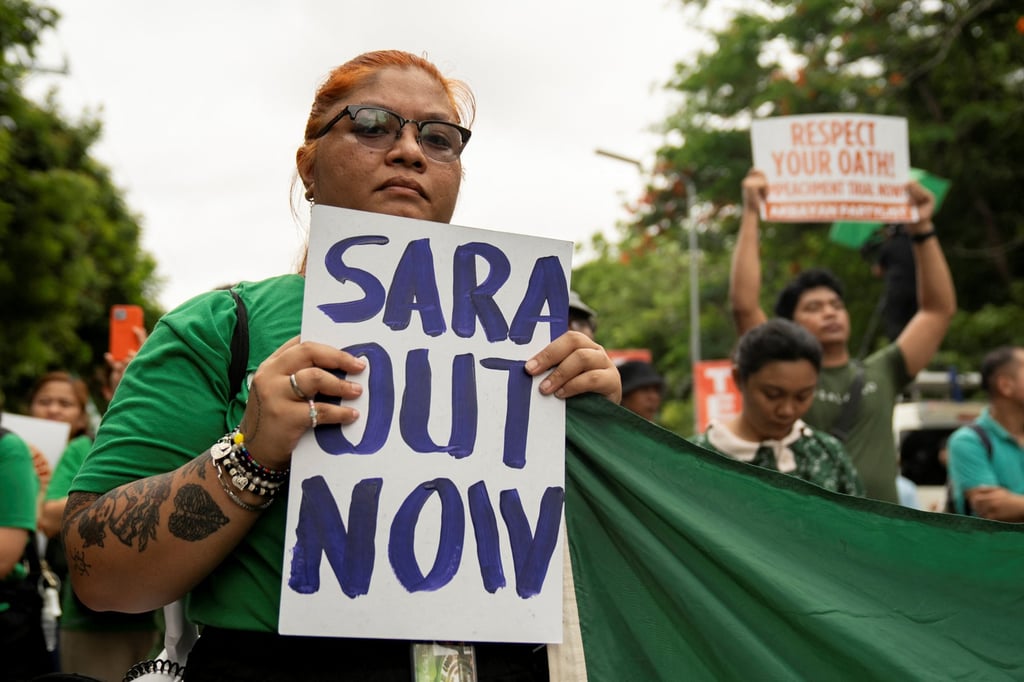
A woman carries a placard during a protest calling for the impeachment of Philippine Vice-President Sara Duterte in Pasay City, Metro Manila, in June. Photo: Reuters


A vice-president’s woes
In February, more than 200 lawmakers at the House of Representatives impeached Vice-President Sara Duterte-Carpio after signing the fourth impeachment complaint that had been lodged against her.

The charges included her unexplained wealth, the misuse of public funds, the betrayal of public trust, and even allegations of plotting murder after she had threatened to kill Marcos and the first family in November last year.

However, after the House’s articles of impeachment were transmitted to the Senate, which would be required to convene as an impeachment court, then Senate president Francis Escudero maintained it could only begin proceedings after the Congressional recess in June, which sparked criticisms that the chamber was attempting to stall the process.
In July, the Supreme Court blocked impeachment proceedings against Duterte-Carpio but said the complaint might be refiled in February 2026.


Will Duterte become Asia’s first ex-leader convicted by the International Criminal Court?
Rodrigo Duterte’s ICC arrest
Former president Rodrigo Duterte was arrested on March 11 by Philippine police and Interpol agents and quickly flown to The Hague to face charges of crimes against humanity related to his deadly war on drugs during his administration.

Duterte’s lawyer and family members have maintained that his arrest and detention are unlawful and amount to kidnapping.
In August, his defence lawyer appealed to the court for an adjournment of all proceedings, saying the 80-year-old Duterte was not fit to stand trial – a claim rejected by the ICC medical panel which last week ruled the former leader was well enough to take the stand.


The charges against Duterte cover a total of 76 killings that took place between 2016 and 2018 in the Philippines, with some related to the “war on drugs” that he initiated at the beginning of his presidency in 2016.

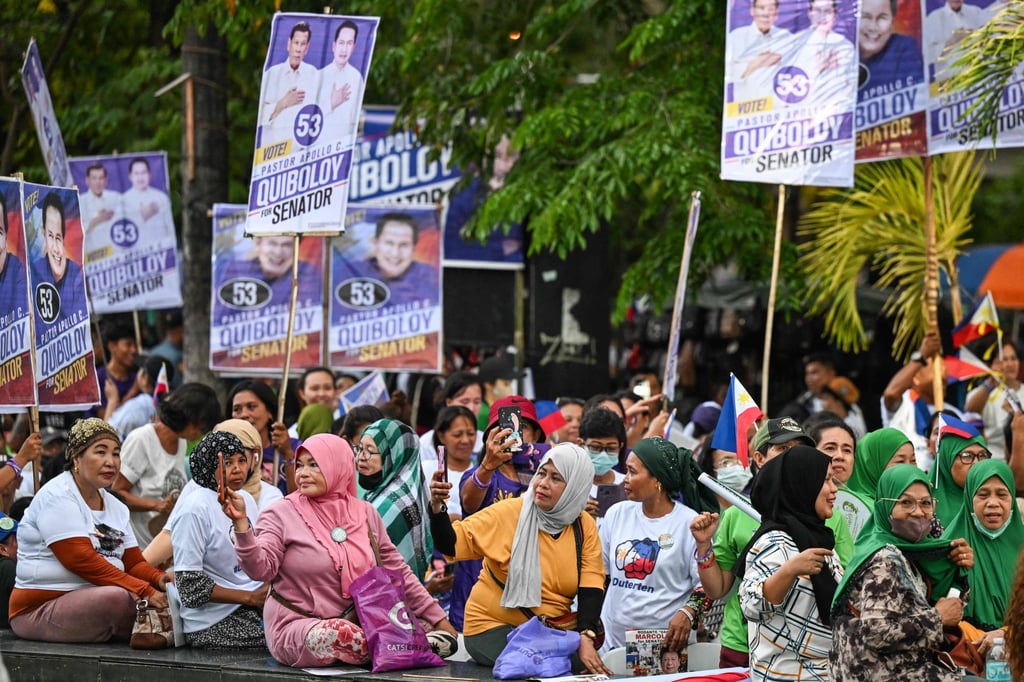
People attend a campaign rally of senatorial candidates under the party of former Philippine president Rodrigo Duterte in Manila on May 8, ahead of the country’s midterm election. Photo: AFP

Clash of the clans
Results of the Philippines’ midterm elections recorded a surge in the youth vote and led to surprise developments, including the Marcos-backed Senate slate winning only half of the chamber’s 12 seats, while staunch Duterte ally and former aide Christopher Go secured re-election with the highest number of votes.
Locally, the Duterte clan maintained its stronghold in its hometown of Davao City, where Rodrigo triumphantly returned to the mayoral seat despite his detention at The Hague, while his son, Sebastian, won as vice-mayor.
Analysts say the outcome of the polls would determine the trajectories of the feuding Marcos and Duterte clans as they wrestle for power in the lead-up to the 2028 presidential election, where Duterte-Carpio has expressed interest in seeking the highest post.

People on a wooden boat make their way through floodwaters in Kawit, Cavite province, south of Manila, in July. Outrage over billions spent in anomalous flood control projects culminated in weeks of protests. Photo: EPA

Corruption outrage

Both Marcos and Duterte-Carpio suffered blows to their performance and trust ratings after an investigation into corruption-linked flood control projects dominated headlines for months, with parts of the Philippines such as Metro Manila hit by serious floods from torrential rains.

The president ordered an investigation into these projects, which revealed the existence of incomplete or substandard work, including phantom projects for nonexistent infrastructure, despite a total budget of 545 billion pesos disbursed for flood control since 2022.

Marcos’ internal investigation further revealed that only 15 out of 2,409 registered contractors hoarded 100 billion pesos worth of the projects, with the remaining 436 billion pesos divided among 2,394 contractors.

The outrage over billions spent in anomalous flood control projects culminated in weeks of protests from church groups, civil society organisations and the public.
The Philippine government has been mounting arrests towards contractors, officials of the Department of Public Works and Highways, as well as suspected lawmakers. Authorities earlier this month arrested the “queen of flood control” Cezarah Discaya, whose construction firms cornered a lion’s share of flood control projects, while an arrest warrant has been issued for former congressman Zaldy Co, who is currently at large.

Former Bamban mayor Alice Guo during a hearing at the Philippine Senate in September 2024. Guo has been sentenced to life imprisonment over her role in setting up a scam centre. Photo: EPA-EFE/Handout

Alice Guo gets life
A Philippine court found former town mayor Alice Guo guilty of human trafficking and sentenced her to life imprisonment over her role in setting up a scam centre, a year after Guo became the face of a lengthy Senate probe over alleged crimes linked to Philippine offshore gaming operators (Pogos).

The court also ordered the forfeiture of the 6 billion-peso Baofu property that had been linked to Guo, where authorities uncovered evidence of scam and trafficking operations during a raid in March last year.

Observers hailed the conviction as a decisive victory against organised crime, strengthening the government’s hand in dismantling illicit Pogo hubs linked to exploitation and fraud.

Philippine Trade Secretary Cristina Aldeguer-Roque. Photo: Facebook/DTISecretaryCrisRoque


Tone deaf for Christmas

Amid woes by Filipinos over economic hardships attributed to corruption, Trade Secretary Cristina Aldeguer-Roque was criticised for what the public considered to be tone-deaf remarks after dispensing advice on a radio programme that 500 pesos (US$8.50) was enough for a family of four to host a “basic” Noche Buena dinner, the traditional Christmas Eve dinner celebrated in the Catholic-majority country.

Roque’s comments were in reference to her claims that the trade department managed to stabilise prices for the festive season, in line with Marcos’ order to keep holiday goods affordable for consumers.

However, critics said Roque’s comments were far from the on-ground realities that Filipino families faced amid continuously rising prices.


Sam Beltran
Sam Beltran is a journalist based in Manila who has written for publications in the Philippines and around Asia. Her stories explore food, lifestyle scenes, popular trends, and sub-cultures as windows into society and the human condition.

Learning feminism before knowing its name: Verse’s story from Myanmar

Verse Myanmar

Through films, Verse began translating feminist ideas into visual storytelling. Photo from Exile Hub. Used with permission.

Exile Hub is one of Global Voices’ partners in Southeast Asia, emerging in response to the 2021 coup in Myanmar, focusing on empowering journalists and human rights defenders. This edited article is republished under a content partnership agreement.

As a Burmese filmmaker shaped by her grandmother’s quiet defiance, Verse uses storytelling to challenge gender bias and uplift women whose voices are too often erased.

Verse began her professional journey in 2018 as a reporter at a local news agency in Myanmar. She dreamed of covering political news, but quickly encountered systemic gender bias. During a major assignment, male reporters were sent to Nay Pyi Taw to cover parliament-related matters, and she was told to stay behind.

She recalled the moment: “I was told women weren’t given those opportunities. I could not accept a workplace that denied my growth simply because I was a woman.”

She left journalism and joined a women’s rights organization, shifting her focus to human rights and feminist advocacy.

Before Verse ever stepped into a newsroom or picked up a camera, she grew up watching her grandmother quietly defy the rules of her time. A tough, respected Rakhine woman running a sawmill business, working daily among men, and refusing to bend to the gender norms imposed on her.

Verse talks about her grandma proudly: “She never once told me, ‘you’re a girl, so you can’t do this.’ She taught me that actions have consequences, but gender should never be a limitation.”

Her grandmother’s philosophy became the backbone of Verse’s feminist worldview. Even in small everyday acts, her grandmother pushed against societal expectations. While the neighborhood insisted women must hide their underwear under the longyi when drying laundry, her grandmother thought differently. From a health perspective, she said underwear needed sunlight to prevent bacteria. So she just hung them in front of the house. She never believed being a woman meant you had less dignity.

Growing up under such influence, Verse absorbed feminism not through books but through lived experience with a woman who modeled resilience, pride, and equality long before Verse learned the word “feminist.”

In 2020, Verse attended Yangon Film School, where she began translating feminist ideas into visual storytelling. The classroom itself became another frontline of gender bias. Six male and six female students attended. One day, a male classmate asked her an inappropriate question rooted in a harmful cultural myth about girls with arm hair or slight mustaches being “sexually provocative.”

She was hurt and angry, but she chose a different response.

During a group discussion in class, Verse brought the incident forward, sparking an honest conversation about how students should respond when they encounter verbal harassment. Her courage led the film school to introduce its first-ever zero-tolerance policy on sexual harassment.

Verse’s filmmaking has since become an extension of her feminist inheritance. Her storytelling centers on women who are often unheard or unseen.

“Through film, I want people to feel empathy to see women’s emotions, existence, and oppression in new ways. My mind is always thinking for them.”

One of her most meaningful works is the animated film “Exit,” portraying the lived experiences of sex workers in Myanmar, who face stigma, violence, and criminalization. Supported by Goethe-Institut Myanmar, the film has been screened at the Shi Exhibition and DVB Peacock Film Festival 2024.

Verse first learned about Exile Hub in 2022 after receiving a Critical Voices production grant. In 2025, she was again selected as a recipient of the Feminist Storytelling Grant, under which she created the documentary “Fight for Freedom.”

The film follows an exiled woman resisting Myanmar military patriarchy, a story of courage, and the fierce determination to spark ideological revolution. There is no hierarchy of oppression in which one form is greater or lesser than another. Every form of oppression must be challenged and dismantled.

Though her professional opportunities have widened, Verse still makes her home in Myanmar. Her grandmother is aging and requires care.

She says simply: “She didn’t just raise me. She taught me my worth. She made sure I never believed my gender was a limitation. How could I ever leave her behind?”

Feminism, for her, is a lived experience grounded in resilience and the courage to challenge oppression wherever it appears. Through her films, Verse honors her belief by reshaping narratives, breaking barriers, and imagining a world where women’s voices are not just heard, but honored.

Verse’s life is shaped by a simple ideology: “Women deserve equality, dignity, and the freedom to define their own lives.”

Categories