Saturday, January 10, 2026

‘I Don’t Need International Law,’ Trump Says, Adding That His ‘Power’ Is Limited Only By His ‘Morality’


“This is the mind of a fascist,” said a former official of the first Trump administration.

Stephen Prager
Jan 09, 2026
COMMON DREAMS

As he uses the military to extort Venezuela and threatens to wage war against half a dozen other nations, President Donald Trump stated plainly this week that there are no restraints on his power to use force to dominate and subjugate any country on the planet besides his own will.

Asked by the New York Times whether there were any limits on his ability to use military force in his ambitions toward “American supremacy,” and a return to 19th-century imperial conquest, he told the paper, which published excerpts from the interview Thursday: “Yeah, there is one thing. My own morality. My own mind. It’s the only thing that can stop me.”


Trump’s attack on Venezuela and kidnapping of President Nicolás Maduro last weekend, his floating of military force to annex Greenland this week, and his repeated threats to bomb Iran in recent days have all been described as blatant affronts to international law and what remains of the “rules-based” global order.

The president told the Times, “I don’t need international law. I’m not looking to hurt people.” He seemed to backpedal momentarily when pressed about whether his administration needed to follow international law, saying, “I do.” But the Times reports that the president “made clear he would be the arbiter when such constraints applied to the United States.”

“It depends what your definition of international law is,” Trump said.


If statements by other top officials are any guide, the administration’s “definition” of international law is more akin to the law of the jungle than anything to do with treaties or UN Security Council resolutions.

In an interview earlier this week, senior adviser Stephen Miller, reportedly one of the architects of Trump’s campaign of extrajudicial boat bombings in the Caribbean, laid out a view of the president’s power that amounts to little more than “might makes right.”

Speaking of Trump’s supposed unquestioned right to use military force against Greenland and Venezuela, Miller told CNN anchor Jake Tapper: “The United States is using its military to secure our interests unapologetically in our hemisphere. We’re a superpower, and under President Trump, we are going to conduct ourselves as a superpower. It is absurd that we would allow a nation in our backyard to become the supplier of resources to our adversaries but not to us.”

Miller added that “the future of the free world depends on America to be able to assert ourselves and our interests without an apology.”

The United Nations Charter expressly forbids “the threat or use of force against the territorial integrity or political independence of any state.”

Yet in recent days, Trump has also threatened to carry out strikes against Colombia and Mexico, while his secretary of state, Marco Rubio, suggested a similar operation to the one that deposed Maduro could soon be carried out against Cuba’s socialist government, which US presidents have sought to topple for nearly seven decades.

In a Fox News interview on Thursday, Trump stated that the US would “start now hitting land” in Mexico as part of operations against drug cartels. The nation’s president, Claudia Sheinbaum—who has overseen a dramatic fall in cartel violence since she took office in 2024—has said that such strikes would violate Mexico’s status as an “independent and sovereign country.”

To Kenneth Roth, the former executive director of Human Rights Watch, Trump’s assertion of limitless authority sounded like “the dangerous words of a would-be dictator.”

“Trump says he is constrained not by the law but only by his ‘own morality,’” Roth said. “Since he values self-aggrandizement above all else, he is describing an unbridled presidency guided only by his ego and whims.”

In recent days, the White House has sought to punish those who suggest that members of the US military should not follow illegal orders given by the president.

Earlier this week, Defense Secretary Pete Hegseth announced that he would seek to strip retirement pay from Sen. Mark Kelly (Ariz.), a retired Navy captain who last year spoke in a video reminding active duty soldiers that their foremost duty is to the law rather than the president. Trump has referred to these comments as “seditious behavior” and called for Kelly and other members of Congress who took part in the video to be executed.

The White House has repeatedly asserted that because Trump is the commander-in-chief of the military, any orders he gives are legal by definition.

For Miles Taylor, who served as chief of staff for the Department of Homeland Security during Trump’s first term, the president’s latest claim to hold unquestioned authority called to mind a warning from Gen. John Kelly, who also served in the first Trump White House as its chief of staff.

In the lead-up to the 2024 election, Kelly told The Atlantic that Trump fits the definition of “a fascist” and that the president would frequently complain that his generals were not more like “German generals,” who he said were “totally loyal” to Hitler.

“John Kelly was right,” Turner said on Thursday. “This is the mind of a fascist.”

While Trump’s comments left her worried about a return to an “age of imperialism,” Margaret Satterthwaite, the UN special rapporteur on the independence of judges and lawyers, said that the president’s sense of impunity is unsurprising given the recent toothlessness of international law in dealing with the actions of rogue states, specifically Israel’s genocide in Gaza.

“International law cannot stop states from doing terrible things if they’re committed to doing them,” Satterthwaite told Al Jazeera. “And I think that the world is aware of all of the atrocities that have happened in Gaza recently, and despite efforts by many states and certainly by the UN to stop those atrocities, they continued. But I think we’re worse off if we don’t insist on the international law that does exist. We’ll simply be going down a much worse kind of slippery slope.”

The fallout from Trump's defiance will shape America and the world for generations


Robert Reich

January 07, 2026 


Trump’s domestic and foreign policies — ranging from his attempted coup against the United States five years ago, to his incursion into Venezuela last weekend, to his current threats against Cuba, Colombia, and Greenland — undermine domestic and international law. But that’s not all.

They threaten what we mean by civilization.

The moral purpose of civilized society is to prevent the stronger from attacking and exploiting the weaker. Otherwise, we’d be permanently immersed in a brutish war in which only the fittest and most powerful could survive.

This principle lies at the center of America’s founding documents: the Declaration of Independence, the Constitution, and the Bill of Rights. It’s also the core of the post- World War II international order championed by the United States, including the UN Charter — emphasizing multilateralism, democracy, human rights, and the rule of law.

But it’s a fragile principle, easily violated by those who would exploit their power. Maintaining the principle requires that the powerful have enough integrity to abstain from seeking short-term wins, and that the rest of us hold them accountable if they don’t.

Every time people or corporations or countries that are richer and more powerful attack and exploit those that are not, the fabric of civilization frays. If such aggression is not contained, the fabric unravels. If not stopped, the world can descend into chaos and war. It has happened before.

We now inhabit a society and world grown vastly more unequal. Political and economic power are more concentrated than ever before. This invites the powerful to exploit the weaker because the powerful feel omnipotent.

The wealth of Elon Musk, Jeff Bezos, Mark Zuckerberg, Larry Ellison, Charles Koch, and a handful of others is almost beyond comprehension. The influence of Big Tech, Big Oil, and the largest aerospace and defense corporations extends over much of the globe. AI is likely to centralize wealth and power even more. The destructive power of the United States, China, and Russia is unmatched in human history.

Trump — enabled by cowardly congressional Republicans and a pliant majority on the Supreme Court — has turned the U.S. presidency into the most powerful and unaccountable agent of American government in history.

Put it all together and you see the threat.

A direct line connects Trump’s attempted coup five years ago to his capture of Nicolas Maduro last weekend. Both were lawless. Both were premised on the hubris of omnipotence.

That same line extends to Trump’s current threats against Cuba, Colombia, and Greenland.

You see much the same in Putin’s war on Ukraine. In Xi’s threats against Taiwan. In global depredation and monopolization by Big Tech and Big Oil. In Russian, Chinese, and American oligarchs who have fused public power with their personal wealth.

But unfettered might does not make right. It makes for instability, upheaval, and war.

History shows that laws and norms designed to constrain the powerful also protect them. Without such constraints, their insatiable demands for more power and wealth eventually bring them down — along with their corporations, nations, or empires. And threaten world war.

Trump’s blatant lawlessness will haunt America and the world — and civilization — for years to come.

Robert Reich is a professor of public policy at Berkeley and former secretary of labor. His writings can be found at https://robertreich.substack.com/.


Donald Trump's Venezuela attack stuns Europe's far right

Keno Verseck 
DW
January 10, 2026 

Right-wing Trump supporters in Central and Southeastern Europe have operated in a legal gray area for years. After the US's attack on Venezuela, there's a growing awareness that Trump could pose a threat to them, too.

US President Donald Trump and Hungarian Prime Minister Viktor Orban at a meeting in the White House in Washington last November
Image: Evan Vucci/AP Photo/picture alliance


For years, Hungarian Prime Minister Viktor Orban has tirelessly praised Donald Trump as a "man of peace." He sang the president's praises for brokering the ceasefire between Israel and Hamas. Orban also repeated Trump's claims that, if he had been US president in 2022, Russia would never have started its war against Ukraine. This is all part of Orban's "peace rhetoric" — a cornerstone of the Hungarian prime minister's current election campaign.

But, when the "man of peace" attacked Venezuela on January 3 and kidnapped its leader, Nicolas Maduro, Orban's channels went silent for hours. In the evening, two terse sentences appeared on the prime minister's Facebook page: There were "no Hungarian casualties or injuries" following the military action in Venezuela. Contact had been made with Hungary's embassies in the region to ensure that no Hungarians were in danger.

It was not until two days later, at his regular press conference at the beginning of the year, that Orban found a way to explain Trump's attack on Venezuela. It was about "eliminating a narco-state," he said, adding that this was "good news" for Hungary.

Later, the prime minister posted a short video on Facebook showing Hungarian police officers conducting an anti-drug raid. Orban has not yet made any statements relating to the international legality of the US military intervention.
Trump allies caught off guard

Trump's attack on Venezuela and Maduro's arrest caught the countries of Central and Southeastern Europe, most of which are considered friendly to the US, off guard — especially those where populists and authoritarian Trump supporters are in power. Although many of the latter rule by circumventing existing legal systems at will, the attack on Venezuela plunged them into tight-lipped silence, with some even expressing horror.

In the weekly magazine HVG, Hungarian journalist Imre Para-Kovacs highlighted how there is a growing risk that other leaders could suffer a similar fate: "Venezuela is the first country. But even the thick-headed politicians of Europe could quickly find themselves in a New York prison."

Other observers point out that Russia is now the main threat to Central and Southeastern Europe in Trump's new world order. For Poland, journalist Artur Bartkiewicz sees "very dark clouds gathering on the horizon," as he wrote in the newspaper Rzeczpospolita. Polish security expert Justyna Gotkowska posted on Facebook that Russia will "put the US and its willingness to defend the borders it has maintained so far to the test."
The silence of the populists

Poland's right-wing populist leader, President Karol Nawrocki, meanwhile, has not yet made his position clear. To date, he has said nothing about the US attack on Venezuela. In general, Polish right-wing populists and right-wing extremists have tended to be extremely cautious about responding to the attack.

Foreign Minister Radoslaw Sikorski took a sarcastic tone on X: "Another day goes by without our nationalists defending Venezuela’s national sovereignty. Does it only apply to the European Union, which poses no threat?"

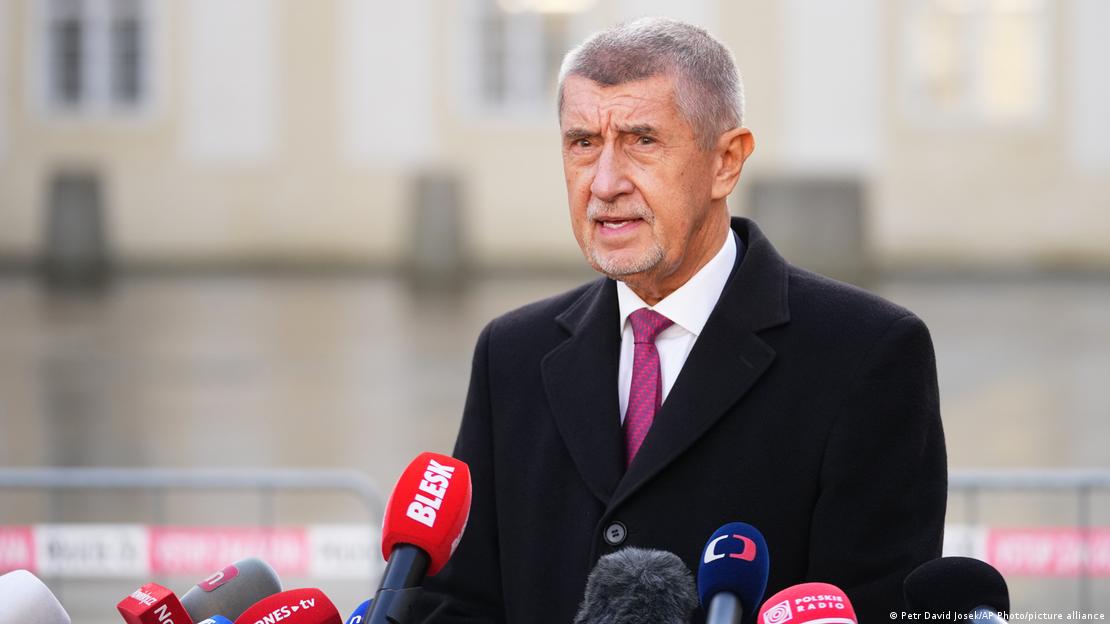
The Czech Republic's new Prime Minister Andrej Babis
Image: Petr David Josek/AP Photo/picture alliance

In Czechia, right-wing populist Andrej Babis, who has been back in office as head of government for a few weeks, also reacted cautiously and with a concerned undertone. "Let's hope that all this will lead to the citizens of Venezuela being able to enjoy freedom and democracy and that they will elect a democratic government."

Babis, a billionaire, is sometimes referred to as the "Czech Trump" and is known for quickly adjusting his stance depending on the political climate or his interests. He has been under investigation for years for subsidy fraud and has also been criticized for conflicts of interest between politics and business activities.

Fico voices outrage

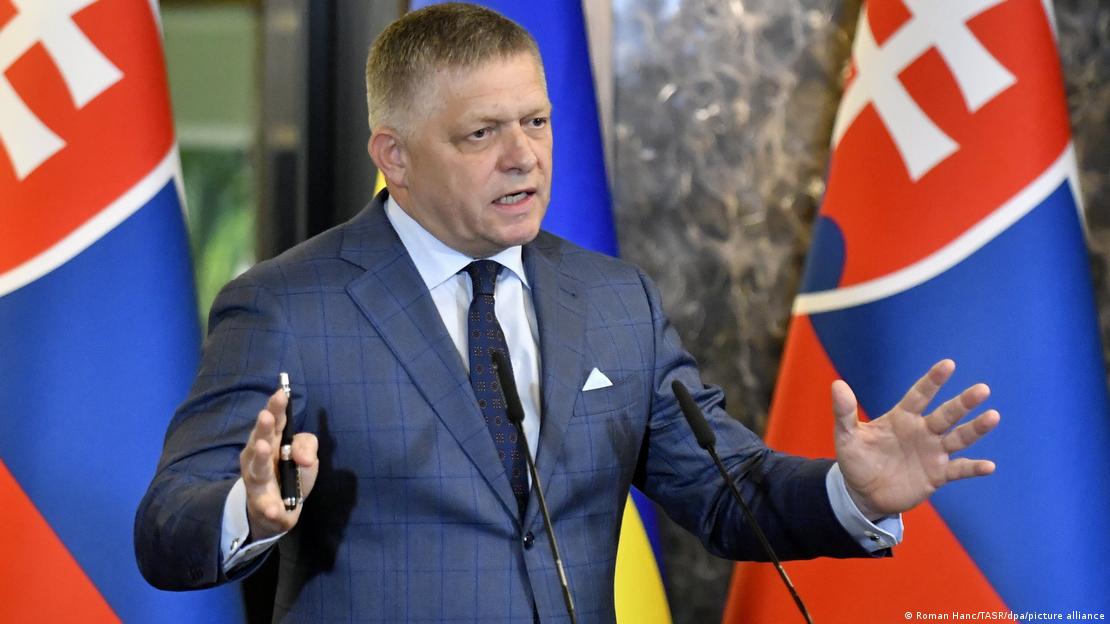
Unlike his Central European allies in Poland, Czechia, and Hungary, Slovak Prime Minister Robert Fico reacted to the news. "International law no longer applies, military power is being used without a UN mandate, and anyone who is big and strong does whatever they want to assert their own interests," Fico wrote on Facebook hours after the US attack on Venezuela. "As prime minister of a small country, I must resolutely reject such a violation of international law. I am curious to see how the EU will respond to the attack on Venezuela, which deserves to be condemned."


A day later, Fico softened his tone slightly, saying he would do everything in his power to ensure that Slovakia "never gets involved in military adventures."

Slovak Prime Minister Robert Fico had harsh words for Trump
Image: Roman Hanc/TASR/dpa/picture alliance

Unlike Nawrocki, Babis, and Orban, Fico has a rather distant relationship with Trump. The Slovak prime minister is technically a social democrat, but in recent years he has increasingly shifted toward nationalist right-wing populism. He is currently trying to transform Slovakia along the lines of Orban's model. He increasingly claims that any criticism of this agenda is an anti-Slovak conspiracy, especially after an assassination attempt on him in May 2024, which he narrowly survived.

Serbian president's power under fire

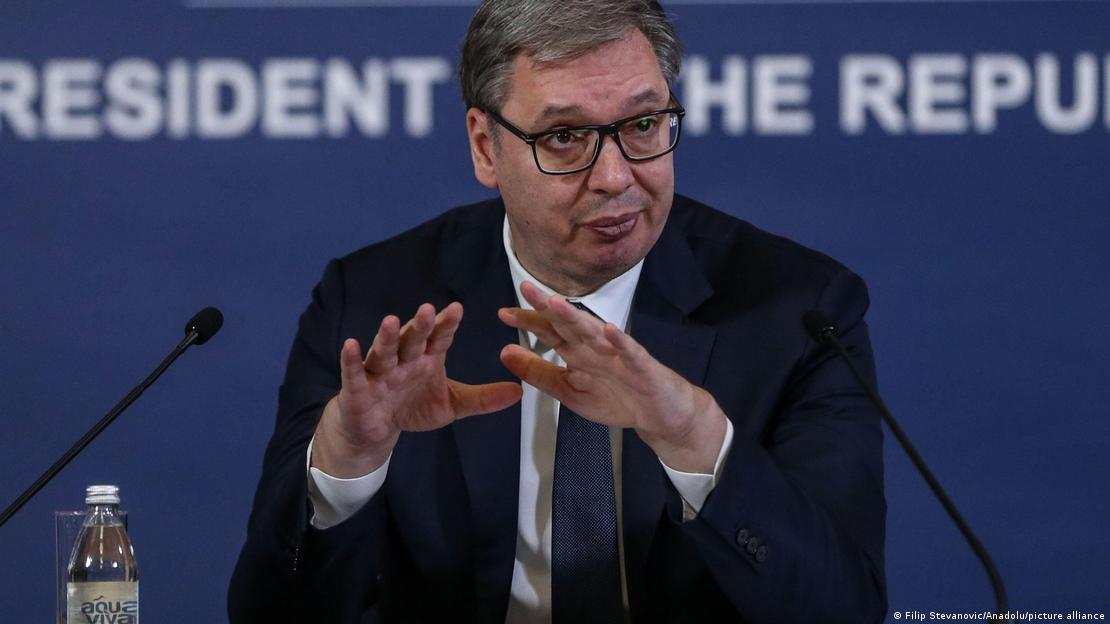
Serbian President Aleksandar Vucic also reacted in shock to the US attack on Venezuela. "The international legal order and the UN Charter no longer work," Vucic said at a meeting of the National Security Council in Belgrade on January 3. "The world is ruled by the law of force, the law of the strongest, and that is the only principle of modern politics that exists in the world today."


Serbian President Aleksandar Vucic
Image: Filip Stevanovic/Anadolu/picture alliance

These words sound cynical coming from the Serbian leader, a nationalist and right-wing populist, and a former information minister under dictator Slobodan Milosevic. He has ruled the largest country in the Western Balkans autocratically for over ten years, often operating on the edge of legality. He has tried to curry favor with Trump in various ways, most recently with a controversial real estate project in Belgrade led by Trump's son-in-law Jared Kushner, which ultimately failed. Serbia's oil industry is currently under severe pressure due to US sanctions against the Russian energy sector. In addition, ongoing civil protests have been challenging Vucic's power for over a year.

Isolated nationalist rulers


Overall, Trump's policies reveal how politically isolated Central and Southeastern Europe's nationalist and populist rulers actually are. This is particularly true of Viktor Orban, who for years has been trying to forge an alliance of populists and right-wing extremists — with limited success.

Orban could now also become the biggest victim of the policies of the man he has been flattering vigorously for years. Hungary's prime minister has long boasted that he is the US president's closest ally in Europe. He has pushed the narrative that he, alongside Trump, stand for peace in Europe and the world — while "warmongers" are in power in Brussels. This line of argument collapsed overnight with Trump's military intervention.

Orban seems aware how this could rattle parliamentary elections in April. On January 9, he posted a personal letter from Trump (dated from early December) on Facebook. In it, the US president thanks Orban for an invitation to Hungary, but leaves open whether or not, and when, he will come. His post underscores how, for Orban, a visit by Trump during the election campaign would represent a huge boost.

This article was originally written in German.


Keno Verseck Editor, writer and reporter


A German entrepreneur sees opportunity in Venezuela's crisis
DW
10/01/2026 

Thilo Schmitz has spent three decades in Caracas, living through Venezuela's volatile recent history. Following the US attack, the entrepreneur is seeking to find a new opportunity in the resulting power shift.


https://p.dw.com/p/56aqm


In Caracas, most people leave their houses only when absolutely necessary, out of fear of the pro‑government Colectivo militias
Image: Matias Delacroix/AP Photo/dpa/picture alliance

Even routine shipments have taken on new significance for Thilo Schmitz — including the one currently at sea. A freighter carrying gluten‑free pasta is en route from Panama to La Guaira, the "gateway to Venezuela," a Caribbean port just 20 kilometers (12 miles) from Caracas. The five‑day journey is being followed closely, as this niche product is currently selling better in Schmitz's supply chain than ever before.

"In recent days, pasta shelves across Venezuela have been virtually emptied," the German‑Venezuelan entrepreneur told DW. "Everything is sold out, including ours — even though our pasta is three times the price."

The long lines that formed outside Venezuelan supermarkets in early January, as people stocked up on essentials amid the prevailing uncertainty following the removal of President Nicolas Maduro by the United States, provided Schmitz with a bit of breathing room. After all, the business he took over from his father in 1996 primarily relies on selling office and school supplies.

Noodles from Germany

It is normally a crisis‑proof business: Six million Venezuelan schoolchildren always need notebooks, pencils and calculators. But in the current situation — with the country's future uncertain after the shift in power from Nicolas Maduro to interim President Delcy Rodríguez — an impoverished population is far more likely to spend its limited money on gluten‑free pasta than on a pair of scissors.

Schmitz remains optimistic about the political situation: "I cannot imagine this government under Delcy Rodríguez seeking open confrontation with US President Donald Trump. In the short term, I expect things to remain stable. And the population will not take to the streets — people are simply too afraid."

Almost exactly six years ago, the outbreak of the coronavirus pandemic and the closure of schools caused his school‑supplies division to collapse. But giving up has never been an option for this entrepreneur born in Caracas. He has built a life in a country where sudden upswings — and, later, bitter downturns — have long been part of the national DNA, a pattern that has only intensified since Maduro's assumption of office in 2013.

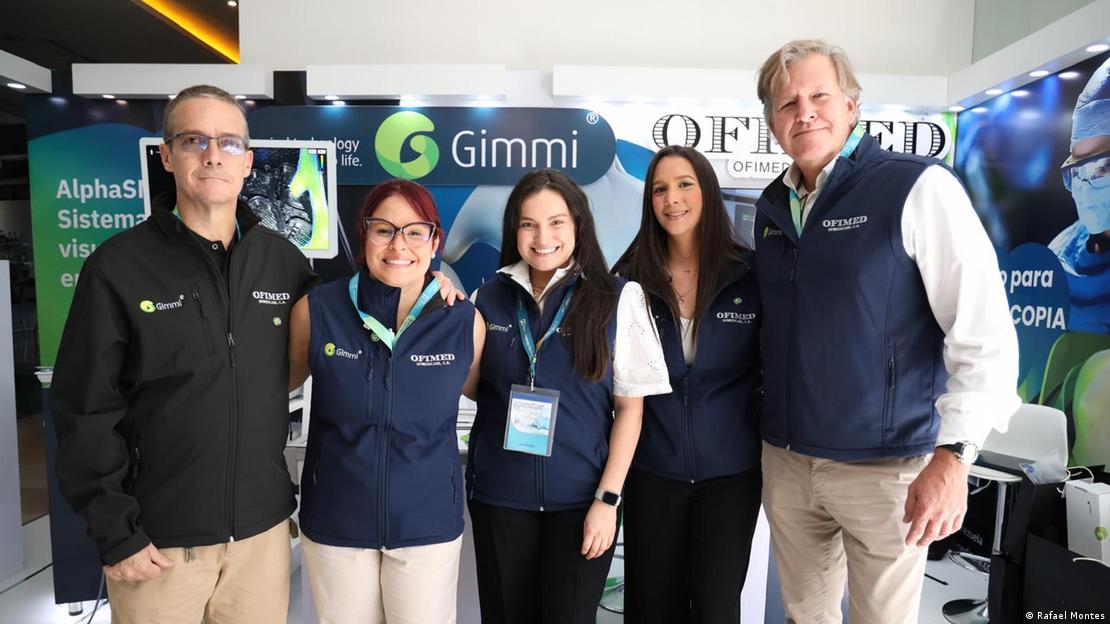
Thilo Schmitz (r) with his coworkers in his company for medical equipment in Caracas
Image: Rafael Montes


Supplying Venezuelan hospitals

Schmitz began importing medical technology from Germany in 2022, selling it to hospitals and practices. But even that has become difficult these days: International air traffic to Venezuela has been suspended for five weeks. As a result, the laparoscopic instruments produced by a mid‑sized company in Tuttlingen — used for minimally invasive abdominal surgery — are now piling up in German warehouses.

"The instruments are destined for two hospitals: One in Caracas and one in Valencia," he said. "For a minimally invasive appendectomy, you only need three small abdominal incisions. Our clients are desperate, but we have no idea when we'll be able to fly again. We have major orders worth a million dollars, but for now we can only wait."

Schmitz said the delayed delivery of these instruments had not yet put Venezuelan patients at risk, but that could change with his next planned investment. Schmitz is currently in promising talks with a company that aims to supply dialysis machines and spare parts to Venezuela. And if transport were to falter in that case, the consequences could be dramatic.

Supplying medical technology in Venezuela is a major market opportunity, because the country's hospitals are severely outdated. "There has been no investment in hospitals here since 2015," said Schmitz. "They're using X‑ray machines that still emit radiation and no longer meet global standards. Much of the equipment is ten, twelve, sometimes even fourteen years old."

For now, Schmitz — who once generated $35 million a year from school supplies, and even sold luxury fountain pens through eight Montblanc boutiques — has to focus on getting through the next few weeks. He will still be able to pay the salaries of his 45 employees on time in January, despite the lack of revenue. But February will be more difficult.

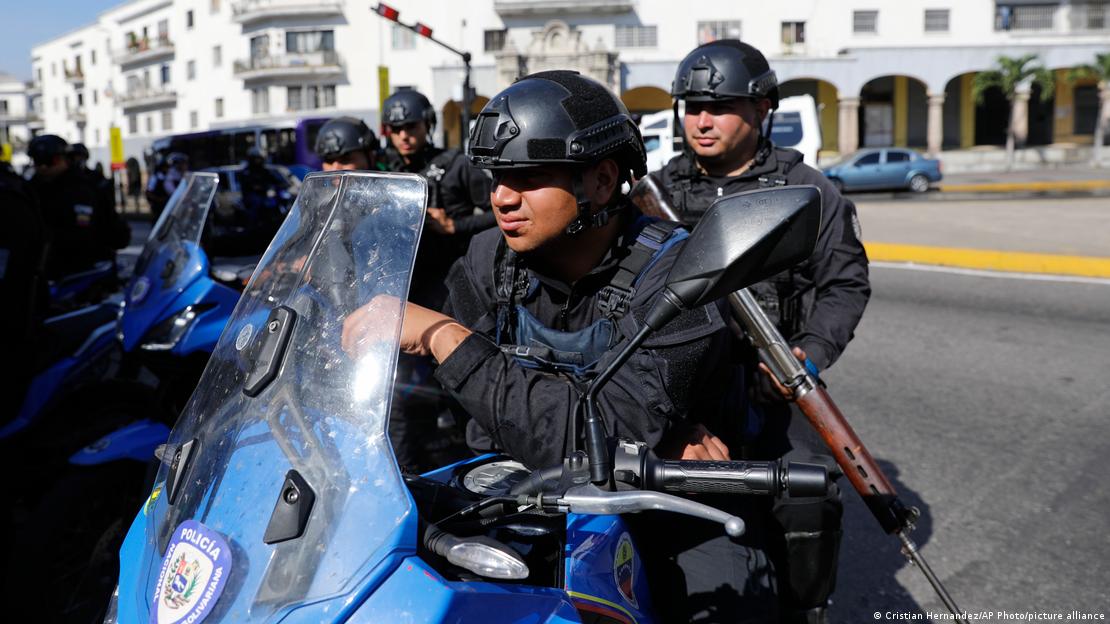
Police have increased their presence since the US captured Maduro
Image: Cristian Hernandez/AP Photo/picture alliance

'People have endless questions'

Schmitz finds himself serving as a kind of counselor. "My employees leave the house only when absolutely necessary, out of fear of the pro‑government Colectivo militias. Many of my employees had no electricity, which meant they couldn't cook and spent days getting by on bread and bananas. And now these people have endless questions —and they expect answers from me."

As Schmitz's employees look to him for answers, Rodríguez's new government faces a similar task — only on a national scale. The government must explain to the population how it intends to revive Venezeula's dilapidated oil industry: Venezuela holds the largest proven crude‑oil reserves in the world, and the sector is one from which Donald Trump has promised substantial revenues for US companies. The infrastructure needed to extract this "black gold" is even more outdated than the medical equipment in Venezuela's hospitals.

It may be some time before Schmitz's birthplace gets back on its feet. Yet the entrepreneur remains convinced that Venezuela has a future. "What we need most is legal certainty," he said. "Without the rule of law, there can be no investment. The transition through a constituent assembly could take a year and a half — and, after that, the country will need new elections."

This article was originally written in German.


US attempts to paint Nicolas Maduro as a drug baron

DW
January 10, 2026 


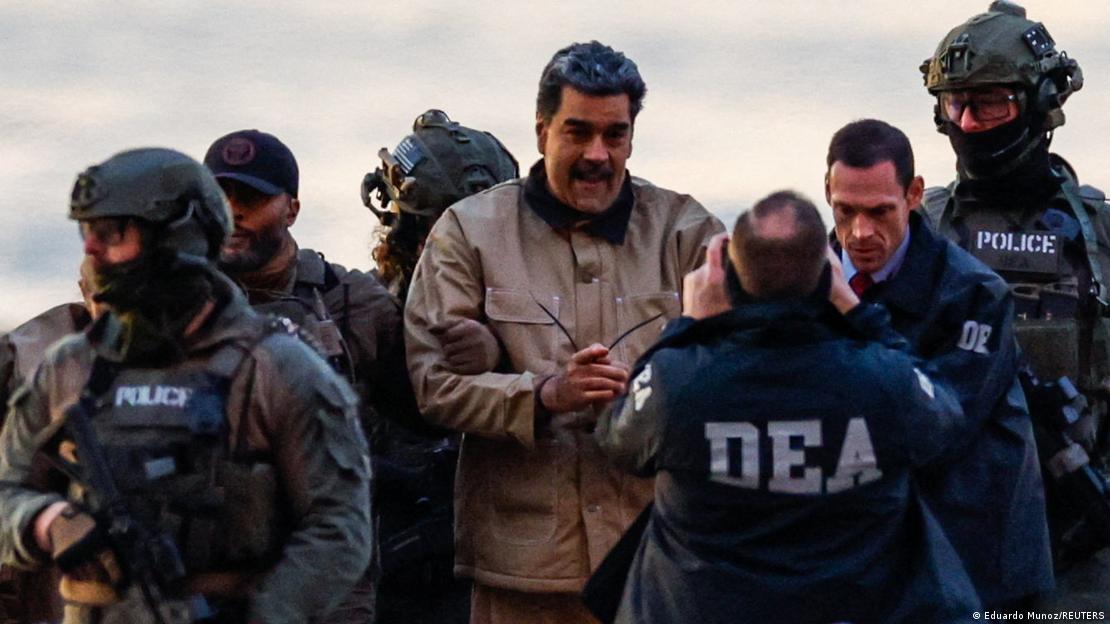
From Venezuela's presidential palace to a New York courtroom: Nicolas Maduro on his way to court on January 5Image: Eduardo Munoz/REUTERS


For years, Venezuela's leader ruled with an iron fist. Maduro persecuted opposition figures and rigged elections, sought confrontation with the US and ran his country into the ground. But is he also a drug dealer?

US prosecutors have filed a 25-page indictment against Nicolas Maduro. It accuses the captured Venezuelan leader of running a state-sponsored drug terror network for years.

Maduro, it says, collaborated with the Venezuelan criminal gang Tren de Aragua, which now operates throughout Latin America, as well as with the Colombian FARC guerrilla group and the Mexican Sinaloa cartel, to smuggle cocaine into the US and enrich himself personally.

The indictment described Venezuela as being systematically developed into a hub for international cocaine trafficking, with state aircraft and even the presidential hangar being used to transport cocaine.

From bus driver to president

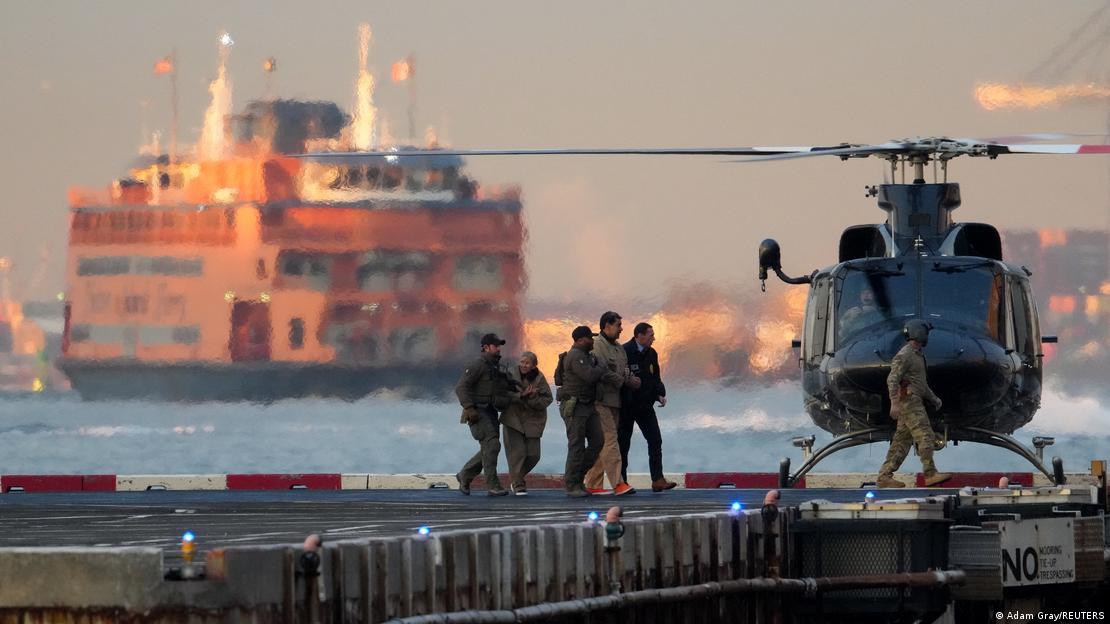
Images of 63-year-old Maduro in prison clothing being taken to a New York court in an armored prison bus went around the world this week. Where did a journey that ended this way start?

At the beginning of his career in the early 1990s, Nicolas Maduro Moros worked as a bus driver in Venezuela's capital, Caracas.

He quickly rose to become union leader at the local transport company. The fact that he had previously spent a year attending political training courses in Cuba on a scholarship stood him in good stead. His political leanings probably also prompted him to join the Bolivarian Revolutionary Movement founded by Hugo Chavez. Chavez himself was in prison at the time, having recently led a bloody military coup in Venezuela that failed.

After only two years, Chavez was pardoned in 1994; just four years later, he was officially elected Venezuela's president. Under his wing, Maduro also enjoyed a meteoric political career. For six years he was a regular member of parliament, then president of the National Assembly, foreign minister and finally, when Chavez was already seriously ill with cancer, even vice president.

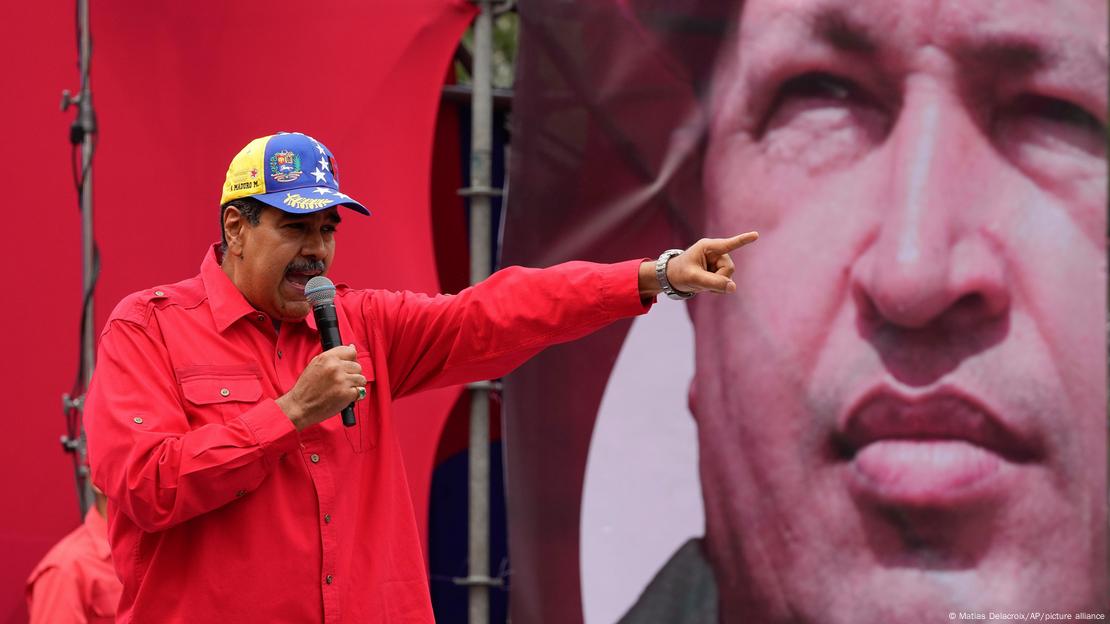
Overshadowed by his predecessor: Maduro never came close to Hugo Chavez's popularity ratings
Image: Matias Delacroix/AP/picture alliance

Shortly before his death, Chavez appointed Maduro as his successor. But while something of a personality cult had developed around the charismatic Chavez during his lifetime, Maduro initially came across as rather wooden and awkward.

He won the first elections after Chavez's death in April 2013 by a razor-thin margin, but opposition figures and international election observers accused him of manipulation and intimidation, violence, imprisonment and torture — a pattern that was to be repeated in the subsequent presidential elections in 2018 and 2024. In 2021, the International Criminal Court launched an investigation into these allegations.

As the 2024 election was widely contested, neither the EU nor the US considered him the legitimate president of the country. Nevertheless, Maduro remained in power for more than 12 years.


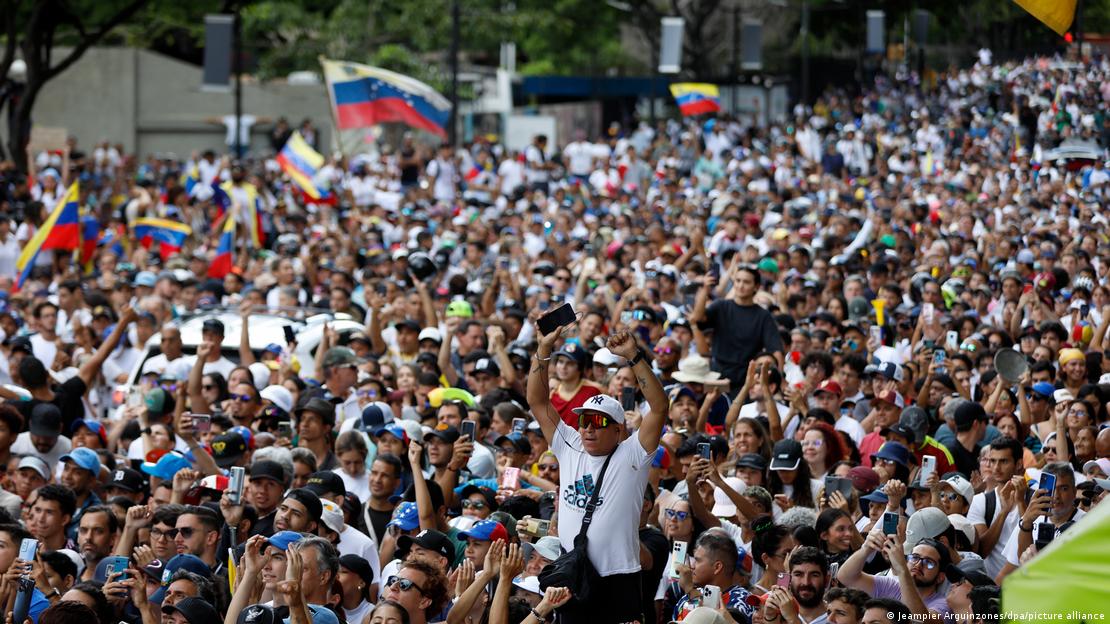
Opposition supporters took to the streets after the 2024 presidential election to protest against Maduro
Image: Jeampier Arguinzones/dpa/picture alliance

Venezuela's dramatic state collapse

During those 12 years, Maduro may have stopped driving buses, but he drove the entire country into the ground. Politically, he ruled in an increasingly authoritarian manner over time; he attempted to dissolve parliament on several occasions; opponents such as the current Nobel Peace Prize laureate Maria Corina Machado were persecuted, while others were arrested, tortured or disappeared. The United Nations repeatedly accused Maduro of crimes against humanity.

Economically, too, the country experienced an unprecedented decline.

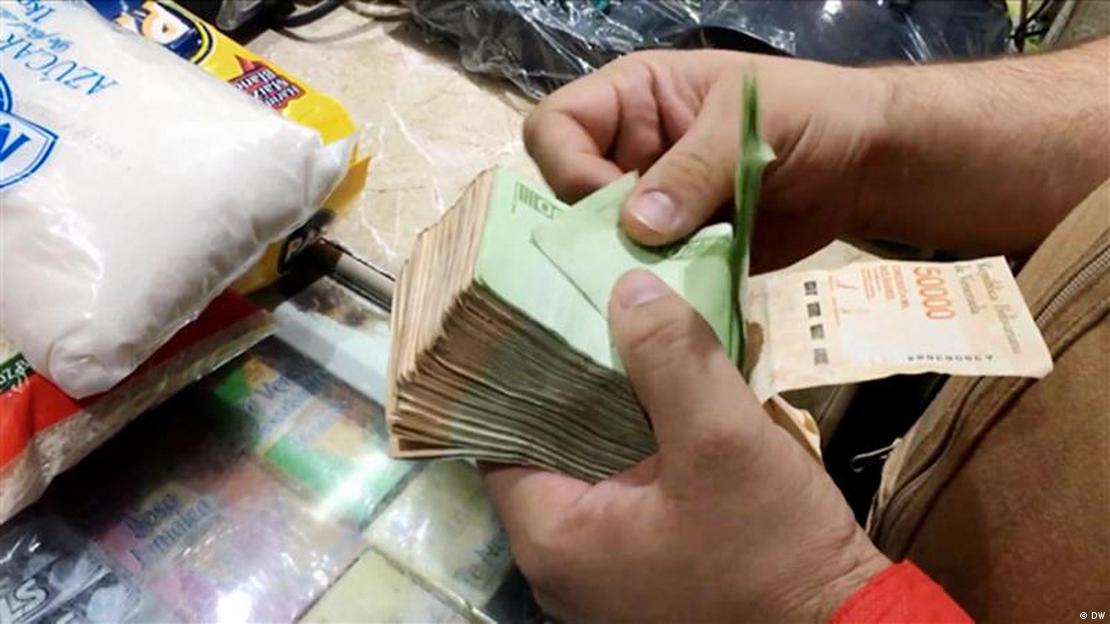
When Maduro took office, Venezuela's economy was already more than 90% dependent on oil exports. Falling oil prices led to dramatic revenue losses. The country's GDP collapsed and the government printed more money to manage the debt, causing hyperinflation. By 2018, the country's poverty rate had risen to over 90%. Almost one in four Venezuelans has fled abroad due to the massive economic crisis.

Under Maduro, Venezuela slid into hyperinflation
Image: DW

Critics of the previous government primarily blamed Maduro's political mismanagement and rampant corruption for the economic crisis. His supporters, on the other hand, see the causes not only in falling oil prices but above all in the fact that the US and other countries imposed sanctions on the country, effectively waging an "economic war" against Venezuela.

Maduro had been on the US radar for a long time


Relations between Venezuela and the US continued to deteriorate over the past few years. Chavez had already pursued a socialist, openly anti-American course and sought closer ties with countries such as Russia, China, Cuba and Iran.

Chavez's speech to the UN General Assembly in 2006 became famous when he called then-US President George W. Bush the "devil" and said that the "smell of sulfur" still lingered in the room after Bush had spoken. Shortly beforehand, the US had imposed an arms embargo on Venezuela, which remains in place to this day.

Maduro continued the confrontational course with the US, and high-ranking Venezuelan politicians and business leaders had already been hit with sanctions under President Barack Obama.

At the time, Maduro accused Obama of wanting to "eliminate my government and intervene in Venezuela to take control."

Since Maduro took office in 2014, oil production in Venezuela has declined sharply
Image: Yuri Cortez/AFP

During Donald Trump's first term in office from 2017 to 2021, the dispute escalated further. Trump imposed far-reaching oil and financial sanctions on Maduro's government, froze Venezuela's foreign assets and openly supported his opponent Juan Guaido in the 2018 elections. After a highly controversial election, Maduro managed to remain in power. Maduro also prevailed in the latest elections in August 2024 — in which he had banned several leading opposition politicians from running.

Was Maduro a drug lord?

During Trump's second term in office, the dispute with Maduro has intensified. In August 2025, Washington imposed a bounty of US$50 million on Maduro — the highest amount ever offered by the US for the capture of an individual. The reason given was that Maduro was the head of the so-called Cartel de los Soles, a group of Venezuelan security forces allegedly involved in cocaine trafficking.

For years, the US has brought sweeping charges against Maduro, his wife and others, accusing them of being part of a large drug and corruption network. However, US intelligence agencies do not believe there is clear evidence of direct state coordination. Furthermore, there have been no international court rulings or UN reports to date indicating that Maduro has actually been involved in drug trafficking. Even in the latest UN World Drug Report, Venezuela plays only a minor role as a production and transit country.

It's still unclear how long the trial against Maduro will last
Image: Adam Gray/REUTERS

Maduro himself pleaded "not guilty" at his first hearing in New York on Monday. He said he was "a decent man," "the legitimate president" of his country and a "prisoner of war of the United States."

He was then taken back to his prison in Brooklyn. It could be several months before the actual trial begins.

This article was originally written in German.

Thomas Latschan Author and editor with a focus on global politics

Was mainstream media manufacturing consent for the US attack against Venezuela?


Issued on: 09/01/2026 -
FRANCE24

12:49 min
From the show


On January 3, US special forces carried out a raid on Venezuela's capital Caracas, seizing President Nicolas Maduro and his wife. US President Donald Trump later said that the United States would "run" the country, leaving Venezuela in a state of uncertainty over its political and economic future. This week, FRANCE 24's media show Scoop looks at just some of the media coverage and asks Venezuelan writer Vicente Ulive what role it had in shaping events.


Venezuela Oil Sector: Context For Recent Developments – Analysis


January 10, 2026 
published by the Congressional Research Service (CRS).
By Brent D. Yacobucci

On January 3, 2026, the U.S. military executed a mission culminating in the arrest of President Nicolás Maduro (2013-2026). On January 6, President Trump announcedthat the United Sates would sell 30-50 million barrels of seized Venezuelan oil; on January 7, the Department of Energy announced that Energy Secretary Wright was working with “the Interim Venezuelan Authorities” to execute the sale and to modernize Venezuela’s energy sector. Secretary of State Rubio reportedly noted that an Administration focus is limiting the involvement of U.S. foreign adversaries. Venezuela’s vice president and oil minister, Delcy Rodriguez, has assumed the role of acting president.

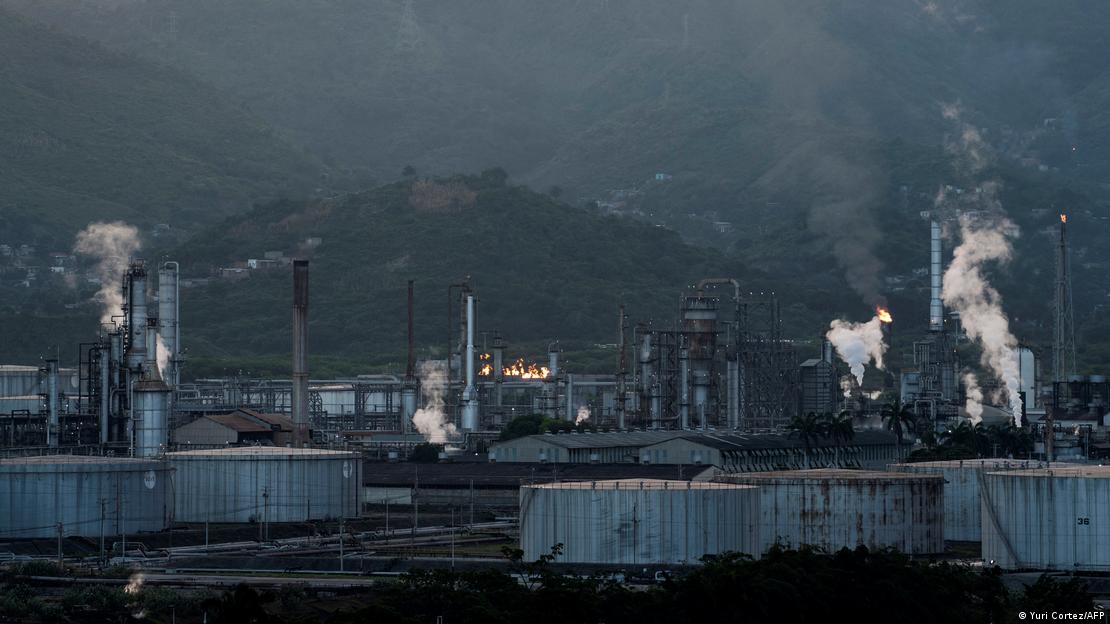
Venezuela’s oil sector declined over decades. When Maduro’s predecessor, Hugo Chávez, took office in 1999, Venezuela’s crude oil production was approximately 3 million barrels per day (mbd). When he died in 2013, production was 2.7 mbd. During Maduro’s presidency, crude production declined further, dropping below 0.5 mbd in 2020 before rising again; by August 2025, it was just above 1.0 mbd.


Crude Oil Reserves and Production

Venezuela is estimated to have some of the world’s largest proved crude oil reserves (defined by the Energy Information Administration [EIA] as oil that can be recovered “under existing economic and operating conditions”). Venezuela has as much as 300 billion barrels of proved reserves. Using data from the Venezuela state oil company, Petróleos de Venezuela S.A. (PDVSA), the U.S. Geological Survey estimated in 2009 a range of 380 to 652 billion barrels of technically recoverable (neglecting economic conditions) resources, mostly in the Orinoco Belt (Figure 1).


Figure 1. USGS Orinoco Belt Assessment Unit. Source: U.S. Geological Survey, An Estimate of Recoverable Heavy Oil Resources of the Orinoco Belt, Venezuela, Fact Sheet 2009-3028, October 2009.

Due to a range of factors, including corruption, mismanagement, and U.S. sanctions, Venezuelan crude production declined to less than 1 mbd in March 2019. Production has increased from a low in September 2020, passing above 1 mbd in May 2025 and continuing to rise through August 2025 (the most recent month for which data are available). See Figure 2.


Figure 2. Venezuelan Crude Oil Production. Source: U.S. Energy Information Administration, International Energy Data Browser, https://www.eia.gov/international/data/world/petroleum-and-other-liquids/monthly-petroleum-and-other-liquids-production.

Whether this upward trend will continue is unclear. The Trump Administration and other stakeholders are interested in U.S. companies revitalizing oil production in Venezuela. However, many analysts have questioned how quickly production could be expanded, given uncertainty about the political and economic climate and the condition of Venezuelan infrastructure. Initially, the focus for the sector may be on selling oil that has already been produced and is in storage.

Chevron is the only major U.S. oil company operating in Venezuela; ExxonMobil and ConocoPhillips withdrew from the country after refusing to accept new contract terms with the Chávez government in 2007. Venezuela had demanded that the companies give PDVSA a controlling stake in their projects. Subsequently, Venezuela seized the companies’ assets, and the companies have sought compensation. How new arrangements would address prior claims, as well as ownership structures and compensation going forward, are some of the questions that may need to be addressed.

Petroleum Refining

As with oil production, refining in Venezuela decreased significantly in the late 2010s, rebounding somewhat after 2020 (Figure 3). Much of this decline, which has been attributed to mismanagement and poor maintenance, has limited PDVSA’s ability to supply fuel for domestic demand, leading at times to gasoline shortages.


Figure 3. Venezuelan Crude Oil Refining Throughput and Unused Capacity. Source: Energy Institute, 2025 Statistical Review of World Energy, pp. 31-32, https://www.energyinst.org/statistical-review.


Notes: Unused capacity is the difference between refinery throughput and nameplate refining capacity. It is unclear whether Venezuelan refineries would be able to operate at or near nameplate capacity without significant investments and maintenance.

Venezuelan crude oil is generally heavier, requiring more complex and expensive refining. However, U.S. refiners, particularly those operating along the Gulf Coast, have extensive experience in refining heavier crude oils—many made investments in the 1980s to refine heavy crude from Venezuela and Mexico. As Venezuelan exports declined, U.S. refineries shifted to heavy crude from Canada. Gulf Coast refiners’ technical experience, technology, and access to key supplies (including diluents and other chemicals) may be useful in redeveloping Venezuelan refining.

Considerations for Expanding the Oil Sector

U.S. companies may be interested in playing a larger role in the Venezuelan oil sector, if questions about the country’s governance, finance, safety, and security are resolved.

 Assuming that is the case, other considerations may need to be addressed, including, but not limited to:In early 2026, spot prices for international benchmark (Brent) crude oil were at or near a four-year low. Current and expected future crude oil prices will directly affect investment decisions.

Recent world crude production has outpaced demand. EIA estimates that supply exceeded demand by roughly 1 mbd in 2025, a gap projected to grow to 2 mbd in 2026. Oversupply tends to depress prices.

Contract terms for future projects, and treatment of existing projects and prior claims, will likely influence companies’ decisions. Duration and security of contracts will likely also be factors.

U.S. policy questions include whether current sanctions on oil companies and others investing in the country (e.g., banks, insurers) are eased or eliminated; whether U.S.

 investments are incentivized (e.g., through tax incentives or loans); whether the United States supports demand for Venezuelan crude or refined products (e.g., through market demand, purchase guarantees, or other incentives); and the structure of a U.S.-Venezuela deal and the treatment of proceeds.

Congressional action could take many forms, including oversight of actions taken by the Administration on its own authority, authorizations of new or expanded programs to address selected concerns, and appropriations to support or limit U.S. actions in Venezuela.

About the author: Brent D. Yacobucci, Section Research Manager

Source: This article was published by the Congressional Research Service (CRS).


CRS

The Congressional Research Service (CRS) works exclusively for the United States Congress, providing policy and legal analysis to committees and Members of both the House and Senate, regardless of party affiliation. As a legislative branch agency within the Library of Congress, CRS has been a valued and respected resource on Capitol Hill for nearly a century.
How Maduro's Indian guru became a household name in Venezuela


(RNS) — The very first, unofficial Sai Center, named for guru Sri Sathya Sai Baba, opened in Caracas in the 1970s. Now, there are almost 30 centers or groups connected to the guru across the country.


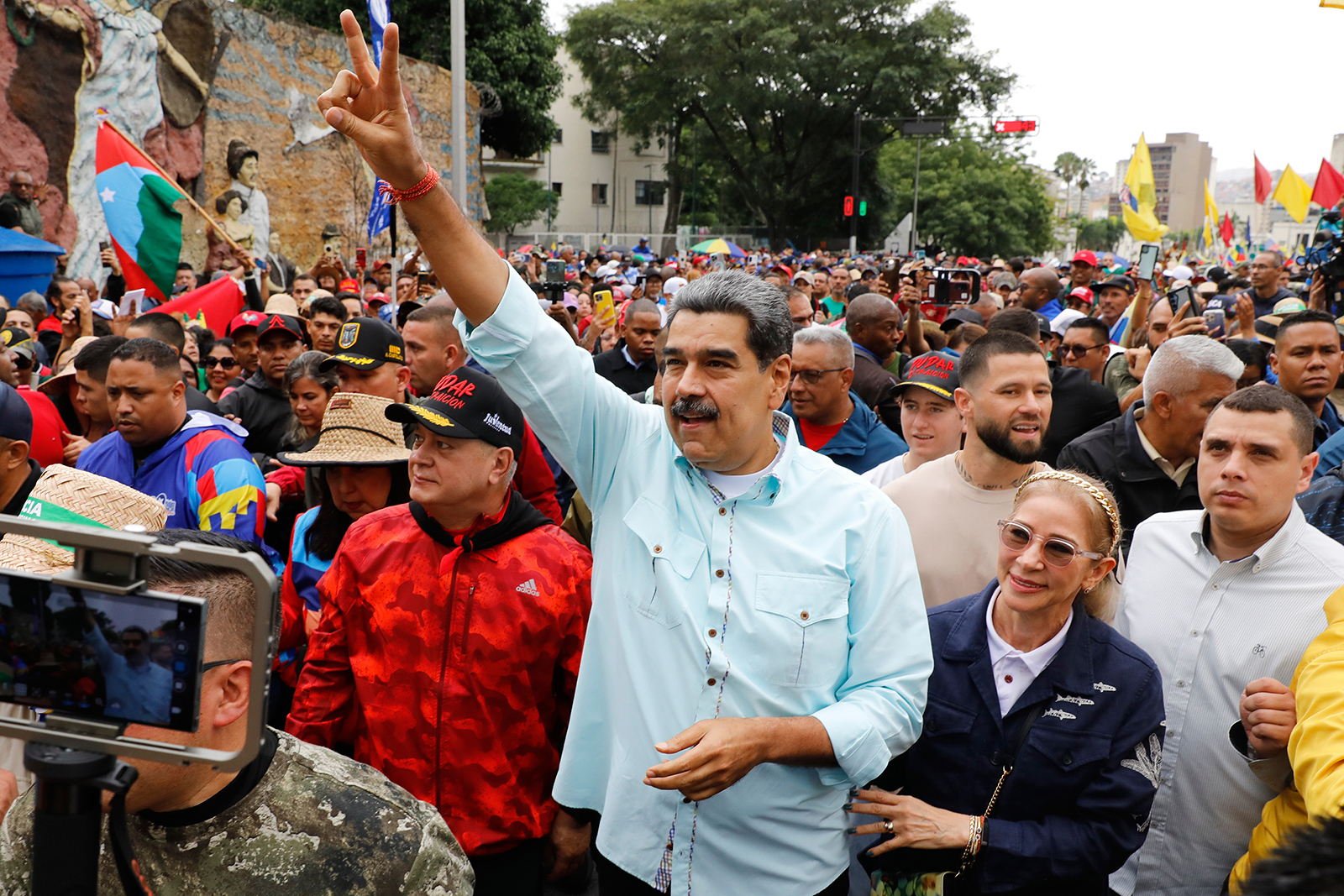
President Nicolas Maduro and his wife, Cilia Flores, join a rally marking the anniversary of the Battle of Santa Ines, which took place during Venezuela’s 19th-century Federal War, in Caracas, Venezuela, Dec. 10, 2025. (AP Photo/Cristian Hernandez, File)
Richa Karmarkar
January 6, 2026
RNS

(RNS) — In his first appearance in a New York courtroom on Monday (Jan. 5), ousted Venezuelan President Nicolás Maduro reportedly uttered the words “In the name of God, you will see that I will be free” and “I am a man of God.

As Maduro — who was arrested by the U.S. on federal drug trafficking charges on Saturday and has pleaded not guilty — hails from a Catholic-majority nation and was born Catholic, one might assume his faith fits neatly into that box. But a number of prominent Venezuelan politicians — including Maduro; his wife, Cilia Flores, who is former president of the country’s National Assembly; and acting President Delcy Rodriguez — are devotees of the late Indian guru Sri Sathya Sai Baba. Known as a “man of miracles” with tens of millions of followers worldwide, he was believed by devotees to have abilities ranging from healing the sick to materializing objects seemingly out of nowhere.

Visitors to Maduro’s private office in Miraflores Palace in Caracas would have seen a large framed portrait of Sai Baba alongside those of former leaders Hugo Chávez and Simón Bolívar. A 2005 photograph shows Maduro and Flores — who was the first of the duo to follow Sai Baba — kneeling on the floor in a visit with the guru at his Prasanthi Nilayam Ashram in the the southern state of Andhra Pradesh, India. And several photos and videos show Rodriguez at the ashram in 2023 and 2024, bowing in respect to the spiritual leader.

When Sai Baba died in 2011 at age 84, Maduro had the Venezuelan government issue an official condolence resolution and declare a national day of mourning. And most recently, on Sai Baba’s birthday in November 2025, just weeks before the collapse of Maduro’s regime, he issued a public statement — one of his last with a nonpolitical message.


Sri Sathya Sai Baba in an undated photo at Brindavan Ashram near Bangalore, India. (Photo courtesy of Sri Sathya Sai Media Centre/Wikimedia/Creative Commons)

“I always remember him when we met. … May the wisdom of this great teacher continue to enlighten us,” Maduro said, describing the guru as a “being of light.”

Sathya Sai Baba, born Sathyanarayana Raju in 1926, was reportedly 14 years old when he announced to his parents that he was the reincarnation of the revered 19th-century Hindu and Muslim saint Shirdi Sai Baba.

Often recognized by his curly hair, Sathya Sai Baba preached “love all, serve all,” “help ever, hurt never” and similar messages that pointed to service, or seva, as central to spiritual growth. Importantly, his message extends beyond religious affiliation. He is followed by people of all backgrounds who use bhajans, chants and psalms in their weekly worship. The widely used logo for Sai Baba and his organizations contains the symbols of five major religions.

But the “God-man” has also been accused of sexual misconduct by several young male devotees, as reported in a 2006 BBC documentary. In 1993, six young male devotees were allegedly killed by police in the bedroom of Sai Baba, in a highly speculative case where the police claimed they shot in self-defense.

But today, the Sri Sathya Sai International Organization operates several foundations, trusts and charities in more than 120 countries, providing humanitarian relief through free hospitals, schools, ashrams, universities and clean drinking-water projects. There are almost 2,000 Sathya Sai Centers worldwide.

And in the Americas, the organization has found a special appeal, having an official presence in 22 Latin American countries. Many point to Venezuela as having the highest concentration of followers. Almost 30 small groups or official centers are located in Venezuela, with devotees everywhere from the Andes Mountains to within Amazonian tribes at the southernmost tip. Official organizational talks and meetings are regularly conducted in Spanish, and a devotional song titled “Mi Destino” was introduced by a Sri Sathya youth group in Venezuela in 2016.

The first Sai Center opened in Caracas in the mid 70s. In 1988, Ana Elena Diaz-Viana was elected president of the country’s first Sai organizational committee.

Diaz-Viana said many devotees, including herself, have encountered spiritual miracles that drew them to the man. She told RNS she saw a man in white robes and a “big afro” in a dream when she was 25 and then recognized him in a documentary called “The Lost Years of Jesus” five years later. She later had a dream of Sai Baba comforting her in a hospital room where her child was sick with pneumonia.

For Venezuelans at a time of economic downturn, she said, Sai Baba’s miracles provided hope. Her son, for example, seemingly got better overnight. “I have goosebumps when I remember that because I felt so humble, and I still feel, after so many years, that this person who I didn’t know he was took care of me and my family,” she said.

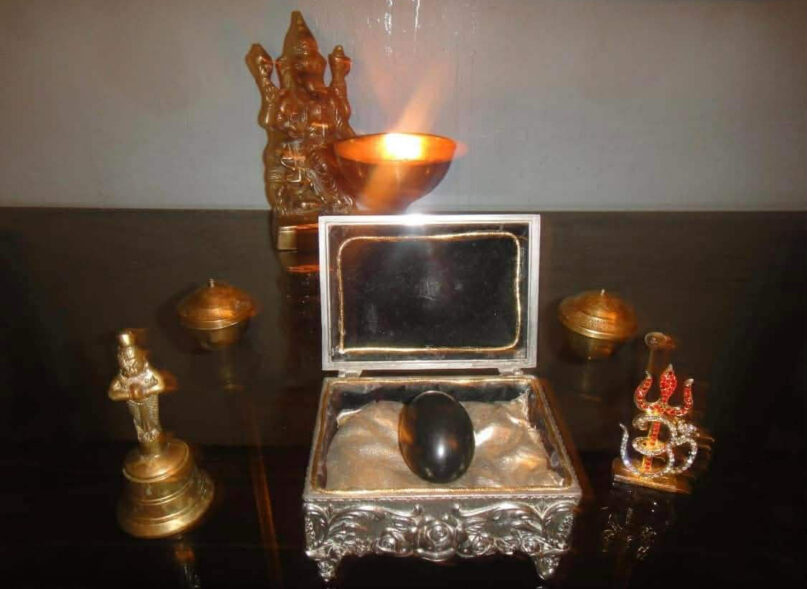
In 1988, Diaz-Viana joined a group of 64 Venezuelans to meet the leader at the ashram. She had written a letter asking him to help the poor of the country, she said, and watched in awe as a red light gleamed under his hand as he materialized a lingam, or a symbol of divine energy, in the palm of his hand. He walked to Diaz-Viana and gave her the lingam, telling her to wash it and “give the water to the poor people of Venezuela who do not have money to buy medicines and for those who are going to die.”

For years, Diaz-Viana and others saw a “revolution” as they passed the lingam throughout the country’s Sai Centers, allowing anyone who wished to take a drink from the blessed water, she said. At that point, she said, most people knew of Sai Baba. “No one felt like they they were traitors to their own religion or family faith,” she said.


The lingam given to Ana Elena Diaz-Viana by Indian guru Sri Sathya Sai Baba. (Photo courtesy of Ana Elena Diaz-Viana)

But things changed when Maduro was introduced to Sai Baba, she said. “Someone spoke to Maduro about Sai Baba, about this powerful guru who does miracles, who give gifts to people. And I think he thought it’s a great idea to meet this guru who is so powerful.”

A well-circulated story suggests that during the 2005 visit, Sai Baba materialized a green ring for Maduro after rejecting the leader’s ask for a red ring, saying it was the color of violence, Diaz-Viana said. After Maduro’s visit, many of his supporters got “addicted to” Sai Baba and took control of his legacy centers, she said. Her beloved lingam’s waters stopped flowing, she said, as the new crop of devotees “retained it for their own purposes.”

It is complicated, Diaz-Viana said, to be devoted to the same guru as “problematic” people who are accused of engaging in criminal activity. Yet it is a “spiritual vision” to see politicians as “children of God.” Divine justice, she said, will find them.

“Swami said once that in his life, demons will come to him, same as they did with Krishna,” she said. “Yes, they are criminals. Yes, they are devotees, and yes, they are children of Swami. They have done so much damage to so many people. Our own truth and our own dharma, that’s the only thing that we can hold now.”

Still, she asked, “Can you say to a family that has suffered, to a family that has been starving, that these people who ruined their lives are children of God?”

Ravi Lakshminarayan, a lifelong devotee who has lived at the ashram in India since retirement, said he believes that Sai Baba’s blessings only work on those who truly make good.

“Baba blesses everyone profusely,” he said, “but if the person so blessed steps on to wrong path in life, all the blessings from Baba which protects from adversaries starts getting eroded and over time becomes zero. The person becomes vulnerable to circumstances of his or her own making. I have personally seen many stalwarts and celebrities who have fallen from grace.”

ANIMISTIC POLITICAL PROTESTANTS

'God is using Trump': Latino evangelicals celebrate Maduro’s capture as divine victory

(RNS) — Latino evangelicals maintain that their shared faith was key to Maduro’s capture and that the church will play a critical role in charting the country’s future.


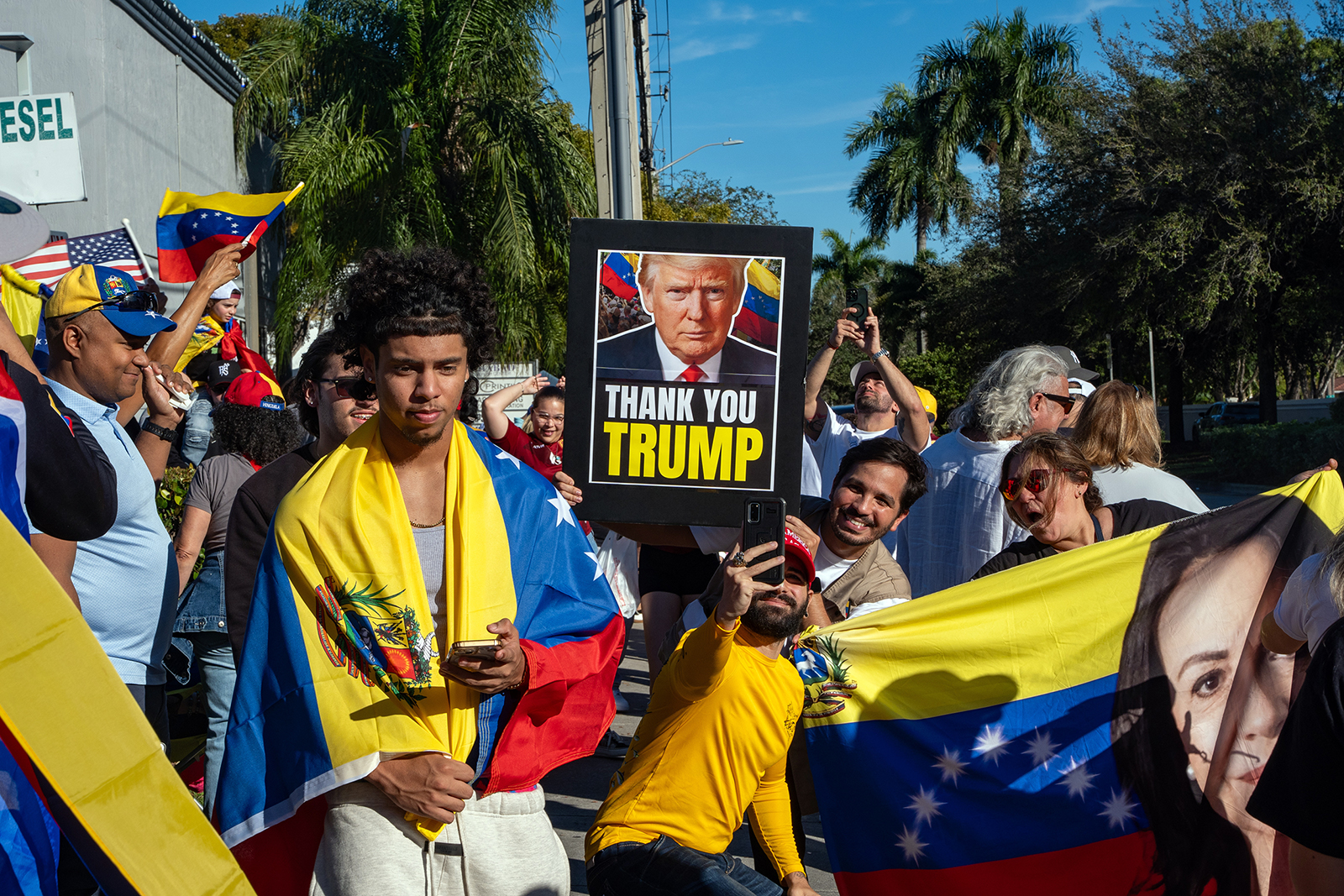
People celebrate in Doral, Fla., after President Donald Trump announced Venezuelan President Nicolás Maduro had been captured and flown out of Venezuela, Jan. 3, 2026. (AP Photo/Jen Golbeck)


Aleja Hertzler-McCain
January 7, 2026
RNS


(RNS) — Since the U.S. government’s Jan. 3 capture of Venezuelan President Nicolás Maduro and his wife, Cilia Flores, many Latino evangelical Christian communities in the United States have been celebrating what they call a spiritual victory as well as a political one.

“God is using Donald Trump to liberate Venezuela from the 27-year-old chains of oppression,” said the Rev. José Durán, a Venezuelan immigrant in Michigan, voicing a view held by some, though not all, Latino evangelicals and referring to the time that Maduro and his predecessor, Hugo Chávez, have led the country.

Durán, who was interviewed in Spanish, serves as pastor of a senior team of advisers of María Corina Machado, the Venezuela opposition leader who was awarded the 2025 Nobel Peace Prize. He’s also the executive director of Movimiento de Ciudad, an organization that supports urban ministry throughout Latin America.

Though Machado is a Catholic, her inner circle in the Vente Venezuela Party includes several evangelicals, who have taken up her charge that opposing Maduro is a “battle between good and evil.”

“We’re in agreement that we want the liberty of Venezuela from satanic communism, socialism,” Durán said.

But with Maduro’s successors increasing repression in the country and President Donald Trump insisting that the U.S. will “run” Venezuela without calling immediate elections, the future of the country is uncertain.

The Rev. Samuel Rodriguez, an evangelical adviser to President Trump and the president of the National Hispanic Christian Leadership Conference, told RNS that U.S. Latinos’ support in the 2024 elections played a key role in the administration’s decision to remove Maduro from office and that Latino evangelicals will have a voice in the country’s future.

“ You combine the evangelical vote plus the Latino vote, and you get Nicólas Maduro in New York City in prison,” Rodriguez said. ”That’s the result because we demanded that.”


The Rev. Samuel Rodriguez. (Photo courtesy of NHCLC)

Rodriguez said the NHCLC would be sending the Rev. Iván Delgado Glenn, the Colombian leader of the NHCLC’s new Latin America expansion, to Venezuela along with four other faith leaders to observe the leadership transition after Maduro’s arrest and how it “will impact the church.” Rodriguez added that “appropriate governmental authorities stateside on our side” will ensure their safety.

He applauded Secretary of State Marco Rubio’s statement that the U.S. does not want to govern Venezuela and said the secretary wants to help the country transition to a “legitimate form” of democracy.

“The White House and the Trump administration have given the evangelical community more than an ear,” Rodriguez said, adding that he’d met with Trump just before Christmas. Rodriguez said that, while evangelicals are not weighing in on specific tactics, such as the boat strikes near Venezuela that preceded the operation that removed Maduro, the administration is “ taking action based on what they hear from an evangelical community that really would like to advance an agenda of righteousness and justice, truth and love.”

Even before Maduro’s capture, the U.S. government had been applying pressure to effect regime change in Venezuela, particularly through sanctions. The Washington Post reported that those sanctions contributed to an economic contraction in the country roughly three times as large as the one caused by the Great Depression in the United States.
RELATED: How Maduro’s Indian guru became a household name in Venezuela

Marcos Velazco, a director of Vente Venezuela’s grassroots organizing who fled the country in August 2024, attributed reports of political prisoners and their Maduro-government torturers accepting Jesus to the presence of God, as well as his own escape from the country and his movement’s ability to connect with allies abroad.

“If something has been a true miracle, it’s how God has drawn our cause near to influential and important people, not just in the United States, I should say, but in the whole world,” Velazco said in Spanish via video. Beyond praying with Machado’s team, Velazco said, Durán has been a key “architect” for making important connections.


The Rev. José Durán. (Video screen grab)

“We have seen how faith has generated sufficient trust to defend the Venezuelan cause,” Velazco said, mentioning relationships with Rubio and Republican members of Congress such as U.S. Reps. Bill Huizenga of Michigan and Mario Díaz-Balart, Carlos Gimenez and María Elvira Salazar of Florida.

But Velazco said these victories have not come without pain. As a result of his advocacy, he said, his father, who is not involved in the movement, was accused by the Maduro government of inciting hate, criminal association and terrorism. He is being held as a political prisoner in a location unknown to his family and could face a sentence of up to 30 years, the Machado adviser said. Velazco, 26, also said he became a key leader at such a young age because his boss was imprisoned and is now being held at El Helicoide jail, where there have been reports of systematic torture.

Chávez and Maduro together have been “a regime that, from its position of power, has spiritually delivered the country to the forces of evil,” said Velazco.

Durán and Velazco both point to public accusations that Maduro has engaged in witchcraft and Santería, which Velazco said gives the president the feeling he is “spiritually protected while they slam civil society and while they dilute the structure of the free and democratic state.”

Durán said his group continues to count on God to act. Machado allies are praying that interim President Delcy Rodríguez and other prominent figures of the regime will be removed, and while he said he did not understand Trump’s approach to Rodríguez, “God is the one that removes and places kings.”


Venezuelan opposition leader María Corina Machado addresses supporters during a protest against President Nicolas Maduro the day before his inauguration for a third term in Caracas, Venezuela, Jan. 9, 2025. (AP Photo/Matias Delacroix, File)

Machado has heaped praise on Trump publicly, even offering her Nobel Peace Prize to the president. Velazco said the Trump administration “has done a fantastic job” with Maduro’s “Cartel de los Soles,” a slang term for corrupt government officials taking drug money.

Machado prays with her evangelical advisers, Durán said. “We’ve prayed, and she’s Catholic, but she cries like a person very sensitive to the Holy Spirit.”

Durán said Christians must influence society, though he said they should not be partisan. “The church must be the church, and that’s the problem. The church has been locked away in thinking just about the spiritual, or that there’s a dichotomy between the secular and the spiritual. And that’s a plan from Satan,” he said.

Venezuelan evangelicals have heard God’s intentions for the country since the 1980s, said Durán. “We have heard prophetic words that God has a plan for Venezuela and that liberty for Venezuela is coming and a new Venezuela will be born.”

Durán, who had been ordained in the Foursquare Church, said he trained hundreds of Latinos for Billy Graham’s 2000 Nashville Crusade after he came to the U.S. Durán is now affiliated with the Reformed Church in America.

Rodriguez, the leader of the NHCLC, also said the church was “not done” in Latin America. He said the Venezuela policy is the beginning of a “domino effect” and called on the Trump administration to effect change in Nicaragua, Cuba and Brazil, explaining that he was calling for “geopolitical pressure,” not the same exact tactics because the other countries are “a different reality.”

He said a major policy goal of the NHCLC is to build “a multigenerational firewall against communism, socialism” in Latin America. “ I want Christianity to thrive, and I do believe that a political apparatus that is counterintuitive to religious liberty serves as an impediment to Christianity expanding, to people coming to Christ as Lord and Savior,” he said.


Maduro’s capture “is not the period — it’s the comma,” Rodriguez said.

NEW: Bring more puzzles and play to your week with RNS Games

The response from pastors within Venezuela has been more muted, reflecting a significant difference in views between those still living in the country and those who’ve joined the diaspora. Almost two-thirds (64%) of Venezuelans living abroad support U.S. military intervention in the country, compared with only a third (34%) of those in Venezuela, according to an October AtlasIntel poll.

But the same poll found that majorities of Venezuelans everywhere considered Maduro a dictator and said the country would be better off without him. About 4 in 10 (41%) Venezuelan residents and 55% of those in the diaspora said they trusted Machado to lead a transition to democracy.

The Evangelical Council of Venezuela wrote in a statement the day of Maduro’s capture that its members were praying for their fellow citizens “that go through moments of uncertainty or fear” and for “the peace of the country and for a true and enduring transformation that honors the justice, the truth and the dignity of every citizen.” The next day, the council announced a week of fasting and prayer for the nation.

On Sunday back in Orlando, the Rev. Gabriel Salguero, president of the National Latino Evangelical Coalition, the Venezuelan evangelical council’s U.S. counterpart, told his congregation at The Gathering that in Venezuela, “the last chapter has still not been written,” referencing “powerful forces” still in place.

“We have to pray,” alongside thousands of other churches in his network, he told them, “for the freedom of the Venezuelan people and for democracy that respects the self-determination of the people.”