Sunday, January 11, 2026

TYPICAL FATAL BAR CRIME

Owner of Swiss bar in New Year's Eve fire admits service door was locked from the inside

rrr
Copyright AP Photo
By Euronews
Published on 

The charges against the bar owner, Jacques Moretti, could be complicated if the public prosecutor concludes that he is partly to blame for the door being locked. Moretti says he does not know why the fire exit door was locked.

New details about the devastating fire at the Le Constellation bar in the Swiss ski resort of Crans-Montana, which claimed 40 lives on New Year's Eve, have been revealed; a service door in the basement was locked from the inside.

The bar owner, Jacques Moretti, admitted this to investigators, as reported by Swiss broadcaster RTS.

Moretti says he found several lifeless bodies when he opened the door from the outside. The public prosecutor's office is now investigating the new revelations.

Moretti could be looking at more severe charges

This details is of crucial importance to the investigation. Several guests of the bar tried to escape through this door when the fire broke out, but were trapped behind the door, and eventually lost their lives.

Moretti says he did not know why the door was locked. If the public prosecutor concludes that Jacques and Jessica Moretti were partly to blame for the door being locked, this could increase the charges levelled against them

Possible murder with contingent intent

The defendants are currently being charged with involuntary manslaughter, negligent arson and negligent bodily harm.

If the prosecutors concludes that the owners knew that the door was locked and finds that they accepted this risk, the judges could find that the murder was committed with contingent intent.

In this case, Jacques and Jessica Moretti could face up to twenty years behind bars.

Another crucial detail to the investigation surrounds the acoustic dampening foam used in the ceiling of the bar.

Jacques Moretti stated that he had removed the old acoustic foam and replaced it with a new one which he had acquired from the Hornbach DIY store. Swiss media say the bar staff were aware of the risks associated with this foam.

On New Year's Eve 2019, a waiter is said to have warned guests of the risk of setting fire to the soundproofing on the ceiling. Prosecutors are investigating the validity of this claim. If found to be true, this could also further increase charges against the Morettis.

 HYDRO POWER VS DROUGHT

Uzbek officials adapting quickly to growing water deficit

Uzbek officials adapting quickly to growing water deficit
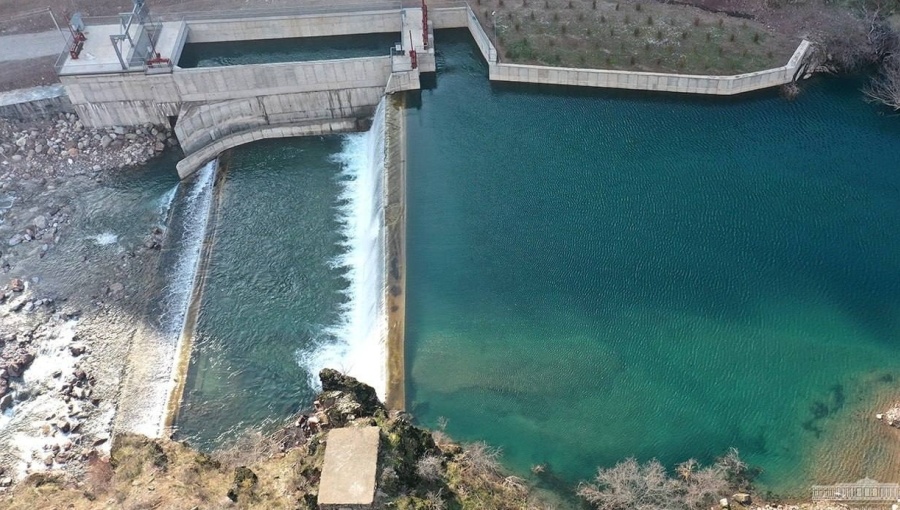
Ugam-1 Hydroelectric Station in Uzbekistan’s Tashkent Region. / president.uz
By Eurasianet January 10, 2026

An acute water shortage in Uzbekistan seems to have a silver lining. The brewing crisis is forcing officials to speedily embrace solar and wind power and rethink the country’s hydropower strategy to make it more water-efficient.  

Uzhydroenergo, a state-run electricity entity, reported on January 5 that hydropower production plummeted by 20% in 2025 to 6.5bn kilowatt hours (kWh). By comparison, Uzbekistan generated 8.1 kWh from hydropower in 2024.   

Officials attributed the drop in production to a burgeoning water deficit. Energy Minister Zhurabek Mirzamakhmudov stated that inflow from transboundary rivers, combined with the volumes contained in reservoirs during 2025, was roughly 35% lower than the long-term average value, according to a report distributed by UPL news agency. Low water levels on rivers limited the ability of large hydro plants to generate electricity, Mirzamakhmudov added. 

According to an Uzhydroenergo statement, the company made the best of a difficult situation by achieving significant efficiencies in operations.

“The company's internal statistics point to a paradoxical situation: against a backdrop of an overall 33 percent decrease in resources during 2025, the introduction of new management approaches and modernisation efforts temporarily resulted in periods of increased efficiency,” Uzhydroenergo said.

The share of hydropower as part of overall electricity production in Uzbekistan has nosedived in recent years. It dropped from 10% in 2024 to 7.3% last year. Earlier, in the 2000s, hydropower accounted for as much as 19% of overall annual electricity generation.

While the country grapples with water woes, total electricity production generated by renewable resources rose by 29% in 2025 over the previous year, thanks to the rapid expansion of solar and wind power capacity, according to the Ministry of Energy. Solar and wind were responsible for generating about 10.5 kWh of electricity in 2025, equivalent to a more than two-fold increase compared to the previous year’s total. 

Electricity generation from all sources increased by 6% in 2025 over the previous year’s totals, according to Energy Ministry data.

To make more efficient use of dwindling water resources, Mirzamakhmudov indicated that the government is exploring a strategic shift away from reliance on large-scale hydropower plants. Instead, officials are mulling the deployment of micro hydroelectric generators across the more than 149,669 kilometres (93,000 miles) of canals and irrigation systems in the country. Such a strategy could expand electricity supplies in rural areas without reducing water supplies needed for agricultural production. Micro generators can cost as little as a couple of hundred dollars each.

This article first appeared on Eurasianet here.


Russia still a top four gas supplier to EU in 2025

Russia still a top four gas supplier to EU in 2025
Russia remains the fourth largest source of gas imports for the EU in 2025, despite the intention to ban imports completely at the start of 2027. / bne IntelliNews
By Ben Aris in Berlin January 11, 2026

Russia remained the fourth-largest supplier of natural gas to the EU in 2025, exporting nearly 38bn cubic metres despite ongoing efforts by the bloc to reduce energy reliance on Moscow following its full-scale invasion of Ukraine, according to data published by the Brussels-based think tank Bruegel.

The figures show that Russian companies exported approximately 37.99bn cubic metres of natural gas to EU countries last year. While this marks a steep decline from pre-war levels — when Russia supplied over 40% of the EU’s gas — it still placed the country just behind Norway (97.1bn cubic metres), the US (82.9bn cubic metres), and Algeria (38.6bn cubic metres) in total annual deliveries.

Overall, the EU imported 313.6bn cubic metres of gas in 2025, a 5.3% increase compared to 2024, driven largely by higher demand during an unusually cold winter across northern and central Europe. According to Bruegel, the increase in gas consumption — coupled with stable LNG imports — helped offset lower domestic production and modest declines in renewable output during the cold season.

On January 8, Russian state-owned energy group Gazprom reported record withdrawals from European underground gas storage facilities, as low temperatures swept across the continent. Data from Gas Infrastructure Europe (GIE) confirmed that January 5 and 6 saw the highest gas withdrawal levels ever recorded for that period. Similar records were observed over the holiday period on December 24, 25, 26, and 31.

"Europe is experiencing peak demand levels due to extreme cold," Gazprom said in a statement. By January 6, gas reserves in EU storage facilities had fallen below 60%, according to GIE figures.

Despite the withdrawals, as IntelliNews Lambda reported, Europe's underground gas storage facilities remain unusually full for this point in the heating season, with inventories at 85.1% on January 7, according to aggregated data from GIE. Increased drawdowns have been offset by robust gas imports and decreased industrial demand due to Europe’s deindustrialisation .

Despite sanctions, import bans, and a concerted diversification strategy led by Brussels, pipeline gas from Russia continues to reach Europe through transit routes via Turkey and Ukraine, and LNG from Russian ports such as Yamal.

An analysis published on January 8 by environmental NGO Urgewald, based on figures from commodities analytics firm Kpler, shows that 15mn tonnes of LNG from the Yamal terminal deep in Russia’s Arctic regions reached EU ports in 2025 – three quarters (75.4%) more than was exported the previous year and three quarters (76.1%) of Yamal’s total global exports. The trade was worth an estimated €7.2bn ($8.4bn) to the Kremlin.

The persistence of Russian supply reflects both contractual obligations and the continued price competitiveness of some Russian gas, particularly in southeastern European markets.

The European Commission intends to ban imports of Russian gas by January 1, 2027 under the REPowerEU strategy. However, analysts note that the sharp rise in demand during winter months continues to expose the bloc’s vulnerability to supply shocks.

“Europe has made significant progress in diversifying away from Russian gas, but the data shows the transition is not yet complete,” said Bruegel. “Physical supply constraints and market realities still leave room for Russian volumes.”


The five European sites to honour David Bowie on the 10th anniversary of his death

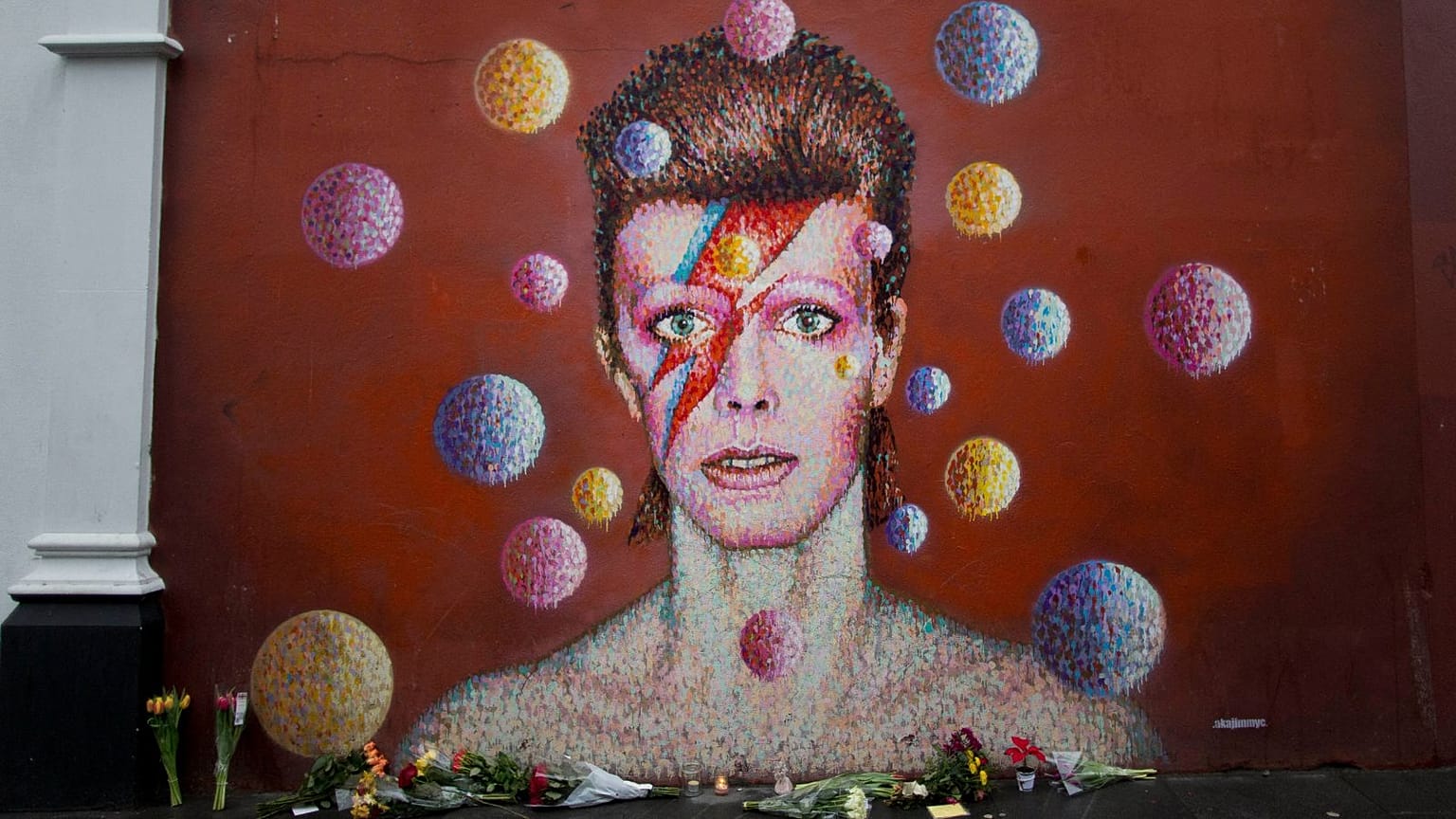
David Bowie mural - Brixton, UK
Copyright AP Photo


By David Mouriquand
Published o 

10 years ago, the world lost David Bowie. Here are Euronews Culture's picks of the five European pilgrimage sites to pay tribute to the much-missed artist.

Time - He’s waiting in the wings / He speaks of senseless things...” (‘Time’ - ‘Aladdin Sane', 1973.)

Time also passes. Fast.

Ten years ago, on 10 January 2016, two days after his birthday and the release of his final album, ‘Blackstar', the world lost David Bowie.

I was living in Berlin when the news broke, and I made my way to Hauptstraße 155 in Schöneberg - an inconspicuous building where Bowie lived during his time in the German capital.

There, candles were already lit, pictures propped up against the door, and flowers filled the pavement outside the flat he shared with Iggy Pop for two years. Fans beside me were crying and standing in silence, unable to fathom a world without the boundlessly creative artist.

I put down my candle and was greeted by a perfect stranger, who had her earbuds in. She took one out and gave it to me, as we both looked at the doorway, listening to ‘Starman’. This ended up leading to an impromptu rendition of the song, with some mourners joining in.

It's a memory I cherish – a moment of connection that showed to what extent Bowie touched so many lives.

It’s hard to wrap my head around the fact that vivid moment took place a decade ago.

Little did I - or anyone - know at the time that Bowie’s death would be a harbinger of doom, as it’s hard to dismiss the theory that the Starman may have been the glue holding the fabric of this universe together. Think about how the world went to shit following 10 January 2016: Donald Trump sworn in for his first term ten days after his death; the UK votes to leave the EU; Prince, Alan Rickman, Carrie Fisher, Leonard Cohen, George Michael all follow suit by the end of 2016... It was a dark year.

But I digress. If, like me, you’re seeking a place to head to this Saturday to pay tribute to Bowie on the 10th anniversary of his death, here are five European pilgrimage sites you’d do well to visit.

London, UK

Mural of Bowie on Brixton Road AP Photo

The best place to go to honour Bowie? Where it all began: 40 Stansfield Road, SW9, in Brixton. It was there that David Robert Jones was born on 8 January 1947. He lived in this house until he was six, before moving into suburban Bromley. His first school, Stockwell Primary School, is just around the corner.

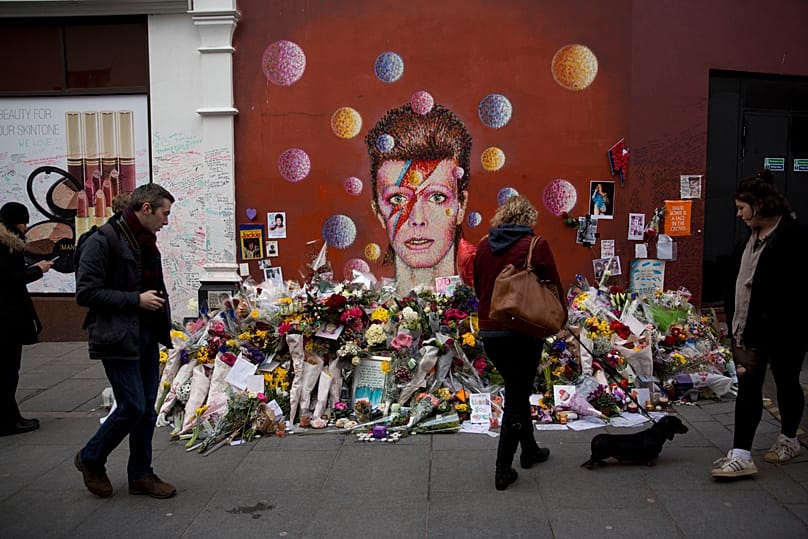
You can also head to the mural of Bowie on Brixton Road, opposite Brixton tube station. Created by Australian artist Jimmy C (Cochran) in 2013, the colourful and vibrant painting became a shrine to the musician when he died. Thousands flocked there, leaving flowers and tributes, and Lambeth Council said that the mural was to be listed to ensure its long-term protection.

Elsewhere, there’s Heddon Street, also known as the Ziggy Stardust Street. Featured on the album cover of ‘The Rise And Fall Of Ziggy Stardust And The Spiders From Mars’, you’ll find a plaque on the wall of 23 Haddon Steet.

And if you feel like raising a glass to Bowie, make your way to The Ship bar on Wardour Street in Soho, where he used to give interviews.

Berlin, Germany

The plaque outside Hauptstraße 155 David Mouriquand

Wishing to overcome his cocaine addiction and leave the US, Bowie moved to Berlin in 1976 and lived there until 1979. The divided city would become the backdrop for his reinvention, and you can’t understate to what extent the German capital was an artistic influence and a crucial part of his life. He wrote three albums there: 'Low', 'Heroes' and 'Lodger', known as the Berlin Trilogy.

There are several options for those wishing to retrace Bowie’s steps in Berlin: the legendary Hansa Studios where he recorded 'Heroes' (it's worth noting that 'Heroes' was the only instalment in the Berlin Trilogy actually recorded completely in the city, as 'Low' was recorded mostly in France, while 'Lodger' was recorded in Switzerland); legendary punk club SO36 on Oranienstrasse in Kreuzberg, a favourite haunt of his... But as mentioned in the intro, you’d do well to head to Hauptstrasse 155 in Schöneberg, Berlin’s famous gay neighbourhood, where he lived with Iggy Pop from 1976 to 1978.

There’s a commemorative plaque on the unassuming façade since August 2016, and just next door is Café Neues Ufer (Haupstrasse 157, then known as Anderes Ufer), one of the city’s oldest gay bars which he and Iggy frequented. Several Bowie pictures still hang on the wall.

Lausanne, Switzerland

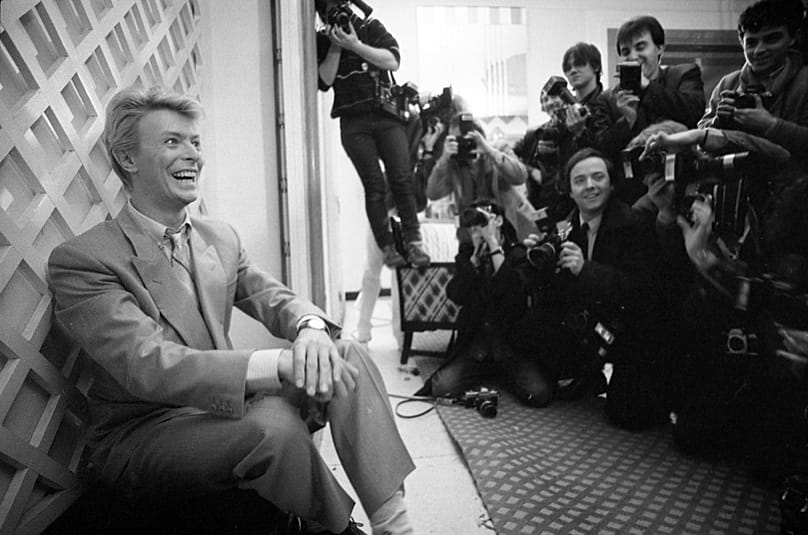
David Bowie - 1983 AP Photo


In 1980, Bowie and his wife Angie divorced but he kept their house in Blonay, near Montreux. It was his main residence until 1982, living there with his son Zowie (now Duncan), who attended the International School of Lausanne.

The Swiss connection doesn’t end there, as he moved to the grand Château de Signal, on the edge of a forest in Sauvabelin, in the hills of Lausanne, in 1982. He also married his second wife Iman at the city hall in Lausanne in 1992. She wasn’t a huge fan of the quite life in Lausanne, however, and they both ended up heading back to the US in 1998.

Paris, France

Rue David Bowie AP Photo


Two years ago, Rue David Bowie was inaugurated in the 13th arrondissement of Paris. Located a stone’s throw away from Gare d’Austerlitz, the street has the distinction of being the first to be named after the musician.

"David Bowie loved France and especially Paris. He said so often," said Jérôme Coumet, mayor of the 13th arrondissement, as the street sign was unveiled in 2024.

Indeed, while Paris played less of a prominent role in Bowie's life compared to Berlin, French avant-garde theatrical culture was a huge influence on the artist's visual style.

Ørmen, Norway


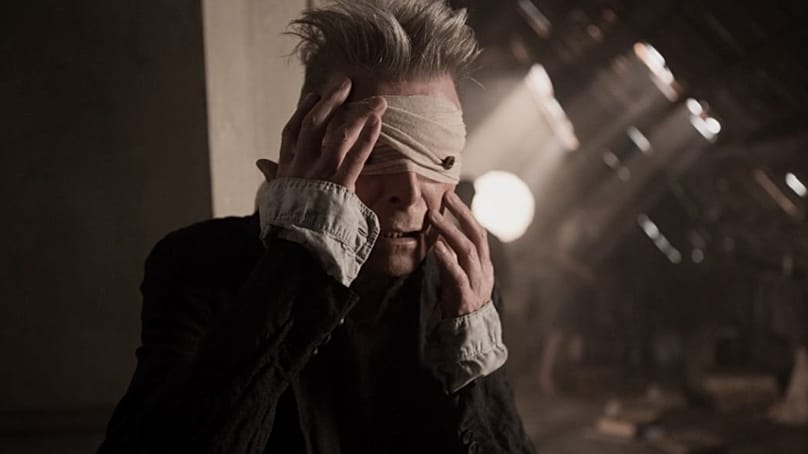
David Bowie in 'Blackstar' Screenshot YouTube

In the villa of Ørmen, stands a solitary candle...

Thus begins the song ‘Blackstar’ on Bowie’s final album of the same name, a song which became imbued with the prophetic weight of the artist looking back over a lifetime and saying goodbye.

The song was accompanied by a creepy music video, an apocalyptic triumph open to a multitude of interpretations: a goodbye to Major Tom with the dead astronaut; an enigmatic farewell from Bowie dressed as his final character, the tormented and blind “Button Eyes”; a mystical incantation around the “black star”, which represents the contemplation of one’s mortality... But it's the cryptic opening lyric that had fans around the world wondering where this villa was and what it represents.

It turns out that Ørmen is the name of a village in the municipality of Fredrikstad in Norway - and that the word means “serpent” in Norwegian.

Some choose to believe that “the villa of Ørmen” is not a physical location and that Bowie is using it as the representation of a negative space, the serpent representing encroaching darkness and that the “solitary candle” is simply the light fighting to flicker amidst the chaos. However, Norwegian fans could do worse than to head to Ørmen and find out whether there is an incantatory location where time and space collapse, leading to a higher plane of existence. If so, please let us know and don’t forget to chant the lyrics to ‘Blackstar’ should the obscure heavenly body reveal itself.

Something happened on the day he died / Spirit rose a metre and stepped aside / Somebody else took his place and bravely cried / I’m a blackstar, I’m a blackstar.


Development history of the universe is being rewritten based on a bachelor’s project from NBI


University of Copenhagen
Simulation - formation of galaxies 

video: 

The video is a simulation showing the formation of galaxies within the large overdensities of the “cosmic web,” which consists of cold, neutral hydrogen gas. The hydrogen gas serves as the material for the formation of these systems. Gyr = billion years.

view more 

Credit: (Video: Heintz et. al 2026)


A small group of young researchers at the Cosmic Dawn Center, Niels Bohr Institute, University of Copenhagen, have, through observations of the early stages of an extremely large galaxy cluster’s evolution, shown that the largest structures we know have a different history than previously thought.

The researchers began by observing a very high density of cold, neutral hydrogen gas—much greater than expected—which is still actively forming stars and galaxies within the cluster.

“This is not something we’ve seen before in these systems, nor this far back in the universe’s history. The structure of the galaxy cluster we observed is unusual—it’s massive; there is an enormous amount of material in it, and we expect that it would evolve into one of the largest galaxy clusters we’ve ever seen if we continued its development to the present day,” explains Kasper Heintz, Assistant Professor at the Cosmic Dawn Center, Niels Bohr Institute and first author of the study.

Kasper continues: “In itself it was a bit mysterious that the galaxy cluster  was so large, but that might make sense given that we found this huge amount of cold, neutral gas falling into the structure and ‘feeding’ the formation of galaxies.”

The Amount of Cold Neutral Gas Didn’t Match Previous Assumptions

One thing that puzzled the researchers was that the observations of this large amount of neutral hydrogen gas didn’t really fit with the existing models for the universe’s evolution.

It was previously assumed that about one billion years after the Big Bang, galaxy clusters would shine so brightly that the gas would have been ionized by the light or radiation—meaning the gas had transformed from its original primordial state and was no longer neutral.

But the amount of cold, neutral hydrogen gas contradicted this assumption. What researchers believed was the driving effect of the last phase transition in the universe’s evolution—namely the ionization of primordial matter in the process called “large-scale ionization of the universe”—was challenged by the large amounts of non-ionized gas.

Previous assumptions held that ionization was driven by “pockets” of luminous galaxy clusters. But there is a much larger proportion of cold, neutral hydrogen gas remaining than models predicted at this point in the universe’s history.

Many More Similar Galaxy Structures Have Been Found

Researchers will now investigate this question by observing other galaxy clusters. Master’s student Chamilla Terp is using her thesis project to observe several different types of galaxy clusters with the James Webb Space Telescope (JWST).

Chamilla discovered the first overdensity of cold, neutral gas through the studies she conducted in her bachelor project, so the natural progression is for her to continue these investigations.

Not only that—she also succeeded in developing a method that made it possible to separate observations of the gas belonging to the galaxies under study from the gas lying “in front” of them—in the enormous space along the line of sight from the James Webb telescope. This allowed for much more precise observation of the evolution of individual galaxy clusters—a crucial methodological breakthrough.

And already, more of these types of structures have appeared than researchers expected, even when looking “deep” into the universe, as JWST does—in a small field of view. Looking deep and far into the universe also means looking far back in time, so we can observe early developmental stages—such as galaxy clusters.

This raises yet another question: Why do we see the early birth of numerous very large structures in the universe, but today we don’t actually see those structures? So where did they go? Why did they disappear along the way in the universe’s developmental history?

Link to the scientific article: https://www.nature.com/articles/s41550-025-02745-x