Thursday, January 15, 2026


Mexico moves to contain US military pressure after Trump threats

Mexico moves to contain US military pressure after Trump threats
Internal deliberations within Sheinbaum’s cabinet reflect anxiety. While there is broad agreement on opposing US intervention, there is disagreement over how publicly confrontational Mexico should be.
By Alek Buttermann January 13, 2026

The latest phone call between Mexican President Claudia Sheinbaum and US President Donald Trump was not significant because of its duration or tone, but for what it revealed about the current balance of power in the bilateral relationship. The 15-minute exchange, confirmed by the Mexican government on January 12, functioned as an exercise in crisis containment rather than diplomacy in the conventional sense. 

According to the Mexican presidency, Trump again raised the possibility of direct US military involvement in Mexico’s fight against organised crime, an option the country explicitly rejected on constitutional and sovereignty grounds.

The episode must be understood within a broader strategic context. Since returning to the White House last year, Trump has ramped up his rhetoric around narcotics, singling out Mexican cartels as a direct national security threat to the United States. That framing hardened after the US military operation in Venezuela earlier this month, which resulted in the capture of Nicolás Maduro. 

The Venezuela operation has shifted perceptions in Mexico City from viewing Trump’s threats as rhetorical pressure to treating them as credible policy options, according to senior Mexican officials cited by The New York Times.

Against that backdrop, the phone call was less about persuasion than boundary-setting. Sheinbaum’s central objective was to eliminate ambiguity regarding US “assistance” on Mexican soil. She reiterated that cooperation was acceptable, intervention was not, and that any security collaboration must respect Mexico’s constitutional prohibition on foreign military operations. 

This position, she said, was acknowledged during the call, with no further insistence from Trump, as she publicly stated during her morning briefing.

Rather than engaging Trump on principles alone, Sheinbaum anchored her argument in data-backed operational outcomes. She cited a reduction of up to 50% in fentanyl crossings into the United States and a 43% decline in fentanyl-related deaths north of the border, figures she attributed to joint security efforts. 

She also highlighted a 40% reduction in homicides in Mexico since she took office, the dismantling of dozens of clandestine drug laboratories, and tens of thousands of arrests, data reiterated by El País.

A tactical calculation underpins this emphasis. Trump has repeatedly argued that Mexico is “captured” by organised crime and Sheinbaum is afraid of facing cartels, a claim he does not need to substantiate legally, only politically. In response, Mexico’s strategy has been to undermine the usefulness of that narrative by demonstrating measurable enforcement outcomes, even if those outcomes do not fully align with Trump’s preferred rhetoric of militarised escalation.

According to El País, senior Mexican officials privately describe this approach as “delivering the homework”: securing the northern border with 10,000 troops, expanding intelligence-sharing, extraditing high-value targets, and sharply reducing irregular migration flows. The broader objective is not limited to domestic security, but aims to remove any pretext for unilateral US action.

Venezuela as a warning signal

The discussion of Venezuela during the call underscored the depth of Mexico's concern. According to the presidency, Trump inquired directly about Mexico’s position on the US intervention and Maduro’s ouster. Sheinbaum responded by restating Mexico’s long-standing doctrine of non-intervention, rooted in its constitution. She condemned the operation without escalating the exchange, and the issue was dropped, according to her own account.

However, the Venezuelan precedent has had a profound impact on Mexican threat perception. US prosecutors have accused Maduro of narcoterrorism and explicitly linked his government to Mexican cartels, mentioning Mexico dozens of times in the indictment, according to The New York Times. 

Mexican officials are acutely sensitive to any narrative that associates their state with Venezuela’s legal or political situation, fearing it could be used to justify extraordinary measures.

Internal deliberations within Sheinbaum’s cabinet reflect this anxiety. While there is broad agreement on opposing US intervention, there is disagreement over how publicly confrontational Mexico should be.

Some officials worry that repeated condemnations of US actions could harden Washington’s stance during upcoming trade and tariff negotiations, including the high-stakes review of the US-Mexico-Canada Agreement later this year.

Publicly, US officials have struck a conciliatory tone. US ambassador to Mexico Ronald Johnson described the current relationship as the “most cooperative and mutually beneficial of recent decades” following the call between the two presidents, as stated in a public message. 

That assessment aligns with the operational reality: intelligence cooperation has expanded, arms trafficking is now a formal item on the bilateral agenda, and high-level meetings are continuing, according to Mexican government briefings reported by multiple outlets.

Yet analysts warn against overinterpreting diplomatic language. Guadalupe Correa Cabrera of George Mason University told DW that structural asymmetry leaves Mexico with limited leverage and that unilateral US actions, including targeted strikes or covert operations, cannot be ruled out.

Ulises Flores Llanos of FLACSO offered a more cautious assessment, telling DW that Trump’s confrontational rhetoric is often followed by negotiation, but still requires careful management.

The upcoming binational security meeting in Washington on January 22-23 will be a critical indicator. Mexican officials, including the foreign minister and the security secretary, are expected to present updated enforcement data and seek firm commitments against unilateral action. According to El Economista, the outcome will clarify whether the United States is prepared to operate within existing coordination mechanisms or intends to escalate demands and, potentially, take unilateral action.

Mexico’s current posture is best described as defensive pragmatism. Sheinbaum has avoided public confrontation, prioritised direct communication, and reinforced enforcement to buy diplomatic space. 

This strategy has temporarily reduced pressure, as reflected in the decline of Mexico-related rhetoric in US media following the call, a trend tracked internally by the Mexican government. 

But the margin for error is minimal. Trump’s willingness to weaponise security, trade, and legal narratives simultaneously means that Mexico’s compliance must be continuous, visible, and politically legible to Washington. In this environment, results are not merely policy outcomes; they are instruments of deterrence.

The 15-minute phone call did not resolve the underlying tension. It postponed it. What follows, not what was said, will determine whether containment remains viable or whether the relationship enters a phase of open coercion.

COMMENT: Instability in Iran bigger threat to global oil markets than Venezuela

COMMENT: Instability in Iran bigger threat to global oil markets than Venezuela
Iran has a lot more oil, oil that it is actaully producing and selling, than Venezuela. If that oil goes off line that will be a much bigger problem for global markets and China in particular. / bne IntelliNews
By Ben Aris in Berlin January 14, 2026

The mass demonstrations rocking Iran presents a far more serious risk to global oil markets than the US decapitation of Venezuela, according to note by Kieran Tompkins, Senior Climate and Commodities Economist at Capital Economics.

Both the scale of Iran’s oil production and the number of potential flashpoints that could disrupt supply make it “a much thornier problem for the global oil market,” says Tompkins.

“Iran accounted for 4.7mn bpd, or 4.4%, of global oil supply last year,” he noted. “That’s despite a backdrop of international sanctions that have caused oil output to fluctuate since the 2010s.” By contrast, Venezuela’s contribution is far smaller, about 800,000 barrels a day in 2025, and market reactions to Operation Maduro on January 3 reflected this. Brent crude prices have risen by approximately 6% since January 8, a movement Tompkins attributes to increased investor perception of geopolitical risk stemming from Iran not Venezuela.

Tompkins warned that some plausible escalation scenarios could “severely” reduce the current global oil surplus, which Capital Economics forecasts at around 3mn bpd in 2024. “Some of these flashpoints could halve that surplus,” he said.

While Iran is also a major natural gas producer — the world’s third largest in 2023, according to the US Energy Information Administration — its impact on the global gas market is limited.

“The country consumes almost all of its gas domestically,” Tompkins noted, with only 1% of global exports in 2023 coming from Iran, mostly via pipeline to Turkey and Iraq. That share has likely declined further due to the continued expansion of global LNG trade.

Looking to the past, Tompkins pointed to historic episodes in which Iranian political instability sharply impacted output. “Oil production peaked at 6mn bpd before the Iranian Revolution,” he said, “but slumped following politically-motivated strikes by oil workers and a flight of foreign expertise.” With exiled Crown Prince Reza Pahlavi now calling for strikes in key sectors, including oil, there are growing concerns that history could repeat itself.

The most severe risks stem from the possibility of military conflict. As bne IntelliNews reported, Arab leaders across the region are lobbying the White House to forego a mooted large-scale military strike on Iran to “help” the protestors. They fear regional instability or a possible regional war and the unleashing of extremist elements.

“That would risk oil infrastructure being targeted, or Iran retaliating by attempting to restrict shipping traffic through the Strait of Hormuz,” Tompkins warned. The strategic waterway handles a fifth of the whole world’s oil transits and LNG shipments; any disruption could send global prices soaring. However, he noted that both outcomes were avoided during the 12-day Israel–Iran conflict in 2025, suggesting that such scenarios remain low probability — for now.

US policy could also factor into the risk calculus. Tompkins recalled that former President Donald Trump threatened 25% secondary tariffs on countries trading with Iran, though similar threats toward Venezuela and Russia did not materialise.

“Iran has increasingly relied on the shadow fleet and a smaller number of buyers,” he said, estimating that China takes in around 90% of Iran’s 1.8mn bpd of seaborne exports.

Looking ahead, Tompkins argued that Iran has the resource base to become a far more prominent energy player — but only if sanctions are lifted and foreign investment returns.

“Iran has the world’s third-largest oil reserves and the second-largest gas reserves,” he said. “But the sector has lacked the technology and investment needed to ramp up production meaningfully.” Even so, low extraction costs in the region mean that, under different circumstances, Iranian oil could be highly competitive.

Iran internet blackout enters seventh day, isolating 90mn people

Iran internet blackout enters seventh day, isolating 90mn people
Netblocks notes longest-ever internet shutdown in Iran. / bne IntelliNews
By bnm Tehran bureau January 14, 2026

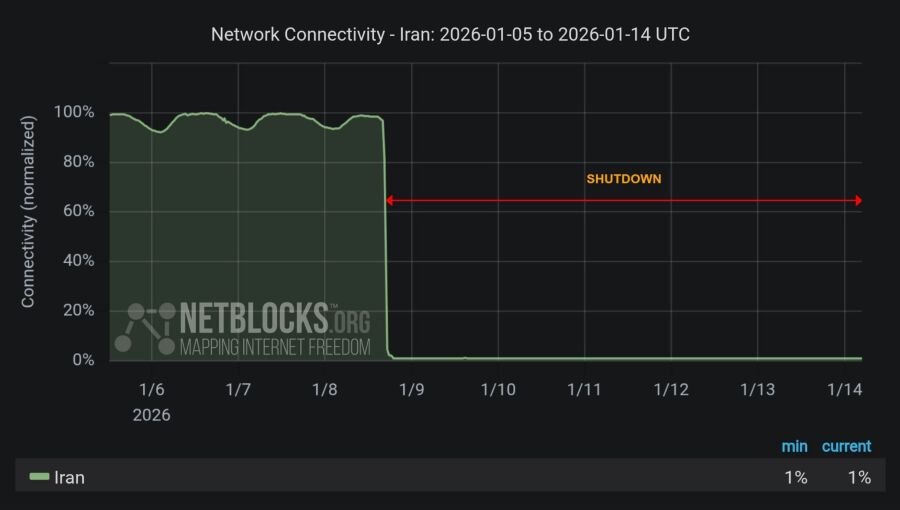
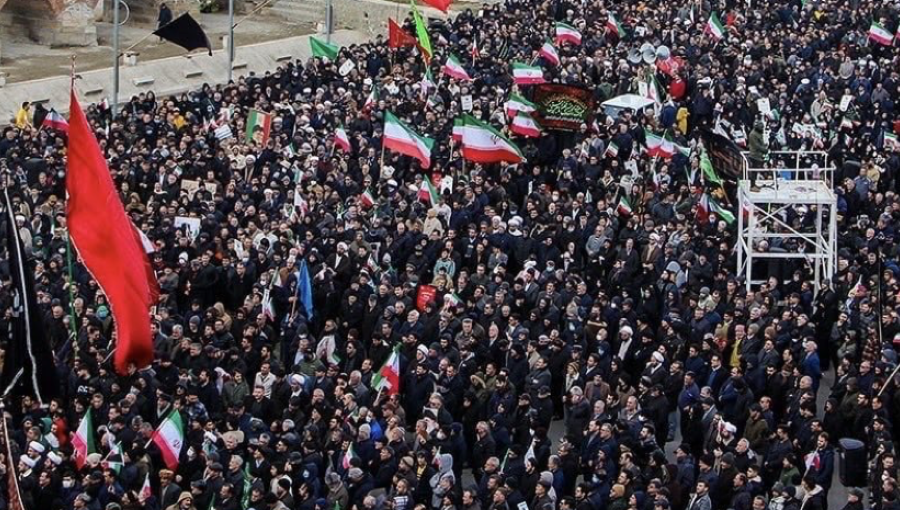
Iran has entered the seventh day of a near-total telecommunications blackout, with the disruption passing 144 hours and ranking among the longest on record, NetBlocks reported on January 14.

The network monitoring organisation said the blackout continues to isolate over 90 million Iranians from the outside world. Network data show the telecommunications shutdown began as nationwide protests erupted across the Islamic Republic.

According to several calls made to Iran by bne IntelliNews, locals were entirely uncontactable; however, several reports suggest that one-way calls to foreign telephone numbers were made. Social messaging apps have also been entirely disconnected, including several Iranian newspapers, who have been entirely disconnected; others have, however, somehow managed to stay online via government internet networks. 

The extended disruption comes as Iran faces its most significant wave of civil unrest in decades. The US-based Human Rights Activists News Agency reported on January 14 that at least 2,571 people have been killed during the protests, a death toll that surpasses any other round of protest or unrest in Iran in decades.

Details of the government crackdown began emerging on January 13 as some Iranians were able to make international phone calls for the first time in days after authorities initially severed nationwide communications when the demonstrations began.

Earlier, on January 14, Iran's judiciary chief Gholamhossein Mohseni-Ejei indicated that authorities would conduct swift trials and executions for detained protesters. US President Donald Trump warned he would "take very strong action" if executions proceed and announced he was terminating negotiations with Iranian leaders.

Iranian President Masoud Pezeshkian said on January 13 that the government's failure to address complaints from merchants and guild members in a timely manner created conditions for the protests, according to Tasnim News Agency.

The telecommunications blackout has prevented independent verification of events inside Iran and hindered communication between protesters and international media organisations. Previous internet shutdowns in Iran during the 2019 protests lasted approximately one week.


World’s sinking river deltas put over 236mn people at risk

World’s sinking river deltas put over 236mn people at risk
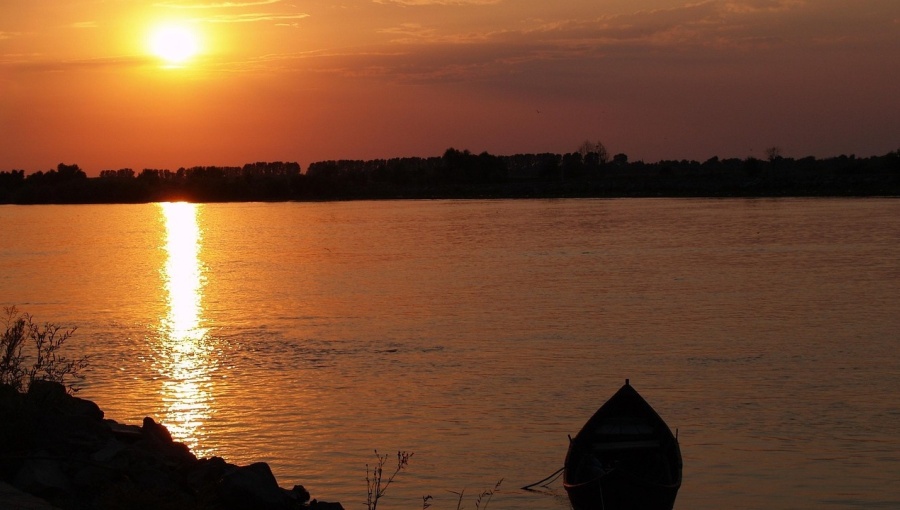
River deltas occupy just 1% of the Earth’s land surface but are home to between 350mn and 500mn people and include 10 of the world’s 34 megacities. / patricianiculae0 via Pixabay
By Clare Nuttall in Glasgow January 14, 2026

Some of the world’s most densely populated river deltas are sinking faster than sea levels are rising, exposing more than 236mn people to growing flood risk, according to a major international study published on January 14.

The research, published in the journal Nature and led by the University of California, Irvine, with partners including the University of East Anglia (UEA), found that human-driven land subsidence, largely caused by groundwater extraction, is now the dominant factor behind the loss of elevation in many deltas.

River deltas occupy just 1% of the Earth’s land surface but host between 350mn and 500mn people and include 10 of the world’s 34 megacities. They underpin global food production, fisheries, ports and major transport networks, making their stability critical to national and international economies. Yet these low-lying landscapes, much of them less than two metres above sea level, are increasingly threatened by a combination of sinking land and rising seas.

“Our study provides the first delta-wide, high-resolution subsidence observations across 40 major river delta systems, revealing not just where land is sinking, but quantifying how much,” said Leonard Ohenhen, an assistant professor of Earth System Science at UC Irvine and lead author of the study, in a press release bne IntelliNews.

Using satellite radar data, the researchers mapped elevation change across 40 of the world’s largest deltas. They found that at least 35% of all delta land is sinking, and in 38 of the 40 deltas studied, more than half of the total area is subsiding.

In 18 deltas, including the Nile, Ganges-Brahmaputra, Mekong, Chao Phraya, Pearl and Yellow rivers, the average rate of land subsidence already exceeds the rate of regional sea-level rise.

“In every delta that we monitored at least some portion is sinking faster than the sea surface is rising,” said Professor Robert Nicholls of UEA and the University of Southampton, a co-author of the study. “In many densely populated deltas, like the Mekong, Chao Phraya and Nile, vast areas are sinking faster than current sea-level rise rates threatening many millions of people.”

Human footprint

All deltas naturally sink over time as newly deposited sediments compact under their own weight, but the study found that human activity has dramatically accelerated this process.

The main drivers are “excessive groundwater extraction, oil and gas exploitation, and land-use changes associated with urbanisation and agriculture”, the authors said.

The researchers calculated that in 35% of the deltas studied, groundwater pumping was the dominant cause of subsidence, as cities, farms and industries draw water from underground aquifers.

Subsidence rates vary widely, from less than one millimetre per year in Canada’s Fraser Delta to more than one centimetre per year in China’s Yellow River Delta, with many areas sinking at more than double the current rate of global sea-level rise.

In the US, the Mississippi River Delta continues to sink rapidly. The study found it is subsiding at an average of 3.3 millimetres per year, while local sea levels along the Gulf Coast are rising at about 7.3 millimetres per year. In some places, however, the land is sinking much faster, by more than 89 millimetres per decade, compounding Louisiana’s long-running land-loss crisis.

Globally, climate change is pushing sea levels higher as polar ice melts and oceans warm. Average global sea levels are now rising by about four millimetres per year. But the researchers warned that in many deltas, sinking land is the more immediate threat.

“The dominance of subsidence persists even when compared to future sea level rise worst-case scenarios,” the study said. “This means that for hundreds of millions of coastal residents, the immediate threat is not just climate change-driven sea level rise alone, but the more immediate threat of the ground sinking beneath their feet.”

“These results give delta communities a clearer picture of what is driving persistent flood risk and overall vulnerability, and that clarity matters,” Ohenhen said. “If land is sinking faster than the sea is rising, then investments in groundwater management, sediment restoration and resilient infrastructure become the most immediate and effective ways to reduce exposure.”

Subsidence overlooked

Nicholls said subsidence is often overlooked until the damage is already visible.

“Subsidence is often ignored until it causes impacts,” he told bne IntelliNews. “A range of options are available including mitigate human-induced subsidence by removing the causes of subsidence e.g., stopping groundwater withdrawal where this is causing subsidence – successfully employed in some cities – notably Tokyo and Osaka but not a universal response as yet.”

Another option is to rebuild land naturally using river sediments, though this is difficult in built-up areas.

“Promote accretion with sedimentation – but this means allowing flooding with sediment-laden water so difficult in urban areas – possible in rural and natural areas – still more of a concept than a real measure,” he said.

In many places, however, societies simply adapt to the sinking land. “Accept the subsidence and adapt to the changes – for relative sea-level rise due to subsidence you can do the same things as you would for sea-level rise – advance, protect, accommodate or retreat. [This is] widely done,” Nicholls said.

He added that the findings highlight the need for more integrated coastal management. “More generally, subsidence shows the need to take a more holistic perspective of managing coasts and considering all the drivers of hazard and risk in management,” he said.

Asia at the epicentre

While all deltas are affected to some degree, the most severe impacts are concentrated in fast-growing developing economies, especially in Asia.

“It affects all river deltas to some degree, but deltas where human-induced changes are fastest see the biggest issues – so mainly developing countries see the big changes,” Nicholls said. “Deltas are also concentrated in east, south-east and east Asia so there is a regional dimension to this issue.”

These regions are home to megacities such as Bangkok, Ho Chi Minh City, Shanghai and Dhaka, where tens of millions of people depend on fragile delta landscapes for housing, jobs, food and water.

Looking further ahead, Nicholls warned that the long-term viability of delta cities is increasingly uncertain.

“To my knowledge, no city has been abandoned to date due to subsidence and enhanced protection has been the norm,” he said. “However, New Orleans has not fully recovered post-Katrina and in Louisiana a lot of people moved vertically up (to Baton Rouge) which is a little higher.”

“Looking to the future your question is a concern and cities in deltas will only remain viable with substantial additional adaptation and efforts to address subsidence as well,” he added.

The researchers say their high-resolution mapping should help governments and planners decide where to focus scarce resources, combining efforts to slow subsidence with long-term climate adaptation as rising seas continue to push against the world’s most vulnerable landscapes.

Scientists in Tajikistan puzzled by expanding glacier

Scientists in Tajikistan puzzled by expanding glacier
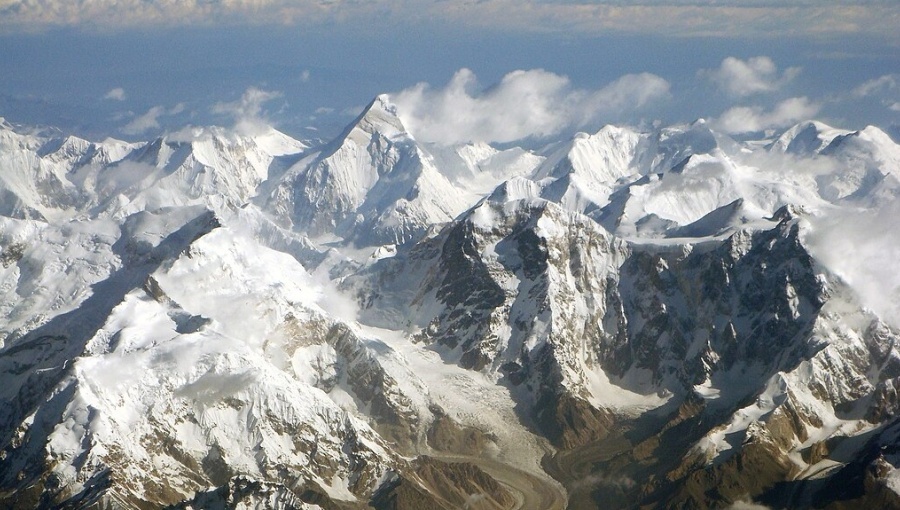
Scientists hope that if they can solve what lies behind the unusual expanding glacier on the "Roof of the World", gathered data might help in efforts to protect other glaciers that are melting. / Chen Zhao, cc-by-sa 2.0
By bne IntelliNews January 12, 2026

Scientists in Tajikistan are puzzled by a glacier that is expanding.

With the world losing perhaps a thousand or so glaciers per year because of anthropogenic climate change, the discovery in the Pamir Mountains is highly unusual.

A study published by the journal Nature refers to the oddity that is the Kon-Chukurbashi high-altitude ice cap in a part of the Earth sometimes referred to as the “Roof of the World”.

At around 5,810 metres, or 19,000 feet, up in the Pamirs, an international team of scientists set out to understand the glacier’s unexpected resilience.

The scientists have already been in the headlines for removing two glacier ice core samples, one of which they transported to an underground sanctuary in Antarctica called the Ice Memory Foundation. The repository will serve as a source of climate information for centuries to come.

It turns out that the other core has been sent to the Institute of Low Temperature Science at Hokkaido University in Sapporo, Japan, where Yoshinori Iizuka, a professor at the university, will analyse the sample in an effort to understand the anomaly of the expanding ice cap.

“If we could learn the mechanism behind the increased volume of ice there, then we may be able to apply that to all the other glaciers around the world,” Iizuka told AFP. “That may be too ambitious a statement. But I hope our study will ultimately help people.”

Tajikistan’s glaciers are retreating at an alarming rate, with over one thousand already gone completely and dozens more under threat, according to an Atlas of Environmental Change published by the United Nations Environment Programme (UNEP) last September.

The findings underscore the urgency of regional cooperation as rising temperatures put unprecedented pressure on Central Asia’s water resources.

Some of the world’s last resilient glaciers are located in Tajikistan’s Pamir Mountains, but they are being destabilised by snowfall shortages, a study from the Institute of Science and Technology Austria (ISTA) has found.

In October, a giant chunk broke away from a large glacier in the Pamirs, triggering warnings from scientists to mountain villages in the vicinity.

Wednesday, January 14, 2026

Dingbat Imperialism, the Lowest Stage of Capitalism

Reading Lenin Today


John Ganz
Jan 13, 2026
SUBSTACK


“Holy Shit, these guys are dumb.”

Many commentators have noted that Trump’s conduct in foreign affairs is as if you took the most simplistic and reductionist left-wing critiques of American foreign policy and decided what they described—a rapacious, oligarchical empire systematically stripping poorer and smaller nations of their resources—was what we should be doing. Matt Yglesias recently tweeted about a Trump post where he described a system of American companies dumping surplus goods into a pliant Venezuelan market: “This is like Lenin’s account of imperialism, but with ‘— and that’s good!’ added to the end.” The natural riposte to this line of thought is perhaps that the left-wing critiques of American imperialism weren’t so stupid after all, and Trump just has the bad manners to tell the truth. And you could just as easily imagine an impatient liberal response to some on the anti-alarmist left in reply: “Here is the guy who is actually what you said America was all along: a vulgar fascioid businessman who is using state power to enrich himself and his friends, but for some reason he offended and worried you less than the other guys.” But rather than attend to this squabble, I’m actually curious about how well Lenin’s account of imperialism fits what Trump is doing or trying to do.

Interestingly enough, “Lenin’s idea of Imperialism, but we should do it,” is pretty much how Vladimir Putin thinks, if you take the word of his former advisor Gleb Pavlosky:


It was a game and we lost, because we didn’t do several simple things: we didn’t create our own class of capitalists, we didn’t give the capitalist predators on our side a chance to develop and devour the capitalist predators on theirs…Putin’s idea is that we should be bigger and better capitalists than the capitalists, and be more consolidated as a state: there should be maximum oneness of state and business…

This makes sense, since Putin would’ve had Marxist-Leninist orthodoxy drilled into him in his training as a KGB officer. But what is the Marxist-Leninist orthodoxy on imperialism exactly?

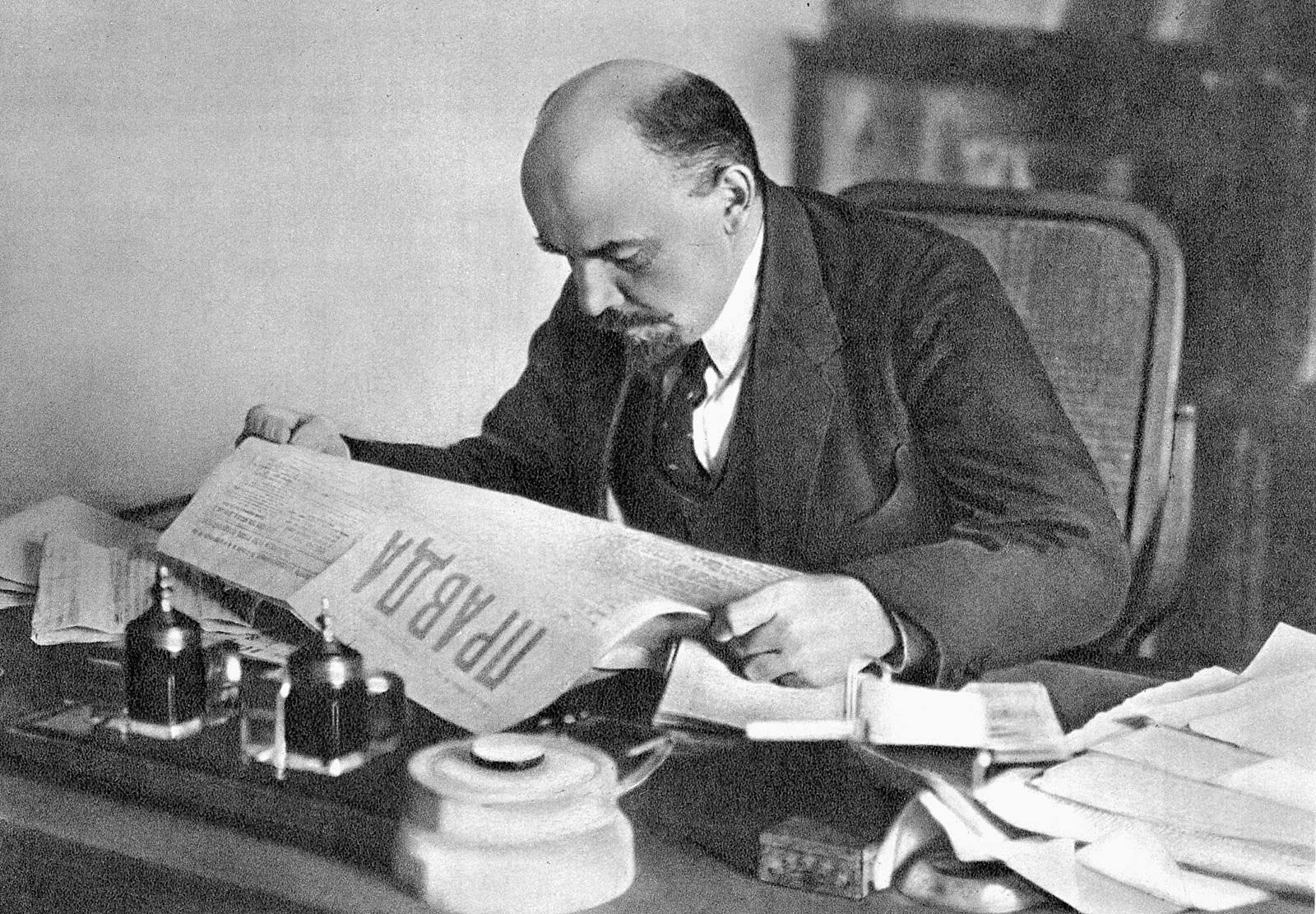
Vladimir Lenin’s pamphlet Imperialism, the Highest Stage of Capitalism was written during the First World War. Subtitled “a popular outline,” it was meant to explain to the working class the nature of the war taking place and to polemicize against the reformist, “opportunist” socialist and social democratic parties, that, in many cases, had gone along with it, and that Lenin believed were inextricably tied to the imperialist system. It’s not a fully developed theory nor is it entirely original: it’s largely based on the works of the Marxist Rudolf Hilferding and the liberal J.A. Hobson, and is directed against the earlier theories of Karl Kautsky and Rosa Luxemburg. It was written in the heat of battle, as it were: Lenin is struggling to win over the European proletariat to his vision of world revolution. But it is a work of bold vision and compelling claims.

Lenin writes, “the briefest possible definition of imperialism we should have to say that imperialism is the monopoly stage of capitalism.” According to Lenin, capitalism has left behind its old liberal, laissez-faire competitive mode; the process of competition itself has given rise to monopoly as the winners devour the losers. Industry has become increasingly concentrated in the hands of a few great cartels, and these cartels, requiring vast supplies of credit for their operations, come under the control of banks. This combination of heavy industry and banking Lenin calls “finance capital.” In the pamphlet, he quotes Hilferding to describe the nature of this finance capital:


“A steadily increasing proportion of capital in industry…ceases to belong to the industrialists who employ it. They obtain the use of it only through the medium of the banks which, in relation to them, represent the owners of the capital. On the other hand, the bank is forced to sink an increasing share of its funds in industry. Thus, to an ever greater degree the banker is being transformed into an industrial capitalist. This bank capital, i.e., capital in money form, which is thus actually transformed into industrial capital, I call ‘finance capital’.” ….“Finance capital is capital controlled by banks and employed by industrialists.”

This financial oligarchy, seeking profitable investments in shrinking markets it already dominates, seeps into the nation-state itself and directs it to look abroad, grabbing colonies. The world becomes divided up by big monopolies with the help of their pliant government hosts. Lenin helpfully breaks this down into four points:


(1) the concentration of production and capital has developed to such a high stage that it has created monopolies which play a decisive role in economic life; (2) the merging of bank capital with industrial capital, and the creation, on the basis of this “finance capital,” of a financial oligarchy; (3) the export of capital as distinguished from the export of commodities acquires exceptional importance; (4) the formation of international monopolist capitalist associations which share the world among themselves and (5) the territorial division of the whole world among the biggest capitalist powers is completed. Imperialism is capitalism at that stage of development at which the dominance of monopolies and finance capital is established; in which the export of capital has acquired pronounced importance; in which the division of the world among the international trusts has begun, in which the division of all territories of the globe among the biggest capitalist powers has been completed.

I want to focus on these, particularly number 3, but first, we have to answer why Lenin calls imperialism “the highest stage of capitalism,” by which it often appears he means the last stage. For Lenin, monopoly capitalism is almost socialism; the concentration and socialization of production have happened, and it just remains in private ownership:


Competition becomes transformed into monopoly. The result is immense progress in the socialisation of production. In particular, the process of technical invention and improvement becomes socialised….

Capitalism in its imperialist stage leads directly to the most comprehensive socialisation of production; it, so to speak, drags the capitalists, against their will and consciousness, into some sort of a new social order, a transitional one from complete free competition to complete socialisation…

Production becomes social, but appropriation remains private. The social means of production remain the private property of a few.

The capitalists have done the socialists a great favor by organizing things like this: it makes the seizure of the means of production much easier! But as Lenin and Hilferding both thought, the jockeying for domination of the world by these combines would tend towards war between the imperialist powers. This created another opportunity for the militant working class. As Hilferding put it in his 1910 Finance Capital, "the policy of finance capital is bound to lead towards war, and hence to the unleashing of revolutionary storms.” As I’ve written about before, this is contra Kautsky, who imagined the possibility of intermonopolist cooperation and a peaceful transition to socialism.

In 1917, Lenin’s account of the world looked pretty plausible. There was, in fact, a war raging between the imperialist powers, and soon, revolution would break out, first in Russia, and then all over Europe. But how well does Lenin’s Imperialism explain today, in particular, Trump’s neo-imperialism in Venezuela?

The first thing to note is the anachronism of Lenin’s picture of monopoly capitalism. Yes, there is the word “finance” there, but finance capital is not identical with “financialization,” as we’ve come to know it. For all the rentier and “parasitic” behavior Lenin describes in the imperial core, he emphasizes the importance of capital exports, that is to say, of fixed capital, machinery, and plant. The world we are dealing with there is much more “steampunk,” if you’ll permit me. As I quoted above, “the export of capital as distinguished from the export of commodities acquires exceptional importance.” This is because the capital’s rate of profit is sagging in the core. Trump’s vision of dumping commodities into Venezuela doesn’t fit that model. In this case, the big capitalist combines, the oil cartels, really don’t want to invest capital abroad. They are doing fine, thank you, and don’t really want to sink all this fixed capital into the mire of Venezuela. It’s not some easy colonial backwater ripe for the picking, but a very tumultuous and unstable environment, and they’ve been burned before. While other big oil company execs appeared ready to humor Trump, ExxonMobil’s CEO was frank: he called Venezuela “uninvestable” without major changes. As a result, Trump threatened to block them. But, of course, they don’t wanna go anyway! Even a close backer of Trump like oil tycoon Harold Hamm has “declined to make commitments,” while making some superficially enthusiastic noises. When the oil bosses asked for guarantees, Trump said he would guarantee their security. But he’s not gonna be around forever! We’re talking multiple-year investments. To make matters more difficult, the type of crude in Venezuela is tough and costly to refine.

So, Lenin’s vision of the financial oligarchy finagling the government to fund adventures abroad? Not quite the case here. Here we have the government trying to finagle the cartels. To be fair to the Leninists, Vladimir Ilyich makes clear that the foreign intrigues of the monopolists are often “secret” and “corrupt” manipulation of government, so we may not have the full picture. And perhaps there is a different dynamic in the case of raw materials and extraction. Lenin writes:


The principal feature of the latest stage of capitalism is the domination of monopolist associations of big employers. These monopolies are most firmly established when all the sources of raw materials are captured by one group, and we have seen with what zeal the international capitalist associations exert every effort to deprive their rivals of all opportunity of competing, to buy up, for example, ironfields, oilfields, etc. Colonial possession alone gives the monopolies complete guarantee against all contingencies in the struggle against competitors, including the case of the adversary wanting to be protected by a law establishing a state monopoly. The more capitalism is developed, the more strongly the shortage of raw materials is felt, the more intense the competition and the hunt for sources of raw materials throughout the whole world, the more desperate the struggle for the acquisition of colonies.

What the oil companies might like is a “complete guarantee” of a colonial situation, but they seem skeptical that Trump can really provide that. But is there a shortage in this case? On the contrary, there is a bit of a glut in oil at the moment, although the lack of investment might contribute to a future shortage. Analysts say that even a major crisis in Iran—imagine such a thing!—would not seriously affect global supply.

Now, a Leninist might object that I’m misreading the text in too conspiratorial a way and that I have to take into account a structural impulse built into financial capital to force investment. But if anything, we’ve seen financialized capital is very averse to risky fixed assets, preferring liquidity and easier profits.

I don’t want to suggest that capitalists are totally uninterested in Venezuela. Some are very enthusiastic, but they have a very different profile than the big oil majors that could actually redevelop Venezuela’s infrastructure. Politico reports:


“One of the things that has been incorrectly reported is that the oil companies are not interested in Venezuela,” Bessent told an audience at the Economic Club of Minnesota, according to a transcript supplied by the department. “The big oil companies who move slowly, who have corporate boards are not interested. I can tell you that independent oil companies and individuals, wildcatters, [our] phones are ringing off the hook. They want to get to Venezuela yesterday.”

As one industry insider noted, “The most enthusiastic are among the least prepared and least sophisticated.”

These types of firms are very well-connected to this administration. A Reuters report on the small and medium participants in the oil summit noted, “Several of the companies have connections to Denver, Colorado, the home turf of Secretary of Energy Chris Wright and a relatively small hub for oil and gas activity compared to other parts of the United States.”

Interestingly, the enthusiasm of small and medium capital vs. the big, publicly-traded corporate behemoths matches closely Melinda Cooper’s analysis of Trump’s business coalition, which is made up of “the private, unincorporated, and family-based versus the corporate, publicly traded, and shareholder-owned.” A 2025 analysis of the oil investment market reflected this as well: “Capital is shifting from traditional institutional investors to more flexible and opportunistic players, driven by attractive valuations, tax incentives, and infrastructure opportunities.”

This picture of a rag-tag private capital wanting to follow Trump’s filibuster into quick riches leads me to posit the very speculative theory of “dingbat imperialism,” where it’s not the big cartels, but their little cousins leading the charge down south. But in that case, it is not monopolization but a very competitive environment that is driving these risky moves. One might say this is capitalism not at its highest stage of development, but its lowest; indeed, it’s as if these firms want their chance at “primitive accumulation,” which is to say, robbery and plunder.

To add some meat to my theory of dingbat imperialism, consider the previous behavior of the majors. Rather than hawks for oil wars and free flowing crude, they’ve either wanted to lift sanctions to make their businesses easier (Chevron, Gulf refiners) or keep sanctions in place to get their legal claims from nationalization taken care of (ExxonMobil.) In this respect, they are much more like Kautsky’s “ultra-imperialists,” working within the normative structure of international agreements and treaties to cement the interests of their oligopoly, rather than pursuing destructive wars.

To a certain extent, imperialism may have always been dingbat imperialism. Historians have chipped away at Lenin’s empirical account of the origins of the colonial scramble in the late 19th and early 20th centuries. In Imperial Germany, for example, the government had difficulty getting the big German banks, although highly cartelized as Lenin demonstrated, to invest in developing its colonial ventures, mostly because they were not very profitable. German banks preferred to invest in relatively safe places, like the United States, Britain, or France. British banks, much more accustomed to imperialist ventures, were willing to chip in. The government had to practically force German finance capital into Southwest Africa to prevent its colony from being totally dominated by British banks.1 Sometimes the Kaiser himself provided financial support to the endeavors. The German companies that were enthusiastic about colonial expansion tended to be speculative, “get-rich-quick” schemes. The German colonial empire was driven more by a politics of prestige and a sense of being lesser than Britain and France than by the pressure of surplus capital looking for an outlet. In this sense, perhaps, we are behaving more like the imperial upstart Germany than the hegemon Britain. Why? Maybe because Trump is himself an upstart. Dingbats all the way down.

In any case, that’s all I have of this “theory” for the moment.
1


Feis, Herbert. Europe: The World’s Banker 1870-1914: An Account Of European Foreign Investment And The Connection Of World Finance With Diplomacy Before The War. With Internet Archive. Council On Foreign Relations, 1961. 181-182 http://archive.org/details/europeworldsbank0000unse.


WE NEED MORE GENERAL STRIKES

Minneapolis Labor, Community Leaders Join Call for Jan. 23 General Strike to Demand ICE Out

“We are asking every single person, every family member, every teacher, every bus driver, every childcare worker, to come together, to be in community, to stand with one another.”


People take part in a protest against US Immigration and Customs Enforcement (ICE) on January 11, 2026.
(Photo by Mostafa Bassim/Anadolu via Getty Images)

Brad Reed
Jan 14, 2026
COMMON DREAMS

A broad coalition of Minneapolis labor unions and community organizations is calling for a general strike to take place next week with the goal of forcing federal immigration agents to leave their city.

According to a report by Workday Magazine, the groups announced their plans on Tuesday to create a day of “no work, no school, no shopping” on Friday, January 23.

JaNaé Bates Imari, representative of the church Camphor Memorial UMC, said that next Friday would be “a day when every single Minnesotan who loves this state—who loves the idea of truth and freedom—will refuse to work, shop, and go to school.”

“We are asking every single person, every family member, every teacher, every bus driver, every childcare worker, to come together, to be in community, to stand with one another,” Bates Imari added.


Abdikarim Khasim, a Minnesota rideshare driver, said the strike was necessary because “we are facing a tsunami of hate from our own federal government,” while also vowing that “we are going to overcome this.”

As reported by Payday Report on Tuesday, several local Minneapolis unions—including Amalgamated Transit Union (ATU) Local 1005, SEIU Local 26, UNITE HERE Local 17, CWA Local 7250, and St. Paul Federation of Educators Local 28—have lent their support to the strike.

Workday Magazine editor Sarah Lazare subsequently reported in a post on X that the Minneapolis Federation of Educators had also signed onto the effort.

In addition to the labor organizations, faith-based social justice group Faith in Minnesota has declared its support for the strike.

Charles Booker, a Democratic candidate for the US Senate in Kentucky, praised the organizations for showing solidarity in the face of a crackdown by federal agents.

“This is what it takes,” he wrote in a social media post. “It is time for the people to stand and take back our power. We need a general strike! Love and solidarity to our family in Minneapolis who are refusing to go along with a status quo... More of this!”

Thousands of demonstrators hit the streets to protest last weekend after Immigration and Customs Enforcement (ICE) agent Jonathan Ross fatally shot Minneapolis resident Renee Good.

In the days since Good’s killing, federal agents have been repeatedly captured on video brutally detaining anti-ICE demonstrators and assorted bystanders, including some who have been confirmed as US citizens.