Thursday, January 15, 2026


Mosquitoes’ thirst for human blood has increased as biodiversity loss worsens


Scientists found that some mosquitoes really are targeting humans more than other food sources, but it could be a matter of convenience as biodiversity dwindles and other food sources are displaced


Peer-Reviewed Publication

Frontiers

Reserva Ecológica do Guapiaçu 

image: 

Reserva Ecológica do Guapiaçu (REGUA), Cachoeiras de Macacu, Rio de Janeiro.

view more 

Credit: Cecilia Ferreira de Mello.


Stretching along the Brazilian coastline, the Atlantic Forest is home to hundreds of species of birds, amphibians, reptiles, mammals, and fishes. However, due to human expansion, only about a third of the forest’s original area remains intact. As human presence drives animals from their habitats, mosquitoes that once fed on a wide variety of hosts might be finding new, human targets to quench their thirst for blood, a new Frontiers in Ecology and Evolution study found.

“Here we show that the mosquito species we captured in remnants of the Atlantic Forest have a clear preference for feeding on humans,” said senior author Dr Jeronimo Alencar, a biologist at the Oswaldo Cruz Institute in Rio de Janeiro.

“This is crucial because, in a environment like the Atlantic Forest with a great diversity of potential vertebrate hosts, a preference for humans significantly enhances the risk of pathogen transmission,” added co-author Dr Sergio Machado, a researcher who studies microbiology and immunology at the Federal University of Rio de Janeiro.

Humans preferred

For their study, the researchers used light traps to capture mosquitoes at the Sítio Recanto Preservar and the Guapiacu River Ecological Reserve, two natural reserves in the state of Rio de Janeiro. In the lab, engorged female mosquitoes were separated for analysis. The researchers extracted DNA from the blood and used DNA sequencing to analyze a specific gene that functions as a unique ‘barcode’ for each vertebrate species. By comparing barcodes found in the blood to a database, the researchers could determine which animal the mosquito had fed on.

Out of a total of 1,714 captured mosquitoes belonging to 52 species, 145 females were engorged with blood. Blood meals consumed by 24 of those mosquitoes could be identified and were sourced from 18 humans, one amphibian, six birds, one canid, and one mouse. Some blood meals were made up of multiple sources: the meal of a mosquito identified as Cq. Venezuelensis was made up of amphibian and human blood. Mosquitoes belonging to the species Cq. Fasciolata had fed on both a rodent and a bird as well as a bird and a human, respectively. 

The researchers hypothesized that multiple factors could play a role in their preference for our blood. “Mosquito behavior is complex,” Alencar said. “Although some mosquito species may have innate preferences, host availability and proximity are extremely influential factors.”

Disease spreads

As the Atlantic Forest dwindles due to deforestation and humans keep pushing into previously forested areas, many plants and animals disappear. As a result, mosquitoes change their habits and habitats and get closer to humans. “With fewer natural options available, mosquitoes are forced to seek new, alternative blood sources. They end up feeding more on humans out of convenience, as we are the most prevalent host in these areas,” explained Machado.

Bites are more than itchy. In the study regions, mosquitoes transmit a variety of viruses – such as Yellow Fever, dengue, Zika, Mayaro, Sabiá, and Chikungunya – which cause diseases that seriously threaten human health and can have long-term adverse consequences. Investigating mosquito foraging behavior is fundamental for understanding the ecological and epidemiological dynamics of the pathogens they transmit, the researchers said.

The relatively low rate of engorged mosquitoes – just under 7% – as well as the low percentage of cases in which blood meals could be identified – around 38% – highlight the need for more data rich studies. Those studies should also use methods more suited to identifying mixed blood meals to determine all food sources.

Already, the study can aid in the development of more effective policies and strategies to control disease-carrying mosquitoes and help predict and prevent future disease outbreaks. “Knowing that mosquitoes in an area have a strong preference for humans serves as an alert for transmission risk,” Machado pointed out.

“This allows for targeted surveillance and prevention actions,” concluded Alencar. “In the long term, this may lead to control strategies that consider ecosystem balance.”


Maternity baby deaths much higher in northern England than in the South


Oxford University Press USA


A new paper in the Journal of Public Health, published by Oxford University Press, indicates that maternity services in the North of England most consistently report higher-than-average rates of perinatal mortality, including stillbirths, compared to those in the South.

The year 2025 marked the end of a decade-long UK government national maternity safety initiative, which aimed to halve the rate of stillbirths, neonatal and maternal deaths and brain injuries occurring during or soon after birth. While this was not achieved, a 36% reduction in perinatal mortality was significant, and policymakers have recommended using data to better understand and reduce the variation between clinical outcomes in different locations.

Responding to this, researchers here aimed to identify maternity services most consistently reporting both higher-than-average and lower-than-average rates of extended perinatal mortality (including stillbirths and neonatal deaths) throughout the government’s 10-year initiative. They conducted a retrospective study of perinatal mortality surveillance reports published by MBRRACE-UK (Mothers and Babies: Reducing Risk through Audit and Confidential Enquiries collaboration) between 2015 and 2024, to compare mortality rates for births occurring between 2013 and 2022 at 121 maternity services in England.

The researchers identified ten organizations most consistently reporting higher-than-average deaths of babies and 15 reporting lower-than-average deaths. They also identified a total of 20 (16.5%) organizations with higher-than-average deaths in 80% of reports and/or the past five years and 22 (18.2%) with lower-than-average deaths.

The maternity services most consistently reporting lower-than-average deaths included Portsmouth Hospitals University NHS Trust, Royal Free London NHS Foundation Trust, and University College London Hospitals NHS Foundation. Those most consistently reporting higher-than-average deaths included Sandwell and West Birmingham Hospitals NHS Trust, Liverpool Women’s NHS Foundation Trust, and The Leeds Teaching Hospitals NHS Trust.

All ten organizations with the highest comparable 10-year mortality rates were in the Midlands and North of England, and all fifteen organizations with the lowest mortality rates were in the South of England. These findings suggest that babies in the Midlands and North of England are more likely to die before, during, or shortly after birth than those in the South. This adds to longstanding findings on mortality inequalities in England’s North and South regions, including recent reports from the UK government (2019) and The Northern Health Science Alliance and N8 Research Partnership (2021).

The first MBRRACE-UK publication of data to highlight higher-than-average and lower-than-average deaths at individual organizations coincided with the government’s 2015 safety initiative, and for eight years, its reports instructed ‘red flag’ maternity services to conduct a review or investigation to identify factors that might be responsible for their comparatively higher rates. However, this study’s authors found no evidence of local action, or any follow-up by MBRRACE-UK, NHS England, the Care Quality Commission, the Royal College of Obstetricians and Gynaecologists, or the Royal College of Midwives.

In 2023, MBRRACE-UK redirected its instructions for review towards governments, royal colleges, and commissioners. The authors suggest that with no specific responsibility for individual organizations to review, investigate, or report any action taken, this may be missing a highly valuable opportunity for improvement and shared learning.

“Investigations into avoidable maternity deaths and injuries in England have focused on learning lessons by establishing where problems lie,” said the paper’s lead author, Pauline McDonagh Hull. “This study highlights opportunities for recognizing and learning from maternity services with comparably good or markedly improved outcomes – what are they doing differently? Furthermore, the UK has some of the best maternity data in the world, and if steps were taken to ensure all organizations submit complete data to MBRRACE-UK and NHS England Digital, it would further support research and analysis to better understand and improve both perinatal and maternal outcomes.”

The paper, “Lessons to be learned: a retrospective study of MBRRACE-UK perinatal mortality surveillance (2015–2024) to identify maternity services most consistently reporting higher- and lower-than-average deaths,” is available (at midnight EST on January 15th) at https://doi.org/10.1093/pubmed/fdaf145.

To request a copy of the study, please contact:
Daniel Luzer 
daniel.luzer@oup.com


Forestry is becoming digital and automated


TU Graz is launching the COMET project AutoForst for digitalisation and automation of the forestry value chain. The research project has a budget of 6 million euros and is being implemented in collaboration with three other universities and more than 20 i


Graz University of Technology

Loading logs onto trucks is set to become safer 

image: 

Loading logs onto trucks is set to become safer

view more 

Credit: FTG - TU Graz


With 440,000 employees and a value added of around 43 billion euros, the Austrian forestry and timber sector is a significant economic factor. However, the sector is suffering from a considerable shortage of skilled labour. “Forestry is characterised by physically demanding and sometimes dangerous work,” says Mario Hirz from the Institute of Automotive Engineering at Graz University of Technology (TU Graz), “Forestry companies cannot find enough people who are capable of carrying out the dangerous and difficult tasks.” Mario Hirz heads the recently launched COMET project AutoForst together with Christoph Stocker. Over the next four years, a consortium of three universities and more than 20 industrial partners will develop technical solutions to increase safety in forestry work, alleviate the labour shortage and make forest logistics and maintenance more efficient. The project budget amounts to 6 million euros, around half of which is contributed by the Austrian Research Promotion Agency (FFG).

“In the AutoForst project, we want to develop digital and automated systems that make work along the forestry value chain more efficient, easier and safer. This will also make forestry work more attractive to new groups of people,” explains Mario Hirz. 

Automated assistance systems

The project consortium will develop fully automated machines and assistance systems designed to make dangerous activities, such as handling and loading tree trunks, safer. In a preliminary project, researchers at TU Graz and their partners have already developed a prototype of an automated loading crane that lifts logs onto the lorry independently; forestry workers only have to monitor the loading outside the danger zone. The COMET project now plans to develop sensor and camera systems that recognise critical situations during loading, such as when people approach the danger zone or when the supports of lorries and trailers are not correctly aligned. The sensor technology is also being used to automate the transport systems as a whole. 

Digitalisation of forest logistics

Forestry offers a wide range of potential for the use of digital technologies. The Autoforst consortium will conduct research into processes and solutions with which comprehensive data can already be collected, processed and made available online in the forest. “The systems will record key parameters such as wood type, quality and diameter directly when the tree trunks are harvested and forward the data to the owners in real time,” explains Mario Hirz. In addition, it should be possible to track the wood along the entire logistics chain in order to organise processes at customers such as sawmills or paper manufacturers more efficiently.

Using drones against the bark beetle

Sustainable forest management should also benefit from digital technologies. One example of this includes drones equipped with cameras that automatically recognise diseased trees. “In the event of a bark beetle infestation, the diseased trees must be removed from the forest within a few days to prevent the insects from spreading further,” says Mario Hirz. Drones save an enormous amount of time here.

London’s murder rate at record low as mayor says it disproves Trump's 'dystopian' claims

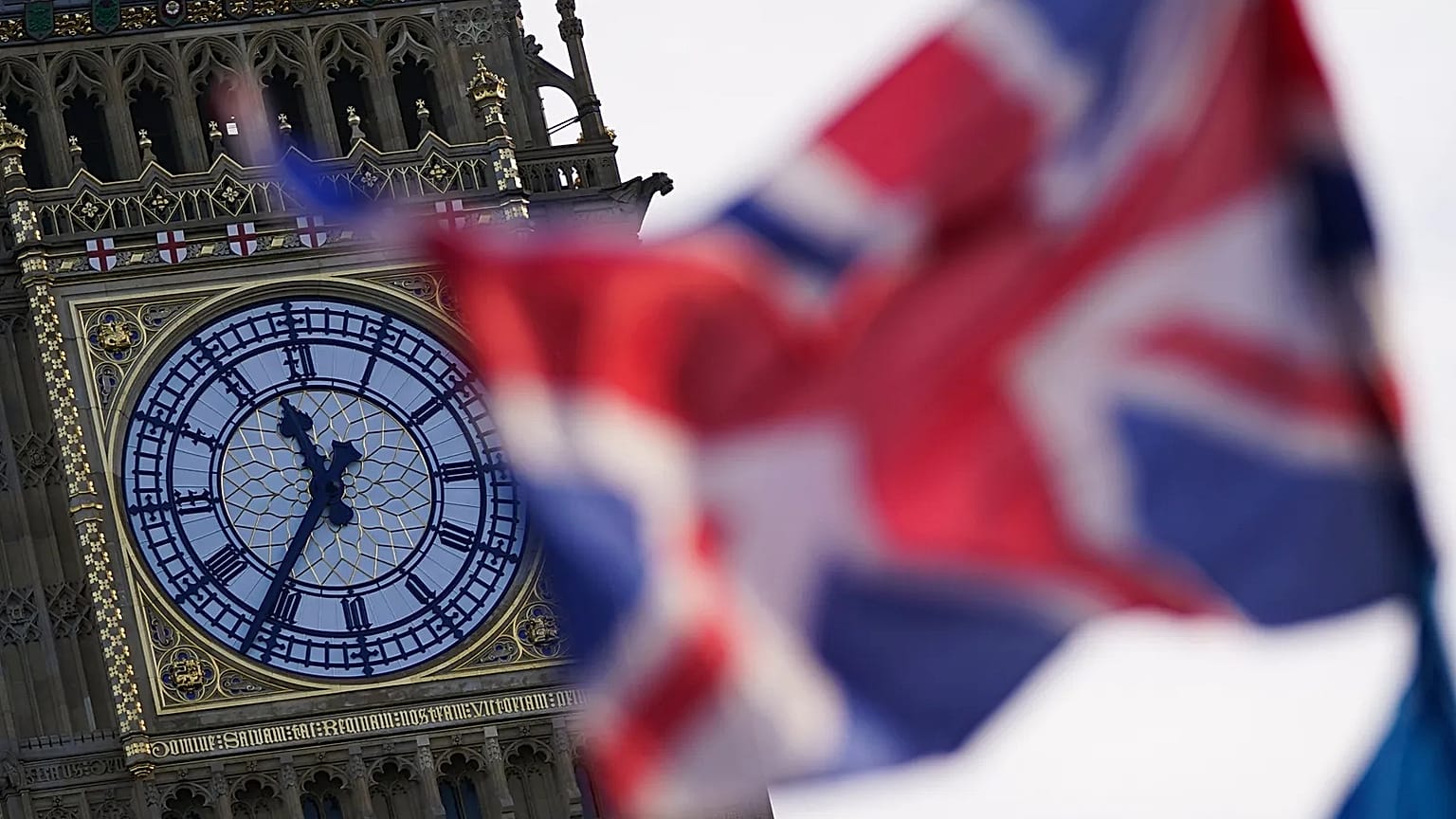
A British flag waves against the backdrop of Big Ben in London, 7 January, 2026
Copyright AP Photo

By Gavin Blackburn
Published on 

The Metropolitan Police force says the rate by population is the lowest since comparable records began in 1997, at 1.1 murders for every 100,000 people.

London's murder rate fell to its lowest level in decades in 2025, officials said on Monday, with Mayor Sadiq Khan saying the figures disprove claims by US President Donald Trump and other critics that crime is out of control in Britain's capital.

Police recorded 97 homicides in London in 2025, down from 109 in 2024 and the fewest since 2014.

The Metropolitan Police force says the rate by population is the lowest since comparable records began in 1997, at 1.1 murders for every 100,000 people.

That compares to 1.6 per 100,000 in Paris, 2.8 in New York and 3.2 in Berlin, the force said.

"There are some politicians and commentators who've been spamming social media with an endless stream of distortions and untruths, painting an image of a dystopian London," Khan said.

"And nothing could be further from the truth."

Mayor of London Sadiq Khan speaks during an interview in London, 12 January, 2026 AP Photo

Trump, who has been sniping at Khan for a decade, said in September that crime in the city is "through the roof".

He has called Khan a "stone-cold loser," a "nasty person" and, in front of the UN General Assembly in September, a "terrible, terrible mayor."

City officials say a combination of targeted policing aimed at organised crime and a violence reduction unit that aims to stop young people getting involved with gangs has helped reduce violent crime.

While the murder rate has gone down, other crimes such as phone-snatching and shoplifting have been on the rise, according to the Office for National Statistics.

The Crime Survey for England and Wales, which asks people about their experience of crime rather than relying on police figures, found that overall crime rose by 7% in the year to March 2025 compared with the previous 12 months, although it remains significantly lower than in 2017.

Arguments that London is a crime-plagued dystopia under Khan have mushroomed on social media platforms, including the Elon Musk-owned X and are echoed by opposition politicians, often tied to anti-immigrant views.

"There are certain politicians, certain commentators who have been using London as a punchbag" to fit their own political agenda, Khan said.

"London is, in my view, the best city in the world. We are liberal, we are progressive, we are diverse. And we are incredibly successful," he said.

London 'number one city in the world,' Khan claims

Khan said London is the "number one city in the world for tourism, the sporting capital of the world, the cultural capital of the world, more international students than in any city in the world, a record amount of foreign direct investment."

"Last year, more Americans came to London to study or to work or to invest since records began. So we're the antithesis to everything these nativists believe in. And if you're President Trump, Vice President JD Vance, or if you're an imitator in Europe or indeed in the UK, I can see why this is a problem to you," he added

London ranked third globally for international tourist arrivals in 2025 with 22.7 million visitors, according to Euromonitor. Bangkok topped the rankings with 30.3 million visitors, followed by Hong Kong. London held second place in the 2024 rankings after Istanbul, but has never ranked first in international arrivals.

In Europe, Rome estimated it had a record year, with between 30 million and 38 million visitors in 2025, mostly due to the Catholic Church's Holy Jubilee celebrations.

Greater London attracted 265 foreign direct investment projects in 2024, making it Europe's leading region, but this represented a 31% decline from 359 projects in 2023.

The US remains the largest source of tourists to London, but was overtaken by India as the top source of technology-related foreign direct investment to the UK for the first time in 2024. US tech-related foreign direct investment in the UK fell 80% between 2019 and 2024.

US freezes immigrant visa processing for 75 countries including Georgia, Armenia and Azerbaijan

US freezes immigrant visa processing for 75 countries including Georgia, Armenia and Azerbaijan
Georgia, Armenia and Azerbaijan are listed in the new travel ban from the Trump administration citing Citizenship by Investment concerns. / bne IntelliNews
By bnm Gulf bureau January 14, 2026

The United States will freeze immigrant visa processing for 75 countries starting on January 21 as part of efforts to prevent applicants deemed likely to rely on public benefits from entering the country, Fox News Digital reported on January 14.

According to the US, Central Asian and Caucasus states like Kazakhstan, Uzbekistan, Kyrgyzstan, Armenia and Georgia were selected due to data showing high rates of visa overstays, welfare dependency risks and consular concerns over weak local economies and fraud histories. Under tightened “public charge” rules, officials deem applicants from these regions likely to burden US taxpayers, prioritising self-sufficient immigrants as part of Trump’s immigration crackdown.

A State Department leaked memo directs consular officers to refuse visas under existing law while the department reassesses screening and vetting procedures. The pause will continue indefinitely until the reassessment is completed, according to the memo.

Tommy Piggott, State Department spokesperson, said the department will use its authority to deem ineligible potential immigrants who would become a public charge on the United States.

"Immigration from these 75 countries will be paused whilst the State Department reassess immigration processing procedures to prevent the entry of foreign nationals who would take welfare and public benefits," Piggott said.

The guidance instructs consular officers to deny visas to applicants deemed likely to rely on public benefits, weighing factors including health, age, English proficiency, finances and potential need for long-term medical care.

Older or overweight applicants, as well as those who have had any past use of government cash assistance or institutionalisation, could be denied.

Somalia has drawn heightened scrutiny from federal officials following a fraud scandal centred in Minnesota, where prosecutors uncovered abuse of taxpayer-funded benefit programmes. Many of those involved are Somali nationals or Somali-Americans.

The 75 countries affected are Afghanistan, Albania, Algeria, Antigua and Barbuda, Armenia, Azerbaijan, Bahamas, Bangladesh, Barbados, Belarus, Belize, Bhutan, Bosnia, Brazil, Burma, Cambodia, Cameroon, Cape Verde, Colombia, Cote d'Ivoire, Cuba, Democratic Republic of the Congo, Dominica, Egypt, Eritrea, Ethiopia, Fiji, Gambia, Georgia, Ghana, Grenada, Guatemala, Guinea, Haiti, Iran, Iraq, Jamaica, Jordan, Kazakhstan, Kosovo, Kuwait, Kyrgyzstan, Laos, Lebanon, Liberia, Libya, Macedonia, Moldova, Mongolia, Montenegro, Morocco, Nepal, Nicaragua, Nigeria, Pakistan, Republic of the Congo, Russia, Rwanda, Saint Kitts and Nevis, Saint Lucia, Saint Vincent and the Grenadines, Senegal, Sierra Leone, Somalia, South Sudan, Sudan, Syria, Tanzania, Thailand, Togo, Tunisia, Uganda, Uruguay, Uzbekistan and Yemen.

Exceptions to the pause will be "very limited" and only allowed after an applicant has cleared public charge considerations, the State Department said.