Monday, January 19, 2026

THE GRIFT

Trump’s Gaza Peace Board Charter Seeks $1Bn For Extended Membership, Document Shows


By 


A draft charter sent to about 60 ​countries by the US administration calls for members to contribute $1 billion in cash if they want ‌membership ‌on his new Board of Peace to last more ‌than ⁠three ​years, ‌according to the document seen by Reuters.

“Each Member State shall serve a term of no ⁠more than three years from ‌this Charter’s ‍entry ‍into force, subject ‍to renewal by the Chairman,” the document, first reported by Bloomberg News, ​shows.

“The three-year membership term shall not apply ⁠to Member States that contribute more than $1,000,000,000 in cash funds to the Board of Peace within the first year of the Charter’s entry into ‌force.”

The board is described in the charter as “an international organization that seeks to promote stability, restore dependable and lawful governance, and secure enduring peace in areas affected or threatened by conflict.”

It would become official once three member states agree to the charter.

The US president would also be responsible for approving the group’s official seal, the document said.

Trump has invited a number of world leaders, including Argentina’s Javier Milei and Canada’s Mark Carney, to be part of a Board of Peace for Gaza, which would be formed under the broader umbrella of his new peace board.

The plan attracted sharp criticism from Israeli Prime Minister Benjamin Netanyahu, who said the details hadn’t been coordinated with his country.

Trump to charge $1bn for permanent 'peace board' membership

Washington (United States) (AFP) – US President Donald Trump's government has asked countries to pay $1.0 billion for a permanent spot on his "Board of Peace" aimed at resolving conflicts, according to its charter, seen Monday by AFP.


Issued on: 19/01/2026 - RFI

The White House has asked various world leaders to sit on the board, chaired by Trump himself, including Russian President Vladimir Putin, Hungarian premier Viktor Orban and Canadian Prime Minister Mark Carney.

Member countries -- represented on the board by their head of state -- would be allowed to join for three years -- or longer if they paid more than $1.0 billion within the first year, the charter says.

"Each Member State shall serve a term of no more than three years from this Charter's entry into force, subject to renewal by the Chairman," the board's draft charter says.

"The three-year membership term shall not apply to Member States that contribute more than USD $1,000,000,000 in cash funds to the Board of Peace within the first year of the Charter’s entry into force."

The board was originally conceived to oversee the rebuilding of Gaza, but its charter does not appear to limit its role to the occupied Palestinian territory.

The White House said there would be a main board, a Palestinian committee of technocrats meant to govern devastated Gaza, and a second "executive board" that appears designed to have a more advisory role.

"The Board of Peace is an international organization that seeks to promote stability, restore dependable and lawful governance, and secure enduring peace in areas affected or threatened by conflict," the charter says.
'Failed institutions'

It appears to take a swipe at international institutions such as the United Nations, saying that the board should have "the courage to depart from approaches and institutions that have too often failed."

Trump has regularly criticized the United Nations and announced this month that his country will withdraw from 66 global organizations and treaties -- roughly half affiliated with the UN.

Membership of the board would be "limited to States invited to participate by the Chairman," according to the draft charter.

Trump would have the power to remove member states from the board, subject to a veto by two-third of members, and choose his replacement should he leave his role as chairman.

The "Board of Peace" began to take shape on Saturday when the leaders of Egypt, Turkey, Argentina and Canada were asked to join.

Trump also named as members Secretary of State Marco Rubio, former British prime minister Tony Blair, senior negotiator Steve Witkoff and his son-in-law Jared Kushner.

Israel has objected to the line-up of a "Gaza executive board" to operate under the body, which includes Turkish Foreign Minister Hakan Fidan and Qatari diplomat Ali Al-Thawadi.

© 2026 AFP


France sends food aid for babies to Gaza, remains ‘mobilised’ to end conflict

France is sending nearly 400 tonnes of food aid to Gaza specifically intended for malnourished babies and has called on Israel to lift obstacles to humanitarian aid into Gaza. France is one of 60 countries to receive an invitation to join US President Donald Trump’s "Board of Peace" to address the war in Gaza and other world conflicts.


Issued on: 19/01/2026 - RFI

Children look on from a shelter in the Nuseirat camp for displaced Palestinians in the central Gaza Strip on 22 December, 2025. AFP - EYAD BABA

A container ship carrying 383 tonnes of food aid left from France’s port of Le Havre on Sunday bound for Gaza, the French Foreign Ministry said in a statement.

The cargo is made up of Plumpy’doz, a nutritional supplement paste made of peanuts and milk powder intended treat malnutrition in young children, produced by Nutriset, a company based in Normandy.

The aid is intended to "improve the health of more than 42,000 Gazan children aged between six months and two years, who are suffering from malnutrition," the ministry said.

The ship is expected to arrive at Egypt’s Port Said in about ten days, and then it will be transported to Gaza by the World Food Programme.

Since 7 October 2023, France has delivered "more than 1,300 tonnes of humanitarian freight for civilian populations," the ministry noted.

Though Israeli strikes have been less intense since the ceasefire between Hamas and Israel began in October 2025, bombs still fall every day.

Israel and Hamas have repeatedly accused each other of violating the ceasefire's terms.
Calls for Israel to lift blocks on aid

With more than 80 percent of its infrastructure destroyed, Gaza is in shambles, and day-to-day living conditions remain precarious.

Aid workers say the humanitarian response remains insufficient due to access restrictions imposed by Israeli authorities, who deny these claims.

France insisted that Israel must lift obstacles so that the United Nations and NGOs "can continue to deliver humanitarian aid independently and impartially throughout the Gaza Strip."

"France is fully mobilised for the people of Gaza," French President Emmanuel Macron posted on social media platform X.

Medical charity MSF says may have to halt Gaza operations in March


'Board of Peace'


Meanwhile, France was one of the countries officially invited to join US President Donald Trump’s "Board of Peace" initiative aimed at overseeing the end of the conflict in Gaza, which would be expanded to resolve conflicts globally.

Some 60 countries have been invited to join for three-year terms, which can become permanent memberships for $1 billion (€857 million).

A mandate for a Board of Peace was authorised by the United Nations Security Council in November, but only through 2027 and solely focused on the Gaza conflict.

Russia and China, two veto wielding powers, abstained, complaining that the resolution did not give the UN a clear role in the future of Gaza.

Trump’s proposal said "durable peace requires pragmatic judgment, common-sense solutions, and the courage to depart from approaches and institutions that have too often failed".

There was a "need for a more nimble and effective international peace-building body", it added.

Several governments appeared reluctant to make public statements about the proposal, leaving officials to express concerns anonymously about the impact on the work of the UN.

(with newswires)


"Peace Board” Is Another Brick in His Personal Occidental Empire


His Gaza proposal reveals a far larger and world-threatening project. It’s a bid to replace the UN— and this MAGAlomania must be stopped now


Original photo by FoxNews

There are moments in political life when the surface events are so loud, so chaotic, so distracting that they obscure the deeper shift taking place beneath them. We focus on the headlines, the personalities, the daily provocations — and miss the architecture being built in the background.

But every once in a while, a document appears, a proposal emerges, or a pattern becomes visible enough that it forces us to stop, step back, and look at the larger design.

Trump’s so‑called “Board of Peace” is one of those moments.

It is not the outburst of an impulsive leader. It is not a one‑off improvisation. It is a window into a political project that has been unfolding for years — a project that treats institutions as disposable, alliances as leverage, and entire regions as assets in a personal geopolitical domain.

A project that is no longer hiding its contours. A project that now speaks openly in the language of authority, hierarchy, and replacement.

The charter of Donald Trump’s proposed “Board of Peace,” revealed by Haaretz on January 17, 2026, is not a Gaza policy. It is not even a Middle East policy. It is the latest — and clearest — expression of a long‑running project that has defined Trump’s political style for years: the construction of what I describe as a Personal Occidental Empire, a sphere of influence built not on institutions or alliances but on personal (narcissist) authority, loyalty networks, and transactional dependency.

The Gaza initiative is simply the newest brick in that architecture.

According to Haaretz, the charter was quietly sent to around 60 heads of state. Yet the document itself does not mention Gaza at all. Instead, it claims a sweeping mandate to “restore dependable and lawful governance and secure enduring peace in areas affected or threatened by conflict,” and — in a phrase that should alarm every democratic government — to do so “in place of other organizations.”

This is not a reconstruction committee. It is a claim to global jurisdiction, but only over the parts of the world Trump considers within his reach.

This logic is not new. It is the same logic that drove his attempts to buy Greenland, pressure Canada, threaten Mexico with military action, make himself a Viceroy in Venezuela, and reshape NATO into a loyalty‑based protection racket.

These were not random provocations. They were early signals of a worldview in which Western states and territories are not partners but assets — components of a personal geopolitical domain.

Trump’s charter makes the architecture explicit. It opens with a denunciation of existing international structures, calling for “a more nimble and effective international peace‑building body” and urging the world to abandon “institutions that have too often failed.” This is not the language of reform. It is the language of replacement — a hallmark of Trump’s broader governing style, in which established institutions are treated as obstacles to be bypassed, hollowed out, or supplanted by leader‑controlled alternatives.

But the most revealing feature of the charter is its structure of authority.

As Haaretz reports, the chairmanship is not tied to the U.S. presidency, not subject to elections, and not limited by term. It simply states: “Donald J. Trump shall serve as inaugural Chairman of the Board of Peace.” From that point on, the document reads like the constitution of a personal dominion.

Trump alone would invite or expel member states, appoint or dismiss the executive board, veto decisions at will, create or dissolve subsidiary bodies, interpret the charter, and even dissolve the entire organisation. He would also designate his own successor.

This is not multilateralism. It is not even unilateralism. It is personal rule — the defining feature of Trump’s broader political project.

Membership rules reinforce the pattern. While most states would serve three‑year terms, Haaretz notes that countries contributing more than $1 billion in the first year would be exempt from term limits. In other words: pay enough, and you can stay indefinitely — as long as the chairman approves. This is not sovereign equal cooperation; it is a transactional hierarchy, entirely consistent with Trump’s long‑standing preference for loyalty networks and personal dependency.

And crucially: this empire is selective. Trump is not trying to build a universal body. He is not trying to include Russia, China, Iran, or any state that would resist personal subordination. His empire is Western, Atlantic, and strategically convenient — a sphere of influence composed of states he believes he can bend, pressure, or purchase. And regions where he can build his United States of Autarchy if and when the world has turned its back on him and the US.

Seen through this lens, the Gaza “peace” board is not an aberration. It is a continuation. It reflects the same logic that shaped his approach to Greenland, Canada, Mexico, Venezuela, NATO, and Europe. The charter simply makes the architecture visible: a system in which institutions are not independent actors but instruments of his personal authority, excercise in 100% defiance of laws, norms and normal respect for others.

What the Gaza “peace” board exposes is not a sudden improvisation but the underlying architecture of a political project that has been unfolding for years.

The pattern is unmistakable: a leader who treats institutions as disposable, alliances as leverage, and entire regions as assets in a personal geopolitical domain. It is the logic of a Personal Occidental Empire — a sphere of influence defined not by shared values or collective security but by proximity to one man’s authority.

This could never become a new United Nations. It is not even an alternative multilateralism. It is an empire without a fixed territory but with all the familiar features: hierarchy, dependency, loyalty, and the steady erosion of institutional constraints.

The Gaza charter simply strips away the last remaining ambiguity. It shows, in black and white, a system in which global authority is concentrated in the hands of a single individual, insulated from elections, oversight, or constitutional limits. It reveals a worldview in which international governance is not a shared responsibility but a personal prerogative. And it demonstrates how easily the language of “peace” can be repurposed to legitimize structures of power that have nothing to do with peace at all.

And here is where most geo-political commentators have understood so little:

The old disciplines can no longer explain what we are living through; only psychology/psychiatry, theology, philosophy — and perhaps the inspiration from (science) fiction and the Theatre of the Absurd — may be able to help.

A warning

We are not reliving the 1930s, and I disagree strongly with geopolitical and other people who predict World War Three to vent their own fears, but do not think of how they deprive their readers of the wish to do something and how they prevent every discussion of solutions and constructive visions for the world.

If this is the direction of the coming years, then the international system is not facing a policy disagreement or a diplomatic rupture. It is facing the emergence of a personalised, extra‑state authority structure that seeks to reorder Western politics around the will of a single leader and tendentially confront everybody else, friends and foes.

We are not reliving the 1930s, and I thoroughly disagree with all the geopolitical experts who predict World War 3. They have no theory behind that claim, but merely vent their own frustrations, deprive people of hope and the will to act, and make it impossible to discuss solutions and visions of a better future for humanity.

That said, some of the structural pressures that once led to global conflict are re‑emerging in new forms – and, no, Trump does not appear yet in military uniform, albeit now with a golden fighter aircraft as a lapel pin. Western militarism is as rampant as it is destructive for the West itself.

The lesson of history is to act before such pressures become irreversible. Or we shall again conclude that the only thing we can learn from history is that we learn nothing from it.

The question is no longer whether this project exists. The question is whether anyone will recognise it in time — and whether the world is prepared to confront the dangers it poses.

Jan Oberg is a peace researcher, art photographer, and Director of The Transnational (TFF) where this article first appeared. Reach him at: oberg@transnational.orgRead other articles by Jan.


Trump Announces His Gaza ‘Board of Peace;’ It’s Just as Bad as You’d Imagine

by  | Jan 18, 2026 | 

On January 16 the Trump administration unveiled a new body to oversee Gaza’s reconstruction and governance. The so‑called “Board of Peace,” Trump promised, would guide a technocratic committee through the next phase of the faux-ceasefire and help rebuild a territory devastated by nearly two years of war. The board’s founding members include former British prime minister Tony Blair, Trump’s son‑in‑law Jared Kushner, US Secretary of State Marco Rubio and real‑estate developer‑turned‑special envoy Steve Witkoff; private‑equity executive Marc Rowan, World Bank president Ajay Banga and US deputy national security adviser Robert Gabriel round out the list. These appointees are tasked with overseeing governance capacity‑building, regional relations, reconstruction and large‑scale funding. Bulgarian diplomat Nickolay Mladenov, a former UN official, will serve as the high representative for Gaza.

Supporters describe the arrangement as a pragmatic interim solution. Critics see something far more sinister. Experts contend that the plan resembles a colonial administration, likening it to “imperialism masquerading as a peace process,” and noting that it is “regrettably reminiscent of colonial practices”. Overseeing an occupied territory through an international board chaired by the very power that funds the war, with no meaningful Palestinian representation, sounds less like self‑determination than viceroyalty.

What makes the Board of Peace truly alarming is not only its structure but its personnel. Most of the appointees have records that make a mockery of impartiality and peace. They represent governments and industries that have bankrolled and executed wars across the Middle East. Gazans, rights advocates, and international analysts have asked why those responsible for devastation should supervise reconstruction. A closer look at each member clarifies their conflicts of interest.

Tony Blair: The Iraq war’s evangelist

Tony Blair, Britain’s prime minister during the 2003 invasion of Iraq, is widely condemned for his role. He is considered a “war criminal” in much of the Arab world. Many Palestinians regard his inclusion as “ridiculous” and “too toxic,” while one British lawmaker called it “outrageous”. Blair’s tenure as the Quartet’s Middle East envoy produced little progress and he is seen as biased toward Israel. Gazans view his appointment – by the country that invaded Iraq – as an insult.

Blair’s unsuitability runs deeper than personal reputation. In early 2025 he joined Israeli and American strategists in developing the war plan for Gaza and was touted as a potential “governor‑general” of the territory. Trump himself mused about ethnic cleansing and a glitzy “Gaza Riviera,” an idea Blair did not publicly reject. At the same time, Israel was flattening Gaza City and starving its residents. Far from acting as a neutral mediator, Blair has long aligned himself with the war on terror, promoting policies that entrench occupation and ignore Palestinian rights.

Jared Kushner: nepotism and real‑estate fantasies

Jared Kushner’s 2019 “Deal of the Century” was widely boycotted and dismissed by Palestinians as a $50 billion bribe because it ignored the occupation and offered inducements to bury refugees’ rights. Although the plan touted huge investment figures, most of the money would have gone to regional governments and private investors, with the Palestinian share arriving as loans and conditional on surrendering claims to return to their homes. Recognizing this, Palestinian leaders boycotted the Manama workshop designed to promote the deal. Kushner’s close relationship with Israeli Prime Minister Benjamin Netanyahu and his role in moving the U.S. embassy from Tel Aviv to Jerusalem underscored the plan’s pro‑Israel bias.

Kushner’s subsequent comments reveal a mindset that treats Gaza as a real‑estate opportunity. In a Harvard interview he said the enclave’s waterfront property could be “very valuable” if residents were moved out so Israel could “clean it up,” lamenting that money had gone into tunnels and munitions instead of “education and innovation”. He suggested temporarily relocating Palestinians to the Negev desert while bulldozing Gaza, promising that they could move back later.

Marco Rubio: hawk as diplomat

Secretary of State Marco Rubio has consistently echoed Israel’s war aims. During a 2025 visit to Jerusalem he vowed to destroy Hamas and refused to discuss a ceasefire. He warned allies that recognizing a Palestinian state would make peace less likely and insists Gaza has no future until Hamas is eliminated. Such hawkish rhetoric mirrors Israel’s agenda rather than that of an impartial diplomat.

Rubio’s wider worldview is equally belligerent. He argues that violence in the region stems from Iran’s ambitions, advocates “maximum pressure” sanctions and rejects re‑entry into the nuclear deal. He labels Hezbollah a “full‑blown agent of Iran,” calls wiping out its leadership and the neighborhoods around it a “service to humanity,” and champions regime change. His bellicosity is matched by his donors: he has taken over $1 million from pro‑Israel groups and hundreds of thousands from the US weapons industry. Little wonder he sees war, rather than diplomacy, as the solution.

Steve Witkoff: real‑estate mogul and ethics train wreck

Steve Witkoff is a luxury real‑estate developer with no diplomatic experience. He and Trump secured a $2 billion investment from Abu Dhabi for their private cryptocurrency venture, a deal that has raised red flags among ethics officials because federal officers may not accept payments from foreign governments. Witkoff still holds a stake in the firm and has yet to divest fully; former ethics advisers note that reaping profits from an official post appears to violate both the Emoluments Clause and Office of Government Ethics regulations. None of this has stopped him from acting as a peace envoy, underscoring how the board rewards business ties and loyalty rather than impartiality or expertise.

His foray into diplomacy has been equally troubled. In Gaza, he misjudged Israeli Prime Minister Benjamin Netanyahu and failed to extend or renew a ceasefire. In Ukraine and Iran he offered concessions to Russia and Tehran only to walk them back amid criticism, showing a lack of grasp over complex regional dynamics. He has acknowledged that he entered the role naive and has been “boning up” on diplomacy by reading books and watching documentaries. Entrusting Gaza’s reconstruction to a developer still learning on the job illustrates the board’s priorities: personal connections and profit trump the qualifications needed to secure a just and lasting peace.

Marc Rowan: billionaire activist for Israel

Marc Rowan, CEO of Apollo Global Management, is an outspoken pro‑Israel donor who has mobilized his vast fortune to punish institutions that do not toe his line on Israel. When the University of Pennsylvania hosted a Palestinian literary festival, he spearheaded an alumni revolt, urging wealthy donors to withdraw support and send only token contributions to the school. Other billionaires followed his lead. Rowan linked the festival’s authors to ethnic cleansing but offered no evidence; the student newspaper could not corroborate his claims. This campaign undermined academic freedom and mirrored the very boycott tactics he decries.

His entanglements extend well beyond campus politics. Rowan became a major Trump donor after Apollo lent $184 million to the Kushner family’s real‑estate business. He privately asked federal officials to relax collateral requirements on junk bonds at the height of the pandemic to protect his investments. At the same time he poured money into politicians who advocate austerity and deregulation. His behavior reveals a pattern: using political influence to protect his balance sheet while squeezing institutions that challenge pro‑Israel orthodoxy. Placing such a figure on a peace board suggests that financial interests and ideological conformity matter more than Gaza’s welfare.

Ajay Banga: privatizing reconstruction

Ajay Banga’s nomination to lead the World Bank drew criticism from civil society groups, who argue that his corporate pedigree at Mastercard, Citigroup, PepsiCo, and Nestlé signifies a bias toward private‑sector solutions. At Mastercard he championed predatory financing schemes; in South Africa, a government social‑grant distribution project partnered with Net1 led to beneficiaries being saddled with exploitative fees and irregular lending practices. Rather than acknowledge harm, Banga has doubled down on leveraging private capital, arguing that there is not enough money for development without mobilizing investors.

Critics note that the same “gentleman’s agreement” that guaranteed an American at the helm of the World Bank installed Banga with little transparency. Jeff Hauser observes that the corporations he has led exacerbate inequality and do not promote shared prosperity. His plan to attract five dollars of private investment for every dollar of aid recasts reconstruction as an opportunity for profit rather than a humanitarian imperative. Such a framework risks transforming Gaza into a testing ground for neoliberal experiments, privileging investors over displaced families.

Robert Gabriel: political operative

Robert Gabriel, a deputy national security adviser, is a political operative. His career has been devoted to advancing the far‑right agenda rather than diplomacy. He served as a policy adviser for Stephen Miller during Trump’s first campaign and helped craft some of the administration’s harshest immigration speeches. Later he joined Miller in the White House as a special assistant before moving to Fox News, where he produced segments for Laura Ingraham’s primetime show and honed talking points attacking refugees and Muslims. This background signals not only a lack of experience in conflict resolution but an ideological hostility toward the very population he is meant to help.

More recently Gabriel worked closely with Susie Wiles, the campaign manager credited with orchestrating Trump’s comeback, and ran Gabriel Strategies, a consultancy that drew millions from Trump‑aligned committees. His appointment to the Gaza board cements the transformation of US foreign policy into an extension of domestic political operations. It underscores that the board’s purpose is not to listen to Palestinians but to reinforce Trumpian narratives and reward loyalists. As a result, Gabriel’s presence all but guarantees that decisions will be filtered through partisan politics, not humanitarian needs.

US funding fuels the war

Any assessment of the board must grapple with the fact that the United States is not a neutral broker. US military aid to Israel since October 2023 has reached about $21.7 billion, and Israel’s fleet of F‑15s, F‑16s, F‑35s and most attack helicopters are US‑supplied. Additional operations push total US spending above $31 billion, while more than one‑tenth of Gaza’s population has been killed or injured and over five million people displaced. Analysts note that Israel would be “hard pressed” to sustain its assault without US weapons and logistics and warn that continued support risks dragging Washington into a wider war. It has also been pointed out that Israel’s wars in Gaza, Lebanon and Iran could not continue without US backing. In short, the architects of the Board of Peace come from the very country financing the destruction they now claim to repair.

A farcical peace

The Board of Peace cannot be understood in isolation from this context. It is a US‑led project staffed by individuals whose records include launching wars, profiting from regional instability, and advocating for Israel’s military objectives. It excludes the people of Gaza, treats the territory as a laboratory for neoliberal reconstruction, and assumes that peace can be dictated from Washington, London, and Wall Street. Meanwhile, Israeli bombs continue to fall, a blockade prevents basic relief, and US taxpayers bankroll the assault.

This arrangement offends both moral sensibilities and constitutional principles. Those who believe in self‑government should recoil at a foreign board imposed on an occupied land. Those who oppose endless wars should note that the same officials who championed the invasion of Iraq, proposed ethnic cleansing in Gaza, and call for the eradication of Hamas now style themselves as peace‑builders. If this board accomplishes anything, it will be to launder responsibility for ongoing atrocities. Genuine peace for Gaza will not come from imperial committees or private‑equity funds; it will come when the bombing stops, the blockade ends, and Palestinians regain control over their own future.

Alan Mosley is a historian, jazz musician, policy researcher for the Tenth Amendment Center, and host of It’s Too Late, “The #1 Late Night Show in America (NOT hosted by a Communist)!” New episodes debut every Wednesday night at 9ET across all major platforms; just search “AlanMosleyTV” or “It’s Too Late with Alan Mosley.”


Inequality, Surveillance, and the Cashless


Society


Sleepwalking on the Money


Like all new frontiers touted as necessary and worthwhile, the cashless society is advertised as a supremely convenient way to facilitate financial transactions while avoiding such silly inconveniences as carrying cash and scouting for a money dispenser. A cashless society also facilitates inequality, manifests a pattern of conduct easily monitored by both private companies and State agencies, and repudiates the notion of valid tender. It also subordinates its users to a digital ecosystem that can, at any given moment, fail.

The literature on the problems of a cashless cosmos is only growing, though it has done little to stem what has been decided as inevitable by the policy wonks. While it is exceptionally zealous in this regard, Sweden remains a good example of this push, a country which has done much to remove the infrastructure that enables cash payments over the counter. Businesses have the right to waive the use of cash payments under the principle of “freedom of contract”. Those impelled to use cash are condemned to hermetic “cash bubbles”, isolated from much of the economy.

Payment systems operate on a logic different from such financial areas as asset management or investment. The authors of a most useful article in the Social-Economic Review from April 2025 make the point that cash is fundamentally inclusive, as it can be used by all under the same conditions. The infrastructure of the cashless society is distinctly not inclusive, being “typically provided by profit-seeking private players, who pass on the costs to merchants and consumers under varying conditions.” It is also an industry that has seen the replacement of public infrastructure with that of private providers. “Crucially, this substitution has significant consequences for social inequality”, benefiting those on higher incomes who can avail themselves of “easy and frictionless payments and access to short-term credit”, while those with lower incomes find themselves “increasingly dependent on financial services for which they pay disproportionately high fees.” Add to this the problems of digital literacy, poor internet connectivity in rural communities and the continued existence of the unbanked, and the picture gets bleaker.

A cashless society is also, by definition, hostile to privacy and a great handmaiden to the surveillance state. Payments become traceable; transactions leave patterns of data. The far-sighted computing technology pioneer, Paul Armer, was one who was already anticipating the issues of using an electronic funds transfer system (EFTS) in 1975 as a fellow of the Center for Advanced Study in Behavioral Sciences at Stanford University. In testimony given in June that year at hearings held jointly by the Subcommittee on Constitutional Rights of the US Senate Judiciary Committee and the Subcommittee on Science and Technology of the Senate Committee on Commerce, the issue is sharply illuminated. “The dimensions of the final form of EFTS which are of importance to its potential surveillance capability are things such as the percentage of transactions recorded; the degree of centralization of the data; and the speed of information in the system.”

Armer already warned that those wanting privacy but still using cash from the EPT system would be compromised in doing so, making that transaction “stand out like a sore thumb.” He also reminded Congress that a group of “experts in computers, communication, and surveillance” were given the task in 1971 of pretending to advise the chief of the Soviet Union’s KGB secret service on “designing a system for the surveillance of all citizens and visitors within the boundaries of the USSR.” The system was to be neither obtrusive nor obvious. The decision by the group was unequivocal: “build an EFTS system.” Such a surveillance system would operate unobtrusively while handling “all the financial accounting and provide the statistics crucial for a centrally planned economy”.

There are signs of resistance against the cult of the cashless. Laws are being passed in countries making some businesses accept cash as legal tender. Concerns about crippling cyberattacks on digital infrastructure, the problems posed by power outages, and the absence of a cash option, have started to bite. Last year, the Swedish Ministry of Finance’s Cash Inquiry proposed an obligation for certain vendors and businesses to accept cash, notably those proffering essential goods and charging fees under public law. This change of heart from the cashless dogmatism that, till then, had been all conquering, had the support of the Governor of Sweden’s Riksbank, Erik Thedéen. “People should always be able to pay for food, healthcare and medicines both digitally and with cash. The increasingly turbulent global situation, increased cyber attacks and also the major power outages in southern Europe show the importance of being able to make payments even when the internet is down.”

Spending habits using cash in such economies as the United States also remains stable. The Federal Reserve’s 2025 Diary of Consumer Payment Choice found that over 90% of US consumers intend resorting to cash either as a means of payment or store of value for the foreseeable future, while almost 80% held cash in their pockets, purses or wallets for least one day per month for each Diary survey conducted since 2018.

The recent findings from a survey of 5,570 residents across the US by the Siena Research Institute in partnership with the Payment Choice Coalition (PCC) are also instructive. Over 85% of Americans favour laws making it mandatory for businesses to accept cash, while 84% oppose the notion of a fully cashless society. Cash may not be the mighty sovereign it once was but it still holds court with stubborn appeal.

Binoy Kampmark was a Commonwealth Scholar at Selwyn College, Cambridge. He lectures at RMIT University, Melbourne. Email: bkampmark@gmail.comRead other articles by Binoy.

A Protest That Kinda Wasn’t


If the first two weeks of January are any indication, the United States is in for a helluva lot more protests and rallies. In fact, unless the current regime in the White House and their cronies turn over a small forest of new leaves real soon, the price of poster board futures is going to shoot sky high. From a journalistic standpoint, a whole new genre of criticism may be called for — that of the protest critic. In fact, I’ll inaugurate that innovation right now.

The January 11 stand-out to denounce the U.S. invasion of Venezuela in Pittsfield, Mass. rates at maybe two out of five picket signs. The event kicked off at 1:15 p.m. (Why on the quarter hour? Who does that?) on a raw Sunday afternoon that delivered winds increasingly cutting as the hour wore on. I arrived more than half an hour early, fearful that I might not find a nearby parking spot. I needn’t have worried. At 12:45 p.m., I was beginning to worry I’d gotten the date or location wrong.

Eventually, people began trickling into the park with their signs. All in all, it was a very low-energy affair. An introductory speech or two that touched only glancingly on the original inspiration for the stand-out. Some chants that failed to sweep the crowd up into righteous, raucous indignation in unison. And then, after an awkward scheduling disagreement caught on a hot mic, some musicians bleated a few senescent protest songs to which few people paid attention.

The two picket signs I am able to award the dissent event were due to an eloquent and fiery speech given by community organizer Fernando León, the creativity in some of the signage, and a small number of people I spoke with who clearly had been educating themselves outside of the tepid, toothless corporate reporting of MSNow and NPR.

Look, is there value to over two hundred souls showing up on their day off to take a stand? Absolutely. As cars drove around the circle, a steady honking racket reinforced that no shortage of Berkshire, or at least Pittsfield, residents share the outrage caused by this imperialist cancer that used to be our country. That sort of public support for the opposition is energizing.

This wasn’t exactly a bad protest — it was a safe protest.

I do kinda wish that I’d showed up with a backpack full of Venezuelan flags instead of recording equipment, though  — I’d have made a killing, I didn’t see a single one.

Unfortunately, my criticism goes deeper than the cosmetic deficiencies I’ve listed so far. And it tracks with my concern that, no, these types of events are absolutely not going to be enough to pull this country back from the brink of full-blown fascism and the climate, social, and economic collapse on a swiftly approaching horizon. It’s taken me a few days to hammer out exactly what fuels the sense of dread I’ve been feeling since driving away from Pittsfield that afternoon. I’ve pinned it down now, with some timely help from a guest on my favorite podcast.

There’s a term political theorists use for this phenomenon: the compatible Left. It describes a layer of organizations and activists who oppose the most grotesque excesses of the Right while remaining fully compatible with the political and economic order that produces them. Their dissent is genuine, but it is also safe — designed to register protest without ever destabilizing the machinery of power.

Not only are standouts like this past weekend’s unlikely to have meaningful impact, they risk eviscerating any actual chance the nation has for enacting the systemic changes required to prevent our descent into totalitarianism because the goal such events serve is the preservation of the corporate state.

Were it not so, the demographics of the crowd would have looked much different. In walking around interviewing attendees, I immediately had difficulty locating young people to talk to. I peg the average age at 60 years old. I spoke to a number of octogenarians, God bless them, who recalled protesting in the ‘60s and ‘70s. Wouldn’t you think, given that theirs is the destiny on the chopping block, the millennials and Gen Z would be out there roaring in defiance of this rogue administration? So where were they? I don’t believe for a second that people under 30 in the Berkshires just aren’t paying attention to the news or that they can’t be bothered to throw on a coat and drive on down to the county seat.

Did the organizers do any outreach to youth? Beyond Facebook? Beyond the newsletters that go out to the middle-aged and older audiences that make up the organizations already? To harness the energies of the twenty– and thirty somethings who will be most impacted by the consequences of U.S. hegemony for decades to come, current capital-R Resistance leadership must identify and nurture younger leaders and push them into the spotlight at these events. Not to get too Logan’s Run here (look, I’m dating myself!), but any social change organization that can’t manage to attract an age-range that has historically been out in the streets needs to interrogate its relevance.

I saw vanishingly few people of color at this event. I’d ask you to mentally copy/paste all of my points about the lack of young people. The necessary recruitment efforts that would have changed the racial and ethnic makeup at the stand-out should have been chugging along during Trump’s first term. Unfortunately, no serious effort to alter the color bars was performed. I don’t believe that the Whiteness is necessarily intentional, but I also don’t believe that it is accidental. It’s a question of where organizational leadership is willing to direct their resources and intentions. Let’s face it, a mutual lack of trust and comfort exists between the dominant White population in the Berkshires and everybody else. You can’t just send out an invite and expect people of color to just show up. You need to foster relationships with communities of color and their own organizations based on a willingness not to impart White wisdom, but to listen to the concerns and lived experience of people for whom ox tails, arroz con pollo, and falafel aren’t just specialty exotic treats indulged in on a Saturday night out.

The last underrepresented group is harder to pin down — the working class. Exactly who is working class is amorphous, I get it. A public school teacher might fall squarely in the definition. So might an associate artistic director of a theatre company who is sorely underpaid with crappy benefits. But that’s not quite who I’m talking about. I’m talking about welders and waitresses. Nursing assistants and landscapers. I did not ask the attendees I approached what they did for a living, which I would do at a future event. Some folks did give off a work-by-the-sweat-of their-brow vibe, I will attest, but the majority of the people I interviewed were clearly highly educated, and radiated distinctly Professional Managerial Class energy.

Again, what were the outreach efforts? Realizing that the proletariat has been captured by MAGA brainwashing, I still believe greater representation of the bottom rungs of the economic ladder could have been possible. Did any of the organizers reach out to workers’ groups such as the Western Mass Area Labor Federation? Perhaps such efforts were made, but I didn’t see any labor buttons or signs, and no one from labor was at the mic from what I saw. Fostering a relationship with unions seems like a natural method of bulking up the numbers at any rally. And I’d point out that reaching out and pulling in people of color would have increased the representation of the working class.

So, what’s the explanation for the presence of such a largely homogenous crowd? I can only point to the organizations actually sponsored the stand-out: The Berkshires Democratic Brigades, Indivisible Pittsfield, and Greylock Together. These groups are committed to getting rid of Trump — surely a good thing. Unfortunately, they are also committed to the Vote Blue No Matter Who mentality that gave us four lackluster years of Biden, the genocide in Gaza, and the beginning of soaring inflation in the interim between Trump’s two terms. In its efforts to appeal to the edges of the Republican base, the Democratic Party, with its “third way” strategy, has shifted to the right with every election since 1992. They have pushed the Overton Window so far that they are nearly indistinguishable from conservatives of the 1980s. No longer relying on traditional supporters, the game they play is all about process and crying helplessness and chasing support from billionaires not yet in the GOP court.

I find it appalling that the local Democratic Party and its affiliated organizations are capitalizing on the shock, grief, and anger of their members and followers to advance their agenda of “things will be better if you just vote us back in power.” We’ve seen the evidence to the contrary. We know that torture morphed into drone striking under Obama and heard him say that we should look forward rather than focus on the war crimes of the Bush administration. We saw the financial criminals responsible for the Crash of ’08 get off scott free. We have Biden on video telling a room full of the masters of the universe that “nothing would fundamentally change” during his administration in their ability to get everything they every wanted out of regulatory agencies and the courts.

For a decade, Democrats in Congress have rubber stamped gargantuan funding increases for the military, ICE, and law enforcement in general. Democrats’ most-voiced complaint about the violation of Venezuelan sovereignty and the abduction of its president and first lady was that Trump didn’t go to Congress to ask permission. The undeniable reality is that, despite accurately assessing Trump to be a vile creature who is an embarrassment to our country (and species),  the Democratic machine doesn’t want to ally itself with workers or people of color or the youth, because that would insinuate an obligation actually to tend to the misery faced by half the population of the U.S.

The response to calls for universal health care, for example, would not be met with “how are you going to pay for it?” despite approval ratings for the idea soaring to upwards of 80 percent within the party rank and file in the last decade. A vast majority of liberals do want nice things, and they’re even okay if the unwashed masses get access, but not if that access could potentially threaten their own comfort or socioeconomic status.

I’ll let Professor Gabriel Rockhill of Villanova sum it up. He was a guest on the most recent episode of Bad Faith podcast with Briahna Joy Gray. The episode is a bonus episode for supporters, and I’ve asked her to “unlock” the program, due to its crazy deep dive into how the “compatible Left” is suppressing the efforts of an actual Left movement to emerge. He explains:

…many in the middle layer who are on the left, and this brings us back to some of your references, like to the work of Adolph Reed Jr., who I think is an incredible and important figure, is that some of that middle layer will pose as leftist while actually just wanting to maintain their status as superior to the broader working class. And that’s the segment of the middle class that is open to, and has been to, at least some extent, bought off by the capitalist ruling class.

And what they want to do is appear as leftists without actually being dedicated to a serious system change. You know, there are these compatible leftists who want the symbolic credibility of appearing on the left, while materially and economically, they want to still be above the working class. They’re actually fearful of being driven down into the working class.

So that middle layer is historically, it’s very unstable, right? It can be perfectly aligned on the ruling class and work for the American Enterprise Institute or other such organizations. It can also pose as leftist without actually wanting a system change because it might mean a change in their, the quality of their own life.

And I think that’s where we are in a place like the Berkshires, where public dissent is visibly in stark contrast to what you see in places like New York, Chicago, or Los Angeles. The argument can be made that all three of those cities are radically more diverse than the Berkshires, but I think that misses the point. People of color, the poor, the young show up at rockin’ protest actions because they feel like they belong, like they have ownership. They don’t have to be invited because they’re already incorporated within the broader cohort of opposition. And these places are, no doubt, exceptional in that regard. The threat to any substantive change in the trajectory of political reform is the national milquetoast reaction to any and all of recent domestic and international atrocities, the dangerous lack of pushback from the Democratic Party.

Pick your catastrophe: climate change, expanding violent conflict across the globe (financed and armed by the U.S. in so many cases), the unchecked rise of fascism here at home. Where the hell is any kind of robust response from Democratic leadership? If one believes that 2026 is rife with emergencies that are civilizational and existential in nature, shouldn’t we adopt a five-alarm fire posture as a people? Deciding that the goal is just to try to vote out a set of Republican grifters in favor of a Democratic set of grifters is only going to waste what precious time we have to reverse course on any number of fronts.

I’ve already written pretty extensively about the situation in Venezuela, so I’m not going to rehash my thoughts here. I will bring it back, though, to the muted rally in Pittsfield. People were absolutely correct in showing up on a Winter’s day to make their voices heard. The United States invading one of our neighbors, saying that we’re going to “run the country,” and take their oil should be interpreted, not as a sign that a pig sits in the Oval Office who does bad things (which he is, and which he does), but that this action is a blaring siren and strobe light alerting the people of the entire planet that we have reached the end game.

In his most recent piece, “The Machinery of Terror,” Pulitzer Prize-winner journalist, Christopher Hedges, warns:

The Trump administration is consolidating the familiar machinery of terror of all authoritarian states. We must resist now. If we wait, it will be too late…

Authoritarian states are constructed incrementally. No dictatorship advertises its plan to extinguish civil liberties. It pays lip service to liberty and justice as it dismantles the institutions and laws that make liberty and justice possible. Opponents of the regime, including those within the establishment, make sporadic attempts to resist. They throw up temporary roadblocks, but they are soon purged.

We are not simply going to vote our way out of this, either in the mid-term elections this year (if they are allowed to proceed) or in 2028. And we are doomed if we do not rapidly expand the base of opposition to fascism to embrace people with whom we have only tenuous fraternity. The largely White, affluent, well-educated liberal class in places like the Berkshires will be crushed as surely as the working poly-ethnic poor if we don’t “Get it Together Now,” to quote a senescent anthem of another era of darkness.

Jason Velazquez farms and writes in western Massachusetts. Read other articles by Jason, or visit Jason's website.
India still plagued by scourge of 'witch-hunting'


Issued on: 19/01/2026
06:13 min
From the show


"Witch-hunting" remains widespread across India, targeting mostly village women who are often single, widowed or otherwise isolated. Many endure severe psychological torment, social ostracism and abuse including sexual violence. Although several states have enacted laws to curb it, "witch-hunting" remains a threat to women. According to the National Crime Records Bureau (NCRB), more than 2,500 women have been killed over "witchcraft" since 2000. FRANCE 24's Khansa Juned and Lisa Gamonet report.


The Witch: A History of Fear, from Ancient Times to the Present 9780300231243. Why have societies all across the World feared witchcraft? This book delves ...


In Sweden, organic steel production is already in progress
In partnership with


Copyright Euronews
By Aurora Velez
Published on 19/01/2026 - 

The CO₂-free production revolution is coming to heavy industry. In Sweden, SSAB, the country's leading steel mill, has kicked off this radical shift. By the end of 2029 it will produce green steel, in a compact plant with an electric arc furnace.

The blast furnaces of LuleÃ¥, northeast Sweden, are saying goodbye to fossil fuels. SSAB, the country's leading steel mill, is pivoting its production model to produce environmentally friendly, so-called ‘green steel’, free of fossil fuels. Steel production is highly polluting, and the challenge is colossal in both financial and technological terms. According to Jonas Lövgren, head of SSAB's production and processing department, “Today at SSAB at Lulea, we have a blast furnace root steel production. When we are building this new plant in LuleÃ¥, we will take away all of that coal and we will use fossil-free electricity instead to melt this scrap coming into the plant. We will reduce the total CO2 amount emitted to the atmosphere by 7% in Sweden.”

“When we are building this new plant in LuleÃ¥, we will take away all of that coal and we will use fossil-free electricity instead to melt this scrap coming into the plant. We will reduce the total CO2 amount emitted to the atmosphere by 7% in Sweden.”
 Jonas Lövgren 
Head of SSAB's production and processing department

Carbon neutrality: Sweden, a top pupil

Traditionally, in steel production, the main source of CO₂ emissions comes from coal and coke, when removing oxygen from iron ore. The steelworks plans to phase out the current coal-fired production as well as the blast furnaces in LuleÃ¥, replacing them with a compact electric steelworks using an electric arc furnace.

The decision to build the new plant was taken in 2023 and it is expected to produce green steel by 2030. A target in line with the goal of achieving carbon neutrality in the European Union by 2050.

According to Tillväxtverket, the Swedish Agency for Economic and Regional Growth, which manages, among others, the support of the Just Transition Fund, Sweden is an example of Europe’s greening of its heavy industry. Kristin Hedstöm, Programme Manager at Tillväxtverket, say, “The green transition in Sweden is happening in many, many ways and we have lowered CO2 emissions by almost 30% since 2010. So, the Swedish goal that has been agreed in Parliament is to be carbon neutral by 2045, so five years earlier than the EU.”

“The green transition in Sweden is happening in many, many ways and we have lowered CO2 emissions by almost 30% since 2010. So the Swedish goal that has been agreed in Parliament is to be carbon neutral by 2045, so five years earlier than the EU.”
 Kristin Hedstöm 
Programme Manager at Tillväxtverket

At SSAB, this transition to fossil fuel-free steel has been estimated at €4.5 billion, most of which comes from their own funds. The European Union's Just Transition Fund supports it with €71 million, part of which is used for staff training.

More sustainable and efficient production, safeguarding the workforce

The steelworks produces around 6,500 tonnes of steel per day, the equivalent of an Eiffel Tower. In 2029, the new compact electric steelworks will produce more steel without using fossil energy. A technological challenge that goes hand-in-hand with a strategic one: training the workforce in new skills. “From today and until we are up and running with the new plant, all of these 1,100 people somehow need to be educated. So first of all, we have started actually with electricians.” comments Jonas Lövgren.

“From today and until we are up and running with the new plant, all of these 1,100 people somehow need to be educated. So first of all, we have started actually with electricians.”
 Jonas Lövgren 
Head of SSAB's production and processing department

Victoria Blom was a machinist at the steelworks, but a year and a half ago she applied for an electrician training scheme at the SSAB Academy and was one of the ten people chosen out of sixty candidates. Training lasted seven months, with theoretical and practical classes. Before the training, she had no knowledge of electricity. She says that she now loves her job, “You use both body and mind, as problem solving starts with reading the plans, before going out to measure, check and observe with your own eyes.”

The Swedish steel mill is one of the first in Europe to develop fossil fuel-free steel.

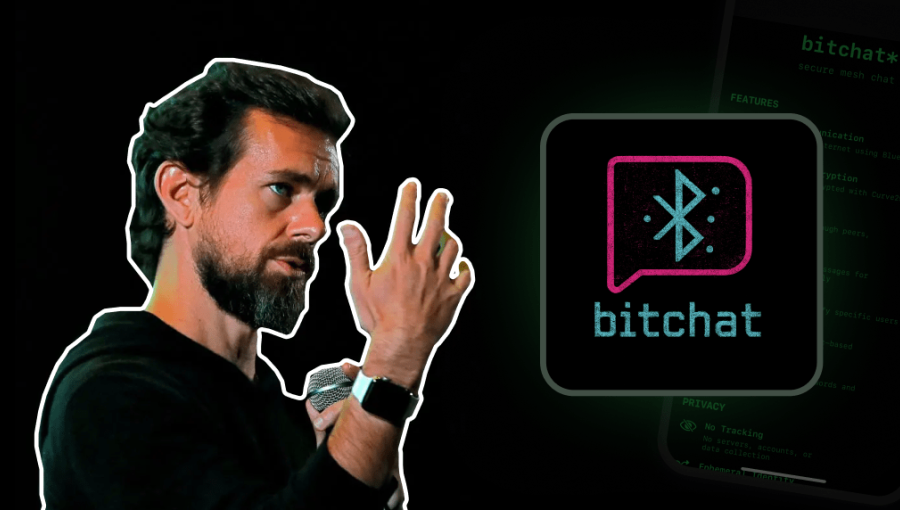
Jack Dorsey backs offline messaging app Bitchat as essential tool for protesters

WHICH PROTESTERS; IRAN OR MINNESOTA?!

Jack Dorsey backs offline messaging app Bitchat as essential tool for protesters
Jack Dorsey backs offline messaging app Bitchat as essential tool for protesters / bne IntelliNews
By Ben Aris in Berlin January 18, 2026

A new messaging app backed by Twitter co-founder Jack Dorsey is gaining attention for its decentralised, offline capabilities designed to function during internet blackouts—features that have prompted some to call it a “protester’s secret weapon”.

Bitchat, developed by the crypto-focused company Keet, allows users to communicate without Wi-Fi, mobile data, or centralised infrastructure. Instead, the app relies on Bluetooth and peer-to-peer connections that messages simply jump from phone-to-phone, with no need for mobile towers or internet servers.

The service is ideal for demonstrations where large numbers of people gather, but where the authorities attempt decapitate protest movements by shutting down the internet and prevent demonstrators coordinating their actions, as the Islamic Republic recently did in the mass protests that broke out on December 28.

“No towers, no servers, no kill switch,” the company said in a promotional message.

The app has no login requirement, does not use SIM cards, and stores no data on centralised servers—attributes that make it particularly appealing for use in countries with authoritarian regimes, where data stored on a phone can lead to arrest and prosecution – and even execution in Iran.

“It’s ideal for places like Iran, where regimes love blackouts and protesters need a way to talk when the internet ‘suddenly disappears,’” Bitchat’s developers said in a statement published on January 17.

Bitchat is built on the same peer-to-peer technology as Keet, a video and chat application launched by the team behind Holepunch, a platform funded in part by Dorsey through his Bitcoin-focused company, TBD. Keet and Bitchat both use the Lightning Network and Holepunch’s distributed application protocol to allow users to connect directly without intermediaries.

Dorsey, a longtime proponent of decentralisation and censorship resistance, has previously criticised centralised social media and internet platforms for their vulnerability to government overreach and corporate control. His support for Bitchat aligns with a broader push among crypto and privacy advocates to build resilient tools for free communication.

The emergence of apps like Bitchat comes amid rising concern about the global trend of internet shutdowns. According to digital rights watchdog Access Now, authorities implemented at least 187 internet shutdowns in 35 countries in 2022, with Iran, India and Myanmar among the most frequent offenders.

“No logins. No SIM cards. No surveillance,” the company said in its launch announcement.