Tuesday, January 20, 2026


Study suggests pathway for life-sustaining conditions in Europa’s ocean


Washington State University


PULLMAN, Wash.—A recent study by geophysicists at Washington State University offers insight into how nutrients may reach the subsurface ocean of Europa, one of Jupiter’s moons and a leading candidate for extraterrestrial life in the solar system.

Scientists have long wondered how life-sustaining nutrients could make it from the surface into Europa’s ice-covered ocean, where microscopic life is believed to exist. Drawing from a process from Earth’s geology known as crustal delamination, the research team used computer modeling to show that dense, nutrient-rich ice can separate from the surrounding ice and descend into the ocean.

“This is a novel idea in planetary science, inspired by a well-understood idea in Earth science,” said Austin Green, lead author and postdoctoral researcher at Virginia Tech. “Most excitingly, this new idea addresses one of the longstanding habitability problems on Europa and is a good sign for the prospects of extraterrestrial life in its ocean.”

The research paper was published in The Planetary Science Journal by Green, who conducted much of the primary research during his doctoral dissertation at WSU, and Catherine Cooper, associate professor of geophysics in the School of Environment and associate dean in the College of Arts and Sciences.  

Europa contains more liquid water than all of Earth’s oceans combined, but its global ocean lies beneath a thick shell of ice that blocks sunlight. The icy shell means that any life in Europa’s ocean has to find nutrient and energy sources other than the Sun, raising longstanding questions about how Europa’s ocean could be habitable.

Europa is also constantly bombarded by intense radiation from Jupiter. The radiation interacts with salts and other materials on Europa’s surface to form useful nutrients for oceanic microbes. Although there are several theories, scientists are unsure of how that nutrient-rich surface ice can work through the icy shell layer to reach the ocean layer. While Europa’s icy surface is highly geologically active due to Jupiter’s gravitational pull, the ice mostly shifts side to side rather than in the downward motion necessary for surface-ocean exchange.

Green and Cooper decided to look to Earth for possible explanations and solutions to the surface recycling problem. They zeroed in on the concept of crustal delamination, where a zone of crust is tectonically squeezed and chemically densified until it detaches and sinks into the mantle.

The researchers thought this concept might apply to Europa, since various regions of the ice surface are enriched in densifying salts. Other studies have shown that ice crystalline structure is weakened by included impurities and is less stable than pure ice. However, to trigger delamination, the ice surface needs to be weakened in order to detach and sink within the icy shell interior.

The research team proposed that the denser, saltier ice surrounded by pure ice would sink into the interior of the ice shell, providing a means of recycling Europa’s surface and feeding the ocean. Using computer modeling, they determined that nutrient-rich surface ice can sink all the way to the base of the ice shell for almost any salt content, provided there is at least a little weakening in the surface ice. The process is also relatively rapid and could be a consistent means of recycling ice and providing nutrients into Europa’s ocean.

The findings closely align with the primary goals of the Europa Clipper, a NASA flagship mission launched in 2024 to investigate Europa’s ice shell, ocean, and potential to support life using a suite of scientific instruments.

This research effort was supported in part by the National Aeronautics and Space Administration (NASA) Grant NNX15AH91G, and used resources from the Center for Institutional Research Computing at Washington State University.

'President Trump is trying to replace the UN', says Belgian FM

Euronews

By Sasha Vakulina & Estelle Nilsson-Julien
Published on 

US President Donald Trump is trying to supplant the United Nations with his supposedly transitional "Board of Peace", Maxime Prévot told Euronews.

Speaking to Euronews at Davos on Tuesday, Belgian Foreign Affairs Minister Maxime Prévot accused United States President Donald Trump of seeking to "replace the United Nations' system" with his transitional "Board of Peace", a body ostensibly set up to administer post-war Gaza.

While it remains unclear exactly how many leaders have been asked to join the body, Prévot told Euronews that Belgium has not been invited, decrying the project as “totally unacceptable” and adding that Trump was trying to "create his own personal board".

Trump began inviting world leaders to join the Board of Peace on 16 January in exchange for a $1 billion fee, stating that the body aimed to foster “a bold new approach to resolving global conflict".

The newly assertive positioning of the Board of Peace has sparked major speculation around whether the body could become a rival to the UN Security Council, which was created in the wake of World War II.

'Not the way Belgium intends to go'


Acknowledging the UN's shortcomings, Prévot stressed the importance of reforming it from the inside, pointing to the UN80 initiative, which "already aims to merge certain agencies to create new opportunities for the UN to increase its efficiency".

Prévot also pointed to the possibility of "creating new opportunities" within the UN's Security Council for African, Latin American, and Asian countries.

"Defending international law is crucial for a medium-sized country like Belgium," he stated, adding that "creating something new in order to bypass the United Nations is certainly not the way Belgium intends to go".

The US is expected to share details about the Board of Peace's membership list in the coming days, with speculation abounding around whether the announcement will occur during the World Economic Forum's annual meeting, underway in Davos until 23 January.

Trump's Board of Peace plans have further inflamed tensions between the US and its European partners, which are already running high due to Trump stepping up his threats to seize Greenland in recent days and refusing to rule out the use of military force.

On Monday, a French official close to President Emmanuel Macron said that despite receiving an invitation, France did not plan to join the Board of Peace “at this stage”. The official stressed that plans for such a body raised questions around respect for the principles and structure of the United Nations.

In response to the news on Monday that Macron was unlikely to sign France up, Trump told reporters: "Nobody wants him because he's going to be out of office very soon".

“I'll put a 200% tariff on his wines and champagnes, and he'll join,” he said, “but he doesn't have to join.”

Europe needs to strengthen its autonomy

Prévot told Euronews that Europe should prioritise strengthening its strategic autonomy, specifically in the military, technology and energy sectors.

"We can no longer depend blindly on the security provided by the US", he said, warning that "otherwise this could lead to a weakened Europe.”

He highlighted that Belgium has been working to fix its reputation as a "bad pupil in the classroom" after consistently failing to meet NATO spending targets.

"We achieved the 2% GDP target last year, and we will continue to increase our spending for the defence sector," Prévot said.


Trump Invites Putin, Netanyahu to Join Peace Panel Mocked as ‘Board of Billionaires and War Criminals’

“This is a board of colonial administration, run by war criminals and kleptocrats,” said one critic. “It has zero legitimacy.”


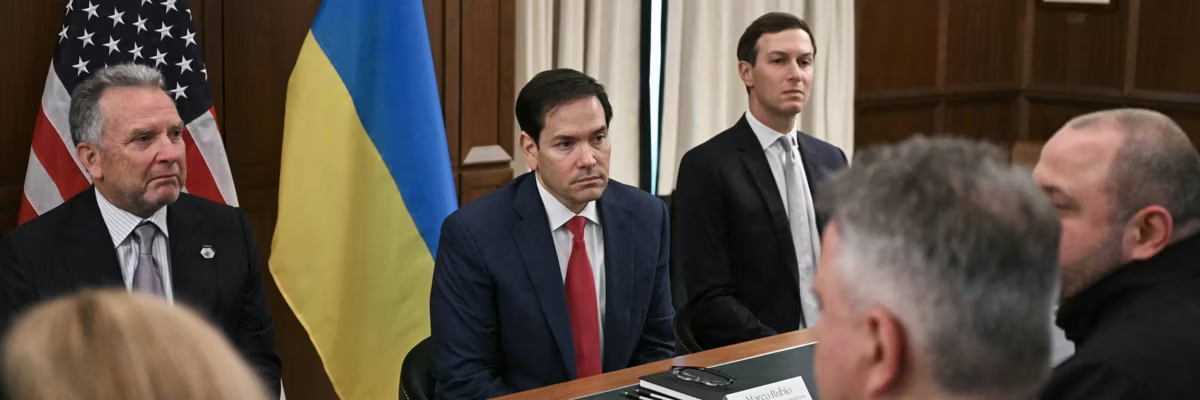
Three members of the executive board of US President Donald Trump’s Board of Peace—US Mideast Envoy Steve Witkoff (left), US Secretary of State Marco Rubio (center), and Trump adviser Jared Kushner (right)—attend talks on Ukraine in Hallandale Beach, Florida on November 30, 2025.
(Photo by Chandan Khanna/AFP via Getty Images)

Brett Wilkins
Jan 19, 2026
COMMON DREAMS

Criticism of President Donald Trump’s so-called “Board of Peace” mounted Monday after the White House invited controversial figures—including two leaders wanted by the International Criminal Court for alleged war crimes—to join the body tasked with supporting the management and reconstruction of Gaza.

Among Trump’s latest invitees to the board are Belarusian President Alexander Lukashenko, Russian President Vladimir Putin, and Israeli Prime Minister Benjamin Netanyahu. Lukashenko has repressively ruled Belarus for over 30 years and supports Putin’s ongoing invasion and occupation of Ukraine, for which the Russian president is wanted by the International Criminal Court for alleged war crimes. Netanyahu is also wanted by the ICC for alleged war crimes and crimes against humanity in Gaza.

Trump—who has bombed 10 countries over his two terms in office—will chair the organization, whose executive board will also include former British leader and alleged war criminal Tony Blair, US Secretary of State Marco Rubio, US Mideast Envoy Steve Witkoff, World Bank President Ajay Banga, billionaire businessman Marc Rowan, real estate investor and Trump son-in-law Jared Kushner—who has publicly called for the ethnic cleansing of Gaza—and others.

“As if the people of Gaza have not suffered enough,” Global Justice Now director Nick Dearden said on Bluesky. “But Blair’s inclusion confirms the obvious—this is a board of colonial administration, run by war criminals and kleptocrats. It has zero legitimacy.”

Leaders of countries including Argentina, Canada, Egypt, France, Hungary, India, Italy, Jordan, Kazakhstan, Thailand, and Turkey were also invited to join the board. So was the European Union, with whom US relations are strained over issues including Trump’s tariffs and threats to invade Greenland, an autonomous Danish territory and NATO member.

Countries seeking permanent Board of Peace membership will be required to pay a $1 billion fee. A US official told the Associated Press that the fee would go toward reconstructing the obliterated Palestinian strip following more than two years of Israel’s genocidal assault and siege.

There are no Palestinians on the board.


A separate National Committee for the Administration of Gaza—a 12-member technocratic body led by Palestinian official Ali Shaath and tasked with managing day-to-day affairs in the strip—held its inaugural meeting last week in Cairo as Witkoff said that Phase 2 of Trump’s 20-point peace plan for Gaza had begun.

While Trump’s invitation letters to prospective Board of Peace members said the body will “embark on a bold new approach to resolving global conflict,” critics panned the panel as a vanity project for Trump, who fancies himself a grand peacemaker despite having bombed seven countries this year alone.

“I hope he can find time to attend Board of Peace meetings between meetings about invasions of Venezuela, Iran, Greenland, Canada, and Minneapolis,” University of Denver political scientist Seth Masket said of Trump in a Bluesky post.


Former US State Department diplomat Aaron David Miller told the Washington Post Monday, “The Board of Peace is a concept tethered to a galaxy far, far away, not tethered to the realities back here on planet Earth.”

“The Board of Peace is not going to be able to solve the conflict in Sudan. It is not going to do what American mediators and Europeans couldn’t do with respect to getting a ceasefire in Ukraine,” he continued.

“We need on-the-ground diplomacy, not the performative creation of committees and bringing large numbers of countries and individuals into a process in which most of them will have no role,” Miller added. “You need Trump. You need Netanyahu. You need Hamas’s internal and external leadership, and you need the Qataris and the Turks.”

On Monday, far-right Israeli Finance Minister Bezalel Smotrich condemned the Board of Peace.

“It is time to explain to the president that his plan is bad for the state of Israel and to cancel it,” Smotrich said during a ceremony to inaugurate the new Yatziv apartheid settlement in the illegally occupied West Bank. “Gaza is ours, its future will affect our future more than anyone else’s. We will take responsibility for what happens there, impose military administration, and complete the mission.”

This, after Netanyahu said earlier in a rare public rebuke of Trump that the board “was not coordinated with Israel and runs contrary to its policy.”

Nearly a year ago, Trump also said that the US would “own” Gaza, ethnically cleanse it of Palestinians, and transform the coastal strip into the “Riviera of the Middle East.” He later clarified that he meant the “voluntary” transfer of Palestinians, which critics said amounted to a euphemism for ethnic cleansing.

The White House also reportedly circulated a plan to transform a substantially depopulated Gaza into a high-tech hub replete with a “Gaza Trump Riviera and Islands” development and an “Elon Musk Smart Manufacturing Zone.”

Palestinians have largely been highly skeptical of the Board of Peace.

“When I read the names of the peace council members, I felt this was not a plan that prioritizes the interests of Gaza’s residents,” Sameh Abu Marsa, a forcibly displaced Palestinian living in a refugee camp in Gaza City, told Xinhua Monday. “It looks more like a new form of international mandate, with decisions made externally and without participation from people on the ground.”

“These names suggest political deals rather than genuine peace,” he added.

Khaled Elgindy, a Palestinian scholar at Georgetown University’s Center for Contemporary Arab Studies, said on X Saturday that “tellingly, there is not a single reference to Palestinians, their rights, interests, or even a future [Palestinian] state—none of which are a priority for Blair, Trump, or the so-called Board of Peace.”

Others noted the continuing dire humanitarian crisis in Gaza as Israel restricts the entry of aid, as well as Israel’s more than 1,200 violations of the three-month ceasefire with Hamas. According to the Gaza Health Ministry, at least 465 Palestinians have been killed and 1,287 wounded since the tenuous truce took effect on October 10.

“How can we talk about a peace council while Israel’s violations continue here?” asked Khan Younis resident Abdul Raouf Awad.


What is Trump’s ‘Board of Peace’?

By AFP
January 20, 2026


Palestinians inspected the debris of a damaged building in the Zeitoun neighbourhood of Gaza City, the day after a wave of Israeli air strikes - Copyright AFP Omar AL-QATTAA

US President Donald Trump’s government has asked countries to pay $1 billion for a permanent spot on his “Board of Peace” aimed at resolving conflicts, according to its charter seen by AFP.

The board was originally conceived to oversee the rebuilding of Gaza, but the charter does not appear to limit its role to the occupied Palestinian territory.

– What will it do? –

The Board of Peace will be chaired by Trump, according to its founding charter.

It is “an international organization that seeks to promote stability, restore dependable and lawful governance, and secure enduring peace in areas affected or threatened by conflict”, reads the preamble of the charter sent to countries invited to participate.

It will “undertake such peace-building functions in accordance with international law”, it adds.

– Who will run it? –

Trump will be chairman but also “separately serve as inaugural representative” of the US.

“The chairman shall have exclusive authority to create, modify, or dissolve subsidiary entities as necessary or appropriate to fulfil the Board of Peace’s mission,” the document states.

He will pick members of an executive board to be “leaders of global stature” to “serve two-year terms, subject to removal by the chairman”.

He may also, “acting on behalf of the Board of Peace”, “adopt resolutions or other directives”.

The chairman can be replaced only in case of “voluntary resignation or as a result of incapacity”.

– Who can be a member? –

Member states must be invited by the US president, and will be represented by their head of state or government.

Each member “shall serve a term of no more than three years”, the charter says.


US President Donald Trump so-called ‘Board of Peace’ would have him in charge of it, able to adopt decisions on its behalf – Copyright AFP/File Thomas COEX

But “the three-year membership term shall not apply to member states that contribute more than USD $1,000,000,000 in cash funds to the Board of Peace within the first year of the charter’s entry into force”, it adds.

The board will “convene voting meetings at least annually”, and “each member state shall have one vote”.

But while all decisions require “a majority of member states present and voting”, they will also be “subject to the approval of the chairman, who may also cast a vote in his capacity as chairman in the event of a tie”.

– Who’s on the executive board? –

The executive board will “operationalise” the organisation’s mission, according to the White House, which said it would be chaired by Trump and include seven members:

– US Secretary of State Marco Rubio

– Steve Witkoff, Trump’s special negotiator

– Jared Kushner, Trump’s son-in-law

– Tony Blair, former UK prime minister

– Marc Rowan, billionaire US financier

– Ajay Banga, World Bank president

– Robert Gabriel, loyal Trump aide on the National Security Council

– Which countries are invited? –

Dozens of countries and leaders have said they have received an invitation.

They include China, India, Russia’s President Vladimir Putin, Ukraine’s Volodymyr Zelensky and Canada’s Prime Minister Mark Carney.

Egypt’s President Abdel Fattah al-Sisi and Argentina’s President Javier Milei have also confirmed an invite.

Other countries to confirm invites include Jordan, Brazil, Paraguay, Pakistan and a host of nations from Europe, Central Asia and the Middle East.

– Who will join? –

Countries from Albania to Vietnam have indicated a willingness to join the board.

Hungarian Prime Minister Viktor Orban, Trump’s most ardent supporter in the European Union, is also in.

Canada said it would take part, but explicitly ruled out paying the $1-billion fee for permanent membership.

It is unclear whether others who have responded positively — Armenia, Belarus, Kazakhstan, Morocco and Vietnam among them — would be willing to pay the $1 billion.

– Who won’t be involved? –

Long-time US ally France has indicated it will not join. The response sparked an immediate threat from Trump to slap sky-high tariffs on French wine.

Zelensky said it would be “very hard” to be a member of a council alongside Russia, and diplomats were “working on it”.

– When does it start? –

The charter says it enters into force “upon expression of consent to be bound by three States”.

burs-jxb/rmb

EVITA OF UKRAINE


COMMENT: Tymoshenko back in play as Ukrainian parliamentary politics returns to the fore

COMMENT: Tymoshenko back in play as Ukrainian parliamentary politics returns to the fore
Pushed to the sidelines of Ukrainian politics for several years, NABU accusations of vote-buying have once again shoved firebrand opposition leader Yulia Tymoshenko back into the spotlight of Ukrainian domestic politics. / bne IntelliNews
By bne IntelliNews January 20, 2026

Orange Revolution firebrand Yulia Tymoshenko’s sudden re-emergence at the centre of Ukraine’s political scene after she was caught up in a vote-selling scandal  has seen her return to the heart of Ukrainian politics.

“The Tymoshenko scandal reflects the fact that the centre of Ukrainian politics is once again shifting to parliament,” wrote political analyst Konstantin Skorkin in a recent commentary for Carnegie Endowment for International Peace. “The fight for parliamentary deputies’ votes is heating up again, and Ukraine’s domestic political crisis is entering a new phase.”

Once a dominant figure in Ukraine’s early post-independence years, Tymoshenko’s career trajectory mirrored the country’s own political evolution. She was a successful businessperson in the 1990s, earning a fortune from gas trading at a time when she also severed as Ukraine’s gas minister, earning her the moniker “the gas princess.”

Then she moved into politics thanks to her association with prime minister and now convicted criminal Pavlo Lazarenko. She became a fixture in the opposition during the Kuchma and Yanukovych presidencies, before she and her trademark crown braid became an icon of the Orange Revolution. In the new post revolution government she achieved her political pinnacle, twice serving as prime minister and imprisoned on two occasions. Yet after she was released from jail after the EuroMaidan revolution in 2014 she political star set and she became the largely irrelevant head of a small Rada fraction, the Fatherland Party that hold less than a dozen seats in parliament. She ran in the 2019 presidential elections but came a distant third to the now Ukrainian president, Volodymyr Zelenskiy. Since then Zelenskiy’s Servant of the People party has held an absolute majority in parliament and dominates domestic politics.

Following Russia’s full-scale invasion in 2022, Tymoshenko struggled to find footing in Ukraine’s wartime consensus. “She became critical of the government, condemning the new mobilisation law and the restrictions on consular services for Ukrainians abroad,” Skorkin observed. Adopting the socially conservative platform, styling herself as a Ukrainian Trump, Tymoshenko positioned herself as a populist voice against liberal reforms, opposing cannabis legalisation and what she termed a “gender agenda.”

In the summer of 2025, she led a campaign to curtail the powers of Ukraine’s anti-corruption bodies, branding the National Anti-Corruption Bureau (NABU) that is now investigating her for vote-buying as an agent of “external control.” She supported Zelenskiy’s controversial attempt to gut Ukraine’s anti-corruption reforms on July 22 with Law 21414, which sparked the first anti-government demonstrations since the start of the war with Russia.

Her refusal to support legislation restoring NABU’s authority following presidential intervention drew accusations of obstructionism. “Tymoshenko’s reaction came across as a case of sour grapes among the old elites,” Skorkin wrote, “unhappy with real efforts to fight the corruption that had long plagued the country.”

But when she was accused of corruption, accompanied by some very damning video and audio tapes, released by NABU, she hit back by accusing Zelenskiy personally of corruption – a sentiment that will resonate with voters. In the tapes, a voice alleged to be Tymoshenko’s offers deputies $10,000 per month for their votes and speaks of plans to “overthrow the majority.”

The recent charges against Tymoshenko—bribery and attempted vote-buying—come amid what Skorkin described as “a large-scale purge of the elites,” triggered by the publication of the so-called Mindich tapes in late 2025 that are at the centre of the Energoatom corruption scandal. Investigations have already reached members of the ruling party, including Zelensky’s associate Yuriy Kisel.

Her apparent goal, according to Skorkin, was to undermine Zelensky’s single-party control of the Verkhovna Rada, which has been showing signs of fragmentation. “The opposition wants to drive a deeper wedge into this cracked monolith,” Skorkin wrote, pointing to a failed vote on a proposed reshuffle and growing speculation of a “parliamentary coup” that could curtail presidential powers.

In line with the charges, Tymoshenko has been barred from leaving the Kyiv region and from communicating with 66 deputies. Bail has been set at UAH33mn ($760,000). Yet typically for the grandstanding Tymoshenko, even under legal pressure she used the court hearing as a political platform. “Trials and imprisonment have helped Tymoshenko rise to the top of Ukrainian politics on more than one occasion,” Skorkin noted.

Whether that strategy can succeed again is uncertain. “It will be difficult to repeat those past successes given how much time has passed and how much the country has changed since then,” Skorkin concluded. “Still, the Tymoshenko case demonstrates that the anti-corruption earthquake last fall has sent such powerful shock waves through Ukrainian politics that it has brought to the surface those who dwelt in its depths—those who may yet play a role in a battle in which they had already been written off.”


PANNIER: Afghanistan’s increasingly unruly north a headache for Taliban and Central Asia

PANNIER: Afghanistan’s increasingly unruly north a headache for Taliban and Central Asia
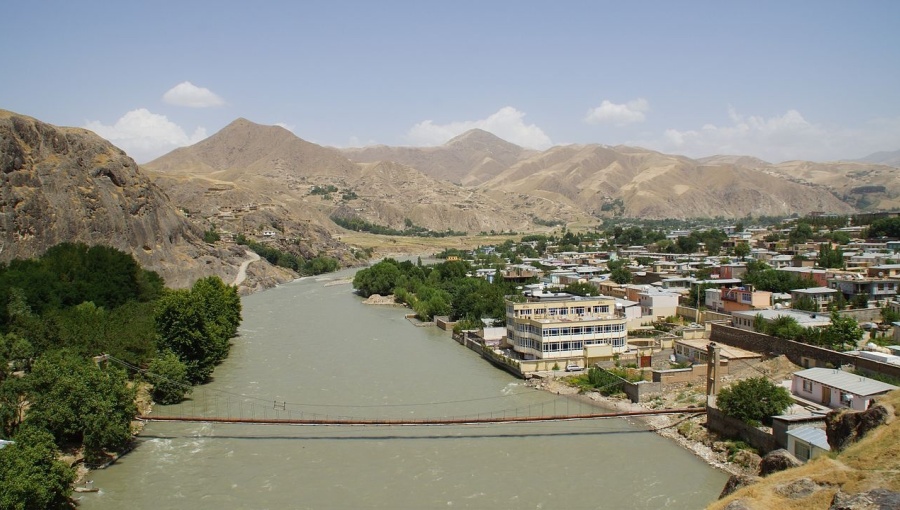
Fayzabad, capital of Badakhshan, a province of particular concern in the new instability besetting northern Afghanistan. / Julian-G. Albert, cc-by-sa 2.0
By Bruce Pannier January 20, 2026

When they returned to power in August 2021, the Taliban promised that no group would use Afghan soil to plot or carry out an attack on any of Afghanistan’s neighbours.

Yet several attacks experienced in southern Tajikistan in recent months, which emanated from Afghanistan, suggest the Taliban cannot entirely uphold this guarantee.

Just as alarming is the fact that the Taliban are experiencing problems controlling the situation in areas of northern Afghanistan that border Central Asia, in great part due to their policies on ethnic groups that inhabit this region, such as the Tajiks and Uzbeks.

Fractious northern provinces

During the early morning of January 18, Tajik border guards shot dead four intruders who had crossed into Tajikistan from Afghanistan. Tajik authorities said the four were from an unspecified terrorist group.

They were discovered shortly after they entered Tajikistan’s Shamsiddin Shohin district. The district was the scene of several attacks in the second half of 2025, including an attack on a gold-mining operation in late November that killed three Chinese workers. The raid involved the use of a small drone armed with a grenade.

The district is also the same one where two Tajik border guards and three people, described as terrorist group members, were killed in a shootout on December 23, and where Tajik border guards and Taliban fighters exchanged fire on August 24 and then again in late October.

In the August clash, at least one Taliban fighter was killed and four were wounded. Reports on the October incident said only that there were casualties on both sides.

There have also been incidents in Darvoz district, which neighbours Shamsiddin Shohin to the east, including one on November 30 in which two Chinese roadworkers were shot dead and three were wounded by gunfire from the Afghan side of the border.

On the other side of the border from these districts in Tajikistan is Afghanistan’s Badakhshan Province.

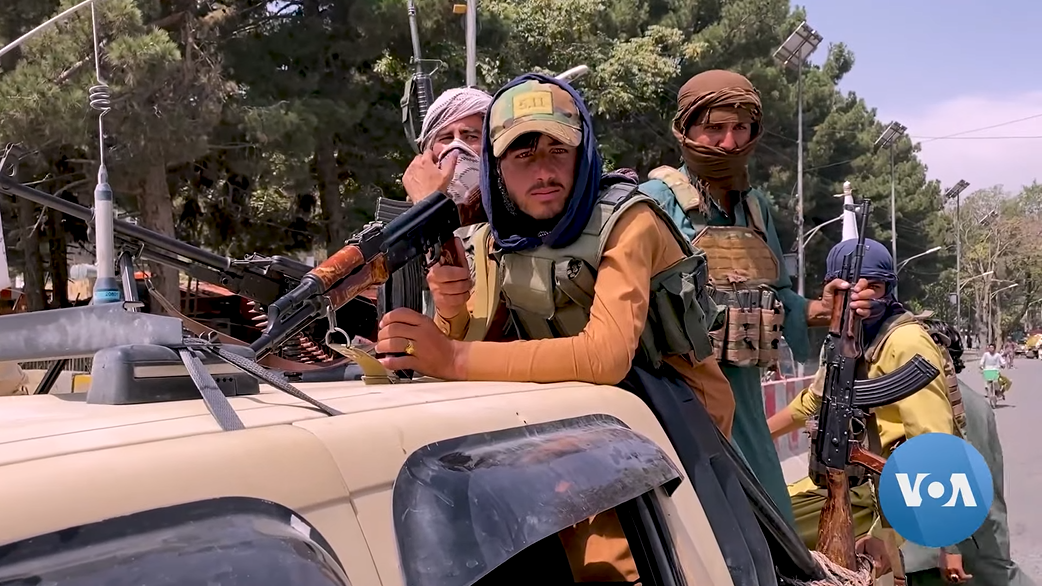
The Taliban are encountering more and more difficulties in controlling matters in areas of northern Afghanistan that border Central Asia (Credit: VOA (YouTube), public domain). 

On May 24 last year, Taliban forces arrived in the village of Farghamanch in Badakhshan’s Jurm district to destroy local farmers’ opium crops. Ethnic Tajik Taliban fighters in the area reportedly supported the farmers’ protest against the newly arrived ethnic Pashtun Taliban forces’ plans to eradicate the crop. Shooting started and at least one of the locals was killed, while six were wounded. The same day, a local Taliban commander, Mawlawi Zaidullah, recently returned from Iran, was killed along with his wife and child in Badakhshan’s Shuhada district during a clash between “rival” Taliban units.

On June 19, some residents of Badakhshan’s Khash district protested against the arrival of Taliban intent on destroying their opium poppy crop. The protesters burned three tractors that the Taliban intended to use to plough under the poppies. On June 30, the Taliban returned and fired on the protesters, killing eight people and wounding 27.

Five days later, a leading religious figure among the Shi’ite Ismaili Muslims, Fazi Ahmad Paoz, was assassinated in Badakhshan’s Zebak district. A report in December detailed the Taliban’s “organised discrimination, including arbitrary arrests, torture, and death threats aimed at forcing [Ismaili]) to renounce their faith.”

Across the border from Turkmenistan and Uzbekistan there have also been problems.

On the first day of 2026, there was an attack on a court building in Maimana, the capital of Faryab Province that borders Turkmenistan. The Afghanistan Freedom Front claimed responsibility. The group said they were targeting a meeting of local officials from the Taliban’s Ministry for the Promotion of Virtue and Prevention of Vice and that four Taliban were killed and two wounded.

In Faryab Province in June last year, tensions broke out between the Taliban and the local ethnic Uzbek community after a group of Pashtun boys tossed fireworks at a group of Uzbek girls. Tempers flared and spread as the Uzbeks protested. Some reportedly attacked Taliban police posts. At least 165 Uzbeks were arrested during the next several days, though all were later released. Only two Pashtun boys were taken into custody.

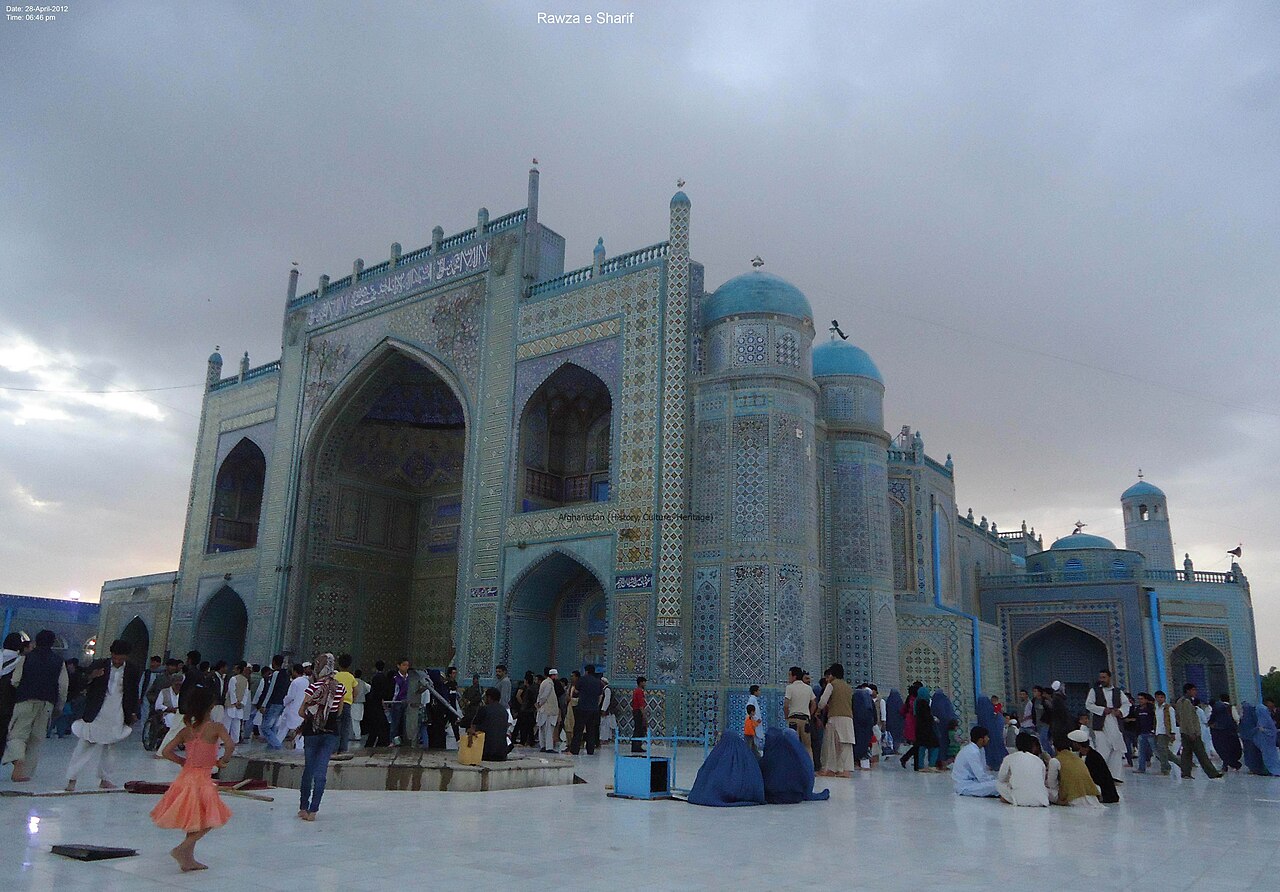
In April 2025, there was an explosion in Mazar-i-Sharif, 75 kilometres (47 miles) south of the border with Uzbekistan. The target appeared to be a Shi’ite mosque.

The city of Mazar-i-Sharif is sometimes a flashpoint for ethnic tensions (Credit: AhmadElhan, cc-by-sa 4.0).

Uzbekistan’s government twice raised concerns about Taliban actions in northern Afghanistan that appeared to discriminate against ethnic Uzbeks. In August last year, the Uzbek Foreign Ministry contacted the Taliban after reports that a monument to revered Uzbek poet and scholar Alisher Navoi in Mazar-i-Sharif had been demolished, and again after reports in November that Uzbek and Persian were removed from signs at Afghanistan’s Samangan University.

In both cases the Taliban promised to address the issues. The signs with Uzbek and Persian were restored.

The Taliban said they were moving the monument of Alisher Navoi to a more dignified location (it was in front of a market), but there is no word of it reappearing in another location in Mazar-i-Sharif.

Disarmed and relocated

Another potential flashpoint in northern Afghanistan concerns the fate of ethnic Tajiks and Uzbeks, some of them from Tajikistan and Uzbekistan, who were part of, or allied to, the Taliban from 2001-2021.

Recent reports have said the Taliban is reducing the number of its fighters for budgetary reasons and that thousands of ethnic Tajiks and Uzbeks have been discharged from the armed forces. Most of these personnel cuts took place in northern provinces where Tajiks and Uzbeks make up the majority of the population.

Militants from the Islamic State of Khorasan Province (ISKP, or ISIS-K) have been fighting the Taliban for a decade. For the last several years, ISKP propaganda has targeted ethnic Tajiks and Uzbeks who have been evicted from their land or otherwise abused by ethnic Pashtun Taliban leaders and their policies.

ISKP continues to carry out attacks in northern Afghanistan and the group has found recruits, particularly among Tajiks in Tajikistan. Tajik nationals have carried out attacks in Afghanistan, Iran, Turkey and Russia, and have been detained for plotting attacks in European countries.

The Taliban, meanwhile, evacuated four villages in Panjshir Province to resettle militants from the Islamic Movement of Uzbekistan (IMU) and their families.

The IMU is a domestic terrorist organisation from Uzbekistan who staged attacks in southern Kyrgyzstan and Uzbekistan in 1999 and 2000. The IMU were allies of the Taliban before the attacks of September 11, 2001 brought the United States and its allies into Afghanistan.

The IMU group being moved to Panjshir has been living in Baghlan Province. Their resettlement solves two problems. Firstly, it removes these veteran fighters from majority-Uzbek areas, and secondly, it transfers them to an area that has been a known stronghold of ethnic Tajik fighters who battled the Taliban in the late 1990s and have been fighting a guerrilla campaign in the area since the Taliban retook power in 2021.

The Taliban are facing increasing challenges to their rule in northern Afghanistan. Some of the resistance comes from ISKP. But in the cases of the villagers in Jurm or Faryab, it is from average Tajiks and Uzbeks, respectively, something the governments in Tajikistan and Uzbekistan have surely noticed.

The Central Asian states have been trying to establish solid business ties with the Taliban with an eye toward using Afghanistan as a transit country to Pakistan and India. The unrest in northern Afghanistan involving Tajiks and Uzbeks threatens to derail the cautious but amicable relationship Central Asia is trying to establish with the Taliban.