Sunday, February 01, 2026

After Greenland Dispute, EU Wants to Reduce Dependence on American LNG
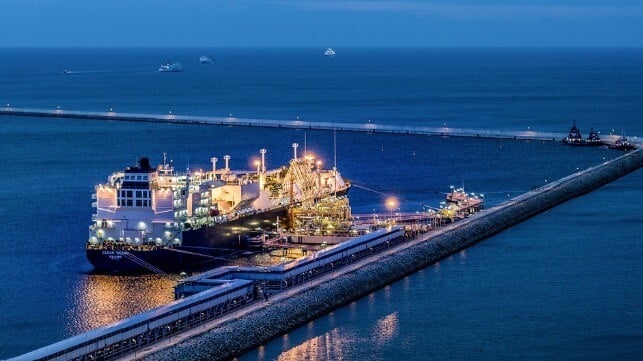
An LNG carrier delivers a cargo from the United States at a terminal in Poland, 2020 (PGNiG / Maciej Margas / CC BY SA 4.0)

Published Jan 29, 2026 8:12 PM by The Maritime Executive


The European Union's top energy official is actively looking to source LNG from outside of the United States, the EU's biggest supplier, because of recent announcements from the White House that have deep implications for Europe's security. 

Europe's energy ties with the U.S. have strengthened since the Russian invasion of Ukraine began in February 2022. Several months after Russian troops marched on Kyiv, Russian national gas company Gazprom broke its long-term supply agreements with European utilities, cutting off Europe from inexpensive pipeline gas. In the four years since, the EU has phased out most remaining sources of Russian gas, and it plans to complete that ramp-down by the end of 2027.  

To fill the gap, Europe increased its pipeline gas imports from Norway and invested significantly in expanding LNG import capacity. The largest share of the extra LNG has come from one longtime trade and security partner - the United States, which has a booming LNG export industry on the Gulf Coast. Today, nearly 60 percent of European LNG imports come from American suppliers.

That urgently-needed energy supply has allowed European industry to keep running without dependence on Gazprom, an essential factor given the current and predicted levels of conflict with Russia. But the imports have also made EU energy markets dependent on America, and on American decisionmakers, to a degree that now makes some European leaders unsettled.

In a press conference Wednesday, EU energy chief Dan Jørgensen told reporters that after recent interactions with U.S. leadership, Europe is actively looking to source gas from other high-potential exporters, including Canada, Qatar and Algeria. Europe doesn't want to cut off American LNG, he said, but it has decided that it now needs to find additional strategic options. In particular, it is motivated by "the strained relationship to the U.S. and the fact that we have an American president that does not exclude using force against Greenland." 

The White House's recent statements about an American need to "own" Greenland - "the hard way" if necessary, with "utilizing the U.S. military" a possible option - have pushed the EU to rethink the assumption that its U.S. gas supply will be secure, Jørgensen said. (U.S. leadership has since disavowed the idea of using force to acquire Greenland.)

The White House told Bloomberg this week that the U.S. remains Europe's most secure energy source. "Thanks to President Trump, U.S. suppliers are the best, most reliable partners, and we will continue to work with European nations to meet their energy demands with U.S. LNG," White House spokeswoman Taylor Rogers said. 

Analysts see further signs of European unease in the flurry of diplomatic activity with other partners, like the EU-India "mother of all deals" trade agreement revealed on Tuesday. While the agreement was in the works for months, the timing and the terms have been widely seen as a strategic move to diversify and reduce EU reliance on the U.S. market. China may also stand to benefit from an increased European interest in alternative partners.

"While there are exceptions, there appears to be a trend of America's traditional allies derisking from [the] United States," commented Ryan Hass, a senior fellow in foreign policy at Brookings, in a recent post. "The flow of leaders to China is striking. French, Canadian, Irish, British, Korean, Finnish, and soon German leaders visiting Beijing in recent weeks. Beijing isn't making its offering more attractive or growing less aggressive. It is presenting a predictable alternative."

Top image: An LNG carrier delivers a cargo from the United States at a terminal in Poland, 2020 (PGNiG / Maciej Margas / CC BY SA 4.0)
 

Danish Defence Charters Cruise Ship to House Troops in Greenland

expedition cruise ship
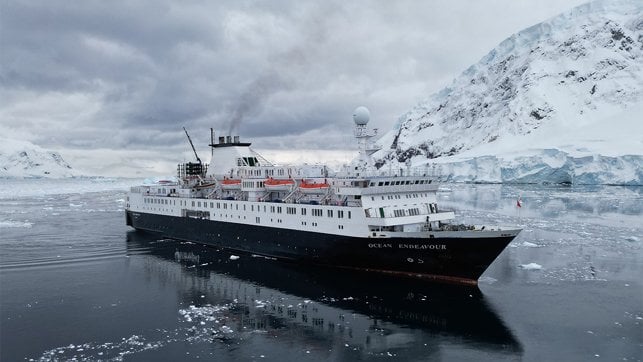
Expedition cruise ship Ocean Endeavour will be used to provide housing for Danish and NATO troops in Greenland (SunStone)

Published Jan 30, 2026 8:26 PM by The Maritime Executive


The former expedition cruise ship Ocean Endeavour is due to arrive in Nuuk, Greenland, on January 31 to become housing for Danish and NATO troops. The cruise ship is to remain in Greenland to provide housing during the Exercise Arctic Endurance underway to enhance the military presence and training in the region.

Danish Defence says it decided to charter the ship, which is outfitted as an Arctic exploration cruise ship, to expand the limited housing facilities in Nuuk. They noted it is an alternative to establishing temporary facilities on land while also ensuring that the increased presence does not place additional pressure on the limited hotel capacity in the capital of Greenland. It said the cruise ship would ensure that the troops do not interfere with tourists and other visitors to the island.

The exercise had been planned since last year, but NATO participation is being expanded in response to Donald Trump’s assertions about the lack of security in Greenland. Denmark highlights that the exercise is being led by the 90 permanent personnel of the Arctic Command and will see participation by France, Germany, Sweden, Norway, Finland, the Netherlands, Iceland, and Belgium. 

Arctic Endurance will take place throughout 2026, including Danish F-35 fighter aircraft, the Royal Danish Air Force’s Challenger transport aircraft, and the French MRTT aerial refueling plane. There will be a range of warships and patrol boats as well. They will train and provide critical infrastructure and patrol operations while further developing winter warfare skills.

The former cruise ship will be docked in Nuuk when it arrives. It is on charter from SunStone Marine Group, which owns the ship and charters it to various companies. It completed a previous charter that had seen it doing cruises in Antarctica, the Arctic, Greenland, and Canada until late 2025.

The ship has an interesting history, having been built in Poland in 1982 as a Soviet passenger ferry. It became a cruise ship in the early 2000s, including operating for an Israeli company, before being outfitted for polar cruising in 2015.

Ocean Endeavour is 12,900 gross tons, designed to accommodate 190 passengers and a crew and staff of 124. It has two restaurants, a lounge, a library, a theatre for lectures, and a gym with a sauna. 

Danish Defence did not specify how it will employ the ship. However, it said the ship ensures that the soldiers can live under good and familiar conditions.

Northern Lights has Deals With Shipping Lines to Double CO2 Transport Fleet

LCO2 transport
Northern Lights will double its fleet with larger capacity LCO2 transport vessels (Northern Lights)

Published Jan 29, 2026 8:33 PM by The Maritime Executive


The Norwegian CO2 storage initiative, which became the first commercial operation for carbon capture and storage, announced a new deal that will double the company’s fleet by 2029. This comes just months after the company completed its first injection of liquid CO2 for permanent storage.

Northern Lights, which is a joint venture between Equinor, TotalEnergies, and Shell, reports it has struck a new charter deal with major shipping companies, including existing partner Kawasaki Kisen Kaisha (“K” Line), while adding MISC Berhad and Mitsui O.S.K. Lines (MOL). Under the new agreements, “K” Line and MSC concluded one charter, and a second will be awarded in April 2026. Two additional charter agreements have been awarded to MOL.

Under the terms of the agreements, the three shipping companies will own the new vessels, which will operate under charter to Northern Lights. Northern Light also said it is increasing the size of each vessel, with the first three vessels awarded to each have a capacity of 12,000 cbm of liquified CO2. 

The new ships will be built by Dalian Shipbuilding Offshore in China and by HD Hyundai Heavy Industries. Deliveries will range between the second half of 2028 and the first half of 2029.

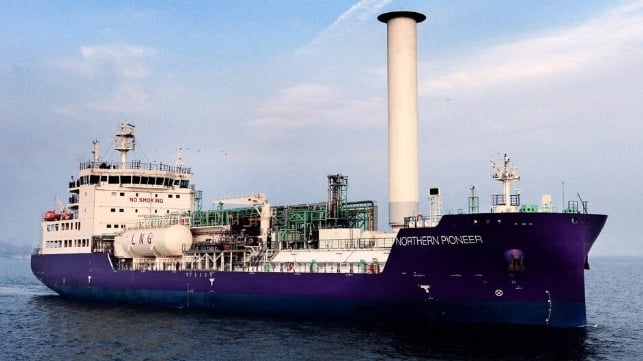
The company has taken delivery of three 7,500 cbm vessels, Northern PioneerNorthern Pathfinder, and Northern Phoenix. K Line operates these vessels under an agreement with Northern Lights. A further sister is currently under construction in China for delivery this year. It will be owned and operated by Berhard Schulte, a part of the Schulte Group.

Commenting on the new ship orders, Tim Heijn, Managing Director of Northern Lights, said they are building the first dedicated fleet for CO2 shipping. Doubling the number of ships and expanding capacity, he said, will enable Northern Lights to optimize its operations and increase flexibility.

The project received approval to launch the operation in May 2025 and reported it completed its first injection into the permanent storage reservoir 2,600 meters under the seabed in August. Already, the company had also announced plans for Phase 2, which will increase transport and storage capacity from 1.5 million tonnes to a minimum of 5 million tonnes of CO? per year.

As a commercial supplier, Northern Lights contracts with large emitters for the capture of their CO2. It is stored, liquefied, and transported aboard the company’s ships to the receiving facility in Norway. From there it is injected into the offshore permanent storage reservoir.

The company is contracting with major industrial companies, including in Norway, Heidelberg Materials’ cement factory in Brevik, and Hafslund Celsio’s waste-to-energy plant in Oslo. In addition, the Northern Lights JV has signed commercial agreements with Yara in the Netherlands, Ørsted in Denmark, and Stockholm Exergi in Sweden.


ISWAN Launches Landmark New Social Interaction Matters Research

International Seafarers’ Welfare and Assistance Network (ISWAN)

Published Jan 31, 2026 5:37 PM by The Maritime Executive


[By: ISWAN]

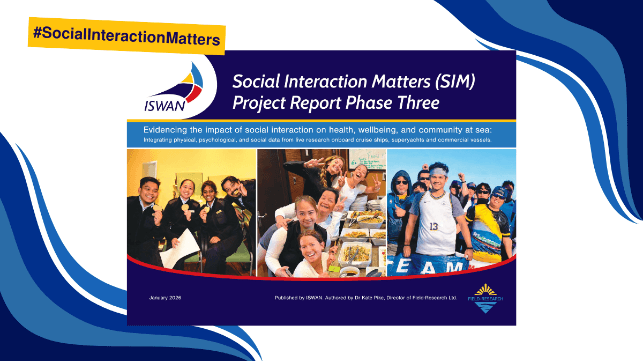
The International Seafarers’ Welfare and Assistance Network (ISWAN) has published Phase Three of its Social Interaction Matters (SIM) Project, presenting foundational research into the role of social interaction in shaping seafarers’ wellbeing across commercial shipping, cruise ships, and superyachts.

This landmark cross-industry research found that focused attention to social life on board, including having an appointed Social Ambassador from within the crew, enhanced morale, reduced stress and strengthened team cohesion. These factors are contributors to safer journeys, healthier crews, and an overall more inclusive on-board culture.**

This phase marks the first time live, onboard research of this kind has taken place within the cruise and superyacht industries, making it a significant milestone for seafarer wellbeing research and industry engagement. Building on earlier phases of the SIM Project, this research expands ISWAN’s evidence base across different vessel types and operational environments. 

The report highlights the critical role social interaction plays in supporting health, resilience, and a sense of belonging at sea, while also exploring the impact that persistent barriers such as fatigue, long working hours, and operational pressures have on individual wellbeing and the broader onboard culture. Experiences of social interaction were found to vary across vessel types, ranks, gender identity, and working environments, underlining the need for tailored, vessel-specific approaches rather than one-size-fits-all solutions. 

Key research findings:

  • The research confirms that social interaction is a core component of seafarer wellbeing, directly influencing morale, health, and resilience. Where opportunities for connection were limited, wellbeing outcomes were negatively affected.
  • Fatigue, long working hours, and operational demands significantly restrict opportunities for meaningful social interaction, despite its clear benefits. Differences across commercial ships, cruise vessels, and superyachts further demonstrate how onboard culture, hierarchy, gender, and environment shape social experience.
  • Of note, women crew in the cruise and superyacht industries were differently impacted by demands, reporting higher levels of mental and physical exhaustion than their men counterparts, even after accounting for workload and sleep.  
  • Differences across rank were found for officers, especially those in navigation and engineering roles, who reported lower social engagement. Hierarchies of power, including perceived professional boundaries, influence opportunities for connection and participation in onboard culture. 
  • Welfare initiatives therefore need to be tailored to the specific needs of these groups. 
  • Overall, the report reinforces that social interaction should be recognised as a fundamental element of safe, sustainable shipboard operations, rather than an optional or secondary aspect of life at sea. 

The study involved 176 seafarers across six vessels, with each vessel participating for three months. Data was collected using wellbeing surveys from PsyFyi and SeaQ, wearable technology from Fitbit, and qualitative insights. The participation of cruise operators, yacht managers, and shipping companies was central to the project’s success, reflecting a growing willingness within the three industries to engage in evidence-led conversations around wellbeing.

The SIM Project Phase Three report offers practical, evidence-based recommendations for companies operating across the commercial, cruise, and superyacht industries, providing guidance on how social interaction can be strengthened through leadership, onboard culture, and everyday operational practices.

‘The SIM Project Phase Three report delivers one of the most comprehensive evidence bases to date on how social connection, fatigue and inclusion shape seafarer wellbeing and safety at sea. Drawing directly on the lived experiences of crews across multiple maritime sectors, the research moves beyond compliance to reveal what genuinely supports health, resilience and performance onboard. It’s findings offer practical, scalable recommendations for operators, regulators and vessel designers, linking wellbeing to safer operations and stronger social cohesion. For the maritime industry, the report provides a clear, research led roadmap for improving working lives at sea while strengthening operational safety and safety culture.’ - Dr. Kate Pike, Research Lead

‘It’s been a privilege for PsyFyi to collaborate with ISWAN on the SIM Project and contribute to a better understanding of life on board. One of the highlights for us was working with such a varied mix of ship owners and operators, from cruise and commercial vessels to superyachts, and seeing how differently each crew lives and works. Bringing together seafarer feedback with behavioural and physiological data gave us a much richer picture on life onboard. Social life on board is often overlooked; vessels are workplaces, but they’re also seafarers’ home for months at a time, and that side of life matters as well. Being part of a study that shines a light on this felt important, and we’re proud to contribute insights that can help the maritime sector better understand and support the seafarers.’ - Satu Lipponen, COO, PsyFyi (Tech Partner)

‘Participating in the SIM Project confirmed what we have always believed: a healthy crew – both mentally and physically – is the foundation for delivering exceptional service. The findings validated our approach and the many initiatives we’ve implemented to enhance the crew life cycle experience. By fostering wellbeing and social interaction onboard, we empower our teams to go the extra mile and create unforgettable experiences for our guests.’ - AIDA Cruises (Research Partner)

‘We are pleased to have participated in this research, which provided valuable insights into crew wellbeing onboard. We welcome the opportunity to recognise and address key areas that enhance wellbeing and performance for seafarers, such as the importance of connectivity and social interaction. Since the time of the research, Starlink has now been installed across all vessels in the INSW fleet to improve connectivity. We have also implemented a Workplace Culture training program focused on strengthening wellbeing leadership, teamwork, and crew relationships.’ - Katie Lea, Director of Culture & Engagement, V.Group (Research Partner)

‘Initiatives such as the SIM Project and the SeaQ study play an important role in helping the industry better understand crew wellbeing and the pressures inherent in life at sea. For Y.CO, their value lies in using structured insights to inform thoughtful discussion, challenge assumptions, and guide future approaches that are genuinely supportive of crew welfare. Any meaningful progress in this area must be sustainable and developed through close dialogue with crew and welfare partners.’ - Y.CO (Research Partner)

The Social Interaction Matters (SIM) Project Report Phase Three can be downloaded here.

The products and services herein described in this press release are not endorsed by The Maritime Executive.

Boston Harbor Shipyard & Marina Launched MBTA Ferry Terminal Barges

barge launched from dry dock

Published Jan 30, 2026 8:50 PM by The Maritime Executive


[By Boston Harbor Shipyard & Marina ]

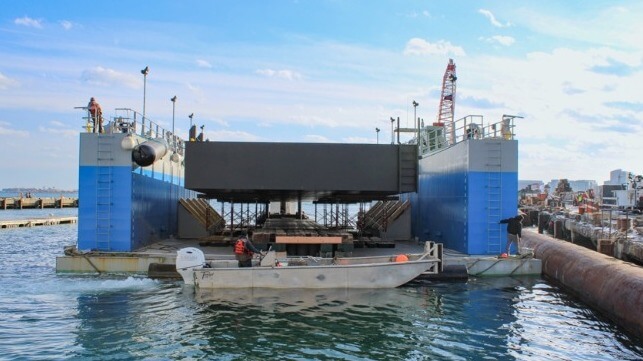
In their first operation of the new year, Boston Harbor Shipyard & Marina (BHSM) completed a multi-barge roll-on operation using the 500-ton floating dry dock, "Providence.”

The barges were constructed by Blue Atlantic Fabricators, a tenant of BHSM and the only AISC Certified facility on the East Coast with direct headwall access for water transportation. Measuring 115’ by 30’ and approximately 120 tons each, the barges were fabricated to serve as docks at the Mass Bay Transportation Authority’s ferry terminal at the Hingham shipyard. Blue Atlantic was awarded the project in February 2025, and completed the first two of three docks in November 2025. The docks are going to “improve rider experience,” said Michael Julian, General Manager of Blue Atlantic Fabricators, “and bring them into compliance with updated accessibility standards.”

Once completed, the barges were rolled directly from the Blue Atlantic fabrication shop onto the dry dock using self-propelled modular transporters (SPMTs) supplied and operated by Bay Crane Northeast. The dry dock had been matted with a runway and secured into place with the help of ACK Marine, another BHSM tenant. Once the transporters cleared the dock, the dry dock was submerged in a controlled operation, allowing each barge to float free. “The fact that the dry dock can sink to over 12 feet,” said Myles Murphy, Dry Dock Manager at BHSM, “allowed us to be able to block the barge high enough for the SPMTs to safely egress from the pontoon deck with room to spare.”

Massachusetts continues to invest heavily in water transportation on new and existing facility infrastructure. The central location in East Boston was important to the viability of the project. “When we first commissioned the dry dock, we never imagined it would be used in such a unique way that would impact thousands of commuters daily,” said Murphy, “our engineering collaboration and great teamwork with our tenants has proved that this is not only a safe and effective launching method, but is also repeatable.”

This operation was made possible through close collaboration between Boston Harbor Shipyard & Marina, Blue Atlantic Fabricators, Bay Crane, ACK Marine, A. Waller Associates, and JMS Naval Architects, whose engineering support ensured the dock, load paths, ballast plan, and sequencing were executed safely and efficiently. It was a “well thought-out and calculated engineering plan,” said Julian, “to assure a safe, reliable, and repeatable operation.”

“This is a great example of what can be achieved when shipbuilders, heavy-lift specialists, naval architects, and shipyard operators work as one team,” said Murphy, “I am very proud of the group effort.” 
 

The products and services herein described in this press release are not endorsed by The Maritime Executive.

Birdon Announces Plans for Sixth US Location in Pensacola, Florida

Pensacola

Published Jan 31, 2026 5:40 PM by The Maritime Executive


[By Birdon]

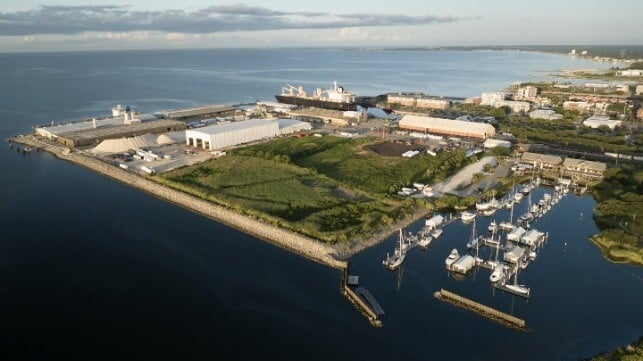
On Wednesday 28, January, Birdon announced plans to develop and operate a 400,000-square-foot advanced ship manufacturing facility at the Port of Pensacola, Florida. This will be Birdon’s sixth US location.

In partnership with the City of Pensacola and other regional and national stakeholders, Birdon plans to establish a facility that will incorporate the latest technology and modern shipbuilding practices, creating more than three million production man hours per year of additional capacity for fabrication of ships and modules to support the US Maritime Industrial Base. The facility will employ approximately 2,000 personnel, including engineering, skilled trades, and other support roles.

Birdon’s announcement follows initial approval by Triumph Gulf Coast, Inc. for a $76 million grant to the City of Pensacola to help build the facilities Birdon will operate at the Port. Triumph is a nonprofit corporation that oversees expenditure of funds for economic damages resulting from the 2010 Deepwater Horizon oil spill. Funds must be used for recovery, diversification, and enhancement in Northwest Florida.

Tony Ardito, President of Birdon America, said, “Birdon has an excellent track record as a reliable partner to U.S. Government customers. Our expansion to a sixth location at the Port of Pensacola demonstrates our commitment to helping to revitalize and rebuild America’s Maritime Industrial Base.”

The expansion complements Birdon’s existing facilities and its ongoing US Government programs, including Waterways Commerce Cutter (WCC) construction for the US Coast Guard in Bayou La Batre, AL; and the 47’ Motor Lifeboat (MLB) Service Life Extension Program (SLEP) for the Coast Guard in Bellingham, WA, and Portland, CT.

Birdon expects to open the new facility at the Port of Pensacola as soon as the third quarter of 2027.

The products and services herein described in this press release are not endorsed by The Maritime Executive.


Fincantieri: Launch of the Italian Navy’s Hydro-Oceanographic Ship

Italian Navy’s Hydro-Oceanographic Ship

Published Jan 31, 2026 5:45 PM by The Maritime Executive


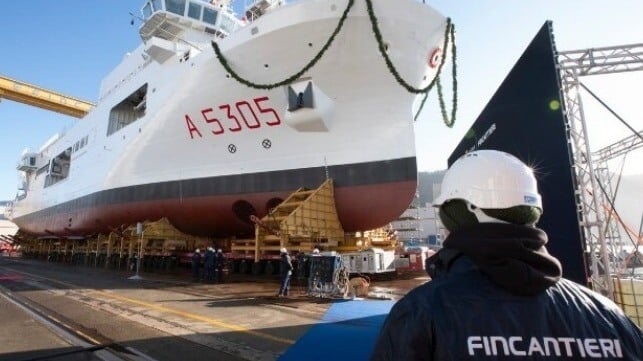
The launch ceremony of the Italian Navy’s new Major Hydro-Oceanographic Ship (N.I.O.M.) named Quirinale, took place today at Fincantieri’s integrated shipyard in Riva Trigoso. Designed for scientific mapping and monitoring activities, the vessel will support the initiatives of the Italian Hydrographic Institute, strengthening the country’s maritime research and security capabilities.

Attending the event were the President of the Liguria Region, Marco Bucci; the Undersecretary of State for Defence with responsibility for the Italian Navy, Hon. Matteo Perego di Cremnago; the Undersecretary of State for Defence, Senator Isabella Rauti; the Mayor of Sestri Levante, Francesco Solinas; the Chief of Staff of the Italian Navy, Vice Admiral Giuseppe Berutti Bergotto; the Chairman of Fincantieri, Biagio Mazzotta; Fincantieri’s Chief Executive Officer and General Manager, Pierroberto Folgiero; the General Manager of Fincantieri’s Naval Vessels Division, Eugenio Santagata; and the Director of the integrated Muggiano and Riva Trigoso shipyard, Antonio Quintano. The launch sponsor was Eleonora Di Paola, granddaughter of Vice Admiral Luigi Di Paola, awarded four Bronze Medals for Military Valour and five War Merit Crosses, and daughter of Admiral Giampaolo Di Paola, former Chief of Defence Staff and Minister of Defence.

Approximately 110 metres long with a displacement of around 6,000 tonnes, the Major Hydro-Oceanographic Ship Quirinale can accommodate up to 140 people, including crew and scientific personnel. The vessel is equipped with a low-emission electric propulsion system, also suitable for navigation in environmentally sensitive areas. Designed to operate in extreme climatic conditions, down to temperatures of -16°C, the ship features advanced scientific instrumentation for hydrographic, oceanographic and geophysical surveys, and is equipped with both an autonomous underwater vehicle (AUV) and an unmanned surface vehicle (USV). The technical outfit also includes lifting systems dedicated to scientific operations and a DP2 dynamic positioning system, ensuring high precision and stability during research activities.

The ship has been designed with the utmost attention to environmental sustainability, adopting emission-reduction technologies, diesel-electric propulsion, optimised hull forms and low-impact materials, in line with Fincantieri’s commitment to ISO 14001-certified environmental management across all the Group’s Italian sites. A further key driver is Health & Safety, with dedicated technical solutions aimed at ensuring personnel safety throughout the vessel’s operational life.

Pierroberto Folgiero, Chief Executive Officer and General Manager of Fincantieri, stated: “The Major Hydro-Oceanographic Ship ‘Quirinale’ represents technological and industrial excellence in the service of the national interest. This vessel combines advanced operational capabilities, innovation and environmental sustainability, confirming Fincantieri’s role as a strategic partner of the Italian Navy in the construction of highly technological platforms. Today’s launch bears witness to the ongoing commitment of the national system to the development of state-of-the-art naval solutions capable of meeting scientific, operational and maritime security requirements, while enhancing the know-how and skills of our industrial supply chain.”

The Italian Navy Hydrographic Institute is the State Cartographic Authority responsible for the production of the official national nautical documentation.
 

The products and services herein described in this press release are not endorsed by The Maritime Executive.


Death Toll in Philippine Ferry Sinking Rises to 29

Questions have been raised about the accuracy of the passenger manifest

PCG
Courtesy PCG

Published Jan 29, 2026 4:35 PM by The Maritime Executive


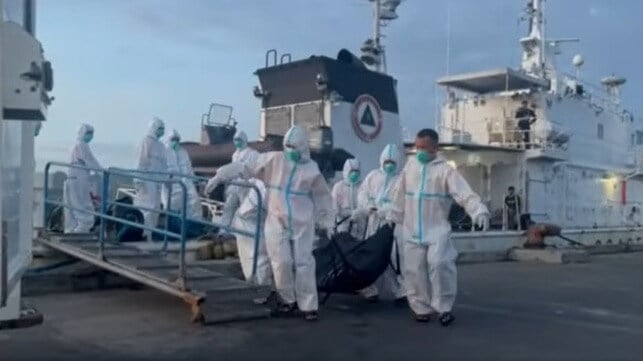
Technical divers with the Philippine Coast Guard are continuing the difficult and dangerous work of inspecting the wreck of the ferry Trisha Kerstin 3, which went down off Zamboanga on January 26. On Thursday, 11 additional bodies were recovered, bringing the total number of casualties to 29. The PCG said that local residents, family members and fishermen aided the effort. 

The deceased have been brought ashore in Basilan for identification. For now, the PCG says that the operation is still in the search and rescue phase, and there is still hope of finding survivors. 

The discovery of more bodies has raised questions about the actual number of personnel on board, as the list of survivors and deceased passengers now exceeds the size of the official ship's manifest. The uncertainty creates questions about the "increasing" number of people who either died or went missing in the sinking, and about when the search for victims can be considered completed. Relatives of the missing say that there are still many people who have yet to be found.

Trisha Kerstin 3's operator has a history of casualties, and it lost two previous ships on similar routes, one to fire and another to capsizing. After the most recent incident, the PCG has ordered operator Aleson's fleet tied up at the pier for inspection for at least 10 days, and has opened its licensed routes to other carriers on a temporary basis. To ensure continuity of service for passengers, the PCG has volunteered to transport civilians on its own vessels if required, at no charge. However, local reports indicate that travel connections in the region are limited, and that demand exceeds supply. 

The PCG is investigating the cause of the capsizing and sinking of Trisha Kerstin 3. One possibility is that the high superstructure of the ferry was hit by a sudden wind squall, a spokesperson told local media. The idea is still under examination, and a weather forecaster told ABS CBN that he did not see any definitive evidence of a squall at that time. Recorded wave heights in the area were modest, about three feet.  

In the wake of the tragedy, national maritime safety regulator MARINA also plans to carry out a comprehensive safety audit of all Philippine shipping lines, and will classify ships based on suspected risk levels for future inspection. 


Report: Rig Worker Went Through "Fragile" Floor of Crane Cab in Fatal Fall

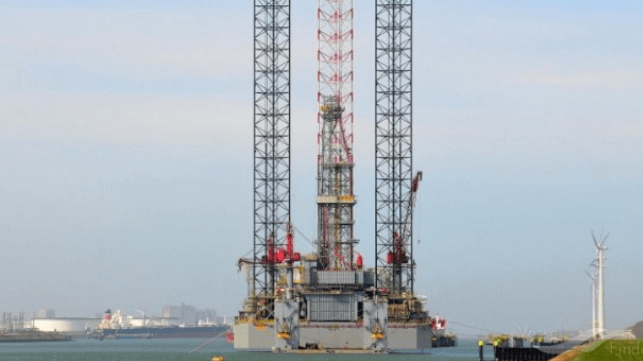
Valaris 121 (Arjan Elmendorp / Vesselfinder)

Published Jan 29, 2026 4:35 PM by The Maritime Executive

The UK's offshore safety regulator has determined that a worker on a North Sea jackup rig died last year because a floor grating had been removed for cleaing, the agency said in a notice of violation to the rig operator. 

In November 2025, the jackup Valaris 121 was operating at a position off the coast of Aberdeen. On November 14, cleaning occurred in the cab of the port side aft crane on the rig, and unspecified personnel removed a floor grating in order to perform the task. This exposed the "fragile" external floor of the cab, and the grating was not put back in place, according to the UK Health and Safety Executive (HSE).  

On the morning of the 14th, rig worker Lee Hulse stepped on the unprotected cab floor. It failed under his feet and he fell through it, plunging more than 80 feet to his death, HSE said.

The agency issued operator Valaris a citation for allegedly failing to "make an assessment of the risks to the health and safety" of employees during the cleaning activity. The notice adds new information to the public record on the nature of the casualty, but it is not the final word: the broader HSE investigation is still in progress.  

Hulse, 32, was from Aberdeen and was the father of a young daughter. 

It is the second time that a missing deck grating has been potentially implicated in a fatality aboard Valaris 121. In January 2023, worker Jason Thomas disappeared from the rig while it was under tow. A dislodged polymer grating was found in an inspection after the incident, "exposing employees . . . to a risk to their safety by tripping on the displaced grating and/or falling through the subsequent hole in the decking area," inspectors with HSE wrote in an advisory to the operator. 


At the time, a union official expressed the view that the missing grating was connected with Thomas' disappearance, though no formal investigative finding to that effect has yet been published. "The HSE findings on gratings confirm that our fears were fully verified. We were told early on that it had appeared that Mr. Thomas had gone through a gap in the gratings," RMT offshore union official Jake Molloy told Oil and Gas People in 2023.

Top image: Valaris 121 (Arjan Elmendorp / Vesselfinder)


USCG Considers Homeporting Four New Icebreakers in Alaska by 2029

USCG Storis icebreaker
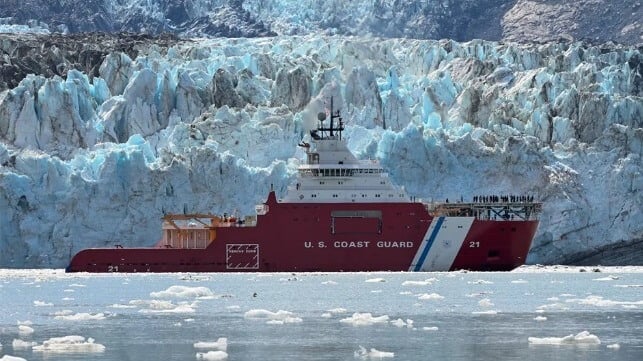
USCG Storis in Alaska on her first mission could be joined by up to four more icebreakers by 2029 (USCG)

Published Jan 30, 2026 7:07 PM by The Maritime Executive


Details about the U.S. Coast Guard’s plans for expanding America’s presence in the Arctic were the focus of a Senate Commerce Subcommittee on Coast Guard, Maritime, and Fisheries hearing on January 29, reports Senator Dan Sullivan of Alaska. Among the key points revealed is that the USCG command is considering homeporting four of the new icebreakers being built in Finland and Louisiana in Alaska when they are completed.

Sullivan, a strong advocate for Alaska and supporter of the U.S. Coast Guard, highlights that the 2025 budget bill, broadly known as the “One Big Beautiful Bill,” provides strong funding for the U.S. Coast Guard’s expansion and modernization. Sullivan said that at least $25 billion is available to the USCG with funding specifically provided for three of the new icebreakers. Ultimately, Sullivan asserts there is funding for 16 new icebreakers, 22 new cutters, more than 40 new helicopters, and nearly $4.4 billion for repairs to shoreside infrastructure.

“The Coast Guard is being asked to do more across every theater,” Sullivan said to reporters, Alaska’s news outlet KTUU writes. During a press briefing, he pointed to counter-drug operations enforcement against sanctioned vessels, Indo-Pacific missions, search-and-rescue operations, and efforts to combat illegal, unreported and unregulated fishing.

During the hearing in Washington, Sullivan pressed the newly confirmed Commandant of the Coast Guard, Admiral Kevin Lunday, on the plans to expand the Arctic presence. Lunday responded that there is a range of options for consideration while saying that they were considering homeporting up to four icebreakers in Alaska. He said decisions were likely to be made later this year.

Sullivan highlights that the agreement between the United States and Finland envisions a total of 11 icebreakers in the first phase of the program. He expects it will grow to 16 icebreakers. He also points out that Alaska will receive more than $600 million for infrastructure upgrades. This includes $300 million for a new Coast Guard pier in Juneau as well as $200 million in Kodiak for homeports, $50 million for improvements in Seward, more than $65 million in Sitka, and more.

Sullivan said the USCG is projecting the work will be completed in 2029, including having the homeport for the new USCG icebreaker Storis. He said he is pushing for the timeline to be accelerated to have it ready by 2028.


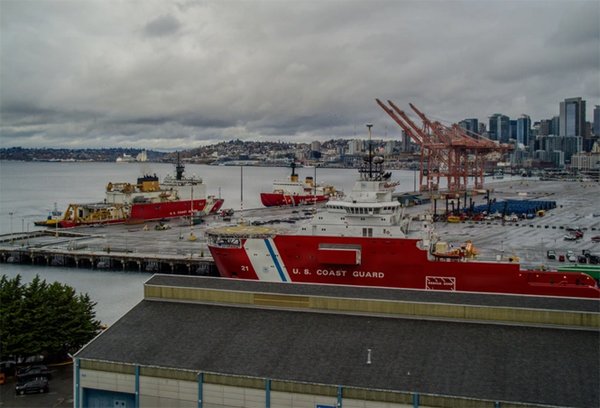
Storis, Healy, and Polar Star together in Seattle in November 2025 (USCG)


Currently, Storis is homeporting in Seattle with the other polar icebreakers, Polar Star and Healy, because the facilities in Juneau are not ready. The USCG issued an overview of her first season. While the primary goal was a training mission, she had also conducted surveillance of Chinese vessels during the deployment.

Being a converted commercial vessel, the USCG highlights that there is ongoing work to make her fully ready for the USCG. Accommodations are being expanded to increase the crew, and during the first deployment, she was using a mixed crew of 45 from the Coast Guard and 22 from the vessel’s builder, Edison Chouest Offshore, helping to teach the Coast Guard how to operate the ship. By the end of 2025, the USCG reports 12 of the civilian mariners were relieved, leaving just 10 civilians in the ship’s crew.

The first commander of Storis, Captain Corey Kerns, believes he was selected because of his engineering design background. His previous post was as a liaison to the U.S. Navy in Japan. Along with the current crew, they are also overseeing upgrades to the CIC and other key functions on the vessel, as well as developing the safety and operational protocols. Storis was the first new polar icebreaker added to the USCG in 26 years.

The USCG reports the next steps for Storis include ice trials in the spring of 2026. She is capable of handling at least six feet of ice, but the ice in September during her deployment was thinner. She is also scheduled to return to the Arctic later this year.


AMTI: China Coast Guard Focuses its Patrols on Scarborough Shoal

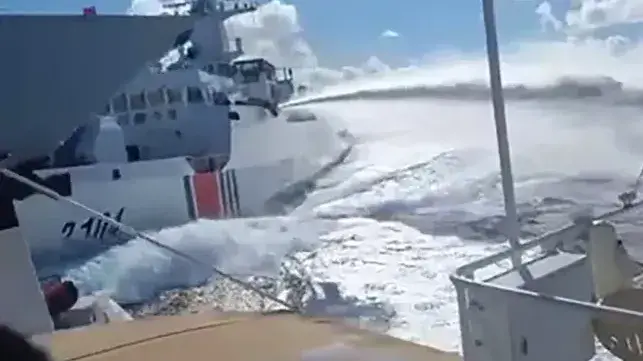
A China Coast Guard cutter interacts with PLA Navy and Philippine vessels near Scarborough Shoal, 2025 (courtesy PCG)
A China Coast Guard cutter collides with a PLA Navy warship while pursuing Philippine vessels near Scarborough Shoal, August 11, 2025 (courtesy PCG)

Published Jan 29, 2026 9:20 PM by The Maritime Executive


Scarborough Shoal has been a flash point for tensions between the Philippines and China since 2012, when Chinese forces occupied the atoll and began a years-long effort to control access. It has been the scene of multiple confrontations over the past year, including water-cannoning incidents that ended in injuries for Philippine citizens. New AIS data analysis from CSIS/AMTI reveals that the China Coast Guard is putting a new priority on presence operations at the reef: last year it more than doubled the number of vessel-days it allocated to Scarborough Shoal and largely reduced its presence at other South China Sea hot spots. 

Based on satellite AIS data, AMTI calculates that the China Coast Guard maintained a vessel presence at Scarborough Shoal for 352 days last year, or roughly 96 percent of the time. The count is likely an underestimate, since missed transmissions and periods of AIS-dark operation would be undetected. 

The most telling number is the sheer volume of ship-day patrol resources that the CCG assigned to Scarborough. Chinese cutters were on station at the reef for 1,099 ship-days over the span of the year, more than double the 516 ship-days spent there in 2024. Up to five CCG vessels at a time were spotted at the reef, and the typical presence on an average day was three hulls.

Even on the few days of the year when there were no signs of Chinese activity on AIS at Scarborough, there was likely a CCG cutter nearby: the Philippine Coast Guard reported a Chinese presence during most of this period. This suggests a nearly-constant CCG patrol, often augmented by PLA Navy gray-hull assets (not visible on AIS and not counted here). 

Likewise, the level of effort at Sabina Shoal - just east of Philippine-occupied Second Thomas Shoal - more than doubled to 405 ship-days. There was a nearly-constant presence of one vessel at Sabina on AIS, occasionally augmented with a second. China Coast Guard crews benefit from modern basing infrastructure at nearby Mischief Reef, and the AIS tracks for one large cutter show multiple port calls at this outpost in between patrols around Sabina Shoal. 

While CCG ship-days in the eastern South China Sea increased overall, the resourcing needed for the hike in presence at Scarborough and at Sabina Shoal appears to have come at the expense of other Chinese operations in the area. CCG ship-days at other previous hot-spots declined, according to AMTI, including at Luconia Shoals, Vanguard Bank, Thitu Island and Second Thomas Shoal. 


Panama Court Finds CK Hutchison's Port Terminal Concession Unconstitutional

Panama Cristobal container terminal
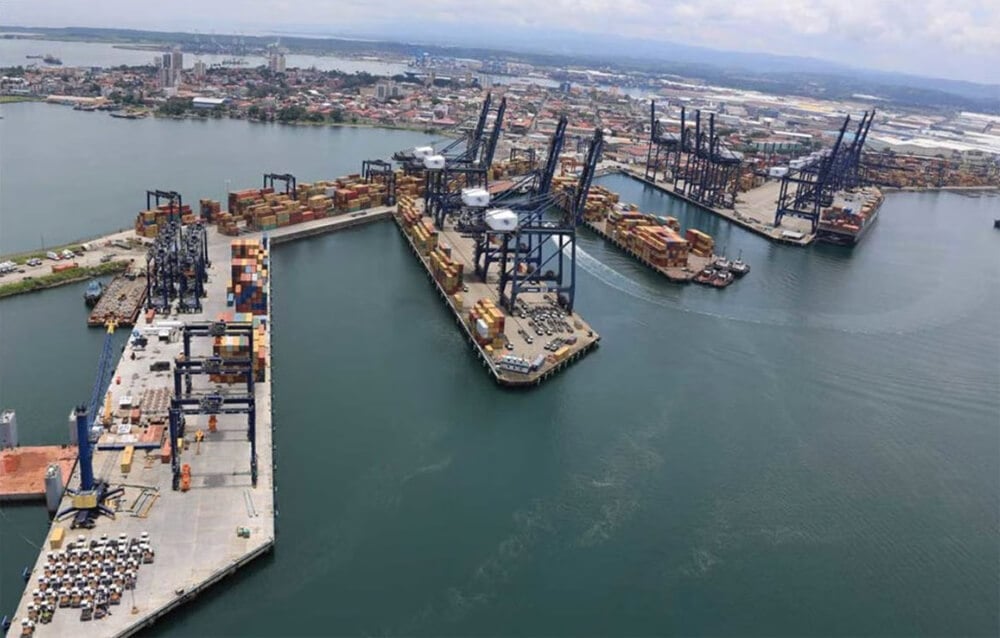
Container terminal in Cristobal (US Embassy)

Published Jan 30, 2026 1:47 PM by The Maritime Executive


The Supreme Court of Panama announced late on Thursday, January 29, that it had found the laws establishing CK Hutchison’s concession to operate terminals at the ports at the terminus of the Panama Canal unconstitutional. The government quickly issued a statement assuring that the terminal operations would continue uninterrupted, while the company and the governments in Hong Kong and Beijing denounced the decision, alluding to political motivations.

The court, in its brief statement, said it had conducted “extensive deliberation and discussion” before concluding that the 1997 acts were unconstitutional under Panama’s law. They are related to the concession contract between Panam and the Panama Ports Company, 90 percent owned by CK Hutchison, for the development, construction, operation, administration, and management of the port terminals for containers, ro-ro, passengers, bulk cargo, and general cargo in the ports of Balboa and Cristóbal. They did not say when the decision would become final.

Panama’s Controller, Anel Flores, brought the case to the court last July after completing an audit of the operation of the terminals, and under increasing political pressure from Donald Trump and the United States, which was threatening to take back the Canal after asserting that China controlled the Canal. Flores said the audit found irregularities that had cost the government $300 million since 2021 and an estimated $1.2 billion since 1997. He asserted that payments had not been made, there were accounting errors, and “ghost concessions” in the ports.

Panama’s President Jose Raul Mulino issued a statement asserting that the terminal operations would continue. He said in the interim, the government would work with the Panama Maritime Authority and Hutchison’s company. Panama said there would then be a transitional phase until a new concession process could be completed, during which Maersk’s APM Terminals would operate the terminals.

CK Hutchison established the Panama Ports Company in 1997 to operate the terminals, with Panama owning a 10 percent interest. In 2021, the concession was extended for 25 years without a formal bidding process.

Hutchison quickly responded, saying the concession was the result of a transparent international bidding process and that it had complied with its contractual and legal obligations. Over the 28 years, the company states it has invested more than $1.8 billion in infrastructure, technology, and human development.

The company issued a statement on January 29 saying the new ruling “lacks legal basis.” It asserts the court’s decision is “diametrically opposed” to previous rulings and would “undermine the reputation of Panama as a reliable jurisdiction.” Beijing echoed the same sentiment, issuing a warning to all Chinese companies doing business in Panama. The Chinese government said it would act to protect the business interests of Chinese companies.

Hutchison is based in Hong Kong, and the local government, although often at odds with the company, issued a statement saying it “opposes any foreign government using coercive, repressive, or other unreasonable means.”

It is unclear when the court would finalize its decision and make it effective. Hutchison also said it “permanently reserves all rights, including recourse to national and international legal proceedings.”

APM issued a statement confirming its willingness to assume the temporary operation of both terminals. It emphasized this would be carried out in full accordance with the legal requirements.

The decision also cast further doubt on the deal CK Hutchison announced nearly a year ago to sell its Panama company to an investment group led by the US’s BlackRock, with investment from MSC’s Terminal Investments Ltd. The deal was stalled due to Chinese opposition. Recently, it was speculated in the press that Hutchison was looking to split its terminal operations and sell them off piecemeal to address China’s objections. In addition to Panama, the company was to sell its operations in more than 20 countries, keeping only the terminals in China.

Concurrent with the news, the Panama Canal Authority announced today it had published the prequalification documents for two new proposed terminals. Panama has a total of five ports, although Balboa and Cristobal are the most critical as they are at each terminus of the Canal. The Authority said the new project calls for terminals on both the Atlantic and Pacific coasts and aims to increase Panama’s transshipment capacity to between 5 and 6 million TEU annually.

The Authority reports it has met with representatives from APM Terminals, Cosco Shipping Ports, CMA Terminals, DP World, Hanseatic Global Terminals, MOL, PSA International, SSA Marine-Grupo Carrix, Terminal Investment Limited, ONE, and Evergreen regarding the new terminals. They expected to conduct a tender this year for the new operations.