Sunday, August 10, 2025


Kenya's "White Elephant" Port Begins to Receive Large Boxships at Last

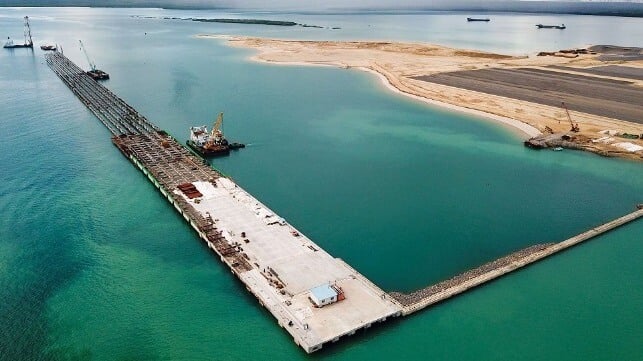
Lamu Port during construction (LAPSSET file image)

Published Aug 10, 2025 1:01 PM by The Maritime Executive


The ongoing trade disruptions, most visibly between the U.S. and China, are causing a reorganization in the container shipping sector. This is seen in places such as Africa, where some countries have gained in liner connectivity as others lose out. West Africa for instance has emerged as a beneficiary of these liner shipping changes. In April, MSC became the first shipping line to deploy Ultra Large Container vessels (ULCVs) with a capacity of 24,000 TEU on the African continent. The ULCVs now serve on the African Express service, connecting Southeast Asia to West African countries such as Ghana, Togo, Côte d’Ivoire and Cameroon.

In the East African region, the newly built Lamu port has started to gain value for a project that was initially seen as a white elephant. In the past month, there is a growing list of large container ships docking at the port. Last week, Lamu port made history with the docking of Nagoya Express, which is the longest container ship to ever call at an East African port. The 335-meter-long vessel has a container capacity of 8,604 TEU and is operated by the German shipping line Hapag Lloyd.

In Lamu, Nagoya Express picked up 140 transshipped TEU destined for New York. The containers were discharged two weeks ago by MV Tolten, which is another Hapag Lloyd operated Post-Panamax boxship to call at Lamu port.

“The arrival of MV Nagoya confirms that Lamu’s deep-water berths and wide turning basin were built for ultra-large vessels that cannot be accommodated at Mombasa, where the turning space is limited to 323 meters,” said Kenya Ports Authority (KPA).

Since its commissioning in 2021, Lamu port has been largely under-utilized. By last year, less than 200 vessels had called at the port, with most container lines keeping off. However, the trend has changed this year as shipping companies such as Hapag Lloyd show interest to utilize the port. KPA has also announced that two CMA CGM vessels are expected at the port next week.

But there is still more work remaining to turn Lamu port into a transshipment hub for the East African region. As the anchor project for the Lamu Port-South Sudan- Ethiopia Transport Corridor (LAPSSET), supporting landside infrastructure such as roads and railway remains incomplete. In addition, the Kenyan government has hinted at leasing the port to a private operator to develop the remaining 20 berths. Currently, Lamu port has three operational berths.


British and American Governments Warn of Terrorist Threat in UAE

Yemen's Houthi rebels are potential instigators of asymmetrical attacks in the GCC (Houthi Military Media / Yahya Saree)

Published Aug 10, 2025 2:34 PM by The Maritime Executive


On August 8, the British Foreign Office warned British citizens that “terrorists are very likely to try to carry out attacks in the United Arab Emirates.”

Foreign ministries normally issue explicit threats of terrorist threats in other countries only after fierce internal debates. In this instance, Edward Hobart, the British Ambassador in Abu Dhabi is likely to have been summoned to hear a stern protest from the Emirati government, who will suggest that such a warning is alarmist and unnecessary. However, on the same day the United States also issued a similar but more specific warning, advising that “the U.S. Mission is aware of information indicating threats toward the Jewish and Israeli communities in the UAE. The Mission urges U.S. citizens to avoid locations in the UAE associated with the Jewish and Israeli communities, including places of worship.”

Neither the British or the American warning gave any indication as to who might be posing such a threat.

Iran could be considered a candidate, but has made efforts to keep the peace with the UAE. Moreover, state organizations in Iran which might be behind such an attack are currently in a state of disarray. Many senior decision-making IRGC and security leaders who would coordinate such attacks were casualties of the 12-Day War, and their posts are still unfilled.

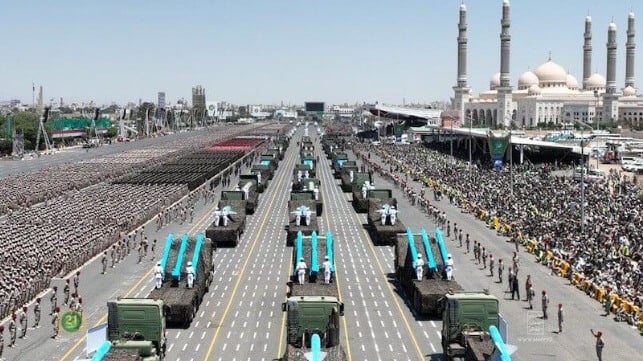
A more likely candidate to be instigating a terrorist campaign is the Houthi leadership in Yemen. It has given clear indications that it is seeking to widen its war against Israeli interests, and specifically against commercial organizations which have business ties with Israel. In the Friday protests in Seventy Square in Sana’a every week, which attract hundreds of thousands of Yemenis, demonstrators hold placards advertising themselves as the most fervent supporters of Gaza’s Palestinians, and abuse countries of the Gulf for not taking a similar, hard line. This is not a surprising adversarial position, given that most GCC countries have supported the internationally recognized government in its long civil war against the Houthis.

Reinforcing their motivation for taking action, the Houthi alliance is under stress and has in recent weeks suffered a dissension and a number of internal defections. Using the dictator’s favorite trick, the Houthis know that by targeting an external enemy they can harness popular sentiment, and by so doing secure the home base and their grip on power.

Internal security forces in the Gulf are extremely efficient and effective, so they are likely to interdict any planned attack, and they will respond aggressively. However, the Houthis are also skilled underground operatives, and can call on large numbers of fellow expatriates and sympathizers to help them mount attacks.

Of the two warnings, the general warning from the British is probably the most useful. Most expatriates residing in the UAE will be unaware of the commercial connections of global enterprises active both in the UAE and Israel. But such connections, which could embrace shipping, logistics and cruise companies, airlines and retail chains, will not have escaped the attention of a Houthi planning cell seeking targets for terrorist attacks.


On the Caspian Sea, Tensions Between Russia and Azerbaijan are Rising

Russian Navy drill in the Caspian, 2024 (Russian MOD)

Published Aug 10, 2025 2:58 PM by The Maritime Executive


Tensions are rising between Azerbaijan and Russia over a maritime dispute which is largely unheard-of but which could have significant impact should it erupt.

Azerbaijan is proud of its sovereign achievements since it achieved independence from the collapsing Soviet Union in 1991, but Russia feels that Azerbaijan should accept a subordinate status within a Russian zone of influence. Nonetheless, for most of the post-independence era, relations between the two countries have been business-like but stilted. Throughout, Russia has maintained its dominant position in the Caspian Sea, maintaining its Caspian Flotilla at a strength of ten modern frigates and corvettes, some equipped with Kalibr cruise missiles with a range of 1,500 miles.

Keeping things cordial, Azerbaijan does feel some kinship with co-religionists in the bordering Russian republics of Chechnya and Dagestan. However, relations with Russians further to the north are somewhat strained.

But relations between the two countries fell off a cliff on Christmas Day 2024, when Azerbaijan Airline Flight 8243 was struck by an anti-aircraft missile while coming in to land at Grozny airport in Chechnya. The Russian authorities refused to allow the damaged plane to land, which instead had to crash-land on the other side of the Caspian Sea at Aktau in Kazakhstan. Of 67 passengers and crew on board, 38 died in the accident. It was later established that the aircraft had been hit with a Russian Pantsir-S1 missile. President Putin refused to acknowledge responsibility for the incident, or to facilitate compensation or investigatory efforts. The dispute remains unresolved.

Since then, relations between Iran and Russia, with sanctions and conflicts affecting both counties, have grown in importance. Sea traffic between the two countries passes through Azeri territorial waters in the Caspian Sea. In particular, Iran has shipped drones, missiles and ammunition from Amirabadport on the southern Caspian shore to the Volga river port Olaya in Russia. Iranian Fatah-360 ballistic missiles shipped in September 2024, and thousands of Shahed-136 drones, have played a crucial role in Russian offensive action in Ukraine. This is likely to have prompted a Ukrainian drone attack on Caspian Flotilla vessels docked at Kaspiysk on November 6 last year, which damaged Project 11661 Gepard-class frigates RFS Tatarstan (691) and RFS Dagestan (693), plus a Buyan-class corvette.

As Azeri-Russian relations deteriorated, Russia has also fallen out with Kazakhstan on the other side of the Caspian, even though much of Kazakh oil exports are piped through Russia to the Black Sea oil export terminal at Novorossiysk. President Tokayev of Kazakhstan has refused to recognize Russian annexations in Ukraine and in Georgia, and is minded to respect Western sanctions on Russia. He has also turned down a request to provide Kazakh troops to fight in Ukraine.

Since then, temporary “technical” closures of Kazakhstan’s CPC pipeline to Novorossiysk have been attributed to Russian displeasure with the independent Kazakh position. While Azerbaijan and Kazakhstan have not hitherto been close allies, their shared disputes with Russia have brought them closer together. Kazakh and Azeri territorial waters in the Caspian theoretically form a barrier between Russian waters to the north and Iranian waters to the south, albeit there has never as yet been a threat to innocent passage.

In a sign of deteriorating relations, the Azeri press has begun referring to Russian place names by their pre-Soviet names. Kaliningrad has reverted to Königsberg and the Volga has become the River Itil. On the Russian side, TASS still employs Armenian rather than Azeri place names in the now defunct Nagorno-Karabakh Republic. While inconsequential to outsiders, such matters generate extreme nationalistic responses in the region. Azerbaijan has also been upset by what it describes as an unjustified wave of arrests of Azeris working in Russia, and has retaliated by arresting Russian gangsters in Baku.

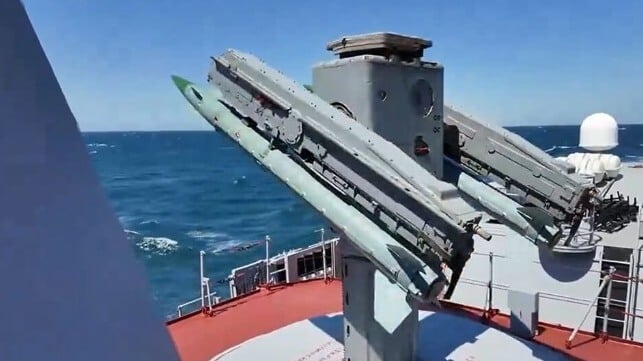
Russia’s Caspian Flotilla has recently been exercising its anti-aircraft capabilities. On July 26, Project 22800 Karakurt-class corvette RFS Typhoon (805) fired Pantsir-S1 air defense missiles to intercept an incoming anti-ship missile, and sister ships RFS Tucha (804) and RFS Amur (803), plus Project 21631 Buyan-M-class corvette RFS Uglich (653) used their anti-aircraft gun systems as part of a networked air defense system. Gepard-class frigate RFS Dagestan (693) tested its new Palash close air defense system. These air defense exercises were repeated the next day, and in the current climate could be interpreted by Azerbaijan and Kazakhstan as threatening.

With tensions high in the Caspian, minor incidents - perhaps provoked by further Ukrainian attacks - could trigger major maritime consequences. North-South sea traffic could be disrupted, one of the only trade routes which Iran and Russia can mutually use without fear of sanctions interference. Shipments of Kazakh crude across the Caspian from Aktau to Baku could be at risk, upsetting shipping interests. The flow of Kazakh oil through the CPC pipeline to Novorossiysk on the Black Sea might again be impacted. Offshore Azeri and Kazakh oil production could be curtailed. For decades commerce across the Caspian Sea has not been threatened by belligerency, so few have taken an interest - but this may be about to change.


U.S. Trade Deal Secures Peace and Influence in the Caucasus

© Landsat/Copernicus, NASA, Google
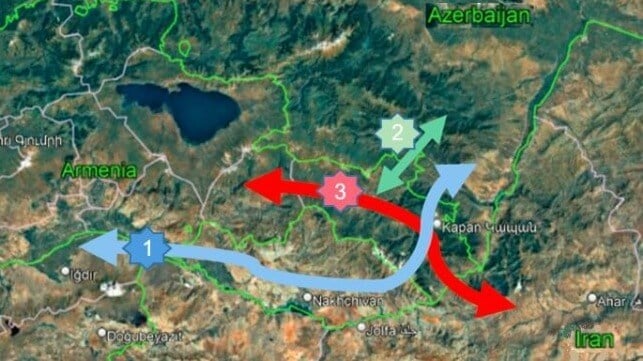
Routes from Turkey through to Azerbaijan (1), the Armenian route into Nagorno-Karabakh (2), and Iran’s route through Armenia to Georgia and Russia (3) © Landsat/Copernicus, NASA, Google, CJRC

Published Aug 10, 2025 1:25 PM by The Maritime Executive


The United States appears to have sealed the solution of a complex geopolitical problem in the Caucasus which has proved impossible to solve since the break-up of the Soviet Union, generating several wars and hindering trade and development in the affected countries over the last 35 years. Armenia’s Prime Minister Nikol Pashinyan and Azerbaijani President Ilham Aliyev signed an agreement at the White House on August 8, which has a good chance of resolving issues between the two countries - and which increases US and Turkish influence in the region at the expense of Iran and Russia.

Newly created independent states were left in 1991 with borders delineated under the old Soviet regime. Ethnic and religious minorities were left on the wrong side of borders, which did not matter when all were part of the Soviet super-state, but mattered when the countries concerned became independent.

The exclave of Nakhchivan was separated from the rest of Azerbaijan by 20 miles of hostile Armenia (1, top). The ethnic Armenian population of Nagorno-Karabakh, surrounded by Azeris, now had to travel through a hostile Azerbaijan to keep contact with Armenia (2). Iran maintained that it had a right of passage through the 20-mile-wide corridor (3) from its border across Armenian territory, using it as a trade/truck route through to Georgia and Russia. It established consulates staffed with armed security guards along the route, and staged aggressive military maneuvers on the border whenever it felt its access was threatened.

The agreement negotiated bilaterally in Abu Dhabi but finalized in Washington appears to provide American reassurances that Armenia and Azerbaijan will be able to transit “hostile” territory to support their isolated nationals without hindrance, with the United States now fulfilling the guarantor role previously (and ineffectively) played by Russia. Indeed, Russia attempted to sabotage the bilateral negotiations in order to preserve its influence over the two countries as a mediator.

For Turkey, this represents huge progress towards achieving President Erdogan’s dream of building a Turkic bloc, linked by the so-called Zangezur corridor through Turkey to Azerbaijan, then across the Caspian to Turkmenistan. The existing but moribund railway route from Turkey directly into the Nakhchivan enclave, then across Armenia into Azerbaijan and Baku can be restored, and an East-West corridor established. Under the label of the Trump Route for International Peace and Prosperity, the agreement appears to cover the award of an infrastructure management contract to a US company.

For Iran, there will now be an American presence directly cutting across its trade/truck route through Armenia into Georgia and Russia. Notwithstanding professions of friendship, plans to upgrade the rail route from Iran through Baku to Russia never seemed to make progress, nor a similar trucking route, probably because behind professions of friendship there is profound mistrust. This will make Iran and Russia more dependent on sanctions-free sea traffic across the Caspian - and even this route is threatened because Russia and Iran are divided by the territorial waters in the central Caspian belonging to Azerbaijan and Turkmenistan. This is another blow for Iran’s dreams of regional dominance, on top of its loss of influence in Lebanon, Syria and Iraq. To make matters even worse, there is the worry that Azerbaijan on its northern border might even accede to the Abraham Accords and join NATO.

If the agreement holds, and confidence can be established under American overwatch, then there are likely to be significant consequences for the development of trade routes and energy exports.


The Tariff Roller-Coaster Ride

Tariff uncertainty has port directors holding their breath. Meanwhile, business is good.

PCTC
Canaran / iStock

Published Aug 10, 2025 4:03 PM by Tom Peters


(Article originally published in May/June 2025 edition.)

The roller-coaster ride of U.S. tariffs has become very taxing in more ways than one as manufacturers, consumers, shippers and port directors alike wonder what's next.

Manufacturers are scratching their heads on exactly how production schedules should proceed, not knowing if consumers will pick up the extra tariff costs added to a new Barbie doll or an electric appliance.

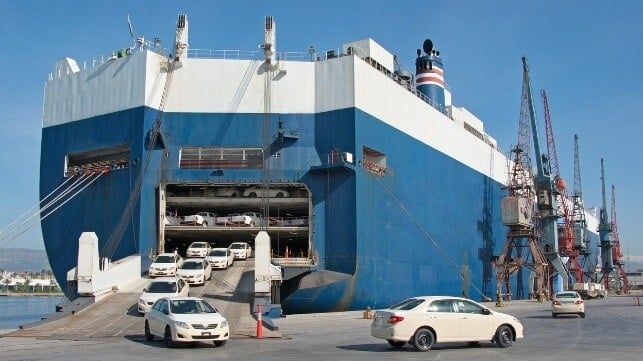
Automobile parts and cars made outside of the U.S. have been hit hard by the extra costs. Parts and automobile imports into the U.S. are faced with a 25 percent tariff, although there are exceptions to parts and vehicles that meet the requirements of the U.S.-Mexico-Canada Agreement.

MONITORING IMPACTS

U.S. ports are feeling the trickle-down effects of tariffs. The port of Baltimore, which handled 749,799 light trucks and cars in 2024, finishing second in the nation with those numbers, is keeping a sharp eye on developments.

"We continue to closely monitor tariff actions and are seeing impacts," says port spokesman Richard Scher. "Some of our auto manufacturing customers are shipping into U.S. ports such as Baltimore but holding their vehicles at the port of entry. Some are adding import fees, and others are absorbing the tariffs." He notes that 85 percent of the vehicles handled at Baltimore are imported.

"Ultimately," he adds, "the impact of tariffs on the port of Baltimore and all ports will depend on the length of time the tariffs are implemented and the decisions of shippers to send their products to the U.S." In the first quarter of 2025, Baltimore's monthly cargo tonnages increased from 259,085 tons in January to 746,958 tons in March. Ro-ro volumes rose from 22,828 tons in January to 85,244 in March.

Meanwhile, in terms of high-and-heavy ro-ro cargo (farm and construction machinery), Baltimore is reconstructing its ro-ro berths to better accommodate larger and heavier pieces of equipment. Last year it handled 848,628 tons and once again finished first among all U.S. ports.

Stacy Lange, Chief Commercial & Public Affairs Officer at Port Hueneme in California, says, "It's premature for the port to speculate on the full impact of these actions or predict how affected parties and the market will respond. The port is closely monitoring the implementation of these tariffs and other shipping rules to assess their effects and remains dedicated to keeping all parties informed as new information becomes available."

Joseph Morris, CEO & Port Director at Port Everglades in Florida, adds, "At this point, Port Everglades' overall trade is insulated but not immune from the current tariffs. Our North-South trade with Latin America and the Caribbean is on the lower end of the impacted nations and goods. Most of our customers' automobile business is focused on exporting used vehicles to the Caribbean, and we're optimistic about that trade not being affected."

WAIT AND SEE

At Galveston Wharves, Port Director & CEO Rodger Rees has taken a wait-and-see approach: "Like all businesses that deal in international trade, the port is waiting to see what, if any, impact tariffs will have on our cargo volumes."

Galveston imports new cars, heavy equipment and general breakbulk, largely from the E.U., England and Mexico. In 2024, ro-ro volumes contributed 445,000 tons to the port's total of 3.4 million tons. Between six and 10 ships from four liner services call on the port monthly.

"As the port marks its 200th anniversary, we're celebrating 30 years with Wallenius Wilhelmsen and 17 years with American Roll-On Roll-Off Carrier," Rees proudly notes. "Ports America Texas has been our ro-ro stevedore for well over a decade. K-Line and NYK also call on the port."

To meet growing demand, the port is investing $77.5 million to expand and improve its West Port cargo complex. Construction work to add berth and laydown areas should be completed in April 2026.

"Roll-on/roll-off is one of our most consistent commodities for several reasons," Rees explains. "We've built strong, long-term relationships with our cargo carriers and stevedores, and we have a great location on the Gulf Coast that's served by rail lines and is just 10 minutes from a major interstate highway."

WEST COAST POWERHOUSE

In fiscal year 2024, the port of San Diego imported approximately 2.4 million metric tons of cargo including approximately 362,000 vehicles. One in eight cars nationwide is processed at the port's National City Marine Terminal (NCMT).

In addition to autos, ro-ro cargo includes military equipment and oversize cargo such as construction equipment as San Diego is one of 18 designated Military Strategic Ports in the U.S.

"Ro-ro is a key market and an anchor portfolio for the port of San Diego's maritime vision," says Joel Valenzuela, the port's Vice President, Operations & Maritime.

"The Tenth Avenue Marine Terminal (TAMT) and NCMT continue to serve as the major strategic cargo hubs for the port," Valenzuela adds, "helping facilitate the movement of goods to and from the western United States. Supporting the transport and movement of goods, which include those transported by ro-ro at TAMT and NCMT, remains a key component of the mobility element in the port's master plan update."

He says the port is completing structural repairs to the south-facing berths at NCMT, including adding shore power capabilities. The port anticipates completing additional infrastructure updates and loop-track extension as part of the National City Balanced Plan.

According to the port's most recent economic impact report, in fiscal year 2023 its maritime trade and cargo-handling sectors generated approximately $4.4 billion in economic activity including ro-ro, bulk, breakbulk and containerized cargoes.

FLORIDA POWERHOUSE

Ro-ro cargo at Port Everglades kicked off the year in fine style, up 27 percent year-over-year (October 2024 to March 2025) with continued growth through 2025, according to CEO Joseph Morris. Currently, Accordia Shipping and Höegh Autoliners are the ro-ro services calling Port Everglades.

"Ro-ro cargo is a business where, in many cases, the impact on people outweighs the measured economic activity," says Morris. "However, we're seeing an uptick in volumes that indicates ro-ro's economic impact could be greater in the near future."

But just exactly what that growth might be is difficult to predict.

"We're optimistic our cargo customers will continue to see their businesses grow in ways that are beneficial to our port, the environment and the community," Morris adds.

AUTOMOTIVE GATEWAY

The port of Hueneme ("hoo-NAY-mee") has established itself as an important automotive gateway to the U.S. West Coast, and its ro-ro business will continue to be a core focus of future port development and modernization. The port also remains committed to its environmental suitability.

As part of its sustainability commitment, the port and NYK Line in February signed a Memorandum of Understanding (MOU) to establish a Green Automotive Shipping Corridor between Japan and Southern California. The MOU solidifies the commitment of both parties to explore innovative and sustainable shipping practices with an emphasis on reducing greenhouse gas (GHG) emissions, advancing energy efficiency and promoting the use of alternative fuels and zero-emission technologies.

In addition to strong partnerships, the port's modernization plan includes funding to complete an important North Terminal shoreside power project designed to create vital infrastructure and reduce vessel emissions.

With vehicles representing 46 percent of total yearly revenue, the port's economic impact provides significant contributions to the local and regional communities. The port has experienced consistent growth in vehicle imports, which have gone from 230,000 in 2008 to 415,000 in 2024.

"As a premier automotive gateway on the West Coast, the port of Hueneme remains committed to the continued growth of ro-ro cargo through strategic modernization and sustainability initiatives," says Chief Commercial & Public Affairs Officer Stacy Lange. "While it's too early to determine the full impact of emerging trade tariffs, our investments in shore power infrastructure and our groundbreaking Green Automotive Shipping Corridor with NYK Line position us to navigate future challenges and drive economic and environmental benefits for our region."

The opinions expressed herein are the author's and not necessarily those of The Maritime Executive.
 

Iran's Crude Oil is Stacking Up at Sea

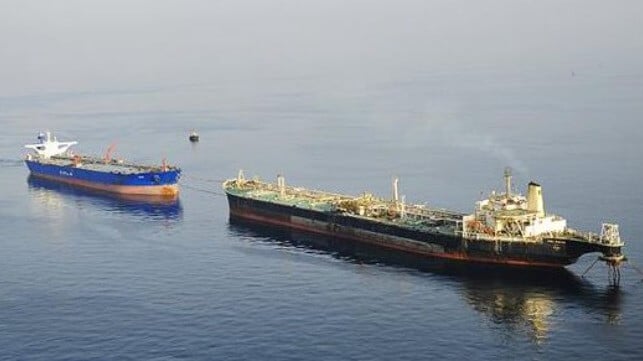
An Iranian FSU offloads oil to a waiting tanker (NITC)

Published Aug 10, 2025 5:08 PM by The Maritime Executive


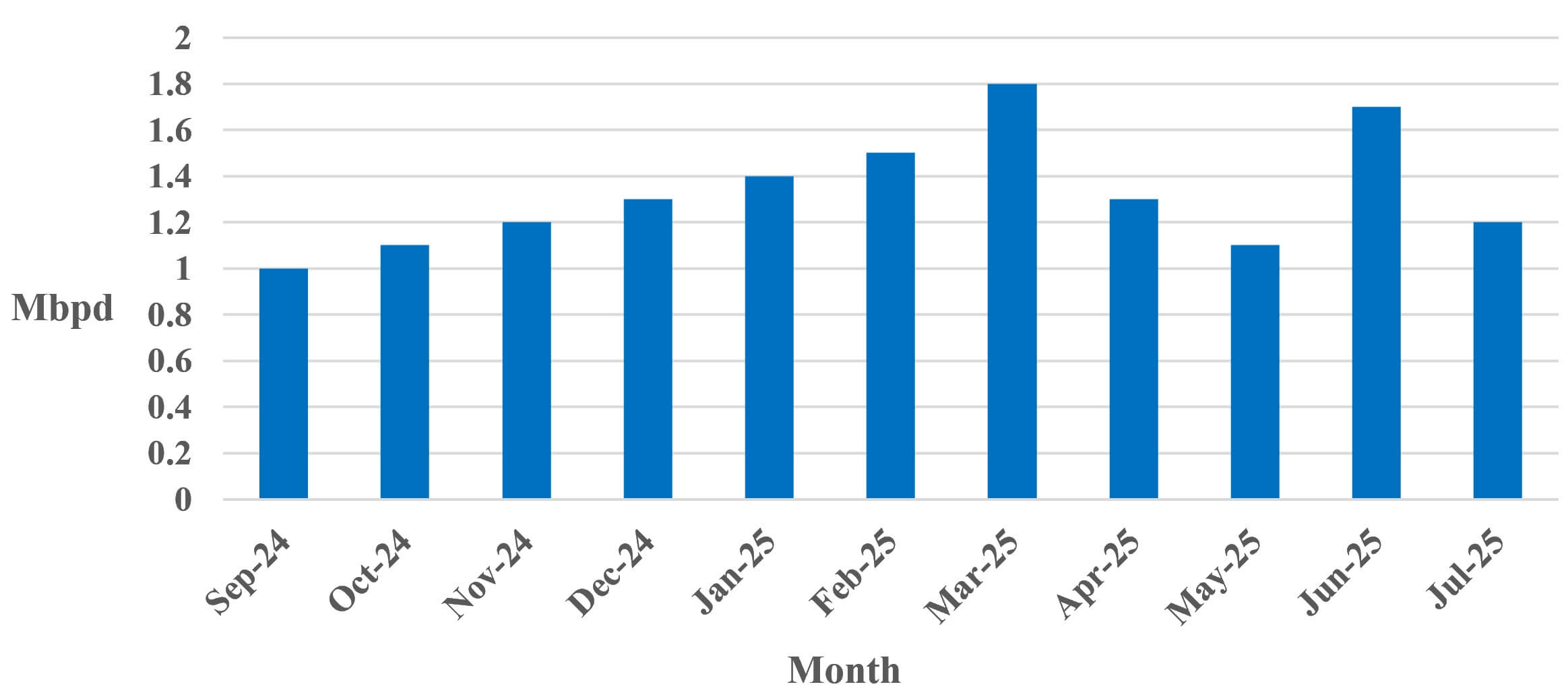
Kpler, the commodities and data analysis firm, has calculated that Iran’s stock of crude oil held afloat has increased from 5 to 35 million barrels between January and July this year, with the volume held on tankers now estimated to be 40 million barrels.

Iranian Oil Minister Mohsen Paknejad, when challenged over similar figures published by Bloomberg and S&P Global Platts, responded that “we fundamentally have no oil that we are unable to sell.”

Kpler bases its calculation on the difference between oil exported from Iranian terminals, and oil unloaded in Chinese ports. Almost all Iranian crude is sold to China. Kpler uses satellite imagery to conduct this analysis. Other commodity intelligence firms calculate higher numbers for the floating stock held on dark fleet tankers, with Vortexa estimating the stock afloat now amounts to 63 million barrels.

Estimates of the quantities involved also draw on export data from Malaysia, which apparently averaged 1.4 million barrels per day of oil exports to China in 2024, while its own production, mostly from Sabah and Sarawak, is only about 500,000 barrels per day. China in the meantime officially records no imports from Iran. This statistical discrepancy is explained by the transshipment of oil from tankers ex-Iran offshore Malaysia. The stock of oil then held afloat is largely kept off the east coast of Malaysia and off Dongying in northern China.

The build-up of stocks offshore is likely a consequence of the increasing reluctance of importers of sanctioned Iranian oil - whatever its designation of origin - to continue purchasing, having already over-stocked their tank farms ashore in anticipation of the sanctions tightening.

Iranian crude exports to China derived from Kpler and Vortexa analysis (CJRC)

Enforcement of sanctions is apparently therefore becoming more effective, in part because those providing shipping services, as well as the ships, managers and shipowners, are now being targeted. Besides reducing volumes, sanctions avoidance also imposes additional costs on Iran as the seller, and increased discounting is necessary to shift undelivered cargos. A surge in Chinese imports in June has been attributed to Chinese teapot oil refiners stocking up in advance of tighter sanctions enforcement, but their holding capacity ashore is now full.

Malaysia’s Ministry of Investment, Trade and Industry announced in May that it would be taking more aggressive enforcement action against certification of origin frauds and transshipments taking place off Malaysia. But even if there is a will to take action, which is not really apparent, the legal authority to interrupt transshipment activities taking place in Exclusive Economic Zones is limited. Other countries such as Denmark are utilizing non-compliance with health, safety and insurance requirements to challenge dark fleet operations; certainly the concentration of full, uninsured, old and poorly maintained tankers off the Malaysian coast does pose an environmental risk.


Thyssenkrupp Spins Off Submarine Builder TKMS

But it is still keeping a majority stake

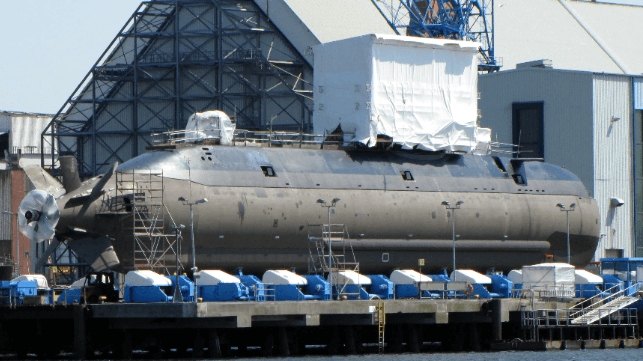
Israeli submarine INS Tanin under construction at HDW in Kiel, part of TKMS (Marco Kuntzsch / CC BY 3.0)

Published Aug 10, 2025 8:58 PM by The Maritime Executive


After start-and-stop attempts to find a buyer for naval shipbuilding division TKMS, German industrial conglomerate Thyssenkrupp has decided to spin the storied sub builder off as an independent publicly-listed business. There is a catch, as Thyssenkrupp will keep 51 percent of the new entity's shares. 

TKMS is the inheritor of Kiel's Germaniawerft (HDW) shipyard. The company today is a major manufacturer of non-nuclear submarines, and it exports advanced air independent propulsion models. It also owns the Wismar shipyard formerly run by MV Werften, as well as the defense and submarine systems company Atlas Elektronik, and competes for surface warship contracts as well as submarines. 

Rumors of a spinoff for TKMS have circulated on and off since at least 2020, and last year a private sale appeared to be taking form. U.S. private equity giant Carlyle Group began a serious due-diligence review of TKMS with Thyssenkrupp's assistance in early 2024, and appeared to be moving towards some form of an investment agreement. But in October 2024, Carlyle confirmed that it had called it off and ended discussions about an acquisition of TKMS. 

In June 2024, Italian cruise and defense giant Fincantieri also reportedly had a look at TKMS as a possible acquisition target. That deal did not ultimately come to fruition either. 

As a final alternative, Thyssenkrupp decided to put a proposal before its shareholders to spin off TKMS as a majority-owned, independently-listed business. This structure will allow TKMS to function as a distinct, focused business and market itself to investors, bankers and any potential future M&A partners. 

Shareholders approved this spin-off at a virtual general meeting on Friday. Current shareholders of Thyssenkrupp AG (the parent company) will be allocated a total of 49 percent of TKMS shares at a predetermined ratio, while Thyssenkrupp AG will retain 51 percent. The spun-off TKMS will be publicly listed and will make its debut on the Frankfurt Stock Exchange in mid-October, after review and approval by German financial regulatory agency BaFin.  

Top image: Israeli submarine INS Tamil under construction at HDW Kiel, later part of TKMS (Marco Kuntzsch / CC BY 3.0)


Tour Boat Rides the Waves and Runs Aground off Honolulu

Discovery
Courtesy USCG

Published Aug 10, 2025 11:40 PM by The Maritime Executive


On Saturday, a tour vessel was swept sideways by heavy surf while attempting to transit into a small harbor in Honolulu, sending the boat off course and causing it to ground.

At about 0800 hours Saturday morning, the 75-foot passenger vessel Discovery was inbound for the Kewalo Basin, a small-craft harbor about 1,500 yards southeast of the main Honolulu Harbor entrance. Unusually tall waves of 10-12 feet were rolling towards the beach, and a high surf advisory was in effect, indicating hazardous conditions for the unprepared. (Honolulu Ocean Safety later reported that it rescued more than 300 beachgoers from the waves over the course of the day.) 

In these conditions, Discovery - which had only two crewmembers aboard, and no passengers - attempted to make the run through the narrow channel into the harbor. 

Like a fishing boat trying to cross a bar, Discovery got overtaken by a wave, which lifted it and carried it forward. The vessel then veered sharply to starboard and ended up broadside-to as the wave broke - a life-threatening outcome for a smaller vessel. Luckily, the Discovery was large and stable enough that it did not capsize. 

At about 0825, Coast Guard Sector Honolulu received a report that Discovery had gone aground on the reef, just 60 feet outside of the harbor. The vessel lost propulsion in the grounding, the master reported. 

A USCG response boat could not reach the site because of the shallow water and rough surf, but jet ski crews from Honolulu Ocean Safety soon arrived on scene to respond. They found that the master and crewmember aboard Discovery were uninjured. 

At about 1825 hours, a tug from Cates Marine arrived on scene and tried to pull the Discovery off the reef. The boat's deck cleats failed, and the operation was halted. 

Discovery eventually drifted up against a nearby seawall near the harbor entrance, enabling salvage and cleanup. By 2300 hours Saturday, response crews had removed all of the vessel's accessible diesel, oil and batteries. No pollution was reported. 

The Coast Guard is investigating the cause of the grounding, and state officials are overseeing the vessel’s salvage. “The safe removal of a large, grounded vessel is a complex undertaking that requires careful coordination and planning,” said Cmdr. Daniel Brahan, Chief of Prevention, Coast Guard Sector Honolulu. “We ask that beachgoers and boaters keep a safe distance from the Discovery as salvage operations continue.”


Study: Routine childhood and adolescent immunizations declining in Michigan


Declines were sharper in lower-income, higher-uninsurance counties


Michigan Medicine - University of Michigan


Routine childhood and adolescent immunizations declined in Michigan between 2017 and 2023, particularly among counties with lower household income and higher uninsurance rates, a new study suggests.

For many key pediatric vaccines, completion rates dropped sharply during the COVID-19 pandemic and have not yet recovered, according to Michigan Medicine led findings in Pediatrics 

“Our findings show that progress towards increasing childhood and adolescent immunizations is stalling in Michigan, increasing the risk of vaccine-preventable diseases,” said senior author Kao-Ping Chua, M.D., Ph.D., a pediatrician and researcher at University of Michigan Health C.S. Mott Children's Hospital and the director of the Susan B. Meister Child Health Evaluation and Research (CHEAR) Center.

Researchers analyzed county-level data from Michigan’s immunization registry between 2017 and 2023. During the study period, completion rates of a recommended group of childhood immunizations among toddlers (including vaccines for pertussis, polio, and measles-mumps-rubella among others) fell from nearly 76% to 67%.

Meanwhile, completion rates of a recommended group of vaccinations among adolescents (including vaccines for meningitis, pertussis, and tetanus) declined from about 81% to 75%.

The study also assessed adolescent completion rates of the human papillomavirus (HPV) vaccination series – which can prevent several types of cancers, including cervical and throat cancer. Although completion rates rose modestly — from 35% to 42% for males and 43% to 45% for females — the increases were smaller than expected based on pre-pandemic trends, in part because the rate of increase slowed after the COVID-19 pandemic began.

“Our findings suggest that the pandemic interrupted the progress that was being made in increasing HPV vaccination rates in adolescents,” Chua said.

The researchers examined trends in immunization completion rates by county socioeconomic factors, including income and insurance coverage. The decline in the completion rates of the recommended group of childhood and adolescent immunizations was greater in counties with lower income and higher uninsurance, while the increase in the rate of the male HPV vaccination series was slower.

“These changes often resulted in the creation of new gaps in immunization completion rates by county income or uninsurance rate or the widening of pre-existing gaps”, said Chua, who notes that this is one of the first studies to examine recent changes in childhood and adolescent immunizations by county characteristics.

Vaccines have long been one of the most effective tools in public health. In 2019, childhood immunizations were estimated to prevent over 24 million cases of vaccine-preventable diseases nationwide. Yet in 2025, the U.S. reported its highest number of measles cases in 33 years — a disease that had been declared eliminated in the country in 2000.

Michigan also saw a spike in measles with more than a dozen cases reported in 2025 as well as pertussis (whooping cough), with 855 cases reported the same year, including 152 in children under two.

“Reversing the declines in childhood and adolescent immunizations is crucial to prevent further outbreaks of measles and pertussis, both in Michigan and in the U.S. more broadly,” Chua said.

“To achieve this goal, broad-based efforts to increase immunization rates in all counties should be coupled with targeted efforts focused on counties with lower income and higher uninsurance rates.” 


Five things to know about cannabis and psychosis


Canadian Medical Association Journal


VIEW EMBARGOED ARTICLE

  1. Cannabis potency is increasing — The concentration of tetrahydrocannabinol (THC) has increased fivefold in the last 20 years in Canada from about 4% to 20% in most legal dried cannabis.
  2. High-potency and regular cannabis use is linked to increased risk of psychosis — The risk of psychosis is increased in people using high-potency THC (more than 10% THC), people using it frequently, and those who are younger and male. A history of mental disorders (depression, anxiety, etc.) also appears to increase the risk.
  3. Cannabis-induced psychosis and cannabis use disorder increase the risk of schizophrenia — A recent study of 9.8 million people in Ontario found a 14.3-fold higher risk of developing a schizophrenia-spectrum disorder in people visiting the emergency department for cannabis use and a 241.6-fold higher risk from visits for cannabis-induced psychosis.
  4. Treatment requires stopping cannabis and taking medication — Continued use of cannabis after a first episode of cannabis-induced psychosis is linked to greater risk of returning symptoms. Antipsychotic medication can help people with severe and prolonged symptoms.
  5. Behavioural options may help with cannabis cessation — Motivational interviewing or cognitive behavioural therapy by a physician or psychologist can help build skills to resist cravings and follow treatment recommendations.

“Cannabis from the 2000s is not the same as in 2025,” said coauthor Dr. Nicholas Fabiano, MD, resident and researcher with the Department of Psychiatry, University of Ottawa, Ottawa, Ontario. “THC content has increased by 5 times. This is likely a significant driver in the increasing link between cannabis use and schizophrenia.”

“Cannabis and psychosis” is published August 11, 2025.