Showing posts sorted by relevance for query DEI. Sort by date Show all posts

Friday, January 12, 2024

U$A

DEI efforts are under siege. Here’s what experts say is at stake

Story by By Nicquel Terry Ellis and Catherine Thorbecke, CNN  • 

When the murder of George Floyd by Minneapolis police set off a wave of racial unrest across the country in 2020, corporate America responded swiftly with renewed and public commitments to diversity, equity and inclusion (DEI).

Major companies created new DEI positions or expanded teams dedicated to DEI and the phrase became a buzzword across the business landscape. Many corporate leaders pledged to hire more people of colorremoved branding perceived to be racist and invested in historically Black colleges

At the time, the efforts were largely met with public support, amid a so-called “racial reckoning” that laid bare a slew of systemic inequities in American society, including the workplace.

But nearly four years later, the very public ousting of Harvard’s first Black woman president earlier this week has led to a new firestorm of debate about DEI efforts in corporate America and beyond.

While Claudine Gay’s resignation from Harvard was linked to a plagiarism scandal and ongoing controversy over a congressional hearing on antisemitism last month, her departure inspired some critics to take aim at what they perceive as a broader failing of DEI efforts.

Among the most vocal of these critics pushing back against DEI is billionaire investor Bill Ackman, who in the wake of Gay’s departure posted a 4,000-word opus on X, the platform formerly known as Twitter, that blasted DEI as “inherently a racist and illegal movement in its implementation even if it purports to work on behalf of the so-called oppressed.”

Ackman’s lengthy thesis was later retweeted by billionaire Tesla and SpaceX CEO Elon Musk, who now owns the social media platform.

“DEI is just another word for racism. Shame on anyone who uses it,” Musk wrote in his post sharing Ackman’s screed on Wednesday. In a follow-up post, the world’s wealthiest person doubled down, adding, “DEI, because it discriminates on the basis of race, gender and many other factors, is not merely immoral, it is also illegal.”

As some of the most powerful business leaders in America level some of the loudest attacks yet against DEI, experts in the field insist that the term is widely misunderstood and unfairly weaponized by critics. They tell CNN DEI was created to build workplaces that more broadly reflect all of America and to foster safer, more inclusive work environments for people of all races, genders, sexual orientations and religious identities.

And they argue that the people fighting these efforts now risk alienating both employees and customers.

When DEI disappears

DEI initiatives in corporate America have long faced skepticism from both sides of the political aisle – with some voices on the left blasting these efforts as corporate window dressing that focuses more on publicity than enacting real change for people of color in the workplace.

Others on the right, meanwhile, have taken aim at these efforts, which they say unfairly disadvantage White workers.

Daniel Oppong, founder of The Courage Collective, a consultancy that advises companies on DEI, said the backlash toward DEI is unsurprising because other efforts to advance social justice in the US have historically been met with resistance.

What’s getting lost in the conversation, Oppong said, is the reason DEI was introduced to corporate America in the first place – because marginalized communities did not always have equal opportunities for jobs or feel a sense of belonging in corporate settings.

“That is the genesis of why some of these programs exist,” he said. “It was an attempt to try to create workplaces where more or all people can thrive.”

Shaun Harper, a USC professor and founder and executive director of the USC Race and Equity Center, said there are many misconceptions about DEI. It wasn’t, as some critics have claimed, created to exclude White people or White men from the workforce, he said.

Harper said many companies with DEI offices offer training that teaches employees how to unlearn stereotypes against certain groups, respect each other’s differences, and hire people of color without overlooking them because of personal bias.

“It’s not all divisive,” he said. “People can learn the skills that are needed to deliver on diversity and inclusion values.”

A pendulum swing

After a DEI hiring spree that began in late 2020, data suggests some businesses are now in fact reversing course on their efforts.

The most recent data on hiring from the job site Indeed shared with CNN Friday illustrates a pendulum swing in postings for DEI-related roles on the site.

After a more than 29% uptick in job postings with DEI in the title or description between November 2020 and November 2021, the data shows a more than 23% decline in the amount of job postings with “DEI” in the title or description between November 2022 and November 2023.

Corporate leaders who dismantle DEI programs risk creating a hostile work environment, Harper said.

“Leaders who are pulling the plug on DEI are doing so without understanding the long-term exposure to harm,” he said. “Doing away with DEI makes companies more – not less – susceptible to lawsuits, to costly levels of turnover among employees, reputational harm not only among employees but also among customers and clients and prospective partners who will refuse to work with a place because it’s such a mess.”

Separate data from the Pew Research Center published last May indicates deep divides in Americans’ attitudes towards DEI at work based on demographic and political lines.

While the Pew data finds that a majority of employed American adults (56%) say focusing on increasing DEI at work is a good thing, it also notes that a relatively small share of workers place a lot of importance on diversity at their workplace. Only about three in 10 respondents say it is extremely or very important to them to work somewhere with a mix of employees of different races and ethnicities or ages, according to Pew.

Moreover, the survey found 78% of Democratic and Democratic-leaning workers say focusing on DEI at work is a good thing, compared with just 30% of Republican and Republican-leaning workers.

The data also shows American workers have disparate views on how much attention their employers are paying to DEI. About half of the workers (54%) surveyed by Pew said their company or organization pays the right amount of attention to increasing DEI, while 14% say their employer pays too much attention and 15% say their employees pay too little attention.

The political and cultural divide was also reflected in the responses to posts from Ackman and Musk. Mark Cuban, billionaire businessman and minority owner of the Dallas Mavericks, pushed back on Musk’s posts in a thread defending DEI as good for businesses and their workers.

“The loss of DEI-Phobic companies is my gain,” Cuban wrote. “Having a workforce that is diverse and representative of your stakeholders is good for business.”

Cuban is far from alone. Hundreds of C-suite executives in the United States said their organizations remained committed or increased diversity, equity and inclusion efforts since 2022, according to a survey published this month by the employment law firm Littler.

More than half of the executives who answered the survey agreed that backlash toward corporate DEI efforts has increased since the Supreme Court overturned affirmative action in June, but 69% said it has not caused their organization to change its approach to DEI efforts.

Still, Harper said the recent backlash against DEI, along with the exodus of people in DEI roles at major companies in the last two years, demonstrates that many diversity commitments in 2020 were short-lived.

“Many companies jumped on the bandwagon at the moment because it was fashionable and en vogue to do so,” Harper said.

Oppong said he feels companies are experiencing “diversity fatigue” because their 2020 initiatives were not sustainable.

“Part of the challenge is that a lot of folks in chief DEI office roles, they were not set up for success in the first place,” he said, adding that colleagues in the field have told him they’ve had to fight for funding for their teams.

“That just shows the surface level investment in the work.”

Still, Oppong said, as the US becomes more diverse, so are the consumers for many major companies.

“The consequence is you’re not going to effectively serve the shifting demographics of the (country) and it reduces your customer base,” he said.

CNN’s Nicole Chavez contributed to this report.

For more CNN news and newsletters create an account at CNN.com

Sunday, February 02, 2025

Trump diversity order hits federal workers in non-DEI jobs, Washington Post says

Reuters
Sat, February 1, 2025

Annual LGBTQ+ Capital Pride parade in Washington


WASHINGTON (Reuters) - Dozens of U.S. government workers linked to diversity initiatives but whose jobs are not directly related to diversity, equity and inclusion have been placed on leave after President Donald Trump ordered the elimination of DEI positions, the Washington Post reported on Saturday.

The Post said its findings suggest some federal agencies may be using the order by Trump, a Republican, to broadly target "people who have expressed interest or participated in programs related to" DEI.

The White House did not immediately respond to a Reuters request for comment.

DEI programs seek to promote opportunities for women, ethnic minorities, LGBT people and other traditionally underrepresented groups. Civil rights advocates argue such programs, generally backed by Democrats, are needed to address longstanding inequities and structural racism.

At least 50 employees at the Education Department who were involved in initiatives such as diversity training or an affinity group were affected, even though "almost none of them worked in jobs directly related to DEI," the newspaper reported.

It identified similar occurrences at the Energy Department and the Office of Personnel Management, affecting around a dozen other federal workers.

Trump last week signed an order calling for the elimination of government diversity programs, including the ending of all federal offices and jobs related to DEI and put all federal DEI office staff on paid leave as their offices face closure.

(Reporting by John Kruzel; Additional reporting by Andrea Shalal; Editing by William Mallard)


What is DEI? More on the initiative, what companies rolled back DEI, Trump DEI order

Mariyam Muhammad, Columbus Dispatch
Fri, January 31, 2025 


Diversity, equity and inclusion programs, commonly referred to as DEI, have been discussed frequently in recent years. You may have heard of it at the school you attend, your place of work or an organization you're part of.

Here's a quick look at what DEI is.

What is DEI?

DEI stands for diversity, equity and inclusion. It refers to programs that ensure people from different backgrounds, cultures, identities, and experiences feel accepted in their environments, whether at school, work, or other organizations.

In its 2021-23 DEI plan, Ohio's Department of Development defined DEI like this:

Diversity: The condition of having or being composed of differing elements; variety; human variety of experiences, identities, and perspectives that our employees bring to state employment.


Inclusion: To take in or comprise as a part of a whole or group; the practice of understanding and applying diversity to improve work culture and influence the way we serve Ohioans.


Equality: The state of being equal, especially in status, rights, and opportunity; fairness; the right of and access to resources to achieve the outcome of equality.

Many organizations, including businesses and schools, adopted DEI standards and guidance over the last several decades to ensure people of all backgrounds feel welcome and accepted, and to support success for traditionally underrepresented groups.

According to Ohio State University's Office of Diversity, research has shown that DEI programs, when nurtured kindly, encourage behaviors such as:

Critical thinking.


Reducing harmful stereotypes.


Strengthening the ability to communicate.


Working and playing across lines of identity and difference.
Some companies have scaled back on DEI recently

President Donald Trump announced the end of government DEI programs in an executive order. Since and before then, many large companies scaled back their DEI policies. According to Time Magazine, some of those companies include:


Target.


Amazon.


Walmart.


Meta.


McDonald's.


Harley-Davidson.


Lowe's.


Ford.


John Deere.


Tractor Supply.


Brown-Forman.
What companies are keeping their DEI programs?

Even with President Trump's executive order to end DEI programs, companies still have the choice to continue with their DEI initiatives. Companies that remain committed to their DEI programs include:

Apple.


Costco.


Ben & Jerry’s.


E.l.f Beauty.


JP Morgan.
Trump includes DEI comments when discussing Washington, D.C., plane crash

During a press conference on Thursday, President Donald Trump criticized DEI programs implemented by the Obama and Biden administrations in relation to the deadly Washington plane crash.

Trump argued that diversity, equity and inclusion initiatives in hiring lowered the standards for air traffic controllers without providing evidence of this claim.

Trump also said the Army helicopter pilot should have seen the approaching American Airlines flight and avoided it, according to a report by USA TODAY.

This article originally appeared on The Columbus Dispatch

Sunday, January 07, 2024

Bill Ackman and Elon Musk called DEI 'racist' but companies need it to succeed, experts say

Tim Paradis,Josée Rose
Sat, 6 January 2024 

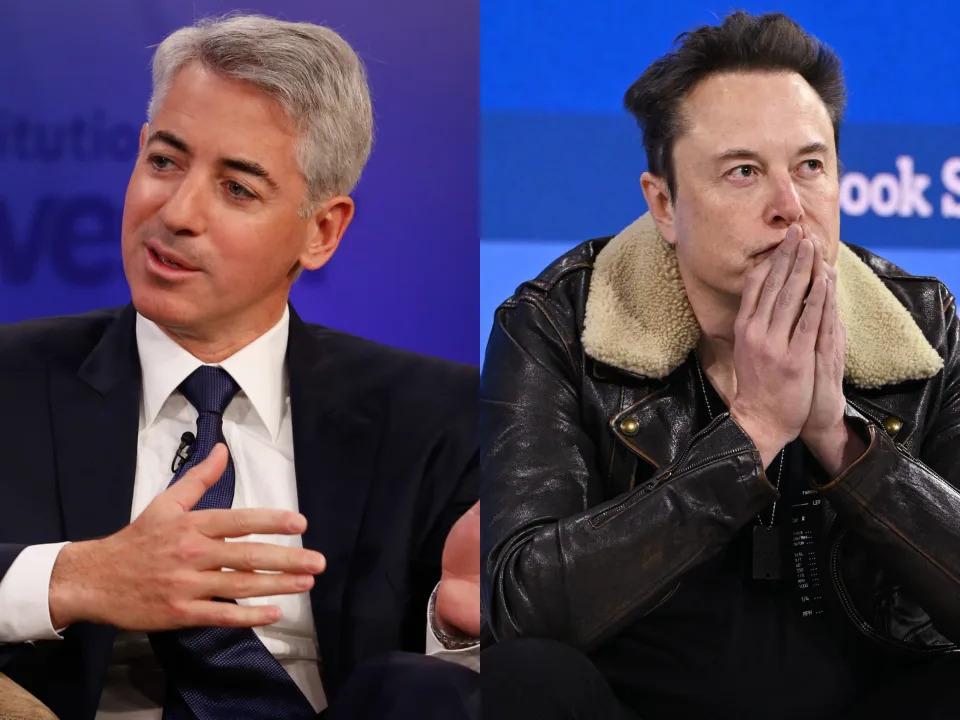
Bill Ackman and Elon Musk.David A. Grogan, Slaven Vlasic/Getty Images

Billionaires and business leaders are arguing over whether DEI efforts should exist.


Investor Bill Ackman and Elon Musk say diversity, equity, and inclusion programs are "racist."


Corporate DEI efforts might evolve, experts told BI, but they're not likely to go away.

It's the abbreviation that has some billionaire bigwigs pretty worked up — and it's not AI.

The talk about DEI — diversity, equity, and inclusion — isn't about how to jumpstart efforts that once seemed almost universally lauded. It's about what's next for these programs following attacks on DEI by several high-wattage names in business.

Billionaire investor Bill Ackman, who became a vocal critic of how Harvard handled antisemitic rhetoric on campus, is now targeting DEI. In a post on X this week following the resignation of Harvard President Claudine Gay, Ackman said he believes DEI is "the root cause of antisemitism at Harvard," his alma mater.

The debate didn't end there. Elon Musk went after fellow billionaire Mark Cuban for his support of DEI efforts. Cuban, in a post on X, wrote that "there are people of various races, ethnicities, orientation, etc that are regularly excluded from hiring consideration." Musk replied that DEI was "just another word for racism."

The billionaire brawls over DEI signal that a focus on diversity — from academia to the corporate world — will further shift gears in 2024: Many of the efforts will stick around though some might evolve, experts told Business Insider.

"I don't think the work is going to stop," Joelle Emerson, cofounder and CEO of the DEI advisory firm Paradigm, told BI. "When I'm talking with boards and C-suite teams, I'm not hearing conversations around 'Oh, should we/shouldn't we.' I'm hearing conversations around how do we navigate the distraction that is this external kind of conversation?"

Part of the reason DEI efforts might change is practical. There are fewer people to carry out the work following layoffs in DEI departments over the past year or so. More than one in three people who started a role related to diversity following the 2020 killing of George Floyd, which touched off widespread social-justice protests and drew attention to DEI work, have left the field, according to research by data provider Live Data Technologies.

Another reason why changes to companies' DEI programs are likely is because the business world goes through cycles of enthusiasm for various topics, Jeffrey Sonnenfeld, senior associate dean for leadership studies at Yale School of Management, told BI. The current focus is artificial intelligence, so it's little surprise, he said, that there's less attention on DEI at many companies.

And, in the case of the attacks on Harvard, Sonnenfeld said communication failures by the university's governing board left an opening for critics of Gay to make the issue about DEI rather than her testimony before Congress over hate speech on campus and on subsequent accusations of plagiarism in some of her work.

"They left a vacuum there for people to fill with this stuff — with this DEI explanation. And what does that do?" Sonnenfeld said. "It horribly discredits some of the finest educators this country has."
DEI backlash grew after the Supreme Court's ruling

The latest attacks on DEI follow the Supreme Court's decision in June that effectively struck down the use of affirmative action in college admissions. Some schools had relied on affirmative action to consider race when deciding whom to admit.

That decision, which appeared to embolden conservative critics of the practice, also left some in the corporate world undeterred when it comes to diversity. In a survey of 400 C-suite and HR leaders in the weeks after the court's decision, the executive search firm Bridge Partners found that 96% of business leaders described DEI programs as being "very or somewhat important" to their organization.

Sonnenfeld, who's also the founder of Yale's Chief Executive Leadership Institute, said companies have been implementing DEI programs because they believe they're good for the bottom line. Research from McKinsey, for example, shows diverse and inclusive companies tend to be more profitable. They also file more patents and show greater innovation, research has shown.

"Having a better representation in your leadership of your workforce, and having a better representation of your owners, your customers, and your communities in your leadership is seen as a huge plus by 95% of corporate America," Sonnenfeld said.
DEI can be good for business

Sonnenfeld said it's unlikely CEOs will retreat from their efforts around diversity even if some of the work becomes the target of critics. "I don't know of any CEOs that are shrinking for fear of being called out," he said.

Kedra Newsom Reeves, a managing director and partner at Boston Consulting Group, told BI that equity and inclusion efforts can drive tangible results for a business. These include boosting innovation, increasing access to customer markets, and improving employee performance.

She explained BCG advises companies to think about using "an equitable, inclusive strategy to drive your own competitive advantage and performance in a way that's beneficial to you as an organization because you do have a fiduciary duty to your shareholders and beneficial from a social perspective as well," she said.

That idea of fiduciary duty is one some critics of DEI efforts are exploring as they make the case that companies' considerations of workers' backgrounds have meant talented workers were excluded. That, they argue, could sideline the best and therefore put shareholders at risk.

And there are signs that some companies are pulling back from their work around diversity, in some cases because there are indicators it's not been all that effective.

Emerson said some of the corporate conversations around DEI early on were performative because leaders didn't want to be called out for not addressing the issues. Having separate teams of DEI experts might not have been as effective when other teams were left to make decisions around things like hiring. Instead, she said, the work of ensuring various voices are included needs to be handled across teams.

"I hope we're going to move away from the trend of this being sort of a flashy topic that sits on its own as sort of a check-the-box," Emerson said.

Newsom Reeves said BCG encourages its clients to think less about organizational diversity targets and focus on outcomes.

Despite the rhetorical heat on DEI, she said, many companies that are still pursuing their diversity initiatives are looking at metrics like how to boost employee retention and drive revenue. "It is not simply DEI for DEI's sake," Newsom Reeves said. "It's really about how do we drive impact as companies."

The debates about DEI following the fights at Harvard are regrettable, Sonnenfeld said, because they miss the point over why Gay was forced to resign — the handling of her Congressional testimony and the allegations of plagiarism.

"Making her a poster child of DEI issues — that's exploiting her. This poor person, this professional who had some tragic missteps, should not become an ideological political football for people on different sides of the political spectrum. That wasn't the issue here," he said.


Monday, January 06, 2025

DEI

Evaluating career service offices at schools of public health: Are programs servicing students equitably and delivering on the promise of a diversified public health workforce?


Columbia University's Mailman School of Public Health


January 6, 2024—Public health schools and programs are designed to prepare graduates for the public health workforce, and enrolling more diverse students, but whether their graduates land jobs at equal rates has not been evaluated. Until now, the role of career service offices (CSOs) within Schools and Programs of Public Health has not been comprehensively studied, and even less information has been available on whether these programs serve students equitably.

A new study by Columbia University Mailman School of Public Health has evaluated both the career services programs, and employment outcomes, of its graduates. The study found that neither program usage nor employment outcomes were statistically different by race or ethnicity; and that to ensure that programs are equitably designed and utilized by students of all backgrounds, the Office of Career Services can improve their services by assessing the resources they offer and evaluating their usage. The study is published in the journal Pedagogy in Health Promotion.

CSOs typically provide career counseling, review resumes, interview practice, job search guidance, and recruiting and networking events as well as connections with employers, with the goal of preparing public health graduates for careers in their fields of choice. The Mailman School Office of Career Services serves an enrollment of approximately 1,750 students and 11,000 alumni who receive lifetime career services access. Each year since 2017 the office has provided between 1,500 and 2,000 individual student advising appointments.

“Ensuring diverse graduates enter the workforce is an important aspect of career services programs, but these programs have been rarely evaluated regarding whether they serve diverse students equitably,” said Heather Krasna, PhD, EdM, MS, associate dean of Career and Professional Development at Columbia Mailman School. “Our goal was to design an evaluation for the career services programming offered at Columbia Mailman School and to assess whether career services were inclusively and equitably utilized by diverse students. We also assessed whether employment outcomes were equitable.”

The review found that certain resources fully met diversity, equity and inclusion (DEI) guidelines, while there was room for improvement in other areas. The number of counseling appointments scheduled was not found to differ significantly by race or ethnicity; and neither employment outcome, job search length, nor salary were found to differ significantly by race or ethnicity.

Based on articles identified in the literature review, the researchers designed a rubric of guidelines to assess the extent to which resources provided to graduate public health students by career services offices were inclusive and accessible for students of diverse backgrounds. The researchers also evaluated the CSO’s virtual career development course on Canvas, an online Learning Management System.

The researchers both qualitatively evaluated career services programs and resources and quantitatively assessed whether students equitably utilized career services appointments. They also analyzed whether there were disparities in appointment utilization and employment outcomes by race, ethnicity and other variables by collecting appointment records and employment outcome data, de-identifying and encrypting the data, matching the data to enrollment records, and conducting a statistical analysis. The evaluation of services primarily comprised anonymous feedback surveys sent after each career advising appointment, learning outcomes from the session; and student opinion surveys for job fairs and workshops. Employer evaluation included ad-hoc discussions with recruiters and their comments from surveys at job fairs.

According to Krasna, rigorously evaluating career services resources to determine whether they are inclusive was a challenging but rewarding endeavor. “The data collection process for employment outcomes records alone is very labor intensive and many schools and programs of public health are very understaffed in career services support,” she says.

“Career Services professionals at schools and programs of public health can play an important role in reducing disparities in graduates’ career trajectories because career service providers advise students on how to apply, interview, and negotiate for professional opportunities, and connect students to employers in the public health field,” noted Krasna.

Krasna notes that CSOs serve as a crucial, but under-researched, link in the chain, guiding public health students as they become public health professionals. “We must continually invest in career services programs, ensure that its services are inclusive for all, and evaluate the office and its programs on an ongoing basis, in order to deliver on the promise of a diverse public health student population and ultimately diversify our public health workforce.”

Jessica Yuen of Columbia Mailman School is a co-author.

Columbia University Mailman School of Public Health

Founded in 1922, the Columbia University Mailman School of Public Health pursues an agenda of research, education, and service to address the critical and complex public health issues affecting New Yorkers, the nation and the world. The Columbia Mailman School is the third largest recipient of NIH grants among schools of public health. Its nearly 300 multi-disciplinary faculty members work in more than 100 countries around the world, addressing such issues as preventing infectious and chronic diseases, environmental health, maternal and child health, health policy, climate change and health, and public health preparedness. It is a leader in public health education with more than 1,300 graduate students from 55 nations pursuing a variety of master’s and doctoral degree programs. The Columbia Mailman School is also home to numerous world-renowned research centers, including ICAP and the Center for Infection and Immunity. For more information, please visit www.mailman.columbia.edu.

Friday, March 28, 2025


University of Michigan closes its DEI office, ending multi-million dollar investment into diversity

Ali Bianco
Thu, March 27, 2025


The University of Michigan — one of the leading academic bastions of diversity, equity and inclusion in the country — is shuttering the doors of its Office of Diversity, Equity and Inclusion and shutting down its model DEI program.

In an email on Thursday, the university’s leaders pointed to the court-order enforcement of President Donald Trump’s executive orders on “restoring merit-based opportunity” and ending DEI programs across the country, as well as the “Dear Colleague” letter from the Department of Education that threatened to eliminate federal funding for universities that did not eliminate their DEI efforts.

As a result, the university’s DEI office — which launched in 2016, the start of the first Trump administration — and the Office for Health Equity and Inclusion will close. The university’s DEI 2.0 Strategic Plan, the reimagined version of their original umbrella strategy for DEI across their schools and colleges, will be discontinued.

“These decisions have not been made lightly. We recognize the changes are significant and will be challenging for many of us, especially those whose lives and careers have been enriched by and dedicated to programs that are now pivoting,” the announcement said.

Multiple universities and school systems across the country have caved under scrutiny from the Trump administration, removing DEI content from their websites and shutting down DEI programs. But the University of Michigan has long been considered a model for DEI initiatives across the country.

The end of its DEI office signals a big win for the Trump administration as it moves to end the focus on DEI in the American education system.

It’s a stark contrast from the launch of the DEI 1.0 program a decade ago when the university began “to enact far-reaching foundational change at every level, in every unit” and poured nearly $250 million into the program, according to an investigation from the New York Times.


The program made Michigan a national example, and in the face of backlash on “critical race theory” and widespread protests over the war in Gaza, the university strengthened those efforts. They hired more people in DEI offices and expanded the program.

Their DEI initiatives have not been without controversy, especially in their struggle to enroll Black students and to address complaints over campus protests following the Oct. 7 attacks in Israel. But university leaders noted Thursday that first-generation students have increased by 46 percent, and Pell Grant recipients increased by more than 30 percent.

Even as other universities started ending the use of diversity consideration across all hiring and admissions in the last year, Michigan had yet to enact widespread changes. Now diversity statements will not be allowed — for hiring, which they announced in December, but also for admissions, promotion, awards or any other assessments. They’re also updating their websites to ensure compliance with federal law.

Going forward, the university will be increasing investments in financial aid, expanding scholarship programs for students and expanding mental health support. Certain student multicultural spaces will remain open, according to the university.

“We are deeply grateful for the meaningful contributions of leaders, faculty and staff who have advanced our ongoing efforts to create an ever-more inclusive and respectful community,” the announcement said.
University of Michigan shuts DEI office, citing Trump orders and funding warning
Kanishka Singh
Thu, March 27, 2025 at 8:56 PM MDT
2 min read
10


The University of Michigan campus in Ann Arbor


By Kanishka Singh

WASHINGTON (Reuters) - The University of Michigan - long seen as a bastion of diversity, equity and inclusion programs - said on Thursday it was closing its DEI office, citing executive orders from President Donald Trump and a warning from the federal Education Department.

WHY IT'S IMPORTANT

Since taking office on January 20, Trump has passed executive orders aimed at dismantling DEI in the government and private sector. The U.S. Education Department, in mid-February, warned of cuts in federal funding for universities if they continued with DEI programs.


The university said on Thursday it did not make its decision lightly and acknowledged its changes will be challenging for many people who support the programs. Its DEI office was launched almost a decade ago.

KEY QUOTES

"The Office of Diversity, Equity and Inclusion and the Office for Health Equity and Inclusion will close. Student-facing services in ODEI will shift to other offices focused on student access and opportunity," the office of the university's president said.

"The DEI 2.0 Strategic Plan, the umbrella strategy for schools, colleges and units, will be discontinued."


CONTEXT

Rights advocates say DEI programs help uplift marginalized communities by addressing historic inequities. Trump and his allies call the programs anti-merit and discriminatory against white people and men.

DEI programs have been part of workplace diversity efforts to ensure fairer representation for groups seen as historically marginalized, such as African Americans, LGBTQ+ community members, women, disabled people and other ethnic minorities in the United States.

DEI efforts picked up pace, including in the private sector, in 2020 after the murder of George Floyd, a Black man who died after a white Minneapolis police officer knelt on his neck for several minutes.

By last year, the university had spent more than $250 million on DEI efforts, the New York Times reported.

Friday, May 17, 2024

UNC System is likely to ban DEI, but what exactly is it? One scholar’s view

RIGHT WING REVANCHISM

Kyle Ingram
Thu, May 16, 2024 


In recent years, diversity, equity and inclusion programs at colleges and universities have come under fire from conservatives, who allege that they promote divisive ideologies, drain campus resources and stoke tension on campus.

DEI programs across the country have become the target of state legislatures and university governing boards alike, who have defunded or banned them — sometimes eliminating employees in the process.

In North Carolina, the UNC System is poised to severely restrict DEI programs next week at a meeting of the Board of Governors. In anticipation of the vote, the UNC-Chapel Hill Board of Trustees voted this month to divert the $2.3 million it spends on DEI to campus police instead.

To examine the origin of DEI programs and what they do, The News & Observer spoke with Shaun Harper, a professor of education, business and public policy at the University of Southern California.

Harper, who studies DEI programs and has testified before Congress about them, published a report in March alongside 11 other scholars titled “Truths about DEI on College Campuses.”

In our interview, Harper rebutted claims that DEI could represent “divisiveness, exclusion and indoctrination,” as UNC Trustee Marty Kotis said this month. Rather, Harper said his research has found the programs ultimately benefit students and account for small portions of university budgets.

Furthermore, he said the loss of DEI offices could significantly hinder the ability of universities to deal with incidents of discrimination and harassment on campus — a responsibility they are required to uphold by federal law.

The following interview has been edited for length and clarity.

Q: How long have DEI programs been around?

A: They (universities) started investing in them in the 1970s. Many predominantly white and historically white institutions of higher education didn’t start to diversify — or start to admit Black students, specifically — until the late ‘60s, early ‘70s. What happened is that many Black students started showing up on these campuses without any support, and because they had not been there historically, the staff and administration didn’t know how to create a welcoming and inclusive environment for those students.

So, they started creating these offices of Minority Affairs — that’s what they were called in the beginning. Then over time, they shifted to ethnic culture centers and to offices of Multicultural Affairs. The Multicultural Affairs shift was intended to signify that it’s not just (for) Black students and students of color, but it’s also students with disabilities, veteran students, LGBTQ students and so on. Then eventually, Multicultural Affairs evolved into what we now call diversity, equity and inclusion.

Many people misunderstand DEI initiatives to be sort of a post-George Floyd murder phenomenon — like something that just was created within the past four years. That’s just not true. These kinds of initiatives have been around for 50 years.

Q: What about the backlash to DEI. Is that a post-2020 phenomenon?

A: Yeah, it is. Even though George Floyd’s murder was not the catalyst for the DEI initiatives themselves, because they have really been longstanding in higher education, George Floyd’s murder was in fact, the catalyst for a reckoning with structural and systemic racism in the United States, including in these higher education institutions. It forced a long overdue conversation that many Americans weren’t ready to have.

Then, fast forward to September 2020, when then-President Donald Trump signed an executive order, banning diversity, equity and inclusion programming and initiatives in our government and our nation’s military. That had a chilling effect on DEI on college campuses, because it was confusing to public institutions, because they were like, ‘Well, we’re not a federal agency, but we do receive tons of federal funds for financial aid and for research.’

Joe Biden reversed that executive order on his first day in office in 2021, but by that time the seed had already been planted. Christopher Rufo (a conservative activist) did an interview with Politico in which he tells the truth about how he and others began a movement deliberately in 2021 to tear down DEI everywhere it exists. That was a politicized, well-orchestrated, well-funded movement.

Q: As they currently stand, what sorts of services do DEI programs offer to students on college campuses?

A: They offer programming, counseling and advising for veteran students, for students with disabilities, for low-income students, students who are first in their families to attend college, for women and for students of color and LGBTQ students.

I deliberately went in that order because people who very deliberately attempt to dupe Americans about what DEI is and what it does, they kind of start and stop with ‘Oh, it’s about race and transgender students and gay and lesbian students,’ without understanding that it’s about all of those other student populations as well.

Let me add two more to the list that I think are really important: international students. Many institutions rely on them as full-paying students who don’t qualify for federal financial aid and who come and they write really big checks to be on our campuses. They, too, are among the students who are served by DEI programs.

But then there’s one more: students who are in the religious minority on their campuses. Jewish students, Muslim students and other students from religious backgrounds that are underrepresented.

Antisemitism is a problem on college campuses, full-stop. There’s no ifs, ands or buts about it — so too is Islamophobia. But in recent months, there has been an attempt to weaponize antisemitism on college campuses as a part of the movement to defund DEI. In other words, unfounded claims have been made that all DEI programs are antisemitic — they are the absolute opposite of that. In fact, it’s DEI officers and programs that actually help to make campuses inclusive for Jewish students, Muslim students and students whose religious identities and faiths are underrepresented. So what a shame that antisemitism has been misused as a political football.

Q: In the cases you’ve studied in your report, where universities or states have banned DEI programs, what has been the fallout?

A: What was lost was the support and protections for all those student groups and groups of employees. Jobs were lost as the people who do that important work to make campuses safe, equitable and inclusive were let go and their roles were eliminated. Infrastructure was lost. Experts worked for, in some instances, decades to build infrastructure that was so immediately torn down.

In that report, please take a look at Mitchell Chang’s (a UCLA professor and DEI administrator) essay. One of the things that I appreciated most about his essay is that he lays out the process of what happens if someone files a complaint of antisemitism, sexism, racism or some other form of discrimination and harassment — he lays out the actual process that colleges and universities are mandated to do by federal law when a complaint is filed.

Well, the elimination of DEI programs makes institutions incredibly susceptible to being out of compliance when these things occur on their campuses — because who’s gonna do that work? The people who were banning DEI were not thinking about the full scope of what’s all included, including these investigations and due processes that the federal government requires when there is a complaint or allegation of antisemitism, racism, sexism and so on.

What’s going to happen (if) a predominantly white fraternity at UNC-Chapel Hill decides to host a blackface party or a south of the border deportation party and the campus is in uproar because students of color are feeling parodied and attacked? What’s going to happen when white nationalists show back up on campuses spreading propaganda that is antisemitic, racist and homophobic? Who is going to do the work of helping the campus heal from that devastation?

In 2016, a fan wore a Barack Obama mask on his face and a noose around his neck to a University of Wisconsin home football game. In September 2020, a man was arrested for painting racist messages on multiple campus buildings. In May 2023, a white student posted a video to social media in which she threatened to ‘haunt every (expletive) little (racial slur)’ and ‘make them pick (expletive) cotton in the fields all day until they (expletive) die of thirst.’

DEI professionals are often involved in investigations of incidents like these. They usually lead campus recovery efforts to turn these crises into teachable moments and to help create policies to reduce the risk of recurrence. What will UW, UNC-Chapel Hill and other institutions do without these people?

Q: Some critics of DEI argue that it accounts for too much of universities’ budgets. What did you find in your research about that?

A: It’s almost laughable. When you talk to people who work in any office that is connected to what we call DEI, they will tell you without blinking that their work is chronically underfunded. So this whole notion that millions upon millions of dollars are being wasted and that there’s this so-called “DEI bloat” on college campuses is an absolutely ridiculous exaggeration.

In 2023, the Wisconsin state legislature proposed cutting 188 (DEI) jobs. That sounds like a lot of jobs, right? But that’s across 13 campuses for a total of $32 million. Now, again, anybody who sees $32 million is like ‘Wow, that’s a lot of money,’ but $32 million in the context of the University of Wisconsin system’s budget is less than one half of 1%. Furthermore, those DEI employees account for less than 1% of all of the employees across the system.

Q: The UNC System’s proposed policy would defund DEI programs while allowing them to be “redirected to initiatives related to student success and well-being.” How does that policy compare to other university systems that have banned DEI?

A: It’s pretty much in line with what everyone else is doing, both in terms of approach and semantics. Here’s one thing we know for sure about so-called ‘student success’ efforts: a rising tide does not raise all boats.

We know that already from prior programs and efforts on campuses that were intended to support all students but left behind international students, Muslim students, Latino students and so on. These various student populations have population-specific needs, issues, and expectations of their institutions. Therefore, doing the same thing for all of them in a race-less way or in a way that doesn’t account for their veteran status and all that comes with that, is guaranteed to fail — is guaranteed to under-serve them.

Q: The UNC-Chapel Hill Board of Trustees recently voted to divert all DEI funds into campus police and public safety programs. What are your thoughts on that?

A: It almost renders me speechless. It’s not unimaginable, but nonetheless wild is all I can say about it.

Here’s yet another example of how DEI is being used as a political football. I suspect the reason why these funds are being diverted to campus policing is clearly in response to the recent wave of student protests on campuses.

Would they have done that three months ago? Probably not. They probably still would have gone ahead with defunding DEI, for sure, and they probably would have done so under the guise of reallocating those monies to student success efforts. But the policing part? No. As recently as three months ago, that wouldn’t have even been on the table.

(Editor’s note: UNC BOT Chair David Boliek told The N&O that the policy was in consideration before pro-Palestinian student demonstrations began on campus.)

Q: University leaders in NC seeking to ban DEI have referred to it as ‘divisive’ or ‘indoctrination,’ what is your response to that criticism?

A: It’s so paradoxical for a higher education institution to have people making policy about a thing that they themselves have not experienced. It’s almost like writing a scathing critique of a book that one hasn’t read or a movie that one hasn’t watched.

It makes me wonder how many of these DEI programs have trustees and governors actually sat in on and participated in themselves? Were they all terrible and divisive? And did they all qualify as indoctrination? If so, who were the presenters, how were those presenters identified? What did the surveys say amongst other people who participated? Did everybody experience them as divisive and indoctrination?

In the Spotlight designates ongoing topics of high interest that are driven by The News & Observer’s focus on accountability reporting.