Showing posts sorted by relevance for query Fischer-Tropsch. Sort by date Show all posts

Friday, October 06, 2023

SYNGAS REDUX

Discovery made about Fischer Tropsch process could help improve fuel production


Peer-Reviewed Publication

WASHINGTON STATE UNIVERSITY


A fundamental discovery about the Fischer Tropsch process, a catalytic reaction used in industry to convert coal, natural gas or biomass to liquid fuels, could someday allow for more efficient fuel production.

Washington State University researchers discovered previously unknown self-sustained oscillations in the Fischer Tropsch process. They found that unlike many catalytic reactions which have one steady state, this reaction periodically moves back and forth from a high to a low activity state. The discovery, reported in Science, means that these well-controlled oscillatory states might be used in the future to enhance the reaction rate and the yields of desired products.

“Usually, rate oscillations with large variations in temperature are unwanted in chemical industry because of safety concerns,” said corresponding author Norbert Kruse, Voiland Distinguished Professor in WSU’s Gene and Linda Voiland School of Chemical Engineering and Bioengineering. “In the present case, oscillations are under control and mechanistically well understood. With such a basis of understanding, both experimentally and theoretically, the approach in research and development can be completely different – you really have a knowledge-based approach, and this will help us enormously.”

Although the Fischer Tropsch process is commonly used for fuel and chemical production, researchers have had little understanding of how the complex catalytic conversion process works. The process uses a catalyst to convert two simple molecules, hydrogen and carbon monoxide, into long chains of molecules – the hydrocarbons that are used widely in daily life.

While a trial-and-error approach has been used in research and development in the fuels and chemical industries for more than a century, researchers will now be able to design catalysts more intentionally and tune the reaction to provoke oscillatory states that could improve the catalytic performance.

The researchers first came upon the oscillations by accident after graduate student Rui Zhang approached Kruse with a problem: he wasn’t able to stabilize the temperature in his reaction. As they studied it together, they discovered the surprising oscillations.

“That was pretty funny,” Kruse said. “He showed it to me, and I said, ‘Rui, congratulations, you have oscillations! And then we developed this story more and more.”

The researchers not only discovered that the reaction develops oscillatory reaction states, but why it does so. That is, as the temperature of the reaction goes up due to its heat production, the reactant gases lose contact with the catalyst surface and their reaction slows down, which reduces the temperature. Once the temperature is sufficiently low, the concentration of the reactant gases on the catalyst surface increases and the reaction picks up speed again. Consequently, the temperature increases to close the cycle.

For the study, the researchers demonstrated the reaction in a lab employing a frequently used cobalt catalyst, conditioned by adding cerium oxide, and then modeled how it worked. Co-author Pierre Gaspard at the Université Libre de Bruxelles developed a reaction scheme and theoretically imposed periodically changing temperatures to replicate the experimental rates and selectivities of the reaction.

“It’s so beautiful that we were able to model that theoretically,” said corresponding author Yong Wang, Regents Professor in WSU’s Voiland School who also co-advised Zhang. “The theoretical and the experimental data nearly coincided.”

Kruse has been working on oscillatory reactions for more than 30 years. The discovery of the oscillatory behavior with the Fischer Tropsch reaction was very surprising because the reaction is mechanistically extremely complicated.

“We have a lot of frustration sometimes in our research because things are not going the way you think they should, but then there are moments that you cannot describe,’’ Kruse said. “It's so rewarding, but ‘rewarding’ is a weak expression for the excitement of having had this fantastic breakthrough.”

The work was supported by the Chambroad Chemical Industry Research Institute Co., Ltd., the National Science Foundation and the Department of Energy’s Basic Energy Sciences Catalysis Science program.

Tuesday, August 03, 2021


SwRI, UTSA collaborate on a novel process to produce low carbon fuels


Project will develop catalyst formulations to create cleaner, more cost-effective fuels

Grant and Award Announcement

SOUTHWEST RESEARCH INSTITUT

SAN ANTONIO — Aug. 3, 2021 — Southwest Research Institute and The University of Texas at San Antonio are collaborating to combine two catalytic processes into a single reactor, with the overall goal of recycling carbon from CO2 to produce low-cost hydrocarbon fuels. The work, led by Dr. Grant Seuser of SwRI’s Powertrain Engineering Division and Dr. Gary Jacobs of UTSA’s College of Engineering, is supported by a $125,000 grant from the Connecting through Research Partnerships (Connect) Program.

Greenhouse gas emissions are expected to increase by about 17% by 2040 as a result of increasing energy and transportation needs in the developing world.

“We’re facing a lack of renewable fuels and the technology to deliver cleaner power generation,” Seuser said. “We’re seeing a rise in battery-powered passenger vehicles, but the high power demands of the aviation, locomotive, shipping, and long-haul trucking industries will continue to require energy-dense hydrocarbons for the foreseeable future.”

Seuser and Jacobs propose using a process called carbon dioxide (CO2) hydrogenation to produce cleaner renewable liquid hydrocarbon fuels for transportation. To accomplish this, they plan to build a single reactor capable of performing two chemical processes in one step. The first will react hydrogen with CO2 to make carbon monoxide (CO) and the second will convert the CO and hydrogen, a blend known as synthesis gas or syngas, into liquid hydrocarbon fuel by a catalytic process known as Fischer-Tropsch synthesis.

“Fischer-Tropsch synthesis was discovered in Germany about a century ago and is still used in places like South Africa and Quatar to convert coal and natural gas into liquid hydrocarbon fuels. Plant capacities ranging from tens of thousands to hundreds of thousands of barrels of fuel per day. It will be an interesting challenge to integrate this catalytic technology into a process that uses CO2 in the feed,” Jacobs said.

Additionally, the process the SwRI-UTSA team is developing will be able to utilize CO2 captured at fossil fuel-fired power plants that would otherwise be sequestered underground or emitted into the atmosphere.

“Combining the functionality of these two catalytic processes, reverse water-gas shift and Fischer-Tropsch synthesis, into a single reactor would simplify the process and increase its economic viability,” Jacobs said.

The effort will also explore novel catalyst formations aimed at combining reverse water-gas shift and Fischer Tropsch synthesis functions, which Jacobs will create and characterize at UTSA. Seuser will use the catalysts in a SwRI reactor to assess their industrial viability.

“Reducing the complexity of converting CO2 into hydrocarbon fuels would have a big impact,” Seuser said. “Finding a way to produce low-carbon fuels and maintain our current energy infrastructure is critical to avoid further increases in Earth’s temperature.”

SwRI’s Executive Office and UTSA’s Office of the Vice President for Research, Economic Development, and Knowledge Enterprise sponsor the Connect program, which offers grant opportunities to enhance greater scientific collaboration between the two institutions.

For more information, visit https://www.swri.org/emissions/catalyst-formulation.

Thursday, September 25, 2025


Advances in iron-based Fischer-Tropsch synthesis with high carbon efficiency


Dalian Institute of Chemical Physics, Chinese Academy Sciences
Figure Abstract 

image: 

Simultaneously suppressing primary CO2 formation through the stabilization of phase-pure iron carbides and secondary CO2 generation via hydrophobic surface engineering and graphene confinement has emerged as a promising strategy in iron-based Fischer-Tropsch synthesis. These approaches effectively mitigate side reactions such as the water-gas shift and CO disproportionation, enhance active phase stability, and ultimately improve carbon efficiency, reduce CO2 emissions, and promote selective formation of long-chain hydrocarbons under realistic FTS conditions.

view more 

Credit: Chinese Journal of Catalysis


Fischer-Tropsch synthesis (FTS) is an important technology for converting carbon-rich resources such as coal, natural gas, and biomass into clean fuels and high-value chemicals through synthesis gas. Iron-based catalysts are widely used in industrial applications due to their low cost and strong adaptability, especially for syngas derived from coal or biomass with low H2/CO ratios. However, the catalytic process is complicated by frequent phase transformations among metallic iron, iron oxides, and iron carbides, which hinder mechanistic understanding and stability. Additionally, side reactions, such as CO disproportionation and the water-gas shift reactions, lead to excessive CO2 formation, significantly reducing carbon utilization efficiency.


Iron-based catalysts exhibit complex and dynamic phase behavior during FTS, with iron carbides generally recognized as the primary active phases. Different iron carbide phases (e.g., ε-Fe2C, χ-Fe5C2, and θ-Fe3C) demonstrate distinct catalytic performances and readily interconvert under reaction conditions, critically influencing activity and product selectivity. In situ characterization has revealed the coexistence and transformation of multiple phases during operation, underscoring the importance of precise regulation to stabilize the most catalytically favorable phase.


To address high CO₂ selectivity and improve carbon efficiency, three key strategies have emerged:

ⅰ. Stabilization of phase-pure iron carbides, which prevents their oxidation into less active species like Fe₃O₄ and mitigates primary CO₂ formation; ⅱ. Hydrophobic surface modification, which reduces H₂O adsorption and thereby suppresses secondary CO₂ formation from the WGS reaction; ⅲ. Graphene confinement and 2D material encapsulation, which enhances the thermal and structural stability of active phases, tunes the electronic environment, and further inhibits CO₂-generating pathways. Together, these approaches offer a comprehensive framework for enhancing the stability and catalytic performance of iron-based FTS catalysts, enabling more efficient and sustainable FTS processes with reduced CO2 emissions.


This review summarizes recent advances aimed at enhancing carbon efficiency in iron-based FTS catalysts. It highlights the critical role of constructing and stabilizing iron carbide active phases which critically influence catalytic activity, product selectivity, and phase dynamics under reaction conditions. Various strategies to suppress CO2 formation including promoter addition, hydrophobic surface modification, and active phase stabilization, are critically examined for their effectiveness in improving carbon utilization. Particular attention is given to the application of two-dimensional materials, such as graphene, which enhance the thermal stability, sintering resistance, and electronic structure of iron carbides, thereby reducing CO₂ emissions and promoting selective formation of desired hydrocarbon products. This innovative approach offers new opportunities for developing catalysts with high activity, low CO2 selectivity, and enhanced stability, which are key factors for enhancing both the efficiency and sustainability for FTS. Such advancements are crucial for advancing more efficient and sustainable FTS technologies, supporting the global push for net-zero emissions goals, and contributing to carbon reduction efforts worldwide.

The results were published in Chinese Journal of Catalysis (DOI: 10.1016/S1872-2067(25)64738-3)

About the Journal

Chinese Journal of Catalysis is co-sponsored by Dalian Institute of Chemical Physics, Chinese Academy of Sciences and Chinese Chemical Society, and it is currently published by Elsevier group. This monthly journal publishes in English timely contributions of original and rigorously reviewed manuscripts covering all areas of catalysis. The journal publishes Reviews, Accounts, Communications, Articles, Highlights, Perspectives, and Viewpoints of highly scientific values that help understanding and defining of new concepts in both fundamental issues and practical applications of catalysis. Chinese Journal of Catalysis ranks among the top one journals in Applied Chemistry with a current SCI impact factor of 17.7. The Editors-in-Chief are Profs. Can Li and Tao Zhang.

At Elsevier http://www.journals.elsevier.com/chinese-journal-of-catalysis

Manuscript submission https://mc03.manuscriptcentral.com/cjcatal

Thursday, September 08, 2022

Delta places huge order for sustainable aviation fuel made with 839MW of green hydrogen

The SAF will be made by combining cellulosic biomass and renewable H2 using Fischer-Tropsch method


Delta aircraftPhoto: Chris Sweigart/Delta

American airline Delta is to buy 385 million gallons of green hydrogen-derived sustainable aviation fuel (SAFs), the largest deal of its kind made by a US airline and a major step forward for producers looking to make green biofuels with renewable H2.

Fuel for the deal will be made using a version of the Fischer-Tropsch (FT) process, which chemically pairs carbon monoxide and hydrogen to produce synthetic hydrocarbons.

Supply will come from a new FT plant planned by US producer DG Fuels in Louisiana, furnished with an 839MW electrolyser to supply the hydrogen. Construction on the plant is due to begin in 2023, with first SAF production in the second half of 2026.

The largest hydrogen electrolyser installed globally to date is a 150MW machine in central China, while a bigger 260MW unit is currently under construction in northwest China.

Power for DG Fuels’ 839MW electrolyser will be sourced from solar plants and verified by Renewable Energy Certificates, DG Fuels CEO Michael Darcy, tells Recharge. The scheme will apply for hydrogen tax credits under the Inflation Reduction Act (IRA), but the Delta deal was already agreed before the IRA was announced, he adds.

Delta will buy 55 million gallons of the fuel per year for seven years from 2027, pushing the company further towards its goal of procuring more than 400 million gallons of SAF annually by 2030 — the equivalent of 10% of its yearly fuel consumption.
Article continues below the advert

As of 2021, Delta had secured more than 40% of that goal through offtake agreements. The DG Fuels deal — assuming it has not already been counted — would take that to around 54%.


SPECIAL REPORT | Can renewables make airlines carbon-free by 2050?
Read more
Fischer-Tropsch

DG Fuels’ FT process utilises a carbon monoxide-heavy syngas made by processing cellulosic biomass —organic material such as plant or tree waste — at high temperatures and without oxygen to produce carbon monoxide and other gases, water and tar, and a small amount of hydrogen.

This syngas is then mixed with renewable hydrogen produced from the 839MW electrolyser and passed through a metal catalyst causing “polymerisation”, where the carbon monoxide and hydrogen molecules join together to form synthetic hydrocarbons. Further refinements then burnish them into SAFs.

According to Darcy, the process represents a departure from other FT processes for SAF, which typically source all the hydrogen from the organic material used to make the syngas, which would usually be a balance of carbon monoxide and hydrogen at a ratio of roughly 2:1.


ANALYSIS | Why the US climate bill may be the single most important moment in the history of green hydrogen
Read more

By tweaking gasification so the syngas is richer in carbon monoxide and then adding hydrogen from an electrolyser, DG Fuels can optimise its SAF output by a factor of almost four, with 97% of the carbon from the biomass ending up in the fuel, the company claims.

Waste water from the FT process is then used in the electrolyser, which will be supplied by Norway’s HydrogenPro.

Currently the aviation biofuel market is dominated by waste-oil-derived biofuels such as HEFA-SPK (hydroprocessed esters and fatty acids synthetic paraffinic kerosene) — in fact, more than 95% of biofuel flights to date have used HEFA-SPK fuel.

But FT technologies are catching up. In May this year, Fulcrum Bioenergy began operations at its FT-based transport fuel plant in Nevada, which uses municipal waste as a feedstock.

So far, the largest SAF commitment from an airline was made by United Airlines last year when it agreed to buy 1.5 billion gallons over 20 years from Alder Fuels, which is developing technology with US manufacturer Honeywell to make SAFs from waste forestry products via pyrolysis.

Sunday, March 05, 2023

The Air Force's Modular Reactor Will Create Jet Fuel Out of Water and Air

Sébastien Roblin
Fri, March 3, 2023 

USAF's Reactor Creates Jet Fuel Out of Water, AirParsa Tavakoli / EyeEm - Getty Images

The New York-based startup Air Company has been awarded $65 million by an Air Force Defense Innovation Unit for a project known as SynCe to install a Carbon Conversion Reactor that promises to create synthetic jet fuel out of water and carbon dioxide in the air we breathe.

Sustainable aviation fuel (SAF) isn’t an entirely new thing—back in December 2006, a B-52 bomber flew for 7 hours on a 50/50 blend of traditional jet fuel and a synthetic fuel called Syntroleum produced using the Fischer-Tropsch process. According to the International Air Transport Association, by 2022, over 450,000 commercial flights by 50 airlines had used SAFs in part—though they tend to be 2 to 4 times more expensive than traditional fossil fuels.


But AirCompany argues its AirMade fuel differs from these predecessors in that it’s a ‘drop-in’ kerosene that doesn’t require blending with fossil fuels at all. Furthermore, the conversion reactor doesn’t require an exotic, specially sourced feedstock—it simply needs carbon dioxide, which can be obtained anywhere.

For a good measure, AirCompany claims its carbon-neutral fuel results in a reduction of about 94 to 97 percent greenhouse gas emissions (depending on the source of electricity)—the highest of any on the market the company alleges. According to a chart produced by Air Company, competing biofuels result in only a 60 to 80 percent reduction, and traditional Fischer-Tropsch based PTL-FT processes hit 90 percent. And those must be blended 50-50 with fossil fuels, or worse.

The Brooklyn-based startup was launched in 2019 by Harvard Business School alum Gregory Constantine and Dr. Stafford Sheehan. Their initial products include Air Vodka (“the world’s first carbon-negative spirit”), eau de parfume, and hand sanitizer.

The leap from 80-proof vodka to jet fuel may seem steep, but AirCompany’s AirMade fuel—currently being mass produced in Brooklyn—has already lined up buyers in civil aviation sector:

Virgin Atlantic has agreed to purchase 100 million gallons over 10 years


Jet Blue agreed to purchase 25 million gallons over 5 years


Boom Supersonic agreed to purchase 5 millions gallons annually for their Overture Test Flight Program

Last summer, Air Company, the Air Force Research Laboratory, and the Hsu Foundation collaborated to realize a test flight on an unmanned aircraft that ran on 100 percent AirMade fuel.

There is undoubtedly growing interest in advertising green travel in commercial aviation, and sustainable fuels may represent a more satisfying mechanism than carbon offsets.

Air Company’s collaboration with the military goes beyond adopting greener fuel to where it can be produced: a base with carbon capture and Air Company’s reactor could produce its own fuel without depending on external fuel supply lines, which are vulnerable to attack.

Air Company says the Army lost one soldier killed or wounded for every 24 fuel resupply convoys in Afghanistan. Many of the bloodiest and most decisive battles of World War II revolved around the defense of or denial of fuel logistics. The startup therefore claims its modular reactors could result in a “safer, more robust, and decentralized fuel supply chain” which could be set up “anywhere, globally.”

How It Works


Air Company’s reactor is an advancement over the Fischer-Tropsch process developed in 1925, which involved converting sold carbon monoxide (CO1) and hydrogen into a gas called syngas, which is then liquified using metal catalysts under high pressure at a temperature of 300 to 572 degrees Fahrenheit. This process had an efficiency ranging from 25 to 50 percent. During World War II, an increasingly fuel-starved Nazi Germany leveraged the technique to convert its abundant coal supply into fuel, generating 25 percent of fuel it used for ground vehicles.

Air Company’s reactor simplifies the process by skipping the solid-to-gas conversation, and instead runs on hydrogen and captured carbon dioxide. The CO2 is captured, typically from industrial sites, and cooled, pressurized, liquified, and poured into a storage tank. Presumably, capture devices will be supplied to operator facilities. Meanwhile, hydrogen gas is obtained on-site by electrolyzing water (H2O), separating the hydrogen (used by the reactor) from the oxygen, which is cleanly released.

In the subsequent conversion stage, a catalyzing puck is introduced to catalyze the mix of hydrogen and carbon dioxide, producing a reactor liquid made of alcohols, alkanes and water. These elements are then distilled and separated by leveraging their different boiling points, resulting in outputs of ethanol, methanol and paraffins, as well as water which can then be reused by the reactor.

The process has an energy efficiency of 50 percent. According to a company representative, 23.2 pounds of CO2 are used for every gallon of jet fuel produced.

Thinking Big


Of course, the big question—and challenge—underlying any Green technology is whether it can be implemented cost efficiently on a large scale. Air Company claims that utilizing its tech “across all potential verticals” could remove 4.6 billion ton of CO2 from the atmosphere annually, or 10.8 percent of global emissions.


As for cost efficiency, a company representative tells Popular Mechanics “…they’re on track to achieve cost parity with tradition fossil fuel-derived jet fuels as they use renewable energies like wind and solar for their energy input.” That parity is also facilitated by “pursuing an array of government incentives made available to fuel producers generating sustainable alternatives.”

Another challenge will be output volume, as military aircraft notoriously consume huge quantities of jet fuel. For example, an Air Force F-16C short-range jet fighter, for example, typically stores just over 1,000 gallons of internal fuel, which when loaded with weapons, often must be supplemented with external fuel tanks and in-flight refueling. The Air Force will need to figure out how large a physical footprint AirCompany’s technology would require to sustain, say, a flight of four F-16s each flying two sorties per day.

However, if Air Company’s venture proves scalable, it has obvious appeal to the Air Force which is seeking to achieve both its own carbon emission reductions goals, and execute its doctrine of Agile Combat Employment (ACE), in which in wartime combat aircraft are dispersed to numerous satellite bases to reduce their vulnerability to missile attacks. Being able to quickly deploy organic fuel-generating systems to dispersed, remote bases could ease the requisite logistics.

Wednesday, July 30, 2025


From coal to chemicals: Breakthrough syngas catalysis powers green industrial future


Dalian Institute of Chemical Physics, Chinese Academy Sciences
Figure Abstract 

image: 

Researchers from the Dalian Institute of Chemical Physics have advanced syngas conversion by integrating Fischer–Tropsch synthesis with heterogeneous hydroformylation. By designing Co–Co₂C and Rh single-atom catalysts, the team achieved efficient, selective, and scalable production of alcohols and α-olefins. Their technologies have already entered industrial use and continue to evolve toward high-value product chains, laying the foundation for greener chemical manufacturing to realize China’s carbon neutrality goals.

view more 

Credit: Chinese Journal of Catalysis


Two decades-long catalytic journey has borne industrial fruit—greener, cleaner, and smarter. Fischer–Tropsch synthesis (FTS) and heterogeneous hydroformylation are two cornerstone processes in modern chemical manufacturing. They convert syngas (a mixture of CO and H₂, typically derived from coal or biomass) into hydrocarbons and oxygenates that underpin fuel, plastics, and pharmaceutical industries. Yet for over a century, challenges in selectivity, catalyst longevity, and process integration have limited their broader industrial deployment—until now.

In a newly published account in Chinese Journal of Catalysis (DOI: 10.1016/S1872-2067(25)64701-2), a team led by Prof. Yunjie Ding and Prof. Li Yan at the Dalian Institute of Chemical Physics (DICP), in collaboration with Dr. Ronghe Lin (Zhejiang Normal University) and Dr. Shenfeng Yuan (Zhejiang University), presents a comprehensive roadmap of scientific breakthroughs that move these legacy reactions into a modern era of green chemistry.

A New Generation of Co–Co₂C Catalysts for FTS. The team developed a series of carbon-supported cobalt–cobalt carbide (Co–Co₂C) catalysts that fundamentally reshape FTS performance. By tuning the interface between metallic cobalt and its carbide phase, they achieved dual-active sites that guide syngas molecules through controlled C–C coupling and CO insertion steps—enabling selective formation of long-chain α-alcohols and olefins. These insights, backed by DFT calculations and operando spectroscopy, translated into real-world application. A 150 kt/a industrial slurry-phase reactor based on the Co–Co₂C system has been in full operation since 2020 in Yulin, China—the first such carbon-supported Co catalyst in global use.

Single-Atom Rh Catalysts Transform Hydroformylation. To overcome the well-known separation and precious metal leaching issues of homogeneous Rh-based hydroformylation, the researchers pioneered a porous organic polymer (POP)-anchored single-atom Rh catalyst: Rh₁/POPs-PPh₃. The catalyst features robust multi-dentate Rh–P bonds, delivering exceptional activity, transient sulfur poisoning and self-recovery, and structural integrity under harsh industrial conditions. In 2020, this innovation was scaled up to the world’s first commercial heterogeneous hydroformylation plant in Zhenhai, China, producing 50 kt/a of n-propanol from ethylene with unprecedented catalyst efficiency and longevity. The losses of Rh and ligand are negligible, and the reactor operates continuously, marking a transformative step in green olefin functionalization.

Extending the Value Chain to High-Value Products. Based on these catalytic platforms, they also developed integrated separation schemes and extraction processes to isolate alcohols and paraffins from complex FTS product mixtures with high purity. They further advanced value-chain by converting the FTS-derived α-alcohols into high-value commodities such as, α-olefins, lubricants, and fatty acids, which are not commonly synthesized from coal.

From bench-scale insights to commercial milestones, this research illustrates how a “mechanism-insight-to-green-manufacture” approach—grounded in catalyst design and process coupling—can unlock new industrial opportunities for syngas utilization, especially in coal-rich economies transitioning toward low-carbon futures.


About the journal

Chinese Journal of Catalysis is co-sponsored by Dalian Institute of Chemical Physics, Chinese Academy of Sciences and Chinese Chemical Society, and it is currently published by Elsevier group. This monthly journal publishes in English timely contributions of original and rigorously reviewed manuscripts covering all areas of catalysis. The journal publishes Reviews, Accounts, Communications, Articles, Highlights, Perspectives, and Viewpoints of highly scientific values that help understanding and defining of new concepts in both fundamental issues and practical applications of catalysis. Chinese Journal of Catalysis ranks among the top six journals in Applied Chemistry with a current SCI impact factor of 17.7.

At Elsevier http://www.journals.elsevier.com/chinese-journal-of-catalysis

Manuscript submission https://mc03.manuscriptcentral.com/cjcatal

Sunday, June 04, 2023

Iron-Rich Meteoritic and Volcanic Particles May Have Promoted Origin of Life Reactions on Early Earth

May 26, 2023 by Enrico de Lazaro

Precursors of the molecules needed for the origin of life may have been generated by chemical reactions promoted by meteoritic and volcanic particles approximately 4.4 billion years ago, says a team of researchers led by Professor Oliver Trapp from the Ludwig-Maximilians-Universität München.

An artist’s impression of the Hadean Earth: huge, impact-generated lava lakes coexisted with surface liquid water, under a thick greenhouse atmosphere sustained by lava outgassing. Image credit: Simone Marchi & Dan Durda, Southwest Research Institute.

An artist’s impression of the Hadean Earth: huge, impact-generated lava lakes coexisted with surface liquid water, under a thick greenhouse atmosphere sustained by lava outgassing. Image credit: Simone Marchi & Dan Durda, Southwest Research Institute.

“The formation of reactive organic molecules to form the building blocks of life on the nascent Earth is one of the prerequisites for abiogenesis,” Professor Trapp and colleagues said.

“The emergence of a stable continental crust and liquid water on the Earth at 4.4 billion years ago, and the earliest biogenic carbon isotope signatures at 3.8-4.1 billion years ago suggest that life originated only 400-700 million years after the formation of the Earth.”

"This relatively short time span indicates that the major part of organic precursors has been already formed on the Hadean Earth as early as 4.4 billion years ago.”

“One possibility is that the prebiotic organic constituents that had been formed in the solar nebula, carbon-rich asteroids, and comets have been delivered onto the early Earth,” they said.

“Other theories consider the synthesis in the atmosphere and in the ocean by catalytic or high energy processes (lightning, volcanic energy, impact shocks).”

Formation of prebiotic key organic matter from carbon dioxide by catalysis with meteoritic and volcanic particles. Image credit: Peters et al., doi: 10.1038/s41598-023-33741-8.

Formation of prebiotic key organic matter from carbon dioxide by catalysis with meteoritic and volcanic particles. Image credit: Peters et al., doi: 10.1038/s41598-023-33741-8.

In their study, the authors investigated whether meteorite or ash particles deposited on volcanic islands could have promoted the conversion of atmospheric carbon dioxide to the precursors of organic molecules on the early Earth.

They simulated a range of conditions that previous research has suggested may have been present on the early Earth by placing carbon dioxide gas in a heated and pressurized system — an autoclave — under pressures ranging between 9 and 45 bars and temperatures between 150 and 300 degrees Celsius.

They also simulated wet and dry climate conditions by adding either hydrogen gas or water to the system.

They mimicked the depositing of meteorite or ash particles on volcanic islands by adding different combinations of crushed samples of iron meteorites, stony meteorites, or volcanic ash into the system, as well as minerals that may have been present in the early Earth and are found in either the Earth’s crust, meteorites, or asteroids.

The scientists found that the iron-rich particles from meteorites and volcanic ash promoted the conversion of carbon dioxide into hydrocarbons, aldehydes and alcohols across a range of atmosphere and climate conditions that may have been present in the early Earth.

They observed that aldehydes and alcohols formed at lower temperatures while hydrocarbons formed at 300 degrees Celsius.

“As the early Earth’s atmosphere cooled over time, the production of alcohols and aldehydes may have increased,” they said.

“These compounds may then have participated in further reactions that could have led to the formation of carbohydrates, lipids, sugars, amino acids, DNA, and RNA.”

“By calculating the rate of the reactions they observed and using data from previous research on the conditions of the early Earth, we estimate that their proposed mechanism could have synthesized up to 600,000 tons of organic precursors per year across the early Earth.”

“Their mechanism may have contributed to the origins of life on Earth, in combination with other reactions in the early Earth’s atmosphere and oceans.”

The findings appear in the journal Scientific Reports.

_____

S. Peters et al. 2023. Synthesis of prebiotic organics from CO2 by catalysis with meteoritic and volcanic particles. Sci Rep 13, 6843; doi: 10.1038/s41598-023-33741-8


A role for meteoritic iron in the emergence of life on Earth

A role for meteoritic iron in the emergence of life on Earth
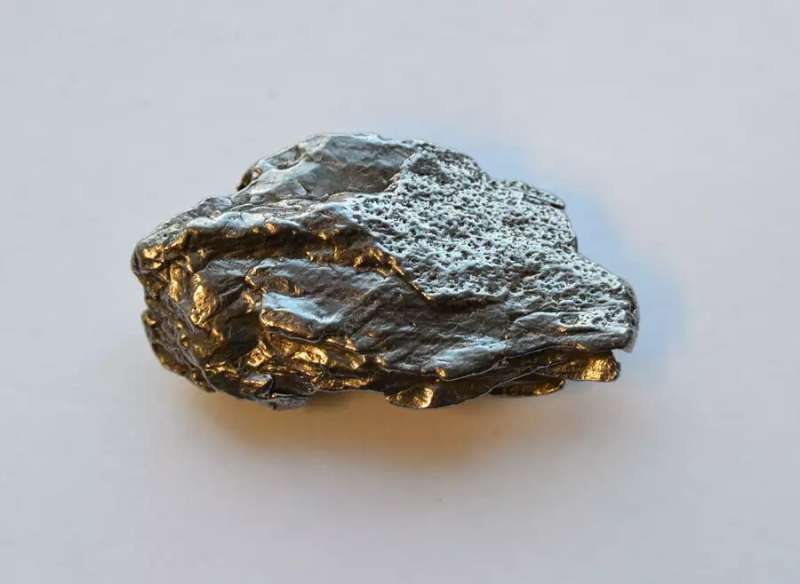
A small fragment of the Campo del Cielo iron meteorite. The same intense heat that partially 
the meteorite to produce the smooth surface visible here would have also evaporated and 
ablated iron, creating tiny, nanometer-sized particles. These particles could have acted as
 catalysts for producing the building blocks of life on the early Earth. Credit: O. Trapp

Researchers from the Max Planck Institute for Astronomy and Ludwig Maximilians University Munich have proposed a new scenario for the emergence of the first building blocks for life on Earth, roughly 4 billion years ago.

By experiment, they showed how  particles from meteors and from volcanic ash could have served as catalysts for converting a carbon-dioxide rich early atmosphere into hydrocarbons, but also acetaldehyde and formaldehyde, which in turn can serve as building blocks for fatty acids, nucleobases, sugars and amino acids. Their article, "Synthesis of prebiotic organics from CO2 by catalysis with meteoritic and volcanic particles," is published in the journal Scientific Reports.

To the best of our current knowledge, life on Earth emerged a mere 400 to 700 million years after the Earth itself had formed. That is a fairly quick development. For comparison, consider that afterwards, it took about 2 billion years for the first proper (eukaryotic) cells to form. The first step towards the emergence of life is the formation of organic molecules that can serve as building blocks for organisms. Given how fast life itself arose, it would be plausible for this comparatively simple first step to have been completed quickly, as well.

The research described here presents a new way for such organic compounds to form on planetary scales under the conditions prevalent on the early Earth. The key supporting role goes to iron particles produced from meteorites, which act as a catalyst. Catalysts are substances whose presence speeds up specific chemical reactions, but which do not get used up in those reactions. In that way, they are akin to the tools used in manufacture: Tools are necessary to produce, say, a car, but after one car is built, the tools can be used to build the next one.

From industrial chemistry to the beginnings of the Earth

Key inspiration for the research came, of all things, from industrial chemistry. Specifically, Oliver Trapp, a professor at Ludwig Maximilians University, Munich, and Max Planck Fellow at the Max Planck Institute for Astronomy (MPIA), wondered whether the so-called Fischer–Tropsch process for converting carbon monoxide and hydrogen into hydrocarbons in the presence of metallic catalysts might not have had an analog on an early Earth with a carbon-dioxide-rich atmosphere.

"When I looked at the chemical composition of the Campo-del-Cielo iron meteorite, consisting of iron, nickel, some cobalt and tiny amounts of iridium, I immediately realized that this is a perfect Fischer-Tropsch catalyst," explains Trapp. The logical next step was to set up an experiment to test the cosmic version of Fischer-Tropsch.

Dmitry Semenov, a staff member at the Max Planck Institute for Astronomy, says, "When Oliver told me about his idea to experimentally investigate the catalytic properties of iron meteorite particles to synthesize building blocks for life, my first thought was that we should also study the catalytic properties of volcanic ash particles. After all, the early Earth should have been geologically active. There should have been plenty of fine ash particles in the atmosphere and on Earth's first land masses."

Re-creating cosmic catalysis

For their experiments, Trapp and Semenov teamed up with Trapp's Ph.D. student Sophia Peters, who would run the experiments as part of her Ph.D. work. For access to meteorites and minerals, as well as expertise in the analysis of such materials, they reached out to mineralogist Rupert Hochleitner, an expert on meteorites at the Mineralogische Staatssammlung in Munich.

The first ingredient for the experiments was always a source of iron particles. In different versions of the experiment, those iron particles might be iron from an actual iron meteorite, or particles from an iron-containing stone meteorite, or volcanic ash from Mount Etna, the latter as a stand-in for the iron-rich particles that would be present on the early Earth with its highly active volcanism. Next, the iron particles were mixed with different minerals such as might be found on the early Earth. These minerals would act as a support structure. Catalysts are commonly found as small particles on a suitable substrate.

Producing small particles

Particle size matters. The fine volcanic ash particles produced by volcanic eruptions are typically a few micrometers in size. For meteorites falling through the atmosphere of the early Earth, on the other hand, atmospheric friction would ablate nanometer-size iron particles. The impact of an iron meteorite (or of the iron core of a larger asteroid) would produce micrometer-sized iron particles directly through fragmentation, and nanometer-sized particles as iron evaporated in the intense heat and later-on condensed again in the surrounding air.

The researchers aimed to reproduce this variety of particle sizes in two different ways. By dissolving the meteoric material in acid, they produced nanometer-sized particles from their prepared material. And by putting either the meteoritic material or the volcanic ash into a ball mill for 15 minutes, the researchers could produce larger, micrometer-sized particles. Such a ball mill is a drum containing both the material and steel balls, which is rotated at high speeds, in this case more than ten times per second, with the steel balls grinding up the material.

Since Earth's initial atmosphere did not contain oxygen, the researchers then followed up with chemical reactions that would remove almost all of the oxygen from the mixture.

Producing organic molecules under pressure

As the last step in each version of the experiment, the mixture was brought into a pressure chamber filled with (mostly) carbon dioxide CO2 and (some) hydrogen molecules, chosen so as to simulate the atmosphere of the early Earth. Both the exact mixture and the pressure were varied between experiments.

The results were impressive: Thanks to the iron catalyst, organic compounds such as methanol, ethanol and acetaldehyde were produced, but also formaldehyde. That is an encouraging harvest—acetaldehyde and formaldehyde in particular are important building blocks for fatty acids, nucleobases (themselves the building blocks of DNA), sugars and amino acids.

Importantly, these reactions took place successfully under a variety of pressure and temperature conditions. Sophia Peters says, "Since there are many different possibilities for the properties of the early Earth, I tried to experimentally test every possible scenario. In the end, I used fifty different catalysts, and ran the experiment at various values for the pressure, the temperature, and the ratio of carbon dioxide and hydrogen molecules." That the organic molecules formed under such a variety of condition is a strong indication that reactions like these could have taken place on the early Earth—whatever its precise atmospheric conditions will turn out to be.

Adding a scenario to the portfolio of possible mechanisms

With these results, there is now a new contender for how the first building blocks of life were formed on Earth. Joining the ranks of "classic" mechanisms such as  near hot vents on the ocean floor, or electric discharge in a methane-rich atmosphere (as in the Urey-Miller experiment), and of models that predict how organic compounds could have formed in the depth of space and transported to Earth by asteroids or comets (see this MPIA press release), there is now another possibility: meteoric  or fine  acting as catalysts in an early, carbon-dioxide-rich atmosphere.

With this spread of possibilities, learning more about the atmospheric composition and physical properties of the early Earth should allow researchers to deduce, eventually, which of the various mechanisms will give the highest yield of  under the given conditions—and which thus was likely the most important mechanism for the first steps from non-life to life on our home planet.

More information: Synthesis of prebiotic organics from CO2 by catalysis with meteoritic and volcanic particles, Scientific Reports (2023). www.nature.com/articles/s41598-023-33741-8


Journal information: Scientific Reports 


Provided by Max Planck Society A stormy, active sun may have kickstarted life on Earth