Showing posts sorted by relevance for query LESOTHO. Sort by date Show all posts

Sunday, July 13, 2025


Lesotho declares 'state of disaster' as it struggles with US policy changes

Lesotho's reliance on the United States has left the country on the brink of disaster following the Trump administration's decision to cut off aid. Its manufacturing sector too is under threat, thanks to uncertainty around the renewal of the African Growth and Opportunity Act.

Issued on: 12/07/2025 - RFI


Workers in a garment factory in Maseru, Lesotho. © AP/Neo Ntsoma

By: Zeenat Hansrod

Lesotho has declared a national state of disaster for the next two years, amid the fallout from tariffs and aid cuts imposed by the US.

With unemployment already around 30 percent, the government is warning of an additional 40,000 job losses in the textile sector if the US African Growth and Opportunity Act (AGOA) is not renewed by the end of September.


AGOA gave preferential access for African goods to the US markets, under certain conditions. Lesotho was one of its biggest beneficiaries, exporting textiles to the US.

In April, US President Donald Trump announced 50 percent tariffs – higher than any country – on goods from Lesotho. The tariffs have since been paused and a flat 10 percent rate is currently being applied to most countries.

Oscar van Heerden, senior research fellow at the Centre for African Diplomacy and Leadership at the University of Johannesburg, told RFI that the Trump administration is weaponising trade through its use of tariffs.

Africa braces for economic hit as Trump’s tariffs end US trade perks

"Trump doesn't care about the consequences for Lesotho. What he wants is a good deal for the United States and to recalibrate what he considers to be trade deficits for the US," he said. "There is clearly something – but we don't know what – he wants from Lesotho and that’s why he has slapped it with such a high tariff. The 50 percent tariffs makes no sense."

'Master-servant era'


Van Heerden called the policies adopted by the Trump administration a step back into colonial times.

"The Trump administration with the weaponisation of tariffs are taking us back to the master-servant colonial era, where the weak must suffer and the strong will decide. That’s precisely what is happening with Lesotho," he said.


He added that Lesotho must think outside the box. The country's Prime Minister Sam Matekane said in June that the solution for unemployment lies in intensive labour and sectoral transformation.

"We are not only investing in traditional sectors but also embracing innovation and creativity. We aim to empower mostly women and young Basotho with meaningful jobs and entrepreneurial opportunities," Matekane said.

Finance minister Retselisitsoe Matlanyane described youth unemployment as a "significant" challenge for Lesotho. According to a coalition of youth organisations, 48.8 percent of young people in the country cannot find a job.

Global aid in chaos as Trump proposes to slash funds and dismantle USAID

AGOA in question

According to Van Heerden, the US administration – through Secretary of State Marco Rubio and Defence Secretary Pete Hegseth – has made it clear that it is not interested in AGOA.

"There's no way that AGOA is going to be renewed," he said. "The Trump administration is talking with a forked tongue. It gives the impression that there is room for negotiation, but the truth is they've made up their mind.

"They will negotiate with countries in Africa where they can benefit in terms of critical, strategic minerals and other sectors of interest to them. They're not really interested in doing business with Lesotho."

He added that it will be an uphill battle for the Lesotho government.

"I suspect they are going to turn to SACU [the Southern African Customs Union] and the Southern African Development Community (SADC) for loans and bailouts, and where that fails, they will have to turn to the International Monetary Fund (IMF) to try and recover some funds, if indeed they have some collateral to bargain with in order to secure loans."

Violence simmering


The abolition of USAID programmes to Lesotho, including the crucial Emergency Plan for AIDS Relief, combined with the unemployment crisis, has compounded the risk of violence among young people, according to Van Heerden.

"There is potential for the pot to explode, given the level of dissatisfaction among the population. And that's why I think in preparation for any eventuality, the Lesotho government decided to declare a state of emergency to handle this situation.

"It is trying to keep the [heat] contained for now, if it is at all possible, while at the same time looking at alternatives, in terms of loans and markets."

In July last year, Lesotho declared a state of National Food Insecurity Disaster after a historic drought triggered by El Niño led to the lowest crop yields since the 2018-19 agricultural season.

Saturday, April 05, 2025

Lesotho hardest hit as new US tariffs rattle Africa

By AFP
April 3, 2025


Lesotho's clothing industry is the largest employer in the tiny kingdom which fears the impact of new sweeping US tariffs - Copyright AFP Daniel ROLAND

Julie BOURDIN

The small African kingdom of Lesotho feared the worst for its textile industry Thursday after US President Donald Trump imposed 50-percent tariffs on its imports, the highest for a single nation.

Other African countries hit with Trump’s “reciprocal tariffs” above the new baseline rate of 10 percent include Madagascar (47 percent), Mauritius (40 percent), Botswana (37 percent), Equatorial Guinea (30 percent) and South Africa (30 percent).

But the mountain kingdom, which the US administration says is among “the worst offenders” with high tariffs on US imports, will be particularly hard hit as it is reliant on exports of mostly textiles, including jeans.

While its government did not immediately react to the new tariffs, Lesotho Private Sector Foundation CEO Thabo Qhesi told AFP Thursday they meant that “the textile and apparel industry is going to die.”

The clothing industry is the largest employer in the tiny kingdom of around 2.3 million people, providing more than 35,000 workers, according to official data.

“Before the introduction of the reciprocal tariffs, investors enjoyed exporting goods to the US market duty-free,” Qhesi said.

“With the introduction of the 50-percent tariffs, Lesotho is no longer going to be lucrative for investors,” he said, adding the transport, retail and residential property sectors would also suffer.

At 47 percent, the tariffs are also high for Madagascar, which said Thursday it had approached the US embassy to “seek clarification and explore possibilities for adjusting these new tariff barriers”.

The government will “mobilise all diplomatic and commercial levers to obtain a review of these measures”, it said.

South African President Cyril Ramaphosa said Thursday the tariffs were “a barrier to trade and shared prosperity”.

They underscore the urgent need for “a new bilateral and mutually beneficial trade agreement”, he said. The United States is South Africa’s second-largest trading partner.

The country’s automotive sector will be among the hardest hit, with separate tariffs of 25 percent on foreign-made cars going into effect shortly after Trump’s late Wednesday proclamation.

Motor vehicles account for 22 percent of South Africa’s exports to the United States, worth $1.88 billion, according to government statistics.


– Diversifying trade –


South African Minister of Trade Parks Tau said the new global trade war would affect poorer countries most and “literally devastate” Lesotho.

“We now have to look amongst ourselves and say, within the customs union in Southern Africa, within the Southern African Development Community, and within the region of Africa, how we’re going to respond to these issues,” he told journalists.

“Diversifying our trade is going to be important… enhancing our work on the African continent and collaborating,” he said.

The new US tariffs will be “disruptive of global value chains, invite retaliation, ignite inflation, dampen world economic growth and prompt repricing of risks in financial markets”, said South Africa-based economics professor Raymond Parsons.

South Africa “must see what trade adjustments might be made to win concessions to ameliorate the situation”, Parsons said, adding Pretoria should “prudently seize the moment” to find alternative trading partners.

However, “everybody is going to look for new trading partners,” said South African economist Dawie Roodt. “Of course, we must try. But it’s going to be tough.”


Lesotho, Africa’s ‘kingdom in the sky’ jolted by Trump


By AFP
April 3, 2025


An aereal view of Lesotho's capital Maseru - Copyright AFP Jade GAO

US President Donald Trump in March ridiculed Lesotho as a place “nobody has ever heard of” and then this week hit the tiny African kingdom with the highest of his reciprocal trade tariffs for any single nation.

Here are some things to know about the country sometimes called the Switzerland of Africa because of its mountainous landscape.


– ‘Kingdom in the sky’ –


Completely surrounded by South Africa, Lesotho is the largest of only three enclaved states in the world, far bigger than San Marino and the Vatican City, both of which are within Italy.

At 30,355 square kilometres (11,720 square miles), it is about the same size as Belgium.

Its population is roughly 2.3 million, compared to Belgium’s nearly 12 million.

Lesotho is known for the beauty of its mountainous terrain and styles itself the “Kingdom in the Sky”.

More than 80 percent of the country sits 1,800 metres (5,900 feet) above sea level and it is home to southern Africa’s only ski resort.

The highest peak is Mount Thabana Ntlenyana, with an altitude of at 3,482 metres.

A constitutional monarchy, it is ruled by 61-year-old King Letsie III, who has no formal power. The government is led by a prime minister.

– Textile economy –


With a annual gross domestic product of just over $2 billion, Lesotho is largely dependent on South Africa — it biggest trading partner — from which it imports most of its food, selling water in return.

The economy is heavily reliant on textile exports bound for the United States through the African Growth and Opportunity Act (AGOA) trade deal which provides duty-free access to the US market for some African products.

Its traditional Basotho blankets are a national symbol and renowned for their vibrant patterns and woollen warmth. They are often loaded with meaning, from celebrating life and nationality, to fertility and royalty, peace, love and courage.

Lesotho ranks among the world’s poorest countries despite huge mineral reserves.

British mine company Gem Diamonds said in 2018 it had discovered a 910-carat stone in one of its several Lesotho diamond mines.

The country also pioneered the growing of cannabis for medical use in Africa.

Unemployment has remained stubbornly high, hitting nearly 25 percent in 2023, according to the World Bank.


– Royal row –


A charity co-founded by Prince Harry in Lesotho to help people living with HIV ran into turbulence this month after a bitter boardroom row led King Charles III’s younger son to step down as patron.

Its Zimbabwe-born chairperson, Sophie Chandauka, publicly accused the prince of “bullying” and being involved in a “cover up”, accusations the former royal has dismissed as lies.

Harry founded the charity in 2006 with Prince Seeiso of Lesotho, before it expanded to Botswana.

The name, Sentebale, is a tribute to his mother, Princess Diana, who died in a Paris car crash in 1997 when he was just 12.


– HIV pandemic –


At least one in four adults in Lesotho is infected with HIV, in one of the highest rates in the world.

More than 230,000 people were receiving anti-retroviral treatment in 2021, according to the World Health Organization.

In 2020, the country achieved the UN’s “90-90-90” goal of 90 percent of people with the virus being diagnosed, on treatment and achieving viral suppression.

The country also has the second-highest incidence of TB in the world, estimated at 724 cases per 100,000 people.

Thursday, March 27, 2025

Lesotho fears Trump shake-up could tear threadbare economy

By AFP
March 27, 2025


The textile industry is Lesotho's largest employer with more than 35,000 workers - Copyright AFP Mandel NGAN


Hillary ORINDE

In a sweltering factory in Lesotho, rows of workers hunch over thrumming sewing machines churning out piles of jeans for the global market from a country that US President Donald Trump has mocked as unknown.

Buy sportswear from US retail giant Walmart or blue jeans at South Africa’s apparel behemoth Mr Price and there is a half-decent chance it was stitched on the floor of this garment factory in the capital Maseru which counts 400-odd employees.

Although modest in size compared to global textile powerhouses like Bangladesh and China, the tiny mountain kingdom’s clothing industry is the country’s largest employer with more than 35,000 workers, according to official data.

These workers are now fretting over their future after Trump this month called Lesotho “a country nobody has ever heard of” while defending his sweeping aid cuts.

“I was lost for words when I heard him speak. He thought we were useless to him,” Motlatsi Marou told AFP, a streak of sweat dripping from his face as he ironed grey pants at the Afri-Expo Textiles company.

The 33-year-old has worked at the company for two years in his longest stretch of steady employment.

Production manager Malerai Snay Mosotho was equally taken back by Trump’s comments before the US Congress.

“It’s something that we didn’t expect,” the 30-year-old said. “It made me feel bad because we are doing a lot of good work,” she said.


– ‘A lot of uncertainty’ –


Completely surrounded by South Africa, Lesotho is the largest of just three enclaved states in the world, far bigger than San Marino and Vatican City, both within Italy.

Nicknamed the “kingdom of the sky”, the country the size of Belgium is heavily reliant on export for its $2 billion GDP, mostly through textile products bound for the United States.

The items are shipped more than 15,000 kilometres (9,300 miles) to the United States under the African Growth and Opportunity Act (AGOA) deal, which provides duty-free access for some products from about 30 sub-Saharan African countries.

Under the accord, Lesotho lags behind just Kenya, South Africa and Madagascar in terms of non-oil exports, earning $167 million in 2023.

Until 2019, the nation of an estimated 2.3 million people was the second-largest textile exporter to the United States under AGOA.

The law which came into force in 2000 is up for review in September, but analysts warn its future is in doubt.

“If AGOA is terminated, it will have an immediate impact on the economy because it could mean the loss of jobs for 30,000 to 40,000 people,” King Letsie III told AFP in his palace in Matsieng, some 45 km from Maseru.

Unemployment is already high at nearly 25 percent in 2023, according to the World Bank.

Any end to the trade deal would have a profound ripple effect on every sector of Lesotho’s economy, said Malira Sekonyela, trade manager at the Lesotho National Development Corporation (LNDC).

“There is still a lot of uncertainty around AGOA renewal with the new administration,” she said.

Already, the textiles industry alone shed more than 1,800 jobs in 2024 after five companies ceased operations because of lower demand from the United States, according to LNDC.

“It is difficult to find work,” Karabelo Magapalla told AFP as she marked denim for trimming.

Only employed since September, the 23-year-old earns 180 loti a day ($10) from work she describes as “stressing and depressing”.

But at least she is only supporting her grandmother, she said, unlike others who provide for a constellation of relatives.


– ‘Wake-up call’ –


Trump’s dismissive attitude to Lesotho was “a wake-up call” for the kingdom’s textile industry, said Teboho Kobeli, who founded Afri-Expo Textiles in 2016.

African countries must send strong delegations to renegotiate AGOA and actively explore untapped markets, especially in Europe, the businessman urged.

“The era of being beggars, getting things for nothing, is over,” he said.

On the streets of the diamond-rich nation, many echoed his sentiment.

“Africa can survive without him (Trump),” declared 57-year-old Maleshoane Mokhaji. “He can keep his dollars and then we keep our minerals. Period!”

Lesotho's king warns nation will reel from Trump cuts


AFP
March 25, 2025


Lesotho King Letsie III (AFP)


Lesotho will suffer from Donald Trump's aid cuts and stands to lose up to 40,000 jobs if the US president also cancels a trade pact granting duty-free access to the American market, the monarch of the tiny southern African kingdom warned ahead of a trip to Europe on Wednesday.

Entirely surrounded by South Africa, Lesotho is heavily reliant on exports and foreign aid to fund its $2 billion gross domestic product.

"If AGOA is terminated, it will have an immediate impact on the economy because it could mean the loss of jobs for 30,000 to 40,000 people," King Letsie III told AFP in his palace in Matsieng, some 45 kilometres (28 miles) from the capital Maseru.

"It's a worrying thing but if it happens, we'll have to deal with it," he said.

Enacted in 2000, the African Growth and Opportunity Act (AGOA) provides duty-free access for some products from about 30 sub-Saharan countries.

It is due for renewal in September and many are questioning its fate after the blitz of trade policy changes since the return of Trump to the White House.

The poor nation of about 2.3 million people has one of the highest rates of HIV in the world and is already reeling from a freeze to US funding of its healthcare.


The United States has committed more than $630 million since 2006 to anti-HIV/AIDS efforts in Lesotho, according to the US embassy.

Trump kicked up a diplomatic storm earlier this month when he defended the cuts to Lesotho, saying it was a country "nobody has ever heard of".

"I was a little bit upset," said Letsie III, who has no formal power.

"We have enjoyed very warm relations with the US and the people," he said, vowing to use the publicity from Trump's mockery to promote the country known for its beautiful mountainous terrain.

Letsie III will travel to France on Wednesday and is due to meet President Emmanuel Macron on Thursday.


He is later expected to participate in a nutrition summit to round up the Europe trip at the weekend.

Sunday, November 06, 2022

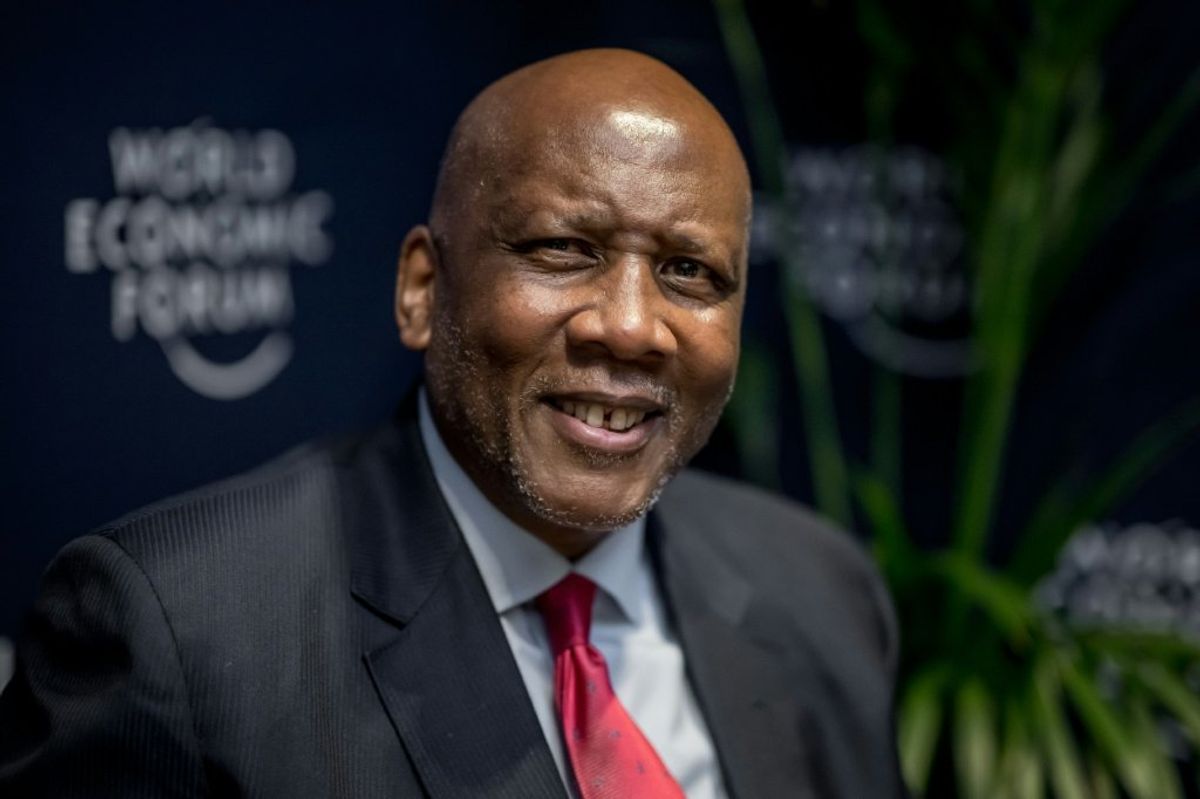
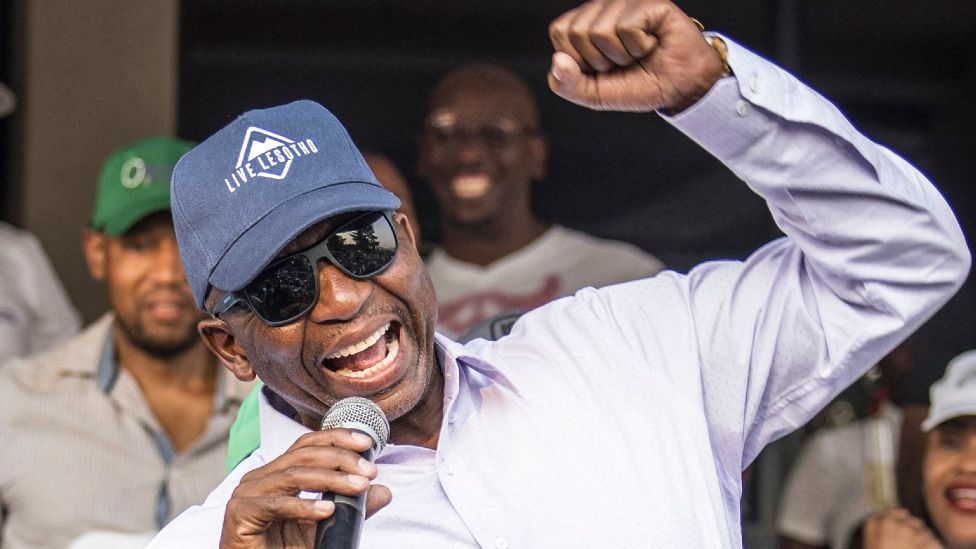
Sam Matekane - can a diamond magnate help Lesotho to sparkle?

BBC
Published 12 hours ago
IMAGE SOURCE,AFP


By Pumza Fihlani
BBC News, Maseru

Sam Matekane has taken many chances in his life - it is how he has been able to build a multimillion-dollar mining empire and become one of Lesotho's most formidable businessmen. But those close to him say entering politics is by far his biggest gamble.

"It wasn't an easy decision for him because politics has become poisoned. But the country was going down, the economy, everything was collapsing, and something needed to change," Teboho Kobeli, his friend of more than 30 years and business partner, told the BBC.

The 64-year-old, who until recently headed the Matekane Group of Companies (MGC) - a business empire that spans mining, aviation and real-estate development - has become the mountain kingdom's newest prime minister.

A daunting challenge, given the political and economic turmoil in the country, where no prime minister has served out his term for the past decade.

"Sam decided it was worth sacrificing himself if it saves Lesotho," said Mr Kobeli.

The diamond-mining magnate is a political novice, having started his bid for the top job with a party he launched just five months before the elections.

But does he have what it takes to change Lesotho's fortunes?


Podcaster Katleho Selatela says people are no longer afraid to speak about politics


"Sam does not like to fail," Mr Kobeli, a textile business owner, told me.

"He has a determination I've never seen in anyone [else]. When he starts something, rest assured that he will see it to the end and he will make sure it succeeds.

"What he doesn't know, he works hard to learn and makes sure to have people with expertise around him. That is what gives him his edge."

Mr Kobeli says the political arena will be no different: "He will pour everything of himself into it."

No military patrols

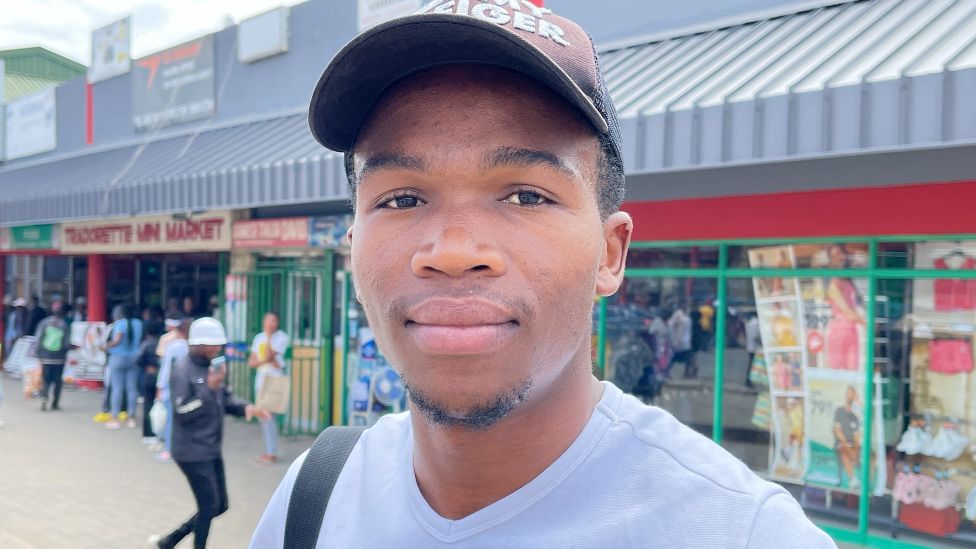
We met up in Lesotho's capital Maseru, a small, bustling old city whose streets highlight two of the main issues facing the country:

Young people selling fruits and vegetables on the side of the road - a not-so-subtle sign of the lack of jobs and prospects

A handful of labourers working feverishly to patch up pitted roads, painstakingly refilling the craters that make driving a challenge - a nod to the country's strained infrastructure.

Having covered Lesotho's fractious and sometimes tense politics over the years, the mood seems more light-hearted than on my previous visits.

It is notable that there are no military patrols on the streets and that people seem more comfortable to talk about politics when asked.

BBC
If he does for Lesotho what he has done for his businesses then he could be our saviour"Retired soldier Mokaba Matlalane

on the new prime minister


Twenty-five-year-old aspiring podcaster Katleho Selatela attested to this: "It feels like we can be critical about the government and not worry about safety. It feels like we can be proud to be Basotho again."

Another resident, retired soldier Mokaba Matlalane, put this change down to Mr Matekane.

"We have been suffering for many years and our governments have been failing us," the 72-year-old told me.

"If he does for Lesotho what he has done for his businesses then he could be our saviour."

Missed school to farm


Mr Matekane is a well-regarded businessman in the small country, which has a population of 2.2 million and is entirely surrounded by South Africa. But outside business circles he is known mostly for his philanthropy.


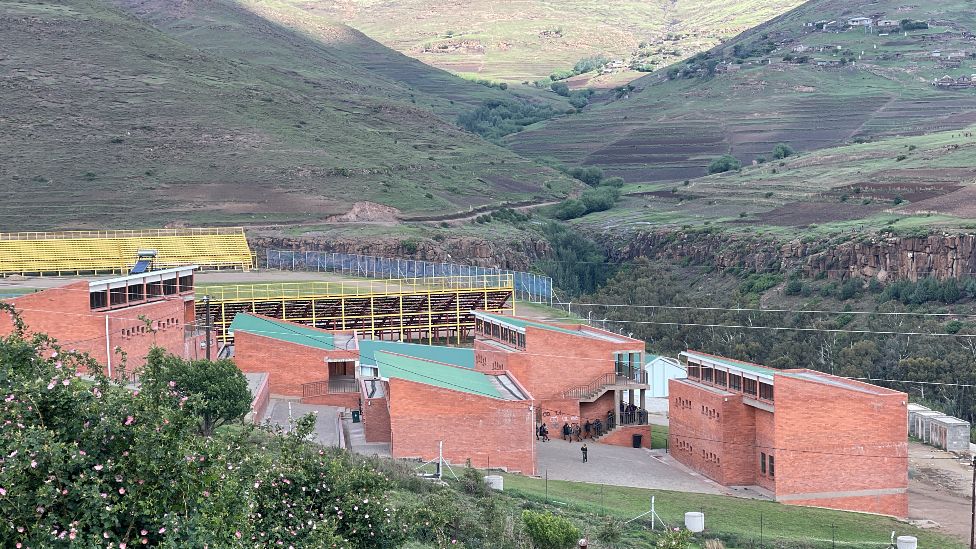
The Bocheletsane Combined School opened in Mantšonyane in 2019

Over the years he has built a school that offers sponsorships, hospital wards, a football stadium and started farming projects, to get people working and earning a living back in his home village of Mantšonyane.

He is the seventh of 14 children born to farmers. Village life was demanding and school was juggled between herding the family's livestock and working the fields - each child expected to help out, which at times meant missing classes for days.

With many mouths to feed in the Matekane household, his parents sent him to Maseru to live with relatives when he was old enough.

"Daddy didn't go as far as he would have wanted to in school - this is one of the reasons he feels led to help children in similar circumstances to get an education," his daughter-in-law, Mamotake Matekane, told the BBC.

Married to one of Mr Matekane's six children, she has worked at MGC for more than a decade and is now its chief operations officer, describing her father-in-law as "all business".

"He takes what he does seriously, he is results driven. He has an impeccable eye for detail, and a sharp memory and does not miss anything."


BBC
There is no underperforming on his watch"Mamotake Matekane
Sam Matekane's daughter-in-law and MGC executvie


Mrs Matekane then warned, half-jokingly: "I hope the people in government understand that about him and are ready for that. That is who Lesotho is getting.

"He is warm, giving, loyal but also believes in doing what you have said you will do. There is no underperforming on his watch."

The move to politics was an unexpected adjustment for his family.

When Mr Matekane, a grandfather of seven who lost his wife to cancer last year, called a gathering to tell them he would be forming a political party, the news was met with concern at first, his daughter-in-law said.

"One of his sisters even shed a tear. Some were worried about his safety, some about what this would do to the businesses and legacy he has built for over 30 years."

Yet he was determined, she said, telling them: "Our family have the ability to leave and go and rebuild our lives elsewhere, but what about the rest of Basotho? What about them? I have to try and do something."

'It is his game to lose'

It is a sacrifice that appears to have paid off.

Back in his village, where the infrastructure is scant, and modest homes dot the mountain slopes and valleys of the one-street neighbourhood, the people beamed with pride when they spoke of the new prime minister.


Mantšonyane residents have confidence in the new prime minister


"We have hope. I've never voted before, it didn't seem worth the time, but when Mr Matekane entered politics that all changed for me," said 36-year-old street vendor Maretsepile Kapoko.

"I believe if he was able to bring so many good things to our village from his own money, how much more for Lesotho if he is running the country," she said.

But Mr Matekane has his work cut out for him. Running the government is not a one-man show and many politicians in Lesotho are seen as tainted, experts warn.

Since independence from the UK in 1966, there have been a number of military coups, including one in 2014, and three national elections in the past five years.

For a decade none of Lesotho's political parties has garnered enough votes to form a government. As a result, the country has been run by coalitions that have proved fractious, and no prime minister has served a full five-year term.

Mr Matekane's newly formed Revolution for Prosperity Party (RFP) won 56 constituencies, falling short of the 72 for an outright majority, and invited two smaller parties into a coalition.

But as the dominant partner, political analysts believe the new PM is well placed to end the streak of short-lived terms.

"It is his game to lose," said Dr Thlolohang Letsie, head of the politics department at the National University of Lesotho.

"Two things are counting in his favour: he has the goodwill of the people and the older parties have been humbled at the polls - some are even more divided now than before."

Politics aside, the economy is in a mess. Unemployment and poverty have worsened in recent years and hundreds of thousands of Basotho are facing food insecurity.

If this was a business venture, it would be considered by some as a bad investment.

Yet those close to him say he is driven by his love for Lesotho and her people and for that he is prepared to put it all on the line.

"If he governs using his firm business ethics, delivers then he has the power to make this work," said Dr Letsie.

But he warns: "He needs to remain bold, and show leadership like he does in business."

More on this story

Lesotho country profile

2 days ago

Monday, September 09, 2024


Study finds using an AI technology improves sexual and reproductive health education


Results support use of e-health solutions in providing high quality, evidence-based health education in low-income countries LIKE SECTIONS OF THE U$A


Boston University School of Medicine


(Boston)— Young women worldwide face problems like unwanted pregnancy and sexually transmitted infections. The 1.8 billion adolescents and young people (age 15-24) of both sexes worldwide account for 42% of new HIV infections.


Providing sexual and reproductive health education to young women is a priority in Sub-Saharan Africa where 80 percent of young people living with HIV globally reside. Lesotho, a poor mountainous country in southern Africa, has the second-highest HIV prevalence in the world at nearly 23% of the population. The country is challenged by critically low numbers of health care personnel and a terrain that makes face-to-face interactions difficult.


In a study, published Sept. 5 in BMC Global and Public Health, researchers from the Boston University Chobanian & Avedisian School of Medicine, collaborating with Northeastern University, University of Massachusetts Chan Medical School, University of Oklahoma and South Africa’s Sefako Makgatho Health Sciences University, used conversational AI technology to successfully disseminate sexual and reproductive health information.

“Our results support the use of e-health solutions to address the challenges of providing high quality, evidence-based health education to young women in low-income countries where this education is needed most,” said study lead and first author Elizabeth Nkabane Nkholongo, PhD, and the executive director of the Lesotho Boston Health Alliance (LeBoHA), a partnership between BU’s medical school and the Lesotho Ministry of Health.  

“In Lesotho, it could even lead to e-health ‘leap-frogging’ face-to-face health education,” added Nkholongo.

People are familiar with the technology known as chatbots, but AI-empowered embodied conversational agents (ECA) go further in engaging the user with software technology that creates a screen persona that can mimic interactions with real people by conversing in the natural language of the target audience along with familiar gestures and other body expressions.

In the Lesotho study, researchers adapted an ECA model known as “Gabby” that had been used successfully to disseminate sexual and reproductive health information to African American women in the U.S. The Lesotho model employed the hairstyle, complexion, facial expressions and mannerisms recognizable to young Lesotho women and built the persona of Nthabi, a professional nurse midwife.

In this case, the choice of ECA technology was possible due to the rapid diffusion in Lesotho of mobile technologies like smart phones and tablets. Researchers constructed a Nthabi app that could be downloaded to mobile devices without relying on the country’s spotty Wi-Fi coverage.

To analyze Nthabi’s effectiveness, researchers recruited 172 young women with a mean age of 22.5 years to use the app. They measured participant knowledge before and after their discussions with Nthabi on family planning, folic acid use (a B vitamin important in preventing birth defects of the brain and spinal cord) and healthy eating. The number of correct pre- and post-test responses then were compared.

“Young women enrolled in this study demonstrated a significant increase in knowledge about family planning methods and preconception folic acid use after interacting with the Nthabi,” the report concluded. For example, the total percentage of correct answers to questions on the use of folic acid rose from 45.3% in testing before the use of Nthabi and 71.6% in post-use testing.

According to the researchers, Nthabi might help overcome the barriers inherent in traditional face-to-face education, especially in areas like Lesotho that have fewer health care workers and tough geographic challenges, but also to counter the stigma surrounding discussion of sexual reproductive health issues.

“The potential of utilizing Nthabi as a population health education tool is a game-changer as the world works towards achieving Universal Health Coverage,” said LeBoHA President Brian Jack, MD, and BU professor of family medicine.

These findings appear in the journal BMC Global and Public Health.

Funding from the Fogarty International Center of the United States National Institutes of Health under Award Number R21TW011361.


Thursday, September 04, 2025


Unseen Costs of US Tariffs: the Case of Lesotho


Jonis Ghedi-Alasow 


The devastating impact of Trump’s tariffs on Lesotho prompted the government to declare a “state of disaster”, Alasow Ghedi argues, the economic crisis is a “violent outcome of a 150-year process that systematically eroded Lesotho’s economic sovereignty”.


Textile workers in Lesotho. Photo: LNDC

In recent months, the unilateral and illegal tariffs imposed by the Trump administration have garnered much attention. While much of the debate focuses on how these tariffs will impact US consumers and how US allies and adversaries are negotiating “deals”, the concrete impact of these tariffs on the lives and livelihoods of working people in the Global South has been largely overlooked.

In March 2025, US President Donald Trump struggled to pronounce the name Lesotho, a place he claimed “nobody has ever heard of”. One month later, his administration threatened a 50% tariff on all goods from this small, mountainous kingdom of 2.3 million people. These were not claims made out of ignorance; they were an expression of “raw power”.

In this new era, the mediated rules of the World Trade Organization (WTO), though flawed, have been completely disregarded and undermined. What remains is a system where economic policy is used as a weapon. The real cost of a tariff is measured not only in the surrender of sovereignty at the altar of Washington but also in the material deprivation of thousands of people.

The government of Lesotho announced a two-year “state of disaster” in response. A disaster has indeed befallen the Basotho people, but this is not a natural catastrophe. This is a crisis deliberately created in Washington, the violent outcome of a 150-year process that systematically eroded Lesotho’s economic sovereignty. To understand the full scale of this disaster, one must first dispel the colonial myth that African “development” depends on Western benevolence.

Britain’s colonial subordination of the Basotho people

Before British rule was formalized in 1868, the Kingdom of the Basotho was a regional breadbasket. It was so productive that it was called “the granary of the Free State”. Basotho farmers produced large surpluses of grain, wool, and mohair, exporting 100,000 bags of grain in 1873 alone. This economic strength laid the groundwork for their political independence – an independence that colonial capitalism could not tolerate.

The discovery of diamonds and gold in South Africa sparked an insatiable demand for cheap labor. To undermine the self-sufficiency of the Basotho people and force them into the socially destructive migrant labor system that underpinned colonial capitalism in South Africa, the British colonial administration used a powerful tool: the Hut Tax.

This tax, payable only in cash, was a deliberate act of social engineering designed to sever producers from their means of production. To comply with this cruel demand, Basotho men had no alternative but to abandon their farms and sell their labor to the white-owned mines in South Africa. This policy systematically dismantled the country’s agricultural foundation, turning a once-prosperous population into a dependent labor reserve economy.

Colonial patterns persist

This pattern of dependency persists. Mining jobs for Basotho people declined in the 1990s, following South Africa’s democratic breakthrough, which was followed by an overall decline in mining and a focus on South African labor over regional labor. Basotho miners, once a key part of the region’s economy, became economically redundant.

Global capital simply redirected its focus to a new, cheaper labor source: Basotho women. The growth of the textile industry, where women earned poverty wages ranging from USD 138 to USD 155 per month, facilitated by preferential trade agreements, was not a break from the colonial past but a direct continuation of the labor reserve model.

The foundation of this neocolonial structure has been the US African Growth and Opportunity Act (AGOA). By providing duty-free access to the US market, the AGOA has driven remarkable growth in Lesotho’s textile sector, which employed around 40,000 workers, nearly all of whom were women. However, this growth was a poisoned chalice, rendering the country’s entire manufacturing base utterly dependent on Washington’s political whims. AGOA was never intended to promote genuine industrialization; it aimed to establish captive, low-wage assembly platforms for US capital.

The crisis in Lesotho exemplifies the broader struggle between US-led imperialism and the Global South.

The way forward

The path to liberation does not lie in negotiating better terms of dependency but in creating an alternative. The most vital strategic focus for African nations must be the African Continental Free Trade Area (AfCFTA). However, this should not become a “mercantilist” race to the bottom, where countries compete to export the most raw materials or basic textiles to fellow African nations.

This approach would only perpetuate the existing economic hierarchy. Instead, the focus should be on developing complementary industries that produce finished goods within the continent, thereby capturing a greater share of the value chain. The goal should be cooperative regional integration to improve collective industrial capacity and promote mutual prosperity.

While the ongoing, US-supported genocide in Palestine serves as the pivot around which the liberal order of “human rights” is collapsing, the persistent economic coercion of the Global South by the Trump administration similarly highlights the collapse of the liberal idea of a “rules-based international order”. The actual cost of the US tariffs is the neocolonial subjugation and a return to overt, unabashed imperialism.

The response to this crisis must not be surrender, but rather the construction of a sovereign path through Pan African unity and regional economic integration. True independence will not be bestowed in the boardrooms of Washington. It will be achieved on the streets and in factories through the organized, collective power of the African people.

Jonis Ghedi-Alasow is the Coordinator of the Pan Africanism Today Secretariat. 

Courtesy: Peoples Dispatch

Monday, February 17, 2020

Lesotho's drought makes 500,000 people hungry, UN says

By HERBERT MOYO, Associated Press

MASERU, Lesotho (AP) — An estimated 500,000 people are threatened with hunger in Lesotho, a quarter of the mountain kingdom's population, according to the United Nations, which is appealing to the international community for help.


A drought last year and patchy rains this year have contributed to poor harvests that have left large parts of the rural population without adequate food, said U.N. resident coordinator Salvator Niyonzima.

The European Union on Monday announced aid worth 1.5 million euros ($1.6 million) but much more is needed.

An estimated $74 million is needed to get adequate food for the country, according to an appeal launched last year by the Lesotho government when it declared the shortage of food an emergency.

Lesotho, like other parts of southern Africa, received below normal rainfall in the 2018-19 rainy season due to the El-Nino induced drought.

It is unlikely that the upcoming 2020 harvest season will significantly improve the food situation as the rains came very late and many rural farmers did not even plant any crops, Niyonzima said.

Lesotho's women and young girls have been hit hardest by the food shortages and they will be more vulnerable to sexual abuse and sexual exploitation as a result of the food insecurity, according to a U.N. report.

“Girls and young women who are heads of households are also more exposed to sexual abuse and sexual exploitation in exchange for food," the report says. “Occasional reports mention that some girls drop out of school to support the household and siblings. Child marriages are likely to rise in the near future and need to be monitored.”
FOR A DECADE CHINA USED LESOTHO FOR CLOTHING PRODUCTION IN ORDER TO GET AROUND WTO RESTRICTIONS, ON JAN 1, 2000 THOSE RESTRICTIONS WERE REMOVED, SO WERE ALL THE FACTORIES RUN BY CHINESE BACK TO CHINA THEY WENT LEAVING AN IMPOVERISHED LESOTHO BEHIND.

Toward a Theory of the Imperialist State

Ossinsky on Bukharin's Imperialism and the World Economy


The law of uneven and combined development is a scientific law of the widest ... The second law grows out of and depends upon the first, even though it reacts .
Feb 25, 2014 - Until the First World War uneven development had been a largely ... Colonial rule could even throw societies backwards, as in the case of ...

Wednesday, April 16, 2025

Opinion
History shows tariffs like Trump’s come with painful pitfalls

Bedassa Tadesse, 
University of Minnesota Deluth
Tue, April 15, 2025
THE CONVERSATION


Supporters of tariffs often argue that they protect domestic industries and create jobs. In theory, they might. But in practice, recent history shows they are more likely to invite retaliation, raise prices and disrupt supply chains. 
Photo by Antoni Shkraba Studio/Pexels

Feeling tariff whiplash? You're not alone. On April 2, President Donald Trump announced sweeping new tariffs -- a 10% levy on nearly all U.S. imports, along with targeted duties aimed at punishing countries he accuses of exploiting American markets.

Just a week later, on Wednesday, his administration abruptly paused much of the plan for 90 days, leaving markets and allies scrambling for clarity.

The proposed tariffs were pitched as a way to revive U.S. manufacturing, reclaim jobs and counter what Trump considers unfair trade practices. But they immediately rattled the financial markets and raised alarms among economists and America's global partners. Critics across the political spectrum revived a familiar warning: "beggar-thy-neighbor."

History shows that such policies rarely succeed. In today's interconnected world, they're more likely to provoke swift, precise and painful retaliation.

What is the 'beggar-thy-neighbor' strategy?

The phrase comes from economic history and refers to protectionist measures -- tariffs, import restrictions or currency manipulation -- designed to boost one country's economy at the expense of its trading partners. Think of it like cleaning your yard by dumping the trash into your neighbor's property: It looks tidy on your side until they respond.

This approach starkly contrasts with the principles laid out by Adam Smith. In The Wealth of Nations, he argued that trade is not a zero-sum game. Specialization and open markets, he observed, create mutual benefit -- a rising tide that lifts all boats. Trump's tariffs disregard this logic.

And history backs Smith. In the 1930s, the U.S. adopted a similar strategy to the one Trump is experimenting with through the Smoot-Hawley Tariff Act, raising duties to protect domestic jobs. The result was a wave of global retaliation that choked international trade and worsened the Great Depression.

A case in point: Lesotho

As an example, consider the 50% tariff the United States imposed on imports from Lesotho, a small landlocked African nation. The measure took effect at midnight on April 3, but was reportedly subject to the 90-day pause starting midday April 4.

The tariff rate was calculated by taking the U.S. trade deficit with Lesotho -- $234.5 million in 2024 -- and dividing that by the total value of Lesotho's exports to the United States, or $237.3 million, and dividing that by two.

The 50% tariff would have a negligible effect on the U.S. economy. After all, out of the $3.3 trillion the United States imported in 2024, only a tiny fraction came from Lesotho. But for Lesotho, a nation that relies heavily on garment exports and preferential U.S. market access, the consequences would be severe.

Using the same tariff logic across all partners, big or small, overlooks basic economic realities: differences in scale, trade capacity and vulnerability. It epitomizes beggar-thy-neighbor thinking: offloading domestic frustrations onto weaker economies for short-term political optics.

Lesotho is just one example. Even countries that import more from the U.S. than they export, such as Australia and the United Kingdom, haven't been spared. This "scoreboard" mentality -- treating trade deficits as losses and surpluses as wins -- risks reducing the complexity of global commerce to a tit-for-tat game.

The return of a familiar -- and risky -- playbook

Such thinking has consequences. During Trump's first term, China retaliated against U.S. tariffs by slashing imports of American soybeans and pork. As a result, those exports plummeted from $14 billion in 2017 to just $3 billion in 2018, hitting politically sensitive states like Iowa hard.

The European Union responded to U.S. steel and aluminum tariffs by threatening to target bourbon from Kentucky and motorcycles from Wisconsin -- iconic products from the home states of former GOP leaders Mitch McConnell and Paul Ryan. Canada and the European Union have shown a willingness to use similar tactics this time around.

This isn't new. In 2002, President George W. Bush imposed tariffs of up to 30% on imported steel, prompting the European Union to threaten retaliatory tariffs targeting products such as Florida citrus and Carolina textiles made in key swing states. Facing domestic political pressure and a World Trade Organization ruling against the measure, Bush reversed course within 21 months.

A decade earlier, the Clinton administration endured a long-running trade dispute with the EU known as the "banana wars," in which European regulators structured import rules that disadvantaged U.S.-backed Latin American banana exporters in favor of former European colonies.

During the Obama years, the United States increased visa fees that disproportionately impacted India's technology services sector. India responded by delaying approvals for American drugmakers and large retail investments.

Not all forms of trade retaliation grab headlines. Many are subtle, slow and bureaucratic -- but no less damaging. Customs officials can delay paperwork or may impose arbitrary inspection or labeling requirements. Approval for U.S. pharmaceuticals, tech products or chemicals can be stalled for vague procedural reasons. Public procurement rules can be quietly rewritten to exclude U.S. companies.

While these tactics rarely draw public attention, their cumulative cost is real: missed delivery deadlines, lost contracts and rising operational costs. Over time, American businesses may shift operations abroad -- not because of labor costs or regulation at home, but to escape the slow drip of bureaucratic punishment they experience elsewhere.

Tariffs in a connected economy

Supporters of tariffs often argue that they protect domestic industries and create jobs. In theory, they might. But in practice, recent history shows they are more likely to invite retaliation, raise prices and disrupt supply chains.

Modern manufacturing is deeply interconnected. A product may involve assembling components from a dozen countries, moving back and forth across borders. Tariffs hurt foreign suppliers and American manufacturers, workers and consumers.

More strategically damaging, they erode U.S. influence. Allies grow weary of unpredictable trade moves, and rivals, including China and Russia, step in to forge deeper partnerships.

Countries may reduce their exposure to the U.S. dollar, sell off Treasury bonds or align with regional blocs like the BRICS group -- led by Brazil, Russia, India, China and South Africa -- not out of ideology, but necessity.

In short, the United States weakens its own strategic hand. The long-term cost isn't just economic -- it's geopolitical.

Rather than resorting to beggar-thy-neighbor tactics, the United States could secure its future by investing in what truly drives long-term strength: smart workforce development, breakthrough innovation and savvy partnerships with allies. This approach would tackle trade imbalances through skillful diplomacy instead of brute force, while building resilience at home by equipping American workers and companies to thrive -- not by scapegoating others.

History makes a clear case: Ditching the obsession with bilateral trade deficits and focusing instead on value creation pays off. The United States can source components from around the world and elevate them through unmatched design, innovation and manufacturing excellence. That's the heartbeat of real economic might.

Bedassa Tadesse is a professor of economics at the University of Minnesota Duluth. This article is republished from The Conversation under a Creative Commons license. Read the original article. The views and opinions expressed in this commentary are solely those of the author.

Saturday, May 22, 2021

CHINESE OUTSOURCING
Union fights sexual harassment at Hippo Knitting garment factory, Lesotho

16 May, 2021After reports that workers at Taiwanese-owned Hippo Knitting are subjected to sexual harassment and violence in the workplace, IndustriALL Global Union affiliate, the Independent Democratic Union of Lesotho (IDUL), are fighting back against the rampant violations.

Taiwanese-owned Hippo Knitting in Maseru, Lesotho, supplies workout wear to Fabletics, a brand co-founded by actor Kate Hudson.

Three women workers and members of IDUL, confirm that sexual harassment and verbal abuse is common at the factory, taking many forms, including being asked to undress during searching. Verbal abuse including comments on the women’s bodies and other derogatory remarks are a daily occurrence.

The management also snoops into the women’s private lives including their relationships and uses the information when deciding who should report for duty during the weekend for overtime work.

Mathabiso Moshabe, a shop steward at the factory says:

“The company asks women workers to undress during searches when they knock off work and justifies this by saying they suspect that the workers are stealing from the factory. But we are refusing the body searches which are humiliating, disrespectful and against our dignity.

“One of the human resources managers teases workers that since they undress for others to take photos; why not undress for body searches. The manager also makes fun of their bodies, mocks how they dress, and the shoes they wear.”

Of the 1,000 workers at Hippo Knitting, 538 are IDUL members of whom 479 are women. With more than 50 per cent members at the factory, the union is preparing to sign a recognition agreement with the factory as per labour laws as more members continue to join.  

Workers meeting at Hippo Knitting, Maseru

However, Hippo Knitting has cancelled the stop order agreement for union dues following recent action by workers demanding the gazetting of new wages by the government.

Mamahlomola Ntikoane, IDUL treasurer and a shop steward at Hippo Knitting says:

“A woman was sexually harassed by a supervisor, but the human resources department did not act. Instead, the perpetrator was transferred to another factory. The managers are also involved in sexual harassment. One female manager followed a worker into the toilet and attempted to grab his genitals.”

Hippo Knitting is not the first factory where IDUL is fighting sexual harassment. At Nien Hsing, IDUL together with other unions and international partners, campaigned for an agreement to be reached to end sexual harassment at the factory.

Christina Hajagos-Clausen, IndustriALL textile director says:

“We condemn sexual and gender-based violence at Hippo Knitting which is a violation of human and trade union rights and the dignity of the women workers. We support IDUL in its campaign to end the abuses in Lesotho’s garment factories.”

Lesotho’s garment sector employs over 40,000 workers, 70 per cent of whom are women. 
The factory supplies the garments under the African Growth and Opportunity Act which allows duty free exports from Lesotho to the US.

Photo credit: Lesotho garment factory, Enhanced Integrated Framework, Flickr

Read this article in:
Français
Español
Русский