Showing posts sorted by relevance for query NANNIES. Sort by date Show all posts

Thursday, February 16, 2006

New Meaning for Nanny State

Asper nanny stole $150K So the Aspers like many rich folks have a nanny. Usually they are indentured servants, slaves by any other name, who are not immigrants but brought here to work in the homes of the rich and wealthy. Nannies are the private version of day care. The difference is wealth. The Wealthy have always availed themselves of servants to take care of their children. So much for the conservative ideal of parents taking care of their children. For the rich its too much bother, they are much to busy.

Nannies face deporation if they take any other job and once their term as an employee of the family is over they are sent back home. In this case as with the vast majority of nannies in Canada they come from the Phillipines.

National Day of Protest: Stop the Unjust Deportation of Filipino Live-in Caregivers!

It is the largest labour market of women in the world, and all countries that import nannies do so as indentured servants. And the Phillipines government benefits from their exploitation abroad, by taxing them on the wages they make.

And when you consider the work that they are expected to do, which is wait hand and foot upon their masters this 'theft' is a small price to pay compared to what nannies are paid. Below minimum wage, since they are not covered by labour standards in Canada, in fact they are singled out for not being covered by minimum wage standards.

She tended to daily needs including taking the children to school and grocery shopping, defence lawyer Mike Cook said yesterday. "She was basically running the household," he said.

According to the affidavit, the nanny admitted to forging and cashing the cheques and said she sent some of the money to the Philippines to pay for her brother's medical expenses.

Considering the horror stories told by nannies about their employers this only makes the news because of the Family involved. The real story is the impovershment and exploitation that nannies face in Canada and around the world.

Filipino nannies in Canada: prisoners of legislated poverty
This is the model of child care that the Tories support and will support with their baby bonus benefit. It will be just enough to pay for the nannies of the wealthy, saving them the expense and the economic hardship.

Trust gut about nanny: expert
"Nannies are a great alternative to day care and they really do benefit the family. The bond with the children is phenomenal."


Find blog posts, photos, events and more off-site about:
, , , , , , , , , ,

Friday, July 24, 2020

IT'S NOT INEQUALITY IT'S CLASS WAR

From nanny services to ‘private educators,’ wealthy parents are paying up to $100 an hour for ‘teaching pods’ during the pandemic

 The pandemic had already exposed education’s inequality — now families are paying to privately educate students this fall.

July 23, 2020 By Jillian Berman

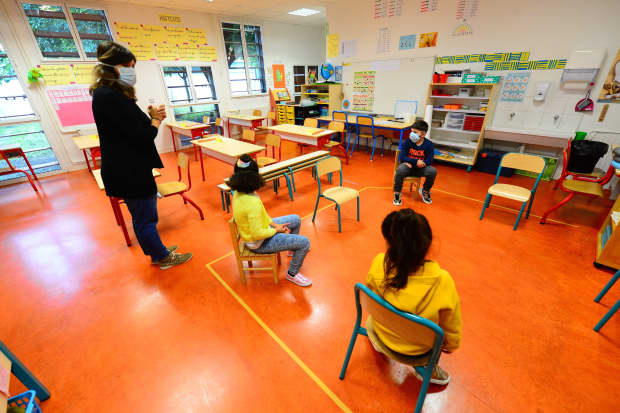
A teacher addresses her pupils at a primary school in France in May 2020. In the U.S. many large school systems will continue to be partially or fully remote this fall, prompting parents who can afford it to come up with their own arrangements. (Photo by MEHDI FEDOUACH / AFP)

With major school districts across the country offering limited in-person instruction this fall, parents who can afford it are scrambling to find ways to avoid another semester of balancing Zoom lessons with conference calls.

An entire industry is mobilizing to help them.

From nanny agencies, to tutoring companies to teacher placement services, a variety of businesses are hiring extra staff and launching new websites and program offerings to meet the demand from parents.

In some cases, families are seeking a teacher who can provide in-person instruction to supplement what their children are learning virtually from their schools. In other cases, parents are hoping that these businesses will help them replace school entirely.

The desire for these services is easy to understand. For many students and parents, the remote learning that schools cobbled together quickly in the spring was inadequate and hard to manage. In addition, by learning on Zoom and other platforms, students are missing out the interactions with friends and teachers that can be key to their socialization and development. And finally, for many parents, having their children in the house when they would normally be at school has made it nearly impossible to focus on work.

But these are challenges that parents across the country share and, given the funds and space required for these arrangements, only relatively well-off families can make a very private in-home school work. That dynamic has implications for educational equity at a time when educators and experts were already concerned that the gap between students with access to various devices, high speed internet, and parents who are at home to supervise — and those without those advantages.
A service providing ‘private educators’ went from a handful of requests a year to 30 per day

“It’s a big investment,” Katie Provinziano, the managing director of Westside Nannies, said of hiring an in-home teacher, or private educator, as they’re known. Beverly Hills-based Westside places nannies, newborn care specialists and private educators with families.


‘It’s a big investment. ‘— Katie Provinziano, the managing director of Westside Nannies

Provinziano’s company takes parents through the whole process of hiring an in-home teacher. They recruit, thoroughly vet and provide families with candidates and then coordinate interviews and help families through the process of actually hiring the educator.


The families pay the educator they hire between $30 and $60 an hour, or roughly between $60,000 and $125,000 per year if the teacher were to work 40 hours per week, which is not always the case. The teacher’s exact wages depend upon their level of experience and what families are asking of them. Parents also pay Westside a fee equivalent to 25% of the educator’s estimated annual pay.

Demand for the service has been so high that the company hired two more recruiters to help meet it, Provinziano said.

“Before COVID, we would place private educators a handful of times a year,” Provinziano said. Usually it was for musicians going on a world tour or parents shooting a film on location who wanted to bring their kids and make sure they still received schooling. Now, on a recent day, the company had 30 phone consultations about placing teachers with families.

“It’s really honestly exploded, we are busier than we have ever been,” Provinziano said.

The families calling her company are mainly interested in four buckets of services: Hiring a private educator to essentially home school their children — “turning a guesthouse, basement or playroom into a classroom,” she said — for the year; hiring an educator to travel with the family during this period when many aren’t tied to the location of their office; about 40% of calls are asking about hiring an educator to teach a small pod of students; and then some want to hire a nanny who is interested in and passionate about education to help supervise the online instruction students are receiving from their schools.
A private teacher can cost $80,000 to $120,000 a year — plus a placement fee

Claudia Kahn has had a business placing chefs, nannies and other domestic workers for more than thirty years, working in New York City, Los Angeles and San Francisco. Over the past few weeks she has placed educators for the first time. Since the pandemic ramped up in March, about 40 teachers — more than typical — have applied to her service as nanny candidates.

In the past three weeks, she’s received inquiries from six families asking for private educators and has placed three. “I’m not an expert,” she said. “I’m trying to learn as much as I can about what their needs are.”

Her clients are putting together pods and backyard school rooms. “One put three families together from their private school and that family is setting up a school period,” she said. The teachers she places earn between $80,000 and $100,000 per year and Kahn’s agency charges a fee of 20% of their contract.


‘One put three families together from their private school and that family is setting up a school period.’— Claudia Khan

Outside Washington, D.C., Ann Dolin, the founder and president of Education Connections Tutoring, was originally only planning to offer virtual support to families this fall. She created three separate programs to supplement the hodge-podge arrangements that some local school systems had initially announced, like a choice between a couple of days per week of in-school instruction or four days per week of virtual schooling.

They include: a virtual tutor for a pod at a cost of $45 to $75 per hour depending on the number of students; virtual one-on-one tutoring at a cost of $90 to $100 per student, depending on grade level; and a case manager to work with a parent or caregiver overseeing a student’s schooling at a cost of $100 per weekly session.

Already, she’d had to hire another office staff person to help field calls from inquiring parents.

But after Fairfax County Public Schools and Montgomery County Public Schools, two large local school systems, announced this week that they’d start virtually this fall, Dolin decided to offer an in-person option. It will be either one-on-one instruction or instruction for a household of siblings. Families will need to sign up for a minimum of six hours a week. Her inbox was flooded in the hours after the announcements, she said. Her company has already vetted 20 tutors and are ready to hire them in the event demand is beyond their current staffing, Dolin said. “We’re going to place ads for additional tutors, we see the demand as so significant that we’re going to need a lot more help,” she said.
‘I’d rather us supplement school than substitute school’

In New York City, Matthew Brown of Brownstone Tutors said he’s been reaching out to more tutors as he prepares to help families with pod arrangements. Ideally, pods would come to the company already formed, but he’s also willing to match people based on age and location. In the past week, he said he’s spoken to five or six different parents about the pod idea.

“Usual interest in a pod is zero,” he said.

Brown’s company will work with the families to match them with tutors and develop the schedule and structure of the program. “It can be as full service as you want,” he said. “I’d rather us supplement school than substitute school.”

Swing Education, a company that connects substitute teachers with public school districts, launched a new service, called Bubbles, to meet families’ demand for at-home teachers. The company put up the landing page for Bubbles on Friday and by the following Monday it was receiving dozens of inquiries per day. Swing is matching educators with families in California, Arizona, Texas, New Jersey and D.C.


‘My co-founders have asked me point blank why we didn’t come up with it sooner.’— Mike Teng, Swing’s chief executive officer

“My co-founders have asked me point blank why we didn’t come up with it sooner,” said Mike Teng, Swing’s chief executive officer. Once the Los Angeles Unified School District and the San Diego Unified School District announced they’d be offering remote instruction in the fall, “I started seeing the writing on the wall,” Teng said: The majority of their business, which is in California, would be going virtual.

“Then we immediately had parents reaching out within really a one or two day period,” he said.

The typical request his company has received is from parents who have already found a family they plan to partner with and they want a teacher to help support the virtual instruction students are receiving in school. The cost of the services will likely range from $1,500 to $2,500 per month, Teng said. Some families have asked if they can hire a teacher to fully replace a child’s schooling.

Teng said he’s trying to make sure that his company captures this demand safely and ethically. They’re typically asking families to commit to at least 25 hours per week so that teachers don’t need to go from bubble to bubble to make ends meet. In addition, they want to make sure they’re providing adequate support to teachers, who are in a dynamic where they might not have a ton of power — entering a relatively affluent person’s home.

In these arrangements, the teachers are also employees of Swing, so that if public health guidance changes and they can no longer work with families in person, they can make rightful claims on unemployment benefits. Teng said Swing is also in discussions with companies about subsidizing the service for their employees and for teachers with children in grade school and high school.

“Myself and most of Swing Education’s team came to this problem because we want to support equity in education and the current environment exacerbates, not helps,” he said.
‘This is not a failure of individual parents’ decision-making’

Some parents have been thinking about how government infrastructure could help prevent a privatized pod system from increasing already wide gulfs between haves and have-nots in education. Miriam Posner, an assistant professor at UCLA’s Graduate School of Education and Information Science, drafted a letter on Saturday to officials in her school district in Culver City, California, asking them to “investigate a creative solution for addressing the reality parents are faced with.”

“The key issue, to our minds, is that while school is fully online, the district must provide some solution for working parents who need childcare and instructional support, and that solution should not exacerbate inequalities or rely on private individuals to make private arrangements,” the letter reads.

One possible solution she offered in the letter: The district could organize the pods and provide them with aides who could work with classroom teachers to keep students on-task.

Posner, the parent of a seven-year-old, said she began hearing discussion of private pods about two weeks ago. They recently reached a “fever pitch” where spreadsheets were circulating so that parents could affiliate with one another. The idea had been bothering her for a while, and after listening to an obituary for Georgia congressman and civil rights icon John Lewis, she thought: “If I say I admire him and can’t do this very one minor thing, then how can I look at myself in the mirror?” She drafted the letter.

“This is not a failure of individual parents’ decision-making, it’s the failure of our institutions to adequately provide for our students,” she said. “The energy and money that right now is being routed to these individual private solutions is much better spent being collectivized and distributed equally among the parents in the district.”
Some tutoring services don’t want to endanger their employees

In some cases, that energy and money devoted to finding these services combined with the logistical and safety challenges surrounding them has put businesses in a tough spot. “That’s sort of the big question now,” said Amy Hayutin Contreras, a partner at tutoring services provider Hayutin & Associates, of whether to offer some kind of in-person instruction. “There’s a lot of pressure from families to offer that, yet we don’t want to pressure our own employees to provide it.”

Under typical circumstances, Santa Monica-based Hayutin provides a variety of tutoring services and also works with families to facilitate one-on-one schooling arrangements for their children. Hayutin is still offering its suite of services virtually.

The company surveyed its staffers to get a sense of whether they’d be interested in providing in-person instruction if families hired them for a relatively significant number of hours. “Sixty percent said absolutely not and 40% said I’d be willing to entertain that — I’m open to the discussion,” said Matt Hayutin, the company’s founder.

Even if the company were to offer in-person services in the fall, there’s not an insignificant chance that health guidelines could change, given the trajectory of the virus in the Los Angeles area, putting those arrangements at risk, they said.

“What does that do to families if we even entertain this new model, this backyard model?” Hayutin said. “What happens if that gets shut down over and over? How does that work for the children? How does that work for our employees? And why even bother?”


About the Author

Jillian Berman
Jillian Berman covers student debt and millennial finance. You can follow her on Twitter @JillianBerman.

Thursday, March 13, 2025


The Disconnected 20% That Runs It All


 March 12, 2025
FacebookTwitter

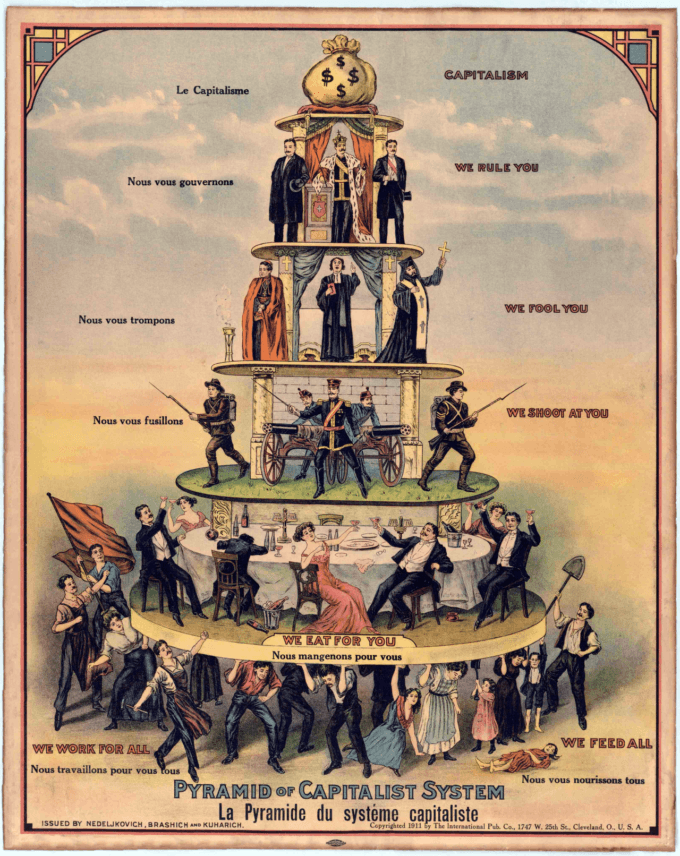
IWW poster printed 1911 – Public Domain

Some thoughts on that majority element of top-quintile US society that persistently refers to itself as “the middle class.”

My friend Peter Phillips has a new book out called Titans of Capital wherein he provides details for who it is, exactly, that owns most of the world’s wealth, investments, property, etc.  He also provides details for who manages that wealth.  What got me thinking the most was the information on this relative handful of a couple hundred people who manage most of the world’s investments, many of whom are not even millionaires themselves, though all of them are very well-paid, by any reasonable standard

By any way you can measure these things, the class divide is by far the most impactful one on society.  There is no demographic that has more money, power, or influence than the rich.  Compared to them, every other demographic, however you slice it, is poor.  The top quintile is disproportionately both male and white, and the highest reaches of the wealth spectrum much more so, but most white males are not part of it.

I mention this obvious truth here now because it is completely tied up with the false consciousness imbued in the minds of so many Americans, especially within the top quintile.  If, as NPR would have us believe, most white Americans are living comfortable “middle class” lives, why worry about them?  A good humanist should be concerned about other people — the ones who are suffering, who almost always seem to be, by American liberal top-quintile definitions, LGBTQ and BIPOC.

That is to say, the system is working fine for white people, who make up most of the middle class, which is normative.  The poor white people are not normative, they’re an example of an individual failure, or an indication of a crack within a system, which is otherwise working for them.  The concerns for society at large, if a person within the top quintile has any, are therefore focused on those who are truly deserving of concern, who are by definition not white.  This is the methodology of divide and conquer in the USA that has been deeply inculcated in the minds of Americans of all classes.

There is much to be said of the ultrarich, the handful of out-of-control billionaires who own half the world’s wealth, and all the destruction and misery they’re causing.

And I know many things will be changing dramatically in the world in the coming years that may especially impact the jobs of anyone whose job can be done from behind a screen, and the ways that will all play out with the rise of AI are still unclear, though it doesn’t look good for white-collar workers of any kind.

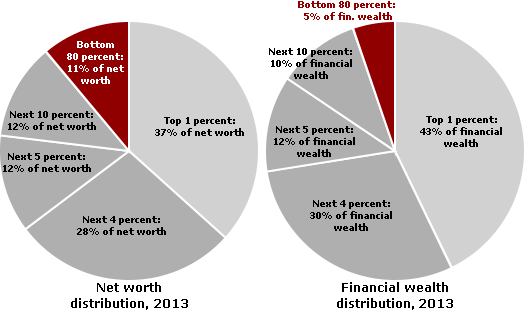
But as of today the class setup still exists with its familiar curve, one that skyrockets upwards once it reaches the top quintile of the population, and then skyrockets far faster within the upward reaches of the top 1%.  It’s that top quintile I’d like to ruminate on here.

The top quintile phenomenon is striking if you have a penchant for history, and the history of colonialism in particular.  If you look into it, you’ll find in this history a common strategy on the part of the colonizing power to govern the colonized society in such a way that the top 15% or so of the population is privileged economically, socially, and politically.  This is the 15% of the society from whose ranks come those who will run the colonial show on behalf of the colonizing power.  The colonizers ran things according to this principle from India to Iraq.

Knowing about this history, it’s striking to see that graph of how wealth gets more and more concentrated, particularly within that top quintile, in the US today, as with countries like Mexico and Brazil, where the same kind of phenomenon can be observed.

Who is in that top quintile in these societies?  What do they do?  How does being in the top quintile affect their outlook personally and professionally?  How does this impact the rest of us?

I don’t think you have to look much past the history of colonialism to answer these questions, because they’re the same as they always were.  As in the colonial days, the top quintile runs everything.

Within this quintile you will find the politicians, most of the experts, the scientists, the lawyers, judges, those who run the universities, the banks, the real estate management companies, the corporate media outlets, the military generals, the chiefs of police, the owners of the apartment buildings, the owners of the trailer parks, most of the “mom and pop” landlords, and so many others.

Having grown up among this top quintile set in the US, I have spent my adult life both inside and outside of top quintile reality.
Something that regularly hits me is how effective the propaganda we all grew up with in America about this “middle class” stuff has been.  Growing up in Wilton, Connecticut, everyone claimed to be part of the middle class.  A generation later as a parent with a child who, largely due to her French citizenship, like me, went to school with the children of the elite — I went to school with the mayor’s son, my daughter went to school with the mayor’s daughter — I find nothing has changed.  Those who live in spacious suburban homes with household incomes well into the six digits overwhelmingly still call themselves “middle class.”

They’re not, of course.  They’re in the top quintile.  Top Quintilians?  Maybe there’s a better term.  But certainly not “middle” in terms of either wealth or income.

Where I grew up, the vast majority of kids graduated from high school and then went to college.  I still find it shocking to look up the statistics and see that less than a third of Americans over the age of 25 have a college degree.  I don’t either, but growing up in Wilton, I thought that made me extremely unusual, and something of an abject failure at life.  But apparently I’m perfectly normal.

Where I grew up, it would be normal to hear kids say something like, “almost everybody goes to college.”  In Wilton, this appeared to be true.  They may perhaps on occasion watch the news or read a book, but what mainly succeeded in shaping their worldview was growing up in Wilton, it always seemed to me.

And the people who grew up in places like Wilton are the ones who go on to run the country, as well as the ones who go on to become the pundits on TV telling us how well or how badly they think it’s being run.

I have friends and relations with members of the top quintile in other countries, like in Mexico, and India, and Lebanon, where in that segment of the population you’ll commonly hear people say things like “everybody has a nanny.”

I feel compelled to ask people if the nannies also have nannies.  And among the kids I grew up with in Wilton, I want to ask why are the bus drivers always people who speak Spanish and don’t live in our town?  Where do they come from?  Did they go to college?  Do they also have families, and kids?  Where do their kids go to school?  Not in Wilton.  Will they be going to college, too?

When you live among the top quintile, most of the people you know are also top-quintile people.  The bus drivers and the nannies are the minority, and we’re providing them with much-needed jobs, even if they can’t afford to live in our town or send their kids to our schools.

If “middle class” were just a euphemism and everybody knew that that was the case, and that it had nothing to do with the middle of anything, then maybe it wouldn’t bug me so much.  But I know these people, and I know that in their minds, their lives are average — because for them, with almost everyone they know being fellow top-quintile people, their lives are average, and they feel very much in the middle.  The middle of somewhere, anyway.

The people living comfortable lives in the top quintile, sadly, are not the middle, however.  The bus drivers and the nannies are actually the vast majority of society.

Most of the bottom 80% don’t live in, work in, or visit the affluent, polished suburbs the top quintile mostly live in, so they’re not particularly visible as the vast majority, but people who live lives more along the lines of those nannies and bus drivers are, in fact, the vast majority.

Of course that means if you’re in the top quintile and you’re talking to your neighbors, your friends, other parents at the local school, etc., you’re going to be talking to people where, for example, the vast majority are homeowners, and very few are renters.  Most of the homeowners won’t themselves be landlords, but a significant minority of them will be.  In fact, the vast majority of “mom and pop” landlords in the country are in this top quintile.

If you’re a politician living in a neighborhood like that, which is where they mostly live, even if you’re truly interested in the welfare of your fellow people and thus you’re asking your friends and neighbors about their concerns, those top quintile homeowners and “mom and pop” landlords, those 6-figure-earning neighbors are unlikely to be listing the urgency of rent control as a top issue.  They’re unlikely to be too concerned with more state or federal funding for the schools, which in their town are doing just fine — and if they’re not, then the expense of private school is already enough to be spending money on, without a rise in taxes to pay for public schools many of your neighbors are not using.

As I travel I meet people from, for example, Chile, who will earnestly and honestly talk about the economic miracle that took place in that country under the dictatorship of Augusto Pinochet.  These are people I meet randomly, in an airport or someplace, not people who know me.

This used to shock me, knowing what I already knew about how Pinochet’s rule greatly benefited the top 10% of Chilean society, while impoverishing most of the rest of it.

But if you’re part of that top 10%, hell, that’s a lot of people, your fellow top 10%ers.  Even in Chile, that’s a lot of people — two million or so, at its current population.  Whether you’re in Santiago or Mexico City or Portland, Oregon, it is exceedingly easy never to go to the neighborhoods where the 80% live, or have much of anything to do with the people who live in them, unless it’s because the highway goes through that neighborhood, or you’re stuck at a red light somewhere, or if you go out to eat and you have a brief interaction with your server, or because you have a nanny.

Thinking of the top quintile issue in relation to the current gutting of the federal bureaucracy, a couple points come to mind that seem relevant, in terms of different reactions to the whole situation from different elements of society.

While there are all kinds of federal workers being fired in the ugliest of ways, those project managers, scientists, and IRS revenue officers are in the top quintile.  Most of the rest of the federal workers are, too, if they’re in a two-income household.

If you live in a peaceful suburban neighborhood or an upscale urban enclave, these mass layoffs are happening to your neighbors.  If you live in a Class C apartment complex next to a busy road, likely not.

If you live in a top quintile suburb, not only are some of your neighbors losing their jobs, and having their lives and the lives of their families upended, but most people in the neighborhood previously had relatively positive experiences with government.  For them, the schools are pretty good.  In their town or neighborhood, the trash gets picked up reliably, the water supply is clean, the facilities in the public parks are well-maintained, and the roads are repaved regularly.  For them, if they call the police, the police come to help, with an assumption that the person in the suburban house calling for help is the one who needs help, not whoever else might be involved with the situation.

So for them, the idea of tearing apart the federal bureaucracy seems even crazier than it does to most people.

While there may be many people concerned about what’s going to happen to popular institutions like Social Security and Medicaid, judging from what’s going down on the streets, there is not a massive groundswell of people from the bottom 80% who are horrified by what DOGE is doing (or horrified by the idea of peace talks between Russia and Ukraine, for that matter).  I’d surmise that this lack of widespread opposition is due to the fact that for people who aren’t living within the top-quintile bubble, their experiences with government have been largely negative.

For them, taxes are always too high, on wages that are always too low.  Housing is generally precarious, skyrocketing in cost, especially in the past 20 years or so, with no effective intervention on that impossible trajectory from any federal or state legislature.  The schools in the neighborhoods of the bottom 80% are understaffed and overcrowded.  The streets are often full of rubbish, which gets worse every year, as the housing crisis worsens.  When people need help, there so often doesn’t seem to be a solution forthcoming from any element of the bureaucracy.  This is how they experience government.

Whatever the way forward for any of us may be, it probably will need to involve collectively coming to terms with the class reality of it all.  And in reality, the top quintile is not the middle class, in the sense of being a class that’s in the middle, between the poor and the rich, as if society were a Bell curve.  US society isn’t a Bell curve.  It’s a steep mountainside that climbs upwards almost vertically as it rises.  The top quintile owns the vast majority of it all, with a tiny handful of them owning around half of what the rest of the quintile owns.  And collectively as a quintile in one role or another they run everything, basically on behalf of the stockholders — or was that the stakeholders?  No, that’s a euphemism.  The stockholders, particularly the biggest of them.

The top quintile may not be a middle class.  But it is very much in the middle, in the sense of being between the rich and the struggling majority, a buffer class that keeps the whole top-heavy house of cards from collapsing.  It may be normative for many or probably most of the top quintile people to believe they are the middle class, and normative for so many of the other 80% of society to aspire to be part of this fantastical middle class, to pretend they already are in it, and to feel inadequate for failing to be in it.

Either way, the widespread belief that this top quintile is this thing called “the middle class” is both a necessary delusion for the maintenance of domestic tranquility, such as it is, and one that needs to be overcome by both the top quintile as well as by the rest of society, if we have any hope for forward motion in this country.

If people within or not within the top quintile believe the top is the middle, then this is no different from believing 2+2=5.  It’s not real, it doesn’t make sense, and it skews reality for everyone involved with this collective fantasy.  Who owns our world?  Who runs it?  Who is on top, who is in the middle, and who is on the bottom?  If we don’t have a concrete, broad agreement on the answers to these extremely basic questions about society, how can we conceivably begin to address the massive problems with this whole setup?  I don’t think that’s possible.  But another world is.

David Rovics is a frequently-touring singer/songwriter and political pundit based out of Portland, Oregon.  His website is davidrovics.com.

Thursday, May 16, 2024

California's strong labor laws aren't enough to protect workers, report says

Suhauna Hussain
Wed, May 15, 2024 


A study by researchers at Harvard and UC San Francisco found that 91% of California service sector workers surveyed experienced at least one labor violation in the last year at work. (Los Angeles Times)

Although California has some of the toughest labor laws in the country, a new study has found workers routinely suffer violations while on the job.

A team of researchers from UC San Francisco and Harvard University earlier this year surveyed 980 California workers at dozens of the state's largest retail, food and other service sector companies. The workers reported frequent abuses over pay, work schedules and other issues.

The study found, for example, that 41% of the workers surveyed had experienced at least one serious violation of federal labor in the last year, such as being required to work off the clock, not being paid overtime, or being paid less than minimum wage, according to the report, which was released this week.


Violations around paid sick leave and meal breaks were also common, the researchers found. More than half of workers, 58%, were not given proper rest breaks.

All told, 91% of the workers surveyed experienced at least one violation in the last year, the study found.

The findings seemed at odds with the fact that California has led the way in raising labor standards, said one of the study’s authors, Daniel Schneider, a professor of social policy and sociology at Harvard He and his co-author, Kristen Harknett, a UCSF sociology professor, wanted to understand why the state's rigorous laws weren't doing more to protect workers from abuse.

The survey of workers, Schneider said, showed it was common for workers not to report problems. Many, he said, "have been robbed of their time and their wages and the vast majority do not come forward.”

Schneider said the study found that workers who came forward to report problems to someone inside their company were often met with retaliation or other negative consequences, and that workers are unlikely to seek help from regulatory bodies such as the state labor commissioner.

"This is not to say that the laws are ineffective, but that their full promise isn't realized when they are being violated so routinely," Schneider said. "We need a robust system of enforcement to ensure these labor laws are being enforced and complied with.”

The results of the new study come against the backdrop of renewed debate over a controversial California law known as the Private Attorneys General Act that gives workers the right to file lawsuits against their employers over back wages and to seek civil penalties on behalf of themselves, other employees and the state of California.

Read more: The battle brewing over California workers' unique right to sue their bosses

An initiative seeking to gut the act will appear on the ballot in November, the culmination of a long-running effort by business groups to scrap it.

Backers of the ballot initiative argue the law has resulted in a slew of lawsuits that small businesses and nonprofits have little ability to fight, and say that the long, costly lawsuits workers must pursue result in their getting less money than if they had filed complaints through state agencies.

Although not an expert on the law, Schneider said he believes there should be "more avenues for workers to come forward, to pursue some kind of redress, not fewer.”

The recent study is limited in scope, Schneider said, and does not capture the experiences of undocumented workers or those in domestic, agricultural and construction jobs where violations may be even more common.

Since the survey focused on workers at large firms, it leaves out service sector workers employed at smaller firms, which also likely experience violations at higher rates, he said.

Another study published this month by researchers at Rutgers University found that minimum wage violations have more than doubled in some major metro areas in California since 2014.

Workers in the Los Angeles, San Jose and San Diego metro areas who had been paid below minimum wage lost on average about 20% of the money they were owed, or as much as $4,000 a year, the study found.

In the San Francisco area, losses were even more steep, with workers losing an average of $4,300 to $4,900 annually to minimum wage violations, according to the study.

This story originally appeared in Los Angeles Times.


California sees a surge in minimum wage violations
Jonathan Williams
Tue, May 14, 2024 


Scroll back up to restore default view.


Minimum wage violations have more than doubled in California cities like Los Angeles, costing workers billions.

California workers lose up to $4,000 per year in major metro areas that include San Francisco, San Diego and San Jose, according to a study by Rutgers University.

“This is the time to be strengthening — not weakening — labor enforcement,” said Professor Janice Fine, director of the Workplace Justice Lab at Rutgers University.

The study was conducted by the School of Management and Labor Relations (SMLR), a research center dedicated to analyzing labor standards enforcement in the U.S.

“California is leading the way nationally in terms of strong state and local minimum wage laws, but our study shows that too many low-wage workers are not receiving the pay they are entitled to,” Fine said.

This November, a vote could come in the form of a California ballot initiative to repeal the Private Attorneys General Act (PAGA) act, revoking the ability to file class-action lawsuits over certain violations.

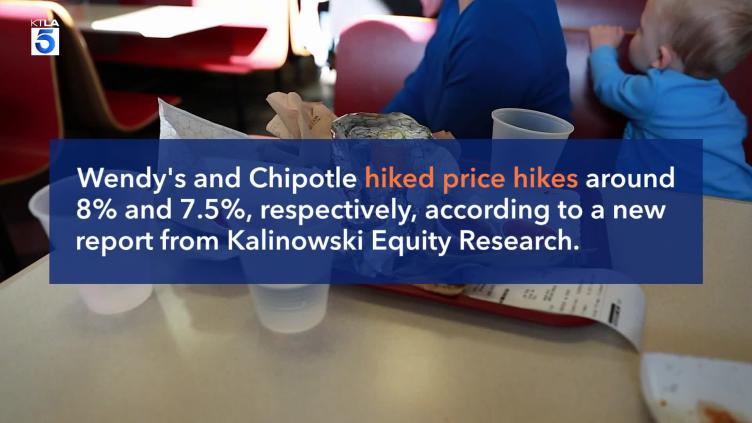
Instead of raising prices, California fast food restaurants should do this, franchisee says

Enacted in 2004, the California law empowers employees to file lawsuits for labor code violations on behalf of themselves, other workers, and the state.

The center took federal data collected from 2014 to 2023 and found that last year saw a 56% increase in violations, affecting nearly 1.5 million workers.

The study also found that mostly Black and Latino workers, and young people from the ages of 16-24 were more likely to experience minimum wage theft.

The most noticeable violation involved groups such as childcare workers, nannies, and home health care professionals.


On April 1, Californians experienced the fast-food minimum wage hike from $16 to $20 as the state continues to have one of the highest minimum wages in the country.

Business and labor groups would need to arrive at a deal before the end-of-June deadline to remove the measure. If no deal is reached, the issue will be presented to California voters in November.

Copyright 2024 Nexstar Media, Inc. All rights reserved. 

Labor laws largely exclude nannies. Some are banding together to protect themselves

CLAIRE SAVAGE and MORIAH BALINGIT
Updated Wed, May 15, 2024 


Domestic Workers Rights
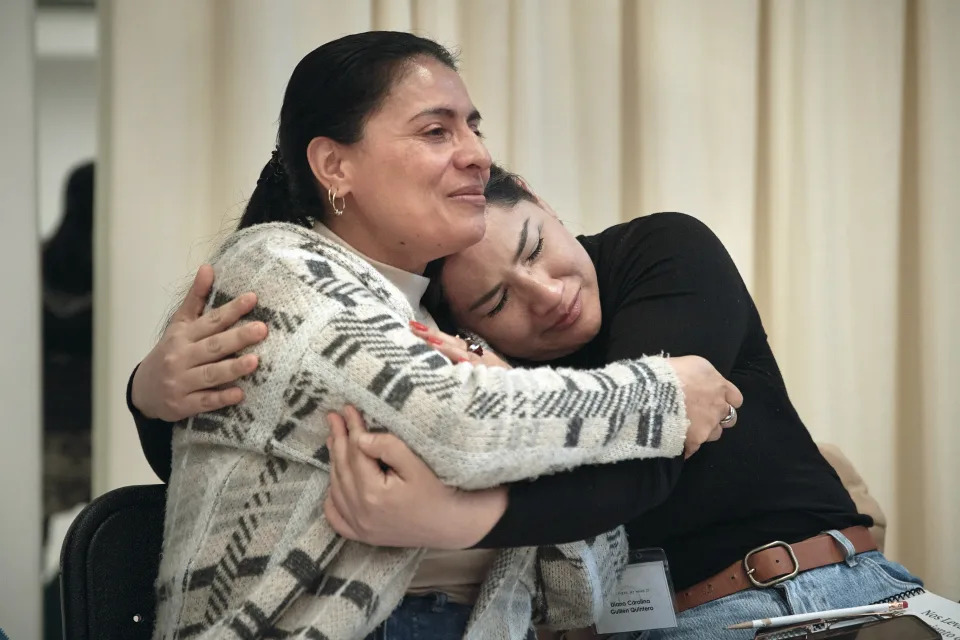
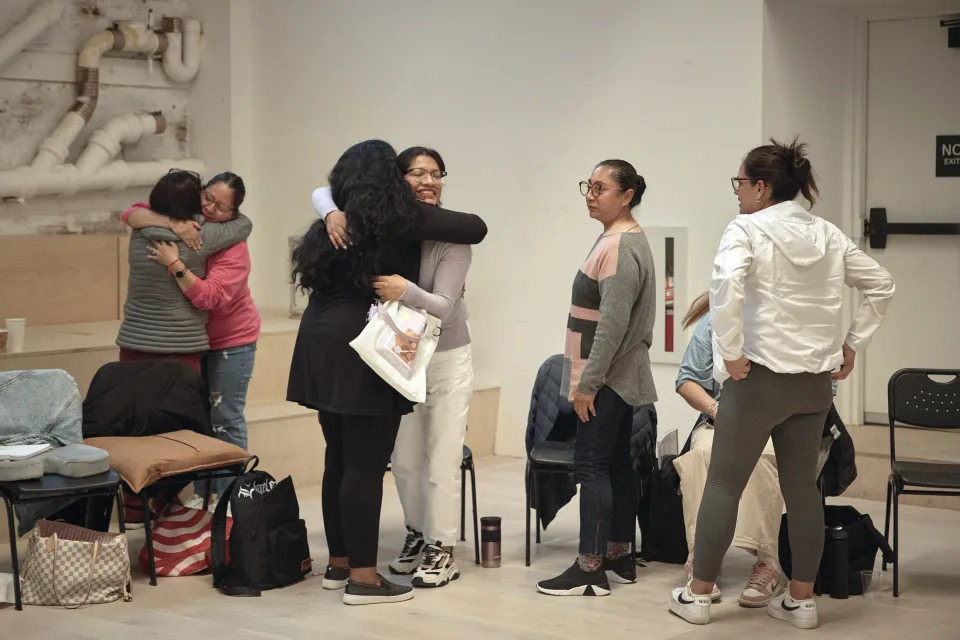
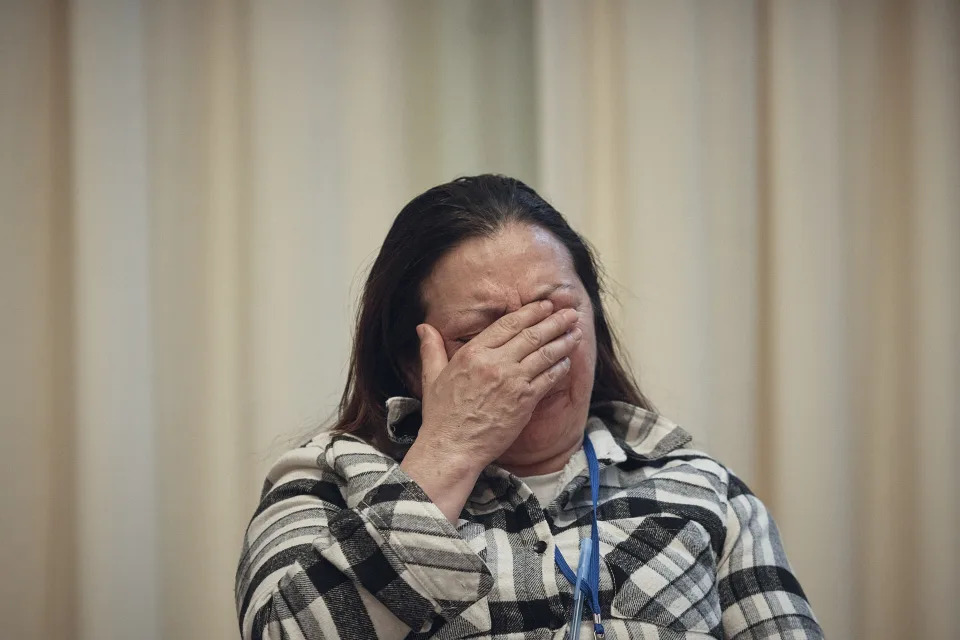
Sandra Milena Saenz cries during a sexual harassment prevention class for nannies and housekeepers on Saturday, April 27, 2024, in the Brooklyn borough of New York. Nannies, housekeepers, and home care workers are excluded from many federal workplace protections in the United States, and the private, home-based nature of the work means abuse tends to happen behind closed doors.
 (AP Photo/Andres Kudacki)


NEW YORK (AP) — Map all doors in the home and figure out how to escape. Make a list of items in each room that you can use to defend yourself. Shelves, dishes, night stands, kitchen knives -- all can be weapons if you are attacked.

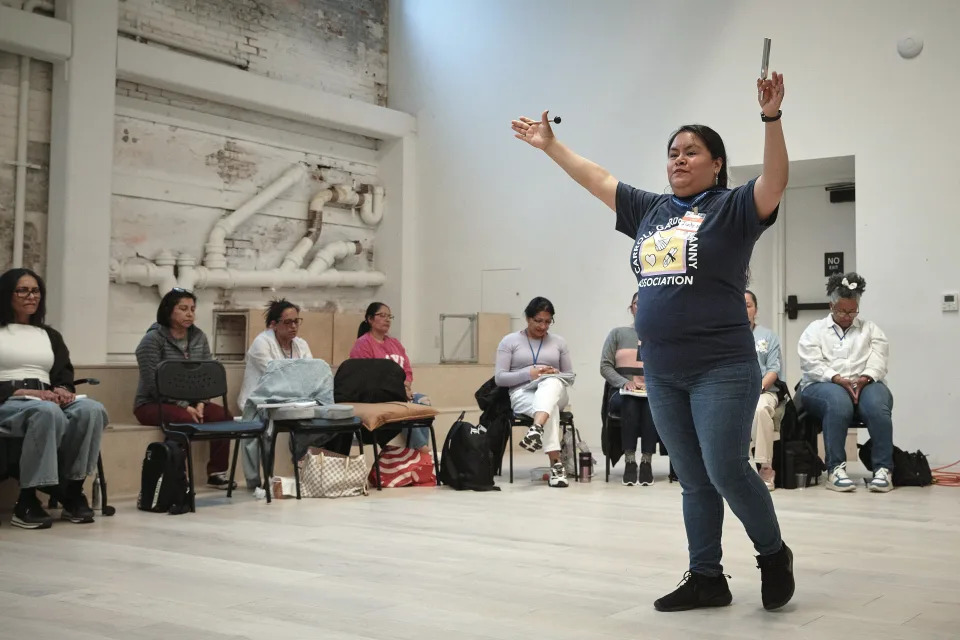
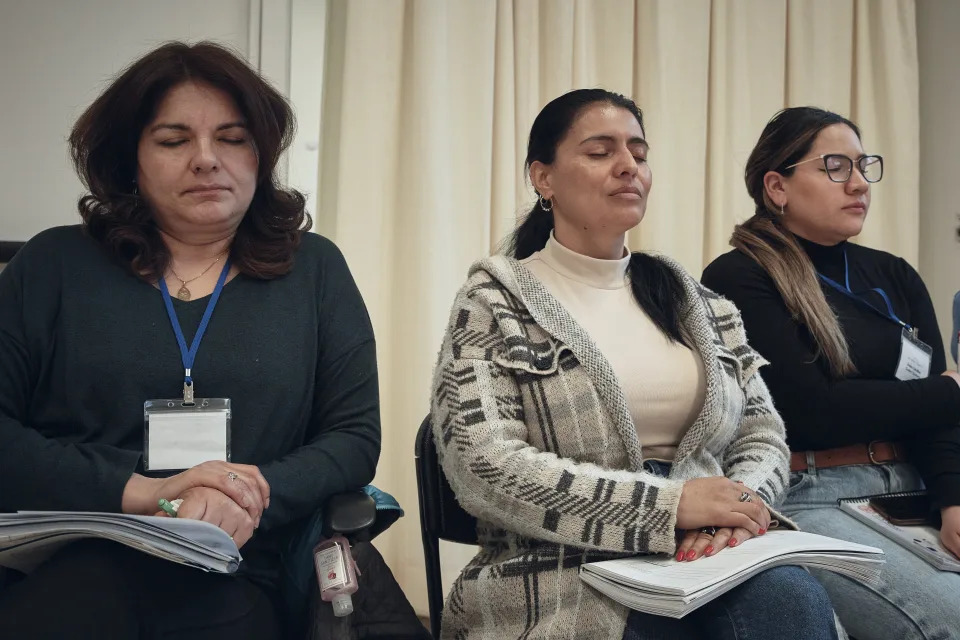
These are among the strategies Judith Bautista Hidalgo teaches her students -- 25 Hispanic women working as nannies, housekeepers and home care workers in the New York City area -- to defend themselves on the job. She hopes her April training on preventing sexual harassment will be a lifeline for many in the classroom who have experienced assault or abuse at work.

Domestic workers like those in Hidalgo's class are excluded from many federal workplace protections in the United States, and the private, home-based nature of the work means abuse tends to happen behind closed doors.

Although many domestic workers are covered under federal minimum wage and overtime laws, part-time and live-in workers are still exempt from some provisions. And domestic workers are generally excluded from Title VII of the Civil Rights Act of 1964 — a federal law banning workplace discrimination, including sexual harassment — since it only applies to employers with 15 or more employees.

Neither are domestic workers covered by the Occupational Safety and Health Act, which aims to ensure safe and healthy conditions for workers.

In the coming weeks, Rep. Pramila Jayapal (D-Wash.) plans to introduce a national domestic workers bill of rights, which seeks to “reverse the historic exclusions of domestic workers from key labor laws,” according to a statement from her office.

Although previous efforts to pass similar legislation have stalled in Congress, support continues to mount this time around. But there are still plenty of hurdles to overcome, according to Ai-jen Poo, president of the National Domestic Workers Alliance.

“It’s not uncommon for a bill of the scope and significance to take decades,” she said.

Last month, domestic workers traveled to Washington, D.C., where they were in the crowd for a rally headlined by President Joe Biden. The next day, they met with Jayapal to discuss the federal domestic workers bill of rights, crowding onto couches and sharing their stories in English and Spanish.

Dulce Tovar, who has been a nanny for more than a decade, lives in El Paso, Texas, where neither the state nor the city have passed protections for domestic workers.

“There’s a lot of abuse,” Tovar said in Spanish. “If we complain about something, or ask for something, we aren’t heard. They tell us, ‘There’s a lot of people who want your job.’”

Part of the problem is that domestic work is undervalued and often dismissed as “caregiving work that women were just expected to do out of the goodness of their hearts” rather than professional work deserving of labor protections, said Julie Vogtman, senior counsel for the National Women’s Law Center.

Isabel Santos, a nanny from Chicago, said many do not appreciate the expertise experienced caretakers like herself bring. Santos, 51, has been caring for children for more than two decades and has received training on early childhood development. She has potty-trained children, taught them Spanish, taught them their alphabets and colors and has made sure they were ready for school by the time they entered kindergarten.

“To support the child’s development, we have to be a little bit teacher, a little bit nurse and a little bit psychologist,” Santos said.

Domestic workers from across the country have taken their fight beyond Congress and straight to statehouses, where they have been instrumental in getting labor protections passed.

But even in the 11 states with laws on the books that specifically target domestic workers, those often go unenforced. Women are more likely to be assaulted at work than men. Domestic workers, who make less than half of what a typical worker makes and are disproportionately women and immigrant women -- many of whom lack legal work status -- are especially vulnerable to workplace exploitation, experts say.

The women taking Hidalgo’s course as part of We Rise Nanny Training in Brooklyn have no intention of being defenseless.

“We are fighters. We matter,” said Aniuska Esther, a house cleaner who attended the course on a recent Saturday afternoon. “We do the work that no one else will do.”

A coalition of organizations including Carroll Gardens Nanny Association, the National Domestic Workers Alliance, and Cornell University’s School of Industrial and Labor Relations created We Rise as a low-cost education and organizing program aimed at transforming the domestic worker industry. Besides combating sexual harassment, the curriculum offers classes in English and Spanish on workers’ rights, newborn care, CPR and first aid, organizing, negotiating, family communication, child nutrition and more.

Hidalgo herself knows firsthand what it feels like to endure sexual harassment in the workplace. Last April, she said she was cleaning an apartment in New Jersey when a friend of the employer visited. He later cornered her in the kitchen, exposed himself and started to masturbate.

When he advanced toward her despite her protests, Hidalgo said she pulled out a meat knife she had just washed and held it to his throat. “Stay away from me,” she repeated. He retreated to the living room and sat down “like nothing happened,” Hidalgo said.

She was fired after reporting the incident to her employer.

A year later she's still living with the consequences. Hugs from her boyfriend or teenage son send her into a panic. Crowded subways set her on edge. It's hard to fall asleep at night.

When she felt strong enough, she came forward with her case and began teaching sexual harassment prevention classes. Some participants came forward with their own experiences, and classmates engulfed them in hugs and offered tissues.

Some said they feel afraid to speak up because they lack legal work authorization. But “the same laws apply to an undocumented worker as any other worker,” said Laura Rodriguez, a New York City area employment attorney who primarily represents low-wage immigrant workers, including domestic workers.

Although employers may threaten to call immigration authorities if domestic workers speak up about problems in the workplace, they generally don't because they risk revealing that they broke the law themselves by hiring someone without work authorization, she explained.

Some clients Rodriguez has represented experienced abuses so severe they are considered labor trafficking violations. For example, when the pandemic hit, some families insisted their nannies remain at the employer’s home to avoid spreading Covid-19, so workers were unable to go out in public or see their own families for long periods at the risk of getting fired, according to Rodriguez.

On top of that, duties often increased -- cooking meals and doing laundry for the whole family instead of just the children after parents started working remotely, for example.

Combined with lower pay and job insecurity, “the pandemic was a nightmare for every domestic worker,” according to Wendy Guerrero, program and membership coordinator for Carroll Gardens Nanny Association and a former nanny who helped organize the We Rise Nanny Training.

Esther, the housekeeper who attended Hidalgo’s class, said the trainings make her feel empowered. Before she started taking the classes, Esther had to miss four days of work because of breast cysts requiring biopsies that left her arm and chest swollen for days. She didn't know that New York law entitled her to paid sick leave, and went without pay.

“I can defend myself now. I can’t stay silent. Now I feel that the law is with me and I feel that I can speak," she said.

____

Balingit reported from Washington, D.C.

___

The Associated Press’ women in the workforce and state government coverage receives financial support from Pivotal Ventures. AP is solely responsible for all content. Find AP’s standards for working with philanthropies, a list of supporters and funded coverage areas at AP.org.