Tuesday, September 08, 2026


BALKAN BLOG: Croatia waste scandal puts government under pressure

BALKAN BLOG: Croatia waste scandal puts government under pressure
Demonstrators gathered in central Zagreb on September 5. / Gospić je naš dom via FacebookFacebook
By Clare Nuttall in Glasgow September 7, 2026

Thousands of people gathered in central Zagreb at the weekend to demand action over more than 30,000 tonnes of waste illegally stored in central Croatia, reflecting growing public frustration with a government that has repeatedly promised to remove the material but has yet to begin the main cleanup.

The "Walk for Lika, Walk for Croatia" protest on September 5 was one of the biggest demonstrations in Zagreb in several years, bringing environmental activists and residents from the Lika region to Ban Jelačić Square.

The scale of the demonstration, and its timing just days after Prime Minister Andrej Plenković again promised to accelerate the cleanup, point to a problem that has become increasingly difficult for the government to contain: the issue is no longer simply whether the waste will eventually be removed, but why it has taken so long for a promised state response to turn into physical action on the ground.

The organiser, NGO Gospić je naš dom (Gospic is our home), has vowed to continue. A message on its Facebook page reads: “When Lika called, Croatia responded! People stood with people … Our work here at this protest is not done. It’s just getting started!”

Authorities uncovered between 34,000 and 37,000 tonnes of waste at an industrial site near Gospić last year, much of it imported from Italy in 2023 and 2024. Investigators suspect illegal waste-management activities at the site and elsewhere in Croatia, while environmental campaigners say improperly stored material is threatening soil, air and water in one of the country's best-known natural regions.

Government officials say the cleanup has been complicated by the criminal investigation and the absence of an appropriate facility in Croatia for the disposal of the buried hazardous material.

On September 2, Plenković said the cleanup was entering a new phase. The government has selected a contractor to cover the site to prevent leakage and another to remove waste stored in bags, while authorities have begun the process of finding a European company capable of removing and disposing of the buried material.

The government estimates that around 4,500 tonnes of waste lies on the surface, while another 32,000 to 33,000 tonnes of ash is buried at the site. Plenković said a procedure for removing the buried waste should be completed within 20 days.

"We are not waiting and we are not standing idly by," Deputy Prime Minister and Construction Minister Branko Bačić said in August, after the government contacted around 70 companies across Europe capable of handling the material.

Promises versus action

The assurances have not resolved the underlying political problem. For months, the government's message has been that the machinery for a cleanup is being put in place: tenders have been launched, companies have been contacted, water samples are being taken and prosecutors are investigating those responsible.

An initial procurement procedure for removing waste dumped openly at the Gospić site attracted no bids. A second tender was launched in June. At the same time, the government has been conducting market research and preparing documents for an urgent procurement procedure.

The government says it is dealing with a highly unusual operation involving hazardous material that cannot simply be transported to an ordinary landfill. Finding a company elsewhere in Europe that can take the waste, obtain the necessary permits and provide a complete disposal solution is therefore a substantial logistical and legal undertaking.

But for residents living close to the site, those explanations have increasingly lost their force. The question has also been complicated by conflicting assessments of the environmental and health risks.

Plenković said on September 2 that no analysis by the Croatian Institute of Public Health had found a problem that would make public drinking water unsafe. He said tests had also found no PFAS compounds in the samples tested and urged residents to continue using the public water supply. That message is intended to reassure the public, but it does not remove the environmental concerns identified by other experts.

New evidence raises pressure

Expert findings published by Croatia's anti-corruption office USKOK this week found microplastic particles in groundwater near the Gospić waste site, providing new evidence of a connection between the illegally stored material and the surrounding groundwater system.

Samples taken on May 8 from three monitoring wells at Divоsel, near the site known as Silos Velebit, contained hundreds of thousands of particles, with 426,500 confirmed using Raman spectroscopy. Detailed analysis identified 148 particles belonging to priority polymers classified as microplastic.

The concentration was particularly pronounced at the Trag K monitoring location, which accounted for 132 of the 148 confirmed priority polymer particles.

The findings do not establish that public drinking water is unsafe, and the government has stressed that distinction. However, they do strengthen the environmental case for removing the waste rather than simply monitoring it.

The evidence also matters politically because Gospić is not an isolated case. USKOK's wider investigation covers suspected illegal waste-management activities at several locations, including Varaždin and Benkovac.

At a former factory site in Varaždin, experts found an estimated 1,352 tonnes of mixed waste, together with at least 30 tonnes of sludge-like material containing antimony. Microplastic and microbiological contamination were detected, along with elevated levels of dissolved organic carbon.

Experts said the contamination appeared largely localised and found no evidence that it had spread towards the Bartolovec water-supply area or nearby protected areas. But they warned that the waste sits above an unprotected aquifer without a sealing layer and could, in the event of flooding, release pollutants towards the Drava River.

They called for urgent waste removal and soil remediation. That makes the Gospić controversy part of a wider question about the state's capacity to police Croatia's waste-management sector rather than simply a single illegal dump.

Croatia's Flamingo Revolution? 

Protests over environmental issues have shown staying power elsewhere in the region. September 7 was the 100th consecutive day of protests in Albania, where the demonstrations against a planned development linked to US President Donald Trump's son-in-law Jared Kushner have erupted into a broader expression of unhappiness with the Albanian authorities. The protests have been dubbed the Flamingo Revolution, after one of the birds that inhabits the protected coastal wetland where the development is planned. 

In Serbia, international mining giant Rio Tinto's planned investment into a major lithium mine also sparked mass protests in recent years. 

Croatia's President Zoran Milanović and opposition parties such as the Social Democratic Party (SDP) and Most (Bridge) have sought to capitalise on the waste scandal. On August 18, Milanovic called on parliament to hold an extraordinary session over the Gospić site, demanding immediate permanent remediation, regular reports to parliament and meetings between the government, residents and civic groups. He also called for stronger state oversight of waste sites across Croatia.

Milanović pointed to the fact that the State Inspectorate had been without a permanent chief since the government dismissed Andrija Mikulić in November 2025. Mikulić was subsequently arrested on suspicion of corruption linked to illegal waste disposal, allegations he denies.

The government has responded by stressing that USKOK and prosecutors are investigating those responsible and that offenders should face severe punishment. Officials accused opposition politicians of trying to exploit the crisis to destabilise the government. Deputy Prime Minister Ivan Anušić has described the dumping as an exceptionally serious criminal offence, saying it "borders on terrorism".

UK draws fire from Israel and United States over sanctions on West Bank goods


By IntelliNews Tel Aviv bureau September 8, 2026

The United Kingdom’s government is coming under heavy fire from Israel and the United States as it prepares to implement restrictions on goods produced in West Bank settlements.

This comes after the European Union adopted sanctions in June targeting certain Israeli individuals and organisations located in West Bank settlements.

The restrictions are set to be announced on September 8, with Foreign Secretary Ed Miliband expected to unpack the details of the measure in the House of Commons.

“The foreign secretary will make a statement to Parliament later today,” pensions minister Pat McFadden told Times Radio. “The reason that danger has become more urgent is because of expanded settlement activity in recent weeks and months.”

UK Prime Minister Andy Burnham had a phone call with US President Donald Trump on September 7, in which Burnham stressed “the importance of the two-state solution,” as quoted by US media.

During a separate public address, Burnham voiced his concern over Israel’s E1 settlement project, claiming that it compromises a two-state solution as it encroaches on land that Palestinians may seek for their own state.

Burnham addressed the E1 settlement project when answering a question from Labour MP Debbie Abrahams in the Commons.

“We’ve seen the really quite worrying statement about the E1 extension and the settlements there, and the fast-track tender process, which I think will lead to decisions being made before the Israeli election,” Burnham stated, seemingly accusing Israeli Prime Minister Benjamin Netanyahu of using the project as an election ploy.

Burnham went on to claim that this action could “imperil, if not end, the two-state solution. So these matters are urgent. They do need to be confronted, and I believe we will be updating the House soon on those matters.”

According to the Independent, Burnham separately said that the UK government is looking to prevent British companies from “financing, constructing or advertising new settlements” in the West Bank.

While Israeli politicians have responded aggressively to the UK government’s decision, the United States government has also entered the fray, threatening to take actions of its own against the UK leadership.

US ambassador to Israel Mike Huckabee criticised the move, warning that the US would respond to the UK government’s decision.

“It’s like throwing a stone and not having an idea of where it’s going to land. The UK is a sovereign country; they can do what they want, but so is the US,” Huckabee told BBC Newsday.

“I feel like it’s discrimination against the Israeli government. It’s discrimination against the Jewish people,” Huckabee continued.

Florida House Representative Randy Fine also criticised the move.

“As the British government considers forcing British companies to boycott portions of Israel, it should be aware that a Florida law that I passed as a member of the Legislature would ban any British company forced to comply from doing business with any state or local government in Florida,” Fine wrote on X.

“Florida is one of Britain’s largest trading partners. They should understand that their vanity project in support of Muslim terror could cost them billions of dollars,” Fine continued.

Israeli Foreign Minister Gideon Sa’ar hit out at the proposed UK sanctions in a public statement. “If Britain acts against Israel, Israel will act against Britain,” Sa’ar stated. “If they act, I think they will be making a big mistake.”

Israeli Finance Minister Bezalel Smotrich spoke out as well, posting on X: “Expel the British ambassador tonight! The British Mandate in the Land of Israel is over."

He went on to state that Israel would not be "a doormat trampled by an antisemitic government," while labelling the UK “a country conquered by radical Islam, trying to save itself from economic and social decline by attacking Jews and the State of Israel.”

National Security Minister Itamar Ben-Gvir responded on X by calling on Israel to recognise the Falkland Islands as Argentine territory. "The British are not content with merely occupying the territory; they also carry out oil drilling there and steal the money from the Argentine people," Ben-Gvir wrote.

The Falkland Islands are already a sensitive topic, with Argentine President Javier Milei seeking sanctions against companies involved in the Sea Lion offshore oil project, as the UK seeks to reassert its claim.

On the ground, Israeli citizens appear infuriated by the potential sanctions.

“This is worrying for me,” Itay, a software developer from Tel Aviv, told IntelliNews. “The sanctions might be against West Bank settlements, but what if they are extended to the rest of us? I have foreign investments in Britain and even some family living there. This is highly stressful.” 

“The UK didn’t do this against Gaza after October 7. They don’t do it against Iran, Venezuela, or North Korea. So why are we the exception?” Ilana, a mother of three from Kfar Saba, asked. “All we ask for is equal treatment.”

Shlomi, a cycling shop owner from Modi’in, took a more combative stance. “I hope that Trump punishes the UK heavily for this move. I always believed that the West was all on the same side, but clearly this isn’t the case anymore.”


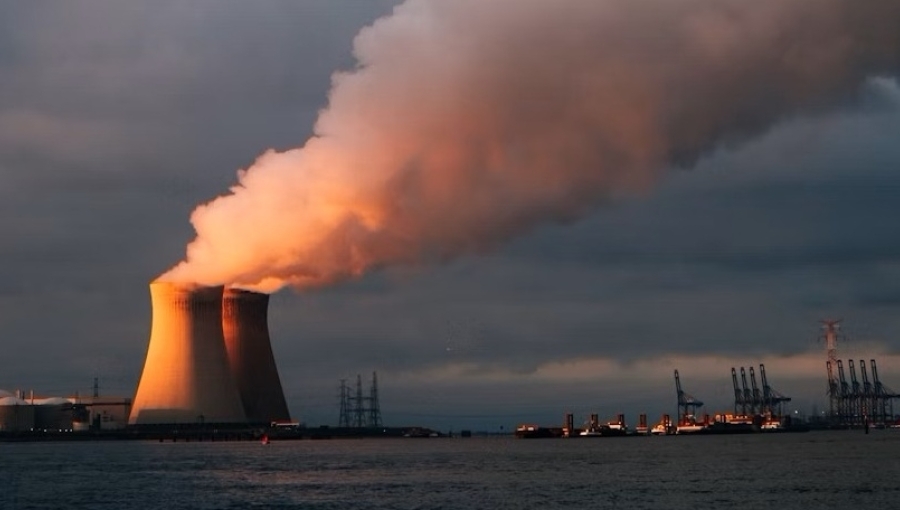
Nuclear generation hits fresh record as Asia drives expansion

Nuclear generation hits fresh record as Asia drives expansion

By Mark Buckton in Taipei September 8, 2026

Global nuclear power generation reached a new record in 2025, with Asia accounting for much of the increase as China, India, South Korea and Japan expand or revive their nuclear programmes.

Nuclear reactors worldwide generated 2,702 TWh of electricity in 2025, up 35 TWh from 2,667 TWh in 2024, according to the World Nuclear Association’s World Nuclear Outlook Report 2026. Nuclear supplied about 9% of global electricity.

The report, published on September 7, says nuclear generation has recovered steadily since the declines that followed the Fukushima Daiichi accident in March, 2011. The strongest growth has come from Asia, where nuclear output was about two-and-a-half times higher in 2025 than in 2012, according to WNA.

The figures underline the increasingly important role of Asian markets in the global nuclear industry. China alone generated 448.4 TWh of nuclear electricity in 2025, equivalent to 5% of its electricity generation, according to WNA data. China had 64 operable reactors with 64GW of net capacity and a further 37 reactors, representing about 42GW, under construction. Another 44 reactors were classified as planned.

China was also the main source of new construction activity in 2025. Eleven reactors started construction worldwide, nine of them in China and two in Russia, according to the World Nuclear Outlook Report. Three reactors were connected to the grid during the year, including one in China and one in India. Seven reactors were permanently shut down.

The pace has continued into 2026. Four Chinese reactors had been connected to the grid by August 1, including Taipingling 1, San'ao 1, Taipingling 2 and Changjiang-3, according to the WNA reactor database. Construction has also started on several additional Chinese units, including Xuwei 1, Jinqimen 2, Taipingling 4 and Zhaoyuan 2.

The Zhaoyuan development is part of a six-unit project in Shandong province. The first safety-related concrete for the second unit was poured on September 5, according to World Nuclear News.

China's position contrasts with many mature nuclear markets, where ageing fleets and plant closures have limited growth. WNA identifies China, Russia and South Korea as the world's nuclear "pacesetters", reflecting their continuing programmes of serial reactor construction.

South Korea remains another major Asian nuclear market. Its 26 operating reactors generated 175.5 TWh in 2025, supplying 31% of national electricity generation, according to WNA. Four reactors with a combined gross capacity of 5.7GW were under construction.

South Korea has also retained support for new nuclear construction. President Lee Jae-myung confirmed in January that the government would proceed with two new reactors under the country's 11th Basic Plan.

Japan is also rebuilding its nuclear generation after the post-Fukushima retreat. Its reactors generated 94.7 TWh in 2025, supplying 9.4% of electricity generation, according to WNA data. Japan had 33 operable reactors at the latest count, with two reactors classified as under construction.

India is another important source of growth. Its reactors generated 49.1 TWh in 2025, equivalent to 3.2% of electricity generation. The country has 24 operable reactors and eight under construction, with a further 14 classified as planned.

The Asian expansion extends beyond the region's largest economies. Pakistan generated 23.7 TWh from nuclear power in 2025, supplying 16.5% of electricity generation, according to WNA data. It had one reactor under construction and six operational. Bangladesh, meanwhile, had two reactors classified as under construction, although it did not yet have nuclear generation in 2025.

The broader regional pipeline is substantial. WNA says about three-quarters of reactors under construction worldwide are in Asia. It currently counts about 150 operable reactors in the region, around 55 under construction and firm plans for another 60-70, with many more projects proposed.

The expansion is increasingly concentrated in countries with established nuclear supply chains. China, South Korea and India are developing domestic engineering and manufacturing capabilities alongside their reactor fleets. WNA says this can help the region move from individual projects towards repeated construction programmes.

WNA says serial construction of standardised reactor designs can make project delivery more predictable and allow utilities, manufacturers and contractors to retain expertise between projects. China is cited as an example of this approach, with Zhangzhou 2 taking 62 months to build, compared with 163 months for India's Rajasthan 7.

The existing global fleet is also performing strongly. The average nuclear capacity factor rose to 83.7% in 2025, according to WNA. The association found no general deterioration in performance among reactors operating for more than 40 years.

That strengthens the case for extending the operating lives of existing plants while new reactors are built. WNA says maintaining and extending the existing fleet is among the fastest and most cost-effective ways to secure additional low-carbon generation.

For its forward-looking projection, the new report uses global operating nuclear capacity of 423GWe on a gross basis. It projects that capacity could reach 1,457GWe by 2050 if national targets are achieved, existing reactors continue operating within the assumptions of the report, and reactors currently under construction, planned or proposed are delivered.

That would exceed the tripling goal endorsed by 38 countries since the COP28 climate summit by more than 200GWe, according to WNA.

The project pipeline has strengthened since the previous outlook. Capacity under construction increased from 76GWe to 82GWe, while planned capacity rose from 107GWe to 114GWe. Proposed capacity declined from 294GWe to 289GWe and potential capacity from 24GWe to 13GWe.

The shift is significant because it suggests some nuclear ambitions are moving closer to identifiable projects. But the WNA warns that more than 550GWe of capacity needed to meet national targets has yet to be associated with projects classified as under construction, planned or proposed.

The challenge is therefore less about stated ambition than delivery. Financing, regulation, manufacturing capacity, skilled labour, fuel supplies and project management will determine how much of the proposed expansion actually reaches the grid.

Asia is likely to remain central to that process. China is already the world's largest nuclear construction market, while India, South Korea and Japan are maintaining or expanding their programmes. Pakistan and Bangladesh are adding further projects to a regional market that has become the principal centre of global nuclear construction.

For the industry, the 2025 generation record therefore represents more than a rebound in output. It reflects a structural shift towards Asia in both nuclear generation and new-build activity.

WNA's forecast remains conditional. Achieving 1,457GWe by 2050 would require governments and industry to turn national targets into sustained construction programmes. The report says construction start rates would ultimately need to rise to around six times current levels to deliver the tripling ambition.

For now, the evidence is clearest in Asia. The region is producing more nuclear electricity, commissioning more reactors and starting more construction than most other parts of the world. China remains the dominant market, but the expansion also encompasses South Korea, India, Japan and emerging programmes in countries including Pakistan and Bangladesh.

The record set in 2025 is therefore closely linked to the region's longer-term build-out. The WNA's projections point to China and India among the major sources of future capacity growth, alongside France, Russia and the US.

A nation trapped: photographing the broken promises of Sudan's revolution

Perpignan, France – Syrian-born photographer Abdulmonam Eassa travelled to Sudan as the fall of its longtime dictator, toppled by massive protests, raised hopes of a democratic rebirth. Instead, he witnessed the country descend into another military takeover, rivalry and all-out war. RFI spoke to him about the resulting photo series, War in Sudan: A Nation Trapped, which is now on show at the Visa pour l'Image festival in southern France.


Issued on: 05/09/2026 - RFI

Despite the fact that peace agreements have been signed, there is still insecurity in the Darfur region of Sudan. In the Shaddad camp, almost 700 families have made makeshift shelters. On 13 February 2021, 10 days after they had arrived, they had still not received any aid. © Abdulmonam Eassa for Le Monde

By:  Isabelle Martinetti

The series, which was awarded a World Press Photo prize earlier this year, is made up of images captured between 2020 and 2025 – from the wake of the 2019 revolution, to the start of the war between the army and the rival paramilitary Rapid Support Forces in April 2023 and the worsening of the conflict, which remains ongoing.

Speaking to RFI at the Visa pour l'Image photo festival in Perpignan, Eassa said the series was both a record of Sudan's abandonment by the rest of the world, and a testament to the resilience of its people.

RFI: What first brought you to Sudan?

Abdulmonam Eassa: When I went to Sudan the first time, it was at the end of December 2020. I was really willing to going there to better understand the Sudanese revolution. It was during the transition period.

I wanted to know how the Sudanese people were able to gather thousands of people in Khartoum, the capital of Sudan, in December 2018. And how they managed to kick out the Omar al-Bashir regime which stayed in power for 30 years.

RFI: How has your own background shaped the way you see and photograph conflict?

AE: I mean, it's Sudan. It's totally different, the environment and the geography, even compared to Syria from where I started working as a photographer.

But like my first years of work covering the siege of my hometown in eastern Ghouta, it was very tough, heavy, mentally and physically. Of course that taught me a lot and gave me a lot of experience to work in such hard circumstances.

Photographer Abdulmonam Eassa at Visa pour l'Image in Perpignan on 2 September 2026. © RFI/I. Martinetti


RFI: You have said that despite everything, the Sudanese population has continued to resist and survive.

AE: The two times we managed to go back to Sudan during the war, it was at the end of 2024 and the end of 2025. And the Sudanese people have much solidarity among each other. I consider that the world abandoned Sudan completely. But when you go on the ground there and you see that this community, in each neighbourhood, they build up a small kitchen and they collect money in the country and abroad, from the diaspora...

A lot of people in Sudan struggle to find their daily food. And we witnessed that this community, this collective group of people all around Sudan, cooked food, preparing two meals per day for the inhabitants of the city [Khartoum], where the front lines are really not far.

This is the point, the resilience that these people have. Despite a lot of difficulties that people face on the ground, there are a lot of activists that were very involved in the revolution but decided to stay over there to work among doctors, local hospitals, to help their community.


Sudanese soldiers drive through a damaged market in Omdurman, 25 October 2024. The city, which has the second biggest population in Sudan, has been the scene of continuous fighting since April 2023. © Abdulmonam Eassa for Le Monde

Sudan’s war reshapes loyalties as civilians see ‘no option’ but the army

RFI: "The world abandoned Sudan" – what do you mean by that?

AE: It was like a clear idea from the first day of war. All countries evacuated from Sudan with their embassy, their citizens.

Back before the war, the Sudanese people had such a peaceful revolution. They managed to do a lot of things, but we didn't see a real project from the international community that would support civil society.

And today, a lot of powerful countries are implicated in this war by fuelling it with weapons.


The sign being held up by one of the demonstrators reads: "There will be no justice until there is justice for women, especially in Darfur". On 19 December, 2021, in the evening following another day of action against the coup d'état, 13 women were raped by men in uniforms during an electricity blackout in the heart of Khartoum, the capital of Sudan. © Abdulmonam Eassa

RFI: At this festival you're taking part in a panel on artificial intelligence and fake images. How much do these issues worry you?

AE: It's everywhere, all around the globe. We used to have a huge campaign of propaganda, I faced that in Syria back when I was there. And today we are flooded with information on social media. A lot of this information could be real, but most of the time it's fake.

It's essential today, this photojournalism work that we do, because it's a real story, a real picture. It's verified information.

I think it's a big new enemy for us.

► "War in Sudan: A Nation Trapped" is showing at the Visa pour l'Image photo festival in Perpignan until 13 September 2026.
AU CONTRAIRE
Saving Lives Should Not Require Permission – OpEd


September 3, 2026

By Joseph Varon

Key Takeaways:

The author traces emergency medicine to 1767 Humane Societies: volunteers tried to revive the “apparently dead.” Methods mixed insight and error (mouth-to-mouth vs tobacco smoke and bellows later dropped). Lesson: try, measure harm, revise—authority is not the same as truth.

Protocols organize codes and sepsis care but cannot see the individual patient. Large trials (ProCESS, ARISE, ProMISe) found mandated early goal-directed therapy no better than evolved usual care. Tools freeze into compliance metrics; the physician, not the algorithm, still faces the family.

COVID is the climax: structure was needed, but isolation of families, political coloring of treatments, and punishment of dissent turned guidance into commandment. Right to Try is compared to the old rescue ethic. Closing question: next crisis, follow the bedside patient or distant officials?


When did saving a life start to feel like breaking the rules? When did the doctor at the bedside become less trusted than the people making decisions from far away, such as administrators, regulators, or distant experts who have never met the patient? And how did a profession built on judgment, uncertainty, and moral responsibility end up rewarding people for just following orders?

These aren’t just abstract questions. They decide who can act when someone is dying, and who gets blamed if the official plan fails.

The Apparently Dead Did Not Need Permission


Amsterdam, 1767. A body is pulled from a city canal. The victim is still, not breathing, and shows no clear sign of life. Most people assume the person is dead. But a small group of citizens and doctors started to ask a new question: What if this person only looks dead? What if death is sometimes a process that can be stopped? And if there is even a small chance of life, do we have a duty to try to help?

This idea led to the first Humane Society, a group focused on rescuing and reviving people who seemed to have drowned. In fourteen months, they reported saving nineteen people. By 1793, they said they had rescued 990 lives over twenty-five years.[1] These numbers might not meet the standards of a modern clinical trial, but the idea behind them changed medicine: apparent death did not always have to be the end.

The idea spread fast. Humane Societies popped up in cities like Venice, Milan, Hamburg, Vienna, Paris, London, St. Petersburg, Philadelphia, New York, Boston, and Glasgow. These weren’t just private clubs or government agencies. They were groups of volunteers (doctors, clergy, apothecaries, soldiers, boatmen, scientists, philanthropists, and regular people), working together to save lives. Historians now call them a transnational movement that shared medical knowledge across borders.[2]

Something very similar to what Brownstone Institute is today. Before there were international health organizations or emergency medical systems, these societies compared notes, shared tips, gave out rewards for rescues, and encouraged everyone to help. Their guiding idea was simple, even if it sounds bold today: if a life is at risk, the person who can help has the responsibility to act.

In London, the movement took on a special character. In 1774, doctors William Hawes and Thomas Cogan met with 32 friends at the Chapter Coffee House in St. Paul’s Churchyard to start what would become the Royal Humane Society. Hawes had already been paying boatmen out of his own pocket to bring drowning victims in quickly so resuscitation could be tried.

This was not a government project or a plan from professional managers. It was simply a group of people deciding that giving up was not good enough. Someone pulled from the water might look dead, and experts might say there was no hope. Still, there could be a chance for life, and someone should try to save it.[1]

Experts, Bellows, and Tobacco Smoke


Their methods were a mix of smart ideas, wild guesses, and desperate attempts. Victims were warmed, rubbed, shaken, bled, made to vomit, given mouth-to-mouth breaths, and exposed to heat and electricity. Believe it or not, tobacco smoke was even blown into the rectum using special devices, some kept in barbershops and other public places.

That might sound almost comical now, but there’s a real lesson here. The same people who helped make artificial ventilation a real medical practice also believed a tobacco enema could save a life. They were brave, but sometimes wrong. That’s not a knock on science. It’s how science actually works. Medicine moves forward when people try things, see what happens, learn from mistakes, and aren’t afraid to change course. It doesn’t move forward just because a committee says all the uncertainty is gone.

The Humane Societies became places where different medical ideas competed. The Dutch supported mouth-to-mouth ventilation, but many leading British doctors looked down on it. William Hunter called it something done by “the vulgar,” and some worried that exhaled air was toxic and could not revive anyone.[1] Still, this simple method used by regular people was actually closer to modern resuscitation than the more complex techniques favored by experts.

This does not mean expertise is useless. It means that authority and truth are not the same. Expertise deserves respect when it stays open to new evidence and correction, but it becomes risky when status is used to shut down questions.

John Hunter set a better example. He tested ventilation on animals and saw that when breathing stopped, the heart weakened and then stopped too. When ventilation started again, the heart could recover. He did not use bloodletting, emetics, or tobacco smoke. His use of bellows to help people breathe became common, but later it was found that too much pressure could hurt the lungs.

In 1837, the Society stopped recommending bellows ventilation because it could damage the lungs.[1] This process is important: try something new, use it, notice problems, rethink, and change course. The bellows were not kept just because respected people liked them. When harm was clear, the advice changed. That is how medicine should work.

The Societies tried using electricity before anyone really understood how the heart’s electrical system worked. Luigi Galvani had shown that electricity could make muscles contract, and in 1788 Charles Kite described using electricity to try to revive people. By 1795, the Humane Society of New York had a method for sending electric current through the heart area of someone who seemed dead, more than a hundred years before doctors fully understood ventricular fibrillation.[1]

In medicine, practice often comes before full understanding. Today, we like to think everything moves neatly from lab discovery to trials, guidelines, and approval. But often, doctors notice that something works before they know why. An observation is not proof, but it is often the start of proof.

The best stories were always about people, not equipment. James Parkinson (yes, the same Parkinson whose name is now linked to a disease) got a silver medal for helping save someone in 1777. Czar Alexander I supposedly helped with resuscitation for three hours after a Polish peasant was pulled from the Vilia River. Mrs. Ann Newby, who ran the City of London Lying-in Hospital, was given a medal in 1802 after saving 500 newborns.[1] Five hundred babies got a chance at life because she had the knowledge, courage, and heart to act. She wasn’t looking for fame; the lives she saved were her legacy. This is what the Humane Societies stood for: life-saving knowledge is for everyone, and its true value comes when one person uses it to help another.

A Protocol Has No Conscience

I have spent more than four decades in emergency departments, intensive care units, and hospital wards. I have participated in resuscitations in which protocols were indispensable. When a patient loses a pulse, chaos is the enemy. Chest compressions must begin. The rhythm must be identified. Defibrillation, medication, airway management, and the search for reversible causes must proceed in an organized fashion.

A good protocol helps a team move as one when seconds matter, and no serious physician should dismiss that achievement. Modern resuscitation is one of the clearest examples of standardization saving lives.

But the algorithm has limits. It cannot see the patient’s face, know the sequence of events that preceded the arrest, interpret the significance of a sudden change in skin color, or recognize that a familiar pattern does not fit this particular person. It cannot decide whether the cause is a pulmonary embolus, a tension pneumothorax, profound hypovolemia, a toxic exposure, or something no one considered when the code began. It cannot tell a physician when one more cycle is persistence and when it has become the prolongation of dying.

I have followed resuscitation protocols while simultaneously departing from the mental comfort they can create. The protocol organizes the work; it does not assume responsibility for the patient. When the code ends, the algorithm does not face the family. The physician does.

Sepsis offers another example. Early recognition, prompt antibiotics, cultures, hemodynamic assessment, and rapid support are essential. Protocols helped hospitals identify sepsis earlier and made dangerous delays less acceptable. Yet a septic patient is not a standardized container into which a predetermined volume of fluid can be poured without thought. An elderly patient with severe heart failure and renal dysfunction may not tolerate the same resuscitation strategy as a young adult with profound dehydration.

I have stood at the bedside trying to restore perfusion while also watching the lungs, the neck veins, the urine output, the blood pressure trend, the lactate, the bedside ultrasound, and the patient’s response to each intervention. The question is never simply whether the bundle was completed. The question is whether the patient is improving.

The history of early goal-directed therapy for septic shock is instructive. A highly specified protocol once became the standard that institutions were urged to reproduce. Later, three large multicenter trials, ProCESS, ARISE, and ProMISe, found no survival advantage for mandated early goal-directed therapy over contemporary usual care.[3-5] This did not prove that early recognition or resuscitation was unimportant. It showed that ordinary care had evolved and that the exact protocol was not a universal law.

The lesson should have produced humility: a protocol may capture the best understanding of a moment, but medicine keeps moving. Instead, healthcare systems too often freeze yesterday’s recommendation into tomorrow’s compliance measure, long after the clinical world that produced it has changed.

Covid and the Cult of Obedience

During the Covid-19 pandemic, this tension became impossible to ignore. I worked for more than 250 consecutive days in a hospital filled with patients whose disease behaved in ways we were still learning to understand. Many arrived with frightening oxygen saturations, extensive lung involvement, abnormal inflammatory markers, and a trajectory that could change in hours.

We needed protocols because exhausted teams caring for large numbers of critically ill people required structure. Infection control, anticoagulation assessment, respiratory support, laboratory monitoring, nursing care, and escalation plans could not be improvised independently for every patient. A protocol can preserve collective memory when individuals are tired, and the ward is under siege.

At the same time, no protocol should replace observation. I remember patients whose oxygen numbers looked terrifying while they remained awake, communicative, and capable of being supported without immediate intubation. I also remember others whose outward appearance was deceptively calm while their work of breathing, mental status, or hemodynamics warned that delay would be disastrous.

I had to decide when to continue high-flow oxygen, when to prone an awake patient, when to change anti-inflammatory or anticoagulation strategies, and when the ventilator had become unavoidable. Those decisions could be informed by guidelines, but they could not be outsourced to them. The patient in front of me was always more current than the document written weeks or months earlier.

Early in the pandemic, the momentum in many institutions favored intubation before a patient deteriorated further. The logic was understandable, but the consequences of mechanical ventilation were not trivial, and some of us became increasingly cautious about allowing a frightening oxygen saturation alone to dictate the decision. Contemporary clinicians warned against reflexive early intubation,[7] and later trials showed that awake prone positioning could reduce treatment failure in selected patients receiving advanced respiratory support.[8]

None of this meant that intubation was wrong. It meant that timing mattered, physiology mattered, and the individual patient mattered. A ventilator could save a life, but it could not be permitted to become the automatic answer to a number on a monitor.


Yet we were repeatedly pushed toward actions that made little clinical or human sense. Across hospitals, patients were isolated from the people who knew them best. Families were treated as hazards rather than partners in care. Bedside physicians were expected to implement rapidly changing directives written by committees and agencies far from the bedside, often with little opportunity for honest dissent.

Treatments could become professionally radioactive before the evidence was settled because their names had acquired political meaning. A molecule does not know which political party favors it or which television network attacks it, but during Covid, too many physicians behaved as if it did.

One of the photos from my career that spread the furthest showed me in full protective gear, hugging an elderly Covid patient who was crying for his wife. He was surrounded by machines and monitored by exhausted staff, but in that moment, what he needed most was simple: human contact. I hugged him because leaving him alone felt wrong.

That picture struck a chord around the world, not because it showed advanced medicine, but because it revealed what medicine had started to forget. In trying so hard to control every risk, we ended up treating love, touch, family, and presence as if they were optional extras, not essentials.

We Followed the Wrong Leaders

The first months of a new pandemic will always produce mistakes. That is not a scandal. Honest error under uncertainty is part of medicine, and any physician who claims never to have been wrong has either not practiced long enough or has not been paying attention. The scandal begins when leaders refuse to admit uncertainty, when yesterday’s hypothesis becomes today’s commandment, and when questioning an official recommendation is treated as disloyalty. Science requires revision. Bureaucracy experiences revision as a threat to authority.

During Covid, we too often followed the wrong leaders. We followed titles instead of results, institutions instead of observations, and television experts instead of physicians actually caring for the sick. Authority moved farther from the patient’s room while becoming more confident about what had to happen inside it.

Some of the people setting the tone had not managed a ward full of hypoxemic patients, had not held the hand of a dying person whose family was forbidden to enter, and would never be required to explain to that family why the approved strategy had failed. Yet their certainty traveled downward through agencies, hospital systems, professional societies, electronic order sets, media organizations, and technology platforms until uncertainty itself became unacceptable.

This distinction was frequently lost during the pandemic. Under conditions of profound uncertainty, many institutions treated compliance as a substitute for reasoning. Physicians were told, explicitly or implicitly, that deviation from approved pathways carried professional, legal, or reputational risk. Some feared losing hospital privileges, professional standing, research opportunities, or even the ability to speak publicly.

A treatment could be discussed as plausible one week and unacceptable the next, not always because decisive evidence had appeared, but because institutional consensus had shifted. The tragedy was not that protocols existed. The tragedy was that questioning a protocol was sometimes treated as evidence of irresponsibility, even though the protocol itself had been created in the middle of an evolving emergency.

We did not follow the wrong leaders because every recommendation they made was wrong. Many recommendations were reasonable, and some undoubtedly saved lives. We followed the wrong leaders when we surrendered the responsibility to think to them. We let institutional prestige stand in for evidence and allowed fear to turn provisional guidance into moral law. Covid did not create this system. It exposed it.


When Compliance Becomes the Treatment


Evidence-based medicine was never supposed to mean obedience to a document. Its foundational definition joined the best available external evidence with individual clinical expertise.[6] Both elements matter. Evidence without clinical judgment becomes bureaucracy. Judgment without evidence can become arrogance. Good medicine requires their union, applied to the patient’s values and circumstances.

Yet modern systems increasingly measure what can be recorded rather than what can be understood. The electronic record can confirm that a box was checked, a medication was ordered within a specified interval, and a form was signed. It cannot easily capture why a physician withheld fluid, delayed intubation, continued a resuscitation, or abandoned a recommended pathway because the patient was deteriorating under it.

This is how protocols, which should be tools, become authorities. Once tied to reimbursement, quality scores, liability review, or disciplinary exposure, they acquire a force far beyond their scientific content. A physician may know that the patient does not fit the average population from which a recommendation was derived, yet still feel compelled to comply because explaining an individualized decision after a bad outcome is more dangerous than documenting adherence to a recognized pathway.


The result is a moral inversion: the safest action for the institution may not be the safest action for the patient. The clinician is rewarded for following the map even when the terrain has visibly changed.

I have faced this conflict repeatedly. Sometimes I have followed a protocol because it was sound, because it coordinated the team, and because it gave the patient the best chance to survive. At other times I have followed a protocol while knowing that I needed to watch for the moment it ceased to fit. And there have been times when trying to save a life required me to explain, defend, and document why the standard pathway was insufficient.

We no longer document only the care we provide; increasingly, we document our defensibility. None of this means that a physician should have unlimited license to experiment without consent, evidence, or accountability. It means that accountability must remain attached to judgment. A system that grants the physician no meaningful discretion should not pretend that the physician still bears full moral responsibility for the outcome.

Permission to Try, Permission to Die

The same problem appears when a dying patient seeks access to an investigational treatment. The federal Right to Try Act created a pathway for certain patients with life-threatening disease who have exhausted approved options and cannot participate in a clinical trial to seek an eligible investigational drug.[9] The law does not guarantee access; manufacturers may still decline, and the practical obstacles remain substantial.

But its moral premise resembles the question asked beside the Amsterdam canals: when conventional judgment has declared that nothing more can be done, are we certain that the only humane response is to stop trying? Some experimental treatments will fail, and others may cause harm. Those risks must be explained honestly. But a competent patient facing death should not be reduced to a passive object protected from every choice except the certainty of decline.

The Humane Societies did not possess our laboratories, monitors, ventilators, pharmaceuticals, imaging, or statistical methods. They made serious errors, and some of their remedies now seem absurd. We should not romanticize 18th-century medicine. Modern regulation, ethical review, professional standards, and clinical guidelines emerged for good reasons, often after terrible abuses. They protect patients from fraud, recklessness, exploitation, and avoidable inconsistency. The lesson is not that we should return to an era in which anyone with a bellows and a theory could declare himself a resuscitation expert.

The lesson is that the Humane Societies organized life-saving activity without extinguishing the human instinct to act. They distributed knowledge rather than hoarding it. They encouraged ordinary people to become rescuers. They created forums in which ideas could compete. They rewarded courage. They revised recommendations when harm became apparent. Most importantly, they understood that an institution should help people save lives, not provide them with an excuse to watch helplessly while responsibility is transferred elsewhere.

Modern medicine has achieved things the founders of those societies could not have imagined. We can restart a fibrillating heart, oxygenate blood outside the body, replace failing organs, visualize the brain in real time, and keep a premature infant alive at a size once thought incompatible with survival. Yet with every layer of sophistication has come another layer of permission: hospital policies, formularies, utilization review, prior authorization, scope restrictions, liability rules, quality metrics, and administrative oversight. Some of these are necessary. Together, however, they can create a culture in which the first question is no longer, “What might save this patient?” but “What am I allowed to do?”

That change is not merely administrative. It alters the character of the physician. A doctor trained primarily to comply will eventually stop seeing possibilities that fall outside the approved pathway. A nurse repeatedly punished for initiative will learn to wait. A patient told that every option must first survive a chain of institutional permissions will begin to understand that the system’s first duty is to itself. Once that culture becomes normal, no single villain is required. Everyone can behave properly, every form can be complete, every protocol can be followed, and the patient can still be abandoned. When healers become hostages to the system, healing becomes incidental.

Will We Follow the Same Leaders Again?

The first Humane Societies were created to rescue the apparently dead. Their founders refused to accept that stillness proved finality or that uncertainty justified inaction. They were not always right, but they were willing to learn, to correct themselves, and to keep responsibility close to the human being in danger. More than two centuries later, medicine needs to recover that same moral courage: the ability to distinguish standards from commandments, caution from paralysis, and regulation from wisdom.

A protocol can guide my hands, but it cannot carry my conscience. When a life is slipping away, the physician must still be permitted to think, to judge, and, when necessary, to refuse to stop trying.

If another pandemic arrives tomorrow, whom will we follow: the patient in front of us or the official who has never entered the room? Will we again allow fear to turn protocols into commandments, uncertainty into censorship, and experts into authorities who cannot be questioned? Will we repeat actions that make no clinical or human sense simply because the correct institution has ordered them?

The Humane Societies asked whether the apparently dead could be resuscitated. Our question is now more unsettling: can medicine recover its courage before its conscience is gone?


References

Sternbach GL, Varon J, Fromm RE Jr, Baskett PJF. The humane societies. Resuscitation.2000;45(2):71-75. doi:10.1016/S0300-9572(00)00201-X.

ProCESS Investigators. A randomized trial of protocol-based care for early septic shock. N Engl J Med. 2014;370(18):1683-1693. doi:10.1056/NEJMoa1401602.

ARISE Investigators; ANZICS Clinical Trials Group. Goal-directed resuscitation for patients with early septic shock. N Engl J Med. 2014;371(16):1496-1506. doi:10.1056/NEJMoa1404380.

Mouncey PR, Osborn TM, Power GS, et al. Trial of early, goal-directed resuscitation for septic shock. N Engl J Med. 2015;372(14):1301-1311. doi:10.1056/NEJMoa1500896.

Sackett DL, Rosenberg WMC, Gray JAM, Haynes RB, Richardson WS. Evidence based medicine: what it is and what it isn’t. BMJ. 1996;312(7023):71-72. doi:10.1136/bmj.312.7023.71.

Tobin MJ, Laghi F, Jubran A. Caution about early intubation and mechanical ventilation in COVID-19. Ann Intensive Care. 2020;10(1):78. doi:10.1186/s13613-020-00692-6.

Lancet Respir Med. 2021;9(12):1387-1395. doi:10.1016/S2213-2600(21)00356-8.

U.S. Food and Drug Administration. Right to Try [Internet]. Silver Spring (MD): FDA; 2024 [cited 2026 Sep 1].


This article was publiahed by Brownstone Institute

About Joseph Varon
Joseph Varon, MD, is a critical care physician, professor, and President of the Independent Medical Alliance. He has authored over 980 peer-reviewed publications and serves as Editor-in-Chief of the Journal of Independent Medicine.
View all posts by Joseph Varon →

SPACE/COSMOS

Do Black Holes Have Hidden Hair? Scientists Find A New Way To Check


After a black hole is disturbed, it emits gravitational waves that fade over time, a signal called ringdown. These waves may reveal hidden matter nearby. Researchers found that this hidden matter would alter the frequency and fade-out speed by different amounts. This would change the waves in a distinctive way and give scientists a new approach to test Einstein's theory of general relativity.
 CREDIT: Ariadna Uxue Palomino Ylla, Nagoya University

September 7, 2026

By Eurasia Review

Key Takeaways:

After two black holes merge, the new hole “rings” and sheds gravitational waves—the ringdown. For the simplest Kerr black hole that depends only on mass and spin. Extra matter or new physics (“hair”) can change that signal.

A Nagoya University team (first author Ariadna Uxue Palomino Ylla), in the Journal of Cosmology and Astroparticle Physics, shows hair does not shift frequency and damping the same way. The mismatch depends on how much hidden matter there is and how its pressure sits around the hole—and, for spinning holes, on whether the waves co-rotate or counter-rotate with the spin.

Method: use the known link between near-horizon light orbits and ringdown, add a little extra matter to standard models, and compute the change. The aim is a shared template for future LIGO-class data—to tell a “hairy” hole from a bald one, not a detection claim today.

When two black holes crash together and merge, the newly formed black hole rings like a bell, sending out gravitational waves with specific frequencies that fade over time. This brief, fading pattern of waves is called ringdown, and it may hold secrets about what is hiding around black holes.

Under Einstein’s basic rules for the simplest kind of black hole, ringdown waves depend only on two things: a black hole’s mass and how fast it spins. But what if black holes have hidden matter around them? If this were true, this matter would also affect characteristics of the ringdown waves. As a result, ringdown may hold information about hidden matter surrounding the black hole. In theoretical physics, this extra structure is often called “black hole hair.”

A team led by researchers from Nagoya University in Japan has found a way to check for hair using changes in ringdown waves. They found that hidden matter does not affect these waves uniformly; the frequency and fade-out speed of the waves respond differently. This difference may show us if hidden matter is present, and how its pressure is arranged around a black hole.

For spinning black holes, hidden matter affects ringdown differently, depending on whether the waves move with or against the black hole’s spin. Published in the Journal of Cosmology and Astroparticle Physics, the study tells us what pattern in the gravitational wave signal would be a clue that hidden hair is present and may help future observations tell a hairy black hole apart from an ordinary one.

If hairy black holes exist


Scientists continue testing whether Einstein’s theory of general relativity perfectly describes black holes and what deviations may exist.

Finding signs of black hole hair is difficult because different kinds of extra matter or new physics can change the ringdown in different ways. This study gives researchers a clearer idea of what patterns to look for in future ringdown data.


“Black hole hair may represent matter surrounding the black hole, or deviations from the simplest kind of black hole predicted by general relativity. Because these may slightly change the ringdown signal, detecting or ruling out these changes could give us a new way to test gravity in this extreme region,” said first author Ariadna Uxue Palomino Ylla, a PhD student from Nagoya University’s Graduate School of Science.

A black hole distorts space time so severely that it bends the path of light and gravitational waves. If there is hidden matter or new physics affecting gravity, the effects would be most pronounced exactly where gravity is strongest. This makes black holes the best place to find out if hidden matter or unknown physics might be present.

To check for hair, the team relied on a known link. The way light would orbit near a black hole corresponds to the way its ringdown waves behave, so scientists can calculate one from the other. They added a small amount of hidden matter to standard black hole models and used Einstein’s equations to calculate how that matter changes the ringdown’s frequency and fade-out speed.

The researchers tested this approach on three well-known theoretical black holes. They also extended it to spinning black holes and studied light that orbits with the spin and light that orbits against it.

Hair affects frequency and fading speed differently

A key finding is that the frequency and fade-out speed of ringdown waves do not change in the same way. The difference between them depends on how much hidden matter is present and how its pressure is arranged around the black hole.

“The ringdown waves may not only show that something extra is affecting the black hole; the way the signal changes could also give us clues about what this hidden matter is actually like,” said Palomino Ylla.

The researchers included spinning black holes in their analysis. Rotation makes calculations more complex because light circling with the black hole’s spin would behave differently from light circling against it. Hidden matter would also change the ringdown’s frequency and fade-out speed differently, depending on the spin direction. The exact pattern depends on the type of hidden matter involved.

Instead of studying each possible type of black hole hair from scratch, the new method gives researchers a common way to predict how extra matter or new physics could change a black hole’s ringdown. While the results are early estimates, this method helps scientists know what to look for if they ever spot something strange in a real black hole’s signal. In the future, this approach may help researchers use these waves to learn about a black hole’s size, spin, and any black hole hair nearby.


Comets May Have Transported Water To A Young Planetary System


September 3, 2026
By Eurasia Review

Key Takeaways:

Lund astronomers report signs of exocomets around PDS 70, a ~5-million-year-old, slightly cooler Sun-like star about 370 light-years away that already has at least two gas giants and inner-system water vapour (detected 2023).

2018 data show sodium gas moving at several km/s relative to the star and appearing and vanishing over nights—consistent with comets heating and sublimating as they pass. The team calls this the youngest system with proposed exocomet activity, and the first such case around a relatively cool, Sun-like star.

Orbit models suggest the gas giants can fling outer icy bodies inward, a possible water-delivery route like one proposed for early Earth. Chile’s coming Extremely Large Telescope may reveal more planets and how volatiles move.


Astronomers at Lund University in Sweden have found evidence of exocomets – comets in other solar systems – orbiting a young star similar to our Sun. The observations point to a possible mechanism for how water might be transported from the cold outer regions of the planetary system to regions where planets form.

The PDS 70 planetary system is just over five million years old and lies around 370 light-years from Earth. The system has at least two gas giants and orbits a star that is slightly cooler than the Sun. Water vapour was detected near the star as early as 2023. Researchers in Lund have now shown that variations in sodium gas in front of the star may be a sign of comets passing through the inner parts of the system.

“Our study suggests that comets may be responsible for transporting water to the inner parts of the planetary system, where planets can form, in the same way as in the early Solar System,” says Aline Novais, an astronomy researcher at Lund University.


The researchers have analysed observations from 2018 and detected sodium gas moving at several kilometres per second relative to the star. The gas appears and disappears over the course of several nights – a pattern consistent with what one would expect when comets pass in front of a star. When a comet approaches its star, it heats up and the ice on its surface turns directly into gas – a process known as sublimation. The gas can then leave a measurable imprint in the star’s light.

“This is the first time we have seen evidence of exocomets orbiting a star that is relatively cool, much like our Sun. Furthermore, this system is the youngest in which exocomet activity has been proposed,” says Aline Novais.

The researchers have also simulated the comets’ orbits. The results show that objects far out in the planetary system can be affected by the gravitational pull of the gas giants and flung towards the star. This is particularly interesting because comets form in the cold outer regions of the planetary system, where water may exist as ice. If they are then channelled inwards, they can transport water and other volatile substances to the region where planets form.

“It is reminiscent of a possible process in the early Solar System, in which comets may have helped to deliver water to the young Earth,” says Alexandra Stockwell Murphy, an astronomer at Lund University.

Where the Earth’s water originally came from remains an open question. Water-rich asteroids and comets are two possible sources. PDS 70 gives researchers the opportunity to study a similar process whilst a planetary system is still in its early stages of development.

“And when the Extremely Large Telescope, which is currently being built in Chile, becomes operational in the coming years, we will be able to find out whether there are any further planets in the system and thus gain an even clearer picture of how water and other building blocks of planets are transported,” concludes Jens Hoeijmakers, an astronomy researcher at Lund University.