Showing posts sorted by relevance for query BLACK HISTORY. Sort by date Show all posts

Saturday, February 24, 2024

What Is It About Black History That Frightens the Hell Out of the (WHITE)            Far Right?


Scholar Molefi Kete Asante discusses the radical origins of Black History Month and how it confronts cultural hegemony.
February 24, 2024

JGI / TOM GRILL / TETRA IMAGES / GETTY IMAGES

In February 1926, the Black historian and scholar Carter G. Woodson established Negro History Week, which later became known as Black History Month. In 1915, along with others, Woodson also helped to establish the Association for the Study of Negro Life and History, and, in 1916, he started the Journal of Negro History. By 1933, Woodson’s powerful book, The Miseducation of the Negro, was published.

Woodson was a Black intellectual who fought to have the history of Black people told. At the time of his book, Woodson understood that Black people were being miseducated, inculcated with egregious ideas about Black “inferiority” and indoctrinated to believe that they were historyless. He understood that a key part of white supremacy involves the attempt to control the very thoughts of Black people and thereby their actions, arguing that this domination strategy is aimed at producing a situation in which white people “do not have to tell [Black people] not to stand here or go yonder. [They] will find [their] ‘proper place’ and will stay in it.” Hence, for Woodson, the education of Black people necessarily entailed the interrogation of white ideology and mythology that passed itself off as “knowledge.” Education for Black people was designed to liberate and decolonize their minds and generate political action.

When I think about our current celebration of Black History Month, I wonder if Woodson would approve of how this month is being practiced. Is our current approach to this month radical enough in relation to Black knowledge production? To address this theme and others, I reached out to the prolific scholar Molefi Kete Asante, professor in the Department of Africology at Temple University, who has published over 100 books, most recently, The Precarious Center, or When Will the African Narrative Hold? The interview that follows has been lightly edited for clarity.

George Yancy: What do you think Carter G. Woodson would say about how Black History Month is recognized and celebrated in the U.S.? I am worried that, like MLK Day, Black History Month will be stripped of moments and Black figures in history that are deemed “too radical.”

Molefi Kete Asante: Carter G. Woodson was a visionary; he would have visualized an African American population well educated and capable of educating fellow citizens about the achievements and accomplishments of African people. He would say that Black history is American history, and that the celebration of Black history is a profoundly American event. Yet Woodson would not think that merely celebrating was enough; he would wish for an action agenda that would see African American history taught in all public schools because it is the glue that helps students explain social, political and economic discrepancies.

RELATED STORY
INTERVIEW |
RACIAL JUSTICE
Black Existentialism Brings Philosophy to Bear on Our White Supremacist World
Black existentialism isn’t just about suffering — it is also about affirmation.
By George Yancy , TRUTHOUTFebruary 21, 2024

As to what is radical, no one in our history who has added to the victories over micro- and macro-aggressions needs to be avoided in Black history. It is not just the figures who have been praised by whites that should be honored, but those that whites have shunned such as Nat Turner, Marcus Garvey, Assata Shakur, Maulana Karenga, Bobby Seale and Angela Davis. In addition to those who have been outside of our gaze, there are those who have worked like Fred Gray, MLK’s lawyer, who spent a lifetime attacking all of the vestiges of segregation that he could find in the American South. Gray contributed to civil rights by giving us the practical tools to fight against all forms of discrimination based on race.

We know that the far right (typically, white) bathe in the perpetuation of white lies. They distort our history, and water down its complexity. If history helps to define the spirit and existential vibrancy of Black people, then an attack on Black history is an attack on the lives of Black people. What is it about Black history — its content, its function, its potential — that frightens the hell out of the far right?

Black history challenges cultural hegemony and makes visible that which was deliberately or ignorantly made invisible; in other words, all that we know about African Americans today is the results of a demanding African American insistence that our history be available to everyone.

Carter G. Woodson devoted his entire life to the mission of corrective history about African Americans. With a singular emphasis on the significance of knowing what Africans had done, he was certain that kernels of knowledge about Africa and African American history would transform the way we saw ourselves. He was correct, because almost every Black person who has accomplished something important can point to models, examples and events that inspired them.

Young people who want to achieve something in science, art, artificial intelligence, architecture or culture can discover a bountiful field of African inspirations. This worries the far right because it means that Black people are no longer seeing themselves on the plantation that had been designed to minimize African people to enforce the illusion of white supremacy.

The aim of the far right is not so much a philosophical attack on African Americans (as in critical race theory; or diversity, equity and inclusion) as it is a cultural attack on African people themselves. In a strange way, our Blackness represents the origins of civilization, even beyond that, the beginning of our species, Homo sapiens. Consequently, any progressive social, economic or political project supported by African Americans could be a target of attack. Black people are no longer slinking back away from intellectual confrontation; we are confronting those who threaten our beingness with historical knowledge, wisdom and the assertion of a common humanity. Our aim as human beings is to fight to allow others to be human beings.

Black history challenges cultural hegemony and makes visible that which was deliberately or ignorantly made invisible

I really appreciate the profundity of how you characterize the aim of Black people, and how that aim is expansive and existentially inclusive. As we know, there are many ways that Black people can celebrate Black History Month. What would you recommend? I am especially interested in what you think needs to be emphasized and discussed in ways that have been overlooked. This brings us back to the theme of a more radical way of recognizing the purpose of Black History Month.

I think we should emphasize the nobility of people who have continued to succeed in a tough arena where our achievements have been minimized, ignored or disbelieved. Thus, it is persistent courage that is at the core of our history. Almost every Black community has individuals or groups who have made our history remarkable. Each town, city or community can identify some local figure or figures to serve as markers of persistent courage. It does not have to be material success or athletic prowess, but it could be a schoolteacher who rose to a task of providing space for children to learn history, values, and to receive cultural grounding.

Although MLK Day has taken on the idea of a national day of service in many cities, Black History Month has never had a specific action plan except to provide children with books on African Americans, information about African cultures, and classes and workshops about famous Black people. This is useful and necessary. What I propose for the month is “A Month of Awareness” where every day, those who want to celebrate learn something new for each day. Woodson put several projects and institutions in the service of Black history. He established the Associated Publishers, organized the Association for the Study of African American Life and History and wrote books for all ages. Our task is to make Woodson live in our daily activities by demonstrating awareness of who we are in the context of American and world history.

Children must be taught that the 300 or more African ethnic groups that were enslaved in the Americas came from a long history of civilization. Imhotep, the builder of the first pyramid was an African man. An African woman, Sobekneferu, was the first queen to rule a country in history. Almost all of the skills necessary for human survival were conceived and practiced and in Africa by humans long before migration out of Africa happened for Homo sapiens.

As you’ve demonstrated, Black History Month is certainly about education. What, for you, are the aims of education for Black people? And how might Black History Month resonate in the hearts and minds of Black people beyond February?

Education is different from training and ought to provide students with context, reason and knowledge. Without history, there is no context for students to understand what they learn. This means that reasoning is incomplete, and their knowledge is not a badge of achievement, but a weight around their necks. It is not alarmist to say that education, as a public system, has not always been our friend; indeed, the statistics of the condition of African American education suggest that education has often systematically robbed Black children of motivation, creativity, cultural identity and assertiveness. This means that children often leave school more damaged psychologically and culturally than they could or would, had they remained at home.

What I would love to see happen in the next iteration of Black History Month is a connection to a Pan African spirit. I have found people in Colombia, Brazil, Canada and Mexico, alongside people in the Caribbean and on the continent of Africa who have been inspired by the persistent and determined example set by African Americans to assert a common, nonhierarchal humanity.

At the current time, most schools treat Black History Month as a time for special emphasis on Black achievements, and there is nothing wrong with this idea; it was one of the wishes of Woodson. However, a more positive idea, now that we have the attention of the education system in many areas, is to integrate African American history and culture in every subject area in every classroom by inserting a fact or factoid in every lesson plan. Once this is practiced in any large urban district, it will catch on in others and be deemed a success. Every action takes political will and moral courage, without which it is impossible to succeed.

Beautifully stated, Molefi. I would like to end with a famous quote by Frederick Douglass, whose very birthdate has been erased by the white people who enslaved him and stole that part of his history: “This struggle may be a moral one, or it may be a physical one, and it may be both moral and physical, but it must be a struggle. Power concedes nothing without a demand. It never did and it never will.”


GEORGE YANCY is the Samuel Candler Dobbs professor of philosophy at Emory University and a Montgomery fellow at Dartmouth College. He is also the University of Pennsylvania’s inaugural fellow in the Provost’s Distinguished Faculty Fellowship Program (2019-2020 academic year). He is the author, editor and co-editor of over 20 books, including Black Bodies, White Gazes; Look, A White; Backlash: What Happens When We Talk Honestly about Racism in America; and Across Black Spaces: Essays and Interviews from an American Philosopher published by Rowman & Littlefield in 2020.

Sunday, November 30, 2025

C.R.T.

Black History Has the Power to Ignite Movements. That’s Why the Right Fears It.

The administration’s pre-emptive assault on history is a desperate attempt to stop new social movements from starting.
November 29, 2025


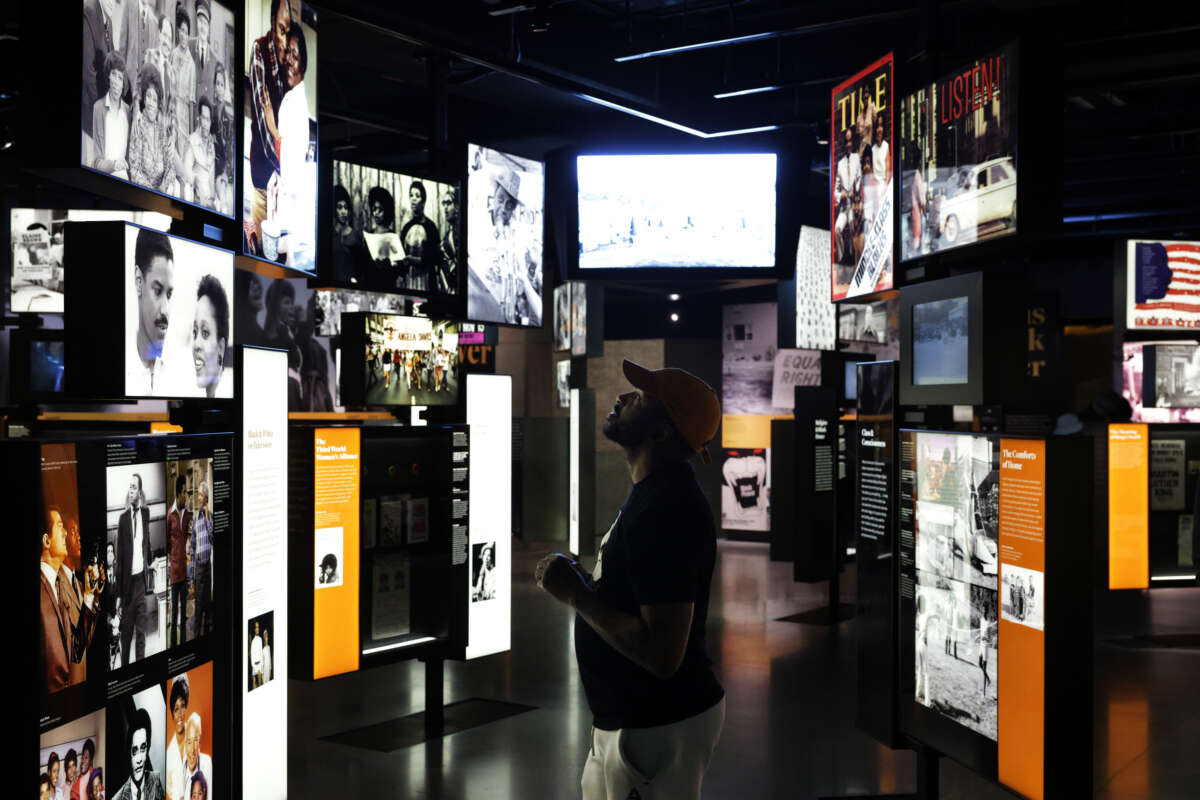
A visitor browses an exhibition at the Smithsonian National Museum of African American History and Culture on August 28, 2025, in Washington, D.C.Alex Wong / Getty Images

Ilooked at the slave shackles in the exhibit. My ancestors wore chains like this one. A bone-deep sorrow hit. When I researched my family history, names began to vanish as I traced it to Indigenous and African slavery. Here, right in front of me was material proof of the horror they survived. What is my responsibility to them?

The Slavery and Freedom exhibit at the National Museum of African American History and Culture in D.C. is a soul-shaking experience. Going from the bottom level to the higher exhibits, visitors take the journey from slavery to freedom. I went years ago, and decided to go again with family and friends. During the government shutdown, the closed museum doors were symbolic of a larger right-wing attack. Donald Trump and the MAGA movement have censored Black history, pulled Black books, removed Black Lives Matters icons, and led to a mass firing of Black federal employees.

The right wing suppresses Black history because it ignites social movements. Black history transforms rage into activism by putting racist events into a larger story of struggle against oppression. It shines a light on a hidden past. It exposes the hypocrisy of MAGA.

The right-wing attack on Black history is stupid, cruel, and futile. The logical end of censoring Black history is national suicide. Black history is a legacy with lessons that can heal the divides in the U.S. and repair our relationship to the world. Black history can free us from the right-wing image of the U.S. as a white Christian nationalist utopia, which never existed, and lead us to a clear-eyed radical realism. Black history bears a truth that makes it possible, finally, to create a future we can live in as liberated beings.


Trump’s War on Black America


Related Story

Interview |
Black History Testifies to the Impossible Creative Power of Black Resistance
Literary scholar Farah Jasmine Griffin discusses how Black yearning keeps surviving in the face of racist violence. By George Yancy , Truthout  February 23, 2025


Trump and MAGA are waging war on Black America. They have attacked it on three fronts; Black culture, Black economics, and voting rights. The attack on history is the most dangerous, because history gives birth to new protests.

Black history bears a truth that makes it possible, finally, to create a future we can live in as liberated beings.

In March, federal workers aimed jackhammers at the Black Lives Matter mural — blocks from the White House — and destroyed it. Less than a mile away, the African American Museum of D.C. was closed during the shutdown and has only recently reopened.

Trump came out the gate of his second presidency with a barrage of executive orders. One executive order titled “Ending Racial Indoctrination in K-12 Schooling” led to Black-authored books being yanked from school libraries run by the Department of Defense. Trump shut down diversity, equity, and inclusion (DEI) programs. He terrified business leaders with possible DEI investigations. Black history month celebrations were cancelled at federal agencies.

In a perverse kind of trickle-down racism, Trump’s attack on Black Lives Matter became a permission structure for increased on-the-ground bigotry. White influencers proudly wore blackface for Halloween. Politico exposed a Young Republicans’ chat where they gleefully traded racist comments. Black comedian W. Kamau Bell has painted a portrait of a right-wing shift in standup performances in which anti-trans jokes and anti-Black slurs have become commonplace. This is not a series of isolated events: FBI statistics on anti-Black hate crime, consistently the most common form of hate crime, spiked during Trump’s two terms.

Side by side with the cultural attack is an economic one. Remember Elon Musk proudly waving a chainsaw at CPAC? Well, it worked. Black women’s unemployment leapt from 5.9 percent in February to 7.5 percent in September. Trump’s cuts to the federal workforce and attacks on “DEI” forced 300,000 Black women out of their jobs. Put that number next to the 2003 statistic that 64 percent of Black families are led by a single parent, most of whom are single mothers, and the effects are devastating. Women are now trying to hold families together without work or health care.

When seen in that light, a closed history museum may seem to be at the bottom of the list of things to worry about. Yet a living relationship to history has the power to create a political consciousness for resistance. The ripping up of Black Lives Matter’s art, the censoring of Black books, the effort to whitewash Black history — all are part of a desperate attempt to stop a new social movement before it starts.

The Past Transforms Us

Emmett Till’s casket was right there, and no one could speak. I stood with visitors to the African American Museum in D.C., and the “Defending Freedom, Defining Freedom” exhibit that highlights the Civil Rights Era weighed on us. To be in the presence of history, to be inches away from the casket that Emmett Till lay in, was dizzying.

The ripping up of Black Lives Matter’s art, the censoring of Black books, the effort to whitewash Black history — all are part of a desperate attempt to stop a new social movement before it starts.

Trump actually visited the museum in 2017 and in a somber tone, said, “This museum is a beautiful tribute to so many American heroes, heroes like Sojourner Truth, Harriet Tubman, Frederick Douglass.” Eight years later, in August 2025, Trump posted on Truth Social, “The Smithsonian is OUT OF CONTROL, where everything discussed is how horrible our Country is, how bad Slavery was…” Well, that’s a 180-degree turn.

Why the change? Two events upset Trump’s first term: COVID-19 and Black Lives Matter. Protests against police brutality have been ocean tides in the Black Freedom Struggle, of which BLM is the most recent wave.

Black protests against police brutality go far back. We see it in Abolitionists fighting the 1850 Fugitive Slave Law, and we see resistance in the Red Summer of 1919. Racist brutality sparked the Harlem riots of 1935 and 1943. In 1991, the police beating of Rodney King led to the L.A. riots. In 1999 the police murder of Amadou Diallo and the 2006 killing of Sean Bell launched marches. Wave after wave reached higher and higher. In 2020, BLM became a tsunami of protest, the largest in U.S. history — and it was also strong enough to carry voters to the polls and throw Trump out of office.

The Black Freedom Movement has more power than any president or any system. Trump knows this. MAGA knows this. This is why they erase Black history. The past transforms us, it fires up dormant desires. It realigns us with our ancestors. Black artists and intellectuals always documented the dramatic effect of learning about Black history.

Assata Shakur wrote in her 1988 autobiography, Assata, “I didn’t know what a fool they made of me until I grew up and started reading real history.”

Malcolm X wrote in his 1965 classic, The Autobiography of Malcolm X, “History had been ‘whitened’ in the white man’s history books and the black man had been brainwashed for hundreds of years.”

From Frederick Douglass to Dead Prez, Ida B. Wells to Alicia Garza, knowing one’s history has always been the key ingredient to activating Black consciousness.

The Black thinker who systemized this transformation is Dr. William E. Cross in his 1971 essay, “The Negro-to-Black Conversion Experience.” Cross had a front-row seat to the 1968 climax of rebellion. He repeatedly saw apolitical brothers and sisters sparked by the revolution; they shed old lives, old fashions, and old ideas, and re-emerged in the street, wearing afros and bright pan-African colors. They went through stages like a butterfly molting in a cocoon, flying out, free as themselves.

Black history is the cocoon; it is the stories and imagery, the feeling of ancestors, it is the site of transformation. When millions upon millions undergo that change, like during the George Floyd protests, it becomes a historical force. A meteorologist, trying to show how interconnected all things are, once said that a flap of a butterfly’s wings can set off a tornado. It’s true. Why? The more that racists try to repress our history, the more we use it to explain what is happening, and how to fight back. The next social movement is already beginning, like a tornado.

As Pressure Builds, More Will Find Our History

When I finished my tour of the African American Museum, I was at the top floor. Sunlight came through the windows. The building is designed to recreate the journey from slavery to freedom. Standing at the top, I felt deeply moved.

Black history is the cocoon; it is the stories and imagery, the feeling of ancestors, it is the site of transformation.

The power of history, especially at a museum, is that right there under glass is evidence of our past. Flesh fades to dust. Bones crumble. Yet here are real things touched by real people. This is why the African American Museum in D.C. is the crown jewel of a large network of Pan-African historical sites. In New York, there’s the African Burial Ground. In Boston, there’s the Black Heritage Trail. In Tennessee, there’s the National Civil Rights Museum. In Ghana, there are slave castles and the heart-wrenching Door of No Return. The interconnected network of sites creates multiple transformation zones, where people enter and come out changed. When we leave, we take this history with us.

The tragedy of this moment is that Trump and MAGA have succumbed to a juvenile, cartoon version of history. If they turn back time, they believe, the joy of unlimited power will be at their fingertips. The harder they push for total control, the more pressure they place on masses of people. The government shutdown worsened hunger. People in the U.S. are facing even more unpayable health insurance. Rage at ICE builds in neighborhoods as masked agents separate families.

Under this pressure, many are forced to ask questions. When they do, they will find answers waiting for them. They will find our history.

Expect more tornados to come.


This article is licensed under Creative Commons (CC BY-NC-ND 4.0), and you are free to share and republish under the terms of the license.


Nicholas Powers
Nicholas Powers is the author of Thirst, a political vampire novel; The Ground Below Zero: 9/11 to Burning Man, New Orleans to Darfur, Haiti to Occupy Wall Street; and most recently, Black Psychedelic Revolution. He has been writing for Truthout since 2011. His article, “Killing the Future: The Theft of Black Life” in the Truthout anthology Who Do You Serve, Who Do You Protect? coalesces his years of reporting on police brutality.

Tuesday, October 20, 2020

UK
Why do we need Black History Month? Because too many people still reject it

Rightwing push-back on the idea that British history should encompass the black experience makes it all the more urgent

Diane Abbott

Mon 19 Oct 2020 

Black History Month has never been more relevant than in 2020. The Black Lives Matter movement has swept blackness to the heart of the political discourse. For me, it brings back memories of the upsurge of black activism in the 1980s, when I first entered politics.

In the 1980s, black people took to the streets of the UK, which partly reflected the US civil rights movement, but was also about the emergence of a new generation of black activists in this country. “Here to stay, here to fight,” was one of our favourite slogans on demonstrations. Importantly, riots erupted in cities all over the country, sparked by decades of injustices suffered by black communities at the hands of the police and other institutions. The riots started in Brixton, south London, in 1981. And there were other related uprisings in Handsworth, Birmingham; Southall, west London; Toxteth, Liverpool; Hyson Green in Nottingham; and Moss Side in Manchester. Black people taking to the streets in the 80s was probably the single most important factor in moving the fight for racial justice up the political agenda, and led to the election of myself and three other people as the first black members of parliament. It also made initiatives such as Black History Month possible.


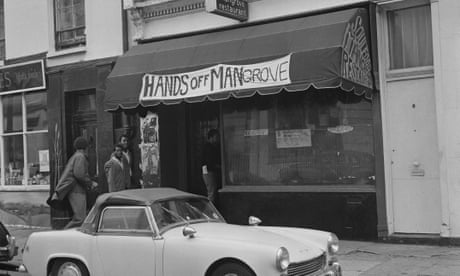
The story of the Mangrove Nine

The move to the left in Labour, particularly in London, was also significant. The leadership of the party may have regarded with horror the “black sections” campaign, which I and other black members of the party set up to address racism and promote ethnic minority candidates within Labour, but Black History Month came from the left of the party. It was no coincidence that Akyaaba Addai-Sebo, an officer of the Greater London Council (GLC), organised the very first Black History Month in Britain.

In a later interview, Addai-Sebo said that although he had initiated the idea, it was a collective effort, and it could not have been achieved without the London strategic policy unit, which was an organisation established after the Thatcher government abolished the GLC in 1986.

Among the many people involved in creating Black History Month, he mentions some of the first black MPs, Bernie Grant and Paul Boateng (now a Labour peer), and local politicians of the day, including Linda Bellos, Herman Ouseley and Ken Livingstone.

These were all big figures in the municipal socialism of the era. And there were many other council officers who were actively involved. In fact, it has been leftwing local authorities that have provided much of the funding for Black History Month over the decades.

In recent years there has been a lull in interest in Black History Month. It is still a mainstay of school curriculums, but there has been a backlash from both the right and the left. Black activists routinely described it as tokenistic. The usual argument was that every month should be Black History month. Now Black Lives Matter has brought issues about black people and history to centre stage once more.

Amazingly, institutions at the heart of the British establishment, from the Bank of England to the National Trust and the City of London, along with Oxbridge colleges and our leading museums, are now having unprecedented discussions about black people and British history.

But there has been a serious push-back by some rightwing pundits and politicians against the idea that British history should also encompass the black experience.


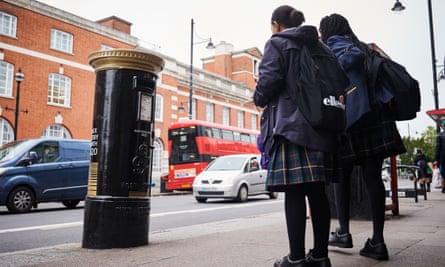
‘Black Lives Matter has brought issues about black people and history to centre stage once more.’ A postbox honouring black Britons. Photograph: Leon Neal/Getty

In Hackney, east London, we have the well-known Museum of the Home (until recently called the Geffrye museum), which was funded by the slave trader Robert Geffrye. His statue stands in pride of place. But in the wake of Black Lives Matter, the museum had a public consultation about whether the local community wanted a slave trader honoured in this way. Residents said that the statue should be taken down. However, on hearing this decision, the culture secretary, Oliver Dowden, took the trouble to write to the museum, reminding it that it was funded by the government, which was strongly opposed the statue being moved. Sadly, the museum caved in to government pressure. And the statue of a man who made his money out of trading in black Africans still looms over multicultural Hackney.

It’s not just Tory ministers such as Dowden, or the men who organise counter-demonstrations to Black Lives Matter events, ostensibly to “protect” statues, for whom it seems black lives emphatically don’t matter when it comes to how Britain frames it history. There are still too many people who resist the idea that black people and our history should be accepted as part of the sweep of British history.

This is why Black History Month remains extremely relevant, and is worth keeping and fighting for. The fight for racial justice must always have an appreciation of our culture and history at its heart.

• Diane Abbott is the Labour MP for Hackney North and Stoke Newington

• To buy the Guardian’s black history wallcharts, visit the Guardian bookshop and use code 15CHART for a 50% discount

Saturday, February 24, 2024


Faith leaders renew push for ‘accurate’ Black history education in Florida

Training sessions in Tallahassee and in Orlando will feature curriculum companies whose products could enhance those wishing to teach Black history in schools and churches.

(RNS) — Faith leaders in Florida and their supporters are redoubling efforts to ensure Black history is taught widely and truthfully in reaction to the state’s rejection of an Advanced Placement course on African American studies and changes to state academic standards about public school history instruction about slavery. 

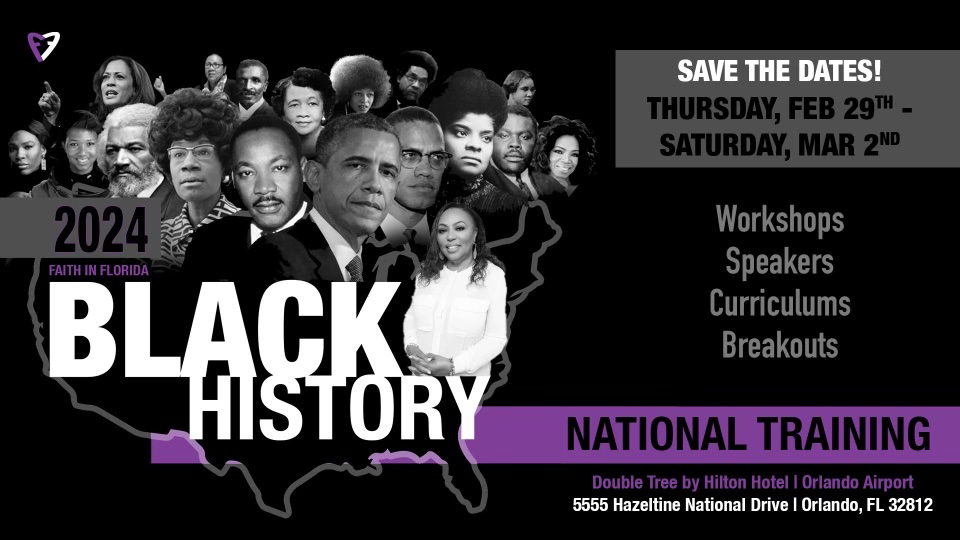
Starting Thursday (Feb. 29), leaders of Faith in Florida, who last year created an online toolkit for churches wanting to teach Black history, will meet in Orlando for a training session with Florida educators and others to share how they have used it.

In the same week, Black Baptist clergy, scholars and curriculum publishers organized by the Florida General Baptist Convention will meet at a church in Tallahassee for a symposium called “Teaching Our Own History.” The participants intend to review a curriculum outline they hope will be used in schools and churches across the state.

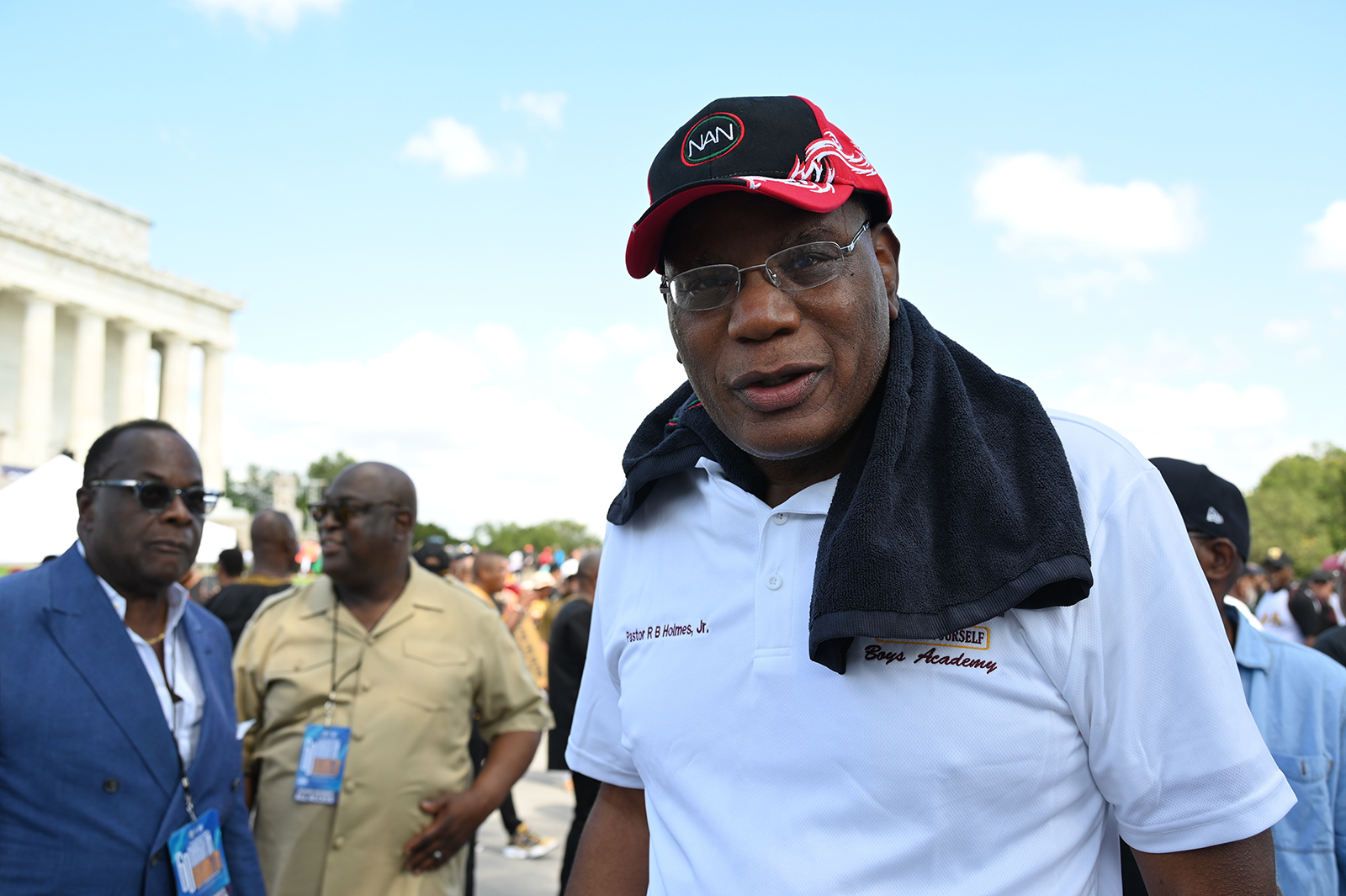
“Our march is not for a moment but it’s for a movement,” said the Rev. R.B. Holmes Jr., pastor of Tallahassee’s Bethel Missionary Baptist Church and host of the two-day symposium set to begin on Monday.

The developments come after state social studies authorities suggested that lessons about slavery in America could include “how slaves developed skills which, in some instances, could be applied for their personal benefit.”

The Rev. R. B. Holmes Jr. attends the 60th anniversary of the March on Washington at the Lincoln Memorial in Washington, D.C., on Aug. 26, 2023. RNS photo by Jack Jenkins.

The Rev. R.B. Holmes Jr. attends the 60th anniversary of the March on Washington at the Lincoln Memorial in Washington, D.C., on Aug. 26, 2023. (RNS photo/Jack Jenkins)

Holmes said in an interview that Baptist leaders plan to present their model for teaching African and African American history as an alternative to the “hurtful” state curriculum and will share details of it with state government officials at the conclusion of the symposium.

“We will present to the governor of Florida, the Commissioner of Education and the Board of Education a factual, accurate and correct teaching of African American history in our public schools,” Holmes said in a statement. “An enslaved people didn’t derive any benefits from slavery; slavery was brutal, treacherous, sinful and unscrupulous.”


RELATEDFlorida faith leader: Black history toolkit gains interest outside the state


The Rev. Carl Johnson, president of the Florida General Baptist Convention, said the new curriculum guide will be available statewide starting in 2025 and he hopes other Baptist state conventions affiliated with the National Baptist Convention, USA, will follow its model.

“Our primary goal is to dispel any myth that’s not accurate about our history,” he said in an interview. “We’re crafting information to correct those misnomers.”

Leaders of the “Teaching Our Own History” task force said more than 50 churches and organizations have committed to using the curriculum guide at “freedom schools” organized to teach Black history, following a model created during the Civil Rights Movement of the 1950s and ’60s that provided academic enrichment and trained students about social change.

The 2023 Florida education statutes allow public school teachers to discuss “the development of slavery, the passage to America, the enslavement experience, abolition, and the history and contributions of Americans of the African diaspora to society.” But they say instruction “may not be used to indoctrinate or persuade students to a particular point of view inconsistent with … the state academic standards.”

Flyer for the Faith in Florida Black History training sessions. (Image courtesy Faith in Florida)

Flyer for the Faith in Florida Black History training sessions. (Image courtesy Faith in Florida)

Dana Thompson Dorsey, an associate professor of education law at the University of South Florida who chairs the Baptist leaders’ curriculum committee, said the outline includes Black inventors such as Garrett Morgan, who created the yellow caution light in the traffic signal, and Otis Boykin, who created a crucial component of the pacemaker.

“We’re trying to just make it easier and less stressful for teachers to teach information that they can include in every course that they teach even if they are not a history teacher,” Thompson Dorsey said.

“It may include inventors, or it may include different calculations or something that has been created by Black mathematicians,” she said.

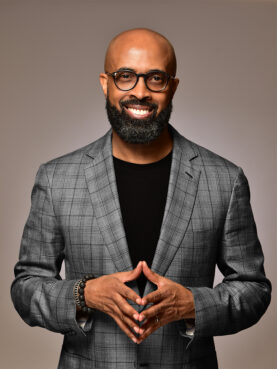
The Rev. Frederick D. Haynes III, president of the Rainbow/PUSH Coalition, is scheduled to preach at a “Save Our History” revival during the evenings of the Tallahassee symposium.

The Rev. Frederick D. Haynes III. (Courtesy photo)

The Rev. Frederick D. Haynes III. (Courtesy photo)

“I’m so proud of my colleagues in the state of Florida who have decided to take this situation into their own hands and actually do something about it,” he said in an interview, adding that he hopes their work could be replicated by others across the country.

“There is a real concern that there are some in this nation who are determined to make us just blind to a rich history that is a part of American history. And it does us no good when we turn our backs on a rich history that really needs to be shared and told,” he said.

Faith in Florida, a consortium of Florida leaders, is working to advance Black history, particularly through churches. In May of 2023, the multiracial and multifaith coalition of congregations launched an online toolkit to encourage Florida churches to teach Black history.

As of October, leaders of more than 300 congregations — mostly pastors of Black churches — from 22 states had pledged to join in the cause. That number has grown to more than 400 congregations in Florida and 28 other states and includes leaders from predominantly white and Muslim communities.


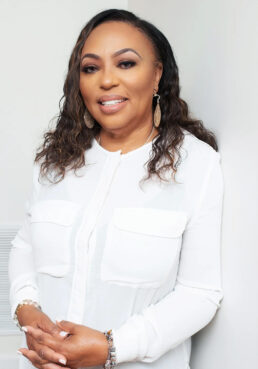
“People across the state and across the country want to know: How do we do more? How do we escalate this teaching?” said the Rev. Rhonda Thomas, executive director of Faith in Florida.

“What’s so important for us, and this convening, is making sure that we continue to teach history in its richness, in its fullness, teach it in ways that even educators wouldn’t be able to teach, because we don’t have a restriction in the church,” she said.

Both of the training sessions — the first in Tallahassee and the second in Orlando — will include curriculum companies whose products could enhance Black history instruction, organizers said.

The Rev. Rhonda Thomas. (Photo courtesy Faith in Florida)

The Rev. Rhonda Thomas. (Photo courtesy Faith in Florida)

Thomas said Holmes and his team have her organization’s support. The Florida General Baptist Convention is a partner of Faith in Florida, and some of the churches involved in the Tallahassee symposium are active members of her organization.

“We definitely do not look at it as a competitive thing, but we see how it’s going to take all of us to work together as one to make sure that Black history is taught in its fullness, in a way that it’s not diluted,” she said.

Ahead of the upcoming meetings, Thomas said she has already noticed the difference the church-based focus on Black history has made in some of Florida’s congregations.


“We have seen across the state how teaching Black history has become its own identity,” she said, “and now some of our Black history classes are larger than our Sunday school classes.”

Friday, February 09, 2024

UK
Linda Bellos: A Trailblazer in Activism, Equality, and Black History


Written by Ian Thomas
07/02/2024


Linda Bellos OBE, a figure synonymous with advocacy, equality, and change, has been a dynamic force in British political and social activism since the 1980s. Her contributions to LGBTQ+ rights, racial equality, feminism, and notably, Black History Month, have left an indelible mark on the UK’s landscape of social justice.

Linda Bellos was born in London in 1950 to a white Polish Jewish mother, Renee Sackman, and a Nigerian Yoruba father, Emmanuel Adebowale, who hailed from Uzebba and had joined the merchant navy during the Second World War. Her mother was disowned by her family for marrying an African Christian, a testament to the interracial and intercultural barriers Linda’s parents broke through. Raised in Brixton, Linda’s upbringing in a diverse and multicultural environment deeply influenced her perspectives on race, identity, and social justice.

Linda’s education journey reflects her diverse interests and intellect. She attended Silverthorne Girls’ Secondary Modern School and Dick Sheppard Comprehensive School, laying the groundwork for her later academic pursuits. She furthered her education at the University of Sussex from 1978 to 1981, a period that honed her critical thinking skills and solidified her commitment to social justice issues.

Political Beginnings and Leadership

Linda’s foray into politics was marked by her election to Lambeth Borough Council in 1986, where she made history as the first Black woman to hold the position of leader. Her tenure was characterised by her staunch defence of minority rights and her efforts to address social inequalities at a local level. Linda was not just a political leader; she was a visionary who sought to embed equality and diversity in the fabric of Lambeth’s policies and practices.

Advocacy for LGBTQ+ Rights

As an openly lesbian woman, Linda has been a fervent advocate for LGBTQ+ rights. Her activism is personal as well as political, bringing visibility to LGBTQ+ issues at a time when doing so was met with significant resistance and hostility. Through her work, Linda has fought for greater acceptance and rights for LGBTQ+ individuals, championing the cause in various capacities, including her influential role in shaping and advocating for progressive legislation.

Contribution to Racial Equality and Black History Month

Linda’s commitment to racial equality has been unwavering. Her involvement in the establishment and promotion of Black History Month in the UK is a testament to her dedication to celebrating the contributions and achievements of Black Britons. Linda’s work has included challenging institutional racism, promoting diversity in the workplace, and ensuring that Black history is recognised and honoured. Her leadership in the Black section of the Labour Party and her involvement in numerous anti-racism campaigns have underscored her dedication to achieving racial justice. By highlighting the importance of Black History Month, Linda has played a crucial role in educating the public and fostering a greater appreciation for the diverse tapestry of British history.

Feminism and Equality

A feminist through and through, Linda has worked tirelessly to elevate women’s issues and combat gender-based discrimination. Her feminism is intersectional, recognising the complex ways in which race, gender, sexuality, and class intersect to shape experiences of oppression and privilege. Her activism has contributed to significant discussions and developments in feminist theory and practice, particularly in highlighting the experiences of Black women and other marginalised groups.

Legacy and Ongoing Work

Linda’s legacy is a testament to her life’s work as an activist, leader, and advocate for social justice. Her contributions have been recognised with several honours, including an OBE for her services to diversity. Even in recent years, she continues to speak out on issues of equality and justice, participating in public debates, educational forums, and advocacy campaigns.

Her voice remains as vital and necessary today as it was when she first began her journey in activism. Linda Bellos’s story is not just one of personal achievement but a reminder of the ongoing struggle for equality and the impact one individual can have on the course of history.

Linda Bellos’s remarkable journey from a young woman confronting the injustices she saw in the world to a respected leader in the fight for equality demonstrates the power of resilience, courage, and conviction. Her multifaceted activism, especially her work on Black History Month, has paved the way for future generations to continue the fight for a fairer and more just society. As we reflect on her contributions, it becomes clear that Linda is not just a figure of the past but a continuing inspiration for those committed to the cause of equality and justice.

The History of Black History Month


This year in October we celebrate the 30th anniversary of Black History Month in the UK. And in doing so we recognise that it was first celebrated in 1987, eighteen months after the abolition of the Greater London Council, the GLC.


Written by Linda Bellos OBE
11/08/2017


I say this because I have heard some recent claims that Black History Month was initiated by Ken Livingstone whilst he was Leader of the GLC. I know it was not because I was one of the Leaders on the 15 Local Authorities which formed the body that took over the radical bits of the GLC after Margaret Thatcher’s Government after its abolition. The London Strategic Policy Unit (LSPU) recruited and employed hundreds of the staff that worked in the Ethnic Minority Unit, the Women’s Committee Support Unit and others of the progress GLC that Thatcher hated.

It was a difficult and demanding job to find ways of carrying on the progressive equalities work of the GLC but in the months leading up to abolition (31.3.1986) I and my fellow progressive Council Leaders across London did manage it just in time. I recall one of the most pressing issues was finding a building to house the LSPU but we did manage it. There was a particular irony for me because I was both a Councillor in Lambeth and an Officer working in the GLC and in the May of 1986 I was elected Leader of Lambeth Council and was soon sacked by Sir Tag Taylor whilst I worked for the successor body the London Residual Body(LRB) which took over the rundown of the GLC ‘s business after abolition.

I cannot recall exactly when Ansell Wong, the Head of the Ethnic Minority Unit (EMU) came to me with the idea of initiating Black History Month in the UK but I jumped at the idea. I had long argued for the inclusion of our struggles and triumphs in Britain having been a critic of the constant erasure of our people from British history. By then I was aware of people like Mary Seacole, from my days at Spare Rib where we did include story of her struggles uncovered by Elizabeth Onuwamu. I was very aware of how little Black children knew about the positive achievements of Black peoples, especially as my role as a Councillor in Lambeth made be very aware of how little positive support Black children were receiving whilst in so-called ‘Council Care’ . It was at this point that as Leader I insisted that the informal policy of Same Race Placement was made official.

So, having agreed the initiation of Black History Month I agreed that we would try to get Sally Mugabe to be a Guest of Honour and that we would use a large (and somewhat expensive) venue of the Commonwealth Institute. The nearest dates that fitted our Guest and the venue availability was October 1987. Hence Black History Month was held in October each year in contrast to being in February in the USA. Ironically when later Sue Sanders was considering running a similar initiative for the LGBT community she sought my advice (and approval) and I suggested that she ensure more control over what was done in the name of LGBT history Month than we had for Black History Month, I think it was me the suggested holding the event in February so that the UK and USA reversed the events.

By October 1988 we knew that we could no longer afford to keep the LSPU going Margaret Thatcher had won her third Election Victory in 1987. Sixteen of the Labour run Councils in London had been each contributing £1million so we agreed that we would close the LSPU but would absorb the staff across our various Councils. It was complicated but we did manage to do so for everyone who wanted to stay in Local Government. This was not however the end of Black History Month, because the duty under Section 71 of the Race Relations Act 1976 allowed us to promote good race relations etc. and those progressive Councils which had supported the LSPU tended to take that duty seriously, hence a series of Black History Month events across parts of London. Over the years they have been many and varied and some frankly have been awful. If I were in the same position again to start Black History Month I would call it African History Month not black or at the very least I would insist that Black had a capital letter and I think a steering group should propose an annual theme rather than letting anarchy and racism occur inadvertently due to lack of knowledge or just plain ignorance. I have been heard about what has happened in some schools across the UK that pick on the one or two African Heritage children and make them ‘perform’. Black History Month has been largely successful but it could be more so.

Linda Bellos is a former leader of Lambeth Council and a gay rights activist. She now runs a diversity consultancy. Linda was awarded an OBE in 2006 for services to diversity

Sunday, February 23, 2020

Schools should teach black history like history. Because it is.
During Black History Month, students around the state learn about famous African-Americans, and historical facts about black Americans. 

Nancy Kaffer, Detroit Free Press 
© Don Campbell, AP ReUnna Dawson, 9, center, joins students from
 River of Life Christian School, as they play with scarves and drums
 during an African dance Wednesday, Feb. 12, 2020, at the African 
American History & Literature Gallery in Benton Harbor, Mich. Students 
visited the gallery to learn about African American history as part of 
Black History Month.(Don Campbell/The Herald-Palladium via AP) 
THIS IS A RELIGIOUS CHARTER SCHOOL


But that's not enough.

That's something I'm hearing from parents whose children attend suburban schools, and from parents whose kids attend majority African-American city schools.

Michigan Radio reporter Bryce Huffman, host of the podcast "Same Same Different," is hosting panels around the state to talk about black history, what it means for black kids when it's taught as an elective, a nice-to-have, not a need-to-know. I talked to Huffman about why it's important to do better at teaching black history, for all of us.

Huffman will host a panel this Sunday be at Spread Art in Detroit, at 6 p.m.

Nancy Kaffer: You talk about the "book report” model of black history: Students dress up like important historical figures or share history facts. I haven't done a survey, but that seems be the most popular model for schools to check the Black History Month box.

Bryce Huffman: I went to a Catholic school, and every day in homeroom, we would insert black history facts. As a seventh grader, I loved it, because I'm in this predominantly white school where I don't fit in at all, and it just seemed like oh, wow, everyone in the school is hearing these black history facts. By the time I got to 10th grade, I wondered, "Well, why don't we just talk about these things in our U.S. history class? Why don't we just talk about these things in our English class?"

Then you hear horror stories … like the high school teacher who proposed to show movies like "Boyz n the Hood" as part of an African-American history curriculum.

“We're going to show them 'Boys n the Hood' and 'South Central' and we'll call it a day!”
© DON CAMPBELL, AP Aubree Windmon, 8, right and Taylor Washington
, 9, back, play the drums with students from River of Life Christian School 
during an African dance Wednesday, Feb. 12, 2020, at the African American
 History & Literature Gallery in Benton Harbor, Mich. Students visited the
 gallery to learn about African American history as part of Black History Month.
Don Campbell/The Herald-Palladium via AP

So how should schools should be doing this right?

I think the easiest thing schools can do — I want to phrase it that way, because anytime we talk about changes in education, teachers and educators say, "Great, one more thing on this loaded list of things to do" — is to just acknowledge black people's contributions to the lessons you're teaching. Especially if you're in a predominantly black school, whatever lesson you're teaching, whether it's science, math, history or physics, you should be introducing those students to the idea that people who look like you have already done this, so you can do it, too.

And when we don't do that, leaving African-Americans out of the picture . . .

I got this quote from my friend Ebonee West: When you don't teach black kids that black people have contributed to this country, and you don't teach them that people who look like them have done these great, amazing things, you're sending those kids to the potluck empty-handed. My white friends in seventh and eighth grade never had a question about white people's accomplishments in science and technology. … the analogy of coming to this meal empty-handed is the best way to think about it. You're not coming with a sense of pride and who you and your people are.

In my high school, we covered slavery, and we the economy of the south at the time of the Civil War, but there was never a line drawn between them.

There's not that through-line connecting all of the atrocities of slavery to the civil rights movement, and what leaders were fighting for.

We learned about slavery in my predominantly black elementary school in a really raw way. We learned about how terrible it was. What we didn't necessarily learn was that economic trajectory from slavery. I think we kind of had it in the back of our heads that as black kids growing up in Detroit, we could see things around us and make little connections, but we just didn't have that sophisticated understanding that these things are still going on, and still shaping the future of many African Americans and many white Americans, to be quite frank . . .

I was a kid learning about a lot of this stuff thinking, "Wow, these white people were so mean to Dr. King and Rosa Parks all this long time ago," not realizing that was happening in my parents' lifetime. When we put distance between the atrocities of slavery and our current state, we're telling people, it's not that big a deal anymore. We need to help kids understand just how recent some of these things are, and how ongoing a lot of it is.

You've probably noticed that a lot of times white people feel very awkward talking about race. But it seems like the only way to not be awkward is to talk about it a lot more.

What happens in a lot of schools is they put it off until February, so schools are disrupting the flow that the students already have. They're bringing up this often-painful subject that stirs up a lot of different feelings in black people, and it comes off as this forced attempt to have some sort of conversation about racial reconciliation, or racial healing or whatever it might be. And it never really turns into that, because once March 1 rolls around, those conversations end.

If you had it built in from the beginning . . . well, it might still be a little awkward. But if you just have these conversations from the start, and you treat black history as American history, as just as important as George Washington and Abraham Lincoln, then you you can avoid a lot of that awkwardness later down the road.

Nancy Kaffer is a Free Press columnist. Contact: nkaffer@freepress.com.

This article originally appeared on Detroit Free Press: Schools should teach black history like history. Because it is.

Tuesday, June 30, 2020

Education
Black history is ‘integral part’ of British culture, says Black Curriculum founder

What do students learn in the classroom about race and history? 


In the UK, an organization called The Black Curriculum has been pushing for Black history to be taught nationwide. June 24, 2020 ·By Amanda McGowan


A teacher reads children a story on the grounds of St. Dunstan's College junior school as some schools reopen following the outbreak of the coronavirus disease (COVID-19) in London, Britain, June 1, 2020. Credit: Simon Dawson/Reuters

Last Friday, the US celebrated Juneteenth — the day in 1865 when the news that slavery had ended finally reached Texas, over two years after the Emancipation Proclamation was issued.

Many Americans probably did not learn the history of June 19 in school. But the protests that came together after George Floyd's killing in Minneapolis have brought attention to the way racism impacts every aspect of society — including what students learn in the classroom about race and history.

This reexamination isn’t just happening in the US. In the UK, an organization called The Black Curriculum has been pushing for Black history to be taught nationwide, as well as creating lesson plans and leading student workshops and teacher trainings.

Related: This African American in Ghana says making Juneteenth a federal holiday is a ‘small gesture.’ She urges police reform.

“In schools currently, the teaching of Black history is limited to Black History Month, which in the UK is in October,” said Lavinya Stennett, founder of The Black Curriculum.

theblackcurriculum's profile picture

Our IGTV series, ‘Black British Women’ told the story of four inspirational women in Britain.
1. Olive Morris (top left) was a political activist, born in 1952 in Jamaica. Morris was an organisational and fighter against racism and sexism in the UK.
2. Lilian Bader (top right) was one of the first black women to join the British armed forces and was a Leading Aircraft-woman with the WAAF during WW2.
3. Mary Seacole (bottom left) was a nurse who greatly helped soldiers during the Crimean War.
4. Fanny Eaton (bottom right) is best known for her work as a model for the Pre-Raphaelite Brotherhood between 1859-1867.
Did you enjoy our IGTV series? We now have a range of packages including podcasts, activities and animations available on our website! Visit www.theblackcurriculum.com/resources for more info

“What we see is a lack of narratives around Black people in Britain. That fundamentally is presenting a very false view of British history because we know Black people have been here since Roman times."Lavinya Stennett, founder, The Black Curriculum

“What we see is a lack of narratives around Black people in Britain. That fundamentally is presenting a very false view of British history because we know Black people have been here since Roman times,” she continued.

The Black Curriculum has created lessons around a number of topics in Black history, including arts and culture, migration, law and the environment.

Stennett says some of those were inspired by things she learned from her own culture but were never discussed in a school setting. She points to the Notting Hill Carnival, one of the largest street parties in Europe, which was created by a Black woman named Claudia Jones who was born in Trinidad and Tobago.

“I’m from a Jamaican background, and every year we have Notting Hill Carnival, and at home, we would play reggae music. So there were certain introductions in my personal life that I knew, in terms of my history and where it came from, but in terms of learning it at school there was no kind of introduction to that at all,” Stennett said. “That’s what our syllabus is about: It’s about bridging history with contemporary themes today.”

Related: Police reform requires culture change, not just diversity, advocates say

Stennett says learning this history in the classroom not only empowers students but also makes them excited to learn.

“When you’re confronted with new knowledge it can make you uncomfortable. But at the same time if you’re learning about your own identity and your own culture, it’s really powerful."Lavinya Stennett, founder, The Black Curriculum

“When you’re confronted with new knowledge it can make you uncomfortable. But at the same time if you’re learning about your own identity and your own culture, it’s really powerful,” she said.

Part of The Black Curriculum’s work recently has been to campaign for Black British history to be a nationwide requirement in schools. But Stennett says the organization received a response from the government Tuesday arguing that the national curriculum already provides teachers with the flexibility to teach Black history if they wish.

Stennett said the response was disappointing, but that The Black Curriculum’s work would continue.

“It just takes us back to why we’re doing what we’re doing,” Stennett said. “It’s really important that Black history’s not seen as an addition, but as an integral part of our culture. It’s British history. It’s not just for Black people and it’s not just about Black people. It’s about the nation and the future of Britain as well.”


Saturday, February 12, 2022

Black History Month should be time for celebration, reflection: organizers

Black History Month doesn’t have to be just a time to reflect upon trailblazers who paid the ultimate sacrifice in the fight for racial justice and equity, it should be a time to celebrate people young and old who are still fighting the fight and achieving significant milestones, according to Phiona Durrant, founder of the Aurora Black Community (ABC) Association.

This was a message Ms. Durrant delivered alongside colleagues from the Aurora Black Caucus and the Town’s Anti-Black Racism and Anti-Racism Task Force at Town Hall last Tuesday to mark the start of Black History Month and the raising of the Pan-African flag outside the municipal offices.

“We know there is oppression involved [in Black History] but that does not define who we are,” she said. “Black is awesome, Black is beautiful, courageous, intelligent. We are authors, presidents, teachers, lawyers, house cleaners (and I love to clean a good house!), we’re everything! So, today, when we celebrate Black History month, I hope you don’t remember just the ones who were killed; just remember we’re excellent [and] we’re filled with potential.

“No matter what you’re fighting for, someone is going to stand against it. ‘What’s the difference between raising this flag and everything else? What will change? The flag will be raised, everybody will get their photos, and we will go back to our beds, roll over, and nothing happens.’ I am telling you what will change. What will change is you finding the courage to speak up. I don’t care if you’re White – don’t tell me you’re White so you can’t speak – this flag is not just raised for Black people. Jean Augustine (the first Black Canadian woman to serve in Federal Cabinet) says, ‘Black history is Canadian history, not only Black people.’ When you make excuses, for your colour, for why you don’t speak and show up, I forgive you.”

Dozens of people from all different backgrounds attended last week’s ceremony, including MP Leah Taylor Roy, MPP Michael Parsa, Mayor Tom Mrakas, and Councillors Wendy Gaertner, John Gallo, Rachel Gilliland, Sandra Humfryes, Harold Kim, and Michael Thompson.

Taking her chance to speak up, Taylor Roy said that as proud as Canadians are of their history, “there are things about our history we’re not as proud of.”

“I think acknowledging that and moving forward to make sure that those things don’t happen again, that we really fight hard to ensure there is no more discrimination, that we all work together, and that those of us who are allies realize that the work that has to be done is not for the Black community alone – it is for all of us,” she said.

Added Parsa: “All forms of racial injustice and inequality should never be tolerated anywhere. This should be the focus of not just the month of February but every single day of the year. I encourage all of you to reflect and learn about the contributions Black Ontarians have and continue to have in our Province. We must all find ways to contribute and make our communities free from racism, inequality and discrimination.”

Stories of contributions made by everyday Black Ontarians were shared by Mark Lewis, Chair of the Town’s Anti-Black Racism and Anti-Racism Task Force. He shared poignant stories of the pioneers in his own family, including his educator father, mother, and grandfather.

“Black History Month is a time to reflect upon and celebrate the accomplishments of our ancestors,” said Lewis. “While we push forward and build upon their legacy, it is important to recognize not only the pioneers in our struggles to achieve equality in society but our hometown heroes.”

His grandfather was a teacher and principal in The Grenadines prior to coming to Canada. His father followed in his footsteps as a high school teacher after achieving his Engineering degree from McGill University.

“An engineering degree from McGill carries a lot of clout in this country, but for a Black man in the sixties, it did not guarantee employability due to racism,” he shared. “It was at this point my dad followed in their footsteps and taught in the North York Board of Education for two years before going back to school to earn a Masters Degree in Education from Queen’s University.

“His hard work, coupled with the drive of my hard-working mother, who was a middle school English teacher and librarian in East York, one of the most diverse and low-income neighbourhoods in the GTA – their work afforded my sister and I the privilege of growing up in Markham in the 80s, a town at the time not unlike Aurora, about to experience exponential growth and struggle.

“I am proud to be an Aurora resident. I am also proud of the struggles of my parents that shaped my development. It is important for us to take time and reflect upon the legacies of our forefathers and mothers. As Nelson Mandela once elegantly stated, ‘The history of struggle is rich with the stories of heroes and heroines. Some of them leaders, some of them followers, all of them deserve to be remembered.’”

For Milton Hart, head of the Aurora Black Caucus, these leaders include Durrant as well as Jerisha Grant-Hall, Chair of the Newmarket African Caribbean Canadian Association.

“These women are doing a fantastic job and will go down as part of Canadian history,” said Hart. “It should be Black History Year. It should also be a situation where Black history is woven into our curriculum. It should be woven into every facet of our media. There is a very simple truth I want to convey here: Black history is indeed Canadian history. Yes, we can talk about racism. We should indeed talk about the atrocities of the past. But we cannot forget Viola Desmond. We should talk about societal ills, but we can’t forget about someone like Garrett Morgan, whose work gave us the three-light stoplight. We can talk about the atrocities of the past, but we should never forget Lewis Latimer, whose work gave us the electric bulb.

“I’m here because some folks, White, Black, people from every race decided not to settle. I am here because people from ever race decided to stand up so that I could run. They decided to sit so I could move around. Let’s learn from Black history in order to bring honour to the stalwarts on whose shoulders we stand on. Indeed, we stand on the shoulders of giants. Indeed, we stand on the shoulders of people who just wouldn’t settle, people who resisted. Every single civil rights movement that we have come to know only gained traction because people from every single race decided to stand up.”

Brock Weir, Local Journalism Initiative Reporter, The Auroran

SEE