Showing posts sorted by relevance for query LOCUSTS. Sort by date Show all posts

Thursday, May 28, 2020


India faces its worst locust swarm in nearly 30 years

The pests have destroyed over 50,000 hectares of cropland, putting further strain on the food supply in India as authorities battle to contain the coronavirus.
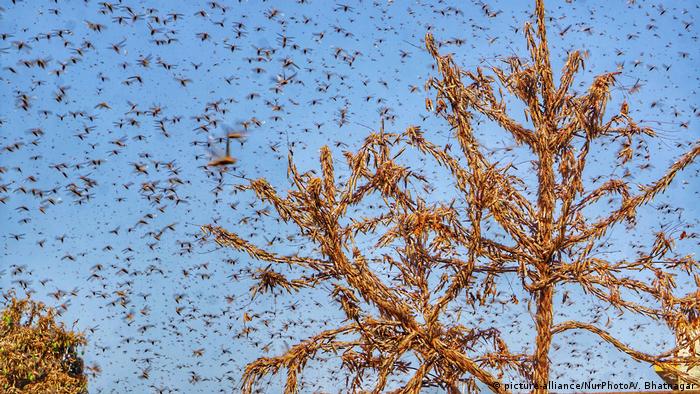


On Tuesday, Indian authorities sent out drones and tractors to track desert locusts and spray them with insecticides, in one of the worst locust swarms seen by the country in nearly 30 years. With about 50,000 hectares of cropland destroyed by locusts, India is facing its worst food shortages since 1993.

"Eight to 10 swarms, each measuring around a square kilometer, are active in parts of Rajasthan and Madhya Pradesh," K.L. Gurjar, the deputy director of India's Locust Warning Organization, told news agency AFP. The locusts have also made their way to other states of India including Maharashtra and Uttar Pradesh.

On Monday, a swarm of locusts infested the city of Jaipur in Rajasthan, after traveling into India from Pakistan. Gurjar warned that the locusts could move towards the capital city of Delhi if wind speed and direction was favorable.
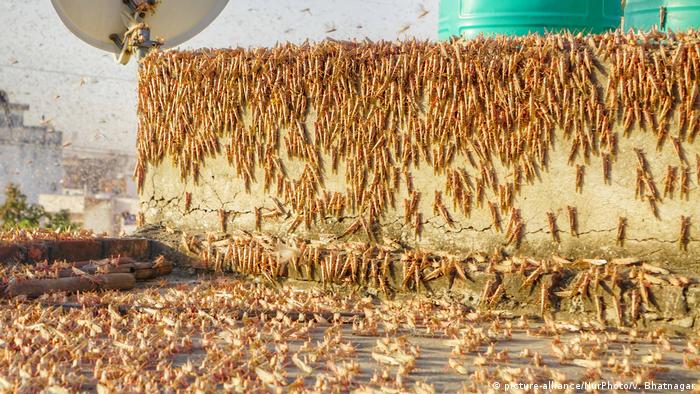

More than half of the 33 districts in Rajasthan were affected by the locusts

Why a locust swarm is alarming

According to the Food and Agricultural Organization (FAO) desert locusts typically attack the western part of India and some parts of the state of Gujarat from June to November. However, the Ministry of Agriculture's Locust Warning Organization spotted them in India as early as April this year.

A swarm of 40 million locusts can eat as much food as 35,000 humans, according to FAO estimates. The current swarm has destroyed seasonal crops in the states of Rajasthan and Madhya Pradesh. This will lead to lower production than usual and a rise in prices of foodstuff.

An agrarian crisis and subsequent food inflation will severely impede India's response to the coronavirus pandemic. Thousands of migrant workers have died from hunger after India suddenly imposed a nationwide lockdown to contain the spread of the coronavirus, leaving workers penniless. An agrarian crisis because of a locust swarm will further hamper relief efforts of the government.

Heavy rains and cyclones in the Indian Ocean are being cited by experts as reasons for increased breeding of locusts this year. The attack is also spread over a wider geography in India. The FAO has warned that the locust infestation will increase next month, when locusts breeding in East Africa reach India.

Other parts of the world affected by locusts

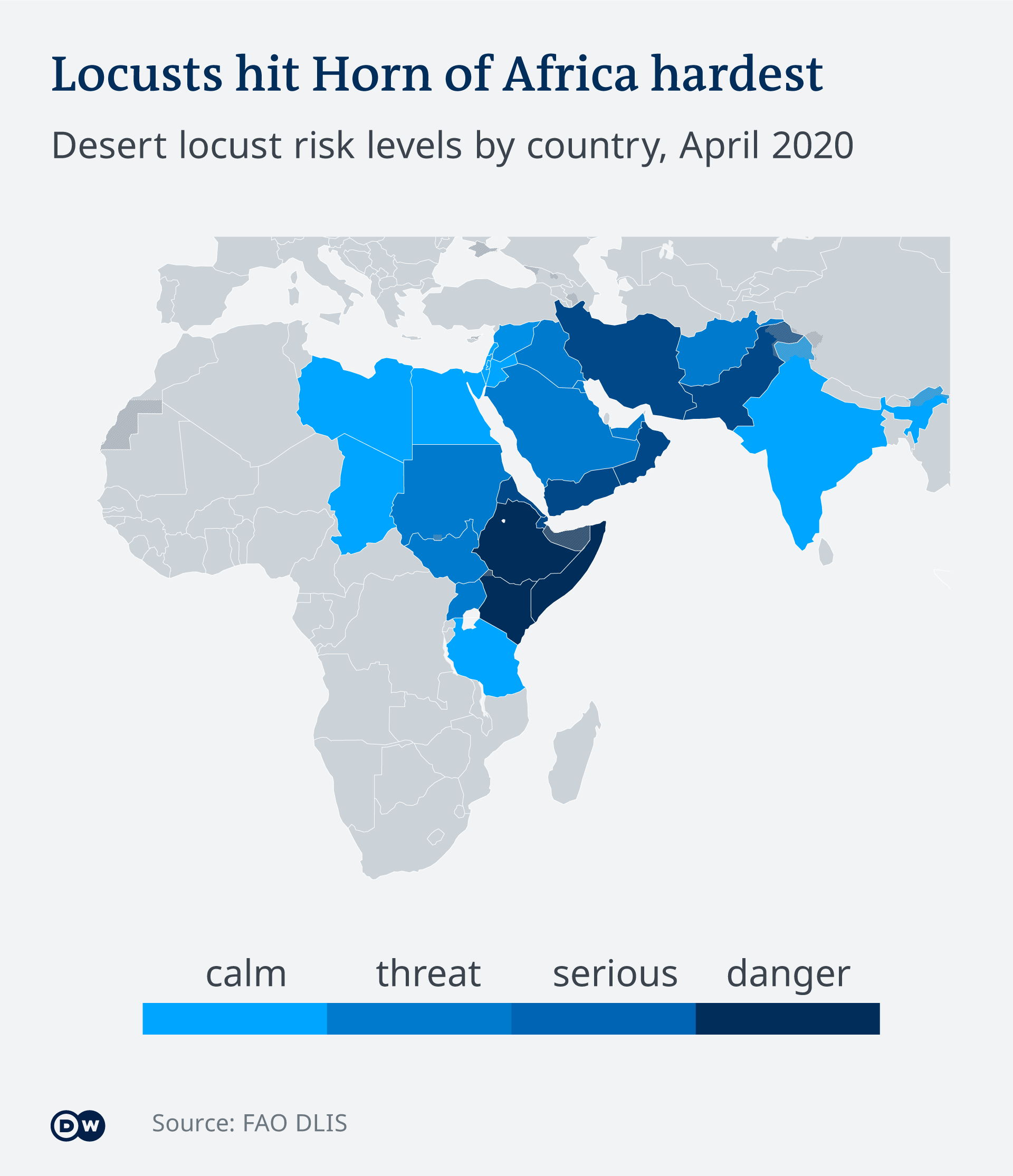
India isn't the only country attacked by a huge swarm of locusts this year. Pakistan,countries in East Africa, and Yemen have also faced the desert pests and their destruction. In February, Pakistan declared a national emergency because of locust attacks in the eastern part of the country. The pests damaged cotton, wheat, maize and other crops.

Earlier this month, the FAO said that it had made a headway in dealing with the locust invasion by saving 720,000 tons of cereal in 10 countries


Date 27.05.2020

Related Subjects India

Keywords India, locusts, crops, famine

Permalink https://p.dw.com/p/3coS


Historic swarm of locusts descends upon India, destroying cropsMay 27 (UPI) -- India is experiencing a historic swarm of locusts as the country also deals with the COVID-19 pandemic and sweltering heat.

Swarms of desert locusts have descended upon portions of the states of Rajasthan, Gujarat, Maharashtra, Madhya, Pradesh, Punjab and Uttar Pradesh, while alerts were issued in the capital city of Delhi warning the insects could soon arrive there.

India's Locust Warning Organization has said at least 10 swarms of up to 80 million locusts have made their way through India, destroying crops.

The organization said locust infestation is the worst the country has ever seen, coming before their usual migration from Pakistan between July and October and extending far beyond Rajasthan, where they have historically been centralized

Experts say that extreme heat in the nation, which has reached highs of 122 degrees, has contributed to the uncommonly large swarm.

"The outbreak started after warm waters in the western Indian Ocean in late 2019 fueled heavy amounts of rains over east Africa and the Arabian Peninsula," Dr. Roxy Mathew Koll, a senior scientist at the Indian Institute of Tropical Meteorology, said. "These warm waters were caused by the phenomenon called the Indian Ocean Dipole -- with warmer than usual waters to its west and cooler waters to its east. Rising temperatures due to global warming amplified the dipole and made the western Indian Ocean particularly warm."

The swarms have destroyed about 123,500 acres of cropland in the Rajasthan and Madhya Pradesh state.

States, including Jaipur, have deployed drones to spray locusts in order to clear the areas of locusts.

"It has successfully contained the movement of locusts in an open area and on the foothills where it was not possible for the usual tractors to make it reach. A detailed assessment of its impact is being studied by the field officers," said Om Prakash, commissioner of the Jaipur state agriculture department.

The drones are attached with spray tanks that can disperse chemicals for 10 minutes before being refilled by a handler.


"The biggest advantage of the drone is that it can fly above the flying zone of the locusts giving the flexibility to the officials to carry out combat operation while they are flying. Earlier, the operations were restricted to when they are resting n a tree or on a crop," Prakesh said


SEE
https://plawiuk.blogspot.com/2020/05/india-wilts-under-heatwave-as.html

https://plawiuk.blogspot.com/2020/05/data-analysis-how-east-africa-is.html


https://plawiuk.blogspot.com/2020/05/covid-19-locusts-and-floods-east.html

Friday, May 05, 2023

Chemical signal protects migratory locusts from cannibalism

Migratory locusts release a toxic substance to fend off their own conspecifics

Peer-Reviewed Publication

MAX PLANCK INSTITUTE FOR CHEMICAL ECOLOGY

Cannibalistic feeding attack 

IMAGE: A MIGRATORY LOCUST LOCUSTA MIGRATORIA EATS A CONSPECIFIC. CANNIBALISM IS CONSIDERED ONE OF THE MAIN DRIVERS OF THE DEVASTATING SWARMING BEHAVIOR OF LOCUSTS. view more 

CREDIT: BENJAMIN FABIAN, MPI FOR CHEMICAL ECOLOGY

Huge swarms of migratory locusts take on the proportions of natural disasters and threaten the food supply of millions of people, especially in Africa and Asia.  As the eighth of the ten biblical plagues, the Book of Moses in the Old Testament already describes how swarms of locusts darkened the sky and ate up everything that grew in the fields and on the trees.  Scientists suspect that cannibalism among locusts contributes to their swarming behavior, and swarms therefore constantly move on because individual animals are always on the run from conspecifics pursuing them. "We wondered how these insects influence each other's behavior within huge swarms, and whether olfaction plays a role. An important basis for us was the research on the formation of locust swarms by Iain Couzin of the Max Planck Institute for Behavioral Biology in Constance," says study leader Bill Hansson, director of the Department of Evolutionary Neuroethology at the Max Planck Institute, explaining the starting point of the study.

Migratory locusts occur in different phases: In the solitary phase, the insects live individually and stay in the area, while in the gregarious phase they exhibit the typical swarming behavior that fits their denomination as migratory locusts. "In most cases, locusts are in the solitary phase, where they avoid physical contact with conspecifics and eat comparatively little food. If the population density increases due to rainfall and sufficient food, the locusts change their behavior within a few hours; they can smell, see, and touch each other. These three types of stimulation increase serotonin and dopamine levels in the locust brain, causing solitary locusts to become aggressive gregarious locusts that are very active and have a large appetite.  They also release aggregation pheromones, which eventually leads to swarming and poses a huge threat to agricultural production. Cannibalism does only occur in the gregarious phase," explains the study's first author Hetan Chang.

Behavioral experiments with the migratory locust Locusta migratoria showed that cannibalism rates increased with the number of gregarious animals that were kept together in a cage. Thus, there is a direct relationship between population density and cannibalistic behavior.  To find out if gregarious locusts emit particular odors that are not produced in the solitary phase, the research team analyzed and compared all odors emitted by solitary and gregarious locust in the juvenile stage. Of the 17 odors produced exclusively in the gregarious phase, only phenylacetonitrile (PAN) turned out to be an odor signal that deterred other locusts in behavioral tests. For further confirmation of PAN's function, the scientists used genetically modified locusts that could no longer produce PAN. "We showed that as population density increased, not only did the level of cannibalism rise, but the animals also produced more PAN. Using genome editing, we were able to knock out an enzyme responsible for the production of this compound. This allowed us to confirm its strong anti-cannibalistic effect, because cannibalism was again significantly increased when the animals were no longer able to produce the compound," says Hetan Chang.

The biggest challenge was finding the olfactory receptor that recognizes PAN. Since locusts have more than 140 olfactory receptor genes, the research team had to clone as many genes as possible and test them one by one. Tests on 49 different olfactory receptors using more than 200 relevant odors eventually led to the identification of the olfactory receptor OR70a as a highly sensitive and specific detector of PAN in the migratory locust Locusta migratoria. Behavioral experiments with genetically modified locusts whose OR70a receptor was no longer functioning again showed a strongly increased cannibalism rate, which is due to the fact that the cannibalism stop signal can no longer be perceived by the locusts without the corresponding receptor.

A pheromone that controls cannibalism is an absolute new discovery. Because cannibalism has a major impact on locust swarm dynamics, a fundamental understanding of the population ecology of these animals, particularly the effect of PAN, opens up new possibilities of locust control. "If you inhibit the production of PAN or the function of the receptor, you could get the locusts to behave more cannibalistically and potentially control themselves in that way," Bill Hansson says.

Tuesday, May 12, 2020

How East Africa is fighting locusts amid coronavirus
DATA ANALYSIS
East Africa is battling its worst locust invasion in decades. Amid the COVID-19 crisis, countries are fighting to stop a new generation of locusts swarms, which could jeopardize food security.


Since 2019, East Africa has been desperately trying to control a devastating desert locust invasion. The long rains that typically fall across the region from March to May this year will probably allow yet another generation of locusts to mature, further threatening crops and livelihoods.

This would be an additional blow to food security in East African countries, which are also facing economic disruption from the coronavirus pandemic response.

Read more: Severe hunger threatens Africa during COVID-19 lockdowns

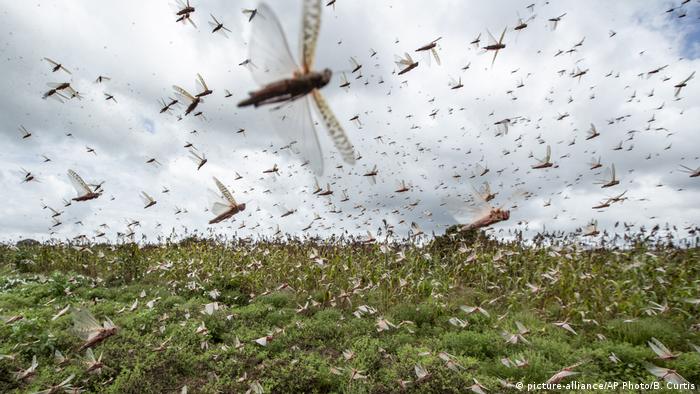
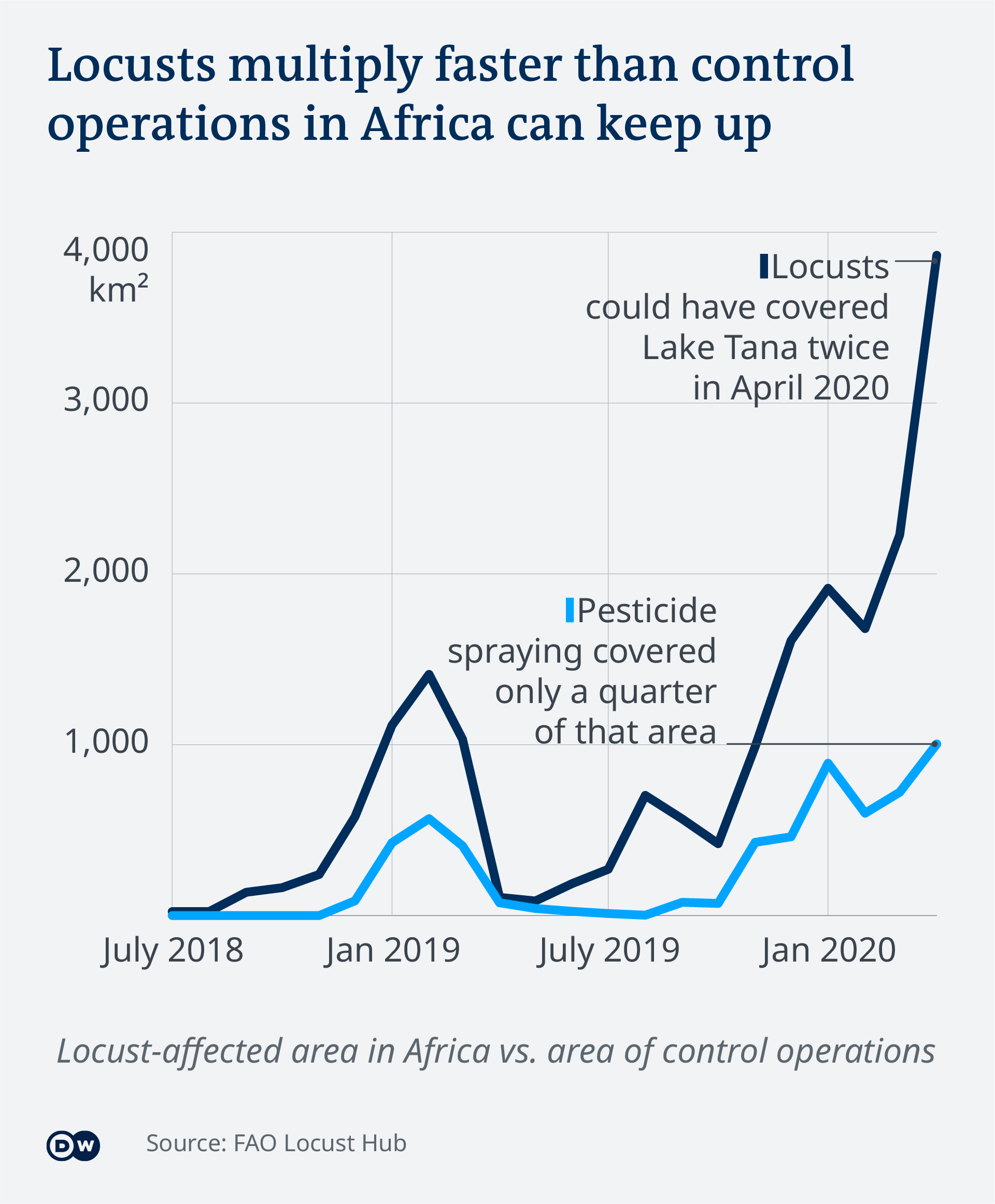
In the region, swarms of desert locusts covered more than 2,000 square km – an area as big at Ethiopia's Lake Tana – in April alone.

Swarms of this size are made up of billions of insects, which can obliterate vegetation, eating more in a day than the combined population of Kenya and Somalia do.

https://www.dw.com/en/locusts-hit-east-africa-during-coronavirus/a-53357078
Watch video


UN sounds alarm as locusts spread in East Africa

Ethiopia and Kenya are currently the worst hit by the locust infestation.

New waves of locusts are forecast for the coming months in Kenya, southern Ethiopia and Somalia as seasonal rains create favorable breeding conditions.


"The next generation of swarms will be around late June or early part of July," says Keith Cressman, senior locust forecasting officer at the UN Food and Agricultural Organization (FAO).

The timing is particularly worrying as this would coincide with the start of the harvest season.

Crops wiped out


Desert locust swarms strip almost all green vegetation from crops and trees over immense areas, leaving behind ravaged fields and pasture lands and putting both farmers and pastoralists at risk of severe food shortages.

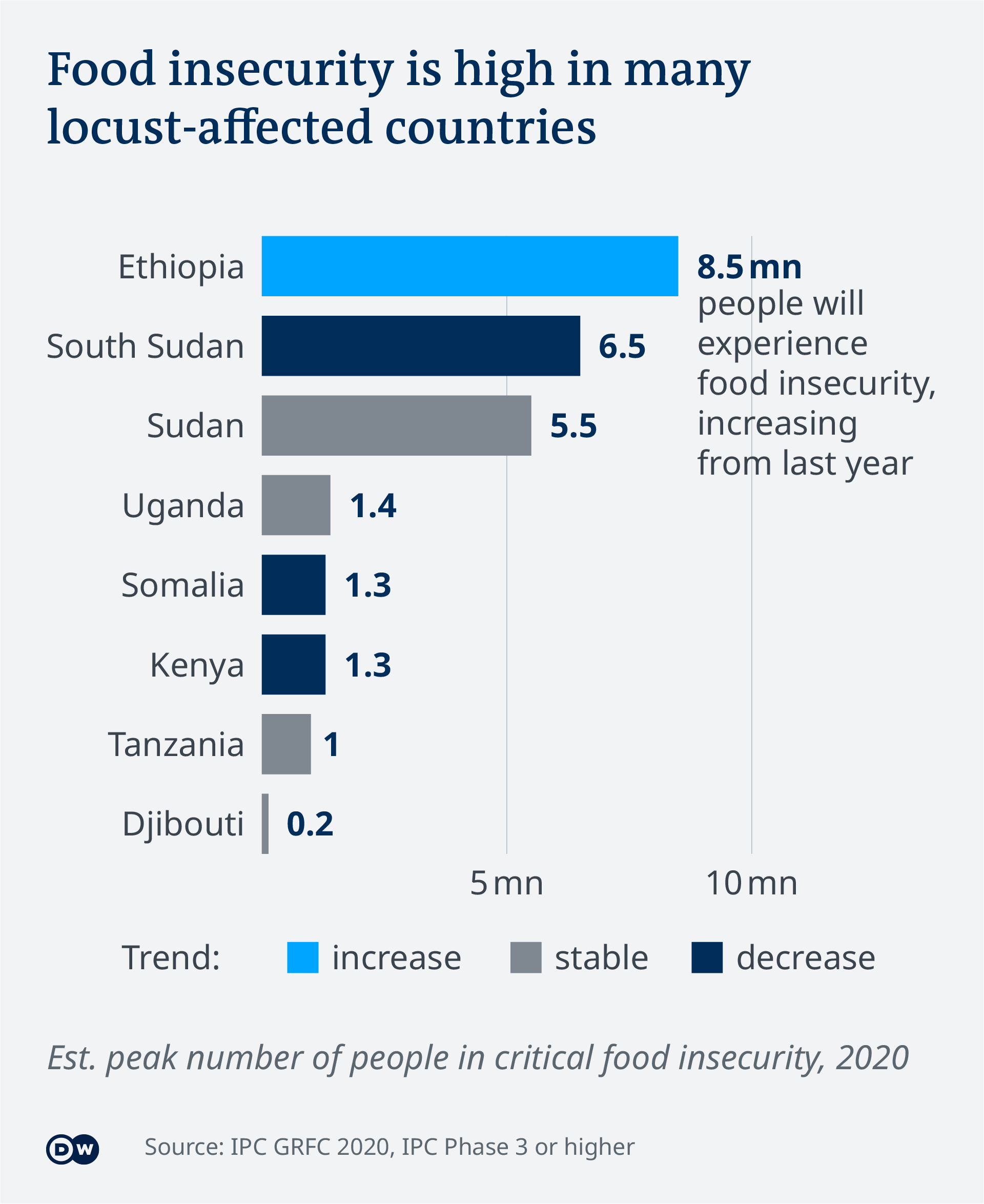
It's predicted more than 25 million people in East Africa will experience food insecurity in 2020 with the locust infestations compounding the situation.


Some farmers lost 90 percent of their crops in the first wave of locust to hit Ethiopia, says Yimer Seid of Ethiopia's South Wollo agricultural department.

"I visited families who have no food in their house. They sold their animals," he says.

Perfect conditions for desert locusts

A disastrous combination of circumstances fueled the current desert locust plague.

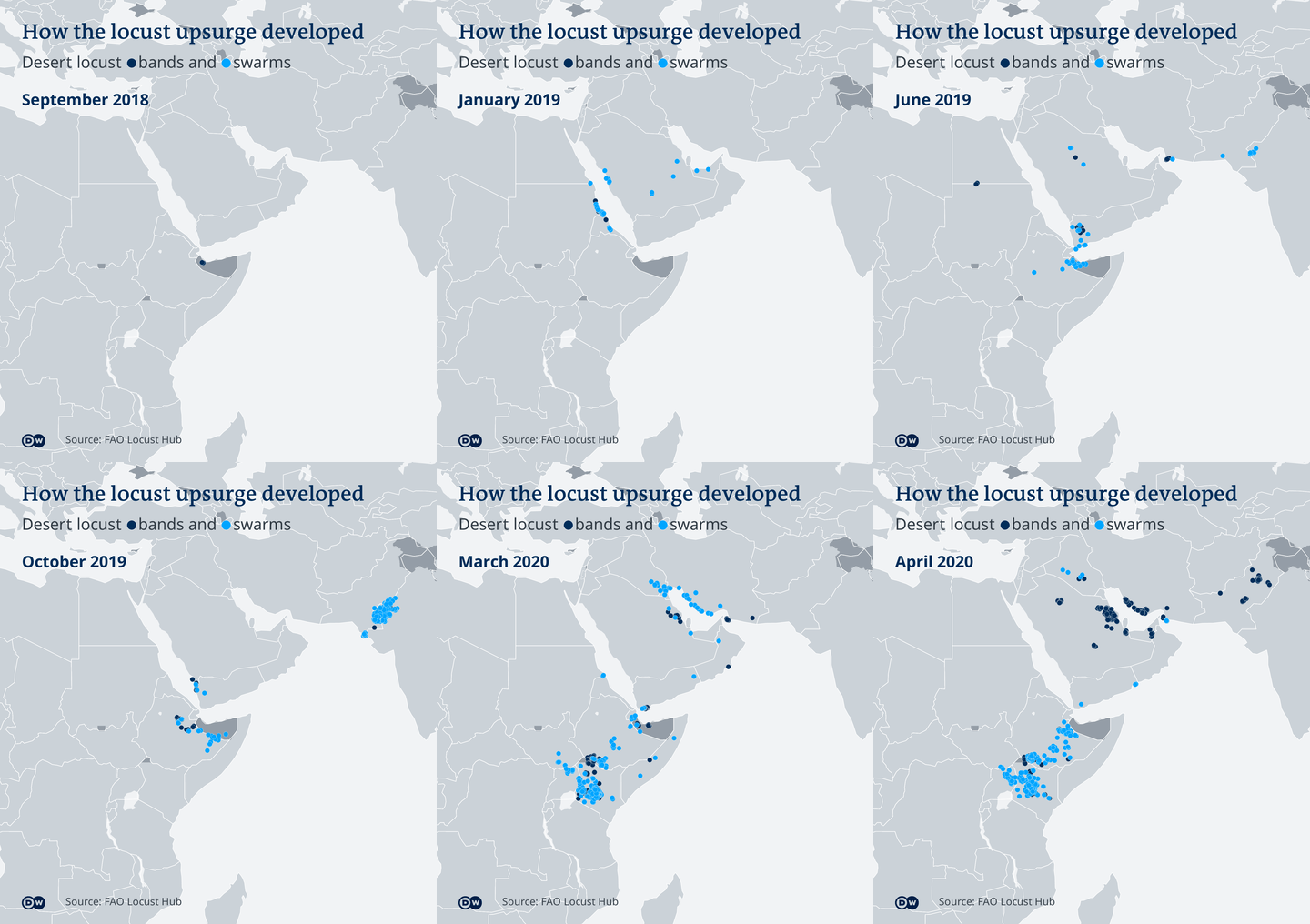
In 2018, two cyclones in succession unleashed rain in the immense sandy desert on the southern Arabian Peninsula known as the Empty Quarter. The moist sand and sprouting vegetation provided favorable conditions for the locusts to thrive.

Solitary desert locusts are usually harmless. If they are packed densely enough, however, the insects change behavior and even appearance, forming large groups that devour everything in their path. Groups of young, wingless locusts form bands, which eventually mature into fast-moving swarms.

In the Empty Quarter, the locusts multiplied unnoticed for three generations, increasing their original number 8,000-fold before swarms migrated up the Arabian Peninsula to Yemen.

Watch video Locusts threaten food security in East Africa

Locusts are common in Yemen but its ongoing civil war has devastated the country's ability to monitor and fight the insects.

From Yemen, in 2019 the desert locust swarms traveled north to Iran then to Pakistan and India.


They were also carried on the wind across the Red Sea to northeastern Ethiopia, south Eritrea and Somalia, where higher than average rainfalls over the 2019 summer allowed the locusts to proliferate.

Ongoing locust crisis

That's when FAO declared an emergency, increasing and prioritizing equipment and monitoring efforts.

"We started fast tracking everything because we knew the situation was going to be out of control very quickly," says Cressman from the FAO.

But despite FAO and other organizations moving as fast as they could to curb the spread of the locusts, their sheer numbers meant they were already hard to control.

In December 2019, the insects started swarming into Kenya in what has turned into the worst outbreak the country has experienced in 70 years.


To make matters worse, East Africa's short rains, which normally fall from October to December, continued into 2020, allowing this first wave of swarms to mature and start laying eggs.

Now, the region has to fight this new generation as it hatches, before it creates the new swarms predicted for June.

Fighting the locusts

Managing locust swarms is best done before they even form. Regular monitoring is essential, since small numbers of the insects can be controlled relatively easily.

"It's not difficult to kill a locust. You put pesticide on the locust and it dies," says Cressman.

Normally, this is done by teams on the ground spraying pesticides from hand-held tanks, reinforced by planes or helicopters.

Read more: Why locusts are so destructive in East Africa

The problem with the current infestation is its sheer scale, he says.

"It's like a forest fire. If you find it really small as a campfire, you just put it out. But if you miss it, then it becomes a wildfire, and the problem gets much more difficult and expensive to control."

Time of the essence
Countries like Kenya, having little recent experience with locusts, took a few months to set up control operations. With locusts multiplying exponentially, that's valuable time lost.

Authorities in the affected countries have already sprayed pesticides on thousands of hectares of land. But if the weather conditions don't dry up, that might not be enough.

Control operations are falling behind: In April, only a quarter of the area affected by locusts was treated. Locust populations are expected to increase 20- or even 400-fold in the months to come.


Locusts multiply faster than control operations can keep up.

Helping hands

Spraying isn't the only way of weathering the devastation caused by the locusts.

In Ethiopia's South Wollo Zone, the community worked together in 2019 to bring in the harvest before the locusts could devour them.

"We harvested the crops in cooperation with everyone," says Yimer Seid. "There would have been around 100 people in a large field …, all volunteers from the region."

He's also seen more examples of people in the community sharing crops and food with each other to make sure people don't go hungry.

Two crises at once

The coronavirus pandemic makes such community action much harder. Although Ethiopia isn't under a strict lockdown, the movement of people is restricted by a national emergency decree.

Normally, agricultural officers in South Wollo would monitor the locusts in the field, explained Seid. Now farmers send in their reports online or over the phone, making it harder to assess the situation.

Overall, though, monitoring efforts and pesticide spraying operations are continuing in Ethiopia as locust control counts as an essential service.


But with new swarms on their way, Ethiopia desperately needs to scale up its operations, says Fatouma Seid from FAO Ethiopia. This should include "more teams on the ground, more vehicles for the government and more pesticides on the ground in addition to the air control."

However, the current stock of pesticides will only tide over locust control in Ethiopia up to June, she says.

As for neighboring Somalia, the country currently has enough pesticide at hand to spray around 2,000 square km.

That will cover the first phase of controlling hoppers (the juvenile locust, which can't fly) up to July, says Alphonse Owuor, Crop Protection Officer with FAO Somalia.

More pesticide is available if needed, Owuor says.

"We have been in constant contact with the supplier since late 2019. They are aware of our requirements for the rest of the year and are on standby on the event we will need more supplies urgently."

Anticipating future invasions difficult

African countries are much better equipped to tackle the locust threat than they used to be.

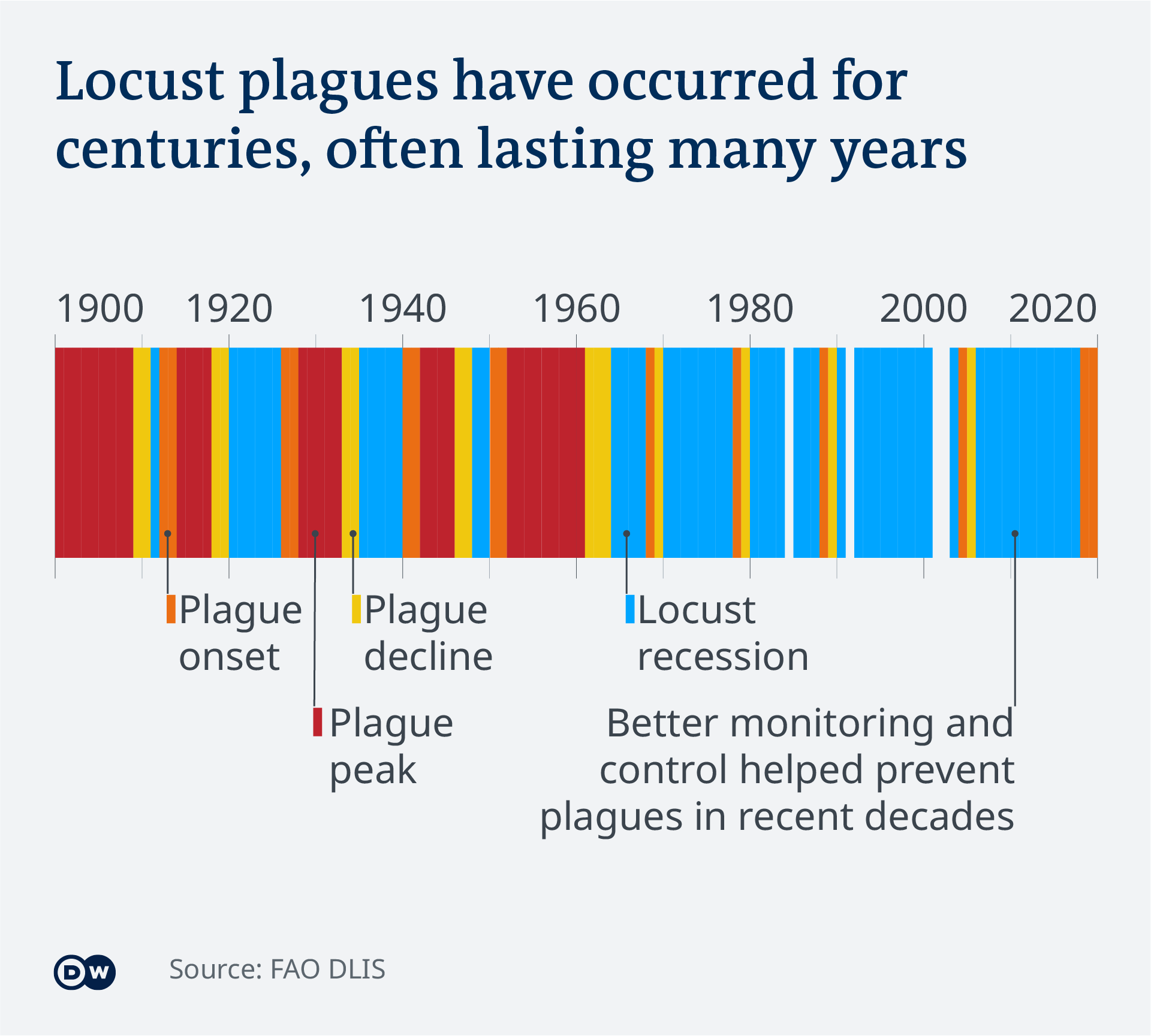
In the past, locusts plagues regularly swept across the continent. In the 1950s, the insects ate their way through countries in West and East Africa all the way to India and Pakistan in a plague lasting 13 years.

But in the last few decades, thanks to better monitoring and control, the infestations have tended to last for a shorter time and cover less area. Ethiopia and Somalia, for example, haven't experienced an outbreak of this scale in 25 years


Now though, predicting locust invasions has become harder is harder as weather patterns become more erratic due to climate change change.

"The desert locust is just one long, continuous story," says Cressman. "It's about figuring out the current chapter of that story."

DW RECOMMENDS


World Food Program: Act now to prevent coronavirus famine

The coronavirus will lead to a famine of "biblical proportions" unless aid can reach those in dire need immediately, warns the UN agency. But the pandemic is only amplifying famine's causes, which also need tackling. (23.04.2020)


Pakistan declares national emergency over locust swarms

Prime Minister Imran Khan declared the emergency to protect crops and help farmers. The Pakistani government said it was the worst locust infestation in more than two decades. (01.02.2020) 

Tuesday, February 18, 2020


Locust swarms arrive in South Sudan, threatening more misery


AFP•February 18, 2020


Pest: Desert locusts are threatening millions of people in East Africa with hunger (AFP Photo/TONY KARUMBA)

Juba (AFP) - Swarms of locusts which are wreaking havoc across East Africa have now arrived in South Sudan, the government said Tuesday, threatening more misery in one of the world's most vulnerable nations.

Billions of desert locusts, some in swarms the size of Moscow, have already chomped their way through Ethiopia, Somalia, Kenya, Djibouti, Eritrea, Tanzania, Sudan and Uganda.

Their breeding has been spurred by one of the wettest rainy seasons in the region in four decades.

Experts have warned the main March-to-May cropping season is at risk. Eggs laid along the locusts' path are due to hatch and create a second wave of the insects in key agricultural areas.

The arrival of the locusts could be catastrophic in South Sudan, where war followed by drought and floods has already left six million people -- 60 percent of the population -- facing severe hunger.

Agriculture Minister Onyoti Adigo Nyikiwec said the locusts had crossed the eastern border with Uganda on Monday.

"The report came that these are matured. As you know locusts are like human beings, they send their reconnaissance ahead of time to make sure that whether there is food or not and if the area is good for breeding."

Meshack Malo, the Food and Agriculture Organization (FAO) representative in South Sudan, said about 2,000 locusts had been spotted so far, and if not controlled quickly, could have a devastating impact.

"These are deep yellow which means that they will be here mostly looking at areas in which they will lay eggs."

He said the FAO was training locals and acquiring sprayers and chemicals to try and combat the locusts. It is the first locust invasion in 70 years in the country.

Other countries have employed aircraft to spray the swarms, while desperate locals have employed tactics like banging pots and pans or shooting at them.

Nyikiwec said the government had prepared a contingency plan.

"We are training people who will be involved in spraying and also we need chemicals for spraying and also sprayers. You will also need cars to move while spraying and then later if it becomes worse, we will need aircraft."

Earlier this month Somalia declared a national emergency over the invasion.

The FAO says the current invasion is known as an "upsurge," the term for when an entire region is affected.

However, if the invasion cannot be rolled back and spreads, it becomes known as a "plague" of locusts.


There have been six major desert locust plagues in the 1900s, the last of which was in 1987-89. The last major upsurge was in 2003-05.


Huge locust outbreak in East Africa reaches South Sudan

MAURA AJAK, Associated Press•February 18, 2020

Huge locust outbreak in East Africa reaches vulnerable South Sudan

JUBA, South Sudan (AP) — The worst locust outbreak that parts of East Africa have seen in 70 years has reached South Sudan, a country where roughly half the population already faces hunger after years of civil war, officials announced Tuesday.

Around 2,000 locusts were spotted inside the country, Agriculture Minister Onyoti Adigo told reporters. Authorities will try to control the outbreak, he added.

The locusts have been seen in Eastern Equatoria state near the borders with Ethiopia, Kenya and Uganda. All have been affected by the outbreak that has been influenced by the changing climate in the region.

The situation in those three countries “remains extremely alarming,” the U.N. Food and Agriculture Organization said in its latest Locust Watch update Monday. Locusts also have reached Sudan, Eritrea, Tanzania and more recently Uganda.

The soil in South Sudan's Eastern Equatoria has a sandy nature that allows the locusts to lay eggs easily, said Meshack Malo, country representative with the FAO.

At this stage “if we are not able to deal with them ... it will be a problem,” he said.

South Sudan is even less prepared than other countries in the region for a locust outbreak, and its people are arguably more vulnerable. More than 5 million people are severely food insecure, the U.N. humanitarian office says in its latest assessment, and some 860,000 children are malnourished.

Five years of civil war shattered South Sudan's economy, and lingering insecurity since a 2018 peace deal continues to endanger humanitarians trying to distribute aid. Another local aid worker was shot and killed last week, the U.N. said Tuesday.

The locusts have traveled across the region in swarms the size of major cities. Experts say their only effective control is aerial spraying with pesticides, but U.N. and local authorities have said more aircraft and pesticides are required. A handful of planes have been active in Kenya and Ethiopia.

The U.N. has said $76 million is needed immediately. On Tuesday, U.S. Secretary of State Mike Pompeo during a visit to Ethiopia said the U.S. would donate another $8 million to the effort. That follows an earlier $800,000.

The number of overall locusts could grow up to 500 times by June, when drier weather begins, experts have said. Until then, the fear is that more rains in the coming weeks will bring fresh vegetation to feed a new generation of the voracious insects.

South Sudanese ministers called for a collective regional response to the outbreak that threatens to devastate crops and pasturage.

Locusts swarm into South Sudan as plague spreads

By Denis Dumo, Reuters•February 18, 20203 Comments

JUBA, Feb 18 (Reuters) - Swarms of locusts ravaging crops and grazing land across east Africa have reached South Sudan, already reeling from widespread hunger and years of civil war, the country's agriculture minister said on Tuesday.

The locusts crossed into southern Magwi county, on the border with Uganda, Minister Anyoti Adigo Nyikwach said.

Kenya, Somalia, Eritrea and Djibouti are battling the worst locust outbreak in decades, and swarms have also spread into Tanzania, Uganda and now South Sudan.

Desert locusts can travel up to 150 km (95 miles) in a day and eat their own body weight in greenery, meaning a swarm just one kilometre square can eat as much food as 35,000 people in a day, the United Nations says.

The invasion is worsening food shortages in a region where up to 25 million people are suffering from three consecutive years of droughts and floods.

Meshack Malo, South Sudan's representative for the U.N.'s Food and Agriculture Organization, said the locusts were mature and looking for breeding grounds that will form the basis of the next major infestation.

“These are deep yellow, which means that they will be here mostly looking at areas in which they will lay eggs,” he said.

Teams planned to mark the place where they lay eggs and then come back to kill the young insects in 14 days, he said, since poisoning the eggs in the ground could damage the soil.

At least 2,000 locusts had crossed the border, he said. During each three month breeding cycle, a single locust can breed 20 more, giving rise to the massive swarms that are now threatening crops on either side of the Red Sea.

Oil-rich South Sudan is recovering from five years of civil war that plunged parts of the country into famine in 2017 and forced a quarter of the population to flee their homes. In December, the U.N.'s World Food Programme said the food security outlook was dire after floods affected nearly a million people. (Writing by Katharine Houreld; Editing by Mark Potter)

Thursday, January 15, 2026


Locust swarms destroy crops. Scientists found a way to stop that


Arizona State University
A locust in the ASU Global Locust Initiative lab 

image: 

Arizona State University PhD student Sydney Millerwise holds a migratory locust in ASU’s Global Locust Initiative lab. A new study by an ASU team and international collaborators identifies a strategy to manage locust populations and prevent damage to crops.

view more 

Credit: Quinton Kendall/ASU Knowledge Enterprises


“They’re very destructive when there's a lot of them, but one-on-one, what's not to love?” says Arianne Cease. She’s talking about locusts.

As the director of Arizona State University’s Global Locust Initiative, Cease has a healthy admiration for these insects, even as she studies ways to manage locust swarms and prevent the destruction they cause.

Locust swarms, which may conjure images of biblical plagues and ancient famines, remain a serious problem worldwide. They can destroy crops across entire regions, ruin people’s livelihoods, and in some places, impact children’s education and future economic opportunities. Swarms can cover hundreds of square miles — equal to a major metropolitan area like New York City or Phoenix.

So, when Cease and her international team of scientists discovered a simple soil-based method to keep locusts from eating crops, they knew their work could change people’s lives. To the team’s knowledge, theirs is the first study to test this new method in real-world farming conditions and confirm that it works.

The researchers partnered with farmers in Senegal who experience outbreaks of the Senegalese grasshopper. This grasshopper does not form the extreme swarms like the desert locust, but its consistent outbreaks and smaller swarms can be more devastating for Senegalese farmers. These communities, which worked with Cease for previous studies, advocated for this larger study.

Each farmer grew two plots of millet — one treated with nitrogen fertilizer and one untreated.

Compared to the untreated plots, the treated plots showed three clear differences: fewer locusts, less crop damage and a doubled crop yield.

"This breakthrough represents an important step forward in the sustainable management of migratory pests, offering a community-based tool that expands the available treatment options," says Cease, also an associate professor with the ASU School of Sustainability and School of Life Sciences.

The study published today in the journal Springer Nature. Associate Professor Mamour Touré of Université Gaston Berger in Saint-Louis, Senegal, was the lead author of the study, while Cease served as the principal investigator of this USAID-supported project.

“The results are of major importance to the scientific community and also to Senegalese farmers,” says Touré. “The study gave them a better understanding of grasshoppers and locusts, as well as a practical way to control them at the local level.”

The Global Locust Initiative, part of the Julie Ann Wrigley Global Futures Laboratory, focuses on locusts and the systems that surround them. Environmental factors, biology and behavior, economic impacts, policies, and landscape management all feed into the cycle of locust destruction — and offer opportunities to break it.

Over 15 years of studying locusts, Cease found that plants growing in nutrient-poor soil promote locust outbreaks. These plants are high in carbs and low in protein.

“This carbohydrate bias, or the ‘donut diet,’ is optimal for populations of locusts and swarming grasshoppers,” Cease says. Just like runners who load up on carbs before a marathon, locusts need more carbs to fuel their migration.

In nitrogen-rich soil, plants are higher in protein and lower in carbs. These plants are bad for locusts to eat — their bodies can’t handle the extra protein and don’t get enough energy.

Protein-packed plants prevent pests

All this work led to the question: can we prevent locust damage by changing the protein-to-carb ratio of plants? Small lab studies and field surveys suggested the answer might be yes, but no one had tested it in open, working farmland. To Cease, that was the next logical step.

Two villages in Senegal that collaborated with Cease on previous studies advocated conducting the new study in their communities. Farms there suffer heavy crop damage from swarms of the Senegalese grasshopper.

In the experiment, 100 farmers grew two millet plots each—one treated with nitrogen fertilizer and one left untreated for a controlled comparison.

The scientists were uncertain whether locusts might still enter treated plots via untreated areas, or whether the increase in plant protein would attract different pests.

The team assessed the number of locusts and damage to farmers’ plots three times throughout the growing season. They also recorded millet yields for each plot at harvest time.

The difference between the treated and untreated plots was significant. Treated plots had fewer locusts, less leaf damage to crops and a doubled millet yield at harvest. The team also found no evidence that nitrogen fertilizer made pest problems worse.

While the research team provided nitrogen fertilizer for the purpose of the study, it’s not practical for communities to use on a regular basis. To really work long-term, they need a way to add nitrogen to the soil that is affordable and good for the farmland.

“Ongoing work is focused exclusively on compost, and we seem to be getting the same results,” Cease says.

The project’s funding, provided through USAID, was cancelled in early 2025. However, the farmers on the ground in Senegal are so encouraged by the results that they are continuing the compost system on their own.

“Farmers unanimously stated that they no longer burn crop residues after land clearing, but instead practice composting to fertilize their fields, thereby helping to reduce grasshopper infestations. This technique was fully mastered thanks to the project,” Touré says.

The team is applying for additional funding to expand the project into other regions hard-hit by locusts.

Staying a step ahead of locusts

The U.S. has no locust species inside its borders. Why study them here at all? Cease says it won’t stay that way forever. She’s keeping her eye on the Central American locust, whose range reaches about 200 miles from our border.

“We can say with pretty high certainty that Texas will be very suitable for locusts in about 10 to 15 years,” Cease says. “Whether or not they will create a problem is yet to be determined, but it’s something that we should definitely be aware of.”

Even without locusts, we have enough reasons to study grasshoppers in the U.S. — 12 of them, in fact. They’re called the Dirty Dozen.

These 12 rangeland grasshoppers (plus one cricket) are top species of management concern in the western U.S., according to the U.S. Department of Agriculture. When they swarm, they can outcompete livestock for grass, creating a huge problem for ranchers.

The department relies on chemical pesticides to control the grasshoppers, but through the Global Locust Initiative, it’s identifying alternative treatments that are safer for human health and the environment.

The more we learn about locusts in other parts of the world, the better we can address migratory pests at home and prepare for the day when locusts make their way to the U.S.