Showing posts sorted by relevance for query POSTMODERN ALCHEMY. Sort by date Show all posts

Friday, February 06, 2026

POSTMODERN ALCHEMY

Simulations and experiments meet: Machine learning predicts the structures of gold nanoclusters


University of Jyväskylä - Jyväskylän yliopisto


Atomistic snapshots 

image: 

Atomistic snapshots describing how two thiolate-protected gold nanoclusters of 144 gold atoms each coalesce producing a single larger cluster matching a size that previously has been synthesized. 

view more 

Credit: Maryam Sabooni Asre Hazer, University of Jyväskylä.


Researchers at University of Jyväskylä (Finland) advance understanding of gold nanocluster behavior at elevated temperatures using machine learning-based simulations. This information is crucial in the design of nanomaterials so that their properties can be modified for use in catalysis and other technological applications.

Thiolate protected gold nanoclusters are hybrid nanomaterials with promising applications in nanomedicine, bioimaging and catalysis. However, understanding how these nanoclusters behave under elevated temperatures, which is critical for their use, has remained largely unexplored due to the prohibitive computational cost of traditional simulation methods. 

Record-long simulations of gold nanoclusters

Researchers at the University of Jyväskylä have successfully employed machine learning-driven simulations to investigate the thermal dynamics of Au₁₄₄(SR)₆₀, one of the most well-studied gold nanoclusters. Using a recently developed atomic cluster expansion (ACE) potential trained on extensive density functional theory data, the researchers conducted molecular dynamics simulations extending up to 0.12 microseconds. This is approximately five orders of magnitude longer than what is feasible with conventional quantum chemical methods.

"This work opens new possibilities for understanding how ligand-protected metal nanoclusters behave under realistic operating conditions," says lead author Dr. Maryam Sabooni Asre Hazer. "Through this work, we can observe in atomistic detail how these clusters transform, fragment, and even merge at elevated temperatures over timescales that are relevant for experimental conditions."

Layer-by-layer thermal transformations revealed

The study revealed that thermal effects induce structural changes in a layer-by-layer fashion, starting from the outermost gold-thiolate protective shell. At temperatures between 300 and 550 K, the researchers observed the spontaneous formation of polymer-like chains and ring structures of gold-thiolate units, which can dynamically detach and reattach to the cluster surface. The remaining cluster compositions closely matched those observed in experimental studies, demonstrating the accuracy of the machine learning potential.

"What's particularly exciting is that we can now see how gold atoms migrate between different layers of the cluster and how the surface restructures under thermal stress," explains Dr. Sabooni Asre Hazer. "These processes are directly relevant to understanding why thermally treated gold nanoclusters become effective catalysts."

Gold clusters joined together in the simulation

In an even more remarkable finding, the researchers successfully simulated the complete coalescence of two Au₁₄₄(SR)₆₀ clusters at 550 K. The fusion process produced a larger cluster with composition Au₂₃₉(SR)₆₉, strikingly similar to a gold nanocluster previously synthesized experimentally. 

"The merged cluster exhibited a twinned face-centered cubic metal core structure, matching the symmetry determined from experimental X-ray diffraction data," says Dr. Sabooni Asre Hazer.

Opening new avenues for nanomaterials research

The methodology enables detailed atomistic studies of processes that were previously inaccessible to computational investigation, including cluster-cluster interactions, catalytic activation mechanisms, thermal stability, and inter-particle reactions.

"Our results provide fundamental insights into how ligand-protected nanoclusters behave as they transition toward larger nanoparticles," explains Professor Hannu Häkkinen, who supervised the research. "This knowledge is instrumental for the rational design of nanomaterials with tailored functionalities for catalysis and other applications.", he continues. 

The research was published in Nature Communications. The publication was recognized as an Editors' Highlight in the Inorganic and Physical Chemistry section of Nature Communications.

The work was supported by the Research Council of Finland and the European Research Council (ERC) through the Advanced Grant project DYNANOINT. Computational resources on supercomputers Puhti and Mahti were provided by the Finnish national supercomputing center CSC. 

Tuesday, September 30, 2025

POSTMODERN ALCHEMY

Steel making could get a makeover


University of Minnesota

Green steel making 

image: 

Ph.D. student, Jae Hyun Nam, worked in the University of Minnesota Characterization Facility to complete these nanometer scale observations.

view more 

Credit: Kalie Pluchel, University of Minnesota


Researchers investigate clean and efficient new method for iron production

MINNEAPOLIS / ST. PAUL (09/29/2025) — A research team at the University of Minnesota Twin Cities has investigated a new method to produce iron, the main component of steel. For the first time, the researchers were able to observe chemical reactions and iron formation in real-time at the nanometer scale. 

This breakthrough has the potential to transform the global iron and steel production industry by improving energy efficiency and lowering costs. The study was recently published in Nature Communications, a peer-reviewed, high impact scientific journal.

According to the paper, the iron and steel industry is the largest industrial emitter of carbon dioxide, responsible for approximately 7 percent of the total global carbon dioxide emissions. Traditional methods for producing iron are pollution-heavy, relying on coke–a type of coal–to remove oxygen from iron ore—a process that has remained largely unchanged for centuries.

This method eliminates the CO2 emissions that have traditionally come from iron-making that can be performed at room temperature. This makes it potentially more efficient and desirable to industry and opens new pathways to innovation in the U.S. based manufacturing industry.

The new process uses hydrogen gas plasma, an ionized gas which dissociates the hydrogen gas producing an abundance of highly reactive hydrogen atoms. When the iron is exposed to this plasma, the highly reactive hydrogen atoms strip the oxygen from the ore producing pure iron and water vapor.

“We developed a new technique that allows us to monitor plasma-material interactions at the nanometer scale, which has never been done before,” said Jae Hyun Nam, first author on the paper and a Ph.D. student in the University of Minnesota Department of Mechanical Engineering.

The team partnered with Hummingbird Scientific, a company that builds products for electron, X-ray and ion microscopy, to create a specialized holder that fits inside of an transmission electron microscope. 

"Overcoming the technical challenges of this research was one of the most difficult experiments we've done," said Peter Bruggeman, a senior author on the paper and University of Minnesota Distinguished McKnight University Professor in the Department of Mechanical Engineering. “Generating plasmas on a scale around the size of a human hair, which is required to obtain the nanometer resolution, creates significant engineering challenges which we collaboratively tackled with Hummingbird Scientific.”

Previous optical methods could only be viewed at a few hundred nanometers—about a thousand times smaller than the diameter of a human hair. This new method will allow researchers to see things at a nanometer resolution, which is 100 times better than previous research. 

“Creating plasma could be energetically a lot more efficient than heating the material," said Andre Mkhoyan, a senior author on the paper and professor and Ray D. and Mary T. Johnson Chair in the University of Minnesota Department of Chemical Engineering and Materials Science. “This innovation could lead to materials being modified with lower energy consumption, ultimately making processes more economically efficient.”

Read the full paper entitled, “Revealing the mechanisms of non-thermal plasma-enabled iron oxide reduction through nanoscale operando TEM” on the Nature Communications website.

Wednesday, April 28, 2021

POSTMODERN ALCHEMY; SPAGYRICS

A minty-fresh solution: Using a menthol-like compound to activate plant immune mechanisms

A menthol-like compound was found to boost the expression of genes that protect crop species from pest-related damage

TOKYO UNIVERSITY OF SCIENCE

Research News

IMAGE

IMAGE: REDUCTION OF INSECT-CAUSED LEAF DAMAGE BY MENT-VAL EXPOSURE view more 

CREDIT: TOKYO UNIVERSITY OF SCIENCE

Although plants may look fairly inactive to casual observers, research into plant biology has shown that plants can send each other signals concerning threats in their local environments. These signals take the form of airborne chemicals, called volatile organic compounds (VOCs), released from one plant and detected by another, and plant biologists have found that a diverse class of chemicals called terpenoids play a major role as airborne danger signals.

Past studies have shown that soybean and lima bean plants both release terpenoid signals that activate defense-related genes in neighboring plants of the same species, and this chemically induced gene activation can help the plants protect themselves from threats like herbivorous pests.

In recent years, scientists have realized that the capacity of these chemical signals to boost plant defense mechanisms could make them useful pest control tools for agriculture and horticulture. One such scientist is Prof. Gen-ichiro Arimura of the Tokyo University of Science, Japan. Prof. Arimura notes that "the development of agricultural technology to date has been largely reliant on the use of pesticides and chemical fertilizers, which has resulted in environmental pollution and the destruction of ecosystems." As a greener alternative to pesticides, terpenoid signaling molecules may help farmers continue their production of vital foodstuffs while lessening the associated environmental costs.

In pursuit of this goal, Prof. Arimura and his colleagues chose to investigate the terpenoid compound menthol, which is derived from mint leaves and can activate plant immune systems. The aim of this project, which the researchers describe in an article recently published in the journal Plant Molecular Biology, was to develop compounds that are structurally similar to menthol but improve upon menthol's ability to activate plant immune systems. The researchers therefore experimented with chemically modifying menthol by attaching amino acids, which are a structurally diverse set of compounds that living cells use to construct proteins. In total, the researchers synthesized six different menthol derivatives with attached amino acids.

The researchers then tested the resulting menthol derivatives to see whether the modified compounds could outperform unmodified menthol at activating plant defense mechanisms. To do this, they treated soybean leaves with either menthol or one of the six menthol derivatives to see which of the derivatives, if any, could outclass menthol itself at boosting the expression levels of two defense-related soybean genes after 24 hours of exposure. The found that only one of the modified compounds bested menthol, and this compound is called valine menthyl ester, or "ment-Val" for short.

The researchers found that spraying soybean leaves once with a ment-Val solution boosted expression of the defense-related genes for three days, and a second spraying on the fourth day worked to boost the expression of those genes again. These findings suggest that ment-Val could provide sustainable pest control for farmers growing soybeans. Further experiments showed that ment-Val also increased the expression of defense-related genes in other crops, including peas, tobacco, lettuce, and corn. Ment-Val also proved to be quite stable under various conditions, which suggests that farmers would probably not lose the compound to degradation during storage.

Overall, these results suggest that ment-Val could be extremely useful as an alternative to the chemical pesticides that so many farmers rely on. Prof. Arimura notes that spraying ment-Val may be an effective way "to reduce pest damage to soybeans and other crops." He has applied for a patent on ment-Val's use as a crop protection agent, and he predicts that the commercialization of ment-Val "will generate billions of yen in economic benefits through its usage by companies operating in the fields of horticulture and agriculture." He also notes that ment-Val's anti-inflammatory properties could make it useful for human medicine.

The future is certainly going to be exciting for research into menthol derivatives like ment-Val!

CAPTION

A recent study found that a compound derived from menthol, which in turn comes from mint leaves, may help farmers reduce pest-related crop losses without having to rely on chemical pesticides

CREDIT

Travis Colbert on Unsplash

About The Tokyo University of Science

Tokyo University of Science (TUS) is a well-known and respected university, and the largest science-specialized private research university in Japan, with four campuses in central Tokyo and its suburbs and in Hokkaido. Established in 1881, the university has continually contributed to Japan's development in science through inculcating the love for science in researchers, technicians, and educators.

With a mission of "Creating science and technology for the harmonious development of nature, human beings, and society", TUS has undertaken a wide range of research from basic to applied science. TUS has embraced a multidisciplinary approach to research and undertaken intensive study in some of today's most vital fields. TUS is a meritocracy where the best in science is recognized and nurtured. It is the only private university in Japan that has produced a Nobel Prize winner and the only private university in Asia to produce Nobel Prize winners within the natural sciences field.

Website: https://www.tus.ac.jp/en/mediarelations/

About Professor Gen-ichiro Arimura from Tokyo University of Science

Dr Gen-ichiro Arimura is a Professor in the Department of Biological Science and Technology within the Faculty of Advanced Engineering at TUS, Japan. After completing his postgraduate education at the Hiroshima University Graduate School, he worked in the field of plant biology for several years before moving to TUS in 2013. A senior and well-respected researcher, he has more than 110 publications to his credit. His key research interests include plant biotechnology, ecology, and biochemistry.

Funding information

This work was funded by the Japan Society for the Promotion of Science; the Japanese Ministry of Education, Culture, Sports, Science and Technology; the Japan Science and Technology Agency; the Fuji Foundation for Protein Research; and the Nagase Science and Technology Foundation.

Sunday, June 02, 2024

POSTMODERN ALCHEMY

Gold, zinc help manipulate water to create clean fuels with no dirty byproducts

Staff Writer | June 2, 2024 |

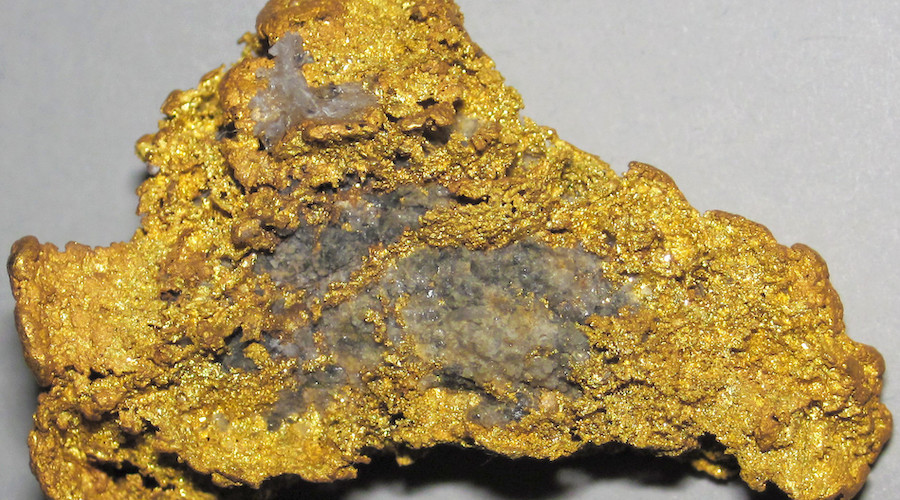
Native gold. (Reference image by James St. John, Flickr.)

Scientists looking to convert carbon dioxide into clean fuels and useful chemicals often make hydrogen gas and carbonates as unwanted byproducts.


At its core, the CO2 molecule is just an arrangement of one carbon and two oxygen atoms that can be reorganized through a technique called electrochemical carbon dioxide reduction (CO2R) into clean fuels and useful chemicals. But the process is often done at a loss, with competing mechanisms pulling the atoms in undesirable directions that create unwanted byproducts.

To address this issue, researchers from the University of Chicago Pritzker School of Molecular Engineering’s Amanchukwu Lab outlined a way to manipulate water molecules to make CO2R more efficient and create a clean energy loop.

In a paper published in Nature Catalysis, the researchers explain that they were able to perform CO2R with nearly 100% efficiency under mildly acidic conditions, using either gold or zinc as catalysts.

“Imagine we can have green electricity from solar and wind, and then use this electricity to convert any carbon dioxide back into fuels,” Reggie Gomes, first author of the paper, said in a media statement.
HER

Electrochemically disassembling a molecule is like a break shot in a game of pool. The previous arrangement disappears and the balls scatter across the table, coming to rest in new combinations—not always the ones the player intended.

Similarly, scientists performing CO2R use electricity and water to break up and rearrange the greenhouse gas. This sends atoms of carbon and oxygen from the carbon dioxide caroming across the table with hydrogen atoms from the water.

If it works as intended, the atoms form other, more desirable molecules that can be used as fuels or chemicals.

But as the atoms scatter, stable pairings of two hydrogen atoms often form a process called hydrogen evolution reaction (HER). This makes CO2R less efficient, as energy and atoms that become hydrogen gas can’t be part of the molecules the scientists were trying to create.

Even in small quantities of water, CO2R is always competing with HER.

The Amanchukwu Lab applied insights from aqueous batteries to the problem, hypothesizing that controlling the water with organic solvents could provide a solution.
The bling-bling

Both CO2R and HER rely on water as a proton donor.

Using organic solvents and acid additives, the team was able to tune the water’s behaviour, finding the sweet spot where it donated the right amount of protons to create the intended molecules, not the hydrogen gas and other unwanted materials like carbonates.

However, many of the most effective ways to perform CO2R rely on precious metals.

“Platinum, silver, gold—for research purposes, they’re great catalysts,” Gomes said. “They’re very stable materials. But when you’re thinking about industrial applications, they become cost-prohibitive.”

By engineering the electrolyte, the new method can get similar results using cheaper, more abundant materials.

“Right now, the best way to do this electrochemically at room temperature is to use precious metals. Gold and silver can suppress the hydrogen evolution reaction a little bit,” head researcher Chibueze Amanchukwu said. “Because of our discovery, we can now use an earth-abundant metal, zinc, because we now have a separate way to control water.”

Saturday, April 06, 2024

POSTMODERN ALCHEMY

Utilizing palladium for addressing contact issues of buried oxide thin film transistors


TOKYO INSTITUTE OF TECHNOLOGY
Novel Hydrogen Infection Method for Solving Contract Issues in Oxide Semiconductors 

IMAGE: 

A NOVEL METHOD THAT EMPLOYS PALLADIUM TO INJECT HYDROGEN INTO THE DEEPLY BURIED OXIDE-METAL ELECTRODE CONTACTS OF AMORPHOUS OXIDE SEMICONDUCTORS (AOSS) STORAGE DEVICES, WHICH REDUCES CONTACT RESISTANCE, HAS BEEN DEVELOPED BY SCIENTISTS AT TOKYO TECH. THIS INNOVATIVE METHOD PRESENTS A VALUABLE SOLUTION FOR ADDRESSING THE CONTACT ISSUES OF AOSS, PAVING THE WAY FOR THEIR APPLICATION IN NEXT-GENERATION STORAGE DEVICES AND DISPLAYS.

view more 

CREDIT: ASSISTANT PROFESSOR MASATAKE TSUJI AND HONORARY PROFESSOR HIDEO HOSONO


A novel method that employs palladium to inject hydrogen into the deeply buried oxide-metal electrode contacts of amorphous oxide semiconductors (AOSs) storage devices, which reduces contact resistance, has been developed by scientists at Tokyo Tech. This innovative method presents a valuable solution for addressing the contact issues of AOSs, paving the way for their application in next-generation storage devices and displays.

Thin film transistors (TFTs) based on amorphous oxide semiconductors (AOSs) have garnered considerable attention for applications in next-generation storage devices such as capacitor-less dynamic-random access memory (DRAM) and high-density DRAM technologies. Such storage devices employ complex architectures with TFTs stacked vertically to achieve high storage densities. Despite their potential, AOS TFTs suffer from contact issues between AOSs and electrodes resulting in excessively high contact resistance, thereby degrading charge carrier mobility, and increasing power consumption. Moreover, vertically stacked architectures further exacerbate these issues.

Many methods have been proposed to address these issues, including the deposition of a highly conductive oxide interlayer between the contacts, forming oxygen vacancies on the AOS contact surface and surface treatment with plasma. Hydrogen plays a key role in these methods, as it, when dissociated into atomic hydrogen and injected into the AOS-electrode contact area, generates charge carriers, thereby reducing contact resistance. However, these methods are energy-intensive or require multiple steps and while they effectively address the high-contact resistance of the exposed upper surface of the semiconductors, they are impractical for buried contacts within the complex nanoscale architectures of storage devices.

To address this issue, a team of researchers (Assistant Professor Masatake Tsuji, doctoral student Yuhao Shi, and Honorary Professor Hideo Hosono) from the MDX Research Center for Element Strategy at the International Research Frontiers Initiative at Tokyo Institute of Technology has now developed a novel hydrogen injection method. Their findings were published online in the journal ACS Nano on 22 March 2024.

In this innovative method, an electrode made up of a suitable metal, which can catalyze the dissociation of hydrogen at low temperatures, is used to transport the atomic hydrogen to the AOS-electrode interface, resulting in a highly conductive oxide layer. Choosing suitable electrode material is therefore key for implementing this strategy. Dr. Tsuji explains, “This method requires a metal that has a high hydrogen diffusion rate and hydrogen solubility to shorten post-treatment times and reduce processing temperatures. In this study, we utilized palladium (Pd) as it fulfils the dual role of catalyzing hydrogen dissociation and transport, making it the most suitable material for hydrogen injection in AOS TFTs at low temperatures, even at deep internal contacts.”

To demonstrate the effectiveness of this method, the team fabricated amorphous indium gallium oxide (a-IGZO) TFTs with Pd thin film electrodes as hydrogen transport pathways. The TFTs were heat-treated in a 5% hydrogen atmosphere at a temperature of 150 0C for 10 minutes. This resulted in the transport of atomic hydrogen by Pd to the a-IGZO-Pd interface, triggering a reaction between oxygen and hydrogen, forming a highly conductive interfacial layer.


Testing revealed that due to the conductive layer, the contact resistance of the TFTs was reduced by two orders of magnitude. Moreover, the charge carrier mobility increased from 3.2 cm2V–1s–1 to nearly 20 cm2V–1s–1, representing a substantial improvement. “Our method enables hydrogen to rapidly reach the oxide-Pd interface even in the device interior, up to a depth of 100 μm. This makes it highly suitable for addressing the contact issues of AOS-based storage devices” remarks Dr. Tsuji. Additionally, this method preserved the stability of the TFTs, suggesting no side effects due to hydrogen diffusion in the electrodes.

Emphasizing the potential of the study, Dr. Tsuji concludes: “This approach is specifically tailored for complex device architectures, representing a valuable solution for the application of AOS in next-generation memory devices and displays.”  IGZO-TFT is now a de facto standard to drive the pixels of flat panel displays. The present technology will put forward its application to memory.