Showing posts sorted by date for query DECRIMINALIZE DRUGS. Sort by relevance Show all posts

Saturday, December 13, 2025

DECRIMINALIZE DRUGS

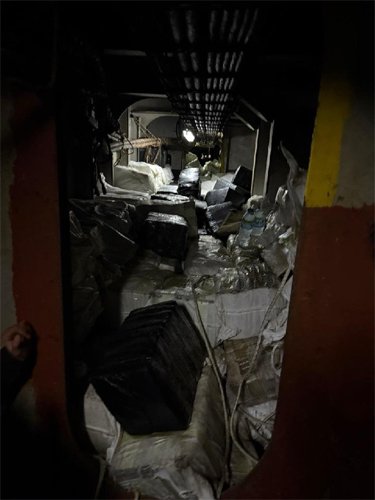
Cocaine smugglers are plaguing international shipping companies

Cocaine smugglers are plaguing international shipping companies
Cocaine smugglers are plaguing international shipping companies / bne IntelliNews
By Ben Aris in Berlin December 12, 2025

Cool Carriers, the world’s largest  operator of specialised refrigerated cargo vessels, known as reefers, has rejected allegations broadcast by Danish TV2 linking the group to a cocaine-smuggling scheme off Denmark’s coast, insisting it had no operational control over the ships or the crew involved, the company told bne IntelliNews on December 8.

The scandal erupted after Danish broadcaster TV2 reported on a police investigation into drug drops carried out by armed gangs using fast boats. According to the investigation, gang members recovered bags of cocaine dumped at sea by passing container vessels. One of the gangsters, 26-year-old Albanian Mustafa Xhaferas, confessed and received a 15-year prison sentence.

In his testimony, Xhaferas claimed the consignments were thrown overboard from two ships — Cool Eagle and Cool Explorer — transporting bananas from Ecuador to St Petersburg. TV2 suggested the vessels were managed by Cool Carriers.

The company said the report was “categorically false.” Cool Carriers is the commercial operator of the two ships, but not the owner and has nothing to do with the day to day operations of the ships, which it leases, but does not run them. Operational control, including hiring and managing the crew, rests entirely with the third-party owners, decisions that Cool Carriers plays no part in making.

“This means we are twice removed from the crew,” Glenn Selling, chief operating officer at Cool Carriers AB based in Sweden said speaking to bne IntelliNews. “The crew are employed by agencies hired by the owners. We have nothing to do with those decisions. That is the owner’s responsibility, and the owner makes all those decisions. It's their responsibility. When the investigation was launched, the police didn’t even bother to interview us in connection with the case. We found out about it from the media.”

Selling stressed that the narcotics trade has become a systemic threat to global shipping and is infecting the whole industry. “It’s a problem on an industrial scale,” he told bne IntelliNews. “No one company can do anything against this on its own. We don’t have guns on board our ships. We can’t check everything. We need the help of the authorities. This is a problem of a scale that countries have to tackle. We of course do what we can.”

The group operates more than 50 refrigerated vessels, transporting fruit and other perishables. Its largest offices are in Cyprus and Sweden, with additional operations in Chile, South Africa and the US. It has no legal entities and no representation in Russia.

Cool Eagle and Cool Explorer are owned by third-party investors and only leased by Cool Carriers. As a commercial operator, the company books cargoes, arranges port handling, and manages commercial costs. It does not select or supervise crews, nor does it control onboard activity during voyages. “This is the job of the management company or the owner,” Selling said.

Cool Carriers has introduced multiple safeguards against smuggling, including mandatory hull inspections by divers, full pre-departure checks and strict rules preventing crew from disembarking in high-risk ports – especially in South America. “We welcome customs inspections at any time. We work closely with the authorities,” Selling said. But he added that responsibility for security ultimately lies with port authorities and local customs services.

Drug business exploding

On March 15 this year, the French Navy intercepted more than 6,386 kilograms of cocaine, valued at €371mn ($400mn), during a maritime operation off the Gulf of Guinea.

The bust was conducted in coordination with the United States Drug Enforcement Administration (DEA), the United Kingdom’s National Crime Agency (NCA), and the Maritime Analysis and Operations Centre–Narcotics (MAOC-N) based in Portugal.

The seizure is the latest in a series of large-scale cocaine interceptions as drug trafficking explodes on the back of rising supply and demand, much of it arriving in its final markets by sea, Maritime Crimes reported in July.

The latest seizures follow on from a record-breaking seizure of 24.5 tonnes of cocaine at the port of Hamburg in June 2024. That haul surpassed the previous record set six years earlier in July 2019, when US authorities intercepted 20 tonnes of cocaine aboard the MSC Gayane, a Liberian-flagged container ship docked in Philadelphia, operated by the world’s largest container shipping company. The Gayane seizure remains one of the largest ever recorded, with an estimated market value exceeding $1bn.

In total, authorities worldwide seized a stunning 1,838 tonnes of illicit substances in 2024, with 281 tonnes of that total being cocaine.

Cultivation of coca leaves is expanding with the bulk of the world’s production concentrated in a handful of counties in the northern parts of Latin America.

The United Nations Office on Drugs and Crime (UNODC) has reported that global coca production is nearing 2,700 tonnes, with approximately 355,000 hectares under coca cultivation. Colombia accounts for 230,000 hectares—65% of the global total—followed by Peru with 95,000 hectares (27%) and Bolivia with 30,000 hectares (8%). Smaller production areas remain in Panama, Nicaragua, Guatemala and Mexico.

Ecuador has emerged as a growing problem. Once a peaceful travel destination, it has seen escalating violence and political instability, creating fertile ground for cartels. Peru is similarly plagued as cities such as Lima, Trujillo and Arequipa have been wracked by extortion, contract killings and gang-related violence this year. This environment creates ideal conditions for cartels to operate. Workers and officials are routinely bribed to place narcotics on board vessels. “Gangs are relentless,” Selling said. A shipment of 1,000kg of cocaine can be worth more than $50mn on the streets of London.

“Record seizures indicate both the scale of trafficking and the increased efforts by international law enforcement,” the UNODC said in its latest report.

Maritime drug running has come into especially sharp focus recently as the Trump administration launches a series of military strikes on boats it claims are smuggling drugs from the north coast of Venezuela to the US, highlighting the widespread use of shipping to move large scale quantities of illicit substances.

Seas route remains the cartels’ preferred means of transport and stashing drugs in containers is the favourite ruse, in what has been dubbed a “rip-on/rip-off” system, according to a report in Maritime Crimes on the mushrooming illicit trade.

But another method, the “drop-off”, has grown in popularity as the ongoing game of cat and mouse between the drug enforcement agencies and the cartels plays out. Basically, traffickers throw packets of drugs over the side of the ship as it approaches port. It is either picked up from the seabed by divers later or the packets float and are retrieved using geolocation devices.

Finally, in a world of rapidly developing drone technology, the cartels also have started using self-propelled semi-submersibles (SPSS) to transport several tonnes of cocaine. The US Coast Guard is already regularly intercepting SPSS off the coasts of Texas, Florida and California, Maritime Crimes reports.

Cartels at sea

Sea routes remain the cartels’ preferred means of transport and containers are a convenient way to stash large amounts of drugs, making the largest multinational container ships especially vulnerable.

Cool Carriers has suffered from its first major narcotics incidents. But it has become a regular problem the world's biggest shipping companies are desperately working to curb.

Maersk and MSC, the world’s two largest cargo carriers, have repeatedly been targeted. Mexican authorities seized 102.5kg of cocaine from the Svendborg Maersk in 2020. Dutch prosecutors uncovered eight tonnes of cocaine in a Maersk refrigerated container in Rotterdam in 2023, the largest single seizure in the port’s history. Employees were arrested as part of the investigation.

Bloomberg reported in 2022 that MSC had been “infiltrated” by cocaine cartels, a claim the company strongly denied, saying smugglers used “groundbreaking methods” that “could not have been foreseen or predicted by any honest shipping company.” MSC said its staff were not mandated or equipped to confront organised crime that has hundreds of millions of dollars at its disposal in its subterfuges.

Multiple crew members from the MSC Gayane were later convicted in the US for participating in an operation that saw boats pulled alongside the vessel as drugs were hoisted aboard and hidden in containers.

Cool Carriers said its experience must be understood against this backdrop. Drug trafficking “acts as a parasite on the shipping industry,” Selling said, adding the group remains committed to full cooperation with authorities worldwide.

“This is not a problem any operator can solve alone,” he said. “But we will continue to do everything in our power to ensure our vessels remain safe and secure.”

DECRIMINALIZE DRUGS

Colombia’s Petro says drug consumption "is not criminal"

Colombia’s Petro says drug consumption
Colombian President Gustavo Petro’s latest remarks continue his controversial pattern of advocating for a permissive drug policy. / agencia brasil
By Cynthia Michelle Aranguren Hernández December 12, 2025

Colombian President Gustavo Petro Urrego has said that drug consumption should not be treated as a crime, arguing that users are shaped by social and emotional factors rather than criminal intent, in remarks delivered at the Police Community of the Americas (Ameripol) meeting on December 10, Infobae reported.

Petro stated the criminalisation of drug users reflects “social and power constructions” rather than scientific criteria, adding that Colombia’s decades of confronting cocaine trafficking demonstrated the need to address addiction through social and human-centred approaches instead of solely policing.

The president warned that competitive social environments can increase vulnerability to addiction and noted that Colombia’s historic focus has been on cocaine — and, to a lesser degree, marijuana — but that synthetic narcotics have introduced new complexities. Petro pointed out that substances such as fentanyl, responsible for most of the deadly drug overdoses in the US, require no crops and can be produced with industrial technology. Their personalised, small-scale manufacture makes detection harder, he said.

“Crime is not exclusively a police matter… it must be viewed from diverse and multiple perspectives," Petro said. He added that global trends are moving gradually towards decriminalisation and that Colombia “has learned” that penalising consumers is ineffective.

The US-sanctioned leftist leader, whom President Donald Trump has recently branded an "illegal drug dealer," also said Colombia is no longer home to the top leaders of drug-trafficking organisations as the industry has become transnational. He pointed to captured links in Medellín tied to groups from Albania, Croatia, Germany, the Netherlands, Sweden and Mexico, among others. According to Petro, the “ex-Colombian” model has been overtaken by multinational networks composed of varied nationalities and driven by global, not national, dynamics.

Petro’s latest remarks continue his controversial pattern of advocating for a permissive drug policy. During a televised cabinet meeting last February, he claimed cocaine was only illegal "because it is made in Latin America, not because it is worse than whiskey," and suggested global legalisation would allow it to be "sold like wine."

Colombia's cocaine seizures as a proportion of potential production reached 29% in 2024, the second-lowest figure in a decade, despite Petro's assertions of record confiscations, according to analysis by La Silla Vacía based on UN Office on Drugs and Crime (UNODC) data. The country is responsible for around 70% of the world's coca production, as per UN data.

The UNODC estimated Colombia produced 3,001 tonnes of cocaine in 2024, representing a 12.6% increase from 2023's 2,664 tonnes, with coca cultivation reaching a record 261,000 hectares, up 3.2% from 253,000 hectares the previous year. 

Wednesday, November 12, 2025

DECRIMINALIZE DRUGS

New discovery suggests opium use in ancient cultures, from Xerxes to King Tut


Yale University


New Haven, Conn. — Examination of an ancient alabaster vase in the Yale Peabody Museum’s Babylonian Collection has revealed traces of opiates, providing the clearest evidence to date of broad opium use in ancient Egyptian society, according to a new study by the Yale Ancient Pharmacology Program (YAPP). 

The finding suggests that similar ancient Egyptian alabaster vessels — all made of calcite mined from the same quarries in Egypt — including several exquisite examples discovered in the tomb of Pharaoh Tutankhamun — could also contain traces of ancient opiates, said Andrew J. Koh, YAPP’s principal investigator and the study’s lead author. 

“Our findings combined with prior research indicate that opium use was more than accidental or sporadic in ancient Egyptian cultures and surrounding lands and was, to some degree, a fixture of daily life,” said Koh, a research scientist at the Yale Peabody Museum. “We think it’s possible, if not probable, that alabaster jars found in King Tut’s tomb contained opium as part of an ancient tradition of opiate use that we are only now beginning to understand.”

The study, published in the Journal of Eastern Mediterranean Archaeology, is coauthored by Agnete W. Lassen, associate curator of the Yale Babylonian Collection, and Alison M. Crandall, YAPP’s lab manager. 

The alabaster vase is inscribed in four ancient languages — Akkadian, Elamite, Persian, and Egyptian — to Xerxes I, who ruled the Achaemenid Empire from 486 to 465 BCE. Based in Persia, the empire at its height included Egypt as well as Mesopotamia, the Levant, Anatolia, and parts of Eastern Arabia and Central Asia.  

A second inscription on the vase written in Demotic script — a simplified form of ancient Egyptian writing — indicates that it has a capacity of about 1,200 millimeters. (It is 22 centimeters tall.) Intact examples of inscribed ancient Egyptian alabaster vessels are exceptionally rare, likely numbering less than 10 in collections worldwide, the researchers noted. 

The provenances of the intact vessels are generally unknown, the researchers said, but they at least span the reigns of Achaemenid emperors Darius, Xerxes, and Artaxerxes, a period covering 550 to 425 BCE. Yale’s vase has been part of the Babylonian Collection since shortly after the assemblage of about 40,000 ancient artifacts was established at the university in 1911. 

Based at the Peabody Museum, YAPP harnesses ethnography, science, and technology to better understand how people lived thousands of years ago. Its researchers study the organic residues found on or within ancient vessels, providing insight into ancient people’s diets and lifestyles. The program has developed specific methods for analyzing organic residues — which degrade and decompose over time and are susceptible to contamination — found in artifacts in museum collections or those that have been recently excavated. 

“Scholars tend to study and admire ancient vessels for their aesthetic qualities, but our program focuses on how they were used and the organic substances they contained, knowledge that reveals a great deal of information about the daily lives of ancient peoples, included what they ate, the medicines they used, and how they spent their leisure time,” Koh said.  

For the new study, Koh’s interest was initially piqued after observing dark-brown aromatic residues inside the vase. 

YAPP’s analysis of the residues revealed definitive evidence for noscapine, hydrocotarnine, morphine, thebaine, and papaverine — well-known diagnostic biomarkers for opium. 

Researchers say the results echo the discovery of opiate residues in a group of Egyptian alabaster vessels and Cypriot base-ring juglets found in an ordinary tomb, likely a merchant family, in Sedment, Egypt, located south of Cairo, that dates to the New Kingdom, the Egyptian empire that stretched from the 16th to the 11th century BCE.

The two findings, which stretch over a millennium and across socio-economic groups, raise the distinct possibility that opium is present among the large quantity of alabaster vessels found in Tutankhamun’s tomb in the Valley of the Kings, Koh said. 

There are clear signals of opium usage that goes beyond medicinal usage and into the spiritual realm throughout antiquity, stretching from ancient Mesopotamia to Egypt and through the Aegean, he said. During Tutankhamun's lifetime, for example, people in Crete were associated with the so-called “poppy goddess” in clearly ritualistic contexts. The poppy plant is mentioned in multiple ancient texts including the Ebers Papyrus, Hippocrates, Dioscorides’s De Materia Medica, and Galen. 

Egyptologist and archaeologist Howard Carter’s discovery of Tutankhamun’s tomb in November 1922 yielded an enormous haul of artifacts, including a vast number of exquisitely preserved Egyptian alabaster vessels that likely represented the finest available during Tutankhamen’s reign, which last from 1,333 to 1,323 BCE. 

In 1933, the analytical chemist Alfred Lucas, a member of Carter’s research team, performed a cursory chemical study of the vessels, many of which contained sticky, dark brown, aromatic organics. At the time, Lucas was unable to chemically identify the organic materials, but he determined that most were not unguents or perfumes. 

“That Lucas questioned whether any of the vessels contained perfumes or unguents at all and did not identify the remaining vessel contents as primarily aromatic in nature is significant given that the prevailing conventions at the time would have pressured him to do so,” Koh said.

No further analysis of the organic materials has been conducted since Lucas’ early attempt. The vessels — along with most other artifacts from Tutankhamun’s tomb — are housed at the Grand Egyptian Museum in Giza, Egypt.

After his historic discovery, Carter had noted an ancient looting incident that targeted the contents of the alabaster vessels, the researchers said. Finger marks found inside the vessels suggested that the looters had attempted to meticulously scrape out their contents to the dregs. Many of the looted vessels contained that same dark-brown, aromatic substances that Lucas concluded were not perfumes, the researchers note. A few of the vessels were not looted and remain filled with their original contents. 

Those contents, whatever they were, were considered important enough to accompany Tutankhamen into the afterlife and to inspire grave robbers to risk their lives in an attempted theft, Koh said. 

It is unlikely, he added, that ancient people would have assigned such value to the standard unguents and perfumes of the day. 

“We now have found opiate chemical signatures that Egyptian alabaster vessels attached to elite societies in Mesopotamia and embedded in more ordinary cultural circumstances within ancient Egypt,” Koh said. “It’s possible these vessels were easily recognizable cultural markers for opium use in ancient times, just as hookahs today are attached to shisha tobacco consumption. Analyzing the contents of the jars from King Tut’s tomb would further clarify the role of opium in these ancient societies.”

Friday, November 07, 2025

DECRIMINALIZE DRUGS

Opium output down in Afghanistan as synthetic drug trade increases: UN

Opium output down in Afghanistan as synthetic drug trade increases: UN
/ Tim Cooper - Unsplash
By bno - Taipei Office November 6, 2025

Afghanistan’s opium cultivation fell sharply this year, yet the United Nations has warned that the country’s illicit economy is increasingly shifting towards synthetic drugs, The Khaama Press News Agency, reports.

According to a report released on November 6 by the United Nations Office on Drugs and Crime (UNODC), opium poppy cultivation declined by 20% in 2025 compared with the previous year, reflecting the continuing impact of the Taliban’s nationwide ban. The total area under cultivation fell to around 10,200 hectares, down from 12,800 hectares in 2024 and a fraction of the 232,000 hectares recorded in 2022 before the prohibition came into effect the report added.

Production fell even faster, dropping by nearly a third to an estimated 296 tonnes. The downturn has had a pronounced effect on farmers’ incomes, which plunged from about $260mn to $134mn as many switched to wheat and other legal crops. However, poor rainfall and persistent drought left more than 40% of farmland unplanted, deepening hardship across rural regions.

UNODC regional representative Oliver Stolpe said Afghanistan’s long-term recovery “depends on sustained international investment and viable economic alternatives”, urging equal attention to farmer livelihoods, demand reduction and the dismantling of trafficking networks.

The return of nearly 4mn Afghans from neighbouring countries has further strained already limited resources and employment opportunities, while cuts in humanitarian aid risk pushing vulnerable communities back into opium cultivation.

Although the price of dry opium dropped by 27% to about $570 per kilogram, it remains roughly five times higher than before the 2022 ban, keeping the trade lucrative for some growers.

At the same time, UNODC noted a rapid expansion of methamphetamine production, with seizures rising by around 50% by the end of 2024. The agency said criminal networks are increasingly turning to synthetic narcotics because of lower production costs, easier concealment and reduced vulnerability to environmental shocks.

Tuesday, October 14, 2025

Will South Africa decriminalize sex work?
DW
October 13, 2025

Rights and advocacy groups have launched a legal challenge demanding the repeal of South African laws criminalizing sex work.


Activists from SWEAT gather outside a Cape Town courthouse in early September to support the constitutional challenge to South Africa's criminalization of sex work
Image: SWEAT


Back when she was 19 years old, Connie Mathe didn't consider herself a sex worker until a new friend pointed it out.

Mathe, a single mother of two struggling to make ends meet, was dating a married man who rented an apartment for her in an affluent Cape Town suburb.

The friend, a sex worker herself, told Mathe: "That's not a boyfriend, that's sex work. He only comes to have sex with you, bring you food and pay the rent."

Mathe had already tried working in retail, hospitality and in a call center, but it was never enough to cover her bills.

But by taking up full-time sex work, she thought at the time, she could be independent from her boyfriend; it promised greater financial security and autonomy.

With the money came danger

The work turned out to be dangerous, marked by constant police harassment and weekly raids, Mathe says.

Once she was arrested for operating a brothel. During the arrest, she says, officers forced her to strip and sexually assaulted her.

Upon her release, Mathe says she found someone had stolen her savings. She blames the police but has no way of proving it.

The arrest eventually led her to the Sex Workers Education and Advocacy Taskforce (SWEAT), South Africa's leading sex workers' rights organization.

Mathe is now a national coordinator at the Asijiki Coalition, which advocates for the decriminalization of sex work in South Africa.


Proponents of decriminalization say the move will remove stigma and increase safety for those selling sexImage: SWEAT

Why decriminalize sex work?

Though paying and accepting money for sex is illegal in South Africa, SWEAT estimates the country has some 150,000 sex workers.

SWEAT representative Megan Lessing told DW this is based on a 2013 study, which also estimated that 90% of sex workers were women. But Lessing believes that number to be closer to 80% today.

Importantly, sex work refers only to the consensual provision of sexual services between adults for money, goods or favors, according to the Global Network of Sex Work Projects.

Proponents for decriminalizing sex work point to people like Connie Mathe. They argue "sex work is work" — the industry is not inherently dangerous, but the criminalization and stigmatization of sex work make it so. Proponents also say decriminalization will reduce trafficking.

In 2021, South African researchers said about 70% of sex workers in South Africa experienced physical violence. Nearly 60% had been raped, while one in seven had been raped by policemen. The study found these violent crimes are rarely reported for fear of arrest or harassment.

Stigmatizing sex workers has led to them being disproportionately affected by HIV. While South Africa has made considerable strides in fighting the virus, the country still has the world's largest national HIV epidemic, according to UNAIDS.

SWEAT says instances where police arrest sex workers for having condoms as "evidence of sex work" undermines South African policies.

Activists and health professionals say sex workers seeking medical help often face mockery and contempt.


USAID was a key provider of funding for the fight against the HIV/Aids epidemic in South Africa, but funding cuts have left many sex workers in jeopardy
Image: Bram Janssen/AP/picture alliance


The case against decriminalizing sex work


In early September 2025, a Western Cape High Court judge ruled that 16 NGOs could argue in a case regarding the question of whether to decriminalize sex work. Fourteen are in favor of decriminalization. Two, including the Cause for Justice (CFJ), are against it, and the Western Cape High Court is bracing for a massive trial.

The CFJ stands for what it calls family values, and says the case is a matter of "fundamental human dignity." The NGO refers to sex work as prostitution, which it says "constitutes the commodification of the human body, reducing people to commercial sex objects for the gratification of predatory individuals."

The CFJ wants sex work to remain criminalized on the grounds that it is degrading towards women, promotes sex trafficking, leads to child prostitution, significantly increases the risk of transmitting sexually transmitted infections (STIs) and is a cause of public nuisance.

That sex work is inherently dehumanizing also appears in feminist debates, where it is viewed as an extreme form of gender-based violence and represents the complete exploitation of women's bodies.

Advocates for decriminalization, in contrast, say this view undermines their bodily autonomy.

Dual legal strategy


In 2022, the Department of Justice published the Decriminalization Bill, which would repeal laws that criminalize sex work.

But the bill remains stalled in the parliamentary process due to proposed content expansions, opposition from critics, and shifts in government leadership.

SWEAT representative Lessing tells DW urgency and political will have faltered.

While SWEAT continues to push for the Decriminalization Bill, it is now pursuing what Lessing calls a "dual strategy," where the organization also protests the constitutionality of laws targeting sex workers.

SWEAT's legal team asserts that the criminalization of sex work is unconstitutional as it pertains to the right to freedom and security, right of access to justice, right of access to fair labor practices and right to health care.

In a major triumph in August 2025, SWEAT was able to secure a national moratorium on the prosecution of sex workers until the trial in front of the Western Cape High Court begins.
Globally, there has been increasing activism to decriminalize sex work, including in the United States. However, only Belgium and New Zealand have decriminalized sex work
Image: Erik McGregor/Pacific Press Agency/IMAGO


A global issue


South Africa is not the only country grappling with the appropriate legislation for sex work.

Globally, there are many models, and each one is contested. In countries like Sweden, Norway, Canada and Israel, the so-called Nordic Model is employed. Criminal penalties are removed for the sale of sex, but the purchasing of sex remains illegal.

In other countries, including Germany, the Netherlands, Peru and Senegal, sex work is legalized, which means governments impose specific laws and regulations. This allows certain sex work under controlled conditions, and some countries require registration and mandatory health checks.

Decriminalization, meanwhile, is only fully in place in New Zealand and Belgium. This refers to the removal of all laws and regulations that penalize sex work between consenting adults. Sex work is treated as any other profession to reduce stigmatization, uphold bodily autonomy and promote health and safety.

Decriminalization is the legal model most favored by global sex worker-led initiatives.

International organizations like the World Health Organization,Amnesty International, Human Rights Watch and the Joint United Nations Programme on HIV/AIDS have also advocated for the decriminalization of sex work.
USAID cuts caused the shuttering of many clinics and health services across South Africa, leaving many vulnerable citizens unable to access lifesaving drugs
Image: Themba Hadebe/AP Photo/picture alliance


'Criminals for life'


Connie Mathe tells DW that exiting the sex industry is difficult, even if sex workers have further qualifications.

"Even though I have a diploma in legal studies, I'm afraid to ask for another job outside of SWEAT. If you have a criminal record in South Africa, no one will employ you. Even people who want to exit the industry can't," she said, adding a sex worker's criminal record can only be expunged 10 years after the latest arrest, effectively making many "criminals for life."

Recently, Mathe has been worried about the effects of USAID cuts in 2025 on sex workers' health. When picking up the results of routine medical tests, Mathe found the clinic she had done the tests at, the Ivan Toms Centre for Health in Cape Town, had closed.

The USAID-funded clinic was known for being discreet and LGBTQ+ friendly. According to Mathe, it was one of the few places where sex workers received respectful and fair treatment.

After its closing, Mathe and several other patients were sent to a local hospital, where she says they spent hours waiting for treatment and were told to consolidate their medical concerns as a group.

"We were not welcome in the public hospital," Mathe said. "They looked at us like we were demanding a special service."

Crucial sex work trial on the horizon


Mathe remains hopeful the Western Cape High Court will rule in their favor when the case goes to trial in May 2026. This would pave the way for sex workers to access the same fundamental rights and services as everyone else.

SWEAT representative Megan Lessing acknowledges, "We know that decriminalization won't fix everything. But it's the first step toward addressing the broad spectrum of issues surrounding sex work."

Edited by: Cai Nebe

Solimar Thurn DW journalist, video and television producer, and moderator.

Saturday, October 04, 2025

DECRIMINALIZE ALL DRUGS

Death toll from (WAR ON) drugs has more than doubled worldwide over past three decades


Deaths from drugs have increased two-fold since 1990, especially in high-income countries


Frontiers


Drug use disorder (DUDs), also called drug addiction, is the chronic and relapsing use of psychoactive substances in spite of considerable harm to the patient. The UN Office on Drugs and Crime has estimated that more than 250 million people around the world used illegal drugs at least occasionally in 2021, while 39.5 million people suffered from DUD.

But is this considerable global health burden increasing or decreasing? And what are the predicted trends for the near future? Now, a team of researchers from China has applied state-of-the-art statistical methods to find the answer to these questions. They have published their results in Frontiers in Psychiatry.

“We show that, while the number of new and existing cases of DUD changed little overall between 1990 and 2021, the number of drug-related deaths worldwide has more than doubled, and the total health loss has risen,” said Dr Ning Zhang, a professor at Jinshan Hospital of Fudan University in Shanghai, and the study’s corresponding author.

Zhang and colleagues analyzed records from the Global Burden of Disease Study, collected by the Institute for Health Metrics and Evaluation at the University of Washington in Seattle.

Fewer cases, but more death and disability

The results from their analyses showed that worldwide, the global incidence (that is, new cases per year) of DUD increased by 36% between 1990 and 2021, from 10 million to 13.6 million people. Over the same period, the global prevalence (that is, total cases) of DUD increased by 34% to 53.1 million people.

However, the world’s population also rose by 50% between 1990 and 2021. When the authors corrected for this increase, they found a relative reduction by 6% in the global prevalence rate of DUD, from 709.2 cases per 100,000 in 1990 to 663.8 cases per 100,000 people in 2021.

Despite this slight decline in prevalence rate, the global mortality rate due to drug use increased by 31%, from 1.3 deaths per 100,000 people in 1990 to 1.7 deaths per 100,000 people in 2021. The global number of deaths more than doubled over the same period, from 61,774 to 137,278 deaths per year.

Likewise, the global number of disability-adjusted life years (DALYs; a measure of the number of healthy life-years lost, due to death and disability) surged by 75% from 8.9 million years in 1990 to 15.6 million years in 2021.

The authors concluded that paradoxically, a slightly lower incidence of DUD in 2021 resulted in a much greater health burden around the world.

“The surge in deaths is mostly due to systemic gaps in harm reduction and access to treatment. It’s not necessarily new drugs, but the combination of potent substances like opioids and cocaine, along with worsening social and healthcare conditions for existing users, which is responsible,” said Zhang.

Burden greatest in most developed countries

In general, regions and countries with a high socio-economic index had greater incidences and prevalences of DUD and lost more lives and healthy life-years than those with a low socio-economic index. For example, high-income North America showed an 11.2-fold increase in drug-related deaths between 1990 and 2021, to 74,451 deaths in 2021. The highest prevalence of DUD occurred in the US, with 3,821.4 cases per 100,000 persons in 2021. In Western Europe, the prevalence increased by 7% to 1,201.2 cases per 100,000 persons over this period.

The authors found no evidence that these grim numbers will improve anytime soon.

“If current patterns continue, deaths will likely remain high – or rise further – in high-income settings unless overdose prevention, treatment coverage, and harm-reduction are rapidly scaled up,” said Zhang.

“Some middle-income regions may keep improving, but places with aging populations or economic stress could see worsening harms without targeted action.”