Sunday, August 02, 2026

FASCIST UNITED FRONT

Rupert Lowe offers alliance with Nigel Farage to unite Britain's hard right

Britain's leader of Restore Britain Rupert Lowe speaks to a members of the public during the by-election in Makerfield, England, Thursday, June 18, 2026.
Copyright Copyright 2026 The Associated Press. All rights reserved

By Nathan Rennolds
Published on

The Restore Britain leader outlined five points that he said the pair would have to agree on to be able to find a "common way forward" and defeat the left wing.

The leader of the UK's hard-right Restore Britain party has offered to partner with Reform UK's Nigel Farage in an effort to defeat Britain's left wing - if Farage agrees to certain conditions.

In a video posted to social media on Sunday, Rupert Lowe called on Farage to put "personalities" and "past disagreements" aside and work together to unite what he described as a "hopelessly divided" right.

Lowe, who was a member of parliament for Reform until 2025, when he was kicked out of the party, outlined five points that he said they would have to agree on to be able to find a "common way forward."

Firstly, Lowe said securing Britain's borders must be a priority.

"Ending mass immigration is not enough. The hour is just too late for that. It must be reversed," he said, adding: "Every illegal migrant must be deported."

Lowe's second condition centred on "demographic security" and "reversing the Islamification of Britain."

"It is projected that white Britons will become a minority by 2063," Lowe said in his video post. "Nothing demonstrates the demographic vandalism of mass immigration more than that.

He added that any cooperation between Restore Britain and Reform would hinge on an agreement to ban the burqa, halal and kosher slaughter, and cousin marriage, as well as "Sharia courts" and "mass dominating public Islamic prayer."

The third condition set out by Lowe was a referendum on the reintroduction of the death penalty.

"The British people must be given a full, free, and fair referendum" on the matter, he told Farage.

Britain's Reform UK party leader Nigel Farage speaks during a Reform UK rally in Wymondham, England, Tuesday July 21, 2026. PA

Fourthly, Lowe insisted they would need to commit to "restoring a self-sufficient Britain," which he said could be achieved by controlling spending, cuts to welfare, and tackling inflation.

Lowe warned "enormous cuts" would have to be made to make the plan a reality and that "difficult, unpopular decisions" would need to be taken.

His final condition was an agreement to restore trust in UK politics, as he said the country had "entirely lost faith in Westminster."

"Former Conservative ministers who failed our country and our people in so many important ways must not be part of any future cabinet," he added. "They had their chance".

Concluding his video message, Lowe said he believed that Reform and Restore Britain could find "sufficient common ground" to "destroy the looming left-wing alliance that will finish off what hope remains for this country."

Britain's divided right battles Burnham

Lowe's offer comes as Labour overtook Reform in two opinion polls and drew level in a third at the back end of July, as new UK Prime Minister Andy Burnham made a quick start to life in Downing Street.

Burnham, the former mayor of Greater Manchester, became the UK's seventh prime minister in a decade after taking over from Keir Starmer last month.

Burnham had made a dramatic return to Westminster in June after securing a large majority in the Makerfield by-election, comfortably beating out challengers from Reform UK and Lowe's Restore Britain.

The contest had been predicted to be a closer-run affair between Reform and Labour. However, Restore's stronger-than-expected performance split the right-wing vote - although not by enough to alter the result, with Burnham winning around 55% of the vote.

Since taking office, Burnham has largely focused on domestic affairs, detailing changes to the UK's education system, unveiling plans to overhaul social care, and pushing ahead with devolution pledges.

He has also announced an £8.4 billion investment into the UK's nuclear deterrent and vowed to continue support for Ukraine in its ongoing battle against Russian President Vladimir Putin's invading forces.


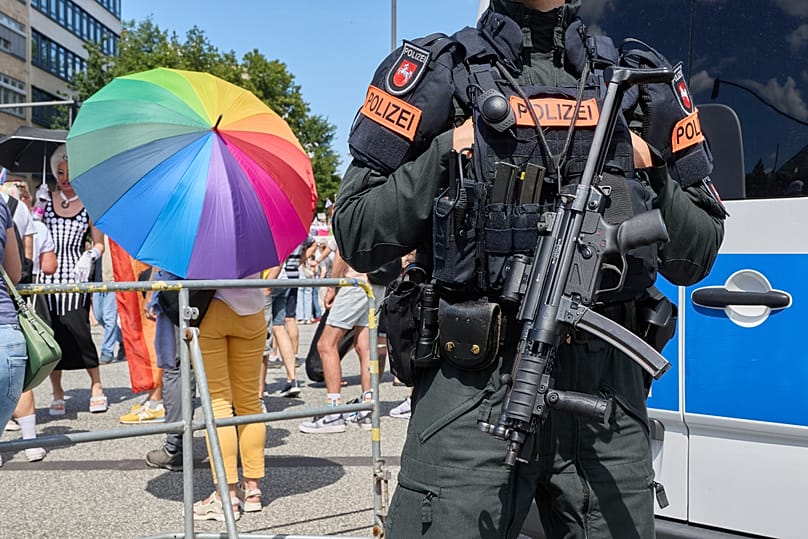
 

Hamburg celebrates Pride with increased security one week after deadly Berlin attack


By Emma De Ruiter
Published on

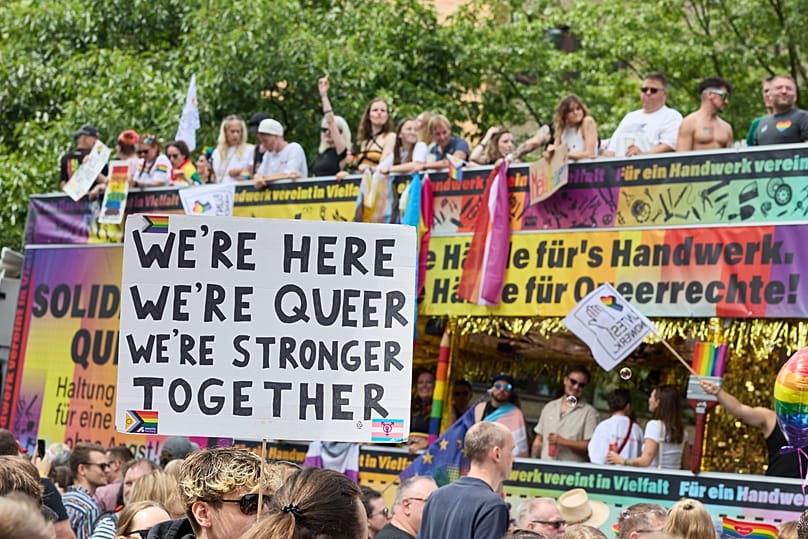
The Hamburg event's motto this time is “Queer in solidarity. Take a stand — for a future without fear.”

Hamburg celebrated its annual Pride event, one of Germany's biggest, with increased security on Saturday, one week after a deadly attack near Berlin's pride parade that shocked the country.

Organisers expected around 250,000 people to attend the parade, which this year has the motto "Queer in solidarity. Take a stand — for a future without fear."

A late addition to the trucks taking part was one representing the Berlin Pride event — or Christopher Street Day, CSD for short, as the parades are known in Germany. People on that truck were asked to wear dark clothing as a sign of respect for the victims of last week's attack, where one person was killed and 29 others injured.

A reveller holds a placard during the Hamburg Pride 2026, the Christopher Street Day (CSD) parade, in Hamburg, Germany, Saturday Aug. 1, 2026. Georg Wendt/dpa via AP

Late on July 25, a man plowed a van into people a few hundred metres from the closing party of the Berlin Pride event before cutting others with what appears to have been a machete.

The 21-year-old suspect, Abdul Ballout, was killed in a confrontation with police on Sunday. Investigators later found a video in which a person believed to be the suspect claimed responsibility and pledged allegiance to the Islamic State group.

Prosecutors have said Ballout, who was born in Germany and has Lebanese roots, travelled to Lebanon in 2025 with the goal of going to Syria to join IS. He made contact with several people who were presumed members.

Hamburg's police chief said earlier this week that roughly twice as many officers as last year would protect the Hamburg event.

A police officer stands on Steindamm at the edge of Hamburg Pride 2026, the Christopher Street Day (CSD) parade, in Hamburg, Germany, Saturday Aug. 1, 2026. Georg Wendt/dpa via AP

“After the brutal attack on the CSD in Berlin, many are unsure in the queer community but also in society whether here and today is the right place,” Hamburg's deputy mayor, Katharina Fegebank, told RTL television.

“I say, now more than ever, let’s all take to the streets, stand up for diversity, for freedom, for an open society, and above all, in full solidarity with and for the queer community," she added.

"Well, when something like that happens, we all have to show that we’re not afraid, that we won’t let it get us down," said Petra Schwab, who was attending Saturday's Pride in Hamburg.


Find in German cave: 40,000-year-old mammoth ivory bird figures discovered

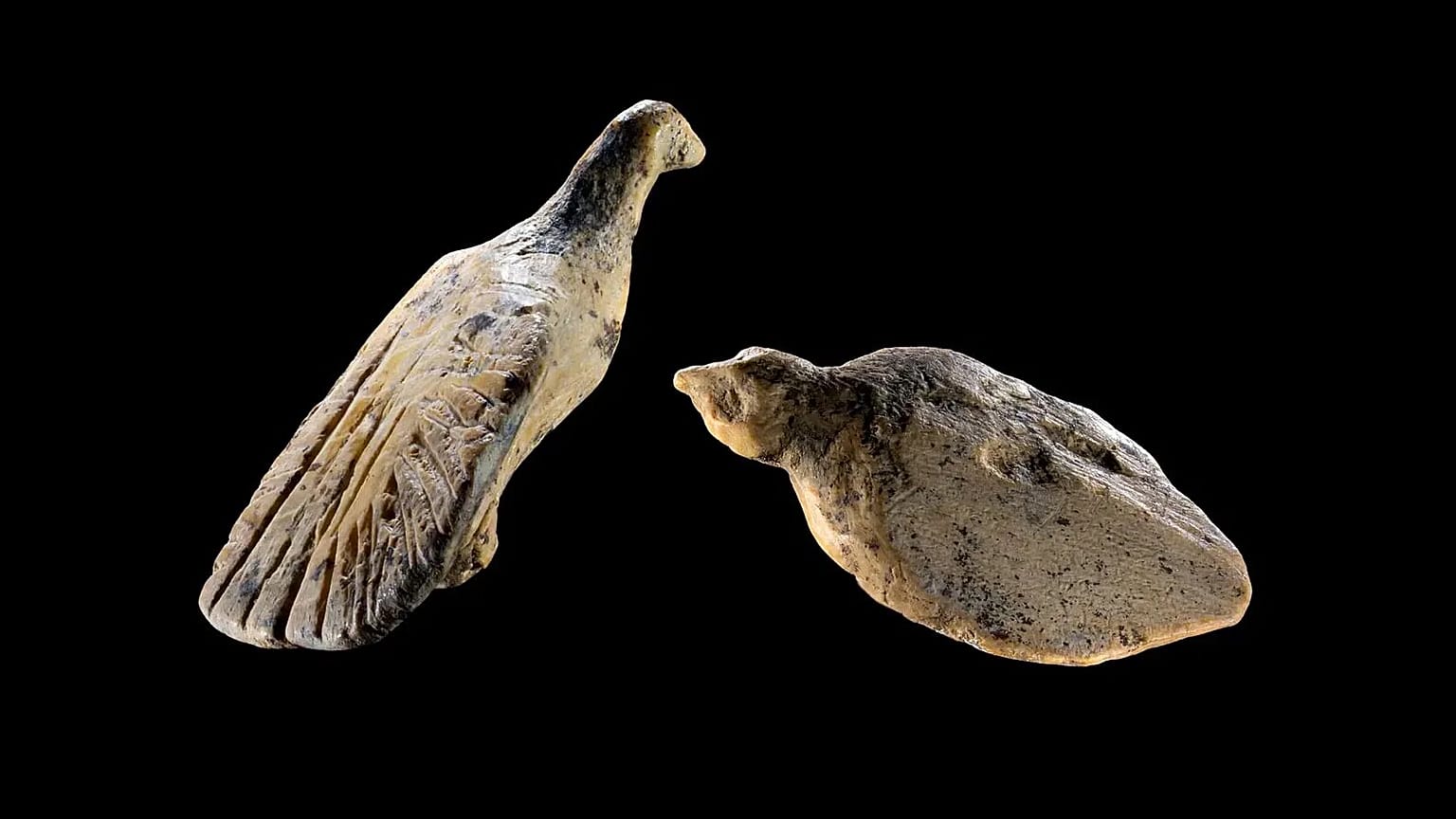
Archaeologists recently discovered two bird figurines carved from mammoth ivory in the famous prehistoric Hohle Fels cave in Germany.
Copyright Ralf Ehmann / Universität Tübingen

By Nela Heidner
Published on

During excavations in the Hohle Fels cave, archaeologists uncovered two bird figurines carved from mammoth ivory, hinting at humans’ striking artistic sense 40,000 years ago.

The two figurines, discovered by a team from the University of Tübingen in the lower layers of the cave, are thought to have been made by people of the Aurignacian culture, who lived in the region during the Upper Palaeolithic.

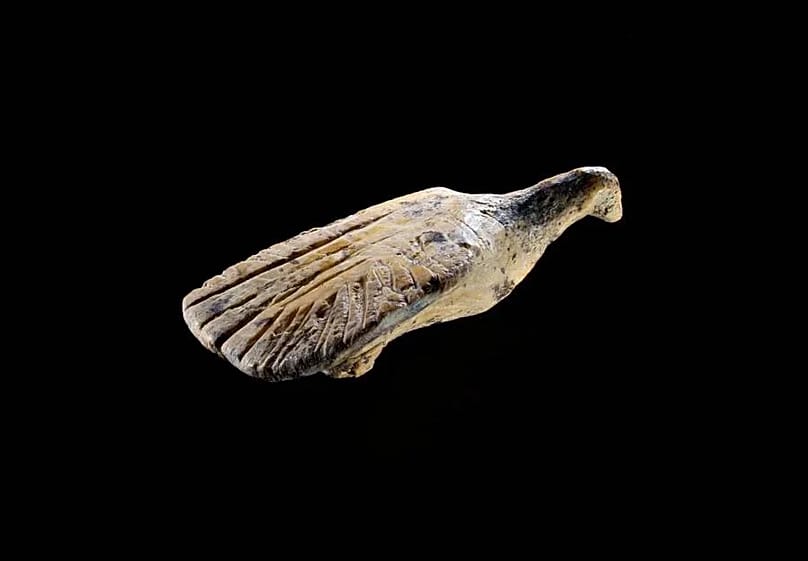
The better preserved of the two carvings depicts a bird at rest, possibly brooding. The other shows a bird with outstretched wings, although the left wing has broken off. Archaeologists found the two figurines only about a metre and a half apart.

Miniature carvings made from mammoth ivory

Both sculptures are so small they would fit on a fingernail and weigh just 1.3 and 0.7 grams respectively. One of them – a bird with outspread wings and a length of only two centimetres – is currently regarded as the smallest known Ice Age artwork ever discovered in the region.

One of the bird figures bears parallel lines on its wing, which are thought to represent feathers.
One of the bird figures bears parallel lines on its wing, which are thought to represent feathers. Ralf Ehmann, Universität Tübingen

"Mammoth ivory was not simply used here to create a simplified form of a bird's body," explains Nicholas Conard, an archaeologist at the University of Tübingen and head of the excavations, in a statement. "Detailed observations of nature were translated into figurines whose richness of detail even allows us to investigate which bird species is depicted and what it is doing."

The resting bird, shown stretched out and lying flat, may depict a bird brooding or sitting on a nest of eggs. The second figurine, with its wings spread and neck extended, could show a bird in courtship display, taking off or landing on water.

Ptarmigan or capercaillie?

Archaeologists are still not entirely certain either about the exact species of bird or the behaviours portrayed. One possibility is that the figurines show ptarmigan – a cold-adapted species whose bones are frequently found at prehistoric sites in the region.

However, they might also represent larger, pheasant-like birds such as the capercaillie, a woodland species known for its striking appearance and elaborate courtship rituals. The detailed carvings allow comparisons of body shape, posture and the depiction of plumage, but the tiny dimensions and stylised execution of the figurines make a definitive identification difficult.

What is clear is that both species were already present in Europe during the Ice Age.

Hohle Fels cave (often also called Hohler Fels) was inhabited during the Aurignacian period (around 43,000 to 28,000 years ago) by early Homo sapiens, at a time when Neanderthals had already disappeared from Europe.

In this period, humans experienced a remarkable cultural and artistic flowering and created some of the oldest known musical instruments, items of jewellery and figurative artworks. Among the cave's most famous finds is the "Venus of Hohle Fels", a roughly 41,000-year-old ivory figure of a woman with accentuated breasts and hips, regarded as one of the oldest examples of figurative art in Europe.

Hohle Fels is one of six caves in the Swabian Jura that enjoy special protection as part of a UNESCO World Heritage site. The region is considered one of the most important archaeological landscapes for studying the beginnings of human art in Europe.

Since archaeological excavations began there in the 1860s, numerous finds dating from between 33,000 and 43,000 years ago have been uncovered, including some of the earliest known musical instruments.

The figurines will remain on display at the Museum of Prehistory and Ice Age Art in Blaubeuren until 4 April 2027.


Mysterious DNA: two unknown ancestors found in human genome

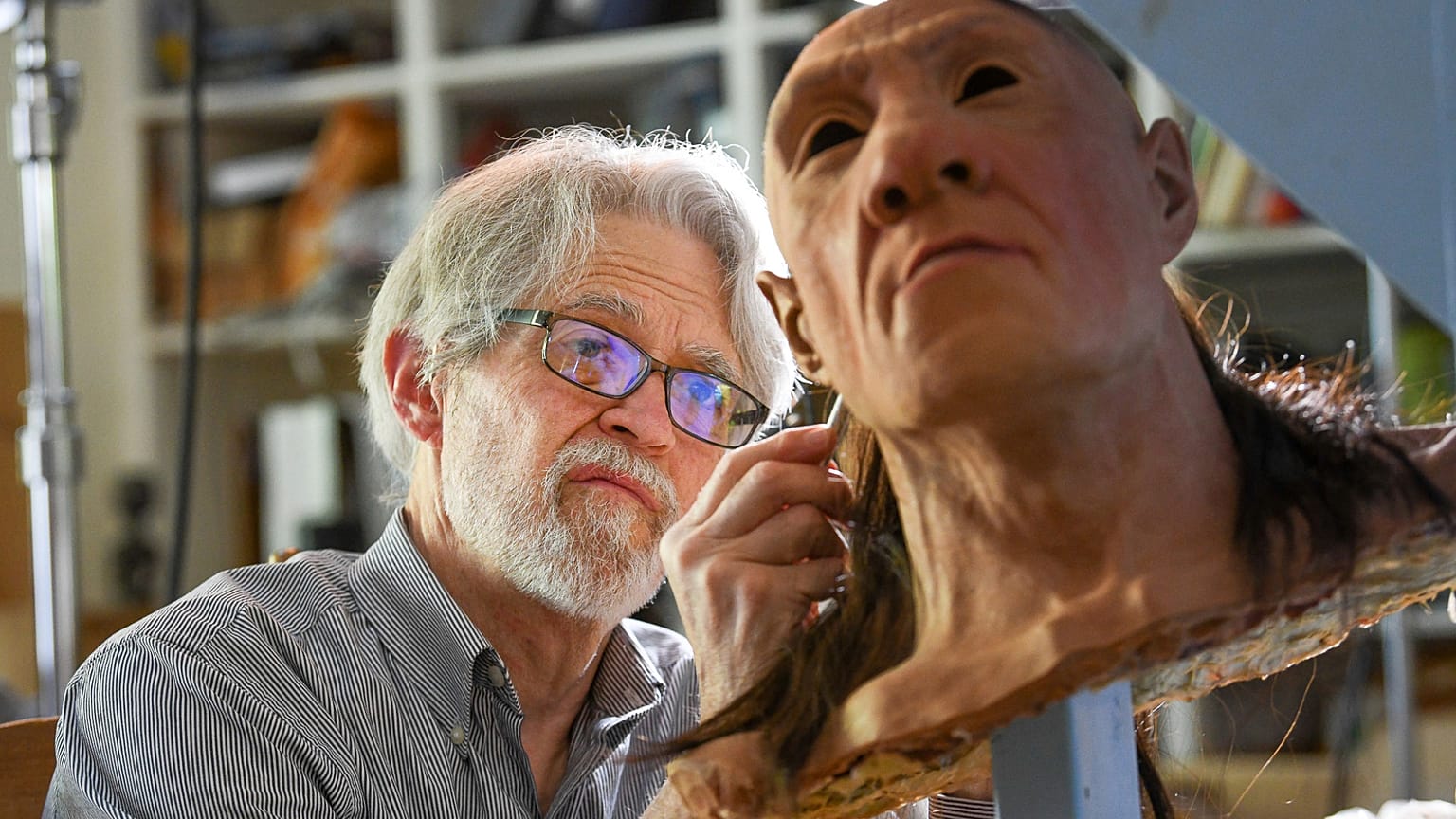
Paleoartist John Gurche adds hair to the reconstruction of Neanderthal Shanidar 1 in his studio in Trumansburg, New York, on 31 May 2023.
Copyright AP Photo

By Nela Heidner
Published on

The human family tree is gaining new branches. Researchers have found in modern humans' DNA signs of two previously unknown ancestors – extinct human forms with no fossils or decoded DNA, yet they have left traces in our genome.

Researchers at the prestigious University of California, Berkeley, have made a spectacular discovery: they identified stretches of DNA in the genomes of modern humans (source in German) that come from previously unknown ancestors. The scientists talk about so-called "ghost ancestors," because nothing is yet known about these extinct human groups.

Homo sapiens is today the only human species still alive. In the distant past, however, it shared the Earth with numerous other hominins.

Earlier studies had already shown that modern humans interbred with Neanderthals and the so-called Denisovans and had joint offspring. Many people still carry the genetic traces of these encounters in their DNA today. A new study now suggests that there were at least two further, previously unknown human groups that also passed on DNA to our ancestors.

One of these previously unknown ancestors interbred in Africa with the forebears of modern humans more than 50,000 years ago. This happened before the last major migration wave of Homo sapiens to Europe and Asia. The genes inherited at that time now account for around 1% of the DNA of all humans, roughly as much as the share of Neanderthal DNA.

According to the researchers' calculations, this mysterious human lineage had split from the evolutionary line leading to modern humans around 800,000 years ago, roughly at the time when Neanderthals and Denisovans also diverged from one another.

"Earlier studies had already hypothesised that there is a so-called ghost lineage, meaning genetic traces of unknown extinct human lineages in the genomes of modern humans," explains Berkeley doctoral student Yulin Zhang, one of the study's lead authors. "However, it was previously unclear whether this unknown lineage occurs only in Africans and when this admixture happened. We have now been able to identify and map the relevant DNA segments in the genomes of modern humans and show that this ghost lineage is found in all people living today, not just in Africans."

Timeline: 1.8 million years

Even more enigmatic is the second ancestor, which the researchers describe as a "super-archaic ancestor". This human lineage had already branched off from other hominins around 1.8 million years ago. More than 200,000 years ago, it probably interbred in Eurasia with the Denisovans, and via this detour fragments of the ancient DNA finally found their way into the genome of modern humans.

"The evidence for this super-archaic ancestor is particularly exciting because it reveals genetic contributions from a human lineage that lived more than a million years ago, even though no DNA from this population has yet been decoded," says Arjun Biddanda, a postdoctoral researcher at Johns Hopkins University and co-lead author of the study.

"Thanks to ancient DNA from Neanderthals and Denisovans and new genealogical methods, we are increasingly realising that human populations have repeatedly mixed with one another in the course of evolution," says Priya Moorjani, professor of molecular and cell biology at the University of California, Berkeley. "Human evolution therefore resembles less a branching family tree and more a complex network in which different populations were linked by repeated migrations and admixture."

Difference between Neanderthal and Denisovan DNA

Most people outside Africa today carry about 1 to 2% Neanderthal DNA in their genomes. More precisely, on average around 1 to 2% of the genome of present-day Europeans and Asians comes from Neanderthals. This is the result of interbreeding between Neanderthals and early modern humans around 50,000 to 60,000 years ago, shortly after Homo sapiens left Africa.

The inherited DNA segments still influence humans today. Some variants are associated with the immune system, skin and hair traits or adaptation to environmental conditions. Others increase the risk of certain diseases or affect the response to infections.

Population groups in Asia and Oceania also carry, in addition to Neanderthal DNA, genetic contributions from Denisovans. Corresponding remains of Denisovans have mainly been sequenced from the Eurasian region:

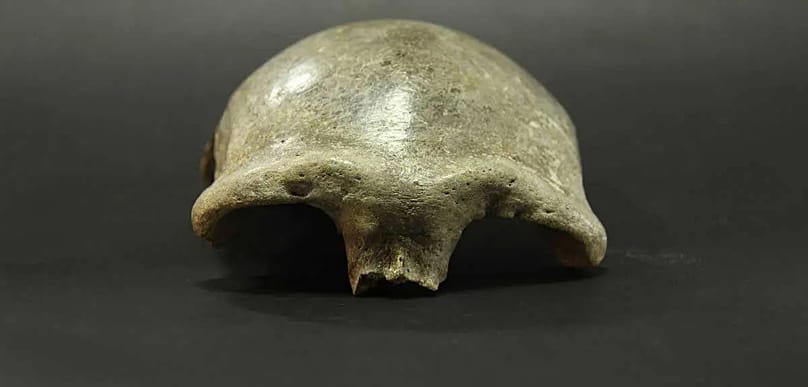
The genome of the oldest human fossil yet discovered in Mongolia provided new insights into early human history around six years ago. Researchers at the Max Planck Institute for Evolutionary Anthropology in Leipzig and the Mongolian Academy of Sciences showed that around 25% of the DNA in the approximately 34,000-year-old remains of a woman came from West Eurasian ancestors. The team also found in the woman's genome, as in that of a roughly 40,000-year-old individual from China, DNA traces of Denisovans, the extinct human form that lived in Asia before modern humans arrived there.

It is also interesting that Neanderthals and Denisovans interbred with each other as well. From a fossil from Denisova Cave in the Altai Mountains in southern Siberia, near the borders with Kazakhstan, Mongolia and China, it is known that it belonged to a woman with a Neanderthal mother and a Denisovan father, direct evidence that the two human forms had joint offspring.

The skullcap found in the Salkhit Valley in eastern Mongolia comes from a woman who lived around 34,000 years ago. Institut für Archäologie, Mongolische Akademie der Wissenschaften

Exactly who these "ghost ancestors" and the "super-archaic ancestor" were is still unclear. However, the calculated dates of their divergence fit known human forms. The ghost ancestors could have belonged to Homo groups of the Middle Pleistocene that lived in Africa around 800,000 years ago. The super-archaic ancestor, by contrast, could be identical with or closely related to Homo erectus, which populated Eurasia as early as about 1.8 million years ago.


Ancient mummy DNA in Chile shows that colonisation brought smallpox to the Americas

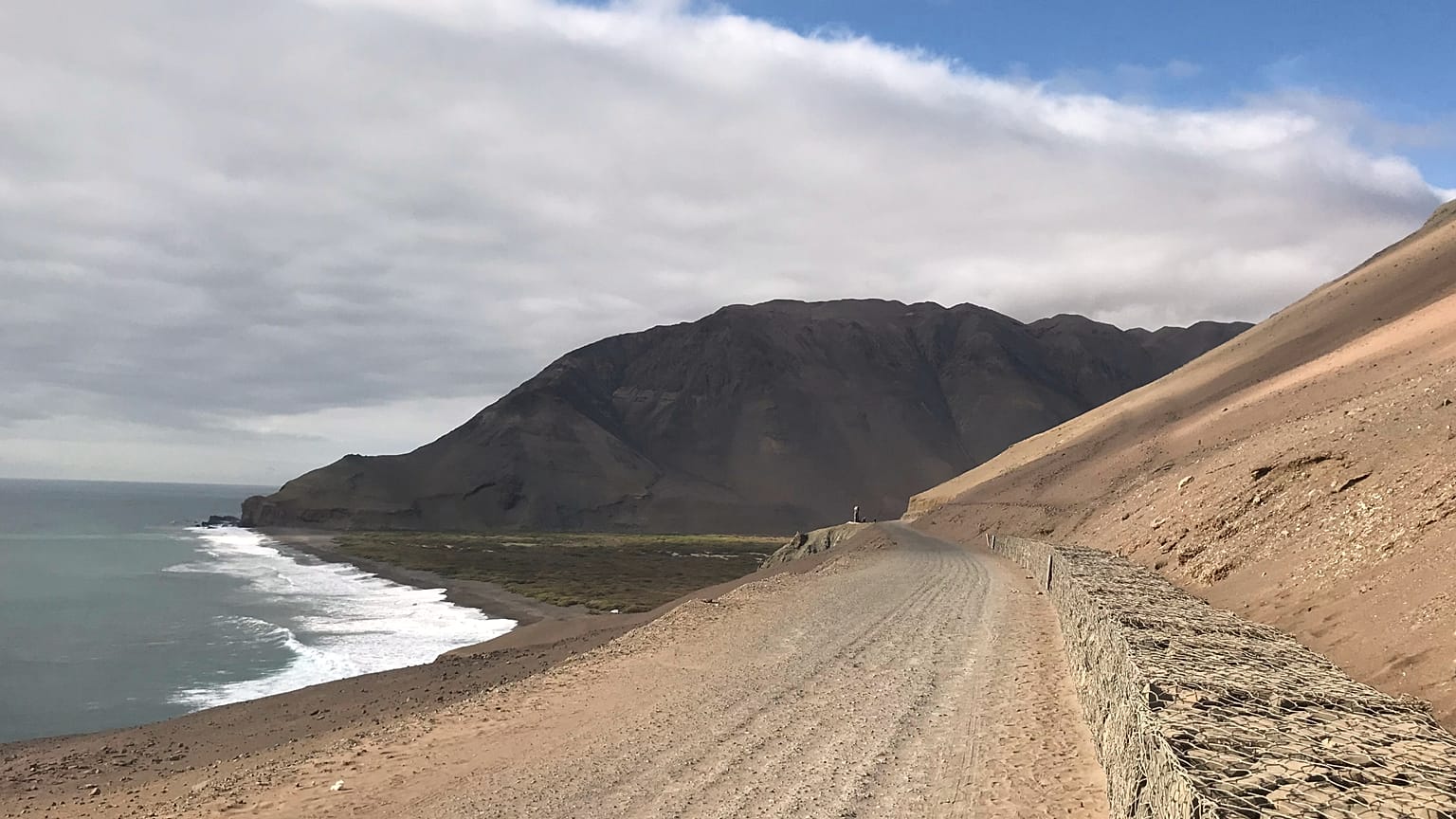
Camarones coast in Northern Chile, where scientists found evidence of ancient smallpox infections.
Copyright Bernardo Arriaza via AP

By Marta Iraola Iribarren with AP
Published on

Analysis of DNA from Chilean mummies has revealed the earliest known genome of the smallpox virus recovered from the Americas.

Ancient mummy DNA recovered in Chile offers the clearest genetic evidence yet that European colonisation brought this disease to the Americas, according to a new study.

Smallpox was one of the deadliest diseases in human history before it was eradicated in 1980, largely thanks to vaccination. For centuries, the virus had killed about one-third of the people it infected and left most survivors with deep and sometimes disfiguring scars.

The first historically documented smallpox outbreak in the Americas occurred in 1518, during the Spanish conquest of the Caribbean. The disease then spread rapidly across North, Central and South America, killing millions of people, particularly among Indigenous populations who had no prior immunity.

In the new study, published in the journal Science, researchers from Trinity College Dublin examined 13 bone samples previously collected from an archaeological site at Camarones, in northern Chile.

The analysis provides the strongest genetic link yet between smallpox found in the Americas and strains that circulated elsewhere in the world, offering new insights into how the virus reached remote populations following European colonisation, the authors said.

They found evidence of two smallpox infections in ancient DNA from the leg bone fragments of an adult man and woman, who were between 18 and 35 years old and whose cause of death was likely smallpox.

By dating the remains and analysing the viral DNA, the scientists concluded that the two individuals likely died between 1492 and 1631. They also compared this version of the smallpox virus with other known strains and found that it fell genetically between medieval European strains and later variants.

This was important molecular evidence, suggesting that the strains of smallpox infecting people in the Americas descended from strains circulating in Europe.

“Nobody would ever question that smallpox came to this hemisphere from colonisation, but this proves it,” said Patricia Foster, a biologist at Indiana University, who did not participate in the study.

Exactly which population brought smallpox to the Americas from Europe remains unclear, said the study authors. Settlers came in different waves to the Americas following the explorations of Christopher Columbus in the Caribbean in 1492 and Amerigo Vespucci along the South American coast about a decade later.

The disease may also have spread via Africa during the expansion of the transatlantic slave trade.

The infections were identified in an area with no previous record of smallpox, raising new questions about how the virus reached such a remote part of South America. It may have spread along Indigenous trading networks that predated the arrival of Europeans.

Studying different strains of the virus also allowed scientists to trace how it evolved over time, including the loss or inactivation of certain genes that may have helped it adapt to humans.

The findings point to how devastating the disease was across the Americas, wiping out entire populations and leaving them vulnerable to European conquest, said study coauthor Constanza de la Fuente Castro, a biological anthropologist at the University of Chile.

“It wasn't just cultural or demographic. It's literally written into biological evidence that we can still recover and read today,” de la Fuente Castro said.

Mountaineer Nirmal Purja killed with all members of expedition in Pakistan avalanche

Nirmal Purja, who became the first to scale Mount K2 in winter, died in an avalanche while attempting to climb Broad Peak mountain in Pakistan.
Copyright The Associated Press. All rights reserved.

By Gael Camba & AFP
Published on

Renowned mountaineer Nirmal Purja died with other team members in a powerful avalanche in Pakistan, his climbing company confirmed on Saturday, after rescuers recovered the remains of three climbers from the 10-strong expedition during a high-altitude search.

Renowned mountaineer Nirmal Purja has been confirmed dead in an avalanche accident in Pakistan, his climbing company Elite Expeditions said in a social media post on Saturday.

The avalanche struck on Thursday, cutting off contact with the international expedition led by 43-year-old British-Nepali climber Purja on Broad Peak in northern Pakistan.

"It is with profound sadness and immense heartbreak that we confirm that Nirmal Purja tragically lost his life following the avalanche on Broad Peak," Purja's company Elite Expeditions said on social media.

"We have also received confirmation that other members of the expedition sadly did not survive," it added.

The remains recovered so far, flown by helicopter to a hospital for formal identification, included an American woman, an Omani woman and a Nepali man, the regional government said in a statement released on Friday night.

Lost contact since Thursday

The team lost contact with their base camp Thursday after an avalanche struck Broad Peak as they attempted to scale the mountain, said Karrar Haidri, vice president of the Alpine Club of Pakistan on Friday.

Nepal's Prime Minister Balendra Shah offered his condolences over the "tragic" deaths of Purja and the other climbers, which he said "has shocked us".

"The physical journey of all the deceased climbers... has been interrupted, but the history of their courage, dedication, and contributions will always remain inspiring," Shah said in a statement on social media.

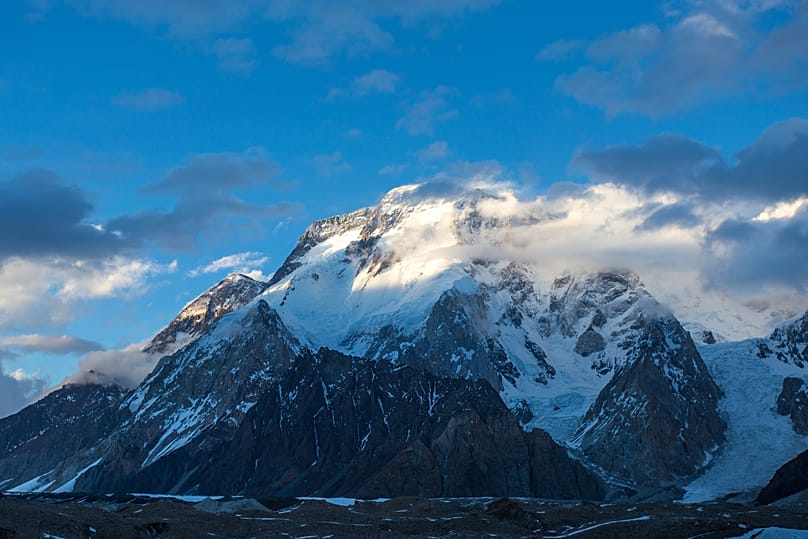
Broad Peak Illuminated at Daybreak, from Concordia Camp, Pakistan. Anne Dirkse via Wikimedia Commons

Police in the mountainous northern Gilgit-Baltistan region said in a statement that high-altitude porters and rescue teams were carrying out a second day of the operation on Saturday after the search was paused due to difficult weather conditions a day earlier.

Rescuers and military helicopters had been scouring the area and teams stayed at the base camp overnight, according to the regional government.

"The rescue operation is being conducted under extremely challenging terrain and high-altitude weather conditions by the Pakistani army in coordination with local high-altitude climbers and rescuers," it said.

Powerful avalanche

The avalanche struck while the mountaineers were on a mission to summit Broad Peak 8,047 metres on Thursday and while the team was ascending at an altitude of around 6,600 metres, according to regional authorities.

The expedition comprised 10 people, including Purja, five Nepalis, a Pakistani, an Omani, an American, and a climber from China.

"Data from their tracking devices indicates that they were thrown hundreds of metres down the mountainside," Naila Kiani, from Pakistan's Alpine Club, told Le Monde newspaper.

Elite Expedition announced death of Nirmal Purja in avalanche in Pakistan this Saturday. Elite Expedition social media post

Fida Ali, a climber in the area who worked closely with Purja since 2023, said their focus for the climbing season was summiting Broad Peak, but they had first tackled another mountain, G2, in harsh weather.

Ali also joined the expedition to Broad Peak in its initial stages but returned early to accompany a Russian climber who was feeling the effects of exhaustion - narrowly avoiding the fatal avalanche.

"I wanted to go with him (Purja) but couldn't and came back with her. I was part of the team but survived," he said.

Record high peaks climb

Purja had written on X this week that he was close to becoming the first person to climb all 14 "super peaks" twice without oxygen.

"Broad Peak, I ask for nothing but safe passage up and back down," he wrote.

He had climbed all 14 "eight-thousanders" (peaks above 8,000 metres) in six months and six days between April and October 2019, then a record.

Broad Peak is the world's 12th highest mountain, located in the Karakoram range in northern Pakistan, and is regarded as one of the toughest and most technical climbs of all the 8,000-metre-plus ascents.


Rescuers recover climber Nirmal Purja's


body after avalanche disaster


Skardu (Pakistan) (AFP) – Rescuers recovered the body of renowned climber Nirmal Purja on Sunday after an avalanche killed him and nine team members on one of the world's highest peaks in northern Pakistan, the Alpine Club of Pakistan said.


Issued on: 02/08/2026 - RFI


Rescuers have recovered the body of renowned climber Nirmal Purja, who was killed along with nine team members in a powerful avalanche in northern Pakistan this week, the Alpine Club of Pakistan said
© Aamir QURESHI / AFP

The avalanche struck on Thursday, cutting off contact with the international expedition led by Purja, a 43-year-old British-Nepali climber, on Broad Peak.

"The ground rescue team has reached Nims Dai (Purja) at approximately 5,700m on Broad Peak -- a mountain he loved, and a mountain that has now taken him from us," the club posted on social media.

The club's general secretary Ayaz Shigri said a ground rescue team was transporting four bodies -- including those of Purja, two other Nepali nationals and a Chinese citizen -- down from the mountain.

"Rescuers have also confirmed the presence of one additional body at a significantly higher elevation," he said in a statement.

"Due to the extremely hazardous terrain and prevailing conditions, it is unlikely that a recovery attempt will be made at this stage," he added.

The avalanche struck on Thursday, cutting off contact with the international expedition led by Purja, a 43-year-old British-Nepali climber, on Broad Peak © AMELIE HERENSTEIN / AFP

Purja's expedition company confirmed on Saturday that no team members had survived.

Regional authorities said the remains of three climbers -- an Omani woman, a Nepali man and an American woman -- had been recovered and flown to the city of Skardu on Friday.

The avalanche has sparked an outpouring of shock in the mountaineering community, especially in Nepal, and leaders including Britain's Prince William have expressed condolences to the families of the climbers.
'Unthinkable loss'

Purja, who served with Britain's Brigade of Gurkhas before joining the Special Boat Squadron of the Royal Marines, broke multiple climbing records since becoming a full-time mountaineer and tour guide.


A digital billboard (top, R) displays the condolences after the death of mountaineer Nirmal Purja and his companions by an avalanche in Pakistan © Prakash MATHEMA / AFP

"Nims (Purja) served with distinction in the British Armed Forces before becoming one of the world's greatest mountaineers, putting Nepalese climbers on the map," Prince William posted on X, saying he was "truly saddened" by the loss of life.

Purja had written on X on Monday that he was close to becoming the first person to climb all 14 "super peaks" twice without oxygen.

"Broad Peak, I ask for nothing but safe passage up and back down," he wrote.

Rescuers have been scouring the difficult, high-altitude mountainside for days by air and ground after contact was lost with the team on Thursday.

"My loving brothers... We will take you back home to see (your) families," Mingma G Sherpa, a mountaineer involved in rescue posted on Instagram on Saturday.

Messages of grief poured out after the confirmation that none of the team had survived.

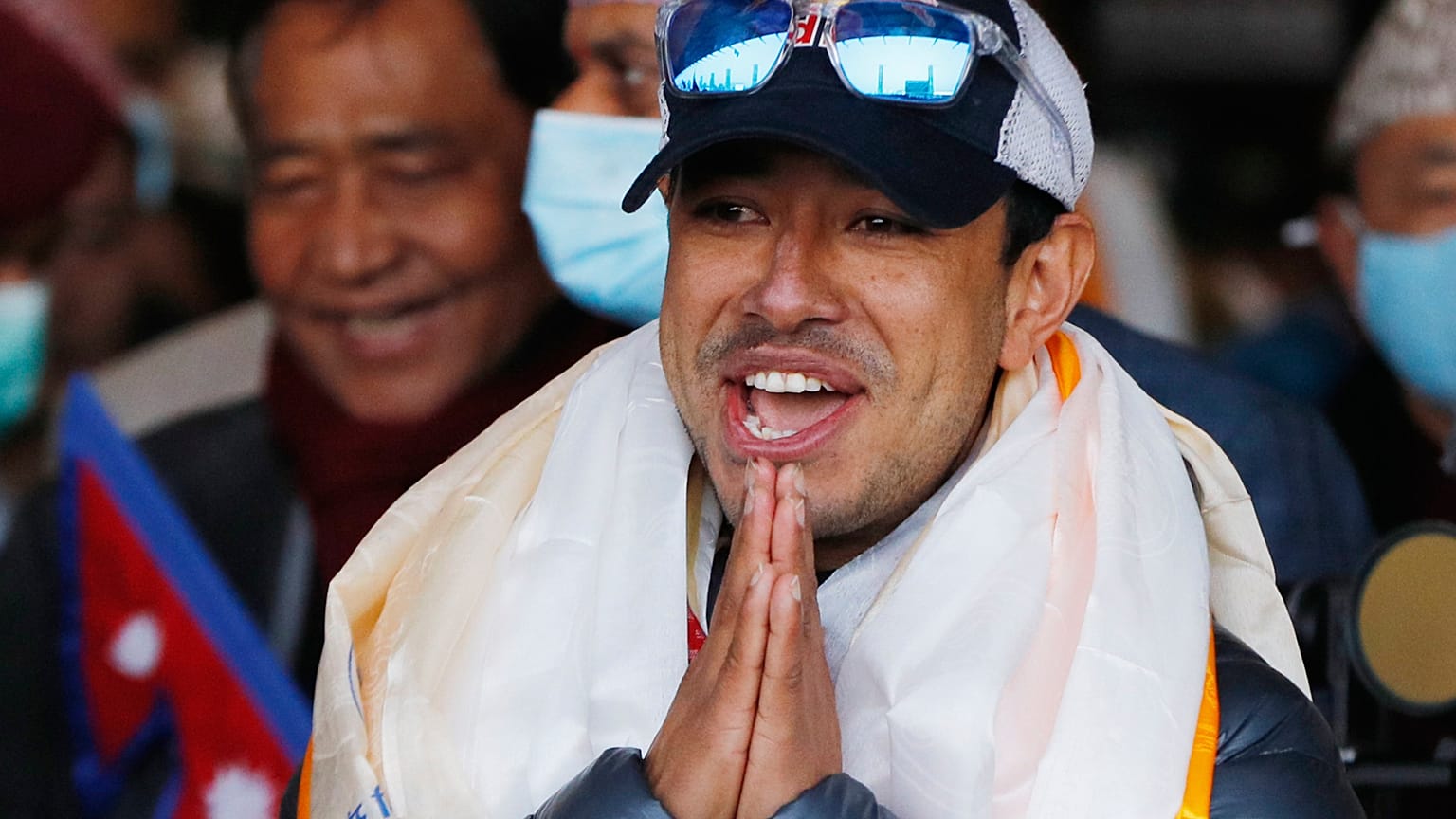
Nepal's climber Nirmal Purja (2R) walks upon his arrival along with his team at the airport after becoming the firsts to summit Pakistan's K2 mountain in winter, in Islamabad on January 21, 2021 © Farooq NAEEM / AFP

"This is an unthinkable loss for our mountaineering community and for the nation," Fur Gelje Sherpa, the President of Nepal's mountaineering association posted on social media.

"He was keen on making Nepal recognized in the world and developing our mountaineering sector."

Broad Peak is the world's 12th highest mountain, located in the Karakoram range in northern Pakistan, and is regarded as one of the toughest and most technical climbs of all the 8,000-metre-plus ascents.

It was first summited in 1957 by an Austrian team.

© 2026 AFP


Across Indo-Pacific Countering Cybercrime Increasingly Seen As National Security Mission


Key Takeaways:

Cybercrime has shifted from a pure law-enforcement issue to a national-security threat. Scam centers in Myanmar, Laos, and Cambodia, often linked to militias and Chinese networks, generate billions through forced labor and sophisticated online fraud.

Regional governments are adopting whole-of-government responses. India coordinates rescues and trafficking disruption, Australia funds cyber resilience and imposes sanctions, and the Philippines targets resale of text-blasting devices used for scams.

Multilateral action is expanding but still insufficient. Interpol’s Operation Secure dismantled over 20,000 malicious domains in early 2025; experts call for stronger ASEAN intelligence sharing and multistakeholder partnerships to curb victim trafficking and protect internet infrastructure.

Once viewed primarily as a law enforcement challenge, cybercrime is increasingly seen as a national security risk. Nations across the Indo-Pacific are responding with whole-of-government strategies encompassing intelligence operations, border security, financial sanctions, international partnerships and, in some cases, military engagement.

In Southeast Asia, crime syndicates, militia groups and other corrupt actors have joined to control areas where they can “openly engage in modern slavery, target a global population with sophisticated scams in impunity, and drain billions of dollars in resources from victims across the globe,” Jason G. Tower, an expert at the Switzerland-based Global Initiative Against Transnational Organized Crime, told FORUM.


The scale of the threat was underscored in Interpol’s 2025/2026 Asia and South Pacific Cyberthreat Assessment Report, which found that cybercrime accounts for 30% of national crime in more than half of the 18 countries surveyed.

In areas such as Myawaddy and Payathonzu in Myanmar, Bokeo in Laos, and Poipet and Koh Kong in Cambodia, traditional economies have been supplanted by online scam-based ones, leaving residents with few options to make a living. Meanwhile, thousands of workers remain trapped in regional scam centers.

“The threats emanating from these scam states rival and, in many cases, surpass threats from terrorism,” Tower said, noting that criminal operations in Myanmar, for example, are supported by militia groups, including those aligned with the nation’s ruling military junta.

Investigators also have linked many scam center operators to the Chinese Communist Party (CCP). Although the scam groups are not necessarily directed by Beijing, they align with the CCP’s interests and are protected by political relationships.

India’s preventive approach includes strengthened coordination among the nation’s Cyber Crime Coordination Centre, Central Bureau of Investigation and embassies across Southeast Asia to identify trafficking networks, warn potential victims, support rescue operations and disrupt recruitment pipelines feeding scam compounds.


Australia has positioned itself as a regional financial anchor for cyber resilience, committing about $60 million through 2028 under its Southeast Asia and Pacific Cyber Program and deploying cybersecurity experts to Kiribati, Papua New Guinea, Tonga, Tuvalu and Vanuatu. Canberra also imposes sanctions on cybercriminals.

In the Philippines, police are cracking down on the resale of text-blasting devices allegedly salvaged from shuttered offshore gaming operations. Officials say the devices serve as “portable cell sites, forcing nearby phones to receive unsolicited and often malicious messages,” the Philippine News Agency reported.

Multilateral law enforcement operations are producing results. Interpol’s Operation Secure, conducted from January to April 2025 across 26 countries, dismantled more than 20,000 malicious internet domains and addresses.

More regional cooperation is needed, including intelligence sharing among entities such as the 11-member Association of Southeast Asian Nations, said Arindrajit Basu, a nonresident fellow at New America, a United States-based think tank.

“Cybercrime syndicates are not going away any time soon,” he told FORUM. “Building resilient multistakeholder partnerships that stops the trafficking of victims to the scam centers, raises awareness and protects the technical architecture of the internet will therefore prove crucial.”


About the author: Mandeep Singh is a FORUM contributor reporting from New Delhi, India.

Source: This article was published by Indo-Pacific Defense FORUM

About Indo-Pacific Defense Forum
Indo-Pacific Defense Forum is sponsored by the United States Indo-Pacific Command (USINDOPACOM) and publishes daily online articles, daily social media updates and a quarterly magazine to provide timely updates on the Indo-Pacific security environment.
View all posts by Indo-Pacific Defense Forum →