Wednesday, October 07, 2026


Turkey censors country’s censorship watchdog as crackdown on dissent goes into overdrive

Turkey censors country’s censorship watchdog as crackdown on dissent goes into overdrive
In Turkey, EngelliWeb is seen as the number one digital rights watchdog in tracking state censorship. / @engelliwebFacebook
By Akin Nazli in Belgrade October 6, 2026

Turkey’s campaign against online dissent reached a grim milestone this week as authorities blocked access to EngelliWeb, the country’s number one digital rights watchdog in tracking state censorship.

Social media platform X (formerly Twitter) made EngelliWeb’s account (@engelliweb) invisible to users inside Turkey on October 1 after receiving an order from the Cybersecurity Presidency (SGB), the Freedom of Expression Association (IFOD), which operates EngelliWeb, said on October 2.

On October 4, IFOD said that its own X account (@ifadeorgtr) was now also blocked. The association added that it was yet to identify any ruling or directive behind the blocking of both accounts.

The directives, as usual in such censorship pursued by the country’s Erdogan administration, were based on Article 8/A of Turkey’s Internet Act No. 5651, a controversial provision that grants administrative bodies broad powers in removing content or blocking access to content on the grounds of national security and public order.

The blocking of EngelliWeb amounts to another interesting development in a recent wave of what free-speech advocates describe as unprecedented digital repression. In the face of the sheer amount of censorship pursued in recent weeks in Turkey, it would be fair to refer to a “tsunami” of account blockages.

Data released by IFOD reveals that authorities ordered the blocking of at least 1,270 X accounts during September alone, with X complying in geo-blocking roughly 90% of the accounts in Turkey. The single-month tally eclipses the total number of accounts targeted under Article 8/A in all of 2025, when 995 accounts were restricted.

"The September figures demonstrate that a structural flaw in the law has mutated into a mass censorship apparatus," IFOD said in its statement.

The sweeping purge has reached far beyond political activists, impacting prominent journalists, independent news outlets, academics and financial analysts. Among those restricted are economists, including the academic Veysel Ulusoy, in addition to independent media such as major news portal T24, Kisa Dalga and soL Haber. Human rights groups including Amnesty International Turkey and the We Will Stop Femicide Platform have also been targeted.

All in all, the affected accounts have an aggregate audience of more than 35mn followers. Seventy of the restricted profiles possess follower counts exceeding 100,000.

The clampdown has relied heavily on wide-scope court rulings issued with minimal public documentation. In one instance, an Istanbul magistrate’s court ordered the blocking of access to materials of 73 institutions and individuals, with 179 separate web addresses caught in the net. The court order cited boilerplate legal texts and provided no detailed justification for the moves it permits.

The main website and social media account of T24 were blocked after a prosecutor alleged 118 articles it published in the past year threatened "Turkish family structure".

X has routinely complied with legal orders to restrict accounts within Turkey’s borders, rather than risk facing bandwidth throttling or total access bans. Such a fate has previously befallen rival platforms operating in the country.

The owners of blocked accounts quickly open new accounts, but X then blocks these accounts. Local journalists generally have reserve accounts shared via their profiles. They jump to these fallback options when their accounts are barred.


Who stands to gain most from the UN’s critical minerals push in Africa?

Who stands to gain most from the UN’s critical minerals push in Africa?
/ bne IntelliNewsFacebook
By Brian Kenety October 6, 2026

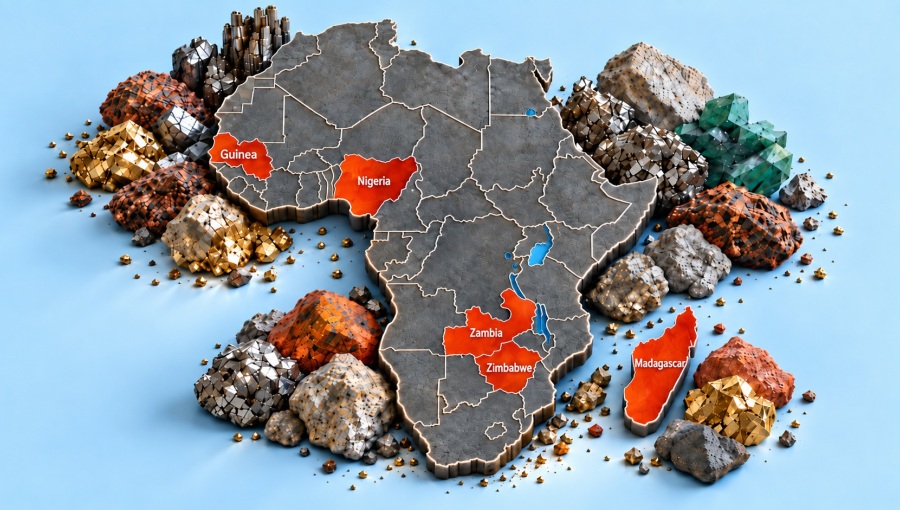
Chinese companies already operating or building processing plants in Zimbabwe, Guinea and Nigeria are best placed to benefit from a new United Nations programme to help five African states keep more of their mineral wealth at home.

On September 23, the UN chose Guinea, Madagascar, Nigeria, Zambia and Zimbabwe, along with Indonesia, for its Country Support Mechanism on Critical Energy Transition Minerals. The programme names no companies and carries no announced funding. So any corporate gain depends on whether its policy and regulatory advice makes local processing easier to finance and operate.

Chinese groups start with a clear advantage because they can often combine mine finance, construction, processing technology and long-term offtake in a single investment package. A programme that offers advice rather than capital does not by itself change that.

The picture is less clear for the African states themselves, and for the domestic and non-Chinese companies operating there.

What the UN is offering

The UN mechanism is intended to help mineral-rich developing countries move beyond raw-material exports into processing, manufacturing and other higher-value activities.

Announced by UN Secretary-General António Guterres, it will provide policy advice, legal and regulatory expertise, environmental and social safeguards, and support for building domestic mineral value chains. The UN Development Programme (UNDP) and the UN Development Coordination Office are leading it.

It grows out of the Panel on Critical Energy Transition Minerals, established in 2024, and a task force launched in December 2025 that coordinates UN work across value addition, traceability, mining legacies, artisanal mining and circularity.

Selwin Hart, Guterres’ special adviser and assistant secretary-general for climate action, warned that without such support, resource-rich countries risk remaining “mere exporters of raw materials, while others benefit enormously from their mineral wealth”.

Why processing is the prize

The strategic concern increasingly lies in processing rather than in where ores are mined. The International Energy Agency said in its 2026 outlook that China is the dominant refiner for most key energy minerals and accounts for more than 90% of global refined supply of gallium, graphite, manganese and magnet rare earths. China’s share of global copper-smelting capacity has also risen from about 15% in 2005 to around 50% in 2025.

Africa captures only a small share of the value generated from the minerals it produces. The IEA estimates that the continent supplies around 75% of the world’s manganese, 70% of its cobalt and nearly 20% of its copper, yet captures less than 1% of the value generated by manufacturing clean-energy technologies and components. Moving downstream requires more than access to ore: processors need reliable electricity, transport infrastructure, finance, technical skills and customers.

What counts as a critical mineral varies by jurisdiction. The EU’s Critical Raw Materials Act identifies 34 critical raw materials, 17 of them classed as strategic for green and digital technologies, defence and aerospace, while the United States’ 2025 list contains 60 critical minerals; both include materials central to the mining sectors of the five African countries in the programme, including aluminium, copper, cobalt, lithium, graphite, nickel, manganese and rare earths.

See IntelliNews: China’s grip on Africa’s critical minerals faces growing pushback from the continent's leaders, while the US and EU compete for access

See IntelliNews: Africa’s push for local mineral processing reshapes mining investment

Zimbabwe: one plant built, others racing the ban

Zimbabwe has taken one of the most interventionist approaches to forcing the shift downstream. It suspended lithium concentrate exports in February, resumed them in April under quotas and a 10% export tax, and plans a full ban from January 1, 2027.

Miners are moving towards deeper local processing, although Benchmark Mineral Intelligence has warned that slow construction of planned lithium sulphate plants could make the timetable difficult to meet.

Zimbabwe exported 1.128mn tonnes of spodumene concentrate to China in 2025, about 15% of China’s lithium concentrate imports, Reuters reported, and Chinese companies dominate the sector.

Zhejiang Huayou Cobalt (SSE: 603799; SIX: HUAYO) is furthest ahead, having built a $400mn plant to turn concentrate into lithium sulphate. Sinomine (SZSE: 002738) and Yahua (SZSE: 002497) have announced similar investments, while Chengxin Lithium Group (SZSE: 002240) and Tsingshan Holding Group are also active, Miningmx reported, citing Reuters.

The Lithium Producers Association of Zimbabwe asked the government for a grace period, citing limited plant readiness. However, Mines Minister Polite Kambamura rejected the request in July, saying the government was “still sticking with January 1”. Companies able to convert concentrate into permitted processed products will therefore be better positioned to continue exporting after the concentrate ban takes effect.

Zimbabwe already offers an early indication of the sums involved. Huayou’s Arcadia operation made the country’s first commercial shipment of lithium sulphate in April, moving beyond spodumene concentrate into an intermediate battery chemical. The Lithium Producers Association of Zimbabwe said in August that industry turnover had averaged about $580mn annually in 2023-2025 after raw-ore exports generated roughly $60mn in 2022, and projected turnover of about $1bn in 2026 following the first lithium-sulphate exports. The figures are industry estimates rather than audited sector data, and they also reflect changes in volumes and prices.

See IntelliNews: Zimbabwe eyes $1bn turnover from lithium sulphate exports amid beneficiation drive

Guinea: three Chinese refinery projects

Guinea faces the same value-capture problem at a different stage of the chain. The country was the world’s largest bauxite producer in 2024, accounting for an estimated 33.2% of global output, according to the US Geological Survey. Still, far less value is retained locally through alumina refining. Chinese state-controlled aluminium producer Aluminum Corporation of China Limited, or Chalco (SSE: 601600; HKEX: 2600), began building a roughly $1bn alumina refinery at Boffa on June 13, with a planned capacity of 1.2mn tonnes a year.

Chalco’s plant is one of three new Chinese-backed refinery projects of similar scale. State Power Investment Corporation and Winning Consortium Alumina Guinea, both Chinese, have each announced refineries of 1.2mn tonnes a year, with each of the three investments put at about $1bn, Ecofin Agency reported.

Compagnie des Bauxites de Guinée (CBG), in which the state holds 49% alongside partners including Alcoa (NYSE: AA; ASX: AAI) and Rio Tinto (ASX: RIO; LSE: RIO; NYSE: RIO), aims to start building its own refinery by the end of 2026. Guinea’s mines ministry said on September 21 that it had discussed possible involvement in that project with the US International Development Finance Corporation and the US Export-Import Bank. The country’s only operating refinery, Friguia, is run by Russia’s Rusal (HKEX: 486; MOEX: RUAL).

Nigeria: Chinese capital, US framework

Nigeria is also trying to push more mineral processing onshore. On July 2 it commissioned the $250mn Diamond New Energy lithium mining and processing plant in Nasarawa State, with capacity to process 6,000 tonnes of lithium ore a day. The project was developed by Chinese investors in partnership with the state government, Jiuling Lithium and Canmax Technologies (SZSE: 300390).

Chinese capital dominates the rest of the sector too. An earlier plant in Lafia, also in Nasarawa State, is operated by Avatar New Energy Materials and has a capacity of 4,000 tonnes a day. Reuters reported in 2025 that Chinese firms had provided more than 80% of the funding for four new lithium processing plants in Nigeria.

Nigeria has also turned to the United States, signing a critical-minerals framework in New York in September covering exploration, mining, processing, infrastructure and technical capacity, although details of projects and financing have not been made public.

See IntelliNews: Nigeria opens Chinese-built $250mn lithium plant, targets leading role in battery supply chain

Zambia: smelting capacity is the constraint

Zambia shows how limited smelting capacity can undercut a beneficiation policy. The government wants to move further down the copper value chain but suspended a 10% export duty on copper concentrates to help clear stockpiles while major smelters underwent extended maintenance.

The waiver covered 271,742 tonnes of concentrate. The suspension expired on September 30 without a replacement measure being announced, meaning the standard duty reverted, renewing the tension between domestic beneficiation goals and available smelting capacity.

The waiver was shared among six producers. Mopani Copper Mines, owned by Abu Dhabi-based International Resources Holding and state investment vehicle ZCCM Investments Holdings (LuSE: ZCCM-IH; Euronext Paris: MLZAM; LSE: ZCC), held the largest duty-free quota at 100,000 tonnes, followed by the Lumwana mine of Barrick Mining (NYSE: B; TSX: ABX) at 56,986 tonnes. First Quantum Minerals (TSX: FM) and Chinese-owned Nkana Mining and Minerals Processing each held about 43,000 tonnes, while Lubambe Copper Mine, 70% owned by China’s JCHX Mining (SSE: 603979), and Vedanta’s Konkola Copper Mines held 15,000 tonnes and 12,541 tonnes respectively.

The allocations show which producers were eligible for the waiver, not how exposed each is to the duty. Mopani declined to use its quota and intends to process all available concentrate through its own smelter, Bloomberg reported in June. Producers able to process more of their concentrate domestically are generally less exposed to the duty’s return.

See IntelliNews: Zambia extends copper concentrate export-duty waiver, prioritising output over beneficiation amid smelter constraints

Madagascar: processing planned offshore

Madagascar illustrates perhaps the clearest gap between mineral endowment and domestic downstream processing. It has important graphite, nickel and cobalt resources but remains concentrated in upstream activity, and it imposes no major local-processing requirement on graphite producers, Ecofin Agency reported.

The main examples are in graphite and mineral sands. Canada’s NextSource Materials (TSX: NEXT; OTCQB: NSRCF), which operates the Molo graphite mine, has approved a battery-anode plant in Abu Dhabi. Energy Fuels (NYSE American: UUUU; TSX: EFR) is developing the Vara Mada mineral sands and rare-earths project, formerly known as Toliara, and plans to ship its monazite to its White Mesa mill in Utah for processing.

The Ambatovy nickel and cobalt operation is one of the few examples of significant local processing. It has been owned since May by Ambatovy Mineral Resources Investment Holding Company, a consortium led by Essenwood Partners with Zungu Investments that took over Sumitomo Corporation’s stake, and Korea Mine Rehabilitation and Mineral Resources Corporation.

Among other operators, Rio Tinto holds 80% of the QMM mineral sands mine, and Total Graphite (LSE: TGR; OTCQX: TGRHF), formerly Tirupati Graphite, owns the Vatomina and Sahamamy graphite projects in the Toamasina region, of which Vatomina has been paused since July for an optimisation programme and Sahamamy is on care and maintenance.

A UNCTAD assessment published in June identified 124 actionable products across eight sectors, most of them outside mining, that could create about 19,700 direct and indirect jobs.

See IntelliNews: How graphite could make Madagascar prosperous

Selection and reaction

Hart told Bloomberg that 15 countries had been considered, including the Democratic Republic of Congo, the world’s largest cobalt producer. Work already under way in the countries not selected would continue, he said. His office later said the six were selected using five criteria: government commitment; mineral endowment and development potential; UN system readiness; prospects for resource mobilisation; and demonstration and replicability value.

Governments in the first cohort welcomed the move. Zambia’s Foreign Minister Mulambo Haimbe said the country’s ambition was not simply to produce more copper but to create greater value at home through investment, value addition, industrialisation and jobs. Zimbabwe’s Foreign Minister Amon Murwira said the country, as one of the world’s leading lithium producers, recognised that critical minerals were central to the global energy transition.

UNDP Administrator Alexander de Croo said critical minerals could help countries diversify and transform their economies if value creation, environmental protection and good governance were pursued together. UN Environment Programme Executive Director Inger Andersen said the agency would help countries protect environmental integrity and advance circularity.

The limits: finance and governance

Financing remains a central constraint. Building refineries, processing plants and the supporting power and transport infrastructure needed to move further down mineral value chains will require capital on a scale beyond policy and regulatory assistance alone.

Independent governance experts have welcomed the initiative but cautioned that value addition will require more than technical assistance. Suneeta Kaimal, president and chief executive of the Natural Resource Governance Institute, said participating countries would need stronger negotiating positions, robust governance and meaningful participation by civil society and affected communities to avoid repeating the inequities of earlier mineral booms.

Publish What You Pay Indonesia, a transparency campaign group based in the cohort’s only non-African member, raised a more specific concern about implementation. National coordinator Aryanto Nugroho said in a September 25 statement that it must be clear who will have a seat at the table before country-level work plans are drawn up, because communities around mines and smelters bear the greatest social and ecological costs. The UN announcement did not mention the role of civil society and Indigenous peoples, or set out a funding scheme or implementation timeline, Tempo reported.

For the companies involved, the programme’s value will be measured by whether processing plants become easier to finance, power and supply. Until then, the advantage lies with those already building or operating capacity: Chinese groups in Guinea, Nigeria and Zimbabwe, and producers with domestic smelting capacity such as Mopani in Zambia. Western-backed projects include CBG’s proposed Guinean refinery, which is still seeking finance, and Madagascar ventures whose planned downstream processing is offshore. The states’ own direct stakes include Guinea’s 49% of CBG and the Zambian state investment vehicle’s share of Mopani.

 

Bug off! Japan's rice fields under siege as stinky invaders swarm

Bug off! Japan's rice fields under siege as stinky invaders swarm
/ Ivan Ivanovič - UnsplashFacebook
By IntelliNews - Tokyo Bureau October 7, 2026

Rice stink bugs have been found in 37 of Japan's 47 prefectures and are damaging crops across a wide area, Kyodo News reported on October 6. The government and researchers warn that warmer winters could let the insect spread further.

The species is native to Japan and feeds on rice. Its numbers fell so sharply after the 1960s that it was thought to have died out. A survey by the Ministry of Agriculture, Forestry and Fisheries found it in 37 prefectures as of 2025, covering an area from the Kyushu region in the southwest to Fukushima Prefecture in the northeast.

Tochigi Prefecture, north of Tokyo, has been among the hardest hit. Farmer Masayuki Watanabe lost two thirds of his normal harvest to the bugs in 2024. In mid-August this year he was flying a drone to spray pesticide over a paddy.

Damage across southern Tochigi in 2024 led the prefecture to set up a task force in 2025. The group shares guidance on which pesticides work best and when to apply them, along with updates on how far infestations have spread. This year the bugs have also reached the central and northern parts of the prefecture. According to Kyodo, a Tochigi official said farmers needed to spray as the rice heads and switch between pesticide types so the chemicals stay effective.

The insects spend the winter in woodland and move into paddies around July, when the rice begins to head. They are thought to shelter near the base of the plants in daylight and feed on the rice ears after dark. Farmers are advised to spray earlier than they would for other stink bugs, and to spray again once grains start forming.

Hiroya Higuchi, a former professor of insect ecology at Ryukoku University who has long studied stink bugs, said milder winters allowed more of the insects to survive. He said their range could move further north if warming continues.

"There are few natural enemies and with rice varieties that head in the fall also now being grown, food remains abundant (for the bugs) until just before winter, creating a vicious cycle in which their numbers do not decline," Higuchi said.


Ship sinks after drone attack in Bulgaria's Black Sea zone, crew missing

Ship sinks after drone attack in Bulgaria's Black Sea zone, crew missing
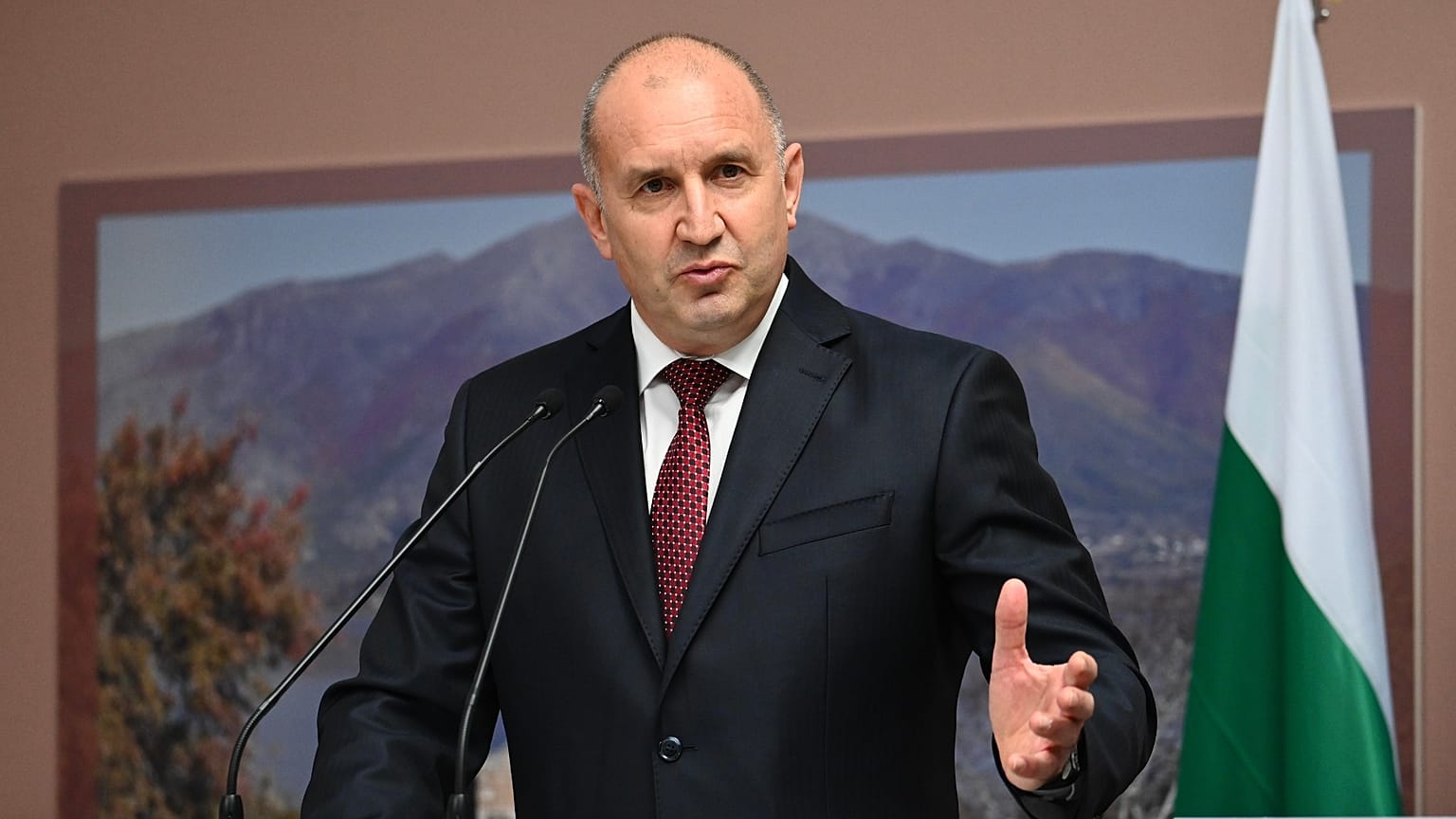
PM Rumen Radev said the attack was "absolutely unacceptable". / government.bgFacebook
By bne IntelliNews October 7, 2026

A cargo ship sank and its crew went missing after drones attacked two merchant vessels in Bulgaria's exclusive economic zone in the Black Sea on October 6, Bulgarian officials said, raising concerns about the widening risks to civilian shipping from the war in Ukraine.

The vessels were attacked by air and sea drones at about 3 a.m. local time, around 70 nautical miles (130 km) east of the Bulgarian coastal town of Byala, Prime Minister Rumen Radev said.

One of the ships, the Togo-flagged Alfa Watan, sank. The vessel was Turkish-owned and was reportedly heading towards the Romanian port of Sulina. Its cargo and the number of people aboard were not immediately clear.

A Bulgarian vessel that went to the scene found an overturned lifeboat, life jackets and rafts but no crew members, Radev said. A search-and-rescue operation was under way.

The second vessel, the grain carrier Able, was hit and caught fire. Its 18 crew members - 11 Turkish and seven Indian nationals - were rescued by the Bulgarian roll-on/roll-off vessel Dioscuria, Radev said. Two crew members, including the captain, were seriously injured and taken to a military hospital in Varna.

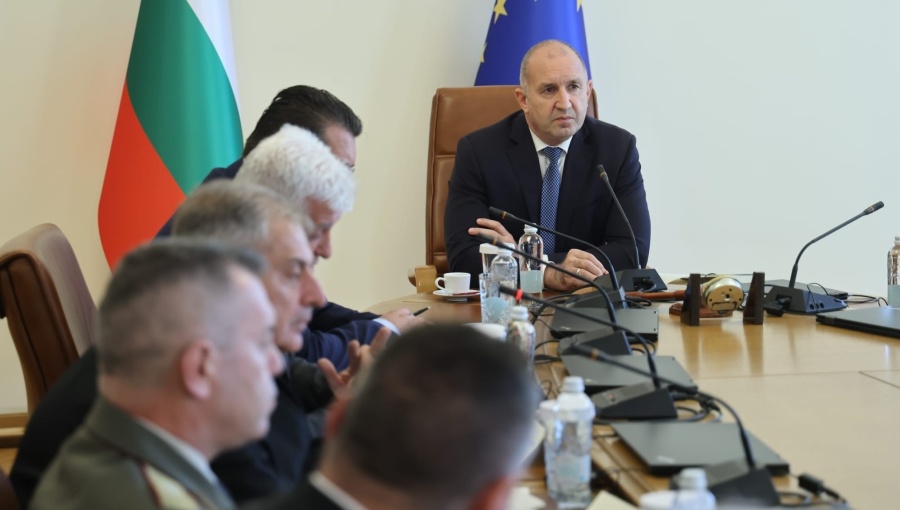
"This is an absolutely unacceptable attack, a gross violation of international law and maritime affairs," Radev said at an emergency government meeting, BTA reported.

He said it was not immediately known whether the drones had originated from Russia or Ukraine.

Rising Black Sea risks

The incident comes as attacks on commercial shipping in the Black Sea have increased, with vessels carrying Ukrainian grain among those hit, and as European governments warn of a growing threat from Russian hybrid warfare.

European Commission President Ursula von der Leyen condemned the attacks, saying the situation in the Black Sea was becoming increasingly concerning.

"Commercial ships – and innocent crews – are being targeted, with lives already lost at sea," von der Leyen said on X. "Attacks on civilian shipping are unacceptable."

She noted that the incident came a day after a Turkish ship carrying Ukrainian grain was hit and sunk off Romania.

Radev did not directly blame Russia for Tuesday's attack, but linked the incident to the war in Ukraine.

"As I have long maintained, if this war is not halted in time, it will continue to expand its geographical reach and increase risks, including the risk of a global conflict," he said, according to BNR.

Bulgaria, a NATO member, does not border Russia or Ukraine but occupies a strategically important position on the western Black Sea. Its exclusive economic zone covers more than 29,000 square kilometres.

President Iliana Iotova will convene Bulgaria's Consultative Council on National Security on October 7 to discuss risks to maritime security and critical infrastructure stemming from the war in Ukraine, her office said.

The Bulgarian authorities were also monitoring the sunken vessel and the surrounding area for possible environmental risks, Radev said.

The incident followed a separate attack near Ukraine's port of Odesa in which a Marshall Islands-flagged vessel was reportedly hit, killing one crew member and injuring seven others.


Drones hit two ships off Bulgaria's coast, search and rescue ongoing as one sank


By Simon Ormiston & Anna Kirchheim
Published on

Drones hit two ships off Bulgaria's coast and one of them sank, with the crew missing, the day after another drone attack sank a ship near Romania's shore in the Black Sea, in two consecutive drone attacks on NATO's Eastern flank countries.

A massive search is under way in the Black Sea for the crew of a cargo ship that sank after drones struck two commercial vessels off Bulgaria's coast early Tuesday, the day after another drone attack sank a Turkish grain ship off the coast of Romania, killing 2 crew members.

Sea and aerial drones hit the ships at about 3am local time (2am CET), around 70 nautical miles east of the town of Byala in Bulgaria's exclusive economic zone, Bulgarian Prime Minister Rumen Radev said.

The crew of the Bulgarian ferry Dioscuria, which was in the area, saw an explosion on the first ship and rushed to the scene, Radev confirmed. They found an overturned lifeboat and life jackets but no one from the crew.

Officials have not said how many people were on board, nor the origin of the drones.

A second ship was attacked and caught fire, with all 18 of its crew rescued by the Dioscuria. Eleven are Turkish and seven Indian, according to the televised address from Radev.

Two of them were hospitalised, one with burns and one with a head injury. The other 16 were being brought ashore on a Border Police patrol boat.

Radev said two helicopters were sent to Varna to pick up rescue teams and a Su-25 aircraft was deployed to carry out aerial reconnaissance over the area. The operation is being run by the Maritime Rescue Coordination Centre.

Both vessels sent distress signals during the night and one disappeared from Border Police radar at about 9am local time (8am CET), public broadcaster BNR reported.

Bulgarian shipping news site Maritime.bg named the sunken ship as the Alfa Watan and the second as the Palau-flagged Able. It said the strikes were the first attack on shipping in Bulgaria's exclusive economic zone.

Both vessels are Turkish-owned, according to the Equasis merchant shipping database.

Ship tracking website vesselfinder.com shows the Alfa Watan was sailing under the flag of Togo and was headed for the Romanian port of Sulina.

The second ship was carrying wheat and sailing south, Radev said. The cargo of the sunken Alfa Watan is not yet known.

Radev, who called the attack "absolutely unacceptable", did not say who launched the drones, while European Commission President Ursula von der Leyen called the developments "concerning".

Three attacks on civilian shipping in the Black Sea within two days

Tuesday's attack occurred the day after a Turkish-owned cargo ship carrying grain from Ukraine to Italy was attacked off Romania's coast in the Black Sea by at least one drone and sank after catching fire, killing two crew members.

Azerbaijan's Foreign Ministry said the ship's captain, Azerbaijani national Rustam Ismayil oglu Hasanov, died and his body was being repatriated. A second Azerbaijani crew member, Mahammad Hamza oglu Suleymanzade, is still missing and the search and rescue operation is ongoing. Azerbaijan's Foreign Ministry said their families were informed and they were receiving logistical and financial support.

11 other crew members were rescued by the Romanian authorities. Three Azerbaijani sailors and one Indian crew member among them are receiving emergency medical care in Romania.

Azerbaijan's Foreign Ministry explicitly reiterated its urgent warning to Azerbaijani citizens to refrain from travelling to active conflict zones, working in high-risk areas, or taking employment on transport vessels operating along contested maritime corridors.

Ukraine's President Volodymyr Zelenskyy blamed Russia for yesterday's sinking of the cargo ship and called it "a horrific strike by two Russian drones on a civilian vessel" in neutral waters.

India condemned Tuesday's attack as part of the crew members were Indian nationals. The Indian Foreign Ministry released a statement saying that "India views these attacks on commercial shipping and seafarers with grave concern," adding that "the targeting of traffic in international waterways is severely undermining global commerce and welfare of people across the world."


Bulgarian PM says drone attack on two ships is 'flagrant' breach of maritime law

File photo of Bulgarian Prime Minister Rumen Radev
Copyright AP Photo

By Simon Ormiston
Published on

The EU pledged "full solidarity" with its eastern members as the search went on for the sunken vessel's crew, and no one has yet been blamed for the strikes.

Bulgarian Prime Minister Rumen Radev has condemned a drone attack on two commercial ships in the Black Sea that sank one of them, calling it "a flagrant violation of maritime law"

"Such an attack within the Bulgarian exclusive economic zone is absolutely unacceptable," he told reporters on Tuesday at the start of an emergency government meeting on the strikes.

Sea and aerial drones hit the vessels at about 3am local time (2am CET), around 70 nautical miles east of the town of Byala according to Radev, the Bulgarian Telegraph Agency (BTA) reported. He did not say who was behind the attack.

Radev warned that unless the war in Ukraine is brought to an end, it will keep widening its reach and raising the risks, including that of a global conflict.

"The situation significantly complicates navigation in the Black Sea, drives up insurance premiums, and makes maritime traffic extremely difficult," Radev said.

European Commission President Ursula von der Leyen said attacks on civilian shipping were "unacceptable" and that the EU stood "in full solidarity with our member states on the eastern flank".

"The situation in the Black Sea is increasingly concerning. Commercial ships – and innocent crews – are being targeted, with lives already lost at sea," she wrote on X.

The crew of the sunken ship are still missing and the search for survivors is continuing. Radev said the state's priority was to protect lives regardless of who was sailing in Bulgaria's economic zone.

The Bulgarian prime minister also addressed the Emil, a cargo ship attacked by Russian drones in August and now drifting towards Bulgaria's waters. Moscow confirmed the strike, claiming that the ship was carrying military equipment for Ukraine.

"We will not in any way allow the Bulgarian coast to be threatened," Radev said.

The emergency meeting brought together the defence, interior, transport and environment ministries, the presidency and the security services.

The attack came a day after a Turkish-owned cargo ship carrying grain in the Black Sea was hit by at least one drone and sank after catching fire.


Tuesday, October 06, 2026


Russia's ageing reactors leave a €21bn clean-up bill it keeps putting off

Russia's ageing reactors leave a €21bn clean-up bill it keeps putting off
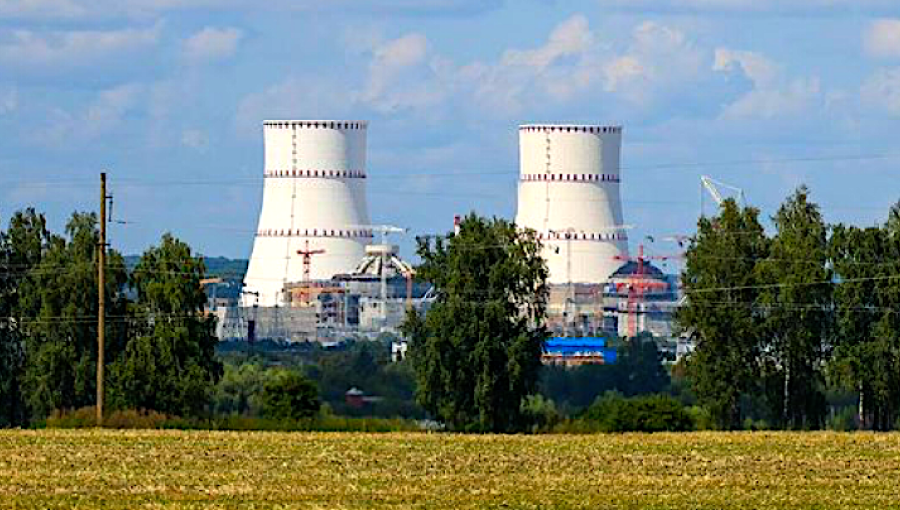
Rosatom is building reactors from Turkey to Bangladesh while its own state nuclear operator faces an €18.7bn shortfall for retiring 35 units at home. / bne IntelliNewsFacebook
By Ben Aris in Berlin October 5, 2026

Russia is short of about €18.7bn ($21bn) to decommission 35 ageing nuclear reactors on the books of state operator Rosenergoatom, whose own estimate puts the total bill at about €21bn, Arshak Makichyan, a Russian-Armenian climate activist and political scientist, wrote in an October 4 op-ed for Al Jazeera.

Some of Russia's reactors are already more than 50 years old. Rather than dismantling them soon after shutdown, Russia often places them in long-term "safe" storage, pushing the most expensive stages of decommissioning, and much of the technical and financial risk, into the future, the author argues.

The liability is growing at the same time as Rosatom expands abroad. Nuclear exports are booming: the state corporation is building 28 power units in nine countries, from Turkey, Kazakhstan and Egypt to Bangladesh and Hungary, has agreements for 17 more and is negotiating some 50 further projects, and nuclear is one of the few parts of Russia's energy sector that Western sanctions have largely left alone.

A bill that only grows

Rosenergoatom's figures are likely to prove optimistic. Decommissioning nearly always costs far more than first planned: the former East German plant at Lubmin was originally expected to cost €1bn to dismantle and is now put at €10bn. Lithuania, which had to close the two Soviet-built reactors at Ignalina as a condition of joining the EU, shut them in 2004 and 2009; by 2020 the estimated cost had reached €3.3bn and only 49% of the work was done, and completion has slipped from 2038 to 2049.

Environmental group Bellona, citing Rosatom's own projections, says the corporation's decommissioning and remediation obligations could exceed its net profit by around 2037. The longer the work is deferred, the greater the financial, technical and safety risks become.

Russia also inherited about 774,000 cubic metres of radioactive waste from the Soviet Union, and the coming decommissioning of 36 reactor units at eight plants is expected to add another 800,000 cubic metres.

War economy first

The money may simply not be there. Defence is by far the largest single item in Russia's federal budget, environmental protection a small fraction of it, and the government has weakened environmental rules to keep the war economy running. Russia has form in leaving others to clear up: in the Kemerovo region, which produces about half its coal, waste heaps scar the landscape and some burn, and when coal companies go bust the clean-up falls to the state and local communities.

Nuclear waste and shut reactors cannot be abandoned the same way, the author warns, and countries buying Russian plants should have "a Plan B in case something goes wrong in Russia", since they may one day need maintenance or decommissioning that Moscow can no longer pay for.

Fewer people watching

Independent scrutiny inside Russia has all but disappeared. Bellona and Greenpeace have been declared "undesirable" organisations, and EcoDefence, which campaigned on nuclear issues, was designated a "foreign agent" and its members prosecuted. Vladimir Slivyak, co-chair of the now-exiled EcoDefence, warns that Europe's continued dependence on Russian nuclear technology and services could itself be used for sabotage or political pressure.

History suggests the risk is real. Soviet authorities hid the 1957 Mayak disaster and did not acknowledge it until 1989, more than three decades later, while thousands lived with the contamination, and their attempts to play down Chornobyl fed the distrust that helped bring the Soviet system down.