Thursday, May 08, 2025

‘Not much zoology – apart from the rabbit!’ Desmond Morris on his secret surrealist love romp film


The zoologist, now aged 97, is about to unveil Time Flower, his fantasy-fuelled film in which he pursues a woman called Ramona – who gave such a brave performance leaping off the bonnet of a car that he proposed to her


Art

Interview

Donna Ferguson
Thu 8 May 2025 
THE GUARDIAN

In the opening scene of Time Flower, a surrealist film by the zoologist Desmond Morris, a woman is lying facedown on the ground, clutching the grass with manicured hands and shaking her head. She is about to start running across a Wiltshire moor in elegant black heels, chased by Morris in a shirt and tie, her eyes wide, her lipstick dark, the angle of the shot emphasising her perfect, parted, panting mouth. Just before she trips and falls, a wild rabbit will stare straight at the camera – and flee.

This 10-minute black-and-white film, which Morris made in 1950 while he was a 22-year-old student at Birmingham University, has lain untouched in his archive for nearly 75 years. Created in response to Salvador Dalí and Luis Buñuel’s Un Chien Andalou, it is a testament to Morris’s early work as a surrealist artist. He exhibited alongside Joan Miró before he became a zoology broadcaster and the author of The Naked Ape.

She sat on the front of the car. The rabbit came out and froze. When I stopped the car, she was thrown on to the rabbit

Now 97, Morris has decided to allow the film – which stars his late wife Ramona, with whom he co-wrote the 1966 book Men and Pandas – to be shown for the first time since the 1950s, at the University of Birmingham during the Flatpack film festival. “While I was studying zoology at Birmingham,” says Morris, “I joined a club that showed films – and one of the first was Un Chien Andalou. It shocked, startled and excited me. That was when I decided to make my own surrealist film.”

He had met Ramona playing sardines (a variation of hide-and-seek) at a country house party in the spring of 1949, when she was 18. He fell madly in love, he says, pursuing her all the way to France when she moved there. “My pursuit of Ramona in the film is symbolic of my pursuit of her in real life,” he says. “The film was inspired by the love story of my life. We stayed together as a couple until she died at the age of 88 in 2018.”
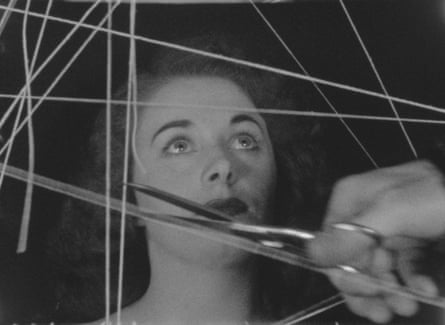
She has fantasies and he has fantasies’ … Ramona Baulch, later Ramona Morris, in Time Flower. Photograph: Flatpack Festival

He calls Time Flower “a cyclic film in which the end and the beginning are more or less the same. It starts with the man chasing the woman, and he continues to pursue her throughout the whole film until he finally catches up with her – and dies. But the point is that, while he’s chasing her, she has fantasies and he has fantasies, and these are what’s going on in their unconscious minds during the chase.”

He persuaded Ramona to star in it after she returned to England. “In 1950, our relationship was fresh and young: we were falling deeply in love with one another, and it was very passionate,” he says. “But a passionate relationship of that kind isn’t just sexual. It has to be more. And what I really respected, apart from her body, was her brain, which was extraordinary, as were her courage and generosity. She would do anything I asked her to do for the film.”

 
Irrational intensity’ … an image from Time Flower. Photograph: Flatpack festival

He decided to propose to her after she agreed, for the film, to leap off the bonnet of his car late at night to catch a wild rabbit frozen in the headlights. “I was joking when I suggested it to her, but she said, ‘Yes of course I will.’ She sat on the front of the car, the rabbit came out, froze, I stopped the car – and she was thrown off on to the rabbit.”


All hell broke loose. “These rabbits were big and it was fierce – scratching and biting her – and so I rushed round with a blanket. We got it home and I kept it in an enclosure until we were ready to film. Then we shot a few seconds before it ran off. But what I discovered that day – and this is one of the big bonuses, for me, of making Time Flower – was my girlfriend’s extraordinary courage. I thought, ‘If somebody’s prepared to be thrown off my car to catch a rabbit for me, then I’ve found the girl I want to marry.’ That was the moment I decided.”

He sees no connection between the animalistic, highly sexualised relationship between the film’s protagonists and his landmark study, The Naked Ape, which suggested human sexual traits and behaviour could only be understood in the context of animal behaviour and evolution. “Apart from the rabbit, there wasn’t much zoology – although a hedgehog appears at one point,” he says. “No, my zoological research was quite separate.”
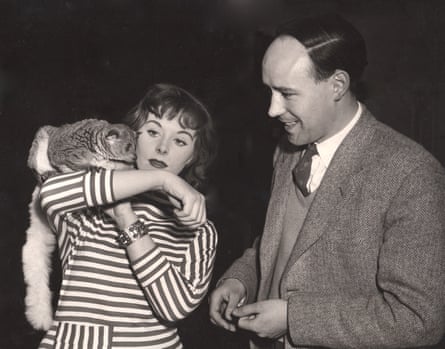
‘The love story of my life’ … Ramona and Desmond Morris in 1956. Photograph: Desmond Morris/Flatpack festival

But he acknowledges that the film and his surrealist paintings, which he continues to create every night between the hours of midnight and 4am, may have been indirectly influenced by his knowledge of natural history and nature, and his lifelong interest in the reproductive behaviour of animals. He still sees humans as “very strange apes” and “the way in which animals perform strange, bizarre courtship dances” has always fascinated him, visually. “It wasn’t a zoological film, but it did have an underlying, implicit eroticism,” he says. “There’s a great deal of sexual implications in the film, if not explications.”

In 1951, Time Flower was given an award by the Institute of Amateur Cinematographers and Morris filmed a sequel, The Butterfly and the Pin. “That one was a complete disaster, I won’t let anyone see it. It’s about an artist being visited by ‘life’ and ‘death’ in his studio, with a man representing death and a woman representing life, and these two characters fight over the artist. It was a good idea, but the lack of funds to finance it affected the production.”

He never made any other films and became too “embarrassed” to let anyone watch Time Flower. “Its production values are appalling and there were so many things I couldn’t film that I wanted to.” But after he was approached by the film-maker Andy Howlett, who had staged a “seance” of Time Flower at a gallery in Birmingham in 2016, he agreed it could be shown during the Flatpack festival as part of the University of Birmingham’s 125th anniversary celebrations this weekend. “I had another look at it – I hadn’t seen it myself for a long time – and I thought, ‘Well, it may be crudely and poorly produced but it has a kind of irrational intensity that I like.”
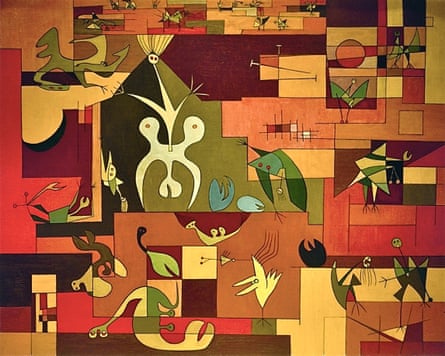
My zoological research was quite separate’ … A painting by Morris first exhibited in Birmingham in 1949. Photograph: Desmond Morris/Flatpack festival

The film will be screened twice at the festival, first with its original Prokofiev accompaniment and then with a new live score by Kinna Whitehead, before being deposited for posterity with the BFI National Archive. Although he still wishes Time Flower were a better film, Morris is pleased that audiences are interested in his surrealist work and says that demand for his paintings, which are still regularly exhibited, has also increased in recent years. “I think it’s because they know that when I die, which can’t be very far off, my prices will increase. Because the best career move for any artist is to die, of course. Your work becomes much more valuable.”

One painting he made in 1948 sold for more than £50,000 two years ago. “I was cross because I wanted to buy it myself. It was one of my favourite paintings and I wanted it back.” It has been “lovely”, he says, to remember Ramona as a young woman again in Time Flower, and that is one of the key reasons he wanted the film to be shown. “I’ve outlived her now by more than six years and it’s very strange to still be here, without her, after a relationship that lasted 69 years.”

He is grateful, however, that he is still able to write and paint. When it comes to living a long life, “that’s the secret,” he says. “I don’t know why the hell I’m still here – but that’s what keeps me going.”

Time Flower will be shown on Saturday 10 May at the Exchange at 4.45pm as part of the University of Birmingham’s 125th anniversary celebrations and Flatpack festival.

Desmond John Morris (born 24 January 1928) is an English zoologist, ethologist and surrealist painter, as well as a popular author in human sociobiology.


ACROSS THE POND AT THE SAME TIME 

kenneth anger magick lantern cycle from archive.org
Jun 18, 2018 — Kenneth Anger The Magick Lanterne Cycle Complete Vol 1 ; Topics: experimental, lantern, cycle, kenneth anger ; Item Size: 4.0G.
kenneth anger magick lantern cycle from www.imdb.com
Included on the two disc set is a 70 minute sequence where Kenneth Anger talks about his life and experiences; his views on art in general and film in ...
(212)
kenneth anger magick lantern cycle from www.amazon.ca
This 2-DVD set contains Anger s complete Magick Lantern Cycle, from his landmark debut FIREWORKS in 1947 to his breathtaking phantasmagoria LUCIFER RISING in ...
$137.93(167)
kenneth anger magick lantern cycle from en.wikipedia.org
Working exclusively in short films, he produced almost 40 works beginning in 1937, nine of which have been grouped together as the "Magick Lantern Cycle".


Opinion
Women's health


The Guardian view on bias in medical research: disregard for women’s health belongs in the past

Editorial

It is shocking that while illnesses specific to men are studied, those affecting women are ignored


Wed 7 May 2025


Six years after Caroline Criado Perez’s bestselling book Invisible Women drew a mass readership’s attention to the long history of sexist bias in medical research, it is shocking that women and their illnesses are still underrepresented in clinical trials. Analysis by the Guardian of data gathered for a new study showed that from 2019 to 2023, 282 trials involving only male subjects were submitted for regulatory approval in the UK – compared with 169 focused on women.

Health inequality is a complex and multifaceted problem. There are massive socioeconomic differences in life expectancy and infant mortality, as well as race inequalities – for example, in maternity and mental illnesses. These and other disparities, along with those relating to disability, can also be mapped geographically.


Women, on average, live longer than men, so in this sense men can be said to be disadvantaged. But in addition to the risks associated with pregnancy and childbirth, far more women have dementia, while survival rates from female- and male-specific cancers – and other diseases that affect the sexes differently – are highly variable.

The five-year period in this study, which was carried out by the University of Liverpool and the Medicines and Healthcare products Regulatory Agency (MHRA), was not necessarily typical. It does not reveal how funding was divided up. But taking on board these caveats, it is hard to see a benign explanation for there being 67% more trials investigating men’s health than women’s. This gap in research inputs could reasonably be expected to contribute to a disparity in outcomes further down the line.

This is all the more disappointing given recent progress in tackling women’s exclusion from health research. For decades, as Ms Criado Perez and others have documented, many clinical trials were conducted on male subjects only. Researchers preferred to avoid what they saw as complications associated with the female reproductive system, especially pregnancy – although experts now regard concerns that women’s hormones might skew results as having been wrong.

Ninety per cent of the UK trials in the MHRA study involved both sexes. It is not possible to compare this precisely with past practice, as the data has not been scrutinised in the same way before. But increased recognition of the variable effects of medicines on males and females has led regulators and funders to change their policies. In the US, the National Institutes of Health has required investigators to consider sex as a variable since 2016. In the UK, the Medical Research Council changed its rules in 2022. Since then, experiments conducted on animals have been expected to include both sexes – with limited exceptions (such as when the condition being studied affects one sex only).

The lack of medical research on pregnant women came to the fore during the pandemic, when many were unvaccinated and alarming numbers ended up in intensive care. Reluctance to test drugs on pregnant women is often linked to the thalidomide scandal of the 1960s, when thousands of babies were damaged by a drug given to their mothers for morning sickness. But while caution may be merited, among pregnant women themselves as well as researchers, there is no shortage of women who are not pregnant. The disparity in sex-specific research points to an anti-female bias. Ministers, funders, hospitals and the pharmaceutical industry should all be concerned.

Who killed Palestinian-American journalist Shireen Abu Akleh – and why?

You may think you know the story of the US citizen killed by Israeli forces, but you probably don’t


Dion Nissenbaum
Opinion
Israel
Thu 8 May 2025 
The Guardian


You may think you know the story of the first Palestinian-American journalist to be killed by Israeli forces, but you probably don’t.

For much of the world, Shireen Abu Akleh was the voice of Palestine, a brave, seasoned Al Jazeera journalist who repeatedly put her life on the line to cover the Israeli occupation of the West Bank.


On 11 May 2022, Shireen strapped on her helmet and blue body armor with the word “press” emblazoned across her chest and set out for what she expected to be another tense day covering an Israeli military raid in the West Bank city of Jenin. It turned out to be her last: Shireen was shot in the back of the head by an Israeli soldier.

Her death became a polarizing flashpoint between Israel and the US. After falsely blaming Palestinian militants for killing Shireen, the Israeli military begrudgingly admitted – four months later – that one of their own soldiers almost certainly shot the 51-year-old journalist.


No one was ever held to account for Shireen’s killing. Israel objected to an FBI investigation into her death and rejected US calls for the Israeli military to revise the rules of engagement to try to prevent more innocent people from being killed.

Israel refused to let the US interview the soldier who fired the fatal shots. Israel refused to give Americans the soldier’s statement about what he had been thinking when he shot Shireen. Israel wouldn’t even tell the US the soldier’s name. Without that information, US officials said, they couldn’t determine whether the Israeli military was guilty of any human rights violations for killing Shireen.

So I and a team of journalists set out to find out who killed Shireen – and why.

Our months-long investigation uncovered some disturbing revelations. First, it became clear that Israel knew right away that one of its soldiers had probably killed Shireen – even though Israeli leaders were falsely blaming Palestinian militants for her death.

Hours after Shireen was killed, current and former US government officials told me, the top Israeli general in charge of the West Bank told American officials that one of his soldiers had probably killed Shireen. From the beginning, Israeli and American officials knew the truth. But Israel spent months denouncing a series of independent investigations by journalists that concluded an Israeli soldier had shot Shireen.

Our reporting also reveals that an initial American assessment determined that the Israeli soldier intentionally shot Shireen – and that he should have been able to tell that she was a journalist because she was wearing the blue body armor marked “press”.

A key Biden administration official familiar with the examination told us that the soldier who had killed Shireen probably could have been convicted of murder in an American courtroom. But the initial finding was rejected. Instead, the Biden administration did a 180. The US concluded that it found no reason to believe her killing was intentional and blamed it on “tragic circumstances”.

It is difficult to find a news story on Shireen’s death that clearly lays out what happened that day, so let me lay out the facts: an Israeli soldier inside an armored vehicle saw Shireen walking up the street 200 meters away and intentionally shot her. The Israeli military’s own investigation concluded that the soldier had falsely identified Shireen as a militant and killed her. The Israeli military’s own investigation found no evidence to back up its initial claims that Shireen might have been killed in crossfire. The Israeli military’s own investigation documented no Palestinian militants near Shireen when she was killed.

To be clear: Israel’s own investigation concluded that it was almost certain that its soldier intentionally killed Shireen. The only lingering question is: why? Since the US government failed to find the shooter, we decided to track him down ourselves.

We spoke to seasoned Israeli military soldiers and American investigators who told us that they would not have opened fire on Shireen. They told us it was an example of poor training or poor discipline.

One Israeli soldier who knew the shooter also defended his comrade by telling us that if “you see someone who holds a camera or something that … point at you, you don’t need more than that to shoot the bullet”.

That perspective has long been present in the Israeli military. In 2002, an Israeli sniper shot the Boston Globe journalist Anthony Shadid in the shoulder while he was wearing blue body armor in the West Bank capital, Ramallah. In 2008, an Israeli tank in the Gaza Strip fired a tank round from 700 meters away at 24-year-old Reuters journalist Fadel Shana’a, who was wearing blue body armor and filming with a camera set on tripod; Israel said the tank unit thought the camera was a weapon and absolved the soldiers of any wrongdoing. In October 2023, an Israeli tank opened fire on a group of journalists on a distant hillside across the border in southern Lebanon, killing the Reuters journalist Issam Abdallah; Israel has never admitted any fault.

Israel has long rejected accusations that it intentionally targets journalists. But the 7 October 2023 Hamas attack in southern Israel appears to have changed the nation’s calculus. Since then, the Israeli military has changed its tune. Israel has deliberately killed journalists in Gaza it has accused of being “combat propagandists” working for news outlets affiliated with Palestinian militant groups. The Israeli military’s top international spokesperson sent a clear message that wearing blue body armor with the word “press” on it does not provide any level of protection for journalists.

“Wearing a vest that says ‘press’ doesn’t turn a terrorist into a journalist,” Lt Col Nadav Shoshani tweeted last year . So it’s no surprise that Israel has now become the most dangerous country for journalists. Israel has killed more than 175 journalists since 7 October 2023, according to the Committee to Protect Journalists. More journalists were killed in 2024 than in any other year since the committee began documenting such deaths more than three decades ago. Israel killed nearly two-thirds of the 124 journalists who died around the world in 2024.

Israeli soldiers and settlers have also killed at least six more Americans since Shireen’s death. The country has held no one to account for any of the killings. Sen Chris Van Hollen, who has repeatedly called on the US government to investigate these deaths and press Israel to change its rules of engagement, told me that Benjamin Netanyahu has repeatedly given the US the middle finger when it comes to these killings.

Israel has continued its crackdown on Palestinian media. Ali Samoudi, Shireen’s producer, was shot and injured by the same Israeli soldier who killed Shireen. A documentary team met Samoudi in Jenin while he was covering an ongoing Israeli military operation.

“We have been overcome by fear,” Samoudi says in the documentary. “From the moment Shireen was killed, I said, and continue to say, and will continue to say, that this bullet was meant to prevent the Palestinian media from the documentation and the exposure of the occupation’s crimes.”

In late April, Israeli forces arrested Samoudi and accused him, without providing evidence, of being “identified” with the militant group Islamic Jihad. His family said that he was beaten by Israeli soldiers and handcuffed to a hospital bed. Samoudi remains in detention.

Earlier this year, we did what the US failed to do and found Shireen’s killer. It turned out that the Israeli soldier who shot Shireen in Jenin was himself killed last year in the same West Bank city. The soldier, Alon Scagio, had been quietly transferred to a different unit after the Israeli investigation into Shireen’s death. He was buried as a hero for rescuing other Israeli soldiers injured in a Palestinian militant attack. The Israeli soldier who knew the shooter told me that his comrades had been so incensed that Scagio’s reputation had been tarnished by his killing Shireen that they started using Shireen’s picture for target practice.

Our reporting made one thing clear: the Biden administration failed Shireen Abu Akleh. Our Biden administration source told us that the US allowed Israel to get away with murder. Scagio’s death makes it harder to find out what he was thinking that day. The Israeli military could help provide some answers by releasing Scagio’s statement.

Congress could bring key witnesses to Washington for hearings into why the US investigation’s findings were changed. The Israeli military could revise the way it trains its soldiers so that they kill fewer innocent people. And Israel itself could change course and make it clear that it does not see journalists as the enemy.

Until that happens, more journalists, more Americans, and more innocent civilians are likely to keep dying at the hands of the Israeli military.

Dion Nissenbaum was a longtime Wall Street Journal foreign correspondent based in Jerusalem, Beirut, Kabul and Istanbul over the course of two decades. He is the executive producer of Who Killed Shireen? and a two-time Pulitzer Prize finalist for international reporting
Gleaming labs turned to rubble: scientists mourn the loss of decades of medical progress in Sudan


Universities and laboratories in Khartoum are looted or in ruins, with vital research and medicines destroyed, including pioneering work on tropical diseases


Diego Menjíbar Reynés
Thu 8 May 2025 
THE GUARDIAN

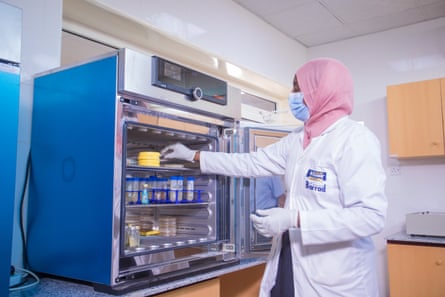
“All that I did over 40 years has turned to ashes before my eyes,” says Prof Ahmed Fahal, of the destruction of his research centre in Sudan’s capital, Khartoum. His once-gleaming laboratory, where a team of white-coated expert clinicians once busied over their work, is now little more than rubble.

“I built everything from scratch. I knew every corner, every brick of the building. I can’t describe the pain,” he says.

As Sudan enters its third year of war, its infrastructure has been decimated and scientific, educational and research institutions have ground to a halt. According to the Sudanese National Academy of Sciences, more than 100 universities and research centres – among the most reputable in Africa – have been damaged or looted.

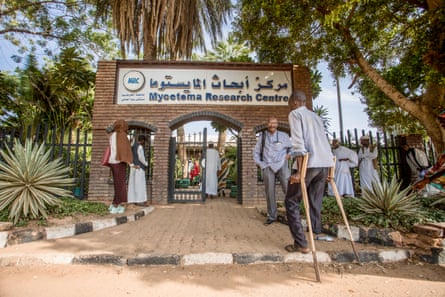
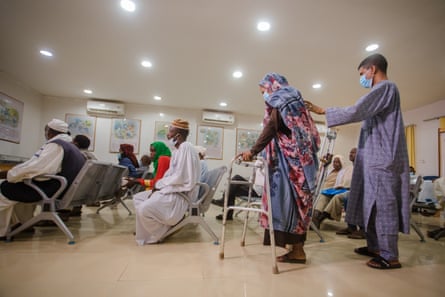
The MRC opened in 1991. Up to 25% of its patients were children, although the disease primarily affects subsistence farmers. Photograph: Courtesy of DNDi

Since 1991, Fahal has headed the Mycetoma Research Center (MRC): the only such institution in the world dedicated to the neglected tropical disease. The centre has been reduced to rubble, wiping out decades of vital data.

When the Sudanese army regained control of Khartoum in March, Fahal’s team was able to visit the centre for the first time since the outbreak of war and take stock.
We lost everything: micro-organisms collected over 40 years … the pharmacy, where we stored all the free medications for the patients

“We lost everything: the biobank that contained rare fungus and bacteria; micro-organisms that we collected over 40 years; samples and biopsies that we stored for genetic research.

“We also lost the laboratory equipment, three ultrasound machines and the pharmacy, where we stored all the free medications for the patients,” says Fahal.

The only thing to survive were the patients’ files, which had been saved electronically.

Since the MRC opened, Fahal and his team have treated about 12,000 patients. The first recorded case of mycetoma in the country was in 1904, and, of the 102 countries where the disease has been identified, Sudan has the highest number of documented cases. “Sudan is the homeland of mycetoma,” says Fahal.

The ransacked remains of the Mycetoma Research Centre in Khartoum. Photograph: Handout

Mycetoma is an inflammatory disease caused by fungi or bacteria and leading to tumour-like growths. Most commonly people become infected through contact with thorns of the acacia shrub, which can carry the fungus. The disease primarily affects farmers, herders and the impoverished who work barefoot. In Sudan, children make up approximately 20-25% of patients.


Untreated mycetoma can cause severe deformities and permanent disability. In Sudan, about 70% of cases are caused by eumycetoma, a fungal form of the disease.

Five days before the war between Sudan’s army and the paramilitary Rapid Support Forces (RSF) broke out in April 2023, Fahal returned to Sudan after spending several weeks in Switzerland and Japan presenting the results of a clinical trial on fosravuconazole – a new treatment to improve patients’ quality of life.

Two days later, he left for Egypt, from where he received news of the conflict and realised he could not go home.
The Mycetoma Research Centre was the only institution in the world dedicated to the research and treatment of the disease. Photograph: Courtesy of DNDi

“When the fighting intensified in the capital, the volunteer teams we had organised had to move south to Wad Madani, 190km away,” he says. There they resumed their work. However, the fighting followed them.

“They kept moving ,” Fahal says, “but the war was on their heels again and destroyed everything the teams tried to build.”

In December 2022, the MRC and Drugs for Neglected Diseases initiative (DNDi) had presented the results of its clinical trial on fosravuconazole to the National Medicine and Poisons Board, the pharmaceutical regulatory authority in Sudan.

Dr Borna Nyaoke-Anoke, head of the global mycetoma programme for DNDi, says: “The board found it adequate and provided authorisation for fosravuconazole to be used as a mycetoma treatment in Sudan, but then the conflict broke out. The result: itraconazole – the first-line drug – is not available in the country, and our programme to introduce fosravuconazole in Sudan in 2023 has been stopped.”

The war has meant that more than 12,000 mycetoma patients treated by the clinic have not received medication, says Fahal. Without treatment, bacterial infections bloom easily, leading to sepsis, amputations and, ultimately, death. “Many have died, but we don’t have the figures,” he says.

Researchers have warned that “Sudan’s already fragile health system is about to undergo a complete collapse after the war started.”

The Health Science Reports paper said: “The public health sector is chronically underfunded, and its financial losses are more than $700m [£500m], as its GDP went down by 1.4% [as] the funds have been mobilised for the military and defence.”
[The unit] where I stored more than 200 strains of salmonella was destroyed. This poses a high risk of disease spread into the environmentMarmar A El Siddig

The World Health Organization estimates that 70-80% of health facilities in conflict areas, including Al Jazirah, Kordofan, Darfur and Khartoum, are either closed or not fully operational.

For Marmar A El Siddig, a professor of microbiology at the University of Khartoum, the war’s impact is massive: “Most of the scientific and medical research in the country was done through universities or institutions belonging to them, which were concentrated in the centre of Khartoum. Now, 95% of these facilities have been damaged or destroyed,” she says.

Rebuilding the centre will require international funding, of which little is available. Photograph: Courtesy of DNDi

Another concerning aspect, according to El Siddig, is the destruction of laboratories containing samples of viruses, bacteria, fungi or tissues: all potentially highly toxic materials. “My microbial culture collection unit, where I stored more than 200 strains of salmonella used for scientific research, was destroyed. This poses a high risk of disease spread into the environment,” she says.

The destruction of the Sudan Natural History Museum and the Institute of Endemic Diseases, where poisonous snakes and scorpions used to develop vaccines were kept, also poses a danger.

Fahal, stuck in Cairo, has been unable to keep practising due to the lack of a work permit: “During all this time, I’ve seen three patients: one in a cafe, one in an apartment and the last one in a public square. I examined them and connected them with my Egyptian colleagues.

“I used to see 200 patients a week – now I can’t even see one.”

But he still hopes to rebuild: “My team has already started to assess the damage and I spend my days writing proposals for international donors to get funding. However, the main problem is that organisations are directing their funds to Gaza or Ukraine because, for them, mycetoma is not a priority.”
ARACHNOLOGY*


Scorpions ‘taking over’ Brazilian cities with reported stings rising 250%


Fast and unplanned growth of cities providing ideal conditions for the creatures to thrive, say researchers


Phoebe Weston
Thu 8 May 2025
THE GUARDIAN

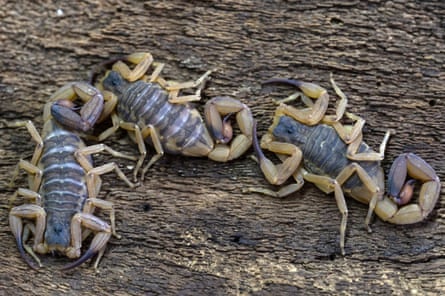
Scorpions are “taking over” Brazilian cities, researchers have warned in a paper that said rapid urbanisation and climate breakdown were driving an increase in the number of people being stung.

More than 1.1m stings were reported between 2014 and 2023, according to data from the Brazilian notifiable diseases information system. There was a 250% increase in reports of stings from 2014 to 2023, according to research published in the journal Frontiers in Public Health.


The rise in cases has been driven by rapid, unplanned urbanisation – such as favelas – characterised by high-density housing and poor waste disposal, according to the research. Although urban areas are encroaching on wild habitats where scorpions already live, they are also creating new environments in which to thrive.


“Urbanisation in Brazil has profoundly reshaped ecosystems,” said the lead researcher, Manuela Berto Pucca, an assistant professor at São Paulo State University. “Cities unintentionally offer everything scorpions need: plenty of shelter (in walls, drains, rubble and construction debris), consistent warmth, and a reliable food supply in the form of cockroaches and other urban invertebrates.”

They particularly like sewers, which are warm year-round, home to almost no predators and provide plenty of food, especially cockroaches. Some species of scorpion can survive for up to 400 days without food and are able to reproduce without mating, making them difficult to eradicate.

Scorpions thrive in urban environments such as sewers, which are warm and humid and have a ready food supply in the form of cockroaches. Photograph: Nelson Almeida/AFP/Getty Images

Hotter summers, and periods of intense rainfall and drought, also help them thrive as they are adapted to warm and humid environments.

Provisional data for 2024 suggests scorpions were responsible for nearly 200,000 stings and 133 deaths in Brazil. In total, researchers projected 2m new cases between 2025 and 2033. “The real scale of this issue is likely far greater than the recorded statistics suggest,” researchers said, as many people choose to treat themselves at home, or forgo treatment.

“I’ve been working in places where scorpion stings are a daily fear, especially in poor and crowded areas,” said Pucca. “The numbers showed us that in the future the problem will be bigger than it is now.”

Researchers said that 0.1% of reported stings result in death, and children and elderly people are most vulnerable. Healthy people generally make a full recovery, but can suffer from pain and discomfort for several days. Symptoms include pain, burning, swelling, redness, tingling and nausea.

Previous research modelling the distribution of scorpions in Brazil showed the potential to expand their habitats into urban areas driven by a warmer, wetter climate.


The year the rainforest dried up: how the climate crisis beached Brazil’s floating communities

Brazil, Paraguay, Bolivia, Mexico, Guyana and Venezuela have witnessed a “particularly alarming rise in scorpionism [the medical condition resulting from a sting] over recent decades, evolving into a significant public health crisis”, the researchers of the new study said. In Europe there are believed to be more than 35 native species of scorpion, although there is no comprehensive research on population trends.

Researchers said prevention was key. “Scorpions thrive in cluttered, humid environments. Keep areas clean, seal cracks in walls, use screens on drains and always check shoes, towels and clothes before using them,” said Pucca.

Dr Manuela González-Suárez, an ecologist at Reading University who was not involved in the research, said: “The numbers are much higher than I would expect, in the sense that this is a significant increase.” However, she said awareness of an issue could also result in more reporting.

González-Suárez added that people should not be unduly alarmed by the research: “Many people who are stung do not have severe or lethal reactions and mortality rates are relatively low compared with, for example, those due to road accidents or violent crimes.”

Scorpion anti-venoms are available at some Brazilian hospitals and people are urged to seek treatment immediately if stung. Photograph: Nelson Almeida/AFP/Getty

The Brazilian health system provides free treatment for scorpion stings, and anti-venom is available at some hospitals and emergency centres. “If someone is stung, don’t wait for symptoms to worsen – go to the nearest healthcare facility immediately,” said one of the paper’s authors, Prof Eliane Candiani Arantes from the University of São Paulo.

“All people are vulnerable, especially children, because just one small sting can kill a child,” she said.

Prof Nibedita Ray-Bennett, at the University of Leicester, who is president of the Avoidable Deaths Network, said the study underscored “the urgent need for action”.

Pucca said one of the most widespread misconceptions about scorpions was that they were our enemies. “They are not. These animals act defensively, not offensively. They’re part of the natural world and play essential ecological roles, from controlling pest populations to maintaining biodiversity.”

Find more age of extinction coverage here, and follow the biodiversity reporters Phoebe Weston and Patrick Greenfield in the Guardian for more nature coverage


*SCORPIONS ARE MEMBERS OF THE ARACHID FAMILY