The International Transport Workers’ Federation (ITF)
Seafarer Abandonment is in Crisis Says ITF, Calling it a Disgrace
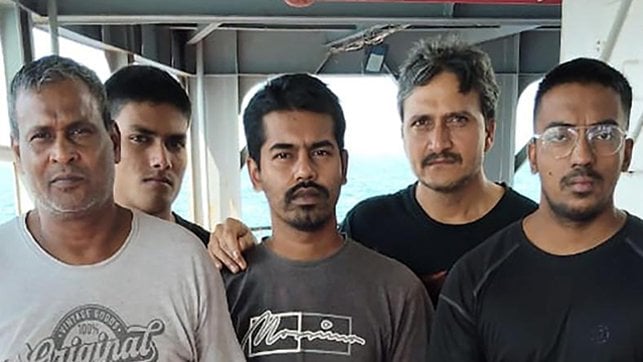
Seafarer abandonment hit a record level in 2025, marking the sixth year in a row the number of vessels abandoned broke the record, and the fourth year in a row for seafarer abandonment. The International Transport Workers’ Federation (ITF), which plans to present that data to the International Maritime Organization, is calling the situation a “disgrace,” while it has become a systemic issue in the industry.
“In 2025, we’ve yet again seen the worst year on record for seafarer abandonment. But this isn’t just a story about numbers, these are the people – the workers – who keep our economy moving forward, being forced into absolutely desperate situations, far from home and often without any clear resolution in sight,” said ITF General Secretary Stephen Cotton. Calling for the industry to come together and asserting “Enough is enough,” Cotton said, “The International Maritime Organization must be given more power to play a coordinating role in eradicating abandonment.”
According to the data released by the ITF, a total of 6,233 seafarers were abandoned across 410 ships in 2025. It reports that the number of ship abandonments was up 31 percent over 2024, while crew numbers were up 32 percent year-over-year.
Financially, the ITF reports that seafarers were owed a total of $25.8 million in pay from the abandonment cases in 2025. The union organization reports it was able to recoup $16.5 million for the seafarers.
“It’s nothing short of a disgrace that, yet again, we are seeing record numbers of seafarers abandoned by unscrupulous ship owners,” said David Heindel, Chair of the ITF Seafarers’ Section.
According to its data, the worst region for abandonment was the Middle East, followed by Europe. The highest number of abandonments happened in Turkey (61), followed by the United Arab Emirates (54). Loosely administered registries, which it calls flags of convenience, it says account for 82 percent of the cases with a total of 337 vessels abandoned in 2025.
The legal definition of abandonment, as contained in the Maritime Labor Convention, cites failure to pay contractual wages for at least two months. However, it can also be failing to cover a seafarer’s cost of repatriation, or failing to provide necessary support such as food and water.
The ITF says Indian seafarers were the worst-affected national group in 2025, as in 2024, with 1,125 seafarers abandoned. Filipino seafarers were the second-worst affected, with 539 abandoned, followed by Syrians with 309 abandoned.
It highlights the announcement of the Indian Government at the end of 2025, reporting that it will begin “blacklisting measures” to protect seafarers from ships with a record of repeat abandonments and other bad practices. The ITF wants others to follow the Indian example and establish a “national blacklisting” for ships to protect seafarers from repeat offenders.
The ITF is calling for an industry-wide cooperation and the involvement of flag states to stop abandonment and owners’ ability to walk away from ships. It calls for a requirement for flag states to log the details of a ship’s beneficial owner, including contact details, as a precondition for registration.
The labor organization looks to the IMO to discuss the issue and take action at its Legal Committee meeting in April. It also notes the effort of the U.S. Federal Maritime Commission, which is collecting information on loosely administered flags, and says others should follow suit with government investigations. Under the IMO regulations, flag states are responsible when the owners fail to meet their obligations.
China and Philippines Rush to Save Seafarers After "K" Line Bulker Sinks
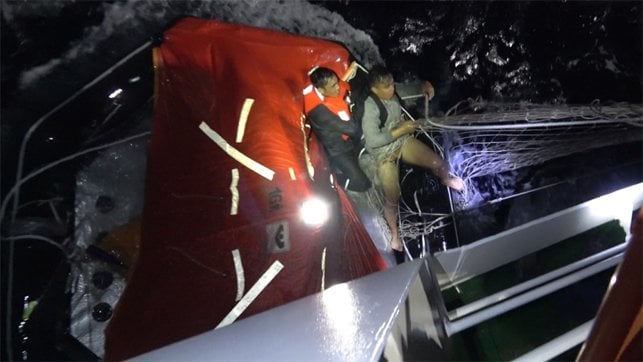
A Search and Rescue operation was underway in the South China Sea near one of the most disputed regions in the world after a Singapore-flagged bulker went down overnight. Both China and the Philippines dispatched ships and planes to the area, with the elements of political rivalry between the countries playing into the reporting of the incident.
The dry bulk carrier Devon Bay (56,000 dwt) issued a distress call late on January 22, reporting the vessel was listing. No details were released on the nature of the incident, but the Philippine Coast Guard reports that when it received the distress report, the vessel was listing 25 degrees. China reports the vessel capsized, and the pictures show the crew in the life rafts.
Built in 2013, the Singapore-registered vessel was a standard dry bulk carrier. It was 190 meters (653 feet) with a crew of 21 Filipinos. The ship is owned by a Singapore subsidiary of Japan's "K" Line (Kawasaki Kisen Kaisha).
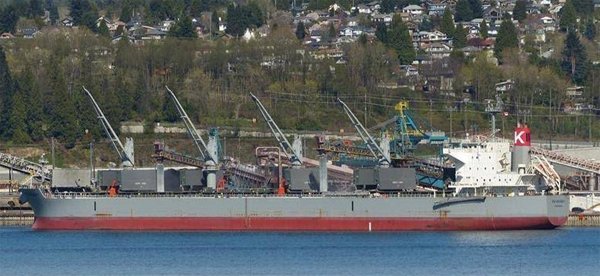
Devon Bay reportedly capsized according to the Chinese reports (Philippine Coast Guard release)
The Chinese report the vessel’s position as 55 nautical miles northwest of Huangyan Dao (Scarborough Shoal) while the Philippine Coast Guard reported the position as 141 nautical miles west of Sabangan Point, emphasizing the vessel was in the Philippine Exclusive Economic Zone. There is an ongoing dispute over the shoal as China challenges the Philippines for control of the area.
The China Coast Guard reports it dispatched two vessels to conduct the rescue operation. Early reports said it had rescued 10 seafarers later changed to a total of 17, including two who were deceased. It said 14 are in stable condition and one is receiving emergency medical treatment. The Philippine Coast Guard said it was trying to confirm the reports.
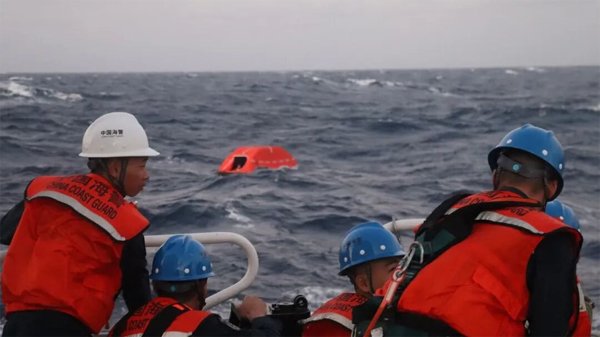
Both China and the Philippines said they were conducting the SAR for the missing four crewmembers (China Embassy Manila)
The Philippines highlights that it sent two vessels, BRP Teresa Magbanua and BRP Cape San Agustin, as well as two PCG aircraft, to conduct Search and Rescue (SAR) operations. Chinese officials said they were also continuing the search and rescue operation for the four missing crewmembers of the vessel.
It is unclear what caused the casualty. The vessel was loaded with iron ore according to the Philippine Coast Guard. It had departed Zamboanga, in the Philippines, and was heading for Yangjiang, China. The Philippines is emphasizing that it is a frequently traveled route by ships.
The Maritime and Port Authority of Singapore issued a statement saying that, as the flag state and because the owner is registered in Singapore, it would be leading the investigation. It says it continues to monitor the SAR operation and is in contact with the ship owner.
Op-Ed: Mental Health Care is Safety-Critical, Not an Added Benefit
If mental health is not treated as safety-critical, we risk losing a whole generation of seafarers who are not willing to sacrifice their health for a career, regardless of how well-paid it is.
Life at sea can be unforgiving, seafarers face long stretches away from home, shift patterns that disrupt sleep, demanding operational pressures, isolation, harsh weather, and often little privacy.
We are already seeing heightened anxiety in younger seafarers before they have even stepped foot on the ship. Some of this is genuine incidence, some is better recognition and willingness to disclose. Younger seafarers often report performance pressure, financial insecurity, and digital overexposure earlier in their careers.
Mental health is far too often treated as an added benefit for crew, but the industry must view it as safety-critical if we are to make any progress in reducing the number of serious mental health episodes and suicides among seafarers.
When mental health support is not embedded into a company culture, then it is likely more emergency situations will occur. This is when immediate expert intervention is essential to ensure the seafarer’s health is protected. There must be a support plan in place running all the way through from crisis to aftercare, and helping to ensure the crew member is mentally fit to return to work.
This comprehensive plan should involve connecting the seafarer with language-matched psychologists and safety protocols, ship-to-shore coordination, family liaison support when home crises drive onboard distress, and after-action support for crew.
For the industry to see a real impact on mental health, early intervention is key, as well as helping seafarers recognize their own triggers and how to prevent their mental health escalating in times of crisis.
It is a global concern that mental health is not prioritized or resourced well enough to address the issue and ensure sufficient support is in place. We must not forget that being out at sea can be a ticking time bomb for a seafarer suffering a decline in their mental health. They don’t have access to their support system, their freedom is taken away, lack of sleep and rest, and access to ordinary activities to reduce stress is limited. It really is the perfect storm for mental health to decline further where the crew member may end up feeling there is no way out. Therefore, it must be treated as a crucial aspect of a vessel’s safety management systems and should not be compromised.
Along with anxiety, one of the most common triggers for mental health episodes we are currently seeing is sleep and fatigue load. When you have watchkeeping, port rushes, time-zone shifts mixed with health, noise and an overstimulating environment, it results in cognitive strain, irritability and low mood.
Due to the nature of the job, seafarers have long suffered with isolation and family stress issues which are also common triggers. Operational pressure and uncertainty are another trigger. Inspections, tight turnarounds, manning shortages and contract and visa delays all lead to feelings of instability and uncertainty over their how their day-to-day life onboard will look like with no assurance over getting home on time.
Sadly, we are still seeing a high number of bullying and harassment cases and conflicts, as well as seeing 24/7 access to social media and toxic online content, leading to a negative impact on mental health.
We are certainly making progress in increasing awareness and are seeing more companies place emphasis on crews’ mental health and wellbeing, but awareness alone isn’t enough. Where companies embed protocols, such as clear escalation, language-matched clinicians, fatigue controls, and family liaison, we see earlier help-seeking and fewer high-severity crises. The most progress occurs when mental health is integrated into ISM/SMS and leaders are trained to act on early warning signs.
We must treat mental health as safety critical, build protocols, ensure sleep and fatigue protections, and give crews fast access to clinicians who speak their language. That combination consistently lowers risk and improves outcomes.
Charles Watkins is Director of Clinical Operations, Mental Health Support Solutions, a member of OneCare Group.
The opinions expressed herein are the author's and not necessarily those of The Maritime Executive.

No comments:
Post a Comment