Thursday, May 08, 2025


China: A new imperial capitalist power
Published 

Cover of book

China in Global Capitalism: Building International Solidarity Against Imperial Rivalry
By Eli Friedman, Kevin Lin, Rosa Liu and Ashley Smith
Haymarket Books, 2024

China in Global Capitalism is an excellent introduction to China today. It discusses the nature of Chinese society and the reasons for Chinas growing conflict with the United States.

The book begins by arguing (convincingly, in my opinion) that: “Twenty-first century China is capitalist.” [p.11] The authors show that the profit motive dominates the economy: 

Across a wide range of sectors, it is clear that production of commodities for the sake of profit governs the economy, not production for human need...

Items such as food, housing, education, health care, transportation, and time for leisure and socialising are not provided by the government. Rather, the vast majority of people in China must sell their labor power — their ability to work — to private or state-owned corporations in return for a wage in order to pay for necessities. [p.14]

This is a big change from the previous system: 

The appearance of a capitalist labor market was politically contentious in the late 1970s, as many in the CCP [Chinese Communist Party] still supported the Maoist ‘iron rice bowl’ system of lifetime employment. Although wages were paltry under this system, urban workers in most enterprises had free or nearly free access to housing, education and health care. Most importantly, it was nearly impossible to remove people from their employment... But by the 1990s the state had clearly decided that capitalist labor markets were the future, signalled most clearly by 1994’s labor law, which established a legal framework for wage labor... Rather than ushering in a highly regulated labor market in the social democratic mold (as many reformers wanted), however, labor has been commodified and remains highly informal. [p.15]

The authors argue that the Chinese state

rules in the general interests of capital... The state’s capitalist nature is abundantly clear in shop-floor politics. China has seen an explosion of worker insurgency over the past three decades; the country is the global leader in wildcat strikes. How does the state respond when workers employ the time-honored tradition of withholding their labor from capital? Its police intervene almost exclusively on behalf of the bosses against workers, a service they provide to private domestic, foreign and state-owned enterprises alike. There are innumerable instances in which police or state-sponsored thugs have used coercion to break a strike. [p.17]

They explain that there are no genuine unions: 

The only legal union is the All-China Federation of Trade Unions (ACFTU), an organization that is controlled by CCP. Rather than representing workers and defending their interests, the ACFTU ensures labor peace for corporations. Unsurprisingly, it is standard practice for enterprise HR managers to be appointed as the chair of the company-level union. [p.18]

Capitalists have been allowed to join the CCP and government bodies: 

By the 1998-2003 session of the National People's Congress (NPC) workers made up just 1 percent of representatives while entrepreneurs constituted 20.5 percent, a stark reversal from the 1970s. Today the NPC and Chinese People's Consultative Congress have an astonishing concentration of plutocrats. In 2018 the wealthiest 153 members of these two central government bodies had an estimated combined wealth of USD $650 billion. [p.19]

As in the United States, there is a “revolving door” between corporations and state institutions. [p. 19]

China’s relatively strong state sector of the economy is sometimes cited as evidence that China is not capitalist. However, the authors point out that prior to the neoliberal era, state-owned enterprises [SOEs] were common in capitalist countries. Plus, China’s state sector has been cut drastically: 

Tens of millions of state-sector workers were laid off in the 1990s and early 2000s as part of the state's campaign to “smash the iron rice bowl”. Thrown into a labor market for which they were wholly unprepared, this privatization campaign engendered subsistence crises and massive class struggle. Following this wave of sell-offs and theft of worker pensions, the remaining SOEs have been subjected to market forces, including in their labor regimes. [p.21] 

This includes the widespread use of temporary workers.

An ‘imperial power’

The authors argue China has become “a new imperial power”:

It battles for its share of the world market, reinforces the underdevelopment of the Global South, and cuts deals to secure resources throughout the world. China’s integration into global capitalism has generated both collaboration and competition between it and the US as well as the other imperialist powers. [p.27]

China’s economy has grown rapidly: 

China’s economy exploded from a mere 6 percent of US GDP in 1990 to 80 percent of it in 2012. Multinational corporations spurred the boom. But China required foreign high-tech and capital-intensive corporations to transfer their technology to local state and private enterprises. Thus, the Chinese state supported the development of indigenous capital and enabled it to compete in the world system. [p.32]

The authors say China has contributed to the continued underdevelopment in the Global South: 

In Latin America its cheap exports have undercut the region's industries and reduced countries to shipping raw materials to China - the classic dependency trap. [p.34]

China has also raised its military spending to $293.35 billion in 2021, the second highest in the world after the US. [p.41]

It has also pursued an aggressive program of establishing military bases on islands it claims in the South China Sea as well as territorial claims against various states in the East China Sea...

This projection of power in the South and East China Seas has brought China into conflict with several Asian states, like Japan, the Philippines, Brunei, Taiwan, Vietnam, Indonesia, and Malaysia. [p.42]

The authors note that, 

despite its rise, China remains dependent on advanced capitalist countries, especially the US. It needs them for markets as well as for inputs, especially advanced microchips that it is not yet able to manufacture on its own. [p.43]

I agree China is increasingly acting like an imperialist power. But the situation is complex: China’s working class is still being super-exploited by foreign capital, a pattern usually indicative of a semi-colonial country.

Resistance

China’s rapid economic growth is sometimes called a “miracle”. But the authors say, 

China’s growth is predicated on the exploitation of the working class, unpaid reproductive labor, especially of women, and dispossession of people's land, natural resources and collectively held assets. These forms of exploitation and theft benefit not only China’s elites, but have helped ensure the profitability of capitalism at the global level, thereby enriching corporations and investors from the wealthy countries of North America, Europe and Asia. [p.47]

There has also been resistance to oppression and exploitation:

Peasants have consistently fought back against the corrupt and anti-democratic practices of land seizure and marketization. Their urban counterparts have done the same. People have organized against the razing of whole neighborhoods at the behest of land-greedy developers and their allies in city government. In the 1990s workers mobilized against the theft of public assets during the privatization of state-owned firms… Migrant workers from the countryside have taken up the mantle of resistance within factories and in the rapidly expanding service sector...

Social unrest expanded dramatically over the 1990s and 2000s. “Mass incidents”, as the government calls worker and peasant collective acts of more than twenty-five people, hit 87,000 in 2005, the year the government stopped reporting data...

Even without formal organization, these struggles have wrested major symbolic, legal and material victories from the state and capital alike. [p.47-48]

Many strikes have won pay rises or better working conditions. But the unrest has also forced the government to change some of its policies.

An example is the resistance to privatisation of SOEs: 

Workers resisted these market reforms with a wave of struggle. From the late 1990s through the late 2000s, they staged protests and strikes against layoffs, pension thefts, and privatization. Perhaps the most famous example was the movement in Liaoyang in 2002, where tens of thousands of SOE workers rose up against factory closures, threatening social stability. Many other protests employed radical tactics like road and rail blockades. In 2009, workers at Tonghua Iron and Steel Group in Jilin province captured and beat to death an executive from a private company that was leading a privatization effort. The state responded with repression, arresting and sentencing leaders to long prison sentences. Workers who lost their jobs found themselves in the private labor market without much hope of finding decent work. Nevertheless, their fierce resistance contributed to Hu Jintao's decision to back off further privatization of state industry. [p.55]

Another example is the struggle of migrant workers: 

Migrants from the countryside are second-class workers in the stratified internal citizenship regime. They are excluded from social services in their adopted cities because their household registration, their hukou, is tied to their rural towns. On the one hand, their access to benefits there does provide them with some buffer during spells of unemployment. But, on the other hand, their precarious status in the cities makes them a super-exploitable workforce for both Chinese and multinational industries...

These workers responded to their exploitation with militant labor struggles, just like working classes in other countries that have undergone similar processes of industrialization. Their demands centred on wages, conditions and legal protections…

In an attempt to quell this wave of militancy, the Chinese government enacted labor reforms that codified basic workers’ rights… Yet this did not succeed in tamping down strikes or protests and may have actually inspired workers by rewarding their actions and giving them legal legitimacy...

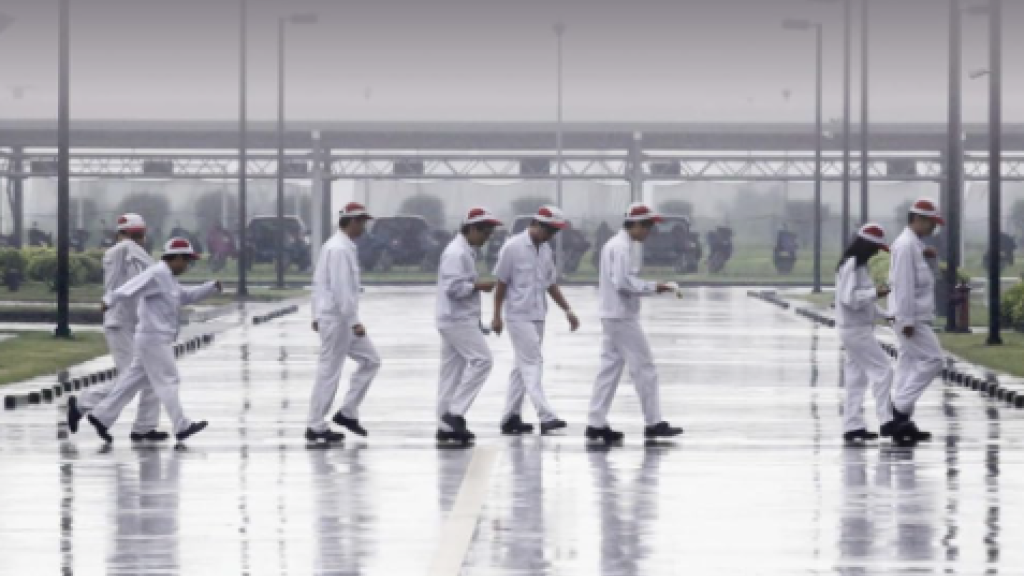
Workers went on the offensive, demanding wage increases above the legal requirements. A strike at the Honda Nanhai transmission plant triggered a massive strike wave in the auto industry in the summer of 2010. [p.55-57]

The book discusses women’s oppression and feminist resistance. Privatisation has deepened women’s oppression. In the past, state-owned enterprises provided their employees with housing, health care, child care and elder care. Privatisation meant the loss of these services. 

Parents have to pay for commercial child care, look after children at home or, in the case of many migrant workers, get grandparents in their home village to look after them.

Today China is among the very few countries in the world where there is zero government expenditure on care services for children under three. [p.64]

This situation increases the burden on women and has contributed to the increasing pay gap between men and women. 

Some women have organised to try to improve the situation. A group called Youth Feminist Activism have 

campaigned, protested, fought legal cases, set up social media platforms, performed plays, and staged walkathons, all calling for reforms to address gender discrimination and violence throughout society. [p.71-72] 

Five leaders of the group were arrested in 2015.

China’s national questions

China has 56 officially recognised ethnicities, but 92 percent of the population belong to the Han majority. The minorities mainly live on China’s peripheries.

These areas have experienced outbreaks of rebellion: 

From 2008 to 2020, China's periphery was the site of intense social resistance. This twelve year sequence witnessed massive upheavals in Tibet, Xinjiang and Taiwan. Hong Kong has seen two spectacular bouts of mass insurgency, first in 2014 and then again in 2019. [p.77] 

There were different immediate causes for these events, but 

in sharp contrast to the character of protest in China’s core regions, these were all marked by overt hostility to the Chinese state. [p.77]

Regarding Tibet, the authors say: 

Although the region’s GDP growth has been impressive, most good jobs and entrepreneurial opportunities have gone to Han settlers… Anti-Tibetan discrimination in the labor market is well documented...

Han settlers in Tibetan regions have been the overwhelming beneficiaries of expanded government spending on infrastructure — and these projects themselves often entail the dislocation and dispossession of Tibetan populations. [p.81]

Along with repression of Tibetan culture, economic discrimination has led to “simmering resentment at Han colonial rule.” [p.82] The authors say that: 

Faced with such national oppression, Tibetans have the right to national self-determination and the right to shape their own future as they see fit. [p.83]

The situation is similar in Xinjiang: 

The central government has financed major infrastructure projects and incentivized private investment in the region...

Uyghurs, however, have benefited little from Xinjiang’s impressive economic growth, whose spoils have largely gone to Han settlers. This racial inequality is the product of discrimination in schooling and the labor market. Advancing in China’s system of higher education requires mastery of Mandarin, which puts native Uyghur speakers (as well as speakers of Tibetan, Kazakh, and other minority languages) at a distinct disadvantage. [p.84]

This situation led to race riots in 2009, followed by 

a low-level and occasionally violent insurgency [that] simmered for years. Uyghurs engaged in numerous knife attacks on police stations in Xinjiang. [p.85]

The Chinese state launched a “people’s war on terror” to root out “Islamic extremism”. The authors describe this “war” as follows: 

By 2017, the state had constructed massive camps , euphemistically referred to as “re-education centres”, where it jailed hundreds of thousands of Muslims. While the pretense was that these were merely job training sites, extensive leaks as well as publicly available government documents have revealed that the camps were intended to promote “de-radicalization” and a sense of “ethnic unity,” as well as submission to CCP rule. [p.85] 

Uyghur language and culture have been attacked, and a “dystopian system of surveillance” created throughout Xinjiang. [p.85]

Western companies have benefited from the repression of the Uyghurs by supplying some of the surveillance technology and using the forced labour in the camps to produce commodities for sale on the world market.

The protests in Hong Kong mainly focused on democratic rights issues — opposition to repressive laws and demands for free elections. The authors argue that the lack of democracy is linked to the very high level of economic inequality in Hong Kong, where a wealthy oligarchy controls the government while public housing is inadequate and poor people are “forced to squeeze into tiny apartments with exorbitant rents.” [p.90] Discrimination against those who do not speak Mandarin also causes discontent.

Taiwan has never been controlled by the CCP, but the latter claims it is part of China because it was once part of the Qing empire. Taiwan was ruled by Japan between 1895 and 1945, then taken over by the Kuomintang (KMT), the US-backed party that ruled China until defeated by the CCP in 1949.

The authors say the Taiwanese people saw the KMT as a “brutal occupying force”. When they rebelled, the KMT “responded with brutal repression, killing many thousands and arresting and torturing thousands more.” [p.94]

In the 1980s, Taiwan’s pro-democracy movement succeeded in winning political liberalisation and parliamentary democracy. Meanwhile Deng Xiaoping’s market reforms created opportunities in mainland China for Taiwanese capitalists: 

Taiwan’s companies have poured huge sums of investments into China’s rapidly expanding export processing zones. The most famous example is Foxconn, which found in China a union-free environment with local government actors able to secure huge swaths of land and gargantuan workforces at low prices… Ironically it has been the CCP's old nemesis the KMT that has advocated on behalf of Taiwan’s moneyed elite for deeper integration between the two economies. [p.96]

However, in 2014, 

hundreds of thousands of people flooded the streets, expressing their opposition to a neoliberal trade deal that would enhance China's economic leverage. Hundreds of protesters occupied the Legislative Yuan building for weeks, mobilizing massive public support in a successful effort to derail the trade deal. [p.97]

Summing up, the authors say: 

Thus, the CCP’s open embrace of Han chauvinism and ethnonationalism has detonated struggles for national self-determination in its territory and periphery. [p.99] 

While recognising that Western politicians try to take advantage of such movements, they argue that the left should support struggles for democracy and self-determination.

US and China

Rivalry between the US and China is growing: 

As the conflict over Taiwan makes clear, China’s rise as a new capitalist power has brought it into increasing confrontation with the US. [p.103]

Up until the first Trump administration, US policy toward China had been “a combination of containment and engagement.” [p.108] The US tried to incorporate China into its neoliberal world order.

At the same time, Washington remained wary because of Beijing’s reluctance to fully follow its dictates and therefore hedged its bets by retaining elements of a policy of containment toward China. For example, it maintained its vast archipelago of military bases in the Asia Pacific and regularly patrolled its waters, including the Taiwan strait, with aircraft carriers and battleships. [p.109]

Trump took a more openly hostile approach, launching a tariff war and trying to end technology transfer between US and Chinese companies. Biden largely continued this policy. The authors comment that: 

This conflict has set in motion a logic of restructuring globalization, fragmenting the system into rival national security blocs in some strategic economic areas while maintaining global supply chains in others. [p.121]

There is also an “arms race in the region”, with the US, China and other states increasing their military spending. [p.122]

Environment

China became the world’s largest emitter of carbon dioxide in 2006. By 2019, China’s annual carbon dioxide emissions were double those of the US. Industrialisation has also led to the pollution of land, water and air.

These problems result from China’s capitalist development: 

Multinational corporations… relocated many of their “dirty industries” to China where environmental regulation was and is lax. [p.127]

Pollution has led to mass protests: 

In fact, popular discontent and resistance has forced the state to enact measures that at least partially address environmental degradation. For instance, popular criticism by urban residents against air pollution in major cities like Beijing pushed the government to shut down or relocate highly polluting industries. [p.130-131]

International solidarity

In the context of the intensifying rivalry between the US and China, the authors argue for international solidarity: 

The rulers of both states have turned to nationalism to deflect popular anger onto oppressed people and their imperial rivals. At the same time, increased exploitation and oppression have and will produce intense struggles by workers and the oppressed in both the US and China. In this context the left must adopt a clear approach of building international solidarity from below against both imperial states and their ruling classes. [p.163]

They add: 

Our job is to stitch together the networks of activists, however rudimentary, in the US, China and elsewhere who can in the future make reciprocal solidarity from below a force to oppose global capitalism, great power nationalism, and the inter-imperial rivalries they stoke. [p.175]


On the Key Points of Contemporary International Relations: Responsibility to Protect and Humanitarian Military Intervention


War and the Responsibility to Protect (R2P)

The R2P is one of the most important features of the post-Cold War global politics and international relations (IR) regarding the relations between war and politics, which was formalized in 2005, focusing on when the international community (the UN) must intervene for human protection purposes. The R2P was officially endorsed by the international community by the unanimous decision of the UN General Assembly as a principle at the UN World Summit in 2005. This agreement was regulated in paragraphs 138−140 of the documents of this World Summit. There are three crucial decisions concerning the principle of the R2P:

  1. Every state is responsible for protecting its population, in general, that means not only the citizens but more broadly all residents living within the territory of the state from four crimes: a) genocide, b) war crimes, c) crimes against humanity, and d) ethnic cleansing.

  2. The international community has the responsibility to encourage and assist states for the sake that they will realize their fundamental responsibility to protect their residents from the four crimes defined in the first decision.

  3. In the case, however, that the state authorities are “manifestly failing” to protect their residents from the four crimes, then the international community has a moral responsibility to take timely and decisive action on a case-by-case basis. In principle, those actions include both coercive and non-coercive measures founded on Chapters VI−VIII of the UN Charter.

The R2P was, for instance, invoked in some 45 Resolutions by the UNSC, like Resolutions 1970 and 1973 on Libya in 2011. Nevertheless, the R2P principle is directly connected with the principle of Responsible Sovereignty, that is, in fact, the idea that a state’s sovereignty is conditional upon how state authorities are treating their own residents, founded on the belief that the state’s authority arises ultimately from sovereign individuals.

As a very complex principle, from the international community’s viewpoint, it is, however, generally accepted that the mainstream consensus is that the R2P is best understood as a multifaceted framework or a complex legal and moral norm that embodies many different but related components. Regarding this issue, in 2009, the UN Secretary-General divided the R2P into three pillars, which had important traction in the further discourse:

  1. Pillar I refers to the domestic responsibilities of states to protect their own residents from the four crimes.

  2. Pillar II regards the responsibility of the international community to provide international assistance with the consent of the target state.

  3. Pillar III is focusing on “timely and collective response” in that the international community is taking collective action through the UNSC to protect the people from the four crimes, but without the consent of the target state, i.e., its governmental authorities.

Nevertheless, although states did not formally sign up to this structure of the three-pillar approach, they, however, help distinguish between different forms of the R2P action. Among other examples, international assistance in Mali or South Sudan was provided within the framework of the R2P and the consent of the governments of Mali and South Sudan (reflecting the Pillar II action) but the military intervention in Libya in 2011 was done without the consent of the Libyan government (reflecting the Pillar III operation).

Nonetheless, the widest justification for humanitarian intervention within the internationally recognized legal framework of the R2P is to stop or prevent genocide that is seen as the worst possible crime against humanity – the “crime of crimes”. Nevertheless, in practice, it is very difficult to provide a consistent and reliable “just cause” reason for the international humanitarian intervention within the legal framework of the R2P. This is for the very reason that the phenomenon of genocide is usually understood as a deliberate act or even a planned program of mass killings and destruction of the whole human group or a part of it based on ethnic, ideological, political, religious, or similar background. Probably, the most regarded attempt to fix the principles for the international military intervention concerning the R2P is given by the International Commission on Intervention and State Sovereignty (the ICISS), proposed in 2000 by Canada:

  1. Large-scale loss of life. It can be, nevertheless, real or propagated, with genocidal intent or not, that is the product of several causes like deliberate military-police action, state neglect or inability to act, or a failed state situation (the so-called “failed/rogue state”) (the 1994 Rwandan genocide, for example).

  2. Large-scale ethnic cleansing. Actual or apprehended, whether carried out by killing, forcible expulsion, acts of terror, or raping (for instance, the current holocaust against Palestinians in Gaza).

Nonetheless, once the criteria for humanitarian intervention are fixed, the next question immediately is on the agenda: Who should decide when the criteria are satisfied? In other words: Who has the “right authority” to authorize military intervention for humanitarian purposes? The generally accepted worldwide answer to these questions is that the only UNSC can authorize a military intervention (what was not done, for instance, in the case of NATO intervention against the Federal Republic of Yugoslavia in 1999 and, therefore, this intervention of 78 days is a pure example of military aggression on a sovereign state). This conclusion reflects, in fact, the UN’s role as the focal source of international law, followed by the UNSC’s responsibility for the protection of international security and peace.

However, one of the crucial problems became that it may be very difficult to obtain the UNSC’s authorization for military intervention for the very reason that there are five great powers with veto rights (for instance, the USA has almost always used a veto right to bloc any anti-Israeli action by the UNSC). Some of the five members, or all, may be more concerned about the issues of global power, their geopolitical or other goals, etc., than they are concerned with real humanitarian concerns. Nevertheless, the principles on which the R2P idea is founded recognized such a problem by requiring that the UNSC’s authorization has to be obtained before the start of any military intervention, but at the same time accept that alternative options must be available if the UNSC rejects a proposal for the military intervention or fails to deal with it in a reasonable time. Under the R2P, these possible alternatives are that a proposed humanitarian intervention should be considered by the UNGA in an Emergency Special Session or by a regional or sub-regional organization (for instance, the African Union). However, in the very practice, for example, NATO was (mis)used in such matters by serving as a military machine that carries out military interventions, like in the Federal Republic of Yugoslavia in 1999 or Afghanistan in 2001, and later in keeping the order in those occupied territories.

From one viewpoint, the value of the R2P is still contested, especially among the theoreticians of global politics and IR. However, its supporters defend the principle of the R2P for the reason of its seven crucial (positive) features:

  1. The principle is re-conceptualizing the notion of sovereignty for the very reason that it requires that state sovereignty (independence) is, in fact, a moral responsibility rather than a practical right. In other words, the state has to deserve to be treated as a sovereign by maintaining all international duties, including the R2P.

  2. The principle is focusing on the powerless rather than the powerful people by addressing the rights of the victims to be protected, but not the rights of the state’s authorities to intervene.

  3. The principle of the R2P is establishing a quite clear red line, as it is identifying four crimes as the signal for international action and intervention if necessary.

  4. The consensual support for the R2P among states is very significant, as such consensus is helping international understandings of rightful conduct, especially what concerns the issue of the „Just War“ in the case of the international military intervention.

  5. The principle is broader regarding the operational scope compared to the pure form and understanding of the humanitarian intervention, which poses a false choice between two extremes: to do nothing or to go to war. However, it is argued that the R2P is overcoming such simplistic choice by outlining the broad range of coercive and non-coercive measures which in practice can be used for the sake of encouragement, assistance, and, if necessary, force states to realize their responsibility based on international law and standards.

  6. Although it does not add anything new to international law, the principle of the R2P is drawing attention to a wide range of pre-existing legal responsibilities and, consequently, is helping the international community to focus its attention and responsibility on the real crisis.

  7. Concerning the case of Iraq in 2003, the R2P became at least in the eyes of Westerners, an important principle in restating that the UNSC is the primary legal authorizer of any Pillar III use of force. However, the same policy did not work in the case of NATO aggression on the Federal Republic of Yugoslavia (Serbia and Montenegro) in 1999. Why the R2P as a principle is not used by the international community against the Israeli ethnic cleansing of the Gazan Palestinians is for the very reason that the West Bank of Israel is the USA.

What is a Humanitarian Military Intervention (HMI)?

The principle of the R2P is in direct connection with the question of practical humanitarian military intervention, if necessary. According to the widely accepted academic concept of humanitarian military intervention (HMI), it is a type of military intervention with the focal purpose of humanitarian but not strategic or geopolitical reasons and ultimate objectives. Nevertheless, the term itself became very contested and extremely controversial as it, basically, depends on its various interpretations and understandings. In essence, it is the problem of portraying military intervention as humanitarian to be legally legitimate and morally defensible.

Nevertheless, in practice, the use of the term HMI is surely evaluative and subjective. Some HMIs, at least in terms of intentions, can be classified as humanitarian if they are motivated primarily by the desire to prevent harm to some group of people, including genocide and ethnic cleansing. We have to understand that in the majority of cases of HMI, there are mixed motives for such intervention – declarative and hidden. The evaluation of HMI can be done in terms of pure outcomes: HMI is really humanitarian only if it is resulting in a practical improvement in conditions and especially a reduction of human suffering.

There are three deconstructing attitudes regarding HMI:

  1. By presenting HMIs as humanitarian, it is giving them a full framework of moral justification and rightfulness, which means legitimacy. The term HMI serves the interests of humanity by reducing death and physical and mental suffering.

  2. The term intervention refers to different forms of interference in the internal affairs of others (in principle, states). Therefore, the term conceals the fact that the (military) interventions in question are military actions involving the use of force and violence. Consequently, the term humanitarian military intervention (the HMI) is more objective and, therefore, preferred.

  3. The notion of the term humanitarian intervention can reproduce significant power asymmetries. The powers of intervention (in practice, NATO and NATO member states) possess military power and formal moral justification, while the human groups needing protection (in practice, in the developing world) are propagandistically presented as victims living in conditions of chaos and the Middle Ages. Consequently, the term HMI supports the notion of westernization as modernization or even, in fact, Americanization.

More precisely, HMI is entry into a foreign state or international organization by armed forces with the declarative task to protect residents from a real or alleged persecution or the violation of their human (and in some cases minority) rights. For instance, the Russian military intervention in Chechnya in the 1990s was deemed necessary to protect the rights of the Russian Orthodox minority in the Chechen Muslim environment. However, the legal and political lines of HMI are ambiguous, especially in the cases of moral justification for armed incursions in crisis-affected states for the sake of realizing some strategic and geopolitical aims, as was the case with NATO military intervention against the Federal Republic of Yugoslavia in 1999. All counter-HMI supporters are quoting the Charter of UN which clearly states that all member states of the United Nations shall refrain in their international relations from the threat or use of force against the territorial integrity or political independence of any state. However, on the other hand, the UNSC is authorized with specific interventions. The justification of HMI to protect the lives and rights of people is still under debate over when it is right to intervene and when not to intervene.

Finally, concerning HMI, the focal questions still remain like:

1) Balancing of minority and majority rights;

2) The amount of death and damage that is acceptable during a HMI (the so-called “collateral damage”);

3) How to reconstruct societies after HMI?

Both concepts, the R2P and HMI, are in direct connection with the concept of human security. The origins of the concept are traced back to the 1994 UN Human Development Report. The report stated that while the majority of states of the international community secured the freedom and rights of their own residents, individuals, nevertheless, remained vulnerable to different levels of threats like poverty, terrorism, disease, or pollution.

The concept of human security became supported by academic scholars as an idea that individuals, as opposed to states, should be the referent object of security in IR and security studies. In their opinion, both human security and security studies have to challenge the state-centric view of international security and IR.

Does in Practice Humanitarian Military Intervention (HMI) Work?

Regarding any kind of  HMI within the moral and legal framework of the R2P, the focal question became: Do the benefits of HMI outweigh its costs? Or to put the question in a different way: Does the R2P, in fact, save lives?

The crucial issue is to judge HMI not from the side of its moral motives/intentions, or even in terms of international legal framework but rather from the side of its direct (short-time) and indirect (long-time) outcomes from different points of view (political, economic, human cost, cultural, environmental, etc.). However, solving this problem requires that real outcomes have to be compared with those outcomes that would happen in some hypothetical circumstances; for instance, what would happen if the R2P did not occur? Such hypothetical circumstances cannot be proved, like arguing that an earlier and effective HMI in Rwanda in 1994 will save hundreds of thousands of lives or without NATO military intervention in the Balkans in 1999 ethnic Albanians in Kosovo will experience massive expulsion and above all ethnic cleansing/genocide by the Yugoslav security forces. For instance, the NATO military intervention in the Balkans in 1999 became the trigger for Serbian retaliation against the Albanian population in Kosovo. In other words, NATO aggression in Kosovo in 1999 succeeded in the initial goal of expelling Serbian police and the Yugoslav army from the province, but at the same time helped a massive displacement of the ethnic Albanian population (however, a big part of this “displacement” was arranged by the Albanian Kosovo Liberation Army for the propagandistic media purposes) and giving a post-war umbrella for the real ethnic cleansing of Kosovo Serbs by the local Albanians for the next 20+ years. In this particular case of the HMI, the R2P military action resulted in a humanitarian catastrophe, which means it was absolutely counterproductive compared with its initial (humanitarian/moral) task.

Nonetheless, it can be said, at least from the Western points of view, that there are some examples of the HMI that were beneficial like the establishment of a “no-fly zone” in North Iraq in 1991 which not only prevented reprisal attacks and massacres of the Kurds after their uprising (backed by the USA and her allies) but at the same time allowed the land populated by the Kurds to develop a high degree of autonomy. In both cases, Iraq in 1991 and Yugoslavia in 1999, both operations were carried out by NATO airstrikes involving a significant number of civilian casualties on the ground and a minimal number among the aggressor’s side. For instance, estimates of the civilians and combatants killed in Kosovo in 1999 are 5,700 according to the Serbian sources (the casualties in Central and North Serbia are not taken into consideration on this occasion). The Western academic propaganda claims that Western HMI in Sierra Leone was effective as it brought to an end a 10-year civil war which cost some 50,000 lives, followed by providing the foundations for democratic parliamentary and presidential elections in 2007.

There are many other R2P military interventions that, in fact, failed or were much less effective and, therefore, raised questions about their purpose. On some occasions, the HMI under the legal umbrella of the UN peacekeepers failed, as humanitarian catastrophes happened (Kosovo after June 1999, the Congo), while some HMIs were quickly left as being unsuccessful (Somalia). However, several R2P interventions ultimately resulted in a protracted counterinsurgency fight (Iraq or Afghanistan). That is the crucial problem concerning the effective results of the HMI/R2P; such military interventions may result in bringing more harm than benefits. A classic example concerning this problem is to change some authoritarian regimes by the use of foreign occupying forces; in many cases, this increases political tension and provokes civil wars, which subject ordinary citizens to constant civil war and suffering. In principle, if the civil struggle is resulting from an effective breakdown in government, foreign interventions of any kind may make internal political things worse, not better.

While political stability respecting human universal rights are theoretically and morally all desirable goals,  it cannot always be possible for outsiders to impose or enforce these goals. Therefore, the HMI has to be understood from long-term perspective results and not as a result of the pressure from public opinion or politicians that something has to be done. It is known that some HMIs simply failed as a result of badly planned reconstruction efforts or an insufficient supply of different types of resources for the purpose of reconstruction. Consequently, the principle of HMI/R2P places stress not only on the R2P but also on the responsibility to reconstruct after the intervention.

Is the Humanitarian Military Intervention (HMI) Justified?

The HMI has become, during the last 30+ years, one of the hottest disputed topics in both IR and world politics. There are two diametrically opposite approaches to the HMI practice: 1) It is clear evidence that IR affairs are guided by new and more acceptable cosmopolitan sensibilities; and 2) The HMIs are, in principle, very misguided, politically and geopolitically motivated, and finally morally confused.

The focal arguments for the HMI as a positive feature in IR can be summed up in the next five points:

  1. The HMI is founded on the belief that common humanity exists, which implies the attitude that moral responsibilities cannot be confined only to own people, but rather to all entire mankind.

  2. The R2P is increased by the recognition of growing global interconnectedness and interdependence, and, therefore, state authorities can no longer act like to be isolated from the rest of the world. The HMI, consequently, is justified as enlightened self-interest, for instance, to stop the refugee crisis, which can provoke serious political problems abroad.

  3. The state failure that provokes humanitarian problems will have extreme implications for the regional balance of power and, therefore, will create security instability. Such an attitude is providing geopolitical background for surrounding states to participate in the HMI, with great powers opting to intervene for the formal sake to prevent a possible regional military confrontation.

  4. The HMI can be justified under the political environment in which the people are suffering, as not have a democratic way to eliminate their hardship. Consequently, the HMI can take place with the sake to overthrow the authoritarian political regime of dictatorship and, therefore, promote political democracy with the promotion of human rights and other democratic values.

  5. The HMI can show not only demonstrable evidence of the shared values of the international community like peace, prosperity, human rights, or political democracy but as well as it can give guidelines for the way in which state authority has to treat its citizens within the framework of the so-called „responsible sovereignty“.

The focal arguments against the HMI are:

  1. The HMI is, in fact, an action against international law, as international law only clearly gives the authorization for the intervention in the case of self-defense. This authorization is founded on the assumption that respect for the state’s independence is the basis for the international order and IR. Even if the HMI is formally allowed by international law to some degree for humanitarian purposes, the international law, in such cases, is confused and founded on the weakened rules of the order of global politics, foreign affairs, and IR.

  2. Behind the HMI is national interest but not real interest for the protection of international humanitarian norms. States are primarily motivated by concerns of national self-interest; therefore, their formal claim that the HMI is allegedly motivated by humanitarian considerations can be an example of political deception.

  3. In the practice of the HMI or the R2P we can find many examples of double standards. It is the practice of pressing humanitarian emergencies somewhere in which the HMI is either ruled out or never taken into consideration. It happens for several reasons: no national interest is on stage; an absence of media coverage; intervention is politically impossible, etc. Such a situation is confuses the HMI in both political and moral terms.

  4. The HMI is, in the majority of practical cases, founded on a politicized image of political conflict between “good and bad guys.” Usually, it has been a consequence of the exaggeration of war crimes on the ground. It ignores the moral complexities which are part of all international and domestic conflicts. The attempt to simplify any humanitarian crisis helps explain the tendency towards so-called “mission drift” and interventions going wrong.

  5. The HMI is seen in many cases as cultural imperialism, based on essentially Western values of human rights, which are not applicable in some other parts of the globe. Religious, historical, cultural, social, and/or political differences are making it impossible to create universal guidelines for the behavior of the state’s authorities. Consequently, the task of establishing a “just cause” threshold for a HMI within the framework of the R2P may be unachievable.

Vladislav B. Sotirovic is a former University Professor in Vilnius, Lithuania and a Research Fellow at the Center for Geostrategic Studies in Belgrade, Serbia. He can be reached at: sotirovic1967@gmail.comRead other articles by Vladislav, or visit Vladislav's website.


Human Rights Watch Outflanks Trump

Liberal NGO Pushes for Harsher Venezuela Sanctions

It’s been over 100 days since Donald Trump’s return to the presidency. Most NGOs to the left of the Heritage Foundation are alarmed about his confrontational international posture and related erosion of the rule of law.

Human Rights Watch (HRW), a supposedly liberal organization, is also concerned. But their problem is that the president hasn’t gone far enough – at least in the case of Venezuela. HRW’s latest report on Venezuela calls for intensified illegal measures that cause misery and death, outflanking Trump from the right.

Ignoring the US hybrid war

At issue for HRW is last July’s Venezuelan presidential election that saw Nicolás Maduro declared the winner. Beyond issues with supposed electoral irregularities lies the elephant in the room that is utterly disregarded by HRW. The US hybrid war against Venezuela was the biggest obstacle to free and fair elections. Venezuelans were under economic siege with coercive measures aimed at pressuring them into backing the US-backed opposition.

Also telling is the opposition’s refusal to submit their electoral records to the Venezuelan supreme court, when summoned to do so because they do not recognize the constitutional order in Venezuela. Legally, there was no way for them to claim victory even if they had legitimately won.

Post-election protest demonstrations were predictable. The opposition, which has a long history of anti-democratic street violence, threatened them if it lost. HRW characterizes the riots as mostly peaceful, while accusing the government of responding with a “brutal crackdown.”

Yet the widespread damage of public property such as health clinics, government offices, schools, and transportation facilities – along with murders of government security personnel and party members – were inconvenient facts entirely ignored in HRW’s over 100-page report. Such actions can hardly be called peaceful, nor blamed on the government.

A cure worse than the disease

 For argument’s sake, let’s not contest HRW’s claim that the books were cooked in Venezuela’s presidential election in order to examine the NGO’s solution.

On April 29, the US State Department celebrated 100 days of “America first” accomplishments, highlighting the revocation of oil importing licenses and the establishment of potential secondary tariffs on countries that still dare to import Venezuelan oil.

The next day, HRW’s report demanded even harsher punishment. Frustrated that the “Trump administration appears to be prioritizing cooperation” with Venezuela, HRW called for expanding sanctions and deepening pressure. And this is despite Washington’s plans to further maximize its maximum pressure campaign to achieve regime change in Caracas.

Specifically, HRW urged the US and other states to “counter Maduro’s domestic carrot-and-stick incentives that reward abusive authorities and security forces, making them loyal to the government” by imposing even more “targeted sanctions.”

Further compounding the impact of individual targeted sanctions is the reality of overcompliance. Even individual sanctions end up contributing to collective punishment. A 2019 statement by HRW recognized that “despite language excluding transactions to purchase food and medicines, these sanctions could exacerbate the already dire humanitarian situation in Venezuela due to the risk of overcompliance.”

But now the 1,028 existing unilateral coercive measures (the correct term for sanctions) on Venezuela by the US and its allies apparently aren’t enough for these sadists.

HRW admits that these coercive measures have “failed to make a dent” in correcting what they see as bad behavior. Why then persist if ineffective? Perhaps, because they’re very effective in punishing errant states and warning others.

HRW also lobbied for yet more foreign intervention in Venezuela’s internal affairs: “Foreign governments should expand support for Venezuelan civil society groups… a sustained and principled international response is crucial.”

Selective sanctimony on sanctions

HRW criticized the Trump administration’s sanctions targeting the International Criminal Court (ICC) because they might potentially “chill” the tribunal’s ardor to go after Venezuela.

Revealingly, this particular HRW report shows no concern that Trump’s sanctions might stifle the court’s prosecution of the US/Zionist genocide in Palestine. What HRW is instead focused on is having the court “prioritize its investigation” of Venezuela.

HRW never mentions in this report that the US does not accept the ICC’s jurisdiction over itself. In other words, this report fails to criticize Washington’s evading accountability as long as the ICC can be weaponized against Venezuela.

The ICC has, in fact, been blatantly politicized regarding Venezuela. Caracas has requested in vain that the ICC investigate US coercive measures that have caused over 100,000 civilian deaths in Venezuela, constituting a crime against humanity.

 The HRW report is sanctimonious about the “brave efforts of [opposition] Venezuelans who risked—and often suffered,” but is callously unsympathetic regarding the devastating effects on the population at large of the very measures it is advocating.

HRW laments the US administration’s cutting funding to astroturf “humanitarian and human rights groups” promoting regime change in Venezuela. But it does not express sympathy for ordinary Venezuelans suffering economic hardship, food insecurity, or lack of medicine due to broader US sanctions. Notably absent from this report is acknowledgement of the humanitarian consequences of Washington’s unilateral coercive measures.

The human rights organization’s primary critique of the enormous humanitarian toll of the unilateral coercive measures is that they have “failed to produce a transition.”

Sanctions kill

 The HRW report frames US sanctions as supposedly justified efforts to enforce imperial restrictions on Venezuela and not as part of a regime-change hybrid war.

As Venezuelanalysis reported: “US economic sanctions against Venezuela are a violent and illegal form of coercion, seeking regime change through collective punishment of the civilian population.” Investigations by the UN’s high commissioner for human rights found “sanctions that threaten people’s lives and health need to be halted.”

Even HRW’s own World Report 2022 cited UN findings that sanctions had exacerbated Venezuela’s economic and social crises. Yet HRW apparently considers the burden warranted, which invokes Madeleine Albright’s infamous defense of Iraq sanctions: “we think the price is worth it.”

 Follow-the-flag humanitarianism

 HRW has long maintained a “revolving door” relationship with the US government personnel. The organization is also significantly associated with George Soros and his Open Society Foundations. UN Independent Expert and human rights scholar Alfred de Zayas describes how HRW and similar NGOs have become part of what he calls the “human rights industry,” instrumentalizing human rights for geopolitical agendas.

Unilateral coercive measures are a major component of the US imperial tool kit. But HRW opportunistically fails to note that such sanctions are illegal under international law. In fact, Article 33 of the Fourth Geneva Convention prohibits collective penalties against protected persons.

As Mark Weisbrot with the Center for Economic and Policy Research observes, HRW has “ignored or paid little attention to terrible crimes that are committed in collaboration with the US government in this hemisphere,” while it “has repeatedly and summarily dismissed or ignored sincere and thoroughly documented criticisms of its conflicts of interest.”

 HRW recognizes that the coercive measures against Venezuela, which impact the general populace, have not succeeded in imposing an administration subservient to Washington – what they euphemistically call “restoration of democracy.” So why continue advocating more sanctions and support for Venezuela’s far-right opposition? The answer is that Washington’s NGO epigones talk “reform” but aim at fomenting insurrectionary regime change.

Roger D. Harris was an international observer for Venezuela’s 2024 presidential election. He is with the US Peace Council and the Task Force on the AmericasRead other articles by Roger.


Escalating Think Tanks


On 2 May Foreign Affairs published an article, “Will China Escalate?: Despite Short-Term Stability, the Risk of Military Crisis Is Rising,” by Tong Zhao, a senior fellow at the Carnegie Endowment for International Peace (CEIP).

There are many claims made in the article by Tony Zhao who seemingly looks at China, a 5000-year old Asian civilization, through a western lens (similar to the western-centric analysis made by John Mearsheimer).

Zhao asserts that Beijing views itself vis-à-vis the United States as in a “strategic stalemate.”

Comment: What exactly is meant by stalemate? And what statement emerging from Beijing attests to it viewing itself as in a stalemate? The chess metaphor applied to China is a cultural faux pas, as the popular strategizing board game the Chinese play is weiqi (go in English). Draws/stalemates are not a weiqi strategy and are rare.

Zhao: “Trump’s early second-term actions have strengthened Beijing’s conviction that the United States is accelerating its own decline, bringing a new era of parity ever closer.

Comment: It is not just Beijing’s conviction. There are plenty of reputable economics/financial experts warning of a US economic decline (see Michael HudsonRichard WolffYanis VaroufakisPeter SchiffEllen BrownSean FooJeffrey Sachs, etc) as well as military experts speaking to a drop off in US military superiority (see Andrei Martyanov, colonel Douglas MacgregorScott Ritter, etc).

Economic data reveal that the US has been overtaken by China on real GDP/PPP, and economic indicators point to the US potentially heading into recession with a -0.3% growth in Q1 2025, while China’s growth in Q1 2025 was 5.4%.

Zhao warns that the current stalemate may not last and that over the next four years the “risk of a military crisis will likely rise as the two countries increasingly test each other’s resolve.”

Comment: It is obvious how the US is testing China’s resolve. But how exactly is it that China is testing the US’ resolve — other than as a defensive response to US machinations? Zhao does not give any examples of this. Vague, unsubstantiated statements should be greeted with extreme skepticism, and such statements speak to a writer’s professionalism and credibility.

Zhao: “The risk of a U.S.-Chinese military crisis could sharply escalate if Beijing further closes the capability gap with Washington and perceives international indifference to Taiwan’s status, grows frustrated with nonmilitary efforts to unite Taiwan with China, and foresees more pro-Taiwan leadership in Washington and Taipei.

Comment: The logic behind this sentence is perplexing. Is Zhao suggesting that China should maintain a capability gap so that it is inferior to the US? Furthermore, there is no international indifference to Taiwan’s status. As of June 2024, 183 countries have established diplomatic relations with China under the One China Principle, which acknowledges Taiwan as an inalienable part of China. Depicting China as “frustrated” is contrary to the longstanding stoic image that China usually projects. Xi Jinping is definitively not a fulminating, blustering politician as is commonly found in Washington. As for military efforts to “unite Taiwan with China,” the famous Chinese military strategist Sunzi (Sun Tzu) wrote in The Art of War (Chapter III- “Attack by Stratagem”): “In the practical art of war, the best thing of all is to take the enemy’s country whole and intact; to shatter and destroy it is not so good. So, too, it is better to recapture an army entire than to destroy it, to capture a regiment, a detachment or a company entire than to destroy them.”

Zhao does admit, “Beijing has shown similarly little inclination to initiate near-term military conflict, even over issues of core national interest such as Taiwan.” He obviates this by following up with: “This restraint, however, has been underwritten by a military buildup, spanning conventional and nuclear forces, that Chinese officials see as critical to shifting the balance of power with the United States.

Comment: The Chinese military build-up is, arguably, a necessity given the belligerence of the US toward whichever nation does not adhere to its demands. That Taiwan has a form of de facto independence is attributable to the US inserting its 7th Fleet into a Chinese civil war to protect the losing KMT side from the Communist forces (see William Blum, “1. China 1945 to 1960s” in Killing Hope: US Military and CIA Interventions Since World War II). Moreover, the US has been unfaithful in its adherence to the One China Policy that it effectively ratified in the 1972 Shanghai Communique.

Zhao: “[China’s] seemingly contradictory surges in economic and diplomatic outreach and its military muscle flexing, evident in high-profile drills near Australia and Japan in February, are, in China’s view, actions characteristic of the great power it believes it has become.

Comment: There have been no official reports of China conducting military drills near Australia in February 2025. The live-fire drills were held in international waters, 150 nautical miles far beyond Australia’s territorial waters. The Global Times noted the Chinese drills were “fully in accordance with international law and customary practices” and they were “completely different with the Australian military aircraft’s intrusion into China’s airspace” — a serious violation of international law. As for the “high profile drills … near Japan in February,” a web search only revealed China carrying out drills in the Gulf of Tonkin and off Taiwan’s southwest coast. Japanese media noted the drills off Taiwan, none near Japan.

Zhao: “For its part, the Trump administration is beefing up the United States’ military deterrent against China amid growing concerns about Beijing’s aggressive actions in Asia.

Comment: This is farcical. How is it that China whose military spending is effectively 52% of US military spending would cause the US to increase its deterrence? (see table below) What are China’s “aggressive actions”? Backwards logic and unsubstantiated allegations.


Chinese and US military spending compared Source: CEPR, 17 Dec 2024

Zhao: “Senior Defense Department officials aren’t fully aligned on the importance of Taiwan to U.S. strategy. Elbridge Colby, the Pentagon’s policy chief, for example, has said that ‘Americans could survive without it’ and is pushing instead to thwart China’s broader regional dominance.

Comment: What is the importance of Taiwan to the US besides as part of a military containment zone? Does the US’ military encirclement of China convey peaceful intent? Also, what evidence is there that China wants to dominate outside its borders? China rejects hegemony and seeks win-win relationships.

Zhao writes of “the ratcheting up of tensions sparked by the trade war …

Comment: Which actor is primarily responsible for ratcheting up tensions? Which actor started the tariffing? This information is important and relevant and needs to be identified and conveyed to the reader

*****

It is clear who is the aggressor. China is not ringing the US with military bases. China is not stoking Hawaiian separatist sentiment from the continental US. Are Chinese warships plying US waters?

Foreign Affairs is published by the Council on Foreign Relations (CFR) — a think tank and publisher described as an “influential ruling class organization” whose members come predominantly from the corporate business community which finances the CFR.

Zhao is listed as a senior fellow at the CEIP, which was ranked as the world’s number one think tank in 2019. Imagine that: such ill-thought-out journalism from a high-ranking think-tank fellow.

Kim Petersen is an independent writer. He can be emailed at: kimohp at gmail.com. Read other articles by Kim.