Saturday, May 10, 2025


US: Don’t Forcibly Transfer Migrants To Libya, HRW Says
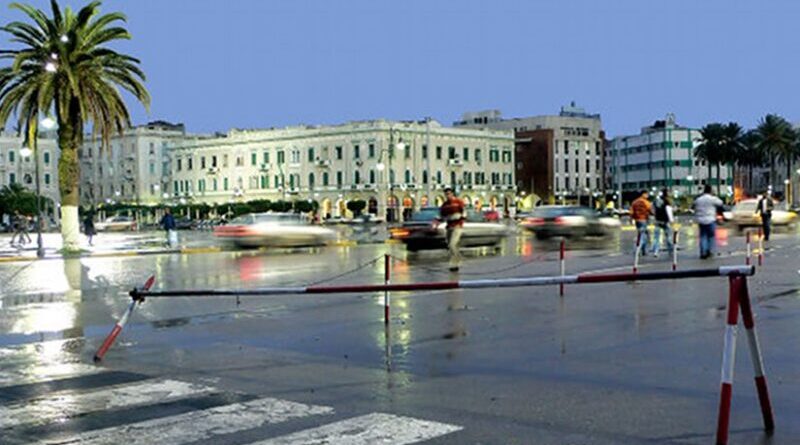
Tripoli, Libya

By 

The United States should not forcibly transfer migrants to Libya, where inhumane detention conditions are well-documented, including torture, ill-treatment, sexual assault, and unlawful killings, Human Rights Watch said today. Based on numerous media reports citing US officials, the Trump administration may be poised to imminently deport an unknown number of detained migrants to Libya. A US judge ruled that the government cannot immediately proceed with deporting people to Libya.

The Tripoli-based Government of National Unity (GNU) and its Foreign Ministry issued statements denying reports of a deal with the Trump administration. Its rivals, the Eastern-based Libyan Arab Armed Forces (LAAF), and its affiliated Foreign Ministry also issued statements refuting claims of a deal. When asked about the plans, US President Donald Trump said: “I don’t know.”


“It is dystopian to strong-arm a fractured country like Libya with a well-documented history of horrific detention conditions by unaccountable armed groups to take in more detainees,” said Hanan Salah, associate Middle East and North Africa director at Human Rights Watch. “Libya’s ill-treatment of migrants is notorious, its detention centers are hellholes, and refugees have nowhere to turn for protection.”

At the request of immigrant rights advocates, a US federal judge on May 7, 2025, ruled that any effort to deport migrants to Libya would “clearly” violate a prior court order barring officials from swiftly deporting migrants to countries other than their own without first weighing whether they would face persecution. Court filings say that Trump administration officials gave detainees held in a center in Texas oral notice and in at least one case paperwork to sign notifying them of their expulsion to Libya. They include nationals of the Philippines, Vietnam, Laos, and Mexico.

Human Rights Watch has for two decades documented inhumane conditions and serious abuses in migrant detention centers and prisons in Libya. Most are controlled by abusive, unaccountable armed groups. Such violations include severe overcrowding, beatings, torture, lack of food and water, forced labor, sexual assault and rape, and exploitation of children.

Human Rights Watch and other groups have also documented pervasive long-term arbitrary detention, enforced disappearances of both men and women, killings under torture, and unlawful killings in places of detention.

The abuses and violations of detainees’ rights are systematic and widespread, and the United Nations has said they amount to crimes against humanity. Major humanitarian organizations including UN agencies and experts do not have regular access to Libya’s prisons and detention centers.

Every annual report on human rights practices in Libya published by the US State Department since at least 2011 highlights patterns of abuse against migrants and refugees, including arbitrary detention, abduction and kidnapping, inhumane detention conditions, and torture and ill-treatment by armed groups and criminal gangs.


Libya’s judiciary is fragmented and overwhelmed, with a lack of adequate judicial review and due process rights. Armed groups and quasi-security forces who control detention facilities do not always carry out release orders or comply with court summonses of detainees.

Deep divisions persist in Libya with two the rival authorities vying for control. The GNU, appointed as an interim authority through a UN-led consensus process, and affiliated armed groups control western Libya. Their rivals, the LAAF and affiliated security apparatuses and militias, control eastern and southern Libya. A civilian LAAF-affiliated administration is known as the “Libyan Government.” Armed groups and security agencies operate detention facilities across the country, while the GNU Justice Ministry exercises nominal oversight over prisons.

GNU-affiliated security forces in March conducted raids in several western cities including Tripoli, violently arresting migrants and refugees amid a resurgence of discriminatory and racially motivated statements by authorities in both the eastern and western parts of the country. The Tripoli Internal Security Agency on April 2 further escalated its repression, shutting down the headquarters of 10 international nongovernmental organizations that provided support to migrants and refugees. 

One court filing also references a Lao detainee verbally informed that he would be imminently removed to Saudi Arabia on a military flight. Human Rights Watch has documented Saudi Arabia’s deplorable rights record for years, including detention conditions migrants have experienced such as torture, beatings, serious allegations of deaths in custody, and extreme overcrowding, as well as past cases of torture and ill-treatment of Saudi detainees. 

The Trump administration has used the Alien Enemies Act as a run around basic due process and human rights protections to carry out mass deportation of migrants, including to remove at least 137 Venezuelan men to El Salvador, where they are being held arbitrarily, indefinitely, and incommunicado in a notorious prison.

It has carried out mass expulsions of 299 third-country nationals to Panama, subjecting them to harsh detention conditions and mistreatment, while also denying them due process and the right to seek asylum. It has also summarily expelled 200 third-country nationals, including 81 children, to Costa Rica.

The European Union and member states are already complicit in serious violations against migrants and asylum seekers intercepted at sea and sent back to Libya. Their continued cooperation with abusive and dangerous Libyan Coast Guard forces, providing supplies, technical support, and aerial surveillance to help them intercept Europe-bound migrants at sea, has increased the crisis. Migrants and asylum seekers who are returned to Libya by these abusive forces are detained arbitrarily and face the risk of serious harm. 

Collective summary expulsions from the United States would violate international law. There is no provision in Libyan law to detain a third-country national deported from the United States. Detention of migrants in Libya is also arbitrary and violates due process rights because there is no remedy or right to appeal. Libya is not a party to the 1951 Refugee Convention and has no asylum law or procedures whatsoever.

“Expelling people to countries known to have appalling detention conditions shows the Trump administration’s utter disregard for due process,” Salah said. “Expelling people to Libya would raise the question of whether there is any country on earth where the Trump administration would not send someone.” 



Eurasia Review

Eurasia Review is an independent Journal that provides a venue for analysts and experts to disseminate content on a wide-range of subjects that are often overlooked or under-represented by Western dominated media.

 

As Extremist Violence Rises, Burkina Faso Cracks Down On Critics

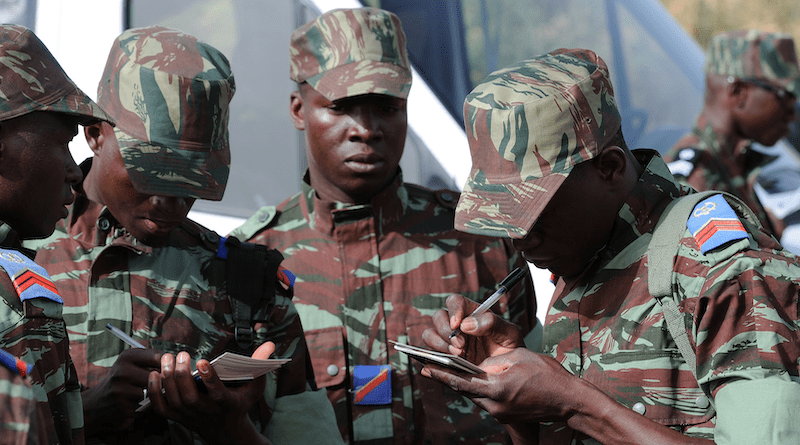
Soldiers from Burkina Faso. Photo Credit: Master Sgt. Jeremiah Erickson, US Air Force, Wikipedia Commons


By 

Faced with continuing terror attacks, Burkina Faso’s ruling military junta has tried to silence citizens and journalists who report on or criticize its actions.


Security Minister Mahamadou Sana recently issued a warning on Facebook against citizens liking or sharing content that the junta considered to be incitement of terrorism.

Sana based the warning on what he described as “malicious content in the form of posts, photos or videos inciting terrorism and conveying false news” on social media.

Terrorist groups frequently post videos or reports of their attacks on government forces to social media. Those accounts often contradict the government’s official reports of the same events.

“Incriminating content is being investigated with the aim of identifying and arresting the authors who will be subjected to the rigors of law,” Sana said.

Burkina Faso law makes promoting terrorism and spreading what the government describes as “false information” punishable by one to five years in prison. While junta leaders say they are targeting terrorism, critics say the government is using the law to suppress dissent.


“Placing exiled journalists and activists on a terrorist list is a blatant attempt to intimidate them and could have a chilling effect on their work,” Ilaria Allegrozzi, senior Sahel researcher for Human Rights Watch, wrote.

The crackdown on social media is part of a three-year campaign against independent media as the junta seeks to suppress dissent and control the narrative around its struggle to rein in extremists who control large parts of the country.

Shortly after taking power in 2022, the junta led by Capt. Ibrahim Traoré began blocking French-language news broadcasters, forcing foreign journalists out of the country and shutting down access to outside media websites.

TV5Monde, for example, was blocked in 2024 after reporting on a Human Rights Watch report claiming that Burkina Faso’s army executed at least 223 civilians, including at least 56 children, in two northern villages. More than a dozen foreign news outlets were suspended or blocked for reporting on the suspected massacre.

In late March, Burkina Faso’s ruling military junta arrested the leaders of the country’s journalist association along with a prominent television reporter.

The families and colleagues of Guézouma Sanogo, Boukari Ouoba and Luc Pagbelguem had no idea of their whereabouts after their March 24 arrest. Their arrests came after a news conference that criticized the junta’s ongoing crackdown on independent media and criticisms in online forums such as social media. At that same meeting, Sanogo called for the junta to release four other journalists who had been abducted and conscripted in 2024.

On April 2, the government produced a video showing the men dressed in camouflage clothing with their heads shaved. The junta has previously conscripted judges and attorneys who criticized the government.

Sadibou Marong, Sub-Saharan Africa director for the nongovernmental agency Reporters Without Borders (RSF), denounced the Burkinabe junta’s arrest and conscription of journalists.

“It is clearly a message intended to intimidate the entire profession and foster self-censorship,” Marong said in a statement. “Forcing journalists to relay state propaganda under duress is an unacceptable violation of press freedom, revealing a regime unable to tolerate criticism.”

Burkina Faso has been plagued by attacks from extremist groups tied to al-Qaida and the Islamic State group since 2015. Military coups in 2022 overthrew the elected government based on the claim that only the military could do a better job of stopping terrorist attacks.

Since then, violence has increased dramatically, making Burkina Faso the world’s top country for terrorism, according to the Global Terrorism Index.

“Questions about military rule efficacy are getting louder,” Ouagadougou-based analyst Pierre Wendpuire recently wrote for The Continent. “President Traoré would rather not hear criticism of his security policies.”

The junta’s crackdown on journalists and citizens on social media has left Burkina Faso’s media environment flooded with pro-government propaganda, according to critics.

One Burkinabe journalist in exile told Human Rights Watch: “Burkina Faso’s relentless descent into large-scale violence is not getting the scrutiny and media coverage it deserves domestically because independent media outlets have been silenced.”


Africa Defense Forum

The Africa Defense Forum (ADF) magazine is a security affairs journal that focuses on all issues affecting peace, stability, and good governance in Africa. ADF is published by the U.S. Africa Command.


Tanzania: Samia Suluhu Hassan Drops The Pretence Of Reform – Analysis

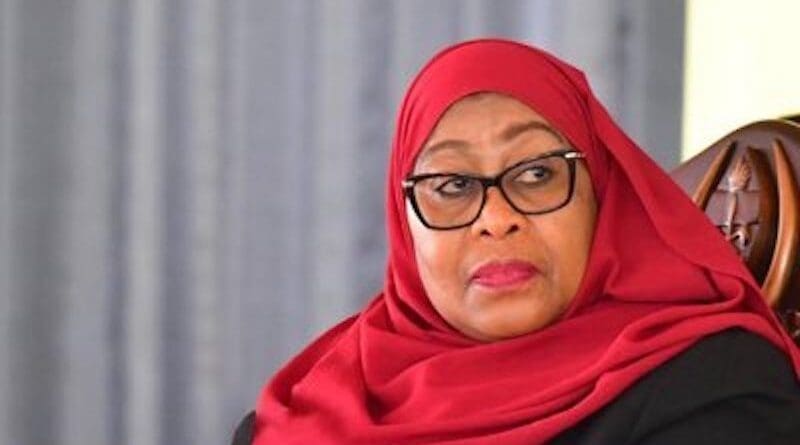
Tanzania's President Samia Suluhu Hassan. Photo Credit: Samia Suluhu Hassan, X


By 

Ahead of the October elections, Tanzania’s president is retreating from democracy – along with the rest of the East African region.

By Peter Fabricius


Democracy is in bad shape in East Africa and seems to be getting worse. Tanzanian President Samia Suluhu Hassan’s political reforms after she succeeded the authoritarian John Magufuli in 2021 raised a glimmer of hope – but she now seems to have regressed.

Reacting to the general retreat from democracy, Kenyan politician Martha Karua, a former Member of Parliament and cabinet minister, and Raila Odinga’s running mate in the 2022 presidential elections, is leading a campaign against opposition party suppression in the region.

Her Pan-African Progressive Leaders Solidarity Network is demanding the ‘immediate withdrawal of charges against Mr. Lissu and all political prisoners.’ This refers to Tundu Lissu, the leader of Tanzania’s Chama cha Demokrasia na Maendeleo (CHADEMA) party, who was arrested and detained in April on treason charges. CHADEMA is pushing for electoral reforms ahead of the October general elections under the slogan ‘No Reforms, No Election’.

Karua’s group describes Lissu’s case as ‘emblematic of growing threats to democracy across Africa.’ She has also joined the legal team defending Ugandan opposition leader Kizza Besigye and his ally Hajji Obeid Lutale, who were jailed without bail on charges of treason and illegal possession of weapons. Meanwhile, veteran Burundi opposition leader Agathon Rwasa has been sidelined from participating in next month’s elections.

None of the eight EAC member states can be considered a full democracy, according to Freedom House

Ugandan opposition leader Bobi Wine, who ran against President Yoweri Museveni in the last presidential elections, posted this week about visiting his bodyguard, Eddie Mutwe, and other jailed party members in prison. Mutwe was abducted last month by armed men. Wine said they had been tortured and that military chief Muhoozi Kainerugaba – Museveni’s son – had personally participated in the assault.


Kainerugaba, who seems beyond the control of his father or anyone else, openly boasted on social media that he was holding Mutwe in his basement. Kainerugaba regularly posts threats to Wine and his officials. This blatant aggression is particularly disturbing as it is widely believed Museveni is grooming him as a successor.

And Kenya is somewhat complicit, having allowed Ugandan agents to abduct Besigye in Nairobi last December. Opposition activists report a spate of such abductions across the region.

None of the eight East African Community member states is a full democracy, according to Freedom House. Its 2025 report ranked Kenya as Partly Free and the rest as Not Free. Tanzania was demoted from Partly Free last year. The average score for EAC members was 22.875 out of 100 – way below the Partly Free threshold of 36. And the overall score of all eight declined from 187 in 2024 to 183 in 2025.

While Kainerugaba seems more straightforward, Samia is rather enigmatic. As Nicodemus Minde, Institute for Security Studies Researcher in Nairobi, recently wrote, after succeeding Magufuli following his death in 2021, Samia seemed set to reverse his legacy. She ‘proudly championed the “Four R’s” of reconciliation, resilience, reform and rebuilding.’

She ended Magufuli’s ban on political rallies, repealed his repressive media laws, and released then CHADEMA leader Freeman Mbowe from prison. Mbowe had spent eight months in jail on terrorism charges.

CCM won Tanzania’s 2024 local elections by a landslide after most opposition candidates had been banned

But last year the wheels started coming off her reform initiative. CHADEMA official Ally Kibao was abducted and murdered in September, and another, Aisha Machano, was brutally attacked in October. In August, hundreds of CHADEMA officials and supporters, including Mbowe and Lissu, were detained ahead of a planned rally.

It appeared the crackdown was linked to the November 2024 local elections. CHADEMA raised concerns that they would not be free and fair, mainly because the management of the polls remained firmly in the hands of government officials and not an independent electoral commission.

Proposals to have election results challenged in court have been ignored by the ruling party, Chama Cha Mapinduzi (CCM). So the election system remained ‘completely captured by the ruling party’ as Minde told ISS Today. CCM won the local polls by a landslide after most opposition candidates had been banned.

And now her government has cracked down again ahead of the October national elections by chargingLissu with the exaggerated offence of treason because CHADEMA threatened to boycott these elections too, failing electoral reforms.

Opposition leader Lissu is likely being legally harassed to stop him participating in the October elections

This week, the courts ordered the state to bring Lissu to court for his next appearance on 19 May. He has been on a hunger strike in protest against being forced to appear in court only virtually. He is insisting on habeas corpus to protect himself against possible harm in jail.

It seems likely that the CCM is subjecting Lissu to legal harassment so that he and his party will be effectively ruled out of the October elections, leaving the field open to the CCM.

What is unclear about Samia, though, is why she has reversed her reform course. Until quite recently, the prevailing narrative was that she was failing to face down opposition to her reforms from Magufuli hardliners, who remained strong in the CCM and feared a CHADEMA win in the October elections.

But Minde told ISS Today that having removed several Magufuli loyalists early on, ‘she’s now turned to most Magufuli loyalists to beef up her government ahead of the elections.’ She has also ‘consolidated her power by eliminating any potential competition from within CCM and now with the treason case Lissu is facing.’

If this is true, it would suggest that Samia has at last become her own woman. Though not in the way many had hoped she would.

ISS

The Institute for Security Studies (ISS) partners to build knowledge and skills that secure Africa’s future. Our goal is to enhance human security as a means to achieve sustainable peace and prosperity. The ISS is an African non-profit organisation with offices in South Africa, Kenya, Ethiopia and Senegal.