Saturday, May 10, 2025


New Project Investigates Mysteries Of Sun’s Atmosphere

file photo sun solar flare


By 

A new £5 million, five-year project will tackle fundamental questions in solar physics.


The Sun’s activity has a profound impact on satellites, humans in space and technology on Earth.

To understand the physical processes behind the Sun’s activity, it is vital for any simulation to capture the fundamental interplay between the Sun’s radiation and conditions in the vastly different layers of the Sun’s atmosphere (the photosphere, the chromosphere and corona), the complex coupling between them, and how magnetic flux emergence drives eruptions and flares.

No model can currently do this – but one is necessary to understand the cutting-edge observations produced by new facilities, and to provide a step-change in our understanding of how the solar atmosphere works.

The Solar Atmospheric Modelling Suite, or SAMS, project aims to build a next-generation modelling tool for the solar atmosphere – making a code that can be run on anything from laptops to the latest supercomputers.

SAMS is funded as a flagship project by the Science and Technology Facilities Council’s (STFC) new Large Award scheme.


The project team is led by the University of Exeter and includes the universities of Warwick, Sheffield and Cambridge.

“For a long time the UK was the leading the way in simulating the atmosphere of the Sun, but in recent years we have been eclipsed,” said Professor Andrew Hillier, from the University of Exeter.

“This project will put us right back as one of the leaders in this area.”

For this project, the team will build a modelling suite with detailed physics-based documentation to promote ease of use.

This will be open-source with world-leading physics capabilities designed to maintain the UK’s solar physics community at the forefront of international research whilst pushing forward research in groups around the world.

This will also enable full exploitation of next-generation observations and Exascale computing.

This project will also provide training for early career researchers on the complex underlying physics of the solar atmosphere and how to model this with SAMS..

Dr Erwin Verwichte, Associate Professor (Reader), University of Warwick, said: “Warwick has built a world-leading reputation in numerical modelling of plasma physics.

“Our simulation codes, whether applied to fusion research, the Sun or space weather, are used by researchers across the world.

“The SAMS code will be built on top of that heritage and signifies a key stepping stone in simulating and expanding our knowledge of the Sun’s atmosphere.”

Professor Grahame Blair, STFC Executive Director of Programmes, said: “This substantial investment demonstrates our commitment to maintaining the UK’s leading role in solar physics research.

“Understanding the complex dynamics of our Sun is vital not just for scientific advancement, but for protecting our technology infrastructure, satellite networks, power grids and communications systems on Earth from the impacts of space weather.”


Eurasia Review

Eurasia Review is an independent Journal that provides a venue for analysts and experts to disseminate content on a wide-range of subjects that are often overlooked or under-represented by Western dominated media.


Antibiotics From Human Use Are Contaminating Rivers Worldwide

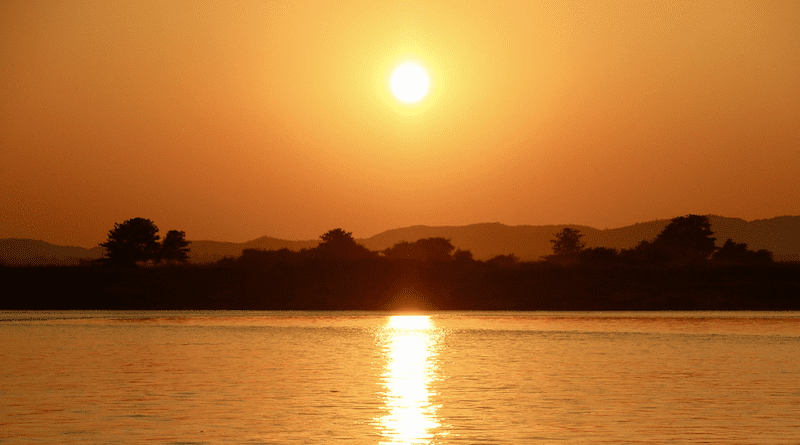
Irrawaddy river delta Asia Burma Myanmar

By 

Millions of kilometres of rivers around the world are carrying antibiotic pollution at levels high enough to promote drug resistance and harm aquatic life, a McGill University-led study warns.


Published in PNAS Nexus, the study is the first to estimate the scale of global river contamination from human antibiotics use. Researchers calculated that about 8,500 tonnes of antibiotics – nearly one-third of what people consume annually – end up in river systems around the world each year even after in many cases passing through wastewater systems.

“While the amounts of residues from individual antibiotics translate into only very small concentrations in most rivers, which makes them very difficult to detect, the chronic and cumulative environmental exposure to these substances can still pose a risk to human health and aquatic ecosystems,” said Heloisa Ehalt Macedo, a postdoctoral fellow in geography at McGill and lead author of the study.

The research team used a global model validated by field data from nearly 900 river locations. They found that amoxicillin, the world’s most-used antibiotic, is the most likely to be present at risky levels, especially in Southeast Asia, where rising use and limited wastewater treatment amplify the problem.

“This study is not intended to warn about the use of antibiotics – we need antibiotics for global health treatments – but our results indicate that there may be unintended effects on aquatic environments and antibiotic resistance, which calls for mitigation and management strategies to avoid or reduce their implications,” said Bernhard Lehner, a professor in global hydrology in McGill’s Department of Geography and co-author of the study.

The findings are especially notable because the study did not consider antibiotics from livestock or pharmaceutical factories, both of which are major contributors to environmental contamination.


“Our results show that antibiotic pollution in rivers arising from human consumption alone is a critical issue, which would likely be exacerbated by veterinarian or industry sources of related compounds” said Jim Nicell, an environmental engineering professor at McGill and co-author of the study. “Monitoring programs to detect antibiotic or other chemical contamination of waterways are therefore needed, especially in areas that our model predicts to be at risk.”


Eurasia Review

Eurasia Review is an independent Journal that provides a venue for analysts and experts to disseminate content on a wide-range of subjects that are often overlooked or under-represented by Western dominated media.


Rooted In Resilience: The Power Of Monitoring In Promoting Plant Health – OpEd

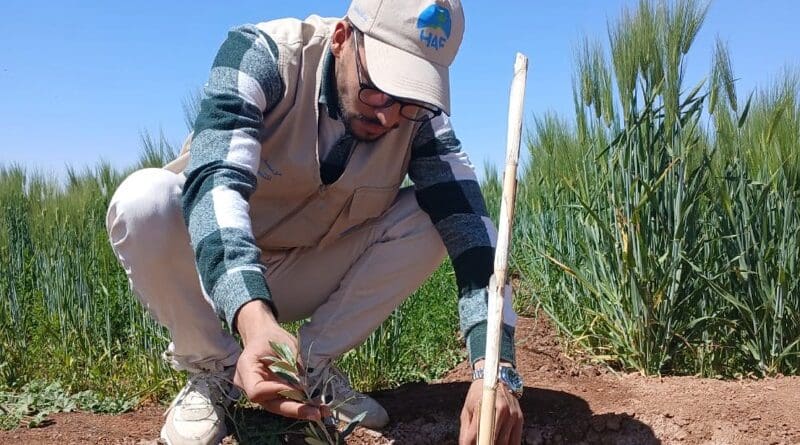
Photo by High Atlas Foundation, 2025


By 

Since the International Year of Plant Health in 2020, the UN recognizes today, May 12th, as International Day of Plant Health (IDPH) to raise global awareness of how plant health contributes to food security, protects biodiversity and ecosystems, enhances economic development and reduces poverty.


Healthy plants provide a nutritious diet, contribute to soil fertility and prevent erosion, and create a robust agricultural sector and employment opportunities. Unhealthy plants, infected by pests and diseases, significantly reduce global crop yields by nearly 40% annually and induce outbreaks of zoonotic diseases. This has devastating effects, undermining food security, reducing biodiversity, and causing significant economic losses.

Pest and disease outbreaks, driven by climate change and globalization, are rising worldwide. Climate change alters temperatures and rainfall patterns, enabling pests and pathogens to expand into new regions and evolve more rapidly, while globalization and international trade accelerate the movement of invasive species across continents. These factors have led to an increase in both the frequency and severity of outbreaks, threatening staple crops and natural ecosystems. In Morocco, for example, the prickly pear cactus, an important crop for food, income, and soil conservation, has been devastated by the invasive wild cochineal insect (Dactylopius opuntiae), highlighting the urgent need for vigilant plant health management.

Since its founding, the High Atlas Foundation (HAF) has prioritized tree planting as a cornerstone of its sustainable development mission. What began as the organization’s first project has since expanded into a nationwide initiative with nine nurseries located across eight provinces in Morocco. With a current annual capacity of three million saplings and nine tree varieties, HAF focuses on long-term ecological impact—trees with lifespans exceeding 50 years. HAF supports the entire lifecycle of tree planting: from cutting and cultivation in nurseries, to distribution to smallholder farmers, and finally, to on-site monitoring and support.

HAF’s dedicated team of 13 monitoring officers liaises with farmers to assess local needs, coordinate sapling delivery, and ensure trees are planted in suitable conditions. Mohammed El Kadiri, recently promoted to Programme Coordinator, reflected, “As a monitoring officer, I distributed around 700,000 trees in just four years.” Overall, tree distribution has steadily increased, from 700,000 in 2022 to over 1.2 million in 2024.

With the rising spread of pests and disease in Morocco, plant health is a top priority for HAF’s tree planting programme. Monitoring is a key strategy to prevent disease outbreaks. Two to three months after distribution, monitoring officers return to assess tree health and provide technical advice on planting, irrigation, and care. To strengthen this process, HAF recently implemented a digital tracking system using Kobo Toolbox, which collects and analyzes data on over 400,000 trees, providing insights on species performance, land use, and farming practices. Early findings show a tree survival rate of 76–81%, a promising indicator of long-term success. Tracking and following up with nurseries and farmers ensure disease prevention now and in the future.


In addition to regular monitoring practices, officers work closely with agricultural technicians to advise farmers on pest and disease management, with a special emphasis on agroforestry. Amina El Hajjami, Programme Director, highlighted the importance of these practices, noting, “We always encourage agroforestry to prevent disease. If one plant is affected, it can spread quickly across thousands of hectares, and farmers risk losing everything, both the plant and the product.” Beyond reducing the risk of disease and pest outbreaks, agroforestry also improves soil health, biodiversity, and water management, helps mitigate climate change, and supports local communities by increasing productivity and creating jobs.

On this International Day of Plant Health, we celebrate initiatives like monitoring and agroforestry that actively promote healthy plants. Through collective action and innovative solutions, we can build resilient landscapes and thriving communities.


Bryn Galumbeck

Bryn Galumbeck is a volunteer at HAF, first introduced through the University of Virginia’s global internship program in 2020. Passionate about women’s empowerment and economic development, she advocates for sustainable solutions that drive social, economic, and environmental impact.

Robert Reich: Is Starbase The Future Of America? – OpEd


By 


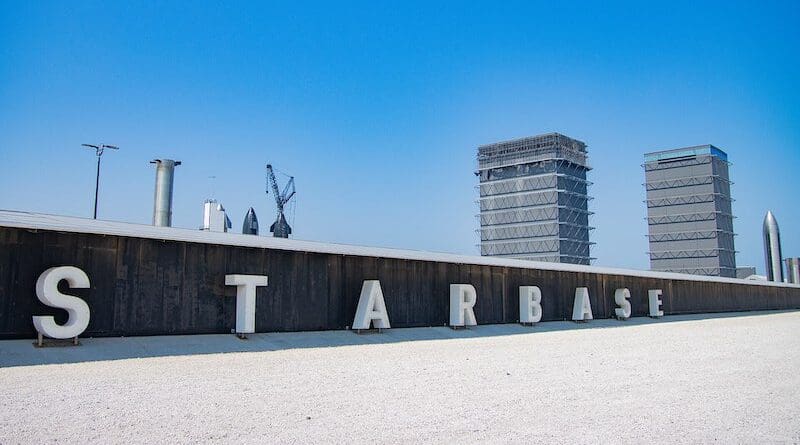
On Saturday, the town of Starbase, Texas, was born. The town includes Elon Musk’s SpaceX launch facility and company-owned land covering 1.6 square miles.


If Musk and Trump have their way, America as a whole could eventually be Starbase, Texas. 

Consider: 

Starbase is a company town. That company is Musk’s SpaceX. Its new mayor, Bobby Peden, is a SpaceX vice president. He was the only name on the ballot. Its two commissioners are also SpaceX employees. The local measure creating Starbase passed 212 to 6. Almost everyone who voted works for SpaceX or has a relative who does.

America is starting to look like one big national company town. The largest 1 percent of U.S. corporations now own a record 97 percent of all U.S. corporate assets. Fewer big corporations dominate every American industry, and they’re exerting more political influence than ever. Musk and Trump are twisting tax laws and regulations in favor of even fewer big corporations. 

Starbase is hardly a democracy. It’s the brainchild of Elon Musk, the richest man in the world, who founded the town because he didn’t want to deal with local regulations in getting approvals for his space launches. Musk’s DOGE has hamstrung federal agencies under whose authority SpaceX falls, such as the EPA and FAA — which just decided to allow him to go from five Starship launches a year to 25.


America, too, is looking less and less like a democracy. One man posts executive orders on social media, often without explanation or reason — and entire industries are created or destroyed, hundreds of thousands of jobs are terminated, universities and law firms are threatened, and legal residents of the United States are abducted without court hearings. Several of his advisers have disdained democracy and openly admired authoritarian Viktor Orbán’s Hungary and the late Lee Kuan Yew’s Singapore. 

It’s hard to know what’s happening in Starbase. There’s no independent press, and Starbase has explained little about its plans for the new city. Reporters can’t simply wander in and interview whomever they wish. 

It’s getting to be that way in America too. We don’t know what Trump is going to do next or why. The White House selects the reporters and outlets it wants in its press pool. Some big outlets, such as The Washington Post and CBS, are owned by the super-rich who want to curry favor with Trump and don’t want to anger him, so they limit what their outlets can say. 

Starbase is harming the environment. The first integrated Starship vehicle launched from the site in April 2023 exploded in midflight, igniting a 3.5-acre fire south of the pad site in Boca Chica State Park and sending debris thousands of feet into the air. State and federal regulators fined SpaceX for violations of the Clean Water Act and said the company had repeatedly polluted waters in the Boca Chica area. 

America’s environment is also endangered — due in part to Musk and Trump, who are eviscerating environmental protections in favor of large private profit-making ventures like, well, Musk’s Starship. 

Starbase is the brainchild of a single multibillionaire. He plans to live there part of the time with some of his 14 children and their four mothers, and he ultimately decides all important matters for the town. 

America is the part-time home of many of the world’s billionaires, who also have outsized influence over important matters the nation deals with. 

Finally, Starbase is insular. It will not share its tax revenue with anyone else. Because it’s incorporated separately, the town will keep for itself all the revenue generated by its property-owning taxpayers. 

Trump’s America is becoming as insular as Starbase. Trump has all but eliminated USAID along with medical and humanitarian aid to war-ravaged people around the world. He’s cutting trade and deporting residents with student visas and green cards who don’t toe the company line. 

So is Musk’s Starbase the future of America? Only if we let it become so.


Robert Reich

Robert B. Reich is Chancellor's Professor of Public Policy at the University of California at Berkeley and Senior Fellow at the Blum Center for Developing Economies, and writes at robertreich.substack.com. Reich served as Secretary of Labor in the Clinton administration, for which Time Magazine named him one of the ten most effective cabinet secretaries of the twentieth century. He has written fifteen books, including the best sellers "Aftershock", "The Work of Nations," and"Beyond Outrage," and, his most recent, "The Common Good," which is available in bookstores now. He is also a founding editor of the American Prospect magazine, chairman of Common Cause, a member of the American Academy of Arts and Sciences, and co-creator of the award-winning documentary, "Inequality For All." He's co-creator of the Netflix original documentary "Saving Capitalism," which is streaming now.


Trump’s Attack On Harvard Is Just The Opening Salvo – OpEd

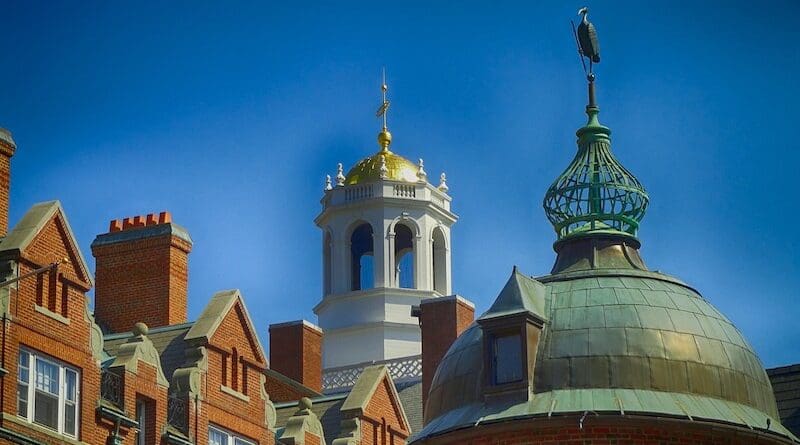
file photo Harvard University

By 

“Harvard is a threat to democracy,” declared US President Donald Trump in a Truth Social post. He accused the university of being an “Anti-Semitic, Far Left Institution” and a breeding ground for “crazed lunatics” who “spew fake ANGER AND HATE.” This tirade marks an escalation in what has become a full-scale political assault on American academia.


Earlier this month, the Trump administration froze more than $2.2 billion in grants and $60 million in research contracts to Harvard — an unprecedented act of financial retaliation that threatens to reshape the boundaries between state power and intellectual independence. The White House is now leveraging control over federal funding, launching an Internal Revenue Service (IRS) probe into Harvard’s tax-exempt status and threatening to revoke an additional $1 billion in health research support.

What might appear to be a bureaucratic dispute over compliance has become something far more consequential: an attempt to use the financial and regulatory machinery of the state to force ideological conformity in higher education. The stated rationale is straightforward. Harvard allegedly failed to implement federal directives aimed at suppressing pro-Palestinian activism on campus, disbanding certain student groups viewed as hostile to national security, and scaling back diversity-related programming. But beneath the surface lies a broader effort to quell dissent and redefine the mission of higher education to align with a narrow political vision. Harvard may be the first target, but it will not be the last. This is a direct challenge to academic freedom and open inquiry. Already, researchers at Harvard have halted tuberculosis and Alzheimer’s studies because of the funding freeze — proof that this retaliation will harm more than campus politics.

The political message is increasingly clear: academic institutions must align with the ideological priorities of those in power or face serious consequences. In recent months, other institutions — Columbia, Yale, Princeton — have encountered similar pressures. Columbia University has faced scrutiny over its handling of pro-Palestinian activism, with the Department of Homeland Security (DHS) implementing measures to review the social media activity of international students for signs of antisemitism. Columbia has imposed disciplinary actions, including suspensions and expulsions, on students involved in last year’s protests. Federal levers such as research funding, student visa approvals, and tax exemptions are now being used to incentivize compliance. This is not merely about endowments or budget lines. The concern is academic independence — and with it, the future of dissent in public life.

Since 2016, certain media outlets and political figures have reframed universities as bastions of ideological radicalism. Gallup polling shows trust in higher education at historic lows, with 58% of conservatives viewing universities as “actively hostile” to their values — a perception the administration exploits. Academic programs focused on racial justice or climate science are often ridiculed as symbols of liberal overreach. This backlash has helped recast institutions of knowledge production as partisan actors.

Harvard fights back

Resistance is emerging. More than 3,800 Harvard alumni donated in a 24-hour surge following the funding freeze. Faculty filed AAUP v. Department of Education, a lawsuit alleging that the administration violated the First Amendment by punishing political expression. Harvard is not under pressure over a single policy. It is being challenged for what it symbolizes: an institution that resists political interference, advocates for marginalized students, and still defends open inquiry.


Higher education remains one of the few spaces where difficult or unpopular truths — about foreign policy, racial inequality, or structural injustice — can be examined without state interference. That space is under threat. The administration’s funding freeze, and the accompanying signals about tax-exempt status and international student access, send a message to universities: neutrality is not protection, and silence may not save you.

Elite institutions often respond to political pressure by staying quiet or compromising. That approach no longer works. Harvard’s leadership has so far declined to capitulate. University President Alan Garber publicly rejected the federal directives, citing constitutional protections and institutional autonomy. But Harvard cannot fight this alone. A collective response is necessary. Institutions must recognize this as a political test of the legitimacy of independent institutions. If they fail to act together, the consequences will extend beyond any one campus.

The federal government can wield billions in funding with a single directive. Universities are left to respond with public statements, litigation, and donor outreach. That imbalance reveals how fragile institutional autonomy becomes when unchecked political power is directed against it. This moment challenges the longstanding assumption that democratic structures will naturally withstand authoritarian pressures. What we are seeing now is a systematic effort to erode the informal norms that once protected academic independence.

A broad-scale attack on free speech

This offensive aligns with broader political trends: the rollback of diversity, equity, and inclusion (DEI) initiatives, restrictions on gender identity and expression, book bans, surveillance of activist movements, and attacks on media and cultural institutions. These efforts aim to narrow the space for dissenting views. Universities must now choose: accommodate or resist. Accommodation may bring short-term stability but risks long-term irrelevance. Resistance carries risk — but it may be the only way to preserve the essential purpose of higher education.

Democrats have often hesitated to defend elite universities, wary of backlash. But failing to do so now creates a dangerous precedent. If the federal government can cut off funds to Harvard without real political cost, it could next target community colleges, public universities, or independent research centers. Faculty committees, student groups, and alumni networks understand the threat. Petitions and protests are necessary, but so are structural coalitions. The deeper question is whether democratic societies are prepared to defend dissent not just in principle, but in practice — when it is messy, unpopular, and politically costly. The erosion of academic freedom does not happen all at once. It begins with chilled speech, isolated punishments, and administrative compliance. It ends with the quiet death of intellectual autonomy. And when that happens, we will not just lose universities — we will lose something far more foundational: the ability to think freely in a democracy that still pretends to be one.

The views expressed in this article are the author’s own



Dr. Imran Khalid

Dr. Imran Khalid is a geostrategic analyst and columnist on international affairs. His work has been widely published by prestigious international news organizations and journals.