Monday, May 12, 2025

This US-owned factory in China made toys bound for Walmart. Tariffs put it on life support


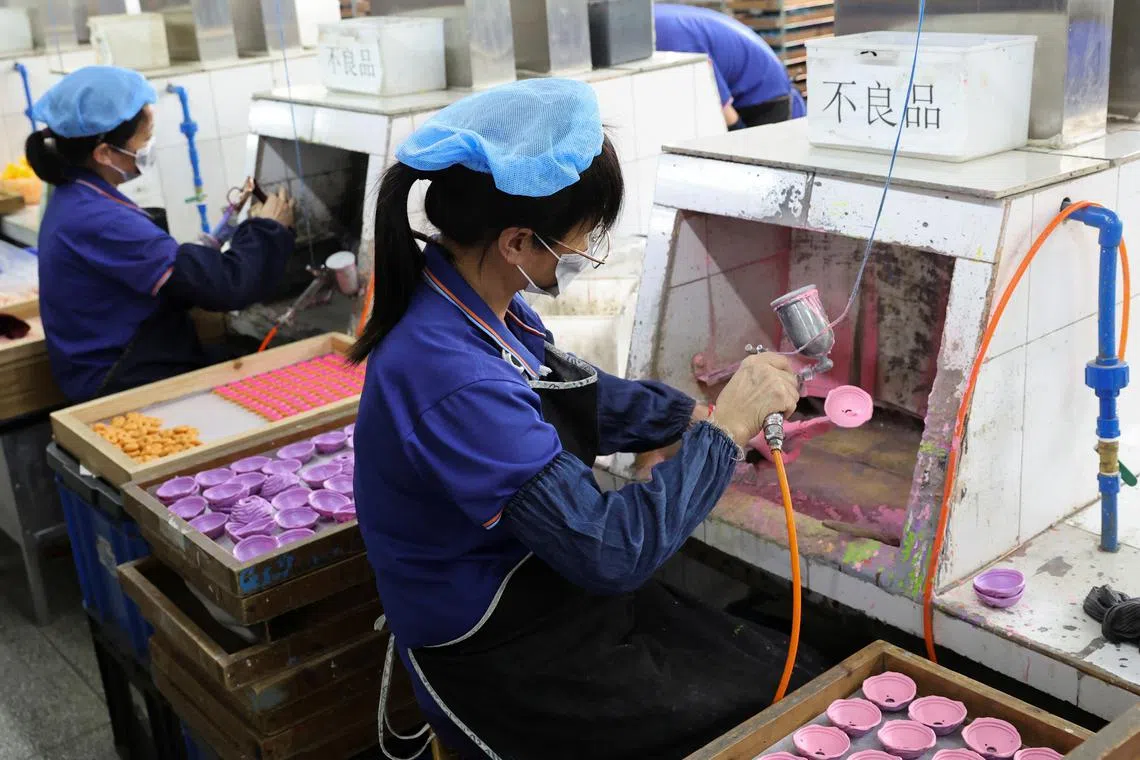
Employees of Shaoguan Guanghua Plastic & Hardware Products Co., Ltd spray paint on toy parts in the factory in Shaoguan, Guangdong province, China May 9, 2025. REUTERS/Go Nakamura
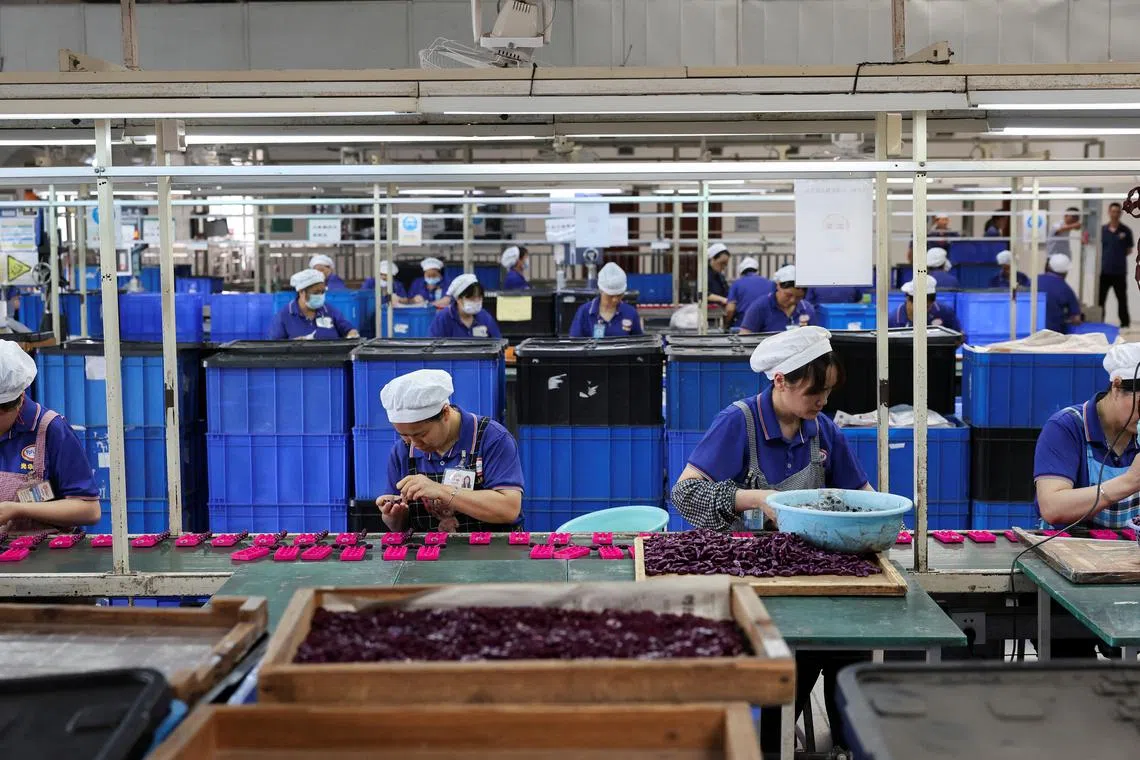
Employees of Shaoguan Guanghua Plastic & Hardware Products Co., Ltd work to assemble toy parts in the factory in Shaoguan, Guangdong province, China May 9, 2025. REUTERS/Go Nakamura
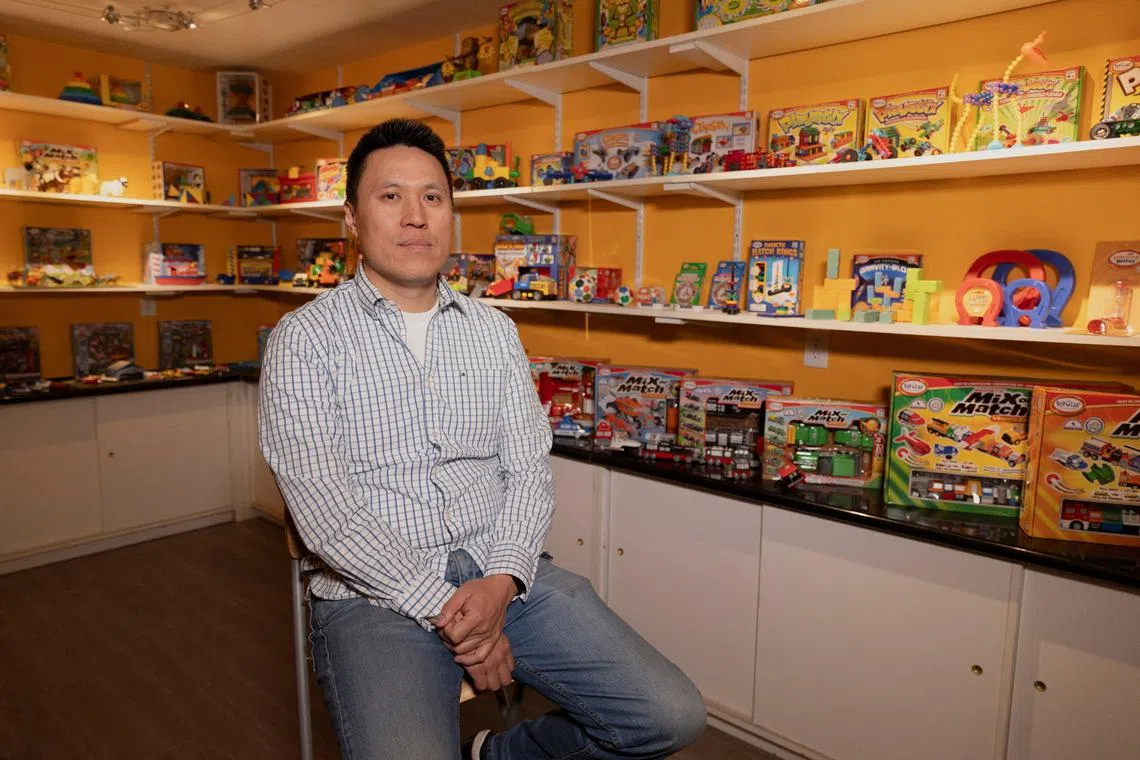
on Cheung of toy manufacturer Huntar Company Inc poses at his U.S. office in Union City, California, U.S. May 8, 2025. REUTERS/Brittany Hosea-Small

Buildings of Shaoguan Guanghua Plastic & Hardware Products Co., Ltd are pictured in Shaoguan, Guangdong province, China May 9, 2025. REUTERS/Go Nakamura
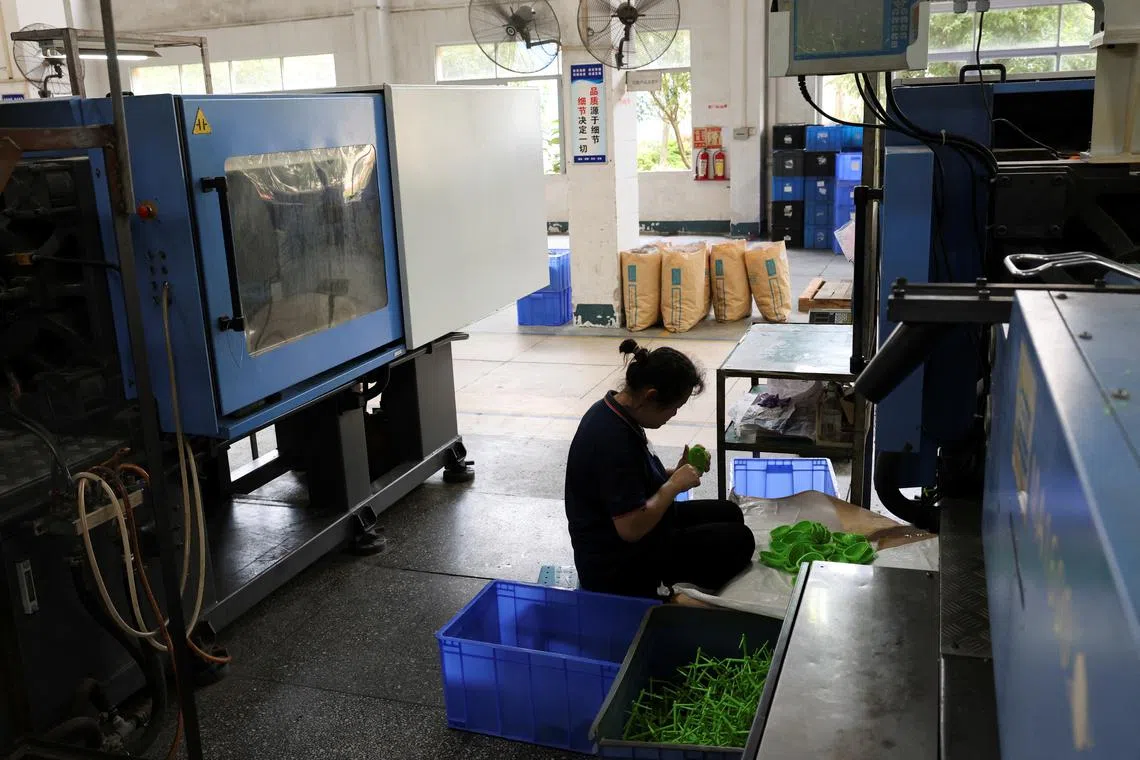
An employee of Shaoguan Guanghua Plastic & Hardware Products Co., Ltd removes excess plastic from toy parts which came out of the automatic plastic injection molding machine in the factory in Shaoguan, Guangdong province, China May 9, 2025. REUTERS/Go Nakamura››

 May 12, 2025

The emails started pouring in on April 9, the day President Donald Trump’s 145% tariff on Chinese imports took effect. Clients were canceling orders for toys from Huntar Company Inc.’s factory in Guangdong Province, China.

But Huntar CEO Jason Cheung, 45, had already halted production at the 600,000-square-foot facility in Shaoguan. He saw the tariff for what it was: an existential threat to his company, which manufactures educational toys bound for the shelves of Walmart and Target, like Learning Resources Inc's Numberblocks, which help teach kids math.

“I needed to start saving money as soon as possible,” Cheung said. In the four weeks since, he has cut production by 60% to 70%, laid off a third of the factory’s 400 Chinese workers, and reduced hours and wages to those still employed.


Now, he’s pursuing a frantic, long-shot effort to move his operation to Vietnam before the company his dad founded 42 years ago runs out of money.

He figures he has about a month.

Huntar’s plight typifies a crisis facing countless factories in China, where about 80% of toys sold in the U.S. are manufactured, according to trade group The Toy Association. New orders have fallen sharply amid a brutal trade war with the United States that threatens to devastate the sector in both countries.

Huntar is also unique in one key way: based in the U.S., it straddles both sides of the trade war.

On paper, Cheung is Trump’s bogeyman, the Chinese factory owner taking American jobs. But he’s also the U.S. small business owner tariffs were meant to protect. He's the American son of a Chinese immigrant, running a second-generation family-owned business that employs 15 people in the U.S. - people who would lose their jobs if Huntar falters.

Trump has said tariffs will incentivize companies to reshore manufacturing, or, at least, drive it out of China.

Huntar illustrates why economists say that’s unlikely: a dearth of facilities and workers with toy making expertise in other countries; heavy equipment that’s hard to move and would cost millions of dollars to replace; and, most acutely, no time to solve those hurdles before coffers run dry.

More likely, factories like Cheung's will simply shut down, a prospect that drove Beijing to the negotiating table with U.S. officials in Geneva over the weekend, three sources familiar with the Chinese government's thinking told Reuters.

Realistically, China cannot replace U.S. market demand for product categories like toys, furniture, and textiles, which are already feeling the impact of tariffs, one of the officials said. As trade talks began, Trump signaled he was open to cutting China tariffs to 80%.

That wouldn't help Huntar, Cheung says, noting that any tariff rate over about 50% will make survival difficult. On a practical level, there's no difference between 80% and the 145% tariffs he's currently facing.

Crises have hit Huntar before, Cheung says, but not like this. The 2008 recession brought a steady slowdown, one he could plan around. And the COVID pandemic dealt a blow, but his volume of production remained high enough to keep him afloat through a temporary slump.

This time, he says, “our manufacturing business essentially halted overnight.” Cheung is starting to feel like his only hope is just that - hope.

“I refresh my ‘tariff’ Google search five or six times a day, hoping something's changed,” he says.

A DREAM AND A LUCKY DESK

Huntar manufactures toys for U.S., Canadian and European sellers, like Learning Resources Inc and Play-a-Maze, which distribute them to retailers or sell directly to consumers.

It also makes its own educational toys under its Popular Playthings brand, which it has had to stop shipping to the U.S., costing the company hundreds of thousands of dollars so far, Cheung estimates.

American-owned factories in China are uncommon, as Chinese law makes it difficult and costly for foreign entities to own them, says attorney Dan Harris, a partner at Harris Sliwoski who focuses on international manufacturing law.

But Huntar has roots in a business Cheung’s father set up in 1983, a few years after escaping communist China and settling in California’s Bay Area.

Cheung grew up in San Francisco's Inner Richmond district, he says, in a small house whose broken door you could simply kick open. His father would sell clothes and furniture at a flea market to augment his janitor’s wages, with Cheung tagging along, bored to tears.

As the operation matured, Cheung’s father set up a factory in China, to exert more control over quality. Cheung, who joined the company in 2004, still uses the desk his father set up in their living room decades ago.

“We think maybe it’s lucky or something,” he says.

The last few weeks have been anything but lucky. The factory is sitting on $750,000 in canceled shipments - value Cheung couldn't fully recover even if the trade war ended, because his shipping costs would surely spike as factories raced to clear backlogs. That's what happened after COVID, Cheung recalls, when shipping costs ballooned from $2,000 per container to more than $20,000.

“They don’t deserve this,” said Rick Woldenberg, CEO of toy company Learning Resources, and a client of Cheung's since his father was in charge more than 20 years ago.

Woldenberg has canceled future production in China, saying his annual tariffs would jump from $2 million to $100 million. “It’s not who we want to be,” Woldenberg said, “but they know we have no choice.”

According to an April survey by the Toy Association, more than 45% of small and mid-sized toy companies in the U.S. say China tariffs will put them out of business within weeks or months.

Learning Resources, which employs 500 people in the U.S. and manufactures 60% of its products in China, has sued the U.S. government, asking a federal judge to stop tariffs from taking effect.

"If nothing changes, we'll be crippled," Woldenberg said.

‘CANNIBALIZE MYSELF’

Cheung has been scouring his contact list, calling factories in Vietnam in hopes of finding a new home for Huntar.

Moving to the U.S. is out of the question. Wages here are so high that manufacturing stateside would be even more expensive than staying in China and absorbing the tariffs, Cheung says.

Even in Vietnam, financial and logistical hurdles are proving too tall.

Few factories have enough space to handle his operation, and competition is high among others looking to move. Even if he found a good spot, Cheung would have to train a new staff and run safety and quality control checks that could easily take months.

There’s also the question of infrastructure. Cheung’s factory is solar-powered, helping ensure profitability in a thin-margin business. It has specific HVAC and wastewater systems designed to negate the environmental risks of spray paint and chemicals used to decorate toys. And it owns more than 30 injection machines, each weighing several tons, which craft toys by pumping molten plastic to steel casings. These likely can’t be moved, and Cheung says he’s not sure where he’d find the money - well over $1 million - to buy new ones.

A more realistic move would be to outsource certain operations and shutter others. Cheung could cut losses by finding a Vietnamese factory to take Huntar's Popular Playthings proprietary line, while ditching the business of manufacturing toys for third party clients.

Going all-in - that is, keeping his factory intact in China in hopes the trade war is resolved - is a higher-risk, higher-reward gambit. If tariffs came down quickly, his company would survive, but if they didn't, he'd lose everything. The costs of keeping a large factory running, and paying employees, while producing just a fraction of his normal output, would sink him within several weeks, he says.

“I’m approaching this moment where I have to choose basically to cannibalize myself,” he says.

It’s hard to pare down a business that once embodied the American dream. Cheung’s father came to the U.S. in 1978, after escaping China by swimming across the Shenzhen River into Hong Kong - all for a shot at freedom. He “wanted to see this business continue through me and hopefully his grandkids,” Cheung says.

His dad, he says, is feeling hopeless these days. Though grateful for the life he built here, America's sheen as a land of milk and honey has worn off. "His idea of the U.S. has definitely changed," Cheung says. REUTERS
ANOTHER BDS SUCCESS

Norway wealth fund divests from Israel's Paz Retail and Energy due West Bank activities

This divestment comes after the fund's ethics watchdog, the Council on Ethics, adopted in August a tougher interpretation of ethics standards for businesses that aid Israel's operations in the Palestinian territories


Reuters|Yesterday | 

Norway's sovereign wealth fund, the world's largest, has sold all of its shares in Israel's Paz Retail and Energy (PAZ.TA), opens new tab because it owns and operates infrastructure for the supply of fuel to Israeli settlements in the West Bank.\

The divestment, announced on Sunday, is the second after the fund's ethics watchdog, the Council on Ethics, adopted in August a tougher interpretation of ethics standards for businesses that aid Israel's operations in the Palestinian territories.

The first divestment was from Israeli telecoms firm Bezeq (BEZQ.TA), opens new tab, in December.

The fund, which owns 1.5% of listed shares across 9,000 companies globally, operates under guidelines set by Norway's parliament and is seen as a leader in the environmental, social and governance field.

It is the latest decision by a European financial entity to cut back links to Israeli companies or those with ties to the country since the outbreak of the war in Gaza in October 2023.

Paz is Israel's largest operator of gas stations and has nine stations in the occupied West Bank.

"By operating infrastructure for the supply of fuel to the Israeli settlements on the West Bank, Paz is contributing to their perpetuation," the Council on Ethics said in its recommendation to divest. "The settlements have been established in violation of international law, and their perpetuation constitutes an ongoing violation thereof."
Paz was not immediately available for comment outside of regular business hours.
The U.N.'s highest court last year said Israel's occupation of Palestinian territories and settlements there were illegal and should be withdrawn as soon as possible, in a ruling that Tel Aviv rejected as "fundamentally wrong" and one-sided.

Divestments

The watchdog makes recommendations to the board of the Norwegian central bank, which has the final say on divestments.

The fund has now sold all its stock in the company. It was not immediately clear if more divestments would happen.

In March, the fund's watchdog said it had cleared most of the companies it had reviewed over their activities in the occupied Palestinian territories after it launched a fresh review following the outbreak of the Gaza war.

The watchdog said at the time that it had made two recommendations to divest - Bezeq in December and now Paz - but did not say whether it had made more recommendations to divest.

Overall, the watchdog assessed around 65 companies in the fund's portfolio working in sectors including energy supply, infrastructure construction, travel and tourism and banking, among others.

US: Major Companies Violate Gig Workers’ Rights

Regulation Needed to Guarantee Living Wages and Benefits, Decent Working Conditions


Click to expand Image
© 2025 Brian Stauffer for Human Rights Watch

(Washington, DC) – Major digital labor platforms, also known as gig companies, operating in the United States misclassify gig workers as independent contractors, denying them labor rights, Human Rights Watch said in a report released today.

The 155-page report, “‘The Gig Trap’: Algorithmic, Wage and Labor Exploitation in Platform Work in the US” focuses on seven major companies operating in the US: Amazon Flex, DoorDash, Favor, Instacart, Lyft, Shipt, and Uber. These companies claim to offer gig workers “flexibility” but often end up paying them less than state or local minimum wages. Six of the seven companies use algorithms with opaque rules to assign jobs and determine wages, meaning that workers do not know how much they will be paid until after completing the job.


“Digital labor platforms have created a business model that evades employer responsibilities while keeping workers under tight algorithmic control, driven by opaque and unpredictable decisions,” said Lena Simet, senior researcher on poverty and inequality at Human Rights Watch. “They promise flexibility but, in reality, they leave workers at the mercy of unstable and subminimum wages, little social protection, and in constant fear of termination without recourse.”

Workers for the seven platforms examined are assigned orders, supervised, paid, and fired by algorithms. All except Amazon Flex, which uses a flat hourly wage, use opaque and frequently changing algorithms to calculate pay per job or shift. Apps and platforms are designed to keep gig workers on the job for long hours and low pay, and dynamic pricing algorithms make it extremely difficult for them to plan their schedules and manage their earnings. Managed by algorithms, workers cannot fully understand how they are assigned work, or how their wages are calculated. Without any transparency, it’s extremely difficult for them to challenge decisions made about their work or pay.

Human Rights Watch examined the working conditions of ride-hailing, shopping, and food delivery workers, with a focus on Texas. The report is based on semi-structured interviews with 95 platform workers in Texas and 12 other US states, as well as a survey of 127 workers in Texas.

Low wages, algorithmic control and barriers to unionizing trap many workers in economic insecurity, even as multi-billion-dollar companies expand their market share and revenue, Human Rights Watch found.

Weak regulations allow these companies to misclassify workers as independent contractors rather than employees, despite the nature of the work and degree of control exercised by the companies often meeting legal criteria for employee status. This enables companies to avoid compliance with minimum wage laws, overtime pay, and contributions to nonwage benefits. For workers, it means providing their own vehicles, fuel, insurance, and maintenance as well as paying the employer’s share of Social Security and Medicare contributions.

The Texas workers surveyed earned nearly 30 percent below the federal minimum wage and about 70 percent below what the Massachusetts Institute of Technology estimates is a living wage in Texas. These findings reinforce those of local governments, academic institutions, and policy researchers, who have consistently found that these workers earn at or below local minimum wages and well below the thresholds needed for a decent standard of living.

The US is home to one of the largest global markets for digital platform work, and the number of people earning income from gig work has surged in recent years. Estimates suggest that by 2021, 16 percent of US adults had worked for a digital labor platform at least once. Platform workers are disproportionately Black or Latinx and live in lower income households.

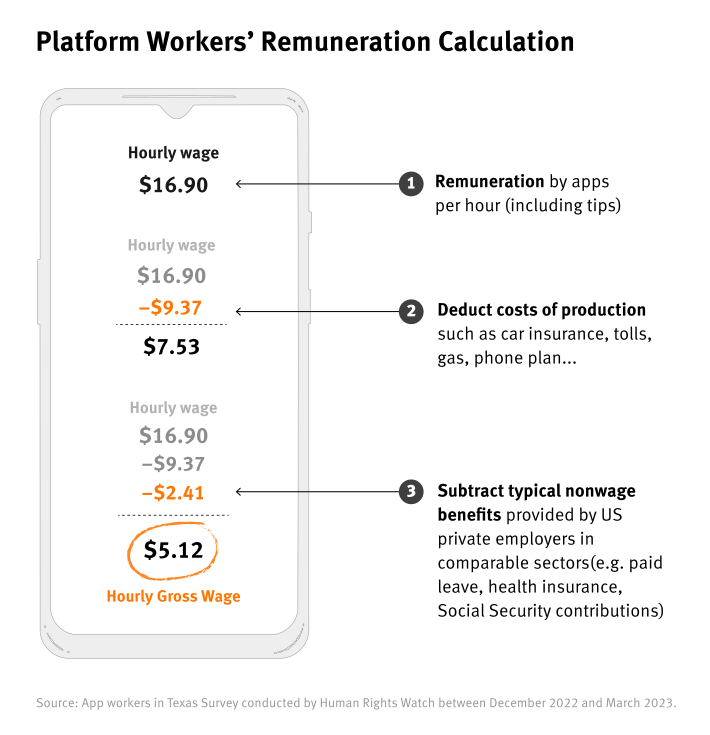
Workers who responded to the Human Rights Watch survey received an average of US$16.90 per hour (including tips), but nearly half of that was spent on work-related expenses. After accounting for nonwage benefits that employers often cover for other workers, their effective pay fell to $5.12 per hour. Some workers reported earning nothing at all after expenses.


Click to expand Image
© 2025 Human Rights Watch

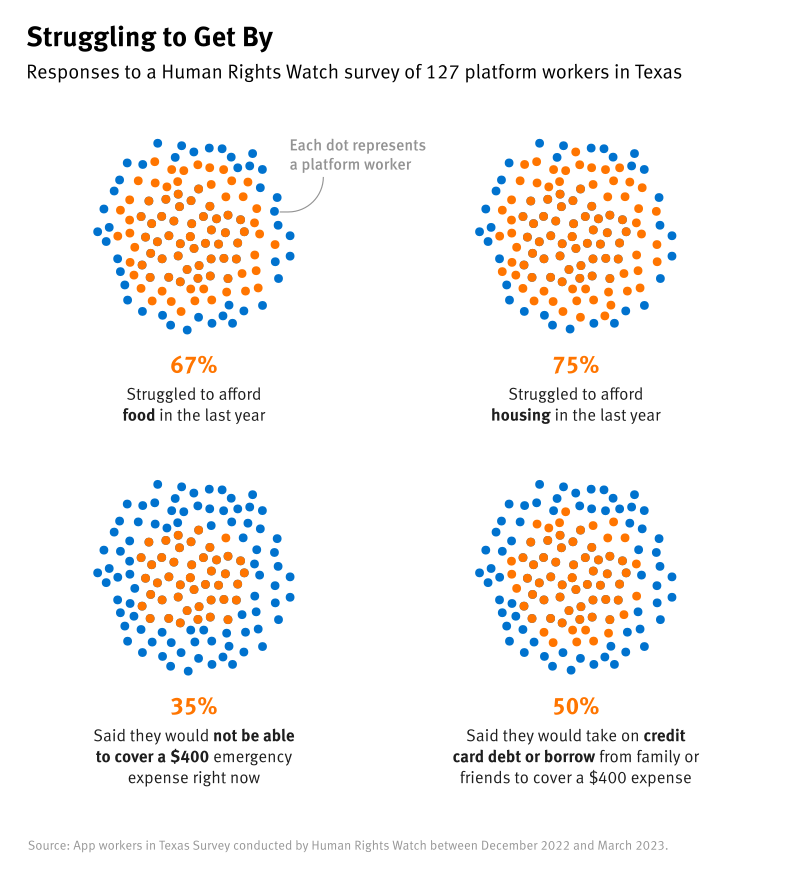
Three-quarters of surveyed workers said they struggled to pay for housing in the last year, and most reported difficulty paying for food, groceries, electricity, and water. More than one-third said they would not be able to cover a $400 emergency expense.

Workers told Human Rights Watch they lived in near-constant fear of being “deactivated” or fired by an app, often without explanation or recourse. Nearly half of those who had been automatically fired were later cleared of wrongdoing, suggesting a high rate of erroneous account deactivations.


Click to expand Image
© 2025 Human Rights Watch

The financial insecurity of platform workers stands in stark contrast to the soaring revenues of the companies themselves. Uber, which holds a 76 percent share of the US rideshare market, reported $43.9 billion in revenue in 2024, a 17.96 percent increase from the previous year, and a net income of $9.8 billion. As of April 2025, Uber has a market capitalization of $169.41 billion. DoorDash, with 67 percent of the US food delivery market, recorded $10.72 billion in revenue in 2024 and as of April 2025 was valued at $81.03 billion.

By misclassifying workers as independent contractors, platform companies also avoid contributing to Social Security, Medicare, and unemployment insurance, depriving public funds of critical resources. Based on tax data from the Census Bureau’s Nonemployer Statistics, Human Rights Watch estimates that Texas could have collected over $111 million in unemployment insurance contributions between 2020 and 2022 from platform companies if rideshare, delivery, and in-home platform workers had been classified as employees. The actual shortfall is likely much higher when accounting for unreported income.

In response to Human Rights Watch’s request for comment, Lyft said: “App-based work provides millions of Americans uniquely flexible work opportunities, leaving room for them to meet other goals, commitments, or obligations. It allows them to work around their many real and unpredictable commitments and their busy schedules in ways that traditional 9-5 jobs don’t provide.” Amazon met with Human Rights Watch to discuss the report but did not give an on record response. The other companies did not reply.

International human rights law requires just and favorable working conditions for all workers, including workers for digital platforms.

The US Department of Labor, the Federal Trade Commission, the Texas Workforce Commission, and equivalent agencies in other states should take immediate steps to ensure workplace safety for gig workers and protect their rights to unionize, Human Rights Watch said.

“Digital labor platforms have created a workforce with none of the rights and protections that workers have fought for over decades,” Simet said. “As more people are drawn to platform work to make ends meet, federal and state authorities should step up to guarantee them the protections they are entitled to, and should work with the International Labour Organization to establish a binding global standard for platform work.”


US popularity collapses worldwide in wake of Trump’s return

The wor
ld is more divided than ever, but there’s still something (nearly) everyone agrees on: The U.S. is unloved.


America’s reputation took a particularly massive hit in EU countries. 
| J. David Ake/Getty Images


May 12, 2025 
By Giovanna Coi
POLITICO EU

The United States is becoming less popular globally in the aftermath of Donald Trump’s return to the White House, according to new data.

The 2025 Democracy Perception Index summarizes attitudes toward democracy, geopolitics and global power players, and canvassed more than 110,000 respondents across 100 countries.

A majority of people surveyed had an overall negative perception of the U.S., marking a steep decline from last year. America’s reputation took a particularly massive hit in EU countries — perhaps unsurprisingly, as U.S. President Donald Trump has called the bloc “horrible,” “pathetic” and “formed to screw the United States.”

Anders Fogh Rasmussen, former NATO chief and founder of the Alliance of Democracies Foundation that coauthored the index, said he was “not surprised that perceptions of the United States have fallen so sharply.”


Meanwhile, China kept improving its global standing, overtaking the U.S. for the first time and recording mostly positive perceptions in all regions except Europe. Russia, the reputation of which tanked in the wake of President Vladimir Putin’s full-scale invasion of Ukraine in 2022, is still (slightly) more unpopular than the U.S. — though its image is also improving.

Trump’s reputation is in line with that of his country. The survey showed he’s less popular worldwide than his Russian and Chinese counterparts, Putin and Xi Jinping.

Trump recorded the worst score among a range of political, cultural and spiritual leaders that includes X owner Elon Musk, Microsoft founder Bill Gates, the late Pope Francis, Taylor Swift and Kim Kardashian.


Israel emerged as the country with the worst global reputation of those included in the poll, especially in the Middle East and South Asia. Israel is unpopular even in European countries that have historically been its allies, such as Germany, signaling growing discomfort with its government’s conduct in Gaza and the West Bank.

Last year, the International Criminal Court (ICC) issued arrest warrants for Prime Minister Benjamin Netanyahu and former Defense Minister Yoav Gallant over alleged war crimes.

The data used in this story came from an online survey conducted by Nira Data and the Alliance of Democracies between April 9-23, 2025. The sample was 111,273 drawn across 100 countries, with an average sample size of around 1,100 respondents per country. Nationally representative results were calculated based on the official distribution of age and gender for each country’s population.
Will the first American pope stand up to Trump?

Support in the papal conclave coalesced around a leader who may challenge the U.S. president’s agenda, particularly around migration.


Clerics were initially "reluctant" to elect a pope from the U.S., one cardinal told POLITICO, but eventually settled on one who may plausibly act as a counterweight against Trump. | Vatican/EFE via EPA

May 10, 2025
By Ben Munster and Hannah Roberts
POLITICO EU

VATICAN CITY — In the final days before the secretive ritual that saw the election of the first American leader of the Catholic Church, U.S. President Donald Trump posted an extraordinary AI mock-up of himself as pontiff, drawing condemnation — and more than a little exasperation — from Church leaders.

It was just one of many Trumpian intrusions into a conclave the president couldn’t resist inserting himself into, having already overshadowed Pope Francis’ funeral with his peace negotiations while endorsing favored papal candidates.

Clerics were “reluctant” to elect a pope from the global superpower, one cardinal told POLITICO. But in the end, when the 133 cardinal voters sequestered themselves in the Sistine Chapel on Wednesday to elect the leader of the world’s 1.4 billion Catholics, they settled on not just an American but one who could, plausibly, act as a counterweight against the impulsive U.S. president.

This was not wholly by chance. When the cardinals eventually found unity on a new pontiff, the progressives among them were aware that Chicago-born Robert Francis Prevost, a 69-year-old former missionary with a mixed heritage, was a leader who could provide an alternative voice to Trump, according to the person quoted above and another cardinal. Prevost was anointed Pope Leo XIV on Thursday.

While it was not the driving factor behind the decision, which was guided by subtler internal considerations, having an American pope who could provide a counterweight to the rhetoric of Trump was a “supplementary gift,” one of the clerics told POLITICO, speaking on condition of anonymity to talk about private discussions.

And indeed, on paper, Pope Leo seems to stand against almost everything the U.S. president represents.

Leo XIV is expected by progressive observers to continue the humane approach to the papacy that angered the MAGA crowd and was favored by Francis, broadly supporting his predecessor’s efforts to make the Church more tolerant of groups that it has historically persecuted.

In contrast to the isolationist stance of the U.S. president, Leo XIV is also expected to continue Francis’ policy of giving a greater say to local churches in places like Africa, Asia and Latin America. The support of cardinals hailing from those growing power centers of the Catholic world is said to have been crucial in the conclave that led to his election.
‘Very important issue’

Perhaps the biggest issue on which Trump and the new pope disagree is that of migration.

While the president continues his mass deportations of undocumented migrants from the U.S., Leo is “in favor of migrants, in favor of refugees, in favor of human rights; he stands with the poor,” said the person quoted above. He even has a Peruvian passport, this person pointed out.

“He is certainly a problem for Trump as he has taken a very serious position and represents the America that Trump detests, those that speak Spanish,” said church historian Alberto Melloni. “Using Spanish and Italian and not English in his first greeting on Thursday night was a deliberate cruelty by Prevost.”

Walter Kasper, a 92-year-old German cardinal too old to participate in the conclave, told POLITICO that migration was a “very important issue” for cardinals during the pre-conclave huddles, which often hold enormous sway over the eventual outcome. Trump’s treatment of migrants is “terrible,” he said. “Coming from both the U.S. and Peru, [Leo] understands the problem very well.”\\Trumpian intrusions into the conclave included overshadowing Pope Francis’ funeral with his peace negotiations. | Office of the President of Ukraine via Getty Images

The issue of migration will be important for this pontificate, Kasper said, adding that the new pope “has a lot of experience on this.”

Leo’s own opinion on the Trump administration is already plain to see.

An X account widely believed to be linked to the the new pontiff sharply criticized the Trump administration’s stance on migration in April. And after donning the white cassock on Thursday, Leo wasted little time setting himself up as a voice to defend migrants, decrying “the neglect of mercy, and the appalling violations of human dignity” among those who lack faith — which could be read as a reference to growing anti-migrant rhetoric in his home country.

Healing the U.S. ‘schism’


But the impetus behind the push for Prevost wasn’t solely about the man in the White House.

More than just being about Trump, it may also have had to do with the broader, corrosive influence of U.S. politics on the U.S. Catholic Church, which in recent years has bifurcated into warring, frequently rebellious factions split between hardline progressives and MAGA-aligned traditionalists, alarming clergy in Rome. Traditionalists in particular claimed they were being actively persecuted by Francis and openly challenged his rule, leading at least some to wonder whether the U.S. Church would eventually decisively break with the Holy See.

It’s a situation Church leaders can’t risk letting get out of control. There’s a recognition among cardinals that “without the American church, there is no church,” one Vatican insider told POLITICO, going so far as to call the North American Church “schismatic.” (Indeed, one former Vatican ambassador to the U.S., Carlo Maria Viganò, was dramatically excommunicated from the Catholic Church last year for the explicit sin of “schism.”)

When the cardinals settled on Prevost, according to that person and the conclave participant quoted above, many were conscious that he was somebody who could help heal those divisions.

“He will have an influence on the American Church for sure, as he’s American and he’s from Chicago which is more open, more progressive,” said the conclave participant. He pointed out that Leo XIV had already signalled a willingness to reconcile with traditionalists with plans to move into the Apostolic Palace, the sumptuous Vatican City residence that was the home of previous popes before Francis moved into the more austere Santa Marta guesthouse.

Moving into the palace is “like saying to the right, ‘We’re not against you,” the person said. He insisted the new pope would have no desire to antagonize conservatives given that the prevailing desire among cardinals before his election was for “unity.”

The new pope could also “reinterpret,” without rolling back, some of Francis’ more contentious progressive moves, such as his declaration permitting blessings for individuals in same-sex couples, Cardinal Jean-Claude Hollerich, the progressive archbishop of Luxembourg, told a handful of reporters including POLITICO in a side-room of the Nuova Chiesa church in Rome on Friday.

Some of the traditionalists have already expressed hope that Prevost will strike a more conciliatory tone. Edward Feser, a Catholic professor of philosophy at Pasadena City College, suggested on X that while the new pope’s theology skewed progressive, he seemed like a more “reasonable man [who] might have been talked out of Francis’s more problematic decisions.” Pointedly, Prevost has already met in person with the influential American cardinal Raymond Burke, a hardline Francis critic who consistently complained about the late pope’s efforts to curtail the Tridentine Mass, an older variety of the Latin mass favored by traditionalists.

On paper, Pope Leo seems to stand against almost everything the U.S. president represents. | Vatican/EFE via EPA

That move has in turn set off unease among some moderates, with one worrying to POLITICO that traditionalists might become a “force in the Church” after Francis was able to largely reduce their influence.
MAGA holdouts

But none of that means Prevost will necessarily be able to satisfy the more vehement forces in MAGA world, who have already prejudged him as a subversive leftist after his comments on migration.

After Prevost’s ascension, Laura Loomer, an American far-right political activist and Trump adviser, ranted about the “woke Marxist pope” and claimed he “is anti-Trump, anti-MAGA, pro-open Borders, and a total Marxist like Pope Francis,” adding that it’s “gross” that he is now in charge of the Vatican. Notably, Loomer is not Catholic, but Jewish, indicating the importance of the symbolism of the pope even for Washington’s non-believers.

Steve Bannon, Trump’s former chief strategist and an ultraconservative Catholic, said Prevost’s election as the first U.S.-born pontiff had been a vote against his old boss. It was “the worst choice for MAGA Catholics,” Bannon said, calling the election of Leo XIV “an anti-Trump vote by the globalists of the Curia.”

But Cardinal Hollerich, who was close to Francis, said that wasn’t quite right. “We didn’t elect an anti-Trump, we elected a disciple of Jesus,” he said. However, “the fact is that he is an American citizen — so there is also this consequence.”
Trump’s trade war pushes EU toward Pacific free traders

A 12-nation Indo-Pacific club could serve as a platform for teaming up.

CANADA/MEXICO ARE MEMBERS OF CPTPP


CPTPP members Japan and Australia are negotiating trade deals with Donald Trump to get out from under his punishing tariffs. | Pool photo by Jim Lo Scalzo via EFE/EPA

May 11, 2025 
By Graham Lanktree and Jakob Weizman
POLITICO EU

BRUSSELS — U.S. President Donald Trump has two gigantic trade blocs in Europe and the Pacific now eyeing each other and considering a previously far-fetched idea.

It’s a plan leaders in Brussels and the 12-nation Indo-Pacific club have been turning over in their minds since Trump’s April 2 “Liberation Day” tariffs. As Trump’s trade war smashes the economic order globalization built into little bits: Why not band together?

Nations are lining up to join the likes of Japan, the U.K., Canada, Singapore, Vietnam, New Zealand, Australia and others in the difficult-to-pronounce economic alliance known as the Comprehensive and Progressive Agreement for Trans-Pacific Partnership — CPTPP.

Trump exited Barack Obama’s negotiations to found the Indo-Pacific bloc to counter China in one of his first moves after his first inauguration in 2017. But as the president’s full-blown trade war hits America’s allies today, the 27-nation EU is now looking to diversify its trading relationships.

EU chief executive Ursula von der Leyen is increasingly thinking that turning to CPTPP, ratified in 2018, might be the best plan B as Trump fragments the rules-based trade order. Yet while high-level political discussions between the two blocs are already underway, meaningful action will be slower in coming, EU officials and CPTPP diplomats tell POLITICO.

During his trip to Singapore last week, von der Leyen’s chief trade negotiator Maroš Šefčovič sought to push forward discussions about “enhanced cooperation” between the EU and the bloc.

Singapore’s Prime Minister Lawrence Wong pitched von der Leyen on the idea in a mid-April call. The two “discussed the potential for closer cooperation between the European Union and the … CPTPP,” according to an EU readout. Von der Leyen wrote afterward that she was keen on “exploring closer trade cooperation with the wider region.”

In the wake of Trump’s “reciprocal” tariffs and the 90-day pause he put on them last month, Christopher Luxon, prime minister of CPTPP member New Zealand, urged von der Leyen in a phone call for a joint response from the two blocs in the face of the U.S. trade war. The EU president “expressed her interest in exploring this further.”
Linking arms

Luxon argued in a major speech the same day that the bloc’s 12 members need to link arms with the EU to counter Trump.

“My vision is that includes action to prevent restrictions on exports and efforts to ensure any retaliation is consistent with existing rules,” Luxon set out. The two blocs, he said, could “work together to champion rules-based trade and make specific commitments on how that support plays out in practice.”

“Collective action, and a collective commitment, by a large portion of the global economy,” he said, “would be a significant step toward preserving free-trade flows and protecting supply chains.”

Luxon spoke to CPTPP leaders the same day about working with the EU to counter Trump. Auckland serves as the Indo-Pacific bloc’s depository, handling all applications to join, convening members and sharing information.

EU chief executive Ursula von der Leyen is increasingly thinking that turning to CPTPP might be the best plan B as Trump fragments the rules-based trade order. | Ronald Wittek/EPA

A week later, New Zealand’s prime minister traveled nearly 25 hours from Wellington to London to sit down with British Prime Minister Keir Starmer in No. 10 and rally the newest member of the bloc, which joined last December, to support the idea of working more closely with the EU.

“I want us to maximize the benefits of CPTPP by bringing more powerhouse economies into the fold,” Starmer’s Trade Secretary Jonathan Reynolds told Luxon at an invite-only Whitehall reception a few blocks from Downing Street later that evening.

“I know, prime minister, you’ve had yourself very productive discussions with the EU President Ursula von der Leyen, on how both the EU and CPTPP can continue to work closely together on that,” Reynolds said. “We very much welcome proposals that compliment our ambition to strengthen our alliance with the EU with a more mature, more levelheaded relationship that we’re pursuing with our nearest neighbors.”

What would we actually do?

Yet talks between the EU and CPTPP are mostly political signaling at the moment, said an EU official. The EU hopes to revive bilateral trade talks with Australia’s new government after Anthony Albanese won a second-term victory early this month.

Australia is chairing the CPTPP bloc this year and the EU sees it as a chance to float a more concrete engagement, the EU official said. It’s not about the EU joining the Indo-Pacific group, but creating a roadmap for closer cooperation around trade barriers and the future of the World Trade Organization and its rules, they added.

“What would we actually do together? It’s not quite clear. That hasn’t been established yet,” said a diplomat from a CPTPP member nation, pointing to the high-level political back and forth. “Maybe there could be some discussion on lowering technical barriers to trade?”

This idea is “still very early,” they said, adding that for the two blocs to work together “would take time.”

Insulating their members from the inflation and supply chain disruption linked to Trump’s tornado of tariffs is an “attractive” idea, said Charlie Humphreys, director of corporate affairs at Asia House. He pointed to the potential for the blocs to collaborate on trade in services and digital economy frameworks as an area ripe to “help reduce [trade] friction.”

The U.S. global trade war has “become increasingly concerning for international companies and their host nations,” Humphreys said. CPTPP members are well-positioned to use the bloc to insulate themselves, he argued at an Asia House event in March.

Working more closely with the EU “may further increase the incentives to join” CPTPP, he said, spurring new applications “which could strengthen CPTPP’s influence as international trade rules come under pressure.”

According to Alicia García-Herrero, chief economist for Asia Pacific at investment bank Natixis, “the power of the CPTPP is to show the world that Europe is looking east, that is, looking to the Indo-Pacific. And that is a signal you cannot make with single deals,” highlighting that joining the bloc would save the EU more time to focus on larger deals such as with India.

It would be the quickest and easiest way for the EU to access Asia, according to García-Herrero. However, she believes Brussels is determined to go its own way, arguing that the bloc doesn’t “just replicate existing deals” like the CPTPP.

Von der Leyen’s chief trade negotiator Maroš Šefčovič sought to push forward discussions about “enhanced cooperation” between the EU and the bloc. | Ronald Wittek/EPA

Luxon has faced resistance from within his administration over the CPTPP-EU tie-up. It is "very premature" to talk about the idea, Kiwi coalition government Foreign Minister Winston Peters said after the prime minister championed the plan ahead of his London trip.

The U.K. has negotiated a trade deal with Trump to get out from under his punishing tariffs, and Japan and Australia would like to do the same. They are likely to shy away from publicly backing proposals that could draw his ire, said Crawford Falconer, Britain’s top trade negotiator until the start of this year and architect of the U.K.’s 2021 bid to begin accession to the bloc.

It would be “too easy” for Trump “to interpret something that is kind of strategic and longer term as being a hostile act or as an alternative to dealing with the U.S.,” Falconer said

“The house is on fire and I think we’ve got to attend to the house on fire before we start having a look at how we can improve the fencing,” the former senior U.K. official explained, pointing to the U.S. administration’s impact on global trade.

“That doesn’t mean that it isn’t a conversation to get started,” Falconer said.

Camille Gijs contributed to this report. This story has been updated.
AFGHANISTAN

Ex-UK Special Forces break silence on 'war crimes' by colleagues

Hannah O'Grady, Joel Gunter & Rory Tinman
BBC Panorama
MAY 12, 2025


Contains graphic violence and flashing images.
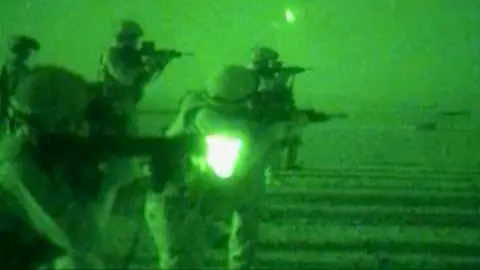
A video compiled by UK Special Forces shows how members of one squadron kept count of their kills

Former members of UK Special Forces have broken years of silence to give BBC Panorama eyewitness accounts of alleged war crimes committed by colleagues in Iraq and Afghanistan.

Giving their accounts publicly for the first time, the veterans described seeing members of the SAS murder unarmed people in their sleep and execute handcuffed detainees, including children.

"They handcuffed a young boy and shot him," recalled one veteran who served with the SAS in Afghanistan. "He was clearly a child, not even close to fighting age."

Killing of detainees "became routine", the veteran said. "They'd search someone, handcuff them, then shoot them", before cutting off the plastic handcuffs used to restrain people and "planting a pistol" by the body, he said.

The new testimony includes allegations of war crimes stretching over more than a decade, far longer than the three years currently being examined by a judge-led public inquiry in the UK.

The SBS, the Royal Navy's elite special forces regiment, is also implicated for the first time in the most serious allegations - executions of unarmed and wounded people.

A veteran who served with the SBS said some troops had a "mob mentality", describing their behaviour on operations as "barbaric".

"I saw the quietest guys switch, show serious psychopathic traits," he said. "They were lawless. They felt untouchable."

Special Forces were deployed to Afghanistan to protect British troops from Taliban fighters and bombmakers. The conflict was a deadly one for members of the UK's armed forces – 457 lost their lives and thousands more were wounded.

Asked by the BBC about the new eyewitness testimony, the Ministry of Defence said that it was "fully committed" to supporting the ongoing public inquiry into the alleged war crimes and that it urged all veterans with relevant information to come forward. It said that it was "not appropriate for the MoD to comment on allegations" which may be in the inquiry's scope.


'Psychotic murderers' in the regiment


The eyewitness testimony offers the most detailed public account of the killings to date from former members of UK Special Forces (UKSF), the umbrella group which contains the SAS, SBS and several supporting regiments.

The testimony, from more than 30 people who served with or alongside UK Special Forces, builds on years of reporting by BBC Panorama into allegations of extrajudicial killings by the SAS.

Panorama can also reveal for the first time that then Prime Minister David Cameron was repeatedly warned during his tenure that UK Special Forces were killing civilians in Afghanistan.

Speaking on condition of anonymity because of a de facto code of silence around special forces operations, the eyewitnesses told the BBC that the laws of war were being regularly and intentionally broken by the country's most elite regiments during operations in both Iraq and Afghanistan.

Those laws state that on such operations people can be deliberately killed only when they pose a direct threat to the lives of British troops or others. But members of the SAS and SBS were making their own rules, the eyewitnesses said.

"If a target had popped up on the list two or three times before, then we'd go in with the intention of killing them, there was no attempt to capture them," said one veteran who served with the SAS, referring to people who had been previously captured, questioned and then released.

"Sometimes we'd check we'd identified the target, confirm their ID, then shoot them," he said. "Often the squadron would just go and kill all the men they found there."

One witness who served with the SAS said that killing could become "an addictive thing to do" and that some members of the elite regiment were "intoxicated by that feeling" in Afghanistan. There were "lots of psychotic murderers", he said.

Getty Images
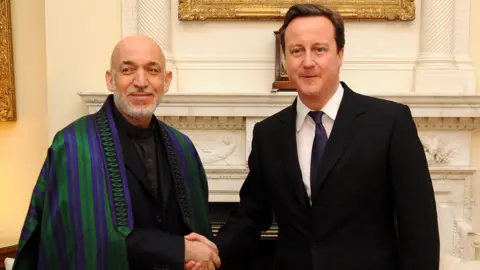
Then Prime Minister David Cameron (r) was made aware, by the then Afghan President Hamid Karzai (l), of allegations of civilian killings, the BBC has been told

"On some operations, the troop would go into guesthouse-type buildings and kill everyone there," he said. "They'd go in and shoot everyone sleeping there, on entry. It's not justified, killing people in their sleep."

A veteran who served with the SBS told the BBC that after bringing an area under control, several assault teams would sweep through the area shooting anyone on the ground, checking the bodies and killing anyone left alive. "It was expected, not hidden. Everyone knew," he said.

Intentionally killing wounded people who do not pose a threat would be a clear breach of international law. But the SBS veteran told Panorama that wounded people were routinely killed. He described one operation during which a medic was treating someone who had been shot but was still breathing. "Then one of our blokes came up to him. There was a bang. He'd been shot in the head at point-blank range," he said.

The killings were "completely unnecessary," he added. "These are not mercy killings. It's murder."

More junior members of assault teams were told by more senior SAS operators to kill male detainees, according to the testimony, using instructions such as "he's not coming back to base with us" or "this detainee, you make sure he doesn't come off target".

Detainees were people who had surrendered, been searched by special forces, and were typically handcuffed. British and international law forbid troops from deliberately killing unarmed civilians or prisoners of war.

A former SAS operator also described learning of an operation in Iraq during which someone was executed.

"It was pretty clear from what I could glean that he posed no threat, he wasn't armed. It's disgraceful. There's no professionalism in that," the former operator said. The killing was never properly investigated, he added. According to the SAS veteran, the problem started long before the regiment moved across to Afghanistan and "senior commanders were aware of that".


One SAS veteran said that killing could be an "addictive thing to do"

The testimony, as well as new video evidence obtained by the BBC from SAS operations in Iraq in 2006, also supports previous reporting by Panorama that SAS squadrons kept count of their kills to compete with one another.

Sources told the BBC that some members of the SAS kept their own individual counts, and that one operator personally killed dozens of people on one six-month tour of Afghanistan.

"It seemed like he was trying to get a kill on every operation, every night someone got killed," a former colleague said. The operator was "notorious in the squadron, he genuinely seemed like a psychopath," the former colleague added.

In one incident that sources say became infamous inside the SAS, the operator allegedly slit the throat of an injured Afghan man after telling an officer not to shoot the man again. It was "because he wanted to go and finish the wounded guy off with his knife," another former colleague said. "He wanted to, you know, blood his knife."

Knowledge of the alleged crimes was not confined to small teams or individual squadrons, according to the testimony. Within the UK Special Forces command structure, "everyone knew" what was happening, said one veteran.

"I'm not taking away from personal responsibility, but everyone knew," he said. "There was implicit approval for what was happening."

To avoid scrutiny of the killings, eyewitnesses said, members of the SAS and SBS would plant so-called "drop weapons" on the bodies of the dead, to make it look as though they had been armed in the photographs routinely taken by special forces teams at the scene.

"There was a fake grenade they'd take with them onto target, it couldn't detonate," said a former SAS operator. Another veteran said operators would carry AK-47 rifles which had a folding stock because they were easier to fit into their rucksacks and "easier to bring onto a target and plant by a body".

Reports were 'fiction'

Officers would then help to falsify post-operational reports in order to avoid scrutiny for the actions of assault teams on the ground, according to the testimony.

"We understood how to write up serious incident reviews so they wouldn't trigger a referral to the military police," one of the veterans said.

"If it looked like a shooting could represent a breach of the rules of conflict, you'd get a phone call from the legal adviser or one of the staff officers in HQ. They'd pick you up on it and help you to clarify the language. 'Do you remember someone making a sudden move?' 'Oh yeah, I do now.' That sort of thing. It was built into the way we operated."

The reports were "a fiction", another UKSF veteran said.

An intelligence officer who worked with the SBS described reports which said they had been caught in a firefight, while the photos showed bodies with "multiple clean headshots".

Falsified paperwork could help prevent an investigation by the Royal Military Police, but British special forces operations generated deep concern from Afghan commanders and Afghan government officials.

David Cameron - who made seven visits to Afghanistan as prime minister between June 2010 and November 2013, the period now under scrutiny by the SAS public inquiry, was repeatedly made aware of the concerns by Afghan President Hamid Karzai, according to multiple people who attended the meetings.

Mr Karzai "consistently, repeatedly mentioned this issue", former Afghan national security adviser Dr Rangin Dadfar Spanta told Panorama. He said Lord Cameron could have been left in no doubt that there were allegations of civilians, including children, being killed during operations carried out by UK Special Forces.
Advertisement


Former director of service prosecutions Bruce Houlder said he hoped the inquiry would examine what Mr Cameron knew

The Afghan president was "so consistent with his complaints about night raids, civilian casualties and detentions that there was no senior Western diplomat or military leader who would have missed the fact that this was a major irritant for him," said Gen Douglas Lute, a former US ambassador to Nato.

Gen Lute said it would have been "extraordinarily unusual if there were a claim against British forces that the British chain of command was not aware of".

A spokesperson for Lord Cameron told Panorama that "to the best of Lord Cameron's recollection" the issues raised by President Karzai were about Nato forces in general and that "specific incidents with respect to UK Special Forces were not raised".

The spokesperson also said that it was "right that we await the official findings of the Inquiry", adding that "any suggestion that Lord Cameron colluded in covering up allegations of serious criminal wrongdoing is total nonsense."

Unlike many other countries, including the US and France, the UK has no parliamentary oversight of its elite special forces regiments. Strategic responsibility for their actions falls ultimately to the prime minister, along with the defence secretary and head of special forces.

Bruce Houlder KC - a former director of service prosecutions, responsible for bringing charges and prosecuting those serving in the Armed Forces - told Panorama that he hoped the public inquiry would examine the extent of Lord Cameron's knowledge of alleged civilian casualties on British special forces operations.

"You need to know how far the rot went up," Mr Houlder said.
UK Gentleman's club rules criticised as 'sexist'

May Buccieri
BBC News
Reporting from Lincoln

BBC
The Castle Hill Club in Lincoln opened as a club in 1922


A gentleman's club, which voted to continue to prohibit women from becoming members, has been called "sexist" by a feminist group.

Women can only enter the Castle Hill Club in Lincoln as the guest of a man who is a member.

Paul Watson, secretary at the club which opened in 1922, said the rule "had always been the same" and "for the rights or wrongs of it, they wanted to leave it that way."

Ellie Henshaw, 19, from the University of Lincoln's Feminist Society, said the decision was "frustrating" and "its not the default anymore that women should be excluded".


The club is on Castle Hill in Lincoln


All 560 members were asked to vote on whether women should be allowed to become members.

The vote closed on 7 May.

100 members voted to keep the rule the same. 78 voted for change.

Mr Watson said the vote was "democratic" and "all members had different views on it".

He said he believed women who visited the club as guests of male members were "happy".

"They keep coming. They're obviously comfortable in how the club is set up."

Mr Watson said the venue was historical.

"A lot of it has to do with the history of the club and about not wanting too much change to keep the club running as it has done since 1922."


Bee Moore (left) and Ellie Henshaw are members of the University of Lincoln's Feminist Society

Ms Henshaw said "times have changed" and women should be allowed to join.

"I'm a history student. I think denying progress in the name of history is a very flawed argument," she said.

Bee Moore, 18, from the society, said she understood men's clubs were "historic".

"But we live in an age where everyone is equal and excluding people is wrong", she said.

"I would call this sexist. I don't see a reason why women have been excluded."
Advertisement

According to Mr Watson, the Grade II listed building dates back to the middle ages and used to operate as a pub called the Black Boy.

In 1922, as the pub was struggling to stay afloat, he said pub regulars took over the establishment and made it a gentleman's club.

Eventually, the members bought the pub together and it became the free house run by volunteers which it remains.

"When I was first there, there were 80 members. There's 560 now," Mr Watson said.

Listen to highlights from Lincolnshire on BBC Sounds, watch the latest episode of Look North or tell us about a story you think we should be covering here.
Ellie Chowns and Adrian Ramsay launch UK Green Party co-leadership bid
12 May 2025
BRIGHT GREEN NEWS


Ellie Chowns and Adrian Ramsay have announced they will be standing to be the next co-leaders of the Green Party of England and Wales. They will be standing in the leadership election set to take place this summer.

Ramsay is one of the two current co-leaders of the Green Party alongside Carla Denyer. Denyer announced last week that she wouldn’t be seeking re-election to the post.

Both Chowns and Ramsay were elected as MPs at the 2024 general election, representing Waveney Valley and North Herefordshire respectively. Both of these constituencies are highly rural and were gained from the Tories.

The pair are the second to enter the race, following the party’s current deputy leader Zack Polanski announcing his candidacy last week.

In their announcement, Chowns and Ramsay have made a clear dividing line between themselves and Polanski that they are both elected to the House of Commons.

Speaking on their announcement, Chowns said: “With the two-party system breaking down and voters disillusioned with the old, tired Westminster parties, the Green Party is on the cusp of a major political breakthrough.

“Adrian and I are ready to lead our party into its most ambitious chapter yet. We need leaders who are at the heart of national politics in Westminster. We’re confident that we can win power right across the country and use it to reshape the political landscape.”

Ramsay added: “This is the most exciting political opportunity in a generation. We’ve shown we can win seats seen as unwinnable – and now we need to turn those victories into real power. That means electing many more MPs, speaking to and for millions, and putting Green ideas at the heart of the next government.

“It’s time to build on our proven and bold Green leadership. The climate is breaking down, inequality is deepening, and the far right is gaining ground. The Greens must be ready to lead – not just to speak up, but to act – and potentially to hold the balance of power.”

Both Ramsay and Chowns have a longstanding history in the party. Ramsay was elected as the party’s first ever deputy leader in 2008, serving for four years during Caroline Lucas’ time at the helm. He also spent eight years as a councillor in Norwich from 2003-2011. Outside of his Green Party work, Adrian spent five years as the CEO of the Centre for Alternative Technology.

Chowns, meanwhile, was briefly an MEP, representing the West Midlands region following the 2019 European elections. She too had a stint as a councillor, first being elected to Herefordshire County Council 2017. In that role, she played a part in a joint Green-independent administration which, among other things, delivered free bus travel across the county on weekends. Outside of politics, Chowns was previously a lecturer in International Development at the University of Birmingham.

Under the party’s rulebook, candidates are able to stand for the leadership either on their own or as part of a co-leadership ticket. If co-leaders are elected, a single deputy leader is elected. If a single leader is elected, two co-leaders are elected.

With Chowns and Ramsay’s announcement, there are now two very high profile leadership tickets in the running. It is hard to see at this stage how a third candidate could emerge with sufficient name recognition and clout that would have a shot at winning.

Nominations for the Green Party’s leadership election formally open on June 2, with party members voting for their new leadership team throughout August. The results will be announced on September 2.

Project aims to return 'keystone' elk to UK

Greig Watson
BBC News, Nottingham

Getty Images
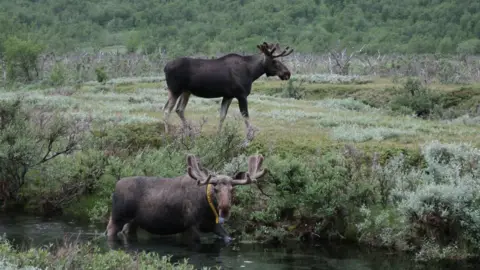
Eurasian elk are still widespread in parts of Scandinavia and eastern Europe

Wildlife experts are "very excited" at the prospect of bringing back elks to the East Midlands - and to the UK - for the first time in about 3,000 years.

The Nottinghamshire and Derbyshire Wildlife Trusts have secured £15,000 of funding from the Rewilding Britain charity to begin feasibility studies into their return.

The animals are regarded as "keystone" species which can create and maintain habitats for diverse other species.

Janice Bradley, from Nottinghamshire Wildlife Trust (NWT), said one of the major challenges was getting the public used to the idea that elk "should be here".
Advertisement

Mats Hagwall
Elk can play an important role in maintaining wetland habitats


European elk were originally widespread in Britain but were hunted to extinction in the Neolithic era.

Ms Bradley, head of nature recovery (north), said: "They are one of our lost species.

"They used to roam all over the place, through lots of different habitats, throughout the UK.

"They would have roamed through the wetlands of the Trent, in and out of reed beds and pools, woods and grasslands, so they are native and were lost due to hunting, probably by Neolithic people, and we think they should be brought back to fulfil their role in optimising habitats for other wildlife."

Getty Images
The successful reintroduction of beavers to parts of the UK could help guide the project

The new funding will pay for a disease risk assessment, to study whether reintroduced elk would bring infections to existing livestock or vice versa.

Ms Bradley thinks the successful reintroduction of beavers could be a good guide to the new project.

"We consulted with 2,000 households to say what was going on," she said.

"We would intend to do the same with elk, to inform residents and let them know what we are doing.

"But also helpfully get people excited and engaged.

"And engaging with landowners is very, very important part of any of the next steps.

"One of the first challenges is getting people used to the idea these animals are native to this country and they should be back here."

Getty Images
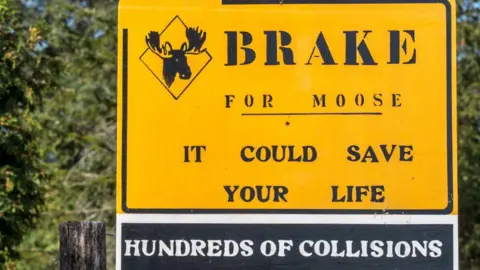
Wild moose, similar to elk, can be a significant hazard for motorists

An average adult moose stands between 4ft 7in and 6ft 11in (1.4m to 2.1m) high at the shoulder and can weigh from 380kg to 700 kg (838 to 1,543 lb).

Does Ms Bradley believe such animals can be brought back to the UK and allowed into the wild?

"Initially our elk and beavers would be in same enclosure, bringing them back together in the UK for the first time in 3,000 years," she said.

"But because elk prefer to be in those big, complex wetland habitats, eventually we would be looking at elk along the Trent valley.

"They would very much stay in those habitats, they wouldn't be roaming across roads like deer, but that's a very long way away yet.

"But I'd like to see them sooner rather than later."