Sunday, June 01, 2025

Evolving U.S.-Canada Relations Spark Shift in Strategy

  • Recent shifts in US policy have caused Canada to reevaluate its long-standing relationship with its southern neighbor, leading to a focus on economic independence and trade diversification.

  • Canadian federal politics have responded to US actions through tariffs and election results, reflecting a national desire for greater autonomy and a need to address regional economic concerns.

  • Infrastructure projects and trade relationships are being reassessed in Canada to reduce dependence on the US, with an emphasis on developing internal resources and fostering new international partnerships.

For years, the US has been a stalwart ally to Canada, peacefully sharing the longest international land border in the world. The US and Canada have worked together to develop valuable north-south integration of energy infrastructure that benefits both nations and have partnered to develop common specifications and standards for many products, including petroleum fuels and passenger vehicles.

Recent political events have, however, placed Canada and the US at the cusp of a critical shift in their long and prosperous relationship. The future of the relationship may not yet be clear, but what has become apparent is that Canada is taking proactive steps to be master of its own destiny and reduce dependence on its southern neighbor to achieve prosperity amid the challenges imposed by the current US administration. Some of these actions may be to the detriment of both nations, but perhaps more so to the US. True to their form, Canadians seem to be saying – we are terribly sorry but now must look out for ourselves.

A brief history

Canada and the continental US have been in existence in their current form since 1793 when Britain ceded land to the 13 British North America colonies that led an insurrection known as the American Revolution.  The border between the United States of America and what remained of British North America was established by the Treaty of Paris that ended the American Revolution. The border was challenged again during the War of 1812 when the US invaded Canada. This war ended in a stalemate and The Treaty of Ghent, signed in 1814, re-established the border as effectively unchanged. British North America eventually became Canada in 1867 when the confederation was formed.

Since the reconfirmation of the international border in 1814, the relationship between the US and Canada has largely been one of little contention. Some examples of this cooperation are:

  • Harmonization of vehicle standards to allow ease of cross-border trade and integrated manufacturing
  • Alignment of quality specifications for many fuels
  • Harmonized system on hazardous chemicals classification and labelling
  • Cooperation on food safety standards and food supply-chain certification

Canada and the US are deeply connected in many ways

Beyond cooperation on standards, Canada and the US are deeply connected by infrastructure, cross-border travel and trade and cultural similarities. From an infrastructure and trade perspective, Quebec, Ontario and British Columbia all have a strong tie to the US, exporting vastly more electricity to the south than what they provide to neighboring provinces. The Great Lakes waterway is a shared resource that enables trade between Canada’s eastern provinces and the US Northeast.  Our railway system is closely linked, including CPKC, the only transnational railway in North America connecting Canada, the US, and Mexico. Canada’s petroleum industry has benefitted from having the US as a demand center with most of the nation’s crude oil being exported south via shared infrastructure that has been developed over decades. Western Canada’s natural gas benefits from market access to the Pacific and Rockies regions in the US. The US also benefits from this connectivity through the reliable and ratable supply of energy.  

Canadians are a boon to the US tourism industry. In 2024, according to the US International Trade Administration (ITA), 20 million Canadian residents travelled to the US, in effect half of Canada’s population. Perhaps more important, though, is that Canadian visitors comprised almost 30% of the 72 million US international visitor arrivals. For many Canadians, the US offers ease of access, a diversity of travel opportunities from urban destinations to vast tracts of unspoiled wilderness, and an escape from bitter boreal winters. 

While culturally very similar, there are some key differences between Canada and the US that makes each nation unique. Canada has always valued a strong social safety net, aiding those in need through government programs while the US values Individual freedom and charitable acts in lieu of government programs. Canadians value our publicly funded health care system and recognize that health outcomes are generally better and at a lower cost to society. Gun ownership is strictly controlled in Canada, with the benefit of having vastly lower per capita gun-related deaths. Access to high quality grade-school education is also valued in Canada, with teachers generally well-paid and schools funded equally based on student population. In sum, Canada has more socialistic values than the US but with perhaps less individual freedom. The gap in political philosophy between the two looks set to be widening further.

Is the Canada-US relationship permanently changed?

US President Donald Trump’s administration appears to be taking a vastly different stance with regards to its relationship with Canada, raising concerns over prosperity and national security for many Canadians. The ‘reciprocal tariffs’ proposed by the US – under the guise of stopping illegal immigration and the flow of fentanyl into the US – puts Canada’s economic growth at risk. Canadians struggle to understand how the US, Mexico, and Canada Agreement (USMCA) negotiated by the former Trump administration is no longer relevant. They also wonder how the almost inconsequential quantity of fentanyl entering the US from Canada could constitute a national emergency that warrants tariffs the likes of which have never been seen before. 

The rhetoric on making Canada the 51st state has turned its citizens’ economic angst over the tariffs to anger. The combination of the tariffs and the threat of annexation make some Canadians view the US as waging economic warfare against it. Indeed, former Prime Minister Justin Trudeau publicly stated that President Trump’s threat to annex Canada is real. Canada has vast reserves of critical minerals, desirable access to the north, and an abundant supply of fresh water, all which make it valuable for future development. Canadians recognize the country lacks the might against an imperialistic US to defend its sovereignty if faced with economic warfare, or worse yet an insurrection from the south. 

Canadians are taken aback by the abrupt shift in US diplomacy and have had its sense of economic and national security stripped bare. Canada has benefited from having the world’s largest economy on its doorstep and perhaps has not had to work as hard as other nations to develop trade relationships and national defense programs to ensure growth and security.  While Canadians may be upset with the current stance of the US federal administration, many see the recent events as an opportunity to rebuild the nation into the confederation it was originally intended to be. 

All Canadians are aligned in the hope that the relationship with the US will continue to remain cordial and ultimately return to one of mutual benefit. Still, it would be naïve for Canada to not diversify its trading portfolio and fundamentally change its economic exposure to the US, regardless of the diplomatic relationship returning to status quo. The US administration’s current actions are not aligned with Canada’s understanding of the USMCA and their historical relationship, but the ties between the two are not yet at an impasse. The US will always remain an important neighbor and Canadians hold no ill will for their American neighbors. Still, Canada needs to forge a different path.

First steps towards more Canadian economic autonomy

Canada has taken steps to respond to the US tariffs and the 51st state rhetoric. The federal government imposed 25% reciprocal tariffs on $30 billion of key goods from the US to target states that predominantly supported the Republican ticket, from orange juice and citrus fruit to motorcycles and whiskey. Some provinces removed all US alcohol from government store shelves to boycott the US wine and liquor industry. Some have adopted a buy-anything-but-American strategy, and grocery stores are helping by adding in-store labels to indicate the Canadian alternatives. Perhaps most notable, many are choosing to avoid traveling to the US for business and tourism. Canada’s land border crossings into the US are down 35% in March 2025 versus last year while air travel to the US is down 14%, according to Statistics Canada.  Steeper declines are expected for April through August as Canadians choose to spend their travel budgets either within Canada, or to destinations other than the US.

So far, the measures taken by the Canadian government and by individual residents has had an impact on US exporters of goods. Canadian grocery retailer Loblaws reports a 10% increase in sales of Canadian goods so far, while Sobeys Inc. owner Empire Company Ltd. reports that the share of US goods purchases is “rapidly dropping”, according to a report in the Globe and Mail.  US tourism is taking a hit with much fewer Canadians booking tours. US suppliers of whiskey, cotton and other materials have reported losing lucrative deals with Canadian retailers and manufacturers because of the tariffs. At least one US governor, Gavin Newsom of California, is attempting to court Canadian tourists to return to his state using a social media campaign. 

Canadians are emboldened by the noticeable impact that its vast but sparsely populated nation has had so far. The economy and population are both about one-tenth the size of the US, but its land mass is slightly larger and its access to resources is immense. The trade war is not yet over, and while the current US executive branch has authority from Congress and the Supreme Court to impose the broad-brush tariffs, those levies will remain a risk despite any advancement of negotiations.

Canadian federal politics speaks volumes

Canada was due for a federal election no later than October 2025. It seemed a guarantee that the Conservative Party of Canada (CPC) led by Pierre Poilievre would win. After over nine years of a Liberal minority government, Canadians were ready for a change. The CPC platform of smaller government, lower taxes and less regulation resonated with Canadians, while the Trudeau Liberals were viewed as anti-oil, anti-gas and anti-development. Under Trudeau’s guidance, oil infrastructure projects were challenged, with much harsher rules on environmental and greenhouse gas impacts (Bill C-69). The Oil Tanker Moratorium Act was enacted, which prevents the shipment of oil along British Columbia’s west coast, the emissions costs under the Output Based Pricing System (OBPS) and consumer’s carbon tax were set to increase to $170 per tonne by 2030, and the Clean Fuels Regulation (CFR) was introduced.  The oil sector emissions cap was also proposed but not yet made law. The challenging regulatory environment certainly led to several key energy and infrastructure projects being cancelled, particularly liquified natural gas export facilities and interprovincial petroleum pipelines.

When President Trump was inaugurated, though, the Canadian political landscape witnessed a sea change. Mark Carney was nominated the head of the Liberal Party to replace Justin Trudeau and called a snap election for 28 April. Carney is the former governor of the Bank of Canada and the Bank of England and is recognized for his experience on economic policy. Meanwhile, Poilievre’s populist rhetoric was sounding a bit too much like that of the new US administration and became viewed as a risk to Canada’s place in the world stage and its ability to protect its economy and borders from the might of the US. In a matter of weeks, the polls shifted to show a Liberal minority government as the likely outcome. Indeed, the Liberals ended up winning 170 electoral districts, only two shy of a majority. 

The Canadian federal election results sent several key messages to the politicians. Poilievre lost his seat in his home. The federalist Bloq Quebecois gave up 13 seats, while the New Democratic Party (NDP) lost 17 seats. The Liberals gained 16 seats, and the CPC gained 15 seats. The Bloq losing 37% of their seats, mainly to the Liberals, sends a clear message to the province of Quebec that federalist politics are not supported at this time of national crisis. The NDP losing 70% of its seats implies more pragmatism with respect to greenhouse gas emissions regulations is needed to lower costs for consumers and to create an economic environment that is friendlier to resource extraction and infrastructure investment.

The CPC gains were primarily made in Eastern Canada, reflecting a clear shift towards the center. The Liberal Party’s platform, spearheaded by Mark Carney, appeased more swing voters to retain the majority of Eastern Canada and in turn caused Poilievre to lose his seat in his home riding in Ottawa. Among those is a generational divide, with young voters who are concerned about housing unaffordability, crime and the cost-of-living coalescing around the Conservatives. It's a reversal from 2015, when youth voted in record numbers, helping sweep Carney's predecessor Justin Trudeau to power.

The country provincial leaders appear united once again as a confederation to support the economic recovery of Canada in the face of severe challenges from the US. Infrastructure projects thought to be long dead are now being discussed again. Oil pipelines across the nation, liquified natural gas (LNG) export facilities, mining developments and the removal of interprovincial trade barriers are all topics that are again on the table. The CPC supporters are, however, concerned that this new government is simply a continuation of past Liberal governments, and the development of the energy economy will continue to face significant barriers.

Is it an alienation of the West, energy industry or none of the above?

Canadian federal elections almost always show a clear political division with British Columbia often supporting the leftist parties (NDP and Green Party), Alberta and Saskatchewan invariably being deeply CPC, and the rest of the country, save Quebec, being mixed.  Quebec oscillates between Liberal and Bloq, the Bloq being a federalist party that only runs candidates in Quebec. 
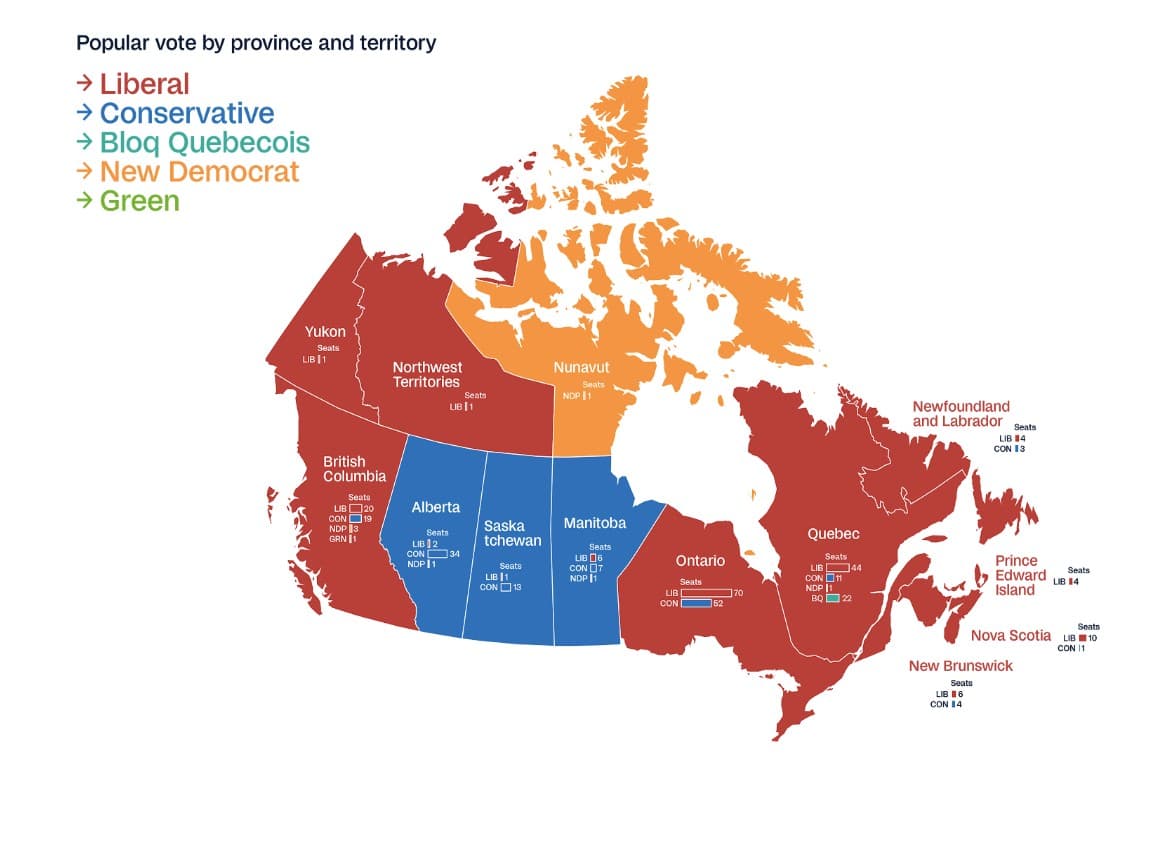
With the re-election of the Liberal Party, there is a vocal group in Western Canada that is decrying Western alienation and is raising the alarm on the beleaguered energy industry.  The previous Liberal government adopted strong greenhouse gas (GHG) emissions reduction policies. Western Canada’s primary source of revenue is oil and gas and saw these federal policies as particularly restrictive to economic growth and are likely fearing more of the same.


The province of Alberta contains perhaps the most vocal protest against the federal policies and the provincial conservative party is now positioning for a referendum on Alberta’s separation from Canada. While separation is unlikely to be supported by a majority of Albertans, there is a deep level of frustration at the inability to develop energy projects because of federal policies even though the sector is a provincial matter. Prime Minister Carney has a huge task ahead to qu
ell the frustration to ensure the conservative vote in Alberta sees economic opportunity. 

Carney struck down the consumers’ carbon price on 1 April, thus lowering the cost of all fuels for homes and vehicles. The industrial pricing policy is still in place, and he has discussed strengthening it, which may make Canada an even more challenging country to invest in when it comes to major resource extraction projects. Before the election, Carney indicated he will not repeal the controversial Bill C-69, the federal impact assessment act that has been blamed for stalling many energy and infrastructure projects and is particularly contentious with Alberta’s conservative population. 

Even so, if Carney is to be successful in his goal of reinvigorating Canada’s economy and developing new trade relationships with countries beyond the US, infrastructure will be needed.  Canada is a large country with ocean access on three borders and no cross-Canada infrastructure other than roads and rail. He has stated his commitment to the expedited approval of infrastructure projects and included the concept of an energy corridor across the nation in his platform. Carney’s latest comments now indicate a willingness to change environmental legislation to enable investment in the country’s economic growth, perhaps a sign that his stance on Bill C-69 may be softening.

Actions Canada can take to decouple itself from the US as its dominant trade partner will require significant investment. The federal government can support this development by reducing regulatory burden and partnering with the provinces and First Nations on development corridors and approval processes. The opportunities are boundless and include:

  • Petroleum pipelines to support the growth of crude oil supply and the export of crude oil, natural gas liquids (NGLs) and refined petroleum products to foreign markets.
  • Upstream natural gas development, natural gas pipelines and liquefaction facilities to provide export outlets for Canada’s vast natural gas reserves.
  • Critical mineral mining projects to harvest Canada’s resources.
  • Rail infrastructure to debottleneck transportation across the nation to enable higher volumes of dry bulk exports.
  • Polyethylene and polypropylene production facilities to compete in export markets.
  • East/west electricity transmission to decouple exports from the US and keep made-in-Canada power in Canada.

Canada has cautious optimism for the future

While Canadians hold no ill will for their friends to the south, the political environment has shifted. The threat to its sovereignty and its economy from the current US executive branch has united Canada more than any event in the past excepting the World Wars.    

The strong alignment in economic development across all provinces in the face of external risks is arming Canada with a new purpose. Made-in-Canada solutions and new trade relationships are now being sought, which could usher in a new era of economic prosperity. It is Canada’s time to grab its opportunities to ensure a bright future for the entire confederation. 

By Rystad Energy


China Schools the West on EVs

  • Chinese EV makers like BYD are outperforming Western rivals on both price and quality.

  • Foreign automakers have lost significant market share in China, as local manufacturers now dominate over two-thirds of the market.

  • The EU is adopting China’s strategy of mandated knowledge sharing, aiming to access Chinese EV know-how while imposing tariffs to protect local producers.

In April this year, China’s BYD hit a first--it sold more cars in Europe than Tesla. Of course, one reason for this was EV fans’ reaction to Elon Musk’s political endeavors, but another was that BYD’s EVs were simply better and more affordable. And now Western carmakers want to learn from BYD and other Chinese sector players how to make their electric cars more attractive—and affordable—for buyers.

Caixin Global reported this week that non-Chinese carmakers were “tapping into local expertise and supply chains in a bid to regain lost ground.” The reason is that local carmakers have come to completely dominate the Chinese car market with their EVs, eating into foreign majors’ market share. It’s not just Tesla. It’s everyone that’s in danger of losing market share to Chinese manufacturers of electric cars—just two decades after they taught those Chinese car manufacturers how to make good cars.

The Financial Times related these developments in an in-depth analysis from April. It cited a German car engineer joking about how 20 years ago, Chinese cars were pretty much copy-paste versions of the European flagship models. Now, European car companies are trying to develop features that their Chinese rivals already have in their vehicles. As with wind and solar equipment, Chinese EVs are both better and cheaper than the European—and American—alternatives.

This is an obvious problem for the West, which has realized that Chinese competition is dangerous for local players in more than one industry. In response to that danger, the European Union shunned originality in favor of import tariffs on Chinese electric vehicles, essentially sentencing itself to forever subsidies for local EVs because carmakers have struggled to lower costs below a certain point that is still higher than the costs for internal combustion vehicles. Yet the carmakers themselves want to learn from the Chinese—so the EU has obliged, taking a page out of China’s playbook.

For decades, Chinese industrials have learned how to do things better by mandating expertise sharing from foreign companies with ambitions for the Chinese market. Now, this is exactly what the EU wants to do with BYD and its sector players: require them to provide access to their know-how to European car companies.

Since 2020, non-Chinese automakers have lost a third of their market share in China to local manufacturers. This is just five years in which Chinese makers of electric cars have managed to improve their technology so much that over two-thirds of car sales in the country come from local manufacturers, according to Caixin. The Germans are second, with a 13.2% share, followed by the Japanese, with a share of 9.4%, and U.S. carmakers with a market share of 5.8% in China.

Of course, an easy explanation of how this happened would be one that focuses on Chinese state subsidies for all things energy transition, notably including the electrification of transport. The Chinese government has literally thrown billions at carmakers to make EVs. It has also encouraged more buyers to go electric through various incentives. But this is not the whole story.

The whole story must include the fact that Chinese carmakers simply became very good at making electric cars while in Europe, their peers wondered how many women to appoint to their boards and how to cut their emissions. China is currently phasing out its subsidy programs for EVs. Their goal has been accomplished; EVs have gone from niche to mainstream. Europe, meanwhile, tried to phase the subsidies out, and sales immediately crashed—because the cars were too expensive for what they offered. This is the root cause of the problem with EV uptake. And it’s Chinese carmakers that can help solve it.

It would be wise to bear something in mind, though. Chinese industries sometimes overdo the growth thing, and it all ends in tears. First, it was the property sector. Now, it could be the EV makers’ turn. A large BYD dealer in Eastern China just went bust. Chinese EV makers may well need the international market as much as European carmakers need Chinese EV expertise. It could be a match made in Heaven.

By Irina Slav for Oilprice.com


U.S. Ethane Exports Face Licensing Hurdles After China Lifts Tariffs

China has waived a short-lived 125% tariff on U.S. ethane imports, but American shipments to China could be hindered by a U.S. requirement of export licenses.

Ethane, a natural gas liquid primarily extracted from raw natural gas during processing, is mainly used as a feedstock for ethylene production, one of the most important building blocks in the petrochemical industry.

China has waived a 125% tariff on U.S. ethane imports it had levied in early April.

The tariff removal led EIA to expect strong growth in U.S. ethane production and exports. EIA expects the United States to produce nearly 3 million barrels per day of ethane this year and slightly more than 3 million barrels per day of ethane next year, up from 2.8 million barrels per day in 2024.

Most of this growth in U.S. ethane production will be exported to supply growing international demand, the Energy Information Administration says.

However, the U.S. Department of Commerce is now notifying U.S. exporters that they need to apply for export licenses to export ethane and butane to China.

Enterprise Products Partners, one of the biggest exporters of ethane and butane via its terminals, warned on Thursday it “cannot determine whether the Partnership will be able to successfully obtain any required BIS license in a timely manner, or at all, for applicable transactions involving Covered Ethane and Butane Products.”

Under a notice from the Bureau of Industry and Security (BIS), U.S. exporters, including Enterprise Products Partners, are required to submit an application for a validated license prior to the export, re-export, or transfer (in-country) of any ethane or butane products when a party to the transaction is located in China, or is a Chinese “military end user,” wherever located, except for certain eligible license exceptions.

China is a major market for U.S. ethane, and the need for export licenses could slow the trade in the coming weeks and months until exporters obtain such licenses.

Yet, U.S. ethane production and exports are set to benefit from petrochemical firms in Asia shifting feedstock from naphtha to the cheaper ethane as chemicals margins shrink.

By Tsvetana Paraskova for Oilprice.com

The Battery Tech That Could Replace Lithium

  • Inlyte Energy, led by Stanford researcher Antonio Baclig, is advancing iron-sodium battery technology first explored in the 1970s, using table salt and iron as core components.

  • With successful module testing and a field project launching in Alabama with Southern Co., Inlyte is positioning itself for large-scale deployment.

  • These batteries are safer, cheaper, and made from domestically sourced, abundant materials—potentially outperforming lithium-ion in cost and duration for grid-scale applications.

As governments and companies look to a future run on renewable energy, the need for utility-scale batteries is greater than ever. Currently, the dominant battery form is the lithium-ion battery, which is produced using lithium and other critical minerals, a market dominated by China. While this type of battery is extremely useful for electronics, electric vehicles (EVs), and utility-scale storage, demand for lithium is expected to outpace supply in the coming years. For years, researchers have been assessing the potential for alternative battery technology to support a green transition, and one company believes it may have finally found the solution.

Antonio Baclig spent around eight years at Stanford University searching for alternative battery forms that could be used for utility-scale storage. Finally, Baclig believes he may have found the answer, using technology first developed in the 1970s that uses table salt. Baclig explored a wide range of battery technology and eventually found a family of sodium metal halide batteries. The British company Beta Research was the first to develop iron-sodium batteries, but it eventually shifted to nickel-sodium in the 1980s due to its greater energy density.

Iron-sodium batteries may be better suited to the needs of today, and Baclig is continuing research that was previously left behind. He believes the technology could help his start-up, Inlyte Energy, which was founded in 2021, to develop low-cost, long-term energy storage. Compared to EVs, which require batteries to hold vast amounts of power in a small space – something the nickel-sodium batteries offer – power plants do not need to contain so much energy in such a small space. “We have to focus this on cost now. It’s not [primarily] about energy density,” stated Baclig.

Baclig connected with Beta Research and partnered with the British firm in 2022 to continue developing the previously paused battery research. The collaboration has resulted in the creation of a scaled-up cell in the form of a ceramic tube filled with powdered iron and salt, which holds 20 times more energy than the previous cells that were developed with EVs in mind. Inlyte has since carried out a successful testing phase on a 100-cell module. Baclig explained, “That was our first module, and it just worked. We’re building on something that has a long track record, so we don’t have to reinvent.”

The use of pre-existing, tried-and-tested technology has allowed Inlyte to fast-track the development of the larger batteries and progress quickly to the testing phase. Inlyte has already signed its first major utility contract with Southern Co., which owns the biggest utilities in Alabama, Georgia, and Mississippi. Southern has agreed to install an 80-kilowatt/1.5-megawatt-hour Inlyte demonstration project near Birmingham, Alabama by the end of 2025. This project will work as a field-testing project before Inlyte deploys the technology on a larger scale. Southern Co. will install and operate the first large-scale Inlyte battery system for a minimum of one year as part of its plans to test innovative long-duration storage systems in the field. 

The technology is highly appealing to companies looking for alternatives to lithium-ion battery technology because it has a low fire risk, as it does not use flammable electrolytes – which lithium-ion batteries do. The components required for production can also be sourced domestically, which is viewed as increasingly important in the current economic environment. Further, the materials required to produce the battery are extremely low cost, the manufacturing process is straightforward, and the technology appears similarly efficient to lithium-ion batteries. 

Ben Kaun, Inlyte’s chief commercial officer, said, “Our batteries use abundant, low-cost metals.” Kaun explained, “Iron-sodium batteries have this interesting feature where if you want to make a longer-duration battery, you just need to add more iron and salt. Once you’ve built one that cycles to a five-to-ten-hour discharge rate, you can add more iron and salt to get 24 hours of backup power.”  Kaun added, “We are even outperforming lithium on certain metrics.”

Inlyte raised $8 million in seed funding in 2023 and acquired Beta Research’s U.K. facility to develop the technology. It recently announced a strategic partnership with the Swiss firm Horien Salt Battery to scale up production for its first U.S.-based factory. This suggests that Inlyte may soon be progressing past the pilot phase of battery testing to commercialisation. Kaun explained, “Once we hit the gigafactory level, we anticipate that our technology will be able to compete with lithium-ion for use cases like load shifting and will offer a cost-effective, safer solution for grid-scale projects.”

The road to assessing and testing alternative battery technology is long and arduous, and many start-ups have failed along the way. Often, alternative battery options have been found to be unsuccessful when tested in a real-world setting. However, Baclig and his partners are hopeful that the use of the pre-existing technology and the success experienced in the pilot phase will help Inlyte to produce an alternative, low-cost storage solution that does not rely on finite lithium supplies and can be manufactured domestically.

By Felicity Bradstock for Oilprice.com

CCS

From Leader to Laggard? U.S. Faces Carbon Capture Slowdown as EU Surges Ahead

  • Europe has taken a decisive regulatory lead in carbon capture and storage (CCS) by mandating that oil and gas companies develop 50 million tonnes of CO2 storage capacity by 2030.

  • The U.S., once the global frontrunner in CCS due to generous incentives like the 45Q tax credit, is now facing stalled momentum.

  • This transatlantic divergence signals a shift in global CCS leadership, with Europe offering regulatory certainty and infrastructure planning that may attract investment.

Carbon capture and storage (CCS) has long been recognized as a critical technology for achieving net-zero emissions, particularly in hard-to-abate sectors like steel, cement, and chemicals. Historically, the United States has been at the forefront of CCS development, propelled by generous subsidies and tax incentives, notably the 45Q tax credit enhanced by the Inflation Reduction Act (IRA). However, recent policy developments in Europe signal a strategic shift that could redefine global leadership in CCS.

The U.S. approach: A market-led model facing political uncertainty

For years, the United States has been the global frontrunner in CCS deployment, thanks to a market-based approach centered around financial incentives. The 45Q tax credit, bolstered by the IRA, offered up to $85 per tonne of CO2 captured and stored in geological formations, and up to $180 per tonne for direct air capture (DAC) projects. These incentives sparked a surge of interest and investment, with over $320 billion in clean energy projects announced in the wake of the IRA—many incorporating CCS as a key decarbonization tool.

The enthusiasm for CCS in the U.S. market remains strong. Companies and investors are still eager to pursue large-scale projects, and the technological expertise in CCS is considerable. However, the political landscape has introduced significant uncertainty. Proposed legislation to repeal or weaken key provisions of the IRA has created a cloud of doubt over the future of CCS incentives. Already, this policy instability has led to the cancellation or delay of major projects, with estimates suggesting that over $14 billion in clean energy investments have been shelved due to fears that the regulatory framework may shift.

This political uncertainty undermines investor confidence and makes it harder for companies to commit to the long lead times and high capital costs required for CCS projects. As a result, while the interest and market potential for CCS in the U.S. remain strong, the momentum is at risk of stalling.

Europe’s regulatory mandate: A new model for CCS deployment

In contrast, Europe is taking a more direct and regulatory-driven approach. Under the recently adopted Net-Zero Industry Act, the EU has introduced a groundbreaking requirement: oil and gas companies must collectively develop and reserve at least 50 million tonnes of annual CO2 storage capacity by 2030. This mandate is proportionally assigned, with each company’s obligation based on its historical production levels, ensuring that those most responsible for emissions contribute the most to the solution.

This shift marks a fundamental departure from the U.S. model. Rather than relying on voluntary market signals and financial incentives, Europe is creating a binding legal obligation—turning CCS from a niche technology into a critical pillar of its industrial decarbonization strategy. By designating these storage projects as Net-Zero Strategic Projects, the EU also accelerates permitting processes and unlocks access to funding mechanisms like the Innovation Fund, supported by revenues from the EU ETS.

This regulatory certainty offers investors a stable environment in which to commit capital, reducing risk and providing a clear roadmap for the long-term development of CCS infrastructure.

A shift in global momentum

The contrasting approaches between the U.S. and Europe highlight a shifting dynamic in global CCS leadership. The U.S. market, once the undisputed leader in CCS due to its financial incentives, now faces a potential slowdown as policy uncertainty erodes confidence. While interest and market conditions for CCS in the U.S. remain strong, the lack of stability in the regulatory environment makes it difficult for projects to reach final investment decisions.

Europe, by contrast, is creating a stable and predictable policy framework that reduces uncertainty and drives investment. By mandating the development of storage capacity, Europe ensures that the infrastructure will be in place to support decarbonization efforts across multiple sectors—from steel and cement to hydrogen and negative emissions technologies. This approach positions Europe as a growing center of gravity for CCS innovation, offering a blueprint that other regions may seek to emulate.

Oil and gas companies as part of the solution

In previous publications, I have discussed how oil and gas companies can contribute to the energy transition—not just as suppliers of fossil fuels, but as builders of critical infrastructure for a net-zero future. Europe’s CO2 storage mandate is a clear example of this vision in action. By leveraging their expertise in subsurface operations, oil and gas companies can develop the storage capacity that will serve as the backbone of Europe’s industrial decarbonization strategy. This is a tangible way for these companies to contribute positively to the transition, using their resources and knowledge to solve one of the most pressing challenges of the clean energy shift: where to safely and permanently store CO2.

Conclusion

The European Union’s CO2 storage mandate is more than just a regulatory milestone—it is a turning point for the global CCS industry. By creating a legally binding requirement for storage development, Europe is providing the certainty that markets and investors need to scale up CCS projects. In contrast, the U.S., despite its early lead and the market’s ongoing interest, risks losing momentum due to political instability and the potential rollback of critical incentives.

This transatlantic divergence has far-reaching implications. As Europe accelerates its CCS deployment, it positions itself as a leader in the global race to decarbonize heavy industry. The U.S., meanwhile, faces the risk of ceding its leadership role unless it can provide stable and predictable policy support.

The challenge now is clear: Europe must act swiftly to implement its ambitious plans, and the U.S. must ensure that political uncertainty does not undermine its CCS potential. The world is watching, and the choices made today will shape the industrial landscape of tomorrow.

By Leon Stille for Oilprice.com


Crew of Futuristic Carrier USS Ford Will Wear Electronic Fatigue Trackers

USS Gerald R. Ford (USN file image)

Published May 28, 2025 10:33 PM by The Maritime Executive


The crew of the futuristic carrier USS Gerald R. Ford are about to test out an equally futuristic personnel-monitoring device. On their next deployment, members of the crew will have an Oura Ring personal health tracker - a small titanium ring that contains sensors for heart rate, body temperature, blood oxygen level and acceleration. Among other things, this data allows Oura to assess sleep quality and fatigue, which are the main targets of a new Navy study. 

Fatigue is a constant theme in maritime casualty reports, and the U.S. Navy's two biggest losses of the past decade both had lack of sleep as a contributing factor. In the early hours of June 17, 2017, the destroyer USS Fitzgerald collided with the container ship ACX Crystal, tearing a hole measuring about 12 feet by 17 feet in Fitzgerald's hull. Seven sailors were killed, and the survivors saved their ship only through heroic efforts at damage control. Barely more than two months later, destroyer USS John S. McCain struck the tanker Alnic MC near Singapore, killing 10 of McCain's sailors. 

Investigators found that the crews of McCain and Fitzgerald had had too little time for rest. Aboard Fitzgerald, the watch officers had "little to no sleep" before the night of the casualty because of in-port events, an after-action report found. On McCain, records showed that the 14 crewmembers on the bridge during the collision had an average of less than 5 hours of sleep in the previous 24 hours, and one relevant individual had had no sleep at all. 

Eight years later, Navy researchers are still working to develop better tools to help commands address fatigue. The health-data study aboard USS Gerald R. Ford is an attempt to gather more information on how a long deployment affects the crew, researchers told Navy Times.

Operational security informed the Navy's selection of hardware and software: after the Strava fiasco of 2018, in which a cloud-based personal fitness app disclosed the GPS locations of military personnel around the world, the Navy selected a product that would be more discreet. Oura Ring lacks a long-distance RF signature, researchers told Navy Times. 

The ultimate objective is to give crewmembers a way to watch their own readiness, and at the same time, to give commanding officers detailed data on how their subordinates are affected by fatigue. “[We're] helping leadership on these ships understand how the mission is impacting the sleep and the recovery of their sailors, especially as they go on these deployments that involve a lot of stress,” Dr. Rachel Markwald of the Naval Health Research Center told Navy Times.

Participating crewmembers will get to keep their own Oura Ring if they wear it during more than three-quarters of the deployment. 


LALIZAS and ATIVA NÁUTICA: United for Safety at Sea in Brazil

LALIZAS

Published May 31, 2025 7:43 AM by The Maritime Executive


[By: LALIZAS]

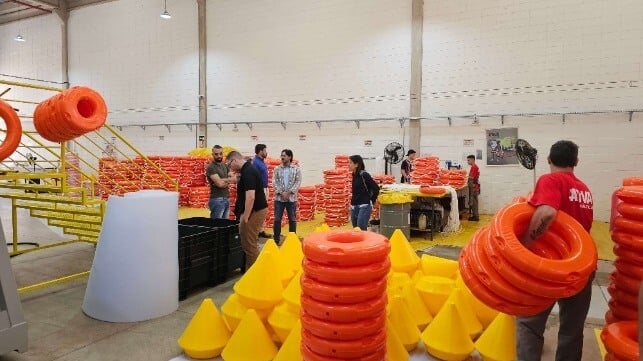
LALIZAS continues its global expansion across the Americas. After entering North America with the acquisition of LALIZAS/ALEXANDER in 2018, REVERE SURVIVAL in 2024 and the launch of LALIZAS Canada in 2025, the company now sets sail for South America, proudly announcing the acquisition of ATIVA NÁUTICA, Brazil’s leading lifejacket manufacturer.

This milestone marks a significant step in the manufacturer’s global growth, while also celebrating a remarkable company that has shaped the safety nautical sector in Brazil for over two decades.

Founded in 1998 by Marta Lara and Roberto Sampaio in Campinas, São Paulo, Ativa began as a small venture in a 250 m2 space with just three employees. Through their commitment and dedication, alongside with their niece and partner Julia Ramalho, Ativa became Brazil’s leading name in lifesaving equipment. Today, the team has grown to 200 members, and Julia will continue her journey with LALIZAS to uphold Ativa’s culture and values. LALIZAS holds even greater respect for small businesses that have grown into successful organisations, as it also began with manufacturing in a small house in Piraeus, Greece, with just three employees.

Marta and Roberto seized the opportunity to become part of something greater. Partnering with LALIZAS meant not only aligning with shared values and principles but also joining forces with a group known for elevating businesses while honouring their legacy. Ativa chose LALIZAS, confident in its reputation for transforming companies into stronger, more profitable organisations without compromising their unique identity.

“Ativa is like my third child,” said Marta Lara. “Seeing Ativa as part of a global group with such a prestigious history makes us very proud and honoured. Knowing that LALIZAS will care for it, grow it, and respect its legacy gives me peace of mind.”

The safety equipment manufacturer has a strong record of accomplishment in this area, beginning with the acquisition of Italian companies in 2012 (Lofrans’, MAX POWER, Nuova Rade, and OCEAN Fenders), as well as ARIMAR in 2019, all of which are leaders in the nautical market, each with its own distinct character.

“This acquisition is a testament to LALIZAS’ global strength—not just as a manufacturer of safety equipment, but as a trusted industry leader known for empowering companies, transforming them into even more successful and profitable businesses, while always respecting their roots and people,” Stavros Lalizas, Founder & CEO of LALIZAS commented.

LALIZAS is thrilled to welcome Ativa to #thelalizasforce and is dedicated to advancing the nautical industry in Brazil through its extensive expertise and high-quality nautical equipment. “This move strengthens our position in the Americas and unlocks new opportunities in a thriving market. Together, we are setting new standards in safety — across continents,” he concluded.

The products and services herein described in this press release are not endorsed by The Maritime Executive.


Trump’s DOE Issues First Final Export Approval to Sempra’s Port Arthur LNG

LNG terminal
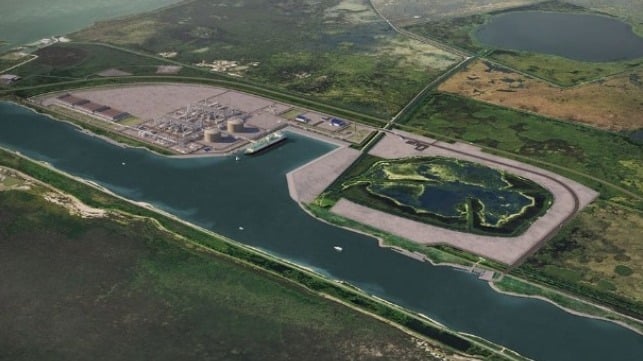
Rendering of Sempra's Port Arthur LNG terminal which is currently in development (Sempra Infrastructure)

Published May 30, 2025 9:51 PM by The Maritime Executive


After campaigning on a promise to accelerate the U.S. energy industry, the Trump administration issued its first final LNG export approval which went to Sempra Infrastructure’s proposed Port Arthur LNG Phase 2 project. The permit granted by the Department of Energy would make it possible for the second phase project to export LNG to countries that do not have a free-trade agreement with the United States.

The Trump administration has been fiercely critical of its predecessor’s pause on LNG export permits, terming the move “reckless.” Following the finalization of the 2024 LNG Export Study, which the administration is praising for confirming that LNG exports support the U.S. economy, strengthen allies, and enhance national security, the Department of Energy (DOE) has moved to support the expansion of the industry.

The Port Arthur LNG facility is promoted as having the potential to become one of the largest LNG export facilities in North America. Phase II of the export facility has been in the works since September 2023 when the Biden administration issued authorization from the Federal Energy Regulatory Commission. The project is expected to include two liquefaction trains capable of producing approximately 13 Mtpa of LNG, which would double the total liquefaction capacity of the Port Arthur LNG facility up to 26 Mtpa. 

Phase 1 of the Port Arthur LNG project is currently under construction and consists of trains 1 and 2, as well as two LNG storage tanks and associated facilities. Sempra reports construction of the project continues to progress, and they expect commercial operation for train 1 in 2027 and train 2 in 2028.

DOE is hailing the issuing of the permit for Phase 2 as another critical step in expanding the U.S.’s LNG industry. Sempra however highlights that the project remains subject to a number of risks and uncertainties. These include completing the required commercial agreements, securing and/or maintaining all necessary permits, obtaining financing, and reaching the final investment decision.

Sempra also operates the Cameron LNG export terminal in Louisiana, which has been exporting LNG since 2019, and is currently constructing the Energia Costa Azul terminal in Mexico, which will begin commercial export operations of U.S.-sourced gas as LNG beginning in 2026. 

In authorizing the exports, DOE has relied heavily on the LNG Export Study that was released by the Office of Fossil Energy & Carbon Management in December last year and had a public comment period through March 20 this year. Part of the findings in the study is that the U.S. has a robust natural gas supply that is sufficient to meet growing levels of exports while minimizing impacts on domestic prices, growing LNG exports increase gross domestic product and expand jobs while also improving trade balance. It also asserts that increasing LNG exports enhances domestic and international global security with no discernable impact on global greenhouse gas emissions. 

While Port Arthur Phase 2 marks the first final approval, the administration had previously issued four LNG export authorizations. This includes one to Commonwealth LNG's proposed export facility in Louisiana, and another to Venture Global's CP2 project also in Louisiana. Energy Secretary Chris Wright says the administration has approved a total volume of exports of 11.45 Bcf/d.  

The U.S. has been the largest exporter of LNG ahead of Qatar and Australia. Qatar however is preparing to open its North Field Expansion project starting in 2026. By 2030 it expects to double production to 142 mtpa.


Fincantieri Floats Second LNG-Fueled Cruise Ship for Germany’s TUI Cruises

Mein Schiff Flow prepared to be floated
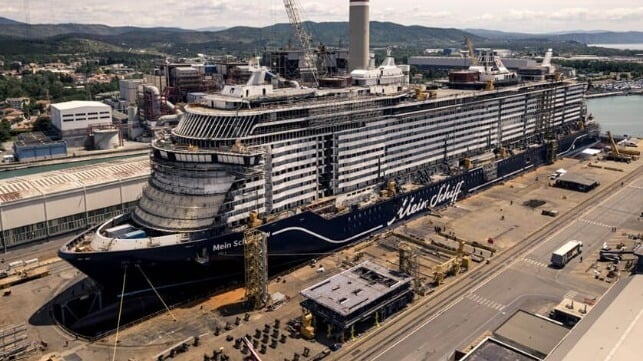
Mein Schiff Flow was floated at Fincantieri's yard in Monfalcone as the second new ship for TUI (Fincantieri)

Published May 30, 2025 8:41 PM by The Maritime Executive


Italian shipbuilder Fincantieri continues to show the strength of its cruise ship orderbook as the company’s Monfalcone shipyard today floated the second LNG-fueled cruise ship, Mein Schiff Flow, for Germany’s TUI Cruises. It follows the delivery of her sister ship, Mein Ship Relax, in February, and a recent order from another TUI Group company Marella Cruises for two new ships.

The relationship with TUI Group was established in 2018 with the order of the two cruise ships known as the InTUItion class for Mein Schiff, which is a partnership between TUI and Royal Caribbean Group focused on the German-speaking market. Fincantieri highlights the ships each of which is approximately 157,650 gross tons, as a first-in-class project developed by the shipyard enhancing the modernity and sustainability characteristics that TUI Cruises promotes in its operations.

The new ships are 1,070 feet (326 meters) in length with 1,945 passenger cabins and accommodations for 3,984 passengers and 1,535 crew. In addition to being the largest ships of the fleet, they have innovations for relaxation, 14 restaurants including more variety and a new Asian restaurant, and redefined spa and wellness areas. The ships feature the cruise line’s first two-deck “freedom suites,” as well as introducing inside, outside, and balcony cabins for solo travelers.

They are designed for operations either on LNG or Marine Gas Oil (MGO), making them the first LNG-fueled ships in the Mein Schiff fleet. TUI has highlighted that they are a future-proof design with the ability to utilize low-emission fuels such as bio- or e-LNG when the alternatives become available in sufficient quantity for commercial operations. TUI last year also introduced a cruise ship built by Meyer Turku that is ready for future operations on methanol fuel.

The two cruise ships from Fincantieri feature catalytic converters meeting Euro 6 standards, a steam turbine, using the residual heat from the diesel generators, as well as an electrical shore-power connection. They are also being equipped with an innovative and highly efficient waste treatment system capable of transforming organic materials into recyclable components through a thermal process.

After a christening ceremony and blessing in Monfalcone, Italy, the floodgates were opened on the dry dock to float Mein Schiff Flow for the first time on May 30. They are reporting it required around 130 million liters of water to enter the dock for the successful flotation. Mein Schiff Flow will be moved to the outfitting berth and is due to enter service in the summer of 2026.


Naming ceremony for the first cruise ship Mein Schiff Relax (TUI Cruises)


Her sister ship Mein Schiff Relax was celebrated with a spectacular naming ceremony early in April in the port of Malaga, Spain. More than 12,000 people attended the event which included two other ships from the fleet, Mein Schiff 5 and Mein Schiff 7, also docked in the port. The event concluded with a 120-meter (nearly 400-foot) rocket line launched from the bow of one of the ships.

Mein Schiff Relax is the eighth ship for the brand, all new builds, and will be joined by the ninth ship when Mein Schiff Flow starts operations. The brand has grown rapidly having operated its first cruises in 2009.

Fincantieri received the order for two cruise ships, the first new builds for Marella Cruises (a brand owned by TUI Group) at the end of March. Carnival Corporation also placed an order in April for Mein Schiff competitor AIDA Cruises, the first for Fincantieri, while the yard also has confirmed orders for its first cruise ships over 200,000 gross tons to be delivered to both Carnival Cruise Line and Norwegian Cruise Line. It will build seven ships under those contracts with deliveries scheduled into the 2030s.


Sweden Tightens Controls on Baltic Shipping Targeting Shadow Fleet

Swedish Coast Guard vessel
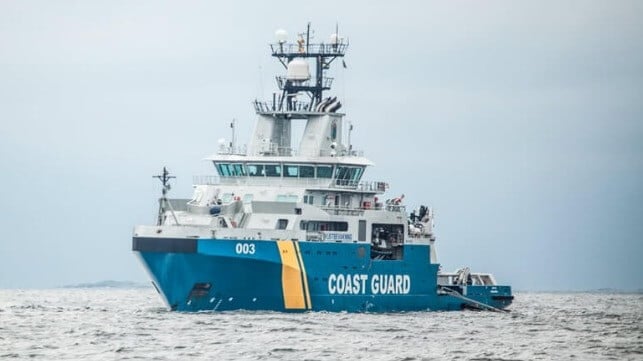
Sweden plans to start checking insurance for vessels sailing through its waters (Swedish Coast Guard)

Published May 31, 2025 3:51 PM by The Maritime Executive


The Swedish government announced starting July 1 it will be enforcing new rules on ships that pass through Swedish territorial waters or the economic zone – not just those that call at a port. It joins others including Estonia, Finland, and the European Union which also introduced new monitoring efforts including checking insurance documentation for vessels sailing through the Baltic.

“We see more and more problematic events in the Baltic Sea and it requires that we not only hope for the best, but also plan for the worst,” said Ulf Kristersson, Prime Minister of Sweden, in a posting on social media. “Now we have made an important decision to protect the Baltic Sea from the Russian shadow fleet… Security can't wait.”

According to the government, the new regulation that it adopted aims to combat the shadow fleet and thereby improve maritime safety and environmental protection. The Swedish Coast Guard and the Maritime Administration are being tasked with collecting insurance information from ships that pass through Swedish territorial waters or the economic zone regardless if they are scheduled to make a port call in Sweden.

“We are now increasing surveillance in the Baltic Sea,” said Minister of Justice Gunnar Strömmer. He pointed to the shadow fleet circumventing international rules and threatening safety. 

Sweden’s action follows the European Commission which in April adopted a requirement that all vessels, including those merely passing through EU waters without entering an EU port, provide insurance information. 

Efforts to check documentation and insurance information have led to increased tensions in the Baltic. Estonia’s effort at stopping a tanker it suspected of operating without a legitimate registry led to a brief showdown that included a Russian warplane making an unauthorized entry into Estonian airspace. Similarly, Finland has recently reported that a Russian warplane entered its airspace while Finland’s Defense Minister said the country would continue its efforts to monitor the movement of shadow fleet tankers in the Gulf of Finland.

The EU in particular has continued to apply pressure on the shadow fleet. It has now sanctioned over 300 tankers while there has been talk of further actions aimed at Russia’s oil trade.

Russia’s Permanent Representative at the United Nations Vassily Nebenzia referred to the actions as “Baltic pirates” and their EU “cheerleaders,” during a speech to the UN Security Council. He said the “inappropriate behavior of EU countries sets a very dangerous precedent.”

The Russian Navy has reportedly begun escorting some shadow fleet tankers on their passage away from the oil terminals and into the Baltic.