FE
China’s Baowu takes control of Simandou iron ore operator
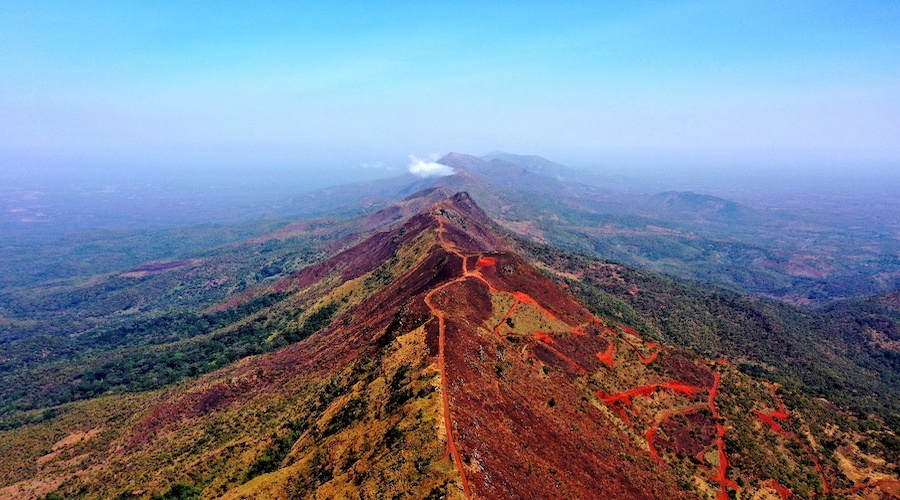
China’s Baowu Resources, the world’s largest steelmaker, has tightened its grip on one of the biggest untapped high‑grade iron-ore deposits by taking control of the operator of Guinea’s Simandou Blocks 1 and 2 after raising its stake in the Winning Consortium Simandou to 51% from 49%, the company said on Friday.

The Singapore-registered parent company and its Guinean unit have been renamed Baowu Winning Consortium Simandou following the deal, the statement said. It was approved by Guinea on May 30, 2024 and formally completed on January 30, 2026.
BWCS owns 85% of the Guinean operating company for Blocks 1 and 2, strengthening Beijing’s leverage over Simandou in a country that also exports bauxite and other minerals.
On the southern Blocks 3 and 4, Chinese state groups also hold stakes via a Chinalco-led joint venture alongside Rio Tinto and the Guinean state in the Simfer partnership.
Simfer co-developed shared rail and port infrastructure with BWCS for Simandou, which debuted iron ore shipments in November after nearly three decades of stop-start development, regulatory disputes and infrastructure delays.
Baowu said the deal confirms its long-term industrial and strategic commitment to “one of the world’s most significant integrated mining and infrastructure projects,” adding it will pursue “project competitiveness, the promotion of local content, (and) compliance with internationally recognized ESG standards.”
At full-run rate, Simandou’s two mining hubs are designed to ship up to 120 million metric tons of high-grade iron ore a year through the shared rail and Atlantic port, positioning Guinea as a key supplier of the steelmaking material alongside Australia and Brazil.
Guinea’s mines ministry did not immediately respond to a request for comment.
Guinea is also the world’s largest bauxite exporter, with Chinese firms controlling over 70% of output.
(By Maxwell Akalaare Adombila; Editing by Louise Heavens and Chris Reese)
Algeria opens 600-mile railway to tap vast iron ore deposit

Algerian President Abdelmadjid Tebboune inaugurated a 950-kilometer (590-mile) railway built in collaboration with China that’s key to exploiting vast iron-ore deposits in a bid to diversify the OPEC member’s economy.
The step gives the green light for the first shipments of ore from the Gara Djebilet mine in the western desert near the Moroccan border — a project mooted for decades. Feraal, a subsidiary of Algeria’s state miner Sonarem, and China’s Sinosteel are among companies involved in the broader project.
The new line, built by Algerian state firms and China Rail Construction Corp., connects the distant mine with the cities of Tindouf and Bechar. From there, an existing railway links to the Mediterranean coast and the city of Oran, where Turkey’s Tosyali Holding operates a steel complex.
The official opening — aired live Sunday on Algerian state TV — comes as the North African nation that’s a major gas supplier to Europe focuses on developing its mining industry. Hydrocarbons typically account for more than three-quarters of Algerian exports and about half of state revenue, making it vulnerable to volatile energy prices and in search of other income streams.
(By Salah Slimani)
UK firm signs deal with Mitsui to make iron ore pellets from Pilbara material
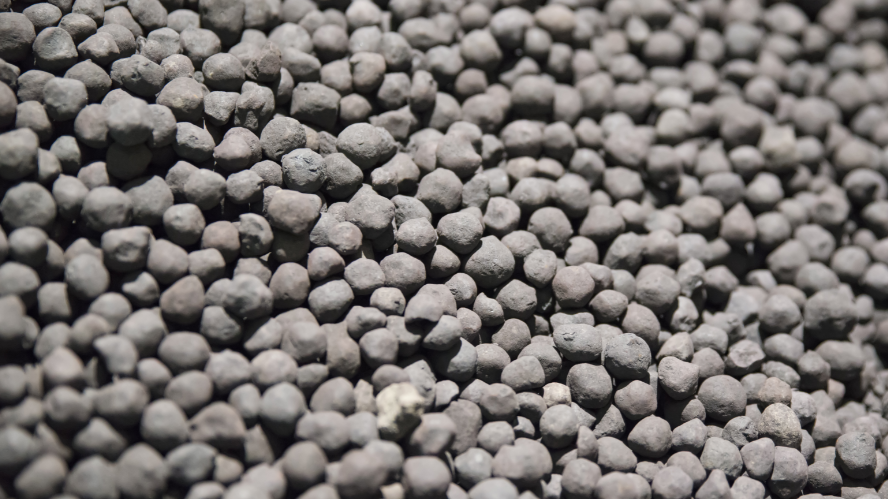
British firm Binding Solutions has signed an agreement with a unit of Japanese trading house Mitsui & Co to turn iron ore in Western Australia’s huge Pilbara region into low-carbon pellets, Binding Solutions said on Monday.
The privately held company says its technology cuts energy and CO2 emissions in the production of iron ore pellets compared to the established method.
Binding Solutions has signed a memorandum of understanding with Mitsui Iron Ore Development over the production of cold agglomerated pellets, a statement said, which use less energy to make than conventional pellets.
Its CEO Jon Stewart said the progress it had already made working with MIOD to develop the pellets from Pilbara, the world’s largest iron ore producing region, creates “a significant additional market opportunity” for the firm.
Under the preliminary agreement, Binding Solutions will use its technology to turn lower-grade “fines” iron ore material from the Pilbara into pellets, which command a price premium.
Mitsui has investments in Pilbara iron ore operations with major producers BHP and Rio Tinto.
Binding Solutions has had industrial trials with British Steel and with Germany’s Salzgitter, and is seeking to build an industrial-scale plant.
Iron ore fines have to go through a process called sintering, which uses very high temperatures and is usually highly polluting, before they can be used in a blast furnace.
Pellets are also in demand because they can be used in electric arc furnaces, which many steelmakers are switching to in a drive to cut carbon emissions.
In February last year, Mitsui said it would acquire a 40% stake in the Rio Tinto-operated Rhodes Ridge iron ore project in Western Australia for $5.34 billion.
(By Eric Onstad; Editing by Jan Harvey)

No comments:
Post a Comment